
ICMM announces initiative to simplify responsible mining standards
Mining-Affected Communities: The Elephant Not in the Room

At Mining Indaba in Cape Town this week we heard countless references to mining-affected citizens of African countries. The word “communities” steadily fell from the mouths of mining executives and government officials. Most suggested that maximizing benefits and minimizing harms for community members was a sacrosanct priority.
But absent from almost all of the rooms where this word was repeatedly invoked were…members of mining-affected communities. The Indaba agenda did include one invitation-only engagement session, between the International Council on Mining and Metals and community representatives. And Indaba organizers graciously accommodated some international non-governmental organizations, including NRGI. But if communities’ perspectives are as crucial as executives and officials imply, then community members and activists must be present in a sustained way at Indaba and equivalent forums—and not just as featured guests. (NRGI president and CEO Suneeta Kaimal raised this issue last year in connection to the International Energy Agency's Critical Minerals Summit.)
My colleague Tengi George-Ikoli shared with me an African adage: “A man’s head should not be shaved in his absence.” Community voices are essential in spaces like Indaba to ensure that decisionmakers account for the social, economic and environmental impacts of mining and minimize them.

In that vein the deep-pocketed mining companies and rich-country governments that sponsor Mining Indaba could contribute to a pooled fund that grants admission and travel bursaries to community activists and reporters from Africa’s mineral-rich nations. One such journalist who was able to self-fund a trip to Cape Town this week told us that they were the only reporter from their country in attendance. “No media houses back home can pay for journalists to come here,” they said.
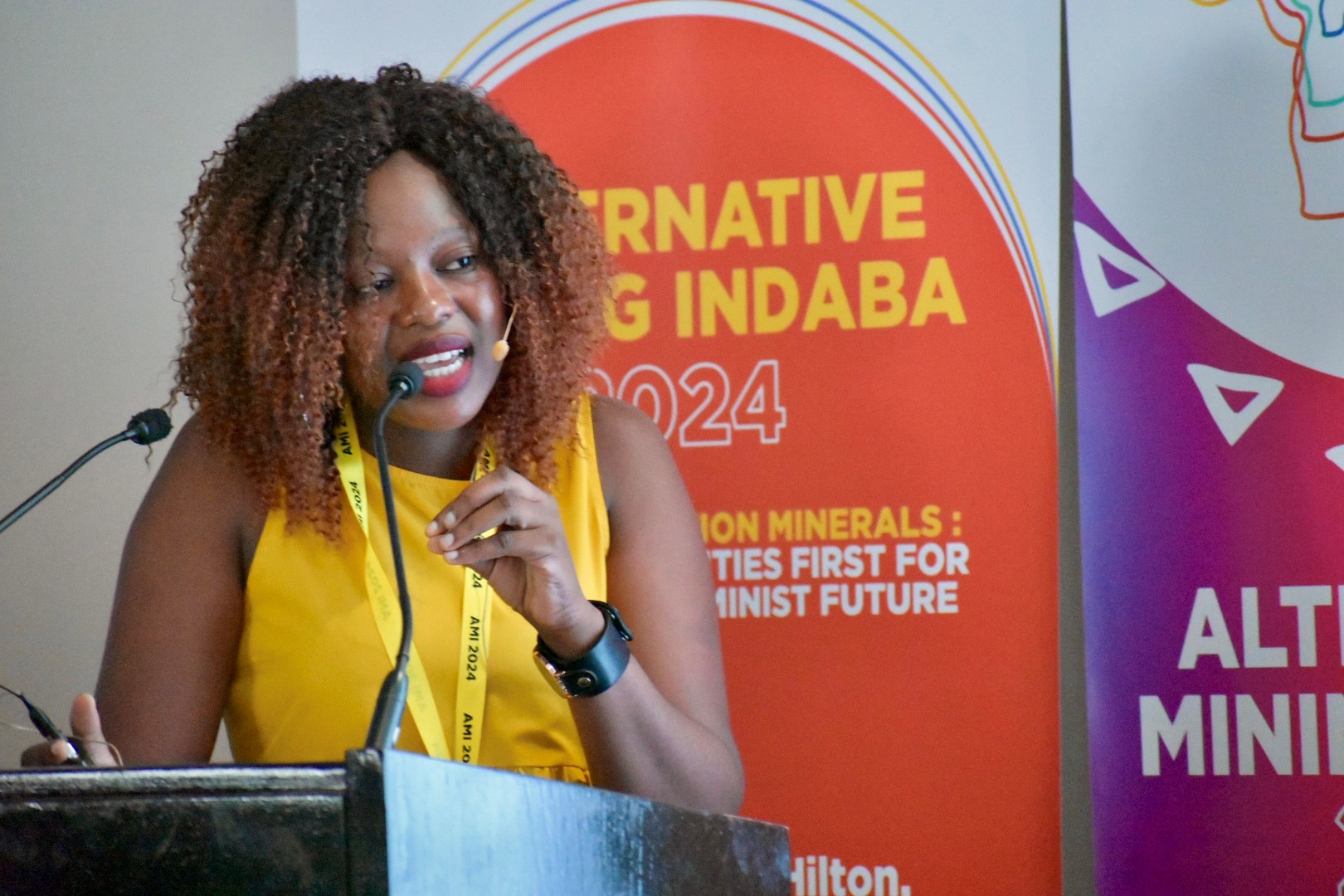
One place that was replete with community stakeholders was Alternative Mining Indaba, which has operated in distant parallel to the main Indaba for 15 years. (Many AMI attendees are funded by larger non-profits to undertake the trip.)
There, we heard searing accounts of the impacts on communities. A young woman from Zambia, speaking out against child labor in the industry, implored her listeners: “How can we children build a future for ourselves from inside of a mine?” She received enthusiastic applause—from people who on their own can do little to address her concerns. The power brokers were all at the main Indaba site six kilometers away.
While mining companies do invest in outreach to communities, and have provided valuable services in many instances, at the continent’s biggest mining confab those directly affected by extraction are scarce.
Community relations are just one facet of the work that remains for the influencers and decision-makers connected to the mining sector. State-state deals and the ways in which African countries might add value to raw commodities were also hot themes in Cape Town. (Though one industry lawyer said the quiet part out loud when he intoned from an Indaba stage that “governments really should have no role in mining.”) But until communities and civil society have a more fixed and prominent seat at the table, and agendas reflect the importance of their voices, progress on any of these challenges will be difficult.
Learn more about just energy transitions
Narratives for a Just Energy Transition in Colombia

In 2023, NRGI worked with other national and territorial civil society organizations in Colombia to document Colombian attitudes toward the energy transition. This video series summarizes the sentiments of civil society participants in this process of building a collective framework that demonstrates that a just transition--beyond fossil fuels--is necessary, desirable, and possible.
Local Voices, Global Impact: Effective Communication Strategies for Climate Change and Energy Transitions (COP28 Blue Zone Event)

This event will focus on questions including:
- What are key strategies for effective communication to local communities in promoting a just transition?
- How are communities navigating the path to sustainable energy, and what is their contribution to global solutions for sustainable energy transition?
- How can faith-based organizations in Africa actively engage with and empower local communities to be key stakeholders in energy transition and climate change initiatives?
Featured NRGI team member:

Gabriela Flores Zavala
Communications Strategy Consultant
The Three C's of Just Energy Transition (COP28 Blue Zone Event)
This event will explore the importance of citizenship, collaboration and communication for a just energy transition. The event will be in Spanish and feature simultaneous translation into English.
Speakers:
- Jorge Villareeal, Iniciativa Climática
- Gabriela Flores, NRGI
- Daniela Castilla, Movilizatorio
- Javier Campillo, Vice-Minister of Energy, Colombia
Moderator:
- Juliana Uribe, Movilizatorio
The IEA Critical Minerals Summit Must Plot a Path to Fairer Mining

This week in Paris, the International Energy Agency (IEA) will host its first-ever Critical Minerals and Clean Energy Summit. In the packed calendar of climate confabs, from Nairobi to New York, what opportunity will the summit provide to craft a more just and sustainable future?
As climate action and energy security top many countries’ priority lists, there is consensus that we must scale up the use of solar panels, wind turbines, electric vehicles and the like. Doing so requires a rapid, stable and sustainable increase in supply of minerals including lithium, cobalt and nickel – with demand set to grow by up to three and a half times current levels by 2030.
New technologies and smart policies that bring down overall demand for raw minerals can help ease this pressure, but the IEA still predicts that a significant increase in new mineral production will be needed to support electrification.
Yet officials and activists across mineral-rich African, Latin American and Asian countries know well the mining industry’s inglorious record of corruption, human rights abuses and pollution.
They are rightly asking: “what will be different this time?”
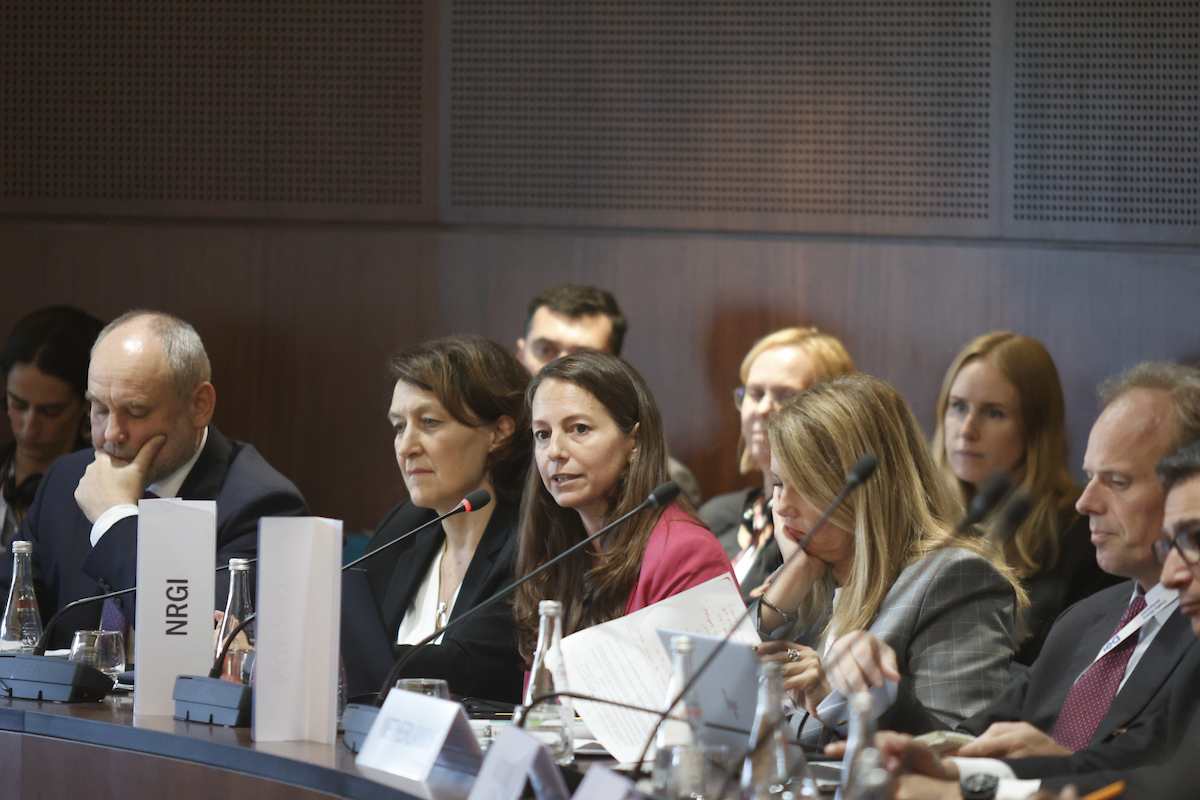
The IEA summit is an opportunity for policy makers and company executives from the Global North to answer this question, and they will be well represented. The governments of lower and middle-income mineral producers, however, will be less visible. And civil society and Indigenous delegates, who have the most to lose in the race to transition, will be largely absent.
If the IEA is to achieve its aim to “promote a secure and sustainable supply of critical minerals,” summit delegates must respond to the needs of those not in the room. Failing to do so will only serve to embed disruption and delay in mineral supply chains, derail global climate action, and deepen social and economic inequities that the mining sector has perpetuated.
First, citizens of mineral-producing countries need a fair and equitable share of the benefits from mining. This includes better upskilling, more job creation, and policies that diversify economies, address energy poverty, and boost producing countries’ own decarbonization efforts. The status quo, in which elites and foreign companies capture an undue share of revenues, is not sustainable.
Mineral-rich countries seek not only to extract commodities, but to capture more value by further refining and processing them. They also aim to generate more renewable power but need money and technical expertise to do so. In negotiating international mining deals and partnerships, those at the Paris summit should commit concrete financial and technical support to helping producing countries to achieve these ambitions.
Second, citizens need strong legal frameworks whereby mining companies respect community rights, protect the environment, and uphold the rule of law throughout their activities. As currently drafted, flagship European Union raw materials legislation risks outsourcing the assessments of mining projects’ sustainability to voluntary, flawed certification schemes and standards.
The message from communities and civil society is clear: such voluntary standards are no replacement for hard rules. But where voluntary standards are used to help bring greater transparency to mining companies’ activities, these must be based upon rigorous multi-stakeholder governance and audit. Anything less, including self regulation, opens the door to greenwashing and corruption.
Last, citizens need to know that authorities will enforce laws. This is a longstanding issue that has recently worsened. A major anticorruption case in the mining sector fell apart after a ten-year investigation in the U.K., in part due to lack of resources. IEA summit delegates must address these accountability failures if they are to inspire confidence among mining-affected communities that a just energy transition is possible.
If IEA member countries want to fully charge their renewable industries, they must plug in to these concerns. Inaction will be costly – for communities and for global climate ambitions.
This commentary was originally published by Context.
Big critical raw materials meeting has no space for indigenous groups
A Just Energy Transition Must Involve and Empower Women

This encounter was a stark reminder that in the quest to fight climate change and promote clean energies, we risk undermining women’s rights, unwittingly introducing new or reinforcing existing inequities. But these risks can be mitigated.
A just transition that empowers women and respects their rights is possible. To attain this crucial outcome, members of the international community, donors, private and public sector actors, and civil society organizations like ours must decisively commit to enabling, supporting and learning from women-led organizations and many others already building this inclusive pathway.
Women are essential allies and key agents in fostering an inclusive energy transition; one study concluded that when women are politically empowered, CO2 emissions were reduced by about 12 percent across 72 countries.
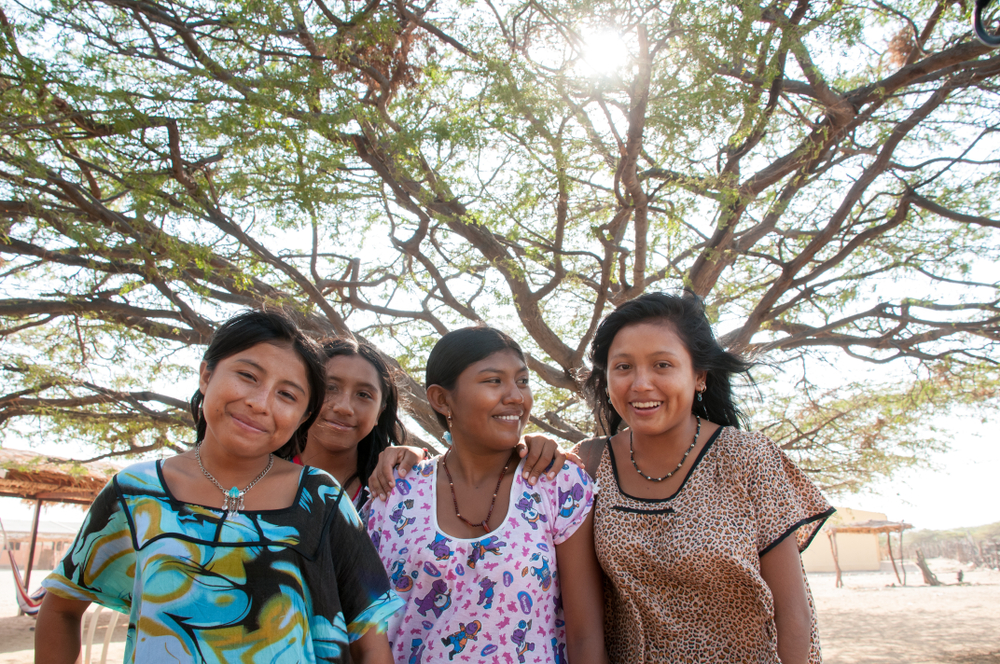
At NRGI we seek to learn from and contribute to the efforts led by numerous organizations and individuals around the world, and define a feminist agenda for our energy transition work. We want to ensure that the lived experience of women informs extractive sector decisions concerning future opportunities and harm elimination, and that women have voice and influence in these debates. We are prioritizing developing approaches to increase gender awareness in our programming in countries that need to transition out of fossil fuels, or that aim to scale up renewable energy technologies and the minerals needed as inputs to them. Ultimately, we want to ensure that women are part of every stage of these processes.
We want to ensure that the lived experience of women informs extractive sector decisions concerning future opportunities and harm elimination, and that women have voice and influence in these debates.
In fossil fuel-producing countries, a just energy transition requires that workers are compensated by those governments and companies who benefited from and are now phasing down coal and oil extraction. But, because men account for more than 83 percent of the formal workforce in mining, women—who depend heavily on indirect and informal jobs around the mine—risk not being included in those compensation arrangements. As company executives and government officials think about mine closure, compensation and job reconversion, they must ensure women are key stakeholders in these plans, as APEC has proposed. Environmental liabilities that these projects leave behind and that might disproportionaly affect women need to be considered. In addition, women need to inform decisions about the diversification of local and national economies. Development models that replace the extraction of fossil fuels must align with women’s needs, consumption patterns, and their visions for their land; models must also fully recognize and properly compensate women for their contributions.
As company executives and government officials think about mine closure, compensation and job reconversion, they must ensure women are key stakeholders in these plans.
On the other side of the energy transition, women hold 32 percent of jobs in the renewables sector; however they are not the main owners of small-scale clean energy projects. Given that globally women's labour force share (48 percent) is higher than the average employment rate in the oil and gas sectors (22 percent), government officials and companies have an opportunity to increase employment options in this area. By recognizing property rights and ensuring that benefit sharing mechanisms reflect women’s needs, governmental agencies and international and local development agencies can support women to take up roles such as clean energy entrepreneurs or contribute to consultations about large scale projects.
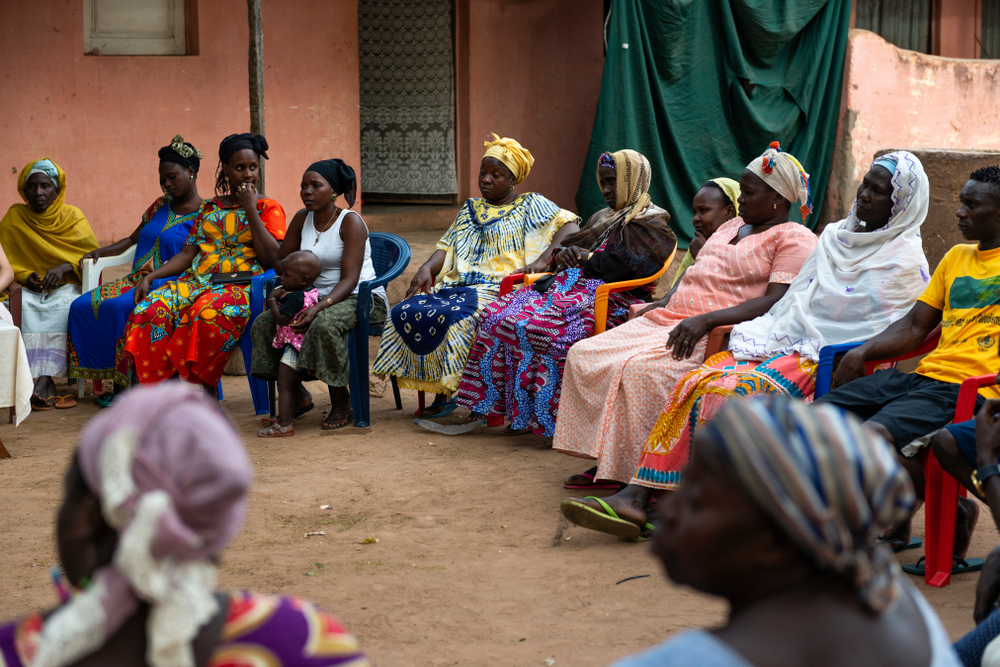
Government authorities and mining companies can enhance gender justice by changing the way transition minerals are extracted. Today, many women in the Democratic Republic of the Congo are part of the informal workforce extracting the cobalt that goes into the profitable business of electric vehicle batteries. Yet, they often hold the least profitable and most toxic jobs—crushing, sorting and sifting the mineral and processing the waste. Many suffer sexual violence in mining sites. Gender impact assessments are a key step to avoid such harms, provided mining companies act upon them and that women are part of decision-making processes. Defining appropriate policies and implementing them at international, national and local levels is another key step. In 2019, for instance, Mongolia’s government introduced a law aimed at raising women’s participation in the mining sector. As NRGI highlighted in a 2022 video project, Mongolian women played a crucial role in informing this policy and spreading awareness within mining-affected communities.
At NRGI we recognize, and applaud, the efforts made by feminist activists around the world to promote gender justice. We seek to learn from and build on this work, starting with pilot interventions in Colombia, Ghana, Nigeria and Uganda, which will include multistakeholder dialogues, building networks and supporting the work of national women-led organizations to empower women’s voices. Promoting equity has always been the core of our mission and, together with partners, we have contributed to key projects around gender and extractives. In 2023, we are taking this commitment to our newest areas of work. We are excited and committed to identifying our contribution to the important work of advancing equity in the energy transition. We will develop guidance for our teams to mainstream gender across our energy transition programs, and deepen old and new partnerships that allow us to be impactful.
The authors wish to thank the members of NRGI's gender working group for their contributions.
Gender justice and the energy transition
NRGI colleagues share why the energy transition must include women as key agents of change.
CSDD Directive: Is the EU Opening the Door for Corruption?

In her September State of the Union address, European Commission President Ursula von der Leyen was unequivocal about the harm corruption inflicts on democracies.
“Corruption erodes trust in our institutions. So we must fight back with the full force of the law,” she said.
Combating corruption would be at the forefront of the Commission’s legislative agenda in the coming year, she added. Central to this agenda is transforming the impact that EU companies have on the planet.
The European Commission has recently initiated a raft of new laws spanning different areas – but all with the same broad aim of ensuring that EU companies are not complicit in environmental or human rights abuses around the world.
From a historic regulation requiring companies to prove that their supply chains aren’t fueling global deforestation to a directive forcing companies to disclose their businesses’ social and environmental impacts, the momentum for companies operating out of the world’s largest trading bloc to behave responsibly and sustainably is growing – and has overwhelming public support.
A key weapon in this growing legislative armoury is the Corporate Sustainability Due Diligence Directive (CSDDD).
The proposed CSDDD text published by the European Commission earlier this year will require company directors to take into account the human rights, climate and environmental impacts of their businesses. It will apply not just to a company’s own operations, but its subsidiaries and supply chains, including direct and indirect business relationships.
The CSDDD is a potentially critical tool in tackling the damage caused by the extractive industries – which are responsible for half of the world’s carbon emissions and more than 80% of biodiversity loss. It could also help underpin the reforms needed for a just energy transition.
A breeding ground for corruption
Yet, as it stands, the proposed CSDDD has a glaring omission, which could undermine its effectiveness. Unlike other legislation the EU is pushing through to ensure its businesses behave responsibly around the world, the CSDDD proposal places no due diligence requirements on companies to tackle corruption.
This matters because corruption is often inextricably linked to human rights and environmental abuses. The absence of anti-corruption safeguards in its due diligence requirements can also have grave implications for energy and national security.
Corruption is more prevalent in the extractives sector than any other: one in five transnational bribery cases involve extractives, and corruption often aggravates environmental, social, and human rights abuses.
Meanwhile, Russia’s assault on Ukraine – and the energy crisis it has precipitated – has brutally exposed the perils of doing business with corrupt, kleptocratic and autocratic regimes.
There are reports that European and US energy companies and commodity traders, including BP, Shell, Wintershall Dea, ExxonMobil, TotalEnergies, Equinor, OMV, and Trafigura, have contributed over $95 billion to the Russian government via oil and gas projects since the invasion of Crimea in 2014.
Until August 2022, TotalEnergies held a 49% stake in a Russian gas field that allegedly provides fuel that ends up in Russian fighter jets. Investigators traced the Kerosene supply chain of two military bases, Morozovskaya and Malshevo, to the gas field in Siberia which TotalEnergies co-owned.
Global Witness has also identified that BP will net an estimated £580 million this year from its nearly 20% stake in Rosneft, which it still holds despite promises to sell earlier this year.
Beyond Russia’s invasion of Ukraine, corruption has contributed to instability in many other parts of the world – and will continue to do so unless governments – with the help of international and regional institutions, and in collaboration with civil society – commit to more integrity, transparency and accountability along with strong and enforceable anticorruption policies.
Among the legion of examples, is the elite capture of South Sudan’s state-owned oil company, which helped divert oil revenues to security services and militias accused of serious human rights abuses. In Libya, the illicit trade of oil and gas directly funded armed groups, including those responsible for trafficking migrants across the Mediterranean.
Corruption breeds conditions that lead to social and political unrest, as well as environmental destruction. It deters responsible investment, and diverts revenues away from the public purse, preventing communities and populations from benefiting from such investments.
The world is moving to a low-carbon future, and demand for the minerals used in green technology is skyrocketing. In this context, tackling the corruption that has blighted the extractive sector for so long is more crucial than ever. The CSDDD can and should play a role.
To do so, however, it is vital that EU legislators strengthen the directive with specific governance and anti-corruption requirements: by adding a definition of ‘adverse governance impacts’ and including key anti-corruption conventions in the Directive’s Annex, they can boost the CSDDD’s ability to foster resilient and sustainable value chains in key high-risk economic sectors such as oil, gas and mining. With some amendments down on these issues, there is still hope.
The case for doing so is clear cut, the benefits potentially immense. On International Anti-Corruption Day, and in the year which marks the 20th anniversary of the UN Convention against Corruption, the time is well overdue for governments, the private sector and EU legislators to live up to their commitments – and translate Ursula von der Leyen’s fine words into action.
Originally published on the Euractiv website.
Prospects for Mexico’s Lithium Sector After Reforms to the Mining Law

- The Mining Law reform establishes that lithium exploration, mining and use are activities for which the state is responsible, without the option to grant concessions, based on the argument that they are activities in the public interest.
- The Mining Law reform leads to the existence of a dual legal system for lithium. On the one hand, the concessions already granted are regulated and monitored by the Ministry of the Economy. On the other hand, exploration and mining that takes place after the reform will be carried out by the state through a state-owned company.
- The objectives and responsibilities of the state within this dual system are unclear. For the mining and processing of lithium to be an opportunity that translates into benefits for Mexican people, clear, consistent and credible policies are needed.
- There are challenges in terms of governance, both for the special system created and the general concessions system. At NRGI, we have identified three aspects of governance we believe require analysis: (1) failures in governance of the general system; (2) governance of state-owned companies; and (3) supply chains and value generation.
The urgency of promoting the energy transition and shifting towards decarbonization has led to the need to increase production and processing of certain minerals, such as lithium. Use of this mineral in battery manufacturing will help us migrate towards electromobility and greater use of renewable energies, which is causing an increase in both demand and the price of lithium. According to a World Bank report, by 2050, lithium production is forecast to increase by 488% compared to 2018.
This situation could be an opportunity for lithium-producing nations to earn revenue and accelerate their own domestic energy transitions. However, a repetition of the old problems Mexico and other natural resource-producing countries in the region have suffered must be avoided, where intense levels of extraction – with significant socio-environmental impacts and few benefits for local and national populations – have led to high levels of conflict. As such, the opportunities that minerals bring to the energy transition should be targeted towards greater value generation for these countries and reduced social and environmental impacts.
In Mexico, discussions on critical minerals – and lithium, in particular – are at an early stage compared to the progress made by other countries in the region. Given the recent discovery of significant lithium deposits in Sonora, the Mexican Government has reformed the country’s Mining Law in order to give this particular mineral strategic significance and create a special system in which the state has greater control than it would otherwise have over other minerals. However, the Government is facing a series of political, technical, environmental and social challenges that must be addressed, given they could create obstacles to Mexico making good use of this resource. Improvements in lithium governance could help eliminate or mitigate these challenges and lead to greater benefits of its usage.
This report seeks to identify some of the most urgent aspects for discussion and resolution from the perspective of natural resource governance. To do so, we will first briefly outline recent changes to Mexico’s Mining Law, as well as their implications and, then, the key aspects of lithium governance that we at NRGI believe must be analyzed in order to maximize the benefits of productive activities related to this mineral in the national interest.