
Can China Champion Accountable Investments in ASEAN?
Note: This article originally appeared as an op-ed in The Jakarta Post on 1 February 2016.
China has been included in the Top 10 list of foreign investors in Indonesia since 2014. As in many other countries, China’s interest in Indonesia is in its energy and mining sectors; more than half of its total investment has been directed toward extractive industries.
Despite the recent economic downturn in China, this investment is expected to grow as part of the broader ASEAN-China Investment Agreement. Signed in 2010, the pact marks the effective implementation of the 2002 ASEAN-China Free Trade Area (ACFTA).
While the Indonesian government welcomes Chinese investment, it remains questionable if Asia’s largest economic powerhouse and the world’s largest economy can play by the rules of good governance, social and environmental protection.
The ASEAN Investment Report 2013-2014 shows that Chinese foreign direct investment (FDI) flowing into ASEAN have significantly expanded in the past decade, ballooning from US$600 million in 2003 to $28 billion in 2012. This growth has concentrated mostly in extractives and infrastructure.
Additionally, the 2009 China-ASEAN Fund on Investment Cooperation (CAF)—one of the largest Chinese equity funds led by the Export-Import Bank of China—supports the expansion of Chinese investment in ASEAN and targets infrastructure, power, oil and gas pipelines.
Why are the energy and mining sectors such a focus for China? Because they are at the core of China’s economic and national security. This might be an overstatement, but since the creation of China’s “Going Out” strategy in the late 1990s, its outward foreign direct investment has steadily increased, with its largest portfolio concerning fossil fuels and hard metals.
In 2014, in fact, outward direct investment surpassed foreign direct investment into China that for years had been its engine of growth.
The most striking is that more than half of its investment approvals have gone to energy and mining projects around the world. Experts like Peter Buckley and Mark Casson argue that there is a strong link between energy and mineral endowments and China’s investment decisions.
Both sectors have become so important to China that instead of importing these resources from the international market, China is pursuing active state diplomacy toward controlling their supply from resource-rich countries.
It means more aid, trade and investments, whether it’s in a country with a poor human rights record or a failing state.
The Indonesian government certainly welcomes Chinese money; resource-rich countries are competing for capital amid the global economic slowdown and commodities slump. China is, of course, also suffering from the downturn. The unfettered demand for commodities we saw a few years ago might be tempered significantly.
However, studies suggest Chinese firms are relatively more resilient compared to their Western counterparts in this difficult global environment. One reason is that Beijing maintains some level of clout and protection of the state- and privately owned enterprises.
In addition, western firms apply exchange-value to commodities — their value is monetized in prices relative to other commodities. It makes companies vulnerable to global market fluctuations and more likely to abandon their assets during times of low commodity prices.
Meanwhile, Chinese firms adopt use-value for commodities when they are used to sustain global production. So, despite low commodity prices, Chinese firms are less likely to abandon their operations than Western companies that cannot operate with significant losses.
This somehow explains why western investment in Asia has steadily declined as they look for a more attractive fiscal and regulatory environment as well as large, untapped deposits.
Asian firms, predominantly Chinese companies, have increasing stakes in those assets.
However, emerging practices worldwide suggest that Chinese investments hardly play by global norms, such as by observing good governance and social and environmental protections. It is partly because Chinese firms have little international experience and have unclear safeguards on their huge overseas investments that are often in energy and mining sectors. Chinese firms’ foreign operations are more pragmatic, playing by the rules of host countries.
So in countries with weak governance, human rights and environmental standards, Chinese firms’ operations tend to exacerbate institutional paralysis.
This has been detected in the corruption and rent-seeking cases in Chinese extractive investments in Africa and violent conflicts with communities over a gas pipeline in Myanmar and pulp plantations and petroleum production in Indonesia.
Are their records changing? Some Chinese companies are striving to practice responsible behavior. A report by the Extractive Industries Transparency Initiative (EITI) international secretariat shows that Chinese firms operating in EITI-implementing counties are becoming as transparent as other companies. In countries like the Democratic Republic of Congo, Nigeria and Mongolia, a majority of Chinese companies began disclosing some information on their beneficial, or real owners.
The Chinese government has also issued Guidelines for Social Responsibility in Outbound Mining Operations. The guidelines lay out standards on labor and environmental protection, supply chain due diligence and community engagement.
What this means in practice remains to be seen but the guidelines suggest that China is not averse to playing by global rules.
Indonesia published its third EITI report last November. It reveals that revenues, social payments made by companies, production and export information and many other oil, gas and mining industries data are now available to the public.
Indonesia can use the EITI mechanism to strengthen governing rules for energy and mining that advance transparent management and corporate accountability in these sectors. Chinese investments can benefit from these rules.
As Chinese investment gradually abides by good international practices in the context of the ASEAN Economic Community that begins this year, Indonesia—a key leader of ASEAN—and China can work together to foster a new Asian century that champions a culture of good governance and corporate accountability.
Great power should come with greater responsibility.
Emanuel Bria is the Asia Pacific senior officer at the Natural Resource Governance Institute and Poppy S. Winanti is the head of the International Relations School at Gadjah Mada University.
Picturing Poor Extractive Industries Governance in Myanmar, One Year Later
In 2014, the Natural Resource Governance Institute (NRGI) commissioned images by a Myanmar photographer, Minzayar, of the illegal jade miners that have flowed into the country's northern Kachin state in pursuit of higher incomes. The project allowed thousands of viewers worldwide to connect faces to one of the most famously controversial aspects of the country's extractive economy. Because of the attention and interest generated by Minzayar's photos, NRGI has committed to further visually mapping extractives realities in Myanmar.
This year we partnered with six talented photographers (including two from Myanmar) to capture the complex political, environmental and social realities at resource extraction sites throughout the country. NRGI will publish a selection of their photos on its website in a series of six photo releases – one per week – covering the coal, copper, gas, gold, jade and oil industries. (In the near future more photos will be available on a dedicated website that Myanmar Deitta is developing.) Today, we initiate the series with powerful images from one of the most controversial sites in Myanmar, the Letpadaung copper mine.

Workers in Myanmar conduct tests to ascertain the presence of coal. Photo by Suthep Kritsanavarin for NRGI
The country is no stranger to issues and conflict around extractive resources. Mobilizations against the Myitsone dam or Letpadaung mine have attracted international attention, while subsequent reports on jade confirm the severity of illicit trade, corruption, and foregone revenues in the sector. While Myanmar is rich in oil, gas, minerals and other resources, in many cases this natural wealth does not appear to have improved the lives of citizens. Many benefits flow to a small elite with connections to powerful interest groups, including Myanmar military officials and their close business associates known locally as “cronies.”
An agenda for reforming these industries, with the aim to make them more transparent and accountable, has emerged in recent years under the leadership of President Thein Sein. In this discourse, special attention has been given to mitigating the social and environment impacts of extractive projects. Myanmar was also been accepted as a candidate country to the Extractive Industries Transparency Initiative (EITI) – a global effort to promote open and accountable management of natural resources – in July 2014. Its first EITI report, due in January 2016, should make publicly available new information on many aspects of the natural resources value chain in Myanmar. In parallel, policy reforms are underway and key laws directly and indirectly governing extractives have been reviewed: mining, petroleum (upstream and downstream), and land, for example. NRGI's core engagement in Myanmar is to support this long-term reform process by building capacity of oversight actors (e.g., civil society, media, parliamentarians), providing technical assistance and policy advise to reformers, producing research to inform solutions, and supporting the EITI process.
However, as these processes move forward, NRGI's documentary project aims to raise public awareness about the urgent need to improve the conditions around extractives in Myanmar. Our series highlights the numerous and persistent governance challenges and failures that sparked recent calls for reform. And what better illustration of the factors constraining Myanmar's future generations – and the corresponding need for action – than Lauren DeCicca's photos of children of miners gazing out at the expansive Letpadaung copper mine?
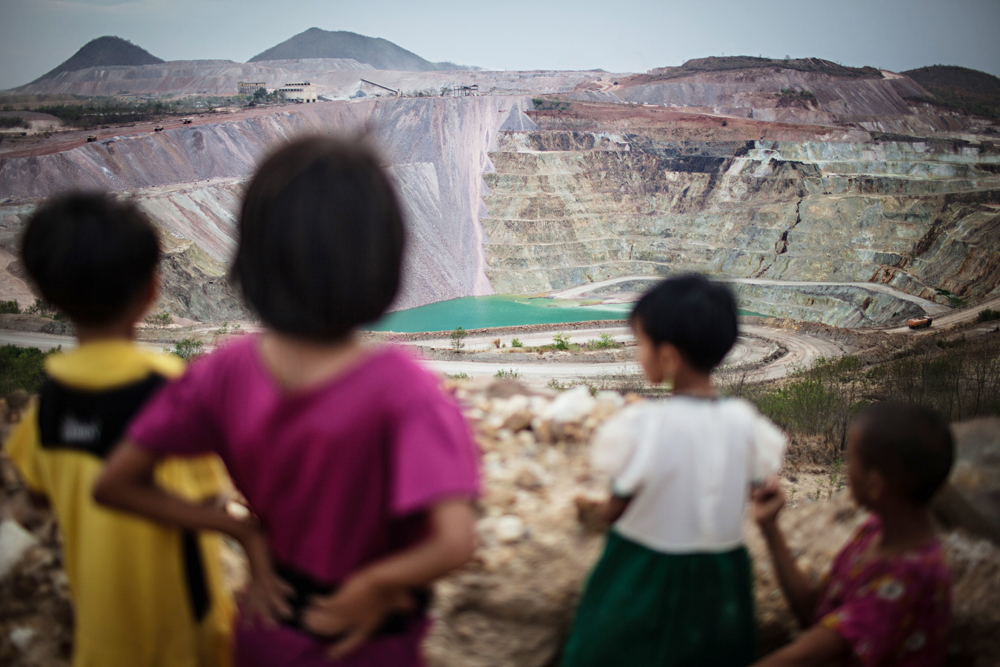
Young children of freelance miners gaze out at Myanmar's expansive Letpadaung copper mine. Photo by Lauren DeCicca for NRGI
Matthieu Salomon is NRGI's Asia-Pacific and Myanmar manager.
Contract Transparency a Critical Component of Civil Society Oversight in Mongolia
Extractives policy debates in Mongolia have centered on contracts for quite some time. Ever since the government of Mongolia signed its first significant pact with foreign investors on the Boroo gold project in the early 2000s, stakeholders have argued over whether these contracts are truly beneficial for the country. Ask anybody in Ulaanbaatar about the Oyu Tolgoi or Tavan Tolgoi contracts and you are likely to get responses ranging from fierce support to strict disapproval.
The Extractive Industries Transparency Initiative (EITI) and other pro-transparency measures have increased the availability of information about Mongolia's extractive industries, spurring the publication of key contracts such as those signed with Rio Tinto in 2009 for Oyu Tolgoi, a massive copper project.
At the same time, criticism of mining contracts and local dissatisfaction with mining operations persist. Unfortunately, increased information resulting from transparency measures doesn't automatically equate to improved governance.
As elsewhere, improving the impact of Mongolia's extractive projects is not just about better contracts and proposed legal reforms. It is also very much about effectively monitoring and enforcing existing obligations, which is challenging—more than 1,800 companies hold mining licenses in a vast country with a small and scattered population.
We believe that this is a capacity issue. Oversight actors such as civil society organizations and parliamentarians have historically had limited ability to scrutinize intricate contracts. Their inherent complexity makes it difficult to understand contracts' risks and rewards, even when a contract is publicly available. Improving stakeholder capacity and know-how is essential to increasing the likelihood that transparency will lead to a better understanding of governance challenges and stronger proposals for policy reform. Importantly, Mongolian civil society is keen to meet the challenge.
Accordingly, the Natural Resource Governance Institute (NRGI) and the Open Society Forum, recently organized a training for civil society groups in Mongolia on analyzing and monitoring extractives contracts. The three-day training built on a similar March session with Mongolian parliamentary staff.
During the training, civil society activists were enthusiastic about the importance of contract monitoring and their role in the process. Some participants have already monitored specific mining projects, and the training offered peer-to-peer learning opportunities.
Helping business and government stakeholders to see the benefit of a civil society monitoring role was emphasized. “It is important that we are not fighting against somebody in the administration,” said Enkhjargal Guntev, chairwoman of Hovd Mirror, an organization monitoring a cooperation agreement between the government of the remote Hovd province and coal exporter MoEnCo. “In fact, the administration is a party to a contract, and should also be concerned with [its] proper implementation.”
Without objective monitoring, some participants said, citizens are less likely to benefit from mining. “Without monitoring, people will not know if there are any benefits from mining,” said Batbold Davaasuren, a representative of the Call of Hongor Land civil society group in Bayanhongor province. “And without such knowledge, there can be no understanding of companies' operations, or a genuine objection to their actions.”
An ongoing watchdog role on big mining deals
Mongolian civil society will have plenty of opportunities to put their contract analysis and monitoring skills to work. The country continues to negotiate and enter into important mining contracts that benefit from independent oversight. Most recently, the government negotiated an agreement with Rio Tinto that settled outstanding disputes around the Oyu Tolgoi deal and set the terms for a significant expansion of the project.
The government has also been attempting to negotiate a deal to attract private investment for Tavan Tolgoi, a huge coking coal deposit. (Tavan Tolgoi is currently run by state-owned Erdenes Mongol.) The negotiations with a Chinese consortium stalled due to strong criticism of the proposed deal from different politicians. An active civil society, monitoring and scrutinizing contracts and negotiations, serves as an additional check on the government to improve its negotiation tactics and ensure that deals are good for Mongolia.
Civil society's contract monitoring role is likely to become even more significant with the new requirement under Mongolian law that all mining license holders also enter into a cooperation agreement with local governments. These agreements tend to include the types of obligations (e.g., environmental protections, local development/infrastructure support, job creation) in which civil society and local communities are particularly interested, and which they are well placed to monitor.
Though the central government is developing a model cooperation agreement, it is unlikely to play a major role in negotiating and enforcing these agreements. Local governments also have limited capacity on these fronts. This again underlines the importance of the role of civil society.
No strong rules to assist in scrutinizing pacts
A recurring issue raised during the training was the importance of access to information in monitoring contracts. In response, we provided examples of how civil society organizations in Mongolia could use EITI reports and stock exchange filings in the monitoring of contractual obligations, and explained how civil society organizations in other countries such as the Democratic Republic of Congo have done this. But at a more basic level, contracts themselves should be accessible in the first place.
An interesting case study on this issue came from the Patrons of Huvsgul Lake Group. The movement's monitoring work involved public interest litigation against a major oil company regarding its failure to meet environmental and social obligations. Bayarmaa Byambasuren, the leader of the movement, explained how the efforts of the group quickly turned into a struggle to access an oil production sharing agreement between the company and the government. The organization relied on different means of public advocacy, formal legal action and partnership with government supporters to ultimately obtain the necessary information.
As the Huvsgul case demonstrates, Mongolia lacks strong rules or legal requirements for the disclosure of contracts. The contracts that are disclosed were made public on an ad hoc basis, sometimes through personal requests, political pressure or through stock exchange filings in Toronto or New York. While there are examples of some key contracts disclosed to the public (e.g., Rio Tinto), there is still no binding obligation to do the same with all contracts.
EITI Mongolia has plans to disclose contracts as a part of the organization's reporting process. A legal basis for such disclosure is an important step that stakeholders must undertake. With an expected flurry of local cooperation agreements, contract transparency will be critically important.
Dorjdari Namkhaijantsan is NRGI's Mongolia manager and Amir Shafaie is a senior legal analyst with NRGI.
Low Oil Prices: Mixed Impact in Tanzania
The large fall in the price of oil since mid-2014 is on the whole good news for Tanzania, which is a net importer of oil.
Indeed, Tanzanian stocks are around 40 percent higher than when oil prices began falling from a peak of $115 a barrel on June 19 last year, as the majority of larger listed companies operate in industries requiring significant fuel inputs. The price drop also helps to alleviate fuel poverty: most Tanzanians rely on charcoal and firewood, with only around five percent of the population having access to petroleum fuels according to World Bank figures, with catastrophic impact on the country’s forests. Many Tanzanian homes and businesses rely on backup fuel-run generators in the face of regular power outages, and pump prices have fallen by around five percent.
But looking beyond these immediate benefits, low oil prices could be a concern for the government’s economic strategy, which is partially based on recently discovered, very large natural gas deposits. As well as ensuring domestic energy needs are met, Tanzania could be exporting gas by as early as 2022, mainly to the Asian market, which currently prices its gas relative to the price of Brent crude oil. A fall in crude prices, along with the current environment in the LNG market, has caused LNG spot prices in the Asian market to fall by over 50 percent since May 2014 to $7.9 per million British thermal units.
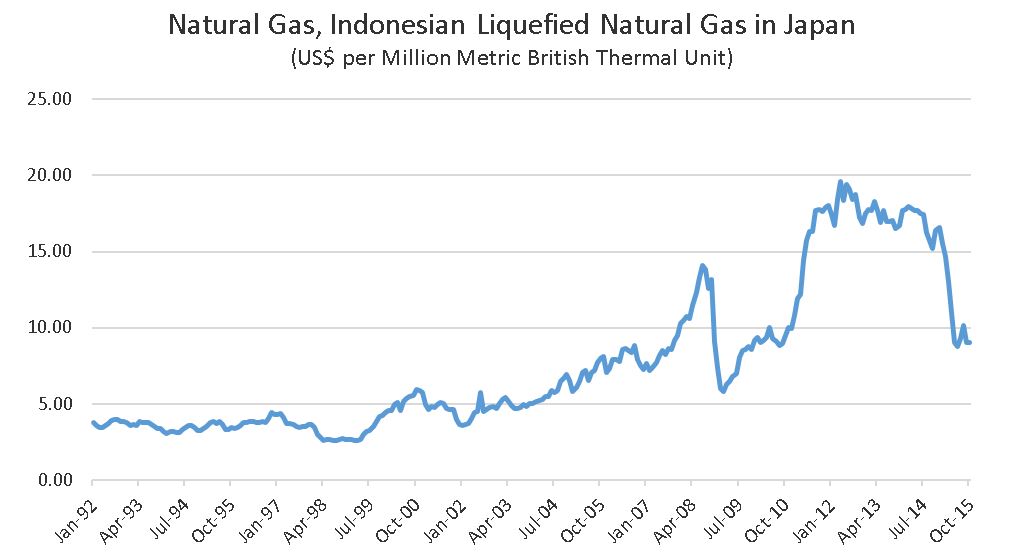
So what are the immediate implications for Tanzania’s nascent offshore gas industry? The outlook for international oil companies (IOCs) is mixed. Companies such as BG state that the fall in prices is a short-term concern and will not significantly affect their investment plans in Tanzania. However some analysts point to a slowdown in exploration across East Africa and maintain that further falls or at least delays in capital expenditure are likely. Currently BG and Statoil plan to start production in 2022, following the construction of the required production infrastructure and LNG plant. The final investment decision, already delayed due to regulatory uncertainties and a constitutional review, could be pushed back further until future prices are more certain. If Tanzania’s government was hoping for a quick win on the new gas resources, this may come as a disappointment.
In addition to possible cuts and delays in capital expenditure, the industry is seeking to reduce costs in response to the fall in prices. Soaring costs on Australian LNG projects have been a beacon for the industry’s cost-cutting drive, while key figures in the Asian gas market have stressed the urgency of adapting and increasing efficiency in this regard.
Cost cutting will probably be good for Tanzania in the long run: a more efficient gas industry means that, when prices do increase, companies can make larger profits on a smaller cost base and there will be more for the authorities to tax.
But cost cutting could impact the Ministry of Energy and Minerals’ plans for local content in the gas industry. One of the government’s main goals for the sector is to maximize local content: ensuring greater numbers of Tanzanian businesses and workers can supply goods and labor to the sector to earn money and learn skills. This strategy may face greater challenges in the shorter term as ancillary suppliers will come under immediate pressure to lower prices and will therefore pass on these efficiency demands to next-tier suppliers. It will become harder for Tanzanian suppliers to compete with lower-cost suppliers from foreign markets. The government is already working with development partners to build local supply capacities in the gas sector, and the success of its local content strategy will depend on how efficiently these projects are implemented.
The price fall raises challenges for Tanzania’s gas sector, and mistakes by the government could mean wasting billions of dollars of Tanzania’s wealth. Arguably, the rate of gas discoveries has recently outpaced regulatory reforms. So a delay in projects and a slowdown in exploration could paradoxically be a blessing for the government, giving officials a chance to catch up and better prepare the country for when natural gas does start to flow.
Lee Robinson is NRGI’s Tanzania officer.
The Wealth Beneath Their Feet: Helping Communities in Southeast Asia to Benefit from Extraction
Most southeast Asian countries operate relatively well developed extractive sectors. However, at the local level, significant knowledge asymmetries remain between companies on the one hand and civil society on the other, with municipal and provincial governments often falling somewhere in between. Local-level oversight mechanisms frequently fall short, especially in terms of assessing complex company activities, and local government officials and parliamentarians may not always understand their roles and responsibilities with respect to the sector.
Such asymmetries can generate potentially destabilizing tensions, especially if community members feel they are likely to remain poor despite the wealth being extracted from beneath their feet. For instance, in Indonesia’s West Papua province, protest and conflict around a major gold extraction project started once mining began, when community members felt as though they experienced the negative externalities of mining without any significant increase in their well-being.

The capacity building training program in Indonesia drew 35 civil society and government participants from Cambodia, Indonesia, Malaysia, Myanmar, the Philippines, Timor-Leste and Vietnam.
The Revenue Watch Institute – Natural Resource Charter, as part of the USAID-funded IKAT-US Project: A Southeast Asia Partnership for Better Governance in Extractive Industries, held a capacity building training program on subnational governance in the extractive context in Bogor, Indonesia for 35 civil society and government participants from Cambodia, Indonesia, Malaysia, Myanmar, the Philippines, Timor-Leste and Vietnam. The training was a mix of presentations, group discussions, panel discussions and interviews. Participants were exposed to different approaches, informed by case studies, to responding to opportunities and challenges at the local level.
In its first day the training helped participants to learn more about their respective country contexts, including detailed discussions around decentralized mineral licensing and revenue sharing. Participants learned about the key features of a regular licensing system, pros and cons of decentralizing such a system, and the peculiarities of the Indonesian model.
The session on revenue sharing was of great interest to participants from several countries—those where resource revenue sharing is being considered (such as Myanmar), where it is currently in place but is contested (such as Malaysia), and where there simply isn’t enough transparency in the process (such as Indonesia and the Philippines). Attendees discussed different typologies of resource revenue sharing and possible alternatives that could be as or more effective in responding to subnational needs.
On the second day, discussion focused on local content and how it is a subnational concern. Colleagues from Indonesia’s Bojonegoro district had interesting experience to share on the Bojonegoro’s local content regulation. The revenue management session largely focused on challenges with revenue sharing and national and subnational examples of how governments devised mechanisms to respond to these challenges.
The next session, on transparency, included videos and discussions on the Extractive Industries Transparency Initiative (EITI) and several case studies which prompted engagement and excitement. Mung Don, a participant from Myanmar, found subnational transparency initiatives from other countries very inspiring and relevant to his country’s approach to the EITI process. “We learned a lot from Indonesia and the Philippines’ experiences, including their mistakes and the challenges they face,” said Mung Don. “We hope we can do better to prepare for the EITI process in Myanmar.”
Participants spent the final day discussing local-level issues around the decision whether to extract. Pak Purwo of the department of politics and government at Indonesia’s Universitas Gadjah Mada led the session, explaining how such decisions must be integrated with national decision making processes. At the end, country participants brainstormed about the relevance of existing subnational interventions to their own contexts and how they would frame some of their existing interventions differently based on what they learned.
As a result, participants from Myanmar plan to push for local content regulations to ensure that the benefits of mineral extraction reach citizens, advocate that revenue is shared fairly between the central and state governments, and support democratic elections at the local level as part of the country’s constitutional reform.
Augusto Blanco, Jr., a member of parliament from Compostela Valley province in the Philippines, said he was inspired by the training to learn more about the cultural systems of his area’s indigenous people. He said he is keen to explore ways to utilize resources to address conflict between the indigenous peoples, the government, and companies extracting gold. And participants from Universitas Gadjah Mada who are running the new Asia-Pacific knowledge hub had several ideas about reformulating the subnational agenda for use in future trainings.
Varsha Venugopal is a subnational capacity development program officer at the Revenue Watch Institute – Natural Resource Charter.
Licensed to Thrive? Indonesia's Need for New Thinking on Mining
One of the biggest extractive industry governance challenges for Indonesia's new Widodo administration is reforming the country's system for licensing mineral extraction.
In the Suharto era, licensing authority was controlled by the country’s central government, which aimed to use the mining of tin, copper, gold and other resources to boost economic development in the then-impoverished nation. After the fall of Suharto, decentralization reforms included a new mining law enacted in 2009. This resulted in the transfer of mineral licensing authority from the national government to local authorities. Decentralization granted wider political berth to resource-rich regions, allowing them to craft their own resource development agenda, fulfil their own growth potential, and better distribute economic gains to their own people.
The rapid change of regulatory framework and political landscape should ideally have provided Indonesia a chance to embark on more democratic, equitable and sustainable management of natural resources. However, practice has proven trickier than theory in this case. Decentralization of mineral licensing power to local government has created a large number of natural resource governance problems. Proliferation of district-licensed mining permits has led to pollution, increased rates of corruption and illegal mining, inadequate revenue collection systems, and a weak investment climate.
Today we’re releasing a policy paper that reviews the impact of mineral licensing decentralization in Indonesia. While many countries with central government licensing face problems related to mining, a decentralized licensing system can exacerbate them. Badly conceived and designed decentralized systems suffer from poor information sharing and coordination between different levels of government.
In Indonesia, the speed at which control over the mineral sector has been decentralized in response to social and political factors has outpaced the development of the capacities of local governments to assume these new duties and responsibilities. This is, unsurprisingly, problematic.
We recommend the following measure to address these problems:
-
The Indonesian government should review the legal instruments used in applying for and approving licenses.
-
The government should also assess costs to administer and monitor licenses and ensure adequate revenues accrue to relevant government units so they can fulfill their responsibilities.
-
The country should reinvest in a uniform cadastral system and geological database (which should include updated information on exploration licenses), with clear reporting procedures for subnational governments.
-
The national government should look into using mining-related fees to address specific administrative needs; provide training programs, particularly for field staff; and invest in human resources to attract and retain highly skilled and experienced employees with administrative and technical expertise.
-
Government and civil society actors should invest in improving mechanisms to make subnational governments more accountable to citizens. These could include requiring transparency throughout the licensing process, especially in the awarding and monitoring of licenses; creating easy, direct methods for the public to communicate with relevant government employees; and supporting efforts by civil society groups to monitor licensing regulations and procedures at the subnational level (including through EITI).
Emanuel Bria is NRGI’s Asia-Pacific senior regional associate. Varsha Venugopal is NRGI’s subnational capacity development program officer.
Free, Prior and Informed Consent: A Moot Point
On April 30, Publish What You Pay (PWYP) coalition partners in Southeast Asia launched the Civil Society Organization (CSO) Technical Working Group, a team organized at the most recent PWYP conference in Manila to carry out a plan to integrate free, prior and informed consent (FPIC) into national policies in the region.

An important but little understood tool in the transparency arena, FPIC is a body of rights that enable local community members to challenge activities, projects or policies that have the potential to impact their lives or livelihoods. Protecting indigenous peoples’ rights, a 2007 United Nations declaration recognized FPIC as part and parcel to cultural rights, property rights and the right to self-determination.
In the Philippines, FPIC is closely linked with the Indigenous Peoples’ Rights Act of 1997 (IPRA), but poor implementation of the law has led to problems that put many indigenous people in a weak position.
At a March conference in Manila, Datu Eduardo “Ed” Banda of the National Federation of Indigenous Peoples of the Philippines led a debate on the complexity that surrounds FPIC. Participants argued that government officials don't sufficiently understand FPIC, resulting in information gaps that make indigenous peoples vulnerable governments and companies that fail to recognize their rights. Without strong implementation of IPRA, tribal chiefs are sometimes pressured by companies to make decisions that do not benefit the community. Even the National Commission for Indigenous People, a government body established to protect indigenous peoples' rights, has been accused of ignoring customary laws.
All of these challenges have prevented citizens from fully realizing the benefits of natural resources and resource revenues. The FPIC mandates that companies consult with indigenous peoples before mining activity can take place, but often, they hold a consultation simply to put a checkmark on the list, instead of accommodating the needs and concerns of the community.
At the close of the debate, Sir Ronald Allan of Bantay Kita helped participants identify areas where FPIC is poorly integrated into national law. Setting ambitious targets, they agreed that by 2016, at least five countries in the Asia-Pacific region would have integrated FPIC principles and standards into their national and subnational policy frameworks, referencing the United Nations’ 1948 Universal Declaration of Human Rights, Technical assistance will come from a number of organizations, including the Revenue Watch Institute – Natural Resource Charter, the World Bank, the United States Agency for International Development, Australia’s Department of Foreign Affairs and Trade, the Extractive Industries Transparency Initiative and PWYP International.
Carolus Tuah is the executive director of Pokja 30, a PWYP Indonesia member.
The Road to Compliance: EITI Indonesia's Challenges
This summer Indonesia submitted its second 2010-2011 report to the Extractive Industries Transparency Initiative (EITI), marking the global coalition’s 200th published report. Despite this achievement, the long-awaited submission has raised concerns over EITI implementation in the country. According to EITI’s reporting requirements, the 2010-2011 reports should have been published last year. Consequently, Indonesia risks being delisted as a candidate country.
Several factors are to blame. In its first report, Indonesia struggled to reconcile different accounting standards (cash versus accrual basis), access corporate tax information, or in some cases document financial transactions. But in October 2013, the EITI Board eventually concluded that Indonesia had made meaningful progress and granted the country an extension to reach compliance. In its second report, 40 percent of reporting companies (more than 100) missed the deadline, delaying the coal and mineral section of the report and again calling into question the level of commitment from government and stakeholders.
As one of world’s top suppliers of coal, nickel and copper, Indonesia depends on extractives for economic growth. The mining sector accounted for 6 percent of total 2011-2012 GDP and more than 17 percent of export revenue. During the same years mining contributions to GDP rose from $39.9 billion to $46.4 billion. The 2013 national budget took 97 percent of its natural resource revenues from oil, gas and mining, according to the Ministry of Finance.
But total revenues could be higher. A recent study by Indonesia’s Anti-Corruption Commission on non-tax revenue from the coal and mineral sector found that from 2010 to 2012, some 21 coal companies didn’t pay royalties. Some nickel, bauxite, and manganese companies didn’t either. The study concluded that, over a decade, Indonesia has lost $600 million in potential royalties and land rent payments.
There are flaws in the country’s mining concessions and licensing too. The Swandiri Institute, based in Kalimantan, used Indonesia’s 2009 EITI report and GIS Web mapping technology to compare government data on mining licenses against satellite and drone images. The study found that one company in the Ketapang region is mining outside its licensed territory, inside a palm oil concession. Further investigation revealed that the concession owner is in fact the company’s subsidiary. It also found that in 2012, the overlap cost the West Kalimantan province about $1.6 million in lost land rent.
These findings, which so clearly identify shortfalls in Indonesia’s mining sector, suggest that
EITI could fill the gap, as it has elsewhere. A 2013 report by Open Society Fellow Diarmid O’Sullivan found that EITI reporting reinforced a global trend toward maximizing natural resource revenues. The government of Ghana, for example, has said that the reports informed its decision to review royalty rates paid by mining companies.
In Indonesia, municipal authorities can calculate how much oil and gas revenue they’re entitled to, thanks to new lifting figures listed in the second report. By meeting the new EITI Standard, they also have information about concession coordinates, license owners, beneficial ownership and revenue transfers to subnational governments. The report should be able to show which part of the sector needs improvement.
As a tool, the EITI report is a way towards transparency and away from corruption and mismanagement in Indonesia’s extractive sector. But this could only happen with the strong capacity of concerned citizens to interpret its reports, and the willingness and capacity of governments to undertake reforms.
January 2015 is the deadline for Indonesia to achieve compliant status. It is hoped that, under the leadership of newly elected president Joko Widodo, the new government will make stronger commitments to transparency and pull back the curtain that has been covering the extractive sector in Indonesia.

A contest-winning infographic explains EITI in Indonesia.
Diah Tantri is NRGI’s Asia Pacific project assistant, and Emanuel Bria is NRGI’s Asia Pacific senior regional associate.
How Jokowi Can Fuel Reform in Indonesia's Oil and Mineral Sectors
Today, Indonesians will have a new president, Joko Widodo—known throughout the country by his nickname “Jokowi”—who ran on platform of reform. Many Indonesians view his inauguration as an opportunity for the country to turn over a new leaf and move toward more responsible governance and a technocratic approach to solving the country’s problems. His public commitments to curtailing corruption and his rise from the ranks of local government have created hope that he can navigate the challenges and opportunities of an increasingly decentralized Indonesia.
In particular, Mr. Widodo’s inauguration carries with it a moment of genuine opportunity to maximize the benefits that natural resource extraction has for Indonesia’s citizens, and to reduce some of the negatives associated with the status quo in the oil and mining sectors. While Indonesia has long been a middle-income country, it seeks to transform the economy from commodity-led growth and increase tax revenues for much-needed investment in infrastructure, health and education.


The new president has communicated a simple and clear vision of his priorities as leader; he describes a government that listens and responds to the needs of the people, and that is open, accountable and professional. Styling himself as a pragmatic problem solver, Mr. Widodo campaigned on his nawa cita, or “nine priorities agenda.” The manifesto emphasizes effective, reliable and democratic governance and at the same time aims to strengthen the national economy by improving strategic sectors, including the energy sector.
In the context of public hunger to better understand sectors which have traditionally been opaque, Indonesia has built some solid platforms on which the new government can build more accountable governance of the oil and mining industries. Last week, the country was deemed compliant with the Extractive Industries Transparency Initiative, meaning that a large amount of information on how Indonesia is benefitting from, and managing its resources is now in the public domain. The country has been one of the leaders of the growing Open Government Partnership (OGP), and has made special commitments as part of that initiative to increase the transparency of its natural resource sector.
The new government will nonetheless assume power with a long list of challenges, solutions to which will require concerted effort and extensive public communications. Long a major global oil producer, Indonesia’s production has declined by 25 percent in the last ten years. Despite the country’s status as a net importer of petroleum, the Indonesian population remains heavily dependent on fuel subsidies, which comprise about 20 percent of national budget expenditures—an issue that Mr. Widodo has vowed to tackle as a near-term priority.
The hard mineral sector presents the incoming government with similar challenges. There has been a significant decentralization of the power to award mining licenses, and a lack of effective coordination between national and subnational governments has resulted in overlapping titles and weak enforcement of legislation and regulation. The government is embroiled in complex negotiations with major international mining companies in the wake of its announcement earlier this year that it would not allow companies to export mineral products that are not processed in Indonesia.
Overlaying these technical challenges are allegations of corruption among senior government officials in the extractive sectors. Both the former minister of energy and mineral resources and the former head of the oil regulatory body SKK Migas have been investigated by Indonesia’s Anti-Corruption Commission because of alleged graft.
In recognition of the critical juncture at which Mr. Widodo takes office, NRGI has collaborated with Gadjah Mada University to prepare two policy briefs that present key considerations for governance of the natural resource sector.
The first brief focuses on steps that the government can take to bolster existing efforts to promote transparency and greater government-citizen dialogue around natural resources. Its recommendations touch on:
-
Mechanisms to increase the transparency of licensing processes, especially in the mining sector
-
The benefits that Indonesians could gain from public disclosure of petroleum and mining contracts
-
The elements of the new, stricter EITI Standard that Indonesia will have to implement beginning in 2015, and the benefits that rigorous implementation can confer on Indonesia
-
The importance of closer communication and coordination between national and subnational governments around extractive-sector management
Indonesia is also revising its oil and gas law, which necessitates a thoughtful approach to restructuring petroleum-sector institutions, particularly in the wake of a 2012 Constitutional Court decision which invalidated the role played by the regulatory agency BP Migas (which had been responsible for enforcing Indonesian legislation and monitoring the activities of international oil companies and the national oil company Pertamina). A new system that ensures rigorous and consistent enforcement of the rules and includes strong performance incentives for Pertamina and other public agencies will be essential. To this end, our second brief builds on Gadjah Mada University’s expertise on oil-sector institutions in Indonesia and NRGI’s global research on oil-sector administrative structure and national oil company management, to share:
-
Pros and cons of various institutional models under consideration by Indonesian officials
-
An assessment of the implications of different possible rules for enabling Pertamina to participate in (and lead) the operating groups that manage oil projects
-
Lessons learned from international experience around various accountability mechanisms—including audits, advisory committees and rigorous reporting requirements—and the performance of national oil companies and regulatory bodies
We hope that these considerations will be of value to the new government and to Indonesia’s citizens as they seek to take advantage of this historic moment to make sustained progress in managing the Indonesia’s natural resources in the national interest.
Canadian History Lesson: Mongolian MPs Learn from Canada's Experience
(Монгол»)
Earlier this month six Mongolian members of parliament (MPs) and three parliamentary staff members toured western Canada to learn about Canada’s experience managing its mineral and oil booms and busts. During the visit, the MPs met with tax and public finance officials from British Columbia and Alberta, provincial and federal legislators, leaders of Canada’s First Nations (indigenous communities), and representatives from industry who work with mining-affected communities.
The British Columbia mining booms of the 19th and 20th century and the current boom in the Alberta oil sands in many ways mirror what Mongolia is going through now. With trillions of dollars of unexploited mineral and oil resources, Mongolia has been dubbed the “Saudi Arabia of Central Asia.” Yet the challenges of transforming these underground assets into development cannot be overstated.

The Hon. Yondon Otgonbayar of Mongolia (photo by Neil Gaudet)
Falling commodity prices, conflicts with local communities, and systematic cost overruns have squeezed mining investment globally, which could jeopardize Mongolia’s planned sector expansion. Unclear conflict resolution mechanisms and imprecise mining laws have led to disputes between companies and the government. And there have been concerns that mineral revenues placed in a “human development fund” were consumed rather than invested for the future.
Still, the economy is expected to grow by 9.5 percent in 2014. Mongolian parliamentarians are working hard to establish a legal framework that leverages this growth and ensures that mining revenues are maximized and used for national development.
Former minister of education and current sitting MP for the opposition Mongolian People’s Party (MPP), Mr. Yondon Otgonbayar sat down with NRGI economic analyst Andrew Bauer to discuss the situation in Mongolia and the Canadian study visit.

The Hon Saldan Odontuya (left) and the Hon. Yondon Otgonbayar (right) engage with First Nations community leaders and the extractive companies that operate in those communities, as NRGI’s
Dorjdari Namkhaijantsan (center) looks on. (photo by Andrew Bauer)
NRGI: Mongolia is going through a major mineral boom at the moment. What are the biggest opportunities and challenges that Mongolia faces in managing this boom?
Yondon Otgonbayar:This mining revenue presents Mongolians with a great opportunity, which, if we are able to turn this into a base for development, would create a brighter future for the country. The challenge is quite big, because right now the economy is becoming very resource-dependent. The volatility of mining revenues is currently affecting the national economy. Also, we have to learn how to avoid Dutch disease and dependency on revenues from mineral resources.
What must parliament do to address these challenges?
We have to enact a series of laws regulating the mining industry. On the one hand there are laws in place at the moment. The problem is that the Mongolian parliament keeps changing these regulations pretty often, which creates a lot of problems for foreign investors. Parliament probably has to learn to be strict on [enforcing the current rules]. Because of this mining boom, nationalism is on the rise. Sometimes it generates wrong policies, rather than long-term and sustainable policies.

Joined by NRGI’s Andrew Bauer and Dorjdari Namkhaijantsan (far right), Mongolian MPs visit Morden Mine, a historic coal mine (circa 1913) in British Columbia. The boom-and-bust history of the region offers important lessons in resource revenue management. (photo by Neil Gaudet)
How can civil society work with government and parliament?
We have to admit that Mongolia is not going through a unique experience. Many nations have been in similar situations and made their own mistakes. They have learned their own lessons. So international institutions like NRGI could help Mongolia with knowledge about good practices and mistakes so that we can learn from these experiences. Many people, especially resource nationalists in Mongolia, do not believe in investors. They believe they have come to take out our resources. Sometimes they question the intensions of foreign governments, believing that they are basically looking after only the interests of their own investors. International institutions, like NRGI, which are not dependent on extractive industry funding, are important because they can bring impartial and sound advice.

The Hon. Leon Benoit, chair of the Natural Resources Committee in the Canadian parliament, shares his views on natural resource taxation and the role of NGOs in resource governance with Mongolian MPs. (photo by Andrew Bauer)
We’re here in Western Canada. We’ve been in British Columbia, and now we’re in Alberta. One is mining-dependent. One is oil-dependent. What have you learned personally from this study visit for Mongolia?
Quite a few things. Of course, Canada is a very different country than Mongolia. It is a federal country. In Canada they also have [special treatment of] First Nations, whereas in Mongolia you don’t have indigenous groups. Most enriching for me were three basic ideas. First of all, I was quite interested in the management of the Alberta Heritage Fund. In my opinion, it presents a model that we could apply in Mongolia. Soon we’ll discuss a natural resource fund law. This experience is therefore quite useful to us.
Secondly, you might have noticed that I was trying to emphasize in one of our last meetings that we should learn a lesson from Canada that government cannot run companies, especially in the mining sector. Unfortunately we do have that practice in Mongolia, and so far it was not successful, or at least was not a good experience for Mongolia.
Thirdly, although Mongolian law introduces quite a number of clauses regarding the interests of the local population, in Canada we saw that it was embodied in agreements defining the responsibilities and benefits of local populations located near mines. I believe that in future Mongolian legislation, we have to see to it that locals have their own rights clearly defined under the law, and companies would also respect the rights of locals for their own development in mining.
This is the first of two interviews conducted during the September study tour. In the second, the Hon. S. Odontuya speaks with NRGI's Dorjdari Namkhaijantsan about the lessons she learned in Canada and about the governance challenges that remain in Mongolia.