
Close to Home: The Critical Importance of Subnational Governance in Oil, Gas and Mining
For years, economists and political scientists have studied national governments throughout the world and advised about how to optimize resource revenues from extraction for long-term development. There are numerous policy disciplines that a country must get right to reap the full benefits. (These are addressed in detail in the Natural Resource Charter and global initiatives such as the Extractives Industries Transparency Initiative (EITI) offer an implementing framework focused on transparency and accountability in extractives.)
A major challenge that is often unaddressed by development plans is the governance of extraction by communities closest to a mine or oil and gas field. In most countries, national governments negotiate extraction contracts with companies and collect the revenues, but it is those closest to the extraction site that see their physical and economic landscape change most dramatically. Experience working on local governance issues in resource-rich countries has shown that for a country to fully benefit, subnational governance issues must be addressed.
Why subnational governance work really matters
One obvious reason for addressing subnational governance is that local dissatisfaction can derail an entire project, as a scan of headlines will indicate. Several Native American tribes have physically blocked construction of a pipeline in North Dakota, saying they were not properly consulted in its planning and are concerned that the pipeline will impact their water supply and threaten access to sacred sites. Employees at a phosphate mine in Togo are on strike demanding better wages and more protective gear. Anthropologists and environmental activists have tried to bring attention to social and environmental effects for years, but the local impacts are often treated as separate issues instead of something that impacts the nation’s chances of benefiting from resource wealth. Researchers at the Harvard Kennedy School found that community conflicts over environmental and social concerns can cost up to USD 20 million a week in lost value for large-scale operating mines.
It’s not just a question of lost revenues. When members of local communities do not feel like they are benefiting from a national extraction project, conflict can result. There have been 20 resource-fueled civil wars since World War II. While Myanmar has undergone great political transition in recent years, the government has struggled to bring conflict with various ethnic groups to an end. One of the key steps to ending these conflicts and bringing lasting peace to the country is addressing how the costs and benefits of natural resources are shared between the ethnic groups and the national government.
Many national governments already share resource management powers with local governments. Approximately 30 of the 58 countries assessed in the 2013 Resource Governance Index featured some form of revenue sharing between the national and subnational authorities. The responsibilities shared with local governments are often significant. For example, Bolivia decentralized more than USD 2 billion of its oil revenues in 2012, amounting to more than USD 1,000 per capita per year in some areas. Some districts in Nigeria receive more than 80 percent of their revenues from resource projects. In Indonesia, local governments have the power to grant—or deny—licenses for many mining projects. When development actors only address resource management issues with national governments, they risk missing these large areas of impact.
Unfortunately, the design of power or revenue sharing systems is often done in a reactionary manner. In some cases, poor design can lead to gaps or overlapping national and local government authority. In others, it can increase the opportunity for conflict, corruption and waste. In Peru, some local leaders in mining regions attempted to foment violent protests in order to compel additional revenue transfers from the national government when commodity prices rose between 2005 and 2008. When powers are decentralized without adequate institutional preparation, capacity gaps can emerge as there is a sudden demand for extractive expertise in more locations throughout the country.
How to approach subnational resource governance
Supporting good resource governance at the local level is not easy. Even the definition of the problem looks different at the subnational level—academics debate how to characterize and whether there is a subnational resource curse. While some studies show real income levels rose in communities living closest to mines compared to other communities in the same country, others studies show that local economies were harmed by sudden large increases in public spending.
NRGI researchers have recently concluded a series of policy papers, including a synthesis paper, to support local governments and civil society actors as they aim to improve governance of natural resource wealth. The research is the fruit of eight years of working side-by-side with civil society and local government partners in resource-rich subnational areas throughout the world. The headline? While many of the good practices required at the national level do matter and apply at the subnational level, one cannot simply cut-and-paste national level solutions into subnational resource governance challenges.
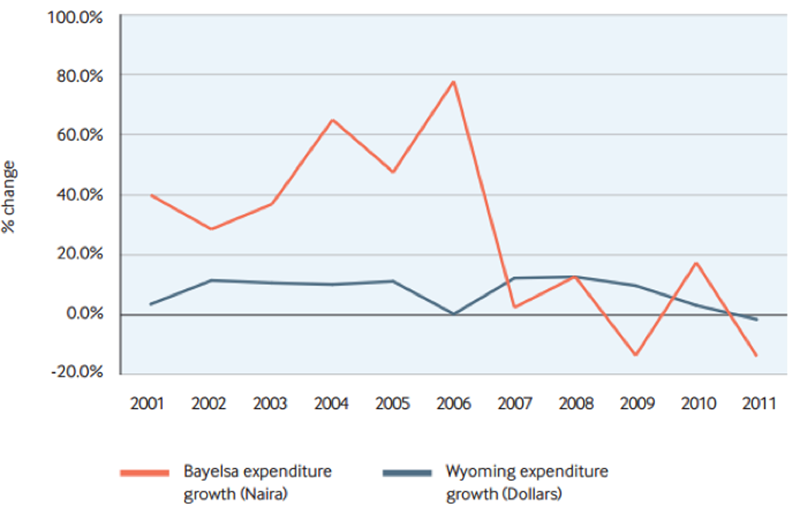
One of the biggest challenges at the local level is that the responsibility delegated to local authorities is not matched with the institutions and policy options needed to manage associated challenges. Decades of research has shown that the large, volatile and finite nature of resource revenues can distort economies and lead to wasteful government spending. The prevailing wisdom is to save some of the resource revenues in a manner that counters the distortion or allows for more flexibility when prices change. Some subnational governments have been able to implement these policy recommendations, mirroring national level best practices. The below figure illustrates how the U.S. state of Wyoming was able to smooth expenditure spending during volatile commodity prices by using a savings fund. Meanwhile, the state of Bayelsa in Nigeria had more than an 80 percent change in spending.
Many resource-rich subnational governments simply don’t have that option: the national government has strict rules that forbid subnational governments from borrowing or saving revenues. In Indonesia, for example, district governments, which receive 6 percent of the oil revenue from projects in their district, are required to repay the national government any revenue they don’t spend by the end of the year. The local leaders of Bojonegoro, an oil-rich district in Indonesia with just over a million people, are working hard to counter this problem. Through intense lobbying, they have convinced the national government to allow them to create a savings fund and are in the process of passing legislation to create the first such fund in the country. The broader policy lesson is that subnational governments must be given the tools to address known resource revenue challenges. Sometimes, this means changing the national rules.
Short- to medium-term expenditure volatility in Bayelsa and Wyoming
The capacity of local governments can also be hindered by power asymmetries between national and local governments. This can often be seen in the challenges local governments have collecting revenues from national government or extractive companies. NRGI profiles this problem in a case study about a mining community in Asutifi, Ghana. When the mine began to produce gold in 2006, local leaders in Asutifi knew they were entitled to a property tax and percentage of the royalties, but they did not have access to the contract between the company and the government or production information to understand their amount due. The leaders complained that there was a long bureaucratic procedure to get the royalties, which included unpredictable delays from the national government. As a result, what money was received locally was spent haphazardly, reducing the community’s trust of the local government. NRGI worked to improve the understanding of local leaders and civil society about the revenue calculations so they could better advocate for their due.
As at the national level, corruption and nepotism can complicate good governance solutions to natural resource management. While there is some empirical evidence that fiscal decentralization correlates with lower levels of corruption, decentralization also distributes the opportunities for corruption more widely and often with less formal oversight. Civil society and journalists who often can put a check on corruption at the national level tend to have fewer resources and less access to information at the local level.
A framework for subnational resource governance policy analysis and recommendations
The Natural Resource Charter provides a useful framework to analyze the decisions that governments need to make in converting natural resource wealth below the ground into long-term sustainable development above the ground. From the decision to extract to investing for sustainable development, each step in the decision chain is crucial for governments to avoid common pitfalls of the “resource curse.” The extent to which national governments delegate powers for each decision to subnational governments vary greatly from country to country. NRGI’s research has shown ways to consider the implications for subnational governance across the decision chain. Because of its area of expertise, NRGI’s research focuses on governance issues related to licensing and revenue management more than direct social and environmental impacts.
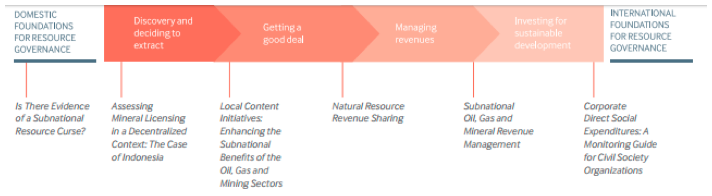
- Deciding to extract/licensing: Governments must be sure to coordinate licensing information systems vertically (between the national and subnational governments) and horizontally (between subnational governments), while recognizing the full spectrum of land rights to reduce conflict and produce better planning.
- Getting a good deal (revenue sharing): Any revenue sharing scheme should have clear objectives aligned with subnational expenditure responsibilities and management capacities.
- Getting a good deal (local content): Local content plans should be coordinated with local development plans so that new businesses can be created more easily and have lasting impact. The national government must be transparent about the negotiating process and the real costs associated with local content promises.
- Managing resources: Local governments should implement revenue management best practices, including using fiscal rules. National governments must allow local governments the tools to match their resources.
- Investing for sustainable development: Local and national governments can use the resource revenues as an opportunity to improve their subnational investment systems so that future spending is more efficient. At the same time, both levels of government can foster non-extractives areas of the economy to create long-term growth.
- Transparency: Information must be disaggregated on a project-by-project basis and available in formats that can be accessed and absorbed by subnational communities at each step in the decision chain.
The good news is that with support and access to information, many subnational governments are leading the charge for better resource management. Learning from their counterparts in Bojonegoro, civil society groups and local governments in the Compostela Valley of the Philippines were able to come together in a multi-stakeholder discussion and create detailed transparency mechanisms. Mining in the Philippines is often very contentious and in many regions there is little trust between communities, governments and the industry. “Transparency templates” and discussion forums at the local level informed a national multi-stakeholder implementation of the Extractive Industries Transparency Initiative. Local innovations like these can keep the momentum going during national efforts to improve resource governance.
Daniel Kaufmann is the president and CEO of the Natural Resource Governance Institute and a non-resident senior fellow at Brookings. Rebecca Iwerks is a lawyer specializing in the intersection between development and human rights. She works as a consultant with NRGI’s subnational governance program.
This paper was drafted in conjunction with a panel discussion on the topic at the Overseas Development Institute and the launch of a paper synthesizing NRGI’s work on subnational governance.
Francophone Africa Actors Boost Abilities to Pursue Reform
For barrister Yvette Nsangana, understanding more about the lack of gender diversity in the Democratic Republic of the Congo mining sector was a main draw of a summer school run by the Francophone Africa Extractive Industries Knowledge Hub.
Nsangana hopes to be one of a number of female civil society actors in a better position to debate fiscal matters relating to the DRC’s mining code. Disagreements among stakeholders often stem from a lack of consensus over fiscal regimes, she says. Fiscal complexities have taxed civil society actors and have prevented civil society organizations (CSOs), in particular, from making informed contributions, according to Nsangana.
Building stakeholder capacity to tackle issues like these is the purpose of the hub, known in French as the Centre d'Excellence pour la Gouvernance des Industries Extractives en Afrique Francophone, or CEGIEAF. Each year, the two-week course is hosted by l'Université Catholique d'Afrique Centrale (UCAC) with the support of NRGI and Misereor.
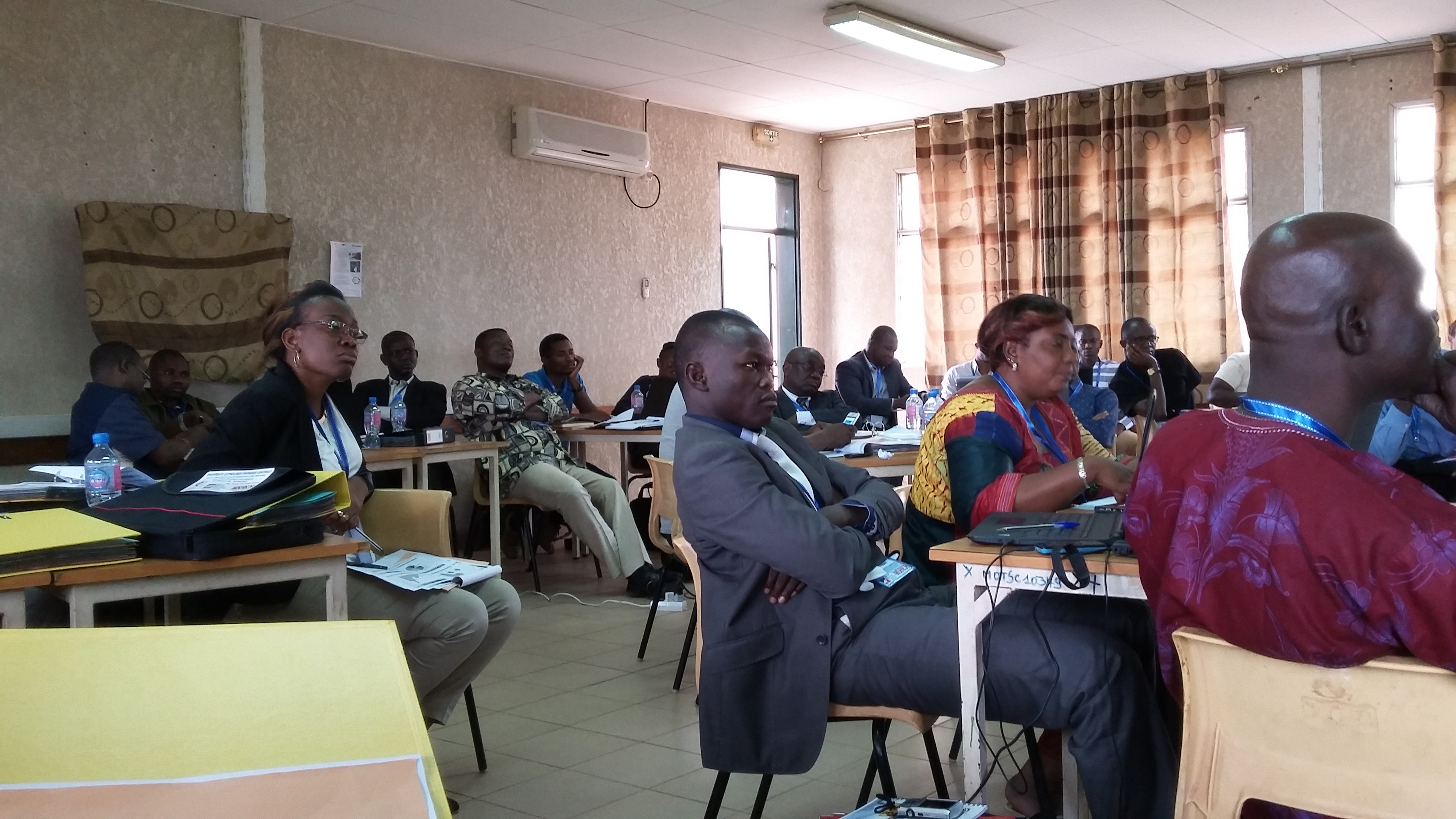
Civil society actors, journalists and other professionals were among the 27 participants who came together in August. Their aim: to improve their capacity to influence policy reform.
Representatives from Burkina Faso, Cameroon, Central African Republic, Chad, Republic of the Congo, Cote d’Ivoire, the Democratic Republic of the Congo (DRC), France, Mali and Senegal used interactive exercises, comparative analysis and case studies to develop their skills and knowledge.
One of the key conclusions to emerge from of the course was that governments ought to adopt specific local content policies and law so that natural resource management has a meaningful impact. Participants used part of the course to compare various hydrocarbon and mining laws containing provisions on employment, development of infrastructure and the promotion of local goods and services. They noticed that the content of these provisions is often limited, or vague. It lacks clear indicators and monitoring mechanisms. Their discussion was informed by hub alumnus Michel Bissou, program manager on extractives industries with Cameroon’s RELUFA. Bissou presented pilot work to monitor local content and fiscal obligations in Cameroon mining projects.
The debates that formed a key part of the course illustrated how anxious local communities are to see impactful extractives management. Positive stories emerged from Burkina Faso, where civil society, journalists and MPs worked in synergy to push for greater transparency and accountability from government and corporations, improving practice in the sector and changing policy and law.
They issued studies and articles. They launched investigations, raising awareness, generating debate and informing the work of other stakeholders. Alumni such as Elie Kabore, a journalist, were invited to take part in the discussions. He described his work with MPs and the role played by CSOs in Burkina Faso during its mining law review. Burkina Faso’s mining code, adopted in June 2015, includes several recommendations from civil society, such as contract disclosure, the creation of a fund for local development and clauses regarding conflict of interest and human rights. In December 2015, the parliament of Burkina Faso also created a commission to investigate and clarify the implementation of the revenue sharing provisions, corporate social responsibility policies and the allocation and management of licenses.
Local communities in Francophone Africa are increasingly demanding their share of natural resource wealth. Across the region, many mining laws now include provisions on revenue sharing. Implementation, however, remains a challenge. In the DRC, provinces and local administration struggle to have the revenue sharing formula respected. In Cameroon and Burkina Faso, local communities have claimed they do not receive any money at all. Participants cited a lack of regulatory law and failures in coordination between national agencies as just some of the reasons behind these problems.
Despite these obstacles, stakeholders are still advocating for fair allocation of revenue to local administration and communities to contribute to local development and improve living conditions. To do this, plans reflecting local needs should be designed in a participatory manner and enforced through transparent and accountable mechanisms.
Evelyne Tsague is the Africa deputy director with NRGI.
Can We Reverse the Resource Curse at the Local Level in Indonesia?
This op-ed originally appeared in The Jakarta Post.
Indonesia is a classic example of a country that has overcome the oil curse. This was partly due to wiser spending politics as we weathered extremely volatile global oil prices between 1974 and 1989. Eventually, we moved from an oil-dependent economy to a more diversified one.
A looming quandary is whether we can repeat the same story in resource-rich districts and provinces. It is clear that the central government needs to work with these localities to make progress and avoid the resource curse.
Following the post-Suharto decentralization, the power to authorize mining licenses and exploit natural resources was transferred to local governments. Resource revenue-sharing mechanisms resulted in improved benefits in some local areas. In most cases, however, the result has been mixed, if not negative.
Most resource-rich districts and provinces lack the necessary technical capacity and political commitment to use these funds and authority for the people’s welfare. Resource-rich districts and provinces face the so-called “Dutch disease,” where petroleum and mining rents dominate the local economy and thwart development of other sectors; and pro-cyclical spending due to volatile commodity prices.
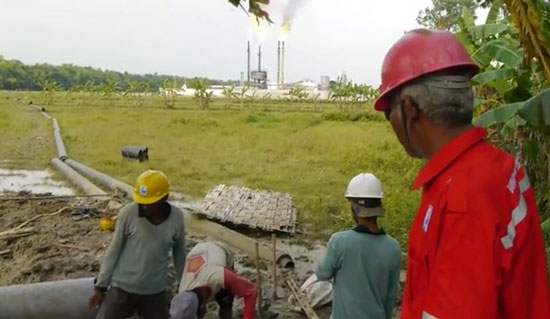
Video still from “Fueling the Future: Indonesia Plans for its New Oil Wealth”
Indonesia’s revenue-transfer system has exposed local economies to volatile oil, gas, coal and mineral prices. As a result, many resource-rich districts and provinces have gone through fiscal crises in recent years as a result of low commodity prices. Additionally, local-level patronage politics plays a significant role in diverting resource revenues toward elite groups and away from local populations.
At the same time, the central government still lacks necessary policy instruments to help sub-national governments better use these resources. A number of major policy issues need to be addressed.
The decision to extract and the granting of mining licenses need to follow a proper mechanism. Policy research by the Natural Resource Governance Institute (NRGI) on Indonesia’s decentralized mining system shows that the speed of decentralized power to sub-national governments to authorize mining licenses outpaced the latter’s capacity to perform this role. This has resulted in mismanagement and corruption.
Local community input must also be gathered. Our new program at the University of Gadjah Mada, called Resource Governance in Asia Pacific (RegINA), has produced qualitative research drawing from an in-depth study of four resource-rich districts in Indonesia. The study focuses on the relationship between local knowledge about managing natural resources and the decision to extract.
We found that community needs and concerns are often ignored. Communities have an important voice in how to sustainably manage natural resources. Clear policy guidance on free prior informed consent (FPIC) in the mining industry decision chain would allow them to have their voices heard in the decisions about whether or not to extract.
Extractive-industry revenue should be used to transform a resource-based economy toward diversified and sustainable development and to ensure some revenues are set aside for future generations.
Bojonegoro, East Java, is one district that is transforming finite resources into more sustainable local development and intergenerational benefit. An oil-rich district, Bojonegoro is known for its policy innovations, which address social conflicts, empower the local workforce and tackle poverty using resource revenues. (Watch “Fueling the Future: Indonesia Plans for its New Oil Wealth” from NRGI predecessor organization Revenue Watch Institute.)
Under the leadership of Suyoto (popularly known as Kang Yoto), Bojonegoro has started to establish an oil fund that would help to manage pro-cyclical spending in the district. At the same time, a portion of funding will go toward future generations through investment in education.
There are other local innovations to reverse or prevent the resource curse in localities. But in a unitary state like Indonesia, the role of the central government is indispensable in supporting policy innovations and providing guidance to make sure that extractive resources are turned into sustainable development.
Now that revisions of petroleum and mining laws are being discussed in the House of Representatives Indonesia may have the chance to repeat the success story of the 1980s at the local level by establishing stronger rules on anticorruption in petroleum and mining licenses; adopting the FPIC mechanism; and instituting rules on natural-resource funds at the local level.
Hasrul Hanif is a lecturer at the School of Politics and Government at University of Gadjah Mada and Emanuel Bria is the Asia-Pacific senior officer at the Natural Resource Governance Institute (NRGI).
Video: Current Issues in Myanmar Resource Governance
With Andrew Bauer from the Natural Resource Governance Institute and Eaimt Phoo Phoo Aung from the British Embassy in Myanmar. Filmed at the NRGI-Central European University School of Public Policy course Reversing the Resource Curse: Theory and Practice in April 2016.
Revenue Sharing in Colombia: Lessons from Bolivia and Peru
Many national governments in Latin America have been sharing mining and hydrocarbon revenues with subnational authorities for years. In some of these countries, the amount shared is quite significant. But what are the most effective models? New NRGI case studies on Peru and Bolivia systematically analyze the revenue sharing arrangements and point to a few elements for success.
The national governments of Colombia, Bolivia, Peru and Brazil transferred over $79 billion of oil revenues and almost $15 billion of mining revenues to subnational governments between 2007 and 2012, while prices for these commodities soared. The way these countries decentralize significant resource revenues to subnational governments varies considerably. Some of them share royalties, while others share other types of tax revenues. Some transfer revenues only to producing regions, while others also make transfers to non-producing areas.
NRGI has conducted comparative analysis of revenue sharing models for some time; we use it to advise governments, inform debates among civil society organizations, and also in training and capacity building.
Bolivia, a major producer of natural gas, presents a particularly interesting case. The 2005 Hydrocarbons Law establishes two payments hydrocarbon companies must make to the Bolivian state: royalties and a “Direct Tax on Hydrocarbons” (known by its Spanish acronym IDH). A significant portion of both payments is transferred to subnational governments: 44 percent of IDH and 67 percent of royalties go directly to subnational governments. The national government shares revenue through formula-based transfers that prioritize producing areas, but also makes transfers to compensate poorer, non-producing areas.
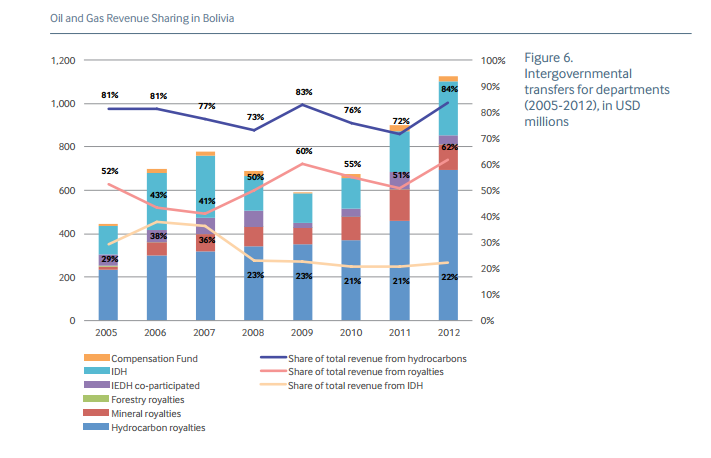
The system also includes a fund for indigenous peoples, allocations to public universities for research investments, and cash transfers to vulnerable groups such as the elderly, pregnant women and families with children in primary school.
Has this system been effective in improving living conditions locally, increasing investment and public services in these areas? What problems have come up? Would this system work for other countries? These are some of the questions NRGI’s Latin America team has been grappling with during trainings and through its participation in international debates.
In early March, the Externado University in Colombia held a training course in Sincelejo, a small city in the department of Sucre. The training focused on the recently reformed Colombian Royalty System, an institutional framework designed specifically for the management of royalties from oil and mining, which includes transfers to subnational governments. Although the three-day training homed in on Colombia, there were two modules that provided examples from other Latin American countries. This allowed participants to discuss options that could plausibly be applied in Colombia and also identify problems that are common across countries.
In this discussion, Bolivia’s policy of directly distributing a share of gas revenues to vulnerable citizens through cash transfers was up for debate. Would this work for Colombia? Would it be effective in reducing poverty and inequality? Have these benefits been obtained in Bolivia or have funds not reached target populations? All of these questions and concerns were part of a lively debate on new options for Colombia.
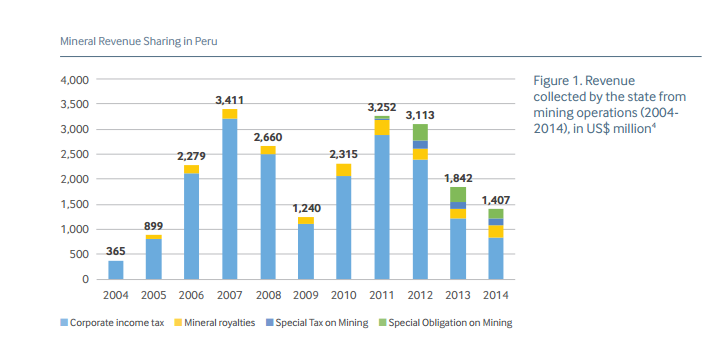
The Peruvian case was useful to open up a debate on the current low price context, which has meant a sharp fall in revenues transferred to subnational governments. What can officials do to address this? How can they spend the revenues still available more effectively and on projects that maximize impact on local living standards? Participants at Sincelejo emphasized the importance of planning and prioritizing investment projects that focus on sustainable, productive sectors.
It is still early to say how the discussions will affect debates and related policies in Colombia, but the enthusiasm and rigor that participants brought to the discussions leave me excited about reforms at the local level.
Claudia Viale is a Latin America Officer with NRGI.
Rethinking Corruption: An Empirical Governance Perspective
NRGI president and CEO Daniel Kaufmann delivered the keynote presentation at “Transparencia: Open Data and Anticorruption in Latin America,” an April 4 symposium at Harvard University.
Kaufmann offered a framework to rethink and redefine the conventional view of corruption. Showing global evidence, he addressed various governance dimensions that matter and their impact on growth and development. He talked about the challenge of “state capture” and of “legal corruption,” among other topics. Legal corruption is in the spotlight after the massive data leak on offshore companies known as the Panama Papers, which his presentation also covered.
Kaufmann drew a number of relevant implications for major upcoming global events on anticorruption, including OECD Integrity Week in Paris in April and the U.K. Global Summit on Anti-Corruption in May.
Kaufmann also outlined the contours of Latin America’s wide, encompassing networks of corruption in this August 2015 article in Finance & Development, a quarterly magazine published by the IMF.
The symposium, held by Harvard’s David Rockefeller Center for Latin American Studies, in collaboration with the Berkman Center for Internet and Society and the Ash Center for Democratic Governance and Innovation, convened leading experts from nongovernmental organizations, government and civil society to discuss the factors that lead to corruption in the region and to explore specific efforts to combat the phenomenon.
As EITI Goes Local, a Look at Lessons Learned
Access to clear, reliable, timely and useful extractives information is crucial at the local level. This isn’t only because the impacts of the industry are more strongly felt at the subnational level. In many countries, local governments receive a significant portion of extractive revenues.
The new EITI Standard recognizes this. Countries are now required to disclose subnational-level data. At least six EITI implementing countries are undertaking the implementation of subnational versions of EITI multi-stakeholder groups. Some of them, like Ghana or Mongolia, have been making progress for several years. Others, such as Peru and Madagascar, are just beginning.
For an initiative that seeks to empower a range of stakeholders and promote accountability, engaging in this dialogue at the subnational level represents an essential breakthrough: the EITI initiative brings together the supply of extractive information and the demand for such relevant information (and for inclusion in policy debates) from the impacted areas.
Realizing the importance of this topic, the EITI Global Conference, which took place in Lima this February, included a panel where the government, civil society and companies involved in subnational EITI processes in Ghana, the Philippines, Madagascar and Peru shared their perspectives and lessons.
Different actors’ commitment to improving information at the local level was clear. Implementation, though, takes diverse forms. In some cases, such as Ghana and Indonesia, local governments have a seat in the national EITI multi-stakeholder committee. In others, namely in Peru and Mongolia, subnational multi-stakeholder committees have been developed. Madagascar also plans to follow this route of developing a local multi-stakeholder committee.
To be clear, irrespective of the MSG process, all EITI countries are required to report on detailed subnational-level information. But the topics covered are heterogeneous. In most cases, the focus is on resource revenue transfers made by the central government to regional or local-level governments. This is required to be disclosed to ensure that these levels of governments are getting the share allocated to them. All EITI countries are also required to include information on payments made by companies directly to subnational governments, as well as mandatory social expenditures by extractive companies. Some countries have also chosen to disclose voluntary social expenditures and the agreements signed between companies and local actors. Peru reporting emphasizes how extractive revenues are spent, while action plans in Ghana, Mongolia and Madagascar include local content, human rights, local consultation and environmental payments.
Despite diversity in the implementation of subnational-level multi-stakeholder groups and information disclosures in EITI, there are nevertheless some lessons that should be taken into account for countries that plan to include subnational EITI. First, the decision on the territorial scope and the specific topics to be disclosed must respond to the reality of each country, the levels of competence of local governments and, essentially, what the citizens in the territory are demanding in terms of access to information on the extractive industries. This is the guarantee of a relevant, sustainable and useful subnational EITI for the people on the ground. Second, beyond providing information, subnational EITI processes are also an opportunity for companies, government and civil society at the local level to come together and create a multi-stakeholder platform that can potentially take on additional roles. Some innovative examples of roles taken on by local MSGs are developing local plans in Indonesia, monitoring local impacts of extraction in Philippines and monitoring resource revenue transfers and budgets in Peru. Third, to implement subnational EITI, the capacity of civil society at this level and adequate support from the national level is essential to ensure the dissemination and use of information and to ensure ownership by citizens.
Recent NRGI analysis of subnational transparency efforts including through EITI is available here.
Ana Carolina González Espinosa is an associate researcher at the Universidad Externado de Colombia and an EITI board member. Claudia Viale is a Latin America officer with NRGI.
What You Didn't Hear About EITI Last Week: Six New Elements of the 2016 Standard and Their Potential for Impact
Last week, the EITI International Board met in Lima, Peru. Regrettably, the main headlines coming out of these meetings related to transgressions of EITI’s founding principles and procedures on independent, equal and full participation by civil society. Such principles are the glue that holds an initiative like EITI together. When these principles were brushed aside last week, things fell apart.
To rebuild, the EITI must swiftly and comprehensively address the governance problems that have plagued the initiative for the past year and reached a boiling point in Lima. Signals from the new EITI chair that he plans to do things differently are very promising. In addition to rebuilding this foundation, the EITI should refocus on its core objective—improving extractive sector transparency and accountability in implementing countries.
It is telling that even at the global level of an initiative focused on multistakeholder collaboration and transparency, civil society faced pressure in Lima to either self-silence or be ignored as EITI business was conducted without their full participation. These are the same types of struggles that civil society in EITI countries face on a daily basis, and with significantly more dire consequences. Paradoxically, improving mechanisms to assess civic space issues has been at the forefront of EITI board discussions over the past year. In fact, one of the most important headlines coming out of the meetings last week should have been the full incorporation of a strengthened EITI Civil Society Protocol into the EITI Standard. Instead, the protocol was breached by the EITI itself when civil society was not treated as an equal partner in Lima.
This makes painfully clear how much the EITI can improve on setting a global standard for multistakeholder transparency in the extractive sector – not just on civil society issues, but also on things like contract disclosure, project-level reporting and socioenvironmental information. But it’s time to start acting on the lessons learned in Lima and looking forward. This post outlines six promising new elements in EITI that should have been headlines last week and their potential for impact in the future.
In Lima, the EITI Board adopted a new 2016 EITI Standard. This represents a refinement of the 2013 standard, which significantly broadened the scope of reporting by implementing countries. Several improvements—including rearranging provisions to align with the extractives decision chain—should make the new standard a more useful tool for countries seeking to improve natural resource governance.
1. Mainstreaming
Most countries currently create standalone reports in order to disseminate the information required to be disclosed in EITI. The 2016 EITI Standard gives countries the flexibility to “mainstream” disclosures into government and company reporting systems. Stakeholders in a country will have to determine which elements of the EITI Standard are mainstreaming priorities, from improving government and company information systems on license allocations to social and economic spending. All disclosures will still be subject to the EITI requirements.
Potential for impact: Instead of focusing on producing EITI reports, stakeholders can focus on improving transparent government and company systems.
2. Governance reform
One of the biggest questions surrounding EITI is whether it can foster tangible improvements in extractive sector governance beyond transparency. EITI processes often remain isolated from national reform debates. A growing number of countries are including recommendations for concrete legal and fiscal policy reforms in their EITI reporting, but follow-up on such recommendations has been extremely limited. The 2016 EITI Standard requires stakeholders to at least consider recommendations resulting from EITI reporting. Countries are required to list each recommendation, corresponding activities that have been undertaken to address each recommendation and the level of progress made in implementing each recommendation. The government must document the rationale behind any decision not to act on a recommendation.
Potential for impact: Improving the contribution of EITI processes to appropriate policy reforms can significantly increase the initiative’s role in improving governance.
3. Beneficial ownership
A complex and opaque ownership structure doesn’t necessarily mean that an extractives company is engaging in financial misconduct. However, secret ownership structures can enable some extractive companies to evade tax payments or hide improper relationships with government officials. The 2016 EITI Standard requires countries to request and companies to disclose beneficial ownership information by 1 January 2020. By 1 January 2017, stakeholders must develop a roadmap outlining how they will pursue such disclosures. Information about beneficial owners’ identities should include the name of the natural person who is a beneficial owner and his/her nationality, country of residence, level of ownership, details about how ownership or control is exerted, as well as identifying any politically exposed persons. Companies will have to assure the accuracy of the information they provide, and EITI reporting must name any companies that fail to submit all or part of the beneficial ownership information.
Potential for impact: The disclosure of information about beneficial ownership can help deter and detect corruption, conflicts of interest, and tax evasion.
4. Commodity trading
In many resource-rich countries, especially oil producers, the government and/or a state-owned enterprise sells oil, gas or minerals to various companies, and these sales generate large revenues. The 2013 Standard required reporting on these commodity trading transactions. The 2016 EITI Standard clarifies that the data on commodity sales should be broken down by buying company. However, it did not go further to clarify that the disclosure of data should be also broken down by individual sale.
Potential for impact: Improved commodity trading reporting can help guard against corruption, facilitate oversight and discourage self-dealing by public officials.
5. Civic space
The EITI requirements regarding an enabling environment for civil society had previously lacked detailed guidance on how to consistently evaluate a country’s civil society environment. As a result, treatment of civic space issues in the EITI had been discretionary and lacked rigor. As noted above, a revised Civil Society Protocol made the method for assessing civic space issues significantly more concrete. The 2016 EITI Standard incorporates the revised Civil Society Protocol and clarifies that requirements related to civil society engagement must be assessed in accordance with the protocol.
Potential for impact: Assessing the adequacy of civic space determines the EITI’s ability to accomplish its stated objective of increasing informed public debate.
6. Open data
The current lack of open data in EITI reports poses a significant barrier to the use and analysis of EITI information. This limits the initiative’s ability to meaningfully impact public debate and governance reform. The 2016 EITI Standard includes an Open Data Policy that encourages countries to release data under an open license and in formats that are interoperable with national and international standards. Data standards for EITI reporting will be further developed in the future.
Potential for impact: Increasing open data can make EITI information more usable and actionable for government decision makers, civil society, researchers and journalists.
Erica Westenberg is senior governance officer at NRGI.
Fair Share: Toward an Equitable Resource Revenue System in Myanmar
This blog post originally appeared as an op-ed in The Irrawaddy on 16 February 2016.
Myanmar’s national government collects much of the billions of dollars generated by oil, gas, gemstones and other minerals each year, primarily through its state-owned economic enterprises (SEEs). In the face of such centralized control over revenue, many ethnic groups have long asserted their right to make decisions over resource management in their states. In fact, combatants in areas of active conflict and leaders from several ethnic minority parties—particularly those associated with Kachin, Rakhine and Shan states—have openly called for greater resource revenue sharing.
These appeals are only expected to get louder as the National League for Democracy (NLD) forms a new government. In its election manifesto, the party promised to “work to ensure a fair distribution across the country of the profits from natural resource extraction, in accordance with the principles of a federal union.” This statement implies at least two things: First, that the party intends to transform Myanmar into a federation, where states and regions have true sovereignty over some government responsibilities; and second, that it intends to enact a natural resource revenue sharing system.
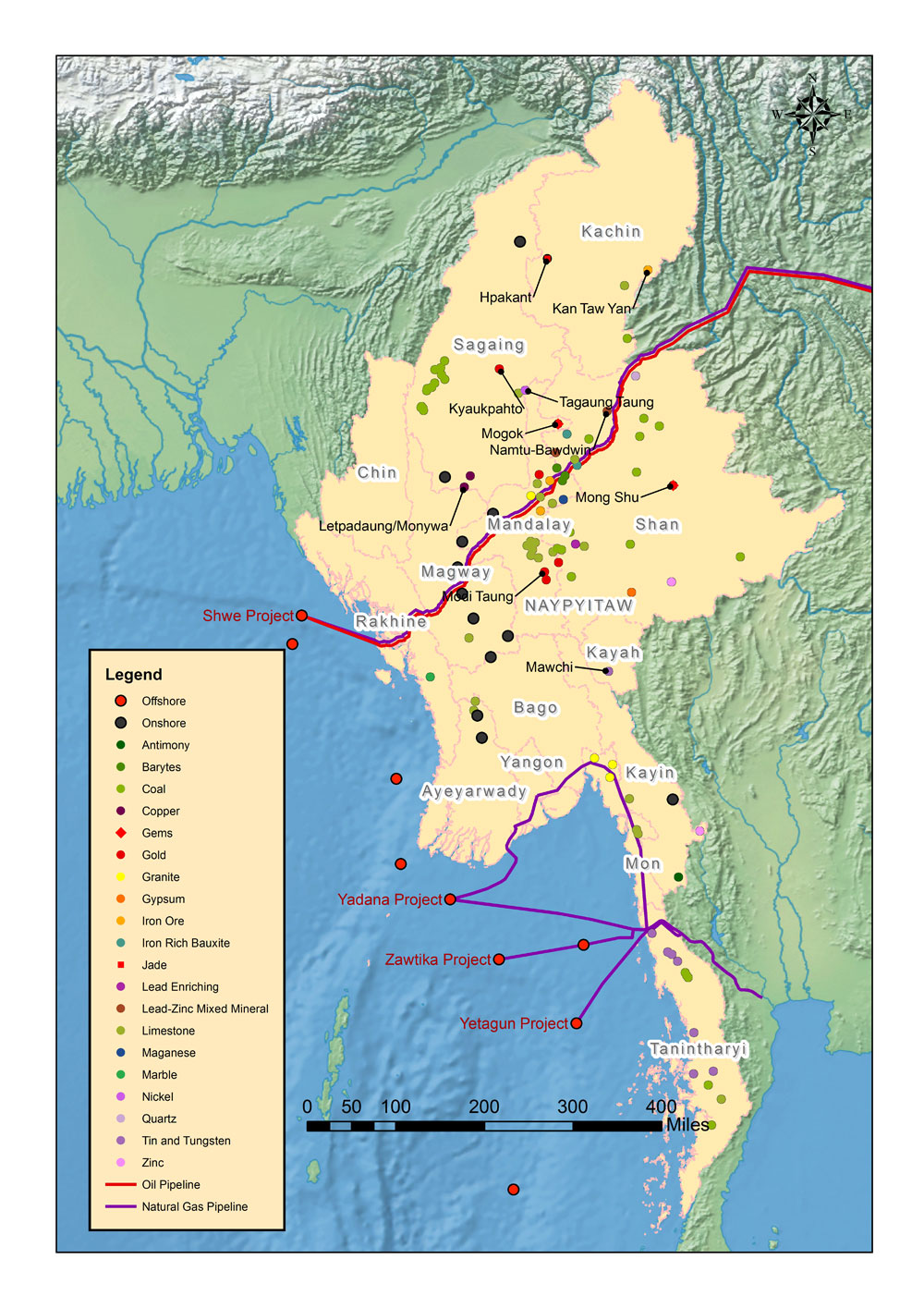
A resource revenue sharing system will undoubtedly be on the table in the upcoming discussion on federalism. However, as we have seen in other countries, these systems come with considerable risks. In the most extreme cases, such as Peru, they can actually exacerbate conflict, encouraging local leaders to use violence to compel greater transfers from the central government or gain control over mine sites. While these experiences are atypical, natural resource revenue sharing often leads to financial waste, local inflation, boom-bust cycles and poor public investment decisions.
Myanmar is particularly susceptible to these risks as overall resource revenues officially recorded in the budget remain small—due to smuggling, underreporting, weak tax collection, and revenue retention by SEEs, among other causes. This means that there are limits to how much revenue sharing can help affected communities without the government first putting effort into capturing a bigger share of profits for the state.
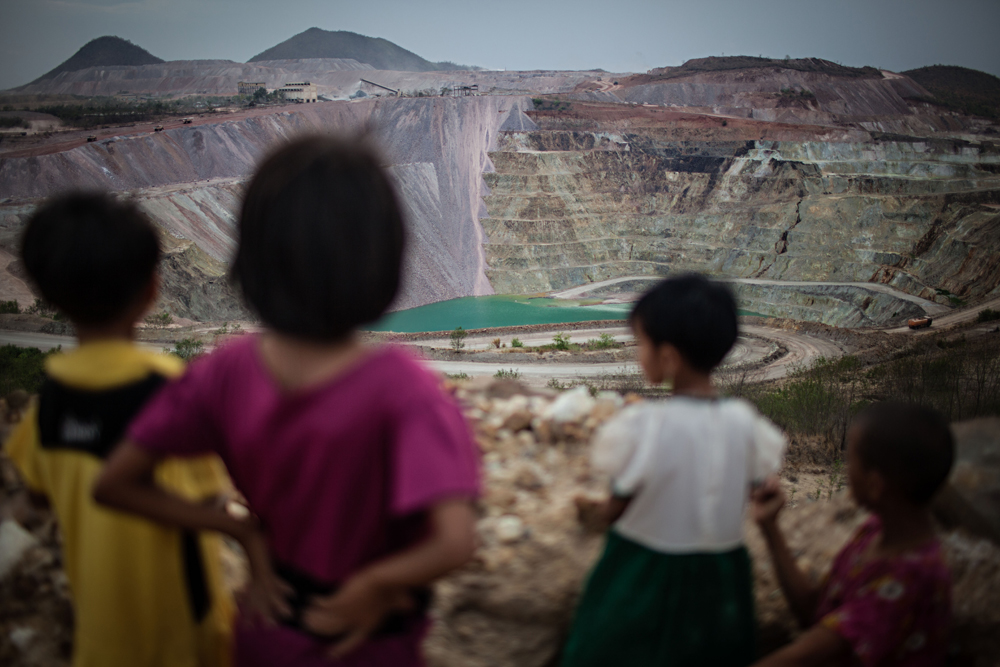
Young children of freelance miners gaze out at Myanmar's expansive Letpadaung copper mine in Sagaing region. Photo by Lauren DeCicca for NRGI
How much money is at stake today? According to conservative estimates from Myanmar’s first Extractive Industries Transparency Initiative (EITI) report, the government collected nearly USD 2.7 billion in oil and gas tax and non-tax revenue and another USD 460 million in mining revenues in fiscal year 2013/14. Together, oil, gas and mineral revenues made up 47.5 percent of government revenues (excluding the significant sums that SEEs retain for themselves) in the same year.
However official revenue figures vastly underestimate the true size of non-renewable resource sector. EITI figures only cover a portion of jade sales. And Illegal mining and smuggling of minerals, especially jade, has been well documented. Some independent estimates put the true size of the mineral sector at more than 10 times official figures.
Currently, the 42 percent of resource revenues that are not retained by SEEs in their own so-called “Other Accounts” are pooled with other fiscal revenues in the Union budget. Some are then distributed directly to state and regional governments, which are responsible for financing local infrastructure, agriculture and some cultural institutions.

Traders examine a piece of jade from Kachin state at an open-air market in the Chinese town of Yin Jiang, near the Myanmar border. Photo by Minzayar for NRGI
As part of the government’s effort to decentralize fiscal responsibilities, the amount of the overall budget allocated to all states and regions has increased in recent years, from 3.4 percent in 2013/14 to 7.6 percent in 2014/15 to 8.7 percent in 2015/16. The government now says that it is using population, poverty and regional GDP indicators to determine how much it gives each state or region from this pool of money.
Research from the Natural Resource Governance Institute’s (NRGI) new report Sharing the Wealth: A Roadmap for Distributing Myanmar’s Natural Resource Revenues generally corroborates this claim, but with qualifications. Our research indicates that, in practice, the Union sends more money per capita to regions and states that have greater development needs, are conflict-affected, and whose politicians are more assertive. This year, for instance, Chin, Kayah, Tanintharyi and Kachin received the highest per capita allocations, while Ayeyawady, Bago, Mandalay, and Yangon received the lowest.
But just because more money is going to states and regions does not mean that there is more accountability or that social services and infrastructure are improved relative to other parts of the country. Nor does this fiscal decentralization address local demands for greater autonomy over natural resource revenues.
Most state and regional officials still report to Union authorities in Naypyitaw. Furthermore, state and regional governments still have low capacity to develop and implement budgets effectively. This means that state and regional spending is not necessarily efficient or linked to a coherent economic development plan.
While true federalism—partial sovereignty for states and regions—would require constitutional reform, there are three steps the new government can take now to “ensure a fair distribution across the country of the profits from natural resource extraction.”
First, the government can start building national consensus on a natural resource revenue sharing formula. This way, all parties would have clarity on the issues and feel a sense of ownership over natural resource governance. This is the principle means through which resource revenue sharing can help stop violent conflicts. Indonesia spent nearly two years negotiating a resource revenue sharing deal with conflict-affected Aceh before coming to agreement. The ongoing Union Peace Dialogue could be one forum for discussion of how a revenue sharing system could be administered. This discussion would not be a substitute for formal parliamentary and public discussions, but could support government efforts to build peace.
Second, the government could further decentralize by making state and regional politicians and officials accountable to local residents. It could also delegate resource management and expenditure responsibilities to these officials slowly, so they have time to learn how to perform these new roles. This can be done even without constitutional change. The Colombian and South African experiences offer some lessons for how decentralization can be achieved in unitary states (though neither case is an unmitigated success).
Third, the government could improve the transparency and oversight of natural resource revenues by cracking down on smuggling and illegal mining and publishing project-level information on all extractive projects. Without this information, state and regional governments cannot verify the value of minerals being extracted on their land and therefore cannot trust that they would receive their due under any revenue sharing formula. Myanmar could look to Bolivia and Mongolia, which lead the way when it comes to extractive sector transparency. For instance, the Bolivian government publishes, in a clear and understandable format, online data on transfers to and between subnational authorities and on hydrocarbon production by province, field and company.
Natural resource revenue sharing can be a key component of peace-building and decentralization in Myanmar. Mineral-rich Kachin, Mandalay, Sagaing and Shan, and onshore oil-rich Magway and Bago would undoubtedly benefit. Governments in other states and regions with pipelines that transport offshore gas may also profit. But unless done properly, resource revenue sharing can help perpetuate conflicts that have gone on for far too long.
Andrew Bauer is a senior economic analyst at the Natural Resource Governance Institute (NRGI).
Partnering for Improved Extractives Governance in Indonesia
Indonesia’s petroleum and mining sectors helped power the country’s transition to middle-income status. As considerable drivers of Indonesia’s annual economic growth, extractive industries contribute about a third of exports and state revenues, generate hundreds of thousands of jobs, and fuel the growth of non-resource-based industries.
As Indonesia seeks to sustain its development gains, the country’s future energy demand will increase rapidly. Yet, its hydrocarbon deposits are depleting after a long history of production. With petroleum production declining, the country has been a net oil importer since 2004.
Southeast Asia’s largest economy has diverse local energy sources to power industry, expand energy access to the poor, and support burgeoning small and medium enterprises. But the governance of its non-renewable resources is marked by corruption and weak revenue management (especially at the subnational level); low commodity prices; the threat of climate change; and the quality of policies and institutional performance.
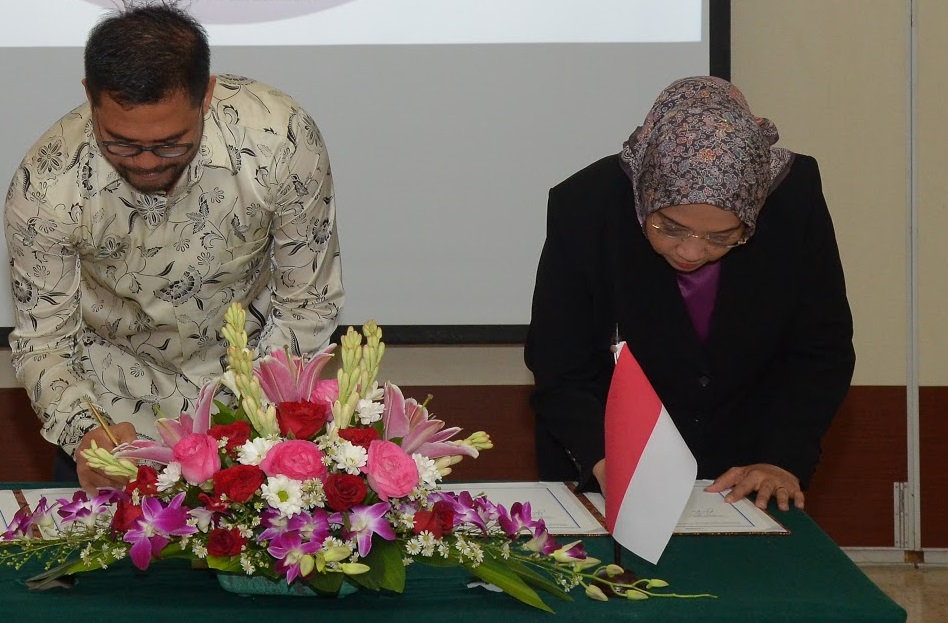
Jelson Garcia of NRGI and Diani Sadia Wati of Bappenas sign the memorandum of understanding in Jakarta on 1 February 2016.
With the aim of helping Indonesia to address these challenges, the Natural Resource Governance Institute (NRGI) today signed a memorandum of understanding with Bappenas, the Indonesian government’s planning agency. During the partnership’s three-year timeframe, which commences this month, NRGI will:
-
support Indonesian government officials in analyzing options to improve the quality of oil, gas and mining governance
-
provide relevant training and other capacity development programs
-
facilitate dialogue between relevant ministries, local governments and other stakeholders in the resource sector.
This is our first institutional partnership with the Indonesian government. It paves the way for an innovative collaboration between a civil society organization and a central ministry with the goal of advancing a government-led and multi-faceted reform process in the oil, gas and mining industries.
The partnership also furthers the approach NRGI has taken to help inform national policy decisions since we began operating in the country in 2007. NRGI has produced a systematic diagnosis of Indonesia’s mining licensing system and the quality of its transparency and accountability systems in the extractive industries. We also provide ongoing technical assistance to Bojonegoro district, an oil- and gas-rich region in East Java, to develop the first subnational natural resource fund in the country.
This formal cooperation reinforces our three-year country strategy that begins this year. The strategy engages NRGI with decision makers and other key actors in the ongoing revision of petroleum and mining legal frameworks; the efforts of resource-rich regions to manage the risks of resource curse; and the government’s commitment to improve the transparency and accountability system through the Extractive Industry Transparency Initiative (EITI) and relevant mechanisms.
“[The agreement between NRGI and Bappenas] supports the government’s Third Mid-Term National Development Plan (RPJMN 2015-2019) and the state reform agenda of President Joko Widodo, which champions good governance and anti-corruption in the management of oil, gas and mining in Indonesia,” said Bappenas director for analysis of law and regulation Diani Sadia Wati in her speech at today’s signing.
President Widodo has instructed Bappenas to coordinate with relevant ministries and subnational governments, especially on regulatory reforms and anti-corruption. This partnership, in effect, will strengthen Bappenas’ ability to inform government decisions relating to the governance of the petroleum and mining sectors.
NRGI will work closely with Bappenas' Directorate for Analysis of Law and Regulation to implement the terms of the partnership.
Jelson Garcia is the Asia-Pacific director at the Natural Resource Governance Institute.