
All That Glitters Is Not Gold: Will Expectations Be Dashed in Canada's North?
Part I in a two-part series on the challenges of natural resource governance in Canada's North.
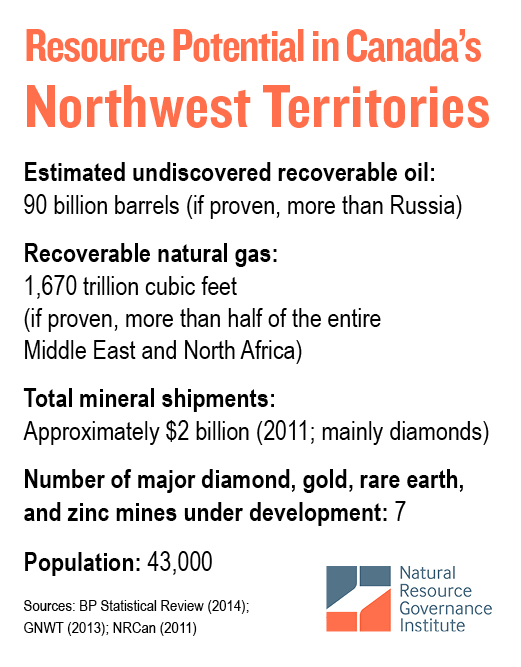
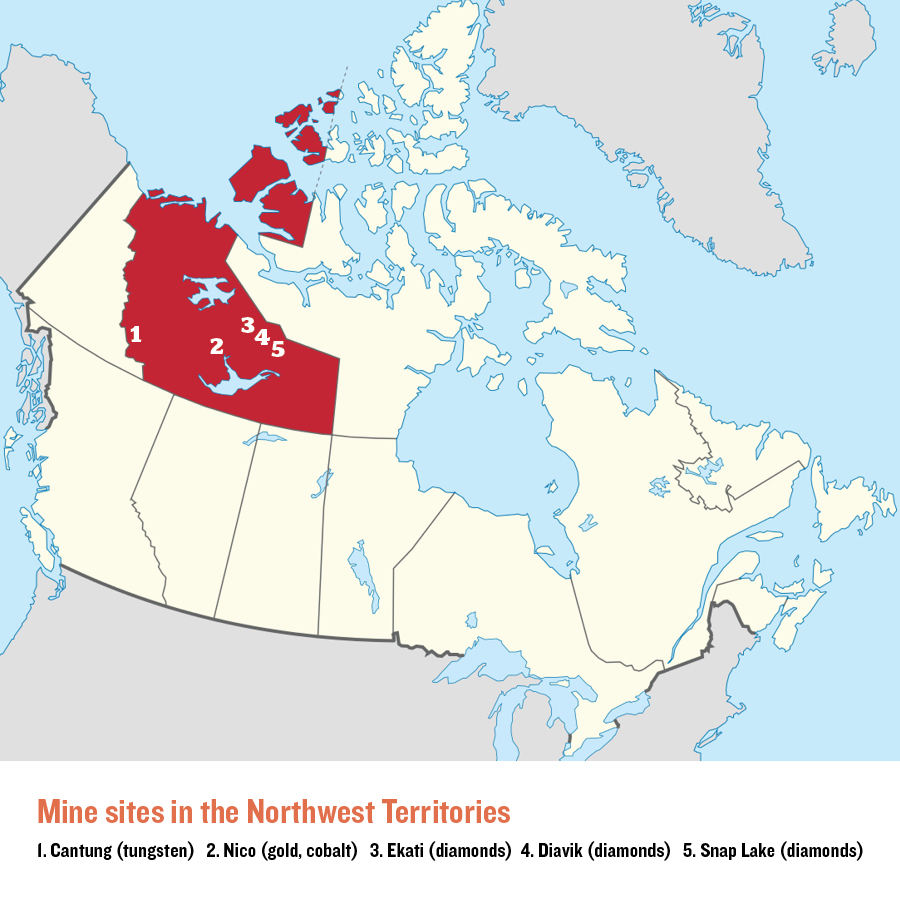
The Northwest Territories (NWT), Canada's largest territory, has huge resource potential. To investors and oil and mining companies, it is a vast landscape abundant in diamonds, gold, silver, copper, zinc, rare earth minerals, oil and natural gas (see box and map). Climate change is expected to open up even more land and sea for exploration and production. But to the government of the Northwest Territories (GNWT), these resources present an opportunity to go from mere spectators of economic development to full participants.
Until recently, almost all of the financial benefits from extraction were retained by the Canadian federal government. In 2013, things changed. The GNWT negotiated a devolution agreement allowing the territory to retain a portion of mineral and onshore oil and gas royalties, specifically the lesser of 50 percent of mineral, oil, gas and water-related revenues, or 5 percent of an amount called the "Gross Expenditure Base" (between $70-100 million per year over the coming decade). Of the amount retained by the GNWT, 25 percent is passed onto aboriginal governments that signed onto the devolution agreement. For a region traditionally dependent on the federal government for two-thirds of its revenues, the agreement was hailed as meaningful progress toward real autonomy.
"For the first time ever, NWT residents will inherit new control of the minerals industry, and with it, a significant contribution to the economic future of the NWT," wrote the government. "More money will be available for the territorial government to invest in public priorities like health care, education, housing, roads, hospitals, schools and projects that improve the life in all NWT communities.… Devolution will usher in a new era of prosperity and independence for the NWT."
Yet, despite billions' worth of proven oil, natural gas and mineral deposits in various stages of development, the government may be overly optimistic about its financial promise. To better understand why, we need to examine the mineral and oil taxation regime in Canada, as well as the intergovernmental transfer system between the federal and territorial governments.
All that glitters is not gold
Oil and mining companies operating in the NWT currently make two types of tax payments, royalties and corporate income taxes. All royalty payments are made to the federal government except where land has been specially designated "reserve land" held in trust for aboriginal bands. The size of the royalty ranges from 5 to 14 percent of profits on mineral extraction, depending on the size of earnings. For oil and natural gas, it ranges from 1 to 5 percent of gross revenues, growing over time.
Under the devolution agreement, the GNWT will receive less than $100 million more per year from the royalty amount—less than $60 million per year in the near future as the Diavik and Ekati mines slow production—a modest windfall for a government with a $1.5 billion budget.
Oil, natural gas and minerals are also subject to corporate income taxes. A 15 percent corporate income tax is paid to the federal government while an 11.5 percent corporate income tax is paid to the GNWT. The same rates apply to oil, gas and minerals.
In theory, if the boom in oil, gas and mineral production goes as planned, the GNWT could collect significant corporate income tax windfalls. Alas, there are two reasons to doubt this will happen.
Leaks in the revenue pipeline
First, Canada has one of most generous mineral taxation incentive schemes in the world. In 2011, less than $100 million was collected in royalties on NWT exports worth over $2 billion (exact figures are unavailable).
Second, even if the GNWT does collect significant corporate income tax revenue, there is another reason the territory would not benefit fully from the windfall. Under the Territorial Financing Formula (TFF), the formula that determines the annual unconditional transfer from the Government of Canada to the GNWT, for each dollar the territory raises itself in taxes, approximately 70 cents are removed from the federal transfer. In other words, even if corporate income taxes rose significantly, much of the revenue would be clawed back.
An argument can be made that the GNWT might benefit financially from a mining or oil boom through other channels. A major influx of oil field or mine workers could boost personal income and property tax collection, for instance. More money would also be transferred from the federal government for each new resident under the Territorial Financing Formula. However increases in these sources of revenue may also be marginal since only about half of miners currently working in the NWT officially reside in the territory, a trend that is likely to continue.
In most countries the largest benefits from natural resource extraction are the fiscal benefits from royalties and taxes, even at the local level. Unless the territory introduces new royalties or taxes, the revenue sharing scheme between the NWT and the federal government is renegotiated, or the Canadian government closes some of its tax loopholes, the NWT may be disappointed by the paltry fiscal benefits the coming oil and mining boom will bring.
Andrew Bauer is an economic analyst at NRGI. In his second blog post, he shares what the NWT has learned from resource revenue management of other countries and details NRGI's work to help the territory transform its mineral wealth into well-being for citizens.
A Mining Environmental Disaster in Mexico Sparks a National Debate
On September 7, Mexico’s environmental officials denounced the spillage of 40 million liters (10.5 million U.S. gallons) of sulfuric acid into the Bacanuchi, an affluent of the Sonora River, the major water source in one of Northwest Mexico’s driest states. Grupo Minera Mexico, which owns the Buena Vista del Cobre copper mine, is being held responsible.


The Sonora was one of two Mexican rivers polluted in a chemical spill from a copper mine.
Beyond chemicals that have killed fish and endangered residents, the spill has unleashed a torrent of national debate. As public anger rises over the mine’s lack of accountability, the Federal Attorney for Environmental Crimes has filed charges with the Special Environmental Unit of the General Attorney. Grupo Mexico and Buena Vista del Cobre risk losing their mining rights, and current processes could well change the environmental standards by which Mexico’s poorly regulated private sector operates. It’s a very sensitive subject, given the country’s recent energy reform, which opens the oil sector to foreign-owned private corporations.
In broader terms, the debate raises questions about the disproportionate use of water by mining operations in areas where water is scarce: How much water is consumed by mining operations? Who decides who gets how much water in areas of scarcity? To what extent are water sources destroyed and water courses polluted? How willing and capable are the local and national public agencies to regulate, monitor and protect Mexico’s water? How much information regarding these matters is available to the water users, the media and citizens at large?
A new transparency, accountability and governance agenda is emerging around mining and water issues in Mexico and Latin America. NRGI’s Mexico partner Fundar has launched a website with information about the social and environmental repercussions of extraction and warned about the alarming lack of regulation and enforcing capacities in Mexico’s mining sector, which is managed on the basis of a law approved way back in 1992.
Despite challenges, it’s encouraging to see that civil society is taking part in this debate by backing up its claims with relevant information and calling for better regulation.
Alonso Hidalgo is NRGI’s information and communications assistant. Carlos Monge, NRGI’s Latin America Regional Coordinator, contributed to this post.
Knowledge Es Poder: Fundar Launches a New Tool in Mexico
We at Fundar are pleased to announce our new website, Mining and Oil in Mexico—the result of ten years’ work. It is the go-to source for those seeking to understand extractive industries in our country. As such, it is a tool for civil society actors to become informed and to strengthen their advocacy.

Mineriaypetroleo.org fills a gap in public access to information about the extractive industries in Mexico, where oil extraction in nine states provides 35 percent of budget revenues and where mining concessions occupy 16 percent of all land.
Mexico’s oil and mining sector has been characterized by opacity and secretive decision-making. Also, as in the rest of Latin America, the development of these industries is accompanied by social, environmental, economic and cultural effects, and human rights violations. That’s why it is essential to develop tools like our site that allow the public a better understanding of extractives management.
Visitors to the new website will find information on the geographical presence of extractive activities in the country; their contribution to the economy and public finances; mechanisms of transparency; oil contracts and mining concessions; social and environmental repercussions of extraction; and the relationship of the mining and oil industries to climate change. For example, they will see how energy reforms passed last December impact Mexico’s public finances, as well as the oil sector’s transparency, accountability and participation mechanisms.
Site users can also find out the exact location of the 26,064 mining concessions for exploration and mining in the country. This is a breakthrough, because to this day if community members wanted to know if their lands were concessions, they had to travel in order to physically check the mining log and also make a series of complicated calculations. So, in practice, this information was beyond the reach of most populations, who in many cases literally learn only the night before that minerals will be extracted in their own backyards. But now, with a single click, or by downloading and printing a map, this information is available to everyone with internet access. This way, we also know which ejidos or communal farmlands, natural protected areas, and indigenous people might be affected by mining.
Aroa de la Fuente is a researcher for the Mexican NGO Fundar, a partner of the Revenue Watch Institute – Natural Resource Charter. She and a colleague coordinate Fundar’s Extractive Industries Project.
From Yangon to Oxford, Lessons in Resource Governance: Q&A With Soe Nandar Linn
In resource-rich countries around the world, senior-level policymakers face difficult extractive sector decisions—from how to attract investors and manage revenues to how to engage citizens and protect the environment. In developing countries in particular, such decisions must be made carefully, as they have the potential to transform societies for development, or conversely, propagate corruption, waste and poverty.
Soe Nandar Linn, a researcher from Myanmar, sees a clear path for her country, which recently took steps to join the Extractive Industries Transparency Initiative (EITI), despite the challenges associated with “opening up.” (See “High Hopes, High Barriers: Can Myanmar Find Its Way With EITI?”) Last month she traveled 5,000 miles (8,500 km) to England to attend an executive course on oil, gas and mining governance, organized by the Natural Resource Governance Institute (NRGI) and the University of Oxford's Blavatnik School of Government. There she joined fellow policy-makers from eight different countries for six days of discussion, instruction and policy work using NRGI's Natural Resource Charter as a guiding framework.
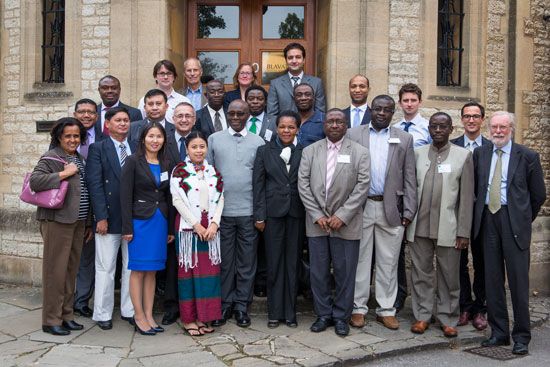
In the conversation that follows, Nandar spoke with NRGI’s Helen Dempsey about what she learned, and about what lies ahead on Myanmar’s long but promising road to better resource governance.
What was the most useful thing you learned from the instructors?
The sessions on non-fiscal opportunities and taxing extraction companies are directly useful for my work. I have to prepare policy papers on state-owned enterprise reform and natural resource funds for the upcoming Natural Resource Governance Conference, when Myanmar hosts the EITI board meeting [in mid October]. It is important to highlight non-fiscal opportunities for negotiations among state-owned companies, international companies and citizens.
Additionally, we do not yet have a proper taxation mechanism for extraction companies. Thus, I have planned to prepare a policy brief on international best practices for Myanmar. The Ministry of Mines wants to know about this issue specifically.
What was the most useful thing you learned from participants from other countries?
Currently, I am assisting the Ministry of Finance with an equalization fund at the sub-national level, based on geographical information. But as I learned from the representatives of Ethiopia, it is possible to manage sub-national work and allocate resources along ethnic lines rather than geographic lines. Like Ethiopia, Myanmar is an ethnically diverse country. Our ethnic leaders and government leaders need to find an agreeable resource allocation mechanism, which is crucial for the sustainable peace in the country.
How is Myanmar different from the other countries represented, in terms of resource governance issues?
Myanmar is still the poorest in resource governance, as ranked among 58 countries studied by NRGI. [See the Resource Governance Index.] Now that we have become an EITI candidate country, I hope that we can encourage the government of Myanmar to be more transparent in resource sector management. I recently co-authored an article to that effect.
Will this course help inform the new EITI process in Myanmar or better prepare the country to host EITI meetings in October?
The whole course is valuable and useful for Myanmar's EITI process. First of all, we do not have many human resources working on resource sector governance, due to our mismanaged education system. I am preparing resource-sharing models, extractive state-owned economic enterprises reform and resource revenue utilization models for the EITI board meeting. Thus, the reading materials and lecture notes I took from the Executive Course on Oil, Gas, and Mining Governance are useful for me.
Soe Nandar Linn is a research associate at the Myanmar Development Resource Institute’s Centre for Economic and Social Development. She is also the program coordinator of the Myanmar Extractive Industries Transparency Initiative.
Civil Society Faces Steep Obstacles, New Responsibilities, NRGI's Kaimal Says
What follows are NRGI Chief Operating Officer Suneeta Kaimal's opening remarks to the Open Government Partnership Global Summit in Mexico City in October 2015. This was Kaimal's final summit as civil society co-chair. For a full slate of NRGI's activities at #OGP15, click here.
President [Enrique] Peña Nieto, Deputy President [Cyril] Ramaphosa, Mr. González, fellow civil society leaders, excellencies and friends.
It is my great hope that we will reach a day when the Open Government Partnership will not be needed. I wish for that day to come soon. Not because I have given up on the power of our work as governments and civil society together. To the contrary. Because I believe that open government should become a matter of course – the everyday means of empowering people.
Stepping down as co-chair is really bittersweet. I am proud of all that we have accomplished. But increasingly, I realize how much more is to be done if we are to achieve real open government.

At the last OGP Global Summit, Lord Francis Maude called upon countries to take the first few steps toward openness with his catchphrase: “Transparency is an idea whose time has come.” OGP countries responded. Access to information is now the most common of the OGP values. Over 500 commitments expressly focus on open budgets and open data. Once implemented, they will help citizens understand what public resources exist and how they are being managed.
But since that time, we have been largely content with OGP’s performance on these first steps in opening government – making information available. Transparency is, of course, necessary for openness – but it is not the full realization of it. True open government is about empowering people so they have voice in and agency over their lives. It requires complementing transparency with participatory processes and co-creation, strong whistleblower protections and firm accountability mechanisms. It requires deep and sustained political will.
Open government is not easy. For governments, being truly open does not automatically confer civil society praise. In the short-term, there may be internal and external resistance. But through consistent dialogue, listening and responding, governments build trust. They better understand the wants and needs of citizens. They benefit from civil society expertise to address pressing policy challenges.
For civil society, we face real challenges with representation that are difficult to resolve. We need to be vigilant about reaching out to a broader swath of citizens and civil society. We need to do the hard work of making sense of what information is available, to conduct honest analysis and ask tough questions. In doing so, we will contribute to addressing citizen priorities and augmenting citizen voice.
So, now we face the hard part. Inequality and distrust of government is on the rise globally. Across Latin America, there are mass protests against corruption. I ask all of you – do we have the collective courage to push for deeper change and to challenge the power structures that will resist? Courage to go beyond transparency to accountability. Courage to dismiss cursory consultation in favor of meaningful participation.
The signs are mixed. OGP has grown in quantity, but perhaps not in quality. We have 2,500 commitments, but almost half are essentially off track. Public participation is growing—in name. Yet a third of public participation commitments in Latin America do not include the essential ingredient of dialogue.
Even more worrying is the rapid rise of active obstacles to civil society participation. Since 2013, at least one-third of OGP countries have proposed new legislation restricting civil society. Currently, at least half of OGP countries have policies and practices that obstruct the exercise of civil society freedoms. For OGP—premised on partnership with civil society—this is just unacceptable.
We do have evidence that rising to the challenge is possible. In El Salvador, the Ministry of Public Works was notorious for corruption. The country was rife with poorly constructed or unfinished projects and subject to countless lawsuits. But government, working hand in hand with civil society, introduced “integrity pacts”—monitoring mechanisms intended to prevent corruption. The agreements publicly committed officials and companies to reject bribery, collusion and other corrupt practices. They enabled NGOs to monitor bidding and construction. There were, of course, numerous obstacles in the way, including low capacity and resistance from other government officials. But they persevered. As of August, the ministry has signed 31 integrity pacts worth a combined $62 million. This initiative has provided the foundation for increased dialogue between government, civil society, and the private sector—and is a critical demonstration of accountable government.
Yesterday at the OGP Civil Society Day, civil society steering committee members awarded Georgia the first-ever government champions prize, celebrating excellence in co-creation. Georgia has leveraged OGP to meet the demands of the people to reinvent government, to combat corruption and to boost the economy. The first action plan focused primarily on access to information, as we know, a critical step. The second plan now opens up a whole host of new issues – from recruitment of civil servants and crime mapping to participation at the local government level. The government has diversified the ministries involved, with strong leadership from the minister of justice. The national OGP forum is a space of continuous dialogue between government and civil society. And they have just launched a new open parliament plan. Through meaningful participation, Georgia is concretely meeting the demands of citizens and fulfilling their open government ambitions.
The power of OGP lies in our ability to draw collective courage from such stories to address problems of collective action. We can nest a culture of openness in a core set of countries that, even if diverse in their approaches, share a common set of beliefs in the transformative power of open government. But we have real work to get there.
To ensure OGP commitments deliver real change, we must have the collective courage to reach out to our peers and broaden the base of government and civil society reformers engaged domestically. To use positive peer pressure to replicate transformative commitments. To leverage our new strategic partnerships with the global goals and open cities, and future opportunities around open data and anticorruption.
To enable participation, we must have the collective courage for governments and civil society to not remain silent in the face of repressive behavior. My most sincere thanks to [U.N.] Ambassador [Samantha] Power for highlighting this critical issue in her remarks today. NRGI’s advisory council member Ilgar Mammadov, who has been unlawfully detained and brutalized in prison, is only one of these cases, and they cannot go unaddressed. We must coordinate bilateral diplomacy and civil society outreach for maximum effect. We must embrace peer support, but also set limits when the legitimacy and credibility of OGP is at stake.
To move from transparency to accountability, we must have the collective courage to place dialogue and citizen priorities at the heart of our commitments. To be participants, not spectators in the open government agenda. To set ambitious goals together, recognizing that failure is not whether or not we achieve them—its whether or not we try.
What we have achieved since the last Summit is evidence of the challenges we face and the potential we can harness. If we can mine our collective courage, I believe we will find the deeper strength needed to achieve truly open government.
Philippines Local Governments Seek the Gold Standard in Transparency
The importance of gold mining, and small-scale operations in particular, to the national and local economies of the Philippines cannot be overstated. Gold is the number-one mineral produced in the archipelago in value terms, and studies indicate that small-scale mining activities contribute 80 percent of gold production in the country.
However, lack of proper regulation and oversight threatens the ecosystem and the health of Filipinos, and creates a divisive environment at the local level. (For example, much of small-scale mining happens inside large-scale mining areas, complicating formalization and resulting in conflict between large-scale and small-scale miners.)
The first step in addressing these issues is obtaining reliable information on the mining operations and their impact at the local level. Extractive Industries Transparency Initiative (EITI), at its inception, only required aggregate information on payments to the central government from all extractive operations in a country. Some countries, notably Ghana, included comprehensive local level information under EITI. But this has not been the norm. EITI has since updated its rules under the new EITI Standard (adopted in 2013) and has a much stronger subnational emphasis. Data required in reporting includes amount of resource revenue transferred to subnational governments including the formula used and certain resource rents collected directly by subnational governments.
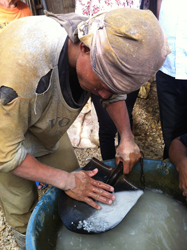
A miner from Barangay village in T’boli (South Cotabato Province) pans gravel for gold.
The Philippines EITI Multi Stakeholder Group released key findings of the country’s first-ever report on December 10, 2014. The report includes subnational data such as mining taxes imposed by the central government and collected by local governments (such as business taxes); fees imposed and directly collected by local governments (such as environmental fees); resource revenues transferred from the central government to local governments in resource-rich provinces (such as royalties); and regular inter-governmental transfers to all local governments.
Subnational EITI scoping led by the EITI multi stakeholder group now provides an opportunity to examine how local governments exercise their powers of taxation in connection with extractive activities, and whether local taxes are commensurate with the impacts of extractive operations in each area. Including subnational data in EITI provides a rich set of information for subnational stakeholders—local governments, civil society, indigenous groups and companies. Yet, in the absence of a local-level multi-stakeholder platform, it becomes difficult for subnational stakeholders to discuss and act on the report’s findings. Also, revenue flows that have a disproportionate impact at the local level have not all been captured in the national EITI report. For example, production volumes and payment amounts by small-scale miners to local governments are not captured in the national-level EITI report.
NRGI and civil society partner Bantay Kita (which is a CSO member of the multi-stakeholder group that oversees EITI in the Philippines), have recently worked in two subnational areas, Compostela Valley Province on the island of Mindanao and T’boli in neighboring South Cotabato Province, on these issues. The two organizations and local actors together developed multi-stakeholder councils that have produced data that is most relevant at the local level.
For example, the templates agreed by the multi-stakeholder council in Compostela Valley require indigenous groups to disclose payments received from companies, and companies to disclose payments made to each indigenous group. Now that it is available, such information can be included in future national EITI reports. In addition, the council set out transparency rules on free, prior and informed consent (FPIC); contract awards; and revenue payments, collection, management and expenditure. The Compostela Valley government is working on enacting legislation to ensure sustainability of this subnational transparency mechanism beyond the tenure of the present governor.
“While payments were made by companies to government, it is still difficult to link the contribution of the extractives industry to local/community development,” said the national coordinator of Bantay Kita, Cielo Magno. “This is because of weak regulatory and monitoring capacity of the national and local governments. Participatory governance is key to improving natural resource governance in the country and one way to do this is to institutionalize EITI mechanisms at the subnational level.”
Varsha Venugopal is NRGI’s subnational capacity development program officer. Roslita Arsyad is NRGI’s Asia-Pacific regional associate. Marietta Cauchi is a lawyer, journalist and NRGI consultant.
Myanmar Government Announces Ground-Breaking Reforms of Jade Industry
Myanmar’s new government has announced a major shake up to licensing of its multi-billion dollar jade and gems business, following work by Global Witness, Kachin Development Networking Group (KDNG), the Natural Resource Governance Institute (NRGI) and other Kachin State and Myanmar civil society actors and parliamentarians to expose widespread abuses at the heart of a vast, deeply corrupt trade.
Following a series of deadly landslides and continued revelations of corruption, cronyism and social harm, the industry regulator has said that mining permits will not be renewed, and no new permits will be granted until a reformed legal framework is in place.
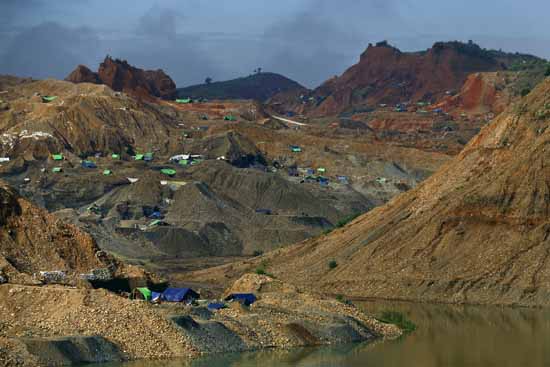
Photo by Minzayar for NRGI
Ahead of Myanmar’s election last year, the Global Witness investigation Jade: Myanmar’s “Big State Secret” revealed a string of notorious military figures and drug lords secretly controlling and profiting from the jade industry. The report also revealed the immense size of the sector, estimating official production at up to US $31 billion in 2014 alone; this is a figure equivalent to nearly half of the entire country’s GDP, yet the local population sees little benefit.
“This is a game changer,” said Juman Kubba, senior campaigner at Global Witness. “It suggests Aung San Suu Kyi’s government is serious about reform, and could help turn the page on the ruthless military rule, cronyism and human rights abuses of the recent past.”
“Freezing licenses is a critical first step towards wresting control from the elites who have plundered the country’s jade riches for so many years, with total disregard for the environmental and social cost,” said Tsa Ji, general secretary of KDNG. “Now a new approach to licensing is needed – one which puts local people and the environment first.”

Photo by Minzayar for NRGI
Since the launch of Jade: Myanmar’s “Big State Secret,” the exploitation of the country’s most valuable mines in Kachin State has continued apace, with devastating environmental and social consequences. A horrendous sequence of landslides has led to hundreds of deaths and triggered widespread local protests. Meanwhile the struggle over jade remains a major driver of armed conflict between the Myanmar army and the Kachin Independence Organisation. The question of how Kachin State’s jade riches are shared and managed will be crucial to achieving a lasting peace.
“The 2015 election was a resounding call for change, starting with the governance of Myanmar’s all-important natural resources,” said Matthieu Salomon, Myanmar manager for the Natural Resource Governance Institute. “We welcome the government’s moves to live up to its promises of reform, and we call on its international partners to focus their efforts to support the change the people of Myanmar deserve.”
The new government’s announcement opens the door to wholesale reform of the jade and wider gems industry, and an end to abuses. It has the opportunity now to set up a framework for a responsible and sustainable business, which forms part of a broader, more inclusive economy for Myanmar. It must start by taking the following urgent actions:
- Agree principles for the sharing of benefits and responsibility for jade within the peace process, starting with the forthcoming 21st Century Panglong Conference.
- Incorporate strong provisions on transparency, management and oversight into the new laws and regulations which will govern the gems sector.
- Introduce environmental and social measures to protect against negative impacts of jade mining such as landslides and to address local grievances fairly.
- Use the Extractive Industries Transparency Initiative (EITI) to publish more jade data, including details of permit holders, ultimate owners of jade companies, contract terms and detailed sales records.
- Review company compliance with current jade mining terms and conditions.
- Review tax collection and increase transparency to address revenue losses.
- Assess the size, quality and value of remaining jade deposits as a basis for deciding the best approach to maximise the benefit of this finite resource in the long term.
- Establish an oversight committee to monitor and report regularly on progress of reform.
One of the best ways of catalyzing these changes is through a national conference on jade sector reform. NRGI is currently developing proposals for such an event to take place in the coming months.
Beyond these jade industry-specific measures, 61 civil society groups in March this year called on the government to address the wider concerns of residents of Kachin State about natural resource management:
- Institution of federalism and self-determination that covers administration, judiciary, and legislation at the Kachin State level and which includes central government endorsement of a state minister elected by the Kachin State legislature
- Recognition that the people of Kachin State are the ultimate owners of all natural resources above and below the ground, above and beneath the water, and in the atmosphere in Kachin State
- Conferring upon the Kachin State government ultimate authority over natural resource extraction, management, taxation and revenue sharing
- Cessation of all projects and natural resource extraction that is provoking conflict in ethnic areas, until such time as these conflicts are resolved through political means
- “Free, prior, informed and consent” from local communities before permission is granted for projects to operate
- Transparent disclosure of data and public education concerning grievance mechanisms relating to natural resource extraction, taxation, licensing processes and revenue sharing;
- Accountability and monitoring of corruption, environmental degradation, armed conflict and social problems relating to natural resources
- Policies on natural resource management and revenue sharing that acknowledge and derive from analysis, by local and international researchers and experts, of local context, history and culture.
Contacts:
- Juman Kubba, Global Witness: jkubba@globalwitness.org, +44 (0)7720 972 394
- Oliver Courtney, Global Witness: ocourtney@globalwitness.org, +44 (0)7912 517147
- Tsa Ji, KDNG: kdngchn@gmail.com, +95 9789575026
- Lee Bailey, NRGI: lbailey@resourcegovernance.org, +44 (0)7823 442 954, +44 (0)20 7332 6114
May 2015 Letter from the President
Dear friends and colleagues,
I write to share some NRGI developments and a few thoughts in the midst of what admittedly are uncertain times globally.
Let me first focus on the shrinking civil society space in many resource-rich countries. Further entrenchment of authoritarian governments (in increasingly “managed” democracies) and the radicalization of factions that oppose them has resulted in increased civil strife and violence, and a squeeze on civic space in the middle.
Add to this the economic slowdown in Europe and China, the recent drop in commodity prices, and high-level corruption scandals in a number of countries, and it is evident that we are facing a new and complex reality. This current environment of multiple “lows”—low tolerance, low prices, and low growth—poses fresh challenges as well as opportunities, and warrants rethinking and adaptation, including for us at NRGI.
The picture is particularly grim in many oil-rich countries, such as Azerbaijan, Russia and Venezuela. We have found that in most resource-rich countries, many of which are members of the Extractive Industries Transparency Initiative (EITI), the now-past period of high prices coincided with growing constraints on civil society.
This is of grave concern, since civil society engagement is essential if transparency initiatives are to be effective in making governments accountable to their citizens. Recently, a concerted push led to EITI’s adoption of a protocol for assessment of civil society environments in EITI countries. The protocol is already being applied in practice: Azerbaijan has just been held to account by the EITI international board (on which I serve) and the country has been downgraded from “compliant” to “candidate” status. At issue is the systematic and growing government-led persecution of civil society leaders and organizations. During my visit to Baku last week (to present at the Asian Development Bank annual meetings), I met with many stakeholders to review and discuss the multiple challenges faced by civil society in Azerbaijan, and I participated in constructive discussions aimed at moving the country out of dire straits.
When harnessed accountably, oil is still a valuable national asset, even if its market value has fallen; likewise with minerals. With the plunge in commodity prices has come much understandable anxiety, in many corners—from ministry offices and legislative chambers to corporate executive suites. In fact, extractive companies face a rather different reality today, due to the drop in prices; the changing landscape in governance and politics; and enhanced scrutiny of corporate accountability, tax avoidance and corruption. Engaging with companies, as well as governments, civil society, parliaments and media, is an integral part of NRGI’s strategy.
With partners, we are working on the challenges and opportunities brought by lower prices, including in areas of governance improvements, such as reductions in inefficient, unequitable and fiscally onerous subsidies; the revamp of state companies and natural resource funds; and approaches to improving subnational governance and addressing corruption in extractives.
In the past boom decade, innovations in natural resource analysis, policy advice and advocacy surfaced, yet the actual implementation of governance and policy reforms in the extractives sector fell short. We must learn from this experience if decisive progress is to take place in the coming decade. We must operate more effectively by infusing technocratic solutions with a smart dose of governance and political economy considerations. The causes and consequences of Brazil’s Petrobras corruption scandal make up one cautionary tale about the risk of over-reliance on technocratic solutions alone. Similarly, sensible strategies and reform initiatives (such as the revamp of the national oil company) by Nigeria’s new government must address corruption in key institutions while taking into account political incentives.
It is also the case that that the drop in oil prices can be used as a fig leaf. While some governments may point to low prices as an explanation for their troubles, the fundamental determinants of their woes are more self-inflicted than external: in countries like Venezuela, Ghana and Sierra Leone, prior mismanagement and misguided policies are the root cause.
Meanwhile, we at NRGI are deepening our capacity building and shared learning offerings, such as the recently completed natural resource global course with the Central European University in Budapest, an innovative training of trainers held in Bogota, and the regional training on data in extractives held in Istanbul. We launched an online reader series on key aspects of oil, gas and mining governance, and look forward to a flagship course with senior policy-makers to be held with the Blavatnik School at Oxford University, as well as the upcoming regional summer course in Africa.
Encouragingly, we are also witnessing some results from the hard policy analysis and advocacy work around mandatory disclosure of extractive companies’ payments to governments. Statoil’s watershed reporting and Tullow’s now-annual project-level disclosures show that some companies recognize the benefits of transparency and are taking initiative, in some cases prodded by new regulations. Yet even as moves by Statoil and Tullow undermine the oil lobby’s arguments against transparency, most of the oil majors are still stuck in the opacity of the past.
Governments in the industrialized world, often unduly influenced by industry, must step up as well: further progress on implementing payment disclosure legislation ought to take place in the coming months in the UK, US and Canada. In tandem with securing these revenue transparency gains, we will work on furthering the disclosure of contracts and the identities of beneficial owners of extractive companies. Transparency is a prerequisite for advancement that we have yet to fully attain.
We face a landscape with many challenges and crises, but also new opportunities. We look forward to making progress in partnership with you all.
Best regards,
Daniel Kaufmann
President, Natural Resource Governance Institute
The Natural Resource Governance Institute (NRGI) helps people to realize the benefits of their countries’ endowments of oil, gas and minerals. We do this through technical advice, advocacy, applied research, policy analysis, and capacity development. We work with innovative agents of change within government ministries, civil society, the media, legislatures, the private sector, and international institutions to promote accountable and effective governance in the extractive industries. For more information, please see: www.resourcegovernance.org.
New Frontiers in Local Content: Environment and Transparency (PDF)