
The 2021 Resource Governance Index Research Process is Underway
At the Natural Resource Governance Institute (NRGI), we are committed to helping to improve the lives of people who live in resource-rich countries. As part of this mission, we produce the Resource Governance Index, a measure of the governance of oil, gas and mining sectors in resource-producing countries. The Resource Governance Index covers many issues, from the allocation of extraction rights through to the management of the revenue generated by oil, gas and mining sectors. It is a freely available public data product that serves as a global benchmark, country and sector diagnostic tool, and a roadmap for policy and practice reforms at the global, regional and country levels. The 2017 Resource Governance Index results showed that the effective governance of oil, gas and mining sectors is not an insurmountable challenge but that many countries still struggle to adequately govern their natural resource wealth.
The 2021 Resource Governance Index project is now underway, and will build on the structures and successes of previous iterations. As we face global economic, political and social uncertainty as a result of the coronavirus pandemic, evidence-based decision-making will be even more important, and particularly so in resource-dependent countries. The 2021 Resource Governance Index will be an authoritative tool to help decision-makers, and those who hold them accountable, to ensure that extractive industries are responsibly managed as countries navigate the challenges ahead. The 2021 iteration of the index will assess governance practices in the period from 2019 to 2020. For the first time, the results from the 2021 edition will be directly comparable with scores from the previous index (published in 2017 with an assessment period from 2015 to 2016). This will allow for analysis of a country’s performance over time to show improvements or deteriorations in resource governance, in addition to analysis of a country’s performance against its peers. We will launch the results of the index during 2021.
We will include 25 countries in the 2021 Resource Governance Index, with geographical spread across Asia-Pacific, Eurasia, Latin America, the Middle East and North Africa and sub-Saharan Africa. We included countries based on their resource dependency and NRGI’s regional and country programmatic work. In each country, we will assess the oil and gas or mining sectors and in nine instances we will measure both sectors.
Note: Country coverage of the 2021 Resource Governance Index was revised on 1 October 2020 and the index will now include 18 countries, seven fewer than the 25 countries originally planned. Countries now excluded are: Afghanistan, Ethiopia, Liberia, Mozambique, Sierra Leone, Yemen and Zambia. Research is ongoing in the final set of selected countries, all of which associate directly to NRGI country or regional programs. We look forward to greater country coverage in future editions of the Resource Governance Index.
2021 RGI Country Coverage
Infogram
NRGI is now recruiting consultant researchers and peer reviewers to collect data for the 2021 Resource Governance Index. Our recruitment and research will take place during 2020 and early 2021. If you are interested in opportunities to work on the Resource Governance Index for a specific country please refer to the NRGI careers and opportunities page and look out for in-country calls for consultants.
For more information email index@resourcegovernance.org.
Liz McGrath is the research, data and learning director at the Natural Resource Governance Institute (NRGI). Anna Fleming is an NRGI research and data officer.
Civil Society Opportunities within EITI Mainstreaming: A Perspective from the Philippines
The Extractive Industries Transparency Initiative (EITI) has been moving toward “mainstreaming,” with implementing countries transitioning away from standalone EITI reports in favor of meeting EITI requirements via routine and publicly accessible government and company reporting. This has the potential to significantly improve the timeliness, contextualization and quality of disclosed data. In parallel, the Natural Resource Governance Institute (NRGI) has initiated a reflection on the opportunities and risks this process represents for civil society participation. While these changes offer several opportunities to strengthen the role of civil society organizations (CSOs), many civil society actors worry that the mainstreaming processes could undermine the multi-stakeholder nature of EITI in the wider context of continued attacks on civic freedoms and dialogue.
 Cielo Magno is an assistant professor at the University of the Philippines’ School of Economics; a civil society representative on the EITI international board; the former national coordinator of Bantay Kita-Publish What You Pay Philippines; a member of NRGI’s board of directors; and a founding member of EITI-Philippines. Using civil society’s EITI journey in her country as a jumping-off point, we asked her to reflect on the opportunities and risks related to mainstreaming for civil society consultation and participation. This conversation has been edited and condensed for clarity.
NRGI: What was the initial reaction of civil society when the Filipino government joined the EITI in 2012? And how has the EITI’s implementation spurred civil society’s participation in the governance of extractives?
Cielo Magno: Civil society was hesitant to join EITI because we saw the possibility of the government using it to somehow “whitewash” what communities considered the real issues of the extractive sector: specifically, the negative social and environmental effects of mining, including water pollution, deforestation, the rehabilitation of abandoned mines, or the displacement of residents and violence in some mining areas. But we decided to engage in the process, and through EITI implementation I must say civil society has been able to get a lot of relevant information related to mining, oil, and gas disclosed, including social and environmental data. The EITI Multi-Stakeholder Group (MSG) agreed to have companies’ social expenditures and environmental data disclosed even before EITI required that. This data included water use, tree cutting permits, mining monitoring reports and full contracts. It’s a work in progress, and not all information is publicly available yet. But the MSG’s vision and mission is to work toward making all this information publicly available. This has allowed civil society to engage on specific technical issues, like the taxation of the mining sector; monitoring how much revenue local governments get from mining through subnational transfers; and creating a real dialogue with extractive companies.
Given that the EITI experience of civil society in the Philippines has been more positive than negative, what do you expect will be the impact of mainstreaming on the participation of civil society in the governance of extractives?
I expect EITI mainstreaming to help institutionalize further the participation of civil society in the management of extractives, to genuinely operationalize and strengthen the existing mechanisms created by laws. This includes strengthening the current space for CSOs to participate, in particular by improving access to information (easier access to more timely data). Another expectation is for the MSG to have a more engaged role in monitoring the implementation of extractives policies. Obviously there will always be pushback to limit what EITI covers. But the MSG members who appreciate open discussion among stakeholders would understand that having open lines of communication actually minimizes conflict and facilitates solutions. I am not part of the MSG anymore, but I really hope the different stakeholders realize that mainstreaming is not about making MSG irrelevant, but making it actually more relevant. The production of reports and discussions could be devolved to local stakeholders and the MSG could have a monitoring role. It can then also discuss governance issues that are not covered by EITI.
Could you tell us more about the existing mechanisms related to the consultation and participation of civil society in the management of extractives that mainstreaming could build on in the Philippines?
Currently, our devolved system has institutionalized spaces for CSOs to participate in governance in general and the governance of extractives in particular. In every province where there is mining, the regional offices of the Mines and Geosciences Bureau have to create a multi-stakeholders mining regulatory board (PMRB) that has the mandate to regulate small-scale mining. It is very much like EITI, but focuses on small-scale mining. Another multi-stakeholder committee—the Mining Multipartite Monitoring Team, created by the 1995 Mining Act—is tasked with monitoring the mining projects quarterly at the local level, especially their environmental impacts.
EITI mainstreaming could support further the institutionalization and operationalization of these boards and teams, and ensure that genuine representation of civil society is achieved. These spaces and opportunities have existing mandates and authorities under the law that are consistent with EITI. But because of limited attention, resources and capacity, they have not been maximized. Mainstreaming can make these mechanisms more effective. For example, the reporting and monitoring requirements for PMRBs could be incorporated into EITI reporting, expanding EITI coverage to small-scale mining. The disclosure of these reports would then help strengthen accountability of PMRB members. In parallel, capacity building activities could target them to make sure they really know how to monitor mining operations.
Beyond extractives, the 1991 Local Government Code mandates CSO representation in local public finance. EITI mainstreaming could mean tapping these opportunities to make sure mining revenues are used according to what is mandated by law. Monitoring the accuracy of subnational transfers, how they are budgeted and how they are spent can help maximize the benefits we get from mining.
Matthieu Salomon is a senior governance officer with the Natural Resource Governance Institute.
Podcast: NRGI’s Sebastian Sahla Discusses Mining in Myanmar with Austrade
I recently sat down with Jeff Turner, Austrade’s senior trade commissioner in Myanmar, to discuss developments in the country’s mining sector. Our conversation focused on Myanmar’s challenges in attracting foreign investment to generate government revenue while ensuring the sector’s environmental and social impacts are properly managed. You can listen to the full recording here.
Key points from our discussion:
- Myanmar’s mining sector has potential but is currently underdeveloped. Myanmar has significant geological potential, but the country has attracted few large-scale mining companies to date. As a result, the sector generates little government revenue. However, this could change. International interest is growing, including at the Bawdwin mine, which is potentially one of the world’s largest base and precious metals mines.
- Reforms are urgently needed, especially around how the government issues licenses. Licensing is opaque and complex, creating the risk of delays and corruption. There is growing recognition in government of the need for reform. The cadaster, which is currently being developed, could help to make licensing more efficient and transparent. But implementing reforms can be difficult due to capacity gaps and coordination issues within government.
- Myanmar sees few benefits from its multi-billion-dollar jade industry. Myanmar’s jade sector is worth billions of dollars each year. However, tax evasion and smuggling means that only a fraction of this value ends up with the government while local communities suffer from environmental and social impacts. This has implications for investors across the mining industry: communities associate mining with irresponsible practices and often distrust companies claiming to uphold international standards.
- Unlike elsewhere in the region, resource nationalism is not a big issue in Myanmar yet. Countries like Indonesia or the Philippines have long-standing mining sectors with well-established large-scale investors. In these countries there are discussions around how to maximize the sector’s contribution to the local economy. In Myanmar these discussions are less advanced. Myanmar is still trying to figure out how to attract investors in the first place.
- Mining investors in Myanmar should apply international standards. In order to operate responsibly and successfully, mining companies should apply international best practices rather than just following local laws, which are often inadequate. Companies should engage proactively with a broad set of standards, promote transparency and ensure they have strong anti-corruption policies in place.
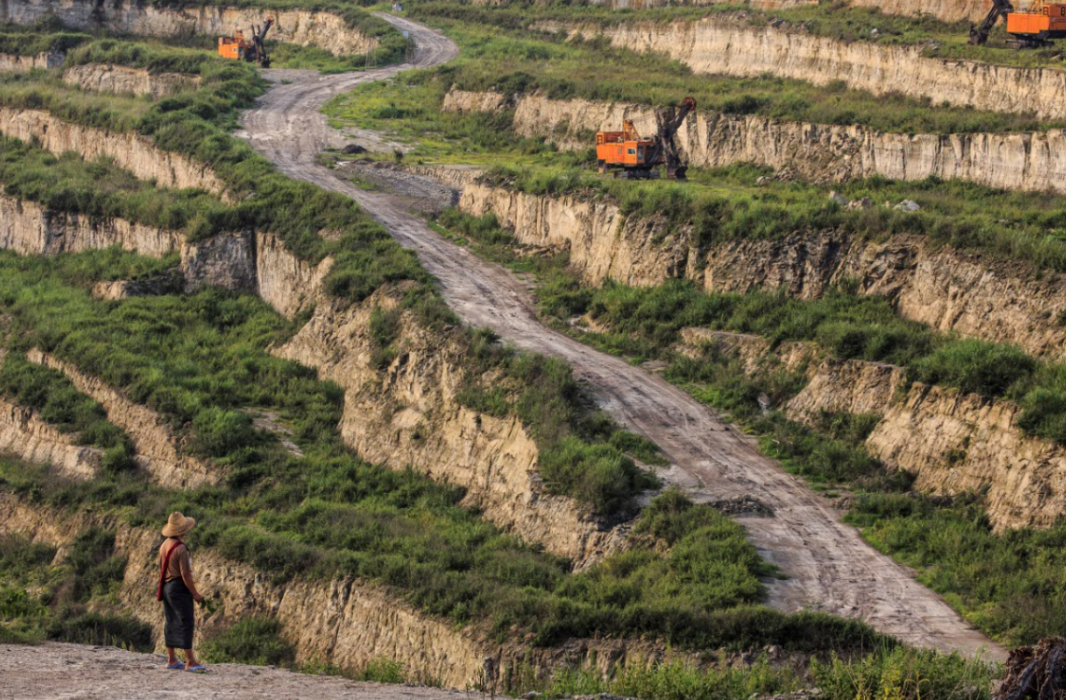 Photo by Suthep Kritsanavarin for NRGI
Presenting the New and Improved ResourceProjects.org
The latest version of ResourceProjects.org is now live, with several new features and data.
ResourceProjects.org is the most complete and clean repository of project-level payments made by extractive sector companies around the world. The website contains information on USD 542 billion in payments made by 751 extractive sector companies that have reported under mandatory disclosure laws passed in the European Union, Norway and Canada since 2014. In addition to this payment data, you can now access profile pages for companies and countries, subscribe to customized updates, and submit new sources to us for scraping.
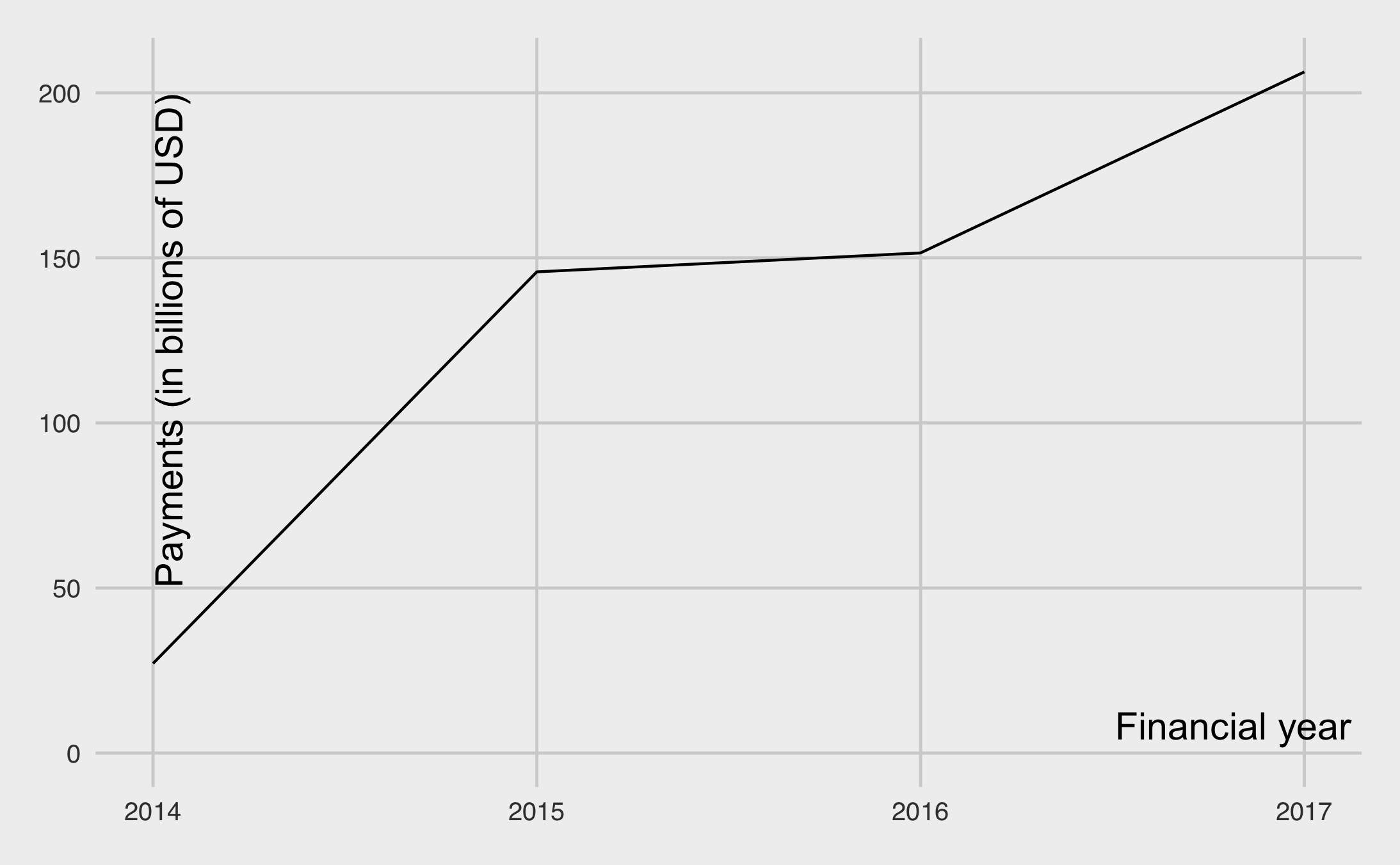 Payments disclosed are increasing every year
Clean, complete and easy. The greatest asset of the website continues to be the data. Since 2016, we have scraped, cleaned and compiled over 1,535 documents released in 21 different reporting jurisdictions with varying formats, reporting templates and languages. You can access the entire dataset and/or filter a specific cut of the data using the payment tables on the website.
Company profiles. Every company that has disclosed under mandatory disclosure laws now has a profile page. The profiles summarize payment data for each company and provide secondary data on their operations. You can access these profiles through the company profile landing page or by clicking on a company name anywhere on the website.
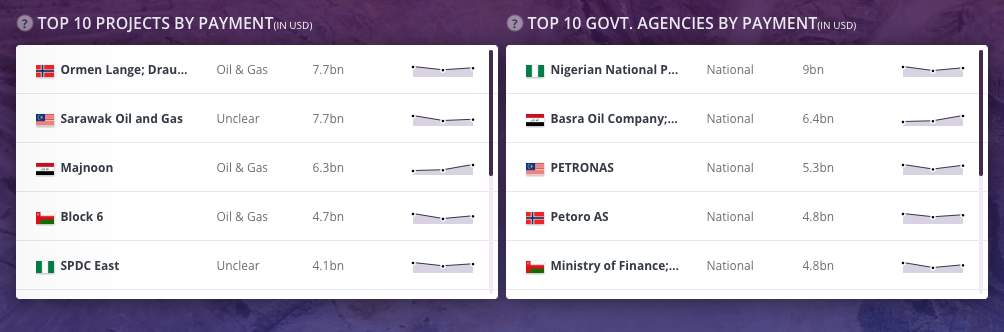 Screenshot of tables showing the top projects and government agencies (by payment) for Royal Dutch Shell PLC
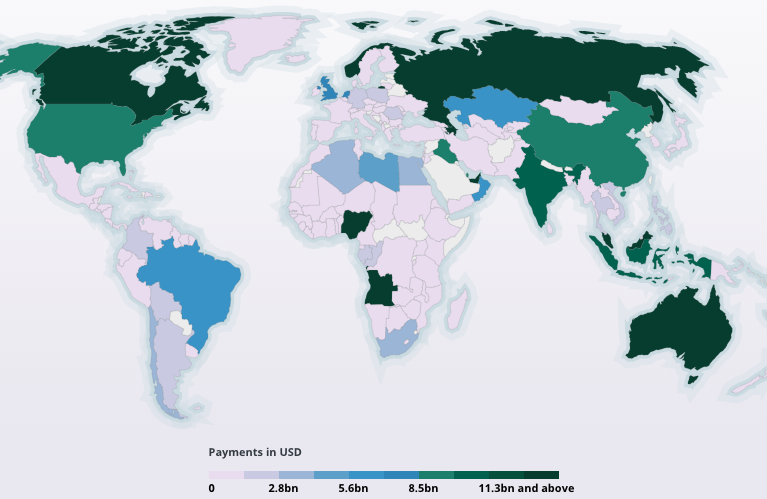 Screenshot of the landing page map showing payments received by countries
Country profiles. We have provided profiles for countries since mid-2017. In 2019, we have made several performance improvements and made them easier to access. Click on a country you are interested in on the landing page map to access its profile.
Customized updates to track payments. If you are interested in following a particular country, company or reporting jurisdiction you can do so by signing up on the website to receive customized updates based on your interests.
Submit new disclosure sources. Have we missed a mandatory disclosure report? Now you can tell us about it here. We will scrape and upload data from it so that you can see it on the website. You can access the submit sources button by going to the table of mandatory disclosure sources here.
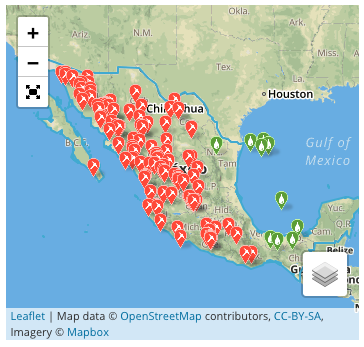 Screenshot of a country profile map of projects in Mexico, showing the location and type of project
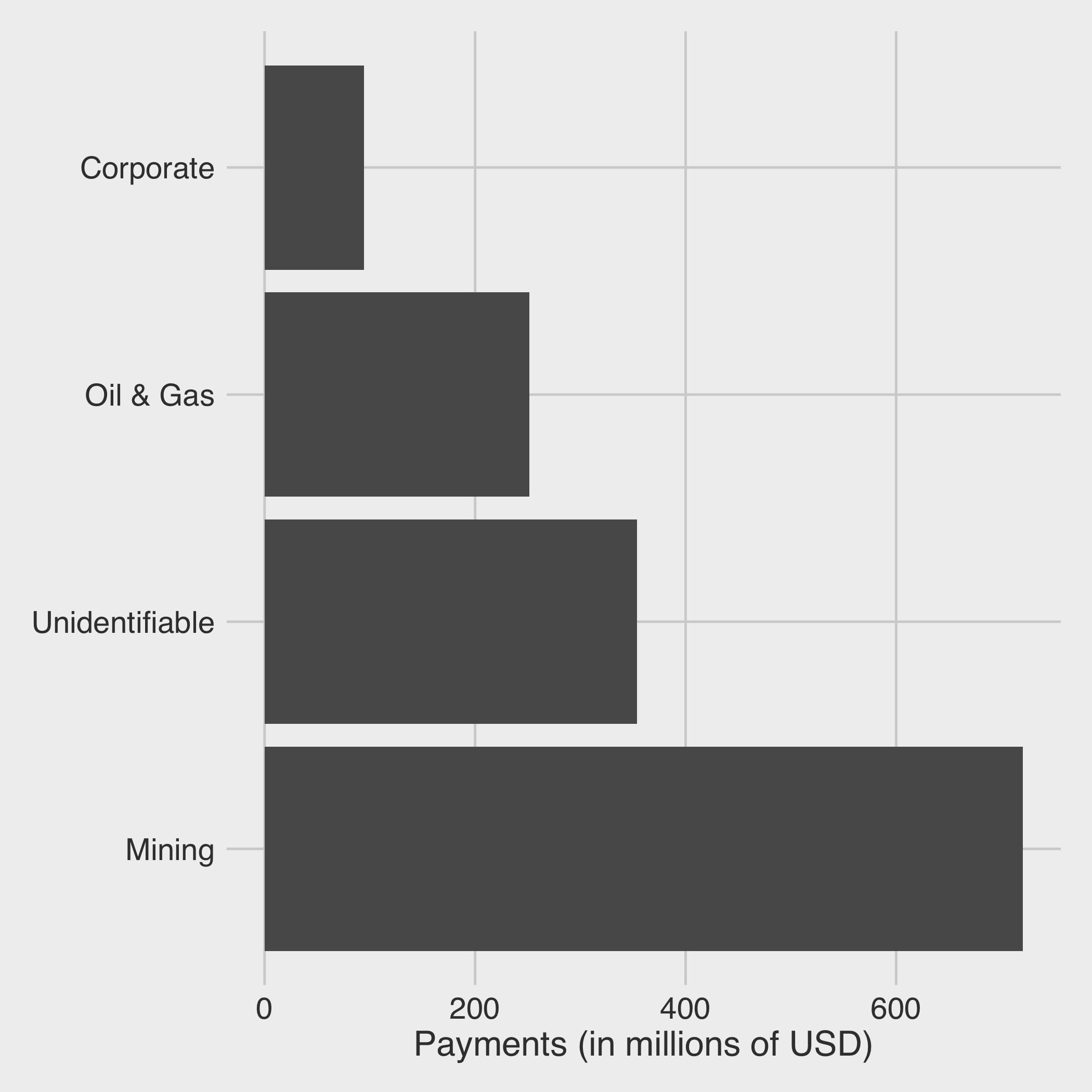 Project payments in Mexico: Why are a high proportion of payments being disclosed through unidentifiable project names?
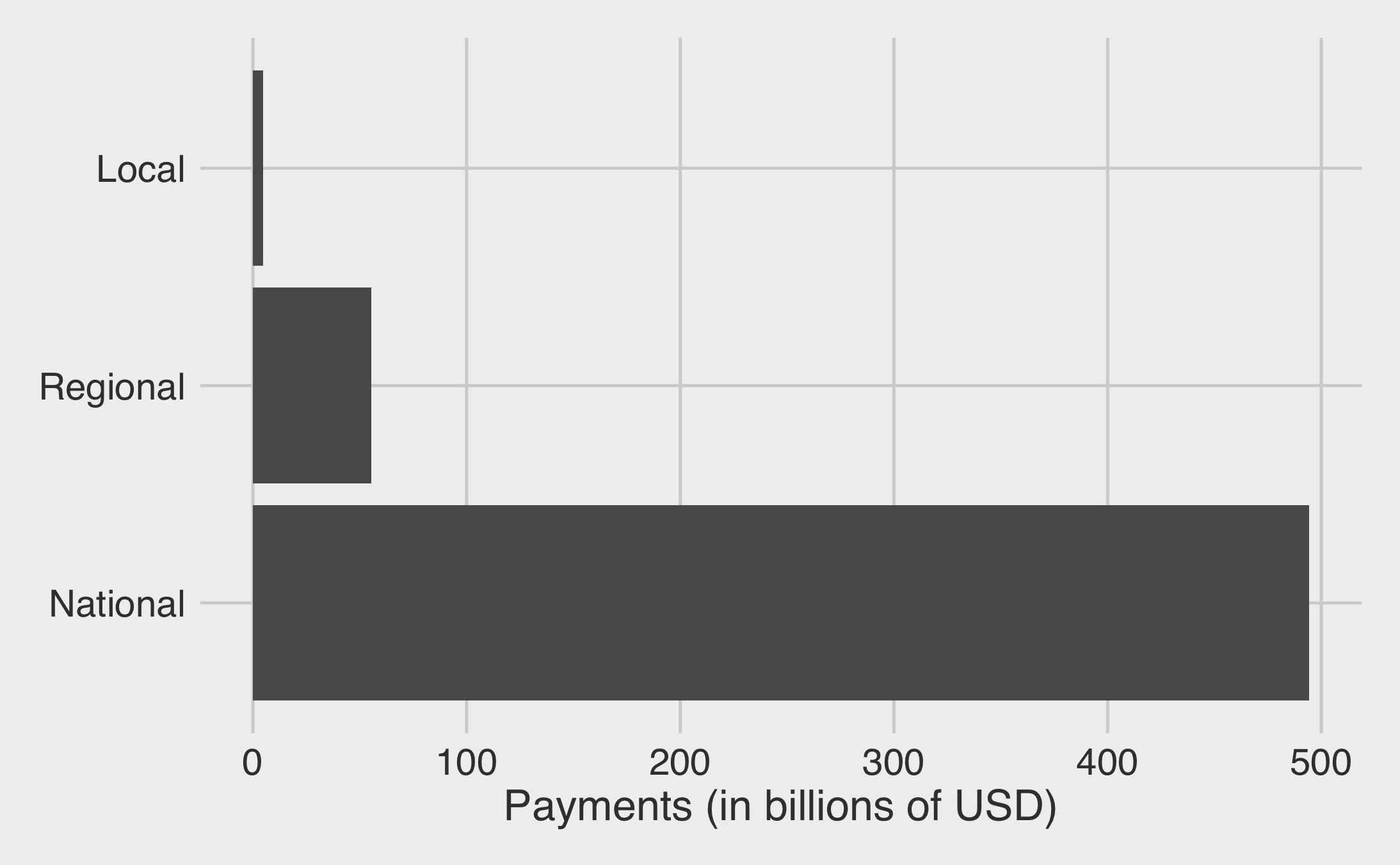 Payments to government agencies: the majority of payments are made to national agencies
Secondary data. As mentioned earlier, in addition to payment (primary) data, we collect additional (secondary) data on projects, government agencies and companies. You can use this data for more detailed analysis of the payment data and check the quality of disclosures.
In addition to the project and government agency types, which can be used as a filter for the data on the website, we collect several other variables (commodity, location, etc.). We are still in the process of finalizing this data and look forward to including it when we launch the next iteration of the website. In the meantime, please email us if you are interested in using this data for your work.
Persistent provenance. We noticed that over time some (about 15 percent every year) URLs or APIs that are used to host mandatory disclosure reports either disappear or get replaced. In order to maintain full traceability between raw and final versions of the data, we now provide access to a backup for every report. This way you will always be able to read the original report, irrespective of whether it is available online at source. You can access both version of sources through the table of mandatory disclosure sources here.
Please provide feedback. We are excited for you to try out these new features. The website continues to be in active development and we would love to have your inputs on any additional features you would like or any bugs you notice. Please provide feedback here.
Finally, thanks to our developers Young Innovations for their work on this project for an excellent job at translating our vision into an easy to use and intuitive website.
Hari Subhash is a data scientist with the Natural Resource Governance Institute.
Modernizing Permitting Will Drive Development of Myanmar’s Mining Sector
Note: This post first appeared as an op-ed in The Global New Light of Myanmar on 14 December 2018.
In September 2018, officials from Myanmar’s Ministry of Natural Resources and Environmental Conservation (MONREC) participated in a study trip to Zambia. They went seeking to learn lessons about how other countries manage their mining sectors and to gather insights into ongoing reforms of Myanmar’s approach to extractive permits.
Permitting in Myanmar is notoriously complex. Several MONREC departments and enterprises have the power to grant permits. Despite recent reform efforts, there is very little clarity on who exactly is involved in reviewing applications and what procedures are to be followed. Permit information is stored across multiple departments, often in hard copy only.This makes permitting extremely slow, opaque and unpredictable. The lack of clear procedures is a burden on government officials, disincentivizes investment by responsible companies and increases the risk of corruption and mismanagement.
To help address these challenges, MONREC is preparing to develop a national register of mineral and gemstone permits known as a “cadastre.” The cadastre is a requirement of the Extractive Industries Transparency Initiative (EITI), a global initiative to promote good governance in the oil, gas and mining sectors, in which Myanmar is a candidate country.
The intention is to establish a system to administer and monitor all mineral and gemstone rights. Companies will submit permit applications through the cadastre. Cadastre officials will then record their applications in a digital system and consider them in a streamlined and legally defined process before granting (or denying) exploration or production rights. To support implementation of this project, the Myanmar EITI and the Natural Resource Governance Institute (NRGI) supported the visit of officials from the Department of Mines, Department of Geological Survey and Mineral Exploration, Myanmar Gems Enterprise and Myanmar Pearl Enterprise to the Zambia Cadastre Office in Lusaka, the capital city. There the visitors from Myanmar were able to see how a cadastre functions in practice.
The experience of Zambia shows that a well-functioning cadastre helps to promote sustainable growth of the mining sector by making permitting faster and more predictable. Zambian officials reported that it can take them as little as two months to issue certain kinds of mining permits. In Myanmar, the equivalent process can take more than a year. A well-functioning cadastre could incentivize investment and generate additional revenues for the government.
The cadastre will also help to reduce administrative burdens. At the click of a button, officials will be able to see the status of all mining permits in the country. This will make it easier to monitor revenue payments and crack down on companies operating with invalid permits. The system will also automatically check for overlaps between new applications and any active or pending permits, which will reduce the need for officials to conduct manual checks and thereby reduce the scope for human error.
Importantly, the cadastre is an efficient tool for good governance. By requiring all investors to follow the same procedures, the scope for discretion and corruption is reduced. In Zambia, key pieces of information – like company names, approval and expiry dates and permit status – are also made available on an online public portal. This empowers accountability actors like parliamentarians, civil society organizations and journalists to better monitor the mining sector.
So what needs to happen next to ensure the success of Myanmar’s cadastre? Currently work is underway to clean up existing permit data across MONREC’s departments and enterprises. The next step is for MONREC to actually establish the cadaster in order to store this data and handle future permitting processes. MONREC officials should use this opportunity to revise and streamline permitting procedures with a view to increasing efficiency, predictability and transparency. This should include clearly defining which institutions are involved at each stage of the permitting process, and establishing objective criteria and timelines for decision-making.
Decentralization does come with risks, however. At whatever level decisions are made, it is important that permitting authorities share information within a unified system. Otherwise the Union ministry and states/regions might issue overlapping permits. There is also the risk that every state and region will use different procedures and criteria for evaluating and granting permits. This could make it challenging to maintain minimum social, environmental and governance standards. The cadastre could help to mitigate these risks.
Myanmar’s cadastre represents a unique opportunity to improve governance and attract investment. Its success now rests on the political will to implement it.
Sebastian Sahla is a Myanmar associate at the Natural Resource Governance Institute (NRGI).
Photo: Farmer looking at Tiggyit open pit coal mine. Suthep Kritsanavarin for NRGI
From Revenues to Benefits: New Nigeria Platform Informs and Empowers Extractives-Affected Communities
It is almost one year to the day since the launch of the Nigeria Oil and Gas Revenues: Insights from New Company Disclosures, a NRGI briefing exploring how payment-to-governments data from Shell and six other international oil companies operating in Nigeria can be used to hold the government accountable for revenues generated from the sector.
To launch the briefing, in early 2018 NRGI, in partnership with Connected Development, co-hosted around 20 Nigerian civil society organizations (CSOs) in Abuja to explore new ways in which they could use this data in their pursuit of accountability.
One of the participants was Olusegun Elemo, executive director of Paradigm Leadership Support Initiative (PLSI), a Nigerian CSO that promotes citizen participation in the Nigerian public audit process and findings to foster leadership accountability, good governance and development of rural communities.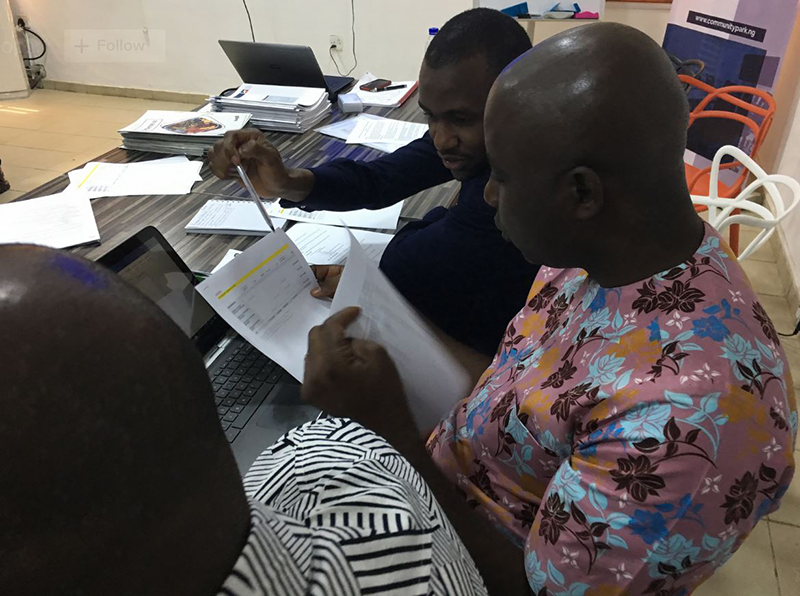
Prior to the workshop, Olusegun was not aware that international oil companies operating in Nigeria were required to disclose the payments they make to Nigerian government entities. But upon viewing the data, he instantly saw its value to inform and empower the rural communities PLSI supports.
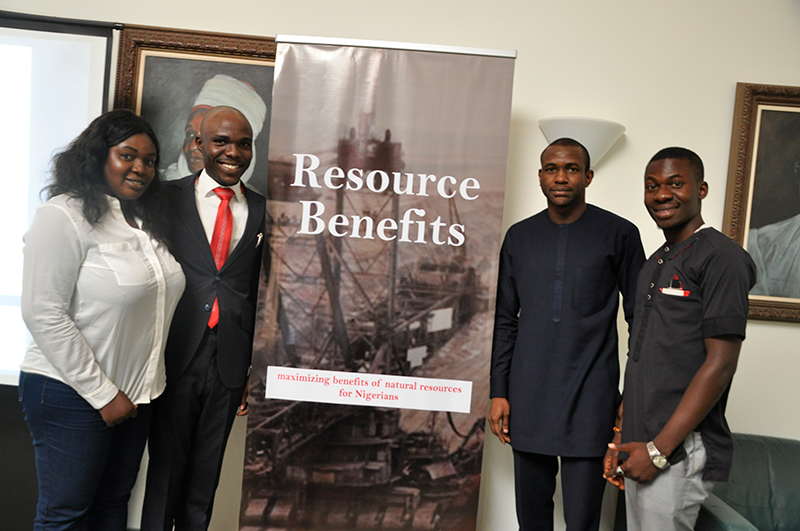
Last month PLSI launched Resourcebenefits.ng, a new platform designed to enable extractive affected communities in Nigeria to understand the resource revenue their government entities receive and monitor its utilization for the development of their communities. This platform draws on payment-to-governments data collected, standardized and presented on Resourceprojects.org, NRGI’s data repository of disclosures made under EU, Canada and Norway mandatory disclosure regulations.
In 2017, Total S.A. reported $46.2m as payment made to @NDDCOfficial for infrastructure improvement. #ResourceBenefits pic.twitter.com/68MnUzR9KF
— PLSI (@PLSInitiative) December 11, 2018
As well as presenting payment-to-governments data relevant to Nigerian rural communities, Resourcebenefits.ng has several interactive features designed to promote greater community engagement and accountability over extractive revenues. These include:
- Niger Delta Development Commission (NDDC) Projects Monitor. PLSI supports citizens to track and report on NDDC projects in the Niger Delta that are designed to benefit the local communities to ensure the money the commission receives from oil companies is used efficiently, effectively, and economically for improved service delivery.
- Share Extractive Impacts. The platform provides a space for community members to voice any negative impacts they have experience as a result of the extractive activities in their area.
Olusegun Elemo stated that “Resourcebenefits.ng leverages on technology to communicate these data in the most creative and simplified form to empower Nigerian citizens with necessary information required to demand accountability from public officials and institutions on extractive revenues collected. PLSI sees these payments to governments data as the game changing addition to Nigeria’s extractive industries.”
The launch of Resourcebenefits.ng demonstrates the value of payment-to-governments data to citizens in resources-rich countries as an informational and accountability tool. It also reinforces the need for more work on the part of extractive companies, regulators in the EU, Canada and Norway and Publish What You Pay coalition members to increase the awareness of and accessibility to such data.
Alexander Malden is a governance associate with the Natural Resource Governance Institute (NRGI).
Revisit the Most-Read NRGI Blog Posts of 2018
Through a sharp, unconventional Marvel superhero movie, global audiences were exposed to fundamental resource governance themes this year. Fictional African country Wakanda’s management and control of vibranium, a miraculous metal with seemingly infinite applications, was a plot point of the global smash film Black Panther as well as the subject of two of the Natural Resource Governance Institute’s most-read blog posts this year.

Other most-read posts ranged widely, focusing on different NRGI priority countries and topics.
Readers enjoyed an introduction to NRGI’s interactive, online resource governance simulation, Petronia; celebrated a contract transparency milestone from one of the largest oil and gas companies in the world; and reacted strongly to timely analysis of the Philippines mining sector and a new petroleum register in Ghana. They were interested in NRGI expert analysis of what makes an accountable state-owned enterprise, which will be a major area of focus for the organization in 2019.
As the year draws to a close, revisit the most-read NRGI blog posts of 2018:
- The Political Economy of Black Panther: Who Benefits from Wakanda’s Mineral Resources?
- Can Petronia Avoid the Resource Curse? It’s All Up to You in a New Interactive Online Course
- Beyond Wakanda’s Way: 'Africanizing' Mining Sector Benefits
- Total Becomes First Major Oil Company to Support Contract Transparency
- What Makes an Accountable State-Owned Enterprise?
- Ghana’s New Petroleum Register Features Full-Text Contracts
- A Withhold up in Mongolia? Thoughts on the Renewed Tax Debate Around Oyu Tolgoi
- Philippines: Will TRAIN Run Over the Mining Sector?
- Ensuring a Fair Deal for Nigerians with Oil-Backed Loans
- New NRGI Board Member Carole Nakhle: Longevity of Extractives Industry Depends on Gender Inclusivity
What Are the Most Pressing Issues Facing the Autonomous Region in Muslim Mindanao’s Mining Sector? One Policy-maker Weighs In
Datu Abdelawin A. Sangkula is assistant regional secretary for operations in the Department of Environment and Natural Resources of the Autonomous Region in Musliam Mindanao in the Philippines. Datu was a participant in Advancing Accountable Resource Governance in Asia Pacific in Belitung, Indonesia, in January 2018. As the course progressed, Datu spoke with NRGI about legislative priorities to address Mindanao’s mining sector, improving extractives governance and the unique challenges of diversifying away from mining.
Don’t Underestimate Resource Governance in Myanmar’s Peace Process
In recent months, violence has intensified in northern Myanmar. In the states of Kachin and Shan, dozens have been killed and thousands displaced since April. Meanwhile, the third round of the “Union Peace Conference-21st Century Panglong” is now six months overdue.
To date, one critical issue has been almost completely absent from the peace process: natural resource governance. While natural resources are by no means the root cause of conflict in Myanmar, or its primary driver, reforms to the extractives sector are important for achieving a comprehensive and lasting solution to the country’s decades-long conflicts.
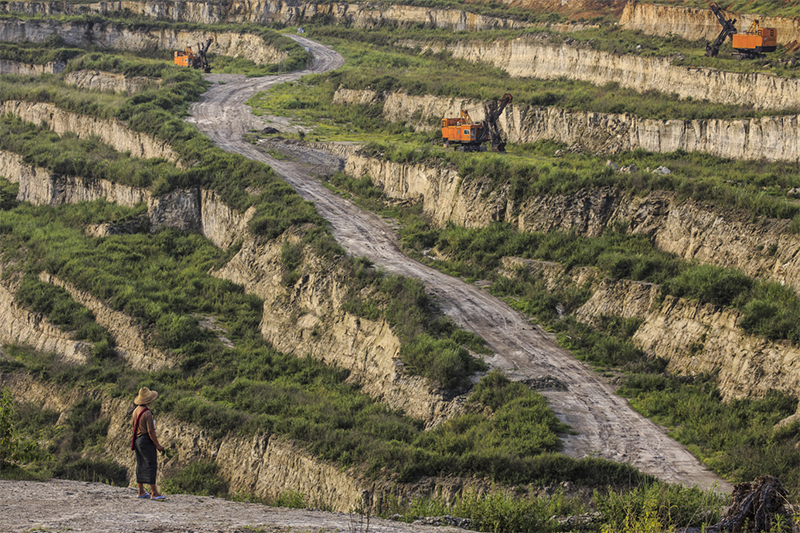 Photo by Suthep Kritsanavarin for NRGI
Natural resources also play a more direct role in the country’s conflicts. The jade industry is perhaps the most well-documented case of financial involvement by the Tatmadaw and ethnic armed organizations. However similar patterns exist beyond jade. For example, Union of Myanmar Economic Holdings Limited, a military-owned conglomerate, has major stakes in tin and tungsten mines in Kayah State. Senior figures within the United Wa State Army are reportedly closely involved in the tin sector. In some cases, violence correlates with competition for control of specific assets, seen for instance in recent clashes in Kachin’s amber and gold mining districts.
The organizers of the “Union Peace Conference-21st Century Panglong” intend to bring together the government, military and ethnic armed organizations to chart a shared vision for the country’s future. A key aspiration is the eventual establishment of a federal Union.
However, while the last round of talks, held in May 2017, led to the formulation of 37 “principles” that would underpin a federal Myanmar, little attention was paid to what federalism would mean for the management of the country’s oil, gas, gemstones, copper, gold and tin, or its renewable resources. This is despite—or perhaps precisely because of—the importance of these resources to Myanmar’s economy and their role in driving many of the country’s long-standing conflicts.
Resource governance reforms will be essential for lasting peace. Not only is there a need to deliver greater benefits to communities on the ground but the Union government must find ways to involve local stakeholders in how the sector is managed. Beyond the peace process, tentative steps in this direction are underway. The Union government has increased revenue transfers to states and regions and granted certain governance responsibilities to subnational institutions (e.g., the issuing of licenses for artisanal and small-scale extraction). To date however, these developments have been piecemeal and marred by ambiguity.
The peace process requires a frank and informed discussion about natural resources and how the full range of responsibilities for the management of the sector could most sensibly be divided between the Union, the country’s states and regions, and potentially even townships or communities. Citizens must experience the benefits of resource extraction.
Myanmar is not alone in grappling with these questions. Recent research conducted by the Natural Resource Governance Institute shows that unitary and federal states alike recognize the importance of subnational empowerment. However, there is no single model for achieving this. Unitary countries typically allocate certain responsibilities to subnational governments (e.g., environmental monitoring) while even highly federalized states usually maintain some responsibilities at the national level (e.g., setting tax rates). In other cases, responsibilities might be shared (e.g., granting licenses). International experience can provide guidance but ultimately Myanmar must chart its own path.
To achieve this, participants in the peace process should not shy away from discussing natural resources. In the build-up to the next round of talks, participants should formulate clear policy positions and aim to develop a consensual set of principles to form part of a future peace accord.
The empowerment of subnational stakeholders cannot wait until the peace process is complete. The Union government should continue to lay the groundwork for a future federal union by involving subnational institutions in resource governance in an accountable, transparent and inclusive manner.
The government’s priority should not only be to respond to the demands of the competing voices in the peace process but also, crucially, to address the sector’s broader existing social, environmental and governance challenges. This could help to breathe new life into the peace process.
Sebastian Sahla is an associate at the Natural Resource Governance Institute (NRGI) in Yangon.
Local Level Agreements in Mongolia: A Need for Government Leadership and Policy Clarity
Before any mineral exploration and mining can take place in Mongolia, the country’s 2006 Minerals Law requires that the host local government and license holders sign a “local level agreement” (LLA). LLAs typically include commitments and obligations that help enhance environmental protection, local content and infrastructure investments.
And yet the implementation of the law has been inconsistent, and local governments and mining companies alike have pled for clarification around LLAs’ objectives and scopes. With this in mind, the Natural Resource Governance Institute (NRGI) and the Open Society Forum (OSF) have worked together to improve the legal frameworks for LLAs as well as improve practices on the ground. We do this in various ways: establishing the independent monitoring of LLAs via civil society organizations; presenting research-informed policy recommendations; and facilitating regional capacity building workshops for all relevant actors.
There is now growing momentum to define the core objectives and principles of LLAs. But in order to attain true clarity around this issue, the national government itself must do a better job of facilitating a national dialogue. Below, I outline the main reasons why this is necessary, and suggest how the government can take the lead in improving LLAs.
Government-issued model agreement has caused more confusion
Mongolia’s national government showed a commitment to improving the uptake of LLAs when it issued a model for LLAs in 2016, called the “Model Agreement on Protecting the Environment, Developing Infrastructure related to Mine Operation and Plant Construction, and Creating Jobs.” Unfortunately, this five-page document did not provide much help to either local governments or mining companies—at best, it has been used as a reference, but most actors ignore it entirely because of its narrow scope and ambiguity about the model’s legal power. In fact, participants in regional workshops have said that the model has led to more confusion than clarity.
For it to become useful, the Ministry of Mining and Heavy Industry (MMHI) should revise the model agreement and define it as a hybrid document that consists of a) a mandatory framework that defines the core elements of an LLA and b) a non-binding guidance document for potential agreement processes and content that local governments and mining companies can adjust to their respective contexts and needs.
Mining-affected communities are marginalized in the current subnational revenue sharing system
In 2015, the national government took an important step when it increased the share of mining revenues for host areas: the budget law was amended to transfer 30 percent of royalty payments of non-mega-projects and 50 percent of license fees to host provinces and districts. However, that 30 percent figure was reduced to 10 percent by the end of 2016. Worse, in 2017 the revenue-sharing scheme was suspended entirely until 2020. LLAs are perceived by local governments and communities as the main mechanism through which they gain benefits from resource projects, and such unpredictable shifts in the revenues to which they are entitled creates both confusion and frustration. To remedy this, the national government––especially the Ministry of Finance and the MMHI––should urgently foster clarity around its sub-national revenue sharing policy and which financial flows should be included in LLAs.
State-owned enterprises (SOEs) should play by the same rules as private companies
All license holders should obey the LLAs requirement in the Minerals Law. However, EITI Mongolia reports show that SOEs do not establish LLAs in Mongolia. (The Erdenet Mining Corporation was the only SOE to establish an LLA, for three years beginning in 2013.) The lack of transparency and accountability of SOEs needs to be remedied if the overall governance of the country`s extractive sector is to improve. Local governments and mining-affected communities are increasingly frustrated by the weak performance of SOEs on environmental and social obligations—making these enterprises comply with the LLAs requirement can help improve their relations with local communities, as well as increase their contributions to local sustainable development.
Both the national government and donor-support civil society should adopt a collaborative and scaled-up approach
Mongolia’s civil society organizations (with support from donor organizations) are most concerned about ensuring consistent and effective implementation of the legal mandate around LLAs. They have developed toolkits and sourcebooks, provided capacity building, and directly engaged in agreement-making on this subject. But the impact of these sporadic efforts has largely been localized and subject to the changing winds of local political dynamics. The national government must take the lead in helping to consolidate these efforts into a larger, national push that can make a real difference.
The way forward for LLAs
Despite the inconsistent implementation of the LLA requirement in the Minerals Law, local governments and mining companies have established at least 100 LLAs in the past decade, and there are examples of good and bad practice. The lessons learned from these LLAs can help improve the existing regulatory framework and agreement-making on the ground. The government can reaffirm its commitment to promoting LLAs by leading a national dialogue on the core principles of legal and policy frameworks for LLAs in Mongolia, collaborating with donor organizations, and facilitating multi-stakeholder deliberation.
Byambajav Dalaibuyan is a JSPS Research Associate at Tohoku University and an Honorary Research Fellow at the Sustainable Minerals Institute, University of Queensland. He has been collaborating with NRGI and OSF to improve the legal frameworks for LLAs and practices on the ground. This post represents his own views and not those of NRGI.