
Can Government Partnerships Support Responsible and Reliable Critical Mineral Supply Chains?

Governments around the world are increasingly forging partnerships focused on critical mineral supplies
As governments look to transition away from fossil fuels and accelerate the deployment of clean energy, policy makers are dedicating more attention to securing supplies of critical minerals.
Materials such as copper, lithium, nickel, cobalt and rare earth elements are essential to components in many fast-growing clean energy technologies, such as wind turbines and electric vehicles. As demand for them grows, government-to-government partnerships focused on mineral supply are becoming an increasingly popular policy tool, helping establish frameworks of cooperation between producing and consuming countries. However, many of these arrangements are described in broad language without supporting details. By making partnerships more concrete and transparent, governments could send an important signal about how they will ensure that new mining projects are developed responsibly...
Explore the full post on the IEA website.
Five Considerations for Parliament Before Ratifying Ghana’s First Lithium Agreement

As the global demand for transition minerals like lithium soars, Ghana stands at a pivotal moment with its first lithium mining agreement. This landmark 15-year lease with Barari DV, a subsidiary of Atlantic Lithium, has the potential to significantly impact Ghana's economy and environment. However, Ghana's parliament must address some critical issues before ratifying the agreement to ensure the country's long-term benefits and sustainability.
As required by Article 268(1) of the Constitution and Section 5(4) of Act the Minerals and Mining Act, the government has presented its mining lease with Barari DV to parliament for ratification. The Committee on Mines is currently considering the agreement before the wider parliament debates it.
Signed in October 2023, the agreement for lithium mining at the Ewoyaa mine sparked heated disagreements among key stakeholders about whether the government negotiated a fair deal for the country. In response, NRGI organized a stakeholder dialogue involving the Ministry of Lands and Natural Resources, the Minerals Commission, civil society organizations (CSOs), industry, academia and media. This dialogue resulted in two key outcomes:
- Need for policy revision. Ghana’s mining policy, developed in 2014, and the Minerals and Mining Act, 2006 (Act 703) require revisions to ensure that the country maximizes the benefits and minimizes the harms from its minerals, particularly in light of increasing demand for transition minerals.
- Commitment to further stakeholder engagement. The Minister for Lands and Natural Resources and the chief executive officer of the Minerals Commission committed to further engagement with stakeholders, both on the lithium agreement pending parliamentary ratification and on revisions to the mining policy and law.
In May 2024, the Minerals Commission, in collaboration with NRGI, held a consultation session with CSOs on draft revisions to the mining policy. CSOs subsequently submitted a memorandum conveying their inputs to the Commission and the Ministry for consideration. As parliament prepares to debate the lithium deal, key issues must inform the discussion:
1. Distinct nature of the Ewoyaa mine. Parliament should recognize that the Ewoyaa lithium mine differs from many of Ghana’s current gold mines, offering higher profit potential—Barari expects an internal rate of return of 94 percent before debt financing. However, as a conventional open pit operation, it also presents greater environmental risks, including impacts on land use, pollution, displacement, and social disruption.
2. Avoiding unnecessary concessions. Parliament should address concerns about possible concessions not specified in the mining lease agreement or law, such as a 10-year tax holiday and electricity tariffs of 30-50 percent below standard industrial rates. Our modeling shows that these concessions are unnecessary given the project’s likely profitability, even at lower prices or higher costs.
3. Safeguarding government revenues. To reduce the risk of revenue shortfalls, parliament should:
- Require lithium prices to be based on a pricing benchmark for tax purposes to reduce the risk of underpricing.
- Limit the amount of interest the mining company can deduct from taxable income irrespective of the debt-to-equity ratio of the project to reduce the risk of profit shifting.
- Introduce “non-dilutable” state equity language to protect government's interest and eliminate the risk of dilution if Barari or Atlantic Lithium issues additional shares
- Establish clear rules in the shareholders’ agreement to reduce the risk of underpayment of state dividends.
In addition, parliament must ensure that the government institutes urgent measures to enhance the capacity of the regulator and tax authorities to effectively monitor costs and assess profits.
4. Value addition. Increasing the amount of mineral processing (“value addition”) in Ghana can help retain greater economic value via more government revenue, jobs and, in the case of some minerals, cheaper inputs for other sectors. The government hopes Barari or other companies will construct a lithium refinery in the country. Barari has submitted a “scoping study” on its viability to the government, as the terms of the mining lease require. Parliament should ensure this study contains a rigorous feasibility assessment. The government should also publish the study and consult with industry players, development partners, governments of other prospective lithium-producing countries in the region and civil society.
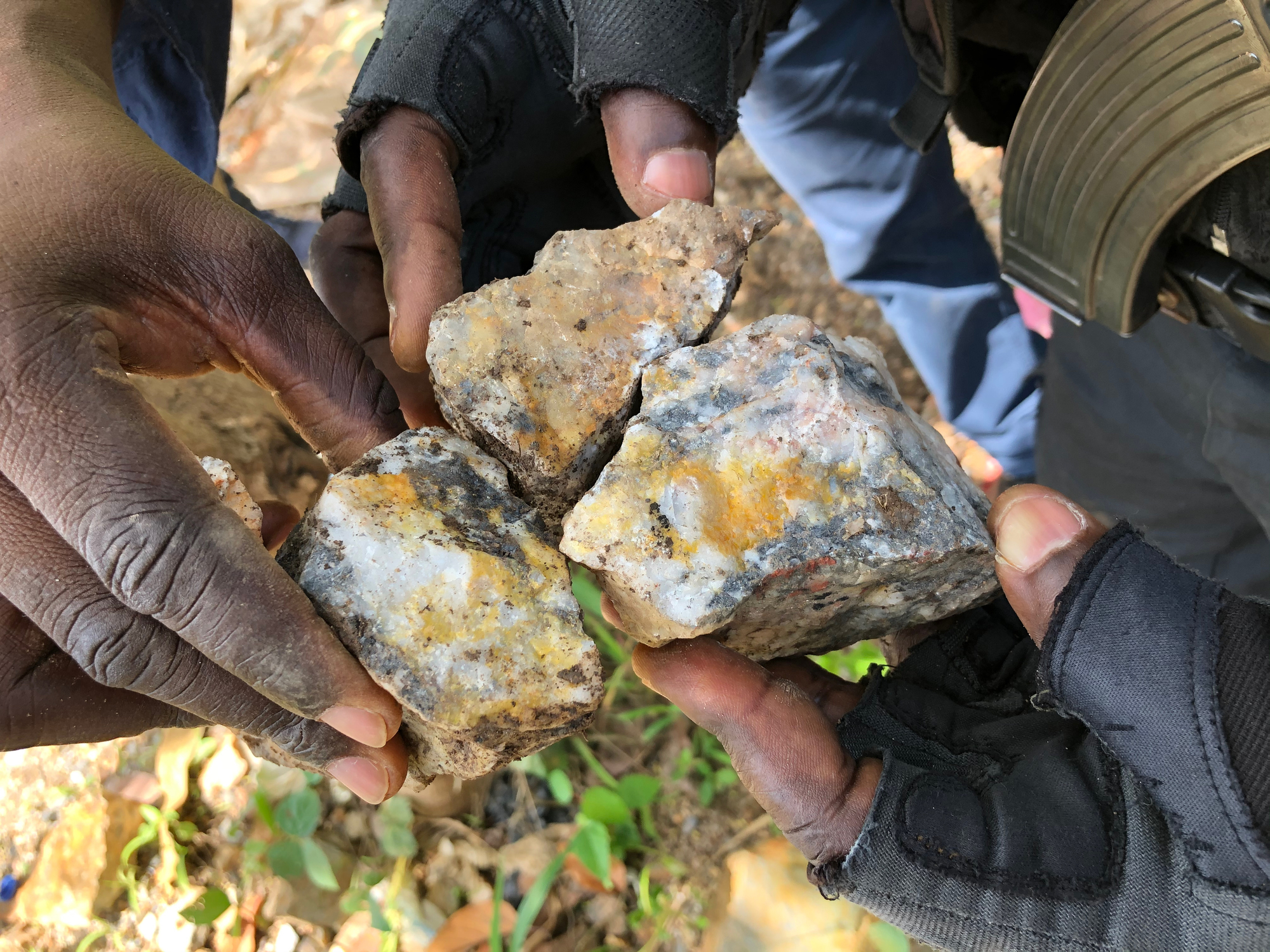
5. Community development obligations. Parliament should provide more guidance on the company’s community development obligations to ensure sustainable benefits for host communities. The agreement currently mandates a community development fund and a community development agreement (CDA) with affected communities, which is a positive step. However, the government should set basic parameters for the CDA to empower communities to participate in and oversee development for long-term gains. Leaving these obligations entirely to the company risks a flawed process that could undermine expected benefits to communities. The lithium agreement should specify that the CDA must:
- Provide for community oversight and monitoring of the CDA’s implementation.
- Include a grievance mechanism for communities to lodge complaints about Barari’s performance under the CDA or broader social and environmental performance.
- Include provisions on mine closure and provide for sustainable benefits under the CDA.
Parliament should ensure that the CDA is enforceable, with material breaches considered a breach of the lithium agreement. This agreement and Ghana’s mining policy review present an opportunity to set minimum standards for community development agreements and avoid variation based on company and community capacity. In developing these guidelines, Ghana should draw from the lessons learned from its own experience with CDAs, as well as those from other countries.
With the new opportunities and risks that increasing demand for transition minerals brings, the government and parliament must take a different approach to the processes for debate and subsequent approval of mining agreements. The government's transparency and stakeholder engagement on the lithium deal is notable. It is now essential for parliament to prioritize meaningful consultations in the ratification process. Only through a genuinely inclusive approach can Ghana take the first step toward ensuring that the extraction of transition minerals benefits citizens, particularly communities, supports environmental sustainability and facilitates a just transition–a triple win for the country.
Critical Energy Transition Minerals to Accelerate Progress Towards the SDGs
New York City, U.S. and online

Critical energy transition minerals are essential for low-carbon technologies, and are thus crucial for achieving the climate ambitions outlined in the Paris Agreement and the Sustainable Development Goals (SDGs).
The demand for critical energy transition minerals is expected to rise significantly, posing both opportunities and challenges for sustainable development, particularly in resource-rich countries.
This side-event at the meeting of the United Nations High-Level Political Forum on Sustainable Development examined the different regional perspectives, as well as the economic and development implications of the extraction, processing and industrialization of these minerals. Participants discussed how these critical minerals can drive economic diversification, value addition and sustainable development, while mitigating socioenvironmental conflicts and ensuring fair benefit-sharing. The event also highlighted the role of United Nations initiatives, such as the Working Group on Transforming the Extractive Industries for Sustainable Development and the Panel on Critical Energy Transition Minerals, showcasing efforts to support just transitions and enhance global governance.
Remarks by NRGI director for governance programs Erica Westenberg
The Natural Resource Governance Institute has been honored to participate in the Secretary-General’s Panel on Critical Energy Transition Minerals and we appreciate the opportunity to discuss these important issues.
As other speakers have noted, there are strong linkages between transition minerals and the five Sustainable Development Goals (SDGs) of which the High-Level Political Forum has been conducting in-depth review over the past week. Unpacking just a few of these linkages can highlight some of the key priorities that are emerging from the panel's work and beyond.
On SDG 1, on poverty reduction, it's notable that the terms of reference for the panel tasked the body with ensuring that developing producer countries benefit most—that's how it’s worded— from their mineral resources. In our view, the goal of benefiting most should be viewed in a holistic way. Part of benefiting most means not suffering environmental, social and cultural harms as a result of mining activities, including by protecting and respecting Indigenous peoples’ rights to self-determination and to free, prior and informed consent.
Another part of benefiting most should be that stakeholders in developing producer countries enjoy reliable and affordable renewable energy access domestically themselves, not just producing inputs so that other parts of the world can have clean energy.
And at its core, benefiting most should mean developing producer countries get a maximally good deal economically for their minerals, which, if governed well, can then help reduce poverty and ensure sustainable development. In the panel discussions we’ve been calling this a principle of economic equity.
And we’ve proposed several concrete actions that we think would align with the principle of economic equity. For example, the current IMF guidance on what's considered a reasonably achievable effective tax rate for mining countries is a decade old, and it was produced based on an assessment of fiscal regimes that existed even further back in history. So there’s a real risk that previous imbalances of power and inequity have been built into this baseline.
Now we have a chance to learn from mining history and call for a new vision of partnership between governments and companies that can define a more equitable future. Governments and companies can also avoid signing up to tax holidays and withholding tax relief—particularly risky types of tax incentives. Development finance institutions and donors can create a fund for tax authorities in developing producer countries to ensure that they have the resources, the skills, the databases they need to effectively measure and collect the revenues that they're owed.
Value addition is another key action area that could advance the principle of economic equity. We’ve proposed that development finance institutions and donors should provide concessional financing, including to governments, to support value addition facilities and to address infrastructure bottlenecks. Mining companies could support independent, publicly disclosed value addition feasibility studies. This is something that, for example, civil society in Ghana has really been pushing for.
In general, we hope that the panel can do even more to engage civil society in developing producer countries and get their inputs on what sorts of principles and reforms are really needed to address challenges on the ground. Governments and mining companies should also explore whether and how regional coordination of value addition efforts can help overcome some individual country constraints, and it’s been great to hear from the various executive secretaries today about the regional efforts that are already underway.
A key component of SDG 16 on justice and strong institutions is addressing corruption, and in the mining sector we know that corruption diverts public money towards private hands. The executive secretary mentioned illicit financial flows and the challenges that they pose. We know that corruption jeopardizes crucial environmental and social safeguards that put people, particularly youth, women and Indigenous peoples—and the environment—at risk. So we've proposed that the panel should pursue a cross-cutting principle on tackling mining-sector corruption and that it should be driven by actions for increasing transparency and screening; preventing undue influence and conflicts of interest; strengthening accountability measures; reducing the role of high-risk actors in the sector; and supporting downstream supply chain actors and investors to integrate checks of anticorruption practices into responsible sourcing and due diligence systems.
And last, the linkage between transition mineral principles and SDG 13 on climate change are many. We’ve talked about the very direct role that transition minerals play as inputs into wind and solar technologies and electric vehicle batteries, but there are also more cross-cutting lenses that link transition minerals to broader climate issues of planetary boundaries and consumption levels.
A letter addressed to the panel from over 200 civil society organizations advocates for a principle to reduce demand equitably, calling on governments, especially in developed countries, to reduce overconsumption of transition minerals, including in the transport sector, and enable equitable, efficient and sufficient energy for all. The letter calls for responsible use practices such as increased circularity, enabling the highest and best use of materials, and requiring appropriate recycling. And it calls for governments in developed countries to ensure their policies do not lead to industrial waste from processing facilities and outdated technologies being discarded in developing countries.
Featuring NRGI's

Erica Westenberg
Governance Programs Director
The UN and transition minerals
NRGI president and CEO Suneeta Kaimal is a member of the UN Secretary-General's Panel on Critical Energy Transition Minerals. NRGI aims for the panel to ensure that producing countries benefit, that the energy transition is a just one, and that international standards are aligned.
Global race for critical minerals… a unique opportunity for Latin America?
Women's Roles in Decisionmaking About Mining and the Energy Transition

NRGI's Nafi Chinery spoke with Zed 101.9 FM in Ghana about changing roles for women in the country's extractive sector—and in mining in particular—amid the energy transition.
She said:
"We need to shift our attitude toward women‘s participation and representation in mining and extractives. Whenever we talk about representation, participation, voice, recognition and benefits, we must go beyond the traditional roles often associated with women and acknowledge women experts, who can influence policies and decisions. We need women in boardrooms and that requires a better analysis of the barriers preventing women from attaining those positions and addressing them. There must be a clear policy and strategy around how to increase women’s participation and benefits in the green mineral sector so that we can monitor and hold the government and investors accountable."
UN-convened panel to address equity, sustainability and human rights across the value chains of critical energy transition minerals
How Gulf states are putting their money into mining
ICMM announces initiative to simplify responsible mining standards
Mining-Affected Communities: The Elephant Not in the Room

At Mining Indaba in Cape Town this week we heard countless references to mining-affected citizens of African countries. The word “communities” steadily fell from the mouths of mining executives and government officials. Most suggested that maximizing benefits and minimizing harms for community members was a sacrosanct priority.
But absent from almost all of the rooms where this word was repeatedly invoked were…members of mining-affected communities. The Indaba agenda did include one invitation-only engagement session, between the International Council on Mining and Metals and community representatives. And Indaba organizers graciously accommodated some international non-governmental organizations, including NRGI. But if communities’ perspectives are as crucial as executives and officials imply, then community members and activists must be present in a sustained way at Indaba and equivalent forums—and not just as featured guests. (NRGI president and CEO Suneeta Kaimal raised this issue last year in connection to the International Energy Agency's Critical Minerals Summit.)
My colleague Tengi George-Ikoli shared with me an African adage: “A man’s head should not be shaved in his absence.” Community voices are essential in spaces like Indaba to ensure that decisionmakers account for the social, economic and environmental impacts of mining and minimize them.

In that vein the deep-pocketed mining companies and rich-country governments that sponsor Mining Indaba could contribute to a pooled fund that grants admission and travel bursaries to community activists and reporters from Africa’s mineral-rich nations. One such journalist who was able to self-fund a trip to Cape Town this week told us that they were the only reporter from their country in attendance. “No media houses back home can pay for journalists to come here,” they said.
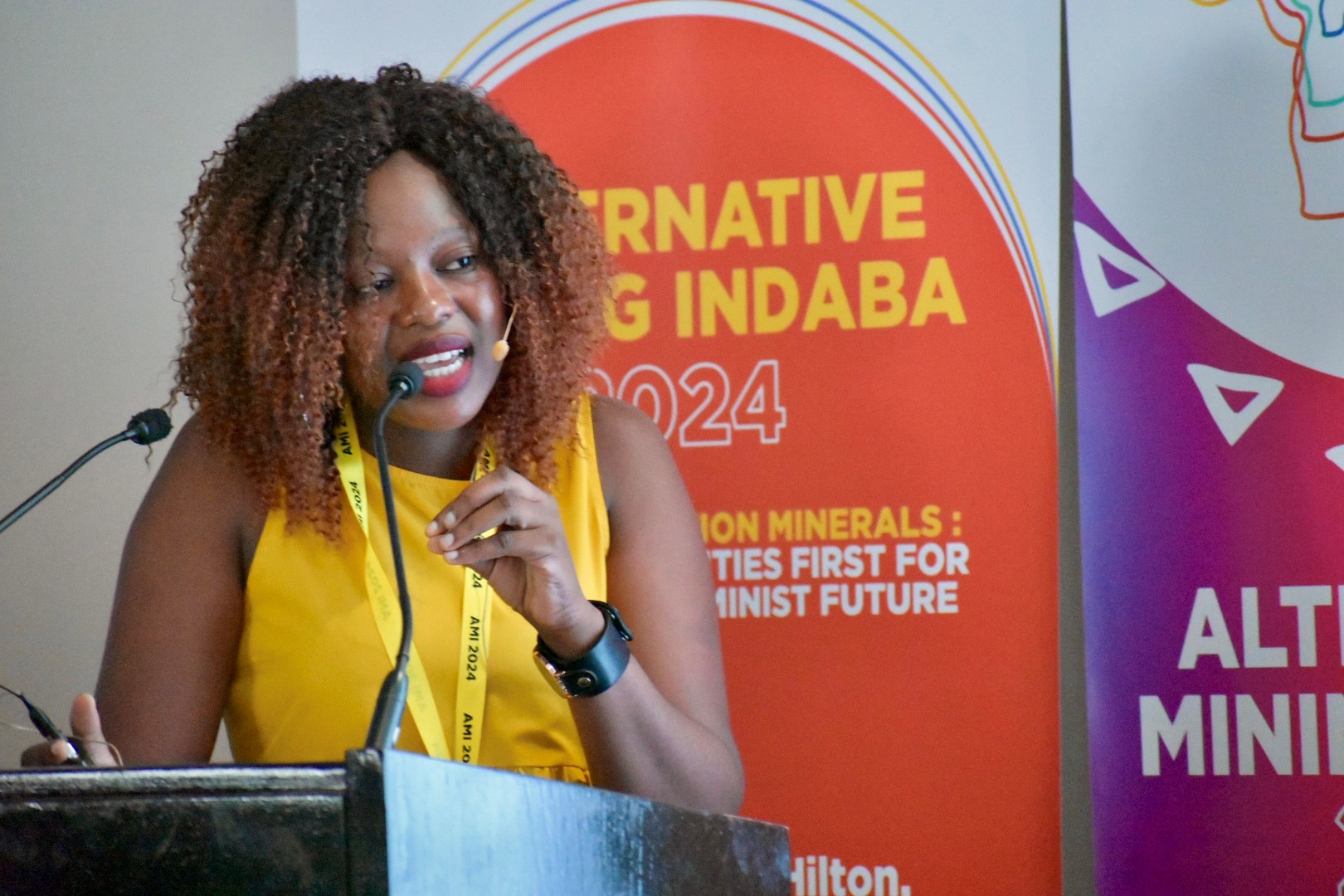
One place that was replete with community stakeholders was Alternative Mining Indaba, which has operated in distant parallel to the main Indaba for 15 years. (Many AMI attendees are funded by larger non-profits to undertake the trip.)
There, we heard searing accounts of the impacts on communities. A young woman from Zambia, speaking out against child labor in the industry, implored her listeners: “How can we children build a future for ourselves from inside of a mine?” She received enthusiastic applause—from people who on their own can do little to address her concerns. The power brokers were all at the main Indaba site six kilometers away.
While mining companies do invest in outreach to communities, and have provided valuable services in many instances, at the continent’s biggest mining confab those directly affected by extraction are scarce.
Community relations are just one facet of the work that remains for the influencers and decision-makers connected to the mining sector. State-state deals and the ways in which African countries might add value to raw commodities were also hot themes in Cape Town. (Though one industry lawyer said the quiet part out loud when he intoned from an Indaba stage that “governments really should have no role in mining.”) But until communities and civil society have a more fixed and prominent seat at the table, and agendas reflect the importance of their voices, progress on any of these challenges will be difficult.
Learn more about just energy transitions
How Companies at Africa’s Mining Indaba Can Take Meaningful Action for People and Planet

Next week, policymakers, industry executives, civil society actors and development partners will converge on Cape Town, South Africa for the 2024 African Mining Indaba. Now in its 30th year, Indaba is an annual confab, primarily known as a venue for dealmaking and discussions between governments and mining companies.
This year’s theme—“Embracing the power of positive disruption: A bold new future for African mining”—is encouraging. As players like the U.S., EU, China and most recently Gulf oil powers scramble for the continent’s minerals, this time must indeed be different. The history of mining in Africa is riddled with economic, social and environmental injustice, often accompanied by underinvestment and supply disruptions. A triple win—for people in African mining countries, for their environment, and for the energy transition itself—is sorely needed.
Only by reducing investor risks arising from disputes with governments and communities will companies be able to sufficiently increase capital flows into Africa's mining sector to take full advantage of booming demand.
Civil society organizations and activists at the Alternative Mining Indaba, a very un-corporate parallel Indaba universe, have for years made the case for a better deal for Africans. World leaders are belatedly recognizing the importance of transition mineral governance for ensuring the production of green technology needed for climate change mitigation. At the COP28 climate conference, UN Secretary-General António Guterres stated that “the extraction of critical minerals for the clean energy revolution… must be done in a sustainable, fair and just way.”
Companies must also ensure that Africans get a better deal. Only by reducing investor risks arising from disputes with governments and communities will they be able to sufficiently increase capital flows into the sector to take full advantage of booming demand. And it seems companies are beginning to realize this. At last year’s Indaba, industry executives made frequent reference to “ESG” (environmental, social and governance considerations). And at this year’s edition companies are again queuing up to speak on panels about sustainability.
However, in the last year concrete action has been sporadic at best. This year’s Indaba is a good opportunity for companies to clearly define what actions they will take. Below are some of these actions on value addition, social and environmental protection, and corruption.
Value addition
Value addition—usually meaning the refining of raw commodities into something closer to their final consumable form—is increasingly sought after in most mining nations, as it brings additional revenues, jobs and, in some cases, an opportunity to produce inputs for producers’ domestic economies. African leaders reinforced their call for more value addition to take place on the continent at last year’s inaugural Africa Climate Summit.

To realize these ambitions, African governments must develop a clear and credible mineral-specific strategy. International players such as the U.S. and European Union need to convert memoranda of understanding on mineral supply cooperation with the likes of the Democratic Republic of the Congo and Zambia into concrete action to derisk financing and address other bottlenecks.
However, industry also has a critical role. Companies should:
- Support independent, publicly disclosed value addition feasibility studies. Companies should work with governments to better incorporate value addition planning in the licensing process and ensure transparency at key decision points. Companies, such as those soon to start mining Tanzania’s rare earths and Ghana’s lithium, increasingly agree to some form of scoping of value addition feasibility. But these assessments are often ill-defined and lack clear timeframes, and neither the companies nor government tend to publish them. Independent, published feasibility studies as part of license conditions would not only help governments to manage public expectations when value addition is not feasible but also help them to make value addition more feasible in the longer term by identifying bottlenecks.
- Coordinate. Coordination between mining companies operating in the same or neighboring countries could alleviate challenges of costly infrastructure needs and scale. Guinea’s huge Simandou iron ore project is finally proceeding with at least eight companies coordinating to construct two mines, a railway and a port; but companies in Guinea continue to primarily export bauxite ore despite sufficient scale for large alumina refineries that could bring down costs if they coordinated to supply feedstock. Governments should help to bring companies around the table, but companies themselves can be more proactive in this regard.
Social and environmental protection
Limiting the social and environmental harms of mining is just as crucial as maximizing the benefits. Some mining companies have taken positive, preliminary steps in this area—for example, “nature positive” commitments made by International Council of Mining and Metals (ICMM) members last month. But companies can and must do more. They should:
- Observe and expand mining no-go zones. ICMM members have committed to not exploring or mining in UNESCO world heritage sites and complying with the objectives of legally designated protected areas. However, this falls short, for example, of protecting forests of high conservation value inside and outside of protected areas—a key step for protecting communities and the environment. Nearly 27 percent of the Congo Basin’s intact tropical rainforests overlap with mining concessions. Governments should designate no-go zones, but companies shouldn’t wait for that to act themselves.
- Meaningfully consult with communities. In principle, governments and companies have increasingly recognized the need for “free prior and informed consent” from communities before allowing extraction. However, this engagement often has limited meaning. A recent analysis of 26 African countries found that seven do not require public consultation until after companies have completed a draft environmental and social impact assessment, rather than during the drafting process. Given the importance of community relations for companies’ “social license to operate,” and the expertise that communities bring on managing their local environment, companies should undertake meaningful consultation irrespective of any legal requirements.
- Publish project-level information on impacts. More project-level information will enable greater engagement by local actors directly affected by mining’s social and environmental impacts. The new Global Reporting Initiative (GRI) mining standard, set to launch next week at Indaba, supports this move by emphasizing mine-site reporting on a wide range of impacts such as water, waste and emissions.
Corruption
Corruption stands in the way of a better deal for the people and environment in African mining countries, and with it more minerals to address the climate crisis. Without action, the risk that the scramble for Africa’s minerals fuels corruption is high: corruption allegations have already emerged in relation to the race for Africa’s lithium.
To effectively tackle corruption, companies should, among other actions:
- Reduce the use of agents and intermediaries. Corruption commonly comes in the form of company staff paying bribes to public officials via agents and intermediaries. Companies should follow the example of trader Trafigura, which in 2019 committed to no longer hiring third parties to perform “business development” functions (recently announced bribery charges related to activities in 2009-2011 show why action on corruption at the company was essential). Companies should exert extensive control over relationships with any remaining intermediaries.
- Be transparent. Companies should adopt and champion project-level contract, payment, commodity trading and beneficial ownership transparency in line with the Extractive Industries Transparency Initiative Standard (EITI) to make it easier for journalists, citizens and other accountability actors to detect corruption. While there are examples of good practice, such as Newmont and Rio Tinto, 73 percent of EITI supporting companies still do not meet the expectations on beneficial ownership transparency and 27 percent fall short on contract transparency.
- Ensure strong due diligence to avoid elite capture. In many countries, powerful officials and their allies receive unfair access to the mining sector and its profits, including through influencing the choice of subcontractors and partners. Petrobras, the Brazilian national oil company, has reduced these risks following the “Car Wash” scandal by requiring suppliers to report beneficial ownership information and verifying this information for higher-risk entities—and refusing to engage with any entity whose key personnel or beneficial owners have unmanageable conflicts of interest. Mining companies should follow suit.
As Indaba kicks off on Monday, we hope to see companies embrace the types of positive disruption outlined above to achieve a “triple win.” It’s in everyone’s interest that they do.
The extraction of critical minerals for the clean energy revolution must be done in a sustainable, fair and just way. The Democratic Republic of the Congo-Zambia battery plant offers an opportunity.