
Evolution of Mining Industry Taxation Toward a Bold New Future for African Mining (Mining Indaba)
Insiders Stage, Cape Town International Conference Centre
This AMLA platform is a tool that African governments and legislative drafters may utilise in developing legislation, or which may serve as an educational device for parliamentarians, mining sector regulatory bodies, and civil society to better understand some of the possible legal solutions or systems for regulating the mining sector. The AMLA Guiding Template represents an enhanced starting point for its users by providing a clear and practical foundation on which they can thoroughly consider topical issues supported by sample drafting language as they develop, modify, or simply assess mining legislative frameworks that fit each country's unique context. The various toolkits developed to complement the AMLA platform and the Guiding Template provide enhanced analyses, references, and practical guidance on addressing specific mining legal issues.
This session will include a presentation of AMLA’s activities over the years, a presentation on previous toolkits and introduction of the Mineral Taxation Toolkit, and an expert panel session, featuing NRGI's Thomas Scurfield, addressing:
• impacts of mining fiscal policy approaches in Africa
• tax avoidance and the OECD BEPS initiative
• incentives regimes
• tax administration
• proposals for reform to maximize benefits
Featuring NRGI's

Thomas Scurfield
Senior Economic Analyst
Rethinking Resource Nationalism: Cash Grab or Fair Share? (Mining Indaba)
Westin Stage 1, Cape Town International Conference Centre
Is the increase of exports bans of unprocessed minerals a sign of a wider trend across Africa? How have mining companies reacted to this continental shift? Does the uncertainty of access affect investment? What effect has the move towards greater beneficiation requirements had on existing and future mining projects? How can increased nationalism around mineral assets affect producers, specifically when considering beneficiation, ownership ambitions and greater employment?
This session will feature:
- Claude Baissac, CEO, Eunomix
- Warren Beech, CEO, Beech Veltman Incorporated
- Benedito Paulo Manuel, Director General, Sociede Mineira de Catoca LDA
- Silas Olan'g, Africa Energy Transition Advisor, NRGI (moderator)
- Jeff Quartermaine, CEO, Perseus Mining
- Hulme Scholes, Director, Malan Scholes
Featuring NRGI's
Silas Olan'g
Africa Energy Transition Advisor
Polarization and Post-Truth: Can Diverse Groups Realistically Work Together to Solve Mining Industry Challenges? (Mining Indaba)
Stewards Stage, Cape Town International Convention Centre
The mining industry is at the forefront of one of the most significant economic shifts in history, as the world seeks to decarbonize while also trying to meet the UN Sustainable Development Goals. New mines will need to be developed in record times if the industry is to meet demand for transition minerals, and collaboration between governments, the private sector and civil society will be vital if we are to responsibly expedite development and permitting processes while also prioritizing social and economic well-being of local communities. This fireside chat will feature:
- Rohitesh Dhawan, CEO, ICMM
- Nafi Chinery, Africa Director, NRGI
Featuring NRGI's

Nafi Quarshie
Africa Director
Can Mining Policies Equally Benefit Citizens, the Environment and the Energy Transition? (Mining Indaba)
Westin Stage 1, Cape Town International Conference Centre
- Marcus Courage, CEO, Africa Practice (moderator)
- Nere Emiko, Managing Director, Kian Smith Company
- Khalid Koser, Executive Director, GCERF
- Thomas Scurfield, Africa Senior Economic Analyst, NRGI
- H.E. Ruth Nankibirwa Ssetemu, Minister of Energy & Mineral Development, Republic of Uganda
- Tricia Wilhelm, Group Head of Social Impact, Anglo American
- Anselm Wimye, Head of Office, Search for Common Ground
Featuring NRGI's
Thomas Scurfield
Senior Economic Analyst
Ghana: Govt support key to Africa’s first lithium refinery ambition
China is winning Africa’s “white-gold” rush for lithium
Addressing Corruption in Energy Transition Minerals in Africa: How Can Women and Communities Benefit? (Alternative Mining Indaba)
DoubleTree by Hilton Hotel Cape Town
The energy transition requires more minerals than fossil-fuel-based systems to scale up low-carbon infrastructure to fight against climate change. The boom in demand for these minerals will increase the likelihood of corruption and impact marginalized groups; women and youth disproportionately. Many reserves of transition minerals are also located in countries that struggle with governance. This means that governments, oversight actors and climate community need to take decisive action now to ensure sustainable development of their economies and in particular, address the growing risks of corruption in transition mineral supply chains and mitigate impacts on lives and livelihoods.
Suitable for members of civil society, youth, womens, community and faith-based groups working on mining, this workshop aims to:
- Improve participants’ knowledge of the connection between just energy transition, corruption, gender and the Extractive Industries Transparency Initiative standard.
- Provide participants with information and skills to improve the quality of their interventions and positively influence the transparent management of transition minerals in their communities.
Speakers include Nafi Chinery, Tengi George-Ikoli and Silas Olan'g of NRGI; and Gilbert Makore and Fatma Nyambura of the Extractive Industries Transparency Initiative.
Featuring NRGI's
Nafi Quarshie
Africa Director

Tengi George-Ikoli
Nigeria Country Manager
Silas Olan'g
Africa Energy Transition Advisor
Fair, Equitable and Inclusive Energy Transition (IGF Annual General Meeting)
Geneva, Switzerland and online

The energy transition is playing an important role in society and in furthering sustainable economic growth. As the transition happens and society strives to achieve global climate goals, no one should be left behind. This session--part of the Intergovernmental Forum on Mining, Minerals, Metals and Sustainable Development's (IGF) annual general meeting, will discuss the actions needed to ensure a fair, equitable, and inclusive energy transition for all.
Members of the public may register to watch the meeting and this session virtually.
Moderator
- Christina Saulich, senior policy officer, responsible mineral supply chains, Federal Ministry of Economic Cooperation and Development (BMZ), Germany
Speakers
- Katie Fedosenko, director, ESG engagement, Teck Resources
- Camila Pereira Rego Meireles, technical officer: mining, extractives, energy and manufacturing, International Labour Organization
- Matthieu Salomon, lead, anticorruption, Natural Resource Governance Institute

Matthieu Salomon
Lead, Anticorruption
Diagnosing Corruption in the Bauxite Sector in Guinea: Three Conditions for a More Transparent Future

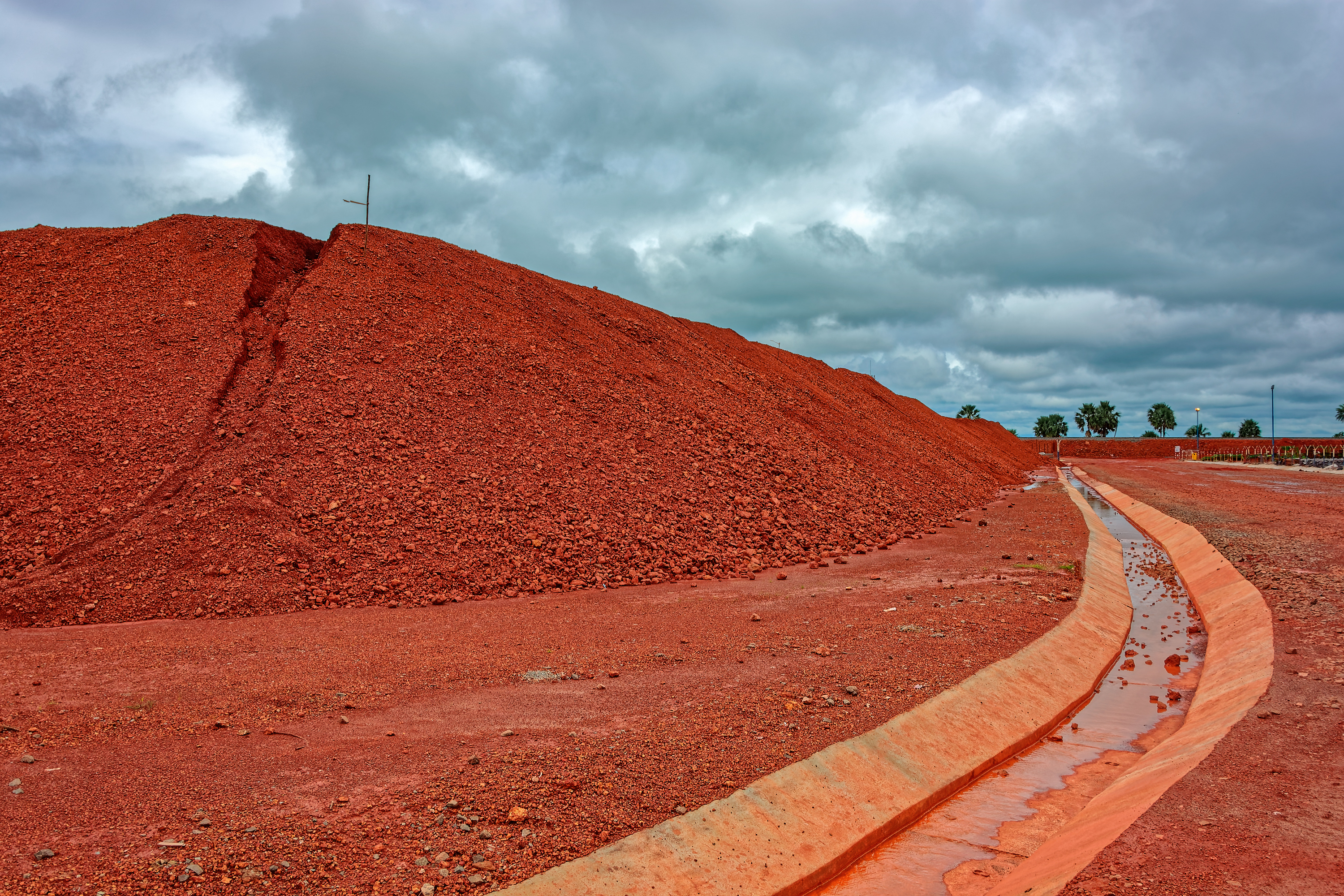
Bauxite, a crucial strategic ore in aluminum production, plays a central role in the manufacturing of the technologies needed for the energy transition. According to the International Aluminium Institute (IAI), global aluminum demand is expected to increase by nearly 40 percent by 2030. In 2022, Guinea positioned itself as the second-largest global bauxite producer, behind Australia, and the leading bauxite exporter worldwide, with an annual production of nearly 103 million tons. However, the revenues generated by Guinea’s mining sector do not align with this potential.
Various stakeholders in Guinea, from civil society to policymakers, have consistently highlighted the paradox of the mining sector—rich in underground resources but economically poor. There is dissatisfaction with the revenues generated by Guinea's extractive sector. In 2020, the mining sector's contribution to the national budget was estimated at just over $500 million, a figure deemed "insulting" by Guinea's current Prime Minister of the military junta.
The governance of Guinea's mining sector faces numerous challenges, with corruption permeating the entire mining value chain. The complexity and opacity surrounding the sector make combating corruption and improving transparency particularly challenging. To address this, the Natural Resource Governance Institute (NRGI) has developed a research and action tool. This tool is designed to help civil society groups, government agencies, international organizations, private businesses, and investors identify the most concerning forms of corruption, diagnose their causes, and develop an action plan to prevent these practices in the future. Originally implemented in Mongolia in 2021, the tool has since been deployed in several countries, including Colombia, the Philippines, and Guinea, where its implementation supports and strengthens the capacities of Guinean civil society organizations (CSOs).
The findings of this corruption diagnostic report in Guinea's mining sector, led by Guinean CSOs, not only highlight concerning corruption risks, but also proposes an action plan to address these issues. This diagnostic represents a significant step forward in addressing corruption risks in Guinea's bauxite sector; however, effective implementation will be crucial. Given this, achieving positive long-term changes will require continuous effort. From our perspective, three conditions are needed to ensure the viability of the process in Guinea.
1. Strengthening civil society’s efforts to implement the action plan
One unique feature of the diagnostic tool is fostering concerted actions among different stakeholders. However, resistance to change inevitably poses a significant challenge, undermining the effective implementation of the action plan. Because of this, the fight against corruption in Guinea requires a long-term perspective, with significant commitment and constant perseverance from all stakeholders. In this context, CSOs are urged to assume an even more decisive role by increasing their monitoring of the sector's governance.
The success of the action plan hinges on continuous monitoring, with regular updates to assess progress against identified indicators. The National Agency for the Fight Against Corruption (ANLC) and the executive secretariat of the EITI were consulted and involved at all key stages of the project, leveraging their status and influence to act as catalysts for executing actions, monitoring and evaluating progress, and identifying necessary adjustments. The ANLC should raise awareness among both public and private actors tempted by identified corrupt practices while implementing the actions defined in the action plan. This approach aligns with its primary mission to end corruption through education, prevention, and awareness in both the public and private sectors, while also ensuring that rigorous law enforcement creates a deterrent effect. Additionally, the executive secretariat, as the main driver of the EITI-Guinea multi-stakeholder group, should ensure active engagement by this group in the concrete implementation of actions outlined in the plan.
2. Promoting government agency transparency through collaborative efforts involving the media and CSOs
Once again, the success of the diagnostic action plan hinges primarily on the active engagement of stakeholders, aligning with the multi-stakeholder approach of the tool. Active engagement by all relevant actors is crucial, ensuring open communication and gathering their feedback at each stage. In the specific context of Guinea, government agencies are the key stakeholders due to their specific responsibilities in the sector. However, achieving full engagement from them is challenging, particularly on such a sensitive issue as corruption. In navigating this context, a key starting point is ensuring active engagement, grounded in the principle that improving governance stems from citizens' follow-up actions, who must fairly assume their responsibilities. To achieve this, it’s essential to increase awareness, especially through the media who play a crucial role in promoting transparent accountability, facilitating public access to information, and contributing to reducing the administrative burden that generally characterizes public administration.
3. Systematically empowering civil society actors
A significant advantage of implementing this project in Guinea is that it occurs at a time when Guinean CSOs are well-coordinated to ensure they can make the most of the EITI process, leading to the creation of a civil society representatives' group within the EITI-Guinea multi-stakeholder group.
Since 2021, NRGI has supported these CSOs in adopting their code of conduct and in the renewal of civil society coordination within the EITI decision-making body in Guinea. This sustained commitment has led NRGI to provide ongoing technical support until the new structure is fully operationalized. This structure has played a decisive role, leading the diagnostic efforts in Guinea. The engagement of an external consultant in this project has also facilitated skills transfer, which can now be used for future initiatives. To gradually assume this responsibility, civil society members need continuous support to maintain momentum and enthusiasm for the process. NRGI, in line with its goals, has made a significant contribution and remains committed to continued technical support. However, it is now essential to seek the support of additional technical and financial partners, with a history of supporting Guinean civil society, such as OSIWA, GIZ, Transparency International, the Hewlett Foundation, and USAID. They have a crucial role to play in supporting this initiative, which will improve transparency, good governance, and the fight against corruption in the Guinean extractive sector, aligning with a post-political transition perspective.
The corruption diagnostic effort in Guinea's bauxite sector is not limited to detecting current challenges, but also paves the way for a more promising future for Guinea’s mining industry. By acknowledging and addressing corruption issues, Guinea can unlock the full potential of its mineral resources, promoting economic growth and a shift toward more transparent and responsible governance. By continuing on this path and maintaining the commitment of all stakeholders, Guinea has the opportunity to not only bolster its position as a global leader in the bauxite industry, but also foster an environment conducive to a prosperous future for the sector. This in turn will contribute to the country's sustainable development.
NRGI has developed an innovative tool to diagnose and combat corruption in the extractive sector.
The Future of Mining Taxation
Webinar

This webinar delved into how countries can adapt their mining tax policies to respond to climate change, automation, and the global tax justice movement. The event also explored the risks and opportunities these trends present for the mining sector.
Key discussion questions included:
- Are current financial benefit-sharing mechanisms (royalties and corporate income tax) fit for purpose?
- How can resource-rich countries adapt their mining tax regimes to seize opportunities and manage risks facing the sector?
- How can global tax cooperation include the mining sector (if at all)?
- How can tax policies help the mining sector to combat climate change?
Speakers included:
- Anthony Bebbington, Ford Foundation (moderator)
- William Davis, NRGI
- Mukupa Nsenduluka, Tax Justice Network – Africa
- Viola Tarus, IGF
The event is targeted primarily at civil society actors, predominantly from Africa and Latin America. Government officials are also welcome.