
We Can’t Protect Nature Without Fighting Mining-Sector Corruption

This week, leaders from across the world have converged in Cali, Colombia, for the 16th Meeting of the Conference of the Parties to the Convention on Biological Diversity (COP16). Their mission is to set bold targets to halt and reverse the dangerous loss of biodiversity. Colombian authorities, as the hosts, are spotlighting a critical issue: the impacts of mining on nature. They are calling for an international agreement on traceability in in supply chains for high-risk commodities.
Growing demand for raw materials is driving harm to people and planet
Just a few hundred kilometers south of Cali, the urgent consequences of unchecked mining are evident. The Amazon is being ravaged by a surge in informal, often illegal, mining, particularly in the gold sector, much of it linked to organized crime. This mining activity has led to extensive deforestation, bringing the Amazon dangerously close to an ecological collapse. Toxic mercury from these mines has polluted essential water sources, endangering local communities, wildlife, and the miners themselves. Global Witness has identified that Colombia remains the most dangerous country in the world to be a human rights, environment, and land defender, by a significant margin. Where an industry could be linked to the killing of a defender, mining was the most common sector, reflecting global trends.
As is often the case, corruption has played a crucial role in enabling these harms. Across the Amazon, corruption has led to collusion between political elites and illegal miners, induced oversight actors to turn a blind eye, and facilitated huge illicit financial flows. For example, researchers from Global Financial Integrity have outlined how trade misinvoicing has likely led to a value gap of more than USD 5.6 billion in Colombian gold exports to imports by international trading partners between 2010 and 2018, with the U.S. and Switzerland the biggest importers by weight. Foreign companies have often enabled such harm, such as a Miami based refinery that continued to source gold from an export company even after it was sanctioned by Colombian authorities.
Despite overwhelming evidence of corruption’s role in driving environmental destruction, human rights abuses, and socio-economic harms in the mining sector, it remains a major blind-spot for decisionmakers. The EU is one example: its landmark Corporate Sustainability Due Diligence Directive is a major step forward in corporate accountability yet despite calls by anticorruption experts the CSDDD fails to address governance impacts such as corruption. The bloc’s Battery Regulation, which requires companies selling EV and industrial batteries in the EU to conduct supply chain due diligence, also fails to address corruption in its risk categories.
This is why NRGI and our partners are calling for greater recognition among decision-makers, in government and in business, of the often-overlooked impacts of corruption on the environment and society. At COP16 and beyond, we are advocating for a deeper understanding of how corruption undermines efforts to protect nature, human rights and Indigenous Peoples’ rights. Corruption fuels harm in multiple ways: undue influence on policymaking processes; bribery to secure mining licenses; payoffs to conceal social and environmental damage; extortion of workers and communities; and the avoidance of responsibility for mine-site rehabilitation, to name but a few.
These forms of corruption create incentives for environmental destruction. This includes direct impacts like deforestation or the release of toxins in water systems, as well as indirect ones such as financing for militia or organized crime groups that perpetuate environmental crimes. Corruption also harms people, leading to the exploitation of workers and local communities. This harm may be felt particularly strongly by marginalized groups, such as women, who are exposed to sextortion by corrupt actors, or Indigenous Peoples and other rightsholders, whose lands and resources are disproportionately targeted for extraction, and who often bear the environmental and rights-based brunt of these impacts.
This corruption is driven and enabled by several factors, including weak governance, powerful vested interests (sometimes linked to criminal organizations), constrained civic space, and geopolitical competition. Underpinning all of this is the increasing global demand for resources, largely propelled by rising prices and the consumption levels of wealthier nations.
This is particularly visible in sectors like gold mining, where informal and illegal mining operations are often linked to organized crime, bribery, and smuggling. Gold is a high-value and easily traded commodity, making it especially prone to corruption. There are examples of this across Latin America, such as the dramatic expansion of illegal gold mining in the Peruvian and Bolivian Amazon. In some of the alluvial gold producing areas in Madre de Dios and Loreto, authorities admit they cannot access certain areas controlled by illegal miners. Journalists and NGOs have also documented the roles of “gold mafias”, smugglers, and armed groups in East, Central, and Southern Africa, with Dubai playing a crucial role in laundering this illegally mined or conflict gold.
In addition to gold, other critical metals and minerals essential for renewable energy technologies, such as lithium, cobalt, and rare earths, are also vulnerable to corrupt practices due to immense demand and weak governance in mining regions. With demand continuing to rise, communities are raising the alarm over the potential for an explosion of socio-environmental harm, including intensified corruption. Policymakers must be bolder in addressing this demand if they are serious about reducing harm and tackling the overconsumption that has driven both the biodiversity and climate crises.
Bridging the gap on efforts to tackle corruption, climate change and biodiversity loss
Yet there is reason for cautious optimism. Major recent initiatives, such as the UN Secretary-General’s “Resourcing the Energy Transition” principles, have brought much-needed attention to the human rights, environmental, social, and governance challenges in the mining sector. The call for a “new paradigm rooted in equity and justice” is an essential step toward addressing these issues, even if there is still too much emphasis placed on industry-driven solutions over the needs of rights holders.
At COP16, leaders have the opportunity to build on this momentum. Looking ahead to next year’s climate COP30 in Brazil, the stage is set for Latin America to lead in better integrating the needs of communities and nature into climate solutions. Doing so requires also addressing the elephant in the room: corruption.
In this spirit, we call on policy-makers to:
- Recognize the fundamental role that corruption, and the crimes it enables, has in hampering the achievement of Global Biodiversity Framework targets, and the imperative to reduce incentives for corruption to delivering on this framework whilst achieving a just transition, particularly in the mining sector where acute demand poses growing risks to biodiversity.
- Reinforce the importance of due diligence in mineral supply chains and support efforts to pass and enforce comprehensive legislation mandating corporate human rights, Indigenous Peoples’ rights and environmental due diligence, including extra territorial obligations, inclusive of corruption risks and biodiversity harms, based on inclusive consultation and shared benefit with rightsholders, such as Indigenous Peoples and workers.
- Ensure greater coordination between UNODC, UNEP, and OHCHR on the intersection of corruption, climate, biodiversity, and human rights, including in key processes such as the UN Convention on Biological Diversity, UN Framework Convention on Climate Change, UN Convention Against Corruption, and the UN Convention against Transnational Organized Crime.
The author wishes to thank NRGI partners the Business and Human Rights Resource Centre, SIRGE Coalition, and WWF for their valuable input to this blog.
Gold Mining in the Amazon and COP16: The Importance of a Binding Global Agreement on Mineral Trade

This week, the 16th Conference of the Parties (COP16) for the Convention on Biological Diversity began in Cali, Colombia. The organizers expect the participation of more than 12,000 people from around the world, including official delegations and civil society representatives. For Colombia, one of the most “megadiverse” countries in the world, this is an opportunity to showcase its international leadership in advancing policies to protect the planet’s biodiversity. The biodiversity COP in Cali precedes the climate COP30, which will take place in Belém do Pará, Brazil at the end of 2025.
Both events offer a forum for high-impact solutions from Latin America in response to global environmental crises. The worldwide decline in biodiversity is just as critical as global warming. According to the Intergovernmental Science-Policy Platform on Biodiversity and Ecosystem Services (IPBES), the state of nature is in freefall, and planetary resources are so depleted that we are on the brink of species extinctions and massive human migrations. Phenomena such as deforestation, overexploitation of oceans and soils, and air and water pollution are disrupting the natural functioning of the planet, pushing humanity and life itself to the edge of an abyss.
One of the most emblematic regions in terms of biological diversity is the Amazon rainforest. A major threat to the Amazon is the expansion of gold mining, which is characterized by high levels of informality, illegality, and connections with criminal groups that challenge state control over vast territories.
Illegal gold mining in the Colombian and Peruvian Amazon
The MAAP Initiative estimates that, “as of 2018, there was a historical mining deforestation footprint of over 963,000 hectares across the entire Amazon. Between 2019 and 2023, [the MAAP Initiative estimates] that the mining deforestation footprint grew by over 944,000 hectares (2.3 million acres). Thus, of the total accumulated mining deforestation footprint of over 1.9 million hectares (4.7 million acres), about half has occurred in just the past five years (...) of the total accumulated mining, over half has occurred in Brazil (55 percent, covering over 1 million hectares), followed by Guyana (15 percent), Suriname (12 percent), Venezuela (7 percent), and Peru (7 percent, covering 135,625 hectares)”. Expert Timothy Killeen describes illegal gold mining in the Amazon as an “ecological disaster for floodplains and local communities.”
In recent years, this phenomenon has grown exponentially. Illegal gold mining has become one of Peru’s most pressing issues, with severe economic, social, political and environmental consequences. Deforestation, water and soil contamination, and the destruction of natural habitats are just some of its serious environmental impacts.
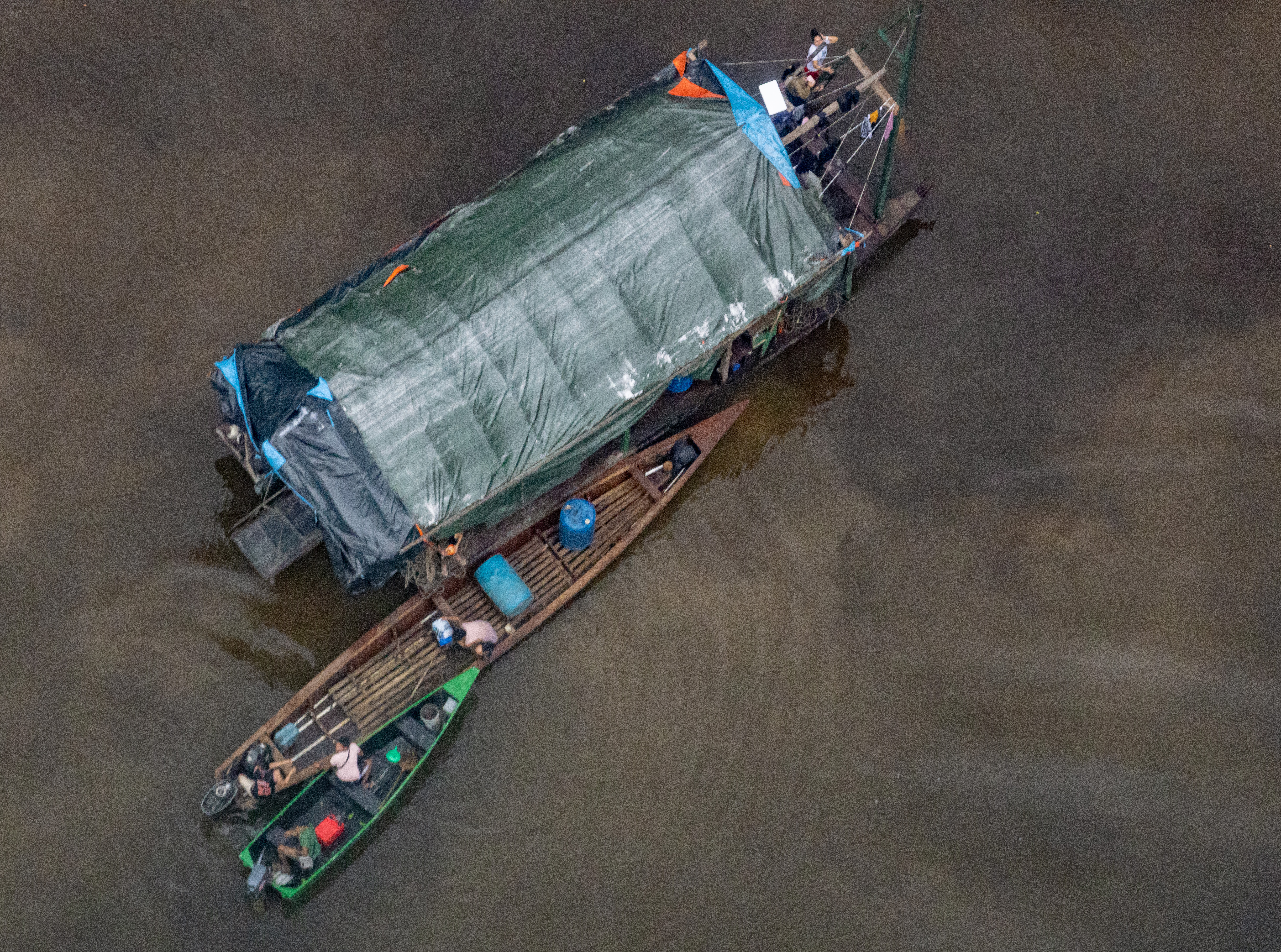
Another recent MAAP report indicates that between 2021 and September 2023, gold mining deforested 23,881 hectares in Peru’s Madre de Dios region, affecting Indigenous communities and protected areas. In Colombia, deforestation in the Amazon is closely tied to the presence of illegal armed groups that control areas where illegal mining takes place. In 2023, the country recorded a historic drop in deforestation, with a 38 percent reduction in the Amazon alone, from 71,185 hectares in 2022 to 44,274 hectares in 2023—the lowest in the past 23 years. However, the Ministry of Environment has warned that deforestation could increase in 2024 due to threats from illegal armed groups against local communities and public officials from the National Environmental System, who are responsible for monitoring protected areas and combating deforestation.
In the Colombian Amazon armed groups funded by illegal mining, local communities, Indigenous peoples, and gold trading companies converge, creating a complex landscape for addressing illegal economies and deforestation in a context of violence. According to the Organization of American States, as of 2022, 80 percent of the country’s gold production came from illegal extraction.
Illegal mining is also linked to child labor, human trafficking, sexual exploitation, and the murder of multiple environmental defenders. In Peru, various reports highlight the presence of illegal armed groups controlling mining operations in different regions, fostering insecurity and fear among local communities. In Loreto, areas such as Nanay have seen an expansion of gold mining, even in territories where the Peruvian state can no longer maintain control.
In both countries, illegal gold mining is a multimillion-dollar business. In Colombia, illegal actors forced officials to leave the Amacayacu National Natural Park (in the Amazonas department), resulting in a lack of state presence and governance in the area. In Peru, this illicit activity, which generates higher profits than drug trafficking, causes annual losses of more than 22.7 billion soles (approximately USD 6 billion), according to a report by V&C Analistas. A Global Financial Integrity report estimates that the illicit gold trade in Colombia exceeded USD 5.6 billion between 2010 and 2018.
The complexity of this issue deepens when related crimes and the legal and political factors that enable its perpetuation are considered. Illegal mining does not operate in isolation but is closely tied to criminal networks that thrive on impunity, corruption, and infiltration of state institutions.
There are discrepancies between the reported amounts of production and exports of gold in these countries. In recent years, India and the United Arab Emirates have increased their imports of gold from Peru, Colombia, Ecuador, Bolivia and Brazil, alongside other main gold importers like Switzerland, the United States and Canada. According to an investigation by Ojo Publico, there are many shortcomings in the stated due diligence policies from companies buying gold from Amazonian countries.
Opportunity to advance a binding global agreement on mineral trade
What measures can be taken at an event like COP16 to address a phenomenon like this? COP16 is raising awareness of the issue through dozens of official and civil society events dedicated to sharing information and presenting solutions. The Colombian government is also promoting a concrete official initiative: a "Joint voluntary declaration on responsible mining practices for the protection of life and the environment," which officials will present on 29 October as part of the official activities.
The Colombian government expects that various countries will join the declaration through a declaration of intent to promote the signing of a global agreement. This initiative builds on other efforts related to traceability and socio-environmental standards in mining. Recent guidance from the United Nations Panel on Critical Energy Transition Minerals includes an actionable recommendation is to establish a “global framework for traceability, transparency and accountability along the entire mineral value chain—from mining to recycling—to strengthen due diligence, facilitate corporate accountability and build a global market for critical energy transition minerals.”
Thus, the Colombian initiative aims to create a multi-stakeholder group that will ultimately result, among other things, in a proposal for a binding international agreement to operationalize this recommendation for traceability, transparency and accountability.
This is a great opportunity to strengthen the implementation of social, environmental, and accountability standards in mining. Implementing traceability mechanisms and due diligence is essential to prevent minerals from being sourced through extraction processes that involve environmental destruction, child labor, organized crime, and other unacceptable practices in any value chain. While this initiative is not limited to the case of illegal gold mining and has broader ambitions, including transition minerals, it can contribute something fundamental: ensuring that gold extracted under conditions of environmental destruction and organized crime is not traded with impunity on the global market.
The diplomatic path to advance this initiative, as well as its alignment with other processes like the one initiated by the United Nations Panel on Critical Energy Transition Minerals, remains to be defined. However, the opportunity is on the table, and countries—especially those committed to protecting the planet’s biodiversity—should seize it.
Tackling Illegal Gold Mining in the Amazon
Cali, Colombia

As part of the 16th Conference of the Parties (COP16) on Biodiversity, NRGI will convene a critical discussion about illegal gold mining in the Amazon. The session will focus on the serious impacts of illegal mining on biodiversity and sustainable development in the Amazon.
The event will offer concrete proposals for sustainable solutions, aiming to protect vulnerable ecosystems while promoting biodiversity, justice and economic development for local communities. It aims to bring together governments, NGOs, Indigenous communities and private sector actors to develop coordinated strategies for protecting the Amazon and combating illegal gold mining. The panel will explore how corruption and state capture perpetuate these illegal activities, weakening environmental laws and enforcement.
Key speakers
- José Manuyama, Water Committee for the Defense of the Nanay River
- Ana Carolina González Espinosa, NRGI
- Rodrigo Botero, Fundación para la Conservación y Desarrollo Sostenible (FCDS)
- Milagros Berríos, Regional Investigative Network at OjoPúblico
- Melissa Marengo, NRGI (moderator)
Featuring NRGI's

Ana Carolina González Espinosa
Senior Director for Programs and Latin America Director

Melissa Marengo
Portfolio Coordination Lead
Life Beyond Oil: Saudi Arabia’s Mining Ambitions

From last year’s COP28 climate conference emerged the “UAE Consensus.” It was a watershed moment, with the UNFCCC in its global stocktake calling on governments to transition away from fossil fuels in “a just, orderly and equitable manner” and accelerate deployment of more sustainable energy sources.
This consensus significantly impacts the future of Saudi Arabia’s economic and energy landscape. It’s the latest driver of the country’s expansion of its interest in mining, both domestically and in many lower-income countries.
Oil’s diminishing prospects
At COP28 the Saudi delegation, together with other Arab oil-producing nations, opposed any proposals mandating the end of fossil fuel production. In a bold stance, energy minister Abdulaziz bin Salman Al Saud openly opposed phase-out or phase-down provisions in the final agreement, likening the fossil fuel related provision to an “à la carte menu”. He later expressed satisfaction with the UAE Consensus, emphasizing that it allows countries to tailor their energy transitions based on their capacities and interests.

Saudi Arabia faces a complex challenge: it remains heavily reliant on oil revenues not only to fund government salaries and infrastructure but to drive the non-oil sectors envisioned under Vision 2030. While Saudi leadership acknowledges the inevitability of the global energy transition and the economic implications, theirs is a cautious approach to avoid a rapid shift. The focus remains on maintaining Saudi citizens’ standard of living while balancing economic growth with the evolving global energy landscape.
In response, state oil company Aramco has taken steps that signal its recognition of the transition. It joined the Oil and Gas Decarbonization Charter at COP28, committing to net-zero operations by 2050, ending routine flaring by 2030, and reducing upstream methane emissions, specifically within Scope 1 and 2. This reflects Aramco’s focus on the most direct and controllable sources of its carbon footprint. Aramco also aligned with the government’s decision to halt expanding oil production to 13 million barrels per day, as part of its shift from a hydrocarbon producer to a broader energy company.
While these measures aim to ensure Aramco’s resilience during the transition, Saudi leadership is also exploring new opportunities in economic diversification, particularly in transition minerals, making a significant shift as the kingdom prepares for a post-oil future.

Saudi Arabia’s domestic mining sector
Beyond oil, Saudi Arabia is expanding exploration and exploitation of its vast domestic mineral reserves through substantial investments in the mining. The kingdom is driven by the growing demand for transition minerals such as lithium, cobalt and nickel, which are required for the transition from fossil fuels based economies to decarbonized economies.
The strategic prioritization of mining is closely linked with Vision 2030’s aim to maximize the benefit of the kingdom’s abundant natural resources beyond its conventional hydrocarbon reserves. Saudi Arabia is tactically re-oriented to exploit increasingly demanded resources that are pivotal in the worldwide transition to renewable energy sources by emphasizing essential transition minerals. This signifies not only a strategic response to the evolving dynamics of the global energy sector, but also a calculated attempt to preserve the kingdom’s preeminent position on the international energy arena.
As per official statements, the estimated value of unexploited mineral resources in Saudi Arabia has increased from $1.3 trillion to $2.5 trillion, driven by the discovery of rare earth elements and higher quantities of phosphate, gold, zinc and copper.
As part of its goal to pursue economic diversification and reduce reliance on oil production, Saudi Arabia aims to increase the mining industry’s GDP contribution from $17 billion to $75 billion by 2035. The Ministry of Industry and Mineral Resources, headed by Bandar Al-Khorayef, holds a pivotal position in directing the country’s mining endeavors. The Saudi Arabian Mining Company (Ma’aden), a prominent state-owned enterprise, plays a crucial role in the execution of the kingdom’s mining strategies, the development of partnerships to exploit mineral resources, and the operation of significant projects.
The Jabal Sayid copper project, a collaborative effort between Ma’aden and Barrick Gold, and the Al-Jalamid phosphate mine are among the significant domestic initiatives currently in progress. Saudi Arabia is also making substantial is investments in exploration and geological surveys utilizing cutting-edge technologies and international expertise to discover new mineral deposits. In alignment with the new Mining Investment Law, the ministry recently announced the auction of six mining licenses, covering deposits of lead, zinc, copper and iron. To further bolster the sector, the kingdom has introduced a $182 million exploration incentive program and granted 33 additional mining licenses.
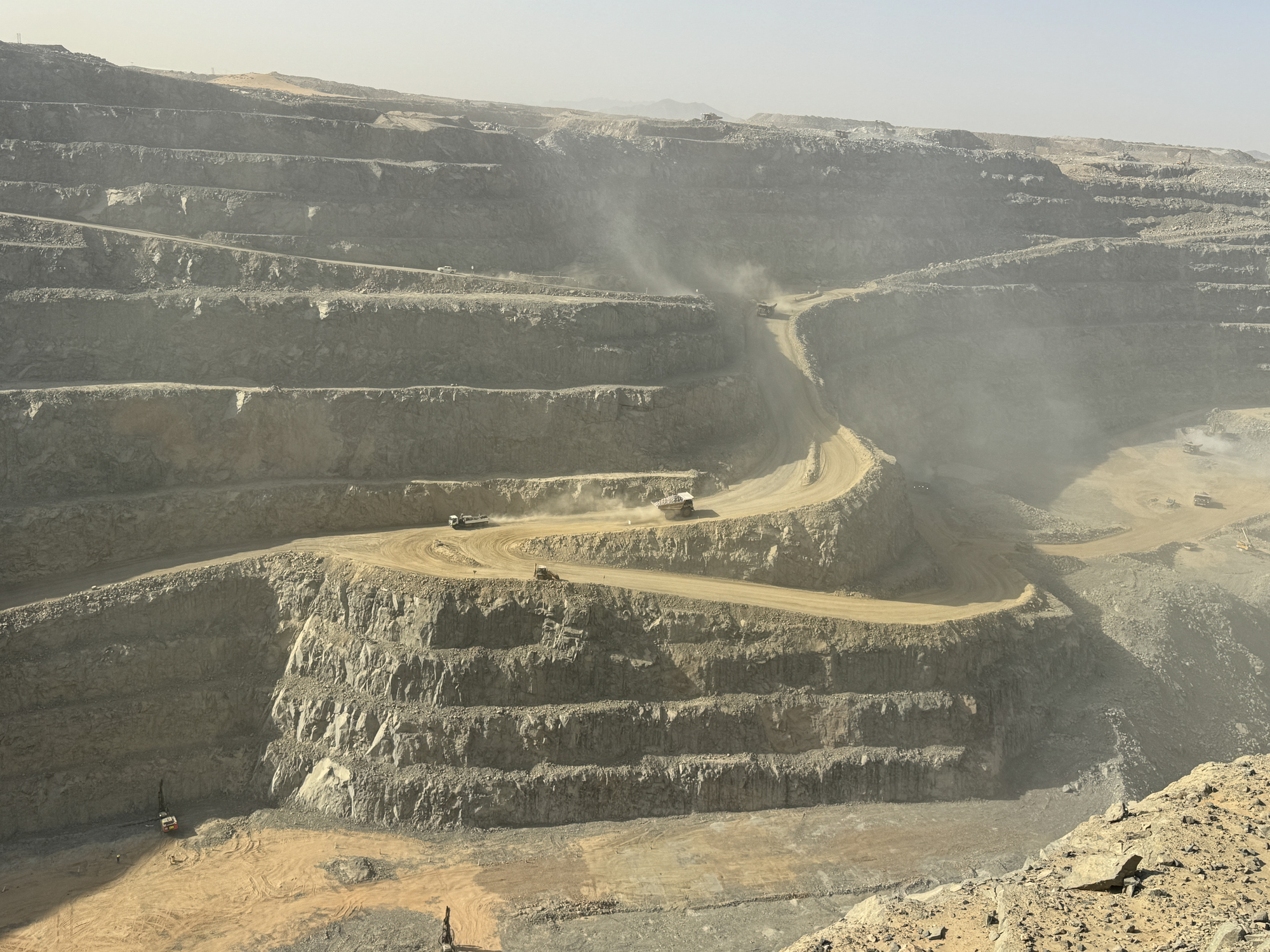
On the global stage, Saudi Arabia is driving industry conversations through international initiatives such as the Future Minerals Forum and active participation in Africa’s Mining Indaba, underscoring its commitment to becoming a key player in the global mining industry.
Building international alliances for transition minerals mining
Saudi Arabia plans to become a world leader in sustainable mining by making strategic use of its own significant reserves of transition minerals. Al-Khorayef has said that “the investments will continue to position the kingdom as a mining production and logistics hub for a region that stretches from Africa to Asia, while also supporting the transformation of our mining sector so it can achieve its potential.”
The kingdom’s comprehensive growth strategy for the mining sector involves significant investments, collaborations, and policy reforms. Recent memoranda of understanding (MoUs) signed with countries like the Democratic Republic of the Congo, Egypt, Morocco and Russia underline Saudi Arabia’s intent to enhance its mining capabilities and infrastructure, thereby influencing the global energy transition. And Turkey and Saudi Arabia have entered into a MoU to collaborate on transition minerals, focusing on knowledge exchange and research related to minerals essential for solar panels and electric vehicles.
Furthermore, Saudi Arabia’s global involvement includes not just formal agreements but also direct investments in prominent mining companies. Most recently, the kingdom secured a 10 percent stake in Brazilian mining company Vale Base Metals, demonstrating its approach to investing in the worldwide mining industry by acquiring equity.
With this strategic pivot Saudia Arabian authorities not only aim to diversify the country’s economy but also to secure its role in the new geopolitical alignments around transition minerals. As the global energy landscape shifts toward sustainable sources, the kingdom’s leaders are keenly aware of the necessity to adapt without losing longstanding influence in the energy market.
Challenges and opportunities in Saudi Arabia’s mining ambitions
With its ambitious mining objectives Saudi Arabia faces both domestic and international constraints that officials must solve to maximize industry potential.
Domestically, the country still requires specialized infrastructure tailored to support large-scale mining operations, particularly in remote desert regions. Additionally, the kingdom must invest in education and training programs to develop a workforce skilled in advanced mining techniques and technologies.
Water scarcity in the desert areas poses a significant challenge, as limited water resources complicate mining operations and increase costs. To address these issues, Saudi Arabia needs to explore innovative water management solutions such as desalination and water recycling, specifically designed for mining activities. Furthermore, given the potential environmental impact of mining—such as land degradation, water contamination, and biodiversity loss, the country should implement and enforce rigorous environmental standards to ensure sustainable and responsible mining practices.
The mining industry in Saudi Arabia offers a large array of opportunities. There is great potential for economic expansion in the kingdom because of its substantial transition mineral reserves, which include unexplored amounts of phosphate, copper and rare earth elements. Because of its advantageous position, Saudi Arabia is able to access to important markets in Europe, Asia, and Africa, which serves as a competitive advantage. The government’s dedication to establishing a favorable investment climate, via the implementation of transparent regulations and incentives, is attracting investors from other countries and supporting growth inside the country. However, it is imperative that Saudi Arabia places a high priority on openness in international contracts in order to foster confidence, further benefit producer countries and entice global investment.
Internationally, Saudi Arabia faces challenges linked to geopolitical dynamics and competition in the mining industry, requiring strategic diplomacy to secure lasting partnerships in a shifting global economy. As Saudi investments, particularly in Africa and other lower- and middle-income countries, expand, the kingdom must ensure these ventures are mutually beneficial. This means developing long-term relationships that provide tangible benefits to host governments and communities, such as fair revenue-sharing, infrastructure investment, and skills transfer. By committing to transparent and equitable partnerships, Saudi Arabia can strengthen its role as a responsible global actor, ensuring its investments align with its mining objectives while also promoting sustainable growth in host countries.
How can producing countries navigate Gulf mining investments?
Explore insights from NRGI experts on the impact of Saudi and UAE investments.
Scoping Study on Extractive Sector State Owned Enterprise Disclosures in Mongolia

Mongolia’s state-owned mining enterprises are crucial to the economy but face transparency and governance issues. This scoping study examines the need for improved disclosures and stronger accountability in the sector.
This report presents the scoping study on the disclosures of Mongolia’s state-owned mining enterprises, conducted by the Natural Resource Governance Institute (NRGI). The study was supported and funded by the Extractive Industries Transparency Initiative (EITI) International Secretariat and the European Bank for Reconstruction and Development (EBRD).
Mongolia's extractive sector is significant for its economy, contributing 31.6 percent of government revenue, 92 percent of export earnings, and 28.2 percent of GDP. A variety of companies operate in the sector, with state-owned enterprises (SOEs) playing key roles in the exploration, extraction, and management of mineral resources. Erdenes Mongol LLC is the biggest player, acting as a holding company. For instance, it holds stakes in the Oyu Tolgoi copper mine (34 percent ownership), Tavan Tolgoi coal mine (65 percent), Shivee-Ovoo coal mine (90 percent) and Baganuur coal mine (75 percent), as well as Erdenet Copper Mine and projects managed by Mongolrostsvetmet. These are all projects exploiting deposits that are defined as “strategic”, meaning that the equity holding in these projects is prescribed by legislation. Erdenes Mongol also has stakes in gold, silver, and uranium exploration and operation companies.
Despite playing a key role in Mongolia’s economy, state-owned enterprises (SOEs) in the mining sector face challenges related to governance and transparency. This is evident in the NRGI’s Resource Governance Index (RGI) scores, where Erdenes Mongol is among the “poor” performers due to its lack of transparency in financial transactions and production. The EITI validation report highlights a need for more comprehensive disclosure on Mongolia's SOEs in the extractive sector. This includes financial relations, spending practices, and corporate governance. In addition, mining SOEs have been marred by high-profile corruption and bribery cases over the years. The CEO of Erdenes Mongol, for example, admitted to taking bribes, leading to his dismissal, and most recently a former CEO of Erdenes Tavan Tolgoi, the key coal exporter and a subsidiary of Erdenes Mongol, was convicted of abuse of power. In December 2023, the State Great Hural, or the parliament of Mongolia, held public hearings on the so-called ‘coal theft’ scandal which revealed significant problems associated with SOE coal sales, transportation and tax payment irregularities or outright squandering of public assets. For instance, hearing witnesses testified that a significant number of trucks crossed the border empty, raising concerns that this was a scheme to evade royalty and tax payments. Under these circumstances, the importance of transparency and public scrutiny of SOEs is unquestionable.
The EITI, being a leading initiative to promote good governance in the extractive sector, has long recognized that transparency of SOEs is a crucial element of transparency and good governance in mineral resources. Its 2010 EITI Rules, for instance, emphasized the need for the EITI reports to include all companies including SOEs, and to specifically disclose SOE production in addition to the requirements for all companies. Since then, the Rules evolved into a global standard, and its latest edition, the 2023 EITI Standard, includes many more detailed requirements and expectations on SOE transparency and state participation. Specifically, the Standard states the objectives of EITI in terms of disclosures related to the state participation, defines the scope of the term SOE, and provides a list of specific information that is required, encouraged, or expected to be disclosed under the national EITI reports that are disclosure requirements for all companies. Given that the latest version of the standard was adopted in 2023, countries including Mongolia need to revisit their own documents and plans to ensure that the national EITI reports meet the standard in full, including in terms of disclosure requirements for SOEs.
While EITI is one of the leading initiatives driving reforms and increased disclosures in Mongolia, other initiatives and developments led by the government also contribute to the increased disclosures and strengthening of the transparency of SOEs. For instance, Mongolia is a member of the Open Government Partnership, under which the government pledged to improve the transparency of SOEs. Also noteworthy are the Public Information Transparency Law and Glass Accounts Law. The former details specific information that the government and SOEs are required to disclose to the public, and the latter builds an integrated framework for public reporting of budget entities and SOEs. For example, Glass Accounts contains information on disclosures of individual financial transactions by SOEs, which has led to disclosure of information with granularity that allows all stakeholders to analyze the state of financial affairs at SOEs at an unprecedented level. Another important player that contributes to good governance and transparency of SOEs is the Independent Agency Against Corruption (IAAC). The IAAC leads the implementation of the National Anti-Corruption Program which aims to limit political interference at SOEs, streamlining procurements processes, enhancing transparency and disclosures, and improving clarity of objectives and policies such as dividend policies.
However, many of these initiatives are not comprehensive in addressing extractive sector governance challenges, and coordination among these initiatives is weak. In that light, EITI remains a key process in the sector with its enhanced global standard, functioning processes, and involved stakeholders. As such, this report will inform EITI stakeholders with the aim of taking the EITI in Mongolia to the next level, focusing on one of the key areas of sector governance, namely SOE disclosures and reporting.
Scoping Study on Contract Transparency in Mongolia

Mongolia’s mining sector plays a crucial role in the economy, contributing to revenue and jobs, but faces significant challenges around governance, corruption and transparency. This scoping study highlights the importance of contract transparency to ensure fair and accountable management of the sector.
This report presents the scoping study on Mongolia’s contract transparency, undertaken by the Natural Resource Governance Institute (NRGI). The study was made possible with the support and funding of the Extractive Industries Transparency Initiative (EITI) International Secretariat and the European Bank for Reconstruction and Development (EBRD).
Mongolia's mining sector is the backbone of its economy, significantly contributing to gross domestic product, exports, government revenue, and foreign investment. It creates high-paying jobs and boosts local economies, especially in the mining regions. Coal, copper, gold and other minerals are major government revenue drivers, generating export earnings of USD13.9 billion in 2023. This constitutes 92 percent of the country’s total exports and 29.9 percent of the government revenue. While Mongolia’s oil production is relatively small, it still contributes to government income and benefits local communities. In 2023, the oil sector produced 4.7 million barrels of crude oil, generating USD364.7 million in export earnings and accounting for 1.3 percent of government revenue.
Despite its economic importance, Mongolia’s mining sector faces numerous challenges that hinder its development. Corruption scandals have plagued the sector, while environmental and social issues remain significant. A widespread perception persists that Mongolia does not receive its fair share of mining profits. Frequent policy changes, often driven by populism rather than thorough analysis, have eroded investor confidence. This is evidenced by ongoing disputes with investors, a decline in new foreign direct investment, and a lack of new discoveries and projects.
Recognizing the mining sector’s vital role in Mongolia's economy and the need for good governance, the country joined EITI in 2006 to promote transparent and accountable management of the extractive sector. The EITI sets a global standard for transparency and good governance in the extractive sector. It requires companies and governments to disclose detailed information on revenues, payments, production volumes, commodity sales, mining company ownership, and extractive contracts governing relationships investors. Since January 2021, the EITI Standard mandates full disclosure of contracts and licenses, enhancing transparency and allowing citizens to understand the impact of extractive projects on their nation.
Contract disclosure is a crucial ingredient of good governance and transparency in the extractive sector, benefiting all stakeholders involved. For instance, it enables governments to strengthen regulatory systems and ensure efficient oversight, mitigates reputational risks for companies and fosters trust with other stakeholders, and empowers citizens to hold governments and companies accountable. This transparency allows citizens to monitor revenues and other areas of impact of mining on their country.
Contract disclosure in Mongolia has evolved significantly both within and outside of the EITI framework. The latest EITI Validation Report indicates that Mongolia has largely met EITI requirements by publishing numerous contracts on a dedicated portal. However, there is room for improvement in government policies and practices regarding full contract disclosure.
Domestic legislation has also evolved, mandating the disclosure of certain mining sector contracts. Additionally, initiatives like the Open Government Partnership, prioritize transparency in extractive sector contracts. Finally, some companies, particularly those listed on stock exchanges, disclose contracts voluntarily due to legal requirements, or to mitigate corruption risks and public perception issues.
While the government and companies have published many contracts, it remains unclear if all relevant contracts are disclosed. The disclosure process also lacks clear regulations and a systematic approach, as discussed in the next sections of this study.
Tax Avoidance, Tax Evasion and Trade Misinvoicing: Risks to Senegal’s Mining Sector

Key messages
- Tax evasion, trade misinvoicing and multinational companies’ efforts to avoid tax are important risks in the extractive sector, especially in developing countries, including Senegal.
- Senegal’s extractive governance arrangements are strong in many areas, including in preventing multinational tax avoidance.
- However, there is cause for concern in two areas: misinvoicing of international trade (imports and exports), and cost inflation by subcontractors in the extractive industries. Quantitative estimates of trade misinvoicing suggest the former is a significant problem for Senegal (including for its mining sector), which could lead to the loss of 1–3 percent of the country’s tax revenues.
- Authorities in Senegal should address such risks, especially before the country begins large-scale oil and gas production. Unless they do so, revenues from the country’s hydrocarbon resources will be at risk.
- Measures that Senegal can take include strengthening the tax authorities—especially customs and auditing accounts of extractive industry suppliers.
Senegal’s extractive industries could provide 8–9 percent of state revenues until 2030. But efforts by companies or individuals to dodge their tax responsibilities could reduce the contribution the sector makes. Evidence suggests, for example, that multinational corporations shift around 35 percent of their profits to tax havens. This problem affects the extractive industries and is particularly acute in developing countries such as Senegal.
Flows of funds linked to corruption, illegal mining, money laundering and avoiding regulations can also undermine resource-rich countries’ ability to benefit from their extractive industries. Senegal appears to be significantly affected by these problems. Various estimates have suggested that the country could be losing 1-12 percent of its tax revenues each year, due to various types of the illicit financial flows mentioned above, with a significant share linked to the mining sector. The wide range of estimates underscores the need for better data.
This report includes estimates of Senegal’s tax revenue losses due to trade misinvoicing (false customs declarations): losses of USD57 million to $153 million (1–3 percent of tax revenues) depending on the method used, with a substantial share linked to the mining sector. If reclaimed, these amounts could be large enough to double the size of Senegal’s cash transfer support program for households.
How do such losses occur? Though Senegal’s tax system is strong in many ways and officials have high capacity for overseeing the taxes of mining companies, there are still weaknesses. For instance, Senegal could strengthen coordination and information sharing between the tax department and the Ministry of Mines. The country may also need to acquire more capacity to audit oil and gas companies for tax purposes, including through hiring geologists. In addition, Senegal may be losing tax revenues due to trade misinvoicing.
Gold exports to the United Arab Emirates appear to be particularly affected, although by themselves they would account for a minority of the tax revenue losses that Senegal experiences. According to the country’s national statistical agency, another major source of tax losses in the extractive industries is the under-declaration of the value of minerals, where these are processed in Senegal by the mining company (or a part of the same group). A further potential area of vulnerability is subcontractors in the extractive industries. When subcontractors based abroad supply extractive companies in Senegal from the same multinational group, the subcontractors can be used to inflate costs. Such subcontractors capture a substantial share of gross revenues from the extractive sector and can benefit from tax treaties that allow them to avoid taxes.
The Senegalese authorities should also remain vigilant to the risks of tax treaty abuse, given that several multinational companies operating in the extractive industries benefit from tax treaties that Senegal has signed with other countries (either directly, or indirectly via bilateral investment treaties). This report identifies a number of policies to address these problems. For example, it recommends that Senegal’s government and parliamentarians strengthen the country’s tax authority (Direction Générale des Impôts et des Domaines) with more personnel, and remain vigilant to the risks posed by tax treaties and bilateral investment treaties. To the Direction Générale des Impôts et des Domaines, the report recommends that officials improve co-ordination between the tax authority and the Ministry of Mines, and information sharing with customs authorities of Senegal’s trading partners, to help prevent trade misinvoicing.
Civil society statement on the publication of the UN Secretary-General’s Panel on Critical Energy Transition Minerals report
UN unveils international guidance for mining critical minerals