
Lost Wealth in Senegal's Mining Sector

NRGI senior economic analyst William Davis appeared on West Africa Democracy Radio (WADR) to discuss and explore key findings from the NRGI report Tax Avoidance, Tax Evasion and Trade Misinvoicing: Risks to Senegal’s Mining Sector. Among his remarks, he said:
Tax avoidance is legal strategies that companies use to reduce their tax bill. Tax evasion is when taxpayers hide incomes from tax authorities or lie about their taxable income, which is illegal. Trade misinvoicing can be a type of tax avoidance or tax evasion or motivated by other illicit motives such as money laundering or hiding illicit wealth overseas. Trade misinvoicing is distorting what is declared to customs about the value of goods or services that are being traded internationally.
Published under USAID/TRACES program, this report highlights critical risks in Senegal’s extractive sector, emphasizing the need for transparency and accountability to safeguard national revenues. Tune in to learn more about the report’s impact and recommendations for Senegal’s economic resilience.
Tune in
Listen to the full interview at the West Africa Democracy Radio (WADR) and explore how stronger fiscal oversight could ensure that Senegal’s natural resources contribute meaningfully to national development.
Regional Dialogue on Mineral Supply Chains (IGF Annual Meeting)

Part of the 20th IGF Annual General Meeting (AGM), themed Redefining Mining: Balancing the Need for Minerals with Protecting People and the Planet, this session included speakers from three major global mining regions to discuss regional initiatives to strengthen mineral supply chains. Panelists considered efforts to collaborate across regions regarding areas of common interest.
Moderator
- Oluwatoyin Ojo, Senior Legal Counsel and Head of Partnerships, ALSF
Speakers
- Maureen Coulas, Deputy Director, Lands and Minerals Sector, Natural Resources Canada
- Jean Marie Kanda Ntumba, Board Member, Congolese Battery Council
- Thomas Scurfield, Africa Senior Economic Analyst, NRGI
Featuring NRGI's

Thomas Scurfield
Senior Economic Analyst
Critical Minerals for a Just Energy Transition
Baku, Azerbaijan
This panel discussion will convene global leaders from government, industry, and civil society to explore the significant role of critical minerals in operationalizing a just energy transition. Key discussion points:
- Insights from the recent UN Panel report on Critical Energy Transition Minerals.
- Critical factors for scaling solutions and ensuring equitable access to these resources.
- The intersection of investment, finance, and sustainability in the context of critical minerals.
Featuring NRGI's

Antonio Hill
Advisor
How to Win the Race to Access Critical Minerals for the Energy Transition in a Sustainable and Equitable Manner?
Baku, Azerbaijan

Access to critical minerals is increasingly understood as a condition without which not to achieve the green transition and energy security. Ensuring the supply meets future demand requires that we work simultaneously on sustainability, equity and financing. In this session, we will hear from initiatives that are trying to strike that balance, what challenges and opportunities they face in the process, and what is required from policymakers and various stakeholders to address these.
Speakers:
- Antonio Hill, NRGI
- Tom Haslett, U.S. International Development Finance Corporation (DFC)
- John Lindberg, International Council on Mining and Metals (ICMM)
- Lisa Sachs, Columbia Center on Sustainable Investment (CCSI)
- Nour Amrani, FLS
Featuring NRGI's
Antonio Hill
Advisor
Financing, Anticorruption and Civic Freedom: Essentials for Just and Equitable Transition Mineral Supply Chains

At the COP29 climate conference, NRGI president and CEO Suneeta Kaimal shared three key insights for what's needed as the world increasingly demands transition minerals. These are her remarks.
Excellencies, civil society leaders and friends: It was a great privilege to share the knowledge and experience of civil society as part of the UN Panel on Critical Transition Minerals.
At the Natural Resource Governance Institute our mission echoes the clarion call of the UN Panel: Justice requires change. Changing whose voice determines whether, where and how to extract. Changing for what purpose and under what terms mining occurs. Changing who benefits and the power imbalances and structural inequities that persist. In just four months, the panel initiated much needed change in three important ways.
First, the actionable recommendation to advance value addition, benefit sharing and economic diversification responded to the question we hear most often from Global South producers: how will this mining boom be different for us?
To enact this recommendation, we need resources for reform. The climate finance goal to be agreed at COP29 must include concessional finance for Global South transition mineral-producing countries to support viable value addition facilities. To address energy, infrastructure and skilled labor bottlenecks and enable economic diversification. And to ensure that the benefits of increased mineral circularity are shared equitably.
Second, the panel recognized that corruption harms both people and the planet. Our research shows that corruption undermines social and environmental protections and delays urgently needed transition mineral production—sometimes for years.
The actionable recommendation on traceability can help by enabling regulators, investors and end-users to scrutinize human rights and environmental practices, conflict of interest risks, and economic fairness across the value chain. Now, we need leadership from member states and to transform voluntary standards into binding action. The Colombian government has demonstrated such initiative in calling for an international agreement on traceability. We encourage others to follow their lead.
Lastly, the panel enshrined the centrality of human rights and multi-stakeholder participation to a new mining paradigm. As panel members, we benefitted from the collective expertise, audacity and relentless optimism of more than 300 civil society organizations.
However, civil society around the world is under threat. The International Center for Not-for-Profit Law found that 87 percent of recent legal initiatives impacting civic space are restrictive. In my own country, the United States, ascendant powers have vilified and threatened the media. And here in Azerbaijan authorities have wrongfully imprisoned advocates for fair and transparent governance of natural resources. We call for their immediate and unconditional release.
The work of our panel is a start, not an end. We commit to bringing our knowledge and networks to transform mining governance. To hold us all accountable, we welcome the Secretary-General to report on the implementation of the Panel’s guidance in one year’s time at COP30. Let us together demonstrate the will and resources to put equity and justice at the heart of climate action.
UN Secretary-General Antonio Guterres, heads of state, and the executive director of the International Energy Agency also spoke at this event.
Dialogue on Investing on Diversifying Critical Minerals Value Chains for Accelerating the Energy Transition
Baku, Azerbaijan

The growing energy transition and demand for raw materials in clean energy technologies require investment beyond extraction. It also needs diversification and value addition in midstream and downstream activities to ensure fair and just benefits for resource owners, predominantly in developing countries.
The dialogue will:
- Examine strategies to diversify the CETM supply chain, as the market is expected to tighten by the end of the decade, and enhance the critical energy transition minerals value chain in developing countries. This aims to meet the growing demand driven by clean energy technologies, ensuring inclusiveness and sustainability. Supporting CETM-producing developing countries to add value to their minerals is crucial for enabling them to break free from the constraints of commodity dependence and achieve long-term sustainable development. By focusing on upstream, midstream, and downstream diversification, while addressing environmental challenges, these countries can develop a more integrated and resilient minerals value chain that not only increases their share of the global market but also enhances local economic growth. Additionally, side-stream diversification – leveraging the by-products and associated industries of sustainable mining can further create new opportunities across various sectors. Through value addition and diversification, the entire value chain becomes more resilient and scalable, better equipped to meet global demand fluctuations.
- Underscore that sustainable finance is essential to developing the infrastructure and capacity needed to responsibly exploit, process, and add value to these minerals and develop related industries along the value chain. Investment is essential to promote this diversification, as it facilitates the development of infrastructure, technology, and skills. With these elements in place, resource rich countries can move beyond mere extraction and into the processing and manufacturing of value-added products, such as batteries and renewable energy components, within their borders. Participants will discuss the importance of creating financial mechanisms that support long-term investments in mining, processing, and industrial infrastructure in developing countries.
- Explore tailored investment approaches that consider the unique challenges of each country, particularly those with rich mineral resources but lacking the infrastructure and stable regulatory environments necessary to attract investment.
Featuring NRGI's
Antonio Hill
Advisor
COP29 and Transition Minerals: Three Opportunities to Move the Needle

The human and environmental costs of mining are no secret; they underscore the vital importance of transformation in the sector. And demand for minerals essential to production of solar panels, wind turbines, and electric vehicles mean that it more urgent than ever for international actors to ensure that mining’s dark history is not repeated as the energy transition gathers momentum.
Recognizing this urgency, UN Secretary-General António Guterres at last year’s COP28 called for a high-level panel to address the challenges of mineral governance, with the UN publishing the panel’s guidance in September 2024.
The panel’s seven guiding principles and recommendations set a new course for the governance of mineral supply chains, one that promises equitable benefit-sharing with, and economic opportunities for, the people and countries at the beginning of the chain. The journey will be long, and the scope of needed international policy action is broad, from a reset to customary benefit-sharing arrangements between governments and companies to upgrading anticorruption practice to boosting circularity and establishing “no-go zones” to protect nature.
With COP29 underway in Baku, Azerbaijan, parties to the UN Framework Convention on Climate Change have three opportunities to spur and complement progress toward minerals governance that drives sustainable and inclusive development:
Link minerals governance priorities to renewable energy scale-up
In the first global stocktake of progress toward the aims of the Paris Agreement, at COP28, countries called for a tripling of renewable energy capacity by 2030. As countries move to answer this call over the second half of this “critical decade,” they should work to align and strengthen linkages between the agenda set out by the UN minerals panel and decisions and actions agreed through the UN climate process. The obvious starting point is reference to the guiding principles set out by the UN panel in all future references to the renewables scale-up, starting at COP29.
There’s also potential to integrate or cross-reference reporting on traceability, transparency and accountability across the mineral value chain with related reporting on progress towards tripling renewable energy capacity. And, as efforts to boost material efficiency and circularity approaches gather steam, the countries party to the Paris Agreement could link these to emissions reduction measures in future national climate targets (nationally determined contributions, or NDCs) and related transparency mechanisms.
Provide for minerals benefit sharing within the new climate finance goal
Agreement on a new climate finance goal (the “new collective quantified goal on climate finance” or NCQG) is the main goal countries are working toward at COP29. Negotiations on this agenda item have been underway for two years, with one important debate centering around the scope and intended purpose of climate finance.
In their latest report ahead of COP29 the finance negotiation co-chairs noted the opportunity to include in the overall finance goal “… sub-goals reflecting specific outputs or outcomes, such as the target to triple renewable energy capacity globally…”. The relevance of investments in greater benefit-sharing, value addition and economic diversification in low- and middle-income mineral-producing countries is a compelling reason to include it in the list of priorities eligible for climate finance under the new goal.
Cement enhanced minerals governance in just transition pathways
The one place where transition minerals are specifically referenced in the UN climate process is the Just Transition Work Program (JTWP). The chairs’ report from the most recent JTWP dialogue already contains several references, including to unequal benefits (“particularly regarding the extraction of critical minerals and localization of profits arising from that extraction,” (para. 34)), technology cooperation and transfer (para. 174), and even the UN panel report and its guiding principles, specifically (also para. 174).
Less a politically charged negotiation and more a space for mutual exchange and learning on the technical aspects of building and support just transitions, many Global South countries see this work program as an important pivot to make the UN climate convention and its Paris Agreement more responsive and aligned with their sustainable development priorities. By fully integrating the UN panel’s guiding principles as well as its actionable recommendations in the work program’s proceedings going forward, the countries party to the Paris Agreement can help ensure minerals governance features in just transition strategies and plans in relevant national contexts—and provide the basis for stronger linkages with the UN climate regime as renewable energy capacity is scaled to deliver on the Paris/1.5°C goal.
At NRGI we look forward to engaging a range of stakeholders in Baku and beyond to explore these and other potential linkages toward a just and equitable transformation of transition minerals governance.

NRGI's Suneeta Kaimal Spotlights the Way Forward on Transition Minerals
In Baku, Azerbaijan, for COP29, NRGI's president and CEO identified three key changes called for by the UN Panel on Critical Energy Transition Minerals.
Enabling a People-Centered Energy Transition with Renewables and the Mining Industry
Baku, Azerbaijan

This event will explore the need for collaboration between the renewables and mining sectors to achieve the 1.5-degree climate target responsibly, focusing on sustainable supply chains that prioritize people. Following recent global commitments to triple renewables by 2030, the session will explore how these industries can jointly support a just and equitable energy transition, spotlight successful partnerships, and identify policy needs for sustainable growth in key markets.
Featuring NRGI's
Antonio Hill
Advisor
Behind the Schemes: Anticorruption Gaps in Mining Sector Certifications

Key messages
- Decisionmakers are increasingly looking to certification schemes to provide information on the sustainability of mining operations, yet these schemes have significant room for improvement regarding how they address corruption in their standards.
- The report assesses the content of the performance standards used by the Aluminium Stewardship Initiative (ASI), the International Council on Mining and Metals (ICMM), the Initiative for Responsible Mining Assurance (IRMA), The Copper Mark, and Towards Sustainable Mining (TSM).
- Schemes address some topics, such as revenue and payments and anticorruption procedures, relatively well; this may reflect the extent to which legislation and regulations address these topics. Schemes’ standards less frequently covered other issues, such as beneficial ownership and allegations of corruption. Many schemes, and the mining companies that use them, are missing an opportunity to assess the implementation of corporate-level anticorruption policies in mine-site assessments.
- The quality of certification schemes’ governance and assurance processes is essential to their effectiveness, yet many fall short of best practice. This undermines their credibility. Key governance challenges include the unbalanced representation of different interests within schemes and the risk of conflicts of interest in the auditing process.
- Decisionmakers risk becoming overreliant on certification schemes as indicators of responsible business conduct, which may be facilitated in part by industry influence over policymaking processes. Certification schemes are not a replacement for ongoing, robust due diligence into the environmental, social, and governance impacts of mining operations, including corruption, and the design and enforcement of robust regulatory frameworks.
- In a shifting standards landscape where there are efforts to both consolidate and review existing certification schemes, and a moment where the risk of corruption is heightened by growing demand for transition minerals, governments, mining companies, and certification schemes themselves must do more to address the topic of corruption. To do so effectively, they should focus their attention on solutions that will have the most impact in addressing this issue.
Governments worldwide are paying more attention to the role of minerals in the renewable technologies needed to transition away from fossil fuels. To meet growing demand for these minerals, policy-makers are largely relying upon the mining industry, which has a notorious track record for harm. Mining companies have abused communities and workers, polluted water sources, and perpetrated or been complicit in widespread corruption. While the energy transition may present an economic opportunity for some mineral-rich countries, past mining booms have often failed to deliver on their development promise, and many citizens are justifiably questioning whether the costs of mining outweigh the benefits.
Faced with these concerns, some policy-makers and investors are setting out conditions regarding the environmental, social and governance sustainability of mining projects they are willing to support. Mining companies use voluntary standards and certification schemes, also known as third-party assurance and accreditation schemes, to demonstrate that they meet a certain level of performance regarding environmental and social protections and overall governance. Operators of certification schemes do this by assessing the performance of companies against sustainability criteria set out in a voluntary standard. These standards, often developed, led, and governed by industry actors, vary significantly and can be subject to concerns regarding the transparency, governance and rigor of their processes.
In this report we seek to address the gap surrounding anticorruption approaches to mining sector certification schemes by answering the following questions:
- How well do certification schemes in the mining sector require companies to demonstrate anticorruption good practice?
- What governance challenges are posed by the use or structure of certification schemes.
To do so, we have developed assessment criteria outlining anticorruption best practice, conducted desk-based research and engaged with representatives from certification schemes, multilateral bodies, civil society and academia. Each question will be addressed in the following sections of this report. This research builds on the existing work of the Natural Resource Governance Institute (NRGI) to strengthen both regulatory and voluntary approaches to transparency and accountability in the mining sector, including our work to ensure that information gathered through certification processes is more accessible and useful to local communities and civil society in Latin America.
Global Commitment to an International Agreement on Supply Chain Traceability: Lessons from the UN Minerals Panel

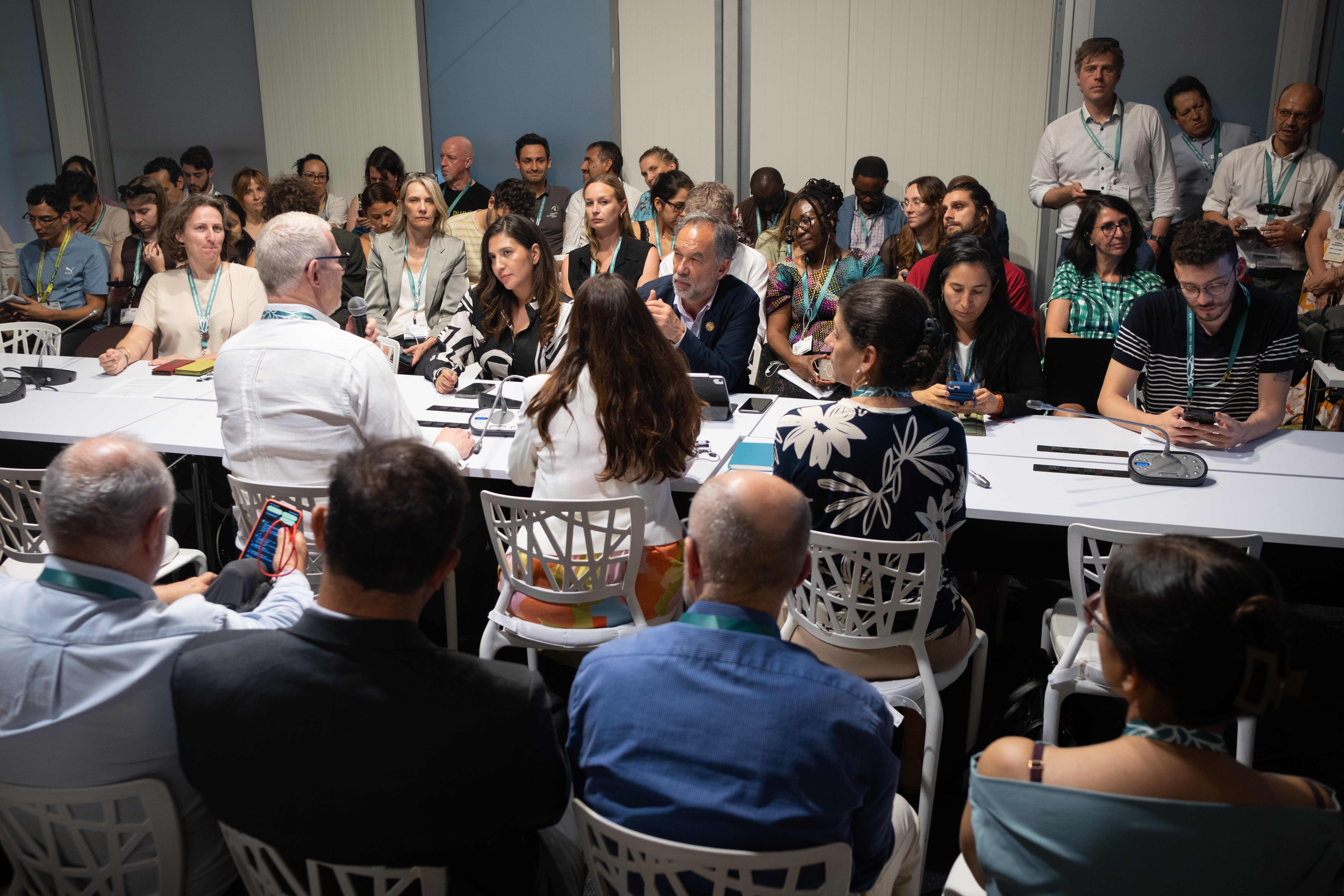
On 29 October 2024, NRGI president and CEO Suneeta Kaimal spoke at a Colombian government event at the Biodiversity COP16. These are her remarks.
When UN Secretary-General António Guterres launched the Panel on Critical Energy Transition Minerals he said, “As we reshape how we power our societies and economies, we cannot replace one dirty, exploitative, extractive industry with another dirty, exploitative, extractive industry.”
This is a challenge well known to all of us here at COP16.
Demand for minerals critical for clean energy technologies is set to quadruple by 2040. Most of the known transition mineral reserves are in countries with high biodiversity: Indonesia, the Democratic Republic of the Congo and, closer to home here, Brazil and Colombia.
We need only look to the gold sector to see the detrimental impacts on biodiversity and local communities. Illegal extraction of gold in the Amazon rainforest has led to over 1.9 million hectares of mining deforestation – and about half of that has occurred in just the past five years, according to estimates from the MAAP initiative.
We are also already seeing worrying impacts on the environment and on biodiversity in transition minerals. In Indonesia, rapidly expanding nickel mining has already resulted in the deforestation of an area of tropical forest the size of New York City.
Add to this, that about 40 percent of the mineral production needed will occur in countries with “weak, poor and failing resource governance.” We know from past commodity booms that the boom in demand risks unleashing large waves of corruption. The promise of soaring profits and fast-paced dealmaking increases the risk appetite of private and public sector actors alike – all while regulators struggle to keep up. These corruption risks are exacerbated by the fact that the countries where these minerals are mined rank in the bottom half of Transparency International’s corruption perception index and in countries where civic space is hugely constrained and environmental defenders fear for their lives.
The intersection of biodiversity at risk, poor governance, and the race for transition minerals is a volatile and potentially toxic combination. NRGI’s analysis has shown that industry actors have used bribery and corruption in mining licensing processes to avoid environmental and social impact assessment requirements and get around community land rights. This has contributed to deforestation and destruction of ancestral community land.
So, the question that confronts us, and that animated the work of the UN panel is: What will be the cost not of climate inaction, but of climate action? Will the pursuit of precious minerals and a mining-intensive energy transition leave economic, social and environmental destruction in its wake? Or can we seize the urgent quest to secure a stable supply of minerals and advance clean energy to also usher in a new, more equitable, more just paradigm for mining?

The Secretary-General asked that we, the panel members, design principles in response to the “urgent call from developing countries to ensure that they, and their communities, benefit from the production and trade of critical minerals; and that people and nature are protected.”
The heart of this call was a fundamental shift in the global discussion on critical minerals, which is privileging geopolitical tensions and consumer needs above considerations of environmental and economic equity, and risks replaying the same mistakes of the past.
Though we had only four short months to deliver, we drew strength from the tremendous diversity of the panel. My Colombian colleague Johana Rocha and colleagues from the OECD, expert representatives from the U.S., U.K., EU and China, as well as producing countries like Chile, Indonesia and the DRC. We benefitted from the voices of Indigenous Peoples, youth, trade unions, regional bodies, and multilateral institutions, industry and investors. And a brain trust of more than 300 civil society partners around the world. The multistakeholder nature of our work was a huge asset then – and it is essential to our success ahead.
Despite radically different agendas, the panel members quickly coalesced around seven principles for the governance of transition minerals: the centrality of human rights; the integrity of the planet, environment and biodiversity; the importance of justice and equity; development through value addition, benefit sharing and diversification; responsible fair trade and investment; transparency, accountability and anti-corruption; and international cooperation.
And while agreeing on principles was important progress, given the magnitude of the challenge before us, we knew we needed concrete actions. So our report culminates in five concerted actions reflecting the needs and ambitions of low- and middle-income resource-producing countries. What we heard very clearly from developing producer countries participating in the panel—and those we interact with every day—was a demand to be more in the driver’s seat and to create more spaces to bring forward their voices and leadership in shaping what truly equitable mining should look like. The recommended actions from the UN panel have tried to create that space and timeline for governments and civil society in key countries across Africa, Latin America and Asia to chart the course on how this mineral boom can be different from those of the past.
A critical action we specified in the report was the development of an expert-led, multistakeholder process to design a "global framework for traceability, transparency and accountability along the entire mineral value chain—from mining to recycling—to strengthen due diligence, facilitate corporate accountability and build a global market for critical energy transition minerals."
Traceability refers to tracking the origin and following the journey of a product through the various stages along its production and distribution chain. Traceability must be done holistically – not just about geographical information, but about the experience along the journey – the economic, social, governance, human rights dimensions. For that reason, in the discussion about the panel, we expressly called for traceability for accountability. But traceability is not a panacea, and it must be part of a broader swathe of actions that address economic and environmental equity at its root causes. Our vison as a panel was bolder than a framework, or working group, or report. It was about laying the groundwork for a new paradigm for mining.
But as American inventor Thomas Edison said: “Vision without execution is hallucination.” This is why today’s event is so important. The Colombian government has shown extraordinary leadership in seizing the Secretary-General’s call and executing the expert guidance of this diverse global panel.
NRGI is committed to bringing our experience and expertise to support this Colombia-led initiative. For nearly two decades, NRGI has accompanied reformers from government and civil society around the world to build a shared vision of good governance of the natural resource sector. To ensure that mining resources do not undermine, but rather enable more prosperous, sustainable societies and environments.
In Chile, NRGI is drawing on international research and peer learning, to help implement the country’s new lithium strategy. In the DRC, we are working with partners in government and civil society at the subnational level to ensure that mining translates into concrete benefits for the communities and to support value addition. Across Chile, Colombia, the DRC, Guinea, we are helping partners identify mining anti-corruption reforms in licensing and contracting, operations, revenue collection and management, and artisanal and small-scale mining. And we are working in close partnership with international institutions – whether the OECD, the International Energy Agency and the EITI, to bolster these country reform efforts. We have seen the power of such multistakeholder collaboration, across local, national, regional and international levels to center justice and equity in climate action.
Recommendations for the working group
While we’re here to support, we recognize it is producing countries like Colombia that have the deepest expertise and moral authority to change governance of mining for the benefit of humanity and nature alike. And we are eager for more producing countries to follow their lead. Together, we should all aim to set a high bar on 5 key issues to ensure that our ambitions translate into action. We must focus on comprehensiveness, credibility, consequences, coordination and community inclusion. Let me touch on each briefly.
1. Comprehensiveness
One of the defining elements of the UN Panel recommendation I mentioned earlier is that approaches on traceability for accountability must cover the entire mineral value chain—from mining to recycling. And they must encompass the interrelated issues that define responsible mining practices - ranging from human rights to environmental impacts to social practices and governance. This holistic approach is essential.
2. Credibility
If the aim is to strengthen responsible mining, traceability is only part of the solution; traceability refers to the ability to track the origin and follow the journey of a mineral through the various stages along its extraction, processing and integration into a final product. But traceability and supply chain transparency alone will have no impact without credible, independent scrutiny of industry actions and impacts against high standards of best practice.
3. Consequences
Credibility is intimately linked to meaningful consequences for the company and government entities being scrutinized in due diligence processes. A comprehensive approach to strengthen regulations is required and, as called for by the UN Panel, “support regulators and market actors to incentivize good performance and penalize bad or illegal practices.” These consequences should include measures requiring industry and government actors to compensate impacted stakeholders for environmental harm and social costs caused by their sub-standard policies and actions.
4. Coordination
There is a large constellation of international entities working on issues related to mining and accountability, and there are a number of relevant global frameworks, and industry standards. The development of any new global framework must account for and ensure greater coordination between them. Locating the framework squarely within existing debates and developments in the mining sector is essential. And any new initiative should support the goal of binding regulation and not create new voluntary or “best practice”-type initiatives.
5. Community inclusion
The development of any framework must ensure meaningful inclusion and participation of vulnerable groups in multistakeholder group discussions on the terms and scope, setting standards for industry and government, inputting into due diligence processes, and establishing adequate consequences in cases of poor performance. A truly multistakeholder effort requires equal participation, and meaningful representation from producer countries in the Global South.
Implementing these five Cs—comprehensiveness, credibility, consequences, coordination and community inclusion—will help translate the vision and ambition of the UN panel into concrete change for people and the planet. Building on the launch today, we have an opportunity to build a critical mass of supporting governments and civil society between now and COP29, when the Secretary-General will officially launch the recommendations of the UN Panel on Critical Energy Transition Minerals and then onward to COP30 to consolidate the work of this initiative.
And so today, we are standing together at a crossroads. In one scenario, the planet continues to burn without the critical resources to embrace a low-carbon future. Mineral-producing countries become less stable politically, lose public funds, and suffer environmental and biodiversity losses.
But there is another scenario in which we take steps closer to the Paris goals with a stable supply of minerals. Countries and communities with transition minerals and precious metals harness this demand and use the proceeds to emerge from poverty. The environment is protected, biodiversity thrives, and the rights of all people are respected.
As we stated in the panel report: “Justice requires change.” Building on the leadership of the Colombian government, let us all move one step closer to the change we need.