Digging Into the Problem
How corruption facilitates socioenvironmental, human rights, and Indigenous Peoples’ rights harms in the mining sector

Key messages
- As more mining takes place across the globe, the social, human rights and environmental harms associated with the sector are also growing. Corruption plays an essential, but often overlooked, role in facilitating, obscuring, and preventing accountability for these harms, particularly in mining for in-demand transition minerals and gold.
- This corruption can manifest in different ways depending on the form of mining and stage of the process. It may impact the political economy of mining countries or regions, undermining the legal frameworks that regulate the sector and leading to shrinking civic space. Decisions about whether mining should go ahead may be stacked in the favour of vested interests, while corruption in the operations of mines can lead to significant harm to workers, communities, and nature. Harm may also continue after the mining process, with corruption redirecting essential revenues and leading to poor mine closure practices.
- Ambiguous legal frameworks, weak governance, political transition or instability, geopolitical competition, and high demand and commodity prices all drive this corruption, often leading decision-makers to prioritize economic and supply security concerns over the needs of communities and nature.
- Although the harm of this corruption is often experienced primarily at the community level, it often has global roots. Addressing this problem therefore requires greater action from actors with leverage over mineral supply chains. Governments in major market jurisdictions should strengthen the enforcement of anticorruption legislation, pass corporate mandatory due diligence legislation that addresses corruption risks in the whole supply chain, and implement policies to reduce the overall demand for minerals. Downstream companies should do more to hold actors in their supply chain to account for corruption allegations, and international and multilateral bodies should better connect their agendas on fighting corruption, tackling climate change and biodiversity loss, and upholding human rights and Indigenous Peoples’ rights.
- To combat corruption effectively, it is essential to recognize that environmental justice and Indigenous Peoples’ rights are inherently linked. Equitable resource governance that respects Free Prior and Informed Consent (FPIC), ensures land tenure security, and integrates Indigenous stewardship not only reduces corruption risks but also protects biodiversity and supports sustainable practices.
Mining in its myriad forms is experiencing tremendous growth, against a backdrop of growing global inequality, transnational crime and geopolitical tension over future energy security. Yet this growth has also brought challenges, as corruption flourishes and enables a host of socioenvironmental and human rights harms.
Within this context, two areas emerge where the intersection between corruption and broader harms is particularly clear: transition minerals and gold mining. While many of the forms of corruption outlined in this briefing could apply across the mining sector, we highlight cases linked to these commodities because of the acute nature of demand for these products, the vulnerability of their mining processes to corruption and crime, their links to informal mining (often involving marginalized groups) and, crucially, the harms they pose to people and to nature.
Minerals with key applications in the renewable technologies and electrification of transport needed to deliver the energy transition (“transition minerals”) are receiving significant attention from policy-makers worldwide, who are concerned for future energy security. The International Energy Agency estimates that to meet the goals of the Paris Agreement, the next two decades will need to see an increase of 40 percent in rare earth elements, 60-70 percent in nickel and cobalt, and around 90 percent in lithium. However, it is important to note that these predictions are not a foregone conclusion. Shifting towards a circular economy—emphasizing mineral recycling, reuse, and efficiency improvements—can help reduce the reliance on new mining. With heightened pressure to meet growing demand, there is a real risk that corruption will increase commensurate to growth in these supply chains. The push for more mining can lead to corruption at the extraction stage, such as bribery or the manipulation of licenses, which can have far-reaching consequences in downstream industries, such as electronics, electric vehicle manufacture and other renewable energy industries.
At the same time, extremely high prices have also driven an explosive increase in gold mining. Gold bullion’s price gained 40 percent in the last year alone, reaching record highs in October 2024. The increase in gold mining has been particularly clear in the informal sector, where there are often fewer protections for workers, local communities and nature. In many cases, gold has provided an easily-laundered alternative to illicit commodities for organized crime groups or militias, with widespread consequences for the rule of law and the likelihood of conflict, violence and human rights violations.
As mining expands to meet demand, many actors have described the real consequences of its scale. In September 2024, Global Witness identified mining as the sector most associated with the killing of environmental and land defenders. Similarly, the Business and Human Rights Resource Centre (BHRRC) has consistently found mining to be the most dangerous sector for human rights defenders, documenting 630 allegations of human rights abuses over a 13-year period associated with transition minerals alone. These harms extend to nature—WWF has shown that current mining impacts up to one third of global forest ecosystems.
A key enabler of the profound harm mining does to people and nature is corruption—too often seen as a victimless crime or even as the inevitable ‘cost’ of doing business. Corruption diverts resources from service provision, undermines oversight institutions, the rule of law, and the state’s ability to uphold human rights, while being flagged as key to environmental crime. Such corruption also can undermine political stability, and it may even become profitable for some to retain levels of instability. The Natural Resource Governance Institute (NRGI) has identified over fifty cases of corruption in licensing and contracting of transition minerals projects.
These harms disproportionately impact Indigenous Peoples and local land-connected communities and lead to acute effects for women, children, and other vulnerable groups. Researchers from the University of Queensland have identified that 54 percent of energy transition minerals projects are found on or near Indigenous Peoples’ lands. Environmental justice and Indigenous Peoples’ rights are inseparable, as both are rooted in the equitable governance of natural resources. Indigenous Peoples are not only rights-holders but also stewards of nature, with their territories holding a majority of the world’s biodiversity. Upholding Indigenous Peoples’ rights is essential to addressing the harmful socioenvironmental impacts of mining.
Appreciating the risks associated with the growth in mining, in September 2024, the U.N. Secretary General launched principles to promote justice and equity in energy transition mineral supply chains, focusing on human rights, Indigenous Peoples’ rights, environmental protection, biodiversity and anticorruption measures. At the biodiversity COP16, the Colombian government launched an initiative to push for a new binding global treaty on traceability in mineral supply chains.
While such global policy developments help draw attention to these issues, their impact will depend on how effectively their recommendations are implemented at local, national and regional levels, and within company policies. A further key element of their success will be the extent to which reforms address the interconnected nature of these issues.
Policy-makers must pay greater attention to the often-overlooked role of corruption in enabling human rights abuses, violations of Indigenous Peoples’ rights, and social and environmental harm, and take action to combat it. This briefing seeks to support this work, breaking down silos between communities of expertise in the mining sector. It highlights the many forms of harm that corruption causes across the mining process, whether large-scale or artisanal and small-scale, formal or informal, and offers recommendations for addressing these challenges. To truly tackle the harms caused by mining to people, planet and our ability to exist within planetary boundaries, policy-makers must also be bolder in questioning how much mining is necessary, balanced against the imperative to deliver an energy transition across the globe that is truly just.
Featured people

Susannah Fitzgerald
Critical Minerals Governance Senior Officer

Matthieu Salomon
Lead, Anticorruption
Priorities for the United Nations High-Level Expert Advisory Group on Critical Energy Transition Minerals

In December 2024, the Natural Resource Governance Institute convened actors from international agencies, mineral-producing governments, civil society, industry, and academia at the Rockefeller Foundation’s Bellagio Center. The gathering identified steps that actors should prioritize to support equitable economic development in low- and middle-income mineral-producing countries.
The group considered the recent United Nations Secretary-General’s Panel on Critical Energy Transition Minerals Report Resourcing the Energy Transition: Principles to Guide Critical Energy Transition Minerals Toward Equity and Justice, particularly the report's Actionable Recommendation 1 to “accelerate greater benefit sharing, value addition and economic diversification” through the establishment of “a High-Level Expert Advisory Group to facilitate a multi-stakeholder dialogue on ‘Accelerating Critical Energy Transition Minerals Value Addition Towards Equity.’”
This paper provides recommendations developed by convening participants to help inform the work of the High-Level Expert Advisory Group (HLEAG) on benefit sharing, value addition, and economic diversification, and highlights connections between these policy areas and other actionable recommendations. The paper proposes four priority goals on which the HLEAG’s work should focus:
- A fair share of benefits from mining that are distributed equitably and managed well.
- Value-addition projects that benefit people.
- A diversified economy that benefits from—but does not depend on—minerals.
- Trade, finance, and investment that supports, rather than hinders, sustainable development and diversification of low- and middle-income mineral-producing countries and regions.
The paper also includes a gap analysis of the broader sectoral context and stakeholders relevant to HLEAG actions on the four priority goal areas, as well as covering practical recommendations on the HLEAG's role, structure, and composition.
Indonesia’s Energy Transition Ambitions: Nickel Downstreaming and Beyond

As the global demand for clean energy technologies rises, nickel—and other critical transition minerals—has become central to Indonesia's economic strategy. The country is leveraging its significant nickel reserves, key for electric vehicle (EV) batteries and stainless-steel production, to secure a growing share of the global market.
This economic success story, promoted by the Indonesian government and showcased in various media outlets, has contributed to the country’s overall economic growth, which remains at about 5 percent in 2024, and to growth in nickel-producing regions. For instance, North Maluku has been the best performing province, with an average economic growth of 20.1 percent from 2021 to 2023, driven largely by the nickel industry. Central Sulawesi, the second-best performing province, has similarly benefited from the nickel industry. Building on the successes of his predecessor, President Joko Widodo, the newly elected President Prabowo Subianto plans to further strengthen policies promoting exploitation and value addition of transition minerals, including through a possible revision of the mining law.
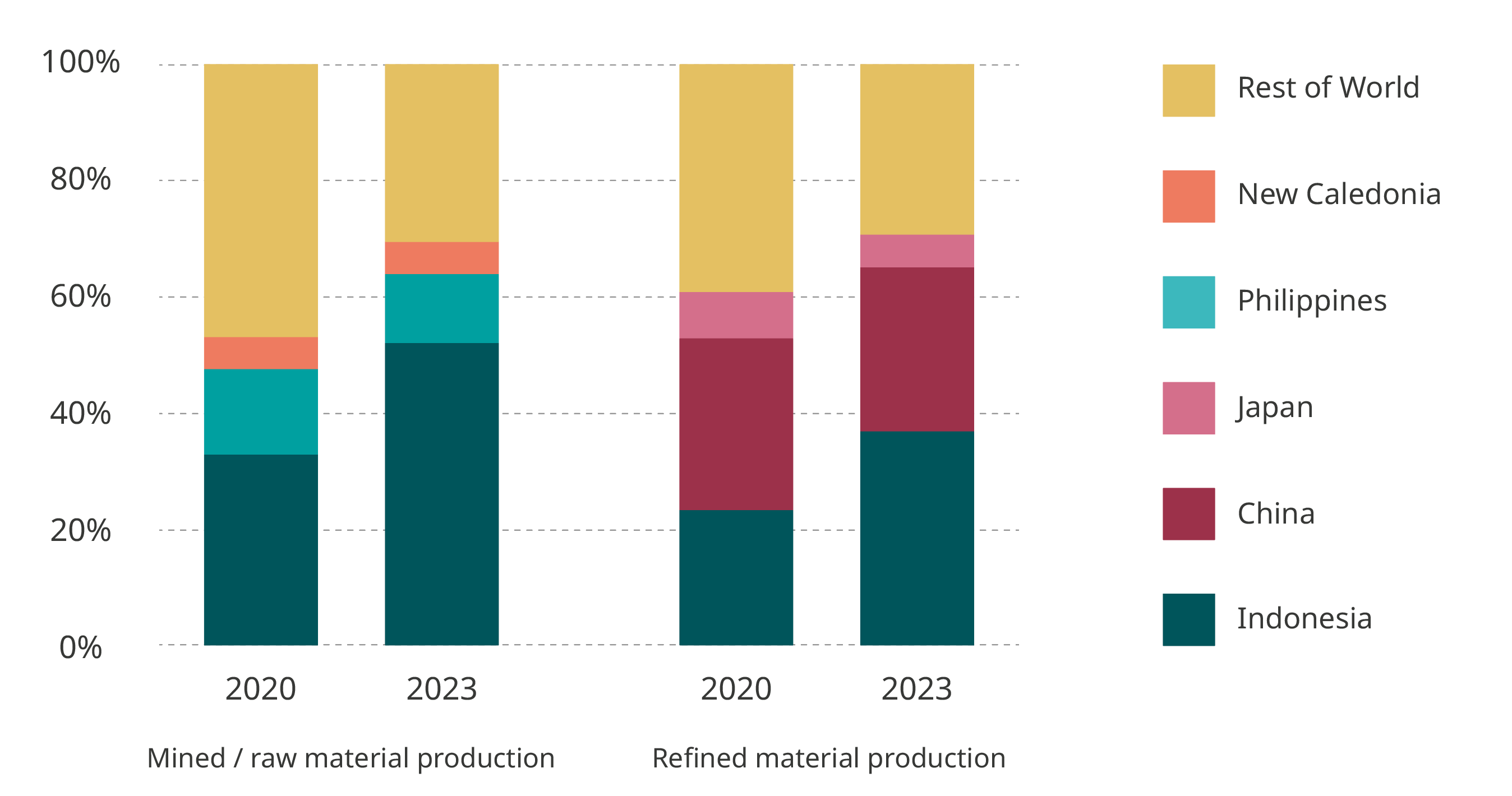
However, significant questions remain about how this growth will contribute to sustainable development outcomes for Indonesians, particularly in tackling poverty, unemployment and inequality in mining regions. Additionally, concerns around the socio-environmental impacts and the corruption risks associated with both mining and value addition continue to pose significant challenges. At a macroeconomic level, there is a rich debate on the role of mining and mineral value addition in a broader national strategy for economic diversification and broad-based economic development.
The world’s attention is increasingly focused on how Indonesia will tackle the next phases of its transition minerals story. Researchers and officials from a wide range of countries are looking to learn from Indonesia’s nickel story. At a recent NRGI-organized gathering at the Rockefeller Bellagio Center, leading thinkers from Africa, Asia and Latin America discussed innovations in the transition minerals space and options to implement recommendations from the UN Secretary-General’s Panel on Critical Energy Transition Minerals. However, some analysts have expressed skepticism about the viability of the government’s stated ambitions to further advance downstreaming— which include achieving full coverage of the EV nickel battery value chain in Indonesia, producing EVs in Indonesia and expanding downstreaming to other minerals and sectors in coming years. These differing perspectives underscore the ongoing clash of narratives around mining and value addition ambitions in Indonesia.
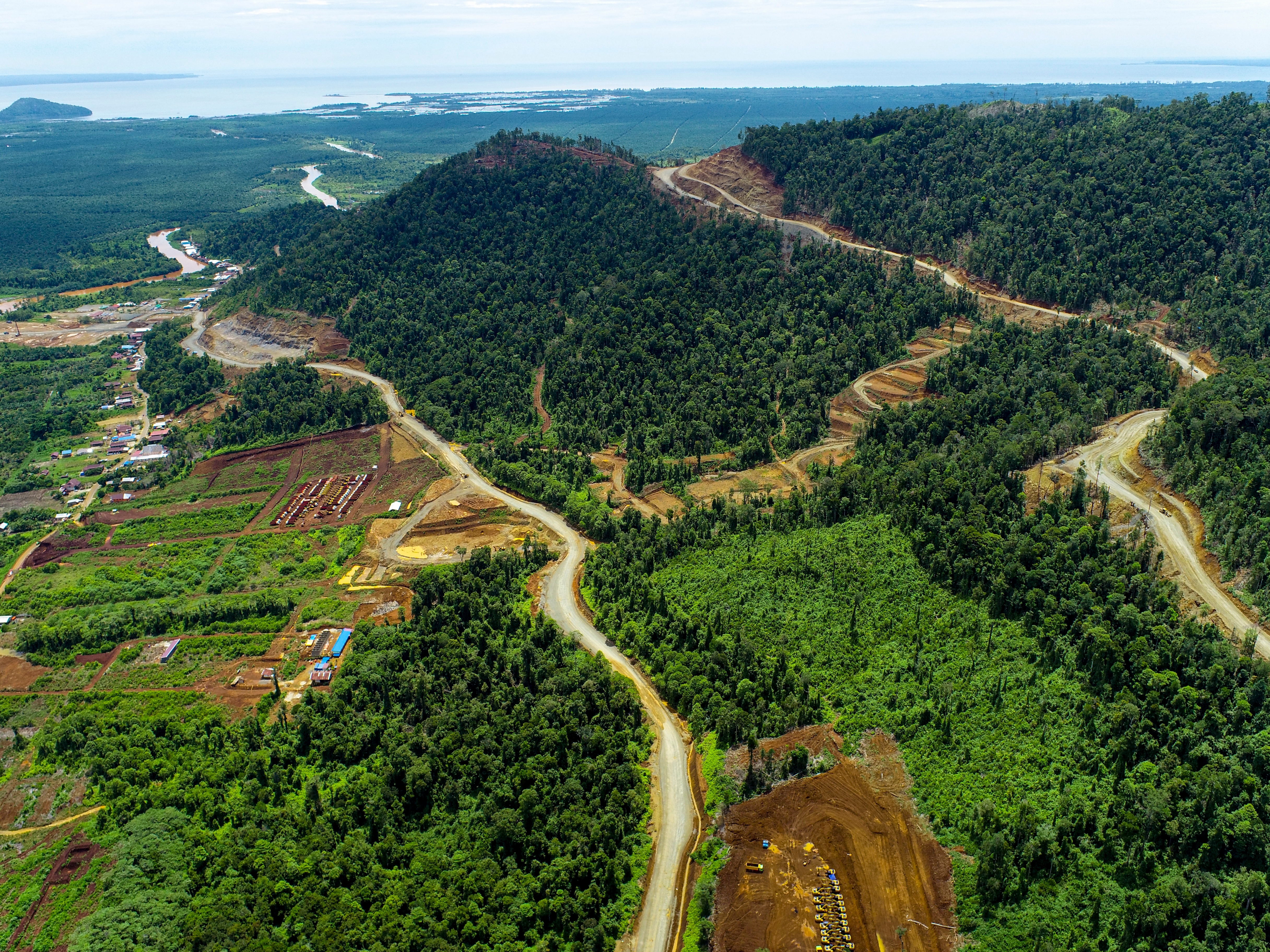
On 10-11 December 2024, NRGI, in collaboration with ViriyaENB, gathered more than 30 Indonesian experts to discuss how Indonesian citizens can further benefit from opportunities related to their country’s transition minerals wealth. The workshop focused on how to think through key governance challenges around Indonesian transition minerals, with NRGI experts contributing international experience and perspectives. This event marked a significant step in NRGI’s reengagement in Indonesia, which started in 2024. NRGI’s renewed engagement is part of its global priority to support the fair and sustainable management of the global race for transition minerals, including through successful value addition and equitable development policies.
The discussions at the workshop revealed several key present and future issues of relevance to the country’s transition minerals: the need to move beyond polarized narratives of downstreaming; the impact of technology and geopolitical uncertainty on the window of opportunity; the necessary ambition to improve environmental, social and governance (ESG) performance; and the importance to connect and bridge the gaps between Indonesian stakeholders.
Downstreaming: Moving beyond polarized narratives
Workshop participants discussed how views on Indonesia’s nickel downstreaming risk becoming polarizing—either focusing too heavily on “success” (e.g., growth in production and government revenues, progress along the nickel battery value chain) or on “failure” (e.g., social and environmental impacts, inequitable sharing of benefits). They noted that this lack of nuance can hinder constructive dialogue and improvements. A recurring theme was the need for better metrics for evaluating downstreaming policies beyond production and revenues. Participants highlighted the importance of building on existing research that analyzes both benefits and costs, helping understand how much value addition policies are benefiting Indonesians, particularly those living in mining-affected areas.
On the benefits side, participants indicated that metrics should include the issue of equitable distribution (e.g., at the subnational provincial and regency level) and various kinds of benefits (e.g., not just growth in production, revenues or GDP, but also the impact on unemployment and poverty reduction). Such metrics would also need to measure the tradeoffs that can result from downstreaming growth (e.g., negative impacts in the agriculture sector and agrarian conflicts, deforestation, pollution and emissions, etc.). Developing such metrics and integrating them more consistently into policy discourse was viewed by participants as particularly useful and timely given the new Indonesian government’s stated aim to continue and extend the downstreaming approach as referenced above.
These discussions aligned largely with NRGI’s recent briefing Six Keys to Unlocking Equitable Value Addition in Mining (now available in Bahasa Indonesia). The briefing emphasizes that governments need to set clear goals around their value addition strategies, analyze trade-offs and costs —not just benefits—and implement these strategies transparently to enable assessment by citizens and continuous improvement.
Window of opportunity: Impact of technological and geopolitical uncertainty
Participants expressed interest in deeper research and public discourse around the impact of various market and geopolitical scenarios. Indonesia’s nickel progress has been shaped by contextual factors such as rising global demand for nickel in clean energy applications like EV batteries. However, battery technologies are constantly evolving, with factors ranging from price and performance to supply and reputational risks (e.g., concerns around child labor and human rights in the sourcing of cobalt from the Democratic Republic of Congo or emissions and deforestation around nickel in Indonesia).
One issue raised was whether the window of opportunity for Indonesia’s nickel downstreaming is shrinking due to the projected growing market share of lithium iron phosphate (LFP) batteries, at the expense of nickel-based batteries (NMC). The government is aware of this challenge and is taking steps to mitigate it, including by managing nickel supplies to balance government revenues in the short term and lowering NMC battery costs to extend their viability.
Geopolitical tensions, particularly the potential for a U.S.-China trade war, were also discussed as a potential significant obstacle to Indonesia’s downstreaming ambitions. Chinese companies are major nickel mine owners in Indonesia, with around 40 percent of production, while Indonesian companies account for just 10 percent. Government industrial policies have also pushed Chinese investors to expand from nickel mining to refining, but this substantial involvement means rising trade tensions between the U.S. and China could be a barrier for Indonesian nickel reaching American markets—especially given how provisions in U.S. legislation discourage the use of minerals tied to Chinese companies. While geopolitical competition could attract more non-Chinese investment, the change in U.S. administrations have reduced the likelihood of a U.S.-Indonesia free trade agreement that could be catalytic for such investments.
ESG: Ambition to improve performance
The workshop also focused on how Indonesia can enhance its ESG performance in the mining sector. Participants emphasized that the current polarized environment means that civil society often has to raise issues by “shouting” to get attention on serious social and environmental, as well as governance and corruption concerns.
For example, corruption in mineral licensing—both upstream and downstream—is a significant barrier to equitable development in transition minerals supply chains globally, and Indonesia is no exception. This can significantly impact the success of downstreaming efforts. Workshop participants focused on ways to reduce corruption risks, emphasizing the risks around strong ties between politicians and the mining industry, and the lack of serious anticorruption commitments from many mining companies. Transparency International-Indonesia recently assessed 121 mining companies and found an average anti-corruption compliance score of only 0.31 out of 10, with only 6 companies having clear anticorruption policies.
Participants discussed initiatives launched by the government to improve ESG performance. The PROPER standard, managed by the Ministry of Environment and Forestry (KLHK), assesses company performance in environmental management. Separately, the Indonesia Sustainable Finance Taxonomy, previously the Indonesia Green Taxonomy, was also developed through an interministerial effort. Meanwhile, the SIMBARA system, managed jointly by the Ministry of Energy and Mineral Resources, the Ministry of Transportation, the Ministry of Industry and the Ministry of Trade and Ministry of Finance, was designed to strengthen commodities traceability. Initially used for coal, SIMBARA now also applies to nickel, and is expected to expand to more minerals.
Participants expressed cautious optimism about the potential of these initiatives to meet the growing demand for improved ESG in Indonesia, driven in parts by concerns from affected communities near mine sites. However, they still need to prove their effectiveness. These efforts could build on Indonesia’s commitment to the EITI (Extractive Industries Transparency Initiative), which includes a pilot community engagement in Morowali to ensure a just transition. Government-led initiatives could also learn from market-driven global standards like IRMA (Initiative for Responsible Mining Assurance), which is already gaining traction in Indonesia, with some companies committing to IRMA audits. These efforts can help encourage companies to adopt more responsible mining practices. The discussion also emphasized the need for Indonesian stakeholders to consider ESG standards within the global geopolitical context. As Western actors push for stronger ESG Standards, especially in competition with Chinese companies, Indonesian leaders must balance these dynamics while prioritizing the needs and rights of people.
Connection: Bridging the gaps between stakeholders
A key takeaway from the workshop was the need for stronger connections and collaboration between the diverse range of stakeholders involved in the governance of nickel, other transition minerals and processing. Participants highlighted that while Indonesian stakeholders have substantial expertise, collaboration is limited, impeding progress on equitable development. Deeper dialogue and coordination among various stakeholders is important, including among:
- Government entities (central and local), researchers, civil society and local communities.
- National and local actors, focused on national policy opportunities and risks at the local level near mining sites projects.
- Indonesian policy experts and geopolitics and global market analysts, to provide nuanced perspectives on ongoing reforms within the broader global context.
- Stakeholders working on equitable development in Indonesia and those focused on international mineral equity and governance initiatives.
- Experts on downstream products and markets (batteries, EVs)– and those focused on mining, to strengthen policy recommendations and connect mineral development with supply chain development and diversification.
The richness of the workshop underscored the depth of expertise in Indonesian civil society organizations, think tanks and academics on transition minerals. These voices must be amplified and included in policymaking to ensure that Indonesia’s people benefit from the opportunities provided by transition minerals while managing the associated risks.
Indonesia’s experience—both successes and challenges—can serve as a valuable model for other low- and middle-income mineral-producing countries as they develop and implement their own strategies to manage their transition minerals sustainably and equitably.
The Consolidated Mining Standard Initiative Must Dig Deeper

Four mining industry associations— The Copper Mark, ICMM, Mining Association of Canada (MAC) and World Gold Council (WGC)—are consolidating their different voluntary responsible mining standards into one global standard, the Consolidated Mining Standard Initiative (CMSI). They aim to produce a standard that verifies practices at the level of facilities, such as mines or smelters, and that end users can ultimately use to identify responsibly mined materials.
While the stated goals of the CMSI—to reduce complexity and clarify responsible practices—are laudable, many civil society actors have expressed skepticism after reviewing the draft documents released for the October-December 2024 public consultation on the CMSI. Some question why a new standard is needed given that a strong, independent, facility-level standard already exists in the form of IRMA, the Initiative for Responsible Mining Assurance. Some are concerned that the CMSI could be a power grab by the industry associations—a way to preempt governments and international bodies which seek to establish rules to minimize the harms associated with the race to renewables, for which minerals and metals are critical inputs.
Given the reach and influence of the four partnering industry associations, everyone interested in responsible mining must take the CMSI seriously. The partner associations anticipate that the CMSI could be used by as many as 100 mining companies across approximately 600 facilities in around 60 countries. What is more, policy developments in some jurisdictions may further boost the potential influence of standards like the CMSI. Most notably, the EU Critical Raw Materials Act (CRMA) specifies that companies can use certification schemes that meet the EU’s criteria to verify compliance with sustainability standards for strategic projects involving critical raw materials, particularly those sourced outside the EU.
NRGI’s own analysis of the CSMI points to four key areas where the standard must be improved if it is to contribute positively to the sector. These comments are based on inputs from NRGI colleagues working in over a dozen mineral-producing countries. They also build on the recent NRGI publication Behind the Schemes which identifies gaps in the ways that many existing mining sector certification schemes—including those of The Copper Mark, ICMM and the Mining Association of Canada (MAC)—address corruption.
1. The CMSI’s performance framework needs significant adjustment to ensure credibility.
The draft CMSI presents requirements under three levels of performance: “foundational”, “good” and “leading.” While a gradual framework like this can present companies with a pathway to drive improved performance over time, the requirements at each level currently need careful adjustment:
- Many of the foundational level requirements are currently so low that they risk undermining the whole standard, particularly given that the current draft standard allows companies to still claim that they are in alignment with the standard even if they only meet foundational practice in some areas. Framers of the CMSI should strongly reconsider the foundational practice requirements or remove the level altogether.
- The good practice level should be renamed if it is to remain the level that is in line with industry standards and international norms, frameworks and guidelines. “Satisfactory practice” would be more appropriate. Furthermore, many requirements at this level currently fall short of existing standards including on contract transparency, payments to government, responsible taxation, and anticorruption. To demonstrate that this level aligns with the standards it claims to, the CMSI must publish an equivalency mapping ahead of the second consultation showing which existing standards, frameworks and guidelines have been considered and how they have been incorporated.
- The leading practice level should be called “good practice”; so many companies already demonstrate the constituent elements that the current title is inaccurate. True leading practice is about pushing past existing horizons and is a level beyond what can be contained in a written standard.
- Finally, there are problems with the way that international law relating to human rights, child labor, slavery, Indigenous peoples and corruption is represented among the three practice levels. Full compliance with local and international laws must be a foundational practice.
NRGI’s specific comments on the CMSI requirements are available in this document.
2. The CMSI needs a standard approach for instances where the standard’s requirements are prohibited by local laws.
There may be limited instances where facilities will not be able to meet certain CMSI requirements because they are prohibited to do so by local laws. For example, certain disclosures may be prohibited under confidentiality laws. In these instances, the standard should consistently 1) prevent companies from incorrectly claiming that local laws prohibit CMSI implementation, and 2) help host country jurisdictions improve and align their legal frameworks with international standards. To do this, the standard should compel companies to first identify and publish the specific legal text that prohibits compliance in the published assurance report; and second, notify the government that its legal framework is not in line with the CMSI.
3. The CMSI should set high thresholds for companies to make performance claims.
Much of the CMSI’s credibility will rest on how easy it is for companies to say that they meet the performance requirements of the CMSI. While there is a danger in setting this threshold so high that it acts as a deterrent to uptake and implementation, there is greater risk that the threshold is set so low that CMSI claims do not convey meaningful information about company practice. The policy should require facilities to meet all of the good practice requirements to make a performance claim. Requiring anything less than 100 percent adherence would mean that not all performance claims are equal, leaving uncertainty as to whether specific performance criteria have been met (e.g., child labor or human rights), and ultimately making the performance claim less meaningful. One alternative might be to identify core good practice requirements that must be met as part of a performance claim. However, this approach would add further complexity to the standard, and it may not be possible to reach consensus about which requirements should be excluded. The best option is to require facilities to meet all of the good practice requirements to make a performance claim.
4. The CMSI needs a robust multistakeholder governance model to remain relevant in the long term.
True multistakeholder governance would provide channels for different stakeholders to scrutinize and guide the development and application of the CMSI over time, allowing the CMSI to self-correct and evolve as problems are discovered, as circumstances change and as responsible mining practices evolve. Multistakeholder governance is also a requirement for any certification scheme to be recognized by the EU under the Critical Raw Materials Act.
The proposed governance structure, which specifies participation of different interests in the CMSI board and committees, ensures some level of diversity but falls short of true multistakeholder governance. As the EU Critical Raw Materials Act outlines, multistakeholder governance requires a mandate “which confirms or supports the involvement of the multi-stakeholder representatives of that certification scheme”. The proposed CMSI governance model falls short in four ways:
- Stakeholder groups are not able to select their own representatives. Rather, the choice of board and committee representatives is for the chair to decide in consultation with the Stakeholder Advisory Group and the Industry Advisory Group. This raises the possibility that representatives could be seen as illegitimate by the groups they represent.
- There is no process for how different board members should engage and consult with their constituencies. This is critical to ensure that individuals and groups outside of the formal governance structures of the CMSI have their interests and perspectives heard in CMSI policy processes. A straightforward fix would be to require and resource different stakeholder groups to develop their own constituency processes.
- The governance structure does not present any way of addressing the clear asymmetries of power that will be present in the proposed policy bodies. This presents the danger that powerful and well-resourced groups such as multinational companies are able to steamroll decisions, reducing the participation of less-resourced groups to window dressing. The CMSI should support stakeholder groups to develop their own coordination and support structures to ensure that constituency representatives are sufficiently prepared to engage in CMSI decision making processes.
- Some important stakeholder groups are missing from the proposed structure. A role for civil society is necessary for the CMSI to meet the EU definition of multistakeholder governance under the Critical Raw Materials Act, yet the governance model does not use the term civil society. Instead, it only mentions some of civil society’s constituent members under mining and value chain stakeholders. The CMSI must specify a role for civil society as a whole. Another important omission is governments, who are uniquely positioned to help mining companies meet the requirements of the CMSI.
NRGI’s specific comments on the CMSI governance model are available in this document.
Behind the Schemes
Decisionmakers are increasingly looking to certification schemes to provide information on the sustainability of mining operations, yet these schemes have significant room for improvement regarding how they address corruption in their standards.
Red Flags, Green Future: Tackling Corruption in Mining Licensing

Conflicts over access to the minerals needed for the energy transition are sparking all over the globe, from geopolitical disputes to grassroots protests. Just last month, Global Witness reported more than 100 instances of mining-related protests and violence annually in the top ten producers of copper, cobalt, lithium and nickel alone. Much of this unrest centers on at least one of two critical questions: who has the rights to extract these minerals, and how are they treating nearby communities and ecosystems?
In most countries with transition minerals, mining cannot legally proceed without a license. For mining firms, securing a license can be a time-consuming and costly burden—one that can sometimes lead to corrupt practices. “Fast-tracking” licensing and permitting processes has become go-to of the mining lobby—and many companies have had success. In recent years, jurisdictions including the European Union, Norway and Brazil have announced new strategies or developed rules to deliver on this demand, with politicians in many more countries pushing for similar changes.
Yet, the steps in licensing processes that are the most time-consuming are often those that provide the best safeguards against the harms of mining for communities and nature. These include securing free, prior and informed consent (FPIC), carrying out meaningful community consultation, and conducting environmental and social impact assessments. Achieving efficiencies and better decision-making around licensing is possible—but it requires scaling up resources, facilitating better training, and ensuring knowledge transfer for ministries and officials, rather than cutting corners on these essential steps.
Red flags for corruption risk in licensing
At NRGI, our experience examining corruption in the high-risk licensing and contracting stages of the decision chain for extractives projects means that we watch these developments with interest—and no small amount of alarm. In part, this concern inspired our new research, launched today, on corruption risks in the licensing and contracting of transition mineral projects.
Our report, Ten Red Flags, draws on the methodology of our 2017 report Twelve Red Flags, which examined corruption risks in licensing and contracting across the extractives sector. Looking at 10 different transition minerals since 2010, we reviewed over 100 cases of alleged corruption, identifying 53 that met our evidence threshold across 30 countries. These cases occurred in high-, middle-, and low-income countries across five continents, and involved a diverse range of minerals. Alarmingly, we found that most countries with the largest transition mineral reserves have experienced cases of corruption. Nearly two-thirds of all reserves are in countries where corruption has been documented, and eight out of the 10 countries with the highest reserves had reported cases.
The risk of corruption in licensing and contracting is a global problem. The following countries appeared multiple times in our database as the home jurisdictions of companies involved in corruption cases: Australia, Canada, China, Russia, Switzerland, the U.K. and the U.S. There is an unfortunate tendency among higher-income countries like these, many of which depend on minerals sourced elsewhere to power their energy transitions, to see corruption as a problem of lower- and middle-income countries. Our findings firmly refute this narrative and reaffirm the shared responsibility of all countries to investigate and prosecute corruption, including foreign bribery.
Map: Corruption as a global problem
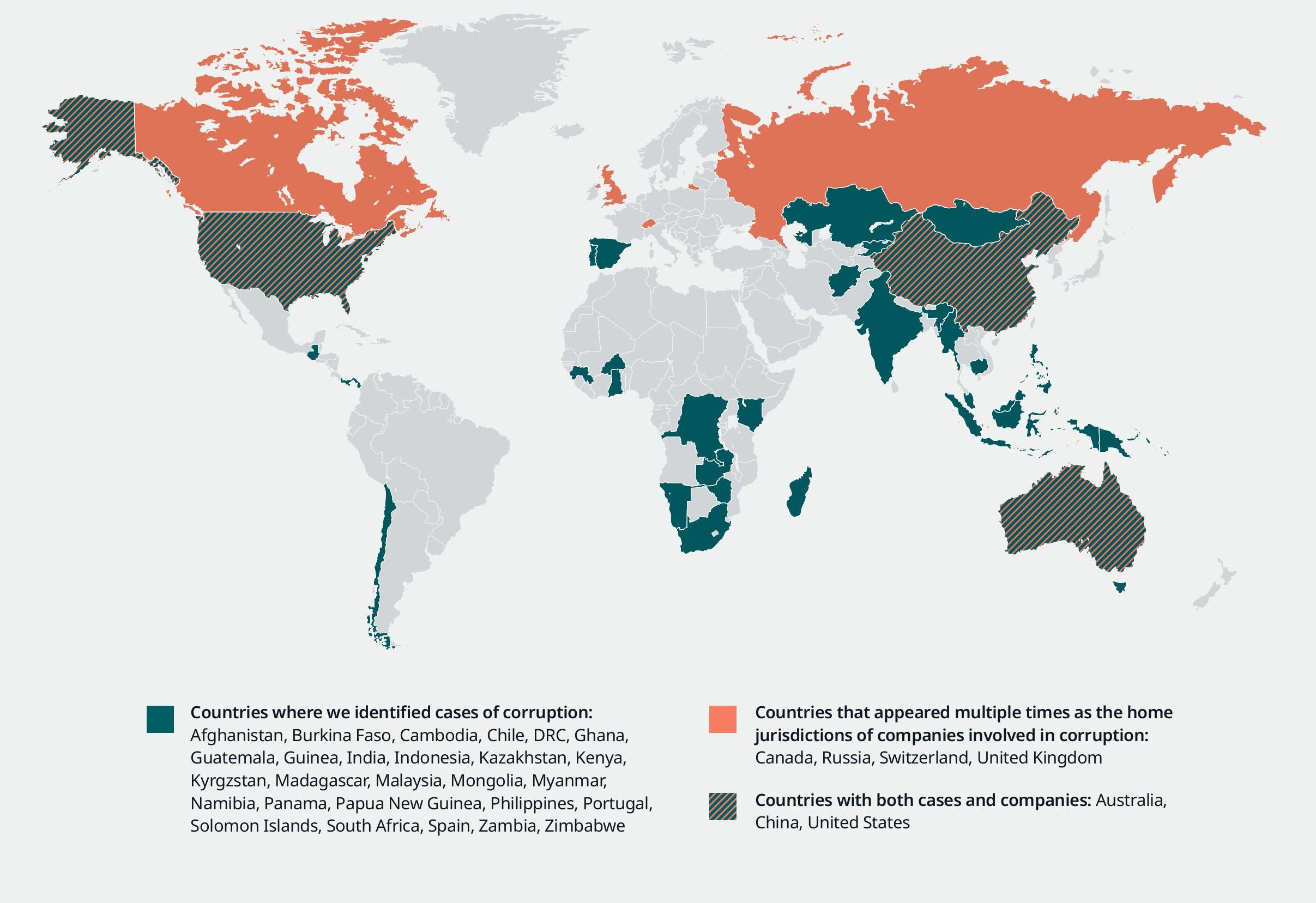
For each of these cases, we identified red flags that indicate corruption risk. These cover the types of companies granted licenses or contracts, the ways companies unduly influence decisions and decision-makers—often with implications for democratic processes—and how officials circumvent proper processes. While many of these corruption risks will be familiar to those working in the extractives sector, this report highlights emerging concerns, including the longer-term time scales of some corruption schemes, how corruption can flare up around elections, and its connection to social and environmental harms.
The consequences of corruption in licensing and contracting
The impacts of corruption are stark. Some government officials and mining company executives are already exploiting corruption around licenses and contracts to deny citizens and communities of their fair share of the benefits of mining transition minerals. With corruption starting in the licensing and contracting phase, companies are able to neglect and harm vulnerable populations and ecosystems with impunity. Corruption also delays mineral production, sometimes for years. In this way corruption in the licensing and contracting of transition minerals projects is actively undermining a just energy transition.
A swift transition away from polluting fossil fuels is essential to fight climate change, but this shift must also be just to ensure long-term sustainability and avoid breaching planetary boundaries. Decisions by authorities in producing countries about licensing and contracting process for new transition mineral extraction are integral to this effort. Authorities must take these decisions carefully to prevent mining communities, particularly in lower- and middle-income countries, from becoming sacrifice zones.
By providing officials, companies, regulators and enforcement agencies, civil society and journalists with the “clues” to identify corruption risks, we aim to contribute to the safeguarding of a just and equitable energy transition.
Corruption risks in transition minerals threaten a just energy transition
Learn about the ten red flags and how to address them.
Ten Red Flags for Corruption Risk in Transition Minerals Licensing and Contracting

Key messages
- Corruption in the licensing and contracting of transition minerals projects is undermining a just energy transition.
- Some government officials and mining company executives are already using corruption around licenses and contracts to deny citizens and communities a fair share of the benefits of mining transition minerals. Through corruption that starts in the licensing and contracting phase, companies are neglecting and harming vulnerable populations and ecosystems with impunity. And corruption is delaying mineral production, sometimes for years.
- Corruption in transition mineral supply chains is a global problem, with our study identifying 53 cases of corruption in 30 countries across five continents, involving a diverse range of minerals. Corruption cases have been documented in 8 out of the 10 countries with the highest levels of transition mineral reserves. The companies involved in these cases are often based in the world’s wealthiest or most powerful countries, including Australia, Canada, China, Russia, Switzerland, the U.K. and the U.S.
- Most of the corruption cases identified followed a familiar pattern, with red flags surrounding the types of company granted licenses or contracts, the ways in which companies have sought to unduly influence decisions and decision-makers—often with implications for democratic processes, and how officials have circumvented proper processes.
- Efforts to skip or shorten essential safeguards around licensing and contracting processes can lead to greater problems in the future, as production is slowed or stopped entirely by legal proceedings, shutdowns, protests and strikes.
As the world moves away from fossil fuels, there is a growing demand for renewable energy technologies—and the minerals and metals needed to build them. To reach net zero globally by 2050, the International Energy Agency estimates that the world will require six times more mineral inputs in 2040 than in 2021. For some minerals, the demand could even reach 30 times current levels. Demand remained strong in 2023, despite more volatility in prices. While the development of new technologies or policies to reduce consumption and increase circularity could have a crucial mitigating impact on this demand, the coming decades will no doubt see many new mines come online.
As demand for these essential materials booms, there is risk of a corresponding increase in corruption, with harmful impacts on communities and nature, the state budgets of mining countries, and humanity’s collective ability to realise a just energy transition. In past commodity booms, fast-paced dealmaking and the promise of windfall profits encouraged graft and self-dealing. At the same time, the scale and pace of activity hampered the ability of oversight actors to keep pace with developments in the sector, making it harder to spot corrupt behavior. These problems could easily repeat themselves in transition mineral projects, not least given the added pressure of tackling the climate crisis.
Other characteristics of the current mineral boom could further increase corruption risks. First, NRGI’s research finds that many players in today’s transition mineral supply chains are assuming new roles in different stages of the supply chain and negotiating unprecedented deals, such as in cobalt supply chains.
As offtakers and consumer product companies manage unfamiliar risks and dominate multiple stages of the supply chain, their anticorruption processes may be poorly equipped, perhaps even intentionally, to address the challenges posed in the extraction and processing of transition minerals.
Second, reserves of key transition minerals are concentrated in countries that have struggled to control corruption. Transparency International Australia identified that as much as 94 percent of rare earth reserves and 70 percent of cobalt reserves are found in countries that score poorly on Transparency International’s Corruption Perceptions Index. Some minerals, such as rare earth elements, are found in countries with contested governments or ongoing violent conflict.
Corruption in mineral supply chains threatens a just energy transition both by increasing the risk of harms associated with mining, and delaying and disrupting the supply of minerals needed to deliver the necessary scale-up in renewable technologies required to fight climate change. Taking steps now to identify, prevent and redress corruption can help avoid the mistakes and harmful outcomes of the past, as well as new harms, lost opportunities and the reproduction of inequities.
Navigating a just energy transition from coal in the Colombian Caribbean

The current Colombian government has helped centre the concept of a just energy transition in public debate, encompassing a broad range of questions and concerns. National, regional and local discussions have different frameworks and visions for a future beyond fossil fuels, particularly regarding coal, which is a major export commodity but not a major fuel for domestic use in Colombia. For thermal coal–producing regions in Colombia, this debate touches on the challenges of both the legacy of extractive activities and the repercussions of losing a significant industrial sector, affecting local and regional economies and communities.
Drawing on a series of workshops, a literature review, and interviews around transitions from coal in the Colombian departments of Cesar and La Guajira, the authors identify different visions of a just energy transition put forward at the national and regional levels, as well as some of the interests and strategies leveraged by different actors and groups in pushing certain visions of such a transition. The authors provide insights into the power dynamics that shape resistance to phasing out coal and opportunities for transitions to more sustainable futures, with a strong emphasis on the efforts of civil society to create and achieve their visions of a just transition.
Success Factors in State-State Mineral Partnerships, Value Addition and Regional Cooperation

In November 2024, NRGI's Thomas Scurfield spoke at the annual meeting of the Intergovernmental Forum on Mining, Minerals, Metals and Sustainable Development. With moderator Oluwatoyin Ojo, he discussed how the new breed of state-state mineral partnerships intersects with lower-income countries' ambitions to add value to their commodities before export.
Oluwatoyin Ojo, Senior Legal Counsel and Head of Partnerships, ALSF:
In the blog post “Deals Without Details: Exploring State-State Mining Partnerships and Their Implications” you and your co-authors raise an interesting point about strategic or politically driven partnerships—between what you describe as buying partners and resource-rich, often low-income countries, querying the extent to which these partnerships will be truly beneficial for the producer countries. The details of these partnerships are not always publicly disclosed. What do we know about the scope of some of these partnerships? From those you have examined, are they supportive of regional initiatives or not? What needs to be done to leverage regional potentials and is there not a risk of the strongest buyers being the biggest winners?
Thomas Scurfield, Senior Africa Economic Analyst, NRGI:
On state-state partnerships, we don't know a lot about many of them. Most of them come with pronouncements of a “win-win” for the mineral-rich country and the buying partner. But despite contract disclosure being an established norm, public information on many of these partnerships is scarce.
When we wrote the piece earlier this year, out of the 35 partnerships that we were aware of, we couldn't find any useful public information about 22 of them. For some of these partnerships, that's probably because they were at an early stage of development. For others, it's possible that they're just a political signalling tool, with no real intention to go much further than an announcement or a statement—a high-level memorandum of understanding (MoU).
But for other partnerships, there are likely lots of details that have been agreed that aren't being disclosed in the public domain. So, for example, the partnerships between the European Union and various low- and middle-income mineral-rich countries. The MoU sets out an intention to develop a road map of how the partnership will be implemented. And we know that some of these road maps are still being still being developed, yet to be finalized. But there are others that that have been finalized where what's in the public domain, for example in the case of Namibia, is just a very limited summary of the implementation plan. So there does need to be a lot more disclosure of these partnerships to inform public understanding, to ensure that civil society in mineral-rich countries can provide effective oversight.
There also needs to be more public information to understand whether these partnerships might help or hinder regional coordination. But based on kind of what's in the public domain there are some partnerships that explicitly state support to regional coordination efforts. For example, there's a plan between the DRC and Zambia to start producing battery precursors. The DRC and Zambia have signed an MoU with the U.S. that explicitly supports that goal. So, if that partnership is meaningfully pursued, then that could really shift the needle on that project. There's also the Lobito Corridor project, a plan to rehabilitate and extend a railway between the DRC and Angola, possibly to Zambia and even Tanzania—another example of how these state-state partnerships can support regional collaboration.
But it's possible that some of these partnerships might, perhaps unintentionally, hinder regional coordination.
Going back to the DRC-Zambia project, that project is going to need to source nickel and manganese from other countries, most beneficially if they were sourced from nearby: so other parts of southern Africa. Tanzania, next door, should in the next few years start producing battery grade nickel, but based on a U.S. government statement, it seems that there's been an agreement signed between the U.S. and Tanzania that means that a lot of that nickel will be exported to the to the U.S. I'm not criticizing Tanzania for this; that agreement seems to make sense for Tanzania and for that project. First, it means that project is going to get Mineral Security Partnership funding. Second—around the question of whether the strongest buyers are always going to win out over nascent projects—the DRC-Zambia project is not advanced enough to offer a credible offtake commitment right now. So, it makes sense for Tanzania, but it it's a demonstration of how the race for minerals by buying partners could hinder regional collaboration.
In general, these state-state partnerships have potential to support regional collaboration efforts. The likes of the U.S., the U.K., Saudi Arabia and China can all bring a combination of financing and technical support, and the ability to align a range of private sector actors, in a way that a single private investor can't. Such actors have the potential to convert regional collaboration visions into more tangible opportunities, both by aligning private sector interests across different countries, but also by helping to address one of the fundamental challenges with regional collaboration, which is how to share the benefits across the countries that are collaborating, opening up more options for benefit sharing. So, if one country hosted a shared smelter, then perhaps another country could get more support for infrastructure. So, I think there is great potential; but the onus is not just on the buying partners to be willing to provide this support, though they definitely should. But it also requires mineral-rich countries to identifying the regional collaboration opportunities so they can come to the table with them when they start negotiating these state-state partnerships.
Ojo:
To what extent are national priorities and regional mining supply chain collaboration complementary, if at all, and how could we strike the right balance between regional collaboration and national interest?
Scurfield:
National priorities and regional collaboration can be very complementary. Take value addition. Earlier there was a discussion around the first order conditions that need to be in place for value addition to be viable in a given country. One of those is scale, so you need a lot of minerals to make a value addition facility like a smelter or a refinery viable. There will be many countries where they just don't produce enough minerals to be able to make a facility profitable on their own; but that's where regional collaboration can help by enabling the combination of feedstock from different countries. This could be done without the involvement of government, without governments collaborating.
But, going back to the challenge of supplying nascent projects and the rush by overseas buyers to lock in long-term offtake agreements, to be able to find and combine enough feedstock from multiple countries you will likely need government intervention to strategize how you do that for a nascent project, to line up the design of the project and the financing.
There are going to be policy areas and projects where national priorities and regional coordination are very much aligned. So countries really need to develop strategies which are specific to individual minerals, and specific to stages of the value chain, where they identify when they can go it alone and when they might need regional collaboration. But even in instances where there is alignment between national priorities and regional collaboration, it’s still going to be very, very challenging. I'm from the the U.K., so having gone from through Brexit from the EU, I know how difficult it can be to make the politics of regional collaboration work.
There's a whole range of economic and political dynamics that that countries are going to have to overcome. There's still going to be an inherent tension between cooperation and competition—thinking about where you would locate a shared smelter, for example. There still needs to be lots of thinking and work around how to make regional collaboration happen; at NRGI, we've just started some research on that, looking at existing and attempted regional coordination initiatives to identify lessons, to identify success and failure factors both within and outside of the mining sector. We aim to support countries to make regional collaboration happen when it makes sense for them.
Just Transitions From Coal in Colombia

This policy brief highlights challenges for a just transition from thermal coal in Colombia, in order to inform policy, development cooperation and private finance, research and on-the-ground projects and to offer insights for researchers and practitioners in other contexts. It is based on two reports from the project Just Transitions from Coal in Colombia, Indonesia and South Africa, which drew on workshops, interviews, quantitative analysis and literature reviews conducted between 2022 and 2024, with a focus on two departments that produce the majority of thermal coal for export: Cesar and La Guajira.
The transition from thermal coal in Colombia’s Caribbean region presents a complex set of economic, environmental and sociocultural challenges, demanding a multifaceted approach to ensure a just energy transition and attracting attention from a wide variety of civil society and development cooperation organizations. Workshop insights and case studies from the thermal coal-producing departments of Cesar and La Guajira highlight the challenges of unplanned mine closures, including economic dependencies, environmental degradation, sociocultural and institutional factors. The authors describe these, then address opportunities for a just transition that surmount these barriers, with recommendations to conclude.
Advancing Actions from the UN Panel on Critical Energy Transition Minerals in Africa and Latin America
Baku, Azerbaijan

COP29 has marked a step change in climate action rooted in equity and justice by elevating the place of transition minerals in the climate agenda. Since the UN Secretary-General convened a panel of experts to provide guidance and recommendations last April, a swell of actions have followed:
- The panel report launched in September calling for human rights to be at the center of mineral value chains and for mining activity to be respectful of planetary boundaries, putting forward five actionable recommendations
- Advancing the panel’s recommendations, the Colombian government announced a new initiative calling for an international agreement on traceability.
- The G20 Rio de Janeiro Leaders’ Declaration noted the panel’s report and called for “sustainable and responsible supply chains for energy transitions, including for critical minerals.”
During COP29’s first week, the UN Secretary-General held a roundtable where heads of state and ministers endorsed the panel's recommendations and actions, calling for the work to be taken forward. At that meeting, Brazil announced that transition minerals will be a key issue on the COP30 agenda.
The UN climate process can play a strong supporting role in minerals governance because these are essential to the goals of tripling renewable energy capacity and doubling energy efficiency by 2030 as the world transitions away from fossil fuels. But how can the UN panel’s principles and recommendations advance equity and justice in mineral producing countries in the Global South? What are the priority actions at the regional and national levels? Who should be responsible for putting them into practice?
At this press briefing experts from Africa, Latin America and Indigenous communities discussed how the panel’s report can advance equity and justice in countries of the Global South, and how the COP29 outcomes can support mineral governance for a just transition.
Speakers
- Denis Gyeyir, Africa Senior Program Officer, NRGI
- Kuda Manjonjo, Just Transition Associate, PowerShift Africa
- Bryan Bixcul, Global Coordinator, SIRGE Coalition
- Camila Mercure, Climate Policy Officer, FARN
For background, see related content below.