
Senegal’s Gas-to-Power Ambitions: Securing Scale and Sustainability

Key messages
- Senegal will benefit from generating electricity from some of its gas, but authorities should carefully consider the scale of the country’s “gas-to-power” ambitions and how they relate to its renewable energy plans. This is a pivotal moment for achieving the government’s energy and sustainable development objectives.
- Recent plans to develop over 3 gigawatts (GW) of gas-to-power capacity by 2050 may face obstacles. Senegal may not be able to extract enough gas to feed the power plants; it may also struggle to raise sufficient funds (at least USD 2.2 billion) to build the necessary infrastructure.
- A more balanced energy mix, with a stronger emphasis on renewables alongside gas, offers Senegal a more secure pathway, but necessitates a cohesive long-term strategy and international support.
- Senegal’s participation in a Just Energy Transition Partnership (JETP) has led to increased medium-term renewable power generation goals—possibly to around 1 GW by 2030. To reach them, Senegal’s development partners must deliver the promised financial and technical support.
- If Senegal realizes only those plans that are published, gas will comprise 75 percent of installed capacity in the long term. The absence of a long-term plan for renewables could lock the country into this large role for gas, inhibiting the intended catalytic effect of the JETP and preventing the government from fully leveraging the country’s solar and wind potential.
- A more transparent and inclusive approach will help Senegal’s government to refine and implement its energy plans, helping to manage public expectations, foster public trust and increase credibility with investors.
Senegal has undergone an important political evolution with the recent elections and peaceful transition of power. Yet certain priorities remain consistent for the Senegalese government and population, including increasing the supply and affordability of energy. Achieving this is essential to addressing lingering energy poverty in the country and driving further economic development.
Following significant gas discoveries, and with the ongoing development of several gas projects, many Senegalese expect that domestic use of gas will be the answer to Senegal’s energy needs.
While gas will have an important role, including in directly increasing power generation, the size of gas-to-power plans and their interplay with renewables plans will be a critical determinant of whether the government achieves its energy and sustainable development goals.
The government risks falling short of its goals if it (a) pursues as large an expansion of gas-to-power capacity as envisaged in recent plans and (b) underestimates the role that renewables could play in the country’s future energy mix.
The most recent government plans, as set out in a policy review undertaken by the International Energy Agency (IEA) in collaboration with the Senegalese government, envision developing gas-to-power capacity of more than 3 gigawatts (GW) (through converting existing thermal plants and building new ones). However, the government may struggle to implement this plan. It faces risks of a gas shortage and a shortage of funding to build the necessary infrastructure.
Our modeling suggests that while the amount of domestic supply currently envisaged by the government is sufficient to meet expected demand, it may ultimately prove lower and slower to materialize than the government expects. The Yakaar-Teranga project is particularly critical for supply. Yet a range of factors increase the uncertainty around the project’s development and design. These include BP’s exit from the project, the impending audit of the petroleum sector promised by the new administration that may prompt contract renegotiations, and the global energy transition.
The government might also face a funding shortage. In addition to its plans to increase investment of public money in upstream projects such as Yakaar-Teranga, we estimate that it might need to find at least USD 2.2 billion to construct the planned pipelines and power plants. But the pool of financing available for gas-to-power infrastructure is shrinking given global climate concerns and associated pressure on financiers. The reduction in international public finance is a particularly significant challenge given its role in derisking projects for private capital.
In contrast to the government’s plans for gas, plans for renewables are unclear. The aim of Senegal’s recently announced Just Energy Transition Partnership (JETP) is to increase the share of renewables to 40 percent of installed capacity by 2030—possibly to around 1 GW. However, current plans do not indicate any additional renewables capacity in the longer term (beyond 2030) despite the catalytic impact that the JETP should have on this potential.
If that remains the case and the plans detailed in the IEA policy review are the only ones realized, even if Senegal does reach the JETP target of 40 percent renewables by 2030, gas will increasingly dominate the mix in the long term.
A larger role for renewables alongside gas could offer a less risky pathway to achieving Senegal’s energy goals as well as other benefits, such as freeing up gas for non-power uses. The lack of detail on renewables plans may reflect the fact that the government is in the process of developing the JETP investment plan. Officials also might worry that the JETP financing will not materialize.
Nevertheless, as the government is making decisions on the gas sector now, a full accounting of the interplay between gas and renewables cannot wait. Otherwise the government risks locking Senegal into using large quantities of gas far into the future. Any delay will inhibit the catalytic impact of the JETP on longer-term renewables prospects and thereby prevent the country from benefiting as renewables become increasingly cheaper and more secure than gas.
This more balanced approach will still likely require a significant expansion of gas-to-power capacity from today’s levels, and Senegal’s international development partners should recognize this by providing necessary financial and technical support. However, the government should right-size this expansion. It should use gas as a complement to renewables by employing gas as a “peaker” as much as possible. To achieve this, the government must make careful choices about gas plant technology and carefully negotiate gas purchases and gas power plant contracts.
Pursuing a pathway with a larger role for renewables is not without its own challenges given their higher upfront costs and the need for grid investments to address intermittency. We estimate that the additional 346 MW renewables capacity required to reach 1 GW by 2030 could cost around $920 million (exclusive of any necessary grid upgrades, flexibility systems, and energy storage capacity).
Senegal’s international development partners must deliver on their JETP promises in the near term, including by bringing down high financing costs and making riskier investments in hard-to-finance projects. They must also provide more money in the longer term. Rich countries must reverse their dismal records on meeting their climate finance commitments.
At the same time, Senegal’s government must create a stronger enabling environment for both gas-to-power and renewables investments. It should produce a credible long-term strategy on power sector development that provides clarity to relevant stakeholders, including investors. It should also resolve the overlapping responsibilities between institutions and provide more clarity on the processes and procedures for making key regulatory decisions.
Building more public consensus and trust will support the credibility of this long-term planning and the stability of the regulatory framework. Given high public expectations of the transformative impact of gas-to-power, greater public awareness of the various opportunities, risks and trade-offs could change the narrative and allow for the new administration to adapt the energy strategy as appropriate. The new president’s commitment to transparent governance bodes well in this regard, paving the way for Senegal’s new administration to refine and implement its energy plans with greater transparency and inclusivity than past administrations.
The above actions will give Senegal a better chance of achieving the energy future that the government’s strategy is striving for.
Open Letter Calling for Detailed Action Plans on Nigeria's Decade of Gas Policy

Dear Decade of Gas Secretariat,
We, the undersigned coalition of civil society organizations, commend the Federal Government and the Decade of Gas Secretariat (DoGAS) for the successful launch of the Decade of Gas website, a crucial platform outlining efforts against government’s gas plans for 2021 to 2030, and disclosing the decarbonization and gas supply strategies which will be implemented within 24 months by the execution committee.
In line with President Bola Ahmed Tinubu's commitment to advancing the Nigeria Gas Master Plan, we previously urged the then-incoming administration to develop and present a comprehensive and transparent strategy for achieving Nigeria's gas plans. We are pleased to observe that the Decade of Gas Secretariat has responded positively by adopting some of the recommendations from our series of publications, convenings, and dialogues between July 2023 and May 2024.
While we commend the progress made, we also recognize that some critical demands remain unaddressed, such as potential risks and alignment of the gas plans to Nigeria's energy transition plan, among others.
The coalition, therefore, calls on the Federal Government and the Decade of Gas Secretariat to:
- Publish a comprehensive action plan for the DoGAS over the 24-month stated implementation period especially for the Nigerian Gas Flare Commercialization Programme (NGFCP) and the Presidential Compressed Natural Gas (CNG) initiative.
- In addition to the national agenda, assure impact and visibility on the subnational government agendas and align with the government’s energy transition plans including the Energy Transition Plan 2060, Long Term Vision 2050 and the Nationally Determined Contribution (NDC).
- Provide clarity on a financing pathway for necessary investments in Compressed Natural Gas (CNG), Liquefied Petroleum Gas (LPG) and petrochemicals infrastructure.
- Include methane abatement financing strategies in its decarbonization framework in line with Nigeria’s climate change commitments.
- Ensure the viability of the proposed twenty (20) priority gas projects to prevent potential of stranded assets considering shrinking global markets for fossil fuel energy sources.
- Strengthen methane abatement to keep gas exports competitive and retain access to major export markets considering upcoming stringent regulations on high-emitting cargoes by the EU, and the potential for similar actions by other markets.
- Develop and implement mitigation strategies for environmental, social and health risks associated with gas use and mainstream gender and youth-based approaches, integrating these into gas policies.
- Launch comprehensive public education campaigns focusing on gas safety and benefits, targeting all sectors, especially the non-power sector, such as residential, transport and commercial sectors.
- Outline improved strategies for engaging civil society organizations (CSOs), media, communities, women, youth and other stakeholders in policy monitoring and accountability.
We remain committed to engaging and collaborating with the Decade of Gas Secretariat and the government to achieve these goals. By addressing these demands and incorporating diverse stakeholder perspectives, including those of marginalized communities and vulnerable groups, we can build a sustainable and equitable gas sector that benefits all Nigerians while recognizing the imperative of the energy transition.
Signed by:
- Natural Resource Governance Institute (NRGI) – Tengi George-Ikoli
- African Initiative for Transparency, Accountability and Responsible Leadership (AFRITAL) – Dr. Louis Ogbeifun
- Centre for Transparency Advocacy (CTA) and Women in Extractives (WiE) – Faith Nwadishi
- PeaceFront for Development Initiative (Youth Forum on EITI) – Maife Lincoln
- BudgIT Foundation – Enebi Opaluwa
- Centre for Environment Human Rights and Development (CEHRD) – A. Cookey
- Centre for Journalism Innovation and Development (CJID) – Felicia Dairo
- Policy Alert – Tijah Bolton
- Stakeholder Democracy Network (SDN) - Alexander Sewell
- Healthy Life Development Initiative (HELDi) – Dr. Mfon Utin
- Extractive 360 – Juliet Ukanwosu
- Youths and Environmental Advocacy Centre (YEAC-Nigeria) – Fyneface Dumnamene
- Paradigm Leadership Support Initiative (PLSI) – Olusegun Elemo
- Human and Environmental Development Agenda (HEDA) Resource Centre – Olanrewaju Lanre Suraju
Guinea’s Bauxite Corruption Diagnosis, One Year Later: Progress, Challenges and Outlook

Bauxite is a crucial sector in Guinea, yet the industry faces numerous challenges. Guinea holds the world’s largest reserves of this strategic mineral, essential for producing aluminum needed for the energy transition. In 2022, bauxite exports reached historic highs, with nearly 103 million tons produced annually. According to a 2021 Extractive Industries Transparency Initiative (EITI) report, bauxite accounted for nearly 60 percent of the USD 630 million in revenues generated from the country’s mining sector that year.
But behind these figures, questions persist about governance practices and issues surrounding the extraction of this mineral, regularly raised by the media and Guinean civil society. Despite substantial revenues generated, these have yet to translate into tangible improvements in citizens’ living conditions. Moreover, the sector’s vulnerability to corruption poses heightened risks, particularly given the likely surge in demand in the coming years.
Need for diagnosis and anticorruption efforts
In this context, a group of civil society actors initiated a diagnosis of corruption risks in Guinea’s bauxite sector and an action plan to strengthen transparency and accountability mechanisms. The group finalized the diagnostic report in mid-2023, with support from stakeholders of EITI-Guinea and the Agence Nationale de Lutte contre la Corruption (in English, the National Agency for Combating Corruption (ANLC)).
At NRGI we supported this work using our corruption diagnosis tool. The diagnosis identified critical corruption issues and their underlying causes. These related to mining licensing, tax practices, transparency in mining agreements and the impact of undervaluation of bauxite quality and transfer pricing on revenues. The exercise led to the development of the action plan aimed at preventing these practices. Civil society actors played a pivotal role in mobilizing all stakeholders to secure their commitment and support, convening discussions on identified risks and to collectively define interventions. This inclusive approach was underscored by the publication of the final action plan on the website of EITI-Guinea, which committed to its implementation.
Nearly a year later, participants at the ongoing 21st International Anti-Corruption Conference (IACC) in Vilnius are discussing global efforts to combat corruption. This is an opportune moment to review the implementation of the Guinean action plan: the progress achieved, the challenges faced and the expected further steps.
Civil society actors hoped that this intervention plan, based on extensive consultations, facts and robust documentation, would provide an ideal framework to strengthen efforts to combat corruption in Guinea’s mining sector. However, as with all anticorruption actions, effective implementation of reforms is complex and fraught with challenges, particularly due to resistance to change among political and economic actors.
From diagnosis to action
The publication of the corruption diagnosis reignited the debate on corruption within Guinea’s mining sector, receiving extensive media coverage. Numerous press articles and television programs highlighted the identified corruption risks, rallying various anticorruption actors in the sector. This increased pressure on authorities to pursue comprehensive reforms and review mining policies. The civil society coalition has yet to present a memorandum to the country’s new prime minister for consideration of the diagnosis results.
The dissemination of the diagnosis and intervention plan contributed significantly to the ANLC’s efforts to revive the process of revising the anticorruption law enacted in 2017. Previously, the ANLC had approached the National Transitional Council (CNT) to initiate this revision, a task which had remained pending. A key goal of the effort to amend the current anticorruption law is to address a key issue underscored in the diagnosis: enhancing ANLC’s capacity to function effectively and independently.
In the mining sector specifically, on International Anti-Corruption Day, the ANLC conducted an awarenesscampaign in Boké—center of bauxite mining in the country—on corruption risks identified in the intervention plan.
“The revision of the anticorruption law is crucial to strengthen our legislative framework and continue current authorities’ efforts for more effective and sustainable anti-corruption measures. We are committed to conducting this legislative work closely with all stakeholders.”—Alpha Abdoulaye Diallo (CNT).
Furthermore, some activities outlined in EITI-Guinea’s 2024 workplan and budget clearly align with the action plan’s recommendations. Key priorities include modernizing the mining cadastre, improving transparency in license issuance, evaluating legal obligations, administrative monitoring, training community representatives, analyzing revenue management, strengthening the capacities of mining employees, and efficient use of extractives revenues.
Remaining challenges
Despite promising initial steps toward implementation of the action plan, several challenges persist:
- Limited civil society monitoring capacity. The coalition of civil society organizations lacks the necessary financial and technical resources to effectively support, monitor and evaluate the identified actions.
- Media space restrictions. Recent political and regulatory pressures have curtailed freedom of expression and dissemination of information. This constrains public debate and the spread of critical information, thereby reducing pressure to implement recommended interventions.
- Sensitivities of anticorruption work. In the current political climate, anticorruption actors, particularly those from civil society organizations, face significant risks to their safety, which greatly hinder their engagement. The absence of protective measures for these actors further exacerbates these risks.
“Civil society organizations demonstrate determination in preventing, detecting and combating corruption in all its forms. However, they lack adequate technical and financial support to better explore and navigate the intricacies of corruption that tends to be institutionalized in Guinea.”—Moussa Iboun Conté (coalition of civil society organizations)
Beyond these challenges, political will and institutional actors’ capacity to implement identified reforms remain fundamental. In this regard, the Guinean government should recognize and support notable efforts by the ANLC and EITI-Guinea ahead of the upcoming EITI validation in 2025, and should prioritize the revision of the anticorruption law. To ensure that the promises of bauxite benefit Guinean citizens, in the current context of the “race for transition minerals”, the Ministry of Mines and Geology should issue new licenses according to best practices, mining companies should operate new sites operate responsibly, and that the state financial agencies collect revenue efficiently. On all these three issues, fighting corruption is key.
Safeguarding a Just Energy Transition in the Extractive and Energy Sectors (International Anti-Corruption Conference 2024)
In-person

As the world moves away from fossil fuels, demand for minerals essential for renewable technologies is rising steeply. This session will create awareness of the corruption risks stemming from these changes and their impact on communities. Speakers will focus on innovative approaches to strengthen multistakeholder governance, to ensure transparency and accountability for a just energy transition.
Featuring
- Susannah Fitzgerald, Natural Resource Governance Institute (NRGI)
- Marie Gay Alessandra Ordenes, Extractive Industries Transparency Initiative (EITI)
- Sophie Frossard, Deutsche Gesellschaft für Internationale Zusammenarbeit (GIZ) GmbH
- Brooke Stearns Lawson, United States Agency for International Development (USAID)
- Clancy Moore, Transparency International Australia (TI - Australia)
This in-person session is part of the International Anti-Corruption Conference (IACC) 2024. Visit the IACC website to learn more about the event.
Featuring NRGI's

Susannah Fitzgerald
Critical Minerals Governance Senior Officer
NRGI has developed a tool to help anticorruption actors identify, prioritize and address corruption issues in the extractives sector.
Power to the People: Perspectives on Nigeria’s Energy Transition Plan

Nigeria’s economy is the largest in Sub-Saharan Africa, with vast natural resources including oil and the continent’s largest gas reserves. However, according to the International Energy Agency, over 140 million Nigerians—70 percent of the country’s population—lack access to energy. In response, the government of Nigeria aims to achieve universal energy access by 2030 and is implementing several policies and initiatives to increase access to clean and affordable energy for its citizens. But how can the government achieve this ambitious goal?
“Empowering communities with reliable and affordable energy is not just a necessity; it is a catalyst for socio-economic progress. It fuels education, healthcare, and economic activities, paving the way for sustainable development” says Enebi Opaluwa, a senior research and policy analyst at BudgIT Nigeria, and a participant in the 2023 edition of the advanced course “Natural Resource Governance and Energy Transition: Policies and Practice”, co-organized by NRGI and the NADEL Center for Development and Cooperation at ETH Zurich. (The 2024 edition starts next week.)
After the course took place, we spoke with Nigerian participants, most of whom chose to focus on maximizing community benefits and managing diversification during the course. By enrolling in this path, participants learned about policies to enhance citizen engagement and mitigate socioeconomic impacts and conflicts related to extraction. They also studied tools for managing revenue distribution at the national and subnational levels, and the implementation of local content policies and national and local development plans.
A financing gap and changing regulations
“In Nigeria, many of the current policies and efforts to increase energy access are directed toward ensuring increased access to electricity for clean cooking, clean sources of energy, and energy transport, but there are gaps and barriers that prevent these policies from achieving their goal, including affordability, cultural factors and financing,” says Opaluwa.
“Financing is a key issue,” agreed Agwu Ojowu, a senior consultant for Africa Practice. He points out that the Nigerian government faces financial constraints in investing in the necessary energy and infrastructure system for delivering energy from new sources to citizens. The challenge is exacerbated in highly regulated markets, where existing providers discourage private investment needed for cleaner energy sources. Excessive regulation and market capture dynamics make it difficult for new players to enter these markets, posing obstacles to the introduction of more sustainable energy solutions
In response to this challenge, the Nigerian government passed a constitutional reform bill that allows individual states within the country to supply electricity, breaking the monopoly of the federal government over power provision. State governments can now independently explore the electricity generation business and transmit and distribute electricity in areas covered by the national grid and in remote areas. “This dually regulated system is less convoluted and allows the government to,” says Ojowu. This new process and innovation must be managed appropriately, with strong frameworks to build the capacity of states to manage this new development, the participants agreed.
In alignment with the participant’s perspective on the recent bill empowering individual states to supply electricity, the potential for state governments to distribute electricity across the national grid and in remote areas is a notable opportunity. However, Chichi Nwosu, a principal consultant at CRowland, a Nigerian development consultancy, underscores a significant challenge. She points out that the lack of employment opportunities stands as a major barrier, hindering local communities from reaping the benefits of this opportunity. This obstacle is rooted in socioeconomic implications and the unaffordability of social security for these communities. Addressing this employment gap becomes crucial for ensuring that the positive outcomes of the new bill are more inclusive and impactful for local populations.
“Emphasizing community engagement from the outset is paramount for fostering investments and ensuring that policies resonate with and benefit the local population.” - Agwu Ojowu
“Having well-crafted policies and legislation is crucial, and effective implementation is essential. However, without active involvement from local communities during the development stage, the successful implementation and dissemination of these policies become challenging,” explains Ojowu. “Emphasizing community engagement from the outset is paramount for fostering investments and ensuring that policies resonate with and benefit the local population.” Many communities exhibit “cash upfront rent-seeking behavior” whereby they agree to receiving cash handouts at the start of projects taking place locally. He argues that this has prevented local communities from benefiting from extractive projects and playing an active role in the sustainable development of their local economy because it precludes more significant investments in infrastructure, health services that would likely be more beneficial to communities in the long run.
Communities need education on the energy transition
“There is a need to raise awareness and sensitize local communities on the energy transition,” says Kolawole Kolade, a program officer on climate change adaptation and energy accountability at the Paradigm Leadership Support Initiative. Kolade explains that it is essential for government officials and civil society organizations to involve local communities in the decision-making and policy-making processes, so that citizens can actively understand the impact the transition has on the socio-economic development of their communities.
Community and stakeholder awareness is particularly important in the context of Nigeria’s new Energy Transition Plan, explains Nwosu. The plan was developed with the ambitious goal to achieve net-zero emissions in terms of Nigeria’s energy consumption. “This is a bold plan,” says Ojowu. “There is a need to build a climate change awareness culture in Nigeria.” He believes that authorities should include climate change awareness in curricula across all levels of education. He says that citizens across the entire country should be aware of what the climate change adaptation and mitigation measures the government can take—and that they, the citizens, must ensure that these goals are met. Enebi adds that the government should propose and implement education courses and other initiatives (including public hearings and media campaigns) to educate the population on the energy transition and its impacts, both at the national and local level.
Giving communities a role and a voice
“Currently, there is a gap between central and national governments, particularly when it comes to the energy transition agenda,” adds Enebi. He says that the energy transition plan focuses on attracting investments, but it lacks specificity about the federal government’s responsibilities going forward, as well as ways in which local communities can participate in to ensure the plan moves in the right direction.
“Even at the subnational level, relevant actors do not thoroughly understand what their role is in the context of the energy transition and climate change.” - Kolawole Kolade
Enebi suggests that civil society organizations advocate for clearer milestones and ways to measure the plan’s progress. One way government authorities could achieve this could be by incorporating citizen participation in budgetary processes, whereby the government provides citizens with easily digested information around budgeting during the approval and audit stages, so that they can participate and play an active role at the approval stage during public hearings. “This process should be applied to the energy transition plan,” says Enebi.
“Even at the subnational level, relevant actors do not thoroughly understand what their role is in the context of the energy transition and climate change,” says Kolawole. “There is a need at the federal level to create a framework for subnational governments to look into their responsibilities and have a tool to track their progress.” Civil society organizations should drive engagement and bridge the gap between the government and local communities on knowledge gaps around the energy transition plan, he adds.
Environmental concerns
“Environmental injustice should also be an important pillar of the energy transition plan,” says Enebi. “The energy transition will happen, but at the cost of the environment.” The plan should focus on ensuring that this conversation is at the forefront of discussions among Nigeria’s key decision-makers, politicians and local communities. This is particularly important as international oil companies increasingly divest assets to national oil companies leaving extant environmental pollution unremediated, Enebi adds.
Ojowu suggests that while engaging with local communities, the government should prioritize environmental regulation that is inclusive and consultative, fostering economic activities and alternative livelihoods beyond the oil sector. This is key in ensuring that local communities rely to a greater extent on other sectors, such as fishing and other sources of livelihood, so that there is a sustainable future that does not depend on oil or encourage oil pollution.
A unique learning opportunity
Regarding the advanced course itself as a platform to reflect on Nigeria’s challenges and opportunities in the context of the energy transition, participants particularly valued engagement with other participants from all over the world. “The peer-to-peer learning has allowed me to understand the similar challenges that other countries are currently facing,” said Enebi. “This has been very helpful in identifying potential opportunities and solutions.”
Ojuwu particularly enjoyed learning more about the tax and budget aspects of natural resource governance. The technical knowledge provided during the path on local communities allowed Kolade to further explore Nigeria’s gaps when it comes to community engagement tools, and this is something he is excited to continue working on. And Nwosu highlighted the importance of meeting participants who are active in same space, and how this enables them to share knowledge and collectively drive change with the aim of pushing for a just and inclusive energy transition.
The advanced course empowers participants to improve natural resource governance, especially around the energy transition.
Just Transitions in Resource- and Energy-Producing Countries

The global shift away from fossil fuels toward cleaner energy presents significant potential for resource-rich countries. But it also poses challenges, compounded by gender inequality and a legacy of poor environmental and social practices linked to the extraction of oil, gas, coal and minerals.
To ensure benefits for everyone—including communities, women and Indigenous Peoples—leaders working on a just energy transition should adhere to some fundamental principles.
Avoiding $1.6 Billion in Debt and Making Fossil Fuel Transitions in Ghana

- In July 2021, the Ghana National Petroleum Corporation stated its intention to spend USD 1.65 billion of public money to purchase a share of undeveloped offshore oil projects held by Aker Energy, a Norwegian company.
- NRGI provided technical analysis to an alliance of civil society actors interrogating GNPC’s request, and raised questions around the value of the asset, GNPC’s capacity to jointly operate the field, and the riskiness of the investment, building on prior NRGI research including Risky Bet. This underpinned advocacy by the alliance calling for investigation and greater transparency around the transaction.
- Following persistent advocacy, the Ghanaian government reduced the value of assets in the Aker-GNPC transaction from $1.65 billion to $1.1 billion and committed to further evaluating the deal. Media investigations revealed that Bank of America had appraised the oil field’s value at $300 million.
- In May 2023, Aker returned ownership of the two offshore blocks to the Ghanaian government for a sale price of $1.
Building partnerships for united advocacy and reform
The extractive sector contributes significantly to Ghana‘s economy. Gold mining has been important for the country for over a century, and Ghanaians have more recently hoped that the country’s oil and gas assets will contribute to public revenues.

Following Aker Energy’s 2017 acquisitions in Ghana of the South Deep Water Tano (SDWT) block and a 50 percent stake in the Deep Water Tano / Cape Three Point (DWT/CTP) block, the Norwegian company dominated the policy environment. It successfully lobbied the government of Ghana to amend the governance architecture of the upstream sector. But more recently, Aker had been seeking private buyers for its stake in these offshore blocks, with no success.
NRGI and many others considered a public investment in the declining oil industry to be a risky bet
In July 2021 Ghana’s national oil company, the Ghana National Petroleum Corporation (GNPC), stated its intention to purchase a share of Aker Energy’s offshore oil projects, after Aker had failed to find any takers. The Minister of Energy submitted a memo to parliament requesting $1.65 billion for the government to finalize negotiations and acquire a 37 percent stake in DWT/CTP and a 70 percent stake in SDWT. NRGI and many others considered a public investment in the declining oil industry to be a risky bet—an accelerated energy transition would reduce the financial returns on this investment and purchasing the assets would divert funds away from programs that were potentially more socially beneficial.
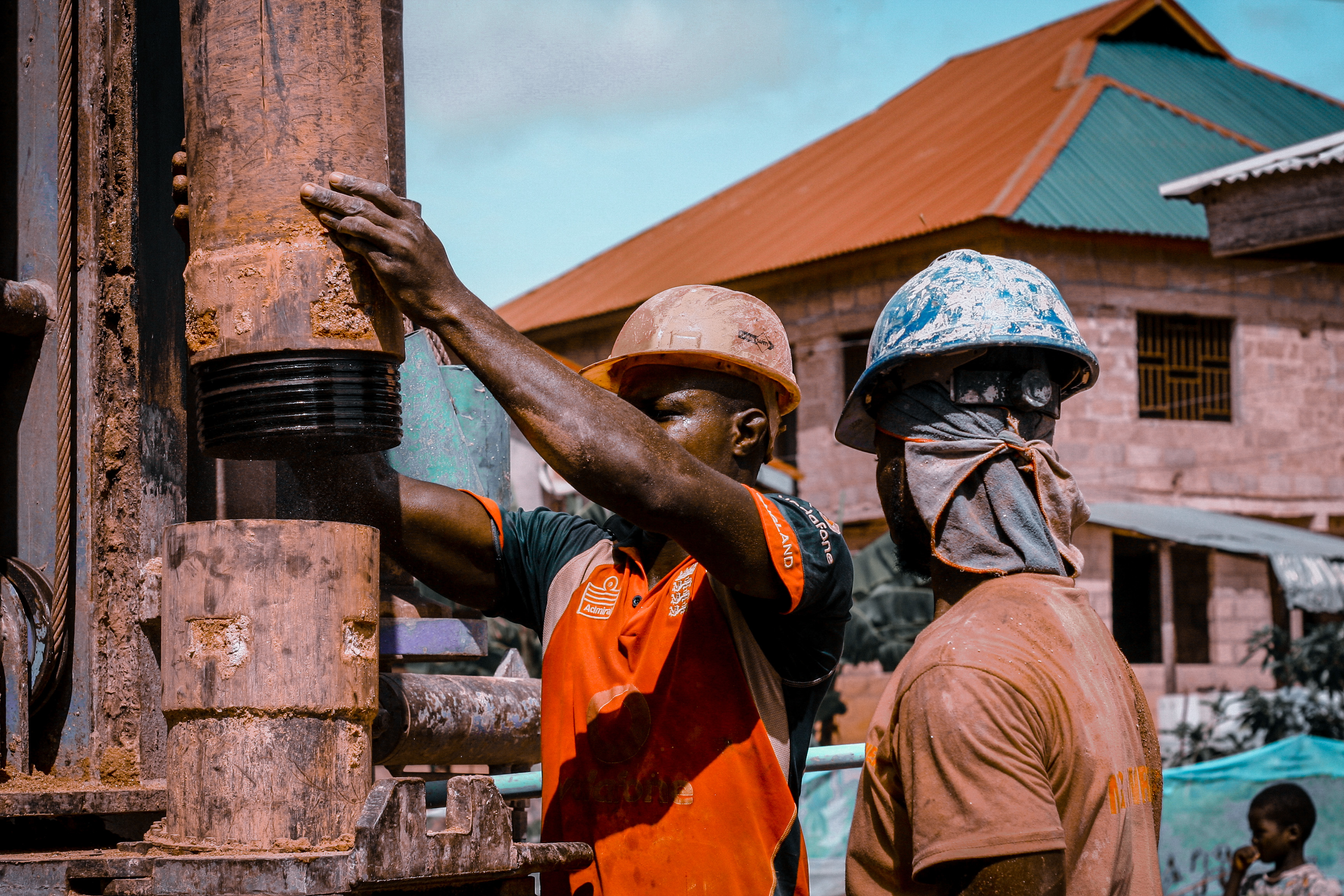
NRGI’s research and technical expertise on national oil companies enabled us to support the Alliance of Civil Society Organizations (CSOs) Working on Extractives, Anti-corruption and Good Governance. We analyzed public data related to the GNPC-Aker transaction, GNPC’s past transactions, its strategic position, and emerging implications of energy transition on Ghana’s oil sector, revenue flows and economy. Concerns arose about the asset’s value, the capacity of GNPC to take on production, and the investment risk amid the transition.
NRGI provided vetted data and technical support to the allied CSOs who were then able to professionally and meaningfully engage on the issues with different stakeholders including the Ministry of Energy, parliament, GNPC, the International Monetary Fund, the World Bank, the Norwegian embassy, the media and the Ghanaian public.
Through an extensive advocacy campaign the alliance called for a halt in the transaction and for the development of a national policy on energy transition. Specifically the alliance (including NRGI) requested that the parliament fully investigate the transaction to verify the actual cost incurred by Aker to date on the blocks, clarify inconsistencies in the presentations by GNPC to Ghana’s cabinet, and allow for open consultation to provide opportunities for independent expert opinions. Alliance members engaged with the media locally and internationally, authored articles, participated in public forums, and called for government transparency regarding the deal. NRGI provided technical support for the development of communication materials and clear infographics for engaging the public. Two press statements were released in 2021 by the CSO alliance—in August and September. These were widely featured in the media in Ghana and abroad.
After 18 months of persistent campaigning, Aker Energy wrote to relinquish its interest in the SWDT block to Ghana for free. This reinforced the CSOs’ position on the risks of investment. In May, 2023 Aker Energy sold the other field to Africa Finance Corporation Equity and Investment for a token price of $1 after the former defaulted on repayment of a loan of $200 million from the latter.
Driving the energy transition agenda in Ghana
In response to the CSO advocacy demands and emerging issues, the Ghanaian government constituted the National Energy Transition Committee (NETC), hosted at the Ministry of Energy. The committee is tasked with developing an energy transition plan to inform a policy for the country and mandated to conduct a nationwide consultation with various stakeholders including CSOs and youth. GNPC and the Ghanaian government officials credited the work of NRGI and the alliance of CSOs as significant influences on the evolution of their approach and requested NRGI’s technical assistance in the development of an energy transition plan.
NRGI continues to advise GNPC and has met with company officials to provide technical support on their plans for developing a comprehensive strategy for diversification in response to the energy transition. Discussions have also addressed the importance of reviewing the law establishing GNPC to understand the governance challenges, the role of government and hindrances to a smooth transition.
In November 2023, NRGI published two reports that reference Ghana and GNPC’s exposure to transition risk—Riskier Bets, Smaller Pockets and Facing the Future—leveraging data in its National Oil Company Database.
Facing the Future: What National Oil Companies Say About the Energy Transition

-
National oil companies (NOCs) should publicly acknowledge the risk of the energy transition, assess this risk, and act by implementing mitigation plans.
-
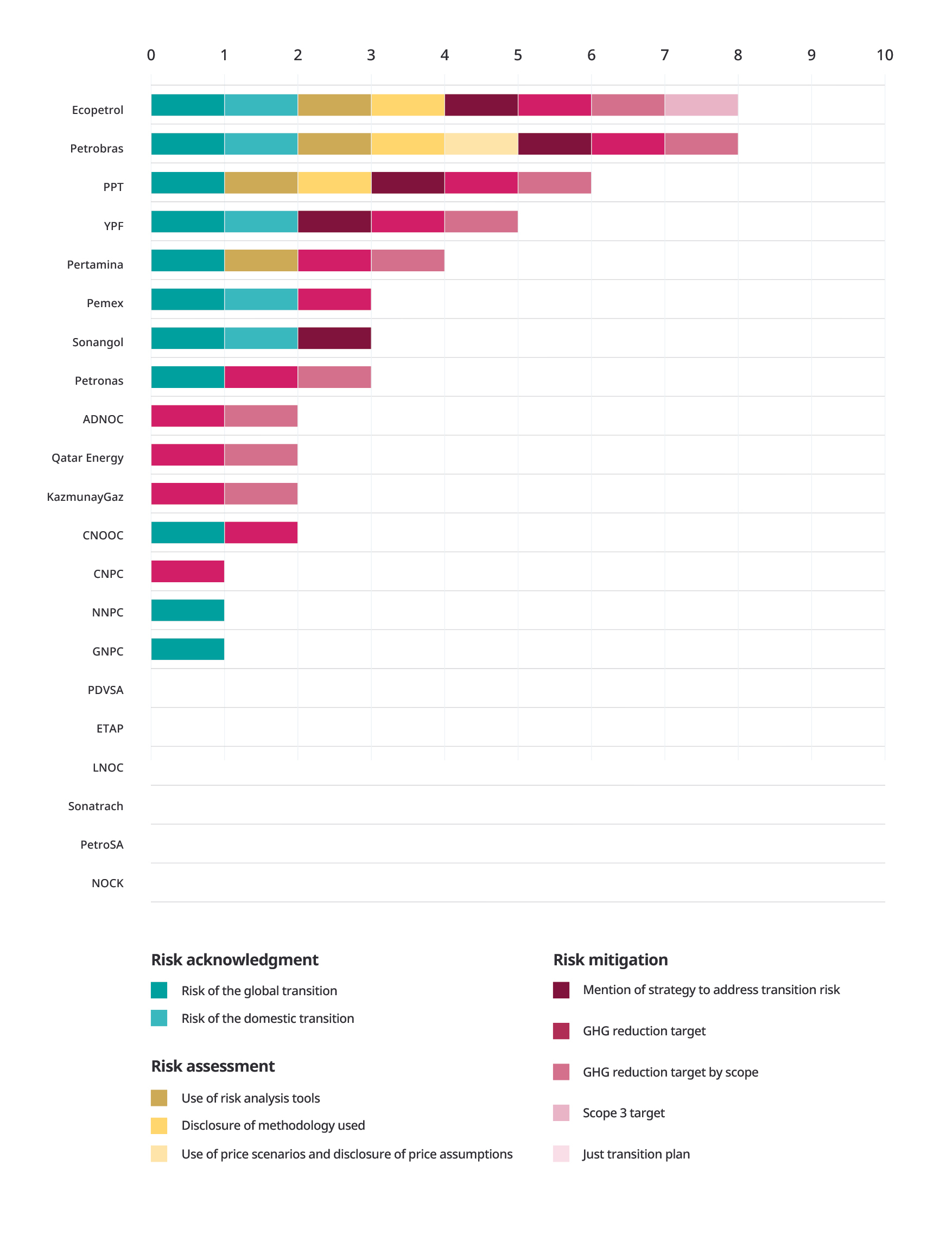
Only 9 out of 21 NOCs analyzed acknowledge the risk of the energy transition, 4 have mentioned the use of transition risk assessments, and 5 have explicitly mentioned strategies to mitigate the risk.
-
None of the NOCs have published “just transition plans” detailing how they will help workers and communities.
-
NOCs do not plan to decrease investments in risky oil and gas assets. Petrobras (Brazil), Petronas (Malaysia) and Sonangol (Angola) are divesting from less valuable assets, but not necessarily to mitigate transition risk or downsize operations.
-
Some NOCs, such as NNPC (Nigeria) and GNPC (Ghana), want to expedite drilling before oil and gas demand falls and acquire assets divested by other companies.
-
At least six NOCs intend to increase oil and gas investment to secure energy supplies.
-
Most NOCs intend to diversify, especially into gas, oil refineries, petrochemicals and renewable energy. However, it is unclear how much NOCs are spending on diversification or whether these are effective mitigation strategies.
-
NOCs can learn from each other. Two NOCs—Ecopetrol (Colombia) and Petrobras—are clear leaders in terms of recognition of energy transition risk. However, NOCs disclosing more transition risk information are not necessarily also those reducing higher-risk investments.
NOCs’ readiness to manage energy transition risk (based on public statements)
National oil companies (NOCs) produce half of the world’s oil, yet only recently have climate organizations considered NOCs a worthwhile area for advocacy.


Cross-Country Reflections on Coal and Just Transitions in Colombia, South Africa and Indonesia
The experts discussed on the current policy landscape for just transitions from coal in the context of Colombia, South Africa and Indonesia. One expert representing each country highlighted the unique barriers each country faces in phasing out coal production and reflect on how civil society can support just energy transitions. This panel conversation was followed by remarks by discussant Kerstin Mohr and an open Q&A.
Panel discussion:
- Juliana Peña Niño (National Resource Governance Institute), Colombia
- Ilham Rizqian Fahreza Surya (Institution for Essential Services Reform), Indonesia
- Muhammed Patel (Trade and Industrial Policy Strategies), South Africa
How Companies at Africa’s Mining Indaba Can Take Meaningful Action for People and Planet

Next week, policymakers, industry executives, civil society actors and development partners will converge on Cape Town, South Africa for the 2024 African Mining Indaba. Now in its 30th year, Indaba is an annual confab, primarily known as a venue for dealmaking and discussions between governments and mining companies.
This year’s theme—“Embracing the power of positive disruption: A bold new future for African mining”—is encouraging. As players like the U.S., EU, China and most recently Gulf oil powers scramble for the continent’s minerals, this time must indeed be different. The history of mining in Africa is riddled with economic, social and environmental injustice, often accompanied by underinvestment and supply disruptions. A triple win—for people in African mining countries, for their environment, and for the energy transition itself—is sorely needed.
Only by reducing investor risks arising from disputes with governments and communities will companies be able to sufficiently increase capital flows into Africa's mining sector to take full advantage of booming demand.
Civil society organizations and activists at the Alternative Mining Indaba, a very un-corporate parallel Indaba universe, have for years made the case for a better deal for Africans. World leaders are belatedly recognizing the importance of transition mineral governance for ensuring the production of green technology needed for climate change mitigation. At the COP28 climate conference, UN Secretary-General António Guterres stated that “the extraction of critical minerals for the clean energy revolution… must be done in a sustainable, fair and just way.”
Companies must also ensure that Africans get a better deal. Only by reducing investor risks arising from disputes with governments and communities will they be able to sufficiently increase capital flows into the sector to take full advantage of booming demand. And it seems companies are beginning to realize this. At last year’s Indaba, industry executives made frequent reference to “ESG” (environmental, social and governance considerations). And at this year’s edition companies are again queuing up to speak on panels about sustainability.
However, in the last year concrete action has been sporadic at best. This year’s Indaba is a good opportunity for companies to clearly define what actions they will take. Below are some of these actions on value addition, social and environmental protection, and corruption.
Value addition
Value addition—usually meaning the refining of raw commodities into something closer to their final consumable form—is increasingly sought after in most mining nations, as it brings additional revenues, jobs and, in some cases, an opportunity to produce inputs for producers’ domestic economies. African leaders reinforced their call for more value addition to take place on the continent at last year’s inaugural Africa Climate Summit.

To realize these ambitions, African governments must develop a clear and credible mineral-specific strategy. International players such as the U.S. and European Union need to convert memoranda of understanding on mineral supply cooperation with the likes of the Democratic Republic of the Congo and Zambia into concrete action to derisk financing and address other bottlenecks.
However, industry also has a critical role. Companies should:
- Support independent, publicly disclosed value addition feasibility studies. Companies should work with governments to better incorporate value addition planning in the licensing process and ensure transparency at key decision points. Companies, such as those soon to start mining Tanzania’s rare earths and Ghana’s lithium, increasingly agree to some form of scoping of value addition feasibility. But these assessments are often ill-defined and lack clear timeframes, and neither the companies nor government tend to publish them. Independent, published feasibility studies as part of license conditions would not only help governments to manage public expectations when value addition is not feasible but also help them to make value addition more feasible in the longer term by identifying bottlenecks.
- Coordinate. Coordination between mining companies operating in the same or neighboring countries could alleviate challenges of costly infrastructure needs and scale. Guinea’s huge Simandou iron ore project is finally proceeding with at least eight companies coordinating to construct two mines, a railway and a port; but companies in Guinea continue to primarily export bauxite ore despite sufficient scale for large alumina refineries that could bring down costs if they coordinated to supply feedstock. Governments should help to bring companies around the table, but companies themselves can be more proactive in this regard.
Social and environmental protection
Limiting the social and environmental harms of mining is just as crucial as maximizing the benefits. Some mining companies have taken positive, preliminary steps in this area—for example, “nature positive” commitments made by International Council of Mining and Metals (ICMM) members last month. But companies can and must do more. They should:
- Observe and expand mining no-go zones. ICMM members have committed to not exploring or mining in UNESCO world heritage sites and complying with the objectives of legally designated protected areas. However, this falls short, for example, of protecting forests of high conservation value inside and outside of protected areas—a key step for protecting communities and the environment. Nearly 27 percent of the Congo Basin’s intact tropical rainforests overlap with mining concessions. Governments should designate no-go zones, but companies shouldn’t wait for that to act themselves.
- Meaningfully consult with communities. In principle, governments and companies have increasingly recognized the need for “free prior and informed consent” from communities before allowing extraction. However, this engagement often has limited meaning. A recent analysis of 26 African countries found that seven do not require public consultation until after companies have completed a draft environmental and social impact assessment, rather than during the drafting process. Given the importance of community relations for companies’ “social license to operate,” and the expertise that communities bring on managing their local environment, companies should undertake meaningful consultation irrespective of any legal requirements.
- Publish project-level information on impacts. More project-level information will enable greater engagement by local actors directly affected by mining’s social and environmental impacts. The new Global Reporting Initiative (GRI) mining standard, set to launch next week at Indaba, supports this move by emphasizing mine-site reporting on a wide range of impacts such as water, waste and emissions.
Corruption
Corruption stands in the way of a better deal for the people and environment in African mining countries, and with it more minerals to address the climate crisis. Without action, the risk that the scramble for Africa’s minerals fuels corruption is high: corruption allegations have already emerged in relation to the race for Africa’s lithium.
To effectively tackle corruption, companies should, among other actions:
- Reduce the use of agents and intermediaries. Corruption commonly comes in the form of company staff paying bribes to public officials via agents and intermediaries. Companies should follow the example of trader Trafigura, which in 2019 committed to no longer hiring third parties to perform “business development” functions (recently announced bribery charges related to activities in 2009-2011 show why action on corruption at the company was essential). Companies should exert extensive control over relationships with any remaining intermediaries.
- Be transparent. Companies should adopt and champion project-level contract, payment, commodity trading and beneficial ownership transparency in line with the Extractive Industries Transparency Initiative Standard (EITI) to make it easier for journalists, citizens and other accountability actors to detect corruption. While there are examples of good practice, such as Newmont and Rio Tinto, 73 percent of EITI supporting companies still do not meet the expectations on beneficial ownership transparency and 27 percent fall short on contract transparency.
- Ensure strong due diligence to avoid elite capture. In many countries, powerful officials and their allies receive unfair access to the mining sector and its profits, including through influencing the choice of subcontractors and partners. Petrobras, the Brazilian national oil company, has reduced these risks following the “Car Wash” scandal by requiring suppliers to report beneficial ownership information and verifying this information for higher-risk entities—and refusing to engage with any entity whose key personnel or beneficial owners have unmanageable conflicts of interest. Mining companies should follow suit.
As Indaba kicks off on Monday, we hope to see companies embrace the types of positive disruption outlined above to achieve a “triple win.” It’s in everyone’s interest that they do.
The extraction of critical minerals for the clean energy revolution must be done in a sustainable, fair and just way. The Democratic Republic of the Congo-Zambia battery plant offers an opportunity.