
National Oil Company Profile: PDVSA
Highlights
- Oil and gas production in Venezuela, including PDVSA’s, has starkly declined since 2014. At current production rates and without further discoveries, PDVSA’s oil reserves will be depleted by 2034.
- Only 5 percent of PDVSA’s investment pipeline is likely to break even in a fast transition scenario. In the moderate transition scenario, 14 percent of PDVSA’s 2023 to 2032 investment pipeline does not break even.
- PDVSA provides extremely limited public information. It has not published annual reports or other documentation to improve transparency and corporate governance since 2016. This lack of accountability is reflected in the company’s limited acknowledgement of its transition risks.
- Despite heavily depending on oil for revenues, the current Venezuelan government has failed to recognize or mitigate the country’s economic risks, and PDVSA has made no impact assessment of the climate-related business risks it faces.
See the accompanying guide for definitions of all variables and explanations of the terms used. Sources are referenced with a number in parentheses, e.g., (1), and listed at the end of the profile together with the reference year. An explanation of the energy transition scenarios used is also at the end of the profile, preceding the references.
This profile was last updated in August 2024.
Key statistics
| Potential emissions from reserves (proved, 1P) (1) | 902 Mt CO₂e |
| Home country income level (2) | Not classified |
| Equitable phase-out responsibility (11) | By 2043 |
| Share of investment that does not break even in a moderate transition scenario (1, 19) | 14% |
| Government revenues from oil and gas at risk in a moderate transition scenario, as share of current oil and gas government revenue (8) | 82% |
| Current share of total government revenue from oil and gas (8) | Close to 100% |
Company governance
PDVSA is engaged in oil and gas exploration, production, refining and transport. It is a national oil company (NOC) fully owned by the Venezuelan government and operates production and exploration facilities in its home market.
Since 2023, PDVSA’s CEO has been Pedro Rafael Tellechea, who is also Minister of Petroleum (a common occurrence in Venezuela). PDVSA provides limited information on its current governance practices, and most information is over a decade old. The current governance system of Venezuela does not distinguish regulation and production, which are both concentrated in the Ministry of Petroleum–PDVSA common leadership.
PDVSA has the structure of a joint-stock company but is not listed on stock exchanges. The government is the sole owner of the company.
| Founded (24) | 1975 |
| Listed on exchange (5) | No |
| Employment (24) | 90,000 |
| OPEC member country (15) | Yes |
| International exploration and production operations (1, 5) | No |
| Subsidiaries (5) | 21 subsidiaries in 4 countries |
Ownership
| Government of Venezuela | 100% |
Source: (5)
Environmental, social and governance performance
PDVSA does not provide updated environmental, social and governance (ESG) information, and its ESG indicators are unavailable. Venezuela’s Resource Governance Index score (which measures the transparency and accountability of fossil fuel revenue management, value realization, and the quality of the wider enabling governance environment) is well below regional and global averages.
| Company | Country | ESG score (5) | Environmental score (5) | Social score (5) | Governance score (5) | Resource Governance Index score (15) |
| PDVSA | Venezuela | N/A | N/A | N/A | N/A | 33 |
| Ecopetrol | Colombia | 69 | 59 | 75 | 72 | 71 |
| Petrobras | Brazil | 75 | 62 | 90 | 68 | 71 |
| YPF | Argentina | 71 | 63 | 67 | 89 | 57 |
| Pemex | Mexico | N/A | N/A | N/A | N/A | 71 |
| Regional average | 72 | 61 | 77 | 76 | 59 | |
| Global average | 66 | 68 | 66 | 64 | 52 | |
Reserves and production
Venezuela’s reserves are the second largest in the world. Unfortunately, much of this is extra-heavy oil that trades under a significant discount to lighter crude types. Further, PDVSA’s oil production has declined since 2014 due to experienced managers and employees leaving the company following the death of Hugo Chávez and the start of the Maduro government (20). According to Rystad Energy, under most scenarios, this decline is not expected to reverse.
Sources: (1, 3, NRGI visualization)
| Refining capacity (bpd) (13) | 749,000 |
| Pipeline capacity (bpd) (14) | 8,969,985 |
| Oil reserves of NOC (proved, 1P) (million boe) (1) | 2,603 |
| Oil reserves of NOC as share of reserves of country (1) | 71% |
| Years of oil reserves left at current production (1) | N/A |
| Gas reserves of NOC (million boe) (1) | 930 |
| Gas reserves of NOC / reserves of country (1) | 62% |
| Years of gas reserves left at current production (1) | N/A |
| NOC share in the country’s total oil production (3) | 81% |
| NOC share in the country’s total gas production (3) | 72% |
| NOC ownership share of the country’s oil reserves (3) | 71% |
Sources: (1, 3, NRGI visualization)
Transition and other economic risks
Venezuela’s government revenues are completely dependent on oil and gas, and 85 percent of such oil and gas revenues are at risk in the moderate transition scenario. Crude oil exports constitute most of the country’s exports.
As of August 2024, both Venezuela and PDVSA are in a dire financial position, which the withdrawal of credit rating agencies from its assessment reflects. PDVSA has not regularly disclosed its financial performance since 2014.
Economic dependence on fossil fuel revenues and exports
| Indicator | 2013–2017 | 2018–2022 |
| NOC transfers to government / total fiscal revenue (3, 1) | 14% | N/A |
| Crude oil export revenues / country’s export revenues (17, 19) | 85% | N/A |
| Gas export revenues / country’s export revenues (17, 19) | N/A | N/A |
Government revenues at risk in the transition
| Share of oil and gas revenue in total government revenue (8) | Government revenues from oil and gas at risk in a moderate transition scenario, as share of current oil and gas government revenue (8) | |
| Venezuela | 100% | 85% |
| Suriname | 11% | 1% |
| Colombia | 5% | 83% |
| Mexico | 7% | 90% |
| Regional median | 27% | 70% |
| Global median | 44% | 56% |
Credit ratings
| Fitch (5) | Moody’s (5) | S&P (5) | |
| Venezuela | N/A | N/A | N/A |
| PDVSA | N/A | N/A | N/A |
PDVSA financial performance
| Company | Country | Liquidity: current ratio (1, 3) | Efficiency and profits: return on capital employed (1, 3) | Indebtedness: leverage (1, 3) |
| PDVSA | Venezuela | N/A | N/A | N/A |
| Petrobras | Brazil | 39% | 13% | 51% |
| Pemex | Mexico | 10% | 17% | 161% |
| Regional median | 22% | 19% | 44% | |
| Global median | 33% | 14% | 30% | |
Investment at risk in different energy transition scenarios
Source: (19)
In the moderate transition scenario, 14 percent of PDVSA’s 2023 to 2032 investment pipeline does not break even.
PDVSA has not planned for or acknowledged the financial risks for oil and gas resulting from the global energy transition (12).
From the 2000s, PDVSA developed some initiatives to diversify its portfolio, for example, through PDVSA Industrial and PDVSA Agricola, which focus on refining, petrochemicals and agriculture. However, nationally, there has been no substantial economic diversification.
Sources: (12, 13, 14)
Energy security
Venezuela is self-sufficient in oil; however, it has only 10 years left of reserves at current rates of production. It does not need to import gas. Despite the country’s economic reliance on oil, its power system relies on renewables, particularly hydropower, for 78 percent of its electricity generation (4). PDVSA also produces and refines most of the oil and gas Venezuelans use.
| Refining throughput of NOC as share of final country consumption of oil products (6) | 72% |
| Years of oil reserves left at current production (1) | 10 |
| Years of gas reserves left at current production (1) | N/A |
| Crude oil and refined oil products imports as share of national consumption of oil products (4) | N/A |
| Share of oil and gas in primary energy consumption of country (4) | 58% |
| Gas imports as share of country supply of gas (4) | 0% |
| Share of electricity production of country from renewables (4) | 78% |
Climate impacts and greenhouse gas emissions
PDVSA has extremely high scope 1 and 2 emissions per barrel. Furthermore, the company does not participate in the Oil and Gas Climate Initiative (OGCI). Its potential emissions from proven reserves are high. The NOC has also failed to set targets to reduce its scope 1, 2 and 3 emissions.
| NOC emissions reduction target, scope 3 emissions (21) | N/A |
| Annual scope 1 and 2 emissions of NOC (3) | N/A |
| Average GHG emitted before combustion per barrel of oil produced in country (9) | 259 kg CO₂e/boe |
| Average GHG emitted before combustion per boe of gas produced in country (9) | 243 kg CO₂e/boe |
| NOC is OGDC member (10) | No |
| NOC net zero target, scope 1 and 2 emissions (5) | N/A |
| Total potential emissions (scope 1–3) from reserves (1, 9) | 902 Mt CO₂e |
| NZE overshoot of resources under development (18) | 68% |
| Equitable phase-out responsibility of the country (11) | 2043 |
Energy transition scenarios
We use four energy transition scenarios:
Fast. We based this scenario on the oil and gas demand estimated in the International Energy Agency’s (IEA) Net Zero Emissions (NZE) by 2050 Scenario, which maps out a transition pathway that would limit global warming to 1.5°C. This assumes large-scale negative emissions enabled by technologies such as carbon capture and storage.
Moderate. We based this scenario on the IEA’s Announced Pledges Scenario (APS), which assumes the full and timely implementation of national energy and climate goals, including net zero emissions targets.
Slow. We based this scenario on the IEA’s Stated Policies Scenario (STEPS), which assumes governments follow their current set of energy and climate policies.
Expansion. We based this scenario on the Organization of Petroleum Exporting Countries’ (OPEC) scenario, which assumes a continued expansion in demand up to 2045.
Sources
All data are from the latest year available as referenced in the relevant source as of August 2024. For most data this is 2024. Data related to emissions and NOC finances are from 2023 or in some cases 2022. Data on country-level oil reserves and production, the ownership of oil reserves, employment and energy security are from 2022. The Resource Governance Index score is from 2021. If you find an error in this profile, please email noc_profiles@resourcegovernance.org.
- Rystad Energy UCube, 2024 (proprietary data)
- World Bank, 2024
- NOC Database, 2023
- International Energy Agency (IEA), 2023
- S&P Global IQ, 2024 (proprietary data)
- Statistical Review of World Energy, 2024
- Euromonitor, 2023
- Carbon Tracker, 2023
- Fossil Fuel Registry, 2023
- Oil & Gas Decarbonization Charter (OGDC), 2024
- An Equitable Phase Out of Fossil Fuel Extraction (Equity Review), 2023
- Facing the Future (NRGI), 2023
- World Benchmarking Alliance, 2023
- U.S. Energy Information Administration, 2024
- Resource Governance Index (NRGI), 2021
- OPEC, 2024
- UN Comtrade, 2024
- Global Oil & Gas Exit List, 2024
- Riskier Bets, Smaller Pockets (NRGI), 2023
- Hernández and Monaldi, 2016
- World Benchmarking Alliance, 2023
Explore how national oil companies are navigating the energy transition
NRGI’s national oil company profiles provide detailed insights into each company’s structure, strategy and role in the energy transition.
Decarbonization of Oil and Gas in the Gulf Cooperation Council: The Way Forward

Key messages
- It is unrealistic to expect a complete phase-out of oil and gas overnight. History has shown that a transition from one energy system to another takes time, but COP28 created political momentum, especially in the GCC countries, to invest not only in technologies such as carbon capture and storage (CCS), but also in the energy transition.
- GCC countries each focus on the same four key areas of decarbonization: 1) maximizing energy efficiency while reducing emissions from operations 2) developing renewable and clean energies 3) investing in carbon capture technologies, and 4) institutionalizing the role of national oil companies in decarbonization efforts.
- Ensuring improved emissions reporting by companies will allow for better emissions management and greater reductions in emissions. Companies in GCC countries must follow international reporting guidelines and standards.
- It is important to establish clear, holistic and realistic priorities and action plans for investing in renewable energy, to avoid unproductive projects and financial waste. Detailed, actionable plans to reach net-zero targets in the region are also needed. Ambitious targets are meaningless without concrete steps to achieve them.
- There is also a need to acknowledge the limitations of CCS technologies. While these can play a role, they should not be treated as a primary approach to decarbonization.
Introduction
COP28 in the United Arab Emirates (UAE) will be remembered as the COP of transitioning away from fossil fuels. Weeks of negotiations led to what was named the “UAE Consensus,” which gave political blessing to action towards orderly transitions based on countries’ capacities. Oil and gas companies were also held accountable for their responsibilities in fighting climate change, with the launch at COP28 of the Oil and Gas Decarbonization Charter, in which companies pledged to accelerate decarbonization of their businesses. Signatories included national oil companies from the Middle East and North Africa (MENA) region, such as Abu Dhabi’s ADNOC, Saudi Arabia’s Aramco and Bahrain’s Bapco Energies.
For activists, scientists and campaigners who believe the only acceptable action to fight climate change is to end the production of fossil fuels now, the launch of the voluntary pledges by national oil companies constitutes greenwashing. This sort of criticism must be amplified to pressurize governments and companies to take serious action to reduce emissions. However, such pledges are also important to enable civil society organizations (CSOs), communities and citizens to monitor and hold governments and companies accountable.
The MENA region has historically contributed very little to climate change, but it is currently home to oil and gas giants, with the highest per capita carbon dioxide (CO2) emissions globally. It is therefore important for the MENA governments, NOCs and societies to contribute to fighting climate change. The global community particularly welcomes efforts by the financially rich MENA countries to contribute to decarbonization efforts, and by the giant NOCs of the region to deliver on their commitments.
The Natural Resource Governance Institute (NRGI) has been following the energy transition paths in MENA since 2023. We understand the differences in capacities and needs among the various countries of the region, and acknowledge the fear of transitioning away from oil and gas for countries dependent on these resources for their state revenues. Some countries in the region see opportunities to invest in clean energy for their power sector, in order to provide secure electricity and cut import bills. Fossil fuel-rich countries, such as members of the Gulf Cooperation Council (GCC), are investing in new technologies for clean energy and seeking a place on the global stage to influence the energy agenda.
NRGI has sought to bring these nuances of the energy transition to MENA populations, by creating a space for experts from the region to reflect on these developments and to develop recommendations for action to present to decision-makers and CSOs. To this end, we have organized webcasts in Arabic bringing together regional experts to discuss key topics related to the energy transition in MENA. We are also compiling the experts’ recommendations in a series of briefings, to be the base for actionable advocacy for a just energy transition. Part of NRGI’s just energy transition program, this publication is based on a webcast on the role of GCC governments and their NOCs in decarbonization efforts.
This briefing is part of contribution by the Natural Resource Governance Institute (NRGI) to the just energy transition debate in the Middle East and North Africa. The content is based on a webcast organized by NRGI, in which two guest experts from the region discussed the role of Gulf Cooperation Council (GCC) governments and national oil companies in decarbonizing the oil and gas sector.
Emissions, the oil and gas sector, and development
The Paris Agreement, adopted during COP21 in 2015, sets out global commitments to limit global warming to well below 2 degrees Celsius, preferably to 1.5 degrees Celsius, compared to pre-industrial levels. This requires all stakeholders to reduce and eliminate greenhouse gas (GHG) emissions. Fossil fuel combustion is the primary source of these emissions, via the processes involved in burning coal, oil and natural gas, which release significant amounts of CO2 and other GHGs, such as methane, into the atmosphere. Global climate change frameworks such as the United Nations Framework Convention on Climate Change (UNFCCC) highlight that fossil fuels are the leading contributor to GHG emissions caused by humanity, leading to around 90 percent of all CO2 emissions and almost a third of methane emissions. Within this context, debates and commitments around decarbonization emphasize reducing the average carbon intensity of primary energy sources over time. Five of the top ten oil producers in the world are in the MENA region, in the GCC states. For example, Saudi Arabia, the world’s second largest oil producer after the USA, is responsible for 11 percent of the global share of produced oil. Decarbonizing the oil and gas sector therefore becomes a crucial priority for countries relying on the sector for development and the well-being of their citizens.
Voices in developed countries argue for delinking oil and gas from economic development, but this does not resonate with populations in the MENA region who still depend on their governments to provide jobs and meet their basic needs. The emphasis for resource-rich countries—especially in the Gulf—is on making their oil and gas products the cleanest possible while the world is still economically reliant on oil and gas.
The actions of the oil giants in the region are especially critical, given estimations by the Intergovernmental Panel on Climate Change that limiting global warming to 1.5 degrees Celsius will require global GHG emissions to peak before 2025 at the latest and be reduced by 43 percent by 2030. The substantial oil revenues of the GCC nations position them uniquely not only to lead their own decarbonization efforts, but also to support other MENA countries in their energy transitions, to ensure the whole region is politically and economically more stable than at present.
NRGI’s webcast guest Dr Charbel Moussa of KPMG believes that the political momentum and government buy-in for work on decarbonization technologies and an orderly energy transition was launched at COP28. Dr Moussa stated that, “Today, politically, there is a domino effect, and governments cannot say that we are only going to invest in technology. There also has to be an investment in the gradual transition from oil and gas to other sources of energy.”
GHG emissions can be categorized into three groups, as defined in the Greenhouse Gas Protocol, which is widely adopted across industries, including the oil and gas sector:
- Scope 1 Emissions: Direct GHG emissions from sources owned or controlled by a company. For oil and gas companies, these include emissions from combustion in their boilers, furnaces and vehicles, and emissions from chemical production in their processing equipment.
- Scope 2 Emissions: Indirect GHG emissions from the generation of purchased electricity, steam, heating and cooling consumed by a company. For the oil and gas sector, this primarily involves the emissions associated with the electricity used in extraction, refining and distribution processes.
- Scope 3 Emissions: All other indirect emissions that occur in a company’s value chain, both upstream and downstream. In the oil and gas industry, this includes emissions from the use of sold products (e.g., combustion of oil and gas by consumers), transportation and distribution, and investments, among other activities.
GCC countries and NOC decarbonization policies and commitments
As previous NRGI research highlights, despite their vast financial capacities and low-cost reserves, GCC NOCs face significant financial risks as the global energy transition accelerates. The structural decline in oil demand, driven by decarbonization efforts, may lead to stranded assets and diminished revenues, as global capital continues to shift away from fossil fuels. NOCs such as Saudi Aramco are attempting to diversify into downstream industries such as refining and petrochemicals. However, over-investment in these sectors risks becoming a liability if the global demand for oil and its byproducts declines faster than expected. Thus, while these NOCs are better positioned than many smaller regional players, the need to mitigate financial risks through strategies that do not rely on oil and gas remains urgent.
Against this backdrop, GCC countries signalled their commitment to a greener and more sustainable future by developing and marketing holistic short- and medium-term strategies: Saudi Arabia’s Vision 2030, Oman’s Vision 2040, Qatar’s National Vision 2030, the UAE’s Vision 2021 and its related Energy Strategy 2050, Bahrain’s Economic Vision 2030 and Kuwait’s Vision 2035.
As of 2022, all GCC countries bar Qatar had set a net-zero target for 2050 or 2060. UAE and Oman committed to net zero by 2050, while Bahrain, Kuwait and Saudi Arabia set their net-zero objectives for 2060. For instance, the UAE has committed to reducing its GHG emissions by 40 percent by 2030, compared to “business as usual” levels, by focusing on five key emitting sectors. While these visions are cross-sectoral, the energy sector is the most critical priority for decarbonization across GCC countries. According to NRGI’s webcast guest Dr Mohammed al Breiki from the Gulf Organization for Industrial Consulting, despite the plurality of energy sector decarbonization paths and targets among these countries, they each focus on four key areas:
1. Maximizing energy efficiency while reducing emissions from operations
Due to their high financial capacities, GCC countries are able to lead on and champion technologies and innovative concepts to maximize efficiency in oil and gas operations, while preventing and reducing potential CO2 emissions. For instance, Saudi Arabia has implemented the concept of the circular carbon economy. As Dr Breiki explained, this is “a concept that enables the recycling of carbon coming from different sources by using or capturing it.” Saudi Arabia’s NOC, Aramco, has adopted this concept, operationalizing its principles of “reducing, reusing, recycling and removing” CO2 emissions.
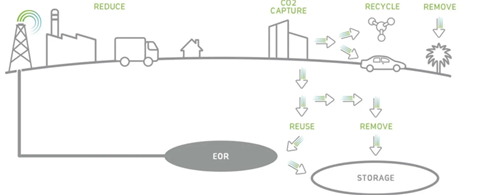
Implementing this concept involves the roll-out of an array of measures and approaches, including investing in technologies to improve the efficiency of internal combustion engines in transport, and planning afforestation efforts. Three NOCs in the GCC have announced or started implementing plans to plant millions of efficient carbon-capturing trees. The Abu Dhabi National Oil Company (ADNOC) has announced the planting of 10 million Avicennia trees, Aramco has announced plans for several million mangroves trees, while Petroleum Development Oman (PDO) has announced it is planting sugarcane to help with the desalination of water that will be used to be injected in the oil wells. The sugarcane bagasse, a byproduct of the plant, will be used as a renewable energy source to power the desalination process, replacing traditional electricity typically generated from oil and gas. This approach not only supports water injection but also contributes to reducing CO2 emissions by using a cleaner energy alternative.
The GCC countries are also advancing innovative and pioneering technologies aimed at reducing CO2 emissions in their oil and gas extraction. For instance, PDO’s “Miraah” project is one of the world’s largest solar thermal facilities, harnessing the sun’s energy to produce steam for use in oil production. According to Dr al Breiki, this technology has enabled the company to save or reduce about 300,000 tonnes of CO2 a year. ADNOC’s Centralized Predictive Analytics Diagnostics (CPAD) initiative uses artificial intelligence and machine learning to analyze data related to operations across the company, to improve operational efficiency and reduce emissions. Qatar is seeking to reduce emissions in the transport of oil and gas through purchasing ships which use liquified natural gas (LNG) or clean fuels such as ammonia and methanol, rather than heavy fuel.
2. The development of renewable and clean energies
GCC countries have established ambitious overall targets for renewable and clean energy production and integration into their domestic energy mixes. For instance, Saudi Arabia aims to have 50 percent of its energy mix from renewable energy by 2030, while Oman and the UAE aim to derive 30 percent of their electricity from renewables or clean energy by the same year. Bahrain aims for 20 per cent of its energy to be renewable by 2035, while Kuwait and Qatar aim for 15 percent and 20 percent respectively by 2030.
Achieving these targets will require GCC countries to increase their renewable energy capacity tenfold by 2030 compared to the 2022 installed capacity of about 5.7 gigawatts. Fortunately, abundant and high-quality solar resources, coupled with the very large scale of solar photovoltaic (PV) projects, mean that the GCC countries are able to produce renewable energy at a very low coast. Currently, solar PV costs less than two US cents per kilowatt hour in the GCC countries, outperforming natural gas, liquefied natural gas, oil, coal and nuclear power in this respect. These countries are already leveraging this advantage. According to the World Bank, the UAE is home to three of the world’s largest and lowest-cost solar plants. The expansion of solar energy production and use will reduce the share of fossil fuels in the domestic energy mix, while also improving efficiency in operations. For instance, as Dr al Breiki stated, the Kuwait Petroleum Corporation has adopted electrical extraction technologies using solar energy to reduce emissions from oil and gas extraction processes.
In addition to solar potential, some areas in the Gulf, such as Saudi Arabia’s northwestern desert and southern Oman, boast significant wind potential. Despite solar PV being more competitive, GCC countries such as Saudi Arabia and in Bahrain are investing in wind farms, through a partnership between Bahrain’s Bapco Energies and the Abu Dhabi Future Energy Company, Masdar. GCC countries are also investing in grey hydrogen (from natural gas) or blue hydrogen (grey hydrogen with carbon capture). For instance, ADNOC currently produces 300,000 tonnes of grey hydrogen annually, and is investigating the potential for green and blue hydrogen production, using carbon capture and storage technology. The company also aims to start producing blue ammonia in 2025 at its large-scale facility, which has a capacity of one million tonnes per year.
3. Investing in carbon capture technologies
GCC countries including Saudi Arabia, the UAE, Qatar and Oman are investing in carbon capture and storage (CCS) technology. This refers to the process of reducing emissions from industries such as fossil fuel extraction, by collecting CO2 that would otherwise have been emitted into the atmosphere, and storing it underground in depleted oil and gas reservoirs and saline aquifers. This technology would arguably enable these fossil fuel producers to “have their cake and eat it” by contributing to meeting domestic net-zero targets while protecting export revenues derived from oil and gas.
GCC countries already have large-scale CCS projects in different stages of development. For example, Qatar’s Ras Laffan LNG carbon-capture facility has a capacity of 2.2 million tonnes per year. QatarEnergy’s Sustainability Strategy also includes a commitment to increase CCS capacity at its facilities to between 7 million and 9 million tonnes per annum by 2030. Similarly, as Dr al Breiki highlighted during the webcast, CCS technology has enabled Saudi Arabia’s Uthmaniyah oilfield “to capture about 40 million cubic meters of carbon dioxide and store it underground to improve oil extraction.” The table below outlines all CCS projects implemented or planned in GCC countries until 2030 to capture CO2 at source or through direct air capture.
Table 1. Carbon capture and storage projects in GCC countries in 2023
| Facility | Country | Operational date | Industry | Capture, transport or storage capacity (million tonnes per annum of CO2) |
Operational | ||||
| Saudi Aramco Uthmaniyah | Saudi Arabia | 2015 | Natural gas processing | 0.8 |
| Qatargas Qatar LNG | Qatar | 2019 | Natural gas processing | 2.2 |
In construction | ||||
| 44.01 Project Hajar | Oman | 2024 | Direct air capture | Under evaluation |
| Qatar Petroleum North Field East | Qatar | 2025 | Natural gas processing | 2.1 |
| QAFCO Ammonia-7 Blue Ammonia Facility | Qatar | 2026 | Hydrogen, ammonia, fertilizer | 1.5 |
Advanced development | ||||
| ADNOC Ghasha Concession Fields | UAE | 2025 | Natural gas processing | Under evaluation |
| ADNOC Natural gas processing plant | UAE | 2025 | Natural gas processing | 2.3 |
| Saudi Aramco Jubail Hub | Saudi Arabia | 2027 | Natural gas processing | 9 |
Early Development | ||||
| Gulf Cryo MEG Plant | Saudi Arabia | 2024 | Chemical | Under evaluation |
| ADNOC TA’ZIZ Blue Ammonia | UAE | 2025 | Hydrogen, ammonia, fertilizer | 0.8 |
4. Institutionalizing the role of NOCs in decarbonization efforts
At COP28 in Dubai, 50 international and national oil companies, representing more than 40 percent of global oil production, signed the Oil and Gas Decarbonization Charter (OGDC). The charter, launched by the COP28 Presidency and the Kingdom of Saudi Arabia, commits signatory companies to key climate actions, namely net-zero operations by 2050 at the latest (Scopes 1 and 2), ending routine flaring by 2030, and near-zero upstream methane emissions by 2030. The charter was launched as one of a series of initiatives under the Global Decarbonization Accelerator (GDA), unveiled during COP28 with the stated purpose of speeding up the energy transition and drastically reducing global emissions. Four GCC NOCs signed the charter: Saudi Aramco, Abu Dhabi’s ADNOC, Oman’s PDO and Bahrain’s Bapco Energies, thereby reasserting and contributing to their countries’ net-zero targets.
The launch of the OGDC targeting NOCs could be interpreted as a diplomatic compromise between the advocates of phasing down and transitioning away from fossil fuels, and those who fear that an accelerated transition would have significant impact on their economies and societies.
Takeaways and looking forward
In the GCC context, this political recognition of transitioning away from fossil fuels has the potential to pave the way for more investment, research and innovation opportunities targeted towards the new GCC generation. This could mean job opportunities for young people who want to be part of the solutions to the climate problems caused by previous generations.
During the webcast, Dr Moussa highlighted the tension that exists in global debates on climate action and decarbonization. Climate action advocates argue for the urgent need to phase out fossil fuels to mitigate climate change, while many government officials and development advocates argue for the continued use of fossil fuels to drive national development and reduce energy poverty. For many resource-rich developing countries, fossil fuels remain a critical source of energy and economic development. MENA governments have therefore been supporting the decarbonization efforts of their national oil companies, despite criticism from environmentalists and climate activists that the emphasis on decarbonization technologies will slow the phase-out of fossil fuels. GCC countries argue that the world needs a wide range of technologies and scientific innovations to tackle one of the most important existential challenge of modern times, and that their NOCs can be part of this scientific and technological advancement alongside the main global players. They also claim it is unrealistic to expect a complete phase-out of oil and gas overnight. As Dr Moussa highlighted, history has shown that a transition from one energy system to another takes time. It is important to acknowledge that even “with alternative energy or clean energy, these energy sources can increase, but oil and gas will still play a role.”
The GCC fossil fuel producers are at the heart of a global debate around the future of energy systems and new economies. They acknowledge the importance of transitioning through their local and international commitments, and the pledges and targets they have set. Some, like the Saudi government and Aramco, are faster than their neighbouring countries in assessing the consequences of the transition and taking action, such as the decision to stop investing in additional oil production beyond their current capacity and to focus on more productive portfolios, such as petrochemicals, refineries and new energies. However, not all GCC countries and their companies have the same financial capacities to act fast without social and economic turbulence.
The seemingly contradictory policies and decisions being taking in some Gulf countries show the difficulties in managing the transition. Countries such as the UAE pledge billions in clean energy innovations, while the government and its oil company also announce investments worth billions to boost oil and gas production. For the Gulf countries, investment in all types of energies has been the mantra from the beginning of the energy transition negotiations as a way to show agency in decision-making and deciding the fate of their countries, without denying their shared responsibility in the global quest for solutions to climate change. For the UAE, leadership in oil and gas development is not only part of its economic development plan, but also part of its global political leverage, while for other countries, such as in Kuwait, the sector is more a question of generational issues. From this perspective, the region’s political leadership is seen as needing to shift to younger generations, able to think differently and view current economic and societal problems from a different angle than oil and gas resources. There is a shift in how the oil and gas sector is viewed by Gulf citizens, with less political power residing in the oil and gas sector, and an increasing focus on other sectors. This will enable the region’s leaders to reach a position where they could reduce spending on oil and gas, and even consider being the first in the region to transition away from fossil fuels.
Increasing NOCs’ role in decarbonization
Ensuring improved emissions reporting
Effective and transparent reporting on emissions by NOCs and smaller companies remains a critical challenge. Without accurate data, it is impossible to ensure responsibility for emissions or to meaningfully reduce them. As Dr al Breiki highlighted during the webcast, improving reporting is a necessary first step in holding companies accountable. NOCs in the GCC countries follow a variety of international reporting guidelines and standards, to varying degrees. For instance, Aramco’s GHG reporting aligns with International Petroleum Institute Environmental Conservation Association (IPIECA) Petroleum Industry Guidelines for Reporting Greenhouse Gas Emissions, as well as the Greenhouse Gas (GHG) Protocol of the World Resources Institute and the World Business Council for Sustainable Development. This is a positive step, and one that must be taken by all Gulf NOCs. In addition to helping achieve decarbonization targets, accurate reporting offers economic benefits for exporting countries. For instance, without the data from the exporter, European Union (EU) importers must use the EU’s “default” emissions level for each product, which is assumed to be greater than actual emissions, thereby incurring a financial penalty to the exporter. Reporting actual emissions and then working to reduce them therefore limits costs from the EU Carbon Border Adjustment Mechanism (CBAM) and EU methane rules.
The Extractive Industries Transparency Initiative (EITI), with its multi-stakeholder structure and the introduction of its 2023 Standard, also offers a pathway for improved company transparency and reporting of GHG from exploration and production. For example, NRGI’s recent report on methane emissions in Senegal’s oil and gas sector highlights how the EITI can help governments and companies enhance transparency in methane emissions reporting. While Senegal is an EITI implementing country, GCC countries and NOCs can align their GHG reporting with the Standard even as non-implementers.
Expanding accountability to Scope 3 emissions
According to Dr al Breiki, “Most companies setting targets focus only on reducing emissions in Scopes 1 and 2, neglecting Scope 3 emissions.” This is inadequate, as Scope 3 emissions—those resulting from the consumption of oil and gas products—are significantly higher than Scope 1 and 2 emissions combined, accounting for the overwhelming majority of total emissions from major oil companies.
Despite Scope 3 emissions being four times higher than Scope 1 and 2 emissions, they are frequently overlooked by NOCs and other oil and gas companies. This critical oversight, where the bulk of fossil fuel emissions occur at the end of the value chain during combustion by consumers, must be urgently addressed in any comprehensive decarbonization strategy. In July 2023, Bapco Energies launched its Sustainability Linked Finance Framework, allowing the company to link its financing with decarbonization goals, in line with the Bahrain’s commitment to sustainability and climate action. According to the company’s 2023 Annual Report, Bapco claims to be the first NOC to include Scope 3 emissions reduction commitments. Other NOCs in the region are still not doing this, but such decisions by governments and companies must be encouraged within the context of fighting climate change.
Incentivizing NOC decarbonization: carrot and stick
NOCs across the GCC countries are currently not incentivized to divert resources away from their vast oil and gas reserves towards new technologies which may offer less immediate financial return. Gulf governments can draw lessons from existing international policies, such as the U.S. Inflation Reduction Act (IRA) and the EU’s CBAM and carbon tax. As Dr Moussa stated, a combination of incentives (the “carrot”) and regulatory pressures (the “stick”) can push NOCs towards decarbonization efforts. The IRA, for instance, offers financial incentives for companies investing in clean energy technologies, while the EU’s CBAM imposes penalties for continued high-emission practices. If governments in the Gulf region adopt a similar dual approach towards their companies, this could drive meaningful progress in reducing emissions while maintaining economic stability.
Establishing clear, holistic and realistic priorities and action plans
When evaluating energy transition policies, it is essential to assess their impact across multiple dimensions: economic, financial, human and practical, both in terms of effectiveness and efficiency. As Dr Moussa noted, successful energy transition policies must balance these diverse factors to ensure both long-term sustainability and immediate practicality.
Investing in renewable energy
Investment in renewable energy production is undoubtedly a positive priority, but it must be approached with economic sensitivity. According to Dr Moussa, “If the company wants to invest in renewable energy, it is better to sell electricity than to use it for their own needs to replace oil.” Renewable energy investments by NOCs should focus on creating broader economic value through the sale of electricity to consumers, fostering a transition that benefits both the environment and the economy.
In other words, although GCC countries have set ambitious renewable energy targets, there is need for a strategic focus on renewable energy investments that generate fresh revenue streams, rather than merely replacing oil for domestic use. NOCs could prioritize selling renewable energy to external markets, leveraging the economic value of clean electricity. This approach not only contributes to the global energy transition, but also helps reduce financial risks from declining fossil fuel demand, safeguarding these countries’ economies during the transition.
Putting in place context-sensitive strategies and policies
For energy transition strategies to succeed, they must be realistic and sensitive to local contexts. For instance, despite the MENA region’s great solar potential, simply installing solar panels on a large scale is insufficient if the supporting infrastructure, such as the electricity grid, is unable to handle the output, or if industries are designed primarily for oil and gas consumption. In such cases, the benefits of solar energy remain unrealized, and progress stalls. Therefore, policies must be tailored to existing capabilities, and include investments in infrastructure upgrades that can support new energy sources.
Acknowledging the limitations of CCS technologies
CCS technologies are often promoted as a solution that will reduce emissions, but they are not without significant limitations. CCS has questionable economic and financial returns, often requiring substantial investments with minimal profitability. For GCC NOCs, focusing too heavily on CCS technologies might expose them to further financial risks, especially as the global market increasingly prioritizes renewable energy sources and low-carbon technologies. While CCS can play a role, it should not be treated as a primary solution for decarbonization, and investments in energy efficiency and renewables should take precedence.
Establishing actionable and detailed plans for net-zero targets
One of the key challenges facing the global decarbonization effort is the lack of clear, detailed action plans. As Dr al Breiki argued, “most countries set targets for net zero, but fail to provide clear annual action plans to reach those targets.” Ambitious targets are meaningless without concrete steps to achieve them. Governments and NOCs must develop transparent, year-by-year roadmaps that outline how they plan to meet their net-zero commitments, ensuring that targets are not merely aspirational, but are also actionable.
Acknowledgements
NRGI extends its gratitude to Dr. Charbel Moussa and Dr. Mohamed ElBreik for their insightful contributions as guests on the NRGI webcast on Decarbonization in the GCC countries.
We also thank Hanen Keskes, former MENA senior officer, for her valuable contributions to this work.
Breaking Global Barriers to Industrial and Energy Autonomy in Resource-Rich Regions (PWYP Global Assembly)
Jakarta, Indonesia
This session explores the reforms vital for resource-rich low- and middle-income countries (LMICs) to achieve economic diversification and energy autonomy in the energy transition. Current trade agreements with high-income countries restrict essential policies like export bans and local content requirements, locking LMICs into roles as raw material suppliers while “consumer regions” reap the benefits. By tackling these global barriers and promoting equitable partnerships — with enforceable commitments to technology transfer and benefit-sharing — this session will equip advocates with compelling arguments and actionable strategies to align global, regional, and national efforts for a just energy transition.
Featuring NRGI's

Matthieu Salomon
Lead, Anticorruption
Value Addition, Governance and Global Responsibility: A Roadmap for Equitable Mineral Supply Chains

NRGI’s Suneeta Kaimal spoke at the Mining Indaba 2025, where she discussed the role of governments in developing value chains for critical energy transition minerals with moderator Divyam Nagpal.
Divyam Nagpal, Principal Specialist – Renewable Enerfy, SEforALL:
You participated in the Secretary General’s Panel on Critical Energy Transition Minerals, which emphasized the centrality of advancing equity across the global supply chain. What are the most important steps that international institutions, private sector and researchers can take to ensure that investment in African supply chains is equitable and benefits Africa and Africans?
Suneeta Kaimal, President and CEO, NRGI:
Last year, the UN Secretary General convened a multistakeholder panel on critical energy transition minerals to help define principles and actions to ensure low- and middle-income producer countries are not left behind or made worse because of the energy transition. At the center of the panel’s work was the agreement that achieving justice and equity requires change. Change from the deep-rooted inequities that have long plagued the minerals sector and global supply chains. Change from the destructive, exploitative practices that have left too many countries with neither wealth nor resources. And a change from the pit-to-port model. In fact, in a 2023 survey by the Intergovernmental Forum on Mining, Minerals, Metals and Sustainable Development, more governments named value addition as the main driver for their critical mineral strategy than any other factor.
Given that sense of urgency on value addition, the very first actionable recommendation of the UN Panel report launched last year focuses on advancing value addition, economic diversification and benefit sharing. In the coming months, the Secretary General will establish a new multistakeholder, high-level advisory group to advance these ambitions. To help ensure the success of these efforts, NRGI brought together representatives from governments, the private sector, international institutions, academia and civil society to develop a roadmap to increase value addition for low- and middle-income producers.
Three key recommendations emerged from our discussions to bring equitable, feasible value addition to life:
- First—all voices must be included. Too often, the ambitions of the consumer countries or the global north dominate the global dialogue on energy transition and energy security related to transition minerals. The UN Panel was a welcome step forward in placing the voices and needs of people in low- and middle-income countries at the center of the dialogue. It brought together wealthy and consumer countries with low- and middle-income producers, civil society experts, industry and finance leaders in the same room, at the same table. However, meaningful multi-stakeholder participation shouldn’t be something remarkable, it should be the norm.
- Second—the required international financial support has to be on the table. In the last few years, including here at past Indabas, we’ve heard the likes of the US, EU and Saudi Arabia talk about the importance of win-wins and seen them dangle the prospect of significant financial support to enhance supply chain equity. But without delivering. Take the Lobito Corridor. A project that has the potential to generate benefits for Africans but also carries many environmental and social risks and could end up just reinforcing the pit-to-port model if it’s not accompanied by critical, additional steps to help African governments link these opportunities to broader economic ambitions that contribute to sustainable development for all Africans. For example:
- Support to increase government planning capacity, to enable procurement of the necessary models and data.
- Support in the form of concessional financing to governments that can realistically help address feasibility constraints, including by crowding in more private investment.
- Support to target value addition facilities directly or address bottlenecks in areas such as local skills and transport and energy infrastructure.
Third—global leadership is needed to strengthen governance. Good governance is a critical driver of change in mineral supply chains. It supports strong environmental and social protections. It makes sure that laws are enforced, communities have a voice, and businesses operate responsibly. Without good governance, corruption, weak enforcement, and short-sighted policies pave the way for environmental destruction and social injustice. Now, more than ever, countries committed to responsible mineral supply chains must ramp up efforts for global action that supports stronger governance. But good governance isn’t just a moral imperative—it’s a smart business strategy. The only way mining companies can attract the level of investment needed to meet soaring demand for transition minerals is by reducing the risks that scare investors away. Disputes with governments or communities create uncertainty, drive up costs, and make the entire sector less attractive to capital. By fostering trust, ensuring fairness, and addressing the concerns of all stakeholders, good governance benefits communities and governments, but also the private sector.
Good governance is also a shared responsibility. Our research identified more than 50 cases of corruption in the licensing and contracting of transition minerals projects alone, with cases found in 10 African countries. The companies involved are often based in the world’s wealthiest or most powerful countries, including Australia, Canada, China, Russia, Switzerland, the UK and the US. Each is a signatory to the U.N. Convention Against Corruption, which requires countries to criminalize foreign bribery and—except for China—signatories to the OECD Anti-Bribery Convention. Yet, Transparency International’s latest Exporting Corruption report found that only 2 of 47 countries analyzed are actively enforcing foreign bribery laws (the U.S. and Switzerland). Unless wealthier countries do more to hold companies based in their jurisdictions to account for wrongdoing, African countries will continue to suffer the consequences and we will not reach the fairer, greener world that current and future generations deserve.
The UN Panel on Critical Energy Transition Minerals is an opportunity for catalytic actions that bring together the voices, the resources and the global leadership necessary for Africans and Africa to at last see benefits from their minerals.
Nagpal:
How can African governments move along the value chain given the persistent challenges such as energy and infrastructure bottlenecks? What role should regional cooperation and global actors play in ensuring that value addition can advance?
Kaimal:
From our work with governments and citizens all over the world, we’ve seen the challenges of building new visions that move beyond the traditional mining model and deliver economic value, along with social and environmental benefits.
A key takeaway from our work is that the root of successful value addition is a clearly articulated strategy. Such a strategy helps inform government decision-making on the amount of political capital, time and money to spend, or what trade-offs to accept. It also attracts investment by signaling that a government has a plan that accounts for economic realities and the current impediments and how to overcome them.
A successful value addition strategy must be rooted in the goals of the national development plan, account for economic feasibility, market outlook, rigorous cost-benefit analysis, and include robust, transparent, public engagement. The strategy must also consider individual minerals and stages of the value chain. While Indonesia has learned the hard way, its differentiated approach to value addition—focusing on nickel given its dominant position and taking a more gradual approach with bauxite and copper—is the type of nuance that is required.
Understanding, assessing, and, where possible, increasing the feasibility of value addition is critical to ensure that value addition is more than hype. Governments must consider key drivers of feasibility such as the size of the mineral supply, the transport costs, availability of competitively priced, reliable, clean energy, competing capacity elsewhere, and good governance.
To return to the example of Ghana—in the absence of a clear competitive advantage, most of the gold refineries constructed in Ghana are lying largely idle due to a combination of profitability constraints. Or take Australia, where the government has had to provide subsidies for several decades to keep the country’s aluminum smelters operating.
There are ways to increase the feasibility of value addition—this is where regional cooperation matters. Cooperation between countries can increase economies of scale for value addition facilities, enable specialization of different components to support the production of more complex products and increase the size of the end market. The possible collaboration between DRC and Zambia on the battery value chain provides an example of what the continent needs.
But we know that cooperation is not easy. It must navigate an array of economic and political dynamics. Successful coordination in Africa’s mining sector has yet to materialize. One of the key drivers of future progress will be the capacity of regional and subregional bodies like the African Union’s African Minerals Development Centre, African Development Bank’s African Natural Resources Management and Investment Centre to plan, advocate for and support the implementation of coordination projects. These entities are doing important work with their limited resources, but those resources are insufficient for achieving transformative regional coordination.
This is where international actors can help. African governments and regional bodies must do the legwork to pave the way for fundable, beneficial projects, including by having a clear, evidence-based value addition strategies in place. However, development partners and governments seeking Africa’s minerals must finally step up and put real money on the table. This will support planning and policymaking capacity of African governments and regional bodies, and address the feasibility constraints. It’s in everyone’s interests that they do.
Managing tradeoffs is at the crux of any value addition strategy. For example, Indonesia’s downstream strategy has succeeded at dramatically increasing the percentage of nickel processed in country, but it also brings potential risks in terms of public health impacts in producing regions. As the government assesses the next steps in its downstream strategy, it needs to balance these factors carefully and ensure protections against harm.
Take Ghana—Its aluminum value chain ambitions bring with them the potential to increase the economic returns that the country generates from its mineral endowments. But the plans would require almost all the country’s hydropower capacity. Without other new competitively priced electricity capacity coming online, that will increase electricity costs for other businesses and households.
Unlocking Value Addition
Equitable value addition in mining can drive economic growth and prosperity for mineral-producing countries.
The Energy Dilemma: Energy Transition and Regional Collaboration in the Middle East and North Africa

Key messages:
- The Middle East and North Africa (MENA) region has abundant hydrocarbon reserves as well as vast renewable energy potential, giving it a unique and profitable position in the global energy transition.
- Governments in the MENA region are strategically leveraging hydrocarbons and renewables to reduce emissions and enhance energy security.
- Cooperation between MENA countries is crucial to building an integrated energy infrastructure, boosting competitiveness, and facilitating access to global markets.
- Engaging the private sector will be vital for advancing MENA’s energy transition. Governments must incentivize participation through partnerships, supportive policies and favorable investment conditions.
- Strategic policies–such as developing integrated energy infrastructure, fostering regional cooperation, investing in cutting-edge research and development, and developing human capacity–are critical for positioning the region as a leader in green energies.
Introduction
In recent years, resource-rich countries in the Middle East and North Africa (MENA) have played a pivotal role in global energy markets, mainly due to their abundance of oil and natural gas reserves. This has driven the economic growth of resource-rich MENA countries and established them, particularly the Gulf states, as key producers in the global energy supply chain, shaping international energy dependencies and market dynamics. With increasing pressure to put an end to the catastrophic effects of climate change, countries across the globe have been drafting strategies and plans to transition away from fossil fuel production and consumption towards green alternatives. The momentum of the energy transition has raised legitimate questions in the MENA region—especially for the countries which are the main producers of fossil fuels, whose economies depend on this energy. These concerns center around how post-oil economies will affect the future of MENA’s societies and whether governments in the region will still have a role to play in a future less dependent on fossil fuels.
This briefing examines the potential of resource-rich countries in the MENA to capitalize on their natural resources and strategic placement to lead in renewable and green energies. It explores the possible benefits for MENA countries, highlights the importance of regional cooperation, and provides recommendations for achieving sustainable energy leadership in the coming decades.
MENA at the crossroads of the energy transition
The MENA region’s impact on global energy markets is underscored by its substantial contribution to global oil and gas production. As shown in Table 1, five MENA countries—Iran, Iraq, Kuwait, Saudi Arabia and the United Arab Emirates (UAE) —rank among the top ten oil producers worldwide, collectively supplying approximately 26 percent of the world’s oil.
Table 1: Top ten oil-producing countries in 2023
| Country | Oil production (in million barrels per day) | Share of world total |
| United States | 21.91 | 22% |
| Saudi Arabia | 11.13 | 11% |
| Russia | 10.75 | 11% |
| Canada | 5.76 | 6% |
| China | 5.26 | 5% |
| Iraq | 4.42 | 4% |
| Brazil | 4.28 | 4% |
| UAE | 4.16 | 4% |
| Iran | 3.99 | 4% |
| Kuwait | 2.91 | 3% |
| Total Top 10 | 74.59 | 73% |
| World Total | 101.81 |
Source: U.S. Energy Information Administration, https://www.eia.gov/tools/faqs/faq.php?id=709&t=6.
Similarly, as shown in Table 2, four MENA countries—Algeria, Iran, Qatar and Saudi Arabia—rank among the top ten natural gas producers, collectively producing around 16 percent of the global natural gas supply.
Table 2: Top ten natural-gas producing countries in 2023
| Country | Natural gas production (in billion cubic meters) |
| United States | 1,035.3 |
| Russia | 586.4 |
| Iran | 251.7 |
| China | 234.3 |
| Canada | 190.3 |
| Qatar | 181 |
| Australia | 151.7 |
| Norway | 116.6 |
| Saudi Arabia | 114.1 |
| Algeria | 101.5 |
| Malaysia | 81.1 |
| World Total | 4,059.2 |
Source: Energy Institute, https://www.energyinst.org/statistical-review.
The global energy transition from hydrocarbons to renewable energy sources aims to combat climate change and reduce emissions, and it is redefining traditional economic and energy paradigms. Amid this shift, the MENA region stands at a crossroads. Resource-rich MENA nations face a choice: they can either lose the economic power they have held for many years, or seize the golden opportunity to emerge as global leaders in the era of clean energy. Nevertheless, this transition also brings about institutional, organizational, and financial challenges that governments in the region need to address. MENA countries must explore pathways to diversify their energy sectors in order to maintain economic growth and remain competitive in an evolving global energy market. However, governments of resource-rich countries do not have to view the energy transition as a complete shift away from hydrocarbons. Many are adopting policies where both hydrocarbons and renewables contribute to reducing emissions and enhancing energy security.
A win-win scenario for the MENA region
According to the governments of the region, MENA countries can uniquely benefit from a win-win scenario in the energy transition. By leveraging its dual strengths in both hydrocarbons and renewables potentials, the MENA region can drive economic resilience and growth. Its competitive advantage derives from three key factors:
- Dual resource advantage: The MENA region is endowed with a dual foundation in hydrocarbons and renewable energy potential, particularly solar and wind, thus giving it a natural advantage in adapting to the global energy transition. According to the World Bank, 22–26 percent of solar energy is concentrated in the MENA region, allowing it to produce at least half of global electricity needs. Moreover, each unit invested in solar energy is expected to reduce emissions by twice as much as a similar investment in Europe or North America. The region also has abundant unused land that is well suited for large-scale solar farms as well as having untapped potential for wind energy. Large-scale wind projects can be carried out in key locations, such as Morocco’s Atlantic coast, the Gulf of Suez in Egypt, as well as north-western deserts in Saudi Arabia and southern Oman. There are generally fewer challenges in implementing these projects than in Europe or North America, where obtaining permits can be more time-consuming and projects tend to face stronger resistance from local communities. Capitalizing on wind and solar energy could enable the MENA region to also become a hub for green hydrogen production, something that is a high energy transition priority for many governments.
- Balanced economic transition: For resource-rich producing countries, the global energy transition does not imply an immediate shift from hydrocarbons to renewables. Rather, it involves a balanced approach, allowing MENA countries to maintain economic stability through hydrocarbon exports while developing their renewable energy sectors.
- Competitive production in energy-intensive sectors and strategic export advantage: The MENA region could take advantage of its access to low-cost and renewable-based energy to support energy-intensive industries, such as metals and chemicals, thus producing goods with low emissions. It could then export these goods to nearby regions, such as Europe, to transform them into final products. As such, the MENA region would be an attractive production hub for global markets as well as a reliable supplier in the green energy economy.
Regional cooperation: The backbone of MENA’s energy transition
Regional cooperation could be a driving force for the energy transition in the MENA region. Some have the land, while others have the financial capacities, workforce, infrastructure, or political leverage. Gulf Cooperation Council (GCC) countries, particularly Saudi Arabia and the UAE, have been using the hydrocarbons sector and their financial capacities to advance their clean energy transition plans. Other countries, such as Morocco, have been able to attract investment for their projects through gaining knowledge and expertise to negotiate with financial institutions with complex standards. Others, such as Egypt, are attracting investment by catering to the needs of the global north, especially the European Union.
Several energy collaborations and infrastructure projects already exist in the MENA region, showcasing the potential for broader cooperation. These are projects related to hydrogen, renewable energy, electricity and grid interconnectors.
Hydrogen projects
- Saudi Arabia’s green hydrogen initiative: Saudi Arabia is leading the development of the largest utility-scale green hydrogen project globally, set to begin operations in 2026 in Neom. The facility is projected to generate 600 tons of clean hydrogen per day and 1.2 million tons of green ammonia annually. The majority of this is intended for export, with transportation routes to include shipment via the Red Sea, pipelines through Egypt, and overland pathways to neighboring countries. This project is expected to reduce carbon emissions by 5 million metric tons annually, showcasing Saudi Arabia’s commitment to sustainable energy.
- Egypt’s hydrogen agreements: At COP27, Egypt advanced its ambition to become a regional hydrogen hub by signing eight memorandums of understanding. These agreements include plans for an $8 billion hydrogen plant in the Suez Canal Economic Zone.
- Morocco’s hydrogen roadmap: Morocco aims to establish a thriving hydrogen market, targeting a local demand of 4 TWh and exports of 10 TWh by 2030. This plan requires the development of 6 GW of new renewable energy capacity to support its ambitious goals.
- Hydrogen pipelines and infrastructure: Proposals are being explored to establish a network of hydrogen pipelines connecting Israel, Jordan, Oman and the UAE. These pipelines could facilitate collaboration among these countries, leveraging existing natural gas infrastructure to transport hydrogen to regional and global markets.
Renewable energy projects
- Saudi Arabia’s renewable energy in Neom: Saudi Arabia aims to produce 4 GW of renewable energy, with 3 GW allocated specifically to power its green hydrogen plant in Neom, demonstrating its commitment to integrating renewable energy into its projects.
- Project prosperity: At COP27, Israel, Jordan and the UAE agreed on a water-energy swap initiative. This project includes the construction of a 600 MW solar PV plant in Jordan, which will supply electricity to Israel in return for desalinated water. Developed by Masdar, a UAE state-owned company, this collaboration underscores the advantages of regional cooperation in addressing energy and water challenges.
- Egypt’s renewable energy advancements: Egypt is rapidly increasing its renewable energy capacity through large-scale solar PV projects. A notable example is the Benban Solar Park in Aswan, which has a capacity of 1,650 MW and reflects Egypt’s dedication to clean energy development.
- Renewable energy potential in conflict-affected areas: The Sinai Peninsula in Egypt and the West Bank possess considerable potential for renewable energy projects. However, significant political and security barriers must be resolved to unlock these opportunities.
Electricity grids
- GCC grid: The GCC operates a reliable electricity grid for emergency and peak-load scenarios.
- Mashreq grid: The Mashreq grid connects countries such as Egypt, Iraq, Jordan, Lebanon, Libya, the Palestinian territories, Syria, and Turkey, though it has been less effective than other regional grids.
- Maghreb grid: North African countries such as Algeria, Libya, Mauritania, Morocco, and Tunisia use this grid for electricity trade.
- Egypt-Saudi Arabia interconnector: The Egypt-Saudi interconnector project aims to enhance electricity trade between the two countries, with plans for significant capacity expansions.
- Regional grid interconnection: Projects such as Israel-Jordan connections (as part of Project Prosperity) and Egypt-Cyprus-Greece interconnectors are under way, aiming to link MENA grids with Europe for better energy integration.
By cooperating, MENA countries can create a connected energy infrastructure that enhances regional competitiveness and facilitates access to global markets. Regional cooperation also enables the strategic placement of renewable energy stations across diverse areas, allowing for more efficient resource use. A well-connected or unified market would attract foreign investment more effectively, transforming natural resources into economic opportunities and solidifying the region’s position in the global green economy.
MENA countries are richly endowed with renewable resources and are deploying energy projects at varying paces under diverse policy frameworks. While many of these projects depend on imported technologies, such as solar PV panels, countries like Morocco and Tunisia have begun integrating elements of renewable technology value chains locally. Expanding this integration at a regional level presents a significant opportunity for collaboration across the MENA region. By adopting a coordinated approach, countries can leverage regional expertise in industries such as metals, mechanics, and electronics to develop complementary links in renewable technology value chains.
A strategy based on regional integration would not only create a larger market for renewable technologies, but also encourage manufacturers to scale operations and foster the creation of new businesses. Healthy competition among manufacturers in different countries could further drive productivity, innovation, and resilience against global competition. Additionally, a regionally integrated approach could optimize supply chains by reducing transportation distances, lowering carbon emissions, and improving overall efficiency. Such efforts would not only strengthen the renewable energy sector but also position the MENA region as a leader in the global energy transition.
The private sector: A catalyst in MENA’s energy future
In the MENA region, the energy sector—that is mainly electricity companies and those in oil and gas production—has generally been dominated by government-led investments. However, the need for private sector involvement in the energy transition is becoming increasingly apparent. Governments alone cannot shoulder the financial burden of meeting the region’s growing energy demands, especially as populations expand and economies industrialize. Most governments plan to replace the local energy needs from fossil-based fuels to clean energy, and this requires not only public investments in renewable projects but also a more active role for private companies that will need financing from different public and private sources.
Despite its potential, the private sector in the MENA region faces several challenges in contributing to the renewable energy transition. One of the primary obstacles is the capital-intensive nature of renewable energy projects, which requires developers to secure financing from banks or other financial institutions at the best prices and terms. Additionally, suppliers and contractors face significant pressure to deliver projects at the lowest possible cost while meeting stringent specifications, further complicating the process.
The overwhelming demand for renewable energy infrastructure has also created intense competition for supply chains, natural resources, and construction contractors, as the volume of demand exceeds the available supply on all levels. Companies like the Saudi and the Emirati Masdar have demonstrated global competitiveness by securing projects in Eastern Europe, Central Asia and South Africa. However, even these industry leaders face significant challenges—including navigating strained supply chains and securing favorable financing—as nations worldwide accelerate their renewable energy agendas. The broader market continues to struggle with establishing institutional frameworks and implementing effective risk-mitigation mechanisms to support project financing and attract global capital. Addressing these issues requires governments to prioritize investments in regional infrastructure and create environments that encourage private-sector participation. No single country’s resources are sufficient to meet the ambitious targets alone.
A key strategy to incentivize private-sector participation in the energy transition is for governments to encourage partnerships between small businesses and established companies. These collaborations enable smaller firms to gain expertise, thus equipping them to operate independently in the renewable sector. Governments can also play a critical role by committing to long-term purchase agreements for the produced energy, providing investment security and reducing risks for investors. For example, companies like ACWA Power and Masdar have benefited from such frameworks, enabling them to secure competitive financing and deliver large-scale renewable energy projects within and beyond the MENA region. This highlights the importance of creating regulatory environments that encourage private sector participation.
Establishing frameworks that attract global capital is equally important, as it ensures the scalability of projects beyond the capacity of domestic resources. Government resources can serve as seed funding to attract larger private investments, both domestically and internationally. Moreover, creating a regulatory and legal environment that protects and encourages investment—whether from local or foreign entities—is essential. MENA governments should also prioritize cross-border collaborations and public-private partnerships to establish an institutional framework that fosters private-sector growth and regional integration. Cross-border initiatives involving companies like ACWA Power and Masdar show how regional cooperation can amplify the impact of renewable-energy investments. These companies have initiated projects that not only strengthen local energy infrastructure, but also connect MENA markets to global energy systems. Combined with focused investments in regional infrastructure, these strategies can significantly enhance the region’s capacity to meet its ambitious renewable energy targets.
Recommendations for strengthening collaboration on MENA’s energy transition framework
To be established as a pioneer and leader in renewable energy—and to be able to produce enough green energy to suffice local demands and export the excess—governments in the MENA region should undertake several strategic actions to move toward complementarity, integration, collaboration, and exchange:
- Develop energy infrastructure and regional connectivity: MENA governments should prioritize policies that enhance green infrastructure and establish connections with neighboring countries. Establishing a reliable and integrated electricity network would support the efficient distribution of renewable energy across the region, providing ease of access and strengthening energy security.
- Maintain low-cost and high-reliability hydrocarbon electricity: Amid the transition to renewable energy, MENA governments should capitalize on their existing hydrocarbon resources to reliably produce electricity at a low cost. In this way, they can retain economic stability and allocate hydrocarbon revenues to fund projects based on renewable energy.
- Encourage energy-intensive industries: MENA governments should attract industries that rely heavily on energy to transform their industries by focusing on clean electricity and green hydrogen. Providing low-emission products could transform the region into a competitive renewable production hub.
- Invest in research and development: Investment in research and development is crucial to exploring innovative uses for clean energy. Governments can advance the application of renewable energy in sectors like green agriculture, for example, by investing in cutting-edge research and development.
- Enhance human capacity: MENA governments should develop the local expertise in both traditional and renewable energy sectors by equipping the workforce with the necessary skills. For example, governments could invest in training programs that upgrade the skills of those working in the oil and gas sector to meet the demands of a renewable-focused economy.
- Create a favorable investment environment: MENA countries should establish a favorable organizational and legal framework, which will help attract local and foreign investment. Government policies that protect investments and reduce risks will stimulate private-sector participation in renewable energy projects. Government funding should serve solely as seed capital in order to stimulate larger investments.
- Develop a regional roadmap for the energy transition: MENA countries should collaborate on a comprehensive regional roadmap, similar in structure to the European Green Deal, to guide them through the energy transition. The MENA Green Dealshould outline infrastructure needs, such as integrated electricity connections, and establish organizational and legal frameworks to support renewable energy development. Moreover, it should define the role of the private sector and provide incentives for investment in renewables, critical minerals, and research and development.
References
Coleman, L. (2024, April 25). World Economic Forum. “This is how the MENA region can accelerate its renewable energy production”. Retrieved from https://www.weforum.org/stories/2024/04/renewable-energy-capacity-mena/.
Energy Institute. (2024). Statistical Review of World Energy. Retrieved from https://www.energyinst.org/statistical-review.
Ezrahi, A. (2024). An Energy and Sustainability Road Map for the Middle East. Atlantic Council. Retrieved from https://www.atlanticcouncil.org/in-depth-research-reports/report/an-energy-and-sustainability-road-map-for-the-middle-east/#specific-initiatives.
International Energy Agency. (2024). Natural gas information: Database documentation (2024 edition). Retrieved from http://wds.iea.org/wds/pdf/gas_documentation.pdf.
Natural Resource Governance Institute. (2024). ندوة عبر الانترنات : الثروة المعدنية وتعزيز التعاون الإقليمي في الشرق الأوسط وشمال أفريقيا. YouTube video. Retrieved from https://www.youtube.com/watch?v=gGzXRGdI2rQ.
U.S. Energy Information Administration. (2024, April 11). “Frequently Asked Questions (FAQs) – What countries are the top producers and consumers of oil?”. Retrieved from https://www.eia.gov/tools/faqs/faq.php?id=709&t=6.
World Economic Forum. (2023). Closing the Climate Action Gap: Accelerating Decarbonization and the Energy Transition in MENA. Retrieved from https://www3.weforum.org/docs/WEF_Closing_the_Climate_Action_Gap_2023.pdf.
Acknowledgements
This briefing is part of the Natural Resource Governance Institute’s (NRGI) contribution to the just energy transition debate in the Middle East and North Africa. The content has been developed through discussions between the author, Laury Haytayan (MENA director at NRGI), and Dr. Shihab Elborai, partner at Strategy& Middle East and co-author of Arabian Gambit: The path to leadership in a shifting global energy landscape.
Driving Equitable Value Addition for Africa in Global Mining Supply Chains (Alternative Mining Indaba)
DoubleTree by Hilton Hotel, Cape Town

Low- and middle-income resource-rich countries are the hardest hit by the global energy transition. The decisions made by their governments, both at home and abroad, will determine their energy futures and the sustainable development of their economies. The boom in demand for transition minerals makes good governance of minerals in these countries even more important.
Sub-Saharan mineral producer countries remain the least developed. Decades-long exploitation of the mining sector has yielded only 8 percent of total government revenues in the 15 most mining-dependent African economies (in 2009-2019) and has generated few opportunities for African businesses and mineral communities. As demand for minerals to feed into global clean energy supply chains in developed countries increases, governments and companies must improve prevailing mineral practices.
NRGI is hosting a session to address the need for equitable value addition for African countries in the global mining supply chain. The session will improve participants’ understanding of pathways to achieving equitable value addition and community benefits. It will also provide a platform for civil society and communities to test existing approaches designed to strengthen government and companies’ policies and practices for equitable value addition.
Speakers:
- Tengi George-Ikoli, Senior Officer, Nigeria, NRGI
- Edwin Warden, Country Manager, Anglophone, Extractive Industries Transparency Initiative (EITI)
- Silas Olan'g, African Energy Transition Advisor, NRGI
- Joanne Jones, Strategy and Communications Director, Extractive Industries Transparency Initiative (EITI)
- Aida Diop, Senegal Senior Program Officer, NRGI
- Mohamed Cisse, Guinea Program officer, NRGI
- Angela Puplampu, Program Associate, NRGI
Financing Africa’s Transition Minerals: Unlocking Value Chains for Sustainable Growth
Cape Town, South Africa

Africa’s abundant reserves of transition minerals position the continent as a key player in the global energy transition. However, African nations face systemic challenges in developing integrated value chains from extraction to refining and manufacturing, limiting their ability to maximize the economic benefits of their resources. A significant barrier is the lack of financing mechanisms to support local value addition, refining, and manufacturing industries.
The pledge of $300 billion annually from wealthy nations at COP29 fell drastically short of the $1 trillion requested by developing countries to address the climate crisis. This shortfall underscores the urgency of establishing equitable financing solutions to address the complexities of the energy transition and ensure that African countries not only can navigate their challenges but also take advantage of their opportunities.
The Natural Resource Governance Institute (NRGI) is organizing a one-day high-level dialogue on the sidelines of the Africa Mining Indaba in collaboration with the Minerals Commission of Ghana and the Africa Center for Energy Policy (ACEP). The event will explore innovative financing and technical mechanisms to support the equitable and beneficial utilization of Africa's transition mineral resources. It will also focus on strategies and strategic partnerships to strengthen the continent's mineral value chains and ensure it captures the full economic benefits of its vast mineral wealth.
Speakers:
- Oladele Henry Alake, Minister of Solid Minerals Development, Federal Republic of Nigeria
- Paul Kabuswe, Minister of Mines and Minerals Development, Republic of Zambia
- Martin Ayisi, Chief Executive Officer, Minerals Commission, Ghana
- Suneeta Kaimal, President and CEO, NRGI
- Marit Kitaw, Interim Director, African Minerals Development Centre (AMDC)
- Nafi Chinery, Africa Director, NRGI
- Edwin Warden, Country Manager, Anglophone Africa, Extractive Industries Transparency Initiative (EITI)
- Fred Kabanda, Division Manager, Extractives, African Development Bank
- Richard Morgan, Head of Government Relations, Anglo American
Planning to attend?
Send us an email to confirm your participation or request more details.
How Accountability Actors Can Use the 2023 EITI Standard to Support a Just Energy Transition: A Practical Guide

The world is undergoing an energy transition in which fossil fuels are being replaced by renewables as sources of energy. As the transition progresses, countries will need much less oil, gas and coal, but significantly greater amounts of the transition metals and minerals needed to build clean technology.
The new Extractive Industries Transparency Initiative (EITI) Standard reflects the profound effects this shift will have on oil and mineral producer countries. Approved in June 2023, the Standard includes new requirements for civil society, implementing countries and companies to consider the energy transition in EITI processes, report on energy transition policies that affect the extractive sector, and make a number of new disclosures that will help stakeholders understand the many risks and opportunities presented by these changes. With effective implementation, these improvements can contribute to a transition that is just and equitable, by supporting public debate among a range of stakeholders from the extractive sector and beyond, including those engaging in climate change policy.
Impacts of the transition will not be the same for all countries. For fossil fuel producers, declining demand brings uncertainty, with significant consequences for national government revenues and exports, but also for the local communities, businesses and subnational governments that depend on specific projects.
High-cost projects, or those with high environmental and social costs, are increasingly the subject of asset sales, with a growing body of research showing that these sales are moving assets from transparent public companies with high environmental, social, and governance standards to more opaque private companies.
In the longer term, there is also a risk that some projects become stranded assets, meaning they will no longer be commercially viable. These trends have important implications for government revenues and environmental and social protection, including around closure and decommissioning. With state-owned enterprises (SOEs) becoming ever more important players in oil and gas production, significant amounts of public finance are also being put at risk.
A different story is playing out for mineral producers. With market demand and government policy accelerating worldwide investment in clean energy, countries are scrambling to take advantage of a boom in demand for transition minerals. Facing enormous pressure to bring scarce resources to market, many countries are moving at breakneck speed to develop policies to attract investment, including the fast-tracking of award and regulatory approval processes.
While the potential for benefit is high, new investments also bring many environmental, social, and governance risks. Public oversight and accountability will be essential to avoid the mismanagement and corruption that have thwarted development in previous resource booms.
Global efforts to fight climate change are adding further dynamics to sectoral decision-making. In one set of developments, greenhouse gas (GHG) emissions are set to play an increasingly important role in determining the competitiveness of oil, gas, and mining projects, as investors, consumers, and governments move to meet their emissions reduction targets.
Meanwhile, a public debate on what a fair, global phaseout of fossil fuels will look like is developing at a fast pace. Though currently in an early stage, as more and more governments, civil society, and company actors engage in the debate, these discussions have the potential to influence important questions, including which countries should wind down production first, and which may be offered financial support to forgo development of reserves.
In this tool, NRGI provides an analysis of the main changes to the 2023 EITI Standard that stakeholders can harness to engage with energy transition policy debates. We also provide practical suggestions for how they can use data that will soon be disclosed. By doing so, we aim to show EITI Multi-Stakeholder Groups (MSGs) and civil society actors engaged in the EITI why discussions on the energy transition are relevant to their work. We also seek to demonstrate to climate change actors not traditionally engaged in the resource governance world how EITI disclosures can add value to their existing efforts.
Transition Minerals in Mexico: Global Strategies to Enhance Equitable Value Addition

The event is part of the broader global debate on the equitable value addition of transition minerals, a topic that has gained attention from the United Nations Secretary-General’s Panel on Critical Minerals for the Energy Transition.
This webinar aimed to raise awareness about the crucial importance of value addition in Mexico's economic development and its connection to the country's energy transition.
Speakers:
- Fernanda Ballesteros, Mexico Country Manager, NRGI
- Thomas Scurfield, Africa Senior Economic Analyst, NRGI
- Chinmayi Shalya, Senior Investigator, Swaniti Global
- Sebastián Galarza, Executive Director, Centro Movilidad Sostenible
- Luisa Sierra, Director, IDEA
- Juan Luis Dammert, Latin America Director, NRGI
Featuring NRGI's

Fernanda Ballesteros
Mexico Country Manager

Thomas Scurfield
Senior Economic Analyst

Juan Luis Dammert
Contributor
Senegal’s JETP: Lessons, Challenges, Opportunities and the Role of Civil Society

The energy transition is a crucial global issue in the fight against climate change. To support countries in their decarbonization while considering social and economic impacts, Just Energy Transition Partnerships (JETPs) play a key role in facilitating this process.
At COP29, Senegal confirmed its commitment to a JETP estimated at €2.5 billion, currently in the development phase. Its success relies on inclusive and transparent governance, where the active participation of civil society organizations (CSOs) and local communities is essential.
In collaboration with Oxfam, the Heinrich Böll Stiftung Foundation, Natural Justice, the African Climate Foundation, and the Global Strategic Communications Council, NRGI contributed to the creation of PACTEJ, a platform to strengthening the capacities of CSOs and communities for their involvement in the JETP. In September 2024, NRGI organized a webinar with over 80 participants from various countries, led by experts such as Abraham Octam Halim, Jacob Blessing Motsh Manale, Fatima Diallo and Awa Ndione Sène. This event facilitated the exchange of international experiences, particularly from South Africa and Indonesia, and drew valuable lessons for Senegal.
These lessons demonstrate that the involvement of CSOs is crucial for protecting community rights, monitoring resource management, and ensuring accountability from decision-makers. In this blog post we highlight the evolution of JETPs on a global scale and aims to enrich public debate in Senegal, drawing inspiration from successes and challenges faced elsewhere.
The evolution of the JETP and its importance
The evolution of Senegal’s JETP in the global context
JETPs are being implemented in four countries: South Africa, Indonesia, Vietnam and Senegal, with a total committed funding of approximately $46.5 billion. Each country tailors this mechanism to its energy and socio-economic priorities for a just energy transition.
In South Africa, where coal dominates 84.63 percent of electricity production, the JETP aims for a gradual coal phase-out. In Indonesia, with 61.55 percent coal and 17 percent gas in the energy mix, the goal is to increase the share of renewable energy while supporting affected communities. In Senegal, the focus is on the rapid development of renewable energy to avoid over-reliance on natural gas.
For Senegal, a future gas producer, the JETP represents a crucial opportunity to prevent a “gas lock-in” that could lead to high energy costs, increased dependence and less sustainable energy. Prioritizing renewable energy is essential to ensure a responsible transition, supporting both communities and a sustainable economic transformation.
The importance of the JETP for Senegal
The JETP offers Senegal the opportunity to achieve 40 percent renewable energy in its energy mix by 2030. This partnership, signed on 2 June 2023, with G7 partners (Canada, the EU, France, Germany and the U.K.), mobilizes €2.5 billion over 3 to 5 years.
A structured governance body has been established, including a steering committee (COPIL) led by the Ministry of Energy, a coordination unit (UC), and working groups on governance, equity, finance and technology. Key developments include public consultations, the creation of an investment plan with the Tony Blair Institute, and strategic deliverables on the energy transition.
However, challenges remain: the validation of deliverables, the integration of projects into the plan, strengthening the capacity of the coordination unit (UC), and finalizing the investment plan. Regional workshops are planned to raise awareness among communities.
PACTEJ could identify key priorities such as access to affordable energy for vulnerable populations, promoting transparency in project selection, assessing the relevance of selection criteria, and protecting the rights of workers and affected communities.
CSOs, through the PACTEJ platform, play a critical role in ensuring a just transition by promoting transparency, inclusion, and the protection of the rights of workers and communities. However, G7 partners have warned against unrealistic expectations, emphasizing that the JETP will not resolve all of Senegal’s energy challenges.
Lessons from the South African and Indonesian experiences
South Africa, a pioneer of the JETP with a $8.5 billion partnership signed in 2021 with quite an ambitious investment plan, illustrates the challenges of a just transition. The funding, mostly in the form of loans, remains insufficient compared to the estimated $95 billion needed. The hasty closure of power plants has led to significant social and economic impacts, exacerbated by tensions with trade unions and limited stakeholder consultation.
Indonesia, with a $20 billion JETP signed in 2022, offers a more inclusive approach. With a clear investment plan, it has established transparent governance platform, organized over 200 consultations with stakeholders, engaged more than 100 CSOs, and mobilized both public and private funds for renewable energy projects. However, bureaucratic obstacles are slowing down project implementation.
These experiences highlight the importance of participatory and equitable management for a successful transition. The involvement of local communities, illustrated by the slogan “nothing about us without us,” is central. Initiatives like “Fair Finance” in South Africa offer valuable lessons for Senegal and the PACTEJ platform. However, the representative of the G7 partners group warned against unrealistic expectations of the JETP, emphasizing that it will not solve all the challenges Senegal faes on its own.
The role of Senegalese CSOs in the JETP process
As part of the JETP, Senegalese CSOs, grouped within the PACTEJ platform, along with trade unions and community organizations, play a key role in raising awareness among communities and fostering inclusive dialogue with the government.
However, they regret their late involvement, which has been limited to the post-negotiation phase, and highlight major challenges: access to information, the involvement of local authorities, private sector support, and community awareness.
The funding model, which includes only 6.6 percent in grants and primarily consists of loans, raises concerns about increasing public debt. CSOs are calling for transparent management of funds to prevent corruption and ensure direct benefits for vulnerable populations.
| Countries | South Africa | Indonesia | Senegal |
| Composition of financing | 4% in the form of grants 63% in the form of concessional loans 33% in the form of commercial loans and guarantees | Not yet published | 6.6% in the form of grants 69.2% in the form of concessional loans 1.8% in the form of market-rate loans, 12%, and the rest in the form of standard loans or grants |
Source: Navigating Just Energy Transition Together – Shared learnings from South Africa, Indonesia, and Vietnam, June 2023
CSOs, through PACTEJ, are now actively participating in the COPIL and the “Justice and Equity” group of the JETP. They call for a genuine consideration of their contributions in decision-making and for projects that compensate for the impacts of fossil fuels, while promoting local content.
For the success of the JETP in Senegal, an inclusive approach is essential. This requires fully involving communities, local authorities, CSOs, women and youth, ensuring transparency, strengthening local capacities, integrating gender issues, and simplifying administrative procedures. Such an approach would ensure a truly fair and inclusive energy transition.