
High-Level International Dialogue on Africa and the Energy Transition (Climate Week 2)
Addis Ababa, Ethiopia

Transition minerals such as lithium, cobalt, manganese, and graphite are critical to the clean energy transition. For Africa and other resource-rich regions, the governance of these minerals will determine whether they contribute to sustainable development, economic transformation, and justice—or reinforce existing inequities.
The Southern African Resource Watch (SARW), in collaboration with its civil society partners and the Think 20 (T-20), will host the Third High-level International Dialogue on Energy Transitions in Africa on 5 and 6 September 2025, in Addis Ababa, Ethiopia, as part of the Second African Climate Summit (ACS2) pre-summit policy week. This significant gathering will explore the policies, practices, actors, and initiatives that influence the interface between the extraction and use of Africa’s abundant energy resources, including fossil fuels - oil, gas, and coal - and critical energy transition minerals (CETMs) such as graphite, copper, cobalt, manganese, nickel, lithium, and Rare Earth Elements. It will also examine the supply and demand factors shaped by the global decarbonization agenda, trade disputes, and geopolitics.
The dialogue will shed light on some of the most challenging questions for Africa’s development trajectory, considering its mineral resource-driven economies, such as:
- Critical energy transition minerals and renewable energy value chains
- Geopolitics of critical energy transition minerals
- The future of oil, gas, and coal resources in Africa
- The implications of an energy transition for local communities, indigenous people, workers, and the natural environment
- How to maximize the impact of Philanthropy in all areas of the energy transition at a time when official international development assistance is in a marked decline
Featuring NRGI's

Patrick Heller
Chief Program Officer
Youth from Mexico’s Oil-Producing Regions Toward a Just Energy Transition
Ciudad de México, México

The Local Conferences of Youth (LCOY) bring together young Mexicans to discuss, learn, and propose solutions to the climate crisis.
These gatherings are held under the guidance of YOUNGO, the official youth constituency of the United Nations Framework Convention on Climate Change (UNFCCC), with the goal of influencing intergovernmental climate policies. Brenda Rodríguez and Julián Martínez are facilitating a workshop with youth from oil-producing regions to reflect on how the industry has shaped their communities and what their aspirations are for an inclusive energy transition.
At NRGI, we focus on:
- Advancing youth-led climate agendas.
- Prioritizing the local realities of oil-producing regions.
- Amplifying the voices of young people living in these areas.
The event includes 200 delegates, 6 working sessions, and networking opportunities, with outcomes to be compiled into a National Youth Declaration. Notable participants include organizations like Reacciona, Greenpeace, Oxfam, UNICEF, ICM, UNAM, Conexiones Climáticas, and Nuestro Futuro, among others.
Responsible Exits and Closures: Global Lessons for Local Action
Bogota, Colombia

As the energy transition accelerates, responsible exits from extractive activities have become a pressing priority. This event, held in Colombia, brings together Colombian and international experts to share lessons and experiences from mine closure and transition processes around the world.
Through dialogue tables and expert reflections, we’ll explore what makes exits truly responsible, focusing on governance, territorial planning, legal frameworks, alternative livelihoods and the social and human rights dimensions of closure.
The goal: to connect global lessons with local action and help shape just, inclusive, and sustainable transitions in Colombia and across Latin America.
Speakers:
Anthony Bebbington, Director, International Program, Natural Resources and Climate Justice, Ford Foundation
Deanna Kemp, Director, Centre for Social Responsibility in Mining – University of Queensland
Camilo León, Program Officer for the Andean Region, Ford Foundation
Sarah Mackenzie, Senior Manager, Research and Knowledge Transfer, CSRM
Haley St. Denis, Lead, Just Transitions, IHRB
Nicola Woodroffe, Lead, Legal Analysis, NRGI
This event is co-organized with CREER, the Center for Responsible Mining and Energy Transitions, which works to advance just and sustainable resource governance.
Featuring NRGI's

Nicola Woodroffe
Legal Analysis Lead
A Call for Accountable Transitions: UN Highlights NRGI’s Work on Responsible Exit
The recent report from the UN Special Rapporteur on human rights and climate change, The Imperative of defossilizing our economies, makes clear that phasing out fossil fuels this decade is essential for a just, effective and transformative transition.
Importantly, the report addresses how this transition must unfold: states—including in the Global South—must embed fossil fuel phaseout into new economic models that uphold human rights, protect the environment and prioritize future generations. As the report puts it:
“States, including in the global South, should consider the phaseout as part of an obligation to develop new economic models.”
The report also places clear responsibility on companies in this transition, echoing recommendations long championed by NRGI and partners:
Oil and gas companies must not walk away from cleanup obligations when exiting projects.
Specifically, the report calls on companies to “abstain from offloading closure liabilities by way of divestment” (p. 22, footnote 79). This language directly reflects NRGI and Carbon Tracker’s Responsible Exit Principles. The framework guides companies to manage fossil fuel asset transfers transparently and responsibly—protecting communities, workers and the environment from the long-term harms and cleanup burdens fossil fuel projects can leave behind.
Nicola Woodroffe, Lead Legal Analyst at NRGI, who developed the Responsible Exit Principles, explains:
“Petroleum asset transfers require clarity on how the buyer and seller will manage environmental and social impacts, including any liabilities attached to the asset. Proper management post-transfer is crucial for maintaining social license to operate and adhering to international standards.”
With global costs for decommissioning—the process of safely closing and cleaning up oil and gas facilities—estimated in the hundreds of billions of dollars, these principles are essential for a fair and accountable energy transition.
This recognition from the UN highlights the growing influence of NRGI’s work in shaping responsible, transparent, and just fossil fuel transitions worldwide.
Watch and learn
Below, watch Nicola Woodroffe’s video from Climate Week NYC 2025, where she discusses the Responsible Exit Principles and their vital role in advancing just and accountable energy transitions.
Explore the Responsible Exit Principles
To understand how fossil fuel asset transfers can be managed responsibly and transparently, read our detailed Responsible Exit Principles.
Learn about transparency and stakeholder engagement
For a deeper dive into transparency and stakeholder engagement standards that should guide fossil fuel exits, read Nicola’s blog post.
Trust Before Transition: Tunisia’s Lessons on Community Power

Tunisia’s story is specific, but the lesson is universal: energy transitions fail when trust is missing.
Tunisia’s deep south—Tataouine and Kebili—holds a paradox. For decades, they’ve been among the country’s richest in natural resources. Oil wells, gas fields and, now, massive renewable energy projects mark the landscape.
But these are also politically symbolic. Since the 2011 revolution, Tataouine and Kebili have led some of Tunisia’s most sustained social movements. Protesters have repeatedly halted oil and gas production, demanding not only jobs, but dignity, justice and a voice in decisions that shape their future.

From margins to the frontlines of transition
Today, as Tunisia embarks on its energy transition journey, Tataouine and Kebili are again at the forefront, but this time, not just as sites of extraction or protest. They are becoming testing grounds for a new kind of energy future—one rooted in participation, trust and local ownership.

For NRGI, this shift embodies our core mission: supporting energy transitions that center equity, local agency and lasting accountability. When communities move from the margins to decision-making spaces, transitions become not only fairer, but more durable.
The Trust Gap: Why Energy Transitions Can’t Be Top-Down
This isn’t just a Tunisian story. Across the world, transitions risk deepening distrust when driven from the top down. Without trust, energy reforms fail—no matter how ambitious or well-funded.
People have grown tired of promises of “development” that never reach them. They’ve seen plans drawn up without their input, resources extracted without benefits returning, and decisions made behind closed doors.
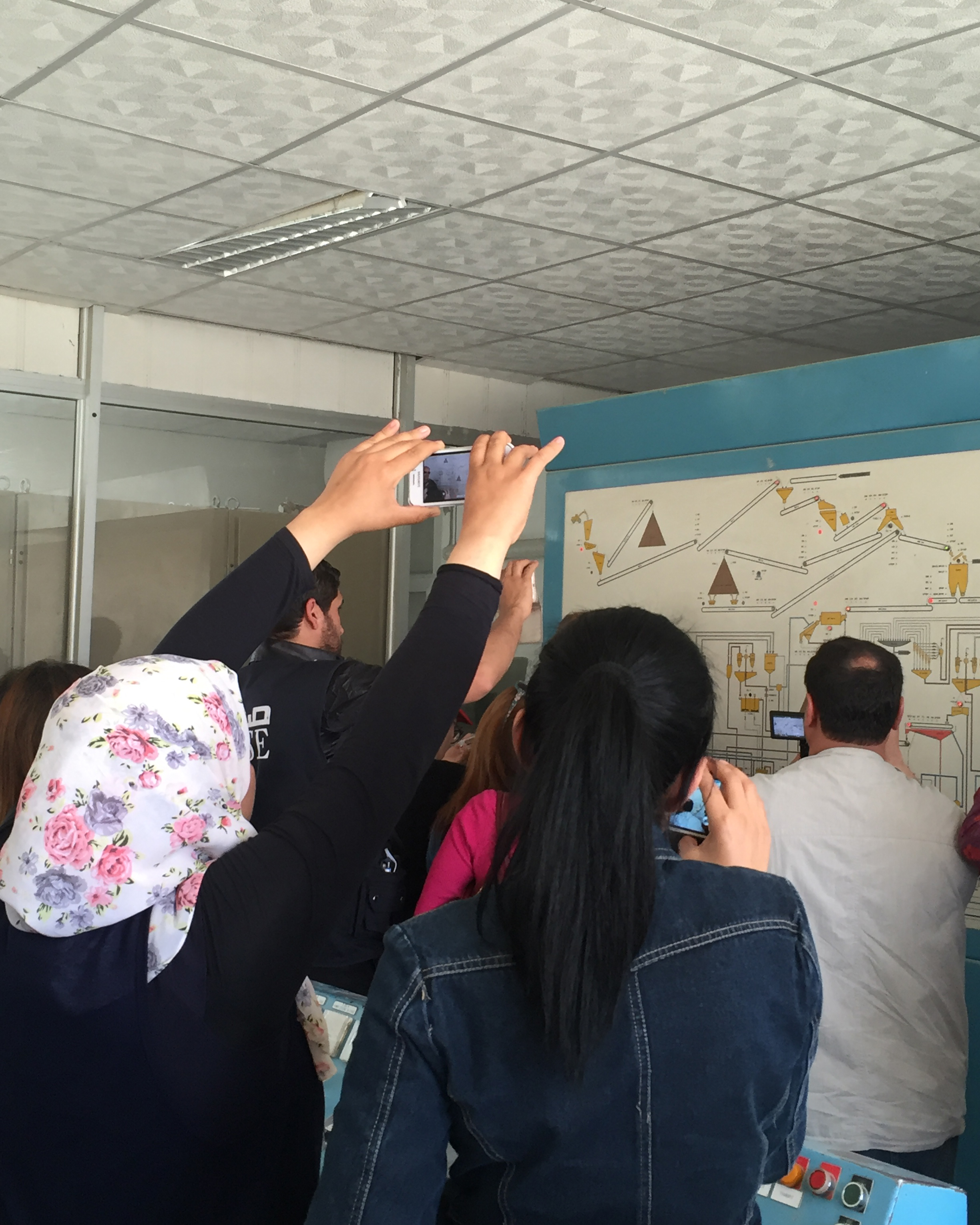
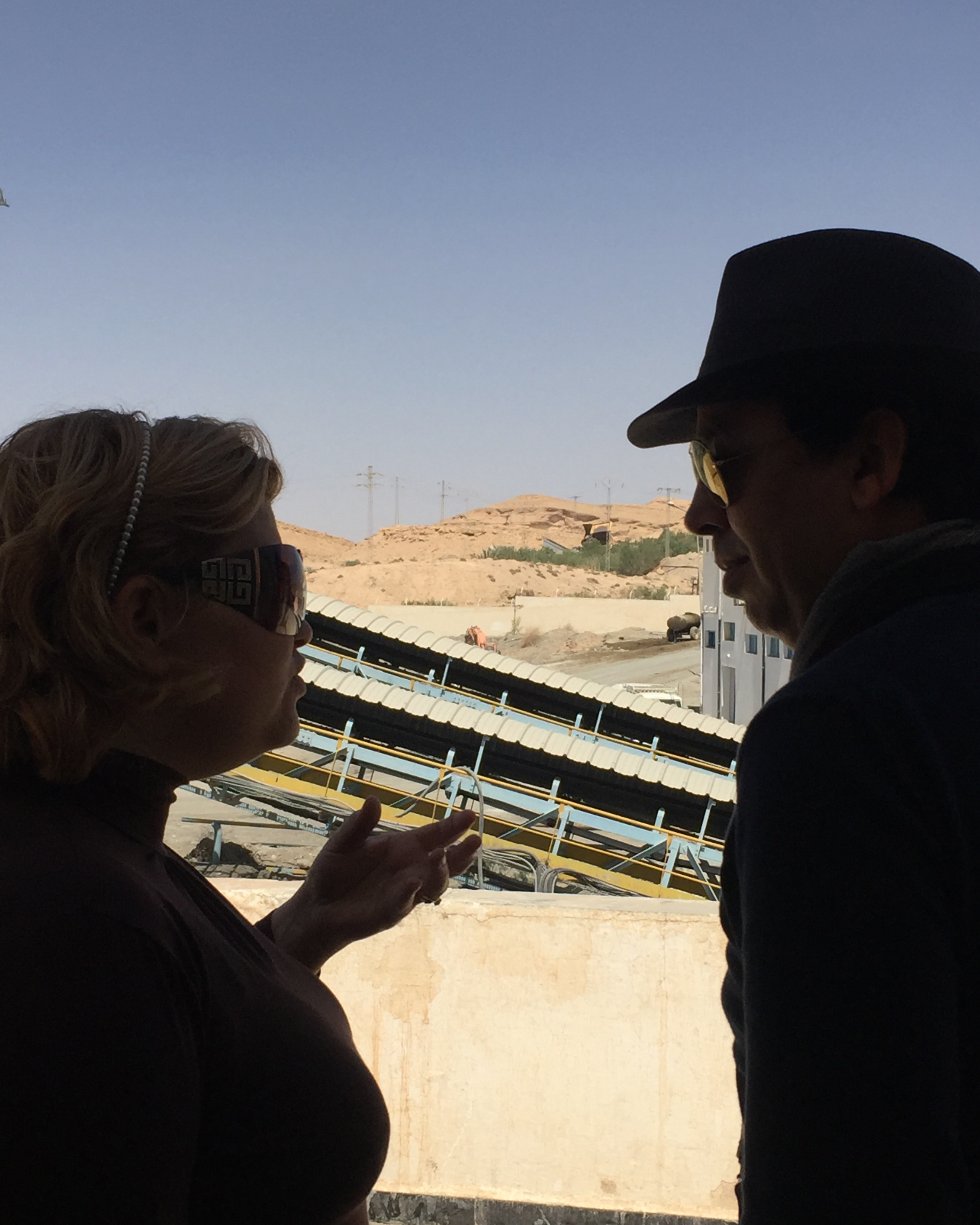
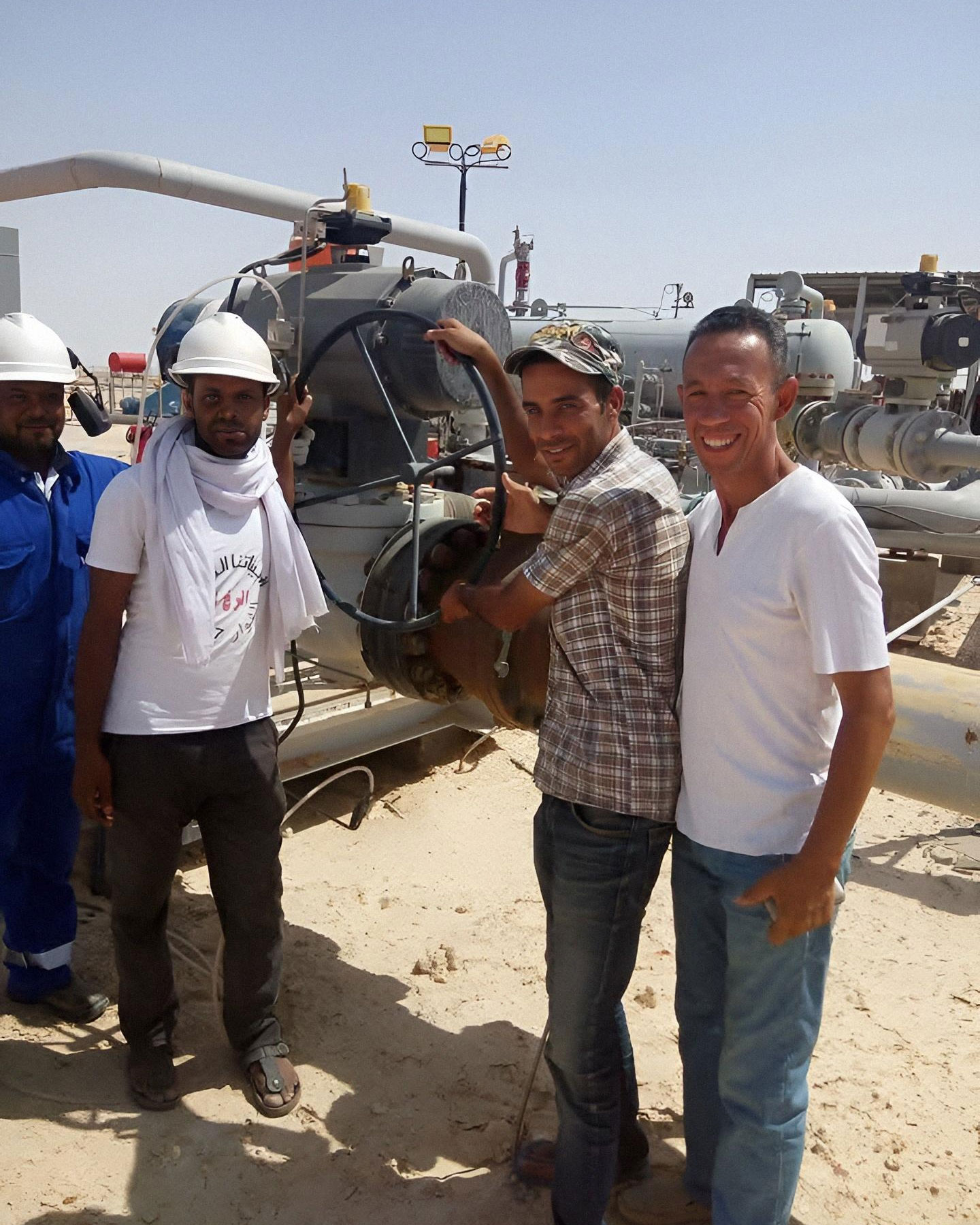
“If they keep deciding everything from the capital, they’ll never know what our people really need. We must be at the table, not outside the door.” Fatiha Amairi, activist from Tataouine
In Tataouine, after the 2017 El Kamour sit-in, the government promised 80 million TND annually and 4,500 local jobs in oil, environment, and plantation sectors. By 2020, only around 2,500 jobs had materialized, and key funding and hiring provisions stalled—sparking renewed protests, strikes and roadblocks around regional oil infrastructure.
Trust isn't a soft issue. It's the foundation that everything else rests on. Without it, even solar panels and wind farms can symbolize exclusion.
NRGI’s People-First Approach: Strengthening Capacity, Rebuilding Trust
Many projects focus on big goals and short timelines but miss the core that actually holds it all together: trust.
NRGI took a different path in Tunisia—by listening. In Tataouine and Kebili, that meant sitting with communities in familiar spaces: cafés, homes, tents, and not conference rooms. It meant speaking in Arabic, sometimes in local dialects, and taking the time to understand what people really wanted from the energy transition.
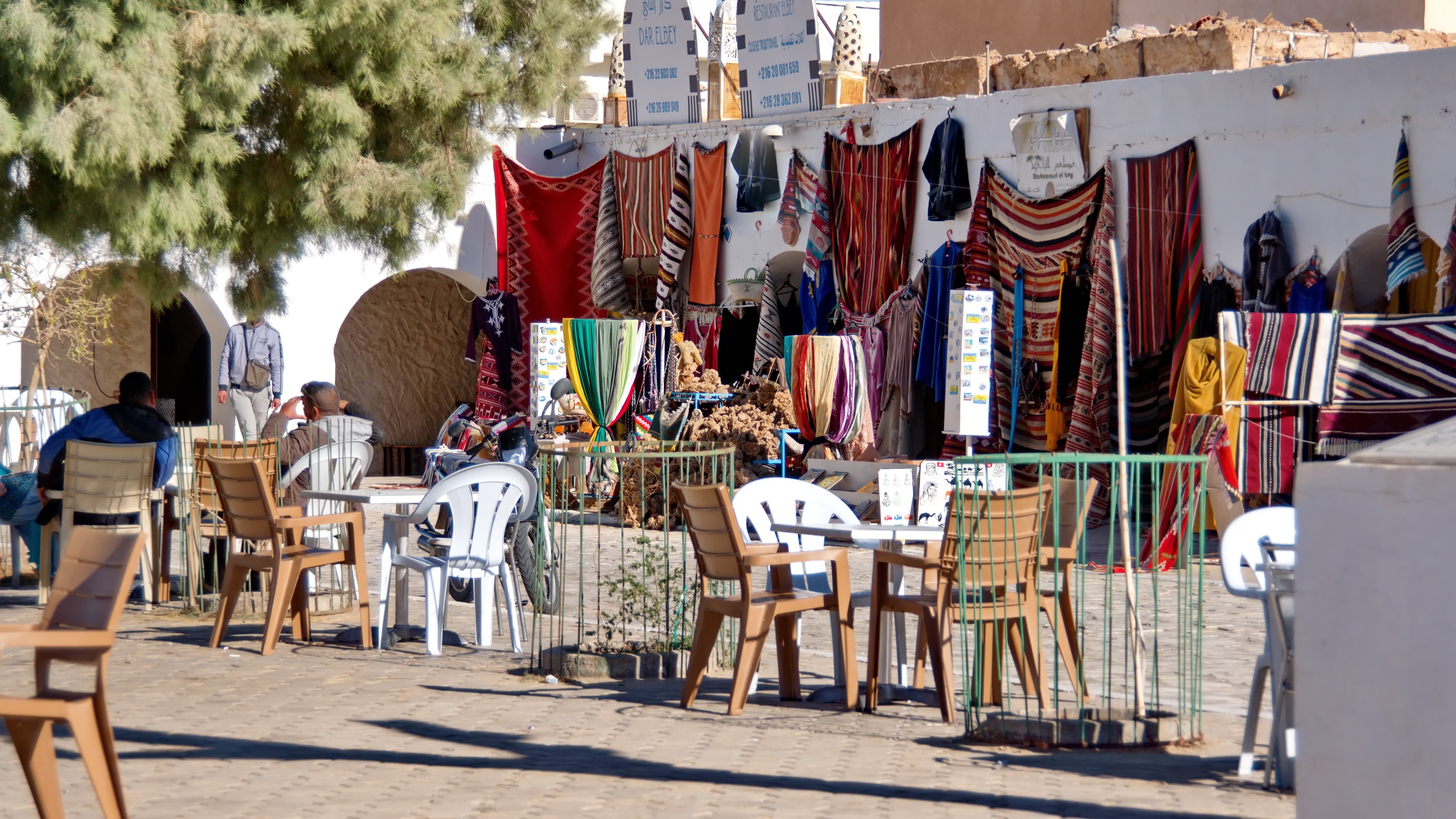
Building on that foundation, NRGI has supported civil society partners and local stakeholders to engage more confidently with authorities, better understand project timelines, and advocate for meaningful consultation, ensuring that communities are not only heard but also equipped to shape the decisions that affect them.
What we heard was clear. People weren’t asking for glossy transition plans. They want to know: “Will this create real jobs, or is it just another project on paper?” One local youth leader asked whether renewables would finally bring transparency—or simply repeat the same extractive logic. Farmers shared fears about solar projects taking over their land without consultation. Others spoke of the deep fatigue of being promised development without ever being part of the conversation.
“We don’t need another top-down plan. We need guarantees: jobs, justice, and a seat at the table.” Anouer Belhabib, activist from Kebili
Since 2020, we’ve taken a people-first and process-led approach: no pre-written agendas or imposed timelines. Instead, we co-designed each step with local actors, adapting language, formats and expectations.
At its core, this wasn’t just about participation. It was about restoring dignity to a process where people too often feel spoken about, but rarely spoken to.
The Shift: When Communities Lead
The change in Tataouine and Kebili didn’t happen overnight. It took three years of steady investment in local leadership through mentoring, technical training and ongoing collaboration.
Capacity development efforts were key—not just transferring technical knowledge, but equipping local actors with the tools, confidence and institutional know-how to engage as equals in governance processes. Whether analyzing budgets, navigating legal frameworks or speaking in policy forums, communities needed more than passion—they needed preparation.
When we began, more than 40 civil society organizations (CSOs) across Tataouine and Kebili were still emerging, fragmented and often reactive. Step by step, they grew into informed, coordinated actors who could analyze policies, interpret budgets, negotiate with ministries and speak with confidence in national spaces. Their transformation made them harder to ignore. The consistency of their engagement, combined with the credibility they built in locally, slowly shifted how government actors saw them. In some cases, ministries even reached out first—not out of obligation, but out of recognition.
Our support focused not just on technical skills, but on legitimacy:
- Providing safe, culturally appropriate spaces for women and youth
- Helping activists expand from protest, which remains vital, to constructive advocacy strategies that bring them into policy conversations
- Encouraging formats that communities trusted from tent meetings to café debates
Real change didn’t come from a single event. It grew from patient, persistent investment in local leadership. Today, these CSOs are no longer just calling for a seat at the table. They are proposing reforms, pushing for more equitable energy policies, and hold both local authorities and national energy institutions accountable, not from the margins, but as essential voices in Tunisia’s energy future.

Turning Point: When Dialogue Replaced Confrontation
Tunisia’s shift from protest to partnership is marked by key moments. In 2022, civil society groups sat with the Ministry of Energy to discuss reforming the Hydrocarbon Code—a topic long seen as off-limits. Just a few years earlier, such a meeting would have been marked by tension or simply dismissed altogether. But this time, there was no confrontation. Just dialogue — cautious, quiet, but real.
For the first time, civil society wasn’t outside the room demanding change—they were inside, helping shape it.
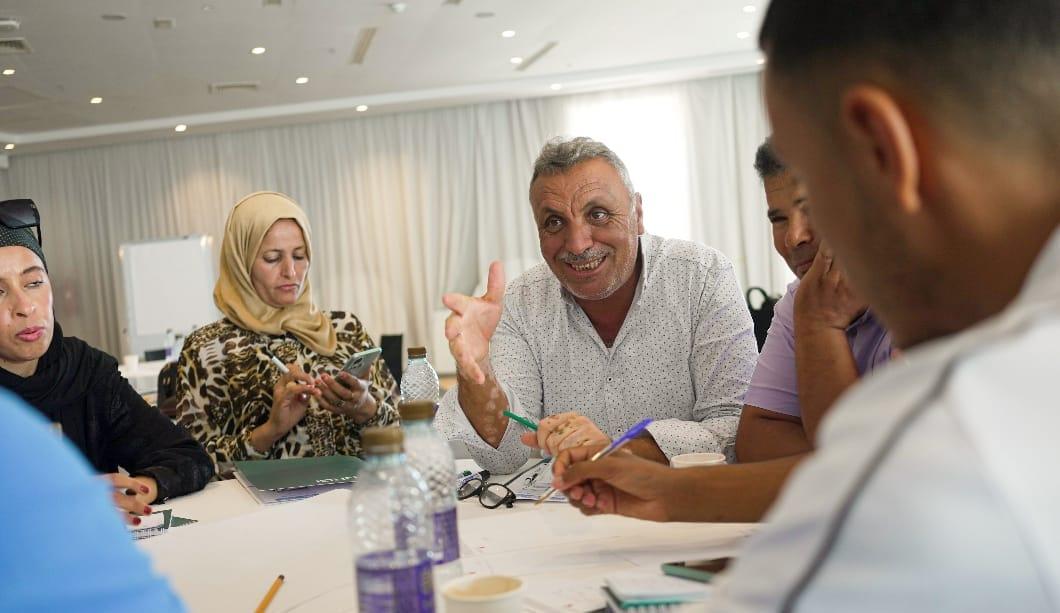
By 2025, that dialogue had deepened. During a national workshop on the energy transition, organized by NRGI, CSOs from Tataouine and Kebili sat across from senior government officials. In a context where such engagement is rare, the event stood out for its openness, mutual respect and what it revealed: civil society had become a credible actor and trust was starting to replace tension.
Beyond Tunisia: Why This Story Matters Everywhere
Tataouine and Kebili might not headline global energy summits. But they reflect a truth that resonates far beyond Tunisia: transitions fail when people are treated as obstacles rather than partners.
All over the world, communities in resource-rich regions are asking to be more than just hosts to infrastructure. They want a voice in how their resources are managed and how benefits are shared.
If we want the energy transition to succeed—and to be just, not just fast—we need more than solar panels and updated policies. We need trust. We need legitimacy. And we need to build both with the people whose lives and lands are most affected.
That’s the real work.
Building trust isn’t just about good intentions. It takes investment—in time, in relationships and in capacity. Around the world, communities most affected by extractive projects or energy reforms are too often under-resourced to engage effectively in decisions. If we want just transitions, we need to fund not just infrastructure, but people—to ensure communities have the knowledge, tools and institutional muscle to co-lead the future of energy.
A Just Transition Starts by Slowing Down and Listening
It’s easy to talk about megawatts, investment flows and net-zero targets. But if we skip people—ignoring their knowledge, their fears, their hopes—we miss the point.
A truly just transition isn’t about who builds what, it’s about who gets to decide.
- For policymakers: Slow down. Make space. Legitimacy isn’t a given—it’s earned.
- For donors: Fund the process, not just the outcome. Trust-building takes time.
- For civil society: Keep centering the voices that have been pushed to the margins. That’s where real leadership is growing.
Tataouine and Kebili remind us: when communities move from the sidelines into real decision-making roles, transitions gain not just momentum but meaning.
Amid global challenges and the need for strong governance: JETP as a potential driver of Senegal’s energy transition

Key messages
- In an uncertain global context and facing urgent challenges in electricity access, the deployment of the Just Energy Transition Partnership (JETP) offers Senegal a unique opportunity to build a clear and coherent public policy for its energy transition.
- To meet these challenges and succeed in its energy transition, Senegal must establish a robust, inclusive, and cross-sector governance framework to guide the JETP’s deployment.
- This governance effort should be supported by effective public communication that reaches the most affected communities, providing the initiative with visibility and legitimacy.
- Repositioned strategic coordination, backed by strengthened interministerial leadership and an expanded, sustained steering committee (COPIL), is essential for an effective and inclusive energy transition.
With more than 4 million Senegalese still lacking electricity, Senegal now needs to secure transition financing, alongside the revenues it earns from hydrocarbon exploitation, so that it can convert its energy potential into an engine for inclusive development and social justice. The Just Energy Transition Partnership (JETP) is key to this. Signed in June 2023 for an initial period of 3–5 years, it is part of a partnership intended to increase access to electricity and clean up the energy mix by increasing the share of renewable energy to 40% by 2030, with a view to large-scale renewables deployment over the long term.
The Senegalese government is committed to the JETP and actively working to develop its investment plan, in spite of unfavourable global dynamics, notably including the withdrawal of the United States from the Paris Agreement and from JETPs entered into with Indonesia, South Africa and Vietnam. In this context, greater vigilance is needed around a crucial but often overlooked factor: governance.
Good governance requires that decision-making and implementation processes are based on key principles such as participation, consensus, transparency, accountability, responsiveness, effectiveness, efficiency, equity, inclusion and human rights.
Experience from extractive projects in Senegal and West Africa shows that a lack of transparency and participation can undermine the social legitimacy of public policies in a lasting way. Ignoring these governance principles when implementing the JETP risks repeating past mistakes: public opposition, poor resource allocation and capture of benefits by corrupt elites, resulting in profoundly unjust results for affected communities and workers. To live up to its ambitions and the local context, the JETP must be supported by strong, inclusive, and transparent governance structures that can ensure a fair and lasting impact.
This briefing sets out three priorities for Senegal to ensure that the JETP is truly just, effective and legitimate.
Forging a Fair Future: Energy Transition Minerals and the New Multilateralism
London, U.K.
As the global race for transition minerals intensifies, questions of equity, sustainability, and power are coming to the fore. These minerals are vital to clean energy technologies and the electrification of communities across the world—yet the markets, investments and politics shaping their extraction are increasingly volatile.
In the wake of the UN Secretary-General’s panel recommendations, and with upcoming G7 and UN climate processes set to define the future governance of these resources, this event explores how multilateralism can help chart a just path forward. Can international cooperation protect communities, the climate, and the global commons from resource grabs and environmental harm?
Organised by Global Witness and featuring speakers including Amir Shafaie from NRGI, this event examined the role of governments, civil society and industry in building a new global order around transition minerals—one that puts people and planet first.
This event was part of London Climate Action Week 2025. To learn more about NRGI’s activities and events during London Climate Action Week, visit our dedicated page.
Featuring NRGI's
Amir Shafaie
Legal and Economic Programs Director
Tackling Methane and Advancing Just Transition in Africa: Insights from Nigeria and Senegal

The world is moving fast to tackle climate change, and reducing methane emissions is emerging as one of the most affordable ways to make a difference. But what does this mean for Africa, where many countries still strive to expand gas usage to improve energy access and grow their economies?
In this interview, two NRGI colleagues share their perspectives on methane governance and its crucial link to Africa's energy transition. Tengi George-Ikoli, senior officer for Nigeria, explains why cutting methane emissions is as much about development and just transition as it is about climate. Aida Diop, senior program officer for Senegal, reflects on the opportunities and trade-offs facing a new oil and gas producer like Senegal.
Why should African countries prioritize methane reduction—and how does this link to a just energy transition?
Tengi George-Ikoli: As the world intensifies efforts to move to cleaner energy sources, many African countries still see natural gas as a temporary solution to reduce energy poverty and grow their economies. But using gas comes with trade-offs, especially methane. It is a harmful greenhouse gas that often leaks during oil and gas operations, and it is worse for the climate than carbon dioxide in the short term.
African oil and gas producers must act to reduce these emissions. Otherwise, they might undermine their climate goals and slow the shift to cleaner energy. But this is not just a climate issue. Reducing methane also helps improve public health and supports environmental justice for oil and gas communities.
There is also a development angle. Instead of wasting this gas, countries can capture it to improve energy access, including clean cooking. That means more access for the over 600 million Africans who still lack electricity. Economically, it makes sense as well because recovered gas can create new revenue, freeing up resources for broader development goals.
So, really, methane reduction is a win-win situation. It helps African countries meet climate goals while advancing equity, inclusion and sustainable development —core pillars of a just energy transition.
Given how central gas is to Senegal's energy plans, what trade-offs do methane emissions pose to achieving the country's just transition goals?
Aida Diop: As Tengi said, methane can become a climate risk, especially for a new oil and gas producer like Senegal, if the government does not act decisively. Early production activity has already raised red flags such as reported gas leaks in the Grand Tortue Ahmeyim (GTA)—a cross-border offshore gas project between Mauritania and Senegal. Also, Senegal currently lacks specific regulations on methane emissions. The current Nationally Determined Contribution (NDC) and the new Environmental Code do not include dedicated provisions on methane, even though emissions from the energy sector alone account for 48 percent of the country's total greenhouse gas emissions. That shows the government needs to act fast.
Fortunately, Senegal is still early in its oil and gas journey. It can learn from the experiences of countries like Nigeria—one of Africa's largest oil and gas producers—where methane emissions have caused serious public health issues, air pollution, mistrust in energy projects among affected communities, and missed economic opportunities. The International Energy Agency (IEA) estimates that in 2023, Nigeria could have generated about $350 million in revenues from methane reduction by selling recovered gas while needing to spend an average of only $240 million per year in abatement efforts.
Senegal does not have to go down that road. Instead, it can set up strong rules tailored to its national realities to monitor and manage methane from the start, with strong enforcement and civil society participation. The country's commitment to the Just Energy Transition Partnership (JETP) and the goal to reach a 40 percent renewable energy mix by 2030 has already put it on solid footing.
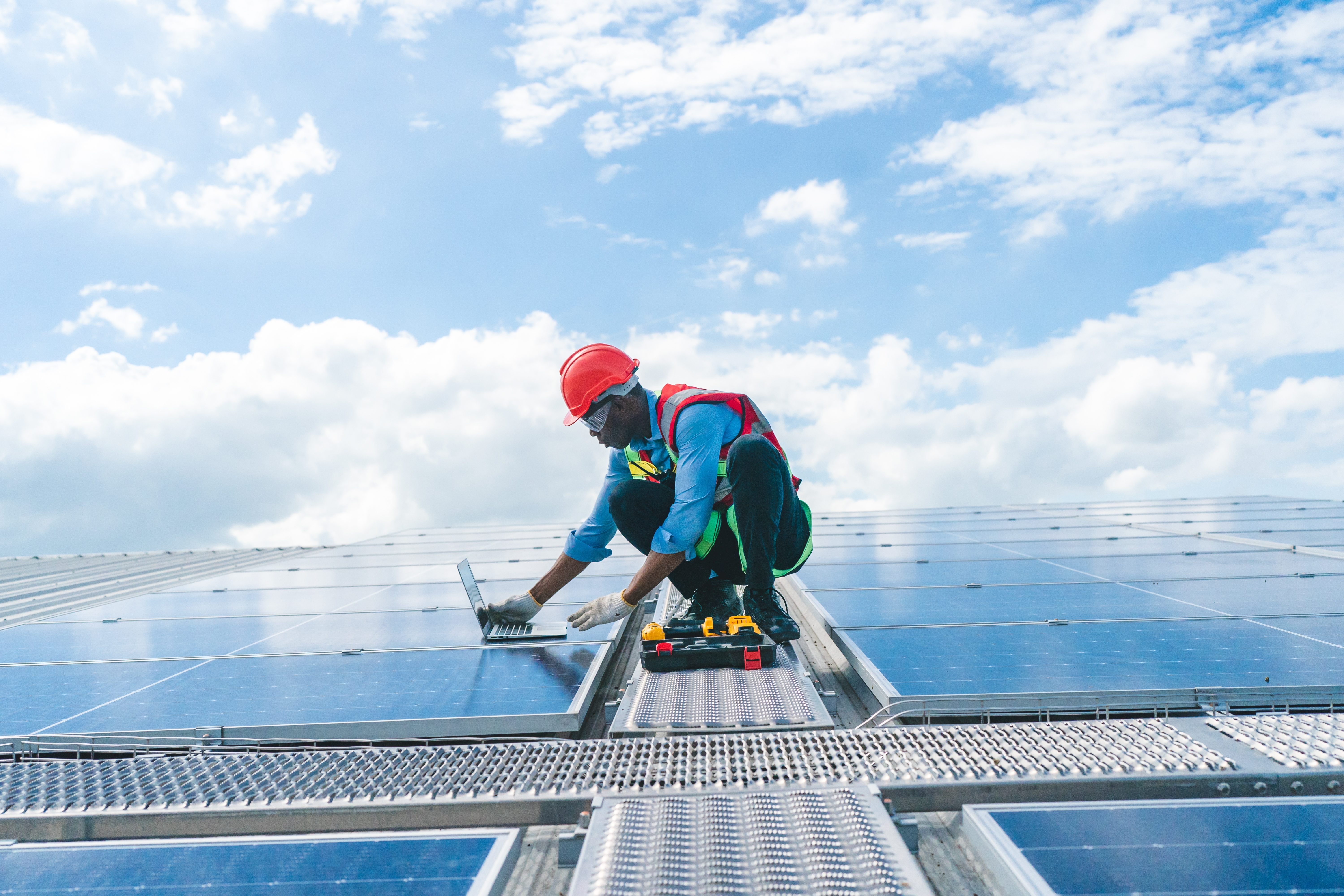
If Senegal prioritizes methane reduction now, it can capture more economic benefits from its gas production by avoiding waste, protecting livelihoods and the environment, and extending electricity access to the over 4 million rural Senegalese who still live without it. Cutting methane is central to delivering on the development promises of its gas strategy and balancing the climate, economic, and social goals of a just transition.
How can efforts to tackle methane in Nigeria unlock technological, financial or governance opportunities, and what challenges stand in the way?
TI: Tackling methane in Nigeria is an opportunity, but there are some challenges the government must fix first. Right now, the country is dealing with weak enforcement of existing regulations, inadequate emissions data, and limited technical capacity by operators. There are also limited incentives for companies to invest in solutions.
To make progress, the government must strengthen enforcement and invest in monitoring tools like satellites, real-time detection systems, and public methane data platforms to build transparency and accountability. Training is key as well. Both government agencies and companies must improve their capacity to detect, report, and manage methane. Most importantly, the government must tie these efforts with its development goals and its nationally determined contribution (NDC) plan, which outlines how Nigeria aims to achieve its climate goals.
The good news is that getting this right can enhance environmental governance. It also encourages interagency collaboration and coordination, especially with the National Council on Climate Change (NCCC), which is mandated to drive Nigeria's climate action and energy transition. It provides an opportunity to strengthen public trust, particularly if oil-producing communities start to see the benefits.
On the technology side, methane reduction tools like drones, infrared cameras, hand-held devices, and satellite-based tools are evolving. Nigeria can bring in some of these technologies and build on what it already has, like the gas flare tracker.
And then, there is the financial aspect. Reducing methane can bring in climate finance and help Nigeria join the global carbon markets. Capturing and commercializing methane that companies usually flare or leak can generate revenue and reduce waste. Showing progress can also help unlock concessional funding and investment from global initiatives, donors, development banks and climate-focused investors like the Climate and Clean Air Coalition (CCAC) and Global Methane Pledge.
What practical steps can African governments take to lead on both energy transition and methane governance?
TI: There are a few things governments can do right now. On the methane front, Africa can lead by including methane reduction targets in their Nationally Determined Contributions (NDCs). That sends a strong signal and keeps everyone accountable. Countries must also regularly update their methane plans with clear timelines and clearly defined roles so everyone knows who is doing what and by when.
Next, governments must strengthen methane laws, require oil and gas companies to find and fix leaks and use better technologies to reduce methane waste. Regional collaboration is another opportunity. Methane does not respect borders, and neither should our response. And we need to put people at the center of these efforts. That means ensuring communities, especially those living near oil and gas infrastructure, benefit from methane reduction efforts, whether through cleaner air, better health, or access to energy.
AD: From the energy transition side, governments need strong legal and regulatory frameworks, and realistic plans that reflect their development goals. They must create the right conditions for clean energy investment, reform outdated subsidies that support fossil fuels, and prioritize projects that deliver affordable, reliable, and sustainable energy to their people. For Senegal, this must include the promotion of transparency, especially encouraging operators to disclose their methane emissions in line with EITI standards and beyond, as well as ensuring the national oil company, PETROSEN, signs the decarbonization charter and joins the Oil and Gas Methane Partnership (OGMP). As Tengi noted, working together across borders is key here as well, especially on infrastructure, technologies and resource management.
African countries need to better connect their methane and energy transition strategies. That is a way to show that climate action and development can go hand-in-hand. Acting early on both fronts will build credibility, attract funding, ensure innovation, and deliver concrete benefits to African communities.
Looking for more insights on methane reduction?
Can Gas Bring Electricity to More Africans? Look to the Evidence, Not Partisan Politics

The 2020s are meant to be the decade when Africa achieves universal electricity access. This is according to UN Sustainable Development Goal 7 and the energy plans of many countries. Yet halfway through, divisive political agendas are threatening progress, not least as they influence how public funds are spent.
The Trump government, with its deep hostility to renewables and foreign aid, has already dismantled U.S. programs and institutions that brought electricity to African households and businesses. Funding for the African Development Bank and Just Energy Transition Partnerships, both of which bankrolled clean electrification projects on the continent, has also been eliminated. The EU meanwhile remains broadly supportive of Africa’s energy ambitions, yet member countries are slashing their aid budgets in response to fractious domestic disputes over defense and energy security.
These setbacks come as efforts to reach the roughly 600 million Africans living without electricity are already underfunded. Estimated price tags have run as high as 53 billion a year, yet actual investment is rarely a tenth of that.
Electricity access has become a polarizing topic within Africa itself, not least because of arguments over the proper role of fossil fuels, gas especially. For years, a vocal contingent—led by politicians, think tanks and private foundations—has claimed that if African countries stop extracting and burning gas, millions of people will go without electricity service.
Desires to harness Africa’s gas for energy are understandable. Many countries have huge unmet needs, gas reserves remain mostly untapped, and leaders are angry about wealthy nations’ hypocrisy and double standards around the energy transition.
Yet gas’s ability to deliver electricity to more Africans should not be taken on faith. The third module of NRGI’s Gas-to-Power Framework—out now—interrogates the claim that investing more in gas power will allow countries to achieve universal electricity access. It offers considerations and questions for assessing when countries should use gas or other options like solar or wind to reach people living without electricity. The framework lays out the latest thinking in a balanced way, to support readers in their own analysis, decision-making and advocacy.
The data tells a more nuanced story than most political rhetoric around gas. It shows that gas is currently the top fuel for power generation in Africa and has contributed meaningfully to electricity access. Several gas producing countries—Mozambique, Cote d’Ivoire and Tanzania, for instance—each delivered power to millions of people over the last two decades. African fossil fuel producers also tend to have higher electricity access rates than non-producers.
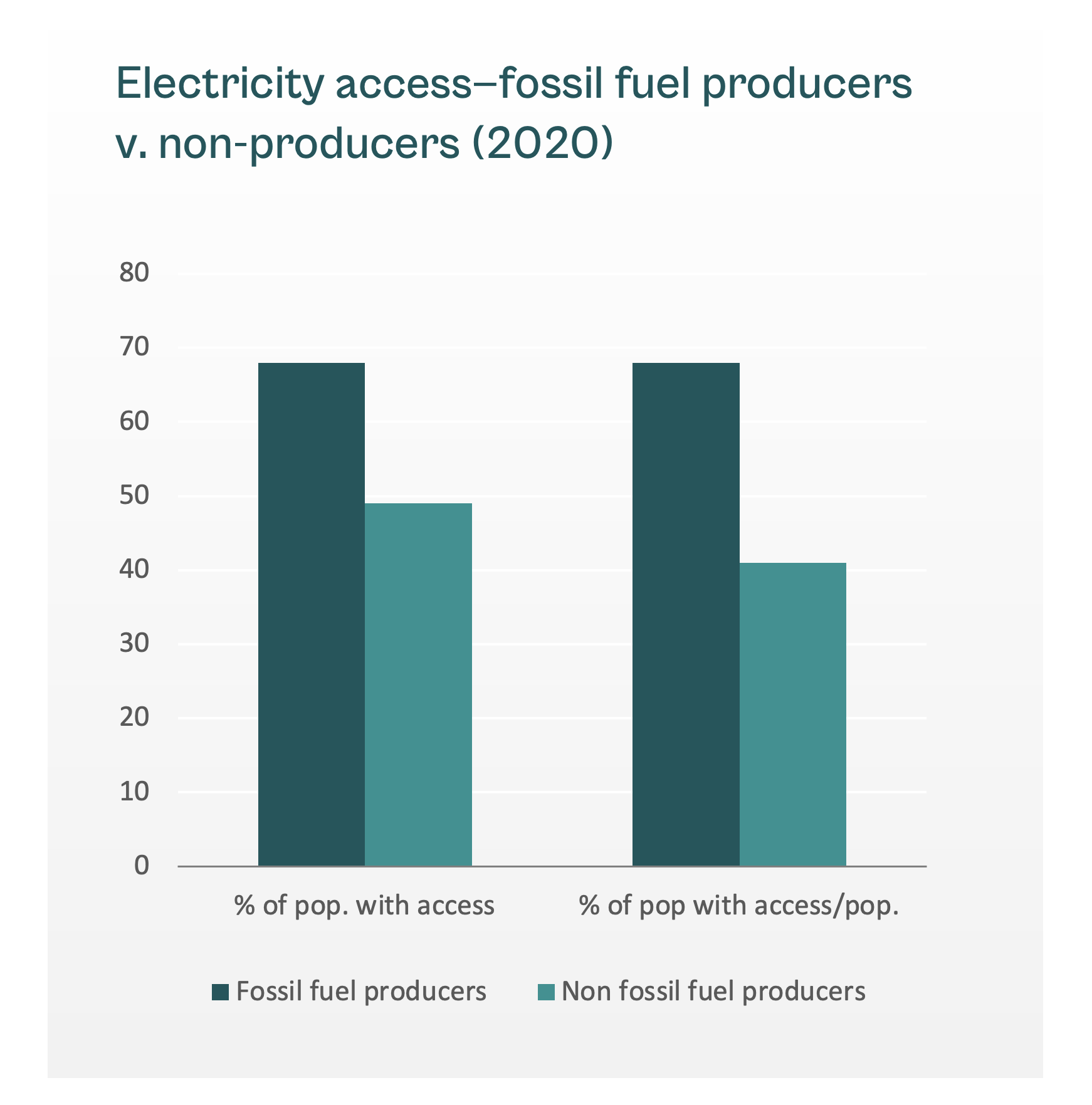
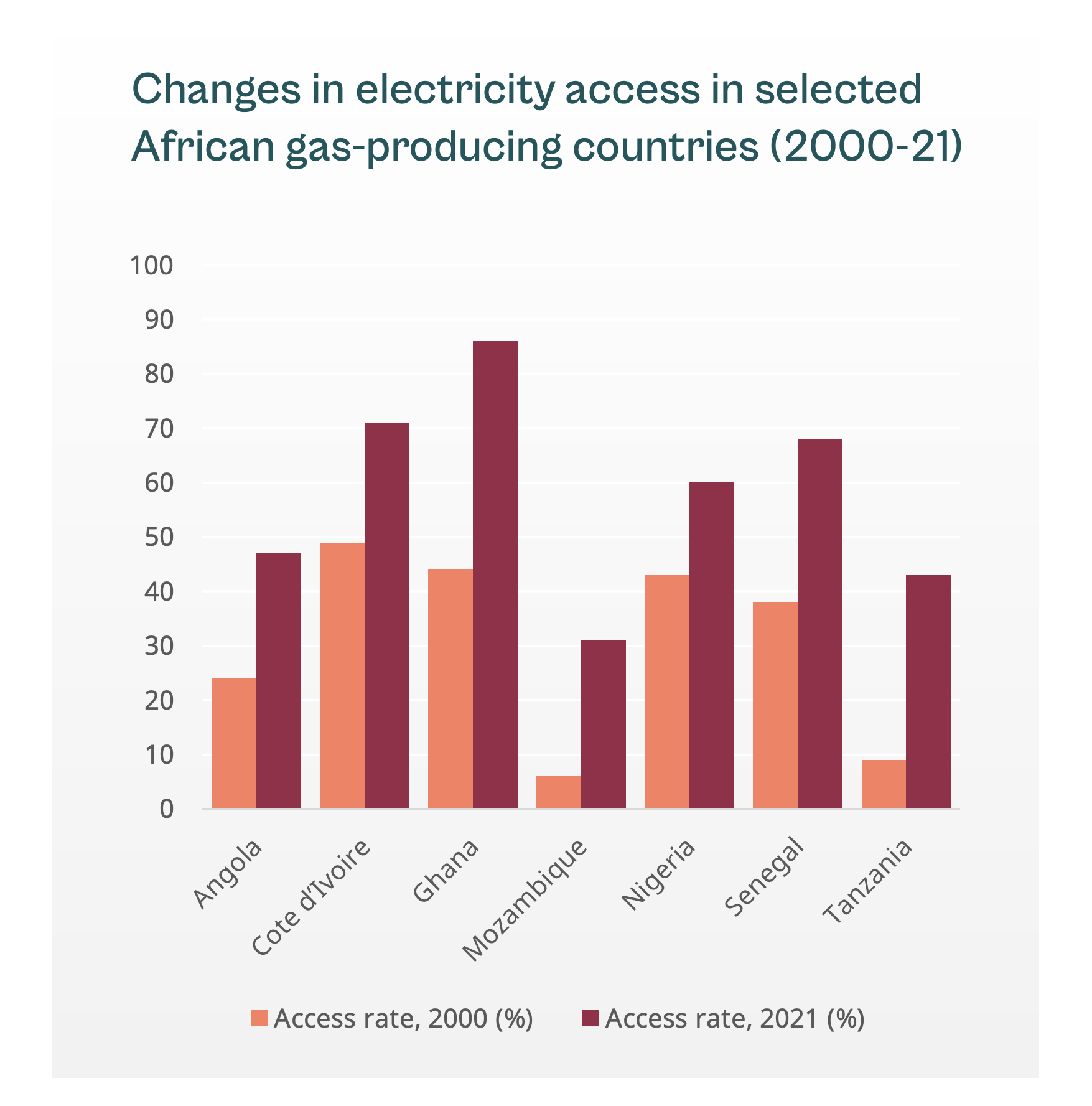
In at least some of these same countries, access rates rose along with the use of gas for power, suggesting that significant numbers of new users owe their service to gas.
Looking ahead, gas power will deliver electricity to at least some new African customers. Producers like Ghana, Senegal and Nigeria will connect more households and businesses to gas power for technical or commercial reasons, or because gas already dominates their energy mixes.
Ultimately, however, the data shows that gas has limited potential to address Africa’s unmet electricity needs. Almost none of the countries where access improved the most over the 2010s relied on gas power plants. And for nearly all the 20 countries with the largest remaining unserved populations, gas power is simply not a viable option, whether due to lack of production, infrastructure or investment.
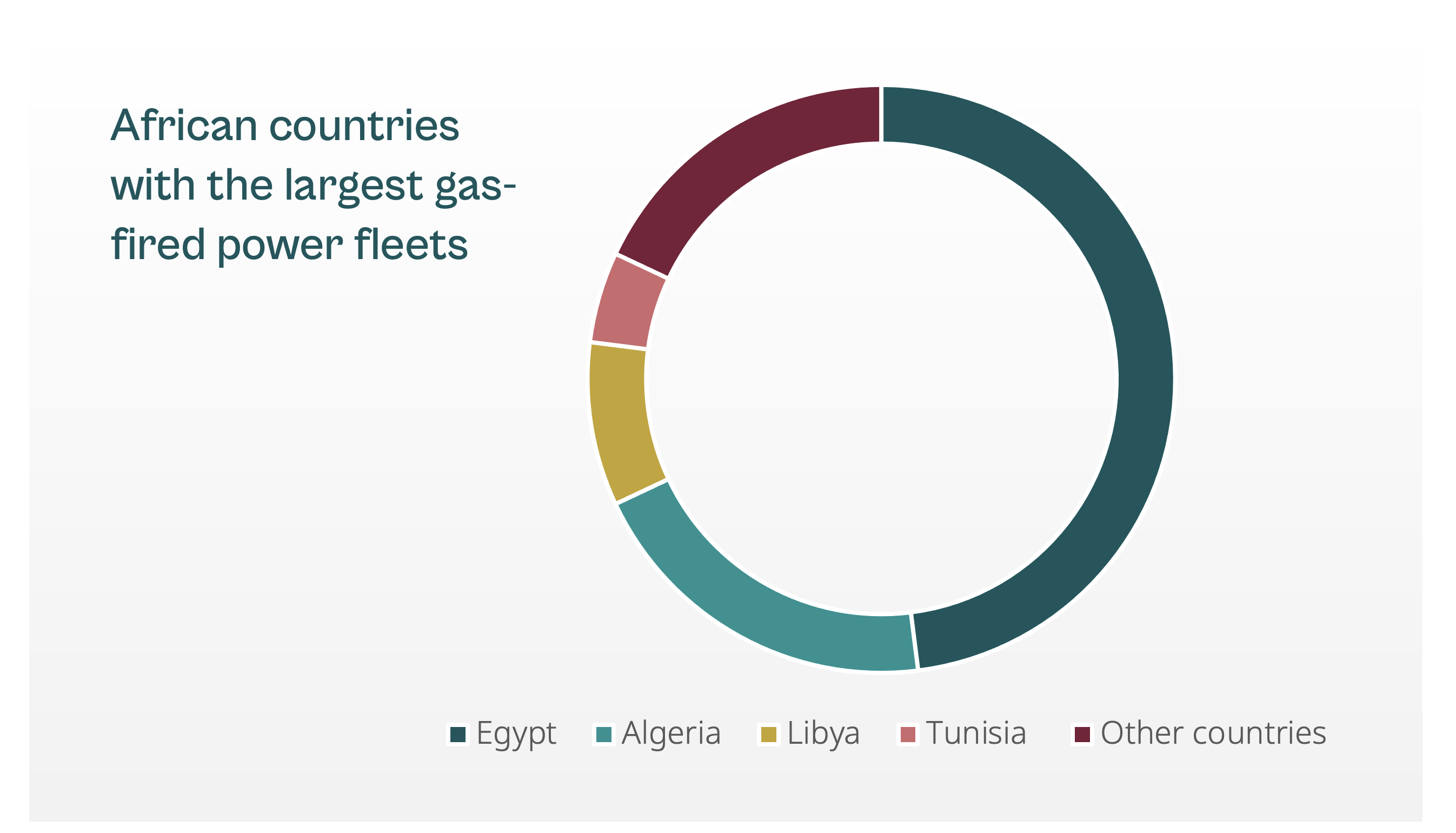
Instead, the use of gas for electricity will remain heavily concentrated in four North African countries which already have universal access.
And worldwide, gas will mainly serve the needs and aspirations of the wealthy. Between 2013 and 2022, ten mostly high-income countries added 325 gigawatts of gas power to their grids. The whole of Sub-Saharan Africa added just seven. The U.S. alone is planning to build three dozen new gas power plants, By contrast, Sub-Saharan Africa secured funding for just two in recent years.
Given these limitations, African countries with access challenges should fully consider alternatives. As technologies for improving electricity access, solar and wind have some clear advantages, which our new module surveys. For years, solar power in Africa has been growing several times faster than gas (left graphic) in a much higher number of countries (right graphic).
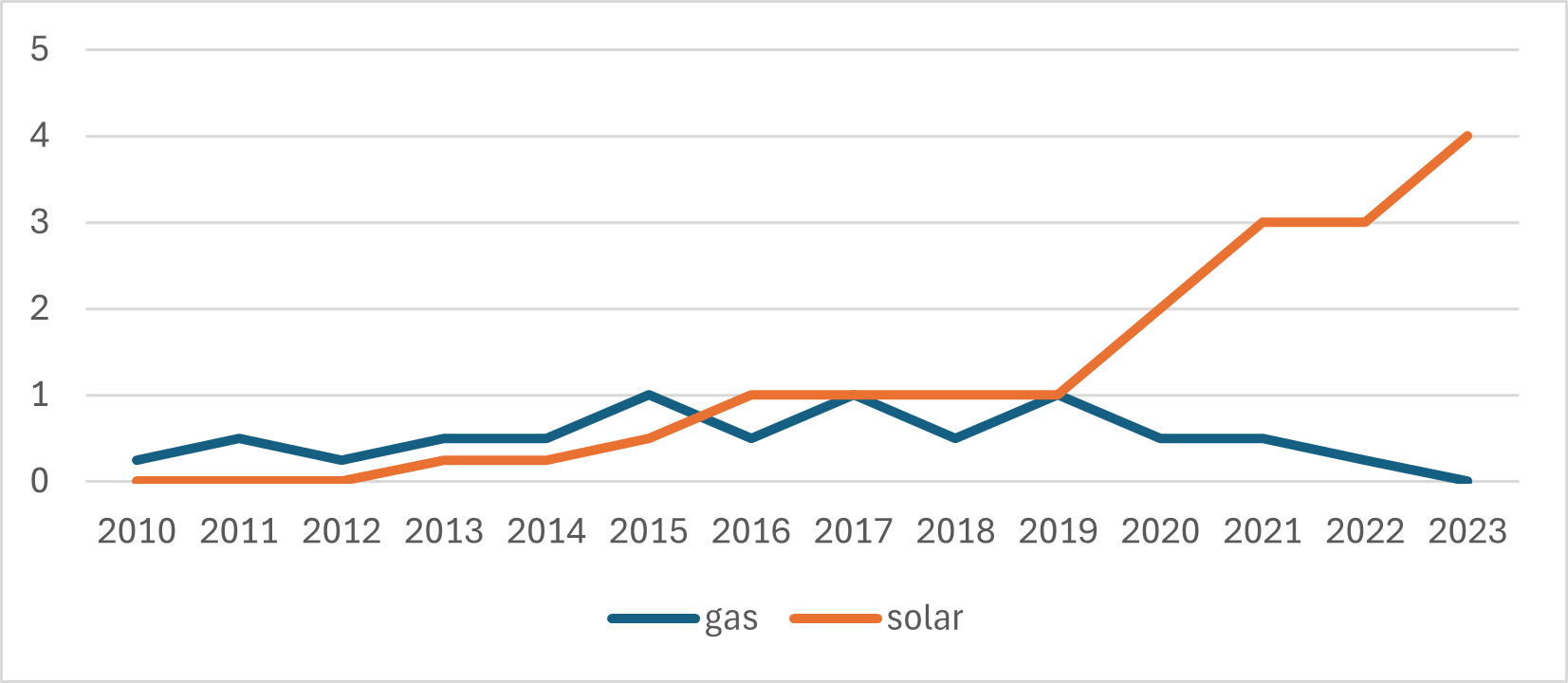
Source: Author calculations based on Bloomberg, GEM and IEA data
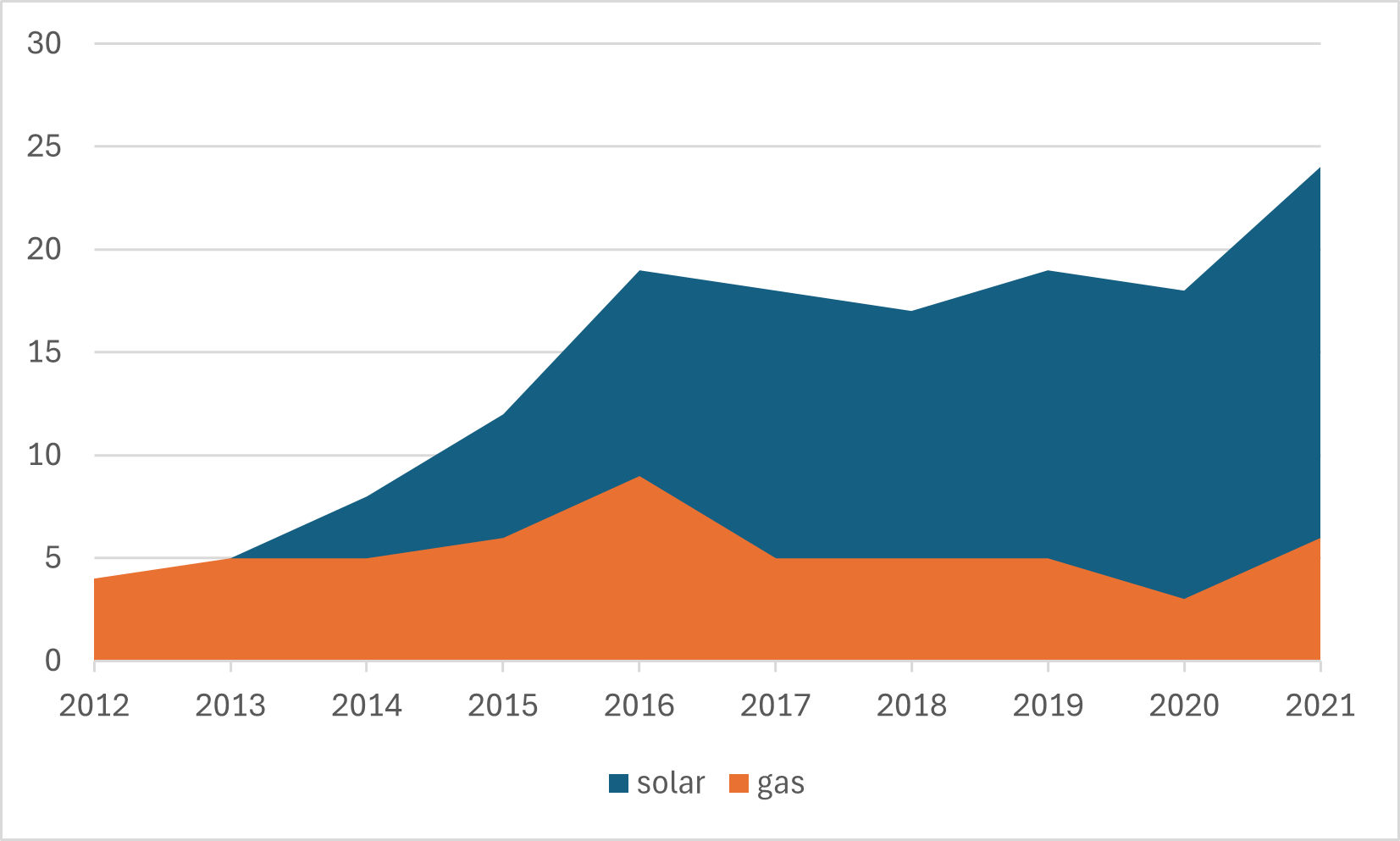
Source: Author calculations based on Bloomberg and GEM data
By 2030, the average costs of solar PV and wind power are predicted to fall below that of electricity made from gas in many countries. At the same time, the rapid scale-up of renewables on the continent remains challenging, and for low-income customers especially. A lack of quality components, economies of scale and affordable financing options are among the main barriers to growth.
Today, many of the arguments touting gas or renewables for universal access are based on sweeping, emotive claims that reflect the biases and personal interests of the speaker. These include powerful state-owned enterprises and fossil fuel giants like Eni, Total or BP, who mainly want to profit by exporting Africa’s gas to wealthy countries. But the real work of electrification isn’t ideological. It is painstaking and technical.
To keep expanding the well-known benefits of electricity access, policymakers and development partners need to zoom into the details. Real-world choices between on- and off-grid solutions, or between gas or renewable fuels, are highly context specific, requiring careful consultation, analysis, modeling and policy support. In particular, decision-makers must address thorny issues of affordability and reliability, since lower-income customers may be unable or unwilling to pay for expensive, patchy service.
Electricity access work also requires stable financial support over years. It isn’t something funders can dip in and out of as the political winds shift. Now that the U.S. and Europe are retreating, foundations, development banks and other partners need to step into the gaps. Because even in this challenging time, good things are happening. During the 2010s, the number of people living without electricity dropped by almost halfand individual countries are still making progress. New funding initiatives are also springing up—the AfDB- and World Bank-led Mission 300, for example.
Vulnerable African households, businesses, schools and health centers should not be used as pawns in overheated, zero-sum fights about the future of fossil fuels. The stories told about Africa’s electricity systems must reflect people’s lived realities, in all their complexity, struggle, and aspiration. Our new gas framework module describes the kind of hard work that is needed to achieve that.
Powering Change: People-Centred Energy Transitions in Resource-Rich Countries
Webinar

The shift to clean energy is not just about economies or technologies; it’s about people. Around the world, countries rich in oil, gas, and minerals face a pivotal moment: how to drive energy transitions that are not only low carbon, but also fair, inclusive and grounded in the realities of those most affected.
This one-hour webinar—held on Energy Day at London Climate Action Week (LCAW)—brought together speakers from leading international organisations that are actively shaping people-centred approaches to just transitions. Timed alongside negotiations on the UNFCCC Just Transition Work Programme in Bonn and with COP30 in Belém on the horizon, the event aims to centre justice, dialogue, and inclusive development in global energy transition discussions. As part of the LCAW programme, it was also an opportunity to build momentum, keep the conversation going and engage a broad, influential audience in the lead-up to COP30.
This webinar is part of a series hosted by NRGI in the lead-up to COP30, focusing on key issues related to just transitions in resource-rich settings. The series builds on the findings of our recent publication, People-Powered Energy Transitions in Resource-Rich Countries, which highlights practical steps governments and international actors can take to centre people in transition planning and implementation.
As part of the LCAW programme, this session offered a timely opportunity to build momentum, keep the conversation going, and engage a broad, influential audience on the road to COP30.
Speakers
- Ana Carolina González Espinosa, Natural Resource Governance Institute (NRGI)
- Matthieu Prin, International Energy Agency (IEA)
- Shashwat Koirala, OECD Development Co-operation Directorate
- Catalina Cecchi, Center for Climate and Energy Solutions
This event was part of London Climate Action Week 2025. To learn more about NRGI’s activities and events during London Climate Action Week, visit our dedicated page.
Transitions that work for people
Explore how to shape energy futures rooted in equity and inclusion.
Featuring NRGI's

Ana Carolina González Espinosa
Senior Director for Programs and Latin America Director