
Reimagining Multilateral Cooperation in an Era of Climate Crisis

Few issues capture both the promise and peril of collective action more vividly than climate change and environmental governance. For Africa, this is not a theoretical exercise; it is about people's lives, livelihoods, and the very survival of our ecosystems.
Why global cooperation is weakening
The decline in international cooperation stems from three interrelated forces. First, we are witnessing the re-nationalization of politics and finance. Successive crises, the COVID-19 pandemic, conflict, and global economic volatility, have driven many nations inward. Fiscal tightening across Organisation for Economic Co-operation and Development (OECD) countries has reduced climate finance and official development assistance. The $100 billion annual climate finance target set in Copenhagen remains unmet, and Africa's adaptation finance gap continues to widen.
Second, we face growing geopolitical fragmentation. Rivalries among major powers have weakened consensus within global forums such as the United Nations Framework Convention on Climate Change (UNFCCC) and the G20. Rather than shared responsibility, we now see competition, resource nationalism, trade protectionism, and securitized approaches to energy and minerals policy.
Third, the inequities in the global financial architecture have deepened. For many African countries, debt servicing now exceeds spending on climate adaptation. Access to concessional finance is slow, risk-averse, and conditional. As NRGI's research shows, these structural barriers perpetuate dependency and limit resource-rich African states' ability to mobilize domestic revenues for their own transitions.
Together, these trends reinforce a vicious cycle: as cooperation weakens, progress slows; as progress slows, trust erodes; and as trust erodes, cooperation collapses.
How is this erosion affecting Africa?
- Weakening Africa's capacity to manage climate and environmental security risks. Africa is warming faster than any other region. Intensifying floods, droughts, and heatwaves are displacing communities, disrupting agriculture, and exacerbating competition over land and water. Yet weak governance of natural resource revenues and fragmented fiscal systems constrain African governments' ability to invest in adaptation and resilience. NRGI's work in the DRC, Ghana, and Senegal shows that declining cooperation has meant less predictable financing, fewer regional environmental programs, and slower access to early-warning technologies. The security implications are profound: in fragile contexts like the Sahel, environmental degradation amplifies existing instability.
- Undermining the implementation of regional and global climate agreements. Africa's commitments under the Paris Agreement and the Africa Union Climate Change Strategy depend heavily on finance, technology transfer, and trust. But the erosion of multilateralism has slowed delivery and undermined credibility. NRGI's analyses of the Just Energy Transition Partnerships (JETP) in South Africa and Senegal reveal that, while these frameworks hold promise, they often reflect donor-driven priorities, opaque decision-making, and weak domestic coordination. Without stronger governance, citizen participation, and accountability, even well-intentioned cooperation risks reproducing old inequities.
Limiting Africa's renewable energy transition and access to green technologies.
Africa lies at the heart of the world's energy transition. The continent holds nearly 30 percent of global reserves of critical minerals, including cobalt, lithium, graphite, and manganese, essential to renewable energy technologies.The International Energy Agency estimates that Africa needs about $200 billion annually by 2030 to achieve universal energy access and align with net-zero goals. Yet current investments amount to less than a tenth of that. Most clean-energy financing goes to a few middle-income economies, leaving low-income, resource-dependent states locked in fossil pathways. Yet, as NRGI's research warns, the global race for these resources risks repeating the extractive patterns of the past. The Democratic Republic of the Congo, which produces over 70 percent of the world's cobalt, sees little local processing or value addition. Meanwhile, Africa as a whole has attracted only two percent of global renewable energy investments since 2000, according to the International Renewable Energy Agency IRENA.
Without fair partnerships, technology transfer, and strong governance, Africa could remain trapped at the bottom of global value chains, exporting raw materials and importing finished technologies at a premium.
Intersecting vulnerabilities: gender, youth, and climate-induced mobility
The decline in cooperation also magnifies inequalities. Women, who dominate smallholder farming, face rising livelihood losses and exclusion from climate finance. Youth, representing more than 60 percent of Africa's population, see limited pathways into green jobs or entrepreneurship. Climate-induced migration is straining already fragile urban systems.
NRGI's gender and inclusion work shows that when women and youth are excluded from decision-making, governance outcomes are less equitable and less sustainable. Their inclusion is not benevolence; it is smart and necessary climate governance.
Rebuilding cooperation and strengthening African agency
Africa cannot wait passively for the renewal of global solidarity; it must lead in reshaping it. Four priorities stand out.
First, elevate Africa's voice and representation in global governance. The continent must push for reforms in the UNFCCC, IMF, World Bank, and G20 that reflect today's realities. Civil society, youth, and women's groups should have seats at the table to ensure Africa's climate diplomacy mirrors its citizens' aspirations. The Nairobi Declaration of 2023 offers a blueprint, calling for fair carbon pricing, innovative financing, and equitable investment frameworks.
Second, strengthen regional and continental cooperation. Where global cooperation falters, regionalism can step in. The African Continental Free Trade Area (AfCFTA) can drive green industrialization by harmonizing standards and building value chains for transition minerals. NRGI's work points to the potential for linking lithium extraction in Zimbabwe with battery manufacturing in South Africa and logistics networks in Ghana and Kenya. Coordinated policies across sectors can amplify scale and bargaining power.
Third, invest in domestic resilience and climate literacy. Afrobarometer data reveal low public awareness of climate change, particularly among women, youth, and rural citizens. Addressing this gap requires investment in climate education, local adaptation programs, and inclusive participation. Africa's youth, projected to reach 830 million by 2050, are its most valuable renewable resource. Empowering them to innovate in renewable energy, green agriculture, and sustainable business is crucial.
Fourth, promote transparency and accountability in climate finance. Cooperation must yield a measurable impact. Transparent tracking of climate finance; how much is received, where it goes, and who benefits, is essential. Governments should design gender-responsive, inclusive climate budgets that reflect the realities of those most affected: women, the poor, and displaced communities.
From dependency to design
The decline in global cooperation is not an endpoint; it is a summons, a summons to reimagine solidarity, equity, and shared purpose on new terms.
Africa must move from being a passive participant to a co-architect of a renewed multilateral order, one grounded in fairness, accountability, and mutual respect. By strengthening continental coordination, investing in people, and demanding transparency, Africa can become not just a recipient of cooperation but a driver of global transformation.
Ultimately, the true test of renewed cooperation will not be the number of pledges or declarations made, but whether it delivers justice, jobs, and dignity for Africa's people. Because cooperation, at its core, is not charity. It is shared survival and shared hope. And when that hope is grounded in courage, equity, and action, it becomes the most powerful force for transformation in our world today.
From Classrooms to Communities: How African Changemakers Are Reimagining Resource Governance and the Energy Transition

Across Africa, a quiet shift is unfolding. From cobalt in the Democratic Republic of the Congo (DRC) to lithium in Ghana, governments, civil society actors, researchers, and communities are reimagining how the continent’s mineral wealth can drive a cleaner, fairer future. However, navigating the transition calls for good governance, without which the promise of these resources could once again become a source of inequality and missed opportunity.
To help bridge the knowledge gap in extractive governance, NRGI and its regional partners convene annual summer schools in Francophone and Anglophone Africa to strengthen knowledge, build networks, and equip oversight actors to shape more just and equitable transitions.
This year, 51 participants from 16 resource-rich African countries came together in Yaoundé and Accra to explore pressing questions of how Africa can seize opportunities from the energy transition while avoiding past governance pitfalls.
We spoke with two participants—Joël Luaba, a civil society leader in the Democratic Republic of the Congo, and Lydia Osei, an academic in Ghana—to hear their reflections and perspectives on advancing equitable energy transitions across the continent.
What motivated your engagement in extractive governance, and what kind of work are you doing in this space?
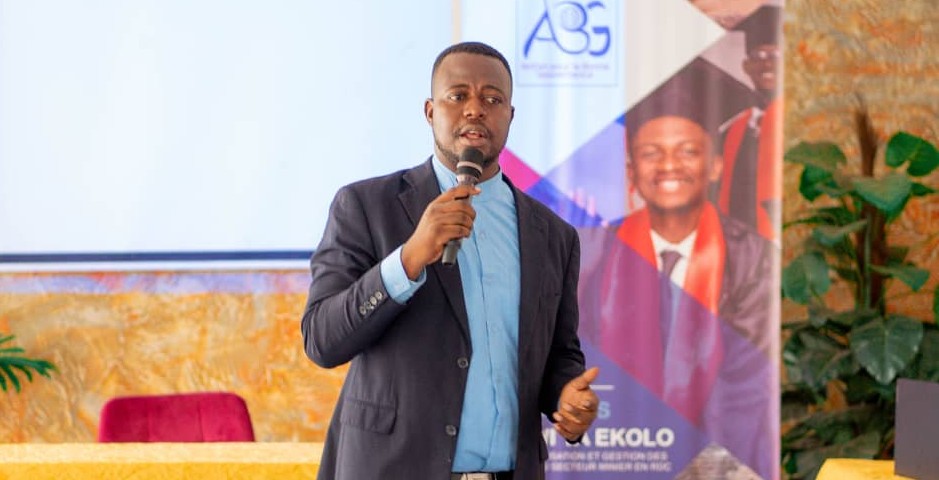
Joël Luaba: I am an economist and a private and judicial law expert. I currently coordinate Action pour la Bonne Gouvernance (ABG), a civil society organization in the DRC that promotes transparency, justice, and anti-corruption in the extractive sector. My work involves supporting young people in understanding and engaging with governance issues, particularly through initiatives like the “Bozwi ya Ekolo: competition, which encourages university students to utilize mining and tax data in their research. The primary objective is to raise awareness and spark debate on how our mineral wealth can truly support a sustainable energy future. I am also involved in analyzing issues related to the extractive sector and support the EITI process in the DRC.
Lydia Osei: I am an academic with a research focus on the intersection between natural resource governance and development. My work examines how extraction influences the livelihoods of youth, gender dynamics, and community well-being in Ghana’s mining regions. I have published extensively on youth engagement in the artisanal and small-scale mining sector in Ghana, exposing several dynamics within the sector. Beyond research, I teach undergraduate and graduate courses in natural resource management, regional geography, and resource analysis. I also supervise theses that explore the nuances of extractive industries across sub-Saharan Africa. For me, building students’ understanding of governance frameworks and the social dimension of extraction is a way to cultivate the next generation of informed oversight actors.

We often talk about the energy transition in technical terms. What does a just energy transition mean to you in your national context?
JL: A just energy transition in the DRC means ensuring that all citizens benefit equitably from the shift toward renewable energy. It’s about reducing dependence on fossil fuels, creating sustainable jobs and improving the living conditions of local communities. This kind of transition must be participatory. It must consider consultations with (potentially) affected populations, the integration of traditional knowledge, and the implementation of policies that guarantee energy access to all, particularly in rural areas.
LO: As Joel mentioned, in Ghana, a just transition also means shifting to renewable energy in a way that is equitable, inclusive, and accessible. As society transitions, we should be mindful of who benefits from the shift and how that shapes society. Equity, access, and jobs must sit at the heart of our transition plans. We also need strong leadership and inclusive policy design that integrates local perspectives into national frameworks.
What governance challenges must your country address to ensure that the transition is fair and sustainable?
JL: For the DRC, the most urgent challenge is transparency in natural resource management. Without it, corruption thrives and citizens do not get their fair share of resource benefits. Building strong and independent institutions as well as involving civil society in the decision-making process are crucial steps towards achieving this goal.
LO: Ghana has made progress through its Green Minerals Policy and broader reforms, but one urgent governance gap it needs to address is transparency and accountability in the licensing and contracting system for both energy and transition minerals. If we fail to strengthen these systems, we risk undermining the integrity of the entire transition process. A transparent, enforceable, and equitable fiscal regime would ensure that revenues from transition minerals support sustainable development rather than deepen inequality, environmental damage and financial malpractices.
How do you see civil society, academia, and communities contributing to this agenda?
JL: Civil society organizations serve as a bridge between communities and the government, advocating for fair policies, monitoring extractive operations, and raising awareness about human rights and governance standards. We also help hold companies and governments accountable, ensuring that their actions align with public interest and environmental protection.
LO: Academia complements this by generating independent, evidence-based research on the social, environmental, and economic impacts of extractive industries. My role involves developing frameworks and policy recommendations that support just, inclusive, and transparent governance models, especially in resource-rich communities, participating in policy dialogues, and providing technical assistance to oversight institutions. I also engage in capacity development, training the next generation of resource governance professionals.
What change would you make in your country’s transition journey to ensure it leaves no one behind?
JL: I would focus on empowering communities through training and entrepreneurship in renewable energy. When local people have the skills and means to participate in new green industries, the transition becomes inclusive and sustainable. Energy access for all, especially marginalized groups, should remain a central priority.
LO: In Ghana, I would prioritize the establishment of a Just Energy Transition Framework anchored in community ownership and benefit sharing. Such a framework would ensure that the economic, social, and environmental costs and benefits of the transition are fairly distributed, especially among vulnerable groups and communities impacted by extraction.
What stood out to you during the summer school experience?
JL: The Francophone summer school was a space for rich learning and exchange. It deepened my understanding of the challenges facing the DRC and the opportunities that the energy transition presents. I gained a better understanding of the role I must play in highlighting the opportunities of transition minerals.
LO: Participating in the Anglophone summer school was a transformative experience that deepened both my academic understanding and personal commitment to sustainability. Learning directly from case studies where local voices shaped project outcomes helped me appreciate the importance of inclusive decision-making. The diverse perspectives among participants enriched discussions and encouraged collaborative thinking, strengthening my interest in pursuing solutions that balance development with environmental justice.
The climate obstructionism of One: Pemex and the case of Mexico
Vitoria-Gasteiz, Spain

The ninth Global Summit of the Open Government Partnership (OGP) kicked off, bringing together more than 2,000 high-level representatives from governments, civil society leaders, and policymakers from around the world. Their goal was to share experiences, best practices, and progress on open government initiatives, and to evaluate their implementation on key issues.
As part of the summit's events, Fernanda Ballesteros, NRGI's Country Manager for Mexico, took part in the side event titled Undue Influence and Policy Capture in the Energy Transition: New Tactics, New Remedies, New Alliances.
The need to tackle climate change and speed up the energy transition is more urgent than ever. Yet, by 2025, the hijacking of transition policies has become a powerful phenomenon that demands immediate attention, in-depth analysis, and innovative solutions.
Fernanda contributed to the debate by explaining the governance challenges and complex interests involved in the case of the Mexican oil company Pemex, as well as proposals to strengthen accountability.
In this context, she addressed the coherence between Mexico's climate and energy policies, and explained how including Pemex in the country's new NDC (Nationally Determined Contribution) is an opportunity to build a more just and transparent future, aligned with the global call to leave fossil fuels behind.
Featuring NRGI's

Fernanda Ballesteros
Mexico Country Manager
Pemex and Mexico’s NDC 3.0: Seizing the Moment for Climate Leadership

A decade after the Paris Agreement, world leaders are convening in New York at the invitation of the UN Secretary-General to announce new targets and measures to address the climate crisis. Mexico took part in this summit, focused on Nationally Determined Contributions (NDCs), the Paris Agreement’s main instrument for reducing emissions and steering the energy transition.
President Claudia Sheinbaum has pledged that Mexico will reach net-zero emissions by 2050. To achieve this, the country’s updated NDC must go beyond technical greenhouse gas (GHG) reduction targets. It should provide a clear roadmap that links climate action to real improvements in people’s lives, including more stable jobs, stronger communities, and a future-ready economy.
In this context, Pemex must play a central role. The energy sector accounts for 64% of the country’s GHG emissions, and Pemex is responsible for 95% of hydrocarbon production and the bulk of associated infrastructure. In Mexico, to talk about hydrocarbons is essentially to talk about Pemex.
Why Pemex?
International experience shows that state-owned oil companies are still unprepared for the challenges of the energy transition, including declining oil demand. Governments have a decisive role to play. By setting clear policy signals and creating financing mechanisms, they can help these companies shift toward new business models.
The Mexican state holds a particularly strong influence over Pemex, given the company’s heavy reliance on government support. In 2025 and 2026 alone, Pemex faces debt maturities of US$24 billion, while the proposed 2026 budget allocates MXN 263.5 billion for debt servicing. That figure is double the 2025 allocation, equivalent to half of the resources earmarked for senior citizens’ pensions and six times the proposed environmental budget.
A stronger, more decisive commitment from Pemex would send a powerful signal that Mexico is willing to align its state-owned company with its decarbonization and just transition goals. Such a step would not only reinforce national climate ambition but also build confidence among the international community, the financial sector and the public.
Integrating Pemex into Mexico’s NDC 3.0: three priorities
1. Reduce methane emissions
Methane is 25 to 80 times more potent than CO₂ and poses serious health risks to communities living near oil facilities. Between 2012 and 2021, Pemex’s largest emission increases came from this gas.
Between 2021 and 2024, Pemex’s methane emissions fell by 29 percent. The company launched its first sustainability plan and voiced its commitment to the World Bank’s Zero Routine Flaring by 2030 initiative. However, Pemex’s methane output remains higher than a decade ago and above that of its international peers. Cutting these emissions is both urgent and strategic, as proven technological solutions exist and, in many cases, are cost-effective. The updated NDC offers the right framework for Pemex to adopt absolute, phased reduction targets, improve measurement and transparency, and join the Oil & Gas Methane Partnership (OGMP 2.0). Doing so would position Mexico as a global leader in methane mitigation.
2. Manage transition risks
Pemex ranks 11th among 58 state-owned oil companies most exposed to transition risks, according to a recent NRGI analysis. Up to US$10 billion in assets could become uneconomic under the International Energy Agency’s Announced Pledges Scenario, posing major risks for public revenues, jobs, and communities tied to the oil industry.
Mexico's updated NDC should respond by promoting transparent risk assessments, redirecting investments toward lower-carbon, higher-return projects, encouraging business diversification, and fostering joint ventures with the Federal Electricity Commission (CFE). It should also establish stronger corporate governance mechanisms under the Ministry of Energy’s (SENER) oversight to ensure planning is consistent with sustainability goals.
3. Just transition plans for oil-producing regions
States such as Campeche and Tabasco, heavily dependent on oil revenues, are already experiencing the impacts of declining production. To ensure no one is left behind, Mexico’s NDC should include just transition plans and the responsible decommissioning of infrastructure. This roadmap should prioritize economic diversification, workforce retraining, tailored educational programs, and greater transparency on environmental and health impacts.
These measures are in line with the outcomes of Mexico’s Local Conference of Youth proposals (2025 LCOY) and the Ministry of the Environment and Natural Resources’ (SEMARNAT) agenda for NDC 3.0, can foster a transition that delivers tangible benefits to the communities most dependent on oil.
Pemex at the center of Mexico’s climate action
The NDC gives Mexico a critical chance to raise its climate ambition, demonstrate international leadership, and put Pemex on a sustainable path. Explicitly including the company would send a clear signal of commitment to a just and orderly transition, in step with the global call to move beyond fossil fuels.
For decades, Pemex has been at the center of Mexico’s energy policy. It must now be at the heart of its climate response. This is the moment to show that commitment and accelerate progress toward net-zero emissions by 2050, building a more equitable, transparent future that delivers for all Mexicans.
Pemex y el sector privado: un diálogo sobre los riesgos y las oportunidades
Ciudad de México, México

En un momento crucial marcado por la transición energética y el inicio de una nueva administración gubernamental en México, líderes de la industria se reunirán durante dos días para analizar los retos y las oportunidades del sector en Mexico Oil & Gas Summit 2025.
Fernanda Ballesteros, Gerente de País de NRGI en México, moderará el panel El próximo capítulo de las asociaciones Pemex-privados, donde se explorará en profundidad la evolución de la relación entre Pemex y los actores privados, así como sus implicaciones para el futuro energético de México.
El panel tendrá lugar el miércoles 24 de septiembre, de 10:15 a 11:30 horas, y contará con la participación de expertos:
- Fluvio Ruiz, experto en Energía
- Alma América Porres, ex Comisionada de la Comisión Nacional de Hidrocarburos (CNH)
- Antonio Escalera, Consultor Senior de Tethys Energía
- Manuel Cervantes, Socio Fundador de MCM Abogados
- Sergio Pimentel, director Jurídico de Jaguar E&P
- Jorge Anaya, vicepresidente de Servicios Legales y Comerciales de Harbour Energy
No te pierdas esta conversación clave sobre el futuro de la colaboración en la industria petrolera y gasífera de México.
Con la participación de
Fernanda Ballesteros
Mexico Country Manager
From Addis to Belém: Delivering Justice and Powering Africa's Transition Ambition

The Declaration by African heads of state and governments at the second Climate Summit (ACS2) in Addis Ababa last week was both a strong demonstration of leadership and a striking omission just two months before COP30 in Belém, Brazil. By prioritizing access to energy, green industrialization, and mineral governance, they have redrawn the map of Africa's climate ambition around a vision of economic prosperity and equity.
However, while the Declaration emphasized "phasing in" jobs, access to energy, and development, it stopped short of referencing "phasing out" fossil fuels, a call at the center of global climate action since COP28 in Dubai.
What Addis got right
The Addis Declaration reflects three big shifts that deserve attention:
- Justice first: Leaders sent a loud and clear signal that Africa's transition must be fair and just. The Declaration referenced justice and equity 61 times, ten times more than the Nairobi Declaration, making equity the defining frame of Africa's climate ambition.
- Finance front and center: African governments placed finance at the heart of their climate agenda. They welcomed the Baku-Belem roadmap to $1.3 trillion, but flagged the continent's financing gap, with a staggering $3 trillion requirement by 2030, compared with just $30 billion mobilized between 2021 and 2022. They called for more grants, less debt, faster disbursements, reform of the international financial system to reduce the cost of capital, improved access to finance, and prioritization of adaptation and loss and damage.
- Minerals elevated: For the first time, African leaders carved out a dedicated section on transition minerals, absent entirely from the Nairobi Declaration. They tasked the African Union Commission to explore the creation of a coalition of African critical mineral-producing countries to cooperate strategically on local processing, aligning with the Africa Green Minerals Strategy. Outside of the European Union, no other region has given so much high-level attention and consideration to global and regional climate action priorities.
Three priorities on the road to Belem
Between now and COP30, several boxes remain for African leaders and international partners to tick to ensure that Belém can deliver the results on the ambitious vision from Addis. Key priorities include:
1. Break COP's silence on transition minerals
Demand for transition minerals is surging, with risks of deepening social, environmental, health and human rights harms. However, with strong governance, minerals can drive value addition and diversification for developing countries. The African Group of Negotiators (AGN), Africa's voice in the international climate negotiations, will be key to this effort. They must ensure that COP30 breaks its mineral silence by:
- Acknowledging the role and relevance of transition minerals in implementing the Paris Agreement's Global Stocktake, the review of collective progress and gaps in meeting global climate goals.
- Endorsing the principles and recommendations of the UN Secretary-General's Panel on Transition Minerals, calling for inclusive multilateral action that centers the voice of low- and middle-income producing countries
- Supporting the creation of a Global Just Transition Mechanism to help drive implementation and focus funding on just transition priorities, including integrating fair trade in minerals into planning and implementation
- Ensuring overall coherence between the UN climate process and other UN forums on global minerals governance.
Beyond these, the AGN should also bring forward proposals at the Response Measures Forum, so that COP30 outcomes recognize mineral governance as a key component of response measures that deliver tangible benefits to resource-rich countries. They should further develop operational proposals, including clear roadmaps, milestones, and monitoring plans, to support the Declaration's call for a coalition of African transition mineral-producing countries. This will help harmonize rules, accelerate local value addition and ensure social and environmental safeguards.
2. Champion innovative transition finance
The Declaration rightly highlights the urgent need for "innovative climate finance mechanisms" but avoids endorsing any specific solutions. For a decade, Africa has leaned on the "billions to trillions" narratives, the idea that small amounts of public and concessional finance could derisk markets and unlock massive flows of private capital. In practice, every dollar of public money has mobilized just 30 cents of private capital, often at high interest rates and under strict conditionalities. This ineffective experiment demands a pivot toward predictable public finance and large-scale grant instruments, not illusory multipliers.
An alternative is already emerging. At the recent 4th UN Conference on Financing for Development in Seville in July 2025, Benin, Kenya, Sierra Leone and Somalia formed part of a coalition of countries backing a levy on premium air travel to generate new, additional, and predictable flows of public finance that they could channel to Africa's just energy transition priorities. If implemented globally, this measure could raise over $80 billion per year in grant-based finance – more than three times the $25 billion per year that the IEA considers necessary for universal access to energy in Africa.
African leaders have also called on developed countries to honor their financial commitments under the Paris Agreement and reform the international financial architecture. Complementary tools such as debt-for-climate swaps, regional carbon price floors, and concessional lending at fair rates should be part of the mix. The principle is clear that Africa cannot finance its just transition by sinking deeper into debt.
The Global Solidarity Levies Task Force has developed the premium air travel level alongside other innovative financing sources in recent years. African leaders should use COP30 as the launchpad to secure multilateral endorsement of these measures and link them to the New Collective Quantified Goal (NCQG).
3. Develop a clear position on fossil fuels before COP30
By avoiding any reference to the fossil fuel phase-out, the Addis declaration sought to protect Africa's energy sovereignty, unify its internal positions and strengthen the continent's negotiating posture, given that several countries are still betting heavily on oil and gas resources.
However, silence on fossil fuels will not shield Africa from the reality that the global train has already left the station as the energy transition is well underway. African oil producers face a growing set of transition risks that they must acknowledge, assess, and act on to avoid significant losses of revenues, jobs, and energy security.
African leaders can best protect their citizens by seizing the initiative and shaping the global framework for a just, orderly, and equitable transition away from fossil fuels, ensuring that it supercharges rather than undermines their economic and human development trajectories.
Between now and Belém, African leaders must build on the spirit of the Addis Declaration and craft their fossil fuel transition frameworks that integrate existing strategies for inclusive, green industrialization, economic diversification, social protection, and vocational training and re-skilling into a finance package for COP30. Such a position should build on the Declaration's emphasis on equity and justice by reconciling the "phase in" of development with the "phase out" of fossil fuels and making relevant, nationally-determined contributions conditional on international support.
Unity is Africa's power
The second Africa Climate Summit set out an ambitious vision that asserts African leadership. In Belém, that vision must move from words to action. For Africa's agenda to shape COP30 outcomes, African leaders must speak with one voice and act on the three priorities that Addis placed on the table.
Unity across Anglophone, Francophone and Lusophone Africa will give the continent the leverage it needs to turn its ambitions into global impact. Addis laid a strong foundation. The victory will come when Africa carries this vision to the global stage and secures concrete action.
Governing Risk: Rethinking the Relationship Between Ecopetrol and the State in the Energy Transition
Webinar

Natural Resource Governance Institute (NRGI) presented findings from “Governing Risk”, a study analyzing the challenges Ecopetrol faces in the context of the energy transition and proposing governance principles to strengthen coordination between the company and the State.
This event brought together diverse stakeholders to reflect on how to manage transition risks and move toward a fair economic and energy diversification for Colombia.

Preventing Corruption in Africa’s Transition Mineral Supply Chains

Key Messages:
- The current increasing attention to Africa’s mineral resources could attract much needed investment to the continent or power broader development goals, but many citizens view the prospect of a new mining boom with suspicion. The sector has become synonymous with harmful and costly corruption, often perpetrated by wealthy elites and foreign companies who are able to avoid its worst impacts.
- At the same time, anticorruption actors should be alert to new or shifting dynamics, such as the greater emphasis on value addition, or challenges around access to financing. They should also devote more attention to issues that have long been overlooked, such as the intersection between corruption and other types of harm in the mining sector.
- Failure to properly address corruption and its causes and consequences will only lead to more harm and instability, both for African countries and across the mineral supply chains needed to power the green transition.
- Tackling these issues effectively requires a deep understanding of the specific nature of corruption in each country, yet the drivers of corruption often have global roots. Long-lasting solutions to corruption must therefore be a shared responsibility between African leaders, decision-makers in major market jurisdictions, multilateral actors such as the African Union and the African Development Bank, companies across the supply chain, investors and the donor community.
- Addressing this corruption is therefore crucial, to avoid the injustices of the past. Many of the risks are well known, surrounding political access and civic space, licensing and contracting processes for mining projects, the role of state-owned enterprises (SOEs), and processes for collecting revenues from the sector. This means that there are important lessons to learn from the efforts of reformers across the continent and beyond to tackle these harms.
The global energy transition is driving unprecedented demand for Africa’s vast mineral wealth. From cobalt and manganese to lithium and copper, the continent holds some of the world’s most critical reserves needed to power clean energy technologies. Yet Africa’s mining history tells a troubling story: while its resources have fueled development elsewhere, too often African countries and communities have been left with little more than environmental damage, economic inequality, and social unrest.
As competition for Africa’s minerals intensifies, there is a serious risk that corruption will once again take root, deepening injustice and undermining the promise of a just transition. Past booms have shown how fast-paced dealmaking and weak oversight can open the door to graft, while local populations face forced relocations, land loss, health crises, and worsening environmental degradation. Without stronger governance, today’s green energy revolution could create a new form of green colonialism, where Africa’s resources are exported to decarbonize wealthier economies, but the benefits never reach those who need them most.
This briefing draws on NRGI’s experience across resource-rich African countries to examine the key corruption challenges in the mining sector - from licensing and contracting to state-owned enterprises and revenue collection. It highlights urgent risks and opportunities for reform, offering practical steps for governments, civil society, and international partners to ensure that Africa’s minerals power not only the world’s energy transition, but also a fairer, more sustainable future for the continent itself.
Just Transition in Oil-Producing Regions: Bringing Local Priorities to Global Climate Action (Climate Week NYC)
New York City, U.S.

NRGI convened an invitation-only roundtable with international and national civil society and philanthropic actors to explore actions to address just transition challenges in oil-producing regions. The discussion highlighted perspectives that are often underrepresented in global climate debates.
We are grateful to the Robertson Foundation for hosting this event.
As a New Producer, Senegal Must Regulate Methane

Fossil fuels and the global methane challenge
Globally, fossil fuels are the leading source of greenhouse gas (GHG) emissions—including methane, a short-lived but extremely potent gas. Cutting methane emissions is now unavoidable in a context of urgent energy and climate security.
In Senegal, the issue has become especially pressing. A recent gas leak at well A02 of the Greater Tortue Ahmeyim (GTA) project—an offshore development shared with Mauritania—highlighted the environmental risks tied to oil and gas extraction. The incident underscored persistent gaps in oversight and transparency, while also showing the need to strengthen accountability mechanisms. It sparked renewed attention from civil society, the media, and local communities, who are increasingly vigilant about methane risks.
International and national initiatives
At the international level, regulation is a critical lever for curbing methane emissions from oil and gas. The International Energy Agency (IEA) has developed practical tools, including its global policy database and the Methane Tracker 2025, which details technical and regulatory options to cut emissions.
Senegal’s government has signaled its willingness to act. Recent revisions to the petroleum and environmental codes include bans on routine gas flaring, venting (the release of gas directly into the atmosphere) and crude oil burning. A roadmap accompanies these reforms, with provisions to build the capacity of stakeholders involved in emissions management.

A legal framework in the making
In its nationally determined contribution (NDC) under the Paris Agreement, Senegal has pledged to reduce overall GHG emissions by 5% by 2025 and 7% by 2030. The country is also preparing to join the Global Methane Pledge.
It has ratified key international agreements, including the UN Convention on the Law of the Sea, the UN Framework Convention on Climate Change, the Kyoto Protocol and the Paris Agreement. Requirements of the 2023 Extractive Industries Transparency Initiative (EITI) Standard—such as disclosure on emissions—further reinforce this framework.
Domestically, relevant provisions include:
- Article 25-2 of the Constitution: obliges public authorities to protect the environment and ecosystems.
- Law 2010-21: targets reductions in fossil fuel use and GHG emissions.
- Article 53 of the 2019 Petroleum Code: requires companies to prevent and mitigate pollution and manage waste.
- Article 133 of the 2023 Environment Code: bans gas flaring and venting, and strengthens requirements for environmental assessments and transparency.
- Decree 2025-227: mandates guidelines on GHG emissions and flaring.
However, major gaps remain. Neither the petroleum code’s annexes nor the environment code’s implementing decree explicitly address methane. A decree foreseen under Article 33—which would require mitigation and management plans—has yet to be adopted.
Persistent challenges
Despite progress, several challenges remain:
- Regulatory gaps: no methane-specific legislation.
- Institutional weaknesses: limited enforcement and monitoring capacity.
- Disconnects: between international commitments and national law.
The polluter-pays principle is recognized, but no methane pricing mechanisms exist (such as fines for leaks or penalties for repeat offenders). Nor are there incentives for capturing, re-using, or recycling methane.
Data is fragmented, not centralized, and often inaccessible to the public—undermining transparency. Senegal also lacks a mandatory system for measuring, reporting, and verifying emissions (MRV), which is key for accountability. Operators are not required to follow clear technical standards, conduct leak detection and repair (LDAR), or meet minimum gas recovery rates.
Although companies like BP and Woodside have joined the international Oil and Gas Methane Partnership 2.0, these commitments have yet to be enshrined in Senegalese law. Methane is also absent from the country’s current (2020) NDC—weakening credibility and potentially limiting access to climate finance.

Turning challenges into opportunities
These obstacles can become opportunities if Senegal leverages: international best practices, climate finance, national momentum for reform, civil society vigilance and new requirements under the 2023 EITI Standard.
Lessons can be drawn from other countries:
- Ghana integrated methane targets into its NDC.
- Nigeria requires monthly emissions reporting.
- Canada combines performance standards with tax incentives.
- Norway imposed a tax on offshore flaring and venting between 2015 and 2024.
- The European Union will require operators to quantify and report methane emissions at source from 2025.
These examples show that ambitious regulation is both possible and practical.
The IEA identifies four complementary regulatory approaches Senegal could adopt:
- Prescriptive: set technical standards, MRV, and LDAR requirements.
- Performance-based: establish reduction targets.
- Economic: use taxes or market mechanisms.
- Informational: require operators to disclose and publish emissions data.
To advance, Senegal should:
- Fast-track a methane-specific regulatory framework for oil and gas.
- Require companies to publish detailed methane emissions reports.
- Integrate methane reduction targets into the revised NDC.
- Establish a national monitoring and alert system, with a robust MRV framework.
- Ensure effective participation of civil society and affected communities.
Conclusion: an opportunity not to be missed
In August 2025, during a high-level workshop on oil, gas, and mining codes, Prime Minister Ousmane Sonko summed up the balancing act: “We do not want codes that deter investment, but neither do we want permissive codes.”
This reform momentum is a crucial opportunity. But methane must not remain the “blind spot” of Senegal’s emerging energy sector. It must become a central pillar of governance—with ambitious, well-adapted mechanisms that reflect environmental, economic, and transparency priorities.
For Senegal, as a new producer, getting methane regulation right will be decisive—not only to prevent economic losses, secure energy supply, and protect communities and ecosystems, but also to demonstrate international credibility and unlock climate finance needed for a just transition.