
From Pledges to Practice: Accelerating Progress Using Lessons from ICMM’s Contract Disclosure Journey

Oxfam, NRGI and RJN's new brief evaluates mining company performance on contract disclosure and shares recommendations for improvements.
In September 2021, International Council on Mining and Metals (ICMM) member companies made a commitment to publish their mineral development contracts with governments. This was an important step in the decades long shift toward contract transparency as an established global norm.
Four years later, this brief reflects on lessons learned from the implementation of the commitment as three major policy processes—the creation of the Consolidated Mining Standard Initiative (CMSI), the revision of the International Finance Corporation (IFC) Sustainability Framework and the upcoming 2026 Extractive Industries Transparency Initiative (EITI) Global Conference—are poised to shape approaches to contract transparency for the years to come.
The rise of contract transparency
Over the past two decades, contract disclosure has shifted from a niche reform to an expectation backed by governments, investors, companies and civil society.
Contracts governing oil, gas and mining projects outline critical obligations on taxes, environmental management, community benefits, and more. Publishing these agreements builds trust, reduces corruption risks, and increases stability. Over the past two decades, contract disclosure has shifted from a niche reform to an expectation backed by governments, investors, companies and civil society.
Members of ICMM helped accelerate this shift by engaging in policy dialogue and through early statements of support. Then in 2021, ICMM made a high-profile commitment: its member companies would begin publishing their mineral development contracts with governments.
The ICMM commitment—four years on
As part of our ongoing efforts to support ICMM members to publish contracts, we carried out a review to determine the extent that the commitment had led to public disclosure of contracts by ICMM companies. We found that eight of 24 ICMM companies now publish contracts—up from just three before the commitment. Continued disclosures by Orano, Rio Tinto and South32; and new disclosures by Glencore, Hydro, Newmont, MMG and Sibanye-Stillwater, reflect meaningful momentum. What is more is that each of these companies is publishing many documents that are not required to be made public under the commitment, most notably contracts agreed before 2021.
Key lessons to accelerate progress
- Encouragements alone do rarely lead to consistent uptake
Companies that did not disclose largely interpreted the requirement as not applying to their contracts. Standards like the CMSI and IFC can strengthen uptake by turning encouragements into requirements. If they are unable to do this they should set clear pathways for companies to achieve encouraged practices. - Retroactive disclosure is possible
Most disclosed contracts were older, voluntary releases—challenging the idea that pre-2021 agreements must remain outside contract transparency requirements. - Companies need clearer, harmonized guidance
ICMM’s new guidance is useful but differs in some areas from EITI practice, particularly around its narrow definition of “contracts” and exclusion of agreements with Indigenous Peoples and communities. Aligning standards with the latest EITI guidance note would ensure a harmonized approach to contract transparency across standards. - More detailed assurance will support meaningful transparency
Current ICMM assurance processes do not provide sufficient information for stakeholders to assess whether commitments are being met. Requiring more thorough assurance reports, particularly on which contracts were published and how, and why other contracts were not required to be made public, would improve accountability and confidence around contract transparency standards.
A moment of opportunity
With the CMSI nearing finalization, the IFC updating its Sustainability Framework and EITI preparing for its 2026 Global Conference, the coming year offers rare chances to lock in stronger requirements, clearer guidance and more accountable disclosure systems.
ICMM’s contract transparency commitment was an important milestone. The next phase is ensuring that implementation aligns with ambition. Stronger standards across CMSI, IFC and EITI can help ensure that contract disclosure becomes routine practice, supporting trust, accountability and better governance at a time when global demand for minerals is rapidly increasing.
From pledges to practice
A new briefing published with the Resource Justice Network on lessons from ICMM’s contract disclosure commitment.
After Raja Ampat, Can Indonesia Lead on Responsible Mining?

In June 2025, a viral protest over nickel mining in Raja Ampat has forced Indonesia to confront a deeper question: how can the country’s green-energy ambitions coexist with its environmental laws? When Greenpeace Indonesia spotlighted nickel mining on the small islands of the Raja Ampat archipelago of Southwest Papua earlier this year, public outrage spread rapidly online and prompted one of the fastest government responses to civil society pressure in recent memory.
Indonesia’s Law No. 1/2014 on the Management of Coastal Areas and Small Islands article 23 prohibits mining activities on islands with the total land area of 2000 km2 or less. The public called for an immediate halt to mining operations in Raja Ampat, an ecologically sensitive and popular tourist destination, especially among divers. Five mining concessions were identified within the Raja Ampat islands. Within a week, four mining permits were revoked, while the PT Gag mining concession was placed under review on legal grounds for alleged violations of the law preventing seawater pollution, sedimentation and deforestation.

The government’s rapid intervention drew national attention to how mining rules are applied in Indonesia. But, by early September, PT Gag had resumed its mining operations while the ongoing environmental audit continues. This decision drew sharp criticism from several environmental NGOs, including Greenpeace Indonesia and Auriga Nusantara, and from environmental experts who argued that PT Gag’s operations also violate the law that prohibits mining on small islands.
This incident illustrates a reactive rather than proactive approach to enforcing environmental rules in Indonesia, one driven by public outrage rather than systematic oversight. It underscores Indonesia’s need for a more robust environmental, social and governance (ESG) compliance system: not merely as a reputational safeguard, but as the structural foundation for long-term social acceptance, economic stability and environmental resilience.
Why stronger ESG systems are now essential
Strong mechanisms for public transparency and regular consultations with impacted communities are essential to ensure environmental rules are applied consistently, and that people living near mining projects have the tools necessary to identify and address risks before they become crises. Indonesia can learn and build on internationally recognized ESG frameworks such as the Extractive Industries Transparency Initiative (EITI), the Initiative for Responsible Mining Assurance (IRMA) and the Responsible Minerals Initiative (RMI), to name a few. Together, these initiatives provide a blueprint for balancing economic development with environmental stewardship and social justice.
Indonesia is currently among the world’s top producers of nickel, a critical input for electric vehicle batteries and other low-carbon technologies. The government's value addition policy (known as “downstreaming”) requires in-country processing of raw minerals. This has successfully attracted foreign investment and boosted export value. However, this strategy must be paired with credible ESG performance to ensure economic benefits do not come at the expense of environmental degradation or social conflict. Aligning national frameworks with international standards can enhance responsible investor confidence, improve market access and reduce reputational risks, while building durable social acceptance.
How international standards can strengthen Indonesia’s governance
Take EITI, for example. Beyond transparency, it provides a governance framework that fosters accountability through multi-stakeholder dialogue, where representatives from government, civil society, and extractive industries sit together. Indonesia has implemented EITI since 2010, but its potential remains underused. Rather than duplicating ESG guidelines, the government could deepen its EITI engagement by expanding disclosures on environmental impacts, community consultations and benefit-sharing mechanisms, to name a few. EITI’s multi-stakeholder group could make better use of this information, feeding it directly into public debate and policy decisions. While EITI itself can’t enforce corporate ESG compliance, it can provide a collaborative platform for shaping stronger policies.
IRMA on the other hand provides more detailed metrics for assessing site-level environmental, labor and governance performance, including respect for free, prior and informed consent (FPIC) of Indigenous Peoples—a critical issue in the context of Raja Ampat. Currently, there are only two mining companies operating in Indonesia that have been voluntarily submit to IRMA audit, which still ongoing for both of them.
Furthermore, the RMI provides due diligence tools that major global manufacturers use to ensure ethical sourcing of minerals. Adopting such tools within Indonesia’s own regulations would align domestic mining practices with global supply chain requirements. It would also strengthen Indonesia’s position as a reliable partner in the global energy transition. With the European Union introducing legislation mandating supply chain due diligence for imported transition minerals, alignment with established international standards has become not just good practice, but a competitive advantage.
From wake-up call to lasting reform
The Greenpeace protest and subsequent license revocations should serve as a wake-up call. They reflect a civil society that is increasingly informed, organized and influential in shaping policy outcomes. While industry actors lauded the economic gains of nickel mining, the lack of robust safeguards in environmentally sensitive areas like Raja Ampat weakens the integrity of Indonesia’s policy around mining as well as value addition. Establishing a credible ESG framework, grounded in international standards, is not just a technical necessity, but a strategic imperative.
Institutionalizing ESG compliance must go beyond box-ticking. It requires a cultural shift in governance, where transparency, accountability and stakeholder engagement are central to decision-making. Regulatory agencies must be empowered and better resourced to conduct rigorous environmental and social impact assessments, monitor compliance and enforce penalties for violations. Integrating ESG metrics into licensing and permitting processes—with independent verification—can further institutionalize best practices.
The events of early June offered both a warning and an opportunity. Indonesia can either treat ESG as a public relations tool to manage reputational risks, or as a transformative framework to guide its critical mineral development. The latter approach would not only strengthen its international standing but also ensures that economic growth does not undermine the environmental and social foundations on which it depends.
Indonesia stands at a crossroads. It can assert global leadership not only through its mineral reserves or smelting capacity, but by demonstrating that resource governance in the energy transition era is rooted in integrity, inclusion and international cooperation. The revocation of the Raja Ampat mining licenses was a welcome reactive measure. The next step must be proactive: embedding internationally recognized ESG standards into the very fabric of Indonesia’s mineral governance system. Indonesia now has the chance to show the world that responsible mining and economic development can go hand.
Why Minerals Still Matter for COP30: What’s at Stake if They’re Left Out
COP30 Media Briefing

As negotiations at COP30 entered their final stretch, NRGI and partners convened a media briefing on 21 November 2025 at COP30 in Belém, “Why Minerals Still Matter for COP30: What’s at Stake if They’re Left Out,” to respond to the removal of minerals from the latest Just Transition Work Programme (JTWP) draft text. This page shares the speakers and a full transcript of remarks by NRGI’s Antonio Hill, along with key quotes from the other panelists.
Speakers:
- Antonio Hill, advisor, Natural Resource Governance Institute (NRGI)
- Susana Muhamad, former Minister of Environment and Sustainable Development, Colombia
- Bryan Bixcul, SIRGE Coalition
- Kuda Manjonjo, Powershift Africa
Watch the full media briefing on the UNFCCC website.
Remarks by Antonio Hill, Natural Resource Governance Institute (NRGI)
One year ago, at COP29, United Nations Secretary-General António Guterres—together with the executive director of the International Energy Agency (IEA) and ministers or representatives from 15 countries—launched the report of the UN Panel on Critical Energy Transition Minerals.
That Panel was announced by the Secretary-General at COP28 in Dubai, and represented a rare space on the global stage where representatives from governments, North and South—notably including China and the United States, as well as other major mineral producers—came together with stakeholders from Indigenous Peoples’ organizations, civil society, and business and industry associations to discuss the challenges and opportunities associated with fast-growing demand for minerals essential to the global energy transition.
The Panel issued a set of principles and recommendations with fairness and sustainability at their core. Its clear message was that achieving fairness and sustainability requires change:
Change from the deep-rooted inequities that have long plagued the minerals sector and global supply chains.
Change from the destructive, exploitative practices that have left too many countries with neither wealth nor resources, and turned mining areas into sacrifice zones.
And a change from the pit-to-port model, where raw materials are simply shipped off to power economies and lifestyles in faraway lands.
The promise was—and still is—a new model for mining and minerals: one that not only safeguards people and planet, but also drives economic opportunity in the countries and communities that depend on it for their economies and livelihoods. Indeed, countries and entire regions, such as sub-Saharan Africa, are planning to develop inclusive, green industrialization strategies built on this new model.
So, what is the relevance to climate action, you may ask? And why insist that the UN climate negotiations take on yet another thorny issue when they are still falling so short on their own objectives?
The answer lies in the direct connection to the objectives of the Paris Agreement. Two years ago, the Conference of the Parties (COP) issued its own report card on progress toward Paris Agreement objectives—the Global Stocktake. That report card, for the first time in these negotiations, said that deep emissions cuts are required, and fast, as part of a global shift away from coal, oil, and gas in our energy systems.
COP28 stated that getting back on track to bring global heating back below 1.5 degrees Celsius and meet the Paris objectives requires a range of strategies, including a tripling of renewable energy capacity by 2030, a doubling of energy efficiency, and a transition away from fossil fuels. The IEA has estimated that achieving these targets will require a four- to twenty-fold increase in the volume of minerals needed to produce batteries, solar panels, wind turbines, and other infrastructure for the global energy transition.
To this day, no COP decision has ever even mentioned—let alone addressed—this connection to transition minerals or its implications. That silence must end. The world’s climate governance body cannot turn a blind eye to the risks—or potential benefits—associated with the extraction, processing, trade, and recycling of transition minerals.
Here at COP30, for the first time, we saw draft text tabled that highlights the equity and sustainability dimensions of minerals. It was supported by a broad range of countries, including:
The African Group of Negotiators (AGN) and Burkina Faso, Ethiopia, Somalia, South Africa, Tanzania and Uganda
The Least Developed Countries (LDCs), represented by Sudan
Colombia, Mexico, Panama, Peru and Uruguay
With the exception of China, we heard no opposition to minerals-related proposals in any open negotiating sessions.
Until yesterday, these proposals appeared in draft text under the Just Transition Work Programme (JTWP)—which is entirely appropriate, given that no transition away from fossil fuels is plausible except under the framework of a just transition mechanism, including the Belém Action Mechanism (BAM).
In the latest version of the JTWP text, released before dawn this morning, all references to minerals have disappeared.
We understand that the AGN and the LDCs are still pushing for a reference to be reinserted into the draft decision text, and we call on all Parties to support them.
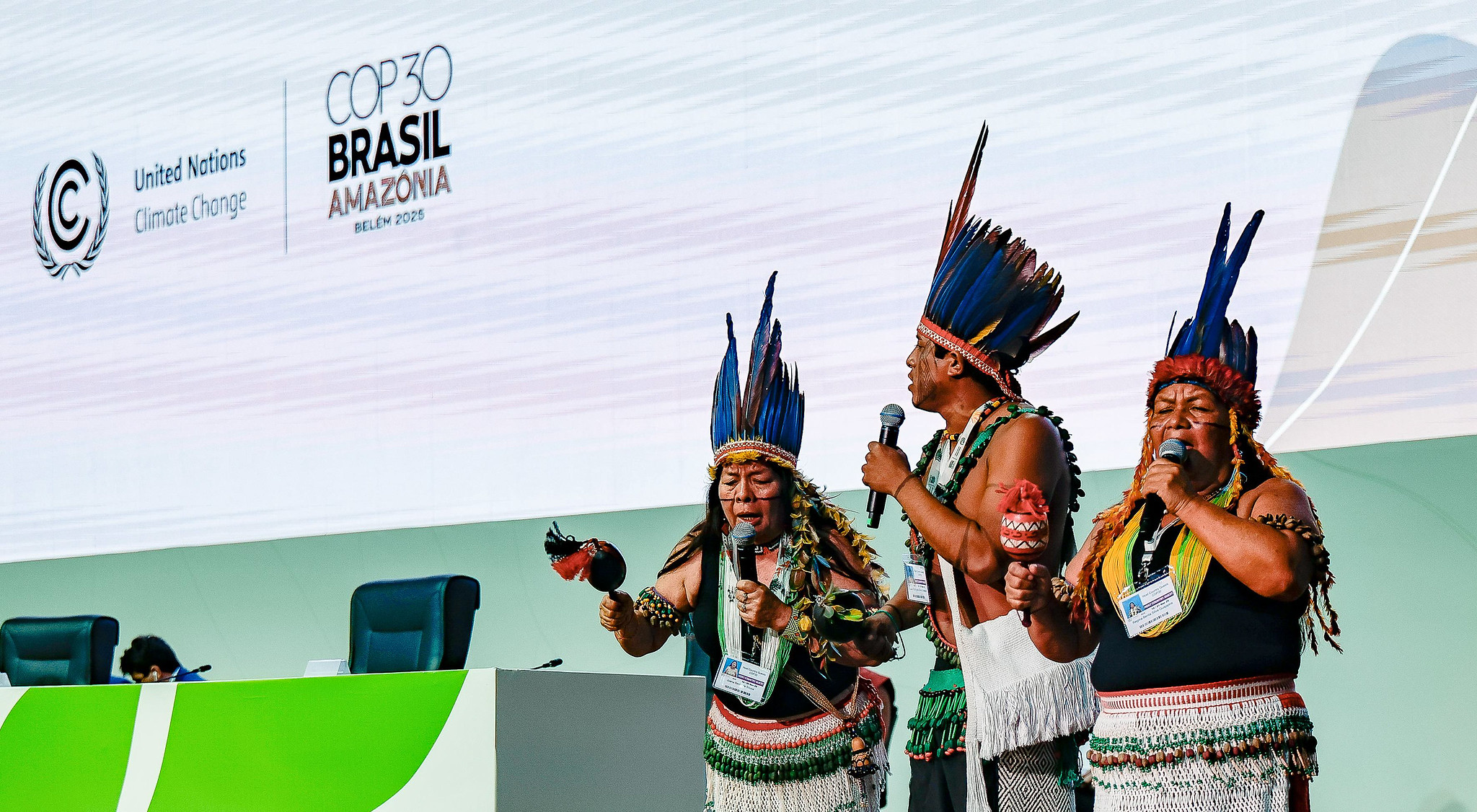
We hear Indigenous Peoples, local communities, and low- and middle-income transition-mineral-producing countries loud and clear. They are saying they need new opportunities—more and better jobs and diversified economies. They are saying they will not abide another century of inequity, destruction, and exploitation. It is not justified or necessary for climate action, and it is certainly not close to what any of us—or what COP30—can describe in good faith as a just transition.
Quotes from other speakers
Below are selected remarks from the other panelists:
Bryan Bixcul, SIRGE Coalition
“It is deeply disappointing that after years of work from Indigenous defenders and activists, the language on minerals that should have been in the formal text was dropped. Right now, 54 percent of minerals like lithium, copper, cobalt, and nickel are being extracted from the lands of Indigenous Peoples. When you zoom into Latin America, that number is as high as 75 percent. This is having huge impacts — land dispossession, water contamination, soil contamination, rights violations — and often without Indigenous Peoples’ free, prior, and informed consent. It is unbelievable to us that after years of advocacy we are still fighting to keep those references in there. Why? Because we are being told it is too contentious or too political to be included in the text. ”
Kuda Manjonjo, Powershift Africa
"The mine collapsing in the DRC is a reminder of why it’s so important to include minerals in the text. More practically, we’re excited about some of the things being discussed — infrastructure, renewable energy — but you can’t speak about these without including minerals. This starts in the lands, in the mines that supply these things. We were happy when the African Group of Negotiators came forward and said, “This is what we stand for.” The global South is providing the solutions for the global North, and that must be recognized. It’s unfortunate that China is excluding this. We’re providing two solutions: just transition mechanisms, and clarity about what that just transition looks like. If we don’t include minerals in the text, we’ll come back four years later to discuss the same thing, and we don’t want that. We have an opportunity now to make sure no one is left behind."
Susana Muhamad, former Minister of Environment and Sustainable Development, Colombia
“This transition can go in two directions. One direction is a new wave of extractivism that betrays the two pillars needed to stabilize the climate: phasing out fossil fuels and restoring the ecological capacity of the planet, with people at the center. Without clarity, rules, and safeguards, we will only deepen the crisis. Many countries still see the global South as providers of minerals, not as partners in co-developing a just transition. Indigenous Peoples come here with their sweat, their tears, their blood. Is it too much to ask that the text reflect their rights? We shine a light on business, but not on humans. We see two visions: the global North calling for reliability of resources and the global South calling for fairness. We already have tools and expert work that show what a just transition looks like. Not referencing them is a missed opportunity, especially for the Amazon. Without addressing minerals, we risk another round of extractivism, exploitation, and human rights violations that benefit just the few.”
A Just Energy Transition in Six Oil- Producing Regions: Bringing Local Priorities to Global Climate Action
Colombia, Ghana, Mexico, Nigeria, Peru and Tunisia

Key messages
- Global oil demand is expected to peak by 2030, and all countries—including low- and middle-income producers—will need to transition away from fossil fuels, with richer countries going first. For oil-dependent economies, the imminent peak in demand poses major risks of loss of revenue and jobs, and unintended socioenvironmental impacts, which might be more heavily felt at the subnational level, widening preexisting social and environmental injustices rooted in the fossil economy. Significantly, these risks are already materializing in many oil-producing regions in the global South.
- Yet many national and subnational plans in these countries still overlook how to manage the transition beyond oil, leaving countries unprepared.
- A people-powered, just transition in oil-producing regions could provide the means to address these major equity and justice gaps, while also opening opportunities for people and the planet. It could protect local economies and the rights of those most affected by the decline in oil production: workers in both formal and informal sectors, women, youth, Indigenous Peoples, people with disabilities and the environment.
- A people-powered, just transition in oil-producing regions would allow climate action to be rooted in the demands and needs of local stakeholders, boosting local and national coalitions in support of international agreements, and to influence them.
- National and subnational governments should define comprehensive plans to build fiscal resilience and reduce oil dependency, while ensuring local economies diversify. The visions and priorities of citizens and communities, especially in oil-producing regions, should be included in those plans through participatory processes and multistakeholder dialogue. The international community must provide the technical and financial support needed to help build resilient economic and energy systems beyond oil. Diversification of oil-dependent regions should be part of the just transition agenda.
- National governments, companies and private investors should establish and enforce requirements for a responsible exit in oil-producing countries and regions, involving the active engagement and participation of local authorities and communities. This includes policies and practices around decommissioning, asset transfers, rehabilitation, funds for decommissioning and transition, and socioenvironmental liabilities. Affected communities should be included and compensated, and nature should be protected. A responsible exit should be part of the just transition agenda.
- A just transition in oil-producing regions requires that national and subnational governments, and the international community, provide support to formal and informal workers, women, youth and other often-marginalized groups, to ensure they have the skills and the technical and financial resources to thrive in the process of transitioning away from oil. This means ensuring not only that they benefit from transition policies, but that they have the resources and spaces to be agents for change.
In the current urgent need to address climate change, shifting to clean energy and more sustainable economies is central to the required effort. The energy sector is currently responsible for approximately three quarters of greenhouse gas emissions. In this context, international instruments such as the 2015 Paris Agreement commit countries to “making finance flows consistent with a pathway towards low greenhouse gas emissions and climate-resilient development.”

Most commitments and climate negotiations have focused on emission reductions. However, this started to change with the adoption of the Glasgow Climate Pact at the 2021 United Nations Climate Change Conference (COP26). Countries committed to transition towards low-emission energy systems, “including by rapidly scaling up the deployment of clean power generation and energy efficiency measures, including accelerating efforts towards the phasedown of unabated coal power and phase-out of inefficient fossil fuel subsidies, while providing targeted support to the poorest and most vulnerable in line with national circumstances and recognizing the need for support towards a just transition.”
A people-powered, just transition in oil-producing regions could protect local economies and the rights of those most affected by the decline in oil production.
This was further reinforced at the 2023 United Nations Climate Change Conference (COP28), when governments committed to “transition away from fossil fuels in a just, orderly and equitable manner.” Although further policy commitments have since been difficult to advance, market shifts demonstrate that the transition in fossil fuel demand is already in motion. Technological progress has pushed private investments in the clean energy sector up by 42 percent.
Whether the transition becomes an opportunity for shared prosperity or a source of new inequalities depends on how it is governed.
Yet in several oil-producing countries and regions, these global shifts and their implications are still not widely understood or integrated into policy discussions, and international dialogue and actions do not recognize the needs of local stakeholders in these regions. This also relates to the fact that the increased investment in the renewable energies sector remains unequally distributed—for example, with only 2 percent landing in Africa, due to policy volatility, ineffective financing mechanisms and high capital cost. Yet Latin American countries—especially Brazil, Colombia and Costa Rica—have seen a 25 percent increase in clean energy investments in 2025.

This inconsistency has allowed many oil- and gas-producing countries to remain under the radar in transition debates. The unique challenges and specific needs associated with moving away from oil and gas have not received adequate support. Gaps in research have contributed to a lack of understanding and information about the risks and opportunities for oil-producing regions. More recent research has started to recognize the need for finance to support just transitions in the oil and gas sector, and to move beyond coal. The latest Just Transition Report from the United Nations Framework Convention on Climate Change (UNFCCC) suggests that policy-makers need to address future changes in oil and gas demand. However, processes are not as mature as for coal, and tend to focus on labor and energy access without considering other challenges in producing regions.
This policy brief outlines the critical importance of a just energy transition for oil-producing countries, and identifies risks for local actors, as well as gaps in subnational, national and global policies. It explains how a transition from oil to renewable energy sources can be an opportunity for people and the planet, and provides actionable recommendations to achieve a balanced and equitable approach.
The recommendations of this brief were informed by a mix of desktop research and an in-person meeting in Cartagena, Colombia, in July 2025, with delegates from oil-producing regions in the global South, as well as a meeting during NY Climate Week in September 2025. The brief profiles six oil-producing countries in the global South—Colombia, Ghana, Mexico, Nigeria, Peru and Tunisia—to identify general trends in the transition process, as well as context-specific factors.
People-Powered Energy Transitions in Resource-Rich Countries

The climate crisis has negatively impacted developing countries and marginalized groups disproportionately in comparison with their developed counterparts. Since 1991, developing countries have accounted for 79 percent of recorded deaths due to extreme weather, and 97 percent of the total recorded number of people affected by the impacts of such weather. Women and girls are more likely than men and boys to die in extreme weather events, which are becoming more frequent and intense.
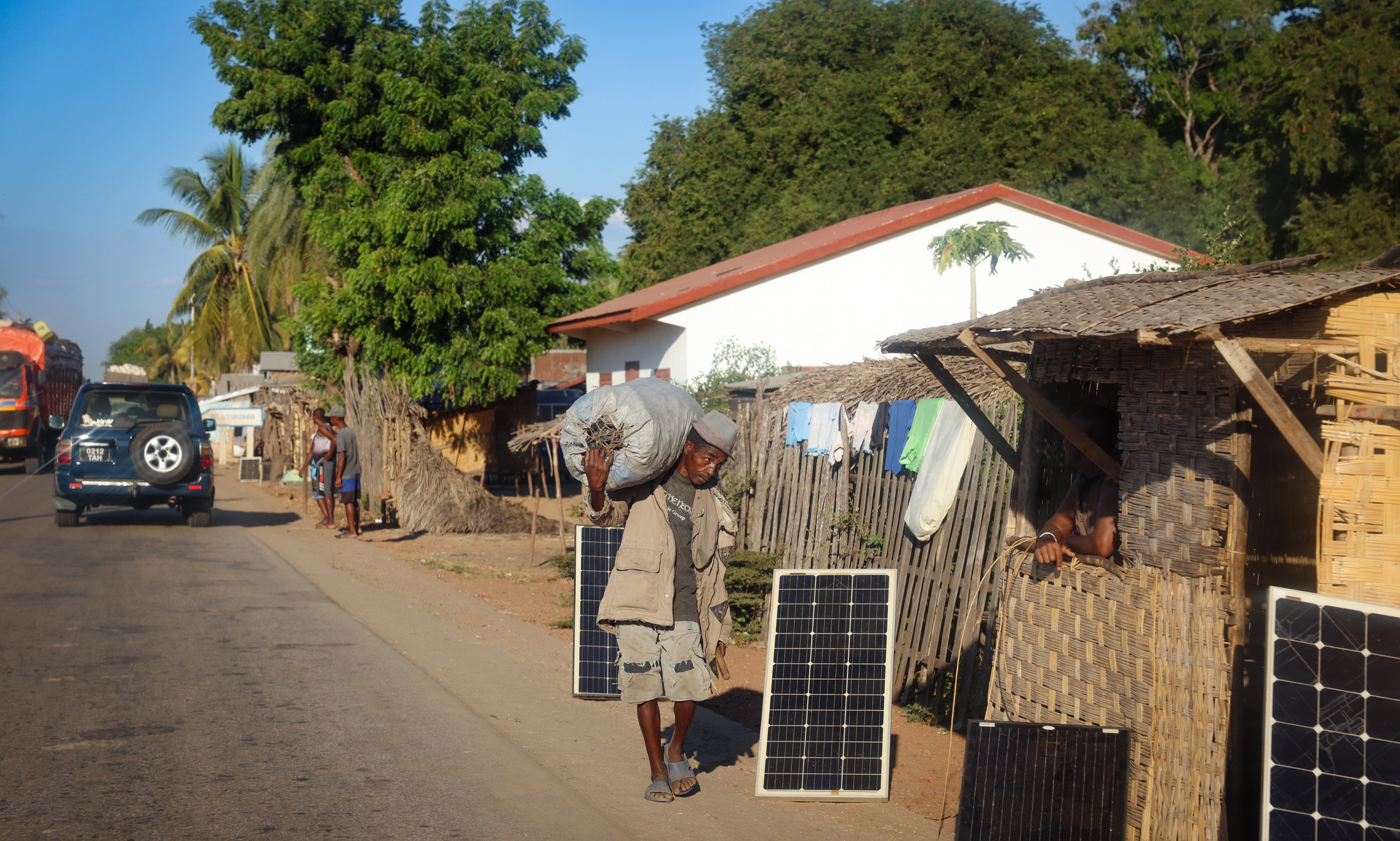
Worryingly, solutions to fight the climate crisis, including the energy transition, might add new burdens to low- and middle-income countries and marginalized groups. This situation is particularly challenging for resource-rich countries, given possible shocks to resource revenues and labor markets, socio-environmental and governance challenges, the intensification of social conflicts, and the lack of universal, affordable and reliable energy access.
The 'People-powered energy transitions in resource rich countries' report provides insights into the equity and development challenges that oil, gas and mineral rich countries face as the world attempts to fight climate change, and offers inputs to define policies, practices and tools that can help address such challenges and promote a just, people-powered energy transition.
The energy transition could also represent a financial opportunity for many countries. According to the Global Commission on Economy and Climate Change in 2018, the green economy could yield gains of USD 26 trillion by 2030, compared with business as usual. The International Energy Agency (IEA) predicts that if the necessary policies are implemented, 14 million jobs could be created by 2030. Yet this will require significant efforts by governments, companies and other actors in the education and technology sectors to ensure these new jobs and opportunities reach women, youth and other marginalized populations. This document seeks to advance a framework to ensure equity in resource-rich countries in the context of the global energy transition.
NRGI's report provides insights into the equity and development challenges that oil, gas and mineral-rich countries face as the world attempts to fight climate change, and offers inputs to define policies, practices and tools that can help address such challenges and promote a just, people-powered energy transition. By suggesting the notion of a people-powered transition, the framework emphasizes the need for all people—with special focus on the most marginalized groups—to benefit from transition processes, avoiding the inequities of traditional development models and explicitly addressing the question of who benefits from a “just” outcome. A transition powered by people explicitly includes these groups and civil society as agents, and not simply as passive recipients of policies—although it recognizes that both people and nature need to be at its core.
The text is the product of a research process undertaken by NRGI, based on:
- A review of relevant academic literature
- Analysis of key global and regional organizations’ positions on a just transition, and
- The incorporation of initial lessons learned from NRGI and partners’ projects on the just transition, especially at country level.
The report has three sections. The first analyses the equity challenges that resource-rich countries face. The second describes equity concerns linked to asymmetrical power relations at international level. The third section explains the evolution of the notion of a just transition and different approaches related to it, and proposes a framework for people-powered energy transitions in resource-rich contexts.
National Oil Companies Are Gaining Ground in Climate Talks. Can COP30 Turn Interest Into Action?

National oil companies (NOCs) have long been peripheral to climate debates. But that’s starting to change.
NOCs produce more than half of the world’s oil and gas output, yet they have remained largely absent from climate debates. Unlike international oil companies, they are state-owned actors that shape and are shaped by national policy. In the last COP cycles, however, their presence has grown.
At COP28, 34 NOCs signed the Oil & Gas Decarbonization Charter, pledging to cut operational emissions, end routine flaring and reduce methane intensity to 0.2 percent by 2030. The Charter, however, does not address emissions generated when the oil and gas they produce is burned, and many signatories continue approving new oil and gas projects, patterns inconsistent with the global stocktake’s call to transition away from fossil fuels.
Beyond COPs, climate interest in NOCs is growing. NRGI has received more invitations to speak at climate forums about NOCs and collaborate on the topic. Other organizations are also expanding work in this space, such as EDF on methane measurement and IISD on NOC transition pathways. Yet, despite this momentum, few governments are integrating NOCs into their climate policies.
Most national pledges overlook NOCs
Only ten countries mentioned their NOC in their NDC 2.0 (in any form, including just a passing reference): Azerbaijan, Cameroon, China, Colombia, Ecuador, Oman, Mexico, Qatar, the UAE and Venezuela. In the current wave of NDC 3.0 updates, only five countries have done so to date: Azerbaijan, Angola, Bangladesh, the UAE, and Venezuela.
As state-owned enterprises, NOCs embody the government’s direct influence—and responsibility—over an important source of emissions. For example, in Mexico the energy sector accounts for around 64 percent of national greenhouse gas emissions, and Pemex alone produces about 95 percent of the country’s hydrocarbons.
Countries that have not yet submitted their NDC 3.0 can still integrate them in this round; those that have can incorporate them into implementation frameworks so that climate commitments remain credible.
However, a mention is not a commitment to action. Below are core elements of robust NOC integration into NDCs. To date, only the first category appears in any NDCs.
- Set explicit carbon and methane reduction targets for the NOC.
- Colombia’s NDC 2.0 mentions that “Ecopetrol committed in 2019 to reduce its emissions by 20% by 2030 in line with the country target defined in 2015.”
- Qatar’s NDC 2.0 states that “Qatar Petroleum (QP) is committed to zero routine flaring by 2030, with a long-term goal to reduce flaring in onshore facilities to the absolute minimum.”
- Mexico’s NDC 2.0 notes that “Petróleos Mexicanos has set a methane gas utilization target of 98%, considering the production of existing and new fields.”
- The UAE’s NDC 3.0 mentions the NOC’s ambition “to achieve net zero by 2045” and “reduce carbon intensity by 25% by 2030,” and a target to “have methane intensity below 0.15% by 2025.”
- Express those targets in absolute terms, with defined baselines and reference years.
- Cover full value chain emissions—including Scope 3 emissions—associated with current, planned and projected operations, with clear milestones for national action on Scope 1 and 2.
- Disclose or estimate the NOC’s share of national emissions.
- Explicitly align NOC strategies and capital spending with national climate targets.
- Establish a framework for tracking NOC-specific emissions and progress.
- Acknowledge exposure to transition risks (economic, fiscal and market impacts from a long-term decline in oil and gas demand).
- Task the NOC with contributing to a just transition such as regional economic diversification, workforce reskilling and responsible infrastructure decommissioning.
- Involve NOC leadership and workers in the NDC drafting process.
Why stronger NOC targets could unlock climate finance
International lenders and climate finance institutions increasingly treat NDCs as investment plans. When NOCs are major emitters, they need NOC-specific targets and disclosures. Without this level of transparency, it is difficult to assess investment needs or align climate finance instruments.
Methane reduction is where climate finance can move fastest. Around 80 percent of oil and gas abatement options are cost-neutral or profitable. NOCs could lead the way. With targeted funding for leak detection, flaring reduction and monitoring, governments could secure rapid, measurable results.
For countries like Mexico or Nigeria, where regulations already exist but enforcement is weak, including these targets in NDCs could strengthen oversight and attract international support for implementation.
Climate planning around NOCs must also address just transition responsibilities
The UNFCCC has emphasized that this next round must include the social and economic plans that make emissions targets viable—and this just transition focus is set to increase at COP30. For countries with NOCs, such plans are impossible without them.
In many low- and middle-income countries, NOCs are major employers and fiscal pillars. NOCs also often safeguard national resources and ensure energy security. Their operations are tied to public services, regional development and politics, making them vital actors and potential obstacles to change. For example, Pemex has resisted methane regulation and enforcement efforts, shifted targets and limited independent oversight.
Global just transition agendas, including the UNFCCC’s Just Transition Work Programme, rarely mention NOCs. Recognizing their role is crucial to building just transition strategies that are socially inclusive and politically viable.
In Mexico, oil-dependent states of Campeche and Tabasco are already feeling the effects of declining production—from shrinking fiscal revenues to job losses. Mexico’s climate policy should incorporate explicit just transition measures linked to Pemex’s operations, focusing on regional economic diversification, workforce reskilling and responsible decommissioning of oil infrastructure.
How can COP30 advance the integration of NOCs in climate action?
Brazil—where Petrobras’s role continues to expose the tensions between climate ambition and fossil expansion—offers a key stage to keep NOCs in focus and advance their integration into national climate policies. This means embedding NOCs into national climate frameworks with measurable targets, transparent reporting and clear roles in just transition strategies.
If the right framing and direction are set, COP30 can help governments, investors and climate advocates to embed NOCs into the architecture of climate governance—ensuring that the actors most central to the fossil economy become equally central to its transformation.
EU-LAC High Level Dialogue on Energy Transition (COP30)
Finland Pavillion, COP30 Blue Zone

As part of the EU-LAC High Level Dialogue on the Energy Transition at COP30, the Just Transition Panel will involve a targeted discussion on fair and inclusive energy transitions with and between think tank and civil society actors, private sector stakeholders and government representatives from both the EU and LAC regions. This Panel will foster an exchange of experiences and lessons learned related to the social and economic opportunities and challenges of the energy transition.
Following the UAE Consensus at COP28, the world demonstrated a collective commitment to ensuring the energy transition away from fossil fuels occurs in a “just, orderly and equitable manner”, leaving no one behind. This Panel will provide an opportunity for dialogue, while building new linkages and avenues of cooperation between EU and LAC actors.
Summary of insights
NRGI’s Ana Carolina González Espinosa, Senior Director for Programs, moderated the Just Transition Panel, which examined the social, economic, and governance dimensions of transitioning away from fossil fuels. She spoke on five areas that are critical for deepening cross-regional collaboration, including:
- Centering energy-transition minerals in global standards. The EU’s Critical Raw Materials Act sets important norms—especially for Latin America, which supplies 25 of the EU’s 34 critical raw materials.
For the first time, the Just Transition Work Programme (JTWP) at this COP includes references to minerals, providing an opening to embed transparency, community participation, and gender inclusion in mining governance.

- Scaling renewables with strong social safeguards. While the EU is a major investor in renewable energy across Latin America, investment must be paired with early and meaningful community engagement, Indigenous consultations, and gender-responsive benefits. Countries like Denmark, Germany, and Spain offer valuable examples of how shared ownership and community involvement strengthen trust.
- Building inclusive green industrialization. EU–LAC cooperation can support long-term financing, guarantees, and market access—helping Latin American economies move up the value chain and build resilient, job-creating green industries.
- Advancing a just, orderly, and equitable transition away from fossil fuels. Hydrocarbon-dependent regions in Latin America will need diversification, reskilling, and long-term planning. The EU—particularly Spain, with its pioneering Just Transition Ministry—has important lessons to share. European companies must also adhere to high standards on responsible exit and decommissioning as they scale down fossil-fuel operations.
- Strengthening regional cooperation within Latin America. By supporting intra-regional coordination, the EU can help Latin America negotiate with a unified voice, set shared standards, and avoid a regulatory “race to the bottom.” This aligns with NRGI’s people-powered transitions framework, which emphasizes transparency, strong institutions, and community-centered policies.
Featuring NRGI's

Ana Carolina González Espinosa
Senior Director for Programs and Latin America Director
From Mine to Market: Using Traceability to Fight Mineral Sector Corruption

In the global rush for transition minerals, the path from mine to market may become a corridor of corruption. It’s a journey where smuggled minerals vanish, illicit funds are laundered, and communities are left behind. Traceability, then, isn’t just about tracking a product for commercial reasons; it’s about how it can be used to build responsible and resilient value chains.
This two-page briefing explains how traceability systems can help identify corruption risks in mineral supply chains and support stronger due diligence. It outlines practical ways companies, governments and civil society can use traceability data to detect red flags, strengthen transparency and promote accountability—from mine to market.
Developed by the Expert Group on Preventing Corruption in Transition Minerals, bringing together experts from civil society, governments, academia, and international organizations.
With thanks to experts from Basel Institute on Governance, EITI International Secretariat, GIZ Sector Programme Extractives and Development, Global Witness, International Energy Agency (IEA), Initiative for Responsible Mining Assurance (IRMA), Instituto Escolhas, Natural Resource Governance Institute (NRGI), OECD Centre for Responsible Business Conduct, Oxfam America, Resource Justice Network, Transparency International Australia, United Nations Interregional Crime and Justice Research Institute, and University of Dundee for their collective contributions to the piece.
Learn more about the work of the Expert Group on Preventing Corruption in Transition Minerals in this blog post.
Traceability Is the Word on Everyone’s Lips, But What Do Anticorruption Experts Think?

Accessing reliable information on supply chains is one of the perennial challenges of a sector as complex as mining, with the various midstream and downstream industries that rely on it. Traceability has emerged as one approach to address this challenge and support fairer and reliable supply chains. But action is needed to ensure that the concept becomes more than a buzzword.
What is traceability?
Traceability is the ability to track three types of information related to a product: (1) its geographical route, including origin, processing or transit; (2) its chain of custody, that is, the various entities that have held the product throughout the supply chain; and (3) its physical evolution, including processing and transformation.
Many hope that traceability will unlock a fairer mining sector, including by helping tackle harmful corruption. We’ve seen how corruption in the sector denies citizens and communities access to the benefits of mining, exacerbates and obscures social and environmental harms, and leads to costly delays and disruptions which impact supply chain stability. Yet there are also concerns that traceability is being presented as a magic solution to nuanced and complex problems. Without serious consideration of how to use the data for positive change, it risks becoming yet another tick box exercise. While useful, traceability alone is not a substitute for due diligence.
One thing is clear: minerals and efforts to make their supply chains more traceable—and ultimately more sustainable and secure—are expected to receive significant attention at international fora in the closing months of 2025. At COP30 in Belém, Parties[AM1] and advocates are aiming for the first ever mention of minerals and their relevance for a just transition in COP text. The Colombian government has tabled a draft resolution at the UN Environment Assembly (UNEA7) in December, aimed at advancing talks on a global mineral treaty, after first proposing the idea of a binding international agreement on minerals traceability and accountability when it hosted the biodiversity COP16 in 2024.
Traceability and anticorruption efforts
Given these efforts, the Expert Group on Preventing Corruption in Transition Mineral Supply Chains today published a two-page explainer for decisionmakers on how traceability can—and cannot—be used to fight the pressing issue of mineral sector corruption. We explore how traceability data can be used to support anticorruption due diligence efforts, the limitations of traceability systems for anticorruption work, ensuring the integrity of traceability systems themselves, and the roles that different actors can play.
The explainer is the latest collaborative effort from the Expert Group, set up in 2022 as a multistakeholder forum of experts from civil society, governments, academia, enforcement agencies, and international organizations, co-coordinated by Natural Resource Governance Institute, the Extractive Industries Transparency Initiative (EITI) International Secretariat, and the Organisation for Economic Co-operation and Development (OECD) Centre for Responsible Business Conduct. We came together to draw attention to the risks of rapid growth in a sector that is of critical importance to discussions on both the energy transition and energy security.
Below, members of the group share why talking about this topic matters.
Traceability systems for critical minerals enable transparency across mineral origins, ownership structures, supply chain movements, and sustainability performance. As highlighted in the IEA-OECD report on the Role of Traceability in Critical Mineral Supply Chains, well-designed systems provide actionable data to policy makers and industry, helping to identify risks, promote diversification, and enhance energy security.
K.C. Michaels, Legal Counsel, International Energy Agency
Our research shows that corruption is a key enabler of criminal activity along mineral supply chains, shaping who gains access, how oversight is applied, and how revenues are distributed. Traceability and emerging technologies can make a real difference to anticorruption efforts, but only when supported by strong integrity mechanisms that keep data reliable and credible throughout the supply chain.
Matthew Burnett Stuart, Programme Officer, United Nations Interregional Crime and Justice Research Institute (UNICRI)
At Resource Justice Network, we envision traceability as a paramount tool for ensuring a just energy transition. But access to data is not enough, without accountability, traceability becomes a box-ticking exercise. By integrating strong anticorruption measures, we work to ensure that transparency translates into real justice for communities and effective governance across the supply chain.
Pierre Saade, Head of MENA Region and Anticorruption Focal Point, Resource Justice Network
To discuss the ideas and recommendations in the explainer, please reach out to Susannah Fitzgerald at sfitzgerald@resourcegovernance.org.
Explore how traceability data can strengthen integrity in mineral supply chains in the "From Mine to Market" briefing.
Just Transition or Just Extraction? Safeguarding People and Planet in the Transition Minerals Rush (UNFCCC Side Event at COP30)
Room 5, COP30 Blue Zone

Transition minerals such as copper, lithium and cobalt are key to achieving the Paris Agreement aims. Still, their extraction and trade often undermine human rights and the environment, particularly in the Global South, where communities face the direct impacts of mining expansion.
This COP30 side event will explore priorities for ensuring that globalized minerals supply chains advance just energy transitions, those that deliver justice, restore ecosystems and benefit people and communities.
The discussion will feature two linked panels. The first will highlight regional experiences from Latin America, Africa and Asia on governance, safeguards and community participation in mining. The second will focus on COP30 priorities, including how negotiations under the Just Transition Work Programme can secure a rights-based, equitable approach to transition minerals.
This session will be livestreamed; a link will be shared soon.
Panel 1: Transition minerals in the Global South
Regional perspectives on how mineral-rich countries are addressing social and environmental safeguards, transparency and community participation in extraction.
Moderator: Nafi Quarshie (NRGI)
Speakers:
Ana María Mogollón (Transforma)
Krista Shennum (Climate Rights International)
Kudakwashe Manjonjo (Power Shift Africa)
Panel 2: Priorities for the COP30 negotiated outcome
How COP30 negotiations can ensure the minerals rush upholds human rights, environmental protection and equity, including through the Just Transition Work Programme.
Moderator: Felipe Arango (Transforma)
Speakers:
Elisa Morgera (OHCHR)
Melissa Marengo (NRGI)
Anabella Rosemberg (CAN – TBC)
Featuring NRGI's

Nafi Quarshie
Africa Director

Melissa Marengo
Portfolio Coordination Lead