
Chile’s National Lithium Strategy: Key Governance Questions

The announcement of the launch of Chile’s lithium strategy raised several key questions about the future of lithium mining. What will the development of public-private partnerships look like? How will fiscal and transparency rules be applied? And how will citizen participation be ensured?
On Thursday, 20 April 2023, Chile’s president Gabriel Boric launched Chile’s "National Lithium Strategy," or #LitioporChile, during a live national broadcast. The following day, president Boric elaborated on the strategy during another speech at the Huanchaca Ruins Monument in Antofagasta.
Despite this long-awaited announcement, no documentation with a detailed assessment or goals was shared, with just general outlines of the strategy communicated. The government has only responded to concerns and gone deeper into the proposal through media interviews with authority representatives.
Key points shared during the announcement of the new strategy included plans to establish a new national lithium company, with a draft law to be approved by congress, a new institute for lithium and new technologies, the promotion of state participation in the operations of Salar de Atacama through association agreements with companies with current exploitation contracts, the expansion of exploration and operations to new salt flats, a fiscal rule to limit the expenditure of lithium revenues and the creation of a network to protect salt flats. The government is yet to confirm dates and details for the convening of a participatory process and dialogue with key stakeholders.
As it sets out its national lithium strategy, the government of Chile must address four key questions on the future of the process.
Toward public-private partnerships rather than nationalization
After President Boric's announcement, international media reported that Chile would nationalize its large lithium industry, following in the footsteps of other countries in the region, including Bolivia and Mexico. The government responded during a Bloomberg interview with the Minister of Mining, Marcela Hernando, in which she explained that there are no plans to nationalize. In addition, Kent Masters, CEO of Albemarle, one of Chile’s two lithium producers, shared that “they [international media] are saying that it’s nationalizing lithium, which is not the case.”
While President Boric's speech referred to the “Chileanization” of copper in the 1970s—a progressive nationalization of the country’s copper production—there are no concrete mentions of nationalization in the new lithium strategy. As a strategic natural resource in Chile, lithium is not subject to concessions by law. The two operations currently authorized to extract lithium in Chile, Sociedad Química y Minera (SQM) and Albemarle, are private and operate through leasing contracts. Both companies were cautious following the president’s announcement. But clarifications from the authorities that they would respect existing contracts and that talks would start closer to their completion (2030 for SQM and 2043 for Albemarle, long after the current government's term) indicate that Chile’s lithium strategy is unlikely to lead to a nationalization of the lithium industry. SQM even announced a USD 3.4 billion investment plan for 2025.
Besides, creating a new state-owned lithium company would require congressional approval. The government has previously faced difficulties in passing key projects, such as the tax reform, which was ultimately rejected, and with the part on royalty substantially amended to ensure it would pass through congress.
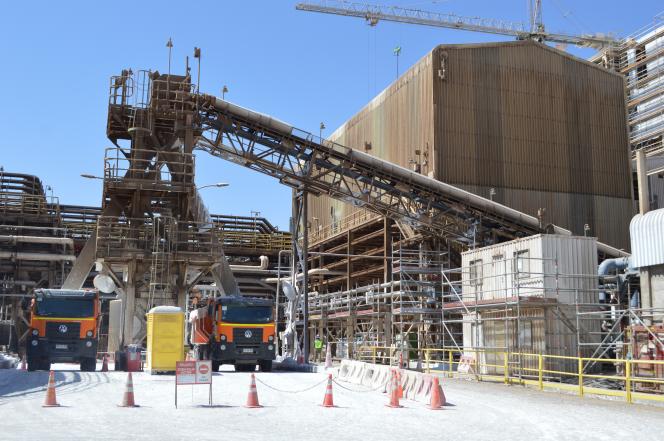
An interpretation of President Boric's statement is that the state intends to ensure active state participation in the lithium industry through existing state companies Codelco and Enami in the form of public-private partnerships. This is already the case for the country’s copper sector, where both companies participate on a minority basis with private companies in operations such as El Abra (49 percent of Codelco), Quebrada Blanca (10 percent of Enami) and Los Bronces (29.5 percent of a joint venture between Codelco and Mitsui). However, a majority stake by state-owned companies would be unparalleled, but, according to the minister of finance, such large stake would not apply to all projects, only to those of “strategic significance.” Clarifying what is meant by that definition will help understand how the government’s lithium strategy intends to approach public-private partnerships.
Fiscal rules and transparency
A noteworthy part of the announcement on Chile’s lithium strategy was the proposal to introduce a fiscal rule with a cap on lithium revenue expenditures, generating savings for social and technological investments. The president referred to a note from the autonomous fiscal council—an independent advisory group of the ministry of finance—published in February this year recommending this approach. The fiscal rule for lithium should form part of a sovereign savings and stabilization fund that can help face the volatility of revenues and provide sustainable financing towards its stated purposes, including social and technology investments.
The note also highlighted the need for increased availability of official information and improved fiscal transparency standards around lithium revenues.
With this in mind, the explicit reference to Chile's adhesion to the EITI (Extractive Industries Transparency Initiative), stating that “the process will begin to incorporate Chile to the EITI, to ensure greater transparency and probity in all extractive industries including lithium mining, meeting the highest international standards” is encouraging.
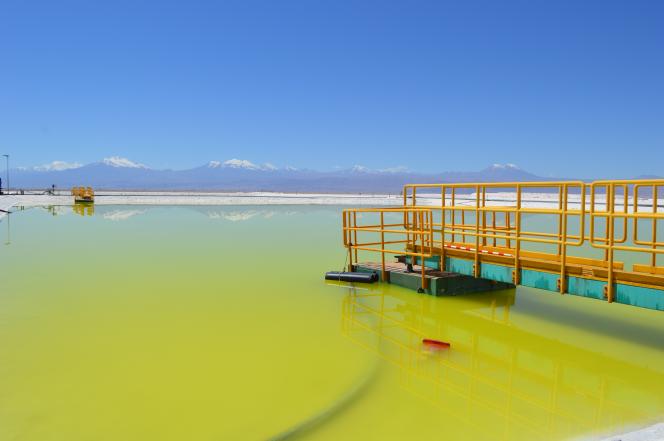
In this context, an important objective of the policy agenda should be on turning this intention into reality, tackle issues around opacity and lack of access to information in the sector, including lack of transparency around the negotiation and awarding of contracts, especially considering planned expansions to new salt flats. This would be in line with the recommendations of the Expert Group for the Prevention of Corruption in Energy Transition Mineral Supply Chains, led by NRGI in coordination with EITI and OECD.
The functioning of the participatory process, the invitees, and the real possibilities of influencing the definition of the future policy will be crucial elements to ensure good governance of the strategic reform process.
Research institutes
The direction of the current strategy is to aim for a sector with higher value addition. To this end, the government is proposing creating an institute of lithium and new technologies, which will be based in Antofagasta.
One of the provisions of the updated lithium contracts is that mining companies would finance technology institutes in Chile focused on research in energy, low-emission mining and the battery industry, with contributions of between $10 million and $18 million.
On the other hand, there are already specialized institutes part of existing national institutions, as is the case of the Advanced Lithium Research Center of the Universidad de Antofagasta.
Given this context, continuing and deepening funding of research, development and innovation programs already in place, to which different institutions can apply, seems preferable to creating a new institution from scratch.
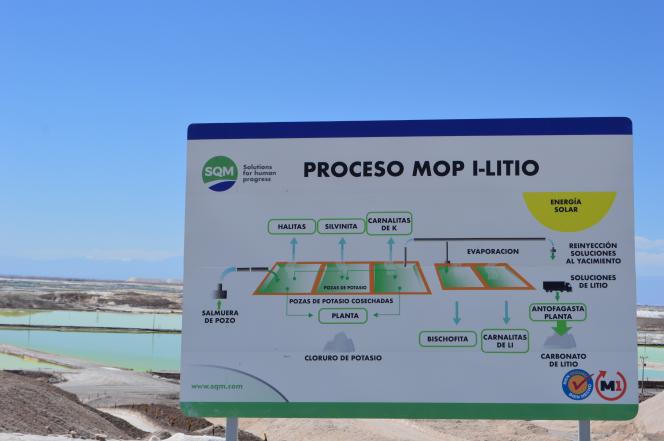
The announcements made in April are just the start of a long and complex process, which will require several different steps and approaches. The success of this strategy requires full participation and dialogue with various stakeholders. The national lithium strategy announcements provide broad guidelines, giving a general idea of the political direction the government wants to follow for lithium. However, the government still needs to define many key aspects to address several of the open questions around the lithium strategy. The government must take the steps needed to promote a process that is seen as legitimate by the different actors involved in the lithium sector.
Extractive Company Disclosure of Project-Level Greenhouse Gas Emissions is Critical

Climate change and the transition to a low-carbon economy present the citizens of oil-, gas- and mineral-producing countries with both risks and opportunities. The reality is that extractive projects that emit high quantities of greenhouse gasses (GHGs) as part of their operation will become less competitive, risking that some investments will become “stranded”—i.e., economically unviable. But the Extractive Industries Transparency Initiative (EITI), a global standard for the good governance of natural resources, can play a crucial role in preventing this outcome.
Civil society organizations as well as some EITI member governments are therefore asking oil and mining companies to disclose granular, project-specific greenhouse gas (GHG) emissions data. With this information, governments can plan for the risks that the energy transition will bring to projects in which they have invested a significant amount of public finance, and citizens groups can exercise oversight of government decisions.
While the energy transition is imperative, in the near term it will have significant implications for government revenues, jobs, and business opportunities, and these must be better understood. And for that, GHG data are essential. Among all climate risk disclosures, GHG emissions are a top priority (even though there are other key disclosures as well, such as information about reserves).
Many oil and gas companies have so far resisted demands from the public and investors for more meaningfully detailed GHG disclosures, claiming that they already disclose GHG emissions data through multiple evolving disclosure initiatives. Granted, many large publicly listed extractives companies publish GHG emissions data in their own sustainability reports or through the CDP, a disclosure system for climate change information.
Most of these disclosures meet voluntary market-led standards including the recommendations of the Task Force on Climate-Related Financial Disclosures (TCFD), or the Sustainability Reporting Guidance for the Oil and Gas Industry. Moreover, governments and regulators, including the EU and the U.S. Securities and Exchange Commission, are taking steps to mandate these disclosures, while the newly formed International Sustainability Standards Board (ISSB) is developing a new set of standards to serve as a “global baseline,” with high-level backing from the G7, the G20, and finance ministers and central bank governors from over 40 jurisdictions.
But these emerging initiatives do not meet the data needs of key stakeholders; nor is the dissemination, public use, and impact of such disclosures by any means assured. The emerging disclosure architecture for GHG emissions is largely investor-focused. And while company-wide figures can help investors, these data are practically useless for government officials and citizens who seek to understand how company risks and opportunities impact specific jurisdictions and communities. For this they need project-level data.
Such granular detail would also aid investors, allowing them to see precise risks within asset portfolios. For example, project-level emissions data in Repsol’s 2021 CDP disclosures showed that one asset, the PM3 oil field in Malaysia, produced as much as 31 percent of the company’s annual scope 1 emissions in 2020. Project-level data also allows investors to understand how companies work to address their emissions. Repsol sold PM3 in 2021, a potential example of how companies may be using asset transfers to make questionable progress toward their emissions reduction targets. Acknowledging this trend, non-profit organizations Ceres and the Environmental Defense Fund recently recommended asset-level emissions disclosure as part of a set of climate principles for mergers and acquisitions in the oil and gas sector. They developed the guidance in consultation with a range of asset managers, private equity firms, banks, and oil and gas companies.
Civil society and government advocacy for project-level reporting of GHG emissions for oil, gas and mining companies has recently focused on EITI. Including such a provision in the EITI standard makes eminent sense for three reasons.
First, EITI is an extractives-specific governance standard, and this is an extractives-specific governance issue. Second, EITI focuses on government and company disclosures that policy makers and citizens can use—precisely the stakeholders that the evolving investor-focused initiatives have left out. And these EITI disclosures tend to be granular, often when relevant at the project level. Third, and perhaps most importantly, EITI has an advanced participatory implementation structure that supports national-level discussion and engagement between companies, governments and civil society—which the existing disclosure initiatives for GHG emissions reporting do not provide.
Company executives have suggested that bringing GHG emissions reporting into EITI could be duplicative. But it need not be. Among other sources of data, the EITI generally accepts routine disclosures through official websites, journals or publications. This means that most companies could comply with an EITI GHG disclosure guidance by simply adding a project-level breakdown to the GHG reporting they already make through the CDP or their own sustainability reports.
In fact, of the 10 exploration and production companies represented on the global EITI board, three—Anglo American, BHP and Newmont—do this already; while a further three—Equinor, Kosmos Energy and Royal Dutch Shell—provide country-level data that in some instances is close to project-level in detail. For these companies an EITI recommendation for project-level reporting would simply level the playing field, bringing the practices of less-forthcoming companies up to their high standards. Importantly, this would include national oil companies and privately held companies, which fly under the radar of most international reporting standards, but not EITI.
Members of the EITI board—including representatives of rich countries supporting the initiative, emerging countries, industry and civil society—are deciding on a new EITI standard which will govern the initiative for at least the next three years. They owe it to citizens and policymakers in producing countries, to investors, and to the future of the planet to ensure meaningful transparency about GHG emissions. It is time for disaggregated data disclosures of GHG emissions in EITI.
Photo by bhumann34 for Pixabay
The EITI Standard now promotes GHG emissions disclosure by companies for the first time.
Governments and Companies Must Address Climate and Governance Risks When Petroleum Assets Change Hands

Whether driven by climate targets, reputational risk, financial considerations, or a combination of factors, some multinational enterprises are selling petroleum assets, sometimes as part of their decarbonization strategies. However, simply selling petroleum projects may not reduce, and may actually increase, climate impacts if assets are transferred from companies with stronger environmental and reporting commitments to those with weaker commitments. Moreover, unless handled responsibly, disengagement by reputable firms may increase certain other risks for host developing countries and their citizens, such as exacerbating weak governance, corporate capture and corruption, conflict, and human rights abuses. Governments, companies, investors and civil society actors should ensure that, when petroleum projects change hands, sustainability and governance standards do not slip. This may require revisiting approaches to petroleum laws and contracts and updating our understanding of company and investor social responsibility.
Seller companies should recognize that they too have important responsibilities. Sellers may soon see limits on a “clean” exit when transferring petroleum assets to less responsible parties. Increasing attention to the environmental consequences of such asset sales may mean growing reputational risks associated with irresponsible exits, along with pushback on whether such divestments should count as part of a company’s net-zero strategy. On the mining side, some legal experts have recommended that sellers conduct due diligence on buyers to assess their mission and reputation, ESG standards and adherence to international best practices, and that agreements include buyer commitments to maintain operating standards, stakeholder commitments and rehabilitation requirements. Such measures are critical for petroleum asset sales too, and sellers may build on existing approaches, such as buyer due diligence, to address anti-corruption risks. The appropriate mechanisms will depend in part on relevant laws of the applicable jurisdictions, but sellers will want to avoid the appearance of washing their hands of dirty projects to take a step forward on achieving their own net zero and ESG targets, while the host country and the planet take a step back.
Further, investors, regulators and standard-setting bodies that shape sector norms have a critical role to play in influencing company incentives and behavior. Climate disclosure and emissions reduction rules and standards must address reporting on transfers and transferred emissions. Emerging industry norms should also address broader risks associated with fossil fuel asset sales. These actors should develop standards that require sellers to conduct, and report on, due diligence on key policies and practices of buying companies, such as their environmental commitments, stakeholder engagement and measures to combat corruption internally and in engagements with high-risk partners.

Nicola Woodroffe and Erica Westenberg, ‘Governments and companies must address climate and governance risks when petroleum assets change hands,’ Columbia FDI Perspectives, No. 352, March 6, 2023. Reproduced with permission from the Columbia Center on Sustainable Investment.
Top photo by Spencer Thomas; bottom image by Shutterstock
Nigeria’s Next Government Must Lead an Inclusive, Cohesive and Sustainable Energy Transition

In a bid to avert the global climate crisis, countries are shifting toward cleaner energy systems. This presents a challenge to African countries like Nigeria that rely on dirtier fuels for both export revenue and domestic energy to drive their economies. But it is also an opportunity for Nigeria to transition its own energy system to improve energy access, reduce oil- and gas-related pollution, and develop industries to supply this transition.
The government’s Energy Transition Plan (ETP) is a pivotal step in responding to this challenge and opportunity. It comes at a huge cost—$1.9 trillion—and requires major social and economic changes. As citizens vote this weekend, it is essential that they have a better understanding of and a greater say in the country’s energy transition plan—even though none of the major candidates have even referenced the transition plan. This is a grave omission.
The plan prioritizes decarbonizing five sectors—power generation, oil and gas extraction, cooking, industry, and transport—and positions gas as the main fuel for electricity generation. However, it omits details on how to achieve its priorities. It aspires to drive economic growth but does not account for the risk the global energy transition presents for Nigeria’s oil sales and the loss of federal and state government revenues to fund this growth. It seeks to bring electricity to the 43 percent of Nigerian homes in darkness but does not provide a holistic framework for addressing long-standing domestic energy sector finance and infrastructure challenges. It aims to reduce poverty by creating jobs and increasing energy access but does not specify how the technological, financial and human resource gaps will be filled.
Prior to the COP27 climate conference, Victoria Ibezim-Ohaeri from Spaces for Change spoke to NRGI about the need to learn from past lessons.
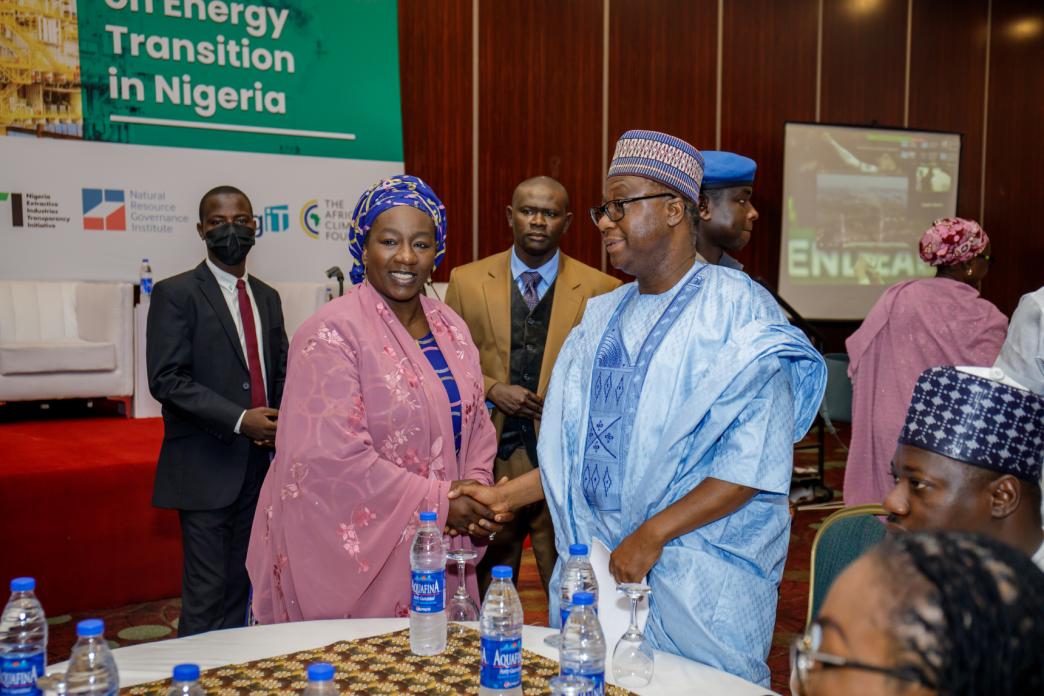
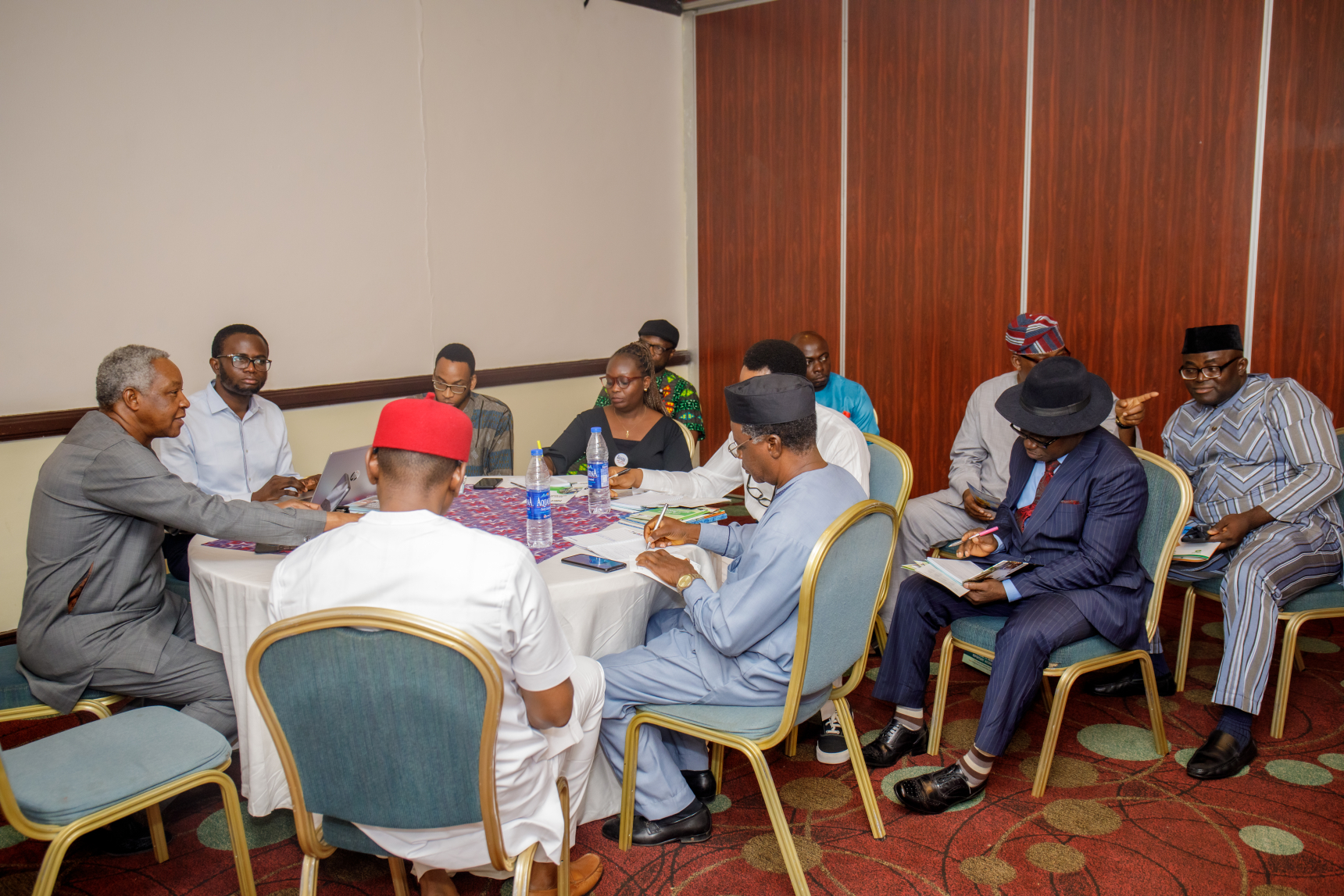
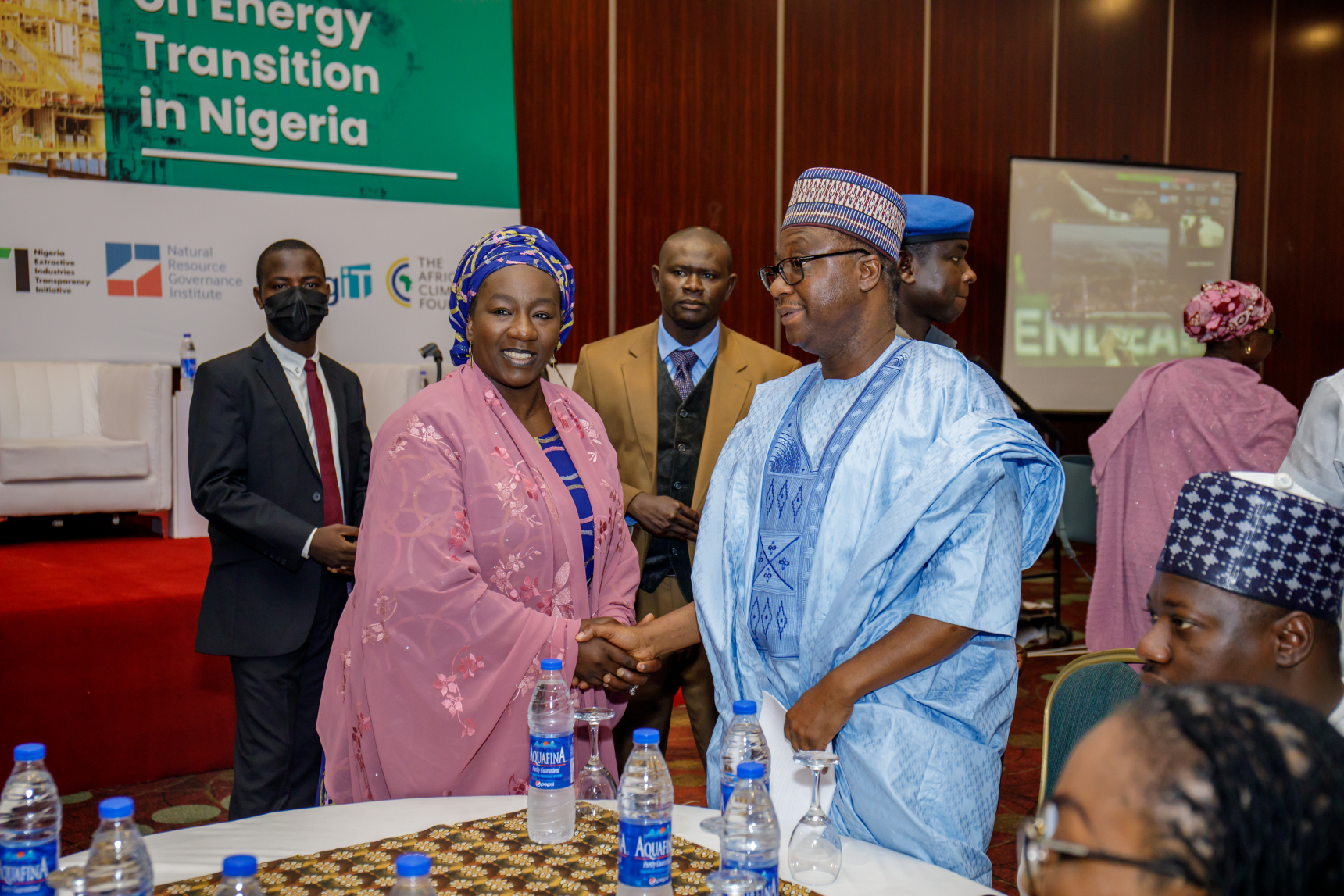
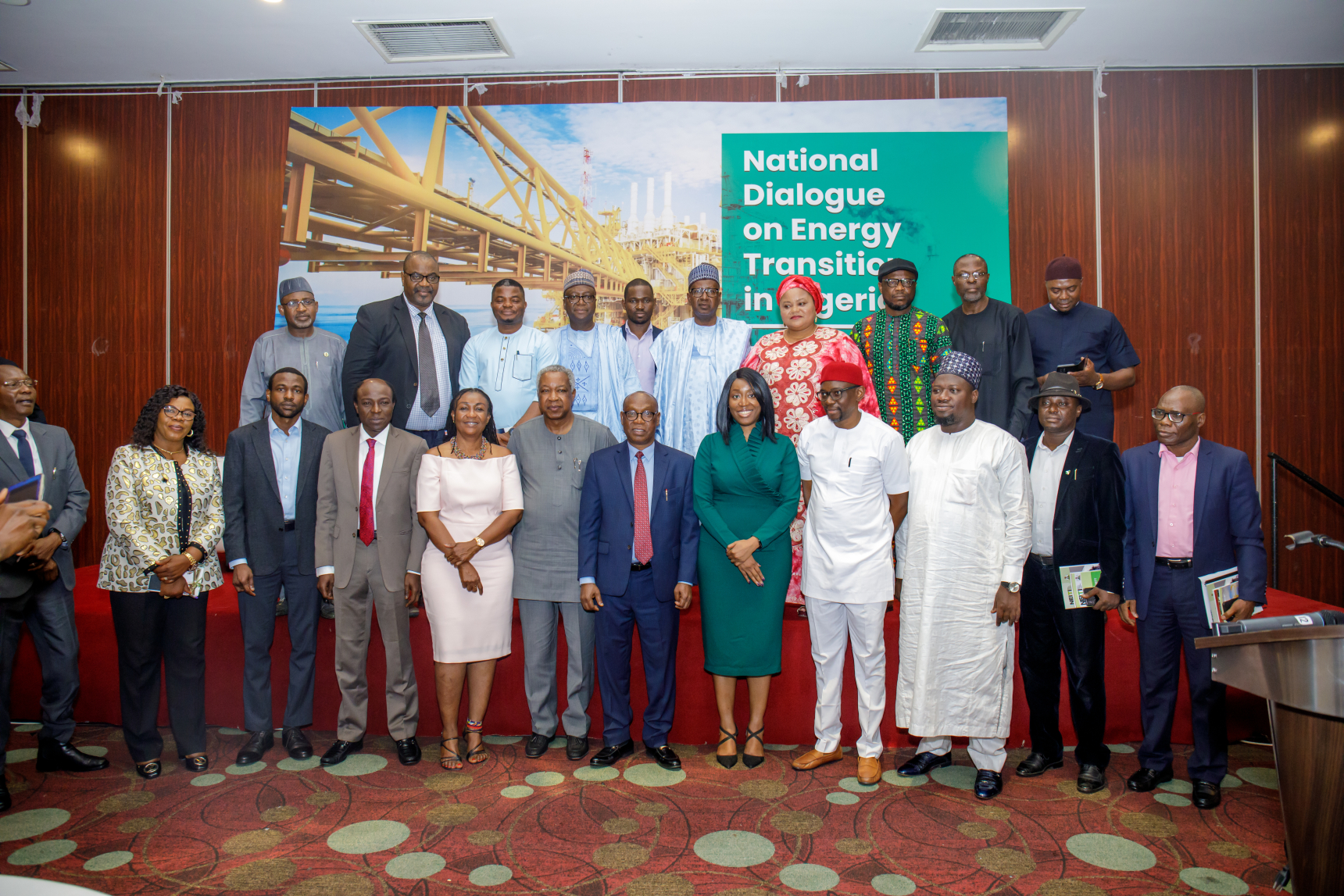
To address these omissions, last October, the Natural Resource Governance Institute (NRGI), the Nigerian Extractives Industry Transparency Initiative and BudgIT Foundation convened a national dialogue. Participants produced a communiqué with recommendations for consideration by the incoming government. In condensed form, they are:
- Mitigate the risk to Nigeria’s dependent economy. As Nigeria’s oil export customers transition their own energy systems and reduce demand for Nigerian oil, Nigeria’s oil-dependent economy and government finances will be increasingly exposed to risk which the energy transition plan does not adequately acknowledge. Nigeria’s next government should map risks to government revenues, employment, foreign exchange, supply chains, and Nigerian National Petroleum Corporation (NNPC) investments.
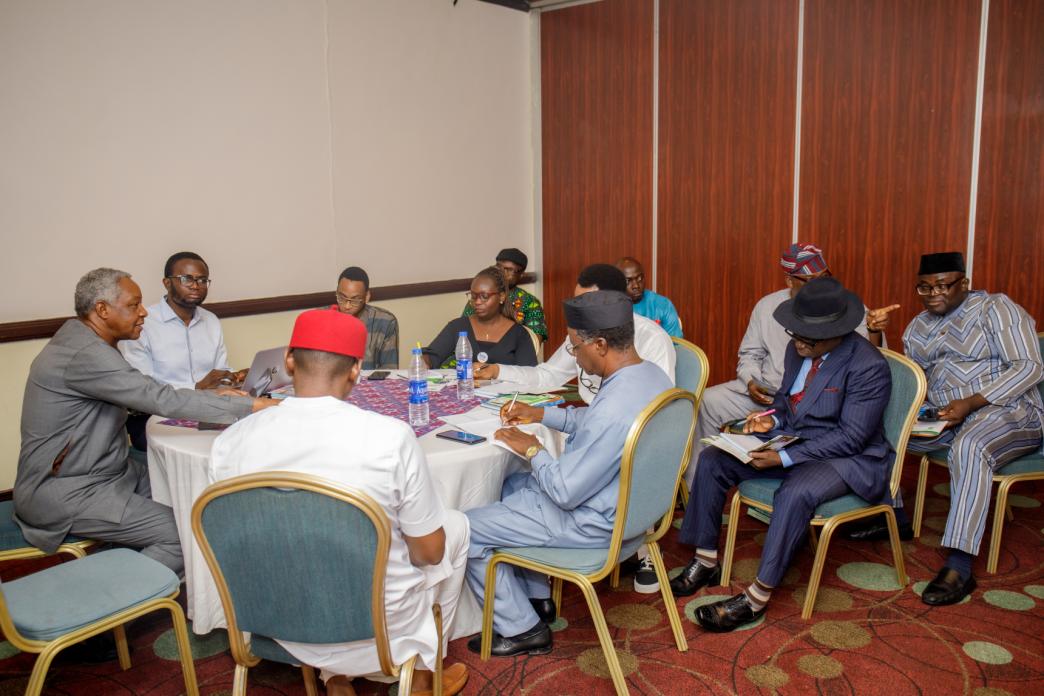
- Prioritize spending that spurs sustainable development beyond oil. Now, Nigeria pays more for oil subsidies than its anticipated earnings from oil. Prioritizing subsidy payments takes scarce resources from other sectors such as agriculture and information technology. Also, the NNPC continues to increase oil investments in what may become stranded assets. Authorities could better serve Nigerians if they built systems to reduce Nigeria’s oil dependency.
- Attracting investments to fund the plan. Nigeria must attract investment from donors, financial institutions and philanthropists in order to implement the ETP and diversify the economy beyond oil. The new government should provide incentives that encourage tangible investments in infrastructure, human resources, technology and other areas essential to delivering on the ETP rather than taking on unsustainable debt.
- Streamline and clarify policies and plans. The Federal Ministry of Finance, Budget and National Planning should ensure that the plan is properly aligned with existing federal and state plans. This includes the 2021 Nationally Determined Contributions, Decade of Gas Plan, Power Sector Recovery Plan, the National Development Plan, and other iterative plans to ensure that the ETP is implementable, realistic, and adopted by implementing government institutions. This is necessary to clearly demonstrate how the government can achieve its net zero goals and also ensure sustainable economic development.
- Resolve environmental legacy issues. As transition minerals such as lithium gain more importance in the global transition, the Federal Ministry of Mines and Steel Development must first address legacy mining issues, including environmental degradation and related social conflict to minimize the impacts before seeking to benefit. The Federal Ministry of Environment must also prioritize environmental remediation in oil-producing communities in preparation for a future beyond oil.
- Clarify its plans for gas use. The plan names gas as a transition fuel. The government should clarify what its expectations are for gas use for economic development and domestic gas energy systems. It must map out the infrastructure, finance and system gaps that have foiled previous gas expansion efforts. It must weigh that against the shrinking global fossil fuel investments and increased divestments from potential gas exploration by partner companies and adjust plans accordingly.
- Be collaborative, cohesive and realistic. Seamless collaboration and buy-in to the objectives of the plan from government institutions is necessary. Massive investment in gas will be required to drive its use as a transition fuel and reduce spending on oil, as set out in the plan. The recently inaugurated National Council on Climate Change (NCCC) should weigh the objectives of the plan against the policies and actions of critical government institutions, such as the Federal Ministry of Power and Petroleum Resources. These must then be reconciled.
- Make the plan inclusive and equitable. NRGI has found that oil-producing communities, women and youth groups appear to be the least consulted and prioritized in the current ETP. Implementing it requires buy-in and active participation. Few Nigerians understand the plan, how it applies to average people, or their role in making it a success. Citizens cannot get behind a plan that they don’t understand—especially if they are to change energy use (from petrol and diesel to power businesses and households, and from kerosene and charcoal for electricity and cooking) to the solar and biogas sources the plan envisions.
Prior to the COP27 climate conference, Tijah Bolton-Akpan from Policy Alert spoke to NRGI about how community voices should help shape the energy transition plans and hold decision-makers accountable.
- Strengthen governance of the Energy Transition Plan. So far, the Federal Ministry of Environment and the Energy Transition Office have led on the ETP. The NCCC will soon assume leadership of the plan. To be effective, the council should be constituted in a fair, equitable and representative way that ensures that it retains the gains and institutional knowledge generated so far. The council should adopt policies that focus on transparency in revenue generation and spending of transition funds and use engagement frameworks to inform stakeholders of progress and plans.
While no one can say who will triumph in Nigeria’s elections, it is clear that bold and inclusive leadership on the country’s energy transition must be among their priorities.
Boom or Bust: Will Mineral-Rich Countries Benefit from the Energy Transition?

The energy transition is driving demand for minerals needed for low-carbon technologies, such as solar panels, wind turbines and electric vehicles. This demand could grow by up to 900 percent for some minerals over the next two decades, yet technological innovations also make these projections uncertain. According a new report from the Extractive Industries Transparency Initiative (EITI), produced by the University of Queensland, EITI implementing countries will likely play a substantial role in satisfying growing demand.
Government officials in many mineral-rich countries are excited about the mining sector’s economic promise. They are hoping for new investments that will bring in revenues, jobs and opportunities for local businesses.
But the prospects for converting natural resource wealth into sustainable development outcomes hinge on good governance (addressed in this new report from the Natural Resource Governance Institute [NRGI]). History points to the corruption and public finance risks that a mining boom can bring, including bribery in licensing, inadequate environmental and social assessments and lost revenues due to weak tax collection. In some cases, the mere anticipation of an uptick in investment could destabilize economies in mineral-rich countries.
Corruption in licensing and procurement
The business opportunities associated with a mining boom could be vulnerable to corruption. One key risk relates to the award of mining licenses. In many countries, authorities rush to approve new mines, with governments seeking to speed licensing processes. Peru, for example, has streamlined community consultations, and Brazil has introduced a policy to expedite approvals for mines of strategic importance. As flurries of applications stretch the capacities of government departments, companies may be increasingly tempted to offer bribes to speed up approvals, especially in a highly speculative context characterized by geopolitical competition between economic superpowers to secure transition mineral supply.
Officials may also feel pressure to cut corners and bypass due diligence checks, increasing the risk of politically connected (or/and unqualified) companies acquiring mining rights, or of weak or manipulated socio-environmental assessments. This can be particularly problematic since some transition minerals are located in unmined, environmentally fragile areas, in countries that are sensitive to environmental and social impacts. For example, mining projects in the “lithium triangle”—which comprises Argentina, Chile and Bolivia—could further strain the region’s limited water resources.
Similarly, the procurement of goods and services by mining companies can be vulnerable to corruption. Research by the OECD has found this to be a key risk area in the mining sector.
Transparency and multi-stakeholder dialogue can help to mitigate these risks. Governments should clearly justify any “fast-tracked” awards processes and commit sufficient time and resources to due diligence checks. Mining companies can support anti-corruption efforts through commitments to strong business integrity practices and due diligence processes across their business units. The EITI’s expectations for supporting companies, to which many of the world’s largest mining companies are committed, provides a starting point.
Uncertainty around public finances
Even if a country has abundant mineral reserves, weak governance and a lack of transparency can foil potential investment. For example, countries may struggle to attract high-quality, responsible mining companies in the absence of robust, publicly available geological data. Yet only four EITI implementing countries—Colombia, Indonesia, Kazakhstan and Mongolia—have adopted the CRIRSCO good practice guidance for public reporting of exploration results, mineral resources and mineral reserves.
Even if the sector grows, producing countries and investors will not be in a position to take fully informed decisions because of the uncertainty around economic prospects. Price volatility may lead to unpredictable revenue flows and macroeconomic planning challenges. Governments may collect less revenue than officials anticipate as a result of opaque tax structuring by companies operating across transition mineral value chains. In 2018, Chile had to create a committee to supervise lithium contracts after allegations of transfer pricing abuse.
Governments of resource-rich countries should promote transparency and accountability of the sector to mitigate these risks and realize their mining potential. They should publish more detailed information on the reserves and economic potential of transition minerals; strengthen oversight of companies’ revenue flows and financial relationships; and promote policies that support long-term economic planning and transparent decision-making.
Opacity in commodity trading and state participation
As resource-rich countries seek to take advantage of global competition for transition minerals, some are expanding the role of state-owned enterprises (SOEs) in the mining sector. For example, in the Democratic Republic of the Congo, the state recently established the Entreprise Générale du Cobalt (EGC) to manage all artisanally mined cobalt. In Indonesia, SOEs manage trade of tin, nickel, bauxite and other minerals.
Lack of transparency of revenue flows between governments and SOEs is a known risk, especially where SOEs are involved in the sale of the state’s share of production. While the oil and gas sector has been particularly vulnerable to corruption in commodity trading, the mining sector could face similar risks as governments increasingly involve SOEs to seize opportunities coming from growing demand for transition minerals.
For countries that foresee a strong role for SOEs, it is important that authorities identify associated governance and corruption risks and institute measures for mitigation, both for partners of SOEs and the SOEs themselves. Like companies in the private sector, there is no reason why SOEs cannot commit to high integrity standards across their business units and establish processes for risk assessments and due diligence checks, including when dealing with commodity traders.
Based on past experiences, only a well-managed mining sector will contribute to sustainable development in mineral-rich countries. Without high governance safeguards and real anti-corruption efforts, countries will lose out on potential revenues, deter investment, miss the opportunity to diversify their economies and increase risks of negative socio-environmental impacts. The result will be a mining boom that fails to deliver on its economic promises and an energy transition that may not advance global decarbonization at the speed needed – or advance it at the expense of the citizens of mineral-rich countries.
This post appears also on the EITI website.
U.K. Slaps Glencore With Major Bribery Fine. Will It Clean Up Its Act?

Today Glencore Energy (UK) Ltd was sentenced to pay GBP 281 million, the largest ever penalty handed down to a company in a U.K. court, after pleading guilty in June this year to all seven charges of bribery brought against the company. The charges brought by the British government’s Serious Fraud Office (SFO) relate to Glencore’s oil operations in Cameroon, Côte d’Ivoire, Equatorial Guinea, Nigeria and South Sudan from 2011 to 2016, with over USD 28 million paid via employees and agents to secure preferential access to oil, including increased cargoes, valuable grades of oil, and preferable dates of delivery.
Investigations into these bribes have been equally international in scope; the SFO worked in parallel with the U.S. and collaboratively with Dutch and Swiss prosecutors on this case. The European cases are still ongoing and sentencing is due on 21 November in the broader U.S. case, the scope of which also includes bribery in Brazil, Democratic Republic of the Congo and Venezuela. Glencore PLC has already stated that it expects to pay up to USD 1.5 billion to settle bribery and market manipulations cases this year, including a separate case in Brazil in connection with the Lava Jato probe.
The question now is: what happens next? With a win under their belt, will this case lead to more ambition from U.K. authorities in their fight against extractive sector corruption? As one of the world’s major trading markets and with many companies across the extractive supply chain listed in London, the U.K. could play a crucial role in holding corrupt actors to account. With extractives corruption undercutting efforts to deliver a just energy transition, getting to grips with this problem would also support the U.K.’s wider climate policy agenda. And, with the costs of corruption cases soaring, will Glencore buckle under the pressure of its swashbuckling reputation and implement the seismic change needed to become a responsible industry player?
The Glencore conviction is a welcome win for the SFO, particularly after recent struggles in cases with Unaoil and ENRC. This case could kickstart a concerted effort from the U.K. to tackle extractives sector corruption more effectively, including using expertise that the SFO has developed from this case to tackle other allegations of commodity trading corruption. The U.K. has already made welcome progress on tackling illicit financial flows, many of which originate in the extractives sector, with two bills passing through Parliament this year that will help address money launderers’ abuse of U.K. property and companies. Yet a spate of integrity scandals has also shown the scope for private interests to unduly influence policy decisions, and highlight the ways in which members of the U.K.’s political class have aided kleptocratic elites enriched by their countries’ resources.
Three reforms needed in the U.K.
The Glencore conviction highlights three key areas where the U.K. government could drive change, beyond tightening up its general anticorruption defences. With the U.K. recently pledging to address corruption in its critical minerals strategy, implementing the following reforms would go some way to transforming this commitment into something more tangible:
First, authorities in the U.K. and Switzerland—the world’s foremost commodity trading hubs—should jointly push for a global and binding standard to ensure that companies disclose trading payments to all governments and state-owned enterprises (SOEs). A 2019 Extractive Industries Transparency Initiative (EITI) requirement was an important first step in recognition of the need for more transparency from countries, businesses and civil society actors alike. With Switzerland expressing interest in these changes, the ball is now in the U.K.’s court to push the agenda forward.
Second, the U.K. should hold to account both individuals and corporations who engage in corrupt behavior; the SFO show now prosecute the 11 individuals still under investigation in this case. Even large fines may be insufficient to deter wrongdoing if big companies can price them in as the “cost of doing business” and so executive accountability is essential. Where other allegations of extractive sector corruption exist, the U.K. should use all the tools at its disposal to ensure consequences for wrongdoing, including Unexplained Wealth Orders, Account Freezing Orders and targeted anticorruption sanctions.
Last, reforms and resourcing to better support the SFO will be essential if the organization is to effectively and assertively fight corruption. As the first-ever U.K. corporate conviction for Section 1 offenses under the Bribery Act, this landmark case should also spur the SFO into pursuing more ambitious investigations and prosecutions. This should include investigating the full picture of corruption allegations against companies like Glencore, and better identifying and compensating victims, who have been notably absent from this case.

Glencore's acts of contrition (or lack thereof?)
Understanding whether or where progress is being made within Glencore itself is unfortunately more complicated. There has been a changing of the guard, with many key figures retiring in recent years, including at the very top. Long-term leader Ivan Glasenberg stepped aside for Gary Nagle in 2021, who has stated that “we want to complete these investigations, put a line under that and move forward.”
Drawing a line under these investigations may, however, be more easily said than done. In recent weeks, an investor group has launched a lawsuit against the company, apparently related to losses linked to its recent bribery cases. The company also faces yet another investigation, with Zambia’s Anti-Corruption Commission launching a probe into an alleged payment to a political party. If Glencore is serious about moving forward, it must demonstrate a genuine shift in its culture and practices.
While Glencore’s efforts to enhance its ethics and compliance procedures and review some of its operations are welcome, these changes alone are insufficient. Earlier this year, we joined our partners—Global Witness, Oxfam America, Public Eye, Resource Matters and RAID—to outline how the company could atone its wrongdoing and avoid future violations.
We recommend that Glencore review engagements with Russian SOEs, adopt and publish measures to reduce corruption risks in business with SOEs, and make transparent its transactions with SOEs in all countries. Glencore should also cease all relations with Dan Gertler, who the U.S. sanctioned in 2017 for high-level corruption yet still receives substantial royalties from deals in the DRC. Although Gertler denies any wrongdoing, the DRC is estimated to have lost a staggering USD 3.71 billion (at least) from the deals he was involved in, alongside Glencore and ENRC.
This is the crux of our concern; Glencore is yet to show a real willingness to engage seriously with efforts to compensate victims in countries where its corruption took place. Carefully worded corporate statements can state the facts of wrongdoing, but they fail to meaningfully grapple with its consequences.
Top photo by Photo by Marlon Trottmann for Shutterstock
Glencore must take action
NRGI and partners' recommendations for the commodity trader
The Resource Remix: Ana Carolina González Espinosa and Daniel Kaufmann Discuss New Resource Governance Paradigms

In this second episode of NRGI's podcast, available on Apple Podcasts, Google Podcasts and Spotify, Ana Carolina González Espinosa converses with NRGI president emeritus Daniel Kaufmann about evolutions needed in the resource governance field in light of the climate emergency, the conflict in Ukraine, and other global challenges.
NRGI · The Resource Remix - Episode 2 - Toward New Resource Governance Paradigms
During their conversation, Kaufmann explains what is meant by resource governance, where the field of resource governance came from, and what important organizations have played a role in this field. They also discuss the results of the 2021 survey Kaufmann and colleagues conducted among hundreds of participants on the future of natural resource governance in the era of the energy transition. Kaufmann highlights some of the top priorities for reform cited by respondents, including protecting democracy, addressing state capture, high-level corruption, and climate emergency. Although these dimensions received very high priority, respondents were more pessimistic about the likelihood of progress in these areas, informs Kaufmann.
Looking at the systemic challenges facing the world today, Kaufmann and Gonzalez discusses the actors that must drive change and the bold strategies that should target these various stakeholders, including the state, the public and private sectors, and international institutions. Gonzalez stresses the importance of going beyond mobilizing traditional actors working in the natural resource governance field to bring about change. The organizations mentioned includes women's and youth organizations, indigenous and peace groups, and other grassroots movements operating differently from traditional NGOs.
Other dimensions explored includes the importance of changing the narrative of the global energy transition, which is driven primarily by the Global North, and the importance of including the voices of producer countries to push for more concrete commitments on climate finance to ensure that the energy transition is actually possible in these countries as well.
Daniel Kaufmann and Mario Picon also addressed a related topic in this commentary by the Brookings Institution.
***
Transcript
Ana Carolina González Espinosa: Some of the most critical issues in the world today are linked with the way we govern natural resources. From Russia’s war funded by oil revenues to the existential threat of climate emergency, many also relate to the commodities in the earth beneath us. For example, we want to transition to sustainable energy, so we reduce carbon emissions and fight climate change that can lead to so many of the world's natural resources.
But to do that, for these renewable energies to be used on a larger scale, the extraction of certain minerals that are needed has to be on a larger scale as well: the lithium and cobalt that go into electric car batteries, just to name some. And that also comes with an enormous challenge:
avoiding that the extraction of these minerals negatively impacts on countries and communities, and instead benefits them. So it is about governing natural resources in a way that avoids funding the world’s kleptocrats, or in a form that ensures communities and countries benefit from them.
And today, many people and organizations work to ensure this happens. But how do all these organizations and people get here, in what we call the natural resource governance field? And where should we go, given the new nature of the challenges that are emerging? Are the same policy recommendations of past decades are still relevant? Do we need to rethink our assumptions, and how? Do we need other models, pathways, bolder ideas about what resource governance is?
I am Ana Carolina González, senior director for programs at the Natural Resource Governance Institute. And these are the issues we at NRGI grapple with every day and also in this podcast series, The Resource Remix. It is my pleasure to welcome to this podcast NRGI’s former president and CEO Daniel Kaufmann. Dani is a pioneer in the field of governance at the World Bank, now affiliated with the University of the Philippines, the Brookings Institution, and Resources for Development. Welcome, Dani.
Daniel Kaufmann: Thank you very much. It is an enormous pleasure and honor to be with you and with the whole NRGI family again. And it’s such an important topic that you have outlined.
ACG: Dani, I started by speaking about some of the critical current events related to resource governance. You have been writing and presenting about this seismic shift for the past few years. But for those of us with shorter memories, can you quickly get us up to speed on what is meant by resource governance and where the field of resource governance came from?
DK: Thanks. I am glad you’re inquiring into this historical perspective, not only because without history, we misunderstand the present and we will keep repeating past mistakes in the future, but also because it puts into context the sense that the field of natural resource governance is at the crossroads right now. You see, contrary to popular beliefs, concerns about natural resource governance, which refers to the good stewardship of the natural resource features of the country for the benefit of all, for the growth development and benefit of all, did not just start in the U.K. and with the likes of Tony Blair and others two decades ago.
In fact, in the early 1700s, the British publication The Spectator wrote, “It is generally observed, that in countries of the greatest plenty, there is the poorest living.” So this is a longstanding concern, the increasing traction to the idea that resources might be more of an economic curse than a blessing began to emerge in the 1950s and ’60s with the analysis of challenges in developing countries. In the early ’90s, there were writings already about how countries rich in resources were unable to use that wealth to boost their economies, especially compared with non-resource-rich countries, and then the likes of Jeffrey Sachs and other academics, found a very strong correlation between natural resource abundance and poor economic performance. In the ’60s, thanks to the concerns in the Netherlands that they had just found plenty of natural gas and were earning fresh foreign exchange, a particular economic policy dimension of the resource curse garnered attention, namely the exchange rate of evaluation, which discouraged non-resource exports, the so-called Dutch disease. We can call this “Resource Curse 1.0,” and we are talking more than half a century ago, the very economic manifestations of the resource curse. Only after the turn of the century, that very economic focus begins to take on also a governance dimension, very seriously, beyond traditional economics, “Resource Curse 2.0.” And we enter at that point, what I would call, the “soft governance” era, which focuses very much on transparency in extractives, and particularly at the beginning, transparency of payments of the industry to governments, to have full disclosure, to the extent possible, which still has not happened until today.
NGOs, like Global Witness, were pioneers, which later led to the creation of Publish What You Pay. In this space they influence the U.K., and eventually, this leads to the inception of the Extractive Industries Transparency Initiative or EITI. And all this is also a predecessor to the support given by NRGI at that time, which was called Revenue Watch Institute, obviously Revenue Watch Institute, the predecessor of NRGI plays an important role in this process as well. Then about a decade ago, the increasing realization that transparency may be absolutely necessary, but it’s far from sufficient, results in an increasing focus on participation and accountability, or what we call sometimes “the TAP troika,” i.e., transparency, accountability, and participation. Among others, the notion of protection of civic space becomes important and we work hard to institutionalize those protections in initiatives like in the EITI and elsewhere, and that begins to happen.
And the evidence did show that improved transparency, improved participation and accountability could help mitigate some forms of corruption. And that is all part of this governance “Resource Curse 2.0” package. But again, more recently, it becomes clear that this focus was also insufficient, leading to the case we have been making for broadening the governance scope and natural resource governance, sometimes called “TAP plus.” So going beyond the TAP troika into very tough rule of law, reform issues, regulatory reform issues, public sector reforms, state-owned enterprise reform, particularly with national oil companies; and very timidly, a start with the so-called energy transition.
In brief, that is where we are now. But with two pending key dimensions, which we can discuss later of the resource course that we have not gotten the focus in the natural resource governance field that it deserves, even if there are some initiatives here and there, but they fit as a whole, one, which we can call the “Resource Curse 3.0,” and label it as the tough governance dimension. Let's call it for what it should be called: tyranny, conflict and climate crisis. And the other “Resource Curse 4.0” related, which is a corporate resource curse. It’s the corporate dimension of the resource curse—the capture by industry, like oligarchs, and their collusion with the kleptocrats.
ACG: And it is very interesting, Dani, that you take us back to very early days in history because when you discuss natural resource governance, what might think that it all started at least with some emblematic initiatives or conversations. I remember particularly that report Global Witness published in 1999 denouncing corruption in Angola in the oil sector and demanding companies to disclose the payments that were being made to the government as an incentive to avoid corruption. And then the emergency of Publish What You Pay, EITI, where NRGI actually took a very active part. But a lot of things had happened. And all the people are still, of course, interested in having information about these payments. What you see in the case of popular consultations in mining regions in Colombia or what you hear from local communities in South Africa that are asking for them to be included in just transition plans, is that people are no longer looking only for information, or even as you mentioned, for transparency, accountability and participation. People are no longer looking only to hold governments and companies to account. They want to decide, they want to influence decision-making. They want a share of power.
So while we have made important gains in transparency around the extraction of oil, gas, and minerals, we clearly aren’t where we need to be. You have been promoting major change for some time already, but do you think organizations in the field are asking these fundamental questions? I know that you took the lead in designing and implementing a survey, in which NRGI and a hundred other participants took part, in relation to these. So, you and your colleague are publishing a report on it. So what have you found?
DK: When we asked hundreds of respondents to identify the most important priorities for reforms, some of these very tough governance dimensions that we just mentioned—including the protection of democracy, addressing state capture and high-level corruption and the climate emergency—all came out addressed as a very high priority. That is not very surprising. But the same respondents were rather pessimistic about the likelihood of progress in those areas. There is a huge gap between stated priority and likelihood in their view. But that’s not the case when we ask them questions about the traditional ongoing areas of work in the field, such as continuing the work on disclosures and transparency that started 20 years ago. They don’t give it the absolute top priority, a bit lower, but the likelihood of being successful is fine. So consistent with that, there are lots of people in the field that are comfortable continuing with that trajectory, because at least the probability of failure is lower since it’s much lower hanging fruit.
Then when we asked these respondents about what kind of transitions were needed in the various natural resources. Those in the natural resource governance field were more gradualist and conservative regarding moving away from fossil fuels than those outside of the field, which is telling in itself. Surprising regarding this set of findings, civil society respondents—because we asked all stakeholders, industry, government, international financial institutions and civil society were involved—but civil society respondents on average were basically as risk-averse, as the respondents from the other stakeholders, governance and IFIs. I mean, there are some small differences, but you don’t find a huge difference there.
There were some exceptions, of course, there are rays of hope. And in terms of some respondents wanting and believing that something bolder is possible and giving also bolder type of recommendations as to what to do ahead. On average—this is not universal, it’s not a one-to-one correlation—but on average, that’s associated with younger and female respondents, interestingly enough. So that’s a message right there. They were not the norm though. The norm was risk aversion and comfort. So overall, we do find some risk aversion and measure of conformance, one of which is not really consistent with seismic global shifts that are taking place that we have been discussing. So the case in the report for much more audacity associated with concrete and bolder change is being made.
ACG: You mentioned that the respondents in the survey highlighted unsurprisingly, the effects of the COVID pandemic on the economy and the unsettling that comes with not knowing what is going to happen with the economy in producing countries. And also, of course, the climate crisis and the challenges that come with the energy transition, for example, for oil, gas and minerals producing countries because that is also consistent with what we have been observing in NRGI. And also the rising authoritarian regimes and the growing restrictions on civic space.
But a couple of additional changes that are important to take into consideration, and maybe are related to what you mentioned about the different role young people and women can play, is that there is an important change, and I am observing this as well, in terms of how the field can require multidisciplinary perspectives. And so the traditional organizations working mostly around resource governance need to add other movements to the conversation, right? We need to build bridges with other movements with the climate movements, the human rights organizations, tax organizations and other, because the challenges that we are facing today are so systemic that require us to build coalitions outside of the traditional actors, in what we call the natural resource governance field.
And even beyond them, something that the actors in the field might need to do as well is to acknowledge that with the social protests of the last few years, an important number of new actors of social movements have emerged also in producing countries, even in the context of deep restrictions to civic space. So even with people knowing that it’s difficult to participate, wanting to participate more. So women’s organizations, youth organizations, indigenous and peace organizations, or more grassroots movements and networks—they operate very differently from NGOs, but they are key actors when we think about how to make change happen. That is one thing I would like to stress—there is a need to build bridges also with these social movements.
And on the other hand, another change that I think has happened and requires the field to kind of be bothered is that, when we think about the actors that we need to target to push for change—the state, the public sector, remain key and central. And we know that we need bold strategies to target private sector. As you mentioned, like the corporate sector’s responsibility for resource governance and international institutions for change—that’s not very new either. But sometimes we might have overlooked the role of media narrative, not just to disseminate information. It is not just about influencing decision-makers but to influence public narrative. The way people see natural resources playing in their countries, in their territories, the power of moving the needle in public opinion, to then create a stronger and maybe longer-term incentive for decision-makers to act.
For example, how to influence the narrative of the global energy transition that is mainly driven by the Global North to include the voices of producing countries, to push for more concrete commitments in terms of climate finance, so we ensure the energy transition is actually possible in those countries as well. For that, you need to change narratives at a wider level and strategic communications and alliances are key for that.
So it looks like we might need some more paradigmatic change here. How can we make this possible, especially given what you’ve mentioned in terms of some risk aversion between organizations in the field and between other actors in the field. What are the opportunities that you see, but also the barriers that we might need to overcome? We have been, recently discussing in NRGI about encouraging such a discussion, but what do you think are the elements we should consider?
DK: We need to consider a bolder approach, whether that will signify paradigmatic change or not, that’s for another podcast. Let me give you just a few ideas and suggestions. I would ask, why aren't we making more progress now? You mentioned multidisciplinary approaches: this has been taking place for a long time and now more is needed, nobody will disagree with that. But a bolder version of that in the current situation is to say, we need the most extreme form of partnership, not only in terms of discipline but in terms of also the focus on good research and analysis and activism. The most extreme form of partnership is a merger. We did one almost 10 years ago, combining Revenue Watch with the Natural Resource Charter, and became NRGI, but they’re extremely rare.
The incentives in the field among NGOs, media, more user-friendly storytelling, and all that. That's very nice, and we have been discussing that for a very, very long time. But right now, as we see in the world and in the worst-governed places regarding hydrocarbons and so on, we need to protect and support the toughest type of investigative journalists and to get these stories out in places where everything is being banned, everything is secret, and journalists have been put in jail.
But in addition, why not consider a major scaling up in addressing the huge remaining misgovernance within fossil fuels themselves due to the actions and the capture by big oil, by the kleptocrats, by the rulers of oil-rich countries; that’s really tough. And how do we do it? It’s a different discussion. There are some staff at NRGI and other places that are working on that, but these are niche issues. These are not being integrated into the core of what the field should be doing.
Why also don't we fully expose without mincing words—we have to use a different language—the massive greenwashing in the whole ESG industry, by the corporates, which we can discuss at very much like.
Then take the national oil companies. Why continue to fiddle at the margin regarding taking a little measure here or there on additional disclosure and a few changes in corporate governance, when some of them are totally captured politically? It’s been high time for years to consider a very different model in those settings. Even if that's very politically difficult, instead of trying the same reforms at the margin in places, in organizations and institutions that may be unreformable.
ACG: Maybe also that I would add Dani is in terms of having the conversation, I totally agree with you. This is about having a conversation on a podcast, but it cannot be just that. It’s about who participates in the conversation and the form it takes. And again, who participates in the conversation, we need new voices, we need additional voices to the ones that have traditionally been associated with the ways of natural resource governance, including people in other fields, social movements, universities in the Global South, Global South think tanks… And journalists as actors, they are not just targets for us, as you say, to disseminate information, et cetera. They are very important actors in the field as well.
But in relation to the how, how do we get there? How do we promote this change that the field needs? How do we take these conversations that are happening maybe in podcasts or in many interesting meetings here and there in a specific context? What if we have this conversation in specific territories, in specific countries, and if we look for experience where those changes are already in play in the way organizations, communities, or other actors are pushing for resource governance in this new era, instead of a bottom-up approach to learning, to understanding what resource governance means today.
And what if we learn also from other movements; we are not the first movement to face the need for change, like the human rights movement has also faced many changes in the last decades. What if we pilot as we learn new ways of understanding this natural resource governance and innovative ways again to communicate and provide visibility to the process and to specific efforts that maybe are small, or we don’t know them yet. What if we provide some visibility to those? It is less about big words and more about interesting, even if small, actions.
DK: In terms of, very concretely speaking, the whole issue of bringing in different voices and addressing this problem of state capture: Let me mention a very concrete examples that the field could engage more with. One is my own country, Chile, with a newly elected, youngest president in the world, Boric. But at the same time, a new constitution is being drafted, we don't know yet if it's going to be approved by the whole population. But it is being drafted in the most participatory manner ever of any constitution anywhere. So we are having that as we speak. Now Chile is the number-one producer of copper in the world. So it would be extremely fertile to collaborate with that case study and draw the lessons of the art of the possible in this context.
ACG: I think I also remained positive about what can come. It’s not easy, path dependency is always there, this idea of continuing doing what how to do, what you have been doing for so long. But I think that the time has come when we need to be bolder and think about other layers because the challenges are so huge that we definitely need to build bridges with other movements and see how to push change forward. But the problem is also that the context might not be helping that much. So what do you think about the impact of the war in Ukraine, and how do you think these new trends in the international commodities market energy markets can actually maybe delay or maybe be an opportunity for this conversation and this major change to materialize?
DK: At the end of the day, it is a question of mindset and preparedness to take risks, because one way of looking at what's happening now is to say that there have been extremely adverse developments, and we know where they are. You have mentioned them, we have written about that. So it’s time to protect former gains, to hunker down and be very careful about going in directions of trying to address the enormity of these new challenges, because politically they may be intractable, and the probability of success is obviously much less than protecting early gains and continue to work on what we are accustomed to. So that would be a safer, risk-adverse way.
The other option is to say, maybe continue to do the same, that may be safer, and we will not have a huge failure, but the impact is going to be so small and we’re going to become irrelevant given the new developments. So there is absolutely no choice but to consider a strategy with much more audacity and boldness, and then the question becomes what to address.
Let's face it—and I mentioned and hinted at it earlier—we are in that era now (and you mentioned the war context, Putin’s invasion of Ukraine), in which it has become very clear that there are hydrocarbon-fueled wars and invasions of other countries. This is so well beyond these soft notions of governance—that we need more transparency than we have had in the past. So it is the notion that’s a completely different dimension of the resource curse. Because of that, we know that it is not just the climate crisis challenges, that we all know, and it’s been ongoing and it’s becoming worse, but there are major energy security considerations. As a result, many other countries in Europe and others are not only considering but are approving really fast major new investment plans. And also because the oil and gas prices have gone through the roof. So NRGI and others could be monitoring these proposals and actions in terms of more, not less, new investments in hydrocarbons, and particularly LNG and so on.
And obviously, there are enormous trade-offs with energy security and so on. There’s a bit less of a discussion because it’s so difficult politically to say, “no, this is absolutely disastrous for the climate crisis.”
We have to put it very starkly, at the end of the day, countries are going to face either stranded assets or climate catastrophe. So these two choices, unless we do something really, really boldly, and just calling into action and showing with the numbers, what is happening and showing also the differences, what can be done next year versus the next five years, is really important. And that’s why I put it into the mix.
We have to discuss issues like nuclear power. We also have to discuss demand destruction. Again, it’s a political taboo in the United States, with a carbon tax, and so on, but basically the obsession with oil consumption has to shift and it’s beginning to shift in some countries, and in fact, some European countries have decarbonized relatively quickly.
We are not talking enough about great examples in Africa. In Kenya, there is a large amount of electrification with renewables thanks to major wind and solar projects, in which the African Development Bank is involved. There are a number of other examples. Instead we focus so much on how much they're going to lose in revenues if they don't produce as much in terms of oil.
Of course, we have to be mindful: these countries are not the main carbon emitters. So that’s not where the main problem is. And they have not benefited from hydrocarbons the way the West has. So the issue is one of climate justice. But because of that, my suggestion for a topic that should take much more prominence is major compensation mechanism; a Marshall Plan-like mechanism may be needed. There is a concrete example of what some European Union countries and Canada did a few months ago with $8 billion for South Africa to start phasing out coal. So again, it’s not academic, it's about very concrete areas where things can change. And we need to think big and say, how do we scale these up? What would be the proposal?
If we’re going to have audacity, to really try new things, we’re going to take a risk and we are going to fail as well as succeed. So we do not want to fail at everything, but, and that’s a difference in mindset that needs to be changed. And that’s why the fresh blood, the new voices… And having frank conversations with boards, and with funders, is very important at this stage. The world has changed dramatically.
ACG: One of the things you mentioned was the impact of the war in Ukraine and the need to monitor what is happening out there in terms of new investments and new plans to expand gas and oil exploitation. It is something that we have been following very closely, especially because this raises a lot of expectations in the producing countries. You have already seen how countries in Africa like Tanzania or Senegal mention the possibility of expanding their old gas fields to supply the European market with their gas. And, of course, there are a lot of things to discuss, that we don't have time to discuss.
One of the things that we have recommended in our reports and blogs is that Europe needs to be clear about this, and needs to make bolder commitments in terms of not only providing itself with the energy that it deserves, so energy security is a priority—but also making sure that the energy transition in these [producing] countries is not delayed because of this new move. I think what you mentioned about the need for climate finance to be much more deliberate, meaningful and intentional to really move the needle on energy transition in these countries is very important.
And the other thing I wanted to mention is, it’s also about the model, because if we want to just expand renewable energies or other types of exploitation of critical minerals to provide those renewable energies in the same way that we have been developing in the last three or four or five decades, it is just not going to be possible. We need to listen to other movements. We need to listen to the climate movement, but we also need to listen to the communities that are proposing new development models as well. And to examine also our consumption patterns and see how they can be modified, and how we can learn from others as well.
DK: You said we need to listen. I would say we need to merge.
ACG: That too, definitely. We start by listening and then we need to merge and, and build bridges and build coalitions. Thank you, Dani. This has been a great conversation, definitely not the last one on this topic. It is clear from what we have discussed that at least our thoughts align in terms of the need for a bolder change. I would call it for maybe a new resource governance paradigm or different paradigms around natural research governance. Imagine from a different context and different regions, et cetera, but definitely, something that puts policy at the center, that builds bridges across movements and social movements and sectors and perspectives, and a natural resource governance framework that includes at least the hard tough reforms that you mentioned that are needed, including of course being more intentional about fighting kleptocracy and ensuring that people have a seat at the table in decision making. So thanks for these. And I hope we will have the time to continue this conversation and others in other Resource Remix podcasts.
DK: Thank you very much.
Disclaimer: Views and opinions expressed in this podcast belong to the individuals featured and do not necessarily represent those of the Natural Resource Governance Institute. The recording and transcript have been edited and condensed for clarity.
NRGI's podcast The Resource Remix explores new futures for commodity-exporting countries in the energy transition.
A Call to Action: Advancing Civic Space in the Extractive Sector

Shrinking civic space in resource-rich countries
Civic space is under threat from forces within and across borders. Russian authorities have grievously compromised the sovereignty of the Ukrainian people; they have also brutally suppressed opposition to the invasion within Russia as part of a sustained crackdown on Russians’ civic freedoms. In Myanmar, the military government abused pandemic emergency measures to further restrict civic space; we’ve seen the same trend in Uganda. And in Nigeria brutality by police and security forces reached a terrible peak in 2021.
In countries where the call for transition to clean energy threatens interests vested in the fossil fuel sector, civil society is coming under increasing threat. The challenges faced by Ghanaian organizations questioning the Aker Energy deal is one example.
Efforts to strengthen and defend civic space have been central to the NRGI’s work since its founding. At the global level, we help to design and implement civic space safeguards through multi-stakeholder initiatives like the Extractive Industries Transparency Initiative (EITI) and the Open Government Partnership (OGP). In meetings of the EITI international board, NRGI fought for the adoption and implementation of the EITI Civil Society Protocol. Yet too often governments and companies balk at enforcing these protocols when it comes to calling out specific countries—as happened recently in the Philippines.
In parallel with these standards, NRGI works in resource-producing countries with local civil society and media actors to build their sector expertise and to guard against harassment and intimidation. We also work with governments to promote multi-stakeholder dialogue and bolster the legal framework for civic participation.

But translating pledges into action remains a challenge. Although the government of Niger rejoined EITI in February 2020, just weeks later civil society actors again accused authorities of harassing and arresting activists. The authorities justified their actions citing pandemic restrictions.
In Nigeria, NRGI is working closely with our partners to help citizens confront challenges in civic space. Authorities’ repression of freedom of speech and association in recent years complicates the accountability processes fundamental to strong resource governance. It also compromises citizens’ ability to engage in needed dialogue about the country’s preparation for the energy transition. Police crackdowns on protest and social media shutdowns during the pandemic meant that citizens were largely in the dark as government oil revenues declined. Late last year one of the most vocal civil society organizations, CISLAC, endured unwarranted harassment. Frontline reformists and advocates feel threatened with the marked fall of Nigeria’s performance in the World Press Freedom Index. Combined with the closure of internationally supported programs providing funding and technical support to oil-sector reform, this shrinkage in civic space risks foreclosing public dialogue on Nigeria’s economic future—which is more essential now as the energy transition gains momentum.

Charting a path forward
NRGI and our partners are reconceptualizing our work to advance resource governance in increasingly constrained and politically hostile environments. Together with Publish What You Pay (PWYP), Oxfam America, the International Center for Not-for-Profit Law and the Institute for Development Studies, we recently explored how we might adapt our objectives and approaches, brainstormed new strategies for protecting civic space, and examined the challenges associated with a just energy transition.
Building on these discussions and lessons learned, NRGI seeks to evolve its work to advance civic space and resource governance efforts in the following ways:
- Build more effective and diverse coalitions. Internal conflicts are hampering many existing coalitions. Resolving them, although no easy task, would make them more effective and less vulnerable to government backlash. In NRGI priority countries, we will work with PWYP and others to invest in dispute resolution, replicate models of successful coalitions, and encourage the diversification of coalition membership. Critical to this work will be more effective analysis of political economy, as we have undertaken in Nigeria, to identify the points of influence and actors to leverage amid closing civic space. We will also support and equip our partners to engage in and contribute to national debates on emerging topics related to just transition.
- Connect actors across country, regional and international dialogues. Authoritarian regimes are replicating their playbook across countries. We will in turn seek to connect advocacy across countries, for greater collaboration and impact, specifically to strengthen negotiation opportunities for lower-income countries in the context of the energy transition. One immediate task is to define and effectively advance a just transition agenda for resource-rich countries, and ensure that national agendas influence global climate action. We will engage more in relevant international forums like climate COPs, working with global partners and facilitating participation from civil society organizations of resource-producing countries.
- Support the translation of policy into effective practice. Where strong policies exist to protect civic space, we will use our influence and that of our partners to ensure strong implementation. For example, we will use our role on the EITI international board to push for a stronger implementation of the civic space protocol. We will also support the establishment of the OGP Civic Space Learning Network.
- Call out kleptocratic regimes and practices that enable them. We will leverage the global attention on Russia to call out the risks of seeking fossil fuels from other autocratic regimes. We will support calls for divestment to result in economic opportunities for democratic and reform-minded states. In parallel, we will advocate strengthening safeguards to ensure that economic opportunities related to critical minerals for the energy transition do not reinforce autocratic regimes.
To support these efforts, we call on a range of actors to take action:
- Bilateral and philanthropic foundation funders should strengthen long-term plans to support capacity development and coalition-building efforts, seeking to reinforce existing mechanisms for dialogue and participation—not creating new competing platforms.
- Multi-stakeholder initiatives like EITI and OGP should commit to more efficiently translating their standards into implementation; and to enforcing the standards they set—even in tough cases.
- Extractive sector and energy companies should speak up and support the protection of civic space, which is key to positive economic outcomes.
- Investors should strengthen criteria related to civic space protection in their business decisions, and encourage companies and governments to ensure the protection of civic space as essential to environmental, social and governance (ESG) considerations and a positive investment climate.
- International financial institutions should make greater use of their lending power to call for action to support civic space.
Civic space remains the cornerstone of resource governance and essential to the pursuit of more sustainable and equitable societies. Together with our partners, NRGI is committed to making the necessary pivots to respond to evolving civic space challenges.
NRGI in 2022: Facing the Future

In 2022, NRGI will intensify its support to an equitable, sustainable and beneficial energy transition. We will push the global climate action dialogue to recognize the unique challenges faced by resource-rich developing countries, where we will grow a transition focus in our programs both longstanding and new.
To enable these strategic and programmatic pivots we must ensure that the organization is also fit for purpose. We will strengthen NRGI by further investing in strategic communications, and internal and external capacity development, and reinvigorating our approaches to grant-making and partnerships. Deepening diversity, equity and inclusion will be at the heart of our policies, practices and programming.
Focusing on an equitable and beneficial energy transition
NRGI will work to ensure that demand for critical minerals generates sustainable benefits for citizens in producing countries. We will advocate for increased focus on corruption and governance in global supply-chain and national reform efforts. We will identify the leading corruption risks facing the critical minerals sector, and prioritize associated anticorruption measures, leveraging our work on beneficial ownership screening, use of intermediaries and procurement guidelines. We will support dialogue and generate analysis with partners within producer countries to improve governance of cobalt, lithium, and other critical minerals. We will further develop and apply our expertise on economic linkages, value chain development, licensing, fiscal regimes and state-owned enterprise governance as they apply to the rapidly changing markets for these minerals, adapting cross-cutting research to live national policy debates.
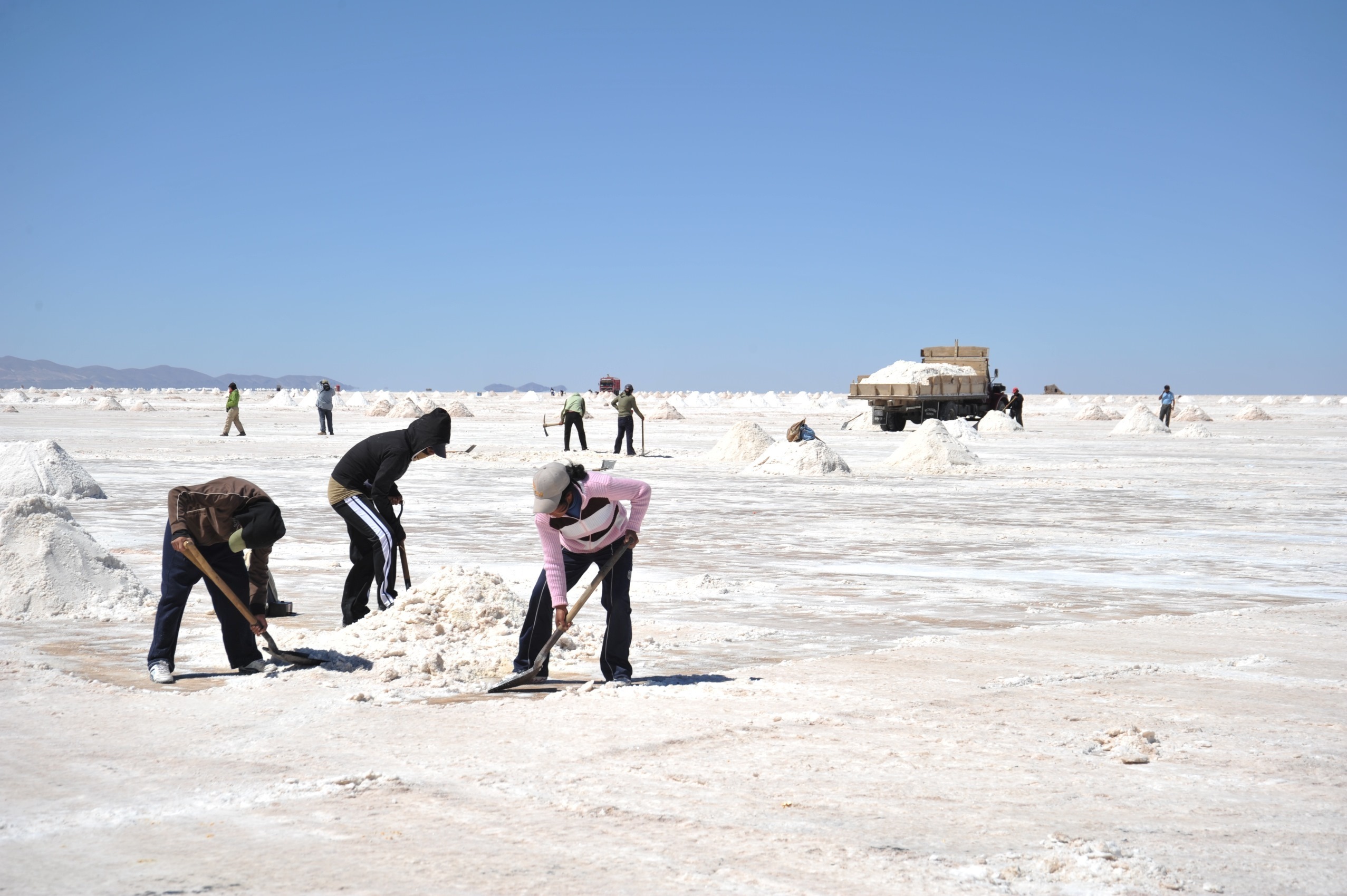
We will ensure that policy makers in fossil fuel-producing developing countries take decisions that reflect citizens’ long-term development needs and advance energy transition plans. Responding to demand, we will strengthen the movement for accountability amid the energy transition. As we did in the early years of the extractive industries governance movement, in 2022 NRGI will build a suite of capacity development tools to enhance the knowledge and strategic foundations of civil society actors and government officials contending with new realities of the climate crisis and economic impacts of the pandemic.
We will build on our field-leading work on the risks that national oil company (NOC) investments pose to their countries’ economic sustainability and their impact on global climate objectives. At the global level, we will work with climate and resource governance advocacy organizations to shape climate risk, environmental, social and Ggvernance factors (ESG), sustainability and transparency standards. In some countries, such as Ghana and Uganda, our support to analysis and advocacy by national actors to reduce NOC risk-taking will inform current policy decisions in 2022. In other countries, including Mexico and Tanzania, we will work with partners to begin to build constituencies for NOC reform over the longer term, conducting analysis to frame public debates around priorities and place the importance of NOC reform more centrally on domestic political agendas.
And we will leverage our analytical framework to help civil society and governments interrogate plans, policies, and investment choices around forward linkages from natural gas. In 2022, we will further hone the framework, and use it to spark dialogue around gas-to-power policies and ambitions in Senegal, Ghana, Peru and Nigeria, and around Lebanon’s domestic energy future.
We will also contribute to emerging areas of debate, building on past commentary and events, to advocate for a more equitable transition and to explore whether and how NRGI can support renewables governance.
Revamping our country programs
With NRGI’s prioritization of energy transition and Indonesia’s regional importance, we will re-engage in the country in 2022. Using the Resource Governance Index methodology, we will assess Indonesia’s extractive industries to prioritize issues for further research and engagement, including working with partners exploring just transition in the coal industry.
We are re-establishing our presence in Nigeria, shifting focus to the country’s economic future beyond oil. We are establishing new partnerships and have re-engaged with key partners from early incarnations of the program. We are focusing on select instruments of reform: national oil and gas policies, the Gas Master Plan, and the Petroleum Industry Act. We aim to build awareness and momentum by working with allies to ensure that support and planning for a post-oil economy is on the 2023 national election agenda.
NRGI has offered analysis and Resource Governance Index assessments, assisting state-owned companies in the improvement of their transparency and accountability practices, and supporting civil society organizations and oversight actors to monitor the sector.
Following the launch of our Senegal country program last year, we are supporting ongoing reforms of the country’s institutional and regulatory frameworks for the extractive sector, ranging from an overhaul of its participation in the EITI process, design of a new petroleum code and local content law, revision of its mining code, and the finalization of an oil and gas revenue management law. NRGI has offered analysis and Resource Governance Index assessments, assisting state-owned companies in the improvement of their transparency and accountability practices, and supporting civil society organizations and oversight actors to monitor the sector.
We will continue adapting and evolving our work in other NRGI countries of engagement, including Colombia, DRC, Mexico, Mongolia, Guinea, Peru, Tanzania, Tunisia, and Uganda.

Expanding our frontiers
Responding to demands and evolutions in the field requires continual learning and evolution of our work.
In 2022, we will build on our recently concluded work in partnership with the World Resources Institute on gender and extractives. We will explore how NRGI can actively address the gender imbalances in the natural resource sector, aligning with NRGI’s commitment to diversity, equity and inclusion.
We are seeing growing demand on subnational resource revenue sharing, policy makers and civil society counterparts to support improvements in the design and monitoring of subnational revenue sharing systems. We will determine whether to deepen our engagement and renew our expertise in this area.
We will also explore the future of our work with investors and how we leverage corporate power to advance resource governance aims.
After two whirlwind couple years of adaptation, transition, and uncertainty, we now find ourselves grounded and ready to face the future. Though strategic evolutions remain, we have newfound clarity on our contribution to the energy transition and how to seize political openings. We are at the ready to help people in resource-rich countries to face the future.
Top photo by Axel Fassio/CIFOR for Flickr
Middle photo by Free Wind 2014 for Shutterstock
Bottom photo by Joe Saade/UN Women for Flickr
NRGI envisions a world where natural resources enable fair, prosperous and sustainable societies, instead of undermining them.
This is Big: Mining Industry Body Commits to Contract Disclosure

Last week, the International Council on Mining and Metals (ICMM) announced that its 28 members had agreed a new commitment on contract transparency. This is an important step, both building on the progress made by the Extractive Industries Transparency Initiative (EITI), and responding to longstanding advocacy from civil society organizations around the world to “Disclose the Deal.”
The commitment also comes at an opportune moment, signaling one concrete way that governments and the private sector can improve accountability in the extractive industries. It comes against the backdrop of U.S. President Joe Biden’s first Summit for Democracy, the 2021 Open Government Partnership (OGP) Global Summit, and the proposal of an EU Corporate Sustainability Reporting Directive, which NRGI and other Publish What You Pay members argue should include a sector-specific sustainability standard for the extractive industries that would require contract transparency.
Commenting on the ICMM commitment, NRGI president and CEO Suneeta Kaimal said: “Contract transparency is an essential way for companies and governments to be held accountable for the decisions made on behalf of a country’s citizens. With the energy transition spurring a round of new mineral investments around the world, this commitment sends a powerful signal to the rest of the mining industry and to ICMM’s peers in the oil and gas industry that responsible companies have nothing to fear from disclosing their contracts.”
What the commitment says and why it matters
The new commitment requires ICMM member companies to disclose all mineral development contracts granted or entered into from 1 January 2021. Members are also encouraged to disclose mineral development contracts granted or entered into before that date.
With the companies that make up the ICMM representing around a third of the global mining industry, this is a big deal. Moreover, the fact that CEOs are required to personally sign off on new member commitments like this suggests that those at the very top of the industry grappled with the debate on contract transparency and came out on the side of disclosure.
In terms of implications for wider uptake of contract transparency among extractive companies, the move brings the total number of oil, gas or mining companies with a public statement or policy on contract transparency up to at least 42. To put that number in context, the last comprehensive count made by Oxfam in 2018 was just 18.
Company statements of support for contract transparency have been vital to progress on this issue in recent years. They are important because they neutralize fears among government officials in producing countries that too much transparency might scare investors away. There are now at least 49 countries that have officially disclosed an extractive industry contract and 31 with policies that make publication mandatory.
The commitment has been designed to bring ICMM policy in line with the EITI requirement on contract transparency, albeit with one notable caveat. While the EITI requirement applies to all contracts and licenses that are “granted, entered into or amended from 1 January 2021,” the ICMM requirement only applies to contracts that are “granted or entered into” from that date. As Oxfam has highlighted, omitting recently-amended contracts from the requirements means that citizens in producing countries could be left in the dark about new and important changes in the terms of existing contracts governing their national resources.
One way that the commitment goes beyond other company statements and policies is in its focus on the actual disclosure of contract documents. Until now, only six extractive companies have committed to publishing contracts: Freeport-McMoRan, Glencore, Kosmos Energy, Newmont, Rio Tinto and Tullow. (Tellingly, four of these were ICMM members.) With the ICMM announcement, this number now climbs to 30.
As they now look to implement the policy, ICMM companies have just a few good practice examples to draw from. Only five companies to date have proactively published contracts or included links to published contracts in company reporting: BP, Kosmos, Orano Mining, Rio Tinto and South32. (Our contract disclosure tracker includes links to each of these disclosures.)
While each of these approaches is noteworthy, Orano Mining uniquely lists any documents that are not public, in addition to those that are—a practice that helps citizens map the full universe of contracts, which is important information lacking in many contexts where contracts are kept secret. Kosmos also deserves a mention for its company policy to publish contracts as part of filings to the U.S. SEC and its helpful contract summaries highlighting important information that can be used for contract modelling.
The disclosures we can expect and why civil society action is essential
ICMM members collectively operate more than 650 assets in over 50 countries. If each of them follows the spirit of the commitment, not just publishing what they are required to, but also publishing the documents they are encouraged to make public, we would see a highly consequential wave of new disclosures. It would reach beyond EITI countries where the contract disclosure debate is advanced, to jurisdictions, like Russia, Chile and China, where secrecy around mining contracts has until now been standard practice.
To ensure that such far-reaching disclosures actually happen, citizens and civil society must do their part to hold ICMM members to their promises. Without external pressure, many companies will do the bare minimum—only releasing the handful of contracts required (those agreed after 1 January 2021). Some companies may also take advantage of loopholes in the commitment to justify the decision to keep further contracts secret.
One potential such loophole was opened by a caveat in the commitment that joint venture companies that are majority owned by ICMM members are only encouraged to disclose contracts. Given that it is common practice to incorporate mining projects as joint ventures in host countries, disclosure will not actually be required for many mines.
Another loophole relates to a separate caveat that member companies do not have to publish where governments prohibit disclosure with a law or regulation. The good news is that in these situations, ICMM members have committed to encourage governments to provide consent. The challenge is confirming whether companies actually do this. But civil society actors can help by publicizing the ICMM policy, and inviting companies to speak publicly about their commitment as Total (now Total Energies) did in this interview.
Looking to the future, civil society organizations should mark 31 August 2022 in their diaries. That is the date (12 months after the commitment was approved) by which ICMM members must comply with the commitment. If there are any companies that have not disclosed by this date, under ICMM’s “conform-or-explain policy” they must publicly explain the reasons why they cannot. Again, civil society scrutiny will be essential to ensure that only the companies with reasonable grounds for non-disclosure are permitted to take this route.
The new ICMM commitment shows that the mining industry has never been more aligned with civil society actors on the importance of contract transparency. Now, as companies move to implement their commitments, civil society scrutiny will be essential to make disclosure a success.
Boosting contract disclosure
How can the Open Government Partnership promote contract disclosure in the extractive sector?