
Chevron Deserts the Extractive Industries Transparency Initiative. Remaining Companies Must Step Up.

The energy transition requires that mining, oil and gas companies embrace transparency—not run away from it.
One way that companies can disclose information of public interest is through the Extractive Industries Transparency Initiative. Last year, the EITI defined expectations for “supporting companies” in order to create an accountability framework for private sector participants in the initiative.
The new EITI standard—agreed by governments, companies and civil society representatives in June—places the energy transition at the heart of good governance. The EITI has entered a new chapter to help inform and drive the transition away from coal, oil and gas to a world powered by solar, wind and other forms of renewable energy.
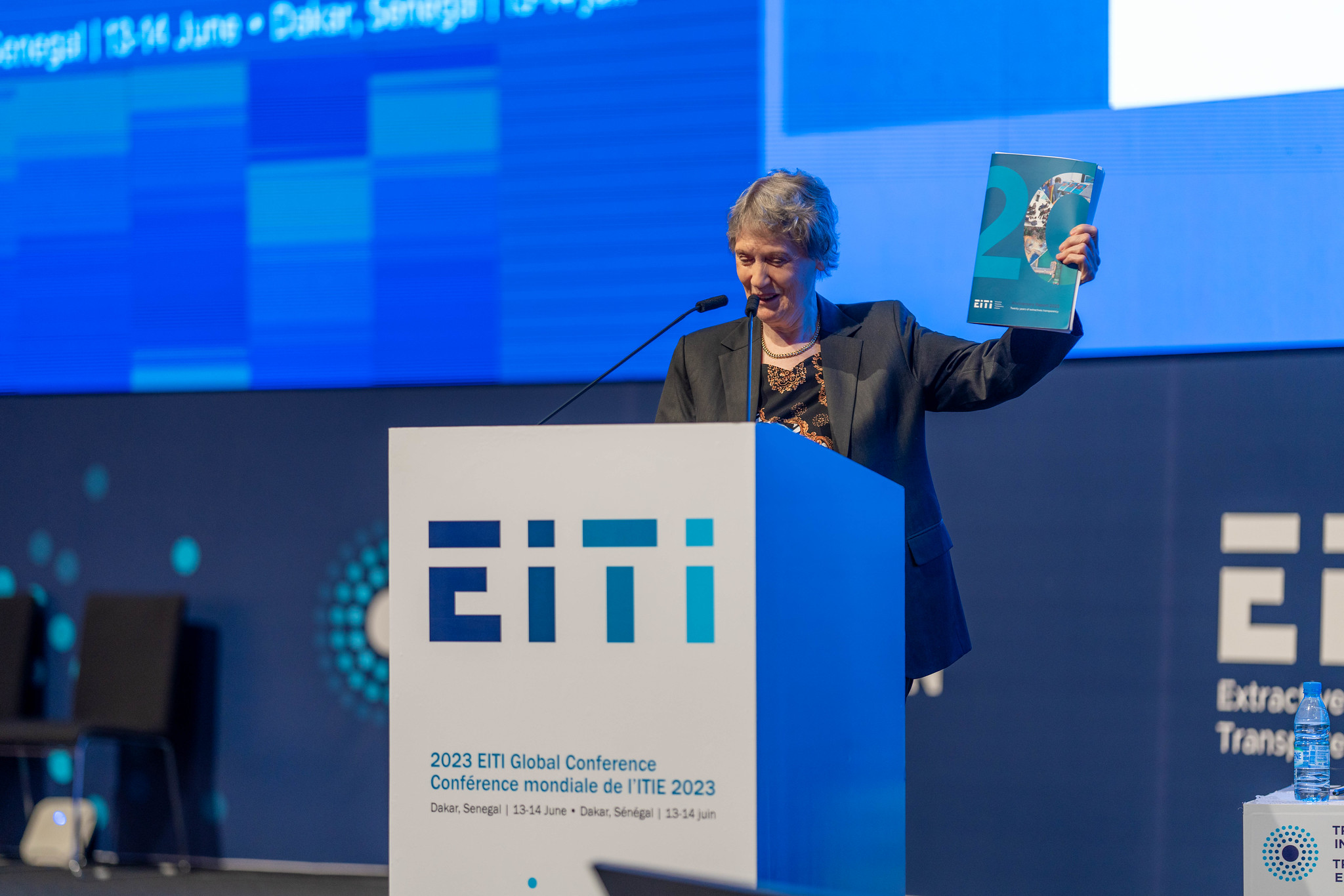
On 28 September, Chevron wrote to EITI board chair Helen Clark informing her of its decision to no longer participate as an EITI supporting company, joining fellow oil and gas major ConocoPhillips in turning its back on multistakeholder dialogue about extractive sector policy, transparency and accountability. EITI is not just a mechanism for reporting information about licenses, contracts, payments and other aspects of extractives relevant for citizens in resource-producing countries; it is also a rare and unique space for dialogue between diverse types of actors. It is one of the only forums where big companies like Chevron sit across the table from representatives of civil society.
While Chevron has said it will still participate in the EITI at the national level in countries where it extracts oil and gas, its disengagement at the global level leaves the company even further behind in what should be a race to the top in extractive sector reform. Chevron helped to shape the EITI Standard; what does Chevron mean by walking away from it? (The company was an EITI board member from the board’s inception until June 2022.)
This prompts the question of whether Chevron really bought into the EITI’s principles during its time on the board, or was rather using the initiative as a fig leaf to launder its reputation as an oil company indifferent to social and environmental impacts of its operations.
For too many years, Chevron actively undermined the EITI, efforts for climate action, and the introduction of laws for mandatory payment disclosure in the U.S. and elsewhere. Civil society groups involved in the EITI repeatedly called Chevron out for its duplicity. Avoiding such scrutiny seems a likely reason for the company’s recent exit from the initiative. Having a seat on the EITI board brings responsibility, and companies must show leadership by being earnest and genuine ambassadors of the EITI Standard. In today’s world, it means they must work with governments and civil society for a just energy transition.
But Chevron isn’t the only scofflaw. Despite consistent calls from communities around the world, some companies including ExxonMobil refuse to fully publish their project-level payments to governments in EITI-implementing and non-implementing countries (as described in EITI companies expectations nos. 2 and 3), according to a recent EITI assessment of supporting companies.
Project-level reporting of taxes, royalties, fees and other payments is at the heart of the EITI; and is now an international norm that goes beyond EITI. The Global Reporting Initiative includes project-by-project reporting as does the International Council of Mines and Metals (ICMM) in its policy standards for members. In Canada, the 27 EU nations, Norway, Switzerland, U.K. and more than 50 countries implementing the EITI companies make these disclosures, which are the minimum baseline level of transparency required to effectively monitor corruption in this notoriously opaque sector.
Yet many supporting companies fall short of EITI expectations. For example, 73 percent of supporting companies do not meet the expectations on beneficial ownership transparency and 27 percent have fallen short on contract transparency (expectations nos. 6 and 8).
It doesn’t have to be this way. Companies like Equinor, Newmont, Repsol, Rio Tinto and a few others fully meet the EITI’s company expectations, leading the way to better practices. This shows their commitment to transparency and the values of EITI. Though this does not automatically qualify them as responsible climate players, we strongly encourage others to follow their example.
The detailed findings of the EITI assessment of company performance were published after the last EITI conference in Dakar. Members therefore missed the opportunity to use the assessment as the basis for selecting the best performers to represent the private sector on the EITI board. In Dakar, a controversial nomination resulted in ExxonMobil remaining on the board. The company must step up rather than step down like Chevron and move toward greater transparency by addressing the gaps in its own adherence to EITI expectations of supporting companies. This will help lift the standards of integrity in the EITI.
The EITI’s new energy transition agenda will require the initiative to engage further with renewables companies, but now more than ever it needs big oil and gas companies to show leadership and strengthen their participation, instead of just walking away.
The authors are civil society representatives on EITI board (2023-2026). Clancy Moore is the CEO of Transparency International Australia. Matthieu Salomon is the anticorruption lead at the Natural Resource Governance Institute.
Unfinished Business: Contract Transparency in the Extractive Industries Transparency Initiative

The urgency of climate action and the complexity of the energy transition mean it has never been more important to be able to understand the deals made between companies and governments for oil, gas and minerals. For this reason, since 2021, implementing countries of the Extractive Industries Transparency Initiative (EITI) have been required to disclose the contracts between governments and extractive companies.
This briefing by the Natural Resource Governance Institute (NRGI), Oxfam and Publish What You Pay (PWYP) surveys the contract disclosure practice of the 57 EITI-implementing countries to understand the extent of their contract disclosure practice. The briefing highlights trends, areas of insufficient disclosure and best practices. Readers can explore the data on a dedicated visual tool on the #disclosethedeal microsite.
Key findings include:
- Contract disclosure has become more common. The percentage of EITI implementing countries that have deliberately disclosed at least one contract increased from 57 percent in 2017 to 70 percent in 2020. But more recently progress has stalled. In 2023, the percentage of EITI-implementing countries that have deliberately disclosed at least one contract remained at 70 percent.
- Most EITI-implementing countries are doing poorly at disclosing their contracts. Thirty-seven countries (65 percent) disclose only partially or not at all. Only 10 countries (about 18 percent) disclose well in both the mining sector and the oil and gas sector (though a few countries operate in only one of these sectors).
- While the EITI Standard requires that countries produce a list of active contracts, only 10 EITI-implementing countries (18 percent) have provided such a list in their EITI reports. Without such a list, it is impossible to say whether a country is disclosing all active contracts.
- EITI-implementing countries do not regularly publish contract amendments and annexes. This is problematic because limiting disclosure to the main contract document means that stakeholders do not have access to the full or updated set of terms that apply.
Contracts between governments and companies for the exploitation of publicly held natural resources are key documents.
Knitting the Fabric of Civil Society Activism in Tunisia (2013-2020)

The challenge
Tunisia is the only country to have accomplished a peaceful transition from authoritarianism after the Arab Spring uprisings, but its democratic gains are not yet entrenched. Tunisians have experienced persistent political instability and voter turnout has been waning—particularly among young people.
The governance of extractive industries has influenced, and in turn been impacted, by both the prevailing political context and global dynamics. After the 2013 revolution, there was scant civil society capacity and limited focus on extractives, accompanied by low levels of trust of international partners.
Tunisia’s oil and gas reserves are small compared to other resource-rich countries in the region. In addition, political instability and an uncompetitive fiscal regime led to a decline in foreign investment in the sector. As production and prices fell, oil and gas revenues dropped. In terms of mining, the country went from being the world’s fourth largest phosphate producer in 2010 to 20th in 2017. In 2020, amid the coronavirus pandemic, Tunisia resorted to importing phosphate. The production decline is due largely to recurring protests, particularly in the Gafsa phosphate mining basin, which led to regular mining stoppages. Local populations are frustrated because phosphate mining brings limited benefits, whether in terms of revenue, social spending by companies or employment opportunities. Similar dynamics prevail in the oil-producing region of Tataouine and other resource-producing areas.
Political and institutional volatility has negatively impacted reform plans. The portfolio of the ministry in charge of extractive industries was modified or restructured five times and saw eight leadership changes between 2011 and 2016, including following corruption scandals. The ministry was restructured many time subsquently. These changes have contributed to faltering momentum and delayed reform. The pandemic has further exacerbated some of these challenges.
NRGI’s response
In 2013, NRGI’s first steps in the country focused on building trust with local stakeholders; creating opportunities and mechanisms for multi-stakeholder trust and dialogue; promoting transparency and open data as a prerequisite for trust and accountability; and investing in stakeholders and mechanisms with staying power.
Recognizing the fledgling state of civil society organizations (CSOs) in Tunisia, NRGI adapted its approach to foster the emergence of civil society leaders who could drive extractive sector reforms with rigor and credibility. NRGI staff in Tunisia encouraged civic activism on extractive sector governance; built civil society capacity to influence policy debates; and united civil society voices for greater impact.
From 2016 onwards, NRGI strengthened evidence-based advocacy and fostered the use of data to inform public policy and reform efforts. NRGI’s partnership and collaboration with Tunisian CSOs expanded disclosure of sector-relevant information, deepened civil society’s capacity to analyze publicly available data, connected to social movements in producing regions, critiqued the governance of state-owned companies, and engaged in increasingly diverse and complex reform debates requiring greater technical depth.
NRGI has also supported multi-stakeholder dialogue to advance the publication of contracts and adherence to the Extractive Industries Transparency Initiative (EITI).
Impact
NRGI played an important role in supporting civil society, which grew in numbers and strength and achieved significant results in the first years following the revolution. CSOs began to engage on resource governance issues and formed a civil society transparency coalition. Most importantly, NRGI succeeded in building trust with and between stakeholders, raising the general profile of transparency and good governance in the media and among Tunisians. NRGI supported local groups to secure the inclusion of natural resource clauses in the country’s new constitution and leverage the Open Government Partnership and EITI to promote transparency in the extractive sector. In more recent years, NRGI’s work has led to the government releasing mining, oil and gas contracts on a public platform. Civil society research informed public debates and elicited government response. A more representative and self-reliant transparency coalition emerged, and the country’s EITI implementation took off. The government also launched a participatory sector audit.
Supporting EITI to Strengthen Global Extractives Governance Standards

The Extractive Industries Transparency Initiative (EITI) is a global standard for open and accountable management of oil, gas and minerals, led by a coalition of government, companies and civil society. NRGI was instrumental in the founding of EITI and several NRGI staff have since served on its board. NRGI leads advocacy efforts and provides technical expertise to expand EITI’s disclosure norms. NRGI experts supported the development of the EITI Civil Society Protocol, help shape EITI policies, lead the formulation of EITI’s approach to climate risks and the energy transition, and support accountability actors to analyze EITI data to inform reform.
NRGI helps countries leverage EITI processes and norms to advance broader policy reforms—e.g., contract and beneficial ownership transparency in Ghana and state-owned enterprise reforms in Guinea, Indonesia, Mongolia and Myanmar.
NRGI also uses its technical expertise and cross-stakeholder credibility to lead the negotiation and drafting of the most complex EITI Standard provisions.
NRGI’s EITI interventions have so far resulted in the requirement of:
- 21 new countries to start disclosing extractives contracts from 2021 onwards
- 40+ new countries to start disclosing project-level payments from companies to governments
- SOEs in 35 countries to expand disclosures to include transfers, retained earnings, reinvestment and third-party financing information
- EITI reports in over 50 countries to disclose material environmental payments from companies to governments, and employment data disaggregated by gender.
Going forward NRGI will ensure impactful implementation of these new requirements, and continue to ensure that national innovations shape global policy improvements.
Civil Society Playing Key Role in Extractive Sector Reform in Once-Autocratic Tunisia
In Tunisia, NRGI and its partners created a space for diverse voices to be heard in crucial natural resource governance reform talks. This sustainable platform will soon create reform action plans.
Through technical and financial aid, NRGI empowered Tunisia civil society to play a critical role in policy reform. NRGI supported the founding of the Tunisian Coalition for Transparency in Energy and Mines, CTTEM, which translates grassroots demands into national-level advocacy campaigns.
NRGI collaborated with the Tunisian Anti-Corruption Authority to create a forum in which all stakeholders can participate and create joint reform agendas. NRGI advocacy efforts helped the authority and the mining and energy ministry commit to working toward extractives reform, including Tunisia Extractive Industry Transparency Initiative adherence.
CTTEM successfully advocated for government contract disclosure and for steps toward EITI adoption. Accession to the international initiative was included in successive Tunisia Open Government Partnership action plans, pushing the government to commit to EITI implementation through the creation of a multi-stakeholder group. The government subsequently called civil society actors to appoint representatives to the group in a public statement. All five civil society members previously participated in NRGI trainings.
Civil Society Actors Play Key Role in Colombia EITI Entrance
The challenge
For years, the Colombian government expressed little interest in engaging in international transparency mechanisms for its extractives sectors. It failed to understand how revenue transparency might help strengthen these sectors’ productivity and equity, and instead relied on its own national systems to ensure transparency around extractives revenue. Colombian civil society, likewise, did not appreciate how their work could be bolstered via international mechanisms focused mainly on economic issues and not other areas of governance. Civil society’s interest changed when the Extractive Industries Transparency Initiative (EITI) expanded its purview to include information throughout the decision chain. Nevertheless, these organizations needed guidance on how to proactively engage with EITI and how to procure grants to support their participation in the initiative.
NRGI's role
Colombian civil society began its EITI engagement through regional meetings and training sessions organized by the Natural Resource Governance Institute (NRGI) and the World Bank. Through comprehensive, multi-stakeholder discussions and trainings, Colombian civil society developed an understanding of EITI’s core resource governance concerns and how these concerns overlap with their own extractives work. NRGI connected Colombian civil society actors with global partners that also participated in EITI, fostering exchanges that helped all sides expand their knowledge base.
NRGI’s counsel on the EITI process was extensive. Its experts had frequent and detailed conversations about technical issues, process and strategy with the Fundacion Foro Nacional por Colombia (FFNC), Transparencia Internacional Colombia, Universidad Externado and other actors. NRGI’s efforts in Colombia were further strengthened by the support of the Grupo Propuesta Ciudadana, an organization that leads Peru’s EITI process, and others, such as Bantay Kita of the Philippines.
FFNC used an NRGI grant to launch an information-gathering exercise that homed in on an essential question: What are the biggest priorities for communities living closest to extraction sites? After extensive interviews with organizations that work in and around mining and oil-producing areas, FFNC and others created the Mesa de la Sociedad Civil para la Transparencia en las Industrias Extractivas, a platform that aims to promote broad transparency in the extractive sector and civil society participation in the EITI multi-stakeholder group. The platform ensures that civil society is more comprehensively represented in the EITI process, and it is also used as a training tool for other issues related to extractive industries.
One of Mesa’s focuses is the disclosure of social and environmental payments. One way that the platform increased transparency was by issuing a study that showed how environmental payments were rendered opaque by convoluted government processes. The study found that the regulation (and consequently the payments made by companies) linked to social and environmental issues was complex and the information diffused among the different areas; therefore, the low transparency of social and environmental payments was not a problem attributable only to companies. Although the disclosure of social and environmental payments has not yet been resolved in Colombia’s EITI reports, the research has helped clarify the problem that needs to be addressed.
Impact
The NRGI-backed discussions and trainings bore fruit: when the Colombian government signaled its willingness to meaningfully engage in the EITI process in 2013, civil society was able to quickly organize and actively shape an approach to the initiative that suited their advocacy goals. Colombian civil society targeted the inclusion of environmental issues in the country’s EITI report and wide dissemination of the report to regional and national stakeholders.
NRGI has helped to foster civil society and government interest in Colombia’s extractive challenges. It has laid the groundwork for civil society’s entrance into and constructive engagement with multilateral initiatives. NRGI’s guidance has also helped civil society actors to recognize and come to terms with the challenges it faces as part of EITI—these actors are learning how to manage expectations, as well as how to balance their demands with those of other EITI participants.
Making Legislative Inroads in Ghana Beneficial Ownership Disclosure
The challenge
Over the past five years, Ghana’s government has intensified its efforts to safeguard against illicit financial flows, money laundering, corruption, financing of terrorism and organized crime. It has been supported by civil society groups and driven by international commitments. Ghana has made progress largely under the direction and support of intergovernmental organizations.
Ghana had failed to meet key performance targets set by the Inter-Governmental Action Group against Money Laundering in West Africa (GIABA), a specialized institution of the Economic Community of West African States. One such missed benchmark was the 2012 GIABA deadline for the establishment of a regime for the disclosure of the identities of the “beneficial owners” of companies in the subregion.
Until August 2016, none of the country’s laws provided for disclosure of beneficial ownership, making it easier for companies to obscure or hide their true owners. Following the leak of the Panama Papers, the push for beneficial ownership disclosure gained momentum in Ghana partly owing to concerns exacerbated around the lack of transparency in petroleum agreements and rumors about the role of politicians in illegal mining. But methodical, painstaking advocacy was needed to ensure action.
NRGI's role
NRGI organized the first beneficial ownership workshop for the Ghana Extractive Industries Transparency Initiative (GHEITI) multi-stakeholder group members in June 2015. This event galvanized GHEITI’s beneficial ownership disclosure efforts and spurred interest in legislative reforms. The EITI global conference in Lima in February 2016 gave a further push. Following the conference, a second workshop in Ghana drew the participation of high-level company, government and civil society figures.
Timing was propitious: the second workshop took place just weeks before the May 2016 London Anti-Corruption Summit. Civil society actors pressed the government for strong and concrete commitments on beneficial ownership disclosure. These actors agreed on the commitments they wanted to extract from the government in meetings organized by NRGI. Following this concerted advocacy, the government invited civil society organizations’ input on an official communiqué read by then-President John Mahama at the summit.
To keep the momentum going and ensure real action, NRGI and GHEITI organized a high-level multi-stakeholder forum in June 2016. In attendance were the majority and minority leaders of parliament, the registrar-general, NRGI president and CEO Daniel Kaufmann and civil society experts. Civil society organizations including the Africa Centre for Energy Policy, PWYP Ghana, the Integrated Social Development Centre and the Financial Intelligence Centre reconvened after the forum to continue monitoring the government’s commitment. NRGI also engaged with the government to ensure civil society representation on the legislative reform committee.
Impact
Ghana’s beneficial ownership reforms have made swift progress thanks to a locally driven approach with NRGI financial and technical support.
As a result of consultations, a consensus emerged that the scope of beneficial ownership disclosure should be expanded beyond extractives and apply to all companies registered in Ghana. At the time, the Companies Act was under review and consideration by parliament, providing a good opportunity to make improvements to the bill via amendment—versus waiting years for an entirely new bill to be passed. Parliament amended the act in August 2016, paving the way for implementation of a beneficial ownership disclosure regime in Ghana. The law now mandates that the registrar-general maintain a beneficial ownership register. (This register is yet to be developed. Ghana’s Registrar General Department has indicated this may begin in 2018.) NRGI inputs improved the original draft of the provision and widened the scope and de nition of beneficial ownership to include politically exposed persons.
The legislation doesn’t just impact extractives. By providing for ownership disclosure for all registered companies, areas such as public procurement and contract allocation experienced an increase in transparency. In February 2016, Ghana’s president-elect, Nana Akufo-Addo, forcefully declared his support for beneficial ownership disclosure.
“It was necessary for lifting the veil from public officials who hide behind cronies to amass wealth through shady public procurements,” Akufo-Addo told Ghana’s Public Agenda newspaper. It was a signal he could continue to support transparency progress.
Looking ahead, Ghana must develop an implementation framework with clear timelines to ensure that reforms stay on course. Local partners supported by NRGI continue their important work in this regard.
Better Management of Nigerian Oil Sales
The challenge
Sales of crude oil by the Nigerian National Petroleum Corporation (NNPC) are Nigeria’s biggest income stream. The roughly 1 million barrels sold per day account for over half of public revenues. Yet each year, billions of dollars from these transactions never reach the country’s treasury, due to suboptimal sales contracts, profits lost to well-connected middlemen and questionable withholdings by NNPC. In 2014, Nigeria’s then-central bank governor Lamido Sanusi made global headlines when he told parliamentarians that USD 20 billion in oil sales earnings had gone “missing” in just 19 months. He was sacked shortly thereafter. An ensuing audit left many questions unanswered. After an upset in the presidential election the next year, a new government with a strong anticorruption stance promised reform.
NRGI's role
Seizing the moment, in August 2015 NRGI published Inside NNPC Oil Sales, the first in-depth, independent analysis of how NNPC sells oil. The 163-page report closely described the worst governance problems and made recommendations to the Nigerian government for increasing returns to the nation. The report findings were the culmination of four years of work. During that time, we reviewed voluminous records, conducted dozens of interviews, analyzed sales contracts and sent over 100 pages of questions to industry players, NNPC included. Some of the deals we pored over— especially NNPC’s complex, opaque oil-for-refined product “swap” arrangements—had never before been publicly scrutinized. Leading up to publication, we deepened our knowledge and sought change by working with many different stakeholders. Beyond researching and writing the report, NRGI personnel trained anticorruption police and journalists on oil sale governance and corruption risks, briefed officials and industry personnel from over a dozen countries, advised the Nigerian chapter of the Extractive Industries Transparency Initiative (EITI) on its oil sales reporting, supported a Nigerian government task force that probed oil revenue losses and helped Sanusi draft his “missing billions” submission to parliament.
Impact
NNPC canceled all of the costliest oil sales contracts we criticized, including the swaps, three weeks after Inside NNPC Oil Sales came out, acknowledging that the contracts were skewed in favor of the companies that held them. The replacement deals’ key terms tracked with our recommendations. These moves would save Nigeria a billion dollars annually, officials claimed; our estimates indicated this was conservative. Echoing other recommendations in the report, NNPC went on to slash the number of middlemen companies with which it dealt; cut scandal-prone bilateral sales to smaller African countries; sign more sales contracts with refiners; boost the transparency of the contracting process; and release its first financial reporting data for oil sales in a decade. (Civil society groups in Nigeria have since analyzed NNPC’s monthly disclosures in detail.) Upon request, we also advised NNPC directly on transparency and redesigning the swaps.
In the wake of these reforms, multiple jurisdictions began investigating some officials and companies involved in past deals for corruption. Several have already been charged in court. It is impossible to know the degree to which NRGI’s activities directly influenced these decisions, but the responses did mirror the recommendations closely and officials at the highest levels of government actively reviewed the NRGI report before making the decisions.
NRGI’s work on Nigerian oil sales—like the official reform process itself—is ongoing. We continue to track progress and dialogue with key stakeholders as NNPC makes more changes to its sales system. In early 2016, after we published a follow-up showing that the corporation was still retaining large amounts of oil sale earnings, its biggest withholdings shrank by nearly 50 percent over nine months. The piece drew attention from the public, the media and the highest levels of NNPC government, reinvigorating attention to these important financial flows. Two further blogs tracked the pros and cons of new oil sale contracting processes. We work with the NNPC to further improve its reporting through a global EITI process targeting oil sale transparency that NRGI helped initiate. In the coming year we intend to put out a review of NNPC’s latest swap deals and expand our research and advocacy to its fuel sale contracts, another area of where the treasury—and ultimately, Nigerian citizens—are chronically short-changed. The work in Nigeria has directly informed our campaign to push the governments of the U.K. and Switzerland to regulate greater reporting by the trading companies headquartered in their countries, an effort that made significant headway in 2016.
A Guide for Civil Society on the 2011 EITI Rules
Background
The Extractive Industries Transparency Initiative (EITI) promotes openness and accountability in the oil, gas and mining sectors. At the core of the initiative are the EITI Rules: 21 requirements that detail what candidate countries must do to join, achieve and maintain compliance with the initiative's global standard for reporting extractive revenues. The rules include provisions designed to ensure effective participation of civil society organizations.
The EITI board issued revised rules in February 2011. The EITI Rules, 2011 Edition includes clearer, more rigorous requirements for compliance and an updated Validation Guide. Other changes address civil society participation and should result in more useful, comprehensive EITI reports. However, even after the revisions, the rules have several critical shortcomings.
This briefing paper focuses on what the public and civil society organizations need to know to participate effectively in the EITI process and to take full advantage of country reports. In addition to discussing the pluses and minuses of the revised rules, the paper includes advocacy pointers suggesting opportunities for civil society to push for greater transparency.
|
Download: The 2011 EITI Rules: A Guide for Civil Society (384kb) Arabic (222kb) French (411kb) Portuguese (425kb) Russian (167kb) Spanish (429kb) |
Key features of the 2011 EITI rules
-
"Requirements" instead of "Indicators"
- While the EITI principles and criteria have not changed, the 18 "indicators" that previously governed sign-up, reporting, validation, dissemination and EITI status have been replaced with 21 "requirements."
- The new edition is stronger in tone, emphasizing that the rules are mandatory standards not suggested guidelines.
-
New sign-up requirements
- To become an EITI candidate, governments must publicly state their intention to implement EITI, (Requirement #1), commit to work with civil society and companies (#2), appoint a senior official to oversee implementation, and establish a multi-stakeholder group (MSG). The MSG must then agree on a work plan with measurable targets, which takes capacity constraints and funding needs into account (#5).
- Because a country must now establish an MSG that includes civil society representatives as part of the sign-up process, civil society is involved from the earliest stages, including in the design and approval of a work plan.
-
Stricter time limits and emphasis on regularity
- Countries that become candidates after July 1, 2011, must publish an EITI report within 18 months (#5e) and submit a validation report within two and a half years (Policy Note #3).
- Countries may have their candidacy extended for an extra year if they demonstrate meaningful progress but do not achieve compliance after their first validation attempt. No country can remain a candidate for more than three and a half years (Policy Note #3).
- After achieving compliant status, countries must produce a report each year, using data no more than two accounting periods old. For example, a report published in 2011 must include data from 2009 or later (#5e).
- Countries that do not produce a report for more than two years may be subject to temporary suspension and eventual delisting (Policy Note #5).
- Compliant countries must be revalidated every five years or more frequently if their implementation falls below the minimum requirements (#21).
-
Strengthened civil society participation
- Policy Note 6 underscores the responsibility of governments to ensure that civil society is "fully, independently, actively and effectively engaged" in all aspects of implementation.
-
Requirement #6 contains nine components designed to protect and promote civil society participation, including:
- The MSG must inform civil society and the public of the government's commitment to the initiative and widely disseminate all information resulting from the EITI process (#6b).
- Civil society must be given sufficient advance notice of and be included in the activities of the MSG (#6c).
-
The government must take actions to remove obstacles to civil society participation (#6e), address capacity constraints (#6d), encourage public debate (#6g and #6h), and respect the basic rights of civil society representatives (#6i).
Advocacy pointer: Civil society should refer to the requirements that governments protect their independence, include them in every step of implementation, and address critical capacity constraints to ensure that civil society plays an effective role in the initiative
- Governments must guarantee that the prevailing legal framework allows substantive, independent participation and oversight by non-governmental organizations (#2).
- The MSG must include civil society representatives and adequately represent all stakeholders. Civil society organizations have the right to choose their MSG representatives (#4).
-
Beyond the new rules aimed at improving participation, the EITI board has created a Rapid Response Committee to examine cases of harassment and threats to civil society representatives.
Advocacy pointer: If local activists believe civil society participation or public debate is being restricted, they should alert their representatives on the EITI board.
-
Defining "materiality"
-
The MSG must agree on a clear definition of "material" revenues and payments, for example by defining a reasonable materiality threshold. To make an informed decision about which revenue streams are important enough to include in the report, the group may request access to government statistics on financial transactions. The MSG must document the options considered and the rationale for the materiality threshold chosen (#9b).
Advocacy pointer: Civil society members should participate in defining materiality thresholds and have access to the data on in-kind revenue streams, contract terms, etc., needed to make a fully informed decision.
- The MSG must agree on which revenue streams companies and the government should report, which companies and government entities must provide information, what time period will be covered by the report, and the degree of disaggregation of data contained in the report (#9c).
- The rules recommend the report include payments and revenues in the form of production entitlements, profit taxes, royalties, dividends, bonuses and relevant fees, except in cases when they are clearly not material (#9d).
-
The MSG must agree on a clear definition of "material" revenues and payments, for example by defining a reasonable materiality threshold. To make an informed decision about which revenue streams are important enough to include in the report, the group may request access to government statistics on financial transactions. The MSG must document the options considered and the rationale for the materiality threshold chosen (#9b).
-
International accounting standards
- Government and company reports must be based on accounts that have been audited to international standards (#12 and #13).
- If data has not been audited properly, the new rules require the MSG to agree on a way of addressing this. For example, the MSG may want to develop a "time-bound action plan" to ensure that government and company reports are based on accounts audited to international standards (#12a and #13a).
-
Reporting requirements: revenues, discrepancies and company participation
- The government must make sure that oil, gas and mining companies (including state-owned companies) report all relevant payments. Government entities must report all relevant payments received from companies (#11, #14 and #15).
- A reconciler must verify that all discrepancies between government and company figures have been identified and adequately explained whenever possible. The reconciler must also offer recommendations for addressing outstanding inconsistencies (#17) and describe how reporting discrepancies were identified and investigated (#18b[v]).
- The report must list all companies involved in the oil, gas and mining sectors, and note any companies or government entities that did not participate in the reporting process (#18b).
-
Subnational transfers, barter deals and social payments
- The MSG must establish whether payments made to subnational government entities are material. When they are, the MSG should make sure these payments are included in the reporting process. In addition, the MSG may wish to include revenue transfers between national and subnational government agencies (#9e).
- The MSG must develop ways of reporting material revenue streams received as in-kind payments or through barter arrangements in countries where these revenues play a significant role. For example, the value of oil-for-infrastructure deals between governments and companies must be reported (#9f).
- The MSG is encouraged to consider the significance of social payments and transfers and include these in the reporting process when material (#9g).
-
Accessibility and clarity
- The requirements have not been fully met until EITI reports are widely disseminated and effectively contributing to public debate.
-
Reports must be published in all appropriate languages and made available online. It is the MSG's responsibility to make sure paper copies are distributed to a broad range of civil society, company and media representatives and that outreach events are organized to spread awareness (#18 and #20a).
Advocacy pointer: The new rules allow civil society to demand that governments make good on their commitment to widely disseminate clear, comprehensive annual reports that include all material revenue streams.
-
Updated Validation Guide
- Drawing on lessons learned, the updated Validation Guide includes standard terms of reference for validators and emphasizes that the process will be used to ensure that rigorous reporting standards have been followed.
- The MSG must select an independent validator from a list of accredited firms. The validator should analyze the country's compliance with EITI requirements and clearly state his or her reasons for determining whether each has been met.
- The report should also include conclusions on EITI's impact and lessons learned.
- The EITI board will use the validator's report to determine whether the country has attained or maintained compliant status.
Shortcomings in the new rules
While the revisions in EITI Rules, 2011 Edition raise the initiative's standards and should improve the quality and usefulness of EITI reports, they leave important issues unaddressed:
-
No requirements for disaggregation
- EITI reports are most useful when they break down revenues by company, revenue stream (such as royalties, profit tax, etc.) commodity (oil, gas, etc.) and project. Company-by-company and project-by-project data can help identify the cause of reporting discrepancies, and may indicate whether contracts between governments and companies are fair and beneficial to local populations.
- The Central African Republic, Democratic Republic of Congo, Ghana, Guinea, Liberia, Mongolia, Niger, Nigeria, Norway, Peru, Sierra Leone and Timor Leste all voluntarily disaggregate their data by company. But many countries do not, and the new rules still do not require it.
- The Dodd-Frank Financial Reform Act requires that extractive companies registered with the U.S. Securities and Exchange Commission publicly disclose payments to individual governments for individual projects. EITI should keep pace with this evolving global reporting standard.
-
No requirement to disclose production data
- The meaning and usefulness of revenue data contained in EITI reports increases dramatically when paired with production data. However, the new rules still do not require the disclosure of production data, although this information is of public interest and generally not considered proprietary.
-
What are "international standards" for audited accounts?
- The 2011 rules require that accounts conform to international auditing standards, but do not specify what these standards are.
- The rules should clarify which supranational auditing standards are considered acceptable for government data reported to the EITI reconciler. At a minimum, this requirement should stipulate that an independent agency—operating within standards recognized outside the country itself—confirms that revenue receipts from government agencies can be matched with national budget data provided to parliaments and the public.
-
The rules should require companies and government entities to present certification from their auditors confirming that figures submitted to the reconciler are consistent with independently audited accounts.
Advocacy pointer: When international auditing standards have not been met, activists may wish to push for practical short-term solutions in addition to long-term plans to boost audit capacity.
For more information
- The EITI Rules, 2011 Edition is available in multiple languages at http://eiti.org/document/rules.
- EITI describes the revisions to the rules at http://eiti.org/news-events/2011-edition-eiti-rules.
- For Revenue Watch's analysis of EITI country reports, see http://data.revenuewatch.org/eiti/.
Transitioning to the new rules
Implementing countries have been grouped according to their EITI status as of August 2011, with pragmatic transitional arrangements tailored to each group.
- Any country admitted as a candidate after July 1, 2011, shall be subject to the 2011 edition.
- Countries that have already achieved compliant status (Azerbaijan, Liberia, Timor-Leste, Ghana, Mongolia, Kyrgyzstan, Niger, Nigeria, Central African Republic and Norway) will complete their next reports under the 2011 edition and must issue their annual EITI report by July 1, 2012.
- Candidate countries close to achieving compliance (Cameroon, Gabon, Democratic Republic of Congo, Kazakhstan, Mali, Mauritania and Peru) will be reviewed by the EITI secretariat under the 2010 version.
- Sierra Leone and the Republic of Congo will have their candidacy extended for 18 months after demonstrating "meaningful progress." At the end of 18 months, they must achieve compliant status under the 2011 rules.
- Validation candidates for 2011 (Madagascar, Tanzania, Albania, Burkina Faso, Mozambique and Zambia) will be validated in accordance with the 2010 edition. (The EITI board is considering adding Cote d’Ivoire to this group.) Validation deadlines for Albania, Burkina Faso, Mozambique and Zambia will be extended by six months.
- Candidates for validation in 2012-13 (Afghanistan, Iraq, Chad, Indonesia, Togo, Guatemala, and Trinidad and Tobago) will have their deadlines extended by six months, and validations will be conducted according to the 2011 edition.
For more detailed information, see http://bit.ly/EITIcountryupdates.
LEARN MORE
How to Fight Corruption in Mining: Piloting the Corruption Diagnostic Tool in Mongolia

Corruption in the extractive sector is one of the biggest obstacles to accountable and sustainable management of natural resources. Yet the complexity and opacity of the sector can make it difficult for reformers to work together to effectively tackle corruption. To address this challenge, NRGI created an adaptable six-step process to help anticorruption actors identify and understand the most pressing problems in their country’s extractive sector and develop an action plan to address them. (Read more about how we developed the tool.) Since then, we piloted the use of the tool in Mongolia.
To ensure broad participation of actors in the tool’s design, NRGI has identified EITI multi-stakeholder groups (MSGs) as ideal initial users. This approach is particularly pertinent given EITI’s renewed focus on tackling corruption from 2019. Working in partnership with the EITI International Secretariat, NRGI has issued a call for expressions of interest from EITI implementing countries, and EITI-Mongolia volunteered to pilot the tool in early 2021. The sector has been beset by scandal in the past decade, while many EITI recommendations required further action. Given this lack of progress, EITI stakeholders hoped that the corruption diagnostic tool could reinvigorate efforts to hold corrupt actors to account.
Piloting the tool in Mongolia
With the financial support of GIZ, NRGI’s Mongolia team worked alongside the EITI-Mongolia Secretariat to initiate the corruption diagnosis process throughout 2021.
Understanding the problem. To initiate the diagnostic, the EITI Mongolia MSG set up a working group, including representatives from civil society, industry bodies and government agencies to lead the process. Tasked with analyzing the economically important but scandal ridden mining sector, two independent experts conducted an in-depth sectoral review and identified seven key areas of concern (steps 1 and 2). Given the potential for change, the significance of the problems in this area and the lack of attention paid to this issue, the sub-working group opted to focus its attention on mining operations (step 3).
Developing an action plan. The next step was to prioritize key areas for action. This involved reviewing the underlying causes of corruption in mining operations and assessing the potential for impactful reforms (step 4). This led the sub-working group to focus on monitoring and accountability systems for public servants, competition concerns, and the roles of officials and local government authorities. To create a pathway for implementation, the sub-working group developed corresponding action plans for EITI and Mongolia’s anticorruption agency. These included various measures to improve both transparency and accountability, such as digitizating licensing procedures and conducting training and awareness raising activities (steps 5 and 6).
At the end of 2021, the diagnostic action was approved by the Mongolia-EITI MSG and incorporated into the 2022 Mongolia-EITI annual work plan. (Read the full summary of the diagnostic process and conclusions.)
Lessons from the pilot
In addition to the importance of close collaboration between the NRGI Mongolia team and the Mongolia-EITI Secretariat, particularly through the sub-working group, the pilot revealed several key lessons that can help anticorruption actors make the best use of the tool:
- Understand the key players. Participants stressed the importance of power mapping stakeholders and understanding what influences them at an early stage of the process. This should influence decisions on who is involved in the process and thinking through the range of actors to target with responsibility for actions. This process can also help build alliances between different anticorruption actors. One of the most positive outcomes of the process was EITI-Mongolia stakeholders building a stronger relationship with the country’s anticorruption agency.
- Use international pressure strategically. Linked to the previous point, collaborating with an international organization can have its benefits. Key stakeholders in government may find international organizations less threatening than domestic civil society, and may also be interested in learning from anticorruption experiences from other countries and how international actors can help improve their country’s global standing.
- Invest time in interviews. Smaller working groups, sectoral or ministry focus groups or one-on-one interviews may be more time-consuming than broad workshops, but they ultimately provide more useful information, particularly when the contributions are anonymized. People are more comfortable sharing their insight in such setting. Given the clandestine nature of the topic, interviewees will also likely only have a partial view or experience of the scale of corruption. Therefore, it is important to reach out to a broad range of actors to compile a fuller picture of the issue, including the victims of corruption.
- Look out for guarded areas. Researchers may come across areas of the law, procedures or processes that officials or businesses more closely guard. While this does not necessarily mean that anything untoward happening, increased opacity and secrecy could indicate that these are areas of concern and may warrant further attention from journalists or civil society.
Next steps for the corruption diagnostic tool
To ensure that the tool remains a useful and adaptable resource, we recognize the need for ongoing review and refinement of its guidance and processes. As part of this process, we intend to support use of the tool in more jurisdictions to to gather further insights and identify any challenges that may arise. At present, anticorruption actors in Colombia, the Philippines, and Guinea have either completed or are in the process of using the diagnostic tool to assess their respective extractive sectors. We also plan to provide new research guides to further enhance the tool’s utility and are exploring ways to make the tool more accessible.
Photo by Paula Bronstein for Getty Images