
EITI is a Sleeping Giant. It's Time to Wake It Up.
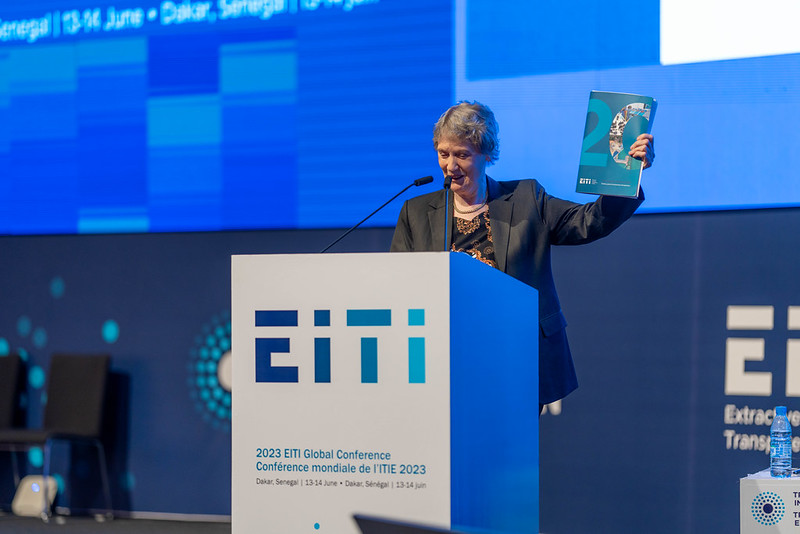
Remarks by Suneeta Kaimal, NRGI President and CEO, at the EITI Global Conference 2026

At the opening plenary of the EITI Global Conference in Brussels on 8 October, Suneeta Kaimal called on governments, companies and civil society to turn two decades of progress on transparency into greater accountability. As new resource deals reshape the global economy, she argued that EITI's standards and principles offer powerful tools to scrutinize these agreements, but only if they are put to use, deals are made public and civic space is protected.
Remarks delivered during the plenary session “Building trust in uncertain times,” 8 October 2026. The text follows below.
Three words. Buried in the fine print of the frameworks reshaping the global resource economy. Three words whose implementation could decide whether this new wave of resource deals delivers on our shared ambition: that wealth below the ground benefits the people who live above it.
You've heard it this morning: oil, gas and mining are at the top of political and economic agendas. Energy dominance. Economic growth. National security. [And we’ve heard ambition from leadership like Minister Diof]. This should be an unprecedented opportunity for the low- and middle-income countries that hold much of these resources.
Instead, deals are struck at breakneck speed, under enormous pressure, and often on imbalanced terms. What's on the table is no longer just royalties and tax rates. It is security guarantees. It is health funding. Governments are being asked to trade long-term access to their resources to meet today's urgent needs.
Speed and pressure crowd out accountability. Over 200 mining projects were announced this year alone, most of them shrouded in opacity. Human rights abuses linked to transition minerals surged 73% in the past year. And the foundations we relied on before — rule of law and international cooperation — are crumbling.
So where is the bulwark? NRGI reviewed recent frameworks and roadmaps that guide new resource deals and agreements. And time and again, we found those three surprising, and powerful words: the EITI Standard.
Three words that carry twenty years of hard-won gains. Contract transparency. Beneficial ownership. Anti-corruption. Revenue management. Environmental and social transparency. State-owned enterprises. Civil society participation.
EITI is a sleeping giant. It is already written into the architecture of the new resource economy. Even as some leaders dismiss transparency and accountability, references to the EITI Standard abound.
Take the G7. They've struggled to agree on much lately. Yet their critical minerals roadmap names the EITI values and principles as criteria for standards-based markets, including the rule of law and guarding against bribery and corruption.
Or the World Bank Group. The IFC Performance Standards influence how many of these deals are financed. They reference EITI requirements on contract and revenue transparency, and they are under review right now.
The EU's approach to minerals partnerships. The African Union's Green Minerals Strategy. A draft Chinese industry mining code. Each cites the EITI Standard, opening a door to hold the most powerful players in the sector accountable.
But a framework is not a deal. The deals are where the rubber hits the road and most are done behind closed doors. Only when resource deals and partnerships are made public can we bring the power of these EITI references to bear. To shape their terms and ensure EITI best practices are implemented.
Waking the giant falls to each of us in this room.
For civil society: Every reference to EITI is a promise we can hold up: show us the contract. Show us who owns the company. Show us where the money went.
But that only happens if civil society can speak out, can gather peacefully and can organize without fear. CIVICUS rates 43 EITI implementing countries as having closed, repressed or obstructed civic space. Forty-three. The recent statement on civic space by the EITI Board is welcome, but insufficient. Civic space must be a meaningful and mandatory test in the upcoming validations, not merely a principle we reaffirm.
For supporting countries: you helped make this Standard a global norm. Now uphold it in your policies, the transparency and terms of your deal-making, and your aid budgets. Where competition is tough on price or technology, higher standards are how you stand apart and build resilient supply chains.
For producer countries: these references are bargaining power. When a partner cites the EITI Standard, hold them to it. Make partnerships transparent. Make accountability part of the price of access.
For companies: good governance means stable projects. Opaque deals made under pressure are the ones that tend to unravel, in courts, in parliaments, on the streets. Rather than competing efforts, let’s use what we have, and keep evolving it. Demand that EITI norms are not just cited but implemented in the way you operate.
And for us in EITI as a whole: we must take up the space we have earned. Decisions taken today will impact generations to come, and the work of EITI must keep pace. The recent guidance on government-to-government deals, value addition strategies, and the new global database all head the right direction. But we must act on them today, not years from now in the next Standard.
More than twenty years ago, NRGI was among the civil society organizations who called for the EITI Standard, alongside reformers from government and industry. We've been supporters and critical friends ever since. Together, we made transparency an expectation rather than an exception. Together, we won a seat for independent civil society alongside governments and companies — a superpower, if we defend it and wield it.
“The EITI Standard” is a giant we built together. Twenty years of hard-won gains, waiting to be unleashed. Let's wake it up. Thank you.
Getting the Most Out of the EITI's New Provision on Greenhouse Gas Data

When the 2023 EITI Standard introduced Requirement 3.4 on greenhouse gas emissions in response to civil society demands, it marked the first time the global extractive industries transparency standard addressed this important climate data. But the provision is only "encouraged," at the lowest tier of the EITI's hierarchy of obligations—with no consequences for non-compliance.
Yet the response has been strong. As of June 2026, 25 implementing countries are already reporting on GHG emissions, and civil society in at least five more is actively pushing for disclosure. That is more than half of all implementing countries engaging with a provision they have no obligation to follow.
EITI implementing countries doing some form of GHG emissions reporting | EITI countries that are not reporting on GHG emissions but where civil society is working to advance emissions disclosures |
25 Angola, Argentina, Burkina Faso, Cameroon, Central African Republic, Chad, Côte d'Ivoire, Democratic Republic of the Congo, Ecuador, Ghana, Guyana, Kazakhstan, Mauritania, Madagascar, Mongolia, Nigeria, Norway, Peru, Republic of Congo, Senegal, Timor-Leste, Trinidad and Tobago, Uganda, Ukraine and United Kingdom | 5 Colombia, Guinea, Indonesia, Philippines, and Zambia |
Source: NRGI review of latest EITI reports, June 2026
The question now is not whether countries will engage with the provision, but whether they will use it to get the data they actually need to inform public debate about emissions from their extractive industries.
The data producing countries actually need
Requirement 3.4 has two parts. The first encourages companies to disclose GHG emissions in alignment with leading disclosure standards—something many large extractive companies already do, to varying degrees, through the CDP, corporate sustainability reports, or upcoming mandatory frameworks like the EU's Corporate Sustainability Reporting Directive and the ISSB's IFRS S2.
The second part encourages multi-stakeholder groups (MSGs) to request disaggregated disclosures. This is where the real opportunity lies—not because the EITI is going beyond what other frameworks require, but because it gives producing countries access to emissions data at a level of detail that actually serves their needs.
Most existing emissions disclosures are aggregated at the company level—global totals that may help investors compare companies' overall climate footprints and assess portfolio risk. But a company-wide emissions figure tells a government official in Senegal or a community leader in Mozambique nothing about the emissions profile of the company’s specific operations in their country. It tells them nothing about which projects are the highest emitters and therefore most exposed to carbon pricing, import restrictions like the EU's Methane Regulation and Carbon Border Adjustment Mechanism (CBAM), or shifting investor expectations. For workers, suppliers and communities whose livelihoods depend on these projects, this matters: high-emitting projects carry greater climate-related financial risk and are linked to greater environmental impacts. The people who depend on them deserve to understand that risk. Aggregated data hides it.
Even national-level data fall short for stakeholders in producing countries. What they need is project-level data. Only this level of detail lets them understand the emissions footprint of individual operations, assess economic risks, hold companies to account for reduction commitments, and inform national climate plans.
Project-level disclosure is already becoming the norm
Asking for project-level emissions data is not a radical proposition. In mining, the Global Reporting Initiative's GRI 14 Mining Sector Standard already recommends it. The most recent drafts of the revised Initiative for Responsible Mining Assurance (IRMA) standard and the Consolidated Mining Standard Initiative both require site-level disclosure. South32, Anglo American, BHP and Newmont disclose project-level emissions data through their sustainability reporting, and they are far from alone. Project-level disclosure is becoming standard practice across the mining sector.
Oil and gas has historically been more resistant to granular disclosure, but that is changing. The widely used Oil and Gas Methane Partnership 2.0 (OGMP 2.0) framework requires companies to produce site-level data to achieve its top-level reporting tier, and over 65 companies have now met that standard, including majors like Eni, Equinor, Repsol, Shell, and TotalEnergies. Given that these companies are already producing site-level, measurement-based emissions data, sharing it through the EITI MSG should be straightforward.
What countries and civil society are doing
Ambition varies across EITI implementing countries. In Côte d'Ivoire, Burkina Faso and Ghana, at least some mining companies are already providing project-level emissions data through EITI reporting. Norway publishes project-level oil and gas emissions data on the Norwegian Petroleum website, run by the Ministry of Energy and the Norwegian Offshore Directorate.
Much of this progress is being driven by civil society. In Nigeria, NRGI worked with the Nigeria EITI (NEITI) to develop a standardized GHG reporting template that is now integrated into the national EITI audit process, bringing company emissions data into a consolidated public dataset for the first time. NRGI has supported the development of tools to make this data more accessible and used it to help journalists, civil society organizations, and parliamentarians scrutinize corporate emissions performance. In Senegal—a new hydrocarbon producer—NRGI also produced some of the first independent estimates of methane emissions from the country’s oil and gas operations and is now working with EITI and government stakeholders to build a methane emissions governance framework, including a dedicated monitoring, reporting, and verification system for the sector.
Elsewhere, with support from the World Bank's Extractives Global Programmatic Support (EGPS) trust fund, Transparency International and NRGI ran a program supporting local civil society groups to use the 2023 EITI Standard to strengthen accountability. Two of the ten projects selected focused specifically on Requirement 3.4. In Indonesia, Publish What You Pay Indonesia produced a scoping study on GHG reporting gaps in the coal sector that led the Ministry of Energy to commit to using the findings for policy development. In Kazakhstan, Public Association Echo developed a standardized GHG reporting form and policy brief that resulted in the Terms of Reference for the National EITI Report being expanded to include disclosure of GHG reduction measures and emission quotas. Both projects independently identified project-level disaggregation as the critical missing piece for meaningful local oversight.
Why EITI? Turning data into dialogue
Data published through EITI is truly public. Many existing disclosure platforms for GHG emissions, including the CDP, the OGMP and UNEP’s Methane Alert and Response System (MARS), are oriented more toward investors, governments or company decision-makers than to the general public. Some put data behind paywalls. By contrast, data published through EITI is open to everyone.
But the distinctive value of bringing emissions data into EITI processes is not just the data itself—it is the multi-stakeholder structure that surrounds it. Emissions data disclosed through EITI enters a process where representatives of government, industry, and civil society are already convened to discuss extractive sector governance. Environmental groups can scrutinize methane emissions. Workers and suppliers can ask whether governments and companies are doing enough to ensure that projects they depend on remain competitive in light of international GHG regulations. Citizens can ask whether state-owned companies—which a recent IEA-led assessment found tend to fall short on reporting against their emissions pledges—are putting public finances at risk. Governments can assess whether extractive sector oversight aligns with national climate commitments. This process—different stakeholders examining the same data from different angles—is what turns transparency into accountability and supports more informed decision-making.
What MSGs should do now
The EITI International Secretariat published a guidance note on Requirement 3.4 in October 2025, setting out a six-step process for implementation. It is a practical resource. Importantly, the guidance shows why project-level data is important, and why MSGs should request it. This data serves citizens and governments. Many companies already report it. The momentum behind Requirement 3.4 shows that EITI stakeholders understand the value of emissions transparency. The task now is to ensure that the data countries collect is detailed enough to make a difference.
From Standard to Action: Does the EITI Remain Relevant?

Dwindling civil society funding, intensifying geopolitics and the accelerating pressure of the energy transition are all compelling organizations to make hard choices about where to invest their time and resources. Against this backdrop, many in civil society are asking whether the Extractive Industries Transparency Initiative (EITI), underpinned by the latest 2023 standard, is still relevant to the accountability challenges producer countries face today.
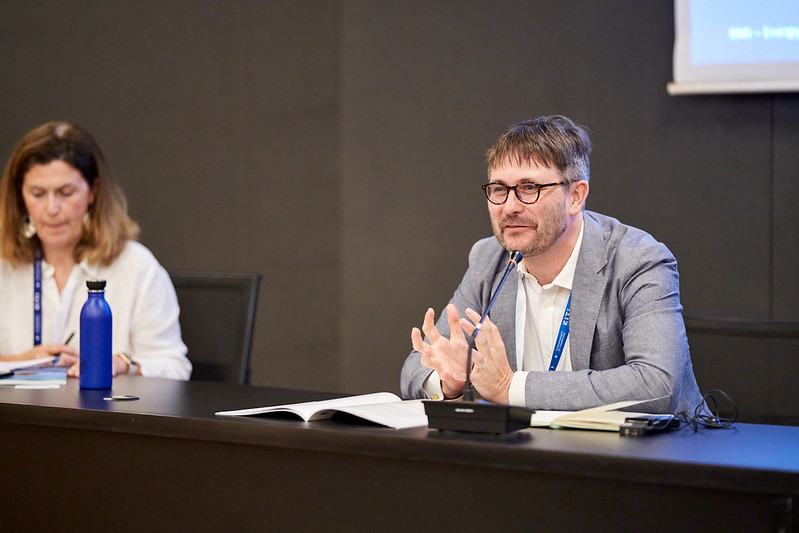
To explore this question, the Natural Resource Governance Institute (NRGI), the Transparency International Accountable Mining Programme, and the Resource Justice Network (RJN), with support from the Extractives Global Programmatic Support (EGPS) Multi-Donor Trust Fund, hosted a virtual event on 23 April 2026, bringing together civil society, private sector and government officials from over 30 EITI implementing countries. The answer was a cautious but clear conclusion: the updated Standard contains important new tools, but civil society and government reformers must work to turn disclosure into accountability.
How the 2023 standard is rooted to the current moment
Ketakandriana Rafitoson, Executive Director of the Resource Justice Network, opened by emphasizing the role EITI has played for the resource governance movement — and warning that if civil society leaves these spaces, transparency risks being privatized: shaped by commercial confidentiality and industry preferences rather than accountability to citizens and affected communities. Pilar Acosta of Transparency International Australia then walked participants through the key evolutions in the 2023 standard, highlighting how they responded to:
- New forms of corruption, including those linked to fast-tracked licensing and opaque ownership in critical mineral sectors;
- Energy transition risks, linked to urgent climate pressures, the critical minerals boom, and ongoing efforts to transition away from fossil fuels; and
- A volatile geopolitical landscape reshaping who controls extractive industries and on what terms.
How the 2023 standard is being used
The heart of the session was a set of case studies from RJN network members, each illustrating how the standard is being used on the ground.
Kazakhstan — pushing for transparency of greenhouse gas (GHG) emissions. Danila Bekturganov of Civil Expertise NGO drew on a new study assessing the disclosure of greenhouse gas emissions from Kazakhstan's extractive sector. The findings are stark: while Kazakhstan has a developed national accounting system for GHG emissions, the data it collects is largely shielded from public view. A legal gap between the definition of "pollutant emissions" and "greenhouse gas emissions" in Kazakhstani law means that companies can, and do, classify actual GHG data as commercial secrets. Civil society is using EITI Requirements 3.4 on GHG emissions, and 6.4 on environmental impacts of extractive activities to push for change within the multi-stakeholder group, and to argue that EITI reporting should include disaggregated, project-level GHG data. As Kazakhstan aligns its economy with a carbon neutrality target of 2060 and faces increasing pressure from the EU's Carbon Border Adjustment Mechanism (CBAM), this transparency gap carries real economic and political consequences.
Togo — scrutinizing fast-tracked licenses. Pius Kossi Kougblenou of ACOMB described how civil society in Togo is using the 2023 standard to hold the line on discretionary and fast-tracked mining license allocations. Analysis of EITI reporting revealed that data on license transfers and approvals had not been fully communicated by the relevant government directorate, and that Togo's multi-stakeholder group had not yet established a methodology to assess procedural deviations. Using Requirement 2.2, civil society is pushing for systematic publication of license award and transfer data, a complete and verifiable mining cadastre and genuine traceability of decision-making processes.
Philippines — grounding Free, Prior and Informed Consent (FPIC) in reality. Beverly Besmanos of Bantay Kita / Publish What You Pay Philippines described how Filipino civil society is using the 2023 standard to move beyond revenue tracking and focus on the upstream integrity of mining projects, particularly the quality of FPIC processes. Bantay Kita conducts "ground-truthing" to verify whether the consent reported by companies aligns with the actual experiences of Indigenous communities. They have submitted shadow reports to EITI International highlighting the harassment and red-tagging — the practice of publicly labeling activists as communist or terrorists, regardless of their political association, which has been linked to harassment, surveillance, arrests and killings — of environmental defenders. They are also pushing for the passage of a Philippine EITI law that would make community consultation disclosures a legal mandate rather than a voluntary exercise. With 90% of Philippine nickel exported to China, Bantay Kita is also investigating opaque investment structures and shadow ownership designed to bypass national laws — what Beverly called the rise of "corrosive capital."
Zambia — unlocking power purchase agreements. Tamika Halwiindi of Transparency International Zambia offered a compelling case of innovative EITI implementation. Zambia's mining sector consumes over half of the national power supply, and a history of expensive, opaque power purchase agreements has saddled the country's state utility with significant debt. Drawing on Requirement 2.4 on contract transparency, civil society has successfully pushed for a register of power purchase and supply agreements to be published on the Zambia EITI Fusion portal, showing contracting parties, contract duration, and agreed capacity. Comprehensive disclosure is not yet in place, but the direction of travel is clear — and the work sets a precedent other implementing countries could replicate.
Barriers to implementation
Participants then split into discussion groups on the main barriers to implementation and the changes that would most strengthen EITI as a tool for action. Three recurring themes emerged:
First, enforcement remains inconsistent. There are currently no sanctions for extractive companies that fail to provide EITI reports, and many of the new provisions—including on subsidies, reserves and greenhouse gas disclosure—remain encouraged rather than mandatory. Without consequences, EITI risks becoming a reputational shield for the companies and governments least committed to reform.
Second, major blind spots remain around state-to-state deals and subnational implementation. Resource-backed loans, infrastructure-for-minerals agreements, offtake arrangements, and development corridor projects largely fall outside EITI's remit, yet these are increasingly how extractive deals get done. Meanwhile EITI implementation concentrates at the central government level, leaving the communities where extraction actually happens with limited access to the initiative.
Third, civic space restrictions are limiting civil society's ability to play its role. Through the targeting of environmental defenders to shrinking participation in intergovernmental processes and the absence of institutionalized local CSO selection, civil society faces real barriers to influencing multi-stakeholder groups and national EITI processes. Governments and companies must actively support the civic space needed to make the standard work — not merely tolerate it. At the same time, participants were clear that civil society itself must be proactive: the 2023 standard creates real opportunities, but only if organizations take them up creatively and push national EITI processes to act on them.
A cautious conclusion
The 2023 EITI Standard is better calibrated than its predecessors to the corruption risks, energy transition pressures, and geopolitical shifts reshaping extractive industries today. But a stronger standard does not automatically produce stronger accountability. The case studies and discussions from this event made clear that disclosure requirements only deliver results when civil society and government reformers actively turn them into political leverage: demanding disaggregated data, challenging fast-tracked licenses, exposing opaque ownership, and pushing multi-stakeholder groups to use every available provision. With civic space shrinking and extractive deals outpacing the mechanisms meant to hold them to account, that work is more urgent than ever.
How Can EITI’s Gender Agenda Drive Real Impact in Extractive Governance?

Who shapes decisions about natural resources and who benefits from them is one of the defining governance questions of a just energy transition. Yet the people most affected by mining and energy projects, particularly women, remain underrepresented in many of the institutions that govern them.
One place where these dynamics increasingly play out is the Extractive Industries Transparency Initiative (EITI), a global initiative that brings together governments, companies and civil society to improve transparency and accountability in the extractive sector. In recent years, gender considerations have become a growing part of its work, including through provisions in the 2019 and 2023 EITI Standards.
These changes have led to progress, including more gender‑disaggregated employment data and greater participation of women in multi‑stakeholder groups (MSGs). But representation alone does not translate into influence. As gender provisions become embedded in EITI, the question for civil society is shifting: how can these provisions be used more strategically to shape decisions, financing and accountability in the sector?

Evolution of the gender requirements in the EITI Standards
What the evidence shows
The EITI International Secretariat’s latest assessment of countries’ progress in meeting the gender-related requirements of the 2023 EITI Standard indicates continued improvements in gender representation.
Women now account for about 30 percent of MSG participants, up from about 20 percent in 2020. Progress remains uneven across regions and constituencies. In Latin America and the Caribbean, however, women make up nearly half of MSG members across constituencies. Globally, civil society groups tend to have the most balanced representation, while companies and government representatives still lag behind.
Progress on disclosures also varies. Countries increasingly report gender-disaggregated employment data and include gender objectives in EITI work plans. But transparency remains limited in areas that shape outcomes more directly, such as:
- Consultations with women and community consent during licensing processes
- How disclosure of extractive revenues and social expenditures benefit women and communities
- Publication of gender impact assessments
Through engagement with stakeholders across different countries, NRGI, RJN and EITI have identified several recurring barriers:
- Women remain under‑represented in governance and consultation processes
- Financing and revenue management rarely consider gender priorities
- Gendered impacts of governance risks, including gender-based violence, are often overlooked
- Significant systematic gaps persist in collection and use of gender‑disaggregated data, particularly on informal work and local economic participation
Extractive sector decisions shape jobs, revenues and local development outcomes. Without meaningful participation and accountability, inequalities risk persisting. As the energy transition accelerates demand for minerals, governance frameworks such as EITI can help by strengthening gender‑disaggregated data, helping improve compensation practices, informing policy reform and strengthen community engagement.

What country experiences show
In a recent webinar*, members of the Resource Justice Network shared their experiences implementing EITI’s gender requirements.
In Mexico, Beatriz Olivera, executive director of Engenera, emphasized linking representation with influence. While women participate in the MSG and a gender working group exists, policy discussions often overlook women in affected territories and their ability to participate meaningfully. However, Mexico also offers a strong example, disclosing gender‑disaggregated employment data and reaching 60 percent female representation in its MSG.
Zambia shows how institutional arrangements can shift representation. Nsama Chikwanka, National coordinator of Publish What You Pay/Resource Justice Network Zambia, described how their work incorporated gender considerations into constituency rules, supported leadership training, and strengthened subnational structures. Today, women hold five of the six civil society seats on the MSG.
In the Philippines, Beverly Besmanos, the national coordinator of Bantay Kita/Resource Justice Network, highlighted how national policy frameworks can reinforce EITI progress. Gender‑responsive budgeting rules and community planning requirements have helped bring gender considerations into mining governance. However, she also emphasized the need for local platforms that enable communities and women to access and use EITI disclosures.
Senegal also shows the value of civil‑society‑generated data. Women in Mining Senegal developed an index tracking women’s participation across both large‑scale and artisanal and small‑scale mining (ASM). Their training programs have supported women’s engagement in negotiation and oversight processes.
Together, these experiences highlight that progress depends not only on representation but also on institutional support, capacity and access to information.
Where EITI can go further
EITI has created important openings for more inclusive governance. The challenge now is to use them strategically. Three areas stand out:
- Enhance representation and inclusion
- Ensure women can fully and safely participate in EITI MSGs, including women from affected territories, worker organizations and grassroots groups. Practical support such as travel, childcare and safeguarding can help remove barriers.
- Update constituency rules and election processes to require gender balance and leadership rotation, and provide adequate onboarding and orientation for new women leaders.
- Track the gender composition of members and alternates, document obstacles to participation and include corrective actions in MSG work plans.
- Improve the collection and use of gender-disaggregated data
- Use EITI validation cycles to set country-specific gender targets that turn disclosures into reform priorities.
- Document and publish gender impact assessments (GIAs), gender‑responsive licensing consultations and monitoring plans for large projects.
- Data on employment, consultation processes, socioenvironmental challenges and socioeconomic barriers can complement public-private reporting and strengthen public debate.
- Strengthen gender‑responsive financing and revenue management
- Reporting can show how social expenditure and resource revenues reach communities and women.
- Extractive revenues can support services and infrastructure to address women’s needs.
- Revenue‑sharing mechanisms and public spending policies should better reflect women’s needs.
By focusing on these areas, EITI and its MSGs can serve as a practical mechanism for advancing gender equity in the extractive sector and the energy transition.
Civil society engagement with EITI’s gender agenda remains important. But the focus now needs to move beyond representation alone. Progress will depend on sustained commitment and coordinated action from governments, companies and civil society organizations. Strengthening gender‑responsive financing, data and participation within EITI can help ensure that transparency leads to more equitable outcomes.
*A webinar co‑organized by Resource Justice Network, Natural Resource Governance Institute, and Transparency International - Accountable Mining Programme, as part of a broader campaign to advance gender equity under the World Bank – EGPS, in line with the EITI 2023 Standard.
After Raja Ampat, Can Indonesia Lead on Responsible Mining?

In June 2025, a viral protest over nickel mining in Raja Ampat has forced Indonesia to confront a deeper question: how can the country’s green-energy ambitions coexist with its environmental laws? When Greenpeace Indonesia spotlighted nickel mining on the small islands of the Raja Ampat archipelago of Southwest Papua earlier this year, public outrage spread rapidly online and prompted one of the fastest government responses to civil society pressure in recent memory.
Indonesia’s Law No. 1/2014 on the Management of Coastal Areas and Small Islands article 23 prohibits mining activities on islands with the total land area of 2000 km2 or less. The public called for an immediate halt to mining operations in Raja Ampat, an ecologically sensitive and popular tourist destination, especially among divers. Five mining concessions were identified within the Raja Ampat islands. Within a week, four mining permits were revoked, while the PT Gag mining concession was placed under review on legal grounds for alleged violations of the law preventing seawater pollution, sedimentation and deforestation.

The government’s rapid intervention drew national attention to how mining rules are applied in Indonesia. But, by early September, PT Gag had resumed its mining operations while the ongoing environmental audit continues. This decision drew sharp criticism from several environmental NGOs, including Greenpeace Indonesia and Auriga Nusantara, and from environmental experts who argued that PT Gag’s operations also violate the law that prohibits mining on small islands.
This incident illustrates a reactive rather than proactive approach to enforcing environmental rules in Indonesia, one driven by public outrage rather than systematic oversight. It underscores Indonesia’s need for a more robust environmental, social and governance (ESG) compliance system: not merely as a reputational safeguard, but as the structural foundation for long-term social acceptance, economic stability and environmental resilience.
Why stronger ESG systems are now essential
Strong mechanisms for public transparency and regular consultations with impacted communities are essential to ensure environmental rules are applied consistently, and that people living near mining projects have the tools necessary to identify and address risks before they become crises. Indonesia can learn and build on internationally recognized ESG frameworks such as the Extractive Industries Transparency Initiative (EITI), the Initiative for Responsible Mining Assurance (IRMA) and the Responsible Minerals Initiative (RMI), to name a few. Together, these initiatives provide a blueprint for balancing economic development with environmental stewardship and social justice.
Indonesia is currently among the world’s top producers of nickel, a critical input for electric vehicle batteries and other low-carbon technologies. The government's value addition policy (known as “downstreaming”) requires in-country processing of raw minerals. This has successfully attracted foreign investment and boosted export value. However, this strategy must be paired with credible ESG performance to ensure economic benefits do not come at the expense of environmental degradation or social conflict. Aligning national frameworks with international standards can enhance responsible investor confidence, improve market access and reduce reputational risks, while building durable social acceptance.
How international standards can strengthen Indonesia’s governance
Take EITI, for example. Beyond transparency, it provides a governance framework that fosters accountability through multi-stakeholder dialogue, where representatives from government, civil society, and extractive industries sit together. Indonesia has implemented EITI since 2010, but its potential remains underused. Rather than duplicating ESG guidelines, the government could deepen its EITI engagement by expanding disclosures on environmental impacts, community consultations and benefit-sharing mechanisms, to name a few. EITI’s multi-stakeholder group could make better use of this information, feeding it directly into public debate and policy decisions. While EITI itself can’t enforce corporate ESG compliance, it can provide a collaborative platform for shaping stronger policies.
IRMA on the other hand provides more detailed metrics for assessing site-level environmental, labor and governance performance, including respect for free, prior and informed consent (FPIC) of Indigenous Peoples—a critical issue in the context of Raja Ampat. Currently, there are only two mining companies operating in Indonesia that have been voluntarily submit to IRMA audit, which still ongoing for both of them.
Furthermore, the RMI provides due diligence tools that major global manufacturers use to ensure ethical sourcing of minerals. Adopting such tools within Indonesia’s own regulations would align domestic mining practices with global supply chain requirements. It would also strengthen Indonesia’s position as a reliable partner in the global energy transition. With the European Union introducing legislation mandating supply chain due diligence for imported transition minerals, alignment with established international standards has become not just good practice, but a competitive advantage.
From wake-up call to lasting reform
The Greenpeace protest and subsequent license revocations should serve as a wake-up call. They reflect a civil society that is increasingly informed, organized and influential in shaping policy outcomes. While industry actors lauded the economic gains of nickel mining, the lack of robust safeguards in environmentally sensitive areas like Raja Ampat weakens the integrity of Indonesia’s policy around mining as well as value addition. Establishing a credible ESG framework, grounded in international standards, is not just a technical necessity, but a strategic imperative.
Institutionalizing ESG compliance must go beyond box-ticking. It requires a cultural shift in governance, where transparency, accountability and stakeholder engagement are central to decision-making. Regulatory agencies must be empowered and better resourced to conduct rigorous environmental and social impact assessments, monitor compliance and enforce penalties for violations. Integrating ESG metrics into licensing and permitting processes—with independent verification—can further institutionalize best practices.
The events of early June offered both a warning and an opportunity. Indonesia can either treat ESG as a public relations tool to manage reputational risks, or as a transformative framework to guide its critical mineral development. The latter approach would not only strengthen its international standing but also ensures that economic growth does not undermine the environmental and social foundations on which it depends.
Indonesia stands at a crossroads. It can assert global leadership not only through its mineral reserves or smelting capacity, but by demonstrating that resource governance in the energy transition era is rooted in integrity, inclusion and international cooperation. The revocation of the Raja Ampat mining licenses was a welcome reactive measure. The next step must be proactive: embedding internationally recognized ESG standards into the very fabric of Indonesia’s mineral governance system. Indonesia now has the chance to show the world that responsible mining and economic development can go hand.
As a New Producer, Senegal Must Regulate Methane

Fossil fuels and the global methane challenge
Globally, fossil fuels are the leading source of greenhouse gas (GHG) emissions—including methane, a short-lived but extremely potent gas. Cutting methane emissions is now unavoidable in a context of urgent energy and climate security.
In Senegal, the issue has become especially pressing. A recent gas leak at well A02 of the Greater Tortue Ahmeyim (GTA) project—an offshore development shared with Mauritania—highlighted the environmental risks tied to oil and gas extraction. The incident underscored persistent gaps in oversight and transparency, while also showing the need to strengthen accountability mechanisms. It sparked renewed attention from civil society, the media, and local communities, who are increasingly vigilant about methane risks.
International and national initiatives
At the international level, regulation is a critical lever for curbing methane emissions from oil and gas. The International Energy Agency (IEA) has developed practical tools, including its global policy database and the Methane Tracker 2025, which details technical and regulatory options to cut emissions.
Senegal’s government has signaled its willingness to act. Recent revisions to the petroleum and environmental codes include bans on routine gas flaring, venting (the release of gas directly into the atmosphere) and crude oil burning. A roadmap accompanies these reforms, with provisions to build the capacity of stakeholders involved in emissions management.

A legal framework in the making
In its nationally determined contribution (NDC) under the Paris Agreement, Senegal has pledged to reduce overall GHG emissions by 5% by 2025 and 7% by 2030. The country is also preparing to join the Global Methane Pledge.
It has ratified key international agreements, including the UN Convention on the Law of the Sea, the UN Framework Convention on Climate Change, the Kyoto Protocol and the Paris Agreement. Requirements of the 2023 Extractive Industries Transparency Initiative (EITI) Standard—such as disclosure on emissions—further reinforce this framework.
Domestically, relevant provisions include:
- Article 25-2 of the Constitution: obliges public authorities to protect the environment and ecosystems.
- Law 2010-21: targets reductions in fossil fuel use and GHG emissions.
- Article 53 of the 2019 Petroleum Code: requires companies to prevent and mitigate pollution and manage waste.
- Article 133 of the 2023 Environment Code: bans gas flaring and venting, and strengthens requirements for environmental assessments and transparency.
- Decree 2025-227: mandates guidelines on GHG emissions and flaring.
However, major gaps remain. Neither the petroleum code’s annexes nor the environment code’s implementing decree explicitly address methane. A decree foreseen under Article 33—which would require mitigation and management plans—has yet to be adopted.
Persistent challenges
Despite progress, several challenges remain:
- Regulatory gaps: no methane-specific legislation.
- Institutional weaknesses: limited enforcement and monitoring capacity.
- Disconnects: between international commitments and national law.
The polluter-pays principle is recognized, but no methane pricing mechanisms exist (such as fines for leaks or penalties for repeat offenders). Nor are there incentives for capturing, re-using, or recycling methane.
Data is fragmented, not centralized, and often inaccessible to the public—undermining transparency. Senegal also lacks a mandatory system for measuring, reporting, and verifying emissions (MRV), which is key for accountability. Operators are not required to follow clear technical standards, conduct leak detection and repair (LDAR), or meet minimum gas recovery rates.
Although companies like BP and Woodside have joined the international Oil and Gas Methane Partnership 2.0, these commitments have yet to be enshrined in Senegalese law. Methane is also absent from the country’s current (2020) NDC—weakening credibility and potentially limiting access to climate finance.

Turning challenges into opportunities
These obstacles can become opportunities if Senegal leverages: international best practices, climate finance, national momentum for reform, civil society vigilance and new requirements under the 2023 EITI Standard.
Lessons can be drawn from other countries:
- Ghana integrated methane targets into its NDC.
- Nigeria requires monthly emissions reporting.
- Canada combines performance standards with tax incentives.
- Norway imposed a tax on offshore flaring and venting between 2015 and 2024.
- The European Union will require operators to quantify and report methane emissions at source from 2025.
These examples show that ambitious regulation is both possible and practical.
The IEA identifies four complementary regulatory approaches Senegal could adopt:
- Prescriptive: set technical standards, MRV, and LDAR requirements.
- Performance-based: establish reduction targets.
- Economic: use taxes or market mechanisms.
- Informational: require operators to disclose and publish emissions data.
To advance, Senegal should:
- Fast-track a methane-specific regulatory framework for oil and gas.
- Require companies to publish detailed methane emissions reports.
- Integrate methane reduction targets into the revised NDC.
- Establish a national monitoring and alert system, with a robust MRV framework.
- Ensure effective participation of civil society and affected communities.
Conclusion: an opportunity not to be missed
In August 2025, during a high-level workshop on oil, gas, and mining codes, Prime Minister Ousmane Sonko summed up the balancing act: “We do not want codes that deter investment, but neither do we want permissive codes.”
This reform momentum is a crucial opportunity. But methane must not remain the “blind spot” of Senegal’s emerging energy sector. It must become a central pillar of governance—with ambitious, well-adapted mechanisms that reflect environmental, economic, and transparency priorities.
For Senegal, as a new producer, getting methane regulation right will be decisive—not only to prevent economic losses, secure energy supply, and protect communities and ecosystems, but also to demonstrate international credibility and unlock climate finance needed for a just transition.
How Accountability Actors Can Use the 2023 EITI Standard to Support a Just Energy Transition: A Practical Guide

The world is undergoing an energy transition in which fossil fuels are being replaced by renewables as sources of energy. As the transition progresses, countries will need much less oil, gas and coal, but significantly greater amounts of the transition metals and minerals needed to build clean technology.
The new Extractive Industries Transparency Initiative (EITI) Standard reflects the profound effects this shift will have on oil and mineral producer countries. Approved in June 2023, the Standard includes new requirements for civil society, implementing countries and companies to consider the energy transition in EITI processes, report on energy transition policies that affect the extractive sector, and make a number of new disclosures that will help stakeholders understand the many risks and opportunities presented by these changes. With effective implementation, these improvements can contribute to a transition that is just and equitable, by supporting public debate among a range of stakeholders from the extractive sector and beyond, including those engaging in climate change policy.
Impacts of the transition will not be the same for all countries. For fossil fuel producers, declining demand brings uncertainty, with significant consequences for national government revenues and exports, but also for the local communities, businesses and subnational governments that depend on specific projects.
High-cost projects, or those with high environmental and social costs, are increasingly the subject of asset sales, with a growing body of research showing that these sales are moving assets from transparent public companies with high environmental, social, and governance standards to more opaque private companies.
In the longer term, there is also a risk that some projects become stranded assets, meaning they will no longer be commercially viable. These trends have important implications for government revenues and environmental and social protection, including around closure and decommissioning. With state-owned enterprises (SOEs) becoming ever more important players in oil and gas production, significant amounts of public finance are also being put at risk.
A different story is playing out for mineral producers. With market demand and government policy accelerating worldwide investment in clean energy, countries are scrambling to take advantage of a boom in demand for transition minerals. Facing enormous pressure to bring scarce resources to market, many countries are moving at breakneck speed to develop policies to attract investment, including the fast-tracking of award and regulatory approval processes.
While the potential for benefit is high, new investments also bring many environmental, social, and governance risks. Public oversight and accountability will be essential to avoid the mismanagement and corruption that have thwarted development in previous resource booms.
Global efforts to fight climate change are adding further dynamics to sectoral decision-making. In one set of developments, greenhouse gas (GHG) emissions are set to play an increasingly important role in determining the competitiveness of oil, gas, and mining projects, as investors, consumers, and governments move to meet their emissions reduction targets.
Meanwhile, a public debate on what a fair, global phaseout of fossil fuels will look like is developing at a fast pace. Though currently in an early stage, as more and more governments, civil society, and company actors engage in the debate, these discussions have the potential to influence important questions, including which countries should wind down production first, and which may be offered financial support to forgo development of reserves.
In this tool, NRGI provides an analysis of the main changes to the 2023 EITI Standard that stakeholders can harness to engage with energy transition policy debates. We also provide practical suggestions for how they can use data that will soon be disclosed. By doing so, we aim to show EITI Multi-Stakeholder Groups (MSGs) and civil society actors engaged in the EITI why discussions on the energy transition are relevant to their work. We also seek to demonstrate to climate change actors not traditionally engaged in the resource governance world how EITI disclosures can add value to their existing efforts.
Scoping Study on Extractive Sector State Owned Enterprise Disclosures in Mongolia

Mongolia’s state-owned mining enterprises are crucial to the economy but face transparency and governance issues. This scoping study examines the need for improved disclosures and stronger accountability in the sector.
This report presents the scoping study on the disclosures of Mongolia’s state-owned mining enterprises, conducted by the Natural Resource Governance Institute (NRGI). The study was supported and funded by the Extractive Industries Transparency Initiative (EITI) International Secretariat and the European Bank for Reconstruction and Development (EBRD).
Mongolia's extractive sector is significant for its economy, contributing 31.6 percent of government revenue, 92 percent of export earnings, and 28.2 percent of GDP. A variety of companies operate in the sector, with state-owned enterprises (SOEs) playing key roles in the exploration, extraction, and management of mineral resources. Erdenes Mongol LLC is the biggest player, acting as a holding company. For instance, it holds stakes in the Oyu Tolgoi copper mine (34 percent ownership), Tavan Tolgoi coal mine (65 percent), Shivee-Ovoo coal mine (90 percent) and Baganuur coal mine (75 percent), as well as Erdenet Copper Mine and projects managed by Mongolrostsvetmet. These are all projects exploiting deposits that are defined as “strategic”, meaning that the equity holding in these projects is prescribed by legislation. Erdenes Mongol also has stakes in gold, silver, and uranium exploration and operation companies.
Despite playing a key role in Mongolia’s economy, state-owned enterprises (SOEs) in the mining sector face challenges related to governance and transparency. This is evident in the NRGI’s Resource Governance Index (RGI) scores, where Erdenes Mongol is among the “poor” performers due to its lack of transparency in financial transactions and production. The EITI validation report highlights a need for more comprehensive disclosure on Mongolia's SOEs in the extractive sector. This includes financial relations, spending practices, and corporate governance. In addition, mining SOEs have been marred by high-profile corruption and bribery cases over the years. The CEO of Erdenes Mongol, for example, admitted to taking bribes, leading to his dismissal, and most recently a former CEO of Erdenes Tavan Tolgoi, the key coal exporter and a subsidiary of Erdenes Mongol, was convicted of abuse of power. In December 2023, the State Great Hural, or the parliament of Mongolia, held public hearings on the so-called ‘coal theft’ scandal which revealed significant problems associated with SOE coal sales, transportation and tax payment irregularities or outright squandering of public assets. For instance, hearing witnesses testified that a significant number of trucks crossed the border empty, raising concerns that this was a scheme to evade royalty and tax payments. Under these circumstances, the importance of transparency and public scrutiny of SOEs is unquestionable.
The EITI, being a leading initiative to promote good governance in the extractive sector, has long recognized that transparency of SOEs is a crucial element of transparency and good governance in mineral resources. Its 2010 EITI Rules, for instance, emphasized the need for the EITI reports to include all companies including SOEs, and to specifically disclose SOE production in addition to the requirements for all companies. Since then, the Rules evolved into a global standard, and its latest edition, the 2023 EITI Standard, includes many more detailed requirements and expectations on SOE transparency and state participation. Specifically, the Standard states the objectives of EITI in terms of disclosures related to the state participation, defines the scope of the term SOE, and provides a list of specific information that is required, encouraged, or expected to be disclosed under the national EITI reports that are disclosure requirements for all companies. Given that the latest version of the standard was adopted in 2023, countries including Mongolia need to revisit their own documents and plans to ensure that the national EITI reports meet the standard in full, including in terms of disclosure requirements for SOEs.
While EITI is one of the leading initiatives driving reforms and increased disclosures in Mongolia, other initiatives and developments led by the government also contribute to the increased disclosures and strengthening of the transparency of SOEs. For instance, Mongolia is a member of the Open Government Partnership, under which the government pledged to improve the transparency of SOEs. Also noteworthy are the Public Information Transparency Law and Glass Accounts Law. The former details specific information that the government and SOEs are required to disclose to the public, and the latter builds an integrated framework for public reporting of budget entities and SOEs. For example, Glass Accounts contains information on disclosures of individual financial transactions by SOEs, which has led to disclosure of information with granularity that allows all stakeholders to analyze the state of financial affairs at SOEs at an unprecedented level. Another important player that contributes to good governance and transparency of SOEs is the Independent Agency Against Corruption (IAAC). The IAAC leads the implementation of the National Anti-Corruption Program which aims to limit political interference at SOEs, streamlining procurements processes, enhancing transparency and disclosures, and improving clarity of objectives and policies such as dividend policies.
However, many of these initiatives are not comprehensive in addressing extractive sector governance challenges, and coordination among these initiatives is weak. In that light, EITI remains a key process in the sector with its enhanced global standard, functioning processes, and involved stakeholders. As such, this report will inform EITI stakeholders with the aim of taking the EITI in Mongolia to the next level, focusing on one of the key areas of sector governance, namely SOE disclosures and reporting.
Scoping Study on Contract Transparency in Mongolia

Mongolia’s mining sector plays a crucial role in the economy, contributing to revenue and jobs, but faces significant challenges around governance, corruption and transparency. This scoping study highlights the importance of contract transparency to ensure fair and accountable management of the sector.
This report presents the scoping study on Mongolia’s contract transparency, undertaken by the Natural Resource Governance Institute (NRGI). The study was made possible with the support and funding of the Extractive Industries Transparency Initiative (EITI) International Secretariat and the European Bank for Reconstruction and Development (EBRD).
Mongolia's mining sector is the backbone of its economy, significantly contributing to gross domestic product, exports, government revenue, and foreign investment. It creates high-paying jobs and boosts local economies, especially in the mining regions. Coal, copper, gold and other minerals are major government revenue drivers, generating export earnings of USD13.9 billion in 2023. This constitutes 92 percent of the country’s total exports and 29.9 percent of the government revenue. While Mongolia’s oil production is relatively small, it still contributes to government income and benefits local communities. In 2023, the oil sector produced 4.7 million barrels of crude oil, generating USD364.7 million in export earnings and accounting for 1.3 percent of government revenue.
Despite its economic importance, Mongolia’s mining sector faces numerous challenges that hinder its development. Corruption scandals have plagued the sector, while environmental and social issues remain significant. A widespread perception persists that Mongolia does not receive its fair share of mining profits. Frequent policy changes, often driven by populism rather than thorough analysis, have eroded investor confidence. This is evidenced by ongoing disputes with investors, a decline in new foreign direct investment, and a lack of new discoveries and projects.
Recognizing the mining sector’s vital role in Mongolia's economy and the need for good governance, the country joined EITI in 2006 to promote transparent and accountable management of the extractive sector. The EITI sets a global standard for transparency and good governance in the extractive sector. It requires companies and governments to disclose detailed information on revenues, payments, production volumes, commodity sales, mining company ownership, and extractive contracts governing relationships investors. Since January 2021, the EITI Standard mandates full disclosure of contracts and licenses, enhancing transparency and allowing citizens to understand the impact of extractive projects on their nation.
Contract disclosure is a crucial ingredient of good governance and transparency in the extractive sector, benefiting all stakeholders involved. For instance, it enables governments to strengthen regulatory systems and ensure efficient oversight, mitigates reputational risks for companies and fosters trust with other stakeholders, and empowers citizens to hold governments and companies accountable. This transparency allows citizens to monitor revenues and other areas of impact of mining on their country.
Contract disclosure in Mongolia has evolved significantly both within and outside of the EITI framework. The latest EITI Validation Report indicates that Mongolia has largely met EITI requirements by publishing numerous contracts on a dedicated portal. However, there is room for improvement in government policies and practices regarding full contract disclosure.
Domestic legislation has also evolved, mandating the disclosure of certain mining sector contracts. Additionally, initiatives like the Open Government Partnership, prioritize transparency in extractive sector contracts. Finally, some companies, particularly those listed on stock exchanges, disclose contracts voluntarily due to legal requirements, or to mitigate corruption risks and public perception issues.
While the government and companies have published many contracts, it remains unclear if all relevant contracts are disclosed. The disclosure process also lacks clear regulations and a systematic approach, as discussed in the next sections of this study.
How Anticorruption Actors Can Use the EITI Standard

In June 2023, the Extractive Industries Transparency Initiative (EITI) adopted the 2023 EITI Standard, which introduced significant new requirements that are either mandatory, expected or encouraged for implementing countries and companies, compared to the 2019 Standard
In particular, the Standard now includes several obligations aimed at bringing more information into the public domain to advance gender equality, a just energy transition and anticorruption efforts.
In 2021, building on an EITI-commissioned paper on the role of the EITI in fighting corruption, NRGI published two reports which showed how anticorruption actors could use EITI disclosures and spaces to advance their work, and recommended ways to strengthen the role and potential of the EITI for anticorruption purposes.
In this new guide, NRGI updates its guidance for anticorruption actors—such as civil society, journalists, EITI Multi-Stakeholder Groups (MSGs) and government enforcement agencies—by outlining how the innovations of the 2023 Standard may help advance their efforts.