
Wrestling With a Mining Slump, Mongolia Plans for Its Next Boom
Four years ago, Mongolia’s vast mineral wealth prompted some to call it the “Saudi Arabia of Central Asia”. Today, the country is struggling with declining mineral revenues and inflation. In Mongolia natural resource revenue volatility is not an academic notion—it has led to real hardship for families and fear about the future.
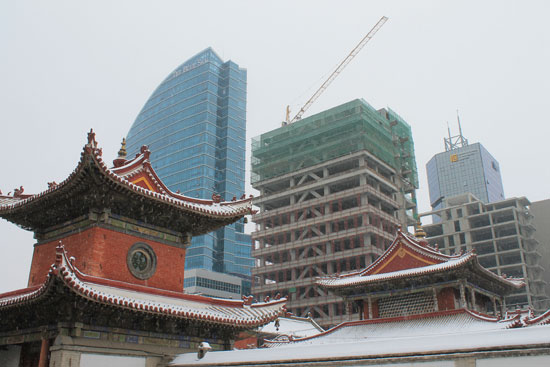
The effects of Mongolia's economic downturn are visible in the capital, with half-finished hotels and office buildings dotting the skyline. (Photo: Andrew Bauer)
Mongolia has enjoyed a decade of rapid economic growth fueled by large mining investments. Yet over the past two years, falling commodity prices, conflicts with local communities, and systematic cost overruns have squeezed the mining industry globally. In Mongolia, after cresting in 2011 and 2012, foreign direct investment fell by almost half in 2013, while falling demand from China all but halted coal exports. Now, a wave of uncertainty is sweeping the country like a chilly wind across the steppes.
“People in rural areas [outside of mining communities] are not suffering as much from the downturn, because they are reliant on meat or cashmere,” says parliamentary researcher Altan-Och Genden. “But government officers and the people in the urban areas feel the consequences,” he adds, noting that private enterprises are also suffering negative impacts.
Those whose livelihoods depend on mining have also been hit hard. Approximately 14,600 people were employed at Oyu Tolgoi, the massive copper mine bordering the Gobi Desert, during the first phase of development. As development of the mine has slowed, employment has shrunk to fewer than 7,000 people.
“With commodity prices down, former mine workers can’t find other well-paying mining jobs,” says Bayarsaikhan Namsrai, Mongolia’s Publish What You Pay coordinator. “So they must now take less money. In the soums [municipalities], shops are bringing in less revenue.”
Even the casual visitor can see the effects of the downturn in the capital. The skyline is dotted with high-rise cement skeletons, mostly hotels and office buildings where construction stopped once demand dried up. The local currency, the tugrug, has also depreciated significantly over the last year and a half. As a result, food, clothing and construction materials—mostly Chinese imports—now cost much more.
The Mongolian government faces tough choices
With copper prices expected to rebound by 2016, the current slump should be temporary. Economic theory suggests that in an uncertain environment, the best possible response to a temporary negative revenue shock is for the government to sustain or even increase spending, which is exactly what Mongolia’s government has done.
Unfortunately that level of spending is unsustainable over the long term. The fiscal deficit, including off-budget items like the national development bank, exceeds 12 percent of GDP. Public debt is growing quickly, breaking Mongolia’s own fiscal rules. The IMF is already pressuring the government and the central bank to tighten both fiscal and monetary policies.
In the short-term, the government can cut spending, or it can raise the debt ceiling and borrow until mining investment rebounds. The ministry of finance tried to raise the ceiling last year and was blocked by parliament. It may try again. Alternatively, the central bank can accept a Chinese bailout and pump money into the economy by purchasing assets or taking on projects normally administered by the government, like subsidizing residential mortgages. A ready patron for this mineral-rich country, the People’s Bank of China recently provided a $3.25 billion line of credit to the Mongolian central bank.
None of these options is ideal. Cuts in spending would weaken growth, cause unemployment and potentially harm the country’s long-term prospects. Debt increases could eventually lead to higher interest rates and a debt crisis. A Chinese bailout would result in further dependence for a government already squeezed geographically and politically by two superpowers.
Authorities consider the mineral-dependent economy
Mongolian policymakers are fast learning that managing an oil- or mineral-rich economy is quite different than managing an economy as though it were based on services or manufacturing. Had the government followed a fiscal rule that smoothed expenditures and required saving windfall revenues in a stabilization fund, Mongolia’s outlook would be much rosier today. Instead, it spent much of these revenues on petroleum reserves, which depreciate quickly, and on agricultural reserves and cash handouts.
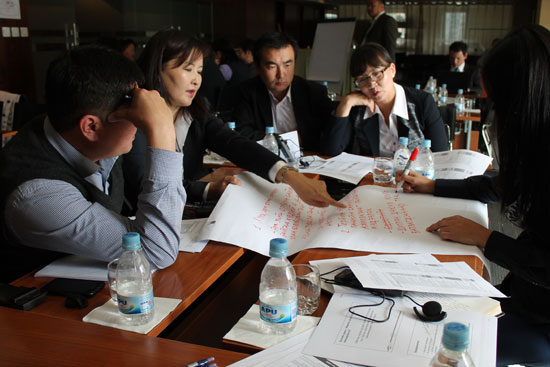
Parliamentary staff discuss international "good practices" for improving natural resource governance. (Photo: Andrew Bauer)
“[Poorer] people depended on the cash transfers,” says PWYP’s Bayarsaikhan Namsrai, speaking of the 21,000 tugrug, or $14, per person per month payments that ended in 2012. “It raised many expectations. For these families, it’s hard to adjust. Since the cash transfer was stopped, local governments have been filled with applications for social benefit support.”
Altan-Och Genden blames the relatively new challenge of managing large mineral revenues. “The key point is that Mongolia is a large country with a small population,” he says. “Mineral revenues are huge on a per person basis and as a percentage of GDP. Mongolians have no experience in managing, spending or using such big amounts of money.”
He also points to the country’s nomadic lifestyle, which he says has made adjusting to an advanced market economy challenging. “Development is seen as a shift from a nomadic lifestyle to a settled lifestyle,” he says. “Peoples’ mentality is mainly nomadic, so in Mongolia it’s a new challenge to innovate. But we want to use international best practices.”
Plans for a new sovereign wealth fund take shape
Many believe that one of these “best practices” is to create a new sovereign wealth fund. In a draft bill, the president has called for a corporation that would save more than 20 percent of mineral revenues in any given year for the benefit of future generations. This “Future Heritage Fund” would absorb an existing (and significantly indebted) fund for cash transfers.
There is great debate about whether this fund would be appropriate in Mongolia. Some ask why the government should invest revenues in foreign assets, as sovereign wealth funds do, when spending on well-trained teachers and infrastructure is urgently needed?
“Some money needs to be saved so that future generations can benefit from these finite resources,” says Borgil Surenkuu, an advisor to the working group drafting the sovereign wealth fund law. “Also, the government has limited absorptive capacity to spend. If it spends too much too quickly, the money will be wasted or cause inflation.”
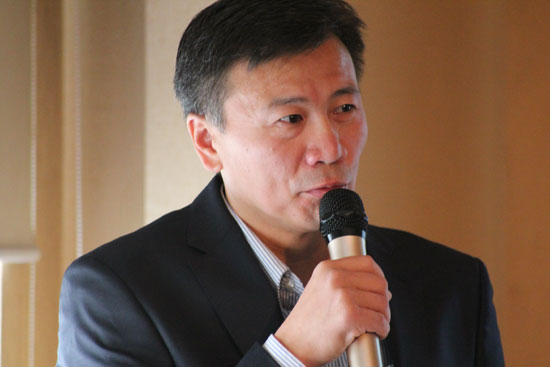
Borgil Surenkuu, parliamentary advisor (Photo: Andrew Bauer)
Another question concerns interest rates. Should the government invest mineral revenues in foreign assets when the returns are likely to range from 3 to 6 percent and the government is borrowing at 5 to 8 percent? Ghana faces this exact challenge at the moment. A sovereign wealth fund may only make sense if the economy improves and sovereign bond yields come down.
Like many in the government, Altan-Och Genden is a proponent of a fund: “I’ve made some studies about the challenges of managing mineral revenues for Mongolia. A sovereign wealth fund is the only solution to these challenges.”
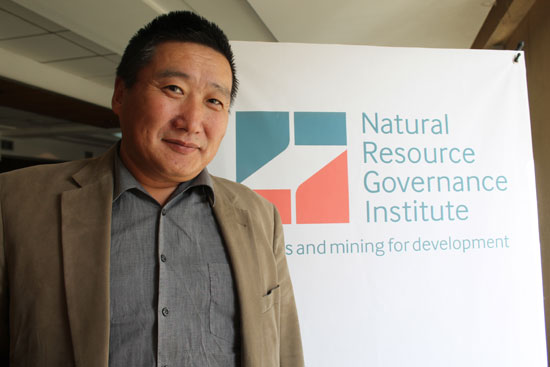
Altan-Och Genden, principle officer at the State Great Hural (Parliament) Research Centre (Photo: Femke Brouwer)
Parliamentary staff prepare for debate
The sovereign wealth fund legislation could be tabled in parliament within the year. In preparation for this and other debates, more than 30 parliamentary staff attended a training with the Natural Resource Governance Institute (NRGI) to learn how to manage the nation’s mineral windfalls. They also studied existing mineral contracts to project future mineral revenues, which is key to assessing how much Mongolia should save in the proposed sovereign wealth fund.
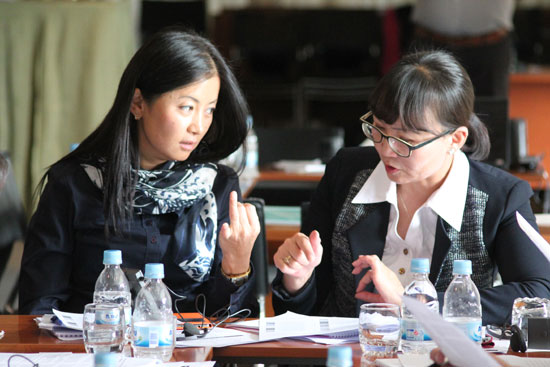
At an NRGI training, policymakers discuss the merits and drawbacks of saving mineral revenues in foreign assets. (Photo: Andrew Bauer)
After the training, participants like Altan-Och Genden expressed their readiness to engage in the policy-making process. “Now that the draft law on the Future Heritage Fund has been submitted, we will give our inputs into the draft law process,” he said.
Going forward, internal political pressures—along with pressures from mining companies, foreign governments and international institutions—may induce the government to quickly cut spending, consume mineral revenues rather than invest them, or establish laws that are not suited to a mineral-dependent country. Yet Mongolia has transformed many of its mistakes—and those of other countries— into lessons. There is good reason to believe that the next revenue windfall will be better managed than the last.
Andrew Bauer is an economic analyst at NRGI.
Recently Mongolian parliamentarians visited Western Canada to learn about mining booms and busts. Two of them spoke with NRGI about what they learned. Read more »
High-Level Executive Course in Extractives Underway at Oxford
This week, 29 participants from 13 countries — including Ghana, Chile, Uganda, Myanmar, Mongolia and Guinea — are taking part in our third annual Executive Course in Oil, Gas and Mining Governance in Oxford.
The course is co-organized and developed by the Blavatnik School of Government (BSG) and the Natural Resource Governance Institute with senior government officials and other innovative agents of change in mind.
“Our mission is to help countries realise the benefits of their natural resources and subsoil assets,” said NRGI president Daniel Kaufmann. “This course provides the reflective space to consider the complex options in effectively managing non-renewable resource wealth. We’ve partnered with the Blavatnik School of Government to convene some of the most respected experts in their field for participants to learn from.”
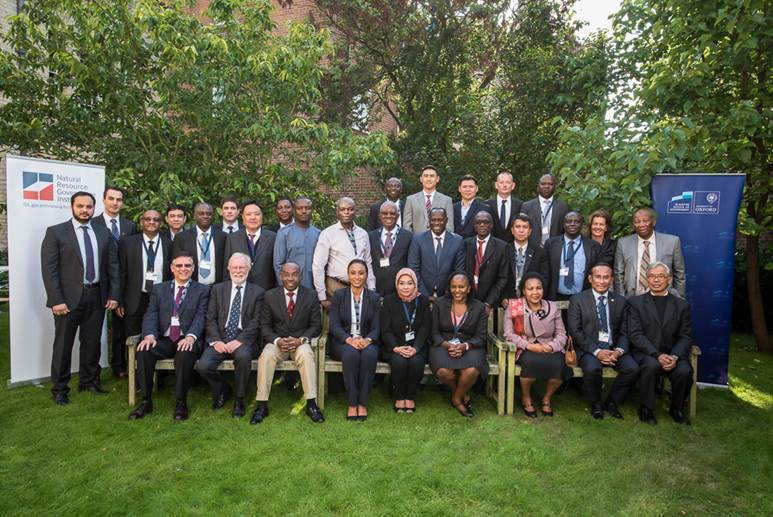
Credit: John Cairns Photography
Built around the Natural Resource Charter, the event is structured to provide participants with an overview of key policy decisions that governments face in extractive resources management. This includes:
- Discovery and management of public expectations
- Tax and contracts
- National resource companies
- Resource revenue management and investment
- Governance and political commitment
Participants will develop a clear understanding of the elements of a national natural resource strategy, as well as the ability to lead the formation of such a strategy within their respective governments.
Course alumni highlighted the input of internationally renowned experts and the opportunity to learn from other countries with similar natural resource extraction and the revenue management issues.
Helder da Costa, general secretary of the g7+ Secretariat, said that the peer learning experience was highly useful. Another 2014 alumnus, Tony Aubynn, CEO of the Mineral Commission in Ghana, pointed to the importance of having “confirmation of what you have been thinking” with regards to certain aspects of natural resource management.
The Executive Course on Oil, Gas and Mining Governance runs from 6-11 September 2015. For further information on the course, please visit the NRGI course page and the BSG course description. You can view interviews with previous participants on our YouTube playlist.
Among the distinguished faculty this year are Kaufmann, Professor Sir Paul Collier (BSG), Professor Ngaire Woods (BSG), Keith Myers (Richmond Energy Partners Ltd.), Michael L. Ross (Professor of Political Science at the University of California, Los Angeles, UCLA) and Eric Parrado (Universidad Adolfo Ibáñez). They will lead interactive lectures, group discussions and practical skill-building workshops around communicating with the public.
Helen Dempsey is a capacity development associate with NRGI.
Why Revenue Management Matters in Azerbaijan
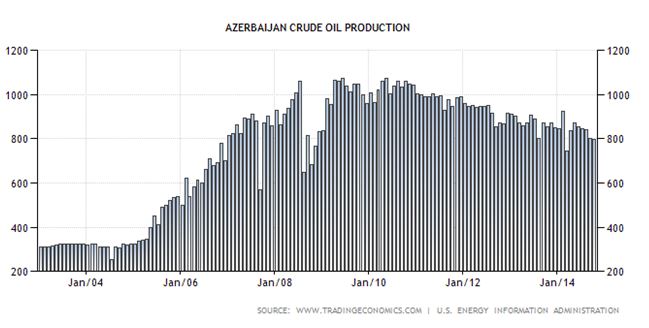
Oil production in Azerbaijan increased rapidly in the 2000s and the country reached peak oil production in 2010, when 363 million barrels of oil were produced. Then, production declined to 310 million barrels in 2012.
Large amounts of revenues accumulated in the state oil fund were spent through the state budget, which made the country’s economy and budget very sensitive to the price of oil. For the last four-to-five years state oil fund SOFAZ spent almost all its income, making the country’s budget even more dependent on resource revenues.
| Years | Transfers from SOFAZ to the state budget (million AZN) | Growth rate | Share of the state budget | Percentage of SOFAZ expenditures going to state budget |
|
2003 |
100 |
-- |
8.2% |
41% |
|
2004 |
130 |
30.0% |
8.6% |
77% |
|
2005 |
150 |
15.4% |
7.2% |
70% |
|
2006 |
585 |
290.0% |
15.6% |
59.6% |
|
2007 |
585 |
0.0% |
9.7% |
55.1% |
|
2008 |
1100 |
88.0% |
35.3% |
88.5% |
|
2009 |
4915 |
346.8% |
40.4% |
92.8% |
|
2010 |
5915 |
20.3% |
51.4% |
90.5% |
|
2011 |
9203 |
55,6% |
59.7% |
92.6% |
|
2012 |
9905 |
7.6 % |
60.5 % |
93.7% |
While high oil revenue spending is not necessarily a problem, the dependency is. It is very difficult to cut spending once it has risen so far and so fast.
It is obvious from the evidence that there is overspending (relative to saving) and the current level of expenditure growth cannot be supported by actual or projected revenues. Considering the amount of petroleum remaining, slow growth in the non-oil non-government sector, and weak non-oil revenue generation, the aggressive budgetary expansion in Azerbaijan cannot be justified.
According to SOFAZ, the fund’s incomes from the Azeri-Chirag-Guneshli and Shahdeniz deposits will decrease from $13.1 billion in 2012 to $9.2 billion in 2024. Increased gas revenues will not cover the loss from oil revenues. This means that, barring new large-scale discoveries, the government will be hard-pressed to finance recurrent or capital expenditures unless tax revenue is raised from other sectors.
Azerbaijan has little historical experience in independently managing its oil industry and the revenues accumulated. Ideally, revenues from natural resources utilization would be spent on improving living standards and poverty eradication, which would lay foundation for sustainable economic growth. Although economic diversification has been declared the highest priority of the government and the often touts this concept, research done by Azerbaijan civil society experts shows the country still faces a number of problems and obstacles to ensuring income from non-oil sectors.
Learn more in the report Oil and Gas Revenue Management in Azerbaijan.
Fidan Bagirova is NRGI’s Eurasia senior officer.
Transparency in Eurasia: Answering Frequently Asked Questions
In mismanaged economies, the path to government accountability and sustainability begins with transparency—but there is often resistance along the way. After all, power is at stake.
Transparency within the extractive sector, specifically, is twice as challenging—first, because inordinate sums of oil, gas and mining revenue can enrich and perpetuate corrupt governments, and second, because great wealth in the hands of a few often denies citizens the full measure of benefits that flow from publicly owned natural resources.

Ingilab Ahmadov
And yet, transparency in the extractive industry is extremely important if society intends to turn non-renewable natural resources into more sustainable human resources. Otherwise, wealth is squandered, and countries risk facing the ruins of poverty and the bondage of debt.
When addressing such issues within the Extractive Industries Knowledge Hub, we try to answer the following questions, which we are often asked at our courses, workshops and training sessions.
Such questions are not infrequent or incidental, and yet their answers serve to underpin effective transparency initiatives in skeptical societies.
Why is the push for better governance and transparency such a challenge in this region?
In post-Soviet countries like Azerbaijan, where our regional Extractive Industries Knowledge Hub operates, skepticism about the benefits of transparency and openness is very common, and this is understandable. In many former Soviet republics, governments were seen as the punitive organ that maintains order at all costs, a secretive authority that equates “information leakage” to high treason. One challenge is that ordinary citizens still have little access to relevant information about natural resource revenues. They see government commitments to accountability as “external requirements,” rather than voluntary, earnest efforts driven from within. But things are changing. Many post-Soviet countries have joined the Open Government Partnership (OGP), a multilateral initiative that promotes transparency through concrete government commitments. Another well-known initiative in this region is the Extractive Industries Transparency Initiative (EITI). Our hub trainings help civil society—as well as members of parliament, journalists and state officials—recognize the benefits of EITI, OGP and transparency in general.

The Eurasia Extractive Industries Knowledge Hub is helping many oversight groups measure and manage the economic and social impacts of natural resource revenues.
Why is transparency necessary if stability and prosperity can be achieved without it, as in Qatar, the United Arab Emirates, Saudi Arabia or Kuwait?
Another question concerns Arab countries that forego transparency rules but live in prosperity. Here we have explained to our training participants that a limited number of Gulf states are exceptions to the rule—first, because their per capita volume of oil and gas is seemingly limitless compared to other regions with larger populations, and second, because their current systems of revenue management and distribution is only a semblance of equity and fairness.
Upholding transparency within the extractive sector is expensive. Wouldn’t it be more effective to fund poverty relief efforts directly?
We are often asked to explain the costs of transparency, incurred through regular reporting exercises and communication efforts. Such expenses, often no more than several hundred thousand dollars, are a drop in the bucket compared to the millions or even billions of dollars stolen through corruption or wasted by mismanagement. In Azerbaijan, for example EITI expenses are less than $100,000, which covers an official audit and report, wages for three state oil fund employees involved in EITI implementation, trip expenses for EITI, and the preparation of EITI reports. Once the new and more comprehensive EITI Standard is enforced, these expenses may increase, but not without significant returns. In the long run proper transparency can prevent fraudulent accounting and theft and save countries millions of dollars.
Why don’t more developed countries participate in EITI? Are their commitments to support this initiative merely lip service?
A fair question; however, people ask it less frequently now that the United States has sought to join EITI, and several European countries have expressed similar intentions. But one thing is obvious: If we do not want to devalue EITI, developed countries such as the UK, France, the Netherlands and Canada should be at the forefront of this initiative, not merely non-participant donors.
Why haven’t years of transparency initiatives brought more positive change to governance in these countries?
The near-term benefits of participation in such initiatives are certain, including more trust and stability for government, a more level playing field for businesses, and greater energy security for citizens. Still, it is clear that EITI itself can be improved, as the new standard suggests. Without provisions to include all income and expense transactions within the sector, total transparency is elusive.
Expectations about transparency should be realistic. Transparency alone cannot solve every problem in extracting countries. But it’s a critical first step.
Ingilab Ahmadov is the director of the Eurasia Extractive Industries Knowledge Hub at Khazar University in Baku, Azerbaijan. To learn more about the Revenue Watch Institute’s six regional hubs, including Eurasia, click here.
Q&A: Resource Transparency in Russia, with Ilya Ponomarev
Hon. Ilya Ponomarev is a member of the Russian State Duma for the A Just Russia party. He sat down with Revenue Watch at the December 2013 regional parliamentary workshop on extractives in Istanbul, where legislators from Azerbaijan, Kazakhstan, Kyrgyzstan, Mongolia and Russia gathered. Here, he discusses his views on the state of transparency in Russia as well as international transparency initiatives.
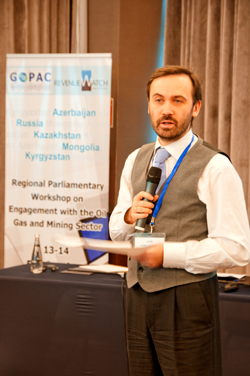
Ilya Ponomarev, Russian MP
RWI: What is the status of parliamentary oversight in the extractives sector in Russia?
Ponomarev: Parliamentarians don’t have any direct authority over extractive policy. In recent years, parliament has taken on a more low-key profile. This has been brought on by the political reality of a strong ruling party, which controls the majority of votes. Due to this, decisions on oil, gas and minerals are less likely to be made inside of parliament.
How might policy and training institutes like RWI contribute to improve transparency and accountability in the extractive sector?
This Eurasia parliamentary workshop was very energetic. Russia tends to communicate more often with European, Slavic and CIS countries, and the composition of countries that we had during this event is very rare [for Russians]. Furthermore, it was really great to hold such a thematic discussion, brainstorm and attempt to find answers to specific questions. Generally speaking we have too many protocol events with no dialogue or interactive discourse. Also, trainings on extractives like this kind of event are needed in the producing regions of Russia beyond Moscow.
What do you think about Russia’s ranking in the Resource Governance Index?
I would rather think about how to catch up with countries as China, Saudi Arabia or Qatar – strong oil states, which are capable in using oil wealth for the development of the entire nation. I believe we need to catch up with these countries. I don’t think we should be comparing ourselves to Norway, the European nations and the UK.
Russia is the only country represented here that is not compliant with EITI. What are your thoughts about that?
I support all initiatives related to the openness of government, open data and transparency; these are fundamental things for the benefit of the entire society. However I still hold some reservations as I’m not familiar with all the details of the initiative, which I believe will require further study. For example, I would like to know the reason that countries such as members of OPEC do not participate in this initiative. I intend to investigate and learn more. However, generally as I said, I support every initiative related to transparency and am ready to lobby for and promote it.
Interview has been condensed and edited.
Moving Beyond Oil in Libya: Once a Choice, Now a Necessity
While headlines still narrate a woeful tale of conflict in oil-rich Libya, many actors are hard at work planning for the country's future, once peace prevails.
On the 8 October 2015, UN Special Envoy to Libya Bernandino Leon put forward a suggested Government of National Accord for the consideration of warring Libyan factions. Members of the international community were swift to demonstrate support by organizing a meeting in Tunis on 11-12 October 2015, with a view to addressing the country's socio-economic problems and exploring ways to contribute to post-conflict recovery under a future unity government.
That same week the Transparency Working Group met for the sixth time to discuss some of these very challenges.
At the last Transparency Working Group (“TWG 5”), we reviewed fiscal priorities, identified ballooning subsidies and salaries as the key problems, and proposed measures to bring this scourge under control (since reflected in the budget, and implementation efforts by the Central Bank of Libya). We also recognized that sources of revenue need to move beyond hydrocarbons.
Diversification: easier said than done
Libya must look beyond extractives. Non-hydrocarbon business is less prone to predation—less easy for armed groups to blockade. Other sectors can generate meaningful jobs for many more young Libyans—those who fought the revolution and who expect something positive from it—and would imbue the economy with more resilience.
At TWG 6, NRGI presented evidence that, among extractive-based economies, the more diversified ones experience higher growth and reduced revenue volatility in the long term. Diversification also encourages more inclusive growth and reduces inequality. It depends on good macro-economic management, sound institutions, focused infrastructure investment, appropriate tax and tariff support, programs or regulations that bring down labor costs, and ideally a strong and engaged technocracy. However, in extractive-based economies institutions tend to be weak, the extractive sector usually lacks linkages with the rest of the economy, and Dutch disease makes for high local costs.
Over the last decade, especially with oil prices over $100 per barrel, Libya accumulated vast surpluses; part of this cash went to the Libyan Investment Authority and its subsidiaries. One particular subsidiary, the Libyan Local Investment and Development Fund (LLIDF), was established with the objective of diversifying Libya's non-oil economy and provide an enabling environment for the growth and participation of the private sector.
While sovereign wealth funds acting as off-budget institutions investing domestically is certainly not ideal in normal circumstances, “we are not in normal circumstances and therefore we require a non-conventional approach,” as one TWG member put it. We explored the implications of diversification for policy and for investment funds such as LLIDF. LLIDF has been working with Deloitte to develop a framework for active participation in (and promotion of public-private partnership opportunities for) investments to generate long-term financial returns and tangible socio-economic benefits by developing Libya's infrastructure.
New industries, old projects
The current climate provides a challenging setting for reform and diversification of the Libyan economy. In addition to political violence, institutional constraints identified were the difficulty micro, small and medium enterprises experience in accessing credit. Indeed, obvious conditions requisite for recovery and growth include political stability and an improved security situation, however this should be coupled with institutional stability, budget certainty, multi-year budgeting, and availability of sectoral and wider policies and master plans as context for investment decisions.
Investing in the non-hydrocarbon sector in Libya should contribute to economic growth and diversification through private sector development and supply chain localization. This should create jobs, drive innovation and support knowledge transfer to local businesses in the Libyan economy. The work by LLIDF highlights a few most promising sectors: health care, fisheries, waste management, information and communications technology (ICT), logistics, and renewable energy. LLIDF also concluded that special economic zones (SEZ) have the potential to contribute to diversification. These sectors were chosen based on their potential to yield significant socio-economic impacts and contribute to private sector competitiveness.
Among the “quick wins” identified were some of the large volume of legacy projects worth over $180 Billion, inherited from the Gaddafi era, especially many near-complete projects. There would be significant political and social benefits from resuming the best of these (selected on the basis of net return after sunk costs), and this could generate both economic activity and work experience for young Libyans.
While there is merit in considering stabilization as part of the LLIDF's short-term objectives, the question is how. Can the LLIDF, amidst all the political chaos today, actually fulfil its remit of job creation and economic diversification? To put this into perspective, we discussed what policies could be put in place in the current situation (i.e., two governments and two parliaments), what immediate priority stabilization policies are required, and what role the LLIDF should play in these efforts. The TWG agreed that the LLIDF might be a valuable vehicle for driving this forward, perhaps with the support of a reputable international institution. (INTOSAI was discussed at the TWG; in addition, the World Bank has already done some work on the legacy project portfolio.)
Green shoots of growth
Tatweer Research, an LLIDF subsidiary, has been ahead of the game, albeit on a small scale; it has successfully taken steps towards moving Libya away from an extractive economy to a knowledge-based economy through its graduate program. We all welcomed Tatweer's initiative, and Tatweer agreed to contribute to the next steps in the TWG's advice to the government as it moves towards stabilization and economic revival.
TWG members agreed to a number of next steps, which the Libyan Public Policy Forum will be coordinating in the next few months, the first of which is a draft of recommendations of short-term immediate economic stabilization measures to present to a Government of National Accord once it is in place. The second is an assessment of potential legacy projects in which the LLIDF could invest to produce “quick wins.” Finally, we will seek to gather feedback and generate debate with the LIA on its governance structure and its adherence to the Santiago Principles. The next TWG meeting will take place in mid-November in Tripoli.
NRGI is committed to supporting the TWG with support from UK DfID, and also working with civil society organizations and media, and providing technical assistance to the Libyan authorities in areas identified by the TWG.
Yusser AL-Gayed is NRGI's Middle East and North Africa deputy director. Peter Rundell is a stabilization, governance and development consultant to the World Bank Group.
Falling Prices Accentuate Structural Weaknesses in Venezuela
When we think about the “resource curse,” one oft-cited example is oil-rich Venezuela. Despite copious petroleum reserves, people in one of Latin America's top hydrocarbon producers queue for hours outside supermarkets to buy staple foods, and now cite food shortages as a bigger concern than crime.
This is a dramatic consequence of Venezuela's extreme dependence on oil, which accounts for 96 percent of exports and 45 percent of public revenues. The fall in export volumes and the price of oil over the last year has forced a contraction of Venezuela's GDP, limited the amount of US dollars available in the economy, and led to hyperinflation—at a rate north of 60 percent—in 2014. As importers struggle and investors lack capital to maintain their businesses, consumers have felt the pain. The real extent of the damage remains unknown, as the government has not released any official statistics for over six months, including those on GDP and inflation.
To put this in perspective, Venezuela's oil dependence has been acute since the 1990s. Late President Hugo Chavez–as well as Nicolas Maduro, his successor–have only exacerbated problems created by previous regimes' cooptation of the oil sector for political gain. Although few predicted the extent and pace of the crash in oil prices this past year, the Venezuelan government's policies are squarely to blame for the economic woes of its constituents. Now, the administration is looking at extreme solutions for survival.
Venezuela's exports (USD millions)
Source: Central Bank of Venezuela (BCV)
During the oil supercycle, Chavez's policies were in line with those of many governments of resource-rich countries in the region. Like Bolivia and Ecuador, the Venezuelan government increased its capture of oil rents. Its reforms granted national oil company PDVSA control of at least 60 percent of every joint venture with private companies. This large amount of cash allowed the government to fund massive social programs called misiones, managed directly by PDVSA in coordination with the central government. The misiones were successful at poverty reduction, which helped build a strong political base amongst the poor for the chavistas.
The focus on social programs has compelled the Maduro administration to contend with chronic underinvestment in infrastructure that has led to decreased production. PDVSA produced 2.8 million barrels per day (bpd) in 2013, 19 percent less than in 2006. It also refined 16 percent less gasoline and exported 19.1 percent less oil than in 2006.
Because of this, the social and political gains from the past regime might now be at risk, with PDVSA's contributions to FONDEN (the natural resource fund created to finance the misiones) falling by 25 percent between 2012 and 2013. Contributions have likely dropped further since that point. Public revenues have also declined. With oil hovering around $40, compared to $100 a year ago, the government could be incurring a budget deficit ranging from 14 percent to 24 percent in 2015, according to the Inter-American Development Bank. This is high – and Venezuela does not have the precautionary savings its neighbors Chile and Bolivia have.
With legislative elections to be held at the end of the year, there is much at stake. Losing the congress would likely destabilize Maduro and pave the way for a future impeachment referendum. An orthodox strategy to get out of the economic crisis would involve devaluating the currency to reduce production costs, become more competitive, and boost exports. This strategy is rather unpopular of course—a currency devaluation would hit the masses hardest, as prices of already scarce common goods would skyrocket overnight.
Accordingly, the Venezuelan government is seeking possible alternative exits from this debacle, both on the domestic and diplomatic fronts.
For Maduro, the ideal way out would have been an OPEC-coordinated increase in prices. Indeed, during an official speech he said that the “fair price” of oil should be around $100. The Venezuelan proposal—supported by non-OPEC producers like Russia and Mexico—was to collectively reduce oil supplies in order to raise prices. The proposal, however, was outvoted as Saudi Arabia and other producers preferred to maintain market share over stimulating higher oil.
Maduro then looked for a second-best option, seeking help from China through a new $10 billion dollar loan. Half of the loan is directed exclusively to the development of mature oil fields, which should allow PDVSA to increase its production in a relatively short period of time. The other half of the loan will fuel a longstanding joint Chinese-Venezuelan development fund. Though the loan might help, it is another significant addition to Venezuela's tab. It was already in debt to China to the tune of $19 billion. In recent years, China has loaned Venezuela $45 billion.
Cash infusions aside, the government cannot sustain its increasing budget deficit, and cutting public spending has become an undeniable necessity. Maduro's cut to public officials' salaries may prove useful in gaining public support for austerity. Cutting military spending also seems like a good choice. The real savings, however, lie in measures that are even more politically difficult, such as cutting gasoline subsidies (where no advances have been made despite earlier announcements).
Looking ahead, exiting the crisis will require less of a dependence on oil and some degree of economic diversification. Maduro did launch a new policy through the “Regionalization for the Social-Productive Development of the Country” bill, adopted last December by congress. The law aims to create special economic zones for industrial development, oil extraction, tourism and other activities.
However, this bill seems to tackle secondary issues, and might not have the intended effect if the final goal is diversification of Venezuela's economy. Especially because diversification has been hamstrung, not by administrative nuisances (like excessive paperwork or a complex bureaucracy), but by an economic policy of discretionary government intervention in productive sectors of the economy. For example, the
nationalization of the cement and steel industries have left the construction industries crippled (even the contractors of the public housing programs) as it became increasingly dependent on the import of goods.
Maduro's announcement of the law references class warfare and blames the economic crisis on multinational companies. If these dynamics were indeed the root of Venezuela's problems, the proposed law wouldn't suffice to fix them. In addition, economic diversification requires public investment, which the government cannot afford to make at this stage.
None of Maduro's responses to lower oil prices are likely to prove a panacea for Venezuela. And as social tensions rise, the Venezuelan government is exercising its complete control over the armed forces and public information in general. The government is increasing repression in lockstep with rising public discontent at the state of the economy.
Will chavistas take stock, open up the political space and prepare for institutional reform? This is what many in Venezuela and Latin America are hoping for, even calling for the pope to intervene. In the meantime, the alliance of opposition parties, la Mesa de Unidad Democrática, also known as Unidad Venezuela, sees the oil problem as an institutional one. Its proposals aim to separate the political role of the president of PDVSA—who often also holds the role of minister of oil and mines at the same time—and open the sector to private investment. But it remains to be seen what its approach is in a falling price environment.
As the plan for special economic zones takes shape and more people seek an OPEC solution, the Venezuelan government seems to be pushing its model to its limits. But chavistas and Unidad Venezuela are not the only voices out there. More recently, a critical view on oil policy was articulated by a conglomerate of student organizations. This is healthy, and should pave the way for even more groups to get involved. Upcoming elections could represent an opportunity to go beyond oil dependency and start talking about these issues from an industrial policy standpoint.
Alonso Hidalgo is NRGI's Latin America program assistant.
It's Time for a Re-think on Natural Resource Management in Sierra Leone
If we are to learn anything about the extractive industries from the last few years, it should be to expect the unexpected. In 2011, it seemed that we in Sierra Leone were on the edge of a mining boom that promised transformational development. Investment poured into new iron ore projects and we registered some of the highest rates of economic growth in the world, hitting 15 percent in 2012 and 20 percent in 2013. Fast forward to 2015, and things don't look so optimistic, particularly for our iron ore mines. There is no doubt that the ongoing Ebola crisis has taken a toll on our economy, but we should not forget about another headline-making story in the world right now – the global downturn in commodity prices.
Falling natural resource prices are impacting resource-rich countries around the world, particularly those dependent on the commodities that have fared the worst–oil, copper and iron ore. Venezuela, Malaysia, Guinea, Mongolia and Zambia all have sorry stories to tell. In Sierra Leone, our woeful tale includes the bankruptcy of London Mining, the operator of our second-largest iron ore mine at Marampa; and the ongoing concerns surrounding the future of African Minerals, the operator of the country's largest iron ore mine in Tonkolili. The national prosperity that once seemed so certain just a few years ago now seem very far away.
Of course, there is not much we can do to stop a downturn, but there is a lot that we can do to protect ourselves from the damaging effects of a downturn. Well-prepared resource-rich economies, such as Norway and Chile or even Timor-Leste, show that getting the framework for revenue management right – essentially using money saved in the good times to help get a country through the bad times – can ensure that resources revenues can be harnessed for sustenance and even transformative development even when prices are not favorable. In Botswana, for example, revenues primarily generated from the diamond industry have been used to ensure high spending rates on education since the mid-1970s. The result today is that Botswana is a middle-income country with universal primary education and a secondary gross enrolment ratio of 82 percent, double the average for the rest of Africa. These educated citizens now contribute to the Botswana economy in many ways beyond mining, including production of vehicles, textiles, beef and tourism, so when mining stops there is a better chance that the economy will continue to thrive. As a result people in Botswana today are 15 times richer than us in Sierra Leone.
Ideas like these are not new to us in Sierra Leone. They have already been discussed at length in the Transformation and Development Conference, and many have been included in the Agenda for Prosperity, and upcoming pieces of legislation such as the Public Financial Management Bill. Nevertheless, we still have no clear plan for how to roll them out. The main strategy document for mining in the country – the core mineral policy – was written in 2003 and is now desperately out of date. In some ways the lull in iron ore prices actually provides us with an opportunity—it gives us time to deliberate about the long-term strategy for iron ore but also think about our other resources including rutile, bauxite, gold and diamonds, for which there haven't been the same kinds of price shocks.
This is why the government of Sierra Leone has put together a multi-stakeholder expert group with members drawn from government, the private sector and civil society, to assess the management of the mineral and petroleum sector and to help review the core mineral policy. Led by Hon. Abdul Ignosi Koroma, deputy minister of mines (representing the government) and Kadi Jumu-Peters of Save the Children (representing civil society), the team has already started with a comprehensive diagnostic exercise using the Africa Mining Vision and the Natural Resource Charter tools. Using this research, they will help a government-led team (also multi-stakeholder in nature) draft the new mining policy before the end of this year.
The government hopes that the outputs of this work can lay the foundations for a stable mining sector—one that yields benefits in the long term, even when prices drop again. One which is able to attract the kinds of new investors who are able to improve our country. This work supports Pillar II of Sierra Leone's Agenda for Prosperity by assessing the effectiveness of the legal, policy and regulatory regimes of natural resource management and provides clear recommendations that will improve the governance of natural resource exploitation. We will be encouraging the wider public to engage with this work through a series of consultation events that will be organized throughout the year.
This post originally appeared as a column in Sierra Leone's Politico newspaper on 25 March 2015.
Daniel Gbondo is a project coordinator with Sierra Leone's Ministry of Mines and Mineral Resources. NRGI has been working with him and his team to provide technical assistance on an ongoing diagnostic and planning exercise using the Natural Resource Charter framework. In 2014, Daniel spoke to NRGI for this video.
Will Oil-Rich Libya Go Bankrupt in Less Than Four Years?
With the ninth-largest proven oil reserves in the world, Libya has all the resources it needs to become the richest country per capita in North Africa. But if current trends continue, the nation of 6.5 million may well go bankrupt by 2018. Just a couple of years after the revolution that toppled Muammar Gadhafi’s regime, what has gone so wrong?

Dr. Abdulsalam Abdullah Nassiya, Chair of the Libyan General National Congress Finance Committee
The biggest problem is a drastic fall in government revenues. Since the start of a series of blockades at oil fields and ports, revenues from oil, which represent over 90 percent of all government revenues, have plummeted. Oil exports are less than 10 percent and production less than 20 percent of what they were before the blockades began in mid-2013. As a result, Libya’s budget deficit will likely exceed $4 billion in 2013. Unless the blockades end soon, that figure may increase significantly in 2014.
But just as worrying is a massive increase in government spending. The bill for government wages was already high, comprising 38 percent of the budget in 2013; this is because the government pays at least half—and possibly much more—of the formal work force of 1.9 million workers. (There is also significant salary fraud, whereby some people collect more than one income.) This wage bill is expected to rise further following the government’s announcement of a 20 percent across-the-board wage increase and a 67 percent increase for oil workers starting this month.
Wages are not the only source of increased spending. The General National Congress (GNC), Libya’s legislature, recently adopted two other pricey policies: a child allowance and a wife allowance. As of 2014, each family will receive 100 dinars ($80) per child per month and 120 dinars ($95) per wife per month. As Haythem Troug, an official from the Central Bank of Libya, puts it, “It is now more profitable to have four wives than one.”
Further adding to the tab are more than 200,000 people who have registered as veterans of the revolution to claim a salary, ranging from $400 to $2,300 a month—although estimates of the actual number of combatants are much lower.
Finally, subsidies could cost the government over $15 billion per year. While food subsidies like those for wheat are a major drain on the budget, by far the largest subsidy is for fuel. Gasoline prices remain some of the lowest in the world, costing the government over $1 per liter when compared to prices the same gasoline would fetch in Europe. This has led to high fuel consumption and fuel smuggling to other North African and European countries. Subsidies on fuel and electricity are estimated to have cost the Libyan government $100 per month per capita, or more than 11 percent of GDP in 2012—double the amount spent by the government on education and health combined.
What’s more, spending has been largely recurrent, on things like wages and subsidies. Capital expenditures—like roads, hospital equipment and education programs that generate long-term growth and help diversify an economy—have actually shrunk as a percentage of government spending, from 52 percent in 2010 to just 11 percent in 2013.
At this rate of spending, Libya could be in big trouble soon. Despite approximately $200 billion in government savings – $120 billion in foreign reserves, $65 billion saved in the Libyan Investment Authority (Libya’s sovereign wealth fund), and a handful of other assets – the country could go bankrupt within four years. The resulting sharp cuts in spending could prime the country for further conflict and leave segments of the population open to radicalization.
Borrowing to stave off these cuts is an option; Libya’s government is nearly free of debt. However borrowing comes at a cost, saddling future generations with interest and principal payments. Also, few private creditors may be willing to lend to Libya if they see that government spending is out of control. It is not inconceivable that Libya will need an IMF bailout or support from donor nations within the decade.
One Libyan politician is on a mission to bring Libya’s finances under control. He is Abdulsalam Abdullah Nassiya, the head of the General National Congress (GNC) finance committee. “Our most pressing issue is to end the blockade of oil fields and to bring our production back to what it was before June 2013,” Dr. Nassiya says. “It is a political problem and it should be solved politically.”
Members of his committee are also tackling the government’s other urgent problems. For instance, they are pushing the government to use national identification numbers to eliminate duplicate payments to public sector employees. They are also cutting benefits such as gasoline stipends to civil servants and working to reduce the number of subsidized products.
Yet some of the biggest challenges persist. As several GNC members stated recently at a meeting organized by the Revenue Watch Institute in Beirut, little can be done while security remains fragile. The militias are strong and small arms are widespread. What’s more, entrenched political interests will fight hard against reforms, for instance on fuel subsidies that benefit smugglers or food subsidies that benefit monopolies.
In an attempt to find both economic and political solutions to these challenges, Revenue Watch and the Libyan Public Policy Forum (LPPF), in partnership with DFID, have convened the new Transparency Working Group, to which both organizations also provide technical assistance. Made up of members of the GNC; officials from the ministry of finance, central bank, and other government bodies; and representatives of Libyan civil society, the working group’s members have pledged to address some of Libya’s biggest problems while promoting greater transparency and accountability.
“The new transparency group has a crucial role to draft policy papers and to promote recommendations in the media and to the decision-makers,” says Dr. Nassiya. “There is a political will for reforms in the sector and the fact that parliamentarians and the administration are [coming together to] discuss the sector challenges means that there will be reform.”
Dr. Nassiya understands that he and his colleagues in the GNC and in government face an uphill battle. Still, he remains optimistic. “I am not afraid for Libya’s future,” he says. “I know that our country will not go bankrupt as many claim.”
Oil-Rich, Cash-Poor: From Cake to Crumbs for the Libyan State
While rival Libyan politicians were last month attempting to come to an agreement on how to “split the cake” in the Moroccan town of Skhirate, the Libyan Transparency Working Group met in Istanbul to establish exactly what's left of that cake and how to preserve it.
But first, a bit of context. The situation in Libya today demonstrates clear symptoms of the so-called “natural resource curse.” Rents created by the country's oil and gas resources have led to pitched fighting for the spoils. Smothered by by rent-seeking rivalries, the 2011 Libyan revolution—with its slogans of transparency, accountability and the rule of law—seems to have died in its infancy. What's left today is a country that is poorly governed and un-versed in sustainable economics—one that merely lives off its natural resource rents…
…As long as they last, anyway. With low oil production due to conflict and low global oil prices, Libya is on the road of fiscal collapse. “Every decline in oil prices by 10 per cent will increase the budget deficit by 2 per cent,” according to Mohammed El Qorchi, the International Monetary Fund mission chief for Libya. Libyan officials have suggested that the country may go broke in less than 18 months.
And so the outlook for Libya is gloomy, four years on from the revolution, mired in conflict, without signs of economic recovery. The economic facet of this crisis was the theme of the Natural Resource Governance Institute's roundtable discussion with members of the Libyan Transparency Working Group in Istanbul on March 24 and 25. The roundtable brought together Libyan officials from the ministries of finance, economy, planning and labor, the Central Bank of Libya, the Economic Development Board, the World Bank, and others.
The discussions, held under Chatham House rule, commenced with a former member of Libya's National Transitional Council highlighting key policy decisions that were taken in 2011 by the council, the international community, and the UN-created support mission. As governors of a country with significant natural resource wealth, the Libyan transitional authorities had something most post-conflict leaderships don't: abundant liquid assets. At the outset, the international community had little leverage over the Libyan transitional authorities. Normally the international community would be in the driver's seat, providing the transitional government with much-needed financial resources in exchange for commitment to predetermined policy checklists and reforms. Not so in oil-rich Libya.
On 16 December 2011 the UN lifted sanctions on Libya's Central Bank Reserves, effectively granting the new transitional government unfettered access to over $100 billion. A wild, uninhibited spending spree followed over the next three years. The country's recurrent expenditures spiraled out of control, nearly doubling the number of Libyans on the public wage bill. Energy and food have been heavily subsidized since 2010, and the staggering expenditures have now taken their toll on the public purse.
The discussions in Istanbul highlighted Libya's infrastructure gap and the declining funds available for the country's development. The Libyan Public Policy Forum reports that capital expenditure decreased from 52 percent of the annual budget in 2010 to a mere 11 percent in 2013, and then further to 6 percent in 2014. Subsidy spending rose from 6 percent in 2010 to 28 percent in 2014; wages claimed 24 percent in 2010 and then a staggering 42 percent in 2014. Libya's 2014 revenues were 20.9 billion dinars against expenditures of 43.9 billion dinars, resulting in a deficit of 22.3 billion dinars—approximately $17 billion.
The Transparency Working Group had in the past—as early as 2013—raised red flags; its members clearly saw that such stratospheric levels of spending would inevitably result in Libya's financial demise. But how was this allowed to happen? What unsound policy decisions were made on behalf of the transitional authorities?
In Istanbul, a former official from the Libyan prime minister's office explained that the government was faced with “post-conflict realities.” He said that factors leading to the spending spree were high expectations of the victors, notably the revolutionary fighters who were granted direct cash payments outside of ministerial budgets; haphazard hiring in local councils; and the establishment of new government entities to absorb unemployed youth demanding jobs. Various cabinet decisions were made by the government, raising sectoral salaries by anywhere between 20 to 67 percent. These decisions had a disastrous effect on the public purse. According to a senior official from the ministry of planning, “all of the reforms Libya's public administration had undertaken since 2006 had vanished overnight due to poorly conceived policies”—a view also shared by other members of the Transparency Working Group.
Over the course of two days, members of the Transparency Working Group analyzed all the causal factors leading to Libya's present-day economic situation, and reached consensus on key policy areas that they as a group would advocate for with their constituencies. These include further research in private sector development and economic diversification (i.e., moving away from natural resource dependency), and a nationwide public awareness campaign about Libya's economic situation and how every citizen needs to do his or her part in the inevitable austerity efforts. NRGI is committed to supporting the group's initiatives through its UK DfID-funded program, working with civil society organizations and media, and providing technical assistance to the Libyan authorities on the areas identified by the Transparency Working Group.
Yusser AL-Gayed is NRGI's Middle East and North Africa regional deputy director.
The Transparency Working Group is a policy forum founded by NRGI and the LPPF.