
Debt Sustainability Challenges in Resource-Rich Developing Countries
A 10-year boom in the prices of many commodities drew to a close last year. During previous booms, governments in developing countries have often squandered wealth accumulated through oil, gas and minerals, directing little of the proceeds toward effective investment or saving. When boom turned to bust, resource-rich countries were caught out, forced into debt spirals.
At the beginning of this decade, observers had reason to be more optimistic about how windfall revenues were being managed—many countries had put commitments and rules in place to prioritize productive domestic investment or saving for “rainy days.” With commodity prices now low again, these policies have been put to test and fiscal sustainability is once again a burning question.
The International Monetary Fund (IMF) and the World Bank are currently undertaking a review of their debt sustainability framework for low-income countries. They use the framework to assess countries’ risk of debt distress; the results are closely watched by financial markets and aid donors. Framework assessments can therefore impact how much additional borrowing countries can access, and at what rates. We at the Natural Resource Governance Institute (NRGI) submitted comments to the fund and bank on how the framework could better address the particular debt sustainability challenges faced by resource-rich countries.
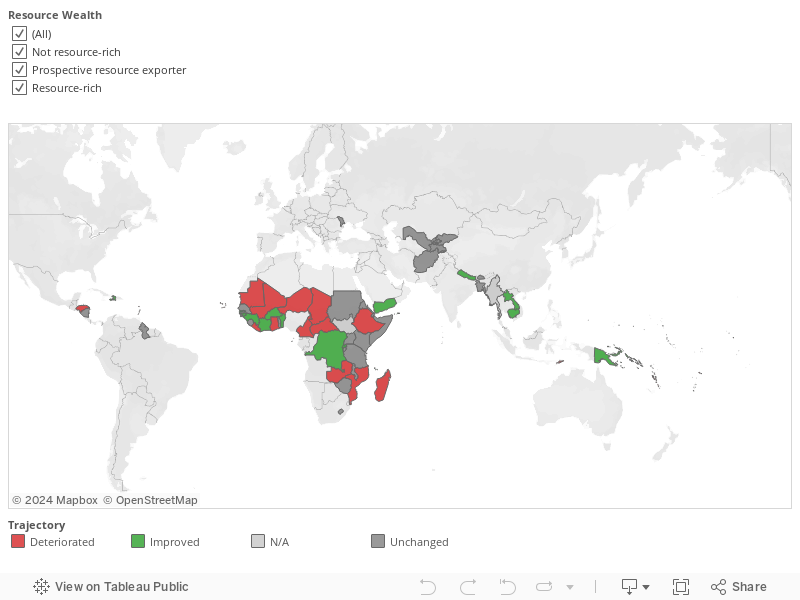
To place the importance of these challenges in context, I analyzed how shifts in the World Bank/IMF debt sustainability assessments (DSA) varied depending on countries’ levels of dependence on natural resources between 2001 and 2016. Of the 70 low-income countries where the bank and IMF conducted debt sustainability analysis, 13 were classified as resource-rich and an additional 11 as prospective natural resource exporters in 2012. The following graph shows the results of the latest assessment available for each country in three years when summary results were published (2011, 2013, 2016).
Click to enlarge.
DSA results from 2016 are available from the IMF website. I obtained results from 2011 and 2013 using the Wayback Machine internet archive, where original IMF PDFs are stored even after removal from the IMF website. I then scraped the files, compiled the data into a dataset, and visualized it using Tableau.
At the beginning of this decade, the majority of resource-rich and prospective exporter countries had low debt burdens as a result of the HIPC debt relief initiative and a favorable economic outlook due to rising commodity prices. This picture is confirmed by the 2011 cross-country review of debt sustainability analysis, reporting that only 25 percent of these countries were in debt distress or at high risk of debt distress, compared to 35 percent across all other countries assessed. The picture remained largely unchanged when it was rendered in 2013. But following the recent decline in commodity prices the analysis has changed significantly. According to the latest list of debt sustainability analysis published in this year, the IMF considers 33 percent of resource-rich and prospective resource exporter countries in debt distress or at high risk of debt distress, compared to 28 percent across resource-poor countries.
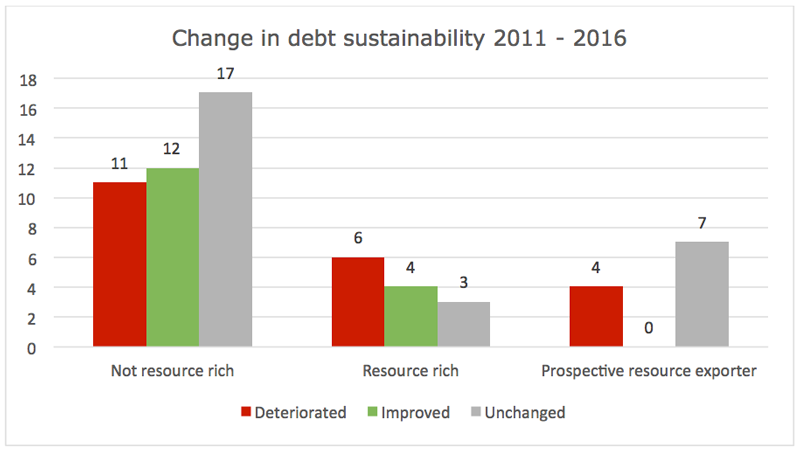
The data allows us to track changes for each country over time across the different assessments. For the period for which data was available using the 2011 and 2016 list of assessments, the risk of debt distress on average decreased across resource-poor countries, while it increased somewhat in resource-rich countries, and even more so in countries classed as prospective resource exporters.
Some of the most dramatic examples include Ghana and Mozambique, where hopes of imminent resource riches might have contributed to ballooning borrowing. In Mozambique, after major gas discoveries in 2010, negotiations with investors dragged on for years. (A final investment decision is expected by the end of the year.) During this same period the government accumulated enormous debt—some of it secretly for purchasing military hardware. In Ghana, despite rapid progress moving from the first major oil discovery in 2007 to production in 2010, government revenue accumulation remained low—far below what would have been required to keep up with the rapid increase in government spending. The government of Mozambique recently requested assistance from the IMF, while Ghana obtained an IMF bailout last year.
In other places, the debt sustainability outlook reported by the IMF remained unchanged, but extractive projects such as the Simandou project in Guinea and the Tonkolili project in Sierra Leone are major nodes of uncertainty. Both iron ore mines were projected to double their countries’ GDP only a few years ago, but their future is now uncertain after delays, halts and changes in ownership. Studies of the history of resource-rich countries also show that the effects of commodity price volatility are a key contributor to the “resource curse.”
After the number-crunching and country cases, it’s clear that the debt sustainability framework should pay special attention to both resource-rich developing countries and prospective exporters of resources. In our comments to the IMF we provide recommendations on how the framework could incorporate the special characteristics of these countries more directly and transparently:
- Analyze scenarios related to delays or cancellation of giant extractive projects
- Ensure that non-traditional debt instruments tied to commodities are adequately captured in the framework
- Provide special attention to the sustainability risks caused by the opacity of the resource sector
The note also provides suggestions on making the framework more accessible for reuse, which would make it much easier for civil society organizations, researchers and the private sector to reproduce and scrutinize analysis (like that above) and conduct more detailed reviews of sustainability.
David Mihalyi is an economic analyst with NRGI.
Natural Resource Charter Benchmarking Framework: 170 Crucial Questions for Resource-Rich Countries
NRGI is pleased to present the Natural Resource Charter Benchmarking Framework: 170 questions you and your government should be asking about natural resource governance. With these questions, you can benchmark management of oil, gas and mineral resources in your country against best practices. Covering the entire range of decisions a government must make to ensure that a country’s resources fuel development and benefit society, these questions are ideal to structure research, discussion and strategy.
The framework is based on the principles of the Natural Resource Charter, itself a product of careful deliberation and consultation with hundreds of experts and practitioners in resource-rich countries. Initiated in 2011 with Oxford Policy Management, the framework we present today is the product of five years of testing in more than 15 country projects. It takes into account the results of a recent evaluation of Natural Resource Charter programming. Among the users we are proud to include the governments of Tanzania and Sierra Leone, coalitions of non-governmental actors in Nigeria and Myanmar, and political parties in Ghana.
Using the framework across the world, so far
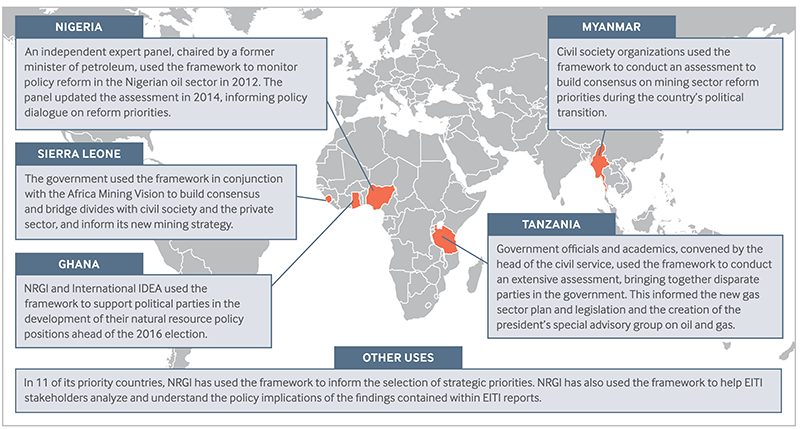
So, how do you use it? As the map shows, the framework is applicable in a variety of situations. From desk research, training plans and cross-stakeholder dialogues to government strategy and its implementation. And we are confident that there might be even more ways to use the framework. This is why we have made the framework public (with an open license for use) and established a helpdesk to support users. In case you want to copy and adapt questions for your own work, we have an Excel version. Each question has guidance on why the question is relevant, an explanation of concepts and further considerations to help structure answers.
The concern that many people have about the proliferation of standards and initiatives is one we take seriously. We have, therefore, tried to make sure that this framework builds on what others have already achieved. We have linked the framework to the Extractive Industries Transparency Initiative, World Bank and IMF indicators, the African Mining Vision and many more. The framework also complements the Resource Governance Index, an NRGI tool that compares governance across resource-rich countries. With the publication of the next edition in 2017, you will be able to use the framework questions to drill deeper into challenges that the index identifies.
Now, it’s over to you.
We encourage you to experiment with the framework for yourselves and we look forward to hearing how you get on. Feel free to email us at nrc-support@resourcegovernance.org with questions, ideas for collaboration and suggestions for improvements.
Rob Pitman is a governance officer at the Natural Resource Governance Institute (NRGI). David Manley is a senior economic analyst at NRGI.
Close to Home: The Critical Importance of Subnational Governance in Oil, Gas and Mining
For years, economists and political scientists have studied national governments throughout the world and advised about how to optimize resource revenues from extraction for long-term development. There are numerous policy disciplines that a country must get right to reap the full benefits. (These are addressed in detail in the Natural Resource Charter and global initiatives such as the Extractives Industries Transparency Initiative (EITI) offer an implementing framework focused on transparency and accountability in extractives.)
A major challenge that is often unaddressed by development plans is the governance of extraction by communities closest to a mine or oil and gas field. In most countries, national governments negotiate extraction contracts with companies and collect the revenues, but it is those closest to the extraction site that see their physical and economic landscape change most dramatically. Experience working on local governance issues in resource-rich countries has shown that for a country to fully benefit, subnational governance issues must be addressed.
Why subnational governance work really matters
One obvious reason for addressing subnational governance is that local dissatisfaction can derail an entire project, as a scan of headlines will indicate. Several Native American tribes have physically blocked construction of a pipeline in North Dakota, saying they were not properly consulted in its planning and are concerned that the pipeline will impact their water supply and threaten access to sacred sites. Employees at a phosphate mine in Togo are on strike demanding better wages and more protective gear. Anthropologists and environmental activists have tried to bring attention to social and environmental effects for years, but the local impacts are often treated as separate issues instead of something that impacts the nation’s chances of benefiting from resource wealth. Researchers at the Harvard Kennedy School found that community conflicts over environmental and social concerns can cost up to USD 20 million a week in lost value for large-scale operating mines.
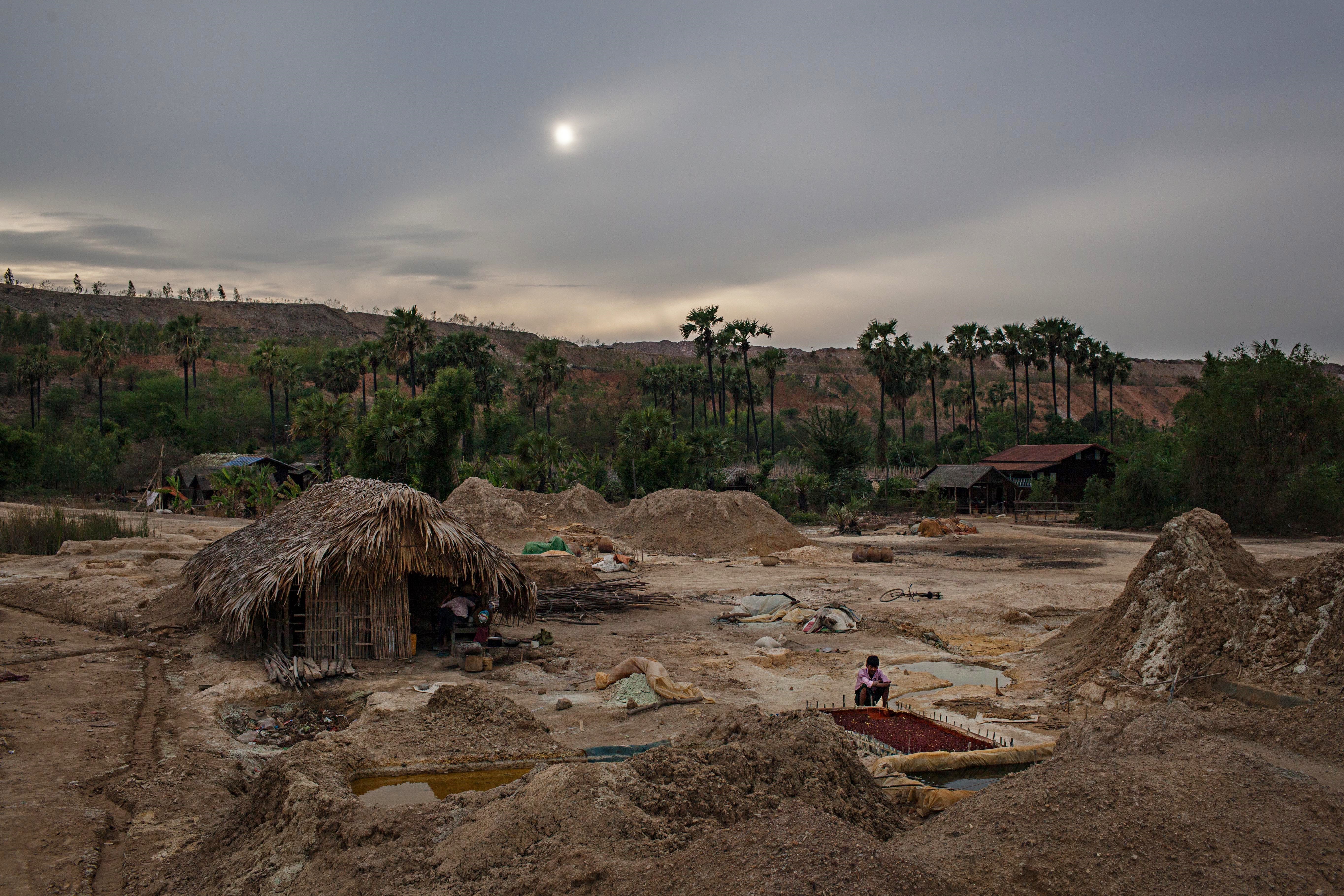
It’s not just a question of lost revenues. When members of local communities do not feel like they are benefiting from a national extraction project, conflict can result. There have been 20 resource-fueled civil wars since World War II. While Myanmar has undergone great political transition in recent years, the government has struggled to bring conflict with various ethnic groups to an end. One of the key steps to ending these conflicts and bringing lasting peace to the country is addressing how the costs and benefits of natural resources are shared between the ethnic groups and the national government.
Many national governments already share resource management powers with local governments. Approximately 30 of the 58 countries assessed in the 2013 Resource Governance Index featured some form of revenue sharing between the national and subnational authorities. The responsibilities shared with local governments are often significant. For example, Bolivia decentralized more than USD 2 billion of its oil revenues in 2012, amounting to more than USD 1,000 per capita per year in some areas. Some districts in Nigeria receive more than 80 percent of their revenues from resource projects. In Indonesia, local governments have the power to grant—or deny—licenses for many mining projects. When development actors only address resource management issues with national governments, they risk missing these large areas of impact.
Unfortunately, the design of power or revenue sharing systems is often done in a reactionary manner. In some cases, poor design can lead to gaps or overlapping national and local government authority. In others, it can increase the opportunity for conflict, corruption and waste. In Peru, some local leaders in mining regions attempted to foment violent protests in order to compel additional revenue transfers from the national government when commodity prices rose between 2005 and 2008. When powers are decentralized without adequate institutional preparation, capacity gaps can emerge as there is a sudden demand for extractive expertise in more locations throughout the country.
How to approach subnational resource governance
Supporting good resource governance at the local level is not easy. Even the definition of the problem looks different at the subnational level—academics debate how to characterize and whether there is a subnational resource curse. While some studies show real income levels rose in communities living closest to mines compared to other communities in the same country, others studies show that local economies were harmed by sudden large increases in public spending.
NRGI researchers have recently concluded a series of policy papers, including a synthesis paper, to support local governments and civil society actors as they aim to improve governance of natural resource wealth. The research is the fruit of eight years of working side-by-side with civil society and local government partners in resource-rich subnational areas throughout the world. The headline? While many of the good practices required at the national level do matter and apply at the subnational level, one cannot simply cut-and-paste national level solutions into subnational resource governance challenges.
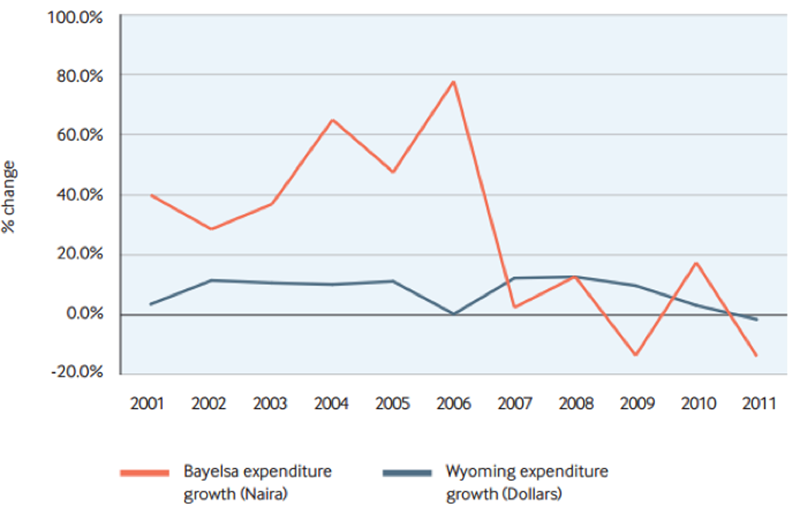
One of the biggest challenges at the local level is that the responsibility delegated to local authorities is not matched with the institutions and policy options needed to manage associated challenges. Decades of research has shown that the large, volatile and finite nature of resource revenues can distort economies and lead to wasteful government spending. The prevailing wisdom is to save some of the resource revenues in a manner that counters the distortion or allows for more flexibility when prices change. Some subnational governments have been able to implement these policy recommendations, mirroring national level best practices. The below figure illustrates how the U.S. state of Wyoming was able to smooth expenditure spending during volatile commodity prices by using a savings fund. Meanwhile, the state of Bayelsa in Nigeria had more than an 80 percent change in spending.
Many resource-rich subnational governments simply don’t have that option: the national government has strict rules that forbid subnational governments from borrowing or saving revenues. In Indonesia, for example, district governments, which receive 6 percent of the oil revenue from projects in their district, are required to repay the national government any revenue they don’t spend by the end of the year. The local leaders of Bojonegoro, an oil-rich district in Indonesia with just over a million people, are working hard to counter this problem. Through intense lobbying, they have convinced the national government to allow them to create a savings fund and are in the process of passing legislation to create the first such fund in the country. The broader policy lesson is that subnational governments must be given the tools to address known resource revenue challenges. Sometimes, this means changing the national rules.
Short- to medium-term expenditure volatility in Bayelsa and Wyoming
The capacity of local governments can also be hindered by power asymmetries between national and local governments. This can often be seen in the challenges local governments have collecting revenues from national government or extractive companies. NRGI profiles this problem in a case study about a mining community in Asutifi, Ghana. When the mine began to produce gold in 2006, local leaders in Asutifi knew they were entitled to a property tax and percentage of the royalties, but they did not have access to the contract between the company and the government or production information to understand their amount due. The leaders complained that there was a long bureaucratic procedure to get the royalties, which included unpredictable delays from the national government. As a result, what money was received locally was spent haphazardly, reducing the community’s trust of the local government. NRGI worked to improve the understanding of local leaders and civil society about the revenue calculations so they could better advocate for their due.
As at the national level, corruption and nepotism can complicate good governance solutions to natural resource management. While there is some empirical evidence that fiscal decentralization correlates with lower levels of corruption, decentralization also distributes the opportunities for corruption more widely and often with less formal oversight. Civil society and journalists who often can put a check on corruption at the national level tend to have fewer resources and less access to information at the local level.
A framework for subnational resource governance policy analysis and recommendations
The Natural Resource Charter provides a useful framework to analyze the decisions that governments need to make in converting natural resource wealth below the ground into long-term sustainable development above the ground. From the decision to extract to investing for sustainable development, each step in the decision chain is crucial for governments to avoid common pitfalls of the “resource curse.” The extent to which national governments delegate powers for each decision to subnational governments vary greatly from country to country. NRGI’s research has shown ways to consider the implications for subnational governance across the decision chain. Because of its area of expertise, NRGI’s research focuses on governance issues related to licensing and revenue management more than direct social and environmental impacts.
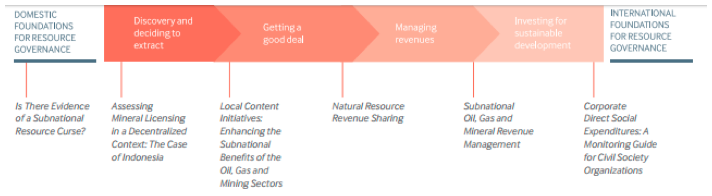
- Deciding to extract/licensing: Governments must be sure to coordinate licensing information systems vertically (between the national and subnational governments) and horizontally (between subnational governments), while recognizing the full spectrum of land rights to reduce conflict and produce better planning.
- Getting a good deal (revenue sharing): Any revenue sharing scheme should have clear objectives aligned with subnational expenditure responsibilities and management capacities.
- Getting a good deal (local content): Local content plans should be coordinated with local development plans so that new businesses can be created more easily and have lasting impact. The national government must be transparent about the negotiating process and the real costs associated with local content promises.
- Managing resources: Local governments should implement revenue management best practices, including using fiscal rules. National governments must allow local governments the tools to match their resources.
- Investing for sustainable development: Local and national governments can use the resource revenues as an opportunity to improve their subnational investment systems so that future spending is more efficient. At the same time, both levels of government can foster non-extractives areas of the economy to create long-term growth.
- Transparency: Information must be disaggregated on a project-by-project basis and available in formats that can be accessed and absorbed by subnational communities at each step in the decision chain.
The good news is that with support and access to information, many subnational governments are leading the charge for better resource management. Learning from their counterparts in Bojonegoro, civil society groups and local governments in the Compostela Valley of the Philippines were able to come together in a multi-stakeholder discussion and create detailed transparency mechanisms. Mining in the Philippines is often very contentious and in many regions there is little trust between communities, governments and the industry. “Transparency templates” and discussion forums at the local level informed a national multi-stakeholder implementation of the Extractive Industries Transparency Initiative. Local innovations like these can keep the momentum going during national efforts to improve resource governance.
Daniel Kaufmann is the president and CEO of the Natural Resource Governance Institute and a non-resident senior fellow at Brookings. Rebecca Iwerks is a lawyer specializing in the intersection between development and human rights. She works as a consultant with NRGI’s subnational governance program.
This paper was drafted in conjunction with a panel discussion on the topic at the Overseas Development Institute and the launch of a paper synthesizing NRGI’s work on subnational governance.
Why Supreme Audit Institutions are Guardians of Resource Governance
Last week, I had the honor of participating in the Third Annual Meeting of the INTOSAI Working Group on the Audit of Extractive Industries in Mombasa, Kenya. The meeting was attended by SAI officials from all over the world, committed to strengthening their role in natural resource governance. Our discussions covered many of the most pressing issues of the moment (e.g., commodity price volatility, economic diversification, artisanal mining and public-private partnerships) and examined the implications for SAIs’ work.
The session I led focused on the factors that help or hinder SAI effectiveness in resource revenue oversight. This included things like legal authority, independence, capacity, leadership, and external relationships and support. In our group discussion, one auditor general stressed how common it is for constitutionally mandated access rights to be ignored by auditees, particularly around sensitive information. Another official lamented excessive bureaucracy that delayed audit reports to the point of uselessness. Others flagged parliamentary indifference as a major challenge, and the danger of having one auditee responsible for releasing operating funds and a second auditee responsible for approving new hires.
The most powerful takeaway of the discussion was the importance of the political will of leadership. A SAI can have all the advantages of in-depth technical expertise, sufficient resources, a comprehensive legal mandate, and a strong auditor general ready to speak out on restricted access and damning findings. But if the head of government does not acknowledge and support the critical role of the SAI, impact will likely be limited.
This makes it critical that resource governance practitioners understand the basics of SAIs and pay attention to their work. The following is a starter guide on SAIs and resource governance:
- SAIs produce highly-detailed audit reports on government accounts and operations, but typically rely on parliament and law enforcement to follow up on their findings. In some countries, reports exposing serious mismanagement and inefficiencies are produced year after year with little action taken.
- SAIs conduct financial (accuracy of accounts), compliance (adherence to legislation and budgets), and performance (efficiency and effectiveness of government programs) audits. Financial and compliance audits are the traditional focus of SAIs, but performance audits have become a popular way to scrutinize resource governance policies.
-
SAIs - SAIs are sometimes systematically weakened and restricted by officials with interests in keeping resource management opaque. Such tactics include limiting access to documentation, cutting financial and human resources, and censoring reports.
- Certain conditions—strong leadership, a good relationship with parliament, strategic public communications, and support from development partners and other SAIs—can help SAIs overcome these restrictions.
Dana Wilkins is a capacity development officer with the Natural Resource Governance Institute (NRGI).
Oil, Order and Diversification in Libya
Over the past two decades, we have learned a lot about the “resource curse.” Libya in particular finds itself as an unfortunate case study, proving various hypotheses of scholars and policymakers around the subject.
With the largest reserves in Africa and the ninth-largest in the world, Libya’s oil in particular has had at least three harmful effects. Michael Ross suggests that oil tends to make authoritarian regimes more durable; it kept the Gaddafi regime in power for more than 40 years. Resources tend to increase corruption: Libya ranks at 161 out of 167 in Transparency International’s corruption index. Last, but certainly not least (and as we have witnessed since 2011), oil can help trigger violent conflict.
Last month, Martin Kobler, chief of the United Nations mission in Libya, met with Ibrahim Jadhran. Once a leader of the Cyrenaican federalist movement, Jadhran had in 2014 seized control of and blockaded shipments from the major Libyan oil ports of Es Sider and Ras Lanuf, effectively stopping annual revenue streams of tens of billions of dollars that are desperately needed to restore the war-torn country.
Two years on, exports from these ports have not resumed. Various media suggest that blockades may be lifted after the Tripoli-based Presidential Council agreed to pay salaries of Oil Facilities Guard members at the ports. The move was harshly criticized by national oil company chairman Mustafa Sanalla as “setting a terrible precedent which encourages anybody who can muster a militia to shut down a pipeline, an oil field, or a port, to see what they can extort.” Controversial as they may seem, such measures are part of the reality of Libya today: natural resources occupy a central role in the conflict and will continue to frame Libya’s political, social and economic future for many years to come.
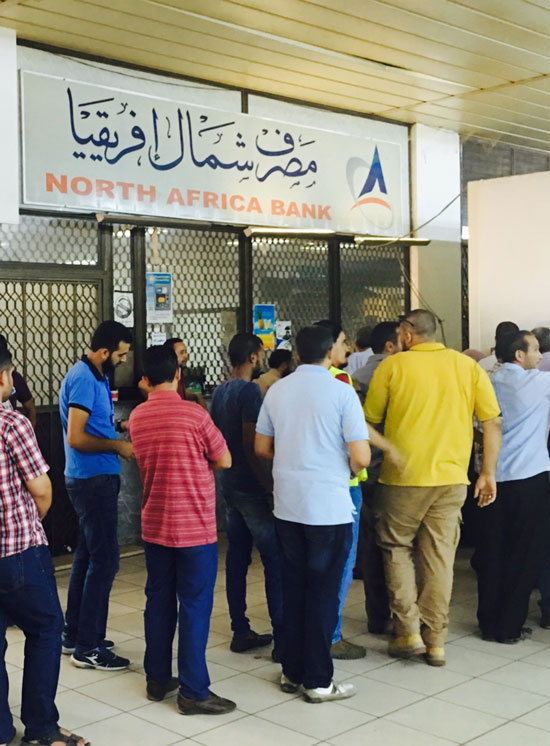
Economically, Libya is trying to fend off an unprecedented decline. The deficit is increasing. With record high exchange rates against the dollar, the Libyan dinar has not only weakened in value, but is nowhere to be found. A chronic liquidity crisis over the past three months has meant people line up outside banks at dawn in the hope of withdrawing cash up to whatever cap the bank has put in place on that day—usually not more than USD 30 or USD 40 worth of dinars. People now sell checks in exchange for cash for up to a 33 percent premium.
These stresses have been further compounded by a collapse in public services, especially health care. Most Libyans who can afford it travel to neighboring Tunisia for basic treatment, which now costs over four times the usual price in dinars.
The Government of National Accord (GNA) clearly has its work cut out for it. Although officials have recently said that oil will be shipped in the coming weeks, it is difficult to see how that will actually happen. The rival chief of staff in the East has threatened to attack any vessels that come near the ports. Tribes that are in the oil basin itself have made it clear that they control the supplies to the terminals and that a deal has to be struck with them, not only those controlling the terminals.
The U.N. and others from the international community have been supporting Libya for the past two years by mediating between the warring factions to reach some sort of political arrangement. What might have been more effective, however, would have been to work toward some sort of oil arrangement. This would practically mean some sort of ‘’fair’’ and agreed revenue sharing formula of the oil wealth, since oil money lies at the heart of the Libyan crisis.
Nine months since its conception and 120-odd days since it arrived to Tripoli by sea, the GNA has not yet managed to reign in the chaos in Tripoli, let alone the rest of the country. GNA officials face the arduous task of halting Libya’s downward spiral.
While Washington, Paris, London and the governments of Germany, Spain and Italy are urging all parties to return all oil facilities to the GNA, which desperately needs oil revenues to stream its way, it ought to perhaps in parallel ferociously seek alternative revenue streams. Perhaps this is the time for bold diversification policies to be made to slowly wean Libya off its addiction to oil.
Yusser AL-Gayed is an NRGI senior advisor for the Middle East and North Africa, and a core governments functions advisor in governance and fragility at the United Nations Development Programme.
Can We Reverse the Resource Curse at the Local Level in Indonesia?
This op-ed originally appeared in The Jakarta Post.
Indonesia is a classic example of a country that has overcome the oil curse. This was partly due to wiser spending politics as we weathered extremely volatile global oil prices between 1974 and 1989. Eventually, we moved from an oil-dependent economy to a more diversified one.
A looming quandary is whether we can repeat the same story in resource-rich districts and provinces. It is clear that the central government needs to work with these localities to make progress and avoid the resource curse.
Following the post-Suharto decentralization, the power to authorize mining licenses and exploit natural resources was transferred to local governments. Resource revenue-sharing mechanisms resulted in improved benefits in some local areas. In most cases, however, the result has been mixed, if not negative.
Most resource-rich districts and provinces lack the necessary technical capacity and political commitment to use these funds and authority for the people’s welfare. Resource-rich districts and provinces face the so-called “Dutch disease,” where petroleum and mining rents dominate the local economy and thwart development of other sectors; and pro-cyclical spending due to volatile commodity prices.
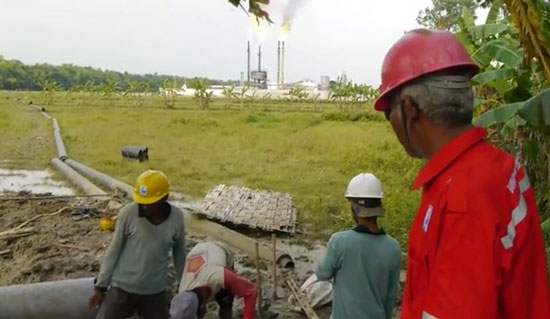
Video still from “Fueling the Future: Indonesia Plans for its New Oil Wealth”
Indonesia’s revenue-transfer system has exposed local economies to volatile oil, gas, coal and mineral prices. As a result, many resource-rich districts and provinces have gone through fiscal crises in recent years as a result of low commodity prices. Additionally, local-level patronage politics plays a significant role in diverting resource revenues toward elite groups and away from local populations.
At the same time, the central government still lacks necessary policy instruments to help sub-national governments better use these resources. A number of major policy issues need to be addressed.
The decision to extract and the granting of mining licenses need to follow a proper mechanism. Policy research by the Natural Resource Governance Institute (NRGI) on Indonesia’s decentralized mining system shows that the speed of decentralized power to sub-national governments to authorize mining licenses outpaced the latter’s capacity to perform this role. This has resulted in mismanagement and corruption.
Local community input must also be gathered. Our new program at the University of Gadjah Mada, called Resource Governance in Asia Pacific (RegINA), has produced qualitative research drawing from an in-depth study of four resource-rich districts in Indonesia. The study focuses on the relationship between local knowledge about managing natural resources and the decision to extract.
We found that community needs and concerns are often ignored. Communities have an important voice in how to sustainably manage natural resources. Clear policy guidance on free prior informed consent (FPIC) in the mining industry decision chain would allow them to have their voices heard in the decisions about whether or not to extract.
Extractive-industry revenue should be used to transform a resource-based economy toward diversified and sustainable development and to ensure some revenues are set aside for future generations.
Bojonegoro, East Java, is one district that is transforming finite resources into more sustainable local development and intergenerational benefit. An oil-rich district, Bojonegoro is known for its policy innovations, which address social conflicts, empower the local workforce and tackle poverty using resource revenues. (Watch “Fueling the Future: Indonesia Plans for its New Oil Wealth” from NRGI predecessor organization Revenue Watch Institute.)
Under the leadership of Suyoto (popularly known as Kang Yoto), Bojonegoro has started to establish an oil fund that would help to manage pro-cyclical spending in the district. At the same time, a portion of funding will go toward future generations through investment in education.
There are other local innovations to reverse or prevent the resource curse in localities. But in a unitary state like Indonesia, the role of the central government is indispensable in supporting policy innovations and providing guidance to make sure that extractive resources are turned into sustainable development.
Now that revisions of petroleum and mining laws are being discussed in the House of Representatives Indonesia may have the chance to repeat the success story of the 1980s at the local level by establishing stronger rules on anticorruption in petroleum and mining licenses; adopting the FPIC mechanism; and instituting rules on natural-resource funds at the local level.
Hasrul Hanif is a lecturer at the School of Politics and Government at University of Gadjah Mada and Emanuel Bria is the Asia-Pacific senior officer at the Natural Resource Governance Institute (NRGI).
Paradox of Plenty, Redux: Azerbaijan Grapples with Low Oil Prices
“This is such a disaster for us,” an Azerbaijani citizen told a reporter in December. “How come they decided to bankrupt people in one night?”
He was reacting to the decision of Azerbaijan’s central bank to free-float the national currency in late December 2015, after which the manat lost 32 percent of its value against the U.S. dollar (new exchange rate: USD 1=AZN 1.5). Prices shot up and several banks went out of business.
Socially vulnerable groups, especially the elderly and youth, have suffered most: “I spent two hours going around pharmacies trying to find my medication,” said one school teacher in Baku.
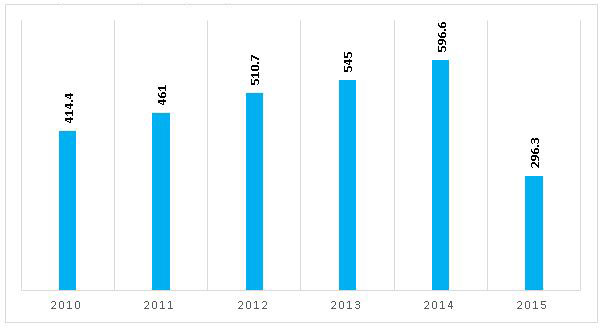
After Azerbaijan decided to float its currency, wages, pensions and social allowances paid in manat lost almost half of their value in U.S. dollar terms. Several private and state-run enterprises announced job cuts.
Azerbaijan: Monthly average wages in USD
Source: State Statistical Committee of Azerbaijan; CESD, “The Economy of Azerbaijan in 2015: Independent View,” January 2016
As in other oil-producing states, the oil price crash diminished government export revenues. In Azerbaijan, a share of profit oil goes to the state oil company SOCAR, while 80 percent of profit oil, bonus payments and transit fees is deposited in the state oil fund (SOFAZ). The government also collects revenue in the form of profit tax on foreign oil companies. In the midst of the oil price collapse, total government revenues from oil contracts fell from USD 16.7 billion in 2013 to USD 9.5 billion in 2015.
In 2016, the state oil fund SOFAZ is expected to collect AZN 4.6 billion (USD 3 billion) in revenue, continuing a pattern of decline from the previous year. The government’s ability to finance social programs and infrastructure is now in question. Most public investment projects financed through the state budget and SOCAR itself have been cut.
SOCAR is in dire straits. The company initially announced that the oil crash halved its revenues and recently revealed that it made no profit last year. Meanwhile, it accumulated USD 6.3 billion in debt.
What went wrong?
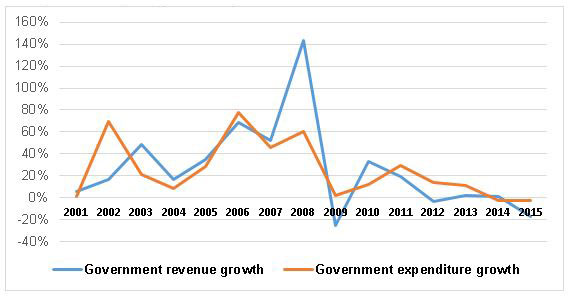
Researchers from the Eurasia Extractive Industries Knowledge Hub at Baku’s Khazar University devoted a special issue of the Caucasus Analytical Digest to low oil’s impact on Azerbaijan’s economy. They found the main reasons for the current economic recession lie in the government’s poor spending choices during the oil boom, driven by rampant rent-seeking. The key idea here is what economists call “pro-cyclical fiscal policy,” which basically means that authorities indulge in a spending spree in boom times and cut spending when resource earnings go south, prioritizing short-term interests over long-term development goals.
Ideally, a fiscal rule, like that used by Norway, would delink revenue flows from expenditures – saving more during good times to smooth the effects of future commodity price shocks. During the oil boom, Azerbaijan did the opposite, aligning its spending decisions with the price of oil (as demonstrated in the figure below). The absence of a fiscal rule means there is no formal requirement as to how much should be saved. Azerbaijan’s informal rule (not always observed) has been that 25 percent of oil revenues should be saved and up to 75 percent could be spent.
Pro-cyclicality and a short-term mentality are also behind the poor quality of public investments. Oil revenues could have spurred the development of non-oil sectors and helped the country mitigate the current recession’s social costs. Instead, the government spent billions on grandiose sports stadiums; the European Games hosted by Baku in June 2015 costed at least USD 1.2 billion of budget money, although the real cost is likely to be as much as USD 8 billion. The Olympic Stadium, which was built for USD 600 million, now stands idle and is now being offered for rent for weddings. Despite the plunge in oil revenue, Baku has allocated USD 202 million for hosting international sporting events this year. A Formula 1 race and a chess event are the only two in 2016..
Unfortunately, the oil boom was another missed opportunity. As the good times are gone, it is likely that there will be even less incentives for investments in human capital accumulation and creation of fair rules for private sector development.
Pro-cyclical fiscal policy in Azerbaijan
Source: International Monetary Fund WEO
Government responses
Although the oil price collapse caught the government off guard, authorities responded to the external shock by drawing down fiscal savings, tightening its monetary policy and imposing some currency controls such as limiting the sale of foreign currency and a 20 percent tax on foreign currency outflows. The president later revoked this decision.
Social spending has not been affected so far. However, dwindling fiscal reserves, the under-developed private business sector and a large youth bulge will put further strains on the government’s ability to provide for jobs and social welfare in the longer run.
First, the sovereign wealth fund and its USD 34 billion in assets provided a comfortable cushion. The government is to use the extra-budgetary savings (AZN 10.7 billion, or USD 7.1 bln this year), and while the amount transferred to the state budget was reduced in absolute terms, the transfer accounts for some 45 percent of total budget revenues in the projected 2016 budget. Yet, the state fiscal reserves are not limitless: Azerbaijan is running out of oil and cannot replenish funds later. The oil reserves will be fully depleted in 15 years from now, and since gas is priced lower than oil, it will generate only a small fraction of export profits in the future.
On the monetary front, the central bank devalued the national currency twice last year and then shifted from the fixed exchange rate to the managed floating regime. Having burnt through more than half of its foreign currency reserves in 2015 (from about USD 14 billion in 2013-14 to USD 5 billion in 2015 and USD 4.1 billion as of May 2016), it has been able to restore some monetary stability. However, the cost of living has increased. It is the poor and middle classes that suffered most. Prices of imported consumer goods went up and official inflation rate has already reached 10.8 percent in the first quarter of 2016.
Thus far, the sense is that the government has chosen to “wait and see” and hope the oil price returns to earlier peak levels. If the oil price stays low, the government will face more taxing times ahead.
Transparency and accountability in allocation of resource revenue is a need. An important first step toward this goal is adopting a clear fiscal rule to tackle arbitrary withdrawal of money from the state oil fund and a gradual introduction of performance-based budgeting in which funds are tied to execution and outcomes. The participation of civil society groups is also crucial to ensure oversight over implementation.
Download Low Oil Prices: Economic and Social Implications for Azerbaijan.
Farid Guliyev is a research associate and project coordinator at the Eurasia Regional Extractive Industries Knowledge Hub in Baku, Azerbaijan. Follow the Eurasia Hub on Twitter.
Oil, Identity Politics and the Struggle for Reform in Iraq
The oil crash has sharply underlined the economic crisis in Iraq. For Iraqi Prime Minister Haider al-Abadi, it has also highlighted nagging corruption and governance issues that, facilitated by sectarianism and power sharing, spiraled during a period of high prices. (See the Unaoil corruption scandal, for a start.)
Today, amidst a surge in suicide bombings, Abadi is grappling with sectarianism and struggling to reform a political system beleaguered by corruption. His latest effort was a contested cabinet reshuffle aimed at depoliticizing governance. Such reform was proven all the more necessary by Unaoil—and the oil sector is usually considered the last bastion of sound management in Iraq.
Abadi faces opposition to reforms from hardliners within his Shi’a constituency who have everything to lose from the changes he seeks. These reforms, embodied in a bold seven-point plan, seek to dismantle portions of the government, reduce bureaucratic waste and corruption, and do away with sectarian quotas that have mandated power-sharing at the highest level of government between Iraq’s three major ethno-religious groups. Abadi’s overall inability, despite some effort, to effect these reforms has threatened his support from Shi’a generally and the marja’iyya, the highly influential Shi’a clerical establishment. The cash crisis caused by falling oil prices and Iraq’s contracting revenues overlay this turbulent context.
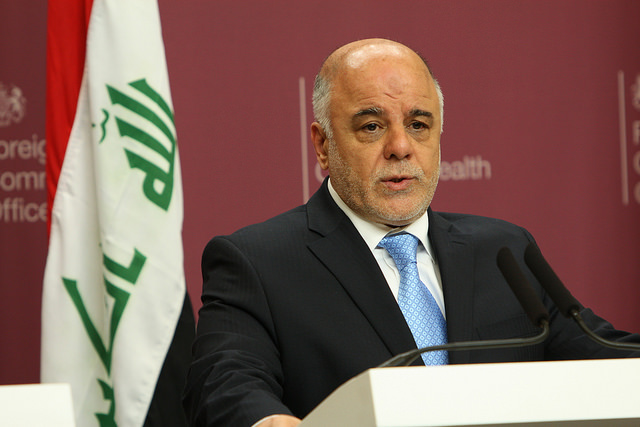 Iraqi Prime Minter Haider al-Abadi (Creative Commons image via Flickr/UK FCO)
Iraqi oil production has grown steadily since 2010, reaching a peak of 4.4 million barrels per day at the end of 2015. With prices tumbling, however, the central government is struggling to cover $4 billion per month in salaries and pensions. Increased defense spending on the state’s war on ISIS is another strain on the budget. With a $25 billion budget deficit expected, the government is now dipping into its $53 billion in foreign reserves to meet payroll obligations. (Reserves are expected to fall to $43 billion this year.) A possible devaluation of the currency will increase the cost of living—this risks creating further disaffection among Iraqis already protesting electricity shortages and corruption.
Meanwhile, the Kurdistan Regional Government is facing a fiscal challenge with direct implications for its economic viability and long-term stability. The KRG is reportedly $16 billion in debt, with $4 billion alone owed to foreign oil companies. Public sector salaries—months overdue—have been slashed. This is important because the government is a major employer and the KRG has no other sizeable revenue sources aside from hydrocarbons. The KRG has traditionally benefited from a 17 percent budget allocation from Baghdad, transfers that represent about 80 percent of the region’s budget. (This is supplemented by autonomous oil exports, taxes, custom duties and local fees.) This allocation, representing almost $1.1 billion payments per month, was halted because of Baghdad’s objection to independent KRG exports through a pipeline to Turkey. Resumption of independent exports by the KRG only brought in about $330 million in January, barely enough to cover payroll.
Iraq operates with no oil stabilization and sovereign wealth fund to provide a useful financial buffer and mitigate the effects of oil price volatility. Years of poor budgeting; fiscal mismanagement and entrenched corruption; a bloated payroll; fuel, food and electricity subsidies; and the cost of a sectarian power-sharing/patronage system have resulted in reinforced dependence on oil and little incentive to build strong institutions or to diversify economically.
The oil crisis has highlighted these dysfunctions. Iraqis have decried entrenched structures of abuse and regulated corruption, a lack of equitable distribution of resources and failure to provide basic services. This discontent fueled Abadi’s initial attempts to initiate reforms and dismantle channels of kleptocracy.
However, the balance of power is titling against the Abadi government, with the politicization of protests and intensifying partisan alignments. And in the current fiscal environment, the question of responsible resource governance has become even more prominent. Abadi must imbue the political discourse with the urgency of reform and fiscal responsibility.
Iraq’s government, meanwhile, must attain a sustainable budget. Subsidies require particular focus—Iraq has to cut costs, but also attract foreign investment and diversify its economy.
Today, in this low-price context, there are two possible outcomes: either Iraq risks bankruptcy, or engages in a true reform process aimed at rehabilitating resource governance and undoing the very sectarian patronage system that put Abadi in power. How far is he willing to go to chart a path to economic stability?
Patricia Karam is NRGI’s Middle East and North Africa director.
Dark Clouds Over Table Mountain: Mining Sector Sought Silver Linings at 2016 Indaba
Earlier this month in Cape Town the African mining industry held its annual confab, the Mining Indaba. In the shadow of Table Mountain, industry heavyweights and government officials shared their perspectives, amongst a hum of networking and deal making.
An air of pessimism permeated the event. Organizers reported attendance had fallen and many participants foresaw bleak times ahead and the need to batten down the hatches.
To improve optimism about the event, Indaba organizers encouraged participants to look “beyond the cycle” and keep an eye on long-term prospects for commodity prices. In spite of the current difficulties and pressures to attract investment, government reform efforts should aim to do the same.
Adjusting to the “new normal”
The days of booming commodity prices have ended with the slowing of China’s economic transformation, which had been a backbone of mining industry growth. Commodity prices, including oil prices, continue to tumble and financial markets have seen a particularly jittery start to 2016 following a problematic five years for mining companies.
The opening message for the industry from Mark Cutifani, chief executive of Anglo American, was clear: “If we don’t adapt, we perish.” Anglo American has seen over 90 percent of its market value wiped away and like many mining companies is managing an unhealthy, overleveraged balance sheet. Since the Indaba, Moody’s has downgraded Anglo American’s credit rating to junk status.
Adapting requires scaling back operations, reducing procurement costs and shedding jobs, while also selling assets to repair balance sheets. Anglo American has reportedly aimed to eliminate two-thirds of its jobs and sell an equivalent share of its assets.
Countries stretching the continent from South Africa and Zambia to Ghana and Guinea are managing the consequences for affected communities, including social unrest, combined with the broader consequences of tumbling currencies, increasing inflation rates, and an inability to finance important public services. The need to attract investment is therefore top on the minds of policymakers in the region.
Where do we go from here?
Across the region, governments must aim to take advantage of the opportunities that a period of low commodity prices offers, and not be tied down by the challenges it presents.
1. Don’t be too eager to postpone or unwind governance reforms.
At the Indaba, DRC’s Minister of Mining Martin Kabwelulu announced plans to drop reforms to the 2002 Mining Code. With a pressure to attract increasingly scarce investment, the risk is the aim of “rolling out the red carpet”, as one minister described his government’s position at the Indaba, can undo important strides taken in recent years.
Some efforts, like DRC’s reforms to its mining code, do increase the fiscal costs to companies and will come under pressure. However, there are also many other aspects of the reforms that aim to bring countries in line with international good practice, including important efforts to improve transparency, competitive bidding and leveraging benefits for local communities.
It’s taken a long time to build improvements in the regulatory frameworks and unwinding them now will not bring lasting benefits to resource-rich countries. To do so would be to repeat the mistakes of the last commodity-super cycle.
2. Learn lessons and look to governance reforms that will prepare countries for a future upturn.
With commodity prices now falling, revenues dwindling and jobs disappearing, it is difficult not to see the past two decades as a missed opportunity. This has been a hard reminder that previous governance efforts have not reduced government and community vulnerability to the mining sector, nor convincingly harnessed the sector growth as a means of driving broader economic development.
In the midst of these current difficulties, it is important to make space for learning and reforms. Governments should capitalize on regional initiatives such as NRGI’s Natural Resource Charter benchmarking exercise, the World Bank’s Mining Investment and Governance Review and the African Minerals Development Center’s Country Mining Vision. These can help countries to articulate clear strategies for managing the extractive sectors to produce development outcomes. Such efforts should include a vision for how governments can increase the resilience of their finances to commodity price volatility.
These times of low prices are an opportunity to redouble efforts in investing in institutional capacity across several areas. While revenue mobilization is high on the agenda, tax administrations must be made more capable of preventing pernicious types of tax avoidance and evasion. The African Tax Administration Forum is leading the way on this agenda. Governments must also place a major focus on the capability of government agencies across the region to transparently plan, assess and deliver quality infrastructure projects and public services. Ultimately countries should aim to position themselves much better to capture revenues and ensure revenues can be managed effectively. This is a long process of institutional strengthening.
3. Manage expectations.
Citizen expectations about the benefits the extractive sectors can bring are usually quite high. However, it is important to understand the limits of what these sectors can offer at a time of subdued prices. It is important to use the national planning process to create a realistic understanding of how the mining sector can contribute to overall development objectives.
Diversifying sub-Saharan African economies away from the extractive sector should be the long-term aim of these plans. As was discussed at the Indaba, even regional success stories like Botswana have a long way to go in this regard.
The 2016 Indaba underscored the scale of the immediate challenges facing the industry. But perhaps most importantly it reminded governments and mining companies alike that this was a chance to transform the sector for the longer term. Governments should grasp these opportunities.
Mark Evans is an Africa economic analyst for NRGI.
How Will Volatile Oil Prices Affect Azerbaijan's Budget This Year?
The prolonged oil slump that began in mid-2014 has made things complicated for Azerbaijan.
The rapid decrease of oil revenues—the country’s main economic driver for the past 10 years—poses real threats to macroeconomic and financial stability in Azerbaijan. As 2015 began, the national currency fell by 25.7 percent against the US dollar, increasing tensions in Azerbaijan’s financial sector and currency markets.
Since 2006, Azerbaijan has depended on oil for more than half of its budget revenues. Decreased commodity prices in international markets had an immediate negative impact on budget implementation: budget revenues for end of 2015 fell by 12 percent and state expenditures dropped by 16 percent compared to figures primarily approved in last year’s state budget.
On December 21, the national currency was devaluated for the second time. The manat lost 32.3 percent of its value and the country shifted to a floating exchange rate policy.

As a result, Azerbaijan’s government struggled to fulfil a variety of social and economic promises.
This year’s budget was forged during trying times. In 2015, Support to Economic Initiatives Public Union, a NRGI partner organization in Azerbaijan, parsed this year’s economic policy in a review that looks at potential trends in revenues and expenses. It also evaluates the possible impact of budget policy on economic processes.
The review has been developed in order to boost public participation in state fiscal policy and budget discussions; to improve civil society contributions to the development and implementation of budget policy; and to explain the state budget to a larger community, which is of special importance during times of crisis.
Fidan Bagirova is the Eurasia senior officer with NRGI.