
Guinea to Host the AU’s African Minerals Development Center
Guinea will host the headquarters of the African Minerals Development Center (AMDC). This is an outcome of the 31st Summit of the Heads of States and Governments of the African Union (AU) held in Mauritania, from 25 June to 2 July. Created in 2013, AMDC is the African Union’s specialized institution that implements the Africa Mining Vision (AMV), developed in 2009 for “a transparent, equitable and optimal exploitation of mineral resources to underpin broad-based sustainable growth and socio-economic development” by 2050.
The AMV’s Action Plan adopted in 2011 includes nine programs aimed at, among other tasks, mapping African mineral resources, harmonizing mining regimes and contracts by systematically incorporating provisions on corporate social responsibility and community development, developing infrastructures, establishing “centers of excellence” for knowledge production and capacity building, fostering a sustainable artisanal and small scale mining, and promoting economic diversification.
Since 2013, the AMDC has produced several publications, supervised the establishment of country-level mining visions in 13 countries in East, Central and Western Africa, facilitated the AMV Private Sector Compact, established an AMV Civil Society Forum, and initiated an African Minerals Governance Framework (AMGF). AMDC plans to become “a Centre of Excellence and the facilitator of choice to enable AU Member States to realize the Africa Mining Vision.” Its facilitation role is indeed likely to expand in the coming years with the AU’s ongoing Agenda 2063, especially the emerging continental integration tools like the African Continental Free Trade Area (AfCFTA) which is intended to speed the development of regional value chains envisioned by the AMV. In partnership with the AU Commission, we at the Natural Resource Governance Institute (NRGI) have been actively supporting the African Mining Legislation Atlas, an online platform of all African countries’ mining laws that allows users to compare provisions across different country laws, and the “guiding template,” an aid for drafting mining laws.
Among the international instruments the AMDC refers to is NRGI’s Natural Resource Charter, a set of principles on how to best harness opportunities created by extractive resources for development. NRGI works with governments and civil society organizations in five priority countries in sub-Saharan Africa, including Guinea. With its experience around the world, NRGI will continue to provide AMDC and other African institutions with technical expertise to engage the mining sector to improve the wellbeing of people living in Africa.
Hervé Lado is the Guinea country manager for the Natural Resource Governance Institute (NRGI).
New Tool Helps Analyze IMF Forecasts Across Resource-Rich Countries
“It is difficult to make predictions, especially about the future.” So goes one widely cited and misattributed maxim. Given the complexities of social and economic phenomena, making accurate predictions about how different countries will fare is an almost hopeless task.
Nevertheless, economists await the biannual release of the International Monetary Fund’s World Economic Outlook (WEO), which provides detailed five-year forecasts for a wide array of economic variables for every country, with great interest.
Though none expect the forecasts to be spot-on accurate, economists rely on them in their work as an impartial and sophisticated projection of economic trends—assuming no major policy change or shocks in the years ahead. Governments, private sector players and citizens alike can therefore use them as a baseline for planning.
We at NRGI have been reviewing projections attentively, as economic volatility is a key concern across the resource-rich countries where we work. Future resource revenues are inherently uncertain, which makes government planning difficult. As a result, we sometimes see authorities overspend on poorly planned projects in boom times and harshly cut spending when prices or production fall. Volatility of exchange rates, inflation, and government spending can cause businesses and households to spend in a manner than exacerbates the challenges.
In order to assess how countries have been coping with resource sector volatility and uncertainty, it is useful to look back at previous projections and compare that with the actual outcome. This is why we have built the World Economic Outlook Forecast Tracker. It allows users to plot how IMF WEO projections evolved over the years for a handful of variables and compare them with actual outcomes. Here we discuss three possible applications for the tool.
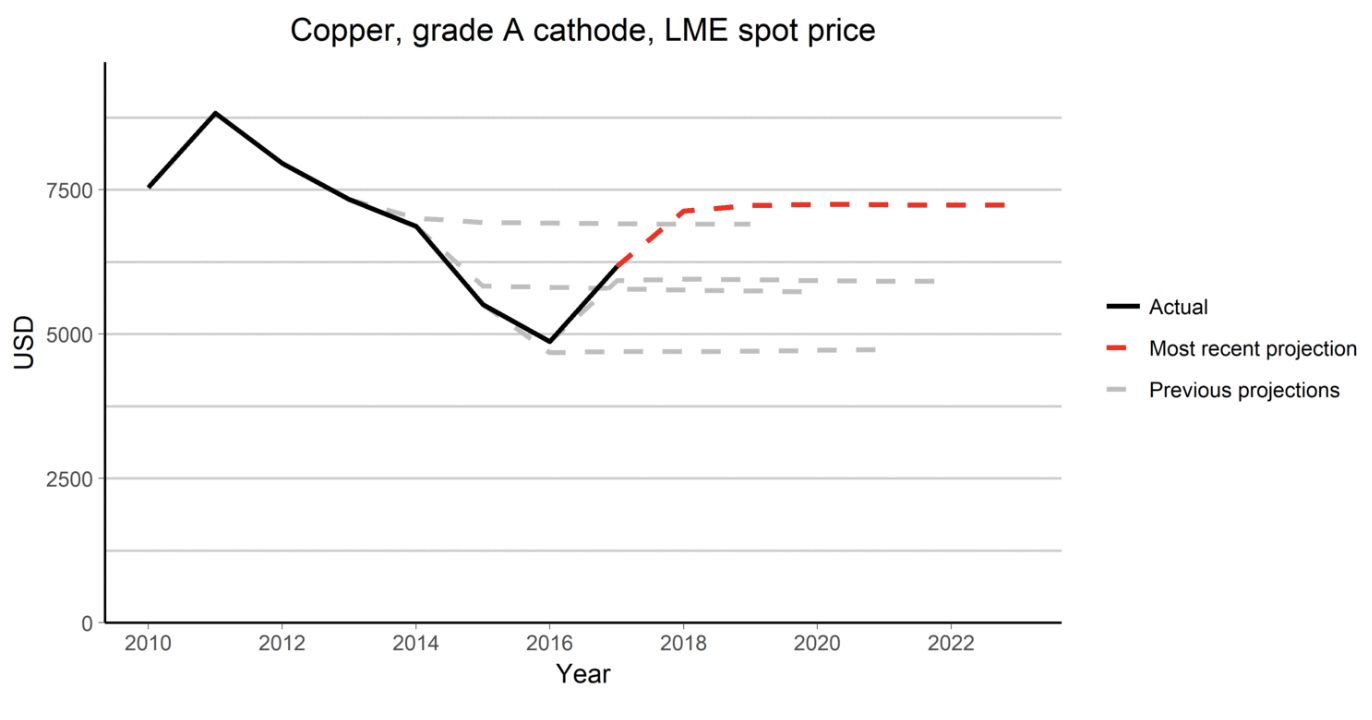
In one use case, we explore how commodity price projections have evolved over time. Nobel laureate Angus Deaton pointed out how optimistic the copper price forecasts used by the World Bank were in the 1970s and 1980s. Using our tool allows to contrast these over-optimistic forecasts with the IMF’s recent copper price forecasts. These show that IMF commodity price projections now assume that beyond some short-term corrections (based on commodity future markets), prices will generally flatten out (driven by inflation and demand). This forecasting approach makes sense; as research suggests, any forecast of oil prices beyond six months into the future is no more helpful than using the price today.
Historic copper price projections
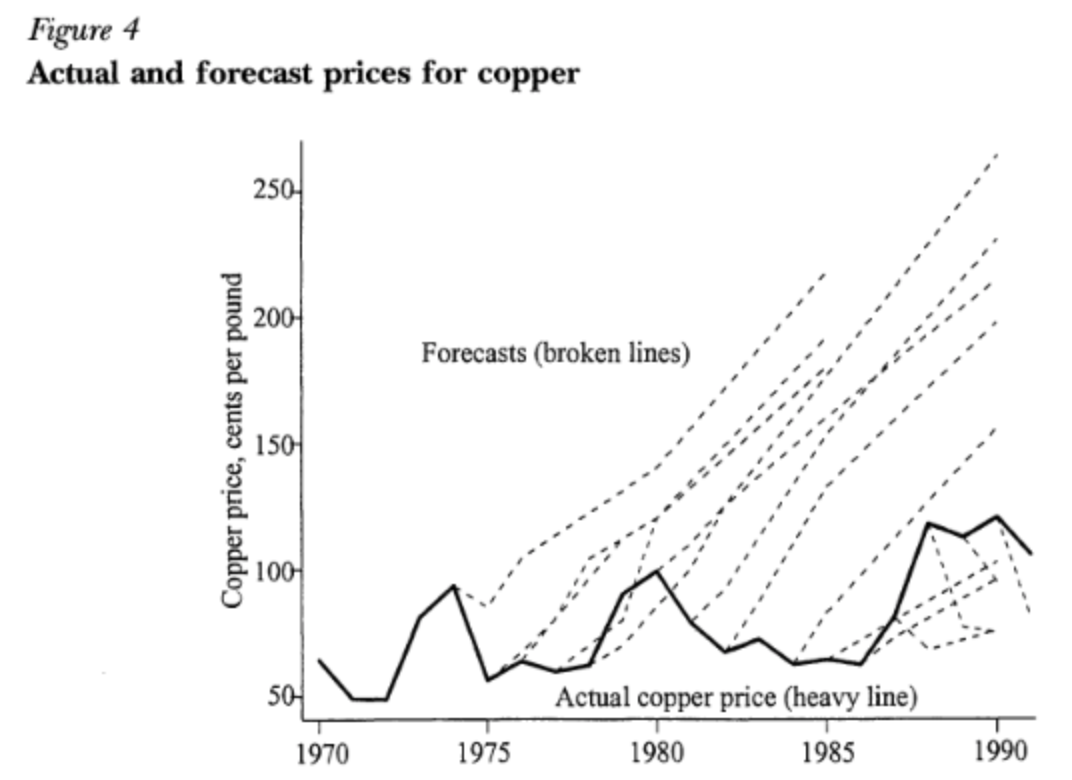
Source: Angus Deaton, “Commodity Prices and Growth in Africa,” Journal of Economic Perspectives, Volume 13, no. 3 (Summer 1999): 23-40
Latest copper price projections:
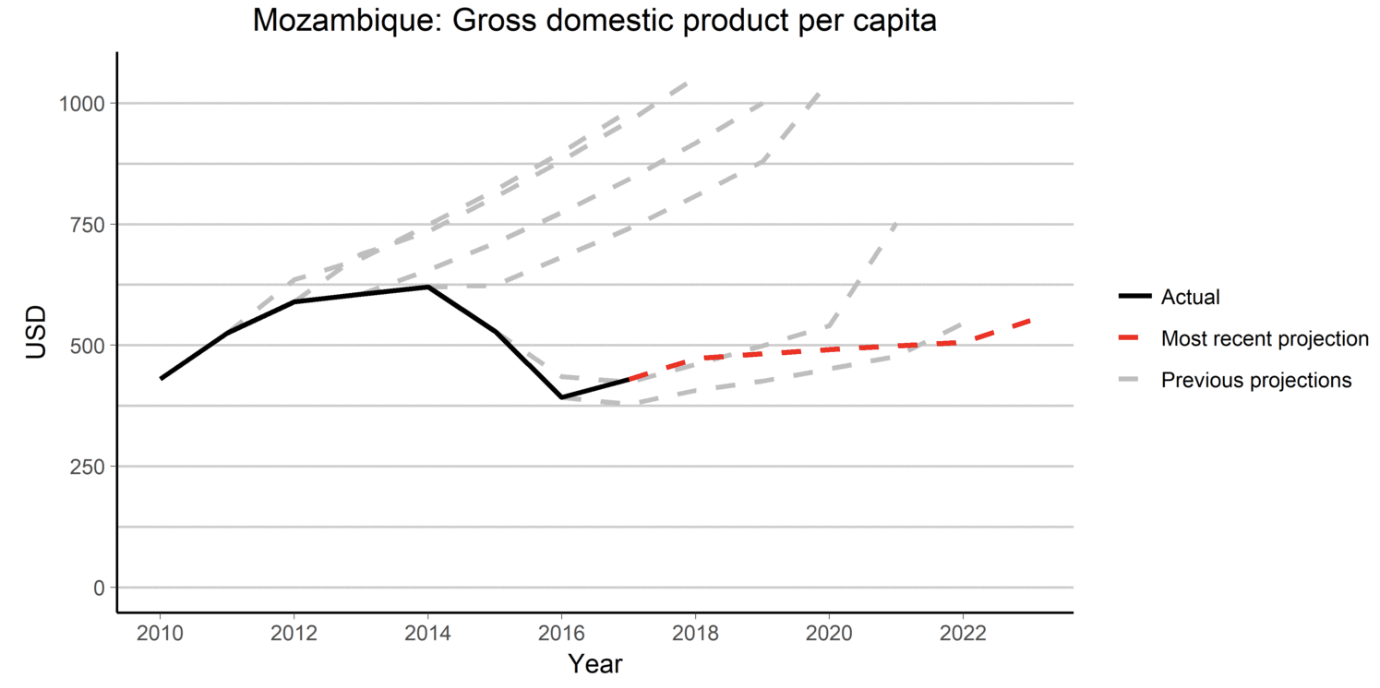
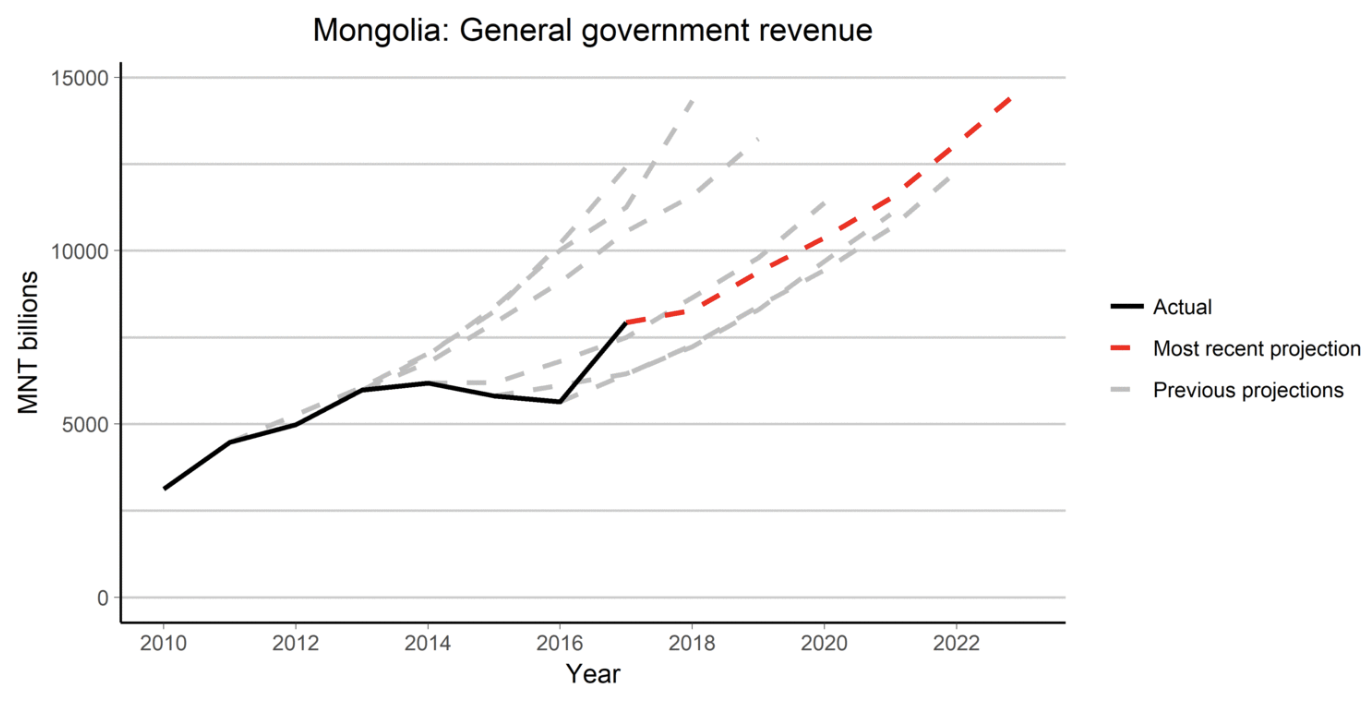
A second use case is to revisit how previously anticipated natural resource booms played out. As we showed in “Evidence for a Presource Curse?,” major natural resource discoveries can lead to elevated economic expectations (as illustrated by IMF gross domestic product growth forecasts), but subsequent economic performance often falls short of rosy forecasts. One example of this phenomenon is Mozambique, where IMF forecasts suggested that per capita GDP was going to double in just a few years as a result of gigantic gas discoveries. But the investment needed to develop these gas field has been delayed repeatedly. Another case is Mongolia, which experienced an influx of investment around 2011, but the expected boom in coal and copper revenues did not materialize. The IMF was not the only actor who proved to be overly optimistic: national governments, investors and lenders all contributed to increasingly enthusiastic expectations in both cases. Now the governments of both Mozambique and Mongolia are facing debt crises, having borrowed heavily in anticipation of the boom.
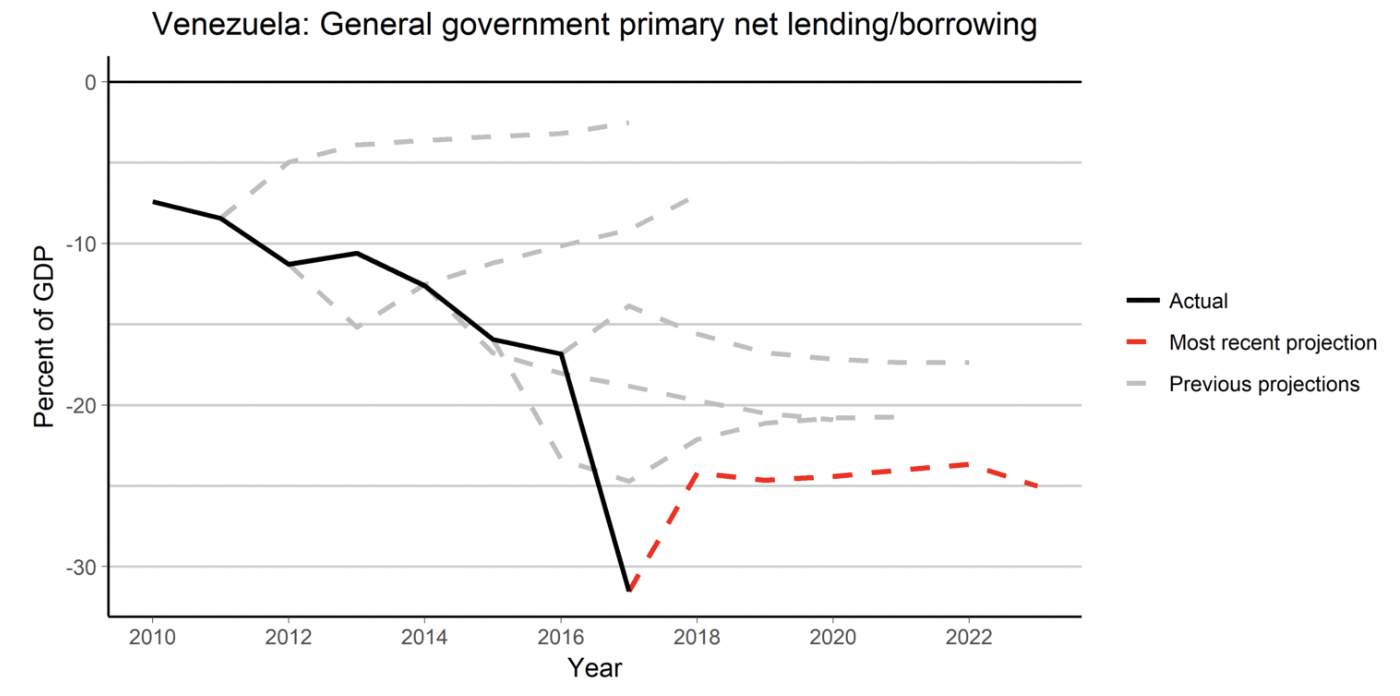
One could also look into how countries that depend critically on oil exports have responded to a prolonged period of low prices (even as they currently rebound), exploring the trajectory of government deficit (or alternatively the current account or economic growth). Venezuela and the United Arab Emirates both were dramatically hit by the oil price shock. But while Venezuela’s budget deficit widened beyond what was forecasted, the UAE’s budget balance improved quicker than forecasted by the IMF following the oil price crash.
Venezuela and United Arab Emirates budget balance

These are just a few illustrative examples of how IMF projections might be used to better understand shocks, uncertainty and volatility linked to natural resources. Others have compared the forecasted and actual impacts of austerity policies in Europe, the build-up of new debt after debt relief in Africa or the track record of the IMF at forecasting recessions. We hope that our new tool, which is available under an open license for reuse and adaptation, will encourage others to use the IMF data in innovative ways.
David Mihalyi is an economic analyst at the Natural Resource Governance Institute (NRGI). Tommy Morrison is a research and data associate at NRGI.
Tin is King in Belitung. Can this Indonesian Island Become a Tourist Destination?
For centuries, the Indonesian island of Belitung was known by outsiders for little more than its tin industry.
Things started to change with the release of Laskar Pelangi (The Rainbow Troops), a 2008 film about childhood and an inspiring rural school based upon an autobiographical novel from Belitung’s own Andrea Hirata. The book was a bestseller and the film a major Indonesian box office success, showcasing the island’s natural beauty and highlighting Belitung’s potential as a tourism destination.
Ten years on, the island has clear appeal. Azure waters, golden sandy beaches and smooth, stacked boulders mark its coastline. Many of Belitung’s inhabitants want to capitalize on this beauty. But further inland, the mining sector’s continued hold and the challenges of economic diversification are apparent.
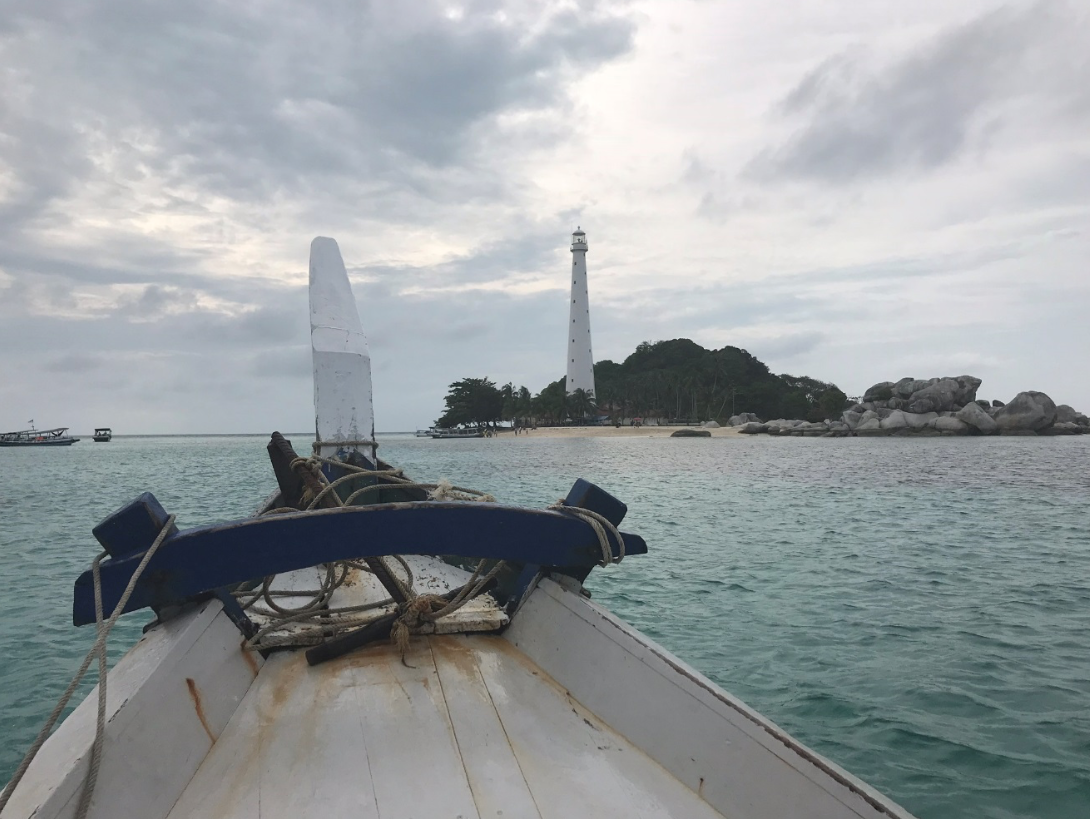 Approaching Lengkuas Island off the northwestern coast of Belitung. Photo courtesy of Sebastian Sahla for NRGI.
In January 2018, the Natural Resource Governance Institute and Gadjah Mada University’s Department for Politics and Government (PolGov) organized a two-week intensive resource governance course in Belitung. In its fifth year, this was the first time the course was held outside PolGov’s Yogyakarta campus. For 28 participants drawn from seven countries, it was a unique opportunity to come face-to-face with the challenges of a community hoping to move beyond dependence on extractives. (Read interviews with facilitator-participant Tim Grice, founder of Leapfrog International, and participant Starjoan Villanueva, director of the Philippine civil society organization Alternative Forum for Research in Mindanao.)
Since the early 18th century, mining has been Belitung’s driver. The industry was initially overseen by the Palembang Sultanate. In 1860, following Dutch colonization at the start of the century, NV Billiton Maatschappij, which would eventually evolve into global mining giant BHP Billiton, acquired mineral rights on the island.
The company dominated the local economy until the 1950s, when the industry was nationalized. In the 1990s, depletion of tin resources and a crash in global prices led Indonesia state-owned enterprise PT Timah to divest from its Belitung assets. Mass layoffs and the closure of company run schools and hospitals ensued, depriving residents of crucial social services. Companies left behind a landscape scarred with brownfield mine sites.
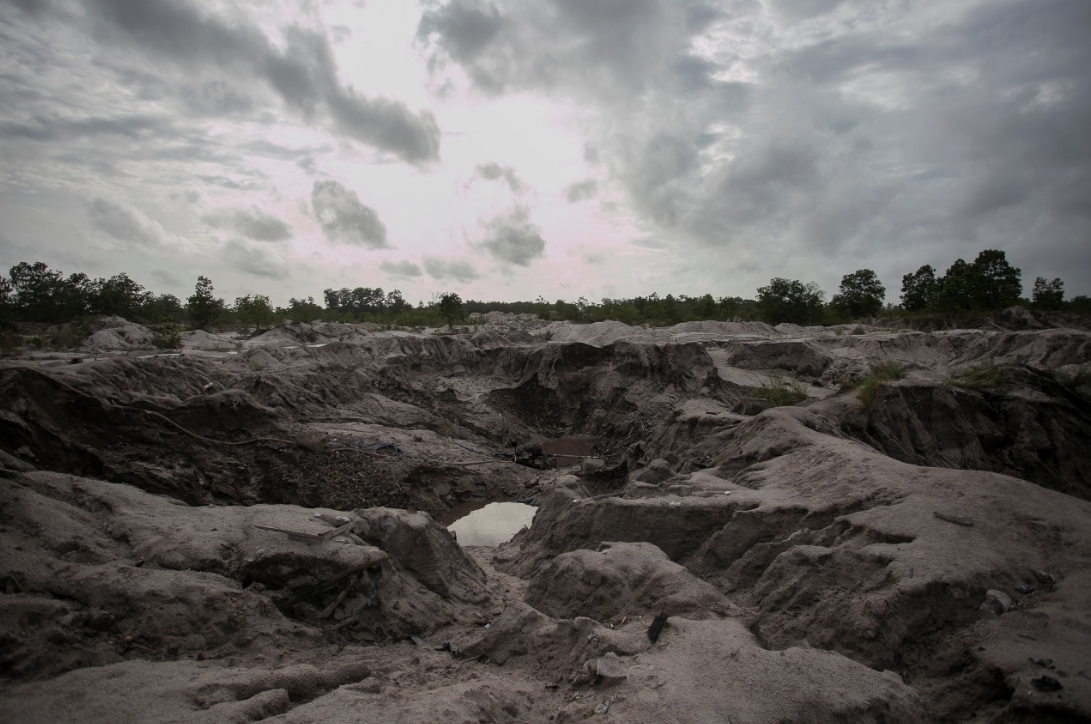 An abandoned tin mine in Belitung. Photo courtesy of Andrew Bauer for NRGI.
Since then, Belitung’s economy has been in transition. While large-scale mining continues on a neighboring island to the west, Bangka, Belitung’s extractive sector features only artisanal and small-scale activity. Mining still makes up a significant proportion of Belitung’s local economy and, together with Bangka, accounts for 90 percent of Indonesia’s tin output.
However, with the growth of tourism and prospects for expanding agriculture and safeguarding fisheries, diversifying away from mining has gained conceptual momentum among local officials and residents.
But we observed many challenges to diversification.
One is coordination within the government. We did not find evidence of a concrete plan within the district government to move from ambitions of diversification toward benchmarks.
More coordination between district and provincial authorities is needed. The district's ambitions for tourism and fisheries could be undermined by provincial mining licensing decisions. The province has issued licenses for offshore tin production around Bangka and there is talk of expanding this to Belitung. This could have major impacts on the marine environment.
Managing artisanal mining remains a major source of income for many, and artisanal mining is difficult to regulate. Unlicensed operations are highly visible and generally not penalized. In the absence of an official mandate to stop illegal mining, district officials resort to mediation based on interpersonal relationships and social sanctions to resolve conflicts. Barriers to entry are low, with only simple tools and technology required. Malaysia and Singapore serve as ready markets.
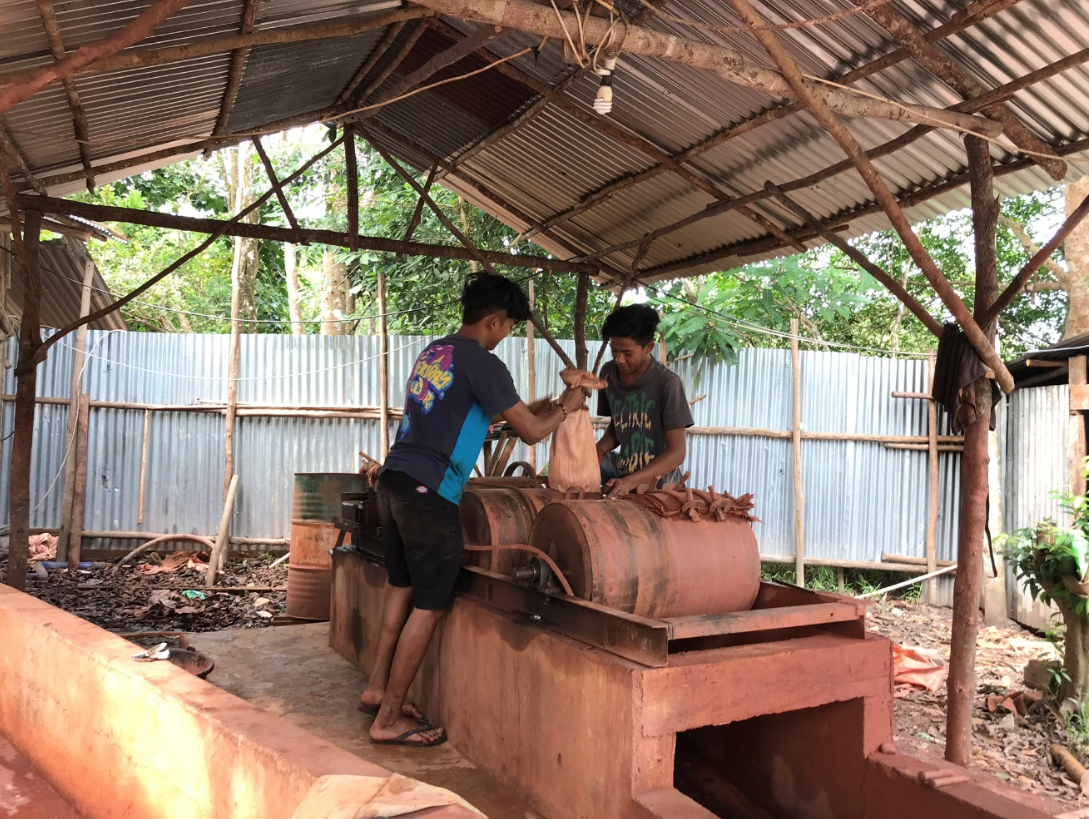 Artisanal miners process tin in eastern Belitung. Photo by Sebastian Sahla for NRGI.
While Belitung's journey shows that the path to diversification is not easy, three considerations might serve as a point to move things forward in Belitung and communities facing similar challenges elsewhere:
- Improve coordination between different levels of government. District and provincial officials should chart a shared vision for local economic development. This might include an agreement that offshore licensing will not be permitted in Belitung.
- Support the formalization of artisanal mining. Artisanal mining is a reality on Belitung that the district and provincial government need to deal with constructively. Authorities could provide support to artisanal miners to improve environmental and social standards.
- Develop a concrete and realistic plan for the tourism sector. The national government has identified Belitung as a priority area for tourism development and has established a special economic zone in the northwest of the island, which has attracted investment from the likes of Sofitel and Sheraton. In collaboration with provincial and district authorities, a clear strategy could help to identify what facilities or infrastructure is needed to further increase the appeal of other parts of Belitung. A tourism strategy could home in on the island’s mining heritage. There are already plans to convert a brownfield open pit mine into a tourist site. In other countries, similar schemes have been highly successful. In the U.K., the Eden Project has turned an old clay pit into “the largest indoor rainforest in the world” and attracted over 1 million visitors in 2016. While a project of this scale may not be feasible in Belitung, it could give food for thought on how tourism can build on the island’s mining legacy.
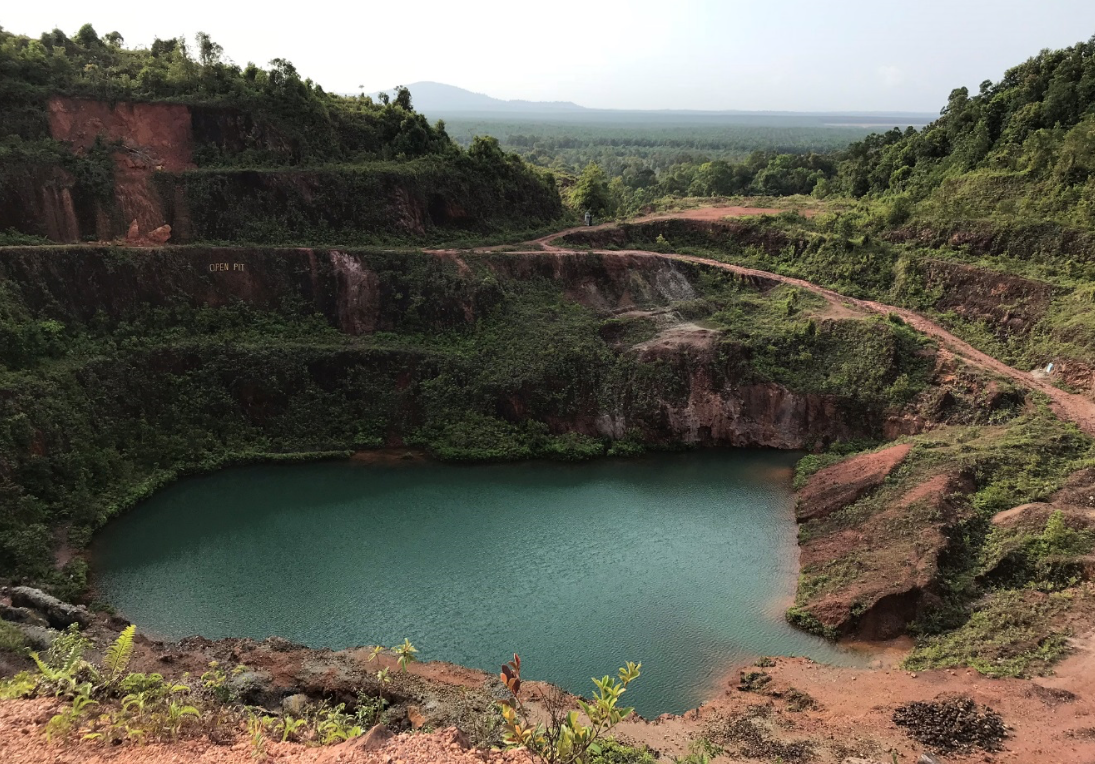 View of the Nam Salu open pit. There are plans to turn the site into a public park. Photo by Sebastian Sahla for NRGI.
How Political Parties Can Take a More Active Role in Resource Governance
In a publication launched today, the Natural Resource Governance Institute and International IDEA make the case for political parties to take a more active role in transforming natural resources into inclusive and sustainable development.
Political parties can do this by developing well thought-out, clear, informed and comprehensive policy positions that cover relevant issues across the natural resource value chain. Without such positions, parties risk exacerbating the challenges associated with resource wealth—challenges such as corruption, mismanagement, untenable public expectations, revenue volatility and economic distortion. With them, parties can not only help implement policies and systems to avoid the so-called resource curse, but also help their country close the implementation gap between law and practice (as detailed in the 2017 Resource Governance Index).
NRGI and IDEA’s joint work with political parties began with a multiparty policy dialogue in Ghana ahead of the 2016 elections. With support from both organizations, the country’s four main parties developed detailed positions, including thoughtful and informed stances on several of the most pressing resource governance issues facing the country. These new positions contributed to more informed pre-election debate on topics like transparency, beneficial ownership, savings and borrowing. After the elections, the momentum has continued, with the government moving ahead on several of the proposed reforms.
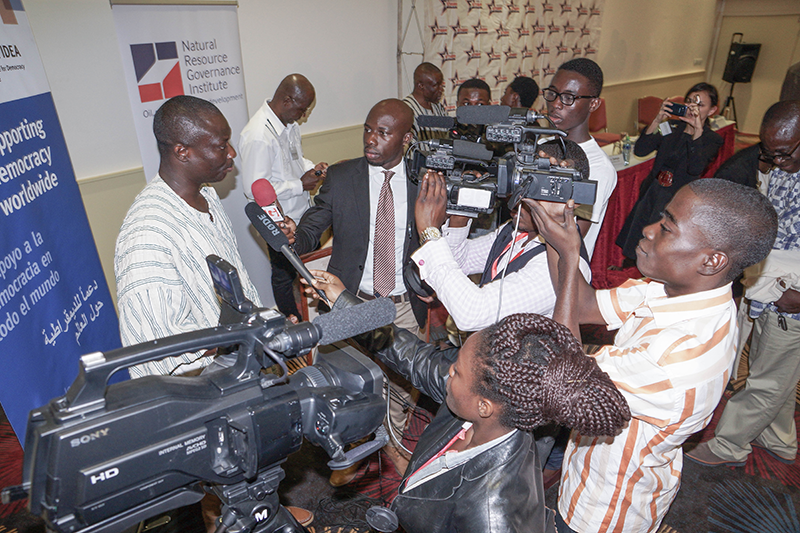 A participant in at a political parties dialogue on oiland gas policy in Accra, Ghana, speaks to the press in February 2016.
This report builds on the successes of and lessons learned from the process in Ghana, NRGI and IDEA expertise, and country case studies. It is also informed by the broader body of good practice in party strengthening and resource governance.
Chapter 1 explains why political parties in resource-rich countries are particularly important players in resource governance. It also addresses the ways other stakeholders interface with party positions and the benefits of cross-party dialogue. Chapter 2 details six country case studies on the roles that some political parties have played in resource governance, both positive and negative. Chapter 3 and its accompanying worksheets offer a practical guide to help political parties develop their own resource policy positions, drawing on IDEA’s expertise on political party strengthening, NRGI’s Natural Resource Charter Benchmarking Framework and the 2017 Resource Governance Index (RGI).
As part of our research for this report, we cross-referenced International IDEA’s Global State of Democracy (GSoD) Indices and the RGI. This analysis identified a strong positive correlation between what the GSoD refers to as “political representation” and RGI scores on “value realization” and “revenue management.” What this means is that where citizens have free and equal access to political power, including strong political parties, there are better laws, institutions and practices in place to manage natural resources.
Political parties have a fundamental role to play in designing and implementing good resource governance systems. By developing comprehensive resource positions, they are better able to communicate who they are and what they stand for to constituents and, whether in power or in opposition, participate in policy making and public debate in a more informed, strategic and unified way.
More than that, parties can help ensure that their country gets the best deal for the extraction of its resources, manages revenues for the long-term best interests of citizens and avoids the resource curse.
Dana Wilkins is a capacity development officer with the Natural Resource Governance Institute (NRGI). Alberto Fernandez Gibaja is a program officer with the International Institute for Democracy and Electoral Assistance.
‘Empowerment Without Good Governance is Precarious’: a Conversation with Leapfrog International’s Tim Grice
Tim Grice is a social researcher, development generalist and the founding director of Leapfrog International, a Brisbane-based consultancy that focuses on resource governance and inclusive growth. He is also an honorary senior fellow at the University of Queensland’s Sustainable Minerals Institute.
In January, Grice participated as an instructor in Advancing Accountable Resource Governance in Asia Pacific, an annual course that brings together experts from across the region to discuss pressing issues in oil, gas and mining.
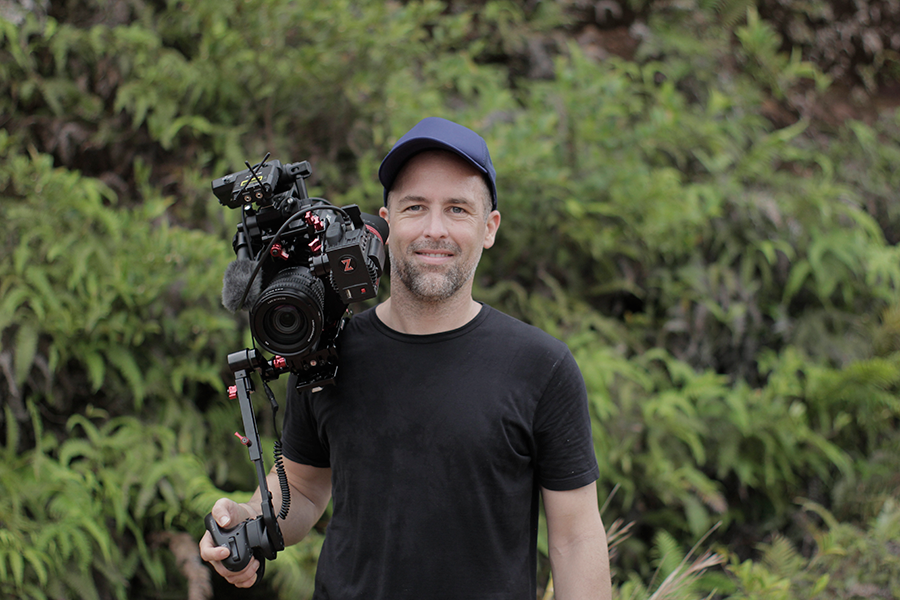
In Belitung, Indonesia, where this year’s hub course took place, I spoke with Grice about a formative early work experience in Papua New Guinea as a sustainable development group manager with Newcrest Mining, his more recent work with Leapfrog International and quantifying the unquantifiable.
Max Brett: What drew you to work for Newcrest? Was it the project they were working on?
Tim Grice: What drew me to Newcrest was the island, actually. I lived on Lihir Island with my family for six years. Lihir has an incredibly interesting development story. In the mid-1900s, there was a movement called the Tutukuvul Isakul Association, which prophesized that Lihir would become a city. People engaged in rituals with the expectation that material goods would arrive on the island.
It was basically a “cargo cult,” a millenarian movement to explain how Europeans, or more technologically advanced societies, got their “cargo.” Fast-forward half a century and Lihir is home to the world’s third-largest gold mine.
What were you able to achieve at Lihir and in Papua New Guinea?
I took a trip to a hospital in Namatanai in New Ireland. The hospital had no power and no running water, and to drive to the next hospital was a three- or four-hour trip. The day before we arrived, a woman died after walking down to the local river to wash after childbirth. The mining company worked with stakeholders on hundreds of corporate social responsibility projects during my time on the island, but the predicament at Namatanai hospital was particularly desperate.
Through the government of Papua New Guinea’s tax credit scheme, we worked with the New Ireland Provincial Government to install new power and water infrastructure at the hospital. The management of the power and water supply is now under the provincial authorities. We also set up a collaborative governance structure where health and education infrastructure projects were aligned to local development plans.
From your experience on Lihir, what are your takeaways on a mining company’s responsibilities to the community where it works?
It’s critical that local institutions have the opportunity to set the direction for their development plans, whether that’s local or regional level governments, landowner groups or civil society organizations—usually a combination of all stakeholders. That’s critical.
But there’s also a balance to be found ensuring that stakeholders have governance structures that can handle an influx of mine-derived funds. Empowerment without good governance is precarious.
Why did you transition out of the private sector?
Because the pay is better working for civil society and governments.
I’m kidding! I wanted to work with governments, civil society organizations and groups like NRGI to have more of an impact on extractives governance at the national and global levels.
Tell me about Leapfrog International.
I started Leapfrog International about 18 months ago. We focus on extractives governance and tend to work with aid donors and multilaterals, as well as the private sector and civil society.
One recent project was on the mining sector in Africa and countering violent extremism. We went to Burkina Faso, Ghana and Kenya to think through the role that the mining sector in Africa could and should be playing to prevent and counter violent extremism. Another project was with the World Bank in Solomon Islands, looking at establishing an independent center to advise landowners and local communities on the extractives process. We’ve also been involved with Transparency International’s Mining for Sustainable Development Program.
One focus area for Leapfrog is the use of digital storytelling in the research process. Through our work with clients like the Extractive Industries Transparency Initiative on subnational payments and the International Finance Corporation on mobile banking, we’re finding that people have different insights when they are telling stories to a camera, and documenting their circumstances and particular entanglements. Short documentary reports also become an effective way to share the outcomes of a project.
You’re also working with NRGI. Tell me about the non-fiscal costs and benefits project.We tend to do a fairly good job measuring and forecasting fiscal revenues from extractive projects. What we don’t measure and value particularly well are the “non-fiscal” costs and benefits of extraction, including the depletion of ecological assets like air, water and land, and the often profound social impacts of extractive projects, such as job creation, resettlement and social conflict. Together with NRGI, we’ve been surveying the methods and tools that can measure and value these non-fiscal impacts.
How would different stakeholders use this?
Unlike their fiscal counterparts, the non-fiscal impacts of the extractive sector tend to be underestimated, under-measured and under-reported by industry, governments and markets. When we look at a mining project in Chile, or an oil and gas project in Indonesia, we don’t really know what the total net impact of that project is. Many extractive projects might no longer be profitable with full accounting for financial and non-financial externalities and liabilities.
So, if we do a better job measuring and valuing all of the costs and benefits of extractive projects, governments and communities will be more informed when making the decision whether to extract. Better measurement and valuation of social and environmental impacts can also inform social and environmental management programs.
What are your thoughts about the course that brought us here?
I really like that the course is on Belitung, where BHP Billiton took its name. Belitung has a rich history of tin mining going back to the discovery of tin in the early 1700s, and the exploitation of tin by NV Billiton Maatschappij in the Dutch colonial period, and more recently the state-owned mining company PT Timah, as well as artisanal and small-scale miners. We have a live case study to think though, and lots to learn from local people.
This interview has been edited for clarity and length.
Max Brett is a communications officer with the Natural Resource Governance Institute (NRGI).
Beyond Wakanda’s Way: 'Africanizing' Mining Sector Benefits
Can’t get enough of extractives sector governance and Black Panther? Neither can we! What’s been particularly striking about the hugely successful box office hit is how it has sparked a number of serious policy discussions, running the gamut from foreign policy to feminism to flipping Africa’s relationship with foreign aid on its head.
The film is meant to appeal to everyone, at every level and for many reasons. But at its heart is a surprisingly multifaceted (for what is, in essence, a superhero movie) exploration of the concept and meaning of Africa and pan-Africanism. The depiction of Wakanda, a technologically advanced African country that has never been colonized and has successfully used its mineral resources to develop, raises questions of what Africa has been, might have been, is, and still could be.
Analysts have already pointed to the natural resource governance lessons to be learned from Wakanda, with some drawing a direct contrast between Wakanda’s successful management of its vibranium (a virtually indestructible mineral used in Wakanda’s technology and weaponry) and the apparently less rosy prospects for cobalt in the Democratic Republic of Congo (DRC). Wakanda’s upstream, midstream and downstream mineral sector are entirely controlled by Wakanda itself and the country has reaped the benefits in splendid isolation. To protect the secret of its powerful metal, Wakanda has hidden from the world, and Wakanda’s own human resources and economy have apparently sufficed to support the entire mineral value chain without the need for the knowledge sharing or economies of scale that collaboration with its neighbors might provide.
But in reality much of Africa’s mining sector is currently dominated by foreign direct investment; its raw minerals are often exported with limited local participation in the sector (in terms of employment or provision of goods and services); and tax revenues are eroded through transfer pricing in cross-border transactions (and that isn’t counting revenue leakages through corruption or mismanagement).
The idea that Africa’s mineral resources should benefit Africa and drive economic development and diversification is hardly controversial, nor is the idea that heretofore they often have not. To help address this failure, since 2009, the Africa Mining Vision flagged upstream and downstream value addition, and regional coordination, as key to harnessing Africa’s mineral wealth to drive industrialization. And in recent years, several African countries have introduced local content provisions of varying levels of specificity in their mining laws, requiring companies to hire locals or use local goods and services, in efforts to boost in-country benefits from mining.
Botswana, in particular, has taken concrete steps to increase local value addition by securing the transfer of De Beers’ global sorting and valuation operations from London to Gaborone; inviting cutting and polishing companies to establish factories in Botswana and train local employees; and by setting up a Diamond Academy to provide a range of technical training courses on the diamond industry.

Wakanda succeeded in “going it alone,” but for African countries to fully realize local benefits will take the kind of strategic and concerted action the Africa Mining Vision envisaged.
Strategic. Local content laws and policies are an important start, but they can prove ineffectual or counter-productive if not well-aligned with a broader national development agenda or based on a realistic assessment of both the timeframes necessary for building capacity and the prospects for sustaining long-term demand sufficient to support specialized goods and services industries. Further, local content strategies should be aimed at spurring diversification by prioritizing development of skills transferable to other key sectors, rather than doubling down on resource dependence.
Concerted. Questions on the economies of scale, specialized skills development, long-term demand or infrastructural requirements necessary to achieve localization goals may best be answered by regional coordination. Localizing the mineral sector at the national level may not be viable in all cases (due to factors like market size), but by expanding the scope from national to regional, African ownership of and participation in the full mineral sector value chain becomes attainable.
Some Wakandans questioned the country’s isolationist approach not because it was an impediment to Wakanda’s own economic development but out of a sense of responsibility to use its knowledge and resources to help other impoverished and oppressed people of African descent globally. But in real life, maximizing benefits to Africa from Africa’s minerals will take a coordinated regional approach. It will take something better than Wakanda’s way.
Nicola Woodroffe is a legal analyst with the Natural Resource Governance Institute.
Images © Marvel Studios 2018
Barnard College Professor Anja Tolonen Analyzes Gender-Specific Effects of Extractives
Anja Tolonen is an assistant professor of economics at Columbia University’s Barnard College. Tolonen’s research focuses on how natural resources affect labor markets, criminal behavior, health and social welfare, and, in particular, gender inequality. Tolonen also focuses on the economics of gender in the household and child health in developing countries.

Tolonen also served as a consultant for NRGI in 2017. She compiled a literature review focused on collecting empirical data on the gendered impact of extractive industries, and identified areas for further research. Anja also did a statistical analysis of the Resource Governance Index compared with global gender indexes to assess any correlations.
Just before International Women’s Day, I spoke with Tolonen about common misconceptions in gender and extractives, the dearth of research on policies that can help women, and takeaways from extensive fieldwork.
Katarina Kuai: Tell us about the research you’ve completed with NRGI and your work in general.
Anja Tolonen: Natural resource extraction is an important economic activity in many countries, but for a long time we did not consider the gender-specific effects the industry has. My research focuses on this question, and in particular how mining activities interact with gender. I was very excited to hear about NRGI’s interest in this question.
What are some of the most common conventions or misperceptions about gender and extractives?
It’s often heard that extractive resources don’t affect women, because the sector employs mostly men. It is exactly because it mostly employs men that it is such an interesting industry to research from a gender perspective. What happens with women’s welfare as men’s wages go up? Do they work less, work more, lose bargaining power in the household? Or do they gain more of it? My own empirical research and the review I wrote with NRGI indicates that women do gain job opportunities when an economy specializes in extractives. Most of those opportunities are found within the service sector.
What can organizations like NRGI do better to support their struggle?
Surprisingly little research focuses on evaluating policies that can help women. We should evaluate more about how gender-sensitive community engagement, creating direct employment opportunities for women, or reducing pollution can improve women’s lives. It is important for organizations active within the sector, such as NRGI, to collect gender disaggregate statistics and to engage in dialogues around gender.
In your fieldwork, you interact with many different women. What do you find interesting or inspiring about their stories?
My favorite positive story was a woman living in a mining community in Tanzania. The mining company had trained and hired women as truck drivers, and at a competitive wage rate. She had saved the extra money she earned and used it to open a store and a restaurant and was now one of the most successful entrepreneurs. I think it is important we be open-minded and see that women are potential entrepreneurs who can take opportunities that extractives bring.
In another mining community in Tanzania, I spoke to a woman who had suffered a late miscarriage coinciding with a tailings dam breakage that resulted in polluted waterways. The water was contaminated with arsenic, which can lead to miscarriages. These stories are so different, but they came from two women not living too far away from each other. We need to see all sides of the picture.
What are you working on next?
I am working on a project about the gold rush in the United States in the 19th century. I am very excited to be able to compare historic evidence to that of developing countries today.
What are knowledge gaps in this field and why has the field of economics been slow to address or fund this research?
Development economics is generally quite strong in researching gender. However, some fields within economics—that are most often considered “manly,” such as macroeconomics, or natural resource economics—have been much slower in bringing gender into the analysis. More quantitative and rigorous research is definitely needed if we want to understand the full picture. In particular, how to engage women in the political sphere around extractives, and what policies work to improve the welfare of women in or near extractive industries.
Recent research points to patriarchic and discriminatory practice and bias in your field. Is this field moving with the times or resistant? Has the growth in numbers of women economists changed what economists study or their policy recommendations?
Sexism and discrimination against women is rampant in society, and the academic field of economics is definitely not an exception. It is important to have diverse group represented within an academic field, as it may influence what questions are asked and what subpopulations are studied. This is true in economics, but has also shown to be true for example in medicine. I think economics is gaining a better understanding of this, and wants to improve. But hard work remains.
Have you seen anything recently that’s made you feel hopeful about change in this field?
At the most recent annual meeting for economists in January 2018, we organized a successful session with eight female professors. It was a strong #allfemalepanel, and I hope it is just the beginning of what we will see within economics!
Katarina Kuai is a senior capacity development officer with the Natural Resource Governance Institute (NRGI).
Natural Resources Can Fuel Conflicts, But Also Bring Peace: A Conversation with AFRIM’s Starjoan Villanueva
Starjoan Villanueva is the director of the Philippine civil society organization Alternative Forum for Research in Mindanao. AFRIM focuses on natural resource management, sustainable rural development and peacebuilding.
In addition to the leadership role with AFRIM, Starjoan is the Mindanao civil society representative on the board of the Philippine Extractive Industries Transparency Initiative. The Mindanao region is a major metals producer in the Philippines, with copper, gold, nickel and cobalt deposits.
Mindanao has witnessed violent conflicts and is experiencing a very fragile peace process because of the historical injustice various groups, especially the Bangsamoro, suffered for generations, Starjoan said in an interview on the sidelines of Advancing Accountable Resource Governance in Asia Pacific, an annual course that brings together experts from across the region to discuss pressing oil, gas and mining issues.
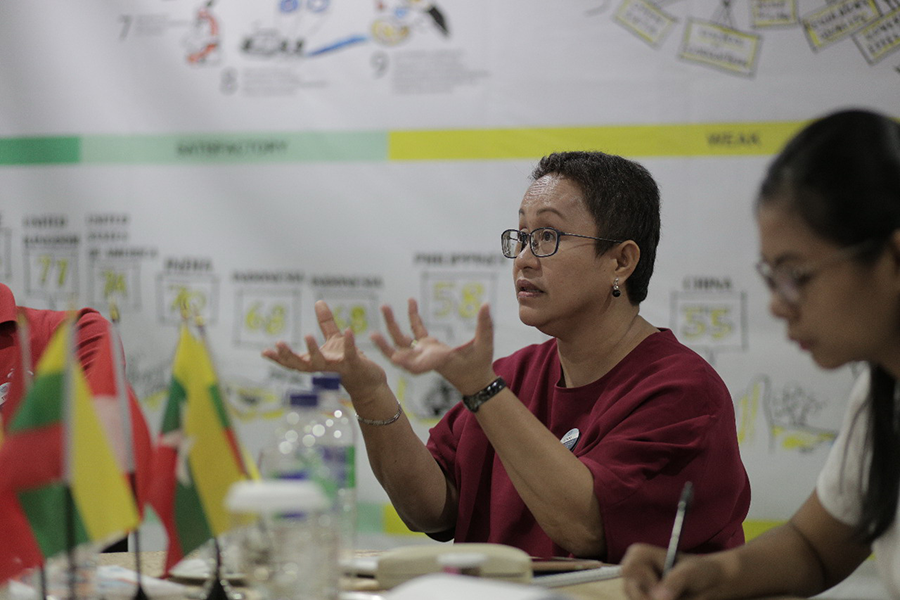 Starjoan Villanueva speaks at the regional hub in Belitung, Indonesia. Photo courtesy of RegINA
The conflicts have been shaped by the armed engagement between the Philippine government and separatist Bangsamoro movements led by the Moro National Liberation Front (MNLF), whose force has long splintered, and also the Moro Islamic Liberation Front (MILF) perspective, which has a strong presence and recently entered into a framework agreement for the creation of a Bangsamoro autonomous region. (The law has yet to be ratified.)
Central to such conflict is unresolved governance issues with Mindanao’s natural resources, Starjoan said. But she also argued they might serve as a source of peace.
Max Brett: How did you get involved in resource governance issues?
Starjoan Villanueva: I used to manage the coastal resource management program at Legal Rights Center, a nongovernmental organization in the Philippines providing legal services to indigenous peoples, human rights issues and land rights.
We were trying to build the capacity of local fishermen along with their local governments to manage mangrove rehabilitation and education. In the process, we also tried to come up with alternative livelihoods for them.
What are the biggest obstacles you see for resource governance in Mindanao?
Mindanao has major issues in natural resource governance—specifically mining. Most of the investments are significantly affecting ancestral domain areas. And [Mindanao has] the most of indigenous people’s groups in the Philippines.
Describe some of the nuances of the natural resources debate in Mindanao.
AFRIM is being more sensitive as a nongovernmental organization that helps communities vulnerable to mining operations. At some point, we realized that amid numerous environmental and social concerns, there are community members who are not against mining.
One can strongly argue that the government is falling short in its obligation to provide access to basic social services. Mindanao’s share from the government revenue is not enough to address all the needs of the people. This is especially the case in resource-rich areas where AFRIM works, where the poverty incidence is very high. That highlights the need that for this industry to be relevant, it must contribute to local economic development and poverty alleviation.
What’s your take on the Philippine Extractive Industries Transparency Initiative?
It’s the first platform in our country where I get to see, face to face, the powerful actors behind the industry. A lot of demonizing, pointing fingers at these companies happens when you don’t see them—especially at the local level. Local communities [typically] are airing their grievances not to the companies but to civil society organizations and local governments.
What are the major struggles and successes of EITI in the Philippines?
Well, we saw it survive from one administration to the next. [The Philippines joined in 2013 and its membership was validated in 2017.] But we feel that we need more teeth. So we are pushing for an EITI bill, so it no longer exists simply by executive order. So that it cannot be hijacked by any biases from one government to the next. So that it will not be voluntary. So that all mining companies will be forced to participate. Because right now it’s only voluntary.
All companies operating in the Philippines should be transparent, should make disclosures at subnational levels—not only at the national level—and should be accountable. Contract disclosure is part of that. I spent almost two decades on advocacy work and had not seen contracts between companies and communities. But this is the first time, through the EITI process, that this information has been disclosed.
More stringent laws and stricter regulations that would demand more transparency and accountability on the part of the companies is the way to go. It’s really full of challenges. As civil society organizations, our challenge is convincing environmentally inclined groups to support EITI. What we’re trying to say is, “Look at the data being disclosed and use it in your advocacy.”
This interview has been edited for content, clarity and length.
Max Brett is a communications officer with the Natural Resource Governance Institute (NRGI).
New NRGI Board Member Carole Nakhle: Longevity of Extractives Industry Depends on Gender Inclusivity
Carole Nakhle, the founder and CEO of Crystol Energy, joined NRGI’s board of directors this month. She also founded Access for Women in Energy, which supports development of women in the energy industry, globally.
I spoke with Carole just before International Women’s Day to get her perspective on the growth of AccessWIE, “anemic” female participation in the extractives sector, and the roles NRGI can play in addressing gender inequality and women’s empowerment.
Katarina Kuai: How has AccessWIE grown since 2016, when you last spoke with us about the organization?
Carole Nakhle: AccessWIE has grown significantly over the last two years, not only in terms of membership but also in terms of activities and international reach, thanks to the continuous support of its leadership, its dedicated Management Committee who volunteer to support the group and, of course, active members who share our values and beliefs.
Perhaps the most satisfying achievement was helping to set up similar groups in Ghana and Tunisia. In Tunisia, the appreciation of women’s expertise—particularly in the energy industry—was remarkable and personally moving. Being involved in Abu Dhabi’s flagship event, ADIPEC’s Diversity in Energy conference, was another memorable achievement. We are also collaborating with Women in Energy Program at Columbia University in New York and we hope to strengthen our engagement with NRGI in this sphere.
How have the trade missions led by women you cited as an AccessWIE priority been going?
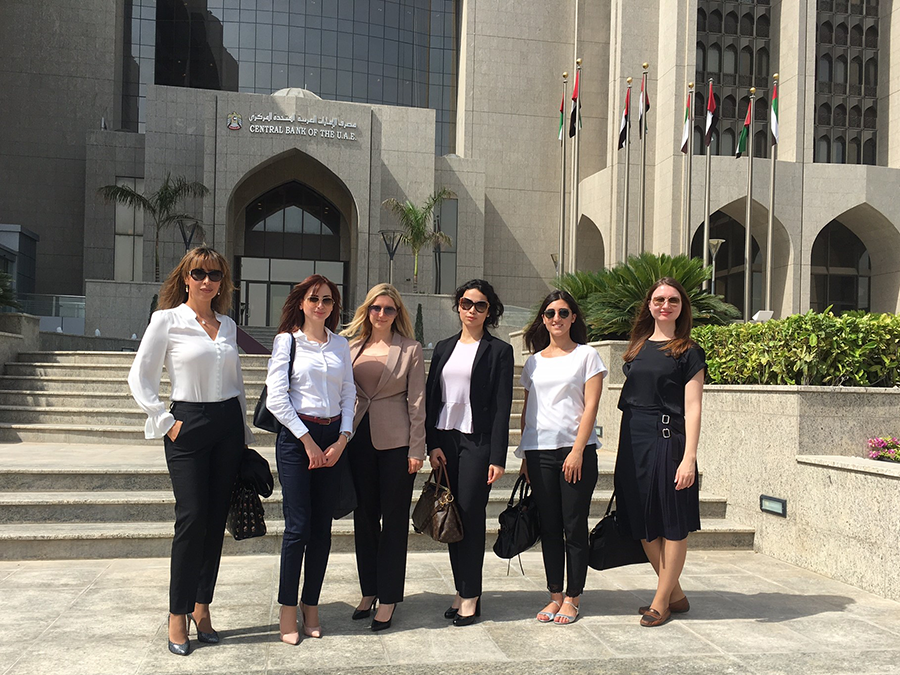
The Energy Trade Mission was our then-new experiment for 2017. A group of energy experts, a majority of them women, travelled to the UAE and had a busy schedule of meetings with officials, industry and institutes involved in the energy sector.
The mission was highly informative. We all learned a lot about the energy industry and policies in the Emirates and, equally important, about the serious dedication of the government and its organizations, particularly national oil company ADNOC, to promote the role of women in the sector. This goal pleasantly surprised all the mission’s delegates. This year, we are planning a similar mission to Lebanon.
Although I enjoyed every aspect of the mission, the sweetest memory is of all the delegates—from an English Lord to a businessperson, to a Ph.D. student each coming from different countries, sharing experiences, views, food and drinks, while heading from one meeting to the other. By the end of the four-day mission, background and gender were simply meaningless. We’re keen on repeating it every year.
We’re seeing large cultural shifts on gender around the world. How is that playing out in the extractives industry?
Despite the international enthusiasm about gender diversity, the participation of women particularly in the energy industry remains anemic, and it shrinks further in higher echelons. Again and again, I attend industry conferences dominated by male speakers and participants, and they feel so out of touch with reality. When one raises this point, the excuse that is typically given is, “We cannot find female speakers.” The answer should then be, “You haven’t looked hard enough.” First of all, there are many female experts in the industry. Yes, they’re outnumbered by men. But they are there.
Second, such an attitude does not help in attracting female talent. I recall an energy dinner discussion I attended where one businessman was talking about his board’s longstanding intention to hire a woman; he proudly said that he and his colleagues have raised this matter almost each time they met, but, as he claimed, they couldn’t find any. During that dinner, there were nine guests; six are established female energy experts.
Today, the oil and gas industry is facing many challenges, some rather existential. The longevity of the industry will depend on the supply of well-educated and experienced employees, both male and female. Any great industry, such as energy, or any society or economy trying to advance while favoring only half the workforce over the other is bound to stagnate.
How do you see the role of NRGI in addressing gender inequality and women’s empowerment?
NRGI presents itself as helping “people to realize the benefits of their countries’ endowments of oil, gas and minerals.” Addressing the issue of gender inequality in the sector has many positive spill-overs, which I can only see complementary to that mission.
NRGI could carry out comparative research on the participation of women in the extractives across various countries to provide a better understanding of barriers and practices in different regions. Isn’t it strange that in an industry more than a century old, there are few female energy ministers and few oil companies, private and state-owned alike, with a female CEO? This is a widespread global occurrence across industries, but are the causes the same? It would be interesting to find out.
Katarina Kuai is a senior capacity development officer with the Natural Resource Governance Institute (NRGI).
Not A Drop to Drink: Environment, Transparency Key Themes at Mining Indaba
Last week the mining industry held the African Mining Indaba, its annual sector meeting in Cape Town. Concurrently, civil society organizations from across the region met for the ninth annual Alternative Mining Indaba (AMI). As in prior years, activists from AMI marched to the convention center where the Indaba is held, gathering outside to deliver a communique detailing challenges which they believe industry and government must address.
But Indaba attendees had already received a more palpable message from inside the convention center itself on the challenges ahead for the sector, and in the most unlikely of locations: the lavatories. Not a drop of water was available in the sinks at this year’s Indaba as a result of the drought that has put Cape Town within three months of a total water shutdown. In this highly tangible way, environmental impacts became the elephant in the room amidst the handshaking and deal-making that characterizes the Indaba. (And to allay concerns about handshaking in the absence of handwashing, sanitizer gel was provided in abundance.)
The importance of environmental protection and community development were key themes in the Guinea country session, which I had the opportunity to moderate. Other objectives raised during the panel included improving diversification, transparency and local content.
But not all of the country news coming out of Indaba was optimistic. Significant concerns were raised about changes to royalties and tax policy in the Democratic Republic of Congo’s mining bill. And a frequent industry refrain at the gathering was on the need for greater regulatory stability. The new DRC bill also explicitly permits government officials to own mining companies, in addition to requiring 10 percent capital ownership by Congolese nationals. This combination produces major self-dealing risks and stands in stark comparison to findings from NRGI’s review of nearly 50 African mining laws, which revealed that about half prohibited government officials from holding interests in companies applying for extractives licenses.
NRGI co-hosted a side event on extractives transparency and good governance with the International Finance Corporation, the World Bank and the International Council on Mining and Metals, which brought together AMI and Indaba attendees for a discussion on harnessing the power of data to advance sustainable development.
Other major themes at last week’s gatherings included the implications of new mining technologies for women’s employment in the sector, and the future of metals and minerals in solar, wind, and electric vehicle technologies.
Over the course of this year and beyond, we at NRGI will be exploring many of these themes through our growing work on corruption, gender and sustainability.
Erica Westenberg is the director of governance programs at the Natural Resource Governance Institute (NRGI).