
How Accountability Actors Can Use the 2023 EITI Standard to Support a Just Energy Transition: A Practical Guide

The world is undergoing an energy transition in which fossil fuels are being replaced by renewables as sources of energy. As the transition progresses, countries will need much less oil, gas and coal, but significantly greater amounts of the transition metals and minerals needed to build clean technology.
The new Extractive Industries Transparency Initiative (EITI) Standard reflects the profound effects this shift will have on oil and mineral producer countries. Approved in June 2023, the Standard includes new requirements for civil society, implementing countries and companies to consider the energy transition in EITI processes, report on energy transition policies that affect the extractive sector, and make a number of new disclosures that will help stakeholders understand the many risks and opportunities presented by these changes. With effective implementation, these improvements can contribute to a transition that is just and equitable, by supporting public debate among a range of stakeholders from the extractive sector and beyond, including those engaging in climate change policy.
Impacts of the transition will not be the same for all countries. For fossil fuel producers, declining demand brings uncertainty, with significant consequences for national government revenues and exports, but also for the local communities, businesses and subnational governments that depend on specific projects.
High-cost projects, or those with high environmental and social costs, are increasingly the subject of asset sales, with a growing body of research showing that these sales are moving assets from transparent public companies with high environmental, social, and governance standards to more opaque private companies.
In the longer term, there is also a risk that some projects become stranded assets, meaning they will no longer be commercially viable. These trends have important implications for government revenues and environmental and social protection, including around closure and decommissioning. With state-owned enterprises (SOEs) becoming ever more important players in oil and gas production, significant amounts of public finance are also being put at risk.
A different story is playing out for mineral producers. With market demand and government policy accelerating worldwide investment in clean energy, countries are scrambling to take advantage of a boom in demand for transition minerals. Facing enormous pressure to bring scarce resources to market, many countries are moving at breakneck speed to develop policies to attract investment, including the fast-tracking of award and regulatory approval processes.
While the potential for benefit is high, new investments also bring many environmental, social, and governance risks. Public oversight and accountability will be essential to avoid the mismanagement and corruption that have thwarted development in previous resource booms.
Global efforts to fight climate change are adding further dynamics to sectoral decision-making. In one set of developments, greenhouse gas (GHG) emissions are set to play an increasingly important role in determining the competitiveness of oil, gas, and mining projects, as investors, consumers, and governments move to meet their emissions reduction targets.
Meanwhile, a public debate on what a fair, global phaseout of fossil fuels will look like is developing at a fast pace. Though currently in an early stage, as more and more governments, civil society, and company actors engage in the debate, these discussions have the potential to influence important questions, including which countries should wind down production first, and which may be offered financial support to forgo development of reserves.
In this tool, NRGI provides an analysis of the main changes to the 2023 EITI Standard that stakeholders can harness to engage with energy transition policy debates. We also provide practical suggestions for how they can use data that will soon be disclosed. By doing so, we aim to show EITI Multi-Stakeholder Groups (MSGs) and civil society actors engaged in the EITI why discussions on the energy transition are relevant to their work. We also seek to demonstrate to climate change actors not traditionally engaged in the resource governance world how EITI disclosures can add value to their existing efforts.
Senegal’s JETP: Lessons, Challenges, Opportunities and the Role of Civil Society

The energy transition is a crucial global issue in the fight against climate change. To support countries in their decarbonization while considering social and economic impacts, Just Energy Transition Partnerships (JETPs) play a key role in facilitating this process.
At COP29, Senegal confirmed its commitment to a JETP estimated at €2.5 billion, currently in the development phase. Its success relies on inclusive and transparent governance, where the active participation of civil society organizations (CSOs) and local communities is essential.
In collaboration with Oxfam, the Heinrich Böll Stiftung Foundation, Natural Justice, the African Climate Foundation, and the Global Strategic Communications Council, NRGI contributed to the creation of PACTEJ, a platform to strengthening the capacities of CSOs and communities for their involvement in the JETP. In September 2024, NRGI organized a webinar with over 80 participants from various countries, led by experts such as Abraham Octam Halim, Jacob Blessing Motsh Manale, Fatima Diallo and Awa Ndione Sène. This event facilitated the exchange of international experiences, particularly from South Africa and Indonesia, and drew valuable lessons for Senegal.
These lessons demonstrate that the involvement of CSOs is crucial for protecting community rights, monitoring resource management, and ensuring accountability from decision-makers. In this blog post we highlight the evolution of JETPs on a global scale and aims to enrich public debate in Senegal, drawing inspiration from successes and challenges faced elsewhere.
The evolution of the JETP and its importance
The evolution of Senegal’s JETP in the global context
JETPs are being implemented in four countries: South Africa, Indonesia, Vietnam and Senegal, with a total committed funding of approximately $46.5 billion. Each country tailors this mechanism to its energy and socio-economic priorities for a just energy transition.
In South Africa, where coal dominates 84.63 percent of electricity production, the JETP aims for a gradual coal phase-out. In Indonesia, with 61.55 percent coal and 17 percent gas in the energy mix, the goal is to increase the share of renewable energy while supporting affected communities. In Senegal, the focus is on the rapid development of renewable energy to avoid over-reliance on natural gas.
For Senegal, a future gas producer, the JETP represents a crucial opportunity to prevent a “gas lock-in” that could lead to high energy costs, increased dependence and less sustainable energy. Prioritizing renewable energy is essential to ensure a responsible transition, supporting both communities and a sustainable economic transformation.
The importance of the JETP for Senegal
The JETP offers Senegal the opportunity to achieve 40 percent renewable energy in its energy mix by 2030. This partnership, signed on 2 June 2023, with G7 partners (Canada, the EU, France, Germany and the U.K.), mobilizes €2.5 billion over 3 to 5 years.
A structured governance body has been established, including a steering committee (COPIL) led by the Ministry of Energy, a coordination unit (UC), and working groups on governance, equity, finance and technology. Key developments include public consultations, the creation of an investment plan with the Tony Blair Institute, and strategic deliverables on the energy transition.
However, challenges remain: the validation of deliverables, the integration of projects into the plan, strengthening the capacity of the coordination unit (UC), and finalizing the investment plan. Regional workshops are planned to raise awareness among communities.
PACTEJ could identify key priorities such as access to affordable energy for vulnerable populations, promoting transparency in project selection, assessing the relevance of selection criteria, and protecting the rights of workers and affected communities.
CSOs, through the PACTEJ platform, play a critical role in ensuring a just transition by promoting transparency, inclusion, and the protection of the rights of workers and communities. However, G7 partners have warned against unrealistic expectations, emphasizing that the JETP will not resolve all of Senegal’s energy challenges.
Lessons from the South African and Indonesian experiences
South Africa, a pioneer of the JETP with a $8.5 billion partnership signed in 2021 with quite an ambitious investment plan, illustrates the challenges of a just transition. The funding, mostly in the form of loans, remains insufficient compared to the estimated $95 billion needed. The hasty closure of power plants has led to significant social and economic impacts, exacerbated by tensions with trade unions and limited stakeholder consultation.
Indonesia, with a $20 billion JETP signed in 2022, offers a more inclusive approach. With a clear investment plan, it has established transparent governance platform, organized over 200 consultations with stakeholders, engaged more than 100 CSOs, and mobilized both public and private funds for renewable energy projects. However, bureaucratic obstacles are slowing down project implementation.
These experiences highlight the importance of participatory and equitable management for a successful transition. The involvement of local communities, illustrated by the slogan “nothing about us without us,” is central. Initiatives like “Fair Finance” in South Africa offer valuable lessons for Senegal and the PACTEJ platform. However, the representative of the G7 partners group warned against unrealistic expectations of the JETP, emphasizing that it will not solve all the challenges Senegal faes on its own.
The role of Senegalese CSOs in the JETP process
As part of the JETP, Senegalese CSOs, grouped within the PACTEJ platform, along with trade unions and community organizations, play a key role in raising awareness among communities and fostering inclusive dialogue with the government.
However, they regret their late involvement, which has been limited to the post-negotiation phase, and highlight major challenges: access to information, the involvement of local authorities, private sector support, and community awareness.
The funding model, which includes only 6.6 percent in grants and primarily consists of loans, raises concerns about increasing public debt. CSOs are calling for transparent management of funds to prevent corruption and ensure direct benefits for vulnerable populations.
| Countries | South Africa | Indonesia | Senegal |
| Composition of financing | 4% in the form of grants 63% in the form of concessional loans 33% in the form of commercial loans and guarantees | Not yet published | 6.6% in the form of grants 69.2% in the form of concessional loans 1.8% in the form of market-rate loans, 12%, and the rest in the form of standard loans or grants |
Source: Navigating Just Energy Transition Together – Shared learnings from South Africa, Indonesia, and Vietnam, June 2023
CSOs, through PACTEJ, are now actively participating in the COPIL and the “Justice and Equity” group of the JETP. They call for a genuine consideration of their contributions in decision-making and for projects that compensate for the impacts of fossil fuels, while promoting local content.
For the success of the JETP in Senegal, an inclusive approach is essential. This requires fully involving communities, local authorities, CSOs, women and youth, ensuring transparency, strengthening local capacities, integrating gender issues, and simplifying administrative procedures. Such an approach would ensure a truly fair and inclusive energy transition.
Shaping Inclusive Narratives About Just Transition in Colombia

Narratives—the overarching frameworks that shape our understanding of issues—encompass a collection of stories, perspectives, and values that influence public perceptions and policy decisions. NRGI’s Alexandra Malmqvist spoke with Juliana Peña Niño about the crucial role of these narratives in Colombia's energy transition and why NRGI’s work in this area is more timely than ever before.
Why are narratives about the energy transition in Colombia so important?
Colombia has long relied on oil and mining, which account for more than half of the country's exports. Despite some progress on the energy transition away from fossil fuel, including Colombia's current president recently assuming leadership roles in international forums, there is still a lack of clarity at the national level on what this transition should look like and how economic, social, environmental and institutional change might happen.
This uncertainty has led to polarization and narratives opposing the energy transition—primarily led by powerful economic and political actors with vested interests in continued fossil fuel exploitation. These actors have shaped much of public opinion against the energy transition by framing it as unnecessary, arguing that the country is not a significant carbon dioxide emitter and that the transition is detrimental to economic stability and national development. This polarization has turned the discussion into a political debate about who supports or opposes the current government’s agenda.
Civil society organizations, citizens, local communities and Indigenous Peoples are not sufficiently represented in this debate. And among them perspectives are fragmented and scattered. There isn’t a unified alternative viewpoint in the public discourse that considers the energy transition as a desirable, possible, and all-embracing process. Without an alternative narrative that proposes a different vision, the energy transition itself may perpetuate the same historic inequality and inequity and imbalance of power that we see today.
So how has NRGI engaged on narratives in the country? What actions were taken, and what were the main findings or insights gained? Any surprising findings?
NRGI convened a diverse group of 30 individuals representing local communities, grassroots and Indigenous and women’s organizations, academics, and national and international civil society organizations (CSOs) to create a meta-narrative for a just transition as envisioned by various populations and civil society actors in Colombia.
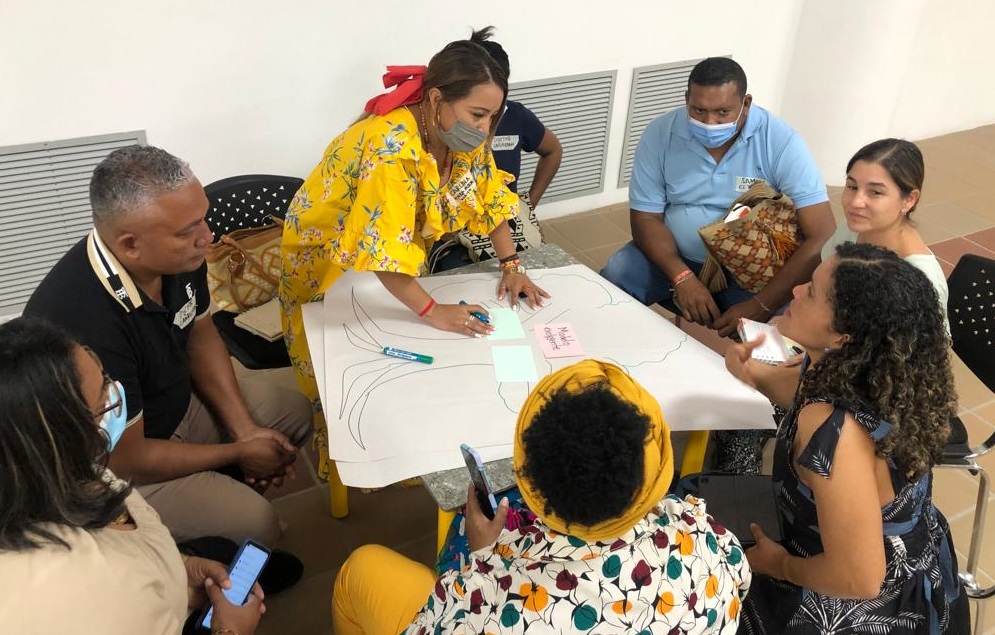
This initiative empowered communities and civil society to contribute more effectively to a public discourse that supports the energy transition. Participants learned about the concepts of stories, narratives and meta-narratives, and their role in strategic communications. For example, a story describes a single fact, while a series of stories form a narrative. A meta-narrative, on the other hand, encompasses several specific narratives, including core values and worldview that underpin them, and explains how we understand our relationships with ourselves, others and the world.
A key objective was to connect emotionally with the participants, fostering empathy for how others are experiencing the energy transition, particularly in Colombia’s north, where coal mines were closed and wind projects established. This work was also inspired by philosopher Martha Nussbaum’s ideas on the role of emotions in shaping public culture and a renewed ideal of justice.
With an academic partner we also used artificial intelligence to analyze outputs in Colombian news media to identify dominant narratives, providing a baseline of how the energy transition was framed by the media. We used this to develop our meta-narrative and ensure it was grounded in evidence.
One of the biggest challenges was balancing different views and the inability to reach consensus on some topics. However, in other areas, we found alternative ways to approach our differences. For example, an Afro-Colombian woman supported the energy transition but opposed new projects in her community due to their negative impacts. As a result, we included the principle that justice entails avoiding overburdening energy-rich regions with large-scale energy transition projects.
Two key aspects of this initiative stand out: first, the diverse contexts and realities of populations across different regions were central to crafting the meta-narrative, which is unprecedented in the sector. Bringing such particularities into the national discussion is essential for fostering a more inclusive decision-making process. Second, the project strengthened social capital by uniting a diverse group of individuals who are now more aligned and eager to continue working collaboratively to influence a just energy transition agenda in Colombia.
How do you ensure that the narratives you promote are inclusive and represent diverse community voices?
The meta-narrative drew on the diverse perspectives, values and ambitions discussed by the participants of a country beyond fossil fuels, with renewable energy sources and a diversified economy. To ensure inclusivity, we actively engaged participants with differing views and experiences. For instance, one Indigenous woman expressed that her community did not want the energy transition, fearing it would increase copper mining, threatening their customary lands and an important water source for their community and the wider region. In response, we included a principle in the meta-narrative that Indigenous communities have the right to manage their own lands. This aligns with Colombia’s constitution, which grants Indigenous peoples’ jurisdiction over their territories, and with the International Labour Organization Convention No. 169, which supports free, prior and informed consent.
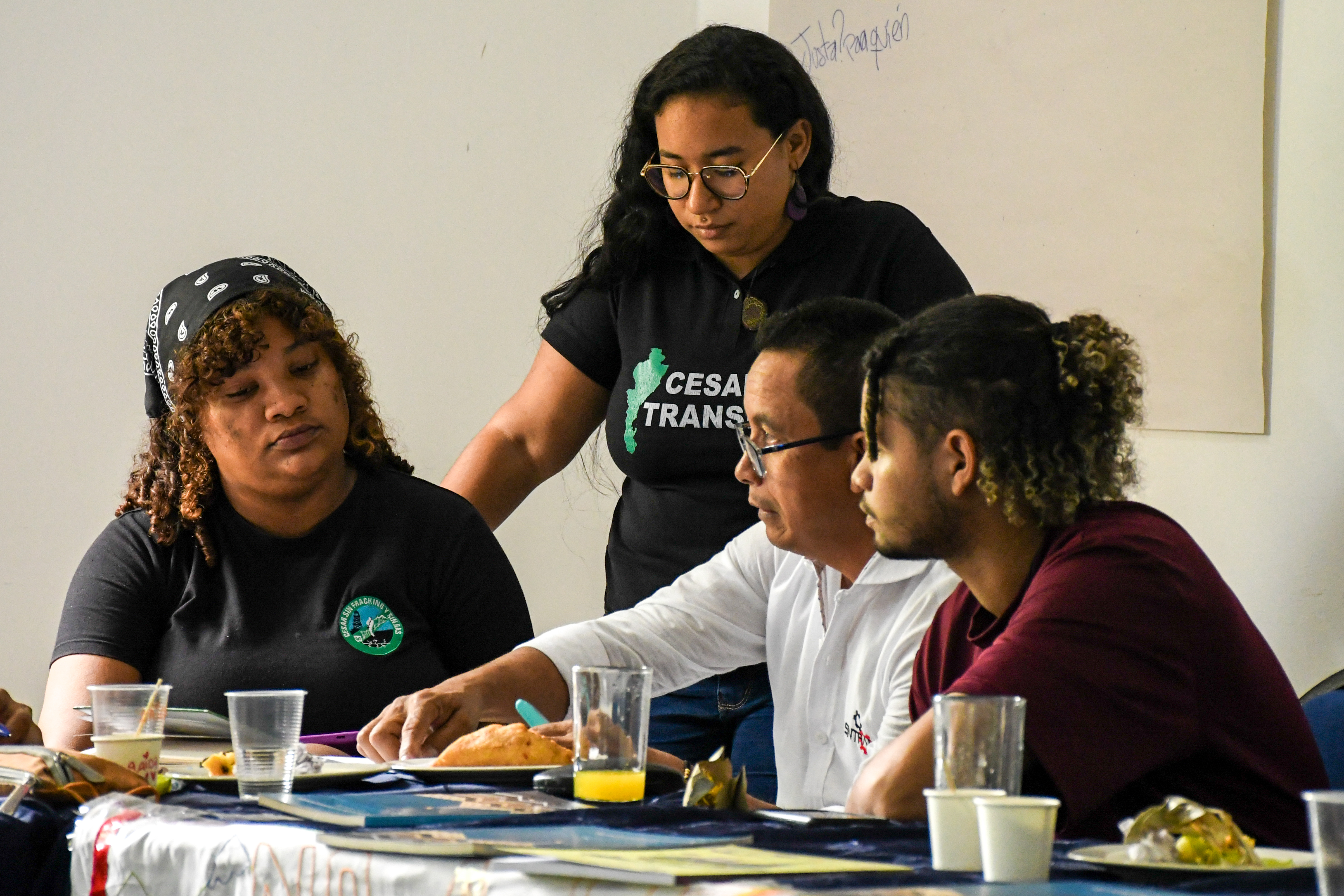
Building trust within the group was crucial from the start. We created a neutral, safe and inclusive environment where everyone felt comfortable, respected and valued. This approach was key to building consensus, so we made efforts to prevent and manage situations that could lead to feelings of competition, mistrust or power imbalances, particularly between national and local organizations. The exchange of different types of knowledge—including technical expertise, ancestral wisdom and lived experience—was highly valued and complementary.
As a result, the meta-narrative effectively captured the common goals identified by all members for a just energy transition, therefore supporting the collective efforts to position it in the public discourse.
Watch NRGI's video series from the narratives workshop featuring Colombian civil society's views on the energy transition and the framework for a just transition beyond fossil fuels.
Recently, we held an event aimed at "giving life to the meta-narrative," which provided capacity building on strategic communications and identified key political moments for its dissemination, such as COP16, COP29, and COP30. This event brought together 45 participants, including many from last year, fostering a growing network of individuals from various producing regions of the country who are now exchanging knowledge and strategies for advocacy to influence public discourse effectively.
NRGI is supporting civil society organizations and leaders to implement the meta-narrative in their communications and aiming to position this vision about just energy transition into the public discourse.
Civil society statement on the publication of the UN Secretary-General’s Panel on Critical Energy Transition Minerals report
Guinea’s Bauxite Corruption Diagnosis, One Year Later: Progress, Challenges and Outlook

Bauxite is a crucial sector in Guinea, yet the industry faces numerous challenges. Guinea holds the world’s largest reserves of this strategic mineral, essential for producing aluminum needed for the energy transition. In 2022, bauxite exports reached historic highs, with nearly 103 million tons produced annually. According to a 2021 Extractive Industries Transparency Initiative (EITI) report, bauxite accounted for nearly 60 percent of the USD 630 million in revenues generated from the country’s mining sector that year.
But behind these figures, questions persist about governance practices and issues surrounding the extraction of this mineral, regularly raised by the media and Guinean civil society. Despite substantial revenues generated, these have yet to translate into tangible improvements in citizens’ living conditions. Moreover, the sector’s vulnerability to corruption poses heightened risks, particularly given the likely surge in demand in the coming years.
Need for diagnosis and anticorruption efforts
In this context, a group of civil society actors initiated a diagnosis of corruption risks in Guinea’s bauxite sector and an action plan to strengthen transparency and accountability mechanisms. The group finalized the diagnostic report in mid-2023, with support from stakeholders of EITI-Guinea and the Agence Nationale de Lutte contre la Corruption (in English, the National Agency for Combating Corruption (ANLC)).
At NRGI we supported this work using our corruption diagnosis tool. The diagnosis identified critical corruption issues and their underlying causes. These related to mining licensing, tax practices, transparency in mining agreements and the impact of undervaluation of bauxite quality and transfer pricing on revenues. The exercise led to the development of the action plan aimed at preventing these practices. Civil society actors played a pivotal role in mobilizing all stakeholders to secure their commitment and support, convening discussions on identified risks and to collectively define interventions. This inclusive approach was underscored by the publication of the final action plan on the website of EITI-Guinea, which committed to its implementation.
Nearly a year later, participants at the ongoing 21st International Anti-Corruption Conference (IACC) in Vilnius are discussing global efforts to combat corruption. This is an opportune moment to review the implementation of the Guinean action plan: the progress achieved, the challenges faced and the expected further steps.
Civil society actors hoped that this intervention plan, based on extensive consultations, facts and robust documentation, would provide an ideal framework to strengthen efforts to combat corruption in Guinea’s mining sector. However, as with all anticorruption actions, effective implementation of reforms is complex and fraught with challenges, particularly due to resistance to change among political and economic actors.
From diagnosis to action
The publication of the corruption diagnosis reignited the debate on corruption within Guinea’s mining sector, receiving extensive media coverage. Numerous press articles and television programs highlighted the identified corruption risks, rallying various anticorruption actors in the sector. This increased pressure on authorities to pursue comprehensive reforms and review mining policies. The civil society coalition has yet to present a memorandum to the country’s new prime minister for consideration of the diagnosis results.
The dissemination of the diagnosis and intervention plan contributed significantly to the ANLC’s efforts to revive the process of revising the anticorruption law enacted in 2017. Previously, the ANLC had approached the National Transitional Council (CNT) to initiate this revision, a task which had remained pending. A key goal of the effort to amend the current anticorruption law is to address a key issue underscored in the diagnosis: enhancing ANLC’s capacity to function effectively and independently.
In the mining sector specifically, on International Anti-Corruption Day, the ANLC conducted an awarenesscampaign in Boké—center of bauxite mining in the country—on corruption risks identified in the intervention plan.
“The revision of the anticorruption law is crucial to strengthen our legislative framework and continue current authorities’ efforts for more effective and sustainable anti-corruption measures. We are committed to conducting this legislative work closely with all stakeholders.”—Alpha Abdoulaye Diallo (CNT).
Furthermore, some activities outlined in EITI-Guinea’s 2024 workplan and budget clearly align with the action plan’s recommendations. Key priorities include modernizing the mining cadastre, improving transparency in license issuance, evaluating legal obligations, administrative monitoring, training community representatives, analyzing revenue management, strengthening the capacities of mining employees, and efficient use of extractives revenues.
Remaining challenges
Despite promising initial steps toward implementation of the action plan, several challenges persist:
- Limited civil society monitoring capacity. The coalition of civil society organizations lacks the necessary financial and technical resources to effectively support, monitor and evaluate the identified actions.
- Media space restrictions. Recent political and regulatory pressures have curtailed freedom of expression and dissemination of information. This constrains public debate and the spread of critical information, thereby reducing pressure to implement recommended interventions.
- Sensitivities of anticorruption work. In the current political climate, anticorruption actors, particularly those from civil society organizations, face significant risks to their safety, which greatly hinder their engagement. The absence of protective measures for these actors further exacerbates these risks.
“Civil society organizations demonstrate determination in preventing, detecting and combating corruption in all its forms. However, they lack adequate technical and financial support to better explore and navigate the intricacies of corruption that tends to be institutionalized in Guinea.”—Moussa Iboun Conté (coalition of civil society organizations)
Beyond these challenges, political will and institutional actors’ capacity to implement identified reforms remain fundamental. In this regard, the Guinean government should recognize and support notable efforts by the ANLC and EITI-Guinea ahead of the upcoming EITI validation in 2025, and should prioritize the revision of the anticorruption law. To ensure that the promises of bauxite benefit Guinean citizens, in the current context of the “race for transition minerals”, the Ministry of Mines and Geology should issue new licenses according to best practices, mining companies should operate new sites operate responsibly, and that the state financial agencies collect revenue efficiently. On all these three issues, fighting corruption is key.
GIJN Webinar: Investigating the Extractives Industry in Africa
Africa is home to a substantial amount of the global mineral wealth. The continent, according to the Natural Resource Governance Institute (NRGI), holds about 30% of the world’s oil, gas, and mineral resources. This includes up to 92% of the world’s platinum and chromium reserves, 56% of cobalt, 54% of manganese, and 40% of its gold. Africa also has 9.5% of global crude oil reserves and 8% of gas reserves.
Given the immense mineral riches in Africa, the extractive industry on the continent is, naturally, a global focal point. Many of the brutal and deadly wars in Africa are linked to the battle for control of these extractive resources.
However, the most impactful mining activities—and their adverse ripple effects—often occur in remote areas of Africa, which have access challenges and significant security risks, resulting in a dearth of accountability reporting.
The Global Investigative Journalism Network (GIJN) hosted a webinar to equip investigative journalists with the knowledge and tools to enhance their watchdog reporting on Africa’s mining sector. In this online workshop, free to all journalists across Africa and beyond, GIJN brought together three experts who will discuss the tips and tools for investigating the extractives industry, where to find resources, and areas for possible investigation.
Elie Kabore is an investigative journalist in Burkina Faso with 17 years of experience in investigative journalism. A publishing director at the online newspaper Mines Actu Burkina, he specializes in reporting about the mining sector. Kabore is the author of several investigations into corruption, money laundering, and illicit finance, and is a trainer for the Norbert Zongo Unit for Investigative Journalism in West Africa (CENOZO).
Alexandre Brutelle is a director and one of the co-founders of the Environmental Investigative Forum (EIF), a consortium of watchdog journalists and experts on the environment and climate change around the world. Alexandre, who coordinated that collaborative effort that led to the development of the #MineAlertAfrica tool, is an investigative journalist, mentor, and trainer who specializes in cross-border collaboration and environmental issues.
Nafi Chinery is NRGI's Africa director. She builds and coordinates relationships between governments, civil society actors, and communities, focused on changing narratives about the future of the oil, gas, and mining sectors. She also co-leads NRGI’s program on just energy transition. She spoke, among other things, about NRGI’s guide to covering extractives.
The moderator was Asha Mwilu, founder and executive director, Debunk Media.
NRGI has developed an online guide to reporting on natural resources governance.
Featuring NRGI's

Nafi Quarshie
Africa Director
ICMM announces initiative to simplify responsible mining standards
Sustainable and Responsible Critical Mineral Supply Chains
This webinar, featuring reaction from experts including NRGI's Matthieu Salomon, presented the key findings of Sustainable and Responsible Critical Mineral Supply Chains: Guidance for Policy Makers and the Critical Minerals Policy Tracker 2023.
The event began with remarks from the Critical Minerals Working Party’s ESG Task Force, followed by a detailed presentation by the IEA Office of Legal Counsel. The report offers five recommendations for policy makers for creating sustainable and responsible supply chains and delves into key areas such as water management, emissions, biodiversity, human rights, communities, and corruption. It is complemented by the latest update to the Policy Tracker, which includes over 200 new laws, regulations, and policies with a special focus on environmental, social and governance issues.
Salomon emphasized the importance of enforcement of laws targeting corruption in mining; the key role of independent monitoring in the sector; and the importance of acknowledging and mitigating corruption risk and disruption to supply chains.
Civic Space is Crucial for Resource Governance and the Energy Transition—But It’s Endangered

On 23 July 2023 Azerbaijani security forces violently detained scholar and political activist Gubad Ibadoghlu on fabricated charges of financial impropriety. Since then, authorities have attempted to connect him with an extremist religious group, charges that could carry a sentence of 12 years in jail. The likely reason for this persecution is Ibadoghlu’s work as an advocate for responsible natural resource governance and accountability in the Azerbaijani extractive industries.
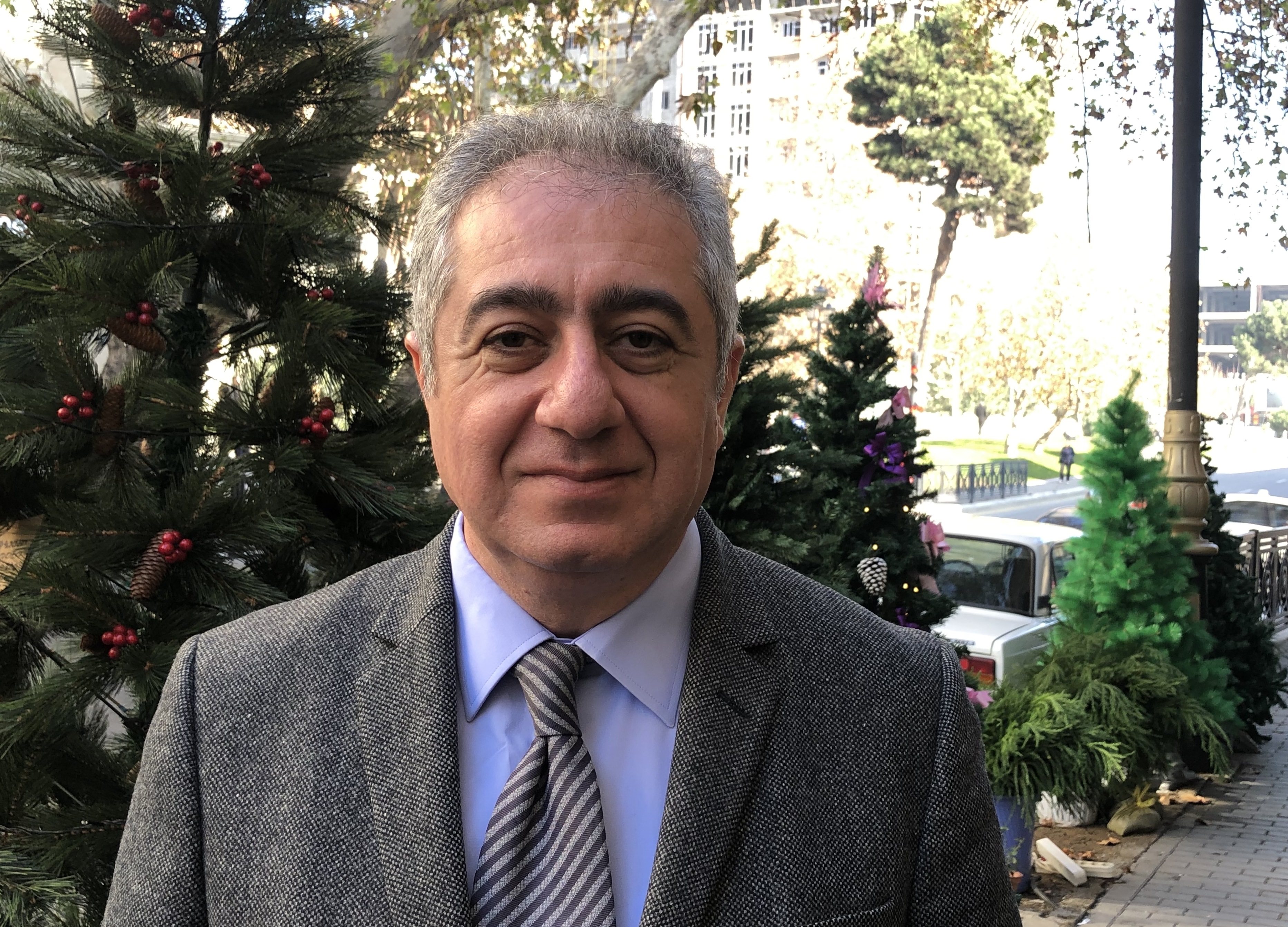
Despite winning hosting rights for this year’s COP29 UN climate summit, Azerbaijan is no stranger to human rights abuses and censorship. The oil and gas industry dominates the country’s economy, bringing in around 90 percent of export revenues and 60 percent of the government’s budget, supporting a governing elite linked with corruption and authoritarianism. In this context, authorities have routinely quashed citizens’ efforts to bring meaningful public accountability to oil, gas and mining revenues, with the country notably withdrawing from the Extractive Industries Transparency Initiative (EITI) in 2017 after it failed to meet the initiative’s requirements on civil society engagement.
Civic space in danger
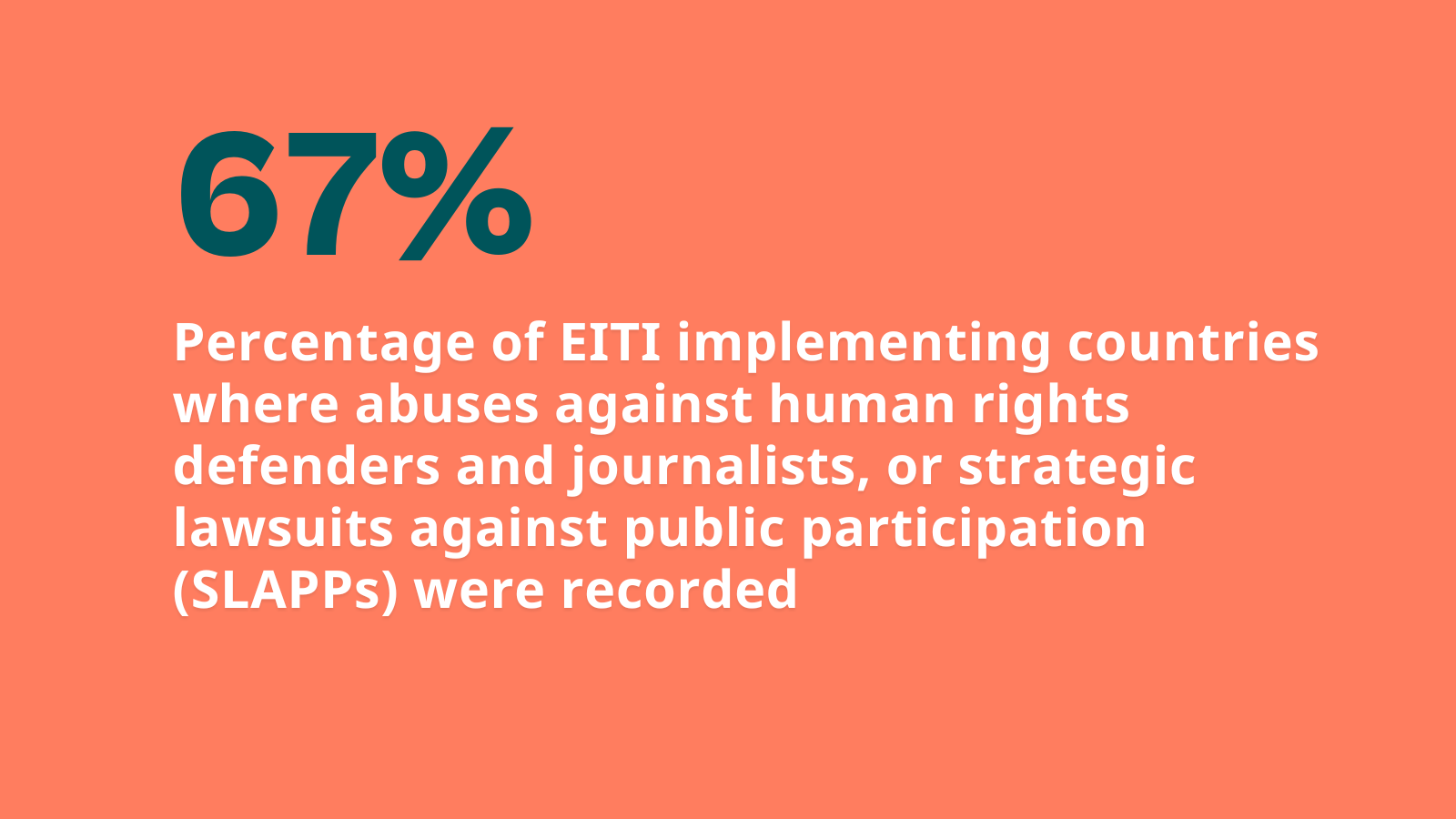
Unfortunately, Azerbaijan is not the only oil, gas or mineral producer where civic space—the environment that enables civil society to play a role in the political, economic and social life of a country—is under threat. Over the last 12 months, NRGI has tracked threats to civic space in the 57 countries that implement the EITI using reporting from the Business & Human Rights Resource Center, CIVICUS and the RSF Barometer. In the last year alone abuses against human rights defenders and journalists, or strategic lawsuits against public participation (SLAPPs), were recorded in 67 percent of EITI implementing countries (38 countries), with abuses directly linked to the extractive industries in 13 countries.

In Niger, authorities arbitrarily detained Abdoulaye Seydou and Adamou Idrissa, both members of the ROTAB/Publish What You Pay-Niger coalition, for their peaceful and legitimate defense of human rights. In the Philippines, radio broadcaster Cresenciano Bunduqui was shot dead outside his home after he had spoken out about a recent oil spill, illegal gambling and local political issues on his radio show. In Kazakhstan, community members reported that residents protesting a gold project were brutally dispersed by company security following environmental protests over a failed public hearing concerning the environmental impacts of the plant. In Mexico, human rights defenders Antonio Díaz Valencia and Ricardo Arturo Lagunes Gasca disappeared after engaging in community negotiations over the operations of the Las Encinas iron mine.
These incidents illustrate a broader trend. The 2023 CIVICUS Monitor scoring shows that the percentage of the world’s population living in countries with closed civic space is the highest since 2018 when CIVICUS started tracking civic space conditions, rising from 26 to 31 percent during this period.
Fertile ground for corruption
The ramifications of this kind of violence for public accountability are particularly troubling. Where citizens and journalists are afraid of what might happen if they speak out, they hold back from analyzing the extractive industries and publishing the facts. This provides cover for some elites and other unscrupulous actors to engage in corruption. It also means that mistakes and mismanagement in day-to-day extractive operations go unreported, increasing the likelihood of serious environmental and social impacts, and undermining the optimization of revenues and other benefits that extractive projects might bring.
Moreover, oppression that takes place alongside actual improvements in transparency (such as the data produced by EITI processes) adds the specter of “zombie transparency”—disclosures that produce a veneer of good governance but upon which no one takes action. In its most severe form, zombie transparency can undermine confidence in data and disclosure more broadly, playing into the hands of those who seek to divert financial flows from the extractive industries to suit their own personal agendas.
EITI fights back
For these reasons the EITI board established a civil society protocol in 2015. The protocol protects civic space by specifying criteria by which the EITI Board can assess whether civil society is able to adequately participate in a country’s EITI processes and express views related to natural resource governance. These include tests relating to the abilities of civil society actors: to express opinions without restraint or reprisal; to operate freely; to communicate and cooperate with each other; to be fully, actively and effectively engaged in all stages of the EITI process; and to access and contribute to public decision-making. These safeguards have sharp teeth, and the EITI board has suspended several countries from the initiative and rejected others’ applications to join in cases where countries’ civic space is closed.
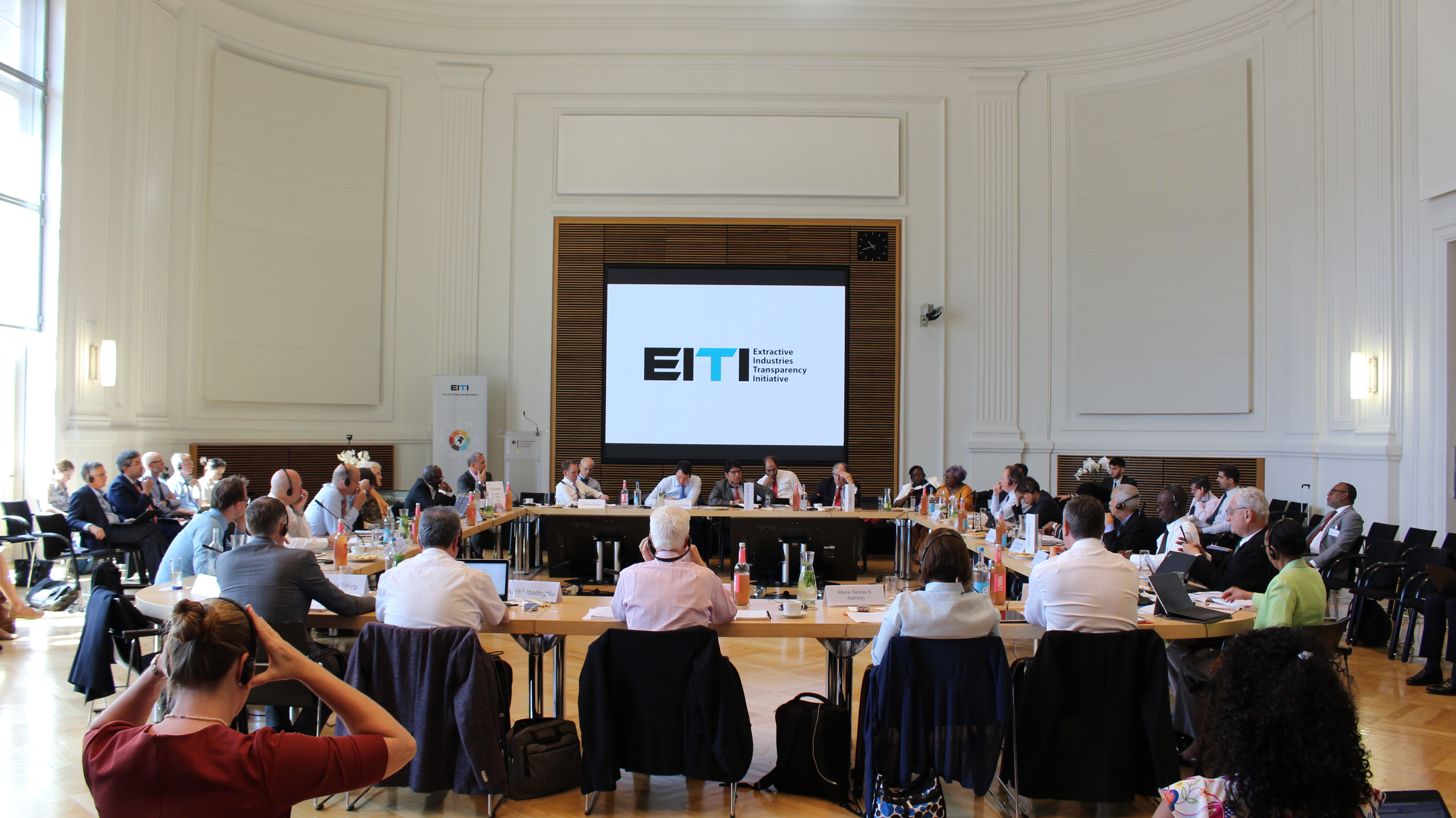
Further, in the latest update to the EITI standard in 2023, EITI members agreed that multistakeholder groups that govern national EITI processes should monitor adherence to the protocol. Speaking at the EITI global conference in Dakar last year, NRGI president and CEO Suneeta Kaimal welcomed this development, noting that “the EITI community can use this requirement to support multistakeholder groups to actively monitor civic space, amplify and address threats.”
The work ahead
Despite these advances within EITI, the situation remains bleak. In 2022 colleagues from NRGI, Publish What You Pay, Oxfam America, the International Center for Not-for-Profit Law and the Institute for Development Studies gathered to explore new strategies for protecting civic space. Unfortunately, two years later, many of the recommendations from that work still require implementation:
- The new EITI board, in place since June, should commit to more efficiently translating EITI standards into implementation; and to enforcing the standards it sets—even in tough cases.
- Bilateral and philanthropic funders should reinforce existing mechanisms for dialogue and participation where possible. Recent changes in donor priorities linked to the energy transition have resulted in an underfunding of efforts to ensure robust governance and good decision making. But these are more needed than ever as governments and companies make important strategic shifts based on changing global energy patterns.
- Extractive and energy companies should speak up and support the protection of civic space, which is key to positive economic outcomes.Investors should strengthen criteria related to civic space protection in their business decisions, and encourage companies and governments to ensure the protection of civic space as essential to environmental, social and governance (ESG) considerations and a positive investment climate.
- International financial institutions should make greater use of their lending power to call for action to support civic space.
Civic space is a necessary ingredient for public scrutiny and effective resource governance. If the citizens of producer countries are to benefit from their natural resources amid the energy transition, civic space must be protected.
Anticorruption Reform: Learning From Experience Across Sectors

Even armed with a thorough approach for diagnosing corruption risk, anticorruption reformers may struggle to decide on next steps. Solutions to corruption problems do not always readily present themselves. The politicized nature of the issues also means generating real momentum behind reform can seem daunting. To help reformers with these choices, this NRGI briefing brings together eight case studies from other sectors. Cases were selected where positive changes can be demonstrated, even if the reform process is often incomplete. NRGI and the author also selected reforms which have potential replicability in the extractives sector, while recognizing that the details will look different. The case examples are organized by reform categories, as shown in the table below.
The briefing presents a short summary of each case and provides links to further materials, as well as accurate and up-to-date a summary as possible in each case, with the caveat that circumstances frequently change in anticorruption work. The briefing concludes with five lessons on anticorruption reform which can be drawn from across these cases. The aim is to show what can be achieved and support users of the diagnostic tool to learn from experiences outside the extractives sector.
The tool provides guidance to multi-stakeholder groups to identify forms of corruption harming a country’s extractive sector. Developing an anticorruption action plan is the sixth step in the tool and a key outcome of the diagnostic process. The action plan should follow from a broader discussion on strategy, through which users make choices on the issues to tackle, the people and agencies to engage, and how to brand reforms (see section 6.1. in the diagnostic tool, “Strategizing”).
To ensure the action plan provides a sound basis for reform, users of the tool should apply the following key principles:
- Engage all relevant stakeholders throughout the action planning process to secure buy-in for reforms.
- Set clear and specific objectives which balance feasibility and ambition.
- Ensure clear ownership and incentives, and lines of responsibility for actions.
- Set clear indicators and conduct regular monitoring to assess progress.
- Build in flexibility and be prepared to adapt plans to changes in the context.
The diagnostic tool includes templates and guidance for users when developing an action plan.