
The Resource Remix: Suneeta Kaimal and Joseph Asunka Discuss Democracy and Natural Resources in Africa in New Podcast

In this debut episode, available on Apple Podcasts, Google Podcasts and Spotify, NRGI president and CEO Suneeta Kaimal is joined by Afrobarometer CEO Joseph Asunka. Afrobarometer conducts public attitude surveys on democracy, governance, the economy and society in more than 30 African countries.
NRGI · The Resource Remix - Episode 1 - Democracy and Natural Resources in Africa
During their conversation, Kaimal and Asunka explore the importance of citizens’ voices in key decision-making processes, what the energy transitions means for Africa, and the challenges corruption continues to pose to governance and sustainable development.
Asunka shares how Afrobarometer documents the different ways that ordinary people engage with their governments and leaders. Survey findings have shown that those surveyed see corruption as a persistent and major problem, which has increased over time, and worsened due to the ongoing pandemic and restrictions brought to contain the virus.
They discuss the importance of going beyond having strong governance and transparency policies and frameworks, noting a lack of implementation across the continent, as underlined by NRGI’s 2021 Resource Governance Index. Both agree that, without available information, civil society organizations and citizens are unable to monitor how resources and revenues are managed, especially in the context of narrowing civic space and the increasing pace of the energy transition. They also discuss recent political transitions in Sudan and Guinea.
Both note that addressing these key issues requires strong partnerships and collaboration, continued transparency and more work towards accountability, leveraging on recent advances in areas such as contract transparency and beneficial ownership.
Transcript
Suneeta Kaimal, NRGI: Thank you all so much for joining the first episode of The Resource Remix, the new podcast from the Natural Resource Governance Institute. We bring listeners dynamic perspectives on the cutting-edge issues affecting countries rich in commodities, from cobalt to natural gas to lithium. The need to transition to a post-oil future and the pandemic present these countries with a range of unique challenges and opportunities.
Please join us for future episodes in this series as we talk with some of the most innovative thinkers and practitioners seeking to shine a light on ways forward in this most critical and fascinating time.
I am Suneeta Kaimal. I have been with NRGI for more than a decade and now have the honor of serving as its president and CEO. I may be a veteran of NRGI, but this is the first time I am hosting a podcast, so please go easy on me.
Our guest today is Joe Asunka whom I have had the pleasure of knowing now for eight years. We met when Joe was part of the Global Development and Population program at the Hewlett Foundation, which is one of NRGI’s founding funders. He recently returned to his native Ghana, where he is now CEO of Afrobarometer. Joe welcome, and thank you so much for joining me in this first episode.
Joe Asunka, Afrobarometer: Thank you Suneeta, and really, thank you for having me on your first episode, I am really grateful and honored.
SK: It’s a pleasure to have you. So let’s just start with a question for the listeners who may not be that familiar with your organization. Can you tell us a little bit about Afrobarometer, and what its mission is?
JA: Thanks for the question and thanks to your listeners for the opportunity to share with you what Afrobarometer is and what we do. Afrobarometer is an African network of research organizations that conducts public opinion and public attitudes surveys across the continent.
And, as the name implies, at Afrobarometer we’re trying to measure something, measuring people’s attitudes opinions about issues of governance, the economy, quality of life and civic engagement, among other things.
We are currently working in about 30 plus countries. And for each round of the survey, we started in 1999. So we’ve been two decades into it now, and we have done eight rounds of the survey. Each survey takes about two years to complete.
We just completed the eighth round in 34 countries, and we have just started to launch the ninth round of the surveys. It is in the ninth round that we want to be able to get up to 40 countries and hope that coverage would give us more leverage in terms of engaging more with African leaders, especially at the regional level, in bringing people’s voices to inform policymaking.
The core mission for the Afrobarometer is that we believe that people’s voices matter when it comes to policymaking, because decisions about policy and development are all about the people, and we think we need to put people at the center of all those decisions to ensure that their priorities, their preferences, and what they experience daily in their lives, is reflected in what leaders do in policies.
SK: Thanks, I couldn’t agree more. I think in many ways, coming off of the spike of the pandemic and dealing with so many economic, political and social upheavals around the continent and around the world, being able to hear that voice of the people is more important now than ever before.
I’m curious, given how many surveys you conduct, if you could talk a little bit about what you think one of the most interesting survey findings is of late, and why.
JA: One that I would highlight is the growing demand for a deeper form of democratic governance. And I say so because when we asked respondents, and I mean the last decade, to choose between two options in terms of governance, whether they want an effective government that may not be accountable or an accountable government even if it is not that effective, most of our respondents go for the latter. They want an accountable government even if that government is not very effective. And this is surprising because, generally, people would think that in Africa everybody cares about the economy, their lives, livelihoods, not governance.
But what we’ve seen starting from a decade ago, when we had only about 50 percent of the population saying they prefer an accountable government to an effective one that is not accountable, that has grown over time. And now it’s almost 70 percent of the population wanting accountable governance. And I think that debunked a lot of myths about Africa and what Africans want because what we have documented is that they want a deeper and meaningful form of governance than just delivering economic benefits.
SK: Thanks so much, Joe, so interesting, and obviously we know from many resource-rich developing countries that corruption is actually one of the major obstacles, not only to that accountable governance but also, of course, ultimately, to sustainable development.
I’m curious if you can talk a little bit about some of the recent Afrobarometer surveys, in which we know Africans have shared that corruption problems are actually getting worse and that in many instances governments simply aren’t doing enough to address them. Could you describe for us, what key trends in citizen perception we’re seeing around corruption, and how should that inform the strategies, the interventions, the work that organizations like the Natural Resource Governance Institute, but also our partners across Africa, should be focused on?
JA: Measuring corruption has always focused on the elite level expert opinion in terms of what the practices are like in each country. But from our surveys, we get to experience and hear the ordinary, the day-to-day lives of people, and how they experience different types of corruption. And our documentation has shown there are steady views about the levels of corruption, especially in the recent, maybe in the past five years, and after covid had hit.
That perception and view that corruption is the major problem, has actually increased over time. And so, in many ways, many things influence this.
First, starting with national elections. There are lots of people who get this, that elections and the way they are run are not clean enough and that there’s a lot of dirty money that goes into politics. Both are making politics very expensive, which then means that people who get into government find ways to recoup some of their expenses in order to pay off their debt.
And then, of course, they start amassing some of that wealth towards the next election. What happens, because of the increasing cost of elections, people get this feeling that corruption is likely to become rampant because politicians will have to pay their debts once they are in office. So that’s one trigger that we see consistently, people reporting higher levels of corruption among certain public offices.
The second piece is when it comes to issues of procurement. There are lots of scandals on procurement that easily leak into the public domain, and as long as people hear about how procurement processes have been used to siphon public resources for private gain, that just fuels our perception. We’ve seen lots of those stories being the basis for what people think is happening in their communities, within their countries. And you cannot begrudge them because if these scandals continue to be the case, of course, it gives us a signal that this is what is happening, that there are some levels of corruption in the public sector.
The final thing I want to note here is, usually, certain expenditures that governments embark on are not well explained to the public. And once people hear about those extravagant expenses so, for example, if the country wants to buy a presidential jet to the tune of 100 million dollars and there’s no explanation to the public as to why and what is the rationale for it, that can provoke that view that public officials just want to use public monies for benefits that are not necessarily in the interest of the public. That fuels those views that corruption is rampant on the continent. And as I said, in the past 10 years, we have seen it take up and up and up, and people feeling that corruption is rampant in their countries.
SK: Thanks so much, Joe. I want to pick up on a couple of points that you made. First of all, around the gap between having these great policies on the books and great frameworks, but then not actually seeing that implemented in practice and, as you are aware, in the 2017 Resource Governance Index, we found this trend, looking in countries around the world of a growing gap between great policies on paper and poorer practices, and we actually in our new 2021 Resource Governance Index are seeing the persistence of that trend, and so I think this is an issue that collectively we really need to address.
I think, by contrast, we are seeing good progress on contract transparency, increasingly on transparency of suppliers as well, which speaks to hopefully a positive trend or a tipping point around that. But, as you said, one of the most important things is making sure that there is that active civil society that can participate when information is becoming available and to push that public debate, that public dialogue and its civil society, its citizens, the media as well. And we know that one of the challenges to democratic accountability is the closing of civic space and media coming under increased pressure in many countries around the world, but also many countries in Africa. And so I am wondering if you could talk a little bit about any insights you’re getting from your surveys on citizen engagement and the ability to actually hold governments to account.
JA: So it comes back to leadership responsiveness, to citizen engagement, and I think the closing of civic space, which seemed to have been on the rise, even in the pre-pandemic period. At the same time, we’ve gotten to a point, where the pandemic may have created even more problems for us because what we had tried to salvage initially may have been undermined by the onset of covid-19, which just creates more opportunities for governments to shut down dissenting views and the like.
And what we are generally trying to do is document the different ways that ordinary people engage with their leaders, both at a local level, nationally and globally.
And over time, some of the areas we document are people’s participation in community meetings, getting together with other people to reset particular issue that is of concern to them, contacting their leaders, whether it is local or national leaders. And then, the act of engaging with leaders in ways that can bring an outcome of interest to them. And what we have when it comes to contacting leaders, local leaders tend to be the most contacted. Whether it is the religious leaders or traditional leaders at the community level, they are the ones that people mostly go to. When it comes to elected leaders, the contact is a little less, and perhaps for a good reason that elected leaders are not always in the communities, and so they don’t get to contact them.
Nonetheless, elected leaders, as opposed to being responsive and listening to the constituents in some way… what we have learned from our surveys is that the citizens do not think that the elected leaders actually make time to listen to them. And this is a concern we documented all over and over again, that elected leaders, except during elections, never make time to listen to ordinary people. So when it comes to whether or not people feel like they can make a difference, when they actively engage in a process, it’s only a few people who think so, not more than 30 percent of our respondents. But we realized that people who feel like their engagement can make a difference are the ones who actively do the engagement, so it’s like self-efficacy. They believe, “that my actions will lead to a good outcome or an outcome that I am looking for,” or at least influence the outcome in some way. It’s a big driver of whether or not people actually engage, whether with their elected leaders in town hall conversations, or even local leaders.
What I am trying to figure out, especially in thinking about how to reactivate civic engagement, one of the benefits we’ve seen in the covid period is that everybody has realized that governments with lockdowns and media censorship, in the name of the covid-19, has reawakened people because in the last survey we did, between 2019 and June 2021, what we documented was that, even though Africans were committed and willing to accept lockdowns and comply with them because of their health reasons, a large majority is now concerned and think that the governments may use it to increase their power.
That is a big fear on the part of people that civic space is likely to get worse after the pandemic, because some of the measures that were put in place as temporary may be beneficial to setting actors in power, and they may not be willing to let go of those actions, interventions that they put in place. And this is a fear that a lot of people that we’ve spoken to have expressed. But we also see a positive value out of this. Because people are aware of the risk that the covid-19 might pose to civic space, it is possible that people are more willing now to wake up and fight against the tendency to close civic space.
For civil society organizations working in this space, I think, mobilizing people, especially when it comes to social movements against civic space closure, might be much easier now given the awareness of people and the fear that they expressed to us that they think that governments might use this to increase their power.
SK: And I am curious: we’ve seen so much political upheaval frankly around the world in the pandemic, but also within Africa, political and social changes over the past few years, even just recently tremendous upheaval in Guinea, there have been crackdowns on media in Nigeria, there’s been governments overturned in Tunisia, new leadership in Tanzania and Zambia, and elections that are also accompanied by internet shutdowns in Uganda and the Congo. What you said earlier about the elections and corruption is so interesting and it brought to mind Indonesia, where there’s a very similar problem where you pay for votes, and so it breeds this kind of clientelism that is incredibly undermining to democratic accountability.
I am curious: as you reflect on these trends, political upheaval across the continent, do you see common threads that unite these political moments? And as you look into your crystal ball for the future, do you see trends or opportunities to shift politics across the region?
JA: I think, in many ways, many of the shifts that we have experienced in the recent past, I like to call them, the highs and the lows on the continent in terms of the changes. Of course, these are very different types of changes across the continent and there may not be a common thread across all of them, but they are setting on the line issues that one can identify. When we talk about the highs in terms of what really happened then it sounds very positive, talking about Malawi and the Supreme Court intervention in that fraudulent election that ended up having the opposition come into power. It was a really positive sign for everybody. And now the government coming into power under those conditions does give people the motivation, the signal that positive things can happen when institutions work the way they are supposed to. The same thing happened in Zambia with credible elections that delivered the victory to the opposition, which, by and large, young people played a big role in that process. One would say: given that Africa is a very youthful population, the younger generation really needs to do something, they can change the way politics is done on the continent. Those two are positive signals. And of course, power alternation is possible even in places where we have not seen power alternation in a long while.
When you look at some of the changes, even though they are not common thread, we know that they are positive changes that are worth emulating and continuing to build on, so that if the Supreme Court in Malawi is stable to do this, that means the institution of the judiciary can work well if we mean to actually strengthen them to do their work well. The same thing in Zambia, we know that the younger generation can make a difference when they mobilize and want to have effective change.
SK: Thanks Joe, and I think what is interesting and what you are saying is that there are these different trends or moments that are challenges from a political perspective, but also opening spaces and opportunities. And one of the things that we have seen in terms of the possible manifestations and social unrest is that, in the context of the pandemic and also in the context of the energy transition, natural resources, which already had significant expectations around them for benefiting the public good, are now seeing even less benefit. So there is this significant risk that this will drive greater social unrest. And the energy transition is something that is on a lot of people’s minds, while also their concerns that say, we have to focus on the here and now, we need to focus on meeting the needs of our citizens and our populations. And in some African countries, the energy transition is seen as this kind of agenda that is imposed from afar.
So I am curious, Joe, if you can talk a little bit about the perspective that you are hearing from citizens, also from governments, on the energy transition, and how to consider the prioritization amongst the many challenges that people are facing on the African continent.
JA: So for the energy transition, even though we haven’t asked specific questions to our respondents in terms of what their perspectives are, it suffices to say two things. One, the reality is going to hit everybody. How far or how long it is going to take to hit everybody is what the concern should be for several natural resource-rich countries.
I think the challenge is the short-term nature of the way governance, governing actually works on the continent, and if for countries like Ghana elections are held regularly, then that long-term thinking, what will fossil fuels become in the next 10, 20 or 30 years. It feels too distant a future for politicians who are in power now, or who will come to power in the next four years. To stop and then think about what that means, they are just probably not on the radar. They may think about it, but to take it into account in terms of strategizing for what happens in the next 50 years to ensure that countries are still on track and can continue to finance their development is probably not the case.
And this is where I see the work of NRGI and other actors in this space to be so crucial because we don’t see the danger that is looming, that if fossil fuels become less profitable, and that is going to be the case because over time commodity prices keep fluctuating and governments feel it. They know that when prices drop this is what happens to their budgets.
But then, if the prices were to drop even much lower than what they are now, and they remain consistently so for the next 10 years, how are you going to survive? And I think this is where I just hope that institutions like yourselves with the expertise do this kind of modeling and the scenarios that may emerge, as the value of resources, and especially as fossil fuels begin to decline because they are going to decline regardless. It’s not somebody’s choice. But that climate change agenda for sure, and other issues that we want to address to ensure that the climate, or at least our world remains habitable for us for years to come. The change is necessarily going to come. What does a scenario look like for different countries? I think that would be a super useful way of really awakening governments, even if they are thinking short-term, to know that even in that short-term it can have disastrous consequences if you continue to rely on them.
I don’t think that governments are not aware of this. Surely, they have experts in there, who know and are aware of this. It comes down then to how to activate them to be more conscious about taking practical steps towards planning for the transition. And I know that your institution and others have been thinking about this transition and how do you then bring that into governments and make sure that the scenarios play out in their heads and their faces in a way that enables them to take concrete steps and actions to address them.
SK: Absolutely, thanks Joe, and I think this is, as you said, why we are feeling this urgency around resource governance because, on the one hand, we know that there will be a decline in fossil fuels, how slow, how fast, those are the questions, who goes first, and making sure that that’s fair and equitable, is such an important conversation.
But on the other hand, there is this tremendous opportunity as well with the minerals that are critical to the energy transition. Making sure that countries balance both how to seize the opportunities around critical minerals and how to manage the risks around the fossil fuel decline just puts natural resource governance really at the center of the conversation and even more critical than before.
One question that I wanted to pick up on from some of your former work, Joe, is that there have been many organizations within the development space, within the transparency, participation and accountability space, really critical to that model of democratic, accountable governance that you spoke of, but haven’t necessarily seen an end to systemic racism, to exclusion, to injustice, to inequality. I think many of us in the development field, in the transparency, participation, accountability fields, are querying what we need to do differently to be able to really shift power, to be able to shift agendas.
So I am curious: what advice you would give for global organizations like NRGI who are seeking to advance this agenda of decolonizing development and how should we be doing our work differently to be effective, but also to be really addressing this persistence of inequity and exclusion.
JA: Let me start by saying that I have always firmly believed in partnerships. I think the issues we all work on, whether it is governance, people’s livelihood, or the economy and the health of the economy, they are all interconnected. We live in such an interconnected world that any issue, any action we take, or the intervention we implement, has implications at all levels of government. This is where the partnerships and interconnectedness come in because when you talk of shifting power, my view of it is more about creating partnerships that are of equal footing and taking advantage of each person, each partners’ comparative advantage. I think that’s one level of it, so thinking about power-shifting, and not just saying, “I have power, and this is yours, I give it to you, take it and that’s your power now,” that is not the case. Global institutions like yours and local institutions that operate on the African continent like ours - we have different strengths. The strengths that institutions like yours bring into the frame may not necessarily exist in some of the local partners on the continent who know the context we work on. This is where I see the complementarities coming in, in thinking about ways that we can advance our collective agendas, global agendas, such as illicit financial flows, and trying to stop the leakage of public resources into different locations. That is a global effort that requires everybody’s hands on deck.
If it comes to local issues like, whether it is budget or procurement issues, that combination of expertise from external sources and local expertise, working together and taking advantage of each other’s comparative advantage to advance their agenda, is super critical. So I would say shifting power in that sense, that is it is not somebody giving power to one but that the partnerships are on equal footing.
The second component is about openness and transparency about the partnership and the relationships that exist, and always it comes down to resources. The budgets that we’re going to use to run a particular program, how open are we about the whole envelope, and what goes into one. And I think anytime you have a partnership, where there is no common understanding of the resource envelope, then the power dynamics begin to play in. How do you take away that power dynamic and make sure that there’s visibility in the resource envelope that allows you to then work with each other in a way that is clearly on equal footing and everybody understands what it is, what is the amount, what is the resource, what envelope we’re working on, what are we hoping to achieve, and with what we have, are we able to deliver on the outcome that we hope for? I think if we do those two things well, I see that to be a clear basis for shifting power, that our operations are transparent, we are talking about our resource envelope with everybody, and that we operate on an equal footing and we just take advantage of each part, our comparative advantage. And once that is done, I don’t think there’s any further way to shift the paradigm in partnering in that way.
SK: Thanks Joe, I have to say, as you know, NRGI does work in partnership on many different levels, but I think it’s so important to do that listening, that learning, that acting in the spirit of that partnership, and I think that’s something we can all do better.
I wanted to just ask a couple of last questions. Obviously, the world has been in so much upheaval and all of us are trying to figure out what the right path and course are for our organizations in this moment. And so, Joe, as you have just recently taken up the helm at Afrobarometer, I am curious, what is it that keeps you up at night, what are you really worried about, not with the organization, but as you think about the world at large, and what are you excited about? What are you seeing on the horizon, that maybe gives you that spark of hope to persevere?
JA: Overall, I think my biggest concern in terms of general development on the continent is the sense of general frustration that we have documented from our findings, that the extent to which people want democratic and accountable governance, endless supply of it, the gap is just too big and it’s beginning to widen, that people are looking for this real form of democracy that will deliver accountability, deliver responsiveness to settlers. And yet on the supply side, people are completely not satisfied with the way democracy works.
And we have seen that just tick down from 1999 to date. It has just been a downward trajectory. And unfortunately, in the last round, it just went even further down in terms of people’s satisfaction with democracy. So there’s this anxiety in me that if people are increasingly being frustrated, and several of our respondents also tell they feel that their countries are going in the wrong direction. So you have, especially in Africa, a very youthful population that is getting increasingly frustrated with the way democracy works and they feel that their countries are not really heading in the right direction.
We are just sitting on a time bomb, and something might just explode. I think that’s a big risk, and that is something in terms of development that I am really concerned about. How do we bridge the gap between the demand and the supply of democratic governance?
But then it takes me to what keeps me excited. I know that the work that we do in this space does have an impact because anytime we go to speak to people, whether they are in a very remote location or a gated community, we get the same sense, people really get to engage and talk about their frustrations and their feelings. It used to be the case that people would say, doing public opinion in Africa may not work because people are busy with their lives and they may not have time to talk, but I can assure your listeners that whenever you sit down with somebody to talk about these issues, this is when you see people open up and speak. There’s always a sense that people may not tell you the right thing, but that we have found to be very false, even if people think you are from the government because often in our surveys, we end the survey by asking, “who do you think sent us?”. Sometimes people will say, “We think it’s the government that sent you.” Partly because of the types of questions we ask, even though we tell people upfront that we are from civil society, it is even at that point that people are ready to vent their frustrations. They are ready to engage, and they try to give their reasons why they say what they say in response to your questions.
I get excited by the fact that we’re able to gather all this evidence and put it together and then bring it to the staff of policymakers present it to them in ways that they can incorporate in their work.
We believe that because we make the data available publicly, we know that lots of institutions use this data in ways that are beneficial for policymaking, even if they don’t acknowledge the data in any way, and that is not the purpose for gathering the data. We want the data to be used to influence policy. So I get excited about the fact that I am working in an institution that is able to deliver on that front.
SK: Thank you so much, Joe, and thank you for taking the time today to join me for this first episode of NRGI’s new podcast. I think one of the big takeaways is the importance of continuing the conversation at all levels. And I just want to thank you for sharing your perspective, your experience, your expertise, and also for the good work of the Afrobarometer.
JA: Thank you so much. And thank you to you and the NRGI team, I have appreciated your work all along and I really value what you do. I know you have a big role to play going forward, especially with the energy transition and climate change. These are critical issues that take several actors to address. And I am glad that you are here. I look forward to engaging with you further.
NRGI's podcast The Resource Remix explores new futures for commodity-exporting countries in the energy transition.
Tunisia’s Political Upheaval Signals Opportunities for Improved Mining Governance

In late July, in a move that divided public opinion, Tunisian President Kais Saied invoked Article 80 of the country’s 2014 constitution to suspend parliament, revoke immunity from members of parliament, and dismiss the head of government and some of its members.
President Saied took action amid nationwide protests calling for the resignation of the government and the dissolution of the parliament, largely seen as a refuge for corrupt politicians using parliamentary immunity to evade prosecution. Later that day, many Tunisians took to the streets to celebrate.
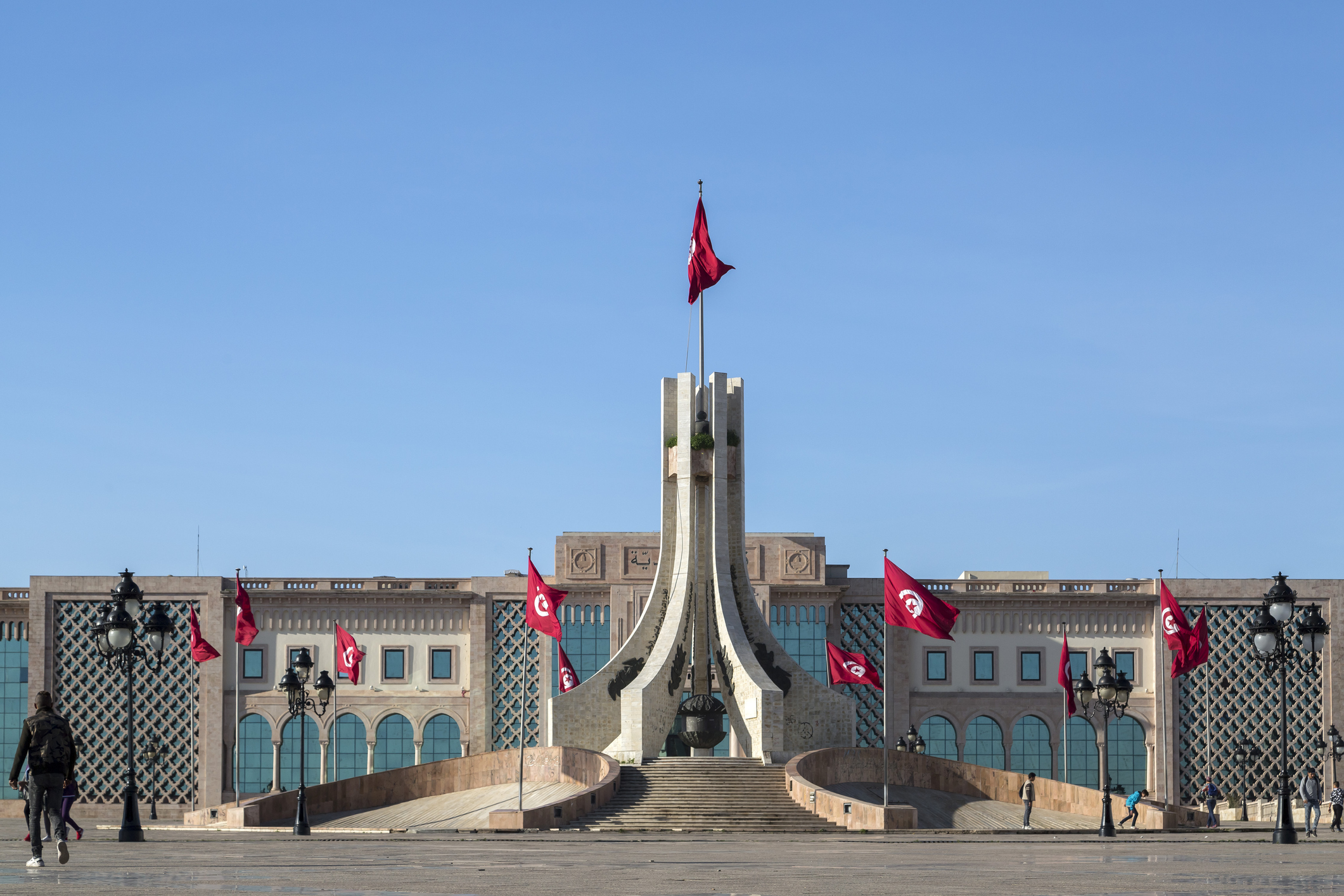
Some actors, however, such as the coalition of governing parties, initially rejected Saied’s actions as they considered them a coup and an unconstitutional power grab, but later updated their position, retracting their initial coup charge. Beyond these diverging stances, a wide range of Tunisians, including leading rights organizations, the lawyers’ order and the labor union, remained cautiously optimistic, recognizing the need for a drastic political and economic change without forfeiting the country’s hard-won democratic gains.
To appease all parties, the president organized meetings with several key oversight actors, signaling that the new measures are temporary and that his immediate priority is to meet the Tunisians’ expectations around health, economic and social development. While they disagreed about the president’s method, all parties supported his intentions and quickly voiced their priorities to address the root causes of the widespread grievances: poor governance and deep-rooted and pervasive corruption.
On 9 August, Tunisia’s financial, economic and judicial public prosecution service imposed a travel ban on 12 current and former senior officials whom prosecutors suspected of corruption connected to phosphate extraction and transport. Two days later, authorities arrested the dozen together with an additional two officials on corruption-related charges. Phosphate, used in fertilizers, is the mainstay of Tunisia’s mining sector, but has often been a node of social tension. While President Saied promises to clamp down on corruption in phosphate transport, the country needs a holistic strategy to address mining sector governance.
Improving mining governance requires more than combatting corruption in phosphates
Phosphate featured high on the president’s immediate agenda, given his stated belief that the sector is riddled with corruption and conflicts of interest. A few days after the dissolution of parliament, Saied emphasized the need to return to previous levels of phosphate production. Production has decreased in the Gafsa mining basin in recent years due to sporadic social unrest and sit-ins. With production falling from 8 million tons in 2010 to 3.8 million tons in 2019, the country, which had until then been a leading exporter, was forced to import phosphate. Saied’s vision of reversing the decrease in phosphate production depends on combatting alleged corruption in phosphate transport. While anticorruption efforts are much needed, a more holistic understanding of mining governance issues is crucial to ensure a comprehensive reform vision.
Gafsa and phosphate: poor mining governance at the root of social unrest
Phosphate is a significant source of state revenues, making up about 4 percent of GDP and 15 percent of national exports. But despite this phosphate wealth, citizens in the southwestern Gafsa mining basin have not benefited from the sector. Instead, the Gafsa region has one of the highest poverty rates in Tunisia, due to weak state-led regional development plans. In 2018, Gafsa was ranked 17th among 24 governorates in terms of regional development indicators.
In addition to poor development and lack of employment opportunities, Gafsa’s local community also suffers the negative environmental impacts of phosphate production. For instance, the extraction of phosphate via wet processing is one of the biggest drawn on Tunisia’s water supplies, leading to ongoing shortages. This has in turn harmed the agriculture, a critical sector for food sovereignty and for achieving sustainable development. This summer has been especially challenging for citizens in the mining basin, with temperatures reaching as high as 49 celsius; the ongoing pandemic and continuous water cuts have further exacerbated years of local frustrations.
Inevitably, the Gafsa mining basin remains a hotspot for social unrest. In 2020, Gafsa witnessed the highest number of protests in the country (1,774 out of 8,759 in total). These waves of social unrest date back to 2008 when Gafsa citizens protested the opacity around recruitment processes within the national phosphate company, Compagnie des Phosphates de Gafsa (CPG). As the main employer in the region, the phosphate sector has been unsuccessful in resolving the Gafsa’s unemployment problem, and, at 25.5 percent in 2019, the region still has the second highest percentage of unemployment nationally. The decrease in production caused by social unrest has also negatively impacted the country’s economy and risks aggravating Gafsa’s unemployment issues as CPG revenues continue to plummet.
Short-term solutions have exacerbated the mining basin crisis
Successive post-revolution governments have failed to advance long-term solutions to remedy the “local natural resource curse” in the mining basin. Due to the lack of economic diversification in the region, those in power have looked to CPG to address rising unemployment with a view to placating the local community. As a result, CPG and its affiliates have recruited an additional 21,000 employees since 2011, bringing its workforce to a staggering 30,000. But many of these positions are thought to be “ghost jobs.” Additionally, the government has historically relied on CPG to meet the social and economic needs of the region. Indeed, through corporate social responsibility programs, CPG has played the role of the state in Gafsa, including even security and defence responsibilities. In addition, CPG is responsible for all expenses related to public services in the region, such as health and education. These responsibilities have expanded CPG’s role in Gafsa from a commercial player to a sovereign role.
The high wage bill, increased sovereign responsibilities and decreased production, if unaddressed, will likely lead to the inevitable collapse of CPG, one of the most important industrial pillars of Tunisia’s economy. The national phosphate refinery company Groupe Chimique Tunisien (CGT) will also be heavily impacted as a result.
Tunisia’s political uncertainty lead to radical reform
Saied’s statements about clamping down on corruption in phosphate transport were met with cautious optimism as his ensuing actions signaled a “return to normal.” For instance, after a long interruption, the National Railways Company announced the resumption of public transport of phosphate. This and the travel ban on and arrest warrants against high-ranking officials provide hope to many Tunisians that change is afoot—setting the stage for more accountability and justice.
However, the mining basin’s problems are not limited to corruption and the current crisis is indicative of deeper governance issues. Therefore, the Tunisian government and civil society should question the status quo and look at dismantling it in favor of a more sustainable governance and development model.
Despite the uncertainty and division, the current political turmoil in Tunisia can bring opportunities for bold and radical reforms. The shift in CPG’s mandate from a commercial and economic role to a social and sovereign one requires urgent attention. The company’s unsustainable model threatens its own existence, which in turn risks harming the country’s economy and exacerbating local grievances. It should therefore be reviewed by the government, while ensuring careful attention to the aspirations of the Gafsa communities.
Tunisia’s president should launch a new, inclusive vision for Gafsa. Local community participation and ownership are key ingredients in any strategy to sustainably develop the region.
A government-led holistic vision for sustainable and equitable development in long-marginalized Gafsa should center around three key dimensions. First, the government and legislators must preserve the region’s environmental sustainability, with a view to maintaining biodiversity and agricultural areas while improving air quality and preserving water resources.
Second, the government must establish a clear policy path, informed by input from civil society and local communities, to pursue economic prosperity through diversification of the economy beyond phosphate production and reliance on CPG. This will help create job opportunities outside CPG, therefore improving material living conditions.
Last, the government must address the region’s historical social marginalization, through investment in health and education services.
Social unrest in Tunisia will not subside until inefficiencies and injustices in the mining sector are addressed. President Saied and the country’s current and emerging political actors should take this opportunity to do so in earnest.
Hanen Keskes is a Middle East and North Africa officer at the Natural Resource Governance Institute (NRGI). Wissem Heni is NRGI's Tunisia country manager. Abir Yahyaoui is a Tunisia officer at NRGI.
Transforming Natural Resource Governance: Break Silos, Sharpen Politics

The political dimensions of natural resource governance are more prominent than ever. Rising threats to democracy, including surging populism, repression of civil society, and shifts in global power form an intimidating backdrop. This context will affect the levers of change that those seeking to promote effective natural resource governance must use. At the same time, there are opportunities to seize, including a growing global consensus of the imperative to address the climate emergency and state capture, and decolonize development by ending the systemic injustices and racism that plague the extractive sector.
To address these political challenges and capitalize on these opportunities, the natural resource governance community must evolve. We need to deepen and broaden coalitions at the local, national, regional, and international levels. We need to be politically savvier. We need to examine different ways of collaborating; consider merging efforts and institutions; and recognize when it is best to lead, follow the leadership of others, or move beyond the traditional single-leader model.
Confronting geopolitics and state capture
Meeting the twin objectives of defending gains and advancing resilient and sustainable governance of natural resources requires navigating geopolitical realities and political economy considerations. In an environment of intensified competition for natural resources, where gains made on transparency, civic space, and governance standards are under threat, the natural resource governance field must more proactively and effectively engage key geopolitical players. China serves as a case in point. China’s significant demand for natural resources, increasing presence in resource-rich countries, and dominance in the global rare earth minerals market show its prominence and centrality in the global natural resource governance space. Participants at the dialogue identified China as a priority actor for engagement.
Several participants noted that while China has often dominated the conversation (in large part due to its outsized role in global supply chains), those conversations have been about China rather than with China-based stakeholders. Dialogue participants called for adding another, newer dimension to engagement with Chinese standards and with Chinese stakeholders: in particular, more engagement with the Chinese government and company representatives in countries where they are extracting. Participants suggested that adding to the existing mix a new approach encouraging transparency and accountability on reputational or business grounds could be more effective for improving natural resource governance than a normative, moralistic one. Another key shift in perspective is to see the geopolitics from an Asian vantage, not just a US-EU-UK centric lens.
More generally, to appropriately analyze the interaction between corruption risks, political economy, and governance issues, a number of participants emphasized the need to understand and diagnose state capture—a pervasive form of high-level political corruption whose dynamics vary across settings. This may help transparency and accountability activists and reform agents to clearly identify obstacles to economic diversification, energy transition, and effective and equitable public health measures. Moving forward, implementing radical transparency in both industry (including state-owned enterprises) and government regarding natural resources and climate and environmental risks; eliminating tax loopholes, subsidies and bailout handouts for the fossil fuel industry; and advancing political finance reforms and reviewing the role and responsibilities of the U.S. oil majors in international initiatives such as the EITI must be priorities.
Combating repression of civil society
The pandemic has provided ample opportunity for states to abuse COVID-19 related restrictions to ramp up internet surveillance and restrict freedoms of assembly, association, and expression. As a result, many transparency and accountability advocates face increasing safety concerns. Yet, some international NGOs are struggling to maintain access to and political cover for these local actors.
New action within the natural resource governance field is needed to reinforce at-risk actors. While civil society actors often bear the brunt of risks for engaging with government, investors, IFIs, the G7, and G20, there must be a shared responsibility for protecting these activists by calling out bad actors and leveraging the power of investors, states, institutions, and corporations as appropriate. Political support should come from a wide range of groups at both the local and international levels, and from those with the power to influence government behavior.
Growing the coalition and strengthening alliances
COVID-19 has broadened the gap between groups operating on the local level and those functioning on a national or international level. Even before the pandemic, divides between local civil society organizations and national or international NGOs perpetuated the idea that policy discussions are high-level, technical exchanges between public officers and professionalized institutions.
Many participants expressed concern that the natural resource governance community has not done enough to collaborate across strategic vertical alliances within the natural resource governance field and horizontal alliances with other fields and movements. On the former, actors in the field believe that IFIs, local civil society organizations, national and international NGOs, and governments must unite on common objectives and improve information-sharing channels. On the latter, international and national groups must also find ways to engage more effectively with on-the-ground social movements such as those on human rights, gender, taxes, and climate in order to create a lasting change that is informed by and helps meet the needs of locally led, broad-based coalitions. Rather than co-opting those movements, natural resource governance actors should complement broader movements that will have spillover benefits for good governance of natural resources.
Advancing the agenda ahead
Throughout this three-part series, we have highlighted some of the trends, challenges, and opportunities that researchers, activists, and policymakers may examine to reimagine the sector. The call is to be clear and bold. Timid efforts and insufficient focus risk decreasing the effectiveness and credibility of the natural resource governance field.
Read the first two entries in this series here and here. Share your thoughts on these and other issues related to the future of natural resource governance on Twitter using #FutureOfNRG and participate in our survey on natural resource governance priorities.