
Nigeria’s Next Government Must Lead an Inclusive, Cohesive and Sustainable Energy Transition

In a bid to avert the global climate crisis, countries are shifting toward cleaner energy systems. This presents a challenge to African countries like Nigeria that rely on dirtier fuels for both export revenue and domestic energy to drive their economies. But it is also an opportunity for Nigeria to transition its own energy system to improve energy access, reduce oil- and gas-related pollution, and develop industries to supply this transition.
The government’s Energy Transition Plan (ETP) is a pivotal step in responding to this challenge and opportunity. It comes at a huge cost—$1.9 trillion—and requires major social and economic changes. As citizens vote this weekend, it is essential that they have a better understanding of and a greater say in the country’s energy transition plan—even though none of the major candidates have even referenced the transition plan. This is a grave omission.
The plan prioritizes decarbonizing five sectors—power generation, oil and gas extraction, cooking, industry, and transport—and positions gas as the main fuel for electricity generation. However, it omits details on how to achieve its priorities. It aspires to drive economic growth but does not account for the risk the global energy transition presents for Nigeria’s oil sales and the loss of federal and state government revenues to fund this growth. It seeks to bring electricity to the 43 percent of Nigerian homes in darkness but does not provide a holistic framework for addressing long-standing domestic energy sector finance and infrastructure challenges. It aims to reduce poverty by creating jobs and increasing energy access but does not specify how the technological, financial and human resource gaps will be filled.
Prior to the COP27 climate conference, Victoria Ibezim-Ohaeri from Spaces for Change spoke to NRGI about the need to learn from past lessons.
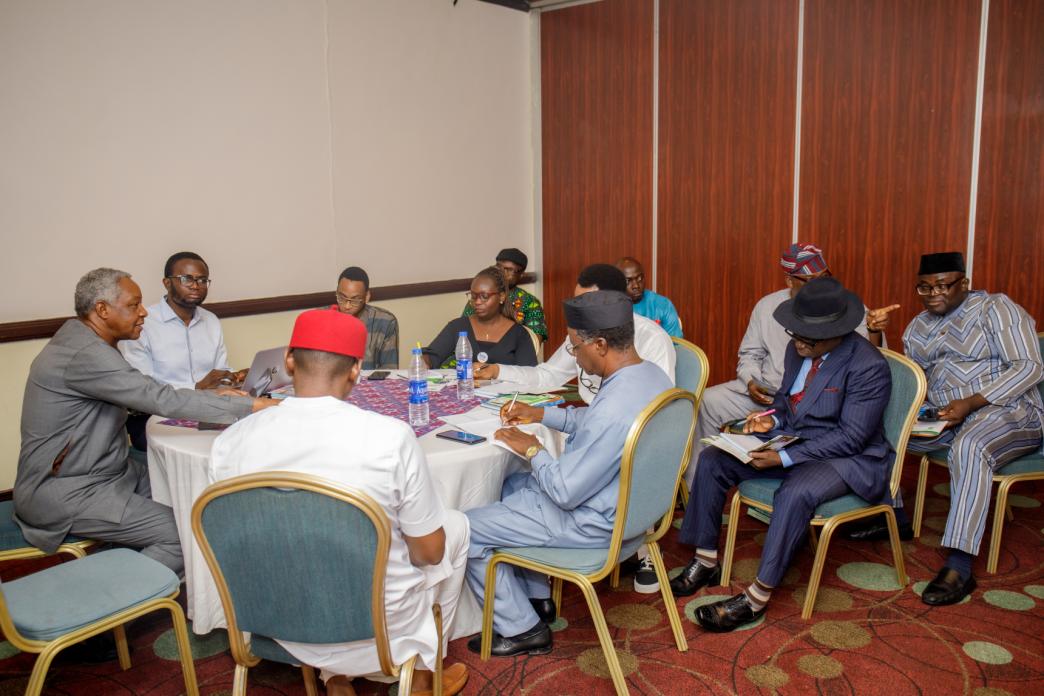
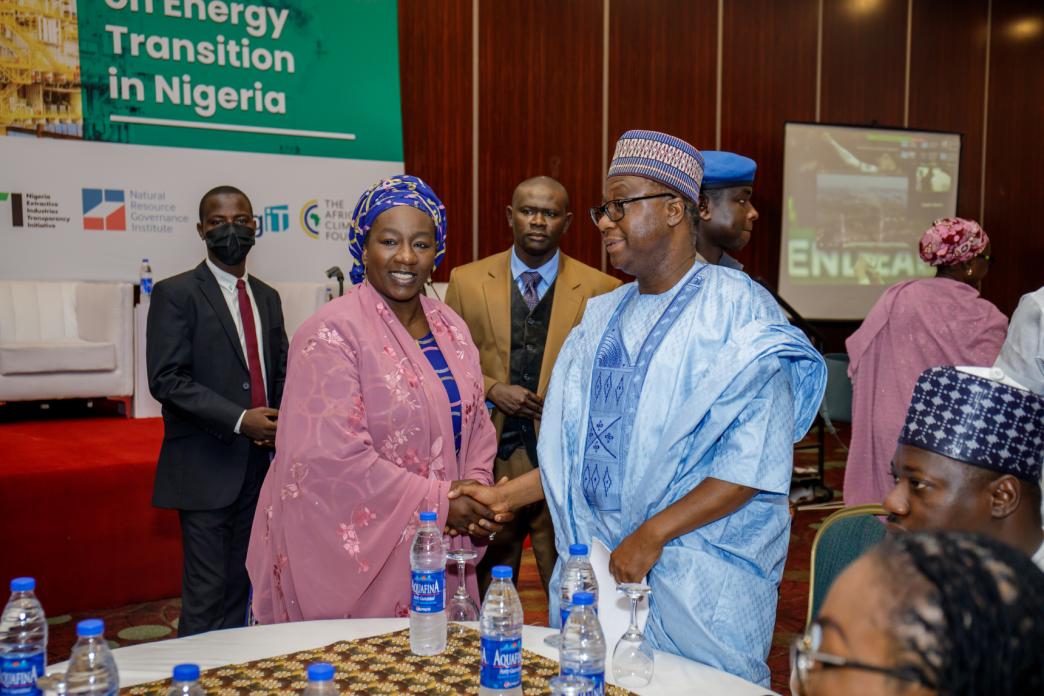
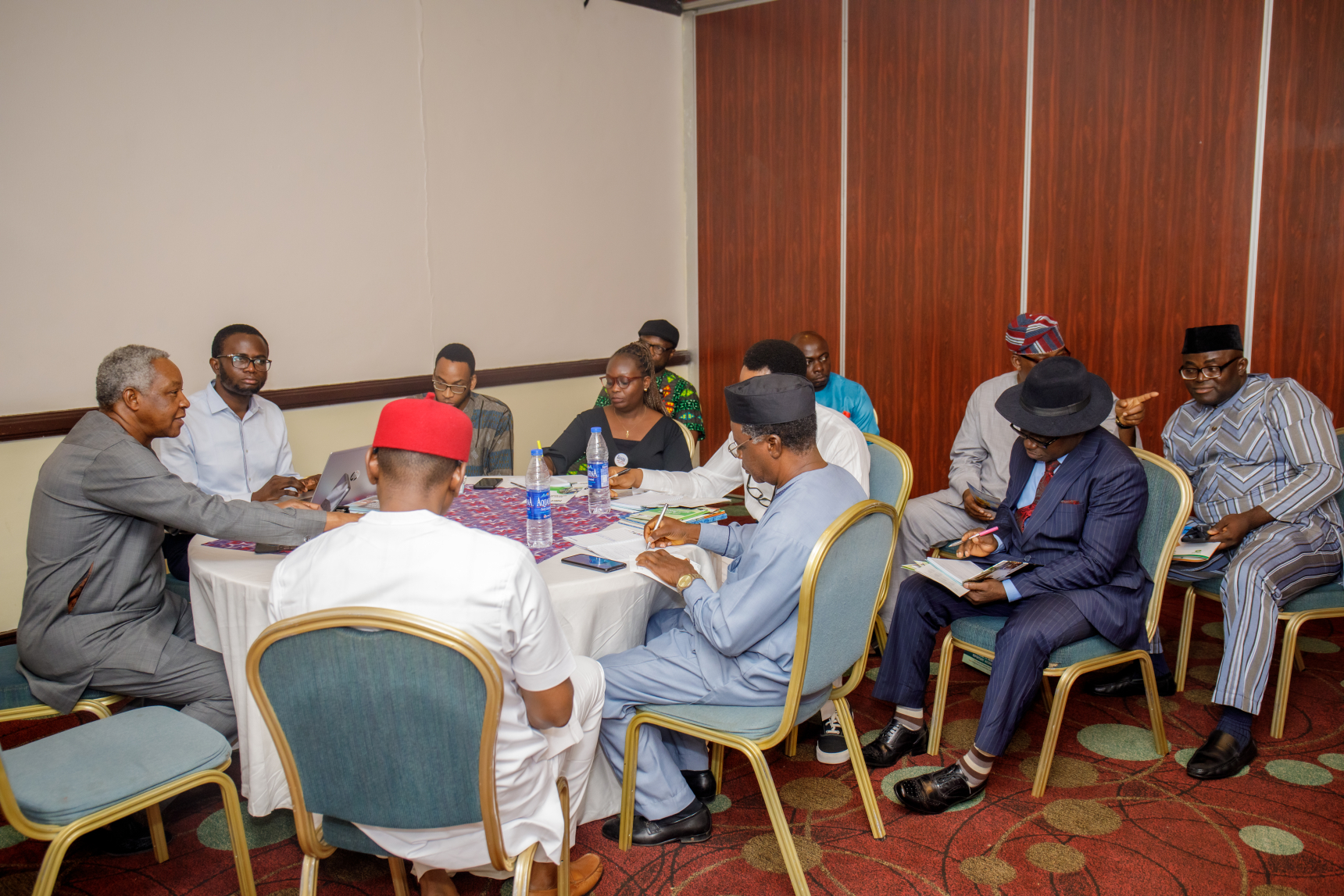
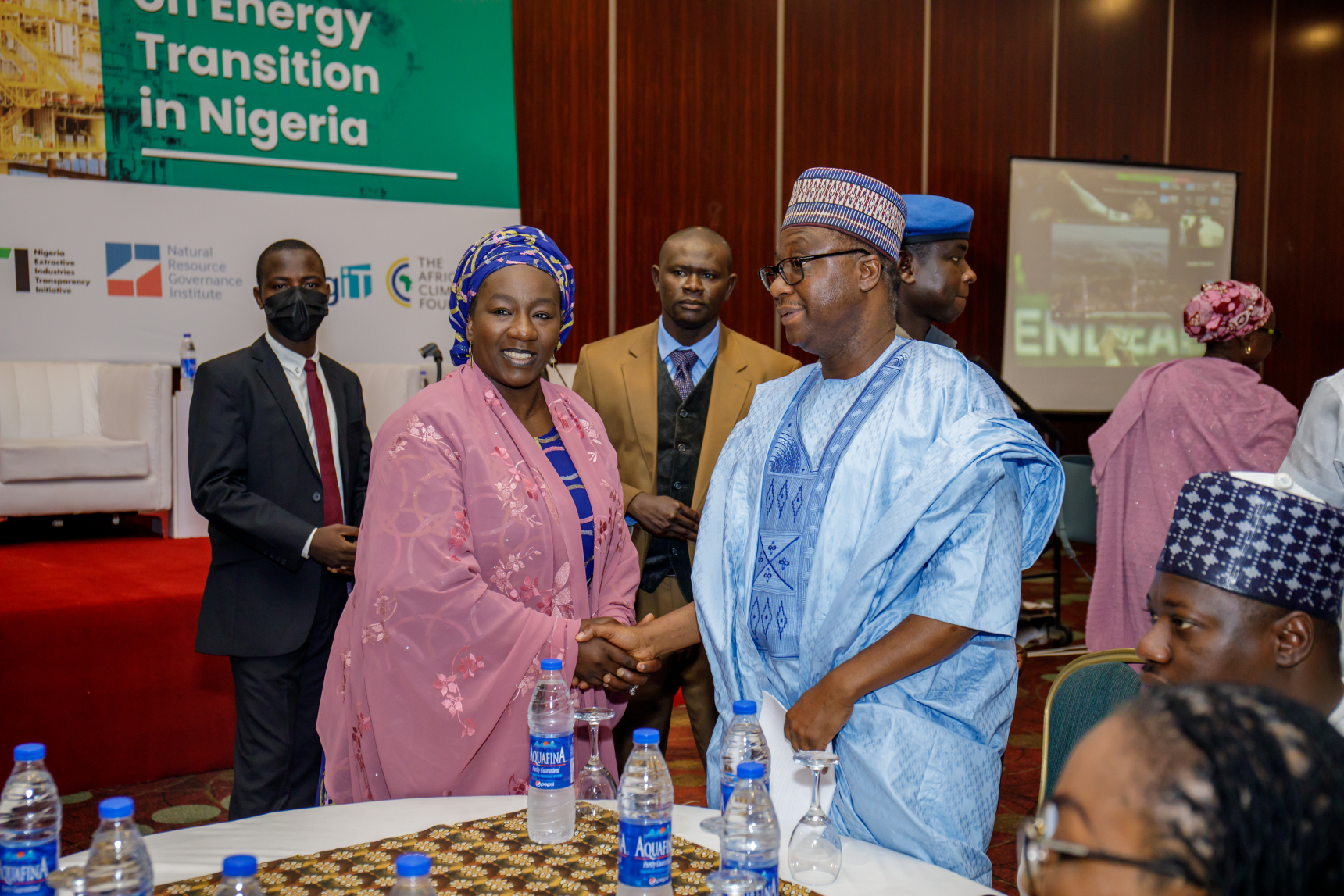
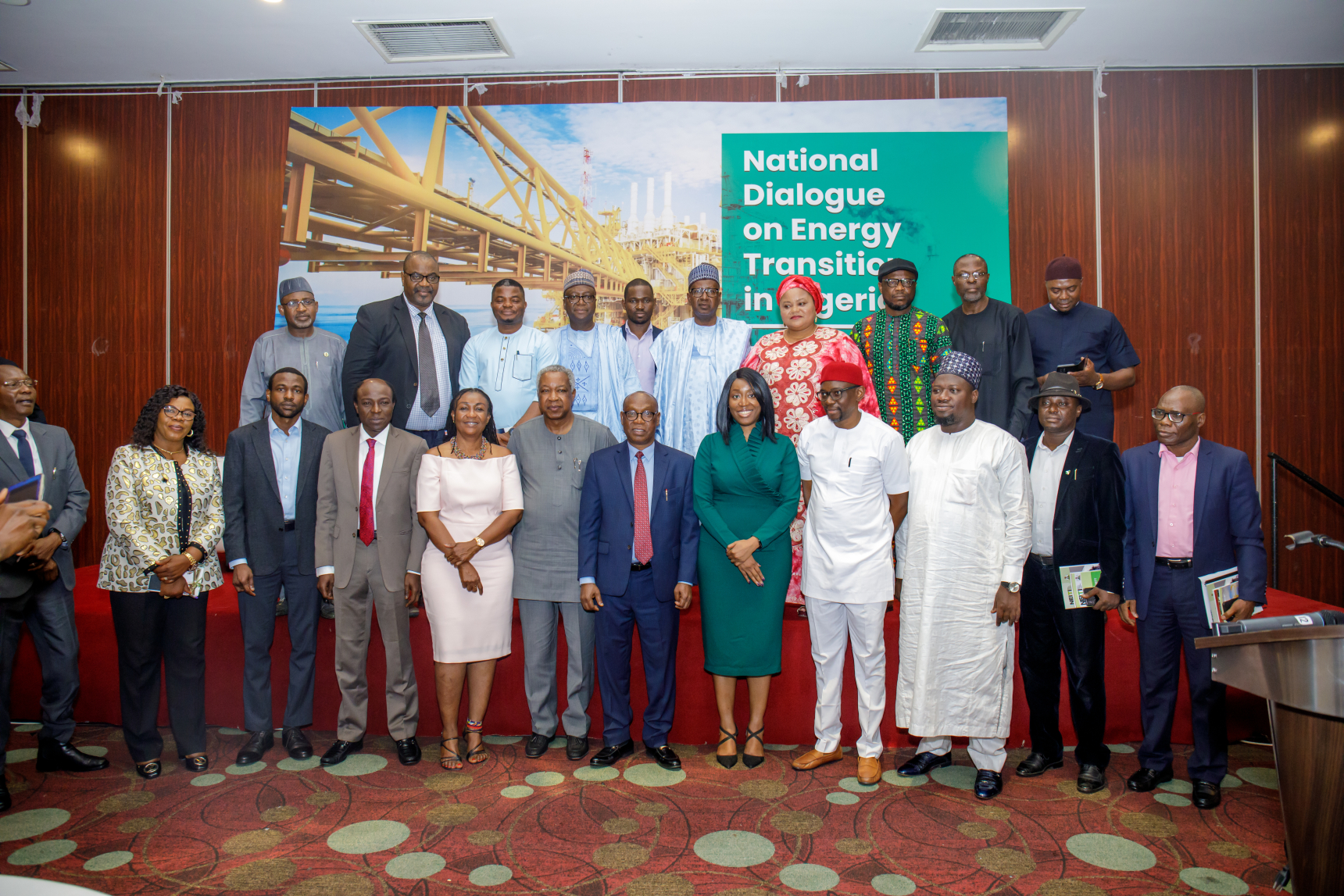
To address these omissions, last October, the Natural Resource Governance Institute (NRGI), the Nigerian Extractives Industry Transparency Initiative and BudgIT Foundation convened a national dialogue. Participants produced a communiqué with recommendations for consideration by the incoming government. In condensed form, they are:
- Mitigate the risk to Nigeria’s dependent economy. As Nigeria’s oil export customers transition their own energy systems and reduce demand for Nigerian oil, Nigeria’s oil-dependent economy and government finances will be increasingly exposed to risk which the energy transition plan does not adequately acknowledge. Nigeria’s next government should map risks to government revenues, employment, foreign exchange, supply chains, and Nigerian National Petroleum Corporation (NNPC) investments.
- Prioritize spending that spurs sustainable development beyond oil. Now, Nigeria pays more for oil subsidies than its anticipated earnings from oil. Prioritizing subsidy payments takes scarce resources from other sectors such as agriculture and information technology. Also, the NNPC continues to increase oil investments in what may become stranded assets. Authorities could better serve Nigerians if they built systems to reduce Nigeria’s oil dependency.
- Attracting investments to fund the plan. Nigeria must attract investment from donors, financial institutions and philanthropists in order to implement the ETP and diversify the economy beyond oil. The new government should provide incentives that encourage tangible investments in infrastructure, human resources, technology and other areas essential to delivering on the ETP rather than taking on unsustainable debt.
- Streamline and clarify policies and plans. The Federal Ministry of Finance, Budget and National Planning should ensure that the plan is properly aligned with existing federal and state plans. This includes the 2021 Nationally Determined Contributions, Decade of Gas Plan, Power Sector Recovery Plan, the National Development Plan, and other iterative plans to ensure that the ETP is implementable, realistic, and adopted by implementing government institutions. This is necessary to clearly demonstrate how the government can achieve its net zero goals and also ensure sustainable economic development.
- Resolve environmental legacy issues. As transition minerals such as lithium gain more importance in the global transition, the Federal Ministry of Mines and Steel Development must first address legacy mining issues, including environmental degradation and related social conflict to minimize the impacts before seeking to benefit. The Federal Ministry of Environment must also prioritize environmental remediation in oil-producing communities in preparation for a future beyond oil.
- Clarify its plans for gas use. The plan names gas as a transition fuel. The government should clarify what its expectations are for gas use for economic development and domestic gas energy systems. It must map out the infrastructure, finance and system gaps that have foiled previous gas expansion efforts. It must weigh that against the shrinking global fossil fuel investments and increased divestments from potential gas exploration by partner companies and adjust plans accordingly.
- Be collaborative, cohesive and realistic. Seamless collaboration and buy-in to the objectives of the plan from government institutions is necessary. Massive investment in gas will be required to drive its use as a transition fuel and reduce spending on oil, as set out in the plan. The recently inaugurated National Council on Climate Change (NCCC) should weigh the objectives of the plan against the policies and actions of critical government institutions, such as the Federal Ministry of Power and Petroleum Resources. These must then be reconciled.
- Make the plan inclusive and equitable. NRGI has found that oil-producing communities, women and youth groups appear to be the least consulted and prioritized in the current ETP. Implementing it requires buy-in and active participation. Few Nigerians understand the plan, how it applies to average people, or their role in making it a success. Citizens cannot get behind a plan that they don’t understand—especially if they are to change energy use (from petrol and diesel to power businesses and households, and from kerosene and charcoal for electricity and cooking) to the solar and biogas sources the plan envisions.
Prior to the COP27 climate conference, Tijah Bolton-Akpan from Policy Alert spoke to NRGI about how community voices should help shape the energy transition plans and hold decision-makers accountable.
- Strengthen governance of the Energy Transition Plan. So far, the Federal Ministry of Environment and the Energy Transition Office have led on the ETP. The NCCC will soon assume leadership of the plan. To be effective, the council should be constituted in a fair, equitable and representative way that ensures that it retains the gains and institutional knowledge generated so far. The council should adopt policies that focus on transparency in revenue generation and spending of transition funds and use engagement frameworks to inform stakeholders of progress and plans.
While no one can say who will triumph in Nigeria’s elections, it is clear that bold and inclusive leadership on the country’s energy transition must be among their priorities.
Colombia: Inclusion and Upgraded Governance Are the Keys to Petro’s Energy Transition Ambition

This is a shortened translation of a longer Spanish-language post.
On 7 August, Colombia turned a new page in its history. For the first time South America’s second-most populous country will be governed by a left-wing president and an Afro-Colombian vice-president who is a seasoned leader of social movements. More than 11 million citizens (50.44 percent of those voting) gave President Gustavo Petro and Vice President Francia Márquez Mina their mandate.
Petro boldly stated in his inaugural address that “we are willing to move to an economy without coal and without oil.” But how can the government and Colombians translate these green ambitions into concrete results?
In addition to addressing fiscal and energy supply challenges, the government must commit to good governance of the energy transition away from fossil fuels. The transition must include diverse voices and be transparent. Authorities must define clear policy frameworks for managing the progressive decline in production of fossil fuels, the need for economic diversification and the new governance challenges of renewable energies and transition minerals.
Petro's energy transition agenda
President Petro’s proposal to limit oil extraction has positioned him as a changemaker in the global energy transition. During his campaign, he invited other leaders in the region to form an “anti-oil bloc” to move economies away from fossil fuels and create a Latin American front to fight climate change. A few days ago, he received a letter signed by more than 80 parliamentarians from 30 countries that are part of the movement called “Call of Parliamentarians for a Future Free of Fossil Fuels” expressing their support to his proposal. Indeed, as an oil-producing and oil-dependent country, Colombia could become a laboratory for the innovation of transition policies, with much to contribute to other producing countries and global efforts to mitigate warming.
In line with Colombia’s updated commitments to the Paris Agreement—51 percent reduction in greenhouse gas emissions by 2030 and zero net emissions by 2050—during the campaign, Petro argued that Colombia should cease licensing for new hydrocarbon exploration and for large-scale open pit mines; ban the exploration and exploitation of offshore and non-conventional hydrocarbon deposits; and stop fracking pilot projects.
Petro also proposed promoting non-conventional renewable energy sources and earmarking the exploitation of fossil fuel reserves for domestic consumption, given their low levels (7.6 years’ worth of oil and 8 years’ worth of gas). In addition, he pointed out that Ecopetrol (which is majority state-owned), should play a fundamental role in the transition by redirecting part of its exploration budget toward a new energy transition fund.
After winning the election, Petro moderated some of these proposals. In his inaugural speech, he pointed out that although his commitment to decarbonization remains, Colombia is not a major contributor to global emissions. He also placed a greater focus on the role of international cooperation. The newly appointed finance minister, José Antonio Ocampo, has indicated that gas exploration will probably continue and that oil exports should continue in the short term. In a recent interview, the new mining minister, Irene Vélez, also commented that this process would take more than a decade and that the government would discuss the extraction of minerals necessary for technologies needed for the energy transition.
Top-down decision-making, general exclusion of affected communities and negative project impacts have generated a high level of socio-environmental conflict in the territories where extraction takes place.
Former president Iván Duque took important steps toward the energy transition by promoting investments in renewable energies, some green hydrogen pilot projects and transition minerals. But his administration also prioritized the expansion of fossil fuel extraction. He supported the coal industry to increase its competitiveness in the Asian market, promoted offshore hydrocarbon exploration projects, and encouraged pilot fracking projects to increase gas supply. Top-down decision-making, general exclusion of affected communities and negative project impacts have generated a high level of socio-environmental conflict in the territories where extraction takes place. This perpetuated a trend that began in the early 2000s.
Four challenges to Colombia’s energy transition
If Colombia does not initiate a broad discussion and take steps toward a just transition, in a few years it could end up with stranded assets and investments with low economic, social and environmental returns that could increase inequality. However, President Petro will have to lead this process in a scenario of great economic uncertainty linked to inflation and the risks of a global recession—in addition to the difficult fiscal situation resulting from the coronavirus pandemic.
Fiscal policy
In the past, as much as 25 percent of government income has come from hydrocarbons. Managing the progressive decline in hydrocarbon production means replacing taxes on oil and gas with new sources of revenue.
The new government has proposed imminent tax reform with the aim of raising COP 25 trillion (approximately USD 5.5 billion). The success of this proposal will be a key indicator of how and when the government might cover the gap that would be left by an eventual reduction in oil and gas taxes and royalties.
The redefinition of Ecopetrol’s role will be of great significance since its profits are an important contributor to the state budget. It is an efficient company that has achieved good financial results in recent years despite the pandemic and its profits will help to cover this year’s fiscal deficit.
The energy crunch resulting from the war in Ukraine will likely sustain the recent increase in hydrocarbon prices for some time to come.
Government officials will also need to decide whether or not to maintain the commitment to the promotion of the exploitation of minerals, which have contributed less to government coffers than oil and gas. The new government has announced a mining moratorium during its first 100 days so that officials can review compliance with regulations, but in other declarations has opened the door to further exploitation of transition minerals such as nickel and copper. Should authorities further pursue those commodities, they should also develop a modern taxation framework as well as enforceable socio-environmental standards adapted to the new importance of these metals.
Finally, the pace of the global energy transition is a key consideration for Colombia’s revenues in the short term. It is likely that in the long-term oil and coal prices will decrease. But the energy crunch resulting from the war in Ukraine will likely sustain the recent increase in hydrocarbon prices for some time to come. Petro has shown a willingness to take advantage of the boom in the short term.
Trade deficit
Another economic challenge to consider relates to the current account deficit. In 2021, the oil industry represented 33 percent of the total value of Colombian exports. Along with coal and other minerals, oil and its derivatives account for about 56 percent of the total value of the country’s foreign sales and generate annual foreign exchange earnings of about USD 20 billion. Likewise, oil license bid rounds and mining investments are a main source of foreign direct investment (USD 7.6 billion in 2020). In this context, the new minister of finance has suggested the need to continue exporting oil to avoid a problem in the balance of payments.
Energy supply
In 2018, 70 percent of Colombia’s energy supply derived from fossil fuels (40 percent on oil and derivatives, 21 percent on natural gas and 9 percent on coal.) Liquid fuels derived from oil are especially important in the transport sector (96 percent of consumption) while gas is key for industry and households. In this context, the government must define a path for its progressive reduction at the same time as it ensures energy access for the most vulnerable communities. Renewables energies will play a key role.
Clean energy governance
In order to multiply investments in renewable energy, the government should establish clearer governance frameworks. The development of clean energy projects has generated strong criticism and opposition from local communities due to the absence of free, prior and informed consultation, environmental and social impacts, and a lack of understanding of the relationship between communities and their lands. This is especially relevant in La Guajira, a multicultural and multilingual department of Colombia with a 42 percent indigenous population, high levels of poverty and limited access to electricity, but with enormous potential for wind and solar energy (wind speeds exceed 9.8 meters per second, twice the world average, and solar radiation is between 6 and 7 kilowatt hours per square meter per day, 60 percent higher than the global average). It is essential that the government, elected with the support of ethnic minorities, resolves these tensions and ensures that local populations receive the benefits of the transition.
The way forward
In general, the new government has the challenge of building adequate governance for the transition, keeping in tune with social expectations, while meeting the needs of an economy recovering from the pandemic. Implementing policies to move away from fossil fuels will be complex from a political and economic point of view, so it is very important to guarantee a democratic process and avoid the influence of undue interests in the process.
The eyes of the world are on how Colombia, a country dependent on oil production, can make its own just energy transition.
Among other elements, officials planning for the transition should:
- disclose the possible impacts of the different transition scenarios and disseminate this information to different stakeholders.
- ensure broad and territorial participation in defining and implementing the transition, including the most vulnerable groups.
- articulate clear measures for the diversification of the economy and compensation that will allow those most affected by the transition to benefit.
Robust governance will also require a high degree of interinstitutional coordination, especially between public institutions, including at the local level, to avoid contradictory messages about the transition process and the future of extractive industries. The energy transition requires policies at all these levels and necessitates an interdisciplinary perspective. It may also require additional regulatory frameworks in new areas such as transition minerals or renewable energies as officials and citizens come to better understand the conditions of these markets and global trends, as well as the implications for communities.
The eyes of the world are on how Colombia, a country dependent on oil production, can make its own just energy transition. There is a huge potential to generate lessons useful to other countries. The challenges are vast, both fiscally and in terms of energy access. But the Petro administration can meet these and other challenges by establishing adequate governance of the transition. For this, Petro will need to cultivate a broad national consensus that includes the territories and a diversity of voices. The support of allies at the international level will also be essential.
The Resource Remix: Suneeta Kaimal and Joseph Asunka Discuss Democracy and Natural Resources in Africa in New Podcast

In this debut episode, available on Apple Podcasts, Google Podcasts and Spotify, NRGI president and CEO Suneeta Kaimal is joined by Afrobarometer CEO Joseph Asunka. Afrobarometer conducts public attitude surveys on democracy, governance, the economy and society in more than 30 African countries.
NRGI · The Resource Remix - Episode 1 - Democracy and Natural Resources in Africa
During their conversation, Kaimal and Asunka explore the importance of citizens’ voices in key decision-making processes, what the energy transitions means for Africa, and the challenges corruption continues to pose to governance and sustainable development.
Asunka shares how Afrobarometer documents the different ways that ordinary people engage with their governments and leaders. Survey findings have shown that those surveyed see corruption as a persistent and major problem, which has increased over time, and worsened due to the ongoing pandemic and restrictions brought to contain the virus.
They discuss the importance of going beyond having strong governance and transparency policies and frameworks, noting a lack of implementation across the continent, as underlined by NRGI’s 2021 Resource Governance Index. Both agree that, without available information, civil society organizations and citizens are unable to monitor how resources and revenues are managed, especially in the context of narrowing civic space and the increasing pace of the energy transition. They also discuss recent political transitions in Sudan and Guinea.
Both note that addressing these key issues requires strong partnerships and collaboration, continued transparency and more work towards accountability, leveraging on recent advances in areas such as contract transparency and beneficial ownership.
Transcript
Suneeta Kaimal, NRGI: Thank you all so much for joining the first episode of The Resource Remix, the new podcast from the Natural Resource Governance Institute. We bring listeners dynamic perspectives on the cutting-edge issues affecting countries rich in commodities, from cobalt to natural gas to lithium. The need to transition to a post-oil future and the pandemic present these countries with a range of unique challenges and opportunities.
Please join us for future episodes in this series as we talk with some of the most innovative thinkers and practitioners seeking to shine a light on ways forward in this most critical and fascinating time.
I am Suneeta Kaimal. I have been with NRGI for more than a decade and now have the honor of serving as its president and CEO. I may be a veteran of NRGI, but this is the first time I am hosting a podcast, so please go easy on me.
Our guest today is Joe Asunka whom I have had the pleasure of knowing now for eight years. We met when Joe was part of the Global Development and Population program at the Hewlett Foundation, which is one of NRGI’s founding funders. He recently returned to his native Ghana, where he is now CEO of Afrobarometer. Joe welcome, and thank you so much for joining me in this first episode.
Joe Asunka, Afrobarometer: Thank you Suneeta, and really, thank you for having me on your first episode, I am really grateful and honored.
SK: It’s a pleasure to have you. So let’s just start with a question for the listeners who may not be that familiar with your organization. Can you tell us a little bit about Afrobarometer, and what its mission is?
JA: Thanks for the question and thanks to your listeners for the opportunity to share with you what Afrobarometer is and what we do. Afrobarometer is an African network of research organizations that conducts public opinion and public attitudes surveys across the continent.
And, as the name implies, at Afrobarometer we’re trying to measure something, measuring people’s attitudes opinions about issues of governance, the economy, quality of life and civic engagement, among other things.
We are currently working in about 30 plus countries. And for each round of the survey, we started in 1999. So we’ve been two decades into it now, and we have done eight rounds of the survey. Each survey takes about two years to complete.
We just completed the eighth round in 34 countries, and we have just started to launch the ninth round of the surveys. It is in the ninth round that we want to be able to get up to 40 countries and hope that coverage would give us more leverage in terms of engaging more with African leaders, especially at the regional level, in bringing people’s voices to inform policymaking.
The core mission for the Afrobarometer is that we believe that people’s voices matter when it comes to policymaking, because decisions about policy and development are all about the people, and we think we need to put people at the center of all those decisions to ensure that their priorities, their preferences, and what they experience daily in their lives, is reflected in what leaders do in policies.
SK: Thanks, I couldn’t agree more. I think in many ways, coming off of the spike of the pandemic and dealing with so many economic, political and social upheavals around the continent and around the world, being able to hear that voice of the people is more important now than ever before.
I’m curious, given how many surveys you conduct, if you could talk a little bit about what you think one of the most interesting survey findings is of late, and why.
JA: One that I would highlight is the growing demand for a deeper form of democratic governance. And I say so because when we asked respondents, and I mean the last decade, to choose between two options in terms of governance, whether they want an effective government that may not be accountable or an accountable government even if it is not that effective, most of our respondents go for the latter. They want an accountable government even if that government is not very effective. And this is surprising because, generally, people would think that in Africa everybody cares about the economy, their lives, livelihoods, not governance.
But what we’ve seen starting from a decade ago, when we had only about 50 percent of the population saying they prefer an accountable government to an effective one that is not accountable, that has grown over time. And now it’s almost 70 percent of the population wanting accountable governance. And I think that debunked a lot of myths about Africa and what Africans want because what we have documented is that they want a deeper and meaningful form of governance than just delivering economic benefits.
SK: Thanks so much, Joe, so interesting, and obviously we know from many resource-rich developing countries that corruption is actually one of the major obstacles, not only to that accountable governance but also, of course, ultimately, to sustainable development.
I’m curious if you can talk a little bit about some of the recent Afrobarometer surveys, in which we know Africans have shared that corruption problems are actually getting worse and that in many instances governments simply aren’t doing enough to address them. Could you describe for us, what key trends in citizen perception we’re seeing around corruption, and how should that inform the strategies, the interventions, the work that organizations like the Natural Resource Governance Institute, but also our partners across Africa, should be focused on?
JA: Measuring corruption has always focused on the elite level expert opinion in terms of what the practices are like in each country. But from our surveys, we get to experience and hear the ordinary, the day-to-day lives of people, and how they experience different types of corruption. And our documentation has shown there are steady views about the levels of corruption, especially in the recent, maybe in the past five years, and after covid had hit.
That perception and view that corruption is the major problem, has actually increased over time. And so, in many ways, many things influence this.
First, starting with national elections. There are lots of people who get this, that elections and the way they are run are not clean enough and that there’s a lot of dirty money that goes into politics. Both are making politics very expensive, which then means that people who get into government find ways to recoup some of their expenses in order to pay off their debt.
And then, of course, they start amassing some of that wealth towards the next election. What happens, because of the increasing cost of elections, people get this feeling that corruption is likely to become rampant because politicians will have to pay their debts once they are in office. So that’s one trigger that we see consistently, people reporting higher levels of corruption among certain public offices.
The second piece is when it comes to issues of procurement. There are lots of scandals on procurement that easily leak into the public domain, and as long as people hear about how procurement processes have been used to siphon public resources for private gain, that just fuels our perception. We’ve seen lots of those stories being the basis for what people think is happening in their communities, within their countries. And you cannot begrudge them because if these scandals continue to be the case, of course, it gives us a signal that this is what is happening, that there are some levels of corruption in the public sector.
The final thing I want to note here is, usually, certain expenditures that governments embark on are not well explained to the public. And once people hear about those extravagant expenses so, for example, if the country wants to buy a presidential jet to the tune of 100 million dollars and there’s no explanation to the public as to why and what is the rationale for it, that can provoke that view that public officials just want to use public monies for benefits that are not necessarily in the interest of the public. That fuels those views that corruption is rampant on the continent. And as I said, in the past 10 years, we have seen it take up and up and up, and people feeling that corruption is rampant in their countries.
SK: Thanks so much, Joe. I want to pick up on a couple of points that you made. First of all, around the gap between having these great policies on the books and great frameworks, but then not actually seeing that implemented in practice and, as you are aware, in the 2017 Resource Governance Index, we found this trend, looking in countries around the world of a growing gap between great policies on paper and poorer practices, and we actually in our new 2021 Resource Governance Index are seeing the persistence of that trend, and so I think this is an issue that collectively we really need to address.
I think, by contrast, we are seeing good progress on contract transparency, increasingly on transparency of suppliers as well, which speaks to hopefully a positive trend or a tipping point around that. But, as you said, one of the most important things is making sure that there is that active civil society that can participate when information is becoming available and to push that public debate, that public dialogue and its civil society, its citizens, the media as well. And we know that one of the challenges to democratic accountability is the closing of civic space and media coming under increased pressure in many countries around the world, but also many countries in Africa. And so I am wondering if you could talk a little bit about any insights you’re getting from your surveys on citizen engagement and the ability to actually hold governments to account.
JA: So it comes back to leadership responsiveness, to citizen engagement, and I think the closing of civic space, which seemed to have been on the rise, even in the pre-pandemic period. At the same time, we’ve gotten to a point, where the pandemic may have created even more problems for us because what we had tried to salvage initially may have been undermined by the onset of covid-19, which just creates more opportunities for governments to shut down dissenting views and the like.
And what we are generally trying to do is document the different ways that ordinary people engage with their leaders, both at a local level, nationally and globally.
And over time, some of the areas we document are people’s participation in community meetings, getting together with other people to reset particular issue that is of concern to them, contacting their leaders, whether it is local or national leaders. And then, the act of engaging with leaders in ways that can bring an outcome of interest to them. And what we have when it comes to contacting leaders, local leaders tend to be the most contacted. Whether it is the religious leaders or traditional leaders at the community level, they are the ones that people mostly go to. When it comes to elected leaders, the contact is a little less, and perhaps for a good reason that elected leaders are not always in the communities, and so they don’t get to contact them.
Nonetheless, elected leaders, as opposed to being responsive and listening to the constituents in some way… what we have learned from our surveys is that the citizens do not think that the elected leaders actually make time to listen to them. And this is a concern we documented all over and over again, that elected leaders, except during elections, never make time to listen to ordinary people. So when it comes to whether or not people feel like they can make a difference, when they actively engage in a process, it’s only a few people who think so, not more than 30 percent of our respondents. But we realized that people who feel like their engagement can make a difference are the ones who actively do the engagement, so it’s like self-efficacy. They believe, “that my actions will lead to a good outcome or an outcome that I am looking for,” or at least influence the outcome in some way. It’s a big driver of whether or not people actually engage, whether with their elected leaders in town hall conversations, or even local leaders.
What I am trying to figure out, especially in thinking about how to reactivate civic engagement, one of the benefits we’ve seen in the covid period is that everybody has realized that governments with lockdowns and media censorship, in the name of the covid-19, has reawakened people because in the last survey we did, between 2019 and June 2021, what we documented was that, even though Africans were committed and willing to accept lockdowns and comply with them because of their health reasons, a large majority is now concerned and think that the governments may use it to increase their power.
That is a big fear on the part of people that civic space is likely to get worse after the pandemic, because some of the measures that were put in place as temporary may be beneficial to setting actors in power, and they may not be willing to let go of those actions, interventions that they put in place. And this is a fear that a lot of people that we’ve spoken to have expressed. But we also see a positive value out of this. Because people are aware of the risk that the covid-19 might pose to civic space, it is possible that people are more willing now to wake up and fight against the tendency to close civic space.
For civil society organizations working in this space, I think, mobilizing people, especially when it comes to social movements against civic space closure, might be much easier now given the awareness of people and the fear that they expressed to us that they think that governments might use this to increase their power.
SK: And I am curious: we’ve seen so much political upheaval frankly around the world in the pandemic, but also within Africa, political and social changes over the past few years, even just recently tremendous upheaval in Guinea, there have been crackdowns on media in Nigeria, there’s been governments overturned in Tunisia, new leadership in Tanzania and Zambia, and elections that are also accompanied by internet shutdowns in Uganda and the Congo. What you said earlier about the elections and corruption is so interesting and it brought to mind Indonesia, where there’s a very similar problem where you pay for votes, and so it breeds this kind of clientelism that is incredibly undermining to democratic accountability.
I am curious: as you reflect on these trends, political upheaval across the continent, do you see common threads that unite these political moments? And as you look into your crystal ball for the future, do you see trends or opportunities to shift politics across the region?
JA: I think, in many ways, many of the shifts that we have experienced in the recent past, I like to call them, the highs and the lows on the continent in terms of the changes. Of course, these are very different types of changes across the continent and there may not be a common thread across all of them, but they are setting on the line issues that one can identify. When we talk about the highs in terms of what really happened then it sounds very positive, talking about Malawi and the Supreme Court intervention in that fraudulent election that ended up having the opposition come into power. It was a really positive sign for everybody. And now the government coming into power under those conditions does give people the motivation, the signal that positive things can happen when institutions work the way they are supposed to. The same thing happened in Zambia with credible elections that delivered the victory to the opposition, which, by and large, young people played a big role in that process. One would say: given that Africa is a very youthful population, the younger generation really needs to do something, they can change the way politics is done on the continent. Those two are positive signals. And of course, power alternation is possible even in places where we have not seen power alternation in a long while.
When you look at some of the changes, even though they are not common thread, we know that they are positive changes that are worth emulating and continuing to build on, so that if the Supreme Court in Malawi is stable to do this, that means the institution of the judiciary can work well if we mean to actually strengthen them to do their work well. The same thing in Zambia, we know that the younger generation can make a difference when they mobilize and want to have effective change.
SK: Thanks Joe, and I think what is interesting and what you are saying is that there are these different trends or moments that are challenges from a political perspective, but also opening spaces and opportunities. And one of the things that we have seen in terms of the possible manifestations and social unrest is that, in the context of the pandemic and also in the context of the energy transition, natural resources, which already had significant expectations around them for benefiting the public good, are now seeing even less benefit. So there is this significant risk that this will drive greater social unrest. And the energy transition is something that is on a lot of people’s minds, while also their concerns that say, we have to focus on the here and now, we need to focus on meeting the needs of our citizens and our populations. And in some African countries, the energy transition is seen as this kind of agenda that is imposed from afar.
So I am curious, Joe, if you can talk a little bit about the perspective that you are hearing from citizens, also from governments, on the energy transition, and how to consider the prioritization amongst the many challenges that people are facing on the African continent.
JA: So for the energy transition, even though we haven’t asked specific questions to our respondents in terms of what their perspectives are, it suffices to say two things. One, the reality is going to hit everybody. How far or how long it is going to take to hit everybody is what the concern should be for several natural resource-rich countries.
I think the challenge is the short-term nature of the way governance, governing actually works on the continent, and if for countries like Ghana elections are held regularly, then that long-term thinking, what will fossil fuels become in the next 10, 20 or 30 years. It feels too distant a future for politicians who are in power now, or who will come to power in the next four years. To stop and then think about what that means, they are just probably not on the radar. They may think about it, but to take it into account in terms of strategizing for what happens in the next 50 years to ensure that countries are still on track and can continue to finance their development is probably not the case.
And this is where I see the work of NRGI and other actors in this space to be so crucial because we don’t see the danger that is looming, that if fossil fuels become less profitable, and that is going to be the case because over time commodity prices keep fluctuating and governments feel it. They know that when prices drop this is what happens to their budgets.
But then, if the prices were to drop even much lower than what they are now, and they remain consistently so for the next 10 years, how are you going to survive? And I think this is where I just hope that institutions like yourselves with the expertise do this kind of modeling and the scenarios that may emerge, as the value of resources, and especially as fossil fuels begin to decline because they are going to decline regardless. It’s not somebody’s choice. But that climate change agenda for sure, and other issues that we want to address to ensure that the climate, or at least our world remains habitable for us for years to come. The change is necessarily going to come. What does a scenario look like for different countries? I think that would be a super useful way of really awakening governments, even if they are thinking short-term, to know that even in that short-term it can have disastrous consequences if you continue to rely on them.
I don’t think that governments are not aware of this. Surely, they have experts in there, who know and are aware of this. It comes down then to how to activate them to be more conscious about taking practical steps towards planning for the transition. And I know that your institution and others have been thinking about this transition and how do you then bring that into governments and make sure that the scenarios play out in their heads and their faces in a way that enables them to take concrete steps and actions to address them.
SK: Absolutely, thanks Joe, and I think this is, as you said, why we are feeling this urgency around resource governance because, on the one hand, we know that there will be a decline in fossil fuels, how slow, how fast, those are the questions, who goes first, and making sure that that’s fair and equitable, is such an important conversation.
But on the other hand, there is this tremendous opportunity as well with the minerals that are critical to the energy transition. Making sure that countries balance both how to seize the opportunities around critical minerals and how to manage the risks around the fossil fuel decline just puts natural resource governance really at the center of the conversation and even more critical than before.
One question that I wanted to pick up on from some of your former work, Joe, is that there have been many organizations within the development space, within the transparency, participation and accountability space, really critical to that model of democratic, accountable governance that you spoke of, but haven’t necessarily seen an end to systemic racism, to exclusion, to injustice, to inequality. I think many of us in the development field, in the transparency, participation, accountability fields, are querying what we need to do differently to be able to really shift power, to be able to shift agendas.
So I am curious: what advice you would give for global organizations like NRGI who are seeking to advance this agenda of decolonizing development and how should we be doing our work differently to be effective, but also to be really addressing this persistence of inequity and exclusion.
JA: Let me start by saying that I have always firmly believed in partnerships. I think the issues we all work on, whether it is governance, people’s livelihood, or the economy and the health of the economy, they are all interconnected. We live in such an interconnected world that any issue, any action we take, or the intervention we implement, has implications at all levels of government. This is where the partnerships and interconnectedness come in because when you talk of shifting power, my view of it is more about creating partnerships that are of equal footing and taking advantage of each person, each partners’ comparative advantage. I think that’s one level of it, so thinking about power-shifting, and not just saying, “I have power, and this is yours, I give it to you, take it and that’s your power now,” that is not the case. Global institutions like yours and local institutions that operate on the African continent like ours - we have different strengths. The strengths that institutions like yours bring into the frame may not necessarily exist in some of the local partners on the continent who know the context we work on. This is where I see the complementarities coming in, in thinking about ways that we can advance our collective agendas, global agendas, such as illicit financial flows, and trying to stop the leakage of public resources into different locations. That is a global effort that requires everybody’s hands on deck.
If it comes to local issues like, whether it is budget or procurement issues, that combination of expertise from external sources and local expertise, working together and taking advantage of each other’s comparative advantage to advance their agenda, is super critical. So I would say shifting power in that sense, that is it is not somebody giving power to one but that the partnerships are on equal footing.
The second component is about openness and transparency about the partnership and the relationships that exist, and always it comes down to resources. The budgets that we’re going to use to run a particular program, how open are we about the whole envelope, and what goes into one. And I think anytime you have a partnership, where there is no common understanding of the resource envelope, then the power dynamics begin to play in. How do you take away that power dynamic and make sure that there’s visibility in the resource envelope that allows you to then work with each other in a way that is clearly on equal footing and everybody understands what it is, what is the amount, what is the resource, what envelope we’re working on, what are we hoping to achieve, and with what we have, are we able to deliver on the outcome that we hope for? I think if we do those two things well, I see that to be a clear basis for shifting power, that our operations are transparent, we are talking about our resource envelope with everybody, and that we operate on an equal footing and we just take advantage of each part, our comparative advantage. And once that is done, I don’t think there’s any further way to shift the paradigm in partnering in that way.
SK: Thanks Joe, I have to say, as you know, NRGI does work in partnership on many different levels, but I think it’s so important to do that listening, that learning, that acting in the spirit of that partnership, and I think that’s something we can all do better.
I wanted to just ask a couple of last questions. Obviously, the world has been in so much upheaval and all of us are trying to figure out what the right path and course are for our organizations in this moment. And so, Joe, as you have just recently taken up the helm at Afrobarometer, I am curious, what is it that keeps you up at night, what are you really worried about, not with the organization, but as you think about the world at large, and what are you excited about? What are you seeing on the horizon, that maybe gives you that spark of hope to persevere?
JA: Overall, I think my biggest concern in terms of general development on the continent is the sense of general frustration that we have documented from our findings, that the extent to which people want democratic and accountable governance, endless supply of it, the gap is just too big and it’s beginning to widen, that people are looking for this real form of democracy that will deliver accountability, deliver responsiveness to settlers. And yet on the supply side, people are completely not satisfied with the way democracy works.
And we have seen that just tick down from 1999 to date. It has just been a downward trajectory. And unfortunately, in the last round, it just went even further down in terms of people’s satisfaction with democracy. So there’s this anxiety in me that if people are increasingly being frustrated, and several of our respondents also tell they feel that their countries are going in the wrong direction. So you have, especially in Africa, a very youthful population that is getting increasingly frustrated with the way democracy works and they feel that their countries are not really heading in the right direction.
We are just sitting on a time bomb, and something might just explode. I think that’s a big risk, and that is something in terms of development that I am really concerned about. How do we bridge the gap between the demand and the supply of democratic governance?
But then it takes me to what keeps me excited. I know that the work that we do in this space does have an impact because anytime we go to speak to people, whether they are in a very remote location or a gated community, we get the same sense, people really get to engage and talk about their frustrations and their feelings. It used to be the case that people would say, doing public opinion in Africa may not work because people are busy with their lives and they may not have time to talk, but I can assure your listeners that whenever you sit down with somebody to talk about these issues, this is when you see people open up and speak. There’s always a sense that people may not tell you the right thing, but that we have found to be very false, even if people think you are from the government because often in our surveys, we end the survey by asking, “who do you think sent us?”. Sometimes people will say, “We think it’s the government that sent you.” Partly because of the types of questions we ask, even though we tell people upfront that we are from civil society, it is even at that point that people are ready to vent their frustrations. They are ready to engage, and they try to give their reasons why they say what they say in response to your questions.
I get excited by the fact that we’re able to gather all this evidence and put it together and then bring it to the staff of policymakers present it to them in ways that they can incorporate in their work.
We believe that because we make the data available publicly, we know that lots of institutions use this data in ways that are beneficial for policymaking, even if they don’t acknowledge the data in any way, and that is not the purpose for gathering the data. We want the data to be used to influence policy. So I get excited about the fact that I am working in an institution that is able to deliver on that front.
SK: Thank you so much, Joe, and thank you for taking the time today to join me for this first episode of NRGI’s new podcast. I think one of the big takeaways is the importance of continuing the conversation at all levels. And I just want to thank you for sharing your perspective, your experience, your expertise, and also for the good work of the Afrobarometer.
JA: Thank you so much. And thank you to you and the NRGI team, I have appreciated your work all along and I really value what you do. I know you have a big role to play going forward, especially with the energy transition and climate change. These are critical issues that take several actors to address. And I am glad that you are here. I look forward to engaging with you further.
NRGI's podcast The Resource Remix explores new futures for commodity-exporting countries in the energy transition.