
Breaking Global Barriers to Industrial and Energy Autonomy in Resource-Rich Regions (PWYP Global Assembly)
Jakarta, Indonesia
This session explores the reforms vital for resource-rich low- and middle-income countries (LMICs) to achieve economic diversification and energy autonomy in the energy transition. Current trade agreements with high-income countries restrict essential policies like export bans and local content requirements, locking LMICs into roles as raw material suppliers while “consumer regions” reap the benefits. By tackling these global barriers and promoting equitable partnerships — with enforceable commitments to technology transfer and benefit-sharing — this session will equip advocates with compelling arguments and actionable strategies to align global, regional, and national efforts for a just energy transition.
Featuring NRGI's

Matthieu Salomon
Lead, Anticorruption
Value Addition, Governance and Global Responsibility: A Roadmap for Equitable Mineral Supply Chains

NRGI’s Suneeta Kaimal spoke at the Mining Indaba 2025, where she discussed the role of governments in developing value chains for critical energy transition minerals with moderator Divyam Nagpal.
Divyam Nagpal, Principal Specialist – Renewable Enerfy, SEforALL:
You participated in the Secretary General’s Panel on Critical Energy Transition Minerals, which emphasized the centrality of advancing equity across the global supply chain. What are the most important steps that international institutions, private sector and researchers can take to ensure that investment in African supply chains is equitable and benefits Africa and Africans?
Suneeta Kaimal, President and CEO, NRGI:
Last year, the UN Secretary General convened a multistakeholder panel on critical energy transition minerals to help define principles and actions to ensure low- and middle-income producer countries are not left behind or made worse because of the energy transition. At the center of the panel’s work was the agreement that achieving justice and equity requires change. Change from the deep-rooted inequities that have long plagued the minerals sector and global supply chains. Change from the destructive, exploitative practices that have left too many countries with neither wealth nor resources. And a change from the pit-to-port model. In fact, in a 2023 survey by the Intergovernmental Forum on Mining, Minerals, Metals and Sustainable Development, more governments named value addition as the main driver for their critical mineral strategy than any other factor.
Given that sense of urgency on value addition, the very first actionable recommendation of the UN Panel report launched last year focuses on advancing value addition, economic diversification and benefit sharing. In the coming months, the Secretary General will establish a new multistakeholder, high-level advisory group to advance these ambitions. To help ensure the success of these efforts, NRGI brought together representatives from governments, the private sector, international institutions, academia and civil society to develop a roadmap to increase value addition for low- and middle-income producers.
Three key recommendations emerged from our discussions to bring equitable, feasible value addition to life:
- First—all voices must be included. Too often, the ambitions of the consumer countries or the global north dominate the global dialogue on energy transition and energy security related to transition minerals. The UN Panel was a welcome step forward in placing the voices and needs of people in low- and middle-income countries at the center of the dialogue. It brought together wealthy and consumer countries with low- and middle-income producers, civil society experts, industry and finance leaders in the same room, at the same table. However, meaningful multi-stakeholder participation shouldn’t be something remarkable, it should be the norm.
- Second—the required international financial support has to be on the table. In the last few years, including here at past Indabas, we’ve heard the likes of the US, EU and Saudi Arabia talk about the importance of win-wins and seen them dangle the prospect of significant financial support to enhance supply chain equity. But without delivering. Take the Lobito Corridor. A project that has the potential to generate benefits for Africans but also carries many environmental and social risks and could end up just reinforcing the pit-to-port model if it’s not accompanied by critical, additional steps to help African governments link these opportunities to broader economic ambitions that contribute to sustainable development for all Africans. For example:
- Support to increase government planning capacity, to enable procurement of the necessary models and data.
- Support in the form of concessional financing to governments that can realistically help address feasibility constraints, including by crowding in more private investment.
- Support to target value addition facilities directly or address bottlenecks in areas such as local skills and transport and energy infrastructure.
Third—global leadership is needed to strengthen governance. Good governance is a critical driver of change in mineral supply chains. It supports strong environmental and social protections. It makes sure that laws are enforced, communities have a voice, and businesses operate responsibly. Without good governance, corruption, weak enforcement, and short-sighted policies pave the way for environmental destruction and social injustice. Now, more than ever, countries committed to responsible mineral supply chains must ramp up efforts for global action that supports stronger governance. But good governance isn’t just a moral imperative—it’s a smart business strategy. The only way mining companies can attract the level of investment needed to meet soaring demand for transition minerals is by reducing the risks that scare investors away. Disputes with governments or communities create uncertainty, drive up costs, and make the entire sector less attractive to capital. By fostering trust, ensuring fairness, and addressing the concerns of all stakeholders, good governance benefits communities and governments, but also the private sector.
Good governance is also a shared responsibility. Our research identified more than 50 cases of corruption in the licensing and contracting of transition minerals projects alone, with cases found in 10 African countries. The companies involved are often based in the world’s wealthiest or most powerful countries, including Australia, Canada, China, Russia, Switzerland, the UK and the US. Each is a signatory to the U.N. Convention Against Corruption, which requires countries to criminalize foreign bribery and—except for China—signatories to the OECD Anti-Bribery Convention. Yet, Transparency International’s latest Exporting Corruption report found that only 2 of 47 countries analyzed are actively enforcing foreign bribery laws (the U.S. and Switzerland). Unless wealthier countries do more to hold companies based in their jurisdictions to account for wrongdoing, African countries will continue to suffer the consequences and we will not reach the fairer, greener world that current and future generations deserve.
The UN Panel on Critical Energy Transition Minerals is an opportunity for catalytic actions that bring together the voices, the resources and the global leadership necessary for Africans and Africa to at last see benefits from their minerals.
Nagpal:
How can African governments move along the value chain given the persistent challenges such as energy and infrastructure bottlenecks? What role should regional cooperation and global actors play in ensuring that value addition can advance?
Kaimal:
From our work with governments and citizens all over the world, we’ve seen the challenges of building new visions that move beyond the traditional mining model and deliver economic value, along with social and environmental benefits.
A key takeaway from our work is that the root of successful value addition is a clearly articulated strategy. Such a strategy helps inform government decision-making on the amount of political capital, time and money to spend, or what trade-offs to accept. It also attracts investment by signaling that a government has a plan that accounts for economic realities and the current impediments and how to overcome them.
A successful value addition strategy must be rooted in the goals of the national development plan, account for economic feasibility, market outlook, rigorous cost-benefit analysis, and include robust, transparent, public engagement. The strategy must also consider individual minerals and stages of the value chain. While Indonesia has learned the hard way, its differentiated approach to value addition—focusing on nickel given its dominant position and taking a more gradual approach with bauxite and copper—is the type of nuance that is required.
Understanding, assessing, and, where possible, increasing the feasibility of value addition is critical to ensure that value addition is more than hype. Governments must consider key drivers of feasibility such as the size of the mineral supply, the transport costs, availability of competitively priced, reliable, clean energy, competing capacity elsewhere, and good governance.
To return to the example of Ghana—in the absence of a clear competitive advantage, most of the gold refineries constructed in Ghana are lying largely idle due to a combination of profitability constraints. Or take Australia, where the government has had to provide subsidies for several decades to keep the country’s aluminum smelters operating.
There are ways to increase the feasibility of value addition—this is where regional cooperation matters. Cooperation between countries can increase economies of scale for value addition facilities, enable specialization of different components to support the production of more complex products and increase the size of the end market. The possible collaboration between DRC and Zambia on the battery value chain provides an example of what the continent needs.
But we know that cooperation is not easy. It must navigate an array of economic and political dynamics. Successful coordination in Africa’s mining sector has yet to materialize. One of the key drivers of future progress will be the capacity of regional and subregional bodies like the African Union’s African Minerals Development Centre, African Development Bank’s African Natural Resources Management and Investment Centre to plan, advocate for and support the implementation of coordination projects. These entities are doing important work with their limited resources, but those resources are insufficient for achieving transformative regional coordination.
This is where international actors can help. African governments and regional bodies must do the legwork to pave the way for fundable, beneficial projects, including by having a clear, evidence-based value addition strategies in place. However, development partners and governments seeking Africa’s minerals must finally step up and put real money on the table. This will support planning and policymaking capacity of African governments and regional bodies, and address the feasibility constraints. It’s in everyone’s interests that they do.
Managing tradeoffs is at the crux of any value addition strategy. For example, Indonesia’s downstream strategy has succeeded at dramatically increasing the percentage of nickel processed in country, but it also brings potential risks in terms of public health impacts in producing regions. As the government assesses the next steps in its downstream strategy, it needs to balance these factors carefully and ensure protections against harm.
Take Ghana—Its aluminum value chain ambitions bring with them the potential to increase the economic returns that the country generates from its mineral endowments. But the plans would require almost all the country’s hydropower capacity. Without other new competitively priced electricity capacity coming online, that will increase electricity costs for other businesses and households.
Unlocking Value Addition
Equitable value addition in mining can drive economic growth and prosperity for mineral-producing countries.
Senegal’s JETP: Lessons, Challenges, Opportunities and the Role of Civil Society

The energy transition is a crucial global issue in the fight against climate change. To support countries in their decarbonization while considering social and economic impacts, Just Energy Transition Partnerships (JETPs) play a key role in facilitating this process.
At COP29, Senegal confirmed its commitment to a JETP estimated at €2.5 billion, currently in the development phase. Its success relies on inclusive and transparent governance, where the active participation of civil society organizations (CSOs) and local communities is essential.
In collaboration with Oxfam, the Heinrich Böll Stiftung Foundation, Natural Justice, the African Climate Foundation, and the Global Strategic Communications Council, NRGI contributed to the creation of PACTEJ, a platform to strengthening the capacities of CSOs and communities for their involvement in the JETP. In September 2024, NRGI organized a webinar with over 80 participants from various countries, led by experts such as Abraham Octam Halim, Jacob Blessing Motsh Manale, Fatima Diallo and Awa Ndione Sène. This event facilitated the exchange of international experiences, particularly from South Africa and Indonesia, and drew valuable lessons for Senegal.
These lessons demonstrate that the involvement of CSOs is crucial for protecting community rights, monitoring resource management, and ensuring accountability from decision-makers. In this blog post we highlight the evolution of JETPs on a global scale and aims to enrich public debate in Senegal, drawing inspiration from successes and challenges faced elsewhere.
The evolution of the JETP and its importance
The evolution of Senegal’s JETP in the global context
JETPs are being implemented in four countries: South Africa, Indonesia, Vietnam and Senegal, with a total committed funding of approximately $46.5 billion. Each country tailors this mechanism to its energy and socio-economic priorities for a just energy transition.
In South Africa, where coal dominates 84.63 percent of electricity production, the JETP aims for a gradual coal phase-out. In Indonesia, with 61.55 percent coal and 17 percent gas in the energy mix, the goal is to increase the share of renewable energy while supporting affected communities. In Senegal, the focus is on the rapid development of renewable energy to avoid over-reliance on natural gas.
For Senegal, a future gas producer, the JETP represents a crucial opportunity to prevent a “gas lock-in” that could lead to high energy costs, increased dependence and less sustainable energy. Prioritizing renewable energy is essential to ensure a responsible transition, supporting both communities and a sustainable economic transformation.
The importance of the JETP for Senegal
The JETP offers Senegal the opportunity to achieve 40 percent renewable energy in its energy mix by 2030. This partnership, signed on 2 June 2023, with G7 partners (Canada, the EU, France, Germany and the U.K.), mobilizes €2.5 billion over 3 to 5 years.
A structured governance body has been established, including a steering committee (COPIL) led by the Ministry of Energy, a coordination unit (UC), and working groups on governance, equity, finance and technology. Key developments include public consultations, the creation of an investment plan with the Tony Blair Institute, and strategic deliverables on the energy transition.
However, challenges remain: the validation of deliverables, the integration of projects into the plan, strengthening the capacity of the coordination unit (UC), and finalizing the investment plan. Regional workshops are planned to raise awareness among communities.
PACTEJ could identify key priorities such as access to affordable energy for vulnerable populations, promoting transparency in project selection, assessing the relevance of selection criteria, and protecting the rights of workers and affected communities.
CSOs, through the PACTEJ platform, play a critical role in ensuring a just transition by promoting transparency, inclusion, and the protection of the rights of workers and communities. However, G7 partners have warned against unrealistic expectations, emphasizing that the JETP will not resolve all of Senegal’s energy challenges.
Lessons from the South African and Indonesian experiences
South Africa, a pioneer of the JETP with a $8.5 billion partnership signed in 2021 with quite an ambitious investment plan, illustrates the challenges of a just transition. The funding, mostly in the form of loans, remains insufficient compared to the estimated $95 billion needed. The hasty closure of power plants has led to significant social and economic impacts, exacerbated by tensions with trade unions and limited stakeholder consultation.
Indonesia, with a $20 billion JETP signed in 2022, offers a more inclusive approach. With a clear investment plan, it has established transparent governance platform, organized over 200 consultations with stakeholders, engaged more than 100 CSOs, and mobilized both public and private funds for renewable energy projects. However, bureaucratic obstacles are slowing down project implementation.
These experiences highlight the importance of participatory and equitable management for a successful transition. The involvement of local communities, illustrated by the slogan “nothing about us without us,” is central. Initiatives like “Fair Finance” in South Africa offer valuable lessons for Senegal and the PACTEJ platform. However, the representative of the G7 partners group warned against unrealistic expectations of the JETP, emphasizing that it will not solve all the challenges Senegal faes on its own.
The role of Senegalese CSOs in the JETP process
As part of the JETP, Senegalese CSOs, grouped within the PACTEJ platform, along with trade unions and community organizations, play a key role in raising awareness among communities and fostering inclusive dialogue with the government.
However, they regret their late involvement, which has been limited to the post-negotiation phase, and highlight major challenges: access to information, the involvement of local authorities, private sector support, and community awareness.
The funding model, which includes only 6.6 percent in grants and primarily consists of loans, raises concerns about increasing public debt. CSOs are calling for transparent management of funds to prevent corruption and ensure direct benefits for vulnerable populations.
| Countries | South Africa | Indonesia | Senegal |
| Composition of financing | 4% in the form of grants 63% in the form of concessional loans 33% in the form of commercial loans and guarantees | Not yet published | 6.6% in the form of grants 69.2% in the form of concessional loans 1.8% in the form of market-rate loans, 12%, and the rest in the form of standard loans or grants |
Source: Navigating Just Energy Transition Together – Shared learnings from South Africa, Indonesia, and Vietnam, June 2023
CSOs, through PACTEJ, are now actively participating in the COPIL and the “Justice and Equity” group of the JETP. They call for a genuine consideration of their contributions in decision-making and for projects that compensate for the impacts of fossil fuels, while promoting local content.
For the success of the JETP in Senegal, an inclusive approach is essential. This requires fully involving communities, local authorities, CSOs, women and youth, ensuring transparency, strengthening local capacities, integrating gender issues, and simplifying administrative procedures. Such an approach would ensure a truly fair and inclusive energy transition.
Life Beyond Oil: Saudi Arabia’s Mining Ambitions

From last year’s COP28 climate conference emerged the “UAE Consensus.” It was a watershed moment, with the UNFCCC in its global stocktake calling on governments to transition away from fossil fuels in “a just, orderly and equitable manner” and accelerate deployment of more sustainable energy sources.
This consensus significantly impacts the future of Saudi Arabia’s economic and energy landscape. It’s the latest driver of the country’s expansion of its interest in mining, both domestically and in many lower-income countries.
Oil’s diminishing prospects
At COP28 the Saudi delegation, together with other Arab oil-producing nations, opposed any proposals mandating the end of fossil fuel production. In a bold stance, energy minister Abdulaziz bin Salman Al Saud openly opposed phase-out or phase-down provisions in the final agreement, likening the fossil fuel related provision to an “à la carte menu”. He later expressed satisfaction with the UAE Consensus, emphasizing that it allows countries to tailor their energy transitions based on their capacities and interests.

Saudi Arabia faces a complex challenge: it remains heavily reliant on oil revenues not only to fund government salaries and infrastructure but to drive the non-oil sectors envisioned under Vision 2030. While Saudi leadership acknowledges the inevitability of the global energy transition and the economic implications, theirs is a cautious approach to avoid a rapid shift. The focus remains on maintaining Saudi citizens’ standard of living while balancing economic growth with the evolving global energy landscape.
In response, state oil company Aramco has taken steps that signal its recognition of the transition. It joined the Oil and Gas Decarbonization Charter at COP28, committing to net-zero operations by 2050, ending routine flaring by 2030, and reducing upstream methane emissions, specifically within Scope 1 and 2. This reflects Aramco’s focus on the most direct and controllable sources of its carbon footprint. Aramco also aligned with the government’s decision to halt expanding oil production to 13 million barrels per day, as part of its shift from a hydrocarbon producer to a broader energy company.
While these measures aim to ensure Aramco’s resilience during the transition, Saudi leadership is also exploring new opportunities in economic diversification, particularly in transition minerals, making a significant shift as the kingdom prepares for a post-oil future.

Saudi Arabia’s domestic mining sector
Beyond oil, Saudi Arabia is expanding exploration and exploitation of its vast domestic mineral reserves through substantial investments in the mining. The kingdom is driven by the growing demand for transition minerals such as lithium, cobalt and nickel, which are required for the transition from fossil fuels based economies to decarbonized economies.
The strategic prioritization of mining is closely linked with Vision 2030’s aim to maximize the benefit of the kingdom’s abundant natural resources beyond its conventional hydrocarbon reserves. Saudi Arabia is tactically re-oriented to exploit increasingly demanded resources that are pivotal in the worldwide transition to renewable energy sources by emphasizing essential transition minerals. This signifies not only a strategic response to the evolving dynamics of the global energy sector, but also a calculated attempt to preserve the kingdom’s preeminent position on the international energy arena.
As per official statements, the estimated value of unexploited mineral resources in Saudi Arabia has increased from $1.3 trillion to $2.5 trillion, driven by the discovery of rare earth elements and higher quantities of phosphate, gold, zinc and copper.
As part of its goal to pursue economic diversification and reduce reliance on oil production, Saudi Arabia aims to increase the mining industry’s GDP contribution from $17 billion to $75 billion by 2035. The Ministry of Industry and Mineral Resources, headed by Bandar Al-Khorayef, holds a pivotal position in directing the country’s mining endeavors. The Saudi Arabian Mining Company (Ma’aden), a prominent state-owned enterprise, plays a crucial role in the execution of the kingdom’s mining strategies, the development of partnerships to exploit mineral resources, and the operation of significant projects.
The Jabal Sayid copper project, a collaborative effort between Ma’aden and Barrick Gold, and the Al-Jalamid phosphate mine are among the significant domestic initiatives currently in progress. Saudi Arabia is also making substantial is investments in exploration and geological surveys utilizing cutting-edge technologies and international expertise to discover new mineral deposits. In alignment with the new Mining Investment Law, the ministry recently announced the auction of six mining licenses, covering deposits of lead, zinc, copper and iron. To further bolster the sector, the kingdom has introduced a $182 million exploration incentive program and granted 33 additional mining licenses.
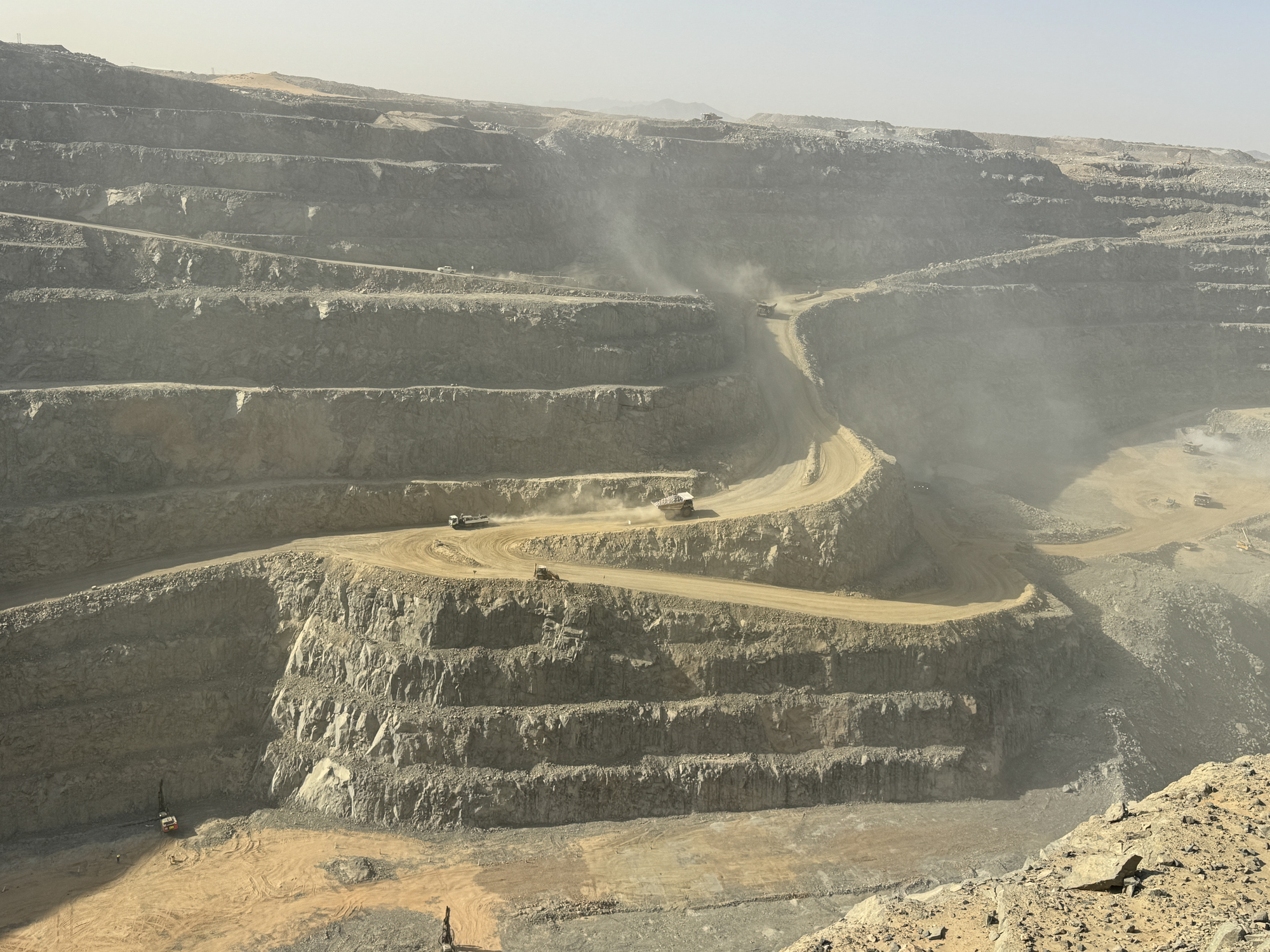
On the global stage, Saudi Arabia is driving industry conversations through international initiatives such as the Future Minerals Forum and active participation in Africa’s Mining Indaba, underscoring its commitment to becoming a key player in the global mining industry.
Building international alliances for transition minerals mining
Saudi Arabia plans to become a world leader in sustainable mining by making strategic use of its own significant reserves of transition minerals. Al-Khorayef has said that “the investments will continue to position the kingdom as a mining production and logistics hub for a region that stretches from Africa to Asia, while also supporting the transformation of our mining sector so it can achieve its potential.”
The kingdom’s comprehensive growth strategy for the mining sector involves significant investments, collaborations, and policy reforms. Recent memoranda of understanding (MoUs) signed with countries like the Democratic Republic of the Congo, Egypt, Morocco and Russia underline Saudi Arabia’s intent to enhance its mining capabilities and infrastructure, thereby influencing the global energy transition. And Turkey and Saudi Arabia have entered into a MoU to collaborate on transition minerals, focusing on knowledge exchange and research related to minerals essential for solar panels and electric vehicles.
Furthermore, Saudi Arabia’s global involvement includes not just formal agreements but also direct investments in prominent mining companies. Most recently, the kingdom secured a 10 percent stake in Brazilian mining company Vale Base Metals, demonstrating its approach to investing in the worldwide mining industry by acquiring equity.
With this strategic pivot Saudia Arabian authorities not only aim to diversify the country’s economy but also to secure its role in the new geopolitical alignments around transition minerals. As the global energy landscape shifts toward sustainable sources, the kingdom’s leaders are keenly aware of the necessity to adapt without losing longstanding influence in the energy market.
Challenges and opportunities in Saudi Arabia’s mining ambitions
With its ambitious mining objectives Saudi Arabia faces both domestic and international constraints that officials must solve to maximize industry potential.
Domestically, the country still requires specialized infrastructure tailored to support large-scale mining operations, particularly in remote desert regions. Additionally, the kingdom must invest in education and training programs to develop a workforce skilled in advanced mining techniques and technologies.
Water scarcity in the desert areas poses a significant challenge, as limited water resources complicate mining operations and increase costs. To address these issues, Saudi Arabia needs to explore innovative water management solutions such as desalination and water recycling, specifically designed for mining activities. Furthermore, given the potential environmental impact of mining—such as land degradation, water contamination, and biodiversity loss, the country should implement and enforce rigorous environmental standards to ensure sustainable and responsible mining practices.
The mining industry in Saudi Arabia offers a large array of opportunities. There is great potential for economic expansion in the kingdom because of its substantial transition mineral reserves, which include unexplored amounts of phosphate, copper and rare earth elements. Because of its advantageous position, Saudi Arabia is able to access to important markets in Europe, Asia, and Africa, which serves as a competitive advantage. The government’s dedication to establishing a favorable investment climate, via the implementation of transparent regulations and incentives, is attracting investors from other countries and supporting growth inside the country. However, it is imperative that Saudi Arabia places a high priority on openness in international contracts in order to foster confidence, further benefit producer countries and entice global investment.
Internationally, Saudi Arabia faces challenges linked to geopolitical dynamics and competition in the mining industry, requiring strategic diplomacy to secure lasting partnerships in a shifting global economy. As Saudi investments, particularly in Africa and other lower- and middle-income countries, expand, the kingdom must ensure these ventures are mutually beneficial. This means developing long-term relationships that provide tangible benefits to host governments and communities, such as fair revenue-sharing, infrastructure investment, and skills transfer. By committing to transparent and equitable partnerships, Saudi Arabia can strengthen its role as a responsible global actor, ensuring its investments align with its mining objectives while also promoting sustainable growth in host countries.
How can producing countries navigate Gulf mining investments?
Explore insights from NRGI experts on the impact of Saudi and UAE investments.
UN unveils international guidance for mining critical minerals
Human rights must be “at the core” of mining for transition minerals, UN panel says
Power to the People: Perspectives on Nigeria’s Energy Transition Plan

Nigeria’s economy is the largest in Sub-Saharan Africa, with vast natural resources including oil and the continent’s largest gas reserves. However, according to the International Energy Agency, over 140 million Nigerians—70 percent of the country’s population—lack access to energy. In response, the government of Nigeria aims to achieve universal energy access by 2030 and is implementing several policies and initiatives to increase access to clean and affordable energy for its citizens. But how can the government achieve this ambitious goal?
“Empowering communities with reliable and affordable energy is not just a necessity; it is a catalyst for socio-economic progress. It fuels education, healthcare, and economic activities, paving the way for sustainable development” says Enebi Opaluwa, a senior research and policy analyst at BudgIT Nigeria, and a participant in the 2023 edition of the advanced course “Natural Resource Governance and Energy Transition: Policies and Practice”, co-organized by NRGI and the NADEL Center for Development and Cooperation at ETH Zurich. (The 2024 edition starts next week.)
After the course took place, we spoke with Nigerian participants, most of whom chose to focus on maximizing community benefits and managing diversification during the course. By enrolling in this path, participants learned about policies to enhance citizen engagement and mitigate socioeconomic impacts and conflicts related to extraction. They also studied tools for managing revenue distribution at the national and subnational levels, and the implementation of local content policies and national and local development plans.
A financing gap and changing regulations
“In Nigeria, many of the current policies and efforts to increase energy access are directed toward ensuring increased access to electricity for clean cooking, clean sources of energy, and energy transport, but there are gaps and barriers that prevent these policies from achieving their goal, including affordability, cultural factors and financing,” says Opaluwa.
“Financing is a key issue,” agreed Agwu Ojowu, a senior consultant for Africa Practice. He points out that the Nigerian government faces financial constraints in investing in the necessary energy and infrastructure system for delivering energy from new sources to citizens. The challenge is exacerbated in highly regulated markets, where existing providers discourage private investment needed for cleaner energy sources. Excessive regulation and market capture dynamics make it difficult for new players to enter these markets, posing obstacles to the introduction of more sustainable energy solutions
In response to this challenge, the Nigerian government passed a constitutional reform bill that allows individual states within the country to supply electricity, breaking the monopoly of the federal government over power provision. State governments can now independently explore the electricity generation business and transmit and distribute electricity in areas covered by the national grid and in remote areas. “This dually regulated system is less convoluted and allows the government to,” says Ojowu. This new process and innovation must be managed appropriately, with strong frameworks to build the capacity of states to manage this new development, the participants agreed.
In alignment with the participant’s perspective on the recent bill empowering individual states to supply electricity, the potential for state governments to distribute electricity across the national grid and in remote areas is a notable opportunity. However, Chichi Nwosu, a principal consultant at CRowland, a Nigerian development consultancy, underscores a significant challenge. She points out that the lack of employment opportunities stands as a major barrier, hindering local communities from reaping the benefits of this opportunity. This obstacle is rooted in socioeconomic implications and the unaffordability of social security for these communities. Addressing this employment gap becomes crucial for ensuring that the positive outcomes of the new bill are more inclusive and impactful for local populations.
“Emphasizing community engagement from the outset is paramount for fostering investments and ensuring that policies resonate with and benefit the local population.” - Agwu Ojowu
“Having well-crafted policies and legislation is crucial, and effective implementation is essential. However, without active involvement from local communities during the development stage, the successful implementation and dissemination of these policies become challenging,” explains Ojowu. “Emphasizing community engagement from the outset is paramount for fostering investments and ensuring that policies resonate with and benefit the local population.” Many communities exhibit “cash upfront rent-seeking behavior” whereby they agree to receiving cash handouts at the start of projects taking place locally. He argues that this has prevented local communities from benefiting from extractive projects and playing an active role in the sustainable development of their local economy because it precludes more significant investments in infrastructure, health services that would likely be more beneficial to communities in the long run.
Communities need education on the energy transition
“There is a need to raise awareness and sensitize local communities on the energy transition,” says Kolawole Kolade, a program officer on climate change adaptation and energy accountability at the Paradigm Leadership Support Initiative. Kolade explains that it is essential for government officials and civil society organizations to involve local communities in the decision-making and policy-making processes, so that citizens can actively understand the impact the transition has on the socio-economic development of their communities.
Community and stakeholder awareness is particularly important in the context of Nigeria’s new Energy Transition Plan, explains Nwosu. The plan was developed with the ambitious goal to achieve net-zero emissions in terms of Nigeria’s energy consumption. “This is a bold plan,” says Ojowu. “There is a need to build a climate change awareness culture in Nigeria.” He believes that authorities should include climate change awareness in curricula across all levels of education. He says that citizens across the entire country should be aware of what the climate change adaptation and mitigation measures the government can take—and that they, the citizens, must ensure that these goals are met. Enebi adds that the government should propose and implement education courses and other initiatives (including public hearings and media campaigns) to educate the population on the energy transition and its impacts, both at the national and local level.
Giving communities a role and a voice
“Currently, there is a gap between central and national governments, particularly when it comes to the energy transition agenda,” adds Enebi. He says that the energy transition plan focuses on attracting investments, but it lacks specificity about the federal government’s responsibilities going forward, as well as ways in which local communities can participate in to ensure the plan moves in the right direction.
“Even at the subnational level, relevant actors do not thoroughly understand what their role is in the context of the energy transition and climate change.” - Kolawole Kolade
Enebi suggests that civil society organizations advocate for clearer milestones and ways to measure the plan’s progress. One way government authorities could achieve this could be by incorporating citizen participation in budgetary processes, whereby the government provides citizens with easily digested information around budgeting during the approval and audit stages, so that they can participate and play an active role at the approval stage during public hearings. “This process should be applied to the energy transition plan,” says Enebi.
“Even at the subnational level, relevant actors do not thoroughly understand what their role is in the context of the energy transition and climate change,” says Kolawole. “There is a need at the federal level to create a framework for subnational governments to look into their responsibilities and have a tool to track their progress.” Civil society organizations should drive engagement and bridge the gap between the government and local communities on knowledge gaps around the energy transition plan, he adds.
Environmental concerns
“Environmental injustice should also be an important pillar of the energy transition plan,” says Enebi. “The energy transition will happen, but at the cost of the environment.” The plan should focus on ensuring that this conversation is at the forefront of discussions among Nigeria’s key decision-makers, politicians and local communities. This is particularly important as international oil companies increasingly divest assets to national oil companies leaving extant environmental pollution unremediated, Enebi adds.
Ojowu suggests that while engaging with local communities, the government should prioritize environmental regulation that is inclusive and consultative, fostering economic activities and alternative livelihoods beyond the oil sector. This is key in ensuring that local communities rely to a greater extent on other sectors, such as fishing and other sources of livelihood, so that there is a sustainable future that does not depend on oil or encourage oil pollution.
A unique learning opportunity
Regarding the advanced course itself as a platform to reflect on Nigeria’s challenges and opportunities in the context of the energy transition, participants particularly valued engagement with other participants from all over the world. “The peer-to-peer learning has allowed me to understand the similar challenges that other countries are currently facing,” said Enebi. “This has been very helpful in identifying potential opportunities and solutions.”
Ojuwu particularly enjoyed learning more about the tax and budget aspects of natural resource governance. The technical knowledge provided during the path on local communities allowed Kolade to further explore Nigeria’s gaps when it comes to community engagement tools, and this is something he is excited to continue working on. And Nwosu highlighted the importance of meeting participants who are active in same space, and how this enables them to share knowledge and collectively drive change with the aim of pushing for a just and inclusive energy transition.
The advanced course empowers participants to improve natural resource governance, especially around the energy transition.
Uganda’s Energy Transition Plans Cannot Ignore Women

In 2006 the Ugandan government announced discovery of oil beneath and around Lake Albert, a geological region known as the Albertine Graben. The area’s women hoped that they might be among the local beneficiaries of the boom after the government and oil companies committed to offering them employment opportunities.
Oil production is due to start within the next two years, but so far pre-production activity has brought little economic development to women in the Albertine Graben. Among those yet to see benefits from the area’s intensifying industry are women in Buliisa district, located on the shores of lake Albert.
Impacts on women’s daily lives
As in many extractive projects, the few jobs created have confined women to informal labor, in this case cleaning and road traffic signaling around construction sites.
In an unfortunately common paradox, the fossil fuel project has not even increased energy access for women. The Natural Resource Governance Institute (NRGI) and Buliisa Initiative for Rural Development Organization (BIRUDO) recently interviewed more than 70 community stakeholders in the district to ascertain the challenges to gender equity in Uganda’s energy transition. Their findings reveal that, after oil was discovered, the government took over for oil production much of the land that previously served as a source of firewood. This deprived rural women of fuel for cooking, which the authorities didn’t replace.
While the government compensated affected households, such schemes often favor male recipients. Paolyel Onencan, a gender equity campaigner and co-founder of BIRUDO, noted that “although it was a requirement for government compensation to be paid to a joint account, there was no follow-up to ensure that women received the money when it was finally withdrawn.”
Uganda has made significant progress on addressing gender issues in the oil, gas and mining sectors over the last ten years, for example through enhancement of gender and equity planning and budgeting in the energy and mineral development sector. However, as Uganda defines energy transition plans, the government must further consider the specific needs of women.
Funding green ambitions with black gold
On 5 December 2023, Uganda’s energy minister launched the country’s energy transition plan at the COP28 climate conference. The launch signaled Uganda’s commitment to achieving carbon neutrality by 2050 and ensuring universal access to electricity by 2040.
Yet, as a prospective oil producer, Uganda has framed the transition as one where oil and gas sector revenues will help finance the move toward green energy. With 80 percent of Uganda’s electricity currently coming from hydropower, the government is now committing to use the revenues generated by the oil and gas sector to support wind, solar and sustainable biomass projects to power isolated off-grid communities.
“We are fully focused on ensuring our energy security, so the oil and gas sector, which we are developing in a sustainable way environmentally, will support us in our energy transition plan by providing the required financing,” said Irene Bateebe, permanent secretary of the Ministry of Energy and Mineral Development.
The government has also committed to equity. According to Ali Ssekatawa, director of legal and corporate affairs at the Petroleum Authority of Uganda, the country’s oil and gas projects will not only create economic prosperity but also showcase the country’s commitment to long-term sustainability by putting people and the planet at the forefront.
Ensuring a just transition in Uganda
Last October, NRGI gathered key stakeholders to discuss requirements for a just, people-centered energy transition in Uganda.
This initial engagement, focused specially on gender and just transition, revealed that while Uganda’s energy transition planning contains general assumptions about gender equity, the government has yet to undertake research to highlight the actual challenges for women living in communities where extractives projects are taking place. What the eventual phase-down of oil and gas projects could mean for them remains unknown.
Nor is much known about how clean energy projects could potentially cause harm to women—or serve as a source of empowerment for them. If the government is to design targeted programs that accelerate a just, inclusive and sustainable energy transition in Uganda, officials must first identify and understand gender equity challenges and opportunities.
Based on our convenings and recent research, we recommend:
- Establishing a formal space for inclusive discussion on just transition. The government could establish a working group with representation from civil society and the private sector with the directive to mainstream gender equity in the energy transition. Its work could initially target the national equity guidelines for natural resource management (currently under development by the Ministry of Gender, Labor and Social Development), as well as the National Energy Transition Plan led by the Ministry of Energy and Minerals Development.
- Fostering the participation of women and women organizations in discussions and decisions about energy transition plans and policies. For this, the government must build additional capacities at the national and subnational levels so that officials can better engage in energy transition and gender issues. Such engagement could include encouraging rural women in Uganda to adopt cleaner cooking technologies through support to current initiatives like liquified petroleum gas (LPG) for cooking, spearheaded by the Ministry of Energy and Mineral Development.
- Formulating subnational energy transition plans in oil-rich parts of the country. Such plans, developed with government, would include programs to compensate or support women in informal jobs.
With these recommendations in mind, Ugandan officials can chart an energy future that benefits all members of affected communities.
Uganda’s Oil Refinery: Gauging the Government’s Stake

-
Uganda’s planned oil refinery will have several benefits for the country, including for its security of fuel supply and balance of payments.
-
The refinery could be reasonably profitable, generating an internal rate of return of 13 percent in a baseline scenario.
-
The government is planning to take a 40 percent stake but may ultimately pay a higher price for this equity than it expects. Even if it borrows to cover its upfront contribution to costs, it will need to divert around $330 million in present value terms from the national budget for loan repayments in the 2030s.
-
This price will increase if downside risks, such as cost overruns or lower global oil prices, materialize.
-
The government can take several steps to increase interest from other investors, including by reducing the risk of cost overruns, ensuring deregulated product prices continue, and providing less risky forms of state support such as tax incentives. These should reduce the need for the government to take a large stake.
French supermajor Total and Chinese state oil company CNOOC are currently developing Uganda’s first oil project. As part of this, they are constructing the East Africa Crude Oil Pipeline, which will have the capacity to export 216,000 barrels per day (bpd) of oil. The government is also pursuing construction of a refinery that will process 60,000 bpd when built.
The refinery will have several benefits. It should address Uganda’s problem with fuel supply, with current import routes from Kenyan and Tanzanian ports having suffered several disruptions. Fewer petroleum product imports will reduce the country’s foreign exchange needs. The government hopes that the refinery will also stimulate the birth of a petrochemical industry and generate thousands of jobs.
The key question for the government now is when and how the planned refinery will go ahead, including in relation to its planned equity stake. The government canceled its agreement with the Albertine Graben Refinery Consortium (AGRC), the companies selected to construct and operate the refinery, in June 2023 after AGRC failed to secure sufficient financing within the agreed timeframe. The government has been planning to take an equity stake of up to 40 percent in the refinery through the Uganda National Oil Company (UNOC). But the challenges with AGRC could encourage the government to take an even larger stake to ensure the project proceeds.
There is limited clarity on the price that the government might ultimately pay for its equity stake. To provide further clarity and thereby inform government decision-making, this paper's authors have analyzed the refinery’s economics and the implications for the government stake.
The authors’ modeling suggests that the refinery could be reasonably profitable. With their baseline assumptions, it generates an internal rate of return (IRR) of 13 percent.
With a construction cost of $4.5 billion and assuming debt financing of 70 percent, a government stake of 40 percent requires the government to contribute around $540 million. This is equivalent to about $440 million in present value terms (assuming a real discount rate of 8 percent). Given budgetary constraints, the authors expect that the government will borrow this money to avoid this upfront cost.
But borrowing is not a silver bullet. While UNOC ultimately makes a profit over the lifetime of the refinery in the authors' baseline, the government needs to divert around $330 million in present value terms from the budget to contribute to loan repayments in the 2030s.
The price that the government ultimately pays for a 40 percent stake will be impacted by a range of factors and uncertainties that affect the profitability of refineries. The authors analyzed five factors that will affect the profitability of the Ugandan refinery: construction cost, feedstock volume, global oil price, product prices and regional exports.
The government will pay a very different price to what it expected even if only some of these downside risks materialize. Taking a large equity stake could therefore generate substantial challenges for Uganda.
Given that the refinery will have considerable benefits for Ugandans, the government may decide this is a risk worth taking, and a price worth paying. However, the government may not need to expose the country to this amount of risk. It is unclear whether the failure of AGRC to raise sufficient financing relates to the refinery’s profitability or other reasons, particularly given the refinery is profitable in the authors' baseline. If the government can establish and address the reasons for AGRC’s fundraising failure, other investors may still be willing and able to provide most, if not all, the investment.
In this paper the authors identify several steps that the government can take to increase interest from other investors and thereby reduce the risk that the refinery hinders rather than helps Uganda’s development.
MINDEX: A Deeper Look at the Extractive Wealth of Nations

Sigmund Freud wrote that “it is impossible to escape the impression that people commonly use false standards of measurement.” The case of natural resource wealth measurements is no exception, as these estimations have been plagued by biases, statistical misconceptions and a misleading tendency to lump very different countries together as “resource-rich.”
Improving how we conceptualize, and measure, resource wealth and dependence is central to helping countries decide what role resources should play in their development. Better measurements will also help countries to navigate the global transition toward cleaner energy, which poses threats to some resource producers and creates opportunities for others.
This need led to the recent creation of the Multidimensional Indicator of Extractives-based Development (MINDEX), which provides a new and improved approach to measuring resource wealth and dependence. The MINDEX:
- Distinguishes between resource dependence (i.e., what proportion of key economic indicators comes from the resource sector) and resource (i.e., how rich a country is in natural resources per capita).
- Provides a framework for analyzing six different variables of resource wealth and dependence together, leading to a number of “case scenarios” that describe the role of resources in a country’s economy and the challenges that it may be facing to make the most of them.
- Differentiates between extractive resources, which allows us to see how policy challenges can vary from one extractive commodity to another.
In this post, we draw key lessons from a recent collaboration through which we’ve applied the MINDEX methodology to build profiles for six pilot countries (Algeria, Chile, Colombia, Democratic Republic of the Congo, Mongolia and Nigeria) that shed light on the varying dynamics and challenges countries face in managing their natural resources. (Access the profiles here.)
Challenges of acute mono-resource dependence: Nigeria
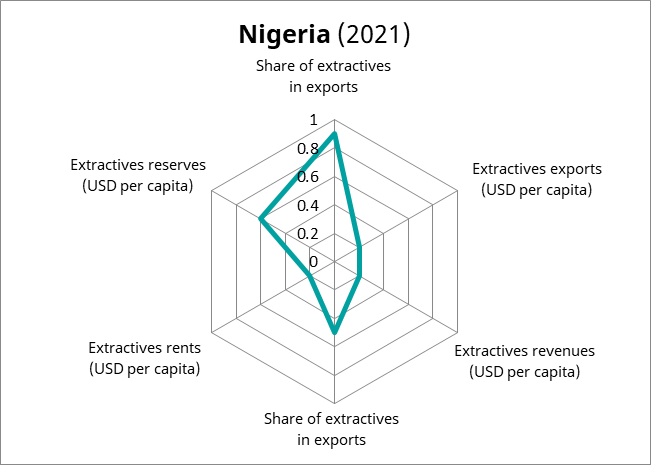
Nigeria ranks as the world’s 12th largest producer of oil and holds the largest natural gas reserves in Africa. Though the country also holds reserves of a variety of minerals (especially iron ore), the mining sector remains nascent, with insignificant contributions to the country’s export basket and fiscal revenues. As of 2021, Nigeria displayed a heavy dependence on oil and gas, but with relatively modest resource production per person, given the country’s large population. As can be seen in the figure below, in per capita terms, Nigeria has low extractive resource production (as approximated by rents), exports, revenues and reserves, but nevertheless a high share of extractives in total exports. Nigeria therefore should shift its focus from simply diversifying within the oil and gas sector to broadening its overall economic landscape. With a large and rapidly increasing population, relying solely on linkage development around oil and gas on e.g., processing oil and gas in-country may not meet diversification needs.
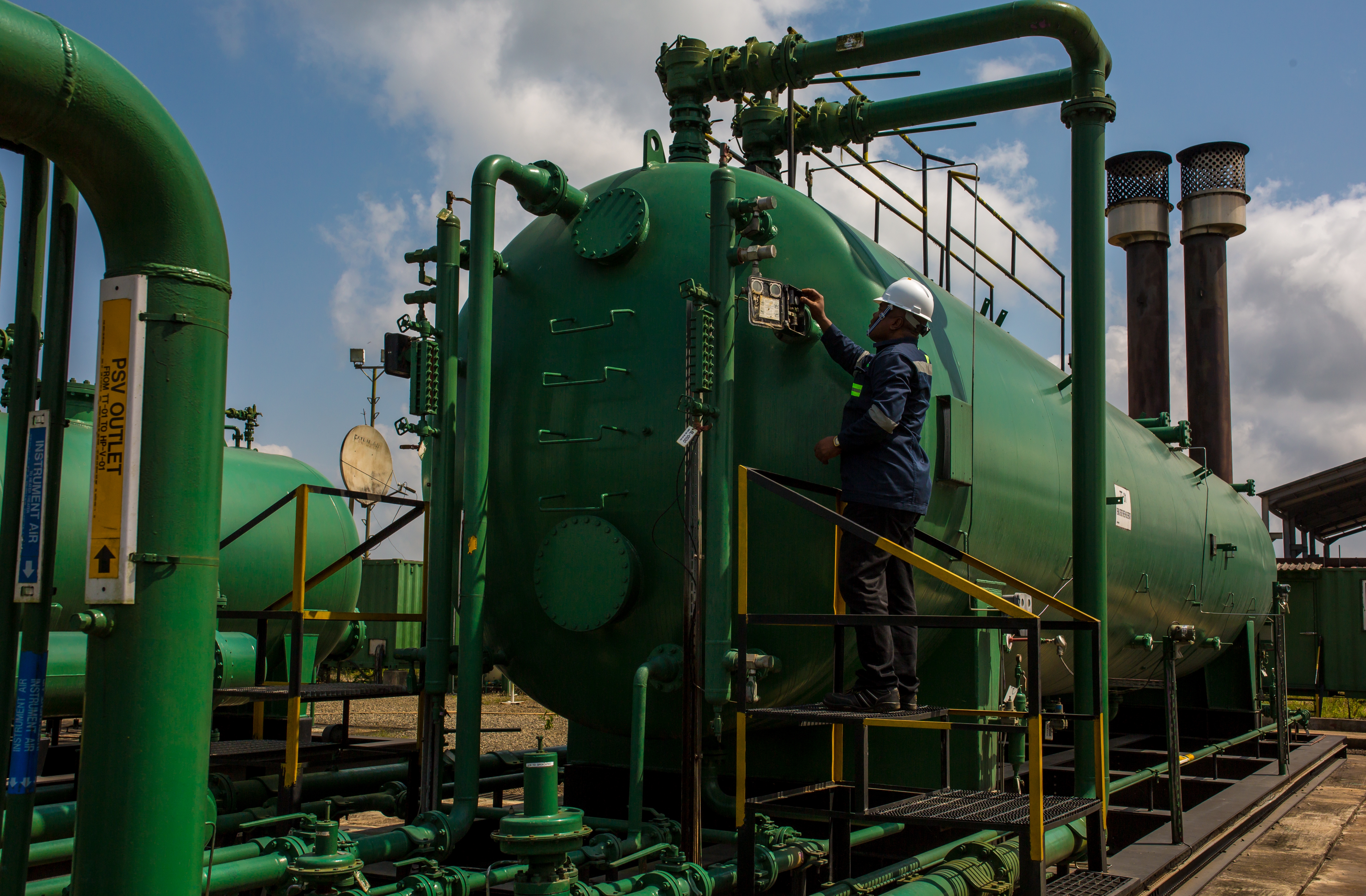
Unlike countries that are dependent on a variety of extractive resources, Nigeria’s over-reliance on oil and gas also exposes the country to severe risks related to the energy transition. Nigeria ranks 3rd globally for the highest carbon intensity in gas production and 22nd for oil. As carbon taxes rise, and consuming firms and investors increasingly prefer oil and gas that was produced with fewer emissions, Nigeria’s dependence on its relatively dirty oil and gas sector puts it in a challenging spot, underscoring the urgency with which government officials and other stakeholders should rethink its resource strategy.
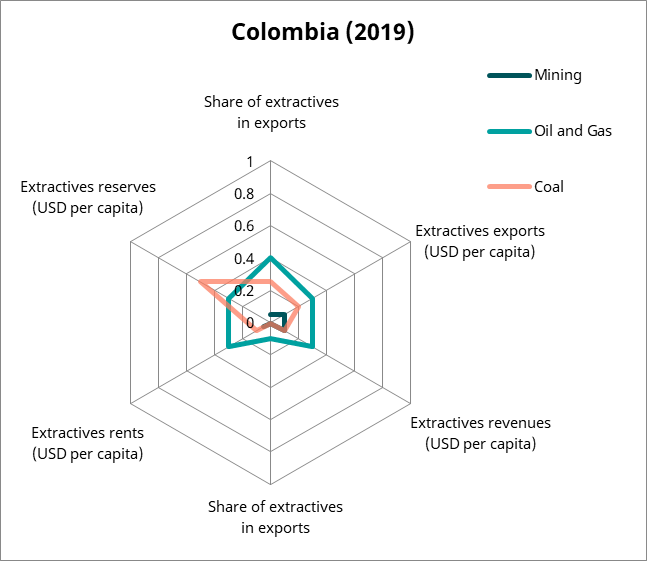
Lessons multi-resource abundance: Colombia and Mongolia
The challenges of resource-based development can be very different across extractive sectors even within the same country. It can therefore be helpful to look at how a country’s resource wealth is divided between different extractive commodities. The cases of Colombia and Mongolia are informative in this regard.
Though Colombia holds and extracts minerals (such as ferronickel and gold), fossil fuels make up the bulk of the country’s extractive resource wealth, with coal reserves estimated to be more valuable (at current prices) than its oil and gas reserves (though coal currently provides a much lower contribution to fiscal revenues and the export basket). Coal is most at risk of becoming a “stranded asset” (i.e., it is no longer commercially viable to produce it), followed by oil. So even though Colombia’s extractive resources are diversified between oil, gas and mining, most of its resource wealth will be threatened by the energy transition to green technologies. This is all the more important because some regions of Colombia depend heavily on coal.
Mongolia is endowed with a variety of extractive reserves, particularly gold, copper, coal and iron ore. Among these, coal is most at risk of becoming a stranded asset due to the energy transition.
Although the graphic below shows that Mongolia’s fossil fuel exports were slightly higher than mining exports (in 2018), the country’s MINDEX scores reveal that the broader economic weight and potential of the non-coal mining sector exceeds that of the country’s fossil fuel industry. Furthermore, Mongolia’s mineral reserves (not including coal) are considerably more valuable than the country’s fossil fuel reserves. In the future, the non-coal mining sector to will likely overtake fossil fuels as a main source of exports, especially as demand for coal declines with the energy transition.
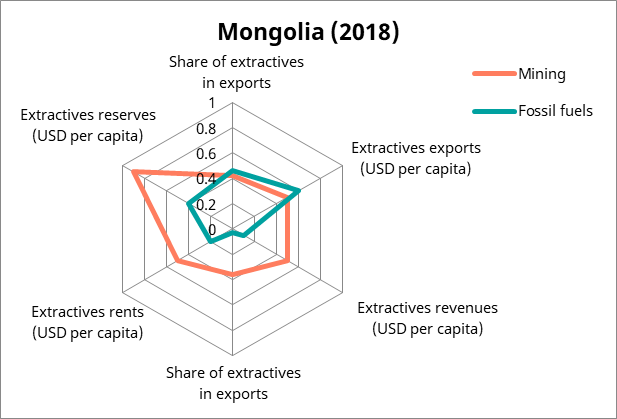
NB: in this figure, coal is classified as a fossil fuel rather than part of the mining sector.
Assessing policy changes amid evolving resource dynamics: Democratic Republic of the Congo
The DRC’s economy is highly dependent on the extractive sector. Extractives account for as much as 99 percent of the country’s exports in some years. Time analysis of the DRC’s MINDEX scores suggest that more resource revenues accrued to the government of DRC in 2014 than in 2010. This could be explained by the efforts from government to encourage more investment in mining, notably through a mining code revision process that began in 2012. However, resource production remains extremely low in comparison to the value of extractive reserves and the level of export dependency on extractives, suggesting that extraction capacity may be limited, or that there could be smuggling of extracted commodities.
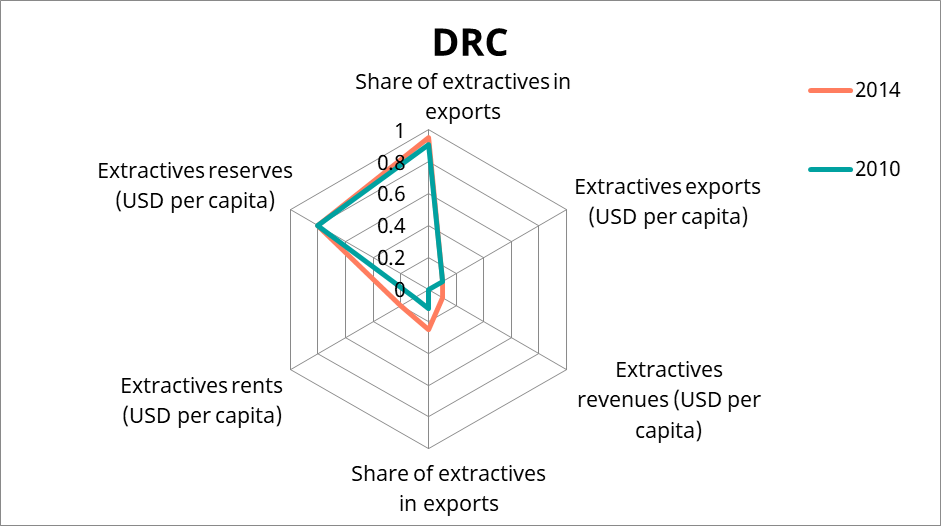
In conclusion, examining the different dimensions of extractives dependency can help us to understand the challenges facing resource-producing countries, and how to address them. The country profiles mentioned above present these kinds of insights, as well as a template for analyzing a country’s resource dependence.
For further information about the MINDEX, consult this published study.