
Life After Oil in Campeche: Youth Must Lead Alternative Paths

In some oil-dependent regions, the decline of hydrocarbons is not being managed strategically. It is being handled reactively, as production falls. Campeche exemplifies this reality, and the resulting uncertainty hits its youngest population especially hard.
Against this backdrop, the Nationally Determined Contributions (NDCs), the state-owned oil company Petróleos Mexicanos (Pemex) and local universities have a fundamental role to play: they must not only address the personal, professional and territorial development needs of young people, but also guarantee their participation in the decisions that directly affect them.
The challenge facing Campeche's young people
Campeche ranks among the three states with the highest dependence on public revenue from carbon-intensive activities, according to the 2025 Subnational Sustainable Finance Index. At the same time, its oil decline is tangible: in 2025, production stood at 801,080 barrels per day, less than half the volume recorded in 2013.
The State Development Plan itself documents a 47% drop in real Gross Domestic Product (GDP) between 2004 and 2022, linked to the decline in oil activity. It also warns that the prolonged recession has had negative effects on employment, tax revenue and investment.
Diversifying the state's economy is therefore a pressing priority.
The pressure on entering the labor market is not a future problem; it is already here. In 2020, the largest age groups in Campeche were concentrated between the ages of 5 and 14. Six years later, part of that demographic is nearing or has already reached working age.
The challenge is not only to create alternatives before the youngest reach the labor market. Planning has to start now, so that those beginning their careers have real opportunities.
Involving young women and men directly is what counters their dissatisfaction. According to the State Development Plan, young people report a 47% satisfaction rate with their surroundings, which underscores the need for actions that build their interests into local decision-making.
In the end, economic alternatives that drive equitable development can emerge only if the effort reaches broad sectors of the population. Young people have to be part of the work that will shape the future of the place they live.
Youth participation as an antidote to political disenchantment
The fact that 48.5% of young people do not feel represented by those holding popularly elected offices in Campeche points to a disconnect between the priorities of a significant portion of this demographic and the political projects being implemented.
That gap raises a key question: How could greater youth involvement in state development planning make sure their visions are better represented?
The willingness to be active participants already exists. Nearly 80% of the children and youth in Campeche who responded to the latest Consulta Infantil y Juvenil (Child and Youth Consultation) believe that exercising their right to participate is important for solving collective problems.
Asking what they want for their community, and how they want to take part, is one of the first steps toward building economic diversification scenarios that distribute benefits equitably and open the way to new realities.
That is why bringing their experiences, hopes and concerns to decision-making spaces is both valuable and necessary.
At NRGI, we support the participation of youth living in oil-producing regions in the Conferences of Youth on Climate Change, spaces organized at the national, regional, and international levels where proposals are generated to influence climate policy in the country, the continent and the world.
The result: for the first time, the National Youth Position includes proposals for just energy transition processes that take the case of these regions into account.
A call to include young people
Various instruments at the international, national and local levels can open space for young people to take part in energy transition planning and shape it.
At the international level, the NDC offers a significant window of opportunity.
Although these are national implementation plans, international climate negotiations include mechanisms that allow for transparent monitoring of their progress within the framework of the commitment to global goals.
These transparency exercises offer an international route for tracking the measures countries adopt, especially measures that both require youth participation and stand to gain from it.
Mexico, in its most recent update, incorporated a cross-cutting component on intergenerational justice and a just transition toward a sustainable economy. Among the measures included are the promotion of intergenerational dialogue spaces and taking future generations into account in present-day decisions.
Both can support the energy transition, particularly in decisions about new investment projects in oil-producing states.
Likewise, the NDC includes the development of a National Labor Transition Plan, which contains a strategy to generate decent green jobs in key sectors. That strategy has to reach young people in the Gulf states directly, so they can access the job-placement support necessary to develop professionally in their own state, beyond the oil industry.
At the national level, then, key energy sector players such as the Ministry of Energy and Pemex need to be at the table.
In general terms, and without specifying sectors, the NDC proposes to promote training and workforce retraining and redeployment in the most polluting industries.
In line with this measure, Pemex can also play a significant role by incorporating proactive labor transition planning through retraining programs that prepare its workers for emerging sectors, deliberately including women and young people. Furthermore, Pemex's opening toward new business lines related to the energy transition could be a way to incorporate young local talent from these states. To do this, the company could act as an ally in building training and industry-linkage programs, always designed and implemented with youth participation.
At the subnational level, local universities play a strategic role. On the one hand, they are the primary training ground for the talent available in these states. Their degree programs must adapt to respond to major local challenges, such as the oil decline.
The Technological University of Campeche is already doing this, recognizing the need to update its degree programs to align them with the new demands of the region. On the other hand, universities can play a key role in identifying new areas of economic development that align with local capacities and needs, generating evidence on key issues and facilitating coordination among stakeholders for decision-making.
In both roles, they can become spaces where young people organize and collectively influence the direction of the energy transition, beyond just job opportunities.
NRGI recognizes that there is not one energy transition but many, and that each region experiences them differently depending on its economic, political and social realities. In oil regions like Campeche, the oil decline is already a reality that demands a rethinking of resource governance at the subnational level.
As part of our 20th anniversary, under the motto "Transforming Governance for a New Era," we are committed to ensuring that youth and the range of actors in these states—subnational governments, universities, and more—participate in decisions about their future. No transition will be just if it is decided without them.
NRGI at LCOY Mexico: Elevating Youth Voices From Oil-Dependent Regions for a Just Transition

What does the energy transition mean for young people living in Mexico's oil heartland? This question was a central theme of discussion at the 2025 Local Conference of the Youth (LCOY) Mexico 2025.
This national forum, which brought together over 300 young people from 29 states, served as a platform to hear the testimonies of youth from Campeche, Veracruz and Tabasco. As a co-organizer of the event held at the National Autonomous University of Mexico (UNAM), Natural Resource Governance Institute (NRGI) ensured that these perspectives were heard and integrated into action proposals toward energy transformation.
In a workshop facilitated by NRGI, these young people shared their realities and visions firsthand. They spoke about the challenges of imagining a future beyond hydrocarbons, but also about the opportunity to become agents of a just and inclusive change. Their testimonies went beyond local dialogue and were formally integrated into the National Youth Climate Statement.
That document, which includes 64 concrete proposals on energy transition, emerged from the LCOY discussions organized under the framework of YOUNGO (the official children and youth constituency of the UNFCCC). It will feed into global discussion through the Global Youth Statement leading up to COP30. The narrative it advances is not only about phasing out fossil fuels; but about how to do it justly, integrating the voices of those who live in Mexico's most oil-dependent communities.
Why the voices of youth from oil-dependent regions matter
To avoid climate catastrophe, the world must transition to clean energy and progressively abandon fossil fuels. However, this transition will only be just if it includes communities historically dependent on oil and guarantees sustainable alternatives for their economies, jobs, and energy security.
In this context, Brenda Rodríguez Orea and Julián Martínez (NRGI) co-led the Just Transitions working group at LCOY. They facilitated a workshop analyzing how Mexico’s oil legacy shapes the current and future challenges of producing regions, placing youth voices from these territories at the center.
Stories and challenges
With the participation of 33 young people from diverse geographic and social backgrounds, the workshop focused on key questions for the youth from Campeche, Tabasco and Veracruz. The discussion revolved around three key questions:
- How has the oil industry been present in your lives?
- Which aspects of the energy sector need more visibility because of their impact on communities?
- What topics should be central to the national debates on the energy transition?
Three main outcomes from the workshop:
- Empathetic connection and collective awareness. Youth from across the country understood the motivations, economic impact, and socio-environmental risks faced by their peers in oil regions, delving into the factors that influence their professional decisions, personal lives, and visions for territorial development.
- Strengthening advocacy capacity. For youth from Campeche, Veracruz, and Tabasco, participating in this type of national event was an opportunity to connect, learn and collaborate. LCOY allowed them to discover new visions, build alliances to influence the climate agenda, and recognize the importance of their direct involvement in these discussions.
- Identification of common and regional challenges. By contrasting realities across states and communities, participants enriched their perspectives on issues such as the differentiated impacts of power generation, barriers to energy access, pollution, and the need for transitions that reduce coastal vulnerability.
“It is necessary to decentralize the discussion on the energy transition; we must bring the voices of the youth from the Gulf of Mexico to the table, understand their concerns, the complexities of their economies, what they want to change, and what mistakes should not be repeated on the path to other energy sources.” — Brenda Rodríguez Orea, NRGI Program Associate for Mexico.

From ideas to action: proposals for COP30
The discussions facilitated by NRGI led to 64 concrete proposals on energy transition, including on a dedicated section on oil-producing regions. These recommendations addressed education, employment, environmental restoration, and social security in the context of the transition.
All these recommendations were integrated into the National Youth Climate Statement, which was submitted for consideration in the Global Youth Statement leading up to COP30.
Highlights included
- Transforming academic programs in oil-producing states toward areas like marine biology, renewable energy, tourism, social sciences, innovation and technology, recognizing the potential of alternative sectors for youth employment.
- Fostering interdisciplinary collaboration in universities (e.g., between law and engineering) to design plans for responsible phase-out and socio-environmental restoration.
- Investing in alternative economic activities aligned with territorial and cultural capabilities, such as ecotourism, agroecology, sustainable fishing, waste management, and ecological restoration.
- Providing free training and financial support to workers transitioning from the oil industry to other sectors.
- Restoring ecosystems from a comprehensive vision that considers both biotic and abiotic components.
- Requiring companies to finance the repair of damages caused by their activities and guarantee the responsible closure of their infrastructure.
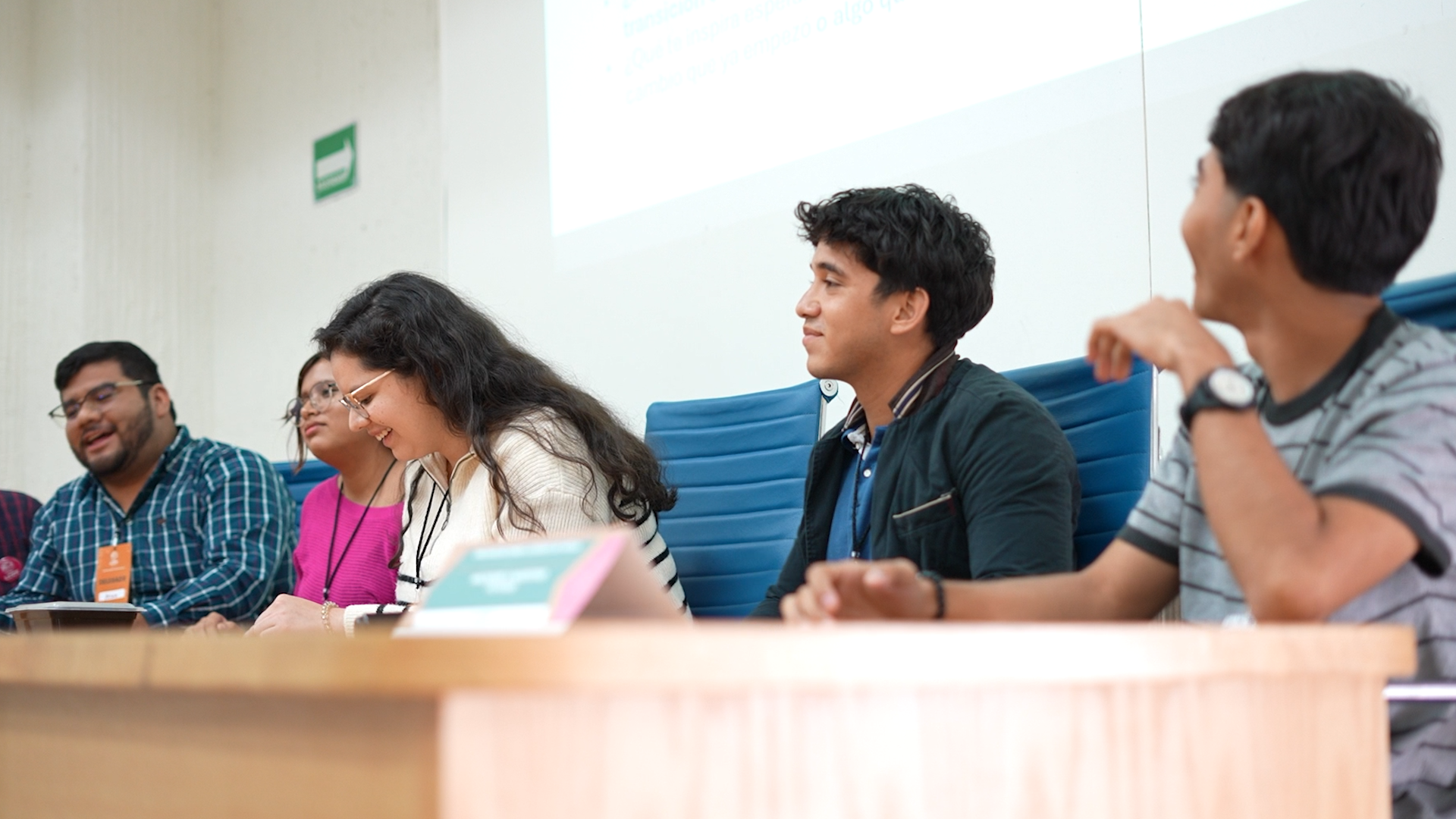
“A just energy transition must guarantee tangible and equitable benefits, as well as adequate compensation for everyone involved.” — Julián Martínez, NRGI Consultant for Mexico.
Next Steps
NRGI will soon publish the testimonies of the youth who participated in the workshop.
We will also seek to promote the proposals from youth in oil-producing regions at the Global Conference of Children and Youth on Climate Change (COY20), which will be held in November ahead of COP30 in Brazil.
Regional Dialogue on Mineral Supply Chains (IGF Annual Meeting)

Part of the 20th IGF Annual General Meeting (AGM), themed Redefining Mining: Balancing the Need for Minerals with Protecting People and the Planet, this session included speakers from three major global mining regions to discuss regional initiatives to strengthen mineral supply chains. Panelists considered efforts to collaborate across regions regarding areas of common interest.
Moderator
- Oluwatoyin Ojo, Senior Legal Counsel and Head of Partnerships, ALSF
Speakers
- Maureen Coulas, Deputy Director, Lands and Minerals Sector, Natural Resources Canada
- Jean Marie Kanda Ntumba, Board Member, Congolese Battery Council
- Thomas Scurfield, Africa Senior Economic Analyst, NRGI
Featuring NRGI's

Thomas Scurfield
Senior Economic Analyst
Mining Revenues Flow to Provinces and Communities in the DRC
In 2002, the Democratic Republic of Congo (DRC) adopted a mining code offering generous terms to investors to attract them to the country’s post-conflict environment. Investment indeed soared, but government revenues and local benefits did not—there was an urgent need to reform the code to decrease this disparity.
In 2011, NRGI provided a grant to the civil society organization POM to reform the code. POM then led advocacy to add a mechanism mandating that a fixed percentage of mining companies’ revenues go directly to subnational governments and local communities. POM also successfully pushed for a community development fund.
Parliament passed revisions in March 2018. The regulation was published in June 2019, and companies have begun payments to communities. The provincial governments of Haut-Katanga and Lualaba are projected to receive between USD 75 million and 225 million in annual revenue, while local communities will receive between 45 million and 157 million. Every province has received some money already. The sector head in Luilu said “With the first collections of our part of the mining royalty, we have already built some community facilities: a pediatric and a maternity ward at the Luilu Health Center, but also a well-equipped mortuary.”
Many communities still lack capacity to receive transfers, while others don’t have the infrastructure to ensure the money benefits citizens. NRGI is measuring the impact of transfers on communities and facilitating a manual to help communities budget, develop capacity and develop revenue management standards.
Fiscal Sustainability in Mongolia in 2018
The authors of this report analyze Mongolia’s public finance outlook and risks to the country’s economic sustainability using an advanced macro-fiscal model.
Though Mongolia’s fiscal solvency challenges seem resolved for now, the underlying problem of fiscal sustainability remains. The government continues to carry a high level of debt and is very dependent on commodity revenues. Until debt stabilizes, the authors suggest that the Mongolian government should prioritize debt reduction rather than focus on increasing the balances of the Fiscal Stability Fund and Future Heritage Fund.
They also recommend that the government continue with reforms directed at improving fiscal discipline; make budget revenue projections with more caution in order to stabilize expenditure; and continue with the current fiscal consolidation model and comply with fiscal rules in order to prepare for negative mining shocks.
Reaching Wider Populations with Global Online Courses
The Challenge
Despite the critical relevance of natural resources to millions of peoples’ lives, most citizens of resource-rich countries have limited knowledge about how resources are governed. To address this knowledge gap, the Natural Resource Governance Institute (NRGI) developed two online training tools aimed at generating critical awareness and building technical knowledge about core resource governance issues. The first tool is a massive open online course (MOOC), “Natural Resources for Sustainable Development: The Fundamentals of Oil, Gas and Mining Governance.” The second is an online simulation called “Petronia,” named for an imaginary oil-rich country.
NRGI’s role
NRGI’s MOOC is a 12-week online course (produced in partnership with the Columbia Center on Sustainable Investment, the Sustainable Development Goals Academy and the World Bank) that provides a structured curriculum for those interested in learning about natural resource governance. Modules cover a wide range of topics, including legal and regulatory frameworks as well as environmental and social impacts. Participants audit university-quality lectures; engage in comparative analyses of their country contexts on a discussion board; pose questions then answered by faculty; and receive accreditation upon satisfactory course completion.

Aimed at a broader audience, Petronia is a simulated learning experience that allows online learners to explore the policy challenges of a fictional developing country that has just begun oil production. The learner joins a team of experts deployed to Petronia to advise policy-makers on a series of complex resource governance scenarios (based on models and case studies developed by NRGI experts). Learners explore various topics, including contract transparency and risk tolerance. Petronia’s animated graphics, presentation of technical content via brief conversational formats and interactive challenges are all designed to appeal to younger audiences who possess limited background knowledge of resource governance.
Impact
Within just four months of Petronia’s launch in June 2018, more than 5,000 learners have logged on, of whom nearly 400 have moved beyond the first mission. By mid-2018, more than 16,000 learners had enrolled in the MOOC.
These tools are reaching a wide range of learners. By providing them online at no cost, NRGI is increasing educational opportunities for learners who would be unable to attend formal in-person training. Women constitute approximately 40 percent of MOOC participants. Around 30 percent of MOOC participants originate from private sector entities (including extractive sector corporations). Online learning has been particularly successful in introducing younger people to natural resource governance issues—a majority of Petronia survey respondents fall within the 25-34 age range.
NRGI’s online offerings have allowed NRGI to reach individuals in over 140 countries/territories, including many places where NRGI doesn’t otherwise operate. A geoscientist from Somalia’s Ministry of Petroleum and Mineral Resources who completed the Petronia simulation remarked that “the discussed issues and options on natural resource governance has been very crucial and gave me a solid understanding of this sector.”
The principles of good governance that underpin the content of both the MOOC and Petronia are informing the work of other development organizations. For example, an independent expert assisting the United Nations Development Programme (UNDP) used course materials to inform the development of a UNDP capacity building program on sustainable development in Central Asia.
The courses have also helped to raise awareness of diagnostic and analytical tools and catalyze action. After completing the MOOC, a member from Union Minière du Gabon, a private sector alliance of around 20 companies in Gabon, learned about the Resource Governance Index (RGI), an NRGI tool that measures the quality of resource governance in 81 countries. He reached out to NRGI to discuss the role of the private sector in fostering transparency and accountability in Gabon.
Both the MOOC and Petronia have become key tools for building a broader and more foundational understanding of issues that are critical to good natural resource governance. Diverse participants are gaining knowledge that can help them make a difference in their professional roles, or simply as informed citizens. NRGI will continue to explore how to maximize these tools’ impact as it refines both the MOOC and Petronia.
Ghana’s Gold Mining Revenues: An Analysis of Company Disclosures
In Ghana the majority of international mining companies, including Asanko Gold, Golden Star Resources, Endeavour Mining, Kinross Gold, Perseus Mining and Xtra-Gold Resources, have disclosed payments-to-governments reports under the Extractive Sector Transparency Measures Act (ESTMA) in Canada. In addition Gold Fields, AngloGold Ashanti and Newmont Mining have made voluntary disclosures regarding the payments they make to the Ghanaian government.
With the introduction of the Extractive Sector Transparency Measures Act (ESTMA), extractive companies incorporated or listed in Canada are now required to disclose their payments-to-government entities. These newly released payments-to-governments reports provide timely information on the payments mining and oil and gas companies make to government entities. Companies must categorize payments into one of seven payment types, such as taxes and royalties. They must also report which government entity receives the payment, and must break down the payment data by project, where applicable.
Focusing on the gold sector, the aim of this briefing is to explore ways company disclosures can be used by government, civil society, media and other oversight actors to better understand the revenues generated within Ghana’s gold sector and use this new data source as an accountability tool within the country.
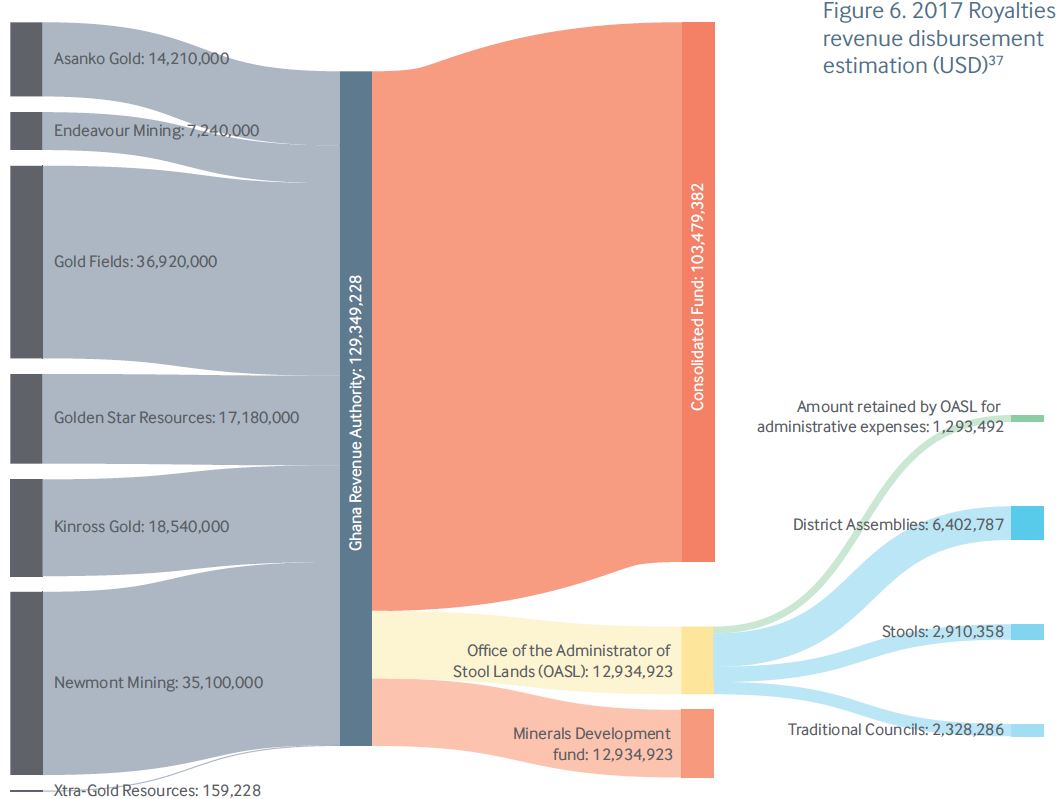
The dataset used for the analysis in this briefing has been made available on Resourcedata.org and the payments-to-governments data covered in this briefing are available on ResourceProjects.org.
Local Level Agreements in Mongolia’s Resource Sector: Lessons Learned and the Way Forward
Formal agreements between resource companies and subnational or local level stakeholders affected by company projects, or local level agreements (LLAs), are becoming an important mechanism for increasing benefits for local communities and minimizing or avoiding conflicts in many countries. The main objectives of this policy paper are to assess Mongolia’s experience with LLAs to date, identify gaps and opportunities, and recommend policy responses to improve existing regulation and agreement-making in practice.
Key policy recommendations
-
Prioritize mining projects and reduce the number of resource projects required to establish LLAs
Implementation of the LLA requirement can be optimized by defining thresholds for resource development projects to establish LLAs. -
Incentivize the establishment of LLAs
Linkages back to the project approval process can be created to motivate mining companies to engage and establish agreements with “host” local governments and communities. -
Clarify enforcement of the model agreement
The model agreement needs to be revised and defined as a hybrid document consisting of a mandatory framework that defines the core elements of an LLA and a non-binding guidance document on potential agreement processes and content that local governments and mining companies can adjust to their needs and contexts. -
Develop and implement capacity-building programs
Comprehensive capacity-building programs on local level agreement-making need to be developed and implemented countrywide. -
Support local civil society organizations to monitor implementation of LLAs
The monitoring projects prove that independent third parties can play an important role in identifying gaps in implementation and opportunities for improvement of both individual LLAs and the overarching legal and policy frameworks for LLAs.
Subnational Revenue Sharing in the DRC after Découpage: Four Recommendations for Better Governance
Developing a Strong Mining Divestment Rule in Indonesia
As in many countries, the Indonesian government wishes to establish greater sovereignty over the country’s mineral resources. However, the government has so far struggled to realize a policy that works for both the country and investors. The key part of government efforts to exert greater sovereignty over the mining sector is the “divestment rule,” which mandates that foreign mining companies divest increasing portions of equity to Indonesian government authorities, state-owned enterprises and companies.
This policy paper evaluates costs and benefits of the divestment rule for Indonesia and provides eight recommendations to the government:
Recommendation 1: Consider eliminating the divestment rule and explore other approaches to a state-led mining sector.
Recommendation 2: Limit government purchases of mining equity and limit how public funds are used to finance state-owned enterprise investments.
Recommendation 3: Reduce the 51 percent requirement.
Recommendation 4: Establish clearer rules for negotiation and auction processes, and designate a third party to administer the processes.
Recommendation 5: Require companies that buy mining equity to publicly disclose their beneficial owners.
Recommendation 6: Allow companies the option to sell via an initial public offering.
Recommendation 7: Reconsider and further define the approach to valuing equity.
Recommendation 8: Develop a policy to manage mining state-owned enterprises.