
How Close is Africa to Real Regional and Continental Integration? (Mining Indaba)
Sahara Stage (CTICC2 - Level 2), Cape Town International Convention Centre

As global interest in Africa’s critical minerals grows, so does the opportunity for collective action on value addition and beneficiation. Yet meaningful integration remains elusive. What tangible progress has been made toward regional and continental cohesion, and can Africa overcome the structural, political, and logistical barriers that continue to fragment its economic power?
This ministerial panel will take a close look at what regional and continental integration actually looks like in practice for Africa today, moving beyond commitments on paper to assess concrete progress on coordination, shared infrastructure, trade rules and industrial policy.
It will examine how far initiatives such as regional economic communities and the AfCFTA have gone in supporting cross-border value chains for critical minerals, where they are falling short, and what lessons can be drawn from early experiments in regional processing, joint infrastructure and policy harmonization.
Speakers
- Hon. Emmanuel Armah-Kofi Buah, Minister of Lands & Natural Resources, Republic of Ghana
- Hon. Oladele Henry Alake, Minister of Solid Minerals Development, Nigeria
- Suneeta Kaimal, President and CEO, NRGI (Moderator)
- Hon. Hassan Ali Joho, Cabinet Secretary for Mining, Kenya
- Hon. Losuba Ludoru Wongo, Minister of Mining, Republic of South Sudan
Featuring NRGI's

Suneeta Kaimal
President and Chief Executive Officer, NRGI Governing Board ex officio
Notes
-
1
Mixed hydroxide product is primarily produced from laterite (limonite) ores using high-pressure acid leaching.
-
2
For example, copper oxide ore is often processed into copper cathode using hydrometallurgy at or near the mine site. Copper sulfide ore, on the other hand, is processed using pyrometallurgy, with the location of the smelter depending on a range of factors.
-
3
Governments should also consider requiring companies to conduct feasibility studies for mines that are already operating. However, if a company has already committed to exporting most of the production through long-term off-take or mineral or royalty streaming agreements, this may not be worthwhile.
-
4
Companies (along with development partners) could contribute to a basket fund, and a third party or multi-stakeholder panel would oversee the hiring of the feasibility study contractor from a roster of independent, accredited consultants. An example of this scheme in relation to environmental assessments is the Environmental Service of Salzburg (ESS), which is a joint initiative of the local government of Salzburg, the Chamber of Commerce of Salzburg, the Austrian Federal Ministry of Agriculture, Forestry, Environment and Water Management, and the Salzburg utility provider. ESS maintains and selects from a roster of independent, accredited consultants to perform environmental consultancies: https://developmentcorridors.org/wp-content/uploads/2023/06/Chapter-03-1.pdf
-
5
ICMM members have also committed to comply with the objectives of legally designated protected areas.
-
6
ICMM members have also committed to comply with the objectives of legally designated protected areas.
-
7
Some types of tax incentives carry a higher risk of significantly reducing government revenue than others. For example, corporate income tax holidays can lead to greater revenue loss than expected, as companies may adjust their operations to frontload profits and take fuller advantage of the incentive. Recent changes to international tax rules, including the establishment of a global minimum effective corporate tax rate, will also diminish the effectiveness of such profit-based incentives. See: https://www.igfmining.org/resource/tax-incentives-in-mining-minimising-risks-to-revenue/, https://www.oecd-ilibrary.org/taxation/tax-incentives-and-the-global-minimum-corporate-tax_25d30b96-en
-
8
Planning and effectively implementing shared use infrastructure is complex. However, successful examples exist. Vale developed a railway for its iron ore mine in Brazil that is also used by other freight and passengers. In Ghana, an aluminum smelter served as the anchor customer that enabled construction of a large hydropower dam in the 1970s that also supplies power to the national grid. The Lobito railway corridor, that will connect an Angolan port to mining activity in DRC and possibly also in Zambia and Tanzania, will hopefully provide further proof of concept.
-
9
The Feminist Natural Resource Governance Agenda, which NRGI co-developed, sets out 18 policy imperatives, including on participation in the workforce and revenue sharing, for centering the leadership and lived realities of women and frontline communities in natural resource governance: https://pwyp.org/feminist-natural-resource-governance-agenda/
-
10
Beyond the more specific risks mentioned in this section, other "classic" mining corruption risks exist for value addition projects: for example, in relation to the monitoring of operations, revenue collection, revenue management and state-owned enterprises.
-
11
For example, Mercedes-Benz has declared they are ready to invest in mining and Tesla has partnered with a nickel mine in New Caledonia. See https://www.reuters.com/business/autos-transportation/mercedes-benz-is-able-willing-invest-capital-mining-ceo-2023-03-30/, https://www.bbc.com/news/business-56288781
Unlocking Africa’s Green Growth: Policy and Investment Pathways to 2035 (COP30)
COP30 Presidency Pavilion (Axis 1)

This session explores how renewable energy can power Africa’s green industrialization and economic transformation. It will bring together policymakers, industry leaders, investors, and civil society actors to examine the enabling conditions needed to expand renewable deployment, strengthen value chains and accelerate the shift toward cleaner, more inclusive growth.
Discussions will highlight practical pathways for localizing technology and manufacturing, mobilizing finance for renewable infrastructure, and ensuring that Africa’s energy transition supports jobs, skills development, and community benefits.
Featuring NRGI's

Tengi George-Ikoli
Nigeria Country Manager
Notes
-
1
Mixed hydroxide product is primarily produced from laterite (limonite) ores using high-pressure acid leaching.
-
2
For example, copper oxide ore is often processed into copper cathode using hydrometallurgy at or near the mine site. Copper sulfide ore, on the other hand, is processed using pyrometallurgy, with the location of the smelter depending on a range of factors.
-
3
Governments should also consider requiring companies to conduct feasibility studies for mines that are already operating. However, if a company has already committed to exporting most of the production through long-term off-take or mineral or royalty streaming agreements, this may not be worthwhile.
-
4
Companies (along with development partners) could contribute to a basket fund, and a third party or multi-stakeholder panel would oversee the hiring of the feasibility study contractor from a roster of independent, accredited consultants. An example of this scheme in relation to environmental assessments is the Environmental Service of Salzburg (ESS), which is a joint initiative of the local government of Salzburg, the Chamber of Commerce of Salzburg, the Austrian Federal Ministry of Agriculture, Forestry, Environment and Water Management, and the Salzburg utility provider. ESS maintains and selects from a roster of independent, accredited consultants to perform environmental consultancies: https://developmentcorridors.org/wp-content/uploads/2023/06/Chapter-03-1.pdf
-
5
ICMM members have also committed to comply with the objectives of legally designated protected areas.
-
6
ICMM members have also committed to comply with the objectives of legally designated protected areas.
-
7
Some types of tax incentives carry a higher risk of significantly reducing government revenue than others. For example, corporate income tax holidays can lead to greater revenue loss than expected, as companies may adjust their operations to frontload profits and take fuller advantage of the incentive. Recent changes to international tax rules, including the establishment of a global minimum effective corporate tax rate, will also diminish the effectiveness of such profit-based incentives. See: https://www.igfmining.org/resource/tax-incentives-in-mining-minimising-risks-to-revenue/, https://www.oecd-ilibrary.org/taxation/tax-incentives-and-the-global-minimum-corporate-tax_25d30b96-en
-
8
Planning and effectively implementing shared use infrastructure is complex. However, successful examples exist. Vale developed a railway for its iron ore mine in Brazil that is also used by other freight and passengers. In Ghana, an aluminum smelter served as the anchor customer that enabled construction of a large hydropower dam in the 1970s that also supplies power to the national grid. The Lobito railway corridor, that will connect an Angolan port to mining activity in DRC and possibly also in Zambia and Tanzania, will hopefully provide further proof of concept.
-
9
The Feminist Natural Resource Governance Agenda, which NRGI co-developed, sets out 18 policy imperatives, including on participation in the workforce and revenue sharing, for centering the leadership and lived realities of women and frontline communities in natural resource governance: https://pwyp.org/feminist-natural-resource-governance-agenda/
-
10
Beyond the more specific risks mentioned in this section, other "classic" mining corruption risks exist for value addition projects: for example, in relation to the monitoring of operations, revenue collection, revenue management and state-owned enterprises.
-
11
For example, Mercedes-Benz has declared they are ready to invest in mining and Tesla has partnered with a nickel mine in New Caledonia. See https://www.reuters.com/business/autos-transportation/mercedes-benz-is-able-willing-invest-capital-mining-ceo-2023-03-30/, https://www.bbc.com/news/business-56288781
Regionalizing African Mineral Value Chains: Requirements for Success
Ciela Resort, Lusaka, Zambia

Regional cooperation can enable African countries to harness opportunities and address the challenges around mineral value addition. Yet, as past experiences show, regional collaboration is itself challenging to implement.
The African Continental Free Trade Area and the recently adopted African Green Minerals Strategy have renewed optimism that meaningful cooperation can be achieved. However, establishing regional mineral value chains will require overcoming significant political, economic and technical barriers at both national and regional levels.
NRGI’s new report identifies lessons from past and ongoing initiatives—within and beyond Africa, in the minerals sector and others—on how to navigate these challenges.
This session at the EITI-ICGLR Forum will present the report’s key findings and engage policymakers, industry, research institutes, civil society and development in a discussion on practical next steps to strengthen regional cooperation for mineral value addition.
Featuring NRGI's

Thomas Scurfield
Senior Economic Analyst
Notes
-
1
Mixed hydroxide product is primarily produced from laterite (limonite) ores using high-pressure acid leaching.
-
2
For example, copper oxide ore is often processed into copper cathode using hydrometallurgy at or near the mine site. Copper sulfide ore, on the other hand, is processed using pyrometallurgy, with the location of the smelter depending on a range of factors.
-
3
Governments should also consider requiring companies to conduct feasibility studies for mines that are already operating. However, if a company has already committed to exporting most of the production through long-term off-take or mineral or royalty streaming agreements, this may not be worthwhile.
-
4
Companies (along with development partners) could contribute to a basket fund, and a third party or multi-stakeholder panel would oversee the hiring of the feasibility study contractor from a roster of independent, accredited consultants. An example of this scheme in relation to environmental assessments is the Environmental Service of Salzburg (ESS), which is a joint initiative of the local government of Salzburg, the Chamber of Commerce of Salzburg, the Austrian Federal Ministry of Agriculture, Forestry, Environment and Water Management, and the Salzburg utility provider. ESS maintains and selects from a roster of independent, accredited consultants to perform environmental consultancies: https://developmentcorridors.org/wp-content/uploads/2023/06/Chapter-03-1.pdf
-
5
ICMM members have also committed to comply with the objectives of legally designated protected areas.
-
6
ICMM members have also committed to comply with the objectives of legally designated protected areas.
-
7
Some types of tax incentives carry a higher risk of significantly reducing government revenue than others. For example, corporate income tax holidays can lead to greater revenue loss than expected, as companies may adjust their operations to frontload profits and take fuller advantage of the incentive. Recent changes to international tax rules, including the establishment of a global minimum effective corporate tax rate, will also diminish the effectiveness of such profit-based incentives. See: https://www.igfmining.org/resource/tax-incentives-in-mining-minimising-risks-to-revenue/, https://www.oecd-ilibrary.org/taxation/tax-incentives-and-the-global-minimum-corporate-tax_25d30b96-en
-
8
Planning and effectively implementing shared use infrastructure is complex. However, successful examples exist. Vale developed a railway for its iron ore mine in Brazil that is also used by other freight and passengers. In Ghana, an aluminum smelter served as the anchor customer that enabled construction of a large hydropower dam in the 1970s that also supplies power to the national grid. The Lobito railway corridor, that will connect an Angolan port to mining activity in DRC and possibly also in Zambia and Tanzania, will hopefully provide further proof of concept.
-
9
The Feminist Natural Resource Governance Agenda, which NRGI co-developed, sets out 18 policy imperatives, including on participation in the workforce and revenue sharing, for centering the leadership and lived realities of women and frontline communities in natural resource governance: https://pwyp.org/feminist-natural-resource-governance-agenda/
-
10
Beyond the more specific risks mentioned in this section, other "classic" mining corruption risks exist for value addition projects: for example, in relation to the monitoring of operations, revenue collection, revenue management and state-owned enterprises.
-
11
For example, Mercedes-Benz has declared they are ready to invest in mining and Tesla has partnered with a nickel mine in New Caledonia. See https://www.reuters.com/business/autos-transportation/mercedes-benz-is-able-willing-invest-capital-mining-ceo-2023-03-30/, https://www.bbc.com/news/business-56288781
Global Commodities Forum 2025 Panel 2 - Critical Energy Transition Minerals - Principle on benefit-sharing, value addition and economic diversification
Palais des Nations

The global demand for critical energy transition minerals offers developing countries a chance to diversify their economies, reduce dependence on raw exports and strengthen their role in global supply chains. With effective governance and local value addition, these resources can drive industrial growth and support a just, sustainable energy transition.
UNCTAD, as co-leader of the UN Secretary-General’s Panel on Critical Energy Transition Minerals, is helping shape frameworks for fair benefit-sharing, transparency and sustainability across mineral value chains.
At the Global Commodities Forum, the session “Critical Energy Transition Minerals – Principles on Benefit-Sharing, Value Addition and Economic Diversification” will explore practical steps to turn these principles into action and ensure mineral wealth drives equitable development.
- How can the global trade system evolve to better support developing countries in achieving value addition, diversification and industrial upgrading?
- What global mechanisms can ensure inclusive access to technologies for responsible mining and innovation across the value chain?
- How can international investment frameworks mobilize development-driven capital for midstream and downstream activities while protecting national development goals?
- What role can South–South and triangular cooperation play in building regional industrial ecosystems and shared value chains?
- How can UNCTAD further support developing countries in leveraging critical minerals for structural transformation and sustainable development?
NRGI staff on the panel

Susannah Fitzgerald
Critical Minerals Governance Senior Officer
Notes
-
1
Mixed hydroxide product is primarily produced from laterite (limonite) ores using high-pressure acid leaching.
-
2
For example, copper oxide ore is often processed into copper cathode using hydrometallurgy at or near the mine site. Copper sulfide ore, on the other hand, is processed using pyrometallurgy, with the location of the smelter depending on a range of factors.
-
3
Governments should also consider requiring companies to conduct feasibility studies for mines that are already operating. However, if a company has already committed to exporting most of the production through long-term off-take or mineral or royalty streaming agreements, this may not be worthwhile.
-
4
Companies (along with development partners) could contribute to a basket fund, and a third party or multi-stakeholder panel would oversee the hiring of the feasibility study contractor from a roster of independent, accredited consultants. An example of this scheme in relation to environmental assessments is the Environmental Service of Salzburg (ESS), which is a joint initiative of the local government of Salzburg, the Chamber of Commerce of Salzburg, the Austrian Federal Ministry of Agriculture, Forestry, Environment and Water Management, and the Salzburg utility provider. ESS maintains and selects from a roster of independent, accredited consultants to perform environmental consultancies: https://developmentcorridors.org/wp-content/uploads/2023/06/Chapter-03-1.pdf
-
5
ICMM members have also committed to comply with the objectives of legally designated protected areas.
-
6
ICMM members have also committed to comply with the objectives of legally designated protected areas.
-
7
Some types of tax incentives carry a higher risk of significantly reducing government revenue than others. For example, corporate income tax holidays can lead to greater revenue loss than expected, as companies may adjust their operations to frontload profits and take fuller advantage of the incentive. Recent changes to international tax rules, including the establishment of a global minimum effective corporate tax rate, will also diminish the effectiveness of such profit-based incentives. See: https://www.igfmining.org/resource/tax-incentives-in-mining-minimising-risks-to-revenue/, https://www.oecd-ilibrary.org/taxation/tax-incentives-and-the-global-minimum-corporate-tax_25d30b96-en
-
8
Planning and effectively implementing shared use infrastructure is complex. However, successful examples exist. Vale developed a railway for its iron ore mine in Brazil that is also used by other freight and passengers. In Ghana, an aluminum smelter served as the anchor customer that enabled construction of a large hydropower dam in the 1970s that also supplies power to the national grid. The Lobito railway corridor, that will connect an Angolan port to mining activity in DRC and possibly also in Zambia and Tanzania, will hopefully provide further proof of concept.
-
9
The Feminist Natural Resource Governance Agenda, which NRGI co-developed, sets out 18 policy imperatives, including on participation in the workforce and revenue sharing, for centering the leadership and lived realities of women and frontline communities in natural resource governance: https://pwyp.org/feminist-natural-resource-governance-agenda/
-
10
Beyond the more specific risks mentioned in this section, other "classic" mining corruption risks exist for value addition projects: for example, in relation to the monitoring of operations, revenue collection, revenue management and state-owned enterprises.
-
11
For example, Mercedes-Benz has declared they are ready to invest in mining and Tesla has partnered with a nickel mine in New Caledonia. See https://www.reuters.com/business/autos-transportation/mercedes-benz-is-able-willing-invest-capital-mining-ceo-2023-03-30/, https://www.bbc.com/news/business-56288781
Regionalizing African Mineral Value Chains: Requirements for Success

Key messages
Regional cooperation can enhance the prospects for mineral value addition in Africa, but it requires governments, regional bodies and private sector actors to overcome a combination of political, economic and technical challenges at national and regional levels.
Other regional initiatives within Africa and the rest of the world suggest six ways to improve the chances of establishing regional mineral value chains:
1. Start small and targeted: Build coalitions of willing governments around specific value chain opportunities, and allow technical capacity and trust to grow.
2. Engage the private sector: Transparently engage local and foreign private sector actors to identify and understand the market failures preventing value chain development and the opportunities available to advance it.
3. Share the benefits: Explore mechanisms that ensure all participating countries benefit— including through Africa’s more-developed countries showing leadership by supporting investments elsewhere in the region.
4. Strengthen regional institutions: Expand the mandate, capacity and resources of regional institutions, particularly their research and planning functions, to improve design and advocacy of regional cooperation.
5. Ensure African ownership: External partners should play an enabling—not driving—role, supporting regional institutions and initiatives while ensuring African leadership.
6. Foster public support: Use transparency, multistakeholder consultation and public outreach to build citizen buy-in and lasting political commitment.
African governments have long sought to add more value to their mineral resources to increase revenues, create jobs and drive broader economic development. As global demand for minerals rises, these ambitions have grown. Yet access to mineral deposits alone is not enough to make value addition feasible. Many countries face major obstacles, including insufficient production volumes, infrastructure gaps, limited industrial capacity and small domestic markets for end products.
Regional cooperation offers a promising solution. By working together, countries could pool mineral supplies for shared processing, develop cross-border infrastructure, specialize in different stages of value chains and expand downstream markets. In doing so, governments would make mineral-based industries across Africa more viable and competitive.
However, regional cooperation is challenging to implement. Efforts to cooperate around Africa’s minerals are not new. While the launch of the African Continental Free Trade Area (AfCFTA) and recent adoption of the African Green Minerals Strategy have raised hopes that meaningful cooperation can now be achieved, establishing regional mineral value chains will require overcoming numerous political, economic and technical obstacles at both national and regional levels.
We have identified lessons from existing regional initiatives—both within and beyond Africa, and in minerals and other sectors—on how to overcome these challenges, drawing on available literature and expert interviews. This report outlines six ways that regional and national policymakers can improve the chances of establishing regional mineral value chains.
Start small and targeted. Broader, top-down regional integration efforts—such as Regional Economic Communities industrialization strategies and the AfCFTA—can enable regional mineral value chains. However, progress is more likely if combined with a bottom-up approach that builds coalitions of willing governments around specific opportunities. Starting small increases the chances of aligning national interests, while targeting particular value chains—and specific segments within them, allowing policymakers to focus limited political capital, time and resources where they will have the greatest impact. As trust and technical capacity grow, and proof of concept is established, cooperation can expand and deepen over time.
Transparently engage the private sector. Because regional mineral value chains rely on commercial decisions, private sector engagement is essential to identify viable opportunities, determine the market failures preventing their realization and align policies with market realities. While such engagement has often been lacking, initiatives like AfCFTA’s working groups offer a promising model. However, strong integrity safeguards—such as transparency, civil society participation and independent oversight—are critical to avoid corruption and ensure accountable policymaking.
Share the benefits between countries. Overly prescriptive approaches to distributing value chain activities risk undermining commercial viability and reducing overall gains. Yet, ensuring benefits are shared among participating countries is essential to addressing both the perception and reality that some gain more than others. The African Green Minerals Strategy has proposed several mechanisms to support this, including a value chain investment fund that could channel investment to less-developed countries and—if well designed—incentivize cooperation on regional processing facilities. A complementary approach would be for more-developed countries, such as South Africa, to take a leadership role by actively promoting activities and fostering buy-in in less-developed countries.
Strengthen the capacity of regional institutions. Political economy dynamics have led most governments to prioritize projects they see as explicitly serving national interests. This makes the role of regional institutions critical in advocating for the benefits of regional value chains, and in designing and supporting implementation of effective strategies and projects. To play this role effectively, these institutions need stronger mandates, greater technical capacity and expanded budgets. Dynamic research and planning functions are especially vital to drive informed and opportunistic policymaking.
Harness external support while ensuring African ownership. Africa’s institutions and initiatives need external support to advance regional mineral value chains. However, strong African leadership is essential to ensure alignment with continental priorities and sustained engagement with regional and national actors. External partners should prioritize building institutional capacity and supporting African-led initiatives like the African Green Minerals Strategy while ensuring their country-level engagements do not undermine regional opportunities. African policymakers could improve their chances of securing such support by explicitly linking it to partners’ interests—for instance, by offering access to the outputs of the regional projects they support.
Foster public support. Public support is crucial for lasting regional cooperation, as it strengthens both short-term political backing and long-term government commitment, even through shifting political conditions. To build trust and secure buy-in, policymakers should be transparent about project details and actively engage diverse stakeholders, including affected communities, local businesses, organized labor and civil society. Broad public outreach can help communicate the benefits and strengthen overall support.
Notes
-
1
Mixed hydroxide product is primarily produced from laterite (limonite) ores using high-pressure acid leaching.
-
2
For example, copper oxide ore is often processed into copper cathode using hydrometallurgy at or near the mine site. Copper sulfide ore, on the other hand, is processed using pyrometallurgy, with the location of the smelter depending on a range of factors.
-
3
Governments should also consider requiring companies to conduct feasibility studies for mines that are already operating. However, if a company has already committed to exporting most of the production through long-term off-take or mineral or royalty streaming agreements, this may not be worthwhile.
-
4
Companies (along with development partners) could contribute to a basket fund, and a third party or multi-stakeholder panel would oversee the hiring of the feasibility study contractor from a roster of independent, accredited consultants. An example of this scheme in relation to environmental assessments is the Environmental Service of Salzburg (ESS), which is a joint initiative of the local government of Salzburg, the Chamber of Commerce of Salzburg, the Austrian Federal Ministry of Agriculture, Forestry, Environment and Water Management, and the Salzburg utility provider. ESS maintains and selects from a roster of independent, accredited consultants to perform environmental consultancies: https://developmentcorridors.org/wp-content/uploads/2023/06/Chapter-03-1.pdf
-
5
ICMM members have also committed to comply with the objectives of legally designated protected areas.
-
6
ICMM members have also committed to comply with the objectives of legally designated protected areas.
-
7
Some types of tax incentives carry a higher risk of significantly reducing government revenue than others. For example, corporate income tax holidays can lead to greater revenue loss than expected, as companies may adjust their operations to frontload profits and take fuller advantage of the incentive. Recent changes to international tax rules, including the establishment of a global minimum effective corporate tax rate, will also diminish the effectiveness of such profit-based incentives. See: https://www.igfmining.org/resource/tax-incentives-in-mining-minimising-risks-to-revenue/, https://www.oecd-ilibrary.org/taxation/tax-incentives-and-the-global-minimum-corporate-tax_25d30b96-en
-
8
Planning and effectively implementing shared use infrastructure is complex. However, successful examples exist. Vale developed a railway for its iron ore mine in Brazil that is also used by other freight and passengers. In Ghana, an aluminum smelter served as the anchor customer that enabled construction of a large hydropower dam in the 1970s that also supplies power to the national grid. The Lobito railway corridor, that will connect an Angolan port to mining activity in DRC and possibly also in Zambia and Tanzania, will hopefully provide further proof of concept.
-
9
The Feminist Natural Resource Governance Agenda, which NRGI co-developed, sets out 18 policy imperatives, including on participation in the workforce and revenue sharing, for centering the leadership and lived realities of women and frontline communities in natural resource governance: https://pwyp.org/feminist-natural-resource-governance-agenda/
-
10
Beyond the more specific risks mentioned in this section, other "classic" mining corruption risks exist for value addition projects: for example, in relation to the monitoring of operations, revenue collection, revenue management and state-owned enterprises.
-
11
For example, Mercedes-Benz has declared they are ready to invest in mining and Tesla has partnered with a nickel mine in New Caledonia. See https://www.reuters.com/business/autos-transportation/mercedes-benz-is-able-willing-invest-capital-mining-ceo-2023-03-30/, https://www.bbc.com/news/business-56288781
Value Beyond the Mine: Enabling Equitable Opportunities in Mexico

Image: Mexican Female Miner by Solidarity Center under Creative Commons Attribution (CC BY) 2.0 Generic licence.
As the world accelerates the shift to clean energy, the demand for transition minerals is reshaping how resource-rich countries like Mexico approach mining. The UN Secretary-General’s Panel on Transition Minerals (UN Panel) has identified value addition as its first actionable recommendation and has called for gender equity to be embedded across the entire mineral value chain.
This isn’t just about maximizing economic returns—it’s about ensuring fair and inclusive opportunities and benefit-sharing. Principles 3 and 4 of the UN Panel’s report stress the importance of tackling socio-economic barriers by involving women’s groups in decision-making before, during and after mining operations. Yet, despite their proximity to mining activities, women are often excluded from formal mining benefits and are typically confined to lower-paid, informal or peripheral roles.
In countries with both strong mining activities and industrial capacity, like Mexico, Equitable Value Addition (EVA) offers a promising pathway to move beyond extractive dependency and generate shared prosperity. However, this opportunity is not guaranteed, and risks have to be carefully weighed. Moreover, unless EVA strategies prioritize gender equity, they risk reinforcing the same inequalities that persist today.
From extraction to equity
Mexico is a top global producer of 17 key metals and minerals, including copper, silver, graphite and manganese—vital inputs for the electronics, renewable energy and automotive industries. It also holds significant lithium resources, positioning the country as a potential leader in global mineral value chains. Mining contributes 2.7 percent to national GDP and about 9 percent to industrial GDP, employing around 400,000 people directly and supporting over 2 million jobs indirectly.
Additionally, Mexico ranks fifth in vehicle production and third in exports. The automotive industry generates over $100 billion annually—mostly through trade with the U.S.—and contributes around 4.7 percent to the national GDP and over 20 percent to the manufacturing GDP. This sector also supports more than one million direct jobs and more than 3.5 million indirect jobs.
These two sectors—mining and automative manufacturing—are central to Mexico’s economic future. Yet both are marked by deep gender disparities. Women make up only 17 percent of the mining workforce and just 12 percent occupy leadership positions. In the automotive industry, women represent 37 percent of total employees, but only 13 percent of its manufacturing workforce.

Beyond underrepresentation, women also face real safety threats. Nationwide, over 70 percent of women in Mexico report having experienced some form of violence. In public transport, the problem is especially acute: in industrial zones, for instance, 60 percent of women report abuse during their commutes. In addition, 28 percent of women have faced violence at work. Alarmingly, up to 94 percent of women do not file a report or request support.
EVA as a dual-purpose strategy
There is growing recognition that the energy transition must not deepen existing inequalities. NRGI is contributing to this conversation by highlighting the dual opportunity presented by EVA. Economically, it supports countries like Mexico in moving up the value chain—from raw material exports to high-value goods. Socially, it opens pathways to gender equity by promoting access to formal, well-paid and secure jobs for women across the mineral and manufacturing sectors. We have also promoted this proposal through the T20, calling on the G20 to establish a global framework for value addition and fair benefit-sharing.
A just transition demands gender equality and social inclusion at every stage—from minerals extraction to value addition. To succeed, the transition must be driven by governance that prioritizes these objectives, including gender-responsive due diligence along supply chains and local policies that link green technologies to tangible benefits for women.

Connecting agendas: The example of Hermosillo
The transition to electric vehicles (EVs) is transforming the auto industry, but not all jobs will carry over. Only one-third of in EV-related job categories align with skill sets from internal combustion engine roles, making reskilling essential. Yet only 30 percent of STEM professionals in Mexico are women, limiting their access to future opportunities.
A gender-inclusive EVA strategy must therefore include:
- Reskilling programs targeted at women
- Incentives for female entrepreneurship in mineral processing and tech sectors
- Employment quotas or targets for women across the value chain
In Hermosillo, political will is driving meaningful change. The local government has introduced a development plan with gender-focused initiatives: electric transport (buses and taxis) driven by women for women, improved public lighting in high-risk areas, solar panel installation in female-headed households, and the creation of a cooperative focused on empowering women in the renewable energy sector. This is only one example of what the linkages of how gender-responsive EVAs can connect green technology with social impact in practice.
Why gender impact assessment matter
For women in mining communities to truly benefit from shared infrastructure, training and local value chains, strong gender-sensitive assessments that identify barriers and guide practical solutions are essential. These assessments should be mandated and monitored by governments, implemented by mining companies, and enriched through the active participation of civil society.
Across Latin America, some countries are already making strides. For example, in Argentina’s Catamarca province—also home to key transition minerals like lithium—the government has integrated a gender indicator into environmental impact declarations since 2022. This requires mining companies to assess gender-specific impacts throughout all stages of mining projects, from exploration to closure. Driven by local community advocacy and supported by the Intergovernmental Forum on Mining (IGF), this policy aims to foster safer, more inclusive workplaces.
This kind of targeted, governance-led approach offers a useful model for Mexico. As the country expands investments into transition minerals, Mexico has the opportunity to apply similar tools grounded in local realities to ensure mining delivers for both the energy transition and gender equity.

What needs to happen
For EVA to be both economically transformative and socially just, creating an enabling environment is crucial. In Mexico context, policymakers at the federal and state levels should champion reforms that remove legal barriers and guarantee women’s rights and participation in all segments of the mineral value chain. This includes:
- Equitable licensing and market access
- Targeted financial support
- Affordable and adequate childcare, social services and public infrastructure
- Technical training for women in STEM fields
At the same time, industry actors, including mining companies, automakers, and suppliers, must adopt gender-responsive policies—especially in hiring, workplace safety and procurement. Civil society organizations, too, play a key role in monitoring implementation, advocating for accountability and amplifying women’s voices in decision-making.
Cross-sector collaboration is essential. Government agencies, CAMIMEX, WIM-Mexico, international organizations and trade associations should work together to develop inclusive and gender-equitable opportunities along the value chain. Public data disclosure and Environmental Impact Assessments (EIAs) are vital for tracking progress.
Inclusive public-private partnerships and regular multi-stakeholder dialogue can help subnational governments and communities capture value locally, and mitigate against potential challenges, while preparing for future opportunities in the global energy transition.
A choice to lead
Mexico is well positioned to lead a just energy transition that values both its natural resources and its people. The current administration’s Plan México aims to place the country among the world’s top 10 economies by focusing on green industrialization, including development of the EV value chain and renewable energy.
But to turn this vision into lasting socio-economic benefits, gender equity must be a core element of the EVA approach, not an afterthought. The real question is not whether EVA can drive gender equity, but whether those with power, namely policymakers, business leaders, civil society and local stakeholders, will choose to make it do so.
Notes
-
1
Mixed hydroxide product is primarily produced from laterite (limonite) ores using high-pressure acid leaching.
-
2
For example, copper oxide ore is often processed into copper cathode using hydrometallurgy at or near the mine site. Copper sulfide ore, on the other hand, is processed using pyrometallurgy, with the location of the smelter depending on a range of factors.
-
3
Governments should also consider requiring companies to conduct feasibility studies for mines that are already operating. However, if a company has already committed to exporting most of the production through long-term off-take or mineral or royalty streaming agreements, this may not be worthwhile.
-
4
Companies (along with development partners) could contribute to a basket fund, and a third party or multi-stakeholder panel would oversee the hiring of the feasibility study contractor from a roster of independent, accredited consultants. An example of this scheme in relation to environmental assessments is the Environmental Service of Salzburg (ESS), which is a joint initiative of the local government of Salzburg, the Chamber of Commerce of Salzburg, the Austrian Federal Ministry of Agriculture, Forestry, Environment and Water Management, and the Salzburg utility provider. ESS maintains and selects from a roster of independent, accredited consultants to perform environmental consultancies: https://developmentcorridors.org/wp-content/uploads/2023/06/Chapter-03-1.pdf
-
5
ICMM members have also committed to comply with the objectives of legally designated protected areas.
-
6
ICMM members have also committed to comply with the objectives of legally designated protected areas.
-
7
Some types of tax incentives carry a higher risk of significantly reducing government revenue than others. For example, corporate income tax holidays can lead to greater revenue loss than expected, as companies may adjust their operations to frontload profits and take fuller advantage of the incentive. Recent changes to international tax rules, including the establishment of a global minimum effective corporate tax rate, will also diminish the effectiveness of such profit-based incentives. See: https://www.igfmining.org/resource/tax-incentives-in-mining-minimising-risks-to-revenue/, https://www.oecd-ilibrary.org/taxation/tax-incentives-and-the-global-minimum-corporate-tax_25d30b96-en
-
8
Planning and effectively implementing shared use infrastructure is complex. However, successful examples exist. Vale developed a railway for its iron ore mine in Brazil that is also used by other freight and passengers. In Ghana, an aluminum smelter served as the anchor customer that enabled construction of a large hydropower dam in the 1970s that also supplies power to the national grid. The Lobito railway corridor, that will connect an Angolan port to mining activity in DRC and possibly also in Zambia and Tanzania, will hopefully provide further proof of concept.
-
9
The Feminist Natural Resource Governance Agenda, which NRGI co-developed, sets out 18 policy imperatives, including on participation in the workforce and revenue sharing, for centering the leadership and lived realities of women and frontline communities in natural resource governance: https://pwyp.org/feminist-natural-resource-governance-agenda/
-
10
Beyond the more specific risks mentioned in this section, other "classic" mining corruption risks exist for value addition projects: for example, in relation to the monitoring of operations, revenue collection, revenue management and state-owned enterprises.
-
11
For example, Mercedes-Benz has declared they are ready to invest in mining and Tesla has partnered with a nickel mine in New Caledonia. See https://www.reuters.com/business/autos-transportation/mercedes-benz-is-able-willing-invest-capital-mining-ceo-2023-03-30/, https://www.bbc.com/news/business-56288781
Leading Economies’ Industrial Policies Risk Reinforcing Inequities in Mineral Value Chains

Key messages
- NRGI’s new database shows that high-income countries and China are deploying broader and better-funded industrial strategies to secure mid- and downstream roles in copper, lithium, and nickel value chains—outpacing the more limited approaches available to many low- and middle-income countries.
- Most of their policies focus on supporting growth through incentives or enablers—such as public funding for infrastructure, skills development, and direct project support. In contrast, many low- and middle-income countries, limited by financial resources, rely more on restrictions and penalties, which tend to be less effective and carry greater risks.
- This imbalance underscores the need for producer countries to adopt clear, economically grounded strategies to identify viable and beneficial opportunities for value addition.
- Stronger partnerships are essential to support value addition in low- and middle-income countries, including through financing, technical cooperation, market access and exemptions for any future technology export restrictions.
- More equitable value chains are not only fairer—they also reduce supply risks, improve prospects for climate cooperation, and can lead to greener, more efficient outcomes.
The first half of 2025 have seen a flurry of actions by countries aiming to capture more economic activity within their borders, including in relation to the mid- and downstream stages of mineral value chains. The U.S. has announced an investigation that could lead to tariffs on processed mineral imports. In response to U.S. tariffs on other imports, China has restricted rare earth mineral exports. The European Union (EU) has announced the first tranche of strategic mineral processing projects in Europe that will receive support under its Critical Raw Materials Act. Given the pace of activity, a casual observer may get the impression that these government policy actions around mineral value chains are new and only the result of recently increasing trade conflicts. But they are also the latest in a series of actions by various countries aimed at establishing or strengthening their position within mineral value chains.
To support policymaking on mineral value addition in mineral-producing countries, including to provide a better understanding of the competitive landscape, we have surveyed the policies that governments have adopted in recent years (compiling them in this database). We have focused on the copper, lithium and nickel value chains, and identified 123 policies adopted by different countries up to April 2025 that target these value chains (see below for details on our methodology).
High-income countries are using more tools to support mineral value addition
High-income mineral-producing countries—including Australia, Canada, EU member states and the U.S.—have adopted considerably more value-addition policies than low- and middle-income countries. The average high-income producer country has introduced five policies during the surveyed period, while the average middle-income country (excluding China) has introduced two policies, and the average low-income country has introduced only one. China’s policy toolkit is difficult to fully assess due to information challenges, but the country has implemented active industrial policies to support its mineral value chains since the 1980s. High-income non-producing countries have also been active in the past five years. Countries such as France, Germany, Japan, South Korea and the U.K. have introduced an average of five policies during this time.
While counting policies has limitations in revealing countries’ intent, this greater activity by high-income countries reflects the multipronged strategies that many are pursuing. Most policy instruments can be broadly categorized as restrictions and penalties, incentives, or enablers (for more on the different policy categories, see here). During the period under consideration, high-income countries and China predominantly used incentives and enablers (though, as noted above, China introduced export restrictions for several minerals other than copper, lithium and nickel).
Many of these high-income country policies involve the use of public funds to, among other measures: provide direct financial support to value addition facilities in the form of grants, concessional loans, subsidies and sovereign guarantees; invest in energy and transport infrastructure; establish training programs to fill skills gaps; invest in research and development to encourage innovations that could provide a competitive advantage; and stockpile minerals to ensure adequate supply for the country’s mid- and downstream industries. For example, the U.S. has provided concessional loans to several domestic projects, including USD 700 million to a planned lithium refinery, the EU Commission has committed funding of EUR 1.8 billion over the next two years to support European battery manufacturers, and Canada has established a Critical Minerals Infrastructure Fund of CAD 1.5 billion to support projects across the value chain. While we have not counted partnerships as policies, partnerships between high-income countries have also been used to channel public funds to processing projects.
Figure 1. Copper, lithium and nickel value-chain policies introduced by countries of different income status
While low- and middle-income mineral-producing countries benefit from access to minerals, their generally greater infrastructure constraints and weaker industrial base constitute a disadvantage in pursuing mineral value addition. A supportive policy environment is therefore particularly important for such countries. However, given their greater financial constraints, middle- and low-income countries tend to rely on restrictions and penalties, which may require less government spending to implement than policies based on incentives and enablers. Several governments, including Nigeria and Tanzania, have started issuing mining licenses only to companies that commit to value addition. Other governments restrict the export of unprocessed minerals—including Indonesia, Namibia and Zimbabwe—or charge higher taxes on them.
Some low- and middle-income countries also have incentives and enablers in their toolkit. However, these often come in the form of tax incentives or regulatory support, rather than financial support. For example, Madagascar offers a lower royalty rate for processed exports, Indonesia applies lower taxes to value addition projects and the Democratic Republic of the Congo (DRC), Zambia and Tanzania are establishing special economic zones. The DRC and Zambia are also attempting to cooperate on developing a battery value chain. Colombia and Mexico have established, or plan to establish, state-owned enterprises, including to develop value chains.
The differences in the policies used by countries of different income status mirror a broader trend of high-income countries pursuing more active industrial policies that tend to use public funding, while other countries rely on trade restrictions. That said, high-income countries and China are increasingly also considering restrictions on technology exports. For example, the Chinese government is currently considering imposing export controls on lithium refining and cathode technologies.
Grounding the policy choice in cost-benefit analysis
This competitive landscape of value addition policies underscores the need for mineral-producing countries to adopt clear strategies grounded in robust economic feasibility and cost-benefit analysis to develop domestic mid- or downstream activities. Such analysis is necessary to determine which projects are feasible, desirable and a priority, and how the policy approach used to advance them may change that calculus.
For countries without a clear current comparative advantage, some policies are likely to be insufficient to encourage value addition and may come at significant cost, at least in the short term. Export restrictions on raw commodities, for example, have rarely succeeded in increasing domestic processing—except in contexts where key success factors, such as market power, are already present. More often, such measures have led to a decline in mining activity. For example, Indonesia’s export restrictions on nickel led to companies constructing smelters, while similar restrictions on bauxite reduced bauxite production.
Incentives are likely to be more effective if sufficiently high to make projects commercially viable. However, some incentives may carry opportunity costs that could outweigh the potential benefits of value addition, particularly for countries with constrained public finances. For example, NRGI analysis found that Ghana’s pursuit of a lithium refinery could generate limited benefits and cost around USD 500 million in foregone government revenue from the corresponding lithium mining project.
Some enabling measures, such as infrastructure investment, also involve trade-offs—but design choices matter. For instance, shared-use infrastructure may raise costs but still improve the cost-benefit calculus. However, not all enablers carry significant costs. Implementing effective regulatory frameworks for mid- and downstream industries to manage environmental, social and corruption risks will be important for attracting investment. Regional cooperation, though not without challenges, can also improve the conditions for value addition.
As governments work to identify and take advantage of strategic opportunities to move along the value chain, they must account for the costs and benefits of different policy options to achieve this, and recalibrate their approach as necessary. Where the short-term costs are high and long-term benefits are likely limited, governments should consider using their finite political capital, time or money in other ways that citizens can benefit from their mineral wealth—for example, taxation of mining projects or supporting local companies to supply goods and services to them.
Partnerships to promote value addition in low- and middle-income countries benefit all parties
Rising mineral demand could be a significant opportunity for low- and middle-income producing countries to (further) develop industries based on these minerals. However, the efforts of high-income countries and China to dominate global mineral value chains pose risks for this aspiration.
Accepting such inequities would be unjust. It may also not even be in the interests of high-income countries and China. It is likely to exacerbate public frustration in low- and middle-income mineral producers, further increasing the risk of mineral supply disruptions and resulting in less global cooperation on supply chain management and other issues, such as the climate crisis. Under the right conditions, value addition in low- and middle-income countries can also reduce costs and emissions from these industries, leading to more efficient and greener value chains. Collaboration with mineral-producing countries can therefore help high-income countries compete, as the world enters a new period of great-power politics.
This means that despite the recent inward turn by some high-income countries and China, it is in their interest to pursue mineral partnerships that support low- and middle-income countries to develop mid- and downstream industries that have a reasonable chance of long-term competitiveness. Such partnerships could involve investment or other forms of financing to reduce capital costs for private investors, as well as technical cooperation, market access (including guaranteed offtake agreements) and exemptions for any future technology export restrictions.
To what extent existing mineral partnerships achieve this aim is unclear. In many cases, they are vague or lack transparency, with little information available on how they support industrial development in mineral-producing countries. There are some exceptions. For example, an encouraging development is the EU’s recent designation of two processing projects in low- and middle-income countries—a Brazilian nickel and cobalt refinery and a Zambian cobalt refinery—as Strategic Projects under the Critical Raw Materials Act. However, it remains uncertain how the EU will support implementation of these projects and secure the public and private funding needed to do so. For now, the main benefit offered to third-country strategic projects is access to an advisory board on financing.
High-income countries and China should also try to avoid distorting global trade unnecessarily through high levels of financial support to their domestic mineral-based industries. They could instead focus on policies that increase productivity, such as strengthening skills, infrastructure and research. Nor should they prevent the reasonable use of industrial policies of low- and middle-income countries. For example, some trade agreements have restricted trading partners’ policy space to offer preferential prices to domestic facilities, while high-income country tariff escalation on finished goods adds further barriers.
As competition to control mineral value chains intensifies, policy choices made today will profoundly shape future economic opportunities for mineral-producing countries. Governments should pursue strategies that are realistic, cost-effective and tailored to their unique circumstances—and foster partnerships that support low- and middle-income countries’ aspirations to move along these value chains. Doing so is not only a matter of fairness; it is a pragmatic path toward more resilient and efficient mineral supply chains for all.
This briefing draws on data from the IEA Policies and Measures Database, the OECD Inventory of Export Restrictions on Industrial Raw Materials, the New Industrial Policy Observatory and our own research. The survey covers 2019 to April 2025 for all countries, with a deeper focus on NRGI program countries and other large producers of copper, lithium and nickel since 2010. We have not accounted for policies that are not specific to mineral value chains: for example, we have not surveyed broader industrial policy that applies to several sectors. We have also only accounted for different levels of policy detail and implementation to a limited extent.
About the authors
Thomas Scurfield is Africa senior economic analyst at the Natural Resource Governance Institute (NRGI). William Davis is an economic advisor with the Secretariat to the Intergovernmental Forum on Mining, Minerals, Metals and Sustainable Development (IGF). Annalena Brokering is currently working with NRGI as a Mercator Fellow on International Affairs.
Notes
-
1
Mixed hydroxide product is primarily produced from laterite (limonite) ores using high-pressure acid leaching.
-
2
For example, copper oxide ore is often processed into copper cathode using hydrometallurgy at or near the mine site. Copper sulfide ore, on the other hand, is processed using pyrometallurgy, with the location of the smelter depending on a range of factors.
-
3
Governments should also consider requiring companies to conduct feasibility studies for mines that are already operating. However, if a company has already committed to exporting most of the production through long-term off-take or mineral or royalty streaming agreements, this may not be worthwhile.
-
4
Companies (along with development partners) could contribute to a basket fund, and a third party or multi-stakeholder panel would oversee the hiring of the feasibility study contractor from a roster of independent, accredited consultants. An example of this scheme in relation to environmental assessments is the Environmental Service of Salzburg (ESS), which is a joint initiative of the local government of Salzburg, the Chamber of Commerce of Salzburg, the Austrian Federal Ministry of Agriculture, Forestry, Environment and Water Management, and the Salzburg utility provider. ESS maintains and selects from a roster of independent, accredited consultants to perform environmental consultancies: https://developmentcorridors.org/wp-content/uploads/2023/06/Chapter-03-1.pdf
-
5
ICMM members have also committed to comply with the objectives of legally designated protected areas.
-
6
ICMM members have also committed to comply with the objectives of legally designated protected areas.
-
7
Some types of tax incentives carry a higher risk of significantly reducing government revenue than others. For example, corporate income tax holidays can lead to greater revenue loss than expected, as companies may adjust their operations to frontload profits and take fuller advantage of the incentive. Recent changes to international tax rules, including the establishment of a global minimum effective corporate tax rate, will also diminish the effectiveness of such profit-based incentives. See: https://www.igfmining.org/resource/tax-incentives-in-mining-minimising-risks-to-revenue/, https://www.oecd-ilibrary.org/taxation/tax-incentives-and-the-global-minimum-corporate-tax_25d30b96-en
-
8
Planning and effectively implementing shared use infrastructure is complex. However, successful examples exist. Vale developed a railway for its iron ore mine in Brazil that is also used by other freight and passengers. In Ghana, an aluminum smelter served as the anchor customer that enabled construction of a large hydropower dam in the 1970s that also supplies power to the national grid. The Lobito railway corridor, that will connect an Angolan port to mining activity in DRC and possibly also in Zambia and Tanzania, will hopefully provide further proof of concept.
-
9
The Feminist Natural Resource Governance Agenda, which NRGI co-developed, sets out 18 policy imperatives, including on participation in the workforce and revenue sharing, for centering the leadership and lived realities of women and frontline communities in natural resource governance: https://pwyp.org/feminist-natural-resource-governance-agenda/
-
10
Beyond the more specific risks mentioned in this section, other "classic" mining corruption risks exist for value addition projects: for example, in relation to the monitoring of operations, revenue collection, revenue management and state-owned enterprises.
-
11
For example, Mercedes-Benz has declared they are ready to invest in mining and Tesla has partnered with a nickel mine in New Caledonia. See https://www.reuters.com/business/autos-transportation/mercedes-benz-is-able-willing-invest-capital-mining-ceo-2023-03-30/, https://www.bbc.com/news/business-56288781
Forging a Just Future: Collaborative Strategies for Trade Justice in Transition
London, U.K.
The global shift towards a green economy relies heavily on transition minerals, often sourced from resource-rich nations in the Global South. However, there is a significant risk that the frameworks governing their extraction and trade will perpetuate existing inequalities and extractivist relationships. Producer countries are not just sites of extraction; they are decisive forces in shaping the energy transition, provided the global rules on trade, investment, and finance are rewritten. This workshop, held during London Climate Action Week, offered a crucial opportunity for NGOs to converge, share insights, and build collective strategies to ensure these supply chains are equitable, just, and contribute to sustainable development in producer countries.
NRGI’s Thomas Scurfield joined the discussion to share perspectives on how value addition in mineral-rich countries can support more equitable and transformative outcomes.
This event was part of London Climate Action Week 2025. To learn more about NRGI’s activities and events during London Climate Action Week, visit our dedicated page.
Notes
-
1
Mixed hydroxide product is primarily produced from laterite (limonite) ores using high-pressure acid leaching.
-
2
For example, copper oxide ore is often processed into copper cathode using hydrometallurgy at or near the mine site. Copper sulfide ore, on the other hand, is processed using pyrometallurgy, with the location of the smelter depending on a range of factors.
-
3
Governments should also consider requiring companies to conduct feasibility studies for mines that are already operating. However, if a company has already committed to exporting most of the production through long-term off-take or mineral or royalty streaming agreements, this may not be worthwhile.
-
4
Companies (along with development partners) could contribute to a basket fund, and a third party or multi-stakeholder panel would oversee the hiring of the feasibility study contractor from a roster of independent, accredited consultants. An example of this scheme in relation to environmental assessments is the Environmental Service of Salzburg (ESS), which is a joint initiative of the local government of Salzburg, the Chamber of Commerce of Salzburg, the Austrian Federal Ministry of Agriculture, Forestry, Environment and Water Management, and the Salzburg utility provider. ESS maintains and selects from a roster of independent, accredited consultants to perform environmental consultancies: https://developmentcorridors.org/wp-content/uploads/2023/06/Chapter-03-1.pdf
-
5
ICMM members have also committed to comply with the objectives of legally designated protected areas.
-
6
ICMM members have also committed to comply with the objectives of legally designated protected areas.
-
7
Some types of tax incentives carry a higher risk of significantly reducing government revenue than others. For example, corporate income tax holidays can lead to greater revenue loss than expected, as companies may adjust their operations to frontload profits and take fuller advantage of the incentive. Recent changes to international tax rules, including the establishment of a global minimum effective corporate tax rate, will also diminish the effectiveness of such profit-based incentives. See: https://www.igfmining.org/resource/tax-incentives-in-mining-minimising-risks-to-revenue/, https://www.oecd-ilibrary.org/taxation/tax-incentives-and-the-global-minimum-corporate-tax_25d30b96-en
-
8
Planning and effectively implementing shared use infrastructure is complex. However, successful examples exist. Vale developed a railway for its iron ore mine in Brazil that is also used by other freight and passengers. In Ghana, an aluminum smelter served as the anchor customer that enabled construction of a large hydropower dam in the 1970s that also supplies power to the national grid. The Lobito railway corridor, that will connect an Angolan port to mining activity in DRC and possibly also in Zambia and Tanzania, will hopefully provide further proof of concept.
-
9
The Feminist Natural Resource Governance Agenda, which NRGI co-developed, sets out 18 policy imperatives, including on participation in the workforce and revenue sharing, for centering the leadership and lived realities of women and frontline communities in natural resource governance: https://pwyp.org/feminist-natural-resource-governance-agenda/
-
10
Beyond the more specific risks mentioned in this section, other "classic" mining corruption risks exist for value addition projects: for example, in relation to the monitoring of operations, revenue collection, revenue management and state-owned enterprises.
-
11
For example, Mercedes-Benz has declared they are ready to invest in mining and Tesla has partnered with a nickel mine in New Caledonia. See https://www.reuters.com/business/autos-transportation/mercedes-benz-is-able-willing-invest-capital-mining-ceo-2023-03-30/, https://www.bbc.com/news/business-56288781
Beyond Raw Exports: Leveraging the Energy Transition for Mineral Value Addition in Producer Countries

This one-hour webinar, part of London Climate Action Week 2025, explored how mineral-rich countries are developing policies to move beyond raw material exports and capturing greater domestic value through processing, refining, and manufacturing, in light of rising global demand for transition minerals. The UN Secretary-General’s Panel on Critical Energy Transition Minerals has also identified domestic value addition and equitable benefit sharing as key principles for a just energy transition.
The webinar explored the strategic rationale behind these policy initiatives, the economic and policy conditions countries face, and the global dynamics, including trade rules and the international policy landscape, that can impact room for country action in this area.
"Nickel rich local government need to improve how they allocate spending from resource revenue. They should invest the money in expanding productive sectors, compensating affected sectors and also communities, and also preparing for a future post nickel transition." - Dr. Alin Halimatussadiah
The discussion surfaced what is feasible, sustainable and equitable in the current global context. Addressing inequities in global value chains is crucial for sustainable development in low and middle-income countries, and to avoid mineral supply disruptions and support global cooperation on the climate crisis.
"The [Ghanaian] government should be transparent and involve citizens in decision making around every step of the lithium value addition chain in order to build trust. We think that the government can improve the investment environment and therefore the prospects of lithium value addition in the longer term." - Denis Gyeyir
Speakers
- Dr. Alin Halimatussadiah, Lecturer, Institute for Economic and Social Research (LPEM), Faculty of Economics and Business, University of Indonesia
- Denis Gyeyir, Africa Senior Program Officer, (Natural Resource Governance Institute (NRGI)
- Lorenzo Cotula, Principal Researcher and Head, Law, Economies and Justice Program, International Institute for Environment and Development (IIED)
- Will Davis, Economic Advisor, Intergovernmental Forum on Mining, Minerals, Metals and Sustainable Development (IGF)
Moderator: Audrey Gaughran, Executive Director, SOMO
This event was part of London Climate Action Week 2025. To learn more about NRGI’s activities and events during London Climate Action Week, visit our dedicated page.
Notes
-
1
Mixed hydroxide product is primarily produced from laterite (limonite) ores using high-pressure acid leaching.
-
2
For example, copper oxide ore is often processed into copper cathode using hydrometallurgy at or near the mine site. Copper sulfide ore, on the other hand, is processed using pyrometallurgy, with the location of the smelter depending on a range of factors.
-
3
Governments should also consider requiring companies to conduct feasibility studies for mines that are already operating. However, if a company has already committed to exporting most of the production through long-term off-take or mineral or royalty streaming agreements, this may not be worthwhile.
-
4
Companies (along with development partners) could contribute to a basket fund, and a third party or multi-stakeholder panel would oversee the hiring of the feasibility study contractor from a roster of independent, accredited consultants. An example of this scheme in relation to environmental assessments is the Environmental Service of Salzburg (ESS), which is a joint initiative of the local government of Salzburg, the Chamber of Commerce of Salzburg, the Austrian Federal Ministry of Agriculture, Forestry, Environment and Water Management, and the Salzburg utility provider. ESS maintains and selects from a roster of independent, accredited consultants to perform environmental consultancies: https://developmentcorridors.org/wp-content/uploads/2023/06/Chapter-03-1.pdf
-
5
ICMM members have also committed to comply with the objectives of legally designated protected areas.
-
6
ICMM members have also committed to comply with the objectives of legally designated protected areas.
-
7
Some types of tax incentives carry a higher risk of significantly reducing government revenue than others. For example, corporate income tax holidays can lead to greater revenue loss than expected, as companies may adjust their operations to frontload profits and take fuller advantage of the incentive. Recent changes to international tax rules, including the establishment of a global minimum effective corporate tax rate, will also diminish the effectiveness of such profit-based incentives. See: https://www.igfmining.org/resource/tax-incentives-in-mining-minimising-risks-to-revenue/, https://www.oecd-ilibrary.org/taxation/tax-incentives-and-the-global-minimum-corporate-tax_25d30b96-en
-
8
Planning and effectively implementing shared use infrastructure is complex. However, successful examples exist. Vale developed a railway for its iron ore mine in Brazil that is also used by other freight and passengers. In Ghana, an aluminum smelter served as the anchor customer that enabled construction of a large hydropower dam in the 1970s that also supplies power to the national grid. The Lobito railway corridor, that will connect an Angolan port to mining activity in DRC and possibly also in Zambia and Tanzania, will hopefully provide further proof of concept.
-
9
The Feminist Natural Resource Governance Agenda, which NRGI co-developed, sets out 18 policy imperatives, including on participation in the workforce and revenue sharing, for centering the leadership and lived realities of women and frontline communities in natural resource governance: https://pwyp.org/feminist-natural-resource-governance-agenda/
-
10
Beyond the more specific risks mentioned in this section, other "classic" mining corruption risks exist for value addition projects: for example, in relation to the monitoring of operations, revenue collection, revenue management and state-owned enterprises.
-
11
For example, Mercedes-Benz has declared they are ready to invest in mining and Tesla has partnered with a nickel mine in New Caledonia. See https://www.reuters.com/business/autos-transportation/mercedes-benz-is-able-willing-invest-capital-mining-ceo-2023-03-30/, https://www.bbc.com/news/business-56288781
Six Keys to Unlocking Equitable Value Addition in Mining

Key messages
- Governments and civil society actors in low- and middle-income mineral-producing countries are calling for more domestic value addition to boost exports, create jobs and provide inputs for their economies. Governments of consumer countries and multistakeholder initiatives are also acknowledging the inequity in global mineral value chains caused by the limited value addition in producing countries.
- The keys to translating this recent focus into viable value addition projects that meaningfully benefit people in producing countries are:
- Governments should clearly define their strategic objectives, which should be specific to individual minerals and stages of the value chain, and based on national development plans, economic feasibility, market outlook and rigorous cost-benefit analysis.
- Governments should place the principle of doing no harm at the core of their value addition strategies, with moving along the value chain not coming at the expense of environmental and social wellbeing.
- Governments should tailor fiscal, industrial and trade policy mechanisms to their value addition strategies, with a consistent focus on equitable distribution of benefits.
- Governments and companies should address the corruption risks associated with value addition, including those related to policy capture, licensing and permitting, financial incentives, infrastructure development and socio-environmental harms.
- Development partners and consumer country governments should provide financial and technical assistance, while ensuring that this assistance is not undermined by other support that inequitably benefits their own industries.
- Governments should ensure a transparent approach involving citizens at every step. Accountability actors should evaluate the plans of government and companies.
Introduction
Governments and civil society actors in low- and middle-income mineral-producing countries are calling for more domestic value addition of their minerals to increase export revenues, generate jobs and support development of other sectors.
Historically, minerals have typically been extracted and exported with little processing from low- and middle-income countries (except for China). This imbalance has limited the benefits that the mining sector has generated for people in producer countries.
Producer countries have therefore long prioritized moving along the value chain to undertake mineral processing and the manufacturing of semi-finished and finished products. Many countries increased value addition ambitions in the past couple of decades. Expectation of a transition mineral boom has further reinforced this trend. In a 2023 survey by the Intergovernmental Forum on Mining, Minerals, Metals and Sustainable Development, more governments named value addition as the key driver for their critical mineral strategy than any other factor.
Value addition also occupies an important place in the broader rhetoric around mining in the context of energy transition. For example, the United States-initiated Mineral Security Partnership (MSP)—a collaboration of primarily consumer countries aiming to catalyze public and private investment in supply chains and reduce their dependence on China—has committed to support only projects that promote local value addition. Multistakeholder initiatives, such as the United Nations Secretary-General’s Panel on Critical Energy Transition Minerals (“UNSG CETM panel”), have also identified the importance of low- and middle-income countries moving along the value chain for economic equity. The World Bank has launched the Resilient and Inclusive Supply-Chain Enhancement (RISE) Partnership, with initial funding from Japan, to support low- and middle-countries in this area.
This international recognition is likely a result of various factors. These factors include geopolitical competition, with consumer countries and companies competing for access to minerals by offering more benefits to producer countries; a growing realization that value addition is important for the social license to operate and that this social license is critical for ensuring secure, undisrupted supply; and a genuine recognition that “this time must be different” and the inequities that have historically characterized the mining sector cannot be repeated.
This heightened focus is welcome and overdue, and can help push things forward. However, it can also create unrealistic “hype”, increasing the likelihood of value addition being pursued for political rather than socioeconomic gains, and leading to unsuccessful or counter-productive policy making. Translating this focus into value addition projects that provide meaningful benefits to people in producer countries will require clearer strategy, reforms of policies and practices by a range of actors, and changes in public awareness.
As part of our broader work on minerals governance, NRGI is committed to supporting low- and middle-income countries to maximize economic benefits, including through equitable value addition. We continue to research and develop ideas in this area, which will enable us to contribute to initiatives such as the UNSG CETM panel actionable recommendation 1 on benefit sharing, value addition and economic diversification.
Below are six keys to unlock equitable value addition, building on work we and others have done in this area. We hope such a framework can help stakeholders, including governments and civil society in low- and middle-income producer countries, to soberly assess value addition plans and rhetoric and set parameters for taking forward value addition ambitions.
1. Define a clear strategy based on the national development plan, economic feasibility, market outlook and rigorous cost-benefit analysis

The term “value addition” is used inconsistently. Governments, among others, use the term to describe a variety of goals and processes, for which the feasibility and benefits differ considerably between countries and value chains. Yet, it is not uncommon for strategy and policy documents to reference value addition ambitions in vague terms that take a blanket approach to a country’s mining sector. (Skeptics who reflexively write off the chances of an increase in mineral value addition in low and middle-income countries often similarly lack nuance.)
Governments should evaluate whether value addition is the most effective strategy to reach national development goals. To do this, they should clearly define their strategic objectives. These objectives should be specific to individual minerals and stages of the value chain, and based on economic feasibility, market outlook and rigorous cost-benefit analysis. This clarity is critical for informing government decision-making on the amount of political capital, time and money to spend, trade-offs to accept, and risks to take in attempting to progressively move along the value chain—and which value chains, and parts of these chains, to pursue.
Articulate goals
Governments often target value addition in pursuit of one or more goals. They aim to create jobs; strengthen the public finances through higher government revenues, more foreign exchange and less exposure to commodity market volatility; support development of other sectors (including for diversification purposes) through cheaper inputs, and the transfer of knowledge and skills; improve infrastructure; or support social development in the locality of mining and value addition operations. Governments may also have geopolitical motivations, such as reducing their dependence on other countries or increasing their ability to influence others.
The likelihood of achieving these goals depends on a range of factors which are usually specific to the mineral and the stage of the value chain that is targeted. For example, in the nickel value chain the nickel ore price makes up only 40 percent of the price of mixed hydroxide precipitate (one of the possible next stages in the nickel value chain).1 So for a country such as Indonesia, nickel processing is conducive for achieving a goal of greater government revenue since doing so can add 60 percent of value to the product being taxed in-country. However, this is not the same for all minerals. For example, Indonesian plans to move along the copper value chain and process more copper concentrate into copper cathodes will not yield the same government revenue outcome given that processing copper into cathodes tends to only add 4-6 percent of value.
Similarly, how far along the value chain a country can move will impact whether some goals, such as stimulating the development of other sectors, are likely to be achieved. For example, the Democratic Republic of the Congo (DRC) increasing copper refining may not, on its own, be a significant catalyst for the development of other sectors given that the know-how utilized in refining has limited transferability to other potential economic activity. However, if the country can go further along the value chain and start large-scale manufacturing of products such as copper wires and rods, it would not only result in inputs for other sectors but also the development of know-how that could enable entry into other forms of manufacturing.
Moving several stages along a value chain takes time. China has taken several decades to progress along the value chains it dominates today. Governments may accept limited payoffs from initial measures if these develop capabilities that enable subsequent moves with greater payoffs. However, to ensure optimal decision-making, governments must clearly define this long-term vision from the start.
Clear goals are therefore critical to inform assessment of whether and how the envisaged value addition can achieve them, and how that achievement would support the national development plan.
Assess feasibility
Governments must base their value addition strategy on a clear-eyed view of their country’s current and longer-term potential comparative advantage in a given value chain, and the feasibility of moving along it if this advantage does not exist. Whether a country has a comparative advantage will determine its ability to attract investment. If the government decides to invest public resources or provide incentives, it will determine the ability of new activity to be competitive and therefore sustainable without sustained government support. For example, in the absence of clear competitive advantage, most of the gold refineries constructed in Ghana are lying largely idle due to a combination of profitability constraints. In Australia, the government has had to provide subsidies for several decades to keep the country’s aluminum smelters operating.
The economics of processing certain minerals make it likely that some value addition will occur at or near the mine site even without a significant government push to do so.2 However, as many countries have already experienced, proximity to mineral deposits plays only a small role in determining the location of stages in value chains. A country’s competitiveness further along a value chain depends on multiple factors. These factors, and their importance, depend on the mineral, value chain and stage of the value chain. For example, Figure 1 sets out some of the drivers that determine competitiveness at different stages of the automotive battery value chain.
Figure 1. Comparative advantage drivers and potential competitiveness of low- and middle-income producer countries across the automotive battery value chain
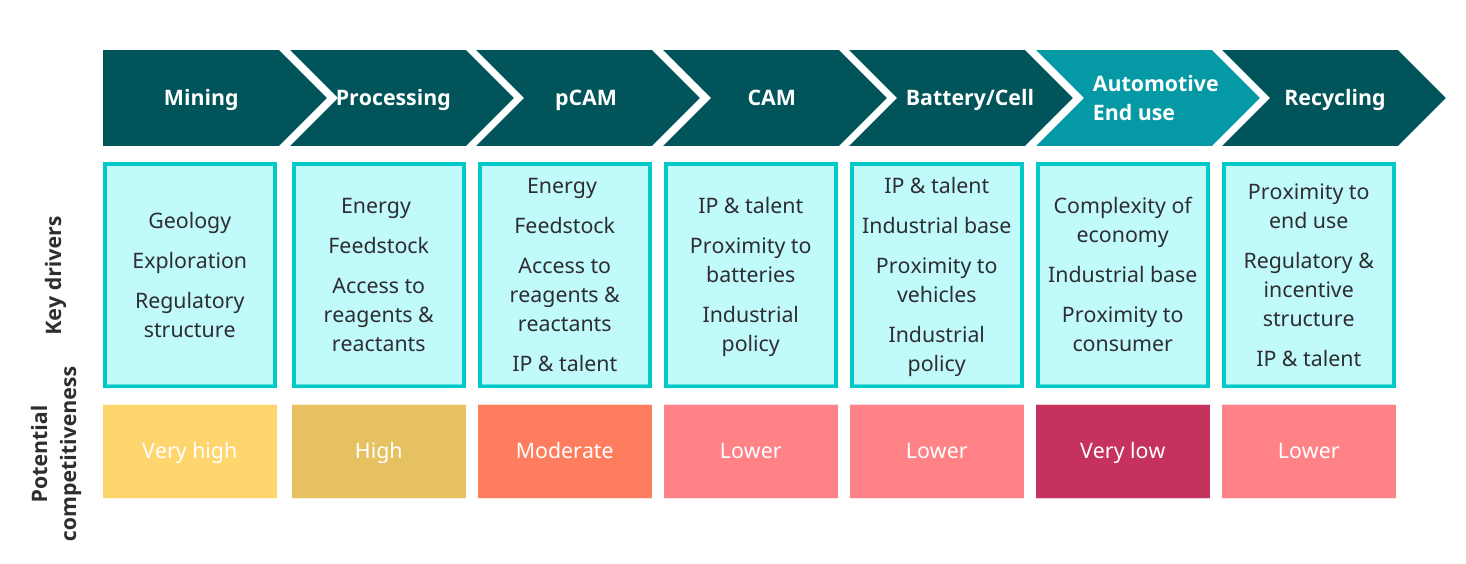
Source: Wood Mackenzie
Typical value addition success factors
In general, the most important success factors for mineral processing are:
Size of mineral supply. Scale is a critical determinant of a processing facility’s economic viability. The size of mineral supply also affects a country’s bargaining power. The differing size and market share of Indonesia’s nickel and bauxite reserves are the main reasons why its bans on unprocessed exports of these minerals—first imposed in 2014—have had different impacts. Companies have constructed 42 nickel smelters in Indonesia since 2014. The country is the world’s largest nickel ore producer, has the largest reserves, and has high-quality nickel. This meant that smelters in China would struggle to find an alternative to Indonesia’s nickel in both the short and long term, and therefore had to acquiesce to the Indonesian government’s insistence that China construct smelters in Indonesia instead. In the bauxite sector, however, Indonesia lacked similar leverage, and the main impact of the 2014 ban was a reduction in bauxite production. Indonesia was the world’s second-largest bauxite producer on the eve of the ban but its reserves are only the sixth largest (according to the U.S. Geological Survey). These smaller reserves made the profitability of alumina refining uncertain, and it was easier for China and other bauxite importers to source bauxite from other suppliers. The government lifted the bauxite ban in 2017, then reimposed it on bauxite ore exports in 2023, but is reportedly considering easing it again.
Transport costs. Processing can significantly reduce the weight of the minerals that are transported. The further away the customers, the greater the saving in costs from processing before export. For example, Zambia’s copper belt is 11,000 kilometers from China’s industrial zones. It therefore makes economic sense for companies to smelt their copper in Zambia even if smelters in China are more efficient, to save on transporting the heavier unrefined ore and concentrate. A large proportion of Zambia’s copper is smelted domestically as a result.
Availability of competitively priced, reliable, clean energy. Mineral processing tends to consume large amounts of energy. Producing countries with expensive, limited or unstable energy supply therefore face a significant obstacle to moving along the value chain. Some processing is particularly energy intensive: for example, energy accounts for around 40 percent of aluminum production costs. When energy prices rose in 2021-22, 50 percent of the European Union’s aluminum production capacity was forced offline. How clean the energy is also increasingly matters. For example, manufacturers of batteries using Indonesian nickel, and manufacturers of the electric vehicles using those batteries, may find it difficult to access the European market once the EU implements its battery passport in 2027. This mechanism—which will require companies operating in the European market to report on carbon footprint among other information—will likely penalize the high emissions from Indonesia’s nickel smelters’ use of coal.
Competing capacity elsewhere. The availability and cost of processing capacity elsewhere affects how important the above success factors are for a country’s prospects. For example, Guinea’s alumina refining ambitions, and Chile’s plans to construct new copper smelters, are complicated by excess capacity in China. The source of this competition is increasingly dynamic. Governments in many countries, such as the U.S., EU member states and Gulf states, are increasingly supporting to their domestic mineral processing industries to compete with China (and each other). This could further alter the economics of value addition prospects in low- and middle-income producer countries (see Key 5).
Good governance. Most value addition projects have large upfront construction costs and take a long time to make a profit. Predictable and transparent policymaking—in relation to both the broader mining sector (to reduce the risk of mineral supply disruptions) and for individual value addition projects—is therefore critical for investor confidence. As discussed in keys 2 and 4, investors are increasingly considering broader environmental, social and governance issues in their decision-making.
Additional success factors are relevant to value addition further along the value chain. In particular:
Proximity to downstream markets. As products get more complex, manufacturers tend to benefit from being close to their markets so they can capitalize on quicker, more flexible delivery to customers. Proximity can also help manufacturers to avoid difficulties in transporting specific products. For example, battery cathodes are chemically unstable. Cathode production therefore tends to be located close to battery manufacturing, as shown in Figure 1. Battery manufacturers benefit from being close to electric vehicle (EV) manufacturers, who in turn benefit from being close to large EV markets. This has implications for Congolese and Zambian plans to develop a nickel-manganese-cobalt (NMC) battery value chain. The African market for the types of cars that use NMC batteries is likely to remain small. As a result, despite the region’s large nickel, manganese and cobalt reserves, it will likely only be able to produce NMC battery precursors and then export them. Lithium-iron-phosphate (LFP) batteries, on the other hand, are used in the electric two- and three- wheelers and stationary power storage increasingly in demand across Africa. This value chain could therefore be both more beneficial for the region and more viable.
Existence of an industrial base. An existing industrial base helps to reduce the costs and risks of more complex processes. It enables investors to leverage existing infrastructure, a pool of companies and workers with similar know-how, local supply of inputs and a proven business environment for industrial activity. Partly because of these agglomeration effects, Wood Mackenzie predicts that battery production will largely coalesce in high- and middle-income economies in Asia, North America and Europe.
A country may have these success factors in place for some minerals but not others, and for some stages of the value chain and not others. As discussed in Key 3, governments can use a range of policies to fill gaps. However, they face limits in what policies can achieve, with several factors outside of governments’ control. If few of these success factors are in place, government incentives or penalties may be insufficient to encourage value addition, and may carry considerable costs. Governments should therefore ensure their strategies account for feasibility, and target value addition that leverages their comparative advantages. Governments with strategies centered on developing capabilities that provide new comparative advantages in the longer term, such as an industrial base, must be clear on the required steps and realistic about the prospects for—and costs of—taking them.
Countries’ own sector-level feasibility assessments should be informed by rigorous, independent project-level feasibility studies as part of the mine licensing process.3 Project-level feasibility studies can help governments, and other actors such as development partners, to identify missing success factors and the actions necessary to address them, and to manage expectations if filling these gaps appears insurmountable. Governments increasingly require license applicants to conduct some form of scoping of value addition feasibility. For example, the Ghanaian government has required a scoping study for a possible refinery in the license conditions for the country’s first lithium mine. However, these assessments are often ill-defined, lack clear timeframes and are rarely publicly disclosed. Producer country governments and citizens may also have limited trust in them given the companies involved in the project typically procure and pay the contractor conducting the assessment. Governments should therefore consider delinking procurement and payment for feasibility studies from the companies involved.4
Analyze the market outlook
Governments must account for the market outlook in their strategies. Value chains are dynamic. Changes in technology can result in large shifts in demand for products and therefore affect the benefit of attempts to move along value chains.
Some minerals and value chains are more exposed to technology risk than others. For example, long-term demand for copper and steel is likely to remain robust given their role in both the energy transition and wider global economy. Battery value chains, on the other hand, face significant uncertainty. NMC batteries have dominated markets until now, but market share for NMC batteries is shrinking. As Figure 2 shows, the International Energy Agency (IEA), among others, expects LFP batteries to become the dominant battery chemistry within the next decade, before ceding market share to lithium-free sodium-ion batteries. However, given the amount of ongoing research on battery chemistries—to improve performance, reduce costs and strengthen geopolitical positions—the future could also differ considerably from such predictions.
Figure 2. International Energy Agency’s projected market shares of electric vehicle battery chemistries
Governments of dominant mineral-producing countries, such as the DRC (for cobalt) and Indonesia (nickel), can influence the market trajectory to some extent. For example, battery manufactures are shifting away from using cobalt partly because of persistent concerns over DRC’s license security, taxation, corruption, and the welfare of artisanal miners. By improving governance, the DRC government could slow this shift. However, it is unlikely that any one producing country could fundamentally change the long-term outlook for a commodity for which demand is ebbing due to technological innovation.
Governments should therefore be cautious about pursuing value chains that are highly exposed to technology risk. This is particularly the case for projects that are still many years from being developed and therefore likely to miss any existing window of opportunity.
Analyze trade-offs and costs, not just benefits
Governments should base value addition strategies on rigorous cost-benefit analysis. This is particularly important given that many governments are not only pursuing value addition for socioeconomic gains, but also political ones: demonstrating the authorities’ capacities to “prioritize” national interests and actors, over international and corporate ones.
Even if a government realizes socioeconomic benefits from value addition, these benefits may not always outweigh the direct and indirect costs of the plan. These costs include environmental and social harm after the implementation of any anticipated avoidance and mitigation measures (see Key 2). For example, incorporation of the environmental and social impacts in an economic model used by one study of Indonesia’s nickel smelting operations found that continued smelting growth in three regions would have a positive economic impact in the first few years. However, the study found within ten years, the industry’s impact on the environment and public health would begin to negatively affect the regions’ overall economic output, including through reduced agricultural and fishing output.
Value addition can also have opportunity costs such as the diversion of public funds or electricity away from other productive or social needs. For example, Ghana’s aluminum value chain ambitions would require almost all the country’s hydropower capacity, which, without other new competitively priced electricity capacity coming online, would likely increase electricity costs for other businesses and households.
Governments must also consider the potential trade-offs between value addition and other ways that citizens can benefit from their mineral wealth. For example, if a government achieves value addition through instruments such as export bans, discounted mineral prices or downstream subsidies, it might create jobs, but in some cases weaken the public finances and therefore reduce spending on other development priorities. Similarly, governments must consider how the political capital, time and money spent on pursuing value addition, and the impact on the economics of mining operations, affect the potential to develop local suppliers of products and services to these mining operations. The procurement of goods and services usually amounts to 50 to 70 percent of all money spent by mining companies in producing countries. Local procurement by mine operators is therefore also a considerable opportunity for countries to increase government revenue, create jobs and develop new sectors.
A government’s cost-benefit analysis of value addition plans must also account for the distribution of costs and benefits across the population. It must ensure there is not only a net benefit nationally but also that benefits are equitably distributed across regions and for low- and middle-income as well as marginalized groups, including women, children, youth and communities living near value addition sites. The costs and benefits of value addition will not automatically accrue equitably within a country or even in the producing region within the country. For example, while Indonesia’s nickel activity has increased government revenue nationally and economic growth within the nickel-producing regions, poverty in those regions has increased, counter to the national trend.
2. Do no harm
The principle of doing no harm must be at the core of any government value addition strategy. Value addition, like mining, can cause significant environmental and social harms. It can lead to large swathes of forest being destroyed, create significant amounts of toxic waste, cause local air pollution as well as contribute to global carbon emissions, cause water stress and contaminate waterways and soil. The resulting impact on the health, livelihoods and general wellbeing of communities living near value addition facilities has been documented in countries including Brazil, China, Indonesia, Namibia and South Africa. The Chilean government closed two copper smelters in 2023-24 partly because of their impact on the environment and public health.
Governments should prohibit mining and value addition in areas of particularly high environmental and social sensitivity. Laws often provide governments with the authority to declare “no-go zones.” However, governments rarely utilize such provisions, and when they do, they sometimes fail to robustly enforce them or use them to cover all areas of environmental and social sensitivity. Company commitments, such as that by International Council of Mining and Metals (ICMM) members to not explore or mine in UNESCO world heritage sites, are also insufficient.5 They fall short, for example, of protecting forests of high conservation value inside and outside of protected areas. Mining concessions currently overlap with nearly 27 percent of the Congo Basin’s and more than 33 percent of the Amazon Basin’s intact tropical rainforests—areas that are critical for both resident communities and the planet.
To create the incentive for governments to establish and enforce no-go zones, development partners and other climate finance providers should offer conservation financing. Governments often undervalue the environment due to pressure to prioritize short-term revenue and jobs. This risk is potentially even greater for value addition projects. Public support for value addition ambitions means that governments are increasingly under pressure to deliver value addition at all costs. Conservation financing—building on lessons from projects such as the Central African Forestry Initiative through which the U.S., South Korean and several European governments provide financing to Gabon to maintain its forests—could change this calculus.
Governments should also not proceed with value addition activities when Indigenous peoples and local communities have not been meaningfully involved in decision making, or the right to free, prior and informed consent (FPIC) has not been respected.
For value addition projects outside of no-go zones and that have received the necessary consent, governments must account for potential environmental and social costs when granting permits to operators. Governments will have to overcome common technical and political economy challenges in incorporating these costs in permitting processes, however. They should implement existing guidance on good practice, such as that from the International Finance Corporation. Similar to value addition feasibility studies, to reduce the risk of corporate influence on the outcome of environmental and social impact assessments, governments should consider delinking procurement and payment for assessments from the companies involved in the project. Governments must also manage internal power dynamics to ensure effective cooperation between the authorities responsible for assessing projects’ environmental risks and their economic viability and benefits.
Governments also need to prevent risks from materializing once a value addition project proceeds. In doing so, governments should involve communities in environmental monitoring. Community involvement often leads to better and more cost-effective outcomes. Countries such as Argentina, Bolivia and Peru have introduced participatory environmental monitoring committees—though such practices can only achieve so much without addressing the growing government and corporate hostility toward, and violence against, environmental defenders and community leaders.
Addressing environmental and social impacts is critical first and foremost for reducing harm to the people in mining countries. However, it is also increasingly important for attracting investment and therefore achieving government value chain ambitions. For example, auto maker Mercedes-Benz will now only work with suppliers who purchase minerals from mines audited by the Initiative for Responsible Mining Assurance (IRMA) and who comply with OECD due diligence guidelines.
3. Design policy mechanisms tailored to the value addition strategy and consistently focused on equitable distribution of benefits

Governments can use a range of instruments—including fiscal, industrial and trade policy—in pursuit of value addition. Governments should select their policy approach based on the goals, economic feasibility assessment, market outlook and cost-benefit analysis set out in the value addition strategy, as well as their capacity and geopolitical leverage. Given the impact of the policy approach on the costs and benefits of value addition, governments should ensure a feedback loop between the strategy and policy approach and recalibrate as necessary.
Typical value addition policy approaches
Most policy instruments can be broadly categorized as restrictions and penalties, incentives or enablers.
Restrictions and penalties. Some governments impose a domestic supply obligation on mining companies to ensure that a portion of their minerals are processed domestically. China used a quota system to help develop its rare earth value chain. Chile’s lithium mining companies are required to sell a portion of their production at preferential prices to domestic value addition facilities. Several governments, including Tanzania, restrict licenses to companies that commit to value addition. Other governments prohibit the export of some or all unprocessed minerals. Indonesia has banned the export of nickel and bauxite ore, as noted in Key 1, and is planning to reimpose a copper concentrate export ban at the end of 2024. Other countries such as Namibia and Zimbabwe have also instituted various forms of export bans. Some governments do not restrict the volume of unprocessed exports and charge higher taxes on them instead. China does not refund value-added tax on rare earth exports but provides refunds for rare earth magnet exports. Mongolia charges higher royalty rates on ore and concentrate exports than refined copper exports.6
Incentives. Governments often offer tax incentives to reduce value addition costs and/or make value addition more attractive to investors. Indonesia offers a corporate tax holiday, import duty and VAT exemptions and lower local government taxes to value addition projects. Western Australia limits the royalty amount due on lithium hydroxide and carbonate to that payable on the lower value concentrate feedstock. Several governments subsidize inputs, such as South Africa’s electricity subsidies to its aluminum smelters and other processing plants. Another incentive is discounted mineral prices. This discount could result from government requiring mining companies to offer lower prices, such as in Chile, or government direct or indirect subsidization of the price. Some governments provide direct financial support in the form of equity stakes, grants, concessional loans and sovereign guarantees. The U.S. recently announced a $2.3 billion low-interest loan to support construction of a domestic lithium carbonate refinery. As discussed in Key 5, governments can also sign agreements with other countries that provide a source of incentives in addition to any that they offer themselves. Morocco’s free trade agreement with the U.S. unlocks access to the Inflation Reduction Act’s tax credits for minerals processed in Morocco.
Enablers. The EU intends to streamline permitting processes for “strategic projects” selected under its Critical Raw Materials Act to increase the attractiveness of such projects to investors. Several governments are investing in infrastructure improvements, either unilaterally or in collaboration with industry, to reduce operating costs within a value chain. For example, Canada’s Critical Mineral Strategy sets out investment in energy and transport infrastructure. Some governments actively coordinate the development of industrial clusters—through infrastructure provision, tax incentives and regulation—to generate agglomeration benefits for companies. Much of Indonesia’s processing takes place in industrial parks, while DRC and Zambia are planning to establish special economic zones to support their battery value chain ambitions. Some governments, such as Australia’s, are funding training programs and apprenticeships, while others have reduced restrictions on foreign workers to fill skills gaps.
Another key enabler can be regional coordination when it helps governments to overcome individual country constraints. For example, combining feedstock volumes from several countries can help achieve economies of scale. DRC and Zambia's planned battery precursor project requires coordination between the two countries, and minerals and other inputs from others. However, regional coordination must navigate a range of economic and political dynamics, and grapple with the inherent tension between cooperation and competition among participating countries.
Different policies will be optimal for different countries and value chains. As noted in Key 1, if feasibility constraints are considerable, most policies are likely to be insufficient to encourage value addition and may have significant costs. In this context, the main impact of penalties risks companies reducing their mining activity. Feasibility challenges also increase the risk that incentives, such as subsidies or direct financial support, not only divert government resources away from other development objectives but are used to benefit specific individuals or companies without meaningfully increasing value addition (see Key 4).
Governments should also base their policy approach on their value addition goals. For example, if a government’s main goal is to generate more revenue, authorities must use tax incentives carefully to ensure they do not eliminate most of the potential revenue from a value addition project.7 They must also calibrate instruments such as export bans, downstream subsidies and discounted mineral prices to avoid reducing overall government revenue from the sector. If the government is aiming for “shared-use” infrastructure—for example, a railway that transports both minerals and other cargo or paying passengers—then officials may need to primarily use incentives to mitigate the higher costs (provided these incentives do not outweigh the overall benefits).8
Governments should also account for their financial, technical and regulatory capacity, as well as geopolitical leverage, in their policy approach. For example, fast-track permitting raises the risk that a government might make mistakes or miss environmental, social or corruption red flags. However, this risk is higher for countries with lower regulatory capacity. Governments with scarce financial resources should be particularly cautious about pursuing value chains that are highly exposed to technology risk given the considerable opportunity costs. Governments should also weigh the risk of trade disputes, and their ability to challenge or withstand them when choosing a policy approach: for example, in choosing between imposing an export ban or quotas, which can be challenged under World Trade Organization rules, or export taxes, which tend not to be.
Finally, governments must integrate the distinct experiences, needs and contributions of different marginalized groups into their policies. Ensuring that these groups are unharmed by value addition is critical but insufficient. Governments must also ensure that such groups receive a more equitable share of the benefits than has often been the case in the mining sector. For example, shared power generation capacity should benefit local communities as well as supply the national grid; government skills development policies should be designed specifically to reach women and facilitate their participation in the value chain.9
Irrespective of which policy approach a government takes, the approach should be clear and applied in a consistent and transparent way. Failure to do so could undermine any positive impact that government policy would have otherwise had.
4. Address corruption risks

Value addition policies are always, on paper, officially designed to benefit the citizens in producer countries. However, by creating economic opportunities and incentives, these policies are exposed to corruption risks. The extractive sector is particularly prone to corruption.In the context of a transition minerals rush—characterized by geopolitical competition and ambitious value addition agendas—various corruption risks are likely to increase further.
Tackling corruption will be essential for designing fundable value addition projects that provide a net benefit for people in producer countries. While NRGI is working on these issues and will soon publish detailed analysis, we have already identified—building on previous work—some of the main risks that governments must address.10
Policy capture. Like all policies, value addition policies can be influenced by private interests seeking to shape their design for personal gain, often at the expense of the country’s wider population (though these interests can sometimes align). For example, actors who have the capital, knowledge and connections to develop domestic processing—and to be the first movers to do so—will have a strong incentive to push or support an export ban. The risk of policy capture has been documented across many policy areas: from environmental regulation in the Chilean lithium sector and cost assessment rules in the Indonesian nickel sector to local content rules in several countries including the US.
Licensing and permitting. The licensing and permitting phases have some of the highest corruption risks. Examples abound of corruption in mining licensing and permitting, from Portugal to Namibia. The risks appear to be similar for licensing and permitting of processing facilities. For example, Indonesia’s nickel smelter permitting process has been accused of a mix of favoritism, nepotism and bribery. Questions have been raised about the beneficial ownership of a Ghanaian gold refinery that has been granted an advantageous permit to refine gold purchased by the Bank of Ghana. Similar corruption cases have been documented in the awarding of government contracts for goods and services.
Financial incentives. Value addition policies often rely on financial incentives, as described in Key 3, which can increase corruption risks. The design, negotiation and granting of tax breaks, subsidies, grants or loans are all decision points where government officials can favor certain companies or actors: companies to which they are connected in different ways (e.g., companies they own or those owned by relatives or allies). These are also moments where companies’ representatives might try to bribe decision-makers for unfair access to these incentives. Such incentives can have unintended consequences, particularly if accessed through corrupt means. For example, if the same or related companies own both a mine and the refinery it supplies, a lower tax level for the refinery could lead to transfer pricing abuse. If not monitored carefully, discounted mineral prices could provide owners of value addition facilities with a cheap source of minerals that they then export with minimal further processing.
Infrastructure. Many low- and middle-income countries will likely require a considerable amount of new infrastructure to move along the value chain, with governments overseeing and sometimes providing direct support to its construction. Construction is one of the sectors most prone to corruption across the world. Infrastructure projects are often large, complex and involve many different actors. Corruption risks arise from undue influence in project selection to favoritism in the award of contracts. For example, corruption has been one of the reasons why the Sicomines “resources for infrastructure” deal in the DRC has resulted in delayed, low-quality infrastructure.
Socio-environmental harm. Corruption is one of the worst aggravating factors that can enable the socio-environmental harm described in Key 2. It can undermine the integrity of environmental and social impact assessments, manipulate community consultations and FPIC, and distort land access negotiations. Corruption can also enable companies to conceal socio-environmental damage or operate with unsafe and unfair conditions for workers, as seen in the rare earth mines of Myanmar.
Industry players, such as automakers, entering new parts of the value chain due to the rush for transition minerals could heighten these corruption risks.11 Such companies likely have less experience and knowledge of mining sector practices and challenges, particularly in the geographies where mineral reserves are located, making them more vulnerable to sector-specific corruption risks.
Failure to address the above risks would not only reduce the benefits from value addition in the short term but would likely deter investment in both mining and value addition projects in the long term. Some of these risks are broader than mineral governance; for example, the challenge of policy capture interacts with a country’s political system. Nevertheless, governments can mitigate many of these risks by having a clearly defined, evidence-based value addition strategy to inform policy approaches (see Key 1) and by equipping their value addition policies and projects with strong integrity safeguards. Based on NRGI’s experience, these safeguards include measures to: enhance transparency; increase consultation and participation in decision-making; strengthen oversight actors; reform regulatory processes; improve rule enforcement; and address foreign enablers.
5. Acquire any additional finance and support needed to make projects viable and beneficial
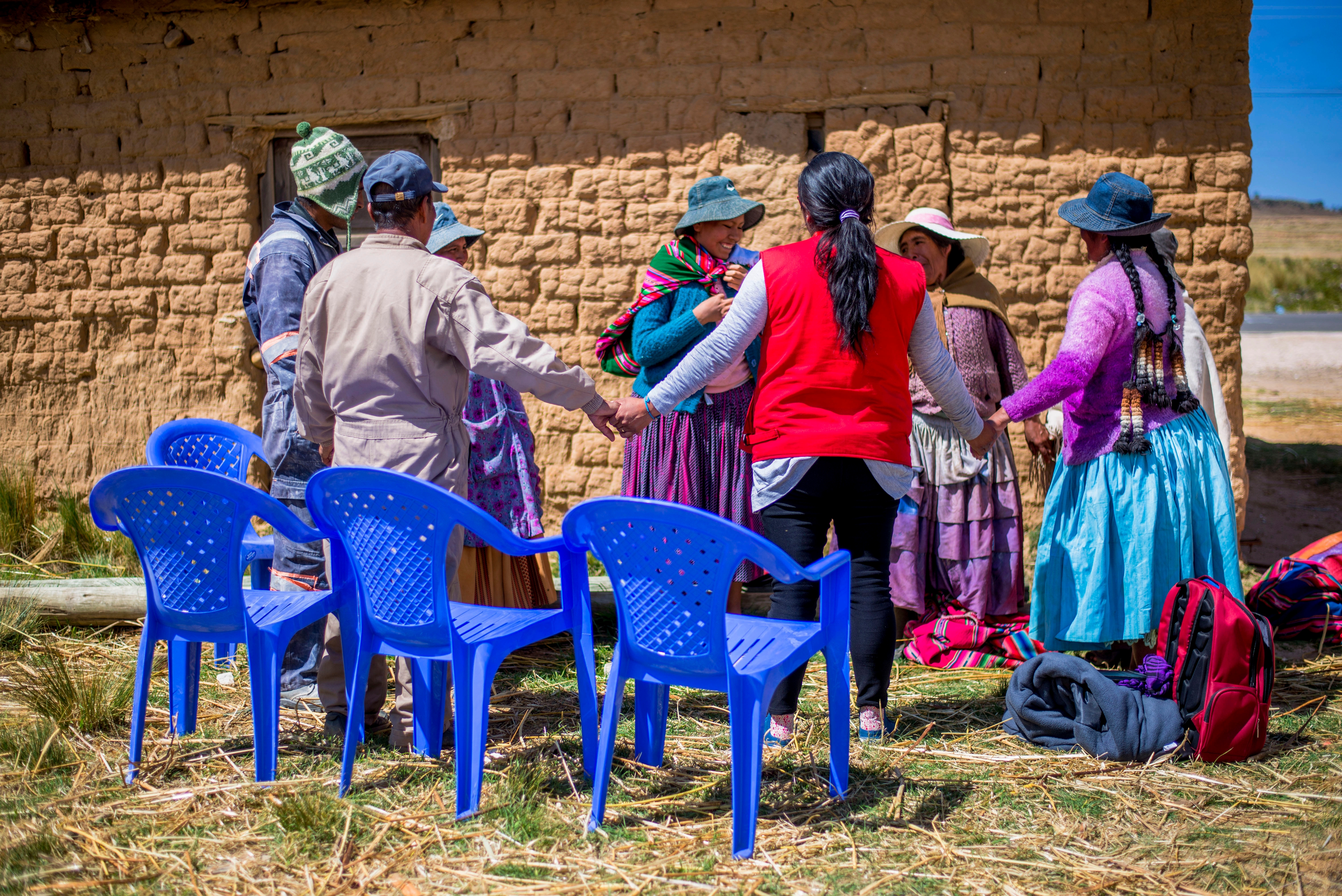
Governments of low- and middle-income producer countries must do the legwork to pave the way for fundable, beneficial projects. However, development partners and consumer country governments have a critical role in enabling more value addition in low- and middle-income producer countries and ensuring it provides a net benefit for their people.
Development partners and consumer country governments should increase funding and technical support to authorities in these countries. Many low- and middle-income country governments do not currently have sufficient resources or information to develop, implement and monitor detailed value addition strategies and policies. These constraints also hinder their capacity to conduct rigorous cost-benefit analyses of potential projects and effectively regulate their operation.
Based on their value addition strategies, low- and middle-income producer country governments should coordinate with companies and development partners to identify where concessional financing to governments can also realistically help address feasibility constraints, including by crowding in more private investment. Support could target value addition facilities directly or address bottlenecks in areas such as local skills and transport and energy infrastructure. Infrastructure support can be particularly impactful when designed to maximize spillover benefits. By reducing the cost of shared-use infrastructure for companies involved in value addition projects, development support can also help governments avoid offering tax breaks and other concessions in exchange (see Key 3). Development partners and consumer country governments should consider how to configure this range of financial and technical assistance to overcome political economy challenges and incentivize high environmental, social and governance standards in producer countries.
Consumer country governments have mooted this type of support—through the MSP and other state-state partnerships—as they attempt to secure the minerals of low- and middle-income producer countries. However, whether they will “put their money where their mouth is” remains to be seen. The MSP’s recently announced support for a nickel project in Tanzania is the first to a lower-income country that has a (previously planned) value addition component. Meanwhile, the EU is expected to announce its first tranche of “strategic projects” in the coming months.
Consumer country governments must also ensure they do not counteract any proactive support to value addition ambitions with other measures that hinder greater international equity around mineral value addition opportunities. As noted in Key 1, government support to domestic industry in China, U.S. and other higher-income countries is increasing. This not only intensifies the competition faced by low- and middle-income countries; some of this support—in the form of trade restrictions, subsidy regimes and sustainability requirements—could also impede their value addition ambitions in other ways.
The EU signed a new trade agreement with Chile in 2023 that prevents restriction of exports or disadvantaging of EU access to Chile’s minerals, for example. It also limits Chile’s ability to offer preferential prices to domestic value addition facilities by requiring that prices not be set below the export price of the previous year. The U.S. Inflation Reduction Act provides electric vehicle tax credits only for minerals processed in the U.S. or a country for which it has a free trade agreement. While this provision has benefited some low- and middle-income countries, such as Morocco, it likely reduces the potential for value addition investment in others. Sustainability requirements can also have unintended consequences for potential investment in low- and middle-income countries. For example, the EU Carbon Border Adjustment Mechanism will tax products such as aluminum and steel that have a large carbon footprint. If this mechanism is not accompanied by the necessary support to help countries such as Ghana and Mozambique reduce their emissions, it could lock their exports out of the European market.
As low- and middle-income producer governments account for the myriad of agreements, frameworks and mechanisms in their value addition strategies, they must also navigate the complex and evolving geopolitical landscape. For example, Indonesia has so far been unsuccessful in negotiating a free trade agreement with the U.S. to qualify for the Inflation Reduction Act’s incentives due to Chinese dominance in the Indonesian nickel sector. As a result, the Indonesian government is currently attempting to reduce Chinese investment in new projects. How low- and middle-income producer countries leverage this geopolitical competition while managing the associated complexities will be critical for successfully moving along the value chain.
6. Ensure a transparent approach involving citizens every step of the way
Having increased their calls for, and promises of, more value addition, governments of low- and middle-income producer countries are under growing pressure to deliver for their citizens. Establishing value addition projects is also becoming increasingly important for the social license to operate for mining companies. For example, the Ghanaian government’s ambition to establish lithium refining in the country has broad public support, including from civil society groups, which have described it as a “red line.” However, as this brief has set out, value addition will not always be viable for a country, nor will it always generate a net benefit for its people.
Governments and companies must therefore engage the public in value addition planning. Transparency and trust are essential to manage public expectations and to avoid governments pursuing value addition at all costs, for the benefit of only a happy few, or a backlash against the mining sector. Governments and companies must disclose and consult with the public on feasibility studies, environmental and social impact assessments and cost-benefit analyses for value addition projects. Governments should also encourage informed debate about the trade-offs involved, especially when opportunity costs are considerable. Governments and companies must ensure these processes are inclusive, in which marginalized groups are not only included but actively engaged in shaping decisions. Accountability actors—such as parliamentarians, civil society organizations and media—must also play an active role and rigorously evaluate government and company plans.
Failing to involve the public in navigating these complex decisions could leave a country with the worst of both worlds: no or costly value addition, and even more public frustration and disruption of mining projects.
Conclusion
Governments and civil society actors in low- and middle-income producer countries are calling for more domestic value addition of their minerals to increase government revenues, generate jobs and support the development of other sectors. Consumer countries and multistakeholder initiatives are also belatedly acknowledging the inequities of global value chains. However, significant work is needed to translate this focus into viable value addition projects that provide meaningful benefits to people in producer countries including marginalized groups. Time is of the essence. Addressing the historical inequities of the mining sector is critical for meeting the urgent needs of people in producer countries. By reducing the risk of public frustration in these countries, and therefore helping to derisk investment in mining and encourage global cooperation, it is also essential for tackling the climate crisis.
Acknowledgements
The authors thank colleagues across NRGI, in particular Alex Malmqvist, Amir Shafaie, Ana Carolina González Espinosa, David Sefa Adjei, Dorjdari Namkhaijantsan, Erica Westenberg, Lee Bailey, Moise Liboto Makuta, Patrick Heller and Pedro Zapata for providing valuable support, perspectives and advice, as well as the fundraising and operations teams for making this brief possible.
Notes
-
1
Mixed hydroxide product is primarily produced from laterite (limonite) ores using high-pressure acid leaching.
-
2
For example, copper oxide ore is often processed into copper cathode using hydrometallurgy at or near the mine site. Copper sulfide ore, on the other hand, is processed using pyrometallurgy, with the location of the smelter depending on a range of factors.
-
3
Governments should also consider requiring companies to conduct feasibility studies for mines that are already operating. However, if a company has already committed to exporting most of the production through long-term off-take or mineral or royalty streaming agreements, this may not be worthwhile.
-
4
Companies (along with development partners) could contribute to a basket fund, and a third party or multi-stakeholder panel would oversee the hiring of the feasibility study contractor from a roster of independent, accredited consultants. An example of this scheme in relation to environmental assessments is the Environmental Service of Salzburg (ESS), which is a joint initiative of the local government of Salzburg, the Chamber of Commerce of Salzburg, the Austrian Federal Ministry of Agriculture, Forestry, Environment and Water Management, and the Salzburg utility provider. ESS maintains and selects from a roster of independent, accredited consultants to perform environmental consultancies: https://developmentcorridors.org/wp-content/uploads/2023/06/Chapter-03-1.pdf
-
5
ICMM members have also committed to comply with the objectives of legally designated protected areas.
-
6
ICMM members have also committed to comply with the objectives of legally designated protected areas.
-
7
Some types of tax incentives carry a higher risk of significantly reducing government revenue than others. For example, corporate income tax holidays can lead to greater revenue loss than expected, as companies may adjust their operations to frontload profits and take fuller advantage of the incentive. Recent changes to international tax rules, including the establishment of a global minimum effective corporate tax rate, will also diminish the effectiveness of such profit-based incentives. See: https://www.igfmining.org/resource/tax-incentives-in-mining-minimising-risks-to-revenue/, https://www.oecd-ilibrary.org/taxation/tax-incentives-and-the-global-minimum-corporate-tax_25d30b96-en
-
8
Planning and effectively implementing shared use infrastructure is complex. However, successful examples exist. Vale developed a railway for its iron ore mine in Brazil that is also used by other freight and passengers. In Ghana, an aluminum smelter served as the anchor customer that enabled construction of a large hydropower dam in the 1970s that also supplies power to the national grid. The Lobito railway corridor, that will connect an Angolan port to mining activity in DRC and possibly also in Zambia and Tanzania, will hopefully provide further proof of concept.
-
9
The Feminist Natural Resource Governance Agenda, which NRGI co-developed, sets out 18 policy imperatives, including on participation in the workforce and revenue sharing, for centering the leadership and lived realities of women and frontline communities in natural resource governance: https://pwyp.org/feminist-natural-resource-governance-agenda/
-
10
Beyond the more specific risks mentioned in this section, other "classic" mining corruption risks exist for value addition projects: for example, in relation to the monitoring of operations, revenue collection, revenue management and state-owned enterprises.
-
11
For example, Mercedes-Benz has declared they are ready to invest in mining and Tesla has partnered with a nickel mine in New Caledonia. See https://www.reuters.com/business/autos-transportation/mercedes-benz-is-able-willing-invest-capital-mining-ceo-2023-03-30/, https://www.bbc.com/news/business-56288781