
One Crisis, Seven Lenses : MENA’s Energy Transition at a Crossroads
What the 2026 energy shock means for the future of transition in MENA

In early 2026, the U.S.-Iran war and the closure of the Strait of Hormuz triggered the most severe energy supply shock in decades — disrupting global hydrocarbon flows and exposing just how fragile and interconnected energy markets are. In the Middle East and North Africa (MENA), the shock carried different meaning for fossil fuel producers trapped by the Hormuz closure, for other fossil fuel exporters, and for energy-importing countries. But for every government in the region, it landed on territory where energy is already a daily household concern, and where the transition to cleaner, fairer energy was only beginning to gain momentum.
The crisis pushed energy security to the top of every policy agenda in the region, while simultaneously raising new questions about the future of the transition itself. The same shock is pulling policymakers, investors, and communities in multiple directions at once. Which path prevails will depend on the choices made now.
That is why we set up the NRGI MENA Just Energy Transition Platform, as a space for knowledge production, dialogue, and advocacy among those committed to a transition that is not only faster but fairer, anchored in strong governance foundations. Among the community of experts, we work with an Advisory Expert Group to support and guide us — leading voices on energy, governance, and transition from across the region. In the weeks following the crisis, we put one question to this group: What does this moment mean for the future of energy transition in MENA? Each responded from a different vantage point. Read together, they converge on the same central tension.
The reflections below are short excerpts from longer contributions by members of the NRGI MENA Just Energy Transition Platform Advisory Expert Group. You can read their full analyses in the briefing available for download at the end of this page.
The Strategist's Lens — Dr. Manal Shehabi — Senior Research Fellow, University of Oxford; NRGI MENA Advisory Board
The crisis cuts both ways for MENA's energy transition. Gulf exporters, unable to reap their usual windfalls, are cutting long-term transition spending first. Oil importers like Jordan, Egypt and Morocco have the strongest incentive to accelerate — but the least fiscal room to do so. The same shock that makes the transition more urgent is also what makes it hardest to fund.
The Resilience Lens — Dr. Mohammed Al-Breiki — Head of Industrial Studies and Policies, Gulf Organization for Industrial Consulting (GOIC)
For the Gulf, the crisis is not a choice between hydrocarbons and transition — it is a push to manage both. Higher revenues are being directed toward resilience, economic diversification and deeper regional integration: energy grids, the GCC railway, strategic reserves. Hydrocarbons remain the source of stability while the longer-term shift is built.
The Trade-offs Lens — Sarine Karajerjian — Program Director, Environmental Politics Program, Arab Reform Initiative
The crisis forces fragile MENA governments to navigate five trade-offs at once: security vs. transition, centralized vs. decentralized power, fiscal stability vs. social protection, speed vs. governance, and diversification vs. geopolitical alignment. How they balance these competing pressures — not whether they transition — will decide whether the shift is fair or deepens existing inequalities.
The Gender Lens — Myriam Sfeir — Executive Director, Arab Institute for Women
The energy crisis hits women hardest: more unpaid work, less income, and deeper inequality. Yet policy continues to treat all households alike. Effective responses require gender-sensitive energy policy that sees who is actually absorbing the cost — and designs support accordingly.
The Civil Society Lens — Dr. Pierre Saade — Head of Middle East and North Africa, Resource Justice Network
Civil society's role is to bring big energy decisions back down to lived reality — the cost of cooking, transport, and electricity — and to ask who benefits and who bears the risk as pipelines and corridors return under the banner of energy security. As energy access grows more conditional and contested, democratic oversight and community accountability matter more than ever.
The Opportunity Lens — Dr. Jauad El Kharaz — Co-Chair, Mediterranean Clean Energy Network (MEDCEN)
What if the crisis is the opening, not the setback? A Mediterranean remade not as a fossil gas corridor, but as a global green energy hub — 1 TW of renewables by 2030, powering local industry, not just exporting to Europe. The political and financial momentum created by this crisis may be exactly what makes that ambition achievable.
The Media Lens — Roula Mikhael — Executive Director, Maharat Foundation
Media coverage of the crisis stays fixed on prices and shortages, missing the bigger story of structural transition — held back by limited access to energy data and varied editorial pressures across the region. Stronger technical expertise among journalists and a more constructive journalism approach could shift coverage from reactive reporting toward informed, accountable, and forward-looking public debate.
Seven lenses. One crisis. One central tension: whether the energy transition can survive a shock that makes it both more necessary and harder to fund.
The energy transition has become an energy-security argument, not only a climate one. The resilient path runs through renewables, grids, and decentralized systems — but it only holds if the people bearing the cost stay at the center, and the governance of fast deployment keeps pace with ambition. That is what the NRGI MENA Just Energy Transition Platform exists to ensure.
Read all seven perspectives in full — download the briefing: One Crisis, Seven Lenses
Why Ghana Must Protect Its Heritage Funds in the Push for Transition Infrastructure

As governments around the world scramble to finance energy transition infrastructure, pressure is mounting to unlock new pools of capital. In Ghana, this debate has come into focus with recent proposals from the Ministry of Finance to expand the range of instruments eligible for investment by the Ghana Heritage Funds (GHF).
If approved, the Heritage Funds could soon invest in assets tied to electricity access, natural gas infrastructure and energy transition initiatives. Parliament has given its approval, and the changes are now with the President for his final review.
While the need for reliable energy infrastructure is real, the question is whether Ghana can invest these funds in transition-related infrastructure without weakening one of the country’s most important long-term public savings mechanisms, thereby costing future generations.
Therefore, it is crucial that any decision to use petroleum savings for infrastructure must begin with strong governance measures to ensure transparency, accountability and protection against diversion into broader short-term spending.
The Heritage Funds and the Push for Greater Investment Flexibility
The Petroleum Holding Funds, comprising the Ghana Heritage Fund and the Ghana Stabilisation Fund, were originally created under the Petroleum Revenue Management Act (PRMA) 2011, ACT 815, to convert volatile, finite petroleum revenues into durable public value. The Stabilisation Fund was designed to cushion budget shocks during oil price downturns, while the Heritage Fund exists to preserve value for future generations in anticipation of a future beyond oil.
At a roundtable organized by NRGI in partnership with the Public Interest and Accountability Committee earlier in 2026, the Bank of Ghana indicated that the Petroleum Holding Funds now hold approximately US$1.376 billion. This includes allocations of US$1.171billion, and about US$205 million in interest earned over a 15-year period, which the Ministry of Finance argues could have been more if investments had been made in other riskier instruments and assets.
The modest returns generated from conservative, low‑risk investments have informed the government’s plan to amend Section 27 of the PRMA, ACT 815, to allow for more investment instruments, including foreign currency-denominated debt instruments used to finance national energy investments, including electricity-generating plants, natural gas processing, pipeline transmission, and downstream distribution systems.
This amendment is exactly why the governance questions matter: What economic tests will be applied to ensure value for money? How will political risk and project failure be mitigated? Who will monitor performance, and under what legal authority?
The Governance Question That Cannot Be Ignored
The key issue is what this investment shift implies and how Ghana can introduce safeguards to protect petroleum revenues from short‑term political and fiscal pressures, especially given its historically weak record of public investment.
Petroleum revenue projections for 2026-2029 indicate that only about US$305 million is expected to flow into the Heritage Funds over the medium term, compared to approximately US$2.37 billion into the Annual Budget Funding Amount (ABFA) — which is the primary contribution of petroleum revenue to the consolidated fund of government.1 This represents only about 13 percent of projected ABFA flows, which means that the Heritage Funds is not even large enough to be a meaningful infrastructure financing vehicle without sacrificing its core purpose.
At the same time, the proposed amendments to the Petroleum Revenue Management (Amendment) Act, 2025 (ACT 1138) by the Ministry of Finance removed the requirement that ABFA spending follow a long-term national development plan approved by Parliament. The changes also narrow the use of ABFA funds mainly toward infrastructure spending. In other areas, the Supreme Court had clarified that at least five percent of ABFA funds should be allocated to local governments to support development. However, Act 1138 now limits this allocation to a maximum of five percent, which could reduce the funding available for local development projects.
These changes show the government’s strong focus on quickly increasing infrastructure spending. However, concerns remain about how these projects are managed. Investigative reports submitted to the President by local media organizations in April 2026 pointed to problems such as inflated contract costs and the widespread use of sole-sourced contracts. The President has since ordered an investigation into the allegations. This highlights the risks of relying heavily on withdrawals from the Heritage Funds to finance transition infrastructure projects without robust transparency and accountability safeguards.
The Ministry of Finance has admitted there are governance concerns and says the body managing these investments will have to meet basic governance standards, including using trusted partners and financial safeguards. Civil society groups have also asked for clear rules on how the funds will be managed, but the government has not yet published the policy document.
Without clear safeguards, there is a risk that petroleum savings could be mixed into the general government budget, making it difficult to track how the money is spent and weakening oversight by the Public Interest and Accountability Committee (PIAC).
Protecting the Integrity of the Heritage Funds
Ghana’s experience with other sovereign funds offers a caution. For instance, the Minerals Income Investment Fund (MIIF), initially created to manage mineral wealth, has been swept into infrastructure spending . Losing the petroleum funds as well would leave Ghana without any credible intergenerational savings architecture, an outcome fundamentally at odds with international best practice.
If petroleum savings are to support the transition, governance safeguards must come first. Several principles are essential:
Investments must remain strictly tied to transition-related infrastructure: The Heritage Funds should not become a general-purpose financing source. Its use should be limited to clearly defined transition-enabling projects linked to long-term national energy goals.
Investment must be ring‑fenced and traceable: Funds allocated to transition investments must remain legally distinct from the Consolidated Fund to preserve transparency.
Only a limited portion of accumulated savings should be exposed to higher-risk assets: Protecting the long-term integrity of the fund must remain the priority.
Projects must undergo transparent economic and governance assessments: Projects should meet clear criteria, backed by credible sponsors, guarantees, and independent assessment before receiving support.
Oversight bodies must be strengthened: PIAC, for example, must be fully funded, empowered, and equipped to monitor outcomes.
The Ministry of Finance must publish policy guidelines driving the implementation: This is essential because public trust depends on transparency.
Ghana’s petroleum resources are finite. The institutions designed to manage them were designed to outlast electoral cycles and fiscal emergencies. Using the Heritage Funds to solve today’s infrastructure challenges without first strengthening governance risks, trading long‑term security for short‑term relief.
The choice is not between saving and investing. Ghana can pursue investments in transition infrastructure while still protecting intergenerational savings, but only if strong safeguards come first and the use remains disciplined, transparent and tied to transition priorities. If Ghana is to leverage its petroleum wealth for a just energy transition, it must start by protecting the very funds created to secure that future.
Strengthening Uganda’s Management of Uncertain Oil Revenues

Key messages
The Uganda government expects oil production to start in 2026, but how much government revenue this production will generate is uncertain. Projections by Rystad Energy and the Natural Resource Governance Institute average around USD 1.9 billion a year up to 2050 if the global energy transition is slow, but only $1 billion a year in a moderate transition scenario.
While the government has established a revenue management framework with several strengths, the Ministry of Finance, Planning and Economic Development (MoFPED) could finetune this framework before first oil through reforms to the Public Finance Management Act 2015 and via regulations.
MoFPED could require that oil revenues are spent on diversifying the economy; legislate a stronger limit on recurrent spending; and clarify its approach to revenues deposited in the Petroleum Revenue Investment Reserve, including by prioritizing paying off high-interest debt and considering a stabilization buffer to use for significant shocks.
In coordination with the Ministry of Energy and Mineral Development (MEMD) and Uganda National Oil Company (UNOC), MoFPED could clarify the procedure for financing UNOC investments from the Petroleum Fund, and UNOC’s ability to retain revenues, and ensure parliament has oversight of the company’s investment plans across a range of scenarios.
MoFPED and MEMD could also clarify the mechanism for subnational revenue sharing, including which local governments and cultural or traditional institutions will receive a share and how that share will be determined.
Uganda is nearing a major economic milestone, with first oil from the Lake Albert project expected in 2026. Oil production could significantly boost public finances over the coming decades. However, as in all oil-producing countries, revenue projections are highly uncertain—particularly given the global energy transition, which makes long-term forecasts even more complex.
Modeling by Rystad Energy and NRGI illustrates the scale of this uncertainty. Under a slow energy transition, Uganda’s government could earn an average of USD 1.9 billion per year from 2026 to 2050—equivalent to roughly 9 percent of projected government revenue. Under a moderate transition scenario, this figure drops to USD 1 billion per year, or about 5 percent.
Uganda’s government oil revenues across energy transition scenarios
This wide range of outcomes highlights the importance of prudent fiscal planning. Uganda has already suffered the consequences of over-optimism. After oil was discovered in 2006, pressure to increase spending led to borrowing that proved difficult to manage as production was delayed. As oil production nears—and even after it begins—the government must avoid repeating these mistakes.
The government could strengthen its revenue management framework more generally ahead of first oil. The Public Finance Management Act (PFMA) 2015 governs the collection, deposit and use of petroleum revenues. This report outlines recommendations for refining the framework to ensure oil revenues benefit Uganda’s citizens. MoFPED will need to make amendments to the PFMA in some of these areas, while regulations may suffice in others. The key areas for reform are:
Deposits into the Petroleum Fund
Rules for spending petroleum revenues
Use of the Petroleum Revenue Investment Reserve
Financing arrangements for UNOC
Management of Petroleum Fund balances
Subnational sharing of royalty revenue
Compliance with the revenue management framework
Accounting for Uganda’s Oil Money
Are Countries Ready to Manage Revenues from Transition Minerals?

The global supply of minerals that are essential to cleaner energy production, transmission, and storage technologies—minerals such as lithium, cobalt, nickel, copper, rare earths and graphite—will help determine how fast the world can transition to a low-carbon future. But are countries rich in these minerals prepared to manage the revenues they earn from mining them?
Countries expecting significant transition mineral revenues must prepare
Managing extractives revenues well is key to benefiting from them. According to one estimate from GIZ and Econias Consulting, resource-rich countries as a group could stand to gain a total of $100 billion to $500 billion in additional government revenues by 2040. While unpredictable changes in technology and markets make the scale of revenues uncertain and therefore risky for countries to count on, countries must still prepare to manage revenues.
According to The Economist, Australia, Chile, China, Democratic Republic of the Congo, Indonesia and Peru stand to gain the most from transition minerals. This aligns with the GIZ/Econias analysis, which suggests that the same countries (plus Russia) will have the highest sales of energy transition minerals under the IEA’s Stated Policies (STEPS) energy transition scenario. In another group of countries and territories, the “transition minerals” mentioned above already play an important role relative to the size of economies (or are likely to do so as the energy transition progresses); these include Cuba, New Caledonia, Mongolia and Zambia.
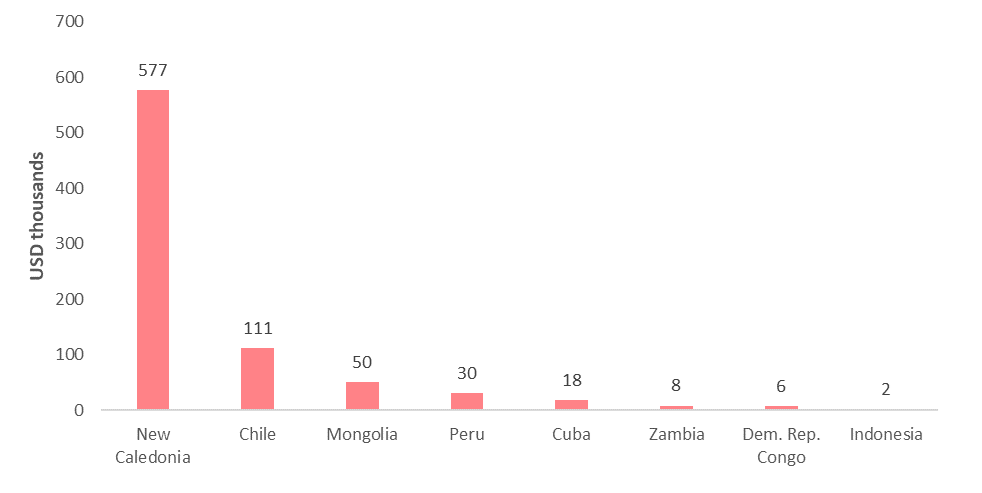
While Australia and China have large, diversified economies, in most of the other countries listed, transition minerals could provide a sizeable share of government revenue. Figures 1 and 2 below set out the value of transition minerals in selected countries, in aggregate and per capita. On average, governments tend to collect tax revenues equal to around 16 percent of the value of mineral sales revenues. So, the value of reserves gives an idea of what these reserves could mean for countries, in terms of public revenues, if the reserves were ultimately extracted.
In this post we focus on the countries and territories where transition minerals could provide a sizeable share of government revenue, and the challenges that they may face in managing transition mineral revenues based on their current track records of mining revenue management.
Figure 1. Estimated value of transition mineral reserves, selected countries
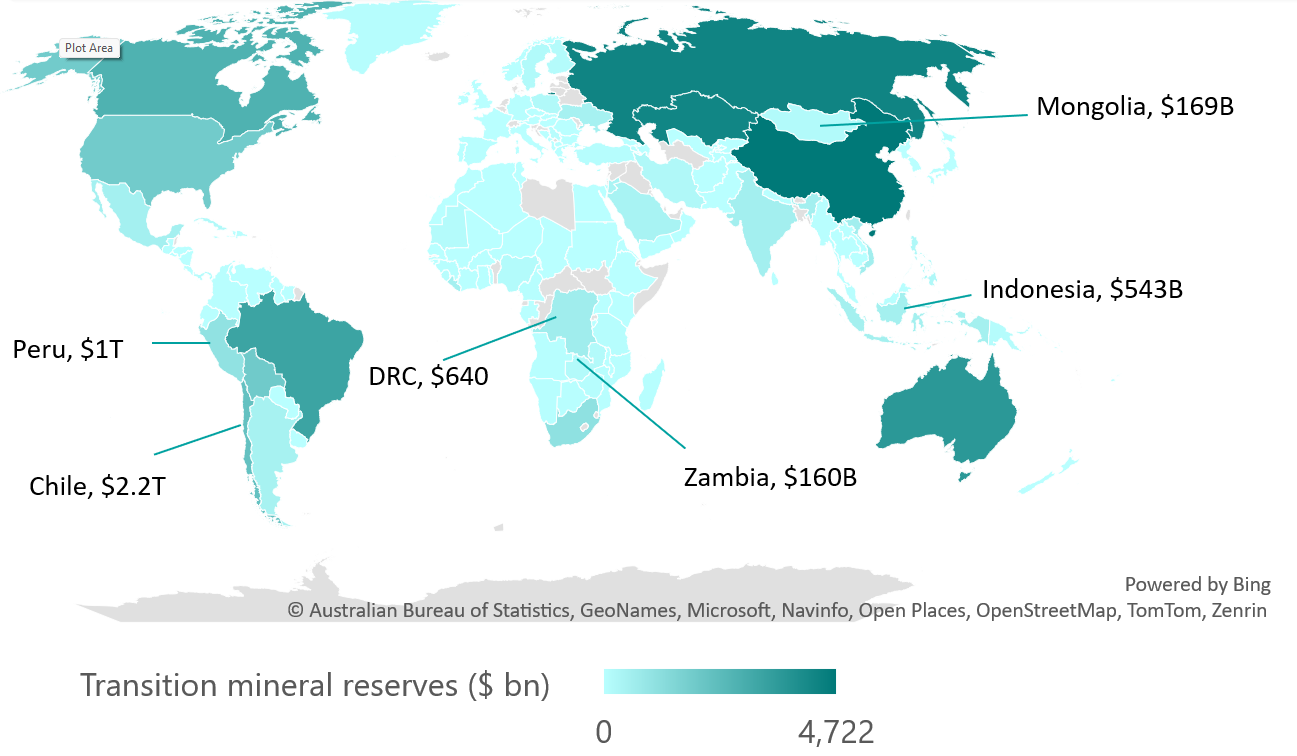
Figure 2. Estimated transition mineral reserves value per capita, selected countries, USD thousands
Transition mineral revenues may be short-lived and volatile
Some of these countries or territories with smaller absolute levels of reserves—such as Cuba or New Caledonia—might only experience a decade or two of a mineral boom. Production in others may last longer, though it is unclear how long high demand for some transition minerals will last, given advances in technology. It will therefore be crucial for producers to take full advantage of their respective windfalls.
Nauru, an island nation in the South Pacific, provides a cautionary tale. Once a phosphate giant—with a GDP per capita of USD 39,000 (2023 dollars) in 1973—today Nauru is one of the world’s poorest countries. Much of the phosphate income was consumed rather than invested. Luxury goods were imported, and it was common for residents to go on shopping sprees abroad. Government hiring and salaries increased dramatically. At its peak, the Nauru Phosphate Royalties Trust had a balance of USD 1.3 billion, but eventually lost all of its assets to the state’s creditors. As the resource neared depletion in the early 1990s, Nauru began to borrow heavily to finance its fiscal deficit. The education system collapsed in the early 2000s when schools largely closed due to lack of funding; half of the schools never reopened.
Mining revenues also tend to be volatile. Conflict and natural disaster can halt production at a moment’s notice, costs of production can change from year to year, and the most important revenue determinants—prices—fluctuate unpredictably. If mineral revenues represent a significant portion of overall fiscal revenues, as is already the case in Chile, the DRC and Mongolia, volatility can negatively affect public spending decisions. Governments tend to spend on prestige items (e.g., airports, stadiums) in good times, and make harmful cuts to public services or indebt themselves in lean times. Thus, governments should smooth public spending, either through debt management or by saving in peak revenue years and drawing down on savings during tough times. Some transition minerals can have particularly volatile revenues, making it all the more important for authorities to save or invest them. For instance, over the last five years, cobalt prices were over 60 percent more volatile than those of copper. (Authors’ analysis based on S&P Capital IQ Pro. Period covered is 20 September 2018 to 19 September 2023. The measure of volatility used is the coefficient of variation.)
Countries can manage such short- and long-term booms and busts by setting clear rules for how much the government can increase spending year-on-year and by setting limits on the non-mineral fiscal deficit. In practice, this implies controlling public debt or saving some money in a special fund, though only in higher-income and lower debt environments. Escape clauses—like in Peru’s Fiscal Prudence and Transparency Law—can allow governments to increase spending in times of crisis. Countries where such minerals play a significant role should use revenues to diversify their economies so that they don’t suffer declines after the resources run out (as happened in Nauru) or demand declines.
Investing resource revenues back into transition mineral extraction, as Ghana has recently proposed, may not achieve diversification, unless it can provide a springboard to the development of other economic sectors. These principles apply equally to the management of revenues from non-transition minerals; but many of the countries about to experience transition mineral revenue booms have little experience or success in managing significant resource revenues and are therefore at greater risk of mismanaging their windfalls.
Many countries must bolster their systems for managing mineral revenues
Historically, Chile has managed its resource windfalls relatively well, thanks to a counter-cyclical fiscal rule for managing revenues from copper that enjoys multiparty and popular support. The rule reduces the impact of mineral price volatility on the economy, keeps public debt levels low, and generates some fiscal savings for the future. It also allows for adjustments depending on economic circumstances which can help avoid such rules being abandoned in economically difficult times. There is currently a discussion as to how to manage the country’s revenues from lithium.
Unfortunately, some countries’ mineral revenue management does not meet the standard set by Chile. For example, in NRGI’s 2021 Resource Governance Index, revenue management was rated as “good” in only 3 of 13 national mining sectors assessed.
For example, the DRC’s mineral revenues—USD 1.4 billion in 2021, or 29 percent of government revenues—are largely channeled to government salaries and politically-motivated projects. A recent IMF assessment of the public investment management system concluded that, “[P]ublic investment management in the DRC suffers from weaknesses all along the project cycle, both on paper…and in practice.” The DRC has no fiscal rules to manage volatility and no holistic medium-term costed national development plan to guide public spending. At the subnational level, significant amounts of revenue go to subnational governments that have neither the technical nor the financial capacity to effectively manage these revenues.
DRC’s neighbor, Zambia, also faces challenges with critical minerals. Although it has had some success in marketing itself as a source of critical minerals, the country faces another debt crisis. Despite being heavily dependent on volatile copper revenues, authorities have never implemented a counter-cyclical fiscal rule to manage boom-bust cycles nor increased public spending sustainably. Instead, the government has made a series of medium-term commitments, most recently to run a primary fiscal surplus of 3.2 percent by 2024 to be enforced by an IMF program.
There are also lessons in Mongolia’s management of mineral revenues. The country has repeatedly postponed implementation of its fiscal rules and has teetered from one macroeconomic crisis to the next. Despite massive copper, coal, iron and gold revenue windfalls, the government neither saved in its Fiscal Stability Fund nor paid down its public debt during the boom years. Today, the country is at high risk of debt distress, giving the government little room to expand investment in public services or provide support during future crises.
Increased interest in transition minerals in other countries raises concerns about whether governments are prepared to benefit from these minerals and manage the resulting revenues. Several of the countries where exploration or production is ongoing lack some, or any, of the elements of an effective extractives revenue management framework. Yet good practices from Botswana, Chile, Peru and other countries that have done better in managing mining revenues provide inspiration upon which countries can draw.
Managing Senegal’s Oil and Gas Revenues

Key messages
- The oil and gas sector it is not expected to transform Senegal’s economy or public finances. Fields that have received a final investment decision are are unlikely to generate revenues over 3 percent of GDP.
- Senegal already possesses some of the institutions needed to promote good revenue management of oil and gas revenues, including: (1) a relatively transparent and comprehensive annual budgeting process; (2) robust compliance with Extractive Industries Transparency Initiative (EITI) standards; (3) a relatively free and vibrant media.
- Given Senegal’s acute domestic investment needs, the government’s new sovereign wealth fund proposal may be ill-timed. Such funds are not the best vehicle for investing natural resource wealth domestically. Instead, the government should consider investing these funds through the budget. It could also be advisable to employ an expenditure rule limiting government spending, or a non-resource current balance rule preventing governments from squandering resource revenues by running a deficit in other areas, combined with a capital expenditure growth rule to mandate investment.
- The national oil company, PETROSEN’s debt accumulation and revenue retention pose significant risks for public finances over the coming years. The government should consider strengthening oversight of PETROSEN, for instance by appointing independent board members, publishing independent audits and clarifying the company’s dividend policy.
- Some fishing communities in Senegal are concerned about the impact of oil and gas projects on their livelihoods. If these negative impacts are confirmed, the authors of this report recommend that the government consider compensation through environmental and social management plans, as opposed to allocating a fixed share of resource revenues to sub-national governments.
Measuring Extractives Dependency: Why it Matters and New Approaches

These include:
- The volatility of natural resource commodity prices, which can cause shocks that are difficult for the country to manage
- The exhaustibility of natural resources and the challenges of replacing them as a source of income when they run out
- The political economy of governments relying on natural resources, which seems to make governments less effective (e.g., if they rely on resource wealth to fund themselves rather than developing other sectors of the economy)
To address resource dependency, we need to be able to measure it. With this in mind, NRGI has produced a new dataset that builds on existing literature to provide a broad range of indicators of dependency on the extractive industries. This dataset is primarily for internal use by NRGI colleagues, but is also freely available to interested researchers.
The aim of this dataset is to support a more multidimensional approach to understanding resource dependency, its causes and consequences. The related briefing explains the rationale behind the dataset and its various indicators, and some includes some initial insights based on analysis of the data.
Guinean Communities Benefit from Mining Revenues and Civil Society Capacity Building

The Challenge
Like many resource-rich low-income countries, Guinea faces challenges in leveraging its natural resource wealth for sustainable development. Despite being the world’s second largest bauxite producer and rich in iron ore, gold and diamonds, Guinea has so far delivered only limited benefits from mining to its citizens, more than half of whom live in poverty.
Guinea introduced sector-wide reforms following democratization in 2010 and is successfully implementing the Extractive Industries Transparency Initiative (EITI). However, social unrest, political instability, and the impacts of the Ebola crisis and coronavirus pandemic have slowed the country’s progress toward ensuring that mining income helps improve citizens’ quality of life.
NRGI's role
As part of its support to Guinean civil society and its provision of technical advice to Guinea’s Ministry of Mines, NRGI has advocated the adoption of new subnational mining revenue-sharing mechanisms. The aim is to enable Guinea’s low-income communities in mining-affected and other areas of the country to sustainably share in the proceeds from mining.
Following elements of NRGI’s recommendations, the Guinean government committed from 2019 to fully implement its previously established contribution to local development (CDL) mechanism to finance the new Local Economic Development Fund (FODEL).
A 2019 NRGI report recommended ways to improve the implementation of these financial mechanisms for community development and local economic diversification. NRGI advised the government to avoid over-dependence on the mining sector and instead support family farming, local manufacturing and other forms of local entrepreneurship to promote self-employment and long-term food security.
At the same time, NRGI provided training, advice and selected grant funding to Guinean civil society organizations (CSOs), journalists and parliamentarians to strengthen public oversight of the country’s mining revenue flows. A key focus has been to enhance CSO monitoring of mining companies’ legal and contractual obligations and subnational mining-related payments and transfers, including through the use of smartphones in data collection and the production of a guide and videos on citizen monitoring. NRGI has trained more than 200 members of five mining communities to monitor state and company legal and contractual obligations.
Impact
With NRGI’s help, under the subnational finance provisions of Guinea’s reformed mining code and via the two local development funds, the country’s 342 municipalities have received mining-related payments totaling USD 42 million since 2019. Mining companies have paid $20 million directly to municipalities where they operate, while the government has disbursed a further $22 million around the country.
Action Mines, an NRGI civil society partner in Guinea, undertook a participatory evaluation of the first financial year of the Local Economic Development Fund (FODEL). FODEL comprises companies’ payments of a set percentage of their turnover (0.5 percent of sales for bauxite and iron and 1 percent for other mining substances) to subnational authorities in areas where their activities have direct impacts on communities.
Action Mines found that Guinea’s rural and urban prefectures and communes have invested receipts from the fund in a broad spectrum of infrastructure, public services, job creation and income generation projects.
Investments include improved water and sanitation provision; electrification for underserved communities and households; the building, enlargement and improvement of roads, bridges, schools, health centers, youth centers, markets, shops, kiosks and warehouses; purchase of municipal vehicles; new business enterprises such as market gardening and community agriculture; and tree nurseries for local reforestation. Municipalities reserve a fixed proportion of funds for women- and youth-led projects.
Guinean CSOs’ and local communities’ capacity in revenue and expenditure monitoring has developed significantly. Local citizen monitoring committees are now equipped to engage effectively with municipal authorities, and they have started to address shortcomings in the allocation of mining revenues.
NRGI's work impacts stakeholders in many different places and at many levels, ranging from communities to international institutions.
Mongolia’s State-Owned Mining Enterprises: A Deeper Look Into Glass Accounts Data

Mongolia’s Glass Accounts Law (2014) requires that government entities and state-owned enterprises (SOEs) disclose detailed financial and operational information on a public website. The government’s Glass Accounts portal has since become a focal point for government transparency.
However, uptake of the law has been uneven among government entities, and specifically for many SOEs operating in Mongolia. In part, this lack of implementation stems from the law’s ambiguity on who should report, but it also resulted from the government’s inactivity and poor enforcement as well as limited sanctions for those who do not comply.
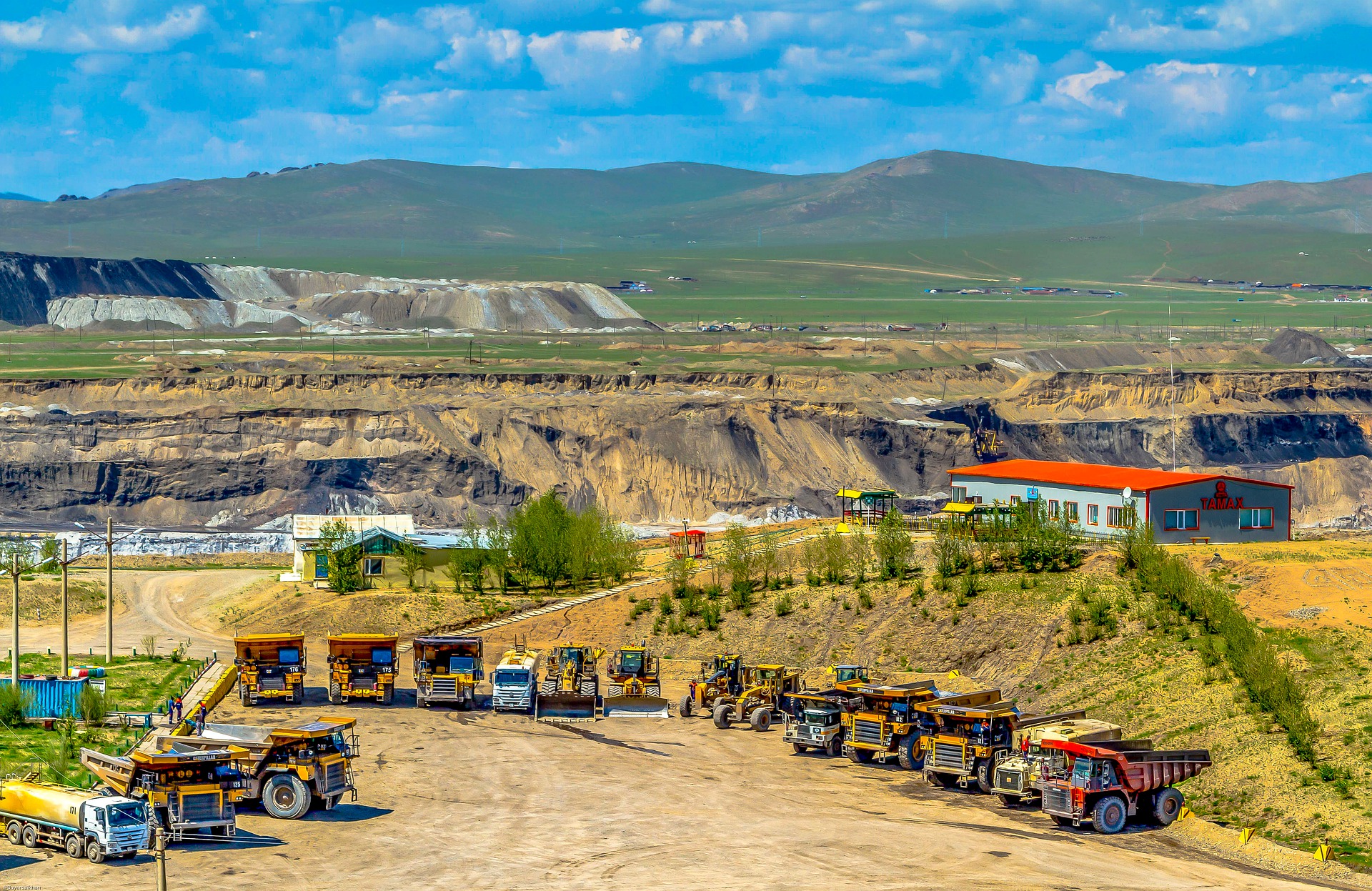
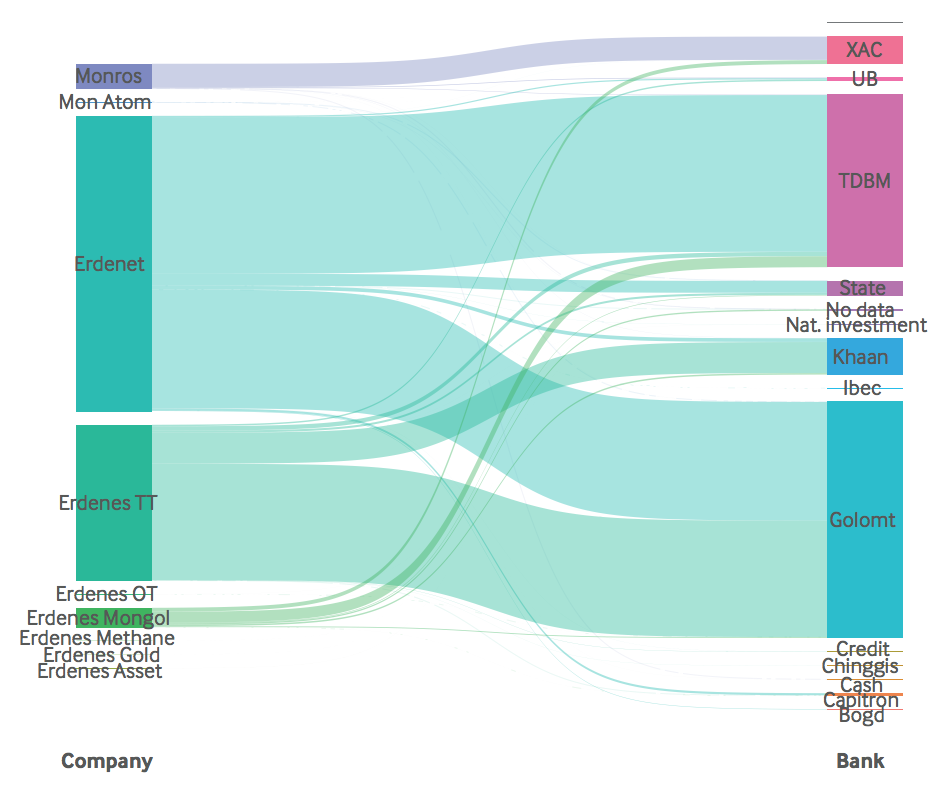
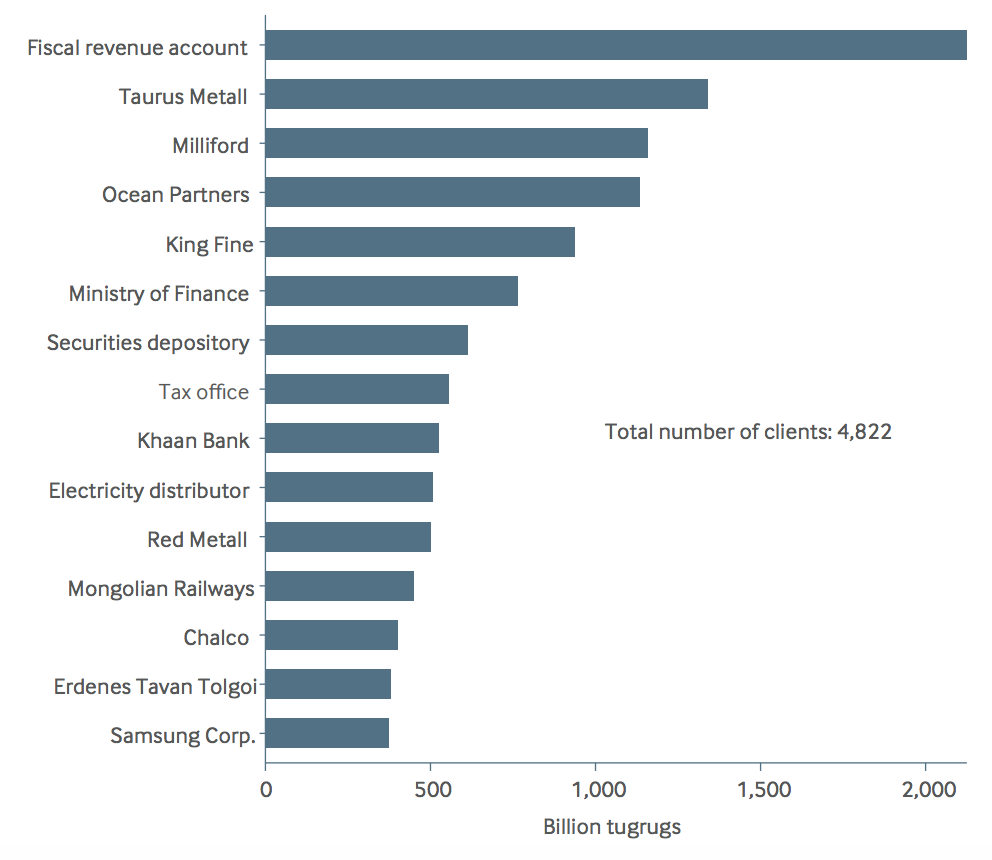
In this paper, the author looks at one type of reporting by key mining SOEs under the Glass Accounts Law. This is the requirement to publish all transactions above MNT 5 million (circa USD 1,750) on an individual basis, except for salary-related transactions. The low threshold set in the law allows for a detailed analysis of the reporting companies’ business, in cases where such information is available. With this analysis, the author strives to promote the use of data and reveal the facts for understanding the SOEs’ business. At the same time, the analysis sheds light on the process of reporting and how it could be improved to ensure transparency and enable public oversight of companies that play a critical role in the economy.
Key messages:
- Mongolia’s Glass Accounts Law offers unprecedented access to information on the finances and operations of state-owned extractive companies.
- The law’s requirement to disclose individual financial transactions of above MNT 5 million (around USD 1,750) sheds light on state-owned mining companies’ suppliers and buyers, often for the first time.
- Compliance with this requirement improved significantly over the past two years, but many prominent companies still do not report, and some have not provided the required level of detail.
- Scrupulous implementation of the Glass Accounts Law will improve the accountability of state-owned extractive companies and promote a new standard for mining companies in Mongolia and globally.
War in Ukraine: Strategic Challenges for Extractive Governance in Latin America

Key messages
- In the context of the war in Ukraine, the overall economic outlook for Latin America is poor. However, countries rich in natural resources will receive extraordinary income due to increased commodity prices.
- High prices have led to decisions that could increase dependence on fossil fuels in the long term, including announcements of increases in production, new investments, and domestic fuel subsidies.
- This situation could slow down domestic energy transition agendas, but the problems created by fossil fuel dependence could also be an opportunity to encourage investment in renewable energy.
- Governments should use extraordinary profits made during this period to finance the energy transition and productive diversification.
- Neither this nor any other situation justifies lowering governance standards in the extractive sector.
Introduction
This briefing analyzes the impact of the war in Ukraine on strategic prospects and governance challenges in the extractive sector in Latin America, focusing on the situation in Colombia, Mexico and Peru. The analysis leads us to question the enthusiasm that some actors in the region have shown regarding the potential profits from natural resource exports. These profits will be realized in a scenario characterized by lower growth prospects, more expensive credit, lower rates of foreign direct investment and higher inflation and fiscal pressure to subsidize fuel and food.
In this context, we discuss three strategic challenges for natural resource governance: the increased commitment to fossil fuels and the slowing prospects for the energy transition; the need to strategically plan for the use of the extraordinary income that natural resource exporters receive due to high price cycles; and the importance of strengthening governance systems to prevent weakening standards for regulating resource extraction.
In addition to the humanitarian, economic and geopolitical impacts of the war, there are also potential environmental impacts, mainly related to climate change, as the war is changing the prospects for fossil fuel consumption.
Even before Russia’s invasion of Ukraine, the global economy was already facing the consequences of the health crisis caused by the coronavirus pandemic and bottlenecks in global supply chains. The war has further complicated international trade, exacerbating inflationary trends and the rise in commodity prices, particularly energy and food prices. Russia and Ukraine are major exporters of natural resources, including oil, gas, iron ore, nickel, aluminium, coal, grains, and fertilizers. According to the Secretary-General of the United Nations, Antonio Guterres, the war in Ukraine could trigger a “hurricane of hunger” and bring the global food system to collapse. The disruption of the supply chain will bring higher inflation and affect the recovery of the global economy. In addition to the humanitarian, economic and geopolitical impacts of the war, there are also potential environmental impacts, mainly related to climate change, as the war is changing the prospects for fossil fuel consumption and could further complicate the global energy transition.
Institutions such as Goldman Sachs and the International Monetary Fund (IMF) have indicated that the war in Ukraine will impact Latin America's economic performance: growth rates will be lower and interest and inflation rates will be increasingly higher across the region. The next few years will most likely bring financial instability and a decline in private investment. Despite potentially high revenues from higher commodity prices, higher energy and food costs could significantly weaken the prospects for these countries. Furthermore, the impact within countries will not be uniform. While some sectors, such as resource exporters, will benefit, others will be harmed, including possibly producers of food intended for local markets.
Extraordinary profits in an adverse economic context
The credit rating agency Fitch Ratings has revised forecasts for mineral and fossil fuel prices due to the situation in Ukraine. These generally show a short-term increase in prices, but a recovery of the original trends in the medium to long term. In the case of mining, prices of major metals and minerals will generally be higher than expected in 2022 and 2023. However, the projections remain unchanged for 2024 and the long term. In the case of copper, however, the long-term price forecast has been revised upward, as this metal plays an important role in global decarbonization strategies. The price forecast for thermal coal has increased through to 2025, but maintains its long-term downward trend, specifically because of the prospect of declining coal consumption due to associated high greenhouse gas emissions. For oil and gas, the same rating agency projects high prices between 2022 and 2024; thereafter the downward trend will be maintained.
In Latin America, the incomes of countries rich in natural resources will be boosted by the increased prices of the commodities they export. The dynamics vary depending on the type of resource. Thus, for example, copper producers like Chile and Peru will benefit from the long-term prospects for this mineral, even though production costs are also higher against a backdrop of inflation and high energy prices. In the case of Colombia, the main mining export is coal, the price of which is forecast to rise in the short term but fall in the medium to long term. This country will also benefit from high nickel prices. As for mining in Brazil, it is important to note that the country is a major exporter of iron ore, which is also experiencing an upward cycle.
Oil exporters are also expected to see an increase in revenues due to higher prices. These include countries like Brazil, Mexico, Colombia, Ecuador and Venezuela, in addition to Guyana’s significant export prospects. Despite the structural difficulties they face, state-owned oil enterprises in the region have got a new boost to their operations in the context of high prices.
In Mexico, according to the Brattle Group, additional income from crude oil exports at $100 per barrel amount to about $284 million per week. Most of this revenue is going to Pemex, which, as the most indebted oil company in the world, is forced to use this extraordinary income to improve its financial situation and reduce its debt.
In Peru, the state-owned company Petroperú is in the midst of an internal crisis that has led risk rating agencies such as Fitch and S&P Global Ratings to reduce its credit rating and elsewhere to talk of a potential bankruptcy of the company. Recently, however, there has been a change of leadership in the company and the Talara oil refinery has come into operation, which could give Petroperú new momentum. In the case of Colombia, Ecopetrol earned record profits in 2021. Projections for 2022 suggest that public and private investment in hydrocarbons will increase as production declines due to the lack of new discoveries of significant reserves, which in turn will lead to increased offshore exploration.
High fossil fuel prices also pose a challenge to domestic demand for fuels. The price increase mainly affects countries that are net importers of oil and fuels, like Peru, but also producer countries that tend to subsidize domestic consumption or grant tax exemptions, such as Mexico and Colombia.
In the case of Mexico, the government has granted tax incentives to petrol refiners and importers, which they can credit against other taxes for each liter sold. According to several Mexican analysts, tax exemptions and subsidies have historically exceeded estimated additional oil revenues when prices have been high. As Mexico is a net importer of fuel, one of the largest investments by the government of president Andrés Manuel López Obrador (AMLO) is the Dos Bocas refinery. The purpose of this refinery is to strengthen Mexico's energy security by allowing the country to refine oil domestically and avoid dependence on fuel imports.
As has become clear worldwide, domestic fuel prices are a very sensitive political issue. In Mexico, measures seek to protect the purchasing power of Mexican households in the political context of a presidential impeachment and elections in six states. In Colombia, a liberalization of petrol prices could have unforeseen social consequences given the recent social unrest and electoral situation in the country. In Peru, a truckers’ strike related to high fuel prices put the government of Pedro Castillo in a particularly precarious situation in early April this year. As a result, the Peruvian government decided to include several fuels, such as 90-octane petrol, diesel and bulk liquefied petroleum gas— in the Petroleum Derived Fuel Price Stabilisation Fund, in addition to exempting several basic foodstuffs from general sales tax.
New enthusiasm for increasing extraction
Against the backdrop of a bleak economic outlook, extracting natural resources once again seems to be the best option for countries that have historically been committed to this activity. This is a global phenomenon. In Africa, the war in Ukraine and the blockade of Russian gas have generated expectations that the continent could supply Europe with gas, although it is unrealistic to think that this will be feasible in the short term. Similar enthusiasm has built up in Latin America, either because of opportunities to profit from high prices or because of the resurgence of the energy security agenda, with announcements of new oil investments in countries such as Argentina and Ecuador.
In Colombia, the prospects for oil and coal, the country's two main exports, have been greeted with enthusiasm. As a result of the oil price increase caused by the war in Ukraine, the oil producers’ association is expecting the industry to be more dynamic, with greater investments in exploration and in the development of unconventional sources, such as fracking, and offshore investments, both of which have sparked resistance from various actors in Colombia. Furthermore, according to statements by President Iván Duque after a visit to the United States, Colombia intends to increase its production from approximately 800,000 to 1 million barrels of oil per day. Oil is Colombia's largest export and its contribution to the royalty system accounts for about one third of the total, therefore any increase in the international price has a profound impact on the country's political economy.
The sharp increase in the price of coal has also revived enthusiasm for the industry in Colombia and complicated discussions about the transition to coal in producing regions, which intensified when Prodeco announced the closure of its operations in Cesar. The change in the prospects for coal is directly related to the war in Ukraine, as some analysts say the blockade on Russian coal has reopened the doors for Colombian coal in the European Union. Coal could also replace part of Europe's gas consumption from Russia. This is a relatively quick and straightforward alternative, as countries like Germany have not completely cut back on their coal consumption and have even reopened coal plants as a result of the war. The new situation reverses the downward trend in coal, at least in the short term, giving a renewed impetus for Colombia’s coal industry.

In Mexico, the war has favored the mining companies already in operation, due to the strong performance of silver, copper and goal, among others. In the case of oil, the price increase is helping Pemex manage its debt, which does not necessarily mean an increase in production, but possibly a review of the decision to reduce exports. In December 2021, Pemex’s director stated that the company would reduce its exports in 2022 and stop exporting crude oil by 2023, given that the administration's objective is to achieve energy sovereignty. However, this promise is now being reconsidered due to the rise in oil prices and the additional income that will allow it to subsidize domestic fuel consumption. The energy and finance ministries are currently conducting a detailed analysis to determine if this will change.
In Peru, public debate in recent months has focused on inflation worries, particularly regarding energy and food prices. Peru exports various mining products, some of which are rising in price, including copper, silver, zinc, tin and iron. However, rising oil prices will hit the sector’s cost structure. In addition, there are the recurring social conflicts in various mines around the country, as for example in the southern mining corridor. The high level of conflict, combined with low business confidence in the Pedro Castillo government and institutional deterioration in the energy and mining sectors, have led to a slowdown in mining investment in the country. In view of this, according to Fitch Ratings, in a note picked up by Diario Gestión, the boards of foreign mining companies have not approved any new projects in Peru.
On the other hand, testing of the new Talara refinery began on 12 April this year and officials expect it to be fully operational by the end of 2022. As a precaution, the Peruvian government has not promised any price cuts as a result of the new refinery, although it is offering more competitive prices to the wholesale market and cleaner fuels to the local market.
In the context of the war in Ukraine and related energy security challenges, the Peruvian government has stated its intention to increase oil production through state-owned Petroperú, mainly in the country’s Amazon region. Petroperú plans to participate in oil extraction at Lot 192, the largest in the country, but also the one that has suffered the greatest number of spills. This situation has led to a long history of conflicts with indigenous peoples in the Amazon department of Loreto and along the northern Peruvian pipeline that transports extracted oil to the Talara refinery on the country's northern coast. Furthermore, the state oil company plans to become a partner in a series of lots which, in principle, would be returned to Petroperú in the coming years when their contracts expire. However, this is generating resistance and conflicts with the private sector, which are also being voiced in the country’s parliament. Added to this new push for oil is the government’s political decision to spread the use of Camisea gas across the country, which would also involve increasing natural gas reserves, in this case from the Amazon region of Cusco.
Strategic challenges for the governance of natural resources
The disruption caused by the war is influencing pre-existing political dynamics and governance challenges in each country. At the regional level, the problems that Latin America already faces in terms of natural resource governance, such as the reprimarization of exports, problems with corporate management in state-owned oil companies, little progress in domestic energy transition and high levels of conflict related to extractive activities, are exacerbated by high prices and the resulting pressure to deepen the extractive agenda.
There is evidence that high prices encourage national oil companies to make risky bets in terms of new investments that may not be viable in the future of the global energy transition.
Although the scenarios of the countries analyzed vary, they all have in common an increased commitment to fossil fuels. This is true for Colombia, Mexico, Peru and many other countries in the region and the world. It is important to note, however, that these short-term price prospects do not determine the companies' long-term strategies. There is evidence that high prices encourage national oil companies to make risky bets in terms of new investments that may not be viable in the future of the global energy transition. The enthusiasm for fossil fuels comes at a time when scientists and activists are calling more strongly for the need to drastically reduce greenhouse gas emissions.
The message is clear: unless immediate and radical action is taken, we will not hit the target of reducing global warming to 1.5°C. And while fossil fuel consumption will not stop overnight, global criteria to allow developing countries to have priority in extraction must be discussed, but without encouraging new exploration projects. The Secretary-General of the United Nations, Antonio Guterres has pointed out that the obsession with obtaining oil in the short term may increase dependence in the long term and could also lead to failure to meet climate goals. Regarding the support given to coal consumption by G20 countries in the context of the war, Guterres has said that “Their support for coal not only could cost the world its climate goals. It’s a stupid investment”.
In the long term, we can expect a decrease in fossil fuel consumption and an increase in the renewable energy market.
The renewed push for fossil fuels is linked to price increases, which, as we have seen, are a short-term factor, and to concerns about energy security. Governments need to consider the medium- and long-term prospects when making decisions. In the long term, we can expect a decrease in fossil fuel consumption and an increase in the renewable energy market. This is due to climate considerations, but also issues of oil price volatility, bottlenecks in the fossil fuel supply chain and the association of oil with authoritarian and kleptocratic regimes.
Energy prices have also risen. Again, this is a short-term dynamic, as renewable energy are already a cheaper economic option than fossil fuels, and the long-term trend is that the transition to renewables will result in government savings. In the case of Latin America, progress on renewables varies between countries, but it is clear that active policies and the development of clear regulatory frameworks are required to promote these energy sources. The transition to renewables also presents opportunities for investment in new technologies. The deepening of the fossil fuel consumption agenda is slowing down the progress of renewable energy in the region.
In this context, how to take advantage of the extraordinary resources that high prices for non-renewable resources bring is an important topic for public discussion. As we have seen, economic prospects are generally poor and many of these resources go towards stabilizing fuel prices domestically. Insisting on investments that increase dependence on fossil fuels, as is the case in Mexico, Colombia and Peru, under different formulas and conditions, is not a sustainable strategy in the medium and long term. Instead, windfall profits should be used to finance energy transition strategies and productive diversification.
Finally, given the high prices, pressures are increasing to expand the extractive frontier. Examples include pressure to develop mining projects in indigenous territories in Brazil, offshore oil projects and fracking in Colombia and the agenda to increase gas reserves in the Peruvian Amazon. From the perspective of extractive promoters, it is always a good time to make things easier for the functioning of the sector: when prices are low there is a need to avoid losses; when prices are high, there is a need to ensure profits. No situation justifies lowering environmental, social and governance standards for the extractive sector.
The authors are grateful for comments from Antonio Hill and Andrea Furnaro (NRGI) on an earlier version of this document. Likewise, the members of the Platform for a Sustainable Reactivation in Peru and Colombia and Sergio Guzmán from Colombia Risk Analysis, who took part in the discussion following a presentation on this topic in Bogotá in March 2022.