
NRGI Submission to the Sixth Just Transition Work Programme Dialogue: Minerals and Equitable Value Chains
NRGI submitted its views to the UNFCCC ahead of the Sixth Dialogue of the United Arab Emirates Just Transition Work Programme (JTWP), held in Baku, Azerbaijan, on 10–11 September 2026. The dialogue focused on just transition pathways for the industry sector, including technology, innovation and equitable value chains.
Drawing on our work in resource-rich low- and middle-income countries, the submission examines how mineral-producing countries can translate growing demand for transition minerals into lasting development benefits. It explores opportunities to retain more value through mineral processing and related industries, while addressing economic risks and environmental and social harms.
NRGI identifies priorities for national action and international cooperation:
- Ground mineral value addition strategies in national development goals, economic feasibility, market analysis and rigorous assessment of costs and benefits.
- Involve citizens in decision-making, protect community rights and tackle corruption.
- Provide technical and financial support to strengthen national strategies, institutions and regulatory capacity.
- Ensure mineral-producing countries help shape international rules and partnerships affecting their development prospects.
The submission also considers how the JTWP and the Just Transition Mechanism can support these efforts through finance, technology transfer and institutional capacity building.
What Happens After a Mining License Is Granted? Inside Indonesia's First Resource Governance Assessment

Indonesia is the first country assessed under NRGI's new Resource Governance Assessment. It finds strong foundations for mineral governance, alongside significant gaps between the rules, how they are implemented and what the public can see.
Just over a year after public outcry over nickel mining in Raja Ampat led the Indonesian government to revoke four of the region’s five nickel mining permits, the issue is back in the spotlight. New research published by Greenpeace Indonesia in late July reported that three nickel mining licenses are in process for eastern Waigeo, Raja Ampat’s largest island. The one permit that was not revoked, held by state-owned PT Gag Nikel, resumed operations in September 2025.
The renewed debate comes as Indonesia’s mineral resources, particularly nickel, are becoming increasingly important to global energy transition supply chains and to the country’s own downstream industrial ambitions. It is a reminder that Indonesia's mineral governance challenge is no longer simply about writing better laws or improving how mining rights are awarded. It also raises a broader question: what happens after a license is granted?
As NRGI argued in its commentary on the Raja Ampat case, the episode has exposed the gap between formal governance arrangements and their implementation in practice. Over the past two decades, Indonesia has introduced major regulatory reforms, digital licensing systems and stronger institutional frameworks for managing its mineral resources. But information about contracts, company ownership, compliance, government oversight and payments remains much harder for the public to access once mining is underway.
These questions formed part of the backdrop for the launch of Indonesia's Licensing and Taxation component of the Natural Resource Governance Institute's (NRGI) Resource Governance Assessment (RGA), in Jakarta on 5 August 2026. Developed in partnership with the Research Center for Politics and Government at Universitas Gadjah Mada (PolGov UGM), it is the first assessment published under the RGA; Chile, Senegal and Zambia will follow.
The RGA succeeds NRGI’s Resource Governance Index (RGI), but rather than ranking countries, it examines individual countries in greater depth and combines a common set of core indicators with optional ones chosen to reflect national priorities.
Opening the event, Erica Westenberg, NRGI's Governance Program Director, emphasized that the assessment is intended as a starting point for policymakers, industry, civil society and researchers to discuss where governance systems work well and where they need to improve.
Strong foundations, uneven transparency
Indonesia scores 52 out of 100 overall: 41 for licensing, 57 for taxation. But the detailed findings reveal a much more uneven picture.
Indonesia has substantially strengthened the administration of mining licenses. Digital platforms such as Minerba One Map Indonesia (MOMI), Minerba One Data Indonesia (MODI) and the Indonesia EITI Extractive Data Portal have expanded public access to concession and licensing information, and the country has established a comprehensive legal framework governing mining taxation and royalties. The assessment scores it 92 for pre-licensing processes and 100 for the rules governing taxation and royalties.
There are significant gaps elsewhere. Indonesia scores 33 for beneficial ownership disclosure and 0 for public access to mining contracts. Information on production, compliance, inspections, sanctions and license amendments is fragmented across institutions.
Taxation shows the same split. Indonesia has strong rules governing mining taxes and royalties, but public disclosure of company- and project-level payments remains limited. Payments to government score 58, while transparency around quasi-fiscal expenditures involving state-owned enterprises receives a score of 0.
Indonesia's taxation score is lower than the 84 it received in NRGI's 2017 Resource Governance Index, but the two are not directly comparable: the earlier RGI covered oil and gas as well as minerals and used a different methodology, with less ambitious criteria for good practice. The difference should not be read as evidence that Indonesia's taxation governance has deteriorated.
Indonesia's next phase of reform is less about creating new rules than implementing existing ones consistently and expanding public access to information.
What do the findings mean in practice?
At the launch, participants took the findings further.
Aryanto Nugroho, national coordinator of Publish What You Pay Indonesia, connected the findings to Indonesia's downstreaming agenda. While much of the policy debate focuses on downstreaming, he pointed out that it depends on what happens upstream, including how mining rights are governed.
Elvita Trisnawati researcher at the Indonesia Center for Environmental Law (ICEL) described what the findings mean for communities. Licensing procedures have become more transparent before permits are issued, she said, but once mining begins communities can still struggle to access information about compliance, environmental monitoring and government oversight.
Both point to the same issue. Without transparency after licenses are awarded, it is harder for communities to see how mining is governed or who benefits from it.
Where reform could focus next
Participants also challenged the assessment itself. Beneficial ownership was one area of debate, with some arguing that recent implementation efforts may not have been fully reflected in the findings, and questioning whether data collection had captured developments across relevant agencies.
The RGA is designed to invite this kind of debate. Its findings are an evidence base for governments, civil society, industry and researchers to examine and challenge, not a set of fixed conclusions.
Indonesia already has substantial digital infrastructure in place. Connecting MOMI, MODI and SIMBARA with beneficial ownership and revenue information would make it possible to follow the chain from license allocation and ownership through production, taxation and revenue collection, and would extend public accountability across the mining lifecycle.
The renewed attention to mining in Raja Ampat shows why implementation of the legal framework and public access to information matter. This first assessment sets out where Indonesia's mineral governance is strong and where it is not. Further components will examine revenue management, socio-environmental impacts and the energy transition.
Read the Indonesia Assessment
Where Indonesia's mining governance is strong, where it falls short, and what the scores mean in practice.
Still Have Questions About the RGA?
Common questions on scoring, methodology and how the RGA differs from the Resource Governance Index.
RGA Indonesia — Licensing and Taxation in the Minerals Sector
Resource Governance Assessment
Indonesia has strengthened the legal foundations of mineral licensing and taxation, but governance remains uneven once mining operations begin. This is the first country assessment published under NRGI's new Resource Governance Assessment (RGA) framework — measuring not just what the law provides for, but what happens in practice.
Overall licensing and taxation score
Licensing 41/100·Taxation 57/100
Two decades of reform have built a strong foundation. Digital platforms including Minerba One Map Indonesia, Minerba One Data Indonesia and the Indonesia EITI Extractive Data Portal have significantly improved public access to licensing and concession data.
Transparency drops sharply once licenses are awarded. Mining contracts are not publicly disclosed, beneficial ownership data is incomplete and confidentiality provisions still block company- and project-level tax and royalty disclosure.
The next phase is implementation, not new legislation. Indonesia has a strong legal and regulatory foundation. The priority now is to apply existing rules consistently and expand the information available to the public.
Licensing — 41/100
Indonesia has made major gains in licensing administration, particularly before licenses are awarded. Digitalization and centralized systems have improved consistency and access to information. But transparency weakens once mining begins, particularly around contracts and beneficial ownership.
Detailed score breakdown (7 indicators)
Indonesia has built strong systems for allocating licenses, but public accountability has not developed at the same pace once mining operations begin.
Taxation — 57/100
Indonesia has a comprehensive framework for mining taxation and royalties, but public visibility over how revenues are paid, enforced and transferred is much weaker. Company- and project-level payments remain largely confidential and transparency around some SOE financial flows is particularly limited.
Detailed score breakdown (10 indicators)
Indonesia scores 100 for its taxation rules, but much of the information needed for independent scrutiny of revenue collection and SOE financial relationships remains unavailable.
Recommendations
Indonesia has made significant progress in strengthening governance of the mineral sector through regulatory reform, digitalization and institutional modernization. Future reforms should build on these achievements by improving implementation and expanding public access to information across the mining value chain.
Expand disclosure beyond license allocation to contracts, production data, environmental monitoring, inspections, sanctions, permit amendments, suspensions and license revocations. Build on existing platforms such as MOMI, MODI and the Indonesia EITI Extractive Data Portal to provide a more complete picture of mining activities from license allocation through mine closure.
Strengthen beneficial ownership implementation through better verification, higher-quality data, stronger enforcement and free public access to information. Increase disclosure of company- and project-level tax and royalty payments in line with domestic legal reforms and international transparency standards.
Strengthen interoperability among MOMI, MODI, SIMBARA, beneficial ownership registries, revenue reporting systems and SOE disclosures so stakeholders can trace the chain of accountability from license allocation and ownership through production, taxation and revenue distribution.
Standardize reporting of dividends, capital injections, guarantees, subsidies and quasi-fiscal expenditures to improve public understanding of how state resources are allocated and managed.
About this assessment
This is the first assessment published under NRGI's Resource Governance Assessment (RGA) framework, produced in partnership with the Research Center for Politics and Government at Universitas Gadjah Mada (PolGov UGM). It covers licensing and taxation in Indonesia's mineral sector; assessments of revenue management, socio-environmental impacts and the energy transition will follow.
Data collection ran from July 2025 to February 2026, drawing on laws, regulations and policies issued through December 2025, with external review from the Ministry of Energy and Mineral Resources (EITI Indonesia Secretariat) and Publish What You Pay Indonesia (PWYP-Indonesia Secretariat).
Read the full RGA FAQ for more on methodology and how findings can be used.
What the findings mean in practice
Indonesia’s first RGA reveals significant transparency gaps after licenses are awarded. Read our analysis of what this means in practice.

From Minerals to Development: New Connections for a New Era

As leaders gather in New York to discuss how the UN can advance the principles and recommendations of the Secretary General’s Panel on Critical Energy Transition Minerals, Lisa Sachs, of the Columbia Center on Sustainable Investment, shares why now is the time for long-term resource governance practioners to ask new questions, be honest about where we have fallen short, and join our work with other, related sectors.
For twenty years, those of us working on resource governance have been making the case that mining sits at the heart of sustainable development, and that resource-rich countries can convert their mineral wealth into broad-based development. A robust field grew to tackle the multidimensional challenges of resource governance with increasingly sophisticated tools: open fiscal models, contract databases, model laws, global multi-stakeholder initiatives, consolidated industry standards, and many trainings. In doing so, without quite noticing, those working on resource governance built a field with its own terms, boundaries, and sense of itself as complete. And yet, despite steadily better tools, the trajectory for resource-rich countries has not changed as we hoped.
Better tools, familiar challenges
Minerals are more central to the global economy than ever, and we are still asking many of the questions we asked two decades ago. Conflicts over land, fiscal promises that go unmet, environmental damage, projects stalled by mistrust; both the headlines and the framing questions at conferences are reminiscent of two decades ago. Few mining communities are meaningfully better off, and a quarter century into the era of transparency (of contracts, payments, and budget), we often cannot say how value is divided. From what we can see, wealth has not meaningfully improved the lives of the citizens of many resource-rich countries. Two years ago, the UN Secretary-General convened a multi-stakeholder panel on critical minerals, framed around not repeating the patterns of extraction and exploitation; a call to action that reflected concern from low and middle income countries that two decades of effort had not bent the curve. The panel worked admirably (and swiftly) to produce a report that consolidated twenty years of recommendations. But it did not grapple with why those efforts had fallen short.
Part of the answer is that resource-based development is genuinely hard. A single project involves multiple companies, a national government, local and regional authorities, the communities on the land, financiers, off-takers, and the home governments of the investors, each with its own interests, time horizon, and leverage. Geography compounds the challenge: value chains are spread globally: the mine in one country, processing often elsewhere, and the market in yet another country, with value and impacts unevenly distributed. And much of what determines the outcome happens behind closed doors.
Even when the terms are known, we are not agreed on what a ‘good deal’ looks like. For some, a fair outcome is one where the state captures the bulk of the value and the project advances the country’s own development strategy. For others, the measure is whether communities who bear the impacts negotiate their own terms. There is no agreed standard for decisive terms like shared-use infrastructure, dispute settlement, closure liabilities, audit rights, or the corporate structuring behind a deal's tax and legal exposure.
The benefits and the costs of mining fall unevenly by their nature: revenue accrues to the capital while the disruption lands on the community, gains arrive over decades while costs arrive at the start, one generation consents and another lives with the result. A deal can be fair to the state and unfair to the people nearest the mine; fair at signing and unfair twenty years on. While those of us in the field have at times recognized some of the inherent tensions and trade-offs, we have rarely found a framing that holds all of these elements in view at once. Part of the reason is that the field is divided along the same lines as the trade-offs: experts often specialize in one area: fiscal terms, community benefit, environmental and legal safeguards, dispute settlement, corruption.
When we do come together to talk about these intersectional components, we continue to do so within the framing of the natural resource sector as its own field, with its own technical features, institutions, standards and debates. But treating resource governance as self-contained is precisely what has kept it from working. We have become very good at governing the mineral and have left the system that gives the mineral its value to others. In reality, resource governance is a challenge inseparable from the larger fields of development, geopolitics, and international finance. Whether a mineral endowment becomes development is decided by the capital that builds power systems and ports, by the energy planning that determines where processing is viable, and by the international financial architecture that determines fiscal space and borrowing costs, and by geopolitics with its ever-powerful carrots and sticks. Resource governance is inherently part of all of this, and shaped by it at every turn. Yet the field has built its standards, its contracts, and its transparency mechanisms largely apart from the international financial institutions, the energy planners, and the fiscal, financial, and public-investment decisions that set the result.
This is a rare moment of attention for a set of issues that spent years at the margins. Minerals are in the news daily, capital and political attention have returned, and new actors who have never worked on resource governance are shaping the agenda. Many arrive as if there had never been a field at all, which risks discarding two decades of hard evidence about what works and what does not. But it is also telling that these new actors are finding the field largely the same as we found it twenty years ago.
Why now is the time to rethink
For those of us who have been working in the field for decades, there are two powerful reasons that now is the time for a rethink. First, several of the most physical constraints to resource-based development have shifted. Clean power can now be produced affordably and locally where the planning is done to support it. Markets that were assumed to be global and centralized are becoming more regional, as more regions move to build their own capacity and secure their own supply. And the recognition that integration and regional coordination are necessary has grown. And second, supply-security concerns and the return of industrial policy have opened real room for integrated, development-oriented strategies that were politically unattractive a decade ago. The barrier to integrated, development-oriented resource strategies is now mainly institutional and architectural: whether the field organizes itself to work across the systems it has always been part of.
The most valuable thing twenty years of work leaves us with is not fixed answers but a set of hard-won learnings, including, most importantly, the limits of the approaches we have tried. Those who have spent decades in this field should not cling to what we have been trying this whole time; that would be misreading both the evidence and the moment. Defending a position we have held for so long risks entrenches an old framing even as its assumptions prove flawed and the systems beneath it move.
But the depth of experience is critical: we know what was tried, what mattered, and why earlier efforts fell short. When the same questions are asked anew, the institutions and individuals who have engaged deeply in that work are best placed to reflect on how to think differently about the questions and the answers, so that we do not repeat the patterns of the past. Doing so requires a level of reflection and reckoning that may be uncomfortable to longstanding leaders in the field. And yet, knowing the terrain well enough to reframe the question – and push the conversation forward, rather than defend or replay the past, is an essential contribution two decades in this field can offer.
The task now is to foreground the interconnections, where the outcomes are actually decided. A processing facility is viable when the energy system has been planned to power it affordably. A mineral corridor pays off when the transport and the industrial capacity around it are sequenced together rather than negotiated piece by piece. Shared water infrastructure can serve the mine, the farms, and the cities downstream when it is planned at the basin level rather than built in parallel. An endowment becomes development when its financing is tied to a costed investment plan inside a national or regional strategy. A larger government take and a tangible community benefit become less of a fight over a fixed sum when the project is built into a development strategy that enlarges what there is to share. Affordable power, regional markets, and secured demand come together when they are sequenced as one. Seen as one system, the trade-offs that looked fixed start to give.
This matters to the people who fund the work as much as the people who do it. The opportunity is to back new thinking—including interdisciplinary work that does not fit neatly in any one silo. To draw on the people who carry decades of experience, not to ask them to defend what they built, but to ask what it taught. That work matters now in a way it has not before, with the questions open again and the moment ready for different answers.

Lisa Sachs is the Director of the Columbia Center on Sustainable Investment (CCSI). She is a globally recognized expert and leading voice on climate finance, sustainable investment, and natural resource governance, and a leading voice on how laws, policies, and financial architecture shape global investment flows in support of development and climate objectives. She advises governments around the world along with multilateral development banks, UN agencies, and intergovernmental organizations, and works closely with companies, investors, and civil society to translate research into practical policy and investment reforms. Lisa contributed this piece as part of NRGI's 20th anniversary thought piece series on the future of resource governance.
Corruption in Mineral Value Addition: Why It Matters

Many mineral-producing countries are pursuing value addition to capture more economic benefits from mining and strengthen their position in global supply chains. This briefing examines how corruption can undermine those ambitions—making value-addition efforts less fair, less reliable and more costly—and outlines practical steps to manage the risks.
Key messages
Value addition can make mineral supply chains fairer and more reliable—if decisions are made with integrity.
Corruption in mineral value addition is occurring across a wide range of countries, minerals and technologies, yet anticorruption is missing from many current initiatives. In some contexts, it is being actively weakened.
Politicians and companies in many countries are promoting value-addition projects that are unlikely to happen or to be economically viable. These claims deserve scrutiny.
Corruption in value addition undermines fairness by funneling wealth and opportunities to a privileged few, while harming vulnerable communities.
Corruption can also make mineral supply chains less reliable, delaying projects, discouraging investment and cutting output.
Governments, companies, investors and international initiatives can take concrete steps to mitigate corruption risks in mineral value addition.
This briefing explores how corruption can undermine efforts to promote mineral value addition, a growing priority for mineral-producing countries amid the energy transition and shifting geopolitical dynamics. Using real-world examples across regions, minerals and processing stages, it examines how corruption distorts policy choices, project selection and implementation, with consequences for fairness, public revenues, investment and supply-chain reliability. The briefing concludes with practical recommendations for governments, companies, investors and multilateral organizations.
From Pledges to Practice: Accelerating Progress Using Lessons from ICMM’s Contract Disclosure Journey

Oxfam, NRGI and RJN's new brief evaluates mining company performance on contract disclosure and shares recommendations for improvements.
In September 2021, International Council on Mining and Metals (ICMM) member companies made a commitment to publish their mineral development contracts with governments. This was an important step in the decades long shift toward contract transparency as an established global norm.
Four years later, this brief reflects on lessons learned from the implementation of the commitment as three major policy processes—the creation of the Consolidated Mining Standard Initiative (CMSI), the revision of the International Finance Corporation (IFC) Sustainability Framework and the upcoming 2026 Extractive Industries Transparency Initiative (EITI) Global Conference—are poised to shape approaches to contract transparency for the years to come.
The rise of contract transparency
Over the past two decades, contract disclosure has shifted from a niche reform to an expectation backed by governments, investors, companies and civil society.
Contracts governing oil, gas and mining projects outline critical obligations on taxes, environmental management, community benefits, and more. Publishing these agreements builds trust, reduces corruption risks, and increases stability. Over the past two decades, contract disclosure has shifted from a niche reform to an expectation backed by governments, investors, companies and civil society.
Members of ICMM helped accelerate this shift by engaging in policy dialogue and through early statements of support. Then in 2021, ICMM made a high-profile commitment: its member companies would begin publishing their mineral development contracts with governments.
The ICMM commitment—four years on
As part of our ongoing efforts to support ICMM members to publish contracts, we carried out a review to determine the extent that the commitment had led to public disclosure of contracts by ICMM companies. We found that eight of 24 ICMM companies now publish contracts—up from just three before the commitment. Continued disclosures by Orano, Rio Tinto and South32; and new disclosures by Glencore, Hydro, Newmont, MMG and Sibanye-Stillwater, reflect meaningful momentum. What is more is that each of these companies is publishing many documents that are not required to be made public under the commitment, most notably contracts agreed before 2021.
Key lessons to accelerate progress
- Encouragements alone do rarely lead to consistent uptake
Companies that did not disclose largely interpreted the requirement as not applying to their contracts. Standards like the CMSI and IFC can strengthen uptake by turning encouragements into requirements. If they are unable to do this they should set clear pathways for companies to achieve encouraged practices. - Retroactive disclosure is possible
Most disclosed contracts were older, voluntary releases—challenging the idea that pre-2021 agreements must remain outside contract transparency requirements. - Companies need clearer, harmonized guidance
ICMM’s new guidance is useful but differs in some areas from EITI practice, particularly around its narrow definition of “contracts” and exclusion of agreements with Indigenous Peoples and communities. Aligning standards with the latest EITI guidance note would ensure a harmonized approach to contract transparency across standards. - More detailed assurance will support meaningful transparency
Current ICMM assurance processes do not provide sufficient information for stakeholders to assess whether commitments are being met. Requiring more thorough assurance reports, particularly on which contracts were published and how, and why other contracts were not required to be made public, would improve accountability and confidence around contract transparency standards.
A moment of opportunity
With the CMSI nearing finalization, the IFC updating its Sustainability Framework and EITI preparing for its 2026 Global Conference, the coming year offers rare chances to lock in stronger requirements, clearer guidance and more accountable disclosure systems.
ICMM’s contract transparency commitment was an important milestone. The next phase is ensuring that implementation aligns with ambition. Stronger standards across CMSI, IFC and EITI can help ensure that contract disclosure becomes routine practice, supporting trust, accountability and better governance at a time when global demand for minerals is rapidly increasing.
From pledges to practice
A new briefing published with the Resource Justice Network on lessons from ICMM’s contract disclosure commitment.
The Consolidated Mining Standard Must Keep Digging

The Copper Mark, ICMM, Mining Association of Canada (MAC) and World Gold Council (WGC) are consolidating their various voluntary responsible mining standards into one global standard, the Consolidated Mining Standard Initiative (CMSI). They aim to create a standard that verifies practices at the level of facilities, such as mines or smelters, and that downstream companies, such as car makers and consumer electronics companies, can ultimately use to identify responsibly mined materials.
NRGI recognizes that the second and final consultation draft of the CMSI represents an improvement on the first draft produced in 2024. However, several significant issues remain that will undermine the CMSI’s ability to serve as a credible global benchmark for responsible mining practices. We raised the following concerns as part of our submission to the recently closed second consultation.
On governance
- Second consultation. The decision not to open the governance model to a second round of consultation limits transparency and meaningful participation on arguably the most important aspect of the CMSI. The ISEAL Code of Good Practice for Sustainability Systems states that scheme owners should undertake at least two rounds of public input on initial standards development (clause 6.5).
- Multi-stakeholder participation. The August 2025 governance model is not genuinely multi-stakeholder. Although it includes measures to ensure that board members bring a diversity of perspectives, it restricts the ability of these board members to act as representatives of stakeholder constituencies.
- Stakeholder groups cannot select their own members, which is fundamental to the credibility of board members serving in a stakeholder capacity.
- Fiduciary duties clearly state that board members’ “primary fiduciary duty is to the Legal Entity as a whole and not to the stakeholder group on behalf of which that Director may have been appointed.” (see governance model, p.16)
- Limiting public discussion on the CMSI. The requirement that board members "speak with a unified voice when representing the Legal Entity to the community" (see governance model, p.16) limits their ability to engage openly about concerns they have with the standard and its implementation. It would limit public oversight and accountability on responsible mining practices by constraining the speech of important stakeholder groups, including Indigenous Peoples, impacted communities and consumer facing companies—or force groups to not participate in the process in order to maintain their ability to speak freely about the CMSI.
- National Panels. The provision for National Panels, with the ability to set country-specific interpretation for implementers and assurance providers, has potential to improve the governance, implementation and assurance of the CMSI, but there is a risk that, without the necessary safeguards, national panels could become the means to dilute CMSI requirements in specific geographies. We are particularly alarmed by the suggestion that national mining associations could convene National Panels. (See governance model, p.14.) Given their industry-oriented mandates, this could raise questions about the neutrality of these panels, and risks undermining the credibility of the standard at the national level.
In a genuinely multistakeholder process, representing the perspectives of a stakeholder group need not be at odds with upholding the best interests of the Legal Entity. All references to multi-stakeholder participation should therefore be removed (see standard, p.3; assurance process, p.4; and governance model p.4) unless the governance model is revised to enable the independent and credible involvement of stakeholder representatives.
These shortcomings limit the ability of stakeholder groups to engage in CMSI governance, reducing the potential for the CMSI to self-correct and evolve as problems are discovered, as circumstances change and as responsible mining practices evolve. Importantly, they also mean that the CMSI does not meet the multi-stakeholder governance requirements that some governments are placing on verification schemes, such as those of the EU Critical Raw Materials Act, which states that multi-stakeholder governance requires a mandate “which confirms or supports the involvement of the multi-stakeholder representatives of that certification scheme”
On the assurance process
- Statement of findings. A credible assurance process must provide clear, consistent and detailed information at the level of specific requirements, including explanations for why specific requirements do not apply. Without this, communities, civil society, investors and consumer companies cannot understand how conclusions were reached and whether the standard is being applied consistently. Requiring the publication of a more thorough Statement of Findings in this way would significantly improve accountability and confidence in the assurance system. (See section 4.5)
- Corrective actions. The assurance process does not clearly state whether the corrective actions identified by assurance providers will be made public. Making these documents public, either alongside or as part of the statement of findings, would provide valuable information that rights holders, investors and value chain companies can use to make decisions around projects. It also would allow these stakeholders to help hold companies accountable to corrective actions that they must meet. (See section 4.3.5)
- Requirements to meet leading practice. As part of the statement of findings, assurance providers are able to provide companies with information about requirements they need to meet the leading practice level of the CMSI. However, this is only required for companies that indicate that they are working to achieve the leading practice level. As part of the drive towards continual improvement, this should not be something that companies opt in to. Rather, all companies that meet the good practice level should automatically receive information about the requirements they need to meet to attain leading practice. To help companies meet these requirements, they should be published alongside or as part of the statement of findings. (See section 4.3.5)
- Level of assurance required. The assurance process does not specify the level of assurance that assurance providers are expected to meet in carrying out their role. This needs to be made clear. To reduce risks of “greenwashing” and potential damage to the CMSI’s credibility, the standard should require reasonable assurance.
On the claims policy
- A stronger path to leading practice. The standard does not include sufficient measures to encourage leading practice. Attainment of leading practice will not be acknowledged in the most visible parts of the standard, such as the aggregate scores, and will instead be buried in each site’s assured claims report. Companies achieving leading practice deserve greater acknowledgement in their aggregate scores. This could be achieved by:
- Publishing information of leading practice indicators achieved in or alongside the aggregate score.
- Adding a leading practice performance claim
- Including a separate score in addition to the aggregate score that is calculated as the percentage of applicable requirements met in all three performance levels.
- Understanding where facilities fall short. Facilities may make an initial performance claim if 80 percent of applicable performance areas meet a good practice level. While the site’s assured claims report will show which areas the site has not met the good practice standard in, this is not very visible. Given that some investors and value chain companies may have specific policy redlines (e.g. Child Labor or FPIC), information on which performance areas have not met good practice should be published prominently to aid fast assessment of specific facilities, for example in a note alongside the facility’s aggregate score.
On the standard
In addition to specific comments provided directly in the document, we highlight the following high-level comments:
- Equivalency map. The credibility of the CMSI rests on the assertion that the good practice level “is a level of practice in line with industry standards and international norms, frameworks and guidelines,” but it does not specify which. This makes it hard for all stakeholders—but particularly investors and value chain companies—to understand whether alignment with the CMSI is equivalent to meeting other international norms, frameworks and guidelines. The CMSI should publish an equivalency mapping detailing all the norms, frameworks and guidelines it claims to meet.
- Performance area 1: corporate requirements. These issues are essential for preventing corruption, ensuring fair resource management and enabling communities to participate meaningfully in decisions that affect them.
- Applicability. The language on applicability states that while the requirements in this performance area are intended to be implemented and assured at the corporate level, it also states that some such as the disclosure of mineral revenues can be implemented an assured at the facility level. This lack of clarity adds a level of ambiguity that will make it hard for assurance providers and facilities to know exactly what should be done to achieve these requirements. We believe a more appropriate approach would be to specify clearly for each requirement the level at which the requirement should be assured. For some issues, including payments to government, contract disclosure and beneficial ownership, the best approach would be to have two requirements for each issue—one looking at the company-wide approach and a second determining whether the policy is being applied properly at the facility level.
- Contract transparency.
- The CMSI should reflect the reality that publication of contracts entered into prior to 1 January 2021 is now common practice. In a recent analysis of the ICMM contract transparency commitment, we found that the overwhelming majority of contracts disclosed were voluntary disclosures of pre-2021 contracts. This should be included as part of good practice. If some stakeholders are concerned that such a requirement would result in the disclosure of information that is not appropriate for public consumption, a next-best approach could be to require publication with a caveat that companies could redact all or parts of these contracts, as long as they provide a specific justification for this approach. The CGD-convened Principles on Commercial Transparency in Public Contracts outlines principles that companies could follow to employ this approach.
- Publication of new contracts is what the IMF calls an established international norm similar to project-level payment disclosures. Like project-level disclosure, this should be under “toward good practice”. Additionally, defining “new contracts” requires setting a date after which contracts must be disclosed. By not specifying a date, the CMSI undermines the 1 January 2021 reference established by the EITI requirement and the ICMM commitment. At a minimum, and for consistency across standards and to avoid confusion, we think it would be better to use the same date across all standards.
- Beneficial ownership. While we welcome the inclusion of beneficial ownership reporting as a long-standing requirement of the EITI standard, it should be included as a good practice rather than as a leading practice.
- Performance area 2: business integrity.
- Stabilization. The standard should include a provision on stabilization. This could draw from the OECD Guiding Principles on Durable Extractive Contracts. These principles state that companies should commit to not make stabilization agreements on non-fiscal issues including, but not limited to, climate change, environmental protection, human rights or labor rights. This is important because it allows governments to continue aligning regulations with internationally recognized rules. Note that the guiding principles acknowledge that there may be situations where fiscal issues can be subject to stabilization. But in these instances, the investor should demonstrate a legitimate commercial need—and if that’s the case, the time and scope should be limited, with the option for review.
- Responsible taxation. Provisions should be added on responsible tax. Following the OECD BEP’s project and numerous offshore scandals, several principles of fair taxation have emerged. Failure to incorporate these into the standard would leave the CMSI falling short of globally accepted norms and standards, including the World Gold Council’s Responsible Gold Mining Principles, Governance section C,1.6., the B Team responsible tax principles, the OECD Guidelines for Multinational Enterprises on Responsible Business Conduct and the OECD Guiding principles on Durable Extractive Contracts.
After Raja Ampat, Can Indonesia Lead on Responsible Mining?

In June 2025, a viral protest over nickel mining in Raja Ampat has forced Indonesia to confront a deeper question: how can the country’s green-energy ambitions coexist with its environmental laws? When Greenpeace Indonesia spotlighted nickel mining on the small islands of the Raja Ampat archipelago of Southwest Papua earlier this year, public outrage spread rapidly online and prompted one of the fastest government responses to civil society pressure in recent memory.
Indonesia’s Law No. 1/2014 on the Management of Coastal Areas and Small Islands article 23 prohibits mining activities on islands with the total land area of 2000 km2 or less. The public called for an immediate halt to mining operations in Raja Ampat, an ecologically sensitive and popular tourist destination, especially among divers. Five mining concessions were identified within the Raja Ampat islands. Within a week, four mining permits were revoked, while the PT Gag mining concession was placed under review on legal grounds for alleged violations of the law preventing seawater pollution, sedimentation and deforestation.

The government’s rapid intervention drew national attention to how mining rules are applied in Indonesia. But, by early September, PT Gag had resumed its mining operations while the ongoing environmental audit continues. This decision drew sharp criticism from several environmental NGOs, including Greenpeace Indonesia and Auriga Nusantara, and from environmental experts who argued that PT Gag’s operations also violate the law that prohibits mining on small islands.
This incident illustrates a reactive rather than proactive approach to enforcing environmental rules in Indonesia, one driven by public outrage rather than systematic oversight. It underscores Indonesia’s need for a more robust environmental, social and governance (ESG) compliance system: not merely as a reputational safeguard, but as the structural foundation for long-term social acceptance, economic stability and environmental resilience.
Why stronger ESG systems are now essential
Strong mechanisms for public transparency and regular consultations with impacted communities are essential to ensure environmental rules are applied consistently, and that people living near mining projects have the tools necessary to identify and address risks before they become crises. Indonesia can learn and build on internationally recognized ESG frameworks such as the Extractive Industries Transparency Initiative (EITI), the Initiative for Responsible Mining Assurance (IRMA) and the Responsible Minerals Initiative (RMI), to name a few. Together, these initiatives provide a blueprint for balancing economic development with environmental stewardship and social justice.
Indonesia is currently among the world’s top producers of nickel, a critical input for electric vehicle batteries and other low-carbon technologies. The government's value addition policy (known as “downstreaming”) requires in-country processing of raw minerals. This has successfully attracted foreign investment and boosted export value. However, this strategy must be paired with credible ESG performance to ensure economic benefits do not come at the expense of environmental degradation or social conflict. Aligning national frameworks with international standards can enhance responsible investor confidence, improve market access and reduce reputational risks, while building durable social acceptance.
How international standards can strengthen Indonesia’s governance
Take EITI, for example. Beyond transparency, it provides a governance framework that fosters accountability through multi-stakeholder dialogue, where representatives from government, civil society, and extractive industries sit together. Indonesia has implemented EITI since 2010, but its potential remains underused. Rather than duplicating ESG guidelines, the government could deepen its EITI engagement by expanding disclosures on environmental impacts, community consultations and benefit-sharing mechanisms, to name a few. EITI’s multi-stakeholder group could make better use of this information, feeding it directly into public debate and policy decisions. While EITI itself can’t enforce corporate ESG compliance, it can provide a collaborative platform for shaping stronger policies.
IRMA on the other hand provides more detailed metrics for assessing site-level environmental, labor and governance performance, including respect for free, prior and informed consent (FPIC) of Indigenous Peoples—a critical issue in the context of Raja Ampat. Currently, there are only two mining companies operating in Indonesia that have been voluntarily submit to IRMA audit, which still ongoing for both of them.
Furthermore, the RMI provides due diligence tools that major global manufacturers use to ensure ethical sourcing of minerals. Adopting such tools within Indonesia’s own regulations would align domestic mining practices with global supply chain requirements. It would also strengthen Indonesia’s position as a reliable partner in the global energy transition. With the European Union introducing legislation mandating supply chain due diligence for imported transition minerals, alignment with established international standards has become not just good practice, but a competitive advantage.
From wake-up call to lasting reform
The Greenpeace protest and subsequent license revocations should serve as a wake-up call. They reflect a civil society that is increasingly informed, organized and influential in shaping policy outcomes. While industry actors lauded the economic gains of nickel mining, the lack of robust safeguards in environmentally sensitive areas like Raja Ampat weakens the integrity of Indonesia’s policy around mining as well as value addition. Establishing a credible ESG framework, grounded in international standards, is not just a technical necessity, but a strategic imperative.
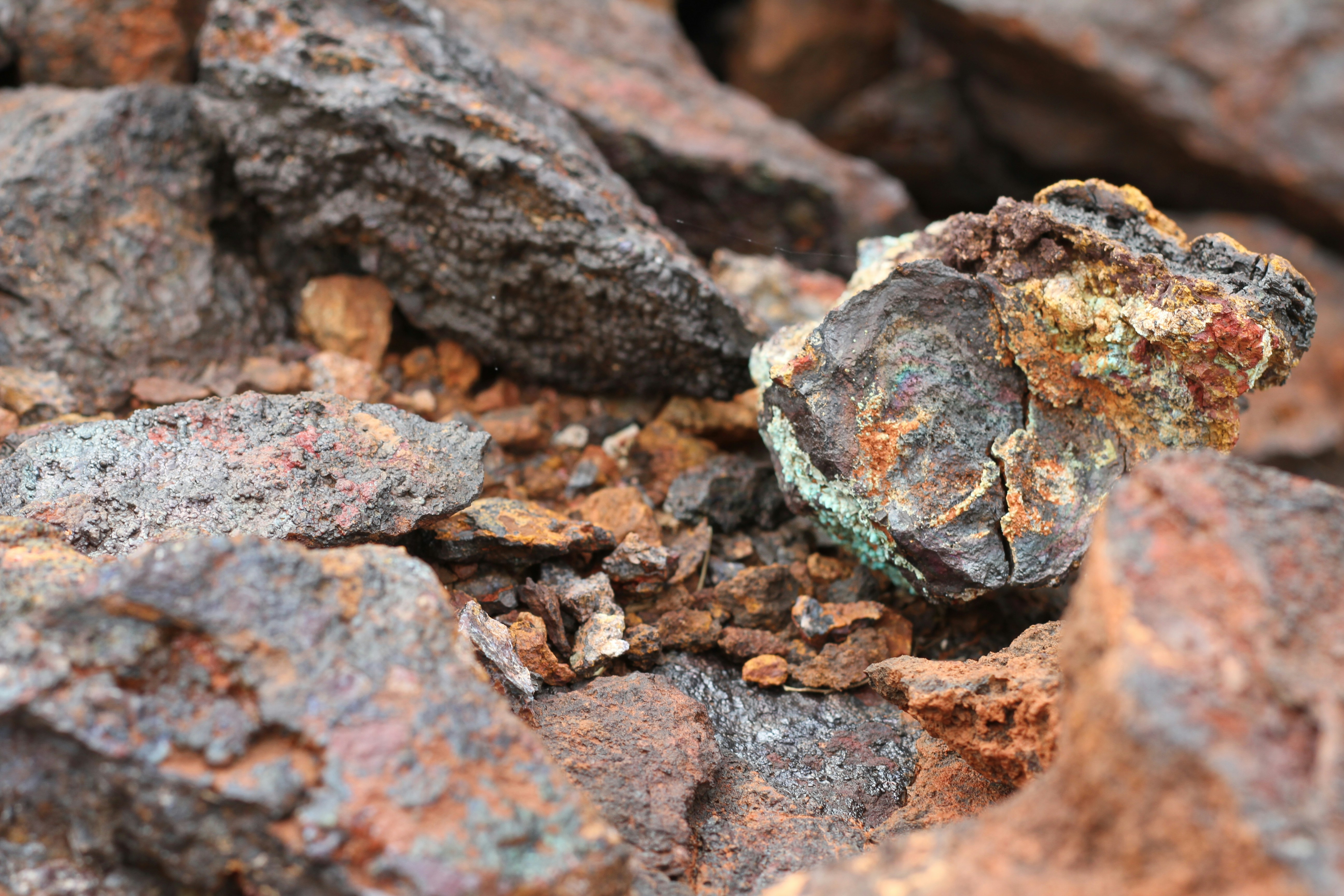
Institutionalizing ESG compliance must go beyond box-ticking. It requires a cultural shift in governance, where transparency, accountability and stakeholder engagement are central to decision-making. Regulatory agencies must be empowered and better resourced to conduct rigorous environmental and social impact assessments, monitor compliance and enforce penalties for violations. Integrating ESG metrics into licensing and permitting processes—with independent verification—can further institutionalize best practices.
The events of early June offered both a warning and an opportunity. Indonesia can either treat ESG as a public relations tool to manage reputational risks, or as a transformative framework to guide its critical mineral development. The latter approach would not only strengthen its international standing but also ensures that economic growth does not undermine the environmental and social foundations on which it depends.
Indonesia stands at a crossroads. It can assert global leadership not only through its mineral reserves or smelting capacity, but by demonstrating that resource governance in the energy transition era is rooted in integrity, inclusion and international cooperation. The revocation of the Raja Ampat mining licenses was a welcome reactive measure. The next step must be proactive: embedding internationally recognized ESG standards into the very fabric of Indonesia’s mineral governance system. Indonesia now has the chance to show the world that responsible mining and economic development can go hand.
Traceability Is the Word on Everyone’s Lips, But What Do Anticorruption Experts Think?

Accessing reliable information on supply chains is one of the perennial challenges of a sector as complex as mining, with the various midstream and downstream industries that rely on it. Traceability has emerged as one approach to address this challenge and support fairer and reliable supply chains. But action is needed to ensure that the concept becomes more than a buzzword.
What is traceability?
Traceability is the ability to track three types of information related to a product: (1) its geographical route, including origin, processing or transit; (2) its chain of custody, that is, the various entities that have held the product throughout the supply chain; and (3) its physical evolution, including processing and transformation.
Many hope that traceability will unlock a fairer mining sector, including by helping tackle harmful corruption. We’ve seen how corruption in the sector denies citizens and communities access to the benefits of mining, exacerbates and obscures social and environmental harms, and leads to costly delays and disruptions which impact supply chain stability. Yet there are also concerns that traceability is being presented as a magic solution to nuanced and complex problems. Without serious consideration of how to use the data for positive change, it risks becoming yet another tick box exercise. While useful, traceability alone is not a substitute for due diligence.
One thing is clear: minerals and efforts to make their supply chains more traceable—and ultimately more sustainable and secure—are expected to receive significant attention at international fora in the closing months of 2025. At COP30 in Belém, Parties[AM1] and advocates are aiming for the first ever mention of minerals and their relevance for a just transition in COP text. The Colombian government has tabled a draft resolution at the UN Environment Assembly (UNEA7) in December, aimed at advancing talks on a global mineral treaty, after first proposing the idea of a binding international agreement on minerals traceability and accountability when it hosted the biodiversity COP16 in 2024.
Traceability and anticorruption efforts
Given these efforts, the Expert Group on Preventing Corruption in Transition Mineral Supply Chains today published a two-page explainer for decisionmakers on how traceability can—and cannot—be used to fight the pressing issue of mineral sector corruption. We explore how traceability data can be used to support anticorruption due diligence efforts, the limitations of traceability systems for anticorruption work, ensuring the integrity of traceability systems themselves, and the roles that different actors can play.
The explainer is the latest collaborative effort from the Expert Group, set up in 2022 as a multistakeholder forum of experts from civil society, governments, academia, enforcement agencies, and international organizations, co-coordinated by Natural Resource Governance Institute, the Extractive Industries Transparency Initiative (EITI) International Secretariat, and the Organisation for Economic Co-operation and Development (OECD) Centre for Responsible Business Conduct. We came together to draw attention to the risks of rapid growth in a sector that is of critical importance to discussions on both the energy transition and energy security.
Below, members of the group share why talking about this topic matters.
Traceability systems for critical minerals enable transparency across mineral origins, ownership structures, supply chain movements, and sustainability performance. As highlighted in the IEA-OECD report on the Role of Traceability in Critical Mineral Supply Chains, well-designed systems provide actionable data to policy makers and industry, helping to identify risks, promote diversification, and enhance energy security.
K.C. Michaels, Legal Counsel, International Energy Agency
Our research shows that corruption is a key enabler of criminal activity along mineral supply chains, shaping who gains access, how oversight is applied, and how revenues are distributed. Traceability and emerging technologies can make a real difference to anticorruption efforts, but only when supported by strong integrity mechanisms that keep data reliable and credible throughout the supply chain.
Matthew Burnett Stuart, Programme Officer, United Nations Interregional Crime and Justice Research Institute (UNICRI)
At Resource Justice Network, we envision traceability as a paramount tool for ensuring a just energy transition. But access to data is not enough, without accountability, traceability becomes a box-ticking exercise. By integrating strong anticorruption measures, we work to ensure that transparency translates into real justice for communities and effective governance across the supply chain.
Pierre Saade, Head of MENA Region and Anticorruption Focal Point, Resource Justice Network
To discuss the ideas and recommendations in the explainer, please reach out to Susannah Fitzgerald at sfitzgerald@resourcegovernance.org.
Explore how traceability data can strengthen integrity in mineral supply chains in the "From Mine to Market" briefing.
AI and the Future of Minerals and Gas: Frameworks for Climate Justice and Collaboration (Climate Week NYC)
New York City, U.S.

At Climate Week NYC 2025, the Natural Resource Governance Institute (NRGI) and Data & Society co-hosted a panel exploring how artificial intelligence (AI) technologies may reinforce legacies of unjust natural resource exploitation, particularly around economic equity and socio-environmental harms.
Panelists also explored opportunities for AI to support more equitable development, and identify the forms of national, regional and international collaboration needed at the intersection of AI and resource governance.