
Voices of a Just Energy Transition in Senegal

Senegal's energy transition raises important questions about the country's energy choices, how they will be financed, and what they mean for communities. As Senegal implements its Just Energy Transition Partnership (JETP), access to information and the participation of communities and local authorities are essential to ensuring a just, inclusive transition that reflects local realities.
Against this backdrop, NRGI has developed the booklet “Voices of a Just Energy Transition,” a resource designed to democratize access to information, strengthen transparency, and connect energy governance issues with the realities experienced by communities.
From international experiences to the governance challenges, investment plan feasibility and financing of the JETP, as well as perspectives from local communities, the booklet goes beyond storytelling. It amplifies community voices, unpacks key issues, challenges and opportunities, and draws lessons from local experiences to inform Senegal's energy choices.
Voices of a Just Energy Transition in Senegal
Download and read the “Voices of a Just Energy Transition” booklet to better understand the JETP in Senegal and explore community perspectives on the country's energy future.
Bringing Local Perspectives into the Conversation
As part of this effort, NRGI, in collaboration with SYNDEV and WIM Sénégal, organized a knowledge-sharing and experience-sharing meeting on October 22 in Thiès, bringing together more than 50 participants from communities affected by energy projects, the media and local authorities.
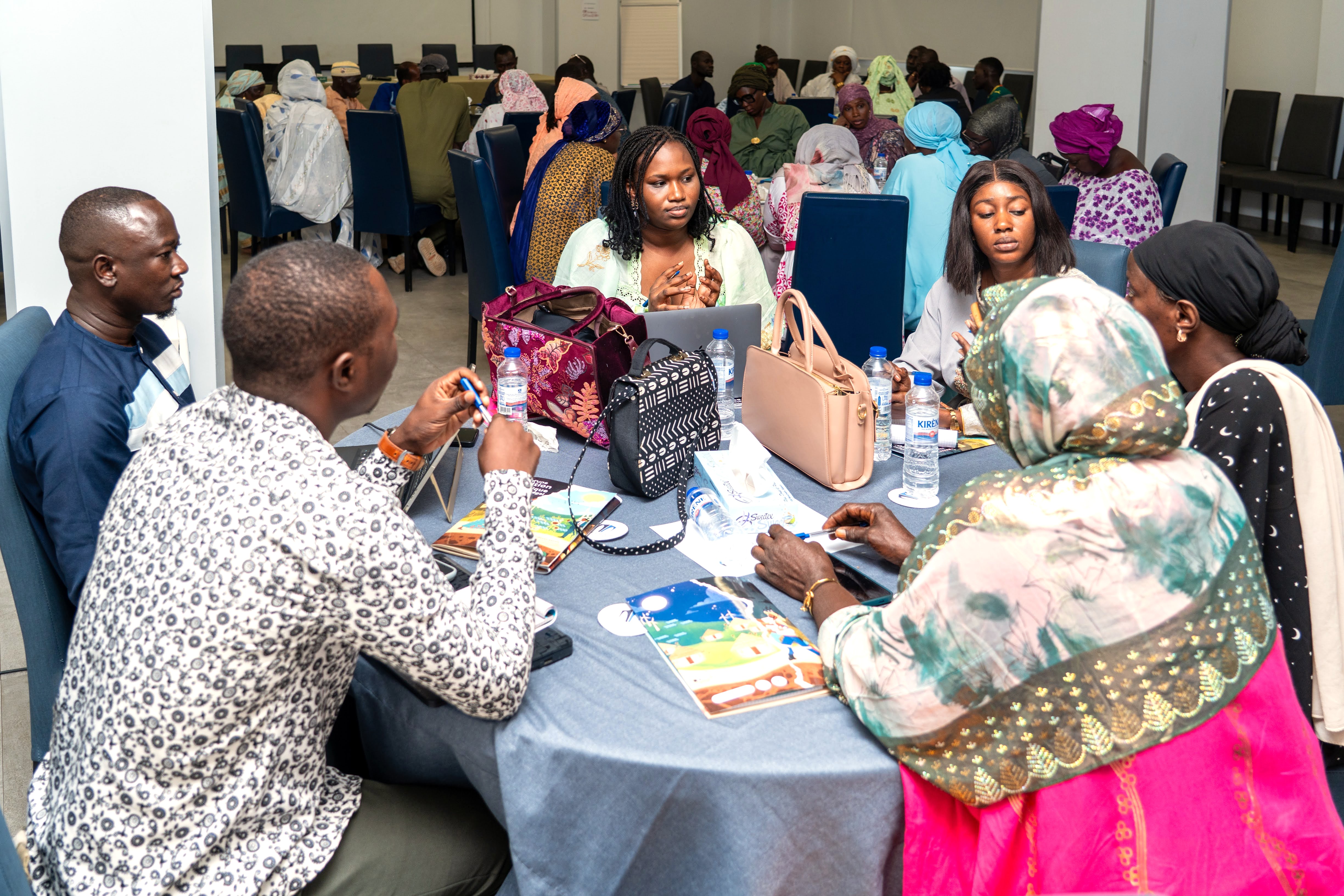
The meeting helped participants better understand and engage with the booklet, encouraged the inclusion of diverse voices, and strengthened dialogue among stakeholders to ensure that local realities inform discussions about Senegal's energy future.
Information is an essential tool for addressing power imbalances, strengthening citizen participation and promoting inclusive governance. The voices of local communities must count.
NRGI Submission to the Sixth Just Transition Work Programme Dialogue: Minerals and Equitable Value Chains
NRGI submitted its views to the UNFCCC ahead of the Sixth Dialogue of the United Arab Emirates Just Transition Work Programme (JTWP), held in Baku, Azerbaijan, on 10–11 September 2026. The dialogue focused on just transition pathways for the industry sector, including technology, innovation and equitable value chains.
Drawing on our work in resource-rich low- and middle-income countries, the submission examines how mineral-producing countries can translate growing demand for transition minerals into lasting development benefits. It explores opportunities to retain more value through mineral processing and related industries, while addressing economic risks and environmental and social harms.
NRGI identifies priorities for national action and international cooperation:
- Ground mineral value addition strategies in national development goals, economic feasibility, market analysis and rigorous assessment of costs and benefits.
- Involve citizens in decision-making, protect community rights and tackle corruption.
- Provide technical and financial support to strengthen national strategies, institutions and regulatory capacity.
- Ensure mineral-producing countries help shape international rules and partnerships affecting their development prospects.
The submission also considers how the JTWP and the Just Transition Mechanism can support these efforts through finance, technology transfer and institutional capacity building.
Electricity at the Heart of a Just Energy Transition
A Shared Regional Vision for the Future of Energy in the Middle East and North Africa

Developed by civil society partners from five countries, this roadmap sets out five shared priorities for fairer, more transparent and resilient electricity systems in the Middle East and North Africa.
Electricity is central to a just energy transition in the Middle East and North Africa. Reliable, affordable electricity supports livelihoods, essential services and economic development. How the sector is governed will shape countries’ ability to expand renewable energy, strengthen energy security and deliver benefits for communities.
This regional civil society roadmap sets out a shared agenda for electricity sector reform, identifying five priorities:
- Reforming subsidy and pricing policies to strengthen investment in electricity.
- Strengthening transparency, accountability and access to information.
- Improving governance and institutional coordination.
- Strengthening the role of civil society and the media.
- Expanding regional cooperation and electricity interconnection.
For each priority, the roadmap outlines common challenges, calls for reform and commitments by participants. It invites governments, regulators, electricity utilities, regional institutions, international partners, civil society and the media to turn these priorities into concrete policies, initiatives and partnerships.
About this roadmap
During 2025 and 2026, the Natural Resource Governance Institute (NRGI) convened stakeholders from Morocco, Tunisia, Egypt, Lebanon and Iraq to identify shared priorities for a just energy transition in the Middle East and North Africa. Four representatives from each country participated, drawn from government, civil society and the media.
Participants compared national priorities and identified electricity governance as a shared concern and a regional priority for collective advocacy and action. Civil society partners then reconvened to develop this regional roadmap. It reflects their collective priorities, informed by technical expertise and national perspectives contributed by government representatives, experts and media participants throughout the process.
The roadmap is a resource for civil society, policymakers and others working to build fairer, more resilient electricity systems across the region.
NRGI’s role was to convene and facilitate the process. The priorities, calls to action and commitments in this roadmap are the shared views of the relevant participants and do not necessarily represent the positions of NRGI.
Voices from the Territories: Experiences and Challenges of the Energy Transition in Senegal

Key messages
- Renewable energy can become a powerful driver of local development (through electrification, job creation, municipal revenue, and support for small and medium-sized enterprises), provided it responds to real needs and avoids land and economic tensions.
- Local governments and communities support the idea of an energy transition, but are largely unaware of the JETP. From this partnership, they expect reliable energy for productive use, sustainable jobs, and tangible benefits for women and youth. Prioritizing awareness sessions on the investment plan in targeted areas is therefore essential.
- The government must revise local government codes and make detailed economic baseline studies mandatory before any energy project is approved, in addition to socio-environmental impact assessments.
- The energy transition is incomplete if it excludes women: they bear the impacts without sharing in the benefits. Future energy projects must integrate gender markers and inclusive measures, which are indispensable conditions for a just and sustainable transition.
- Energy financing and projects must be conditioned on transparency, community participation, accountability, and clear commitments on local employment, mitigation measures, and benefit sharing.
- The JETP will succeed if Senegal strengthens local government capacity, adopts standard contract models, and establishes transparent multi stakeholder monitoring mechanisms. Civil society (PACTEJ) must continue its role in information-sharing, oversight, and community support.
Senegal has considerable renewable energy potential, including solar, wind, and hydropower, that remains largely underexploited. With the energy transition in view, the country has, over the past several years, committed to developing renewable energy projects, including at the territorial level, where they now account for 30% of installed national capacity.
In 2023, Senegal joined the Just Energy Transition Partnership (JETP), with the objective of increasing the share of renewables to 40% by 2030, reducing production costs, improving electricity access in rural areas, creating local jobs, limiting environmental impacts, and stimulating territorial development.
The JETP mechanism is still in the design and validation phase. It will be accompanied by an investment plan, not yet published, comprising 34 validated projects, of which only 11 have secured financing. In that investment plan, the government acknowledges the need to establish a body, commission, or working group dedicated to equity and justice, whose mandate would be to “evaluate projects” and which “may request modifications or amendments to better respect equity and justice criteria,” with a particular focus on the social impacts of selected projects, including employment, local content, training, social dialogue, gender, and human rights.
In this context, the energy transition must not be reduced to a mere technological shift or a set of quantitative production targets. It must be just and equitable. This means integrating the needs and voices of directly affected communities, reducing inequalities, preparing local governments for the transformations ahead, and ensuring that the benefits of the transition reach everyone, especially the most vulnerable groups.
This analysis builds on previous NRGI work on the JETP in Senegal, developed in partnership with Senegalese civil society organizations, with the goal of amplifying the voices of communities and local authorities likely to host energy projects. It draws lessons from the power plants established in Bargny (coal), Malicounda (thermal and solar), Méouane (solar), and Taïba Ndiaye (wind), highlighting the experiences of municipalities and local communities regardinggovernance practices and the socio environmental impacts of these projects. It also examines how renewable energy projects have been implemented in practice, the gaps between stated “just transition” principles and on-the ground realities, and formulates concrete, actionable recommendations.
This work is the product of desk research combined with in-depth interviews, focus groups, and site observations in the areas hosting the projects. In total, ten interviews and five focus groups were conducted.
The interviews and focus groups were carried out by a joint team from NRGI (Natural Resource Governance Institute), LSD (Lumière Synergie pour le Développement), and WIM (Women in Mining). Data were collected from communities, with particular attention to women, community leaders, and young people, as well as from elected local officials. On 19 November 2025, NRGI organized a workshop to review preliminary findings with community actors, local authorities, and civil society organizations, to cross-check and strengthen the field data.
Some limitations of this study should be noted, in particular the absence of direct interviews with companies operating in the areas studied, which would have allowed for cross-checking and verification of the information gathered from communities and local authorities.
This gap underscores the need for a more balanced and ongoing dialogue between public, private, and community actors, in order to build a shared understanding of the real impacts of energy projects on local territories.
Mexico as a “Re-Exporter” of U.S. Gas: Time for Transparency

Mexico’s plans to liquefy huge amounts of gas from Texas and ship it to foreign buyers gained ground so far this year, even though the likely impacts on energy supply, the economy and people remain opaque.
Several projects signed long-term contracts with buyers, obtained key permits and approvals, and announced fresh timelines. The investors behind LNG projects on the Pacific Coast claim the war with Iran has raised interest from foreign customers, as Asia and Europe seek replacements for stranded Middle Eastern LNG.
In Baja California, in July, Sempra’s ECA LNG shipped its first cargo to Asia, making it Mexico’s second operational LNG export plant and the first on the Pacific Coast. In March, however, Sempra also canceled the Vista Pacífico LNG project in Sinaloa, highlighting uncertainties around LNG both in Mexico and globally.
In earlier posts, we questioned how realistic Mexican LNG re-exports are and whether their benefits will exceed the costs. But more than halfway through 2026, answers are scarce and LNG remains a large blank spot in Mexico’s energy planning and policies. The government has yet to explain how these projects will impact the country’s energy security, public finances, communities, or goals for clean energy and climate.
This opacity extends to individual projects. When Amigo LNG’s environmental impact statement (MIA) appeared online, it was heavily redacted. The first operating export terminal in Mexico, New Fortress Energy’s Altamira FLNG 1, likewise discloses limited information about its finances and operations.
Without more transparency, Mexico will not have the sort of open, evidence-based debate that LNG re-exports deserve.
Project developers and government agencies need to publish information that answers these basic questions:
Will LNG projects consume gas that Mexico needs for its own energy?
NRGI analysis shows how Mexico’s deep dependence on gas risks energy shortages. Yet key data needed to assess those risks are either outdated or not publicly available.
Until recently, record-setting US production and a wave of new liquefaction projects were creating a glut of LNG. However, the disruption of LNG exports through the Strait of Hormuz has tightened global gas markets, with nearly 20% of global LNG supply temporarily affected.
U.S. firms have rushed to fill the gap, making supply conditions and competition much tighter than previously anticipated. Meanwhile, the U.S.’s own demand for gas, mainly for electricity generation, is also soaring.
If companies re-export US-based gas through Mexico, this will create even more competing demand. A recent analysis found that the original plans of Amigo LNG could lead to gas shortages at four Sonoran power plants because the existing pipeline network cannot transport enough gas to supply both the power plants and Amigo. Given these risks:
- Mexico's Ministry of Energy (Sener) should regularly update and improve the System of Energy Information (SIE), including publicly accessible and disaggregated data on gas imports, exports, consumption, and infrastructure use. The U.S. Energy Information Administration (EIA) and the Brazilian ANP (Agencia Nacional del Petróleo, Gas Natural y Biocombustibles) are examples of good practice. The public should be able to identify gas importers, LNG exporters, which sectors consume it, and how volumes move through Mexico’s pipeline network.
- LNG developers should publish MIAs that describe in detail how their projects would affect gas availability. The disclosures should show how much gas a project will consume, where it will come from, and whether sufficient gas and pipeline capacity will remain available for domestic users.
- Sener should include scenarios in the Natural Gas Outlook assessing how LNG exports will impact gas demand, imports, infrastructure use, and energy security.
How will re-exports affect the prices Mexico pays for gas and gas-derived products?
U.S. government studies have warned that more LNG exports, whether from the U.S. or Mexico, could make gas and electricity prices higher on both sides of the border.
The effects could intensify during periods of high demand (e.g. in winter) or supply disruptions. This has already happened in parts of the U.S., where dysfunction in LNG markets left consumers paying more for energy.
Higher gas prices in Texas or increased volatility will inevitably expose Mexico to higher power generation costs. They could also hike prices for fertilizers, petrochemicals, cement, steel, paper, plastics, glass, and processed food. As such:
- Sener should assess and disclose the risk of gas price increases for the different sectors that use gas. Within the PLADESE (Plan de Desarrollo del Sector Eléctrico), Sener already tracks gas price assumptions/trends to address the forecasted demand, but it should explicitly assess the impacts of LNG exports on gas prices, generation costs and electricity prices across different regions of the country, as these impacts are likely to vary regionally.
- Sener should use the Natural Gas Outlook and regional gas price data to assess how LNG exports could affect gas prices for industry and other consumers. The analysis should estimate impacts across sectors and regions and be updated regularly as LNG projects move forward.
Who will build and control the pipelines that feed LNG plants?
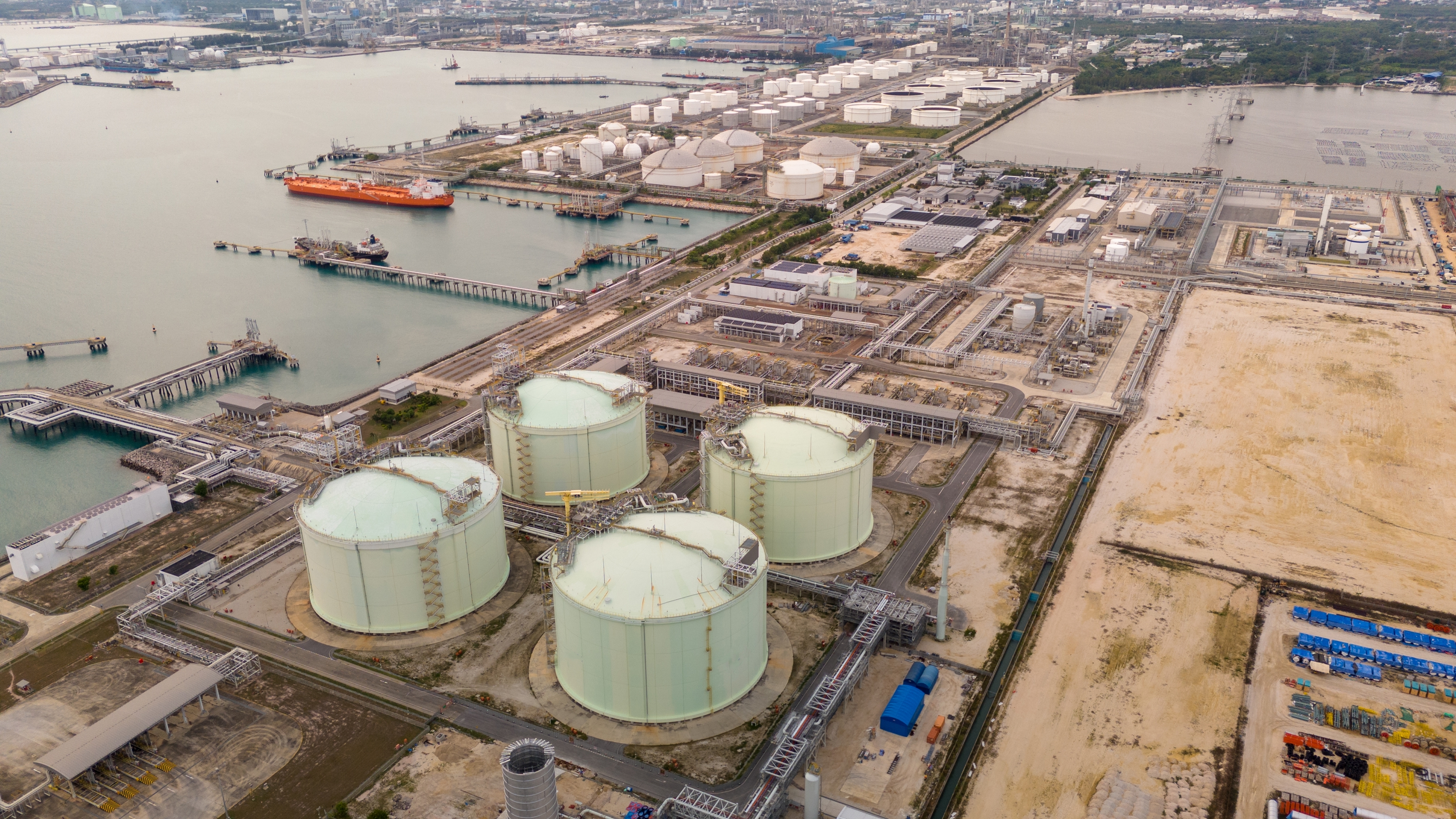
While some projects will use existing state-owned pipelines, others will require new infrastructure worth billions. The National Center for Natural Gas Control (CENAGAS), which operates significant gas pipeline infrastructure, wants to partner with private companies on a new line in Sonora to feed an LNG export project, as part of its costly new pipeline modernization plan. Key details remain unclear, however, and to clear this up:
- CENAGAS should explain the legal and commercial structure of any new pipeline linked to LNG exports. The public needs to know who will own, build, operate, finance, and control the lines, why they are needed, and whether domestic users will have guaranteed access.
- Project developers should disclose details about pipelines that affect the public interest. These include route, capacity, interconnections, transportation agreements, reserved capacity, and any commitments involving public infrastructure.
- Sener should include LNG-linked pipeline projects in the PLADESHi (Plan de Desarrollo del Sector Hidrocarburos) and explain how these projects fit within Mexico’s broader gas strategy. This includes which projects would primarily serve domestic demand versus exports and how domestic supply will be guaranteed.
What revenue will the government earn?
Officials and project developers are promoting LNG re-exports as major investments, yet no one has explained in depth how they will benefit the state financially and how much value will remain in Mexico. To remedy this:
- Ministry of Finance and Public Credit (SCHP), in coordination with the relevant agencies, should clearly explain the fiscal framework applicable to LNG re-export projects. At a minimum, this should include:
- The types of taxes, fees and other payments that companies are required to make—for instance, corporate income (ISR) and payroll taxes, port and gas processing dues, and one-time fees for permits and customs.
- The legal basis for each obligation (law, regulation, contract) and the agency responsible for collecting them.
- Any incentives, exemptions or subsidies that projects or their developers will receive.
- How the government will benefit from the windfall profits projects earn when prices are high.
- Federal Electricity Commission (CFE) should disclose both its actual earnings and commercial rationale for participating in LNG projects. This should include revenues from gas supply, transportation services, infrastructure use, equity participation, or any other commercial arrangement linked to LNG projects.
- Sener should establish a public mechanism to monitor LNG-related revenues over time. Whether through the federal budget process, the Cuenta Pública, or project-level reporting, the public should be able to track what the government and state-owned enterprises actually earn from LNG re-exports once projects begin operating.
What jobs and other socioeconomic benefits will re-exports bring?
The executive branch has touted LNG’s job creation potential without saying how many jobs, or what kind. Project developers make similar claims, yet gas liquefaction plants generally require few workers. Amigo LNG, for instance, says it expects to create 6,000 direct jobs during construction and about 1,000 once operations start. And what about links to the broader economy such as local procurement, workforce training, or infrastructure improvements?
- Sener should require LNG developers to quantify and publish standardized indicators on jobs and other socioeconomic benefits through their Social Impact Assessment (MISSE) and annual social-management reports. These should include construction and permanent jobs, local procurement, workforce training, social investment, and other promised benefits, allowing the public to compare commitments with actual outcomes.
- Sener should make MISSE follow-up reports publicly available in a searchable format. The law already requires annual reporting on social-management commitments and shared social benefits; the public should be able to track results over time.
- The ENTE (Estrategia Nacional de Transición Energética) and PROSENER (Programa Sectorial de Energía) should explain how LNG re-exports serve the country’s bigger energy and developmental goals. They should clarify whether these projects are expected to support regional employment, local supply chains, industrial development, or other public-policy objectives, and how success will be measured.
Disclosures like these will make it clearer how the costs and likely benefits of LNG re-exports will be shared. Improving public disclosure of data on both gas imports and LNG exports would strengthen evidence-based policy-making and support more informed decisions.
Timely, comprehensive, and publicly accessible information about the energy sector, and LNG in particular, has become even more important as the Mexican transparency framework has changed. Mexico is not making effective use of international initiatives like the Extractive Industries Transparency Initiative (EITI) and the Open Government Partnership (OGP).
Talia Contreras Tapia is Mexico program officer for NRGI. Diego Rivera Rivota is a senior research associate at Columbia University’s Center on Global Energy Policy. Aaron Sayne is NRGI’s lead for sustainable energy supply.
This analysis is published as NRGI marks its 20th anniversary under the theme “Transforming resource governance for a new era,” and it applies lessons from two decades of resource governance to one of Mexico’s most defining energy challenges.
Read the report
Mexico's structural dependence on gas threatens its socioeconomic stability and limits the country's options for advancing the energy transition. It is time to rethink this path.
Life After Oil in Campeche: Youth Must Lead Alternative Paths

In some oil-dependent regions, the decline of hydrocarbons is not being managed strategically. It is being handled reactively, as production falls. Campeche exemplifies this reality, and the resulting uncertainty hits its youngest population especially hard.
Against this backdrop, the Nationally Determined Contributions (NDCs), the state-owned oil company Petróleos Mexicanos (Pemex) and local universities have a fundamental role to play: they must not only address the personal, professional and territorial development needs of young people, but also guarantee their participation in the decisions that directly affect them.
The challenge facing Campeche's young people
Campeche ranks among the three states with the highest dependence on public revenue from carbon-intensive activities, according to the 2025 Subnational Sustainable Finance Index. At the same time, its oil decline is tangible: in 2025, production stood at 801,080 barrels per day, less than half the volume recorded in 2013.
The State Development Plan itself documents a 47% drop in real Gross Domestic Product (GDP) between 2004 and 2022, linked to the decline in oil activity. It also warns that the prolonged recession has had negative effects on employment, tax revenue and investment.
Diversifying the state's economy is therefore a pressing priority.
The pressure on entering the labor market is not a future problem; it is already here. In 2020, the largest age groups in Campeche were concentrated between the ages of 5 and 14. Six years later, part of that demographic is nearing or has already reached working age.
The challenge is not only to create alternatives before the youngest reach the labor market. Planning has to start now, so that those beginning their careers have real opportunities.
Involving young women and men directly is what counters their dissatisfaction. According to the State Development Plan, young people report a 47% satisfaction rate with their surroundings, which underscores the need for actions that build their interests into local decision-making.
In the end, economic alternatives that drive equitable development can emerge only if the effort reaches broad sectors of the population. Young people have to be part of the work that will shape the future of the place they live.
Youth participation as an antidote to political disenchantment
The fact that 48.5% of young people do not feel represented by those holding popularly elected offices in Campeche points to a disconnect between the priorities of a significant portion of this demographic and the political projects being implemented.
That gap raises a key question: How could greater youth involvement in state development planning make sure their visions are better represented?
The willingness to be active participants already exists. Nearly 80% of the children and youth in Campeche who responded to the latest Consulta Infantil y Juvenil (Child and Youth Consultation) believe that exercising their right to participate is important for solving collective problems.
Asking what they want for their community, and how they want to take part, is one of the first steps toward building economic diversification scenarios that distribute benefits equitably and open the way to new realities.
That is why bringing their experiences, hopes and concerns to decision-making spaces is both valuable and necessary.
At NRGI, we support the participation of youth living in oil-producing regions in the Conferences of Youth on Climate Change, spaces organized at the national, regional, and international levels where proposals are generated to influence climate policy in the country, the continent and the world.
The result: for the first time, the National Youth Position includes proposals for just energy transition processes that take the case of these regions into account.
A call to include young people
Various instruments at the international, national and local levels can open space for young people to take part in energy transition planning and shape it.
At the international level, the NDC offers a significant window of opportunity.
Although these are national implementation plans, international climate negotiations include mechanisms that allow for transparent monitoring of their progress within the framework of the commitment to global goals.
These transparency exercises offer an international route for tracking the measures countries adopt, especially measures that both require youth participation and stand to gain from it.
Mexico, in its most recent update, incorporated a cross-cutting component on intergenerational justice and a just transition toward a sustainable economy. Among the measures included are the promotion of intergenerational dialogue spaces and taking future generations into account in present-day decisions.
Both can support the energy transition, particularly in decisions about new investment projects in oil-producing states.
Likewise, the NDC includes the development of a National Labor Transition Plan, which contains a strategy to generate decent green jobs in key sectors. That strategy has to reach young people in the Gulf states directly, so they can access the job-placement support necessary to develop professionally in their own state, beyond the oil industry.
At the national level, then, key energy sector players such as the Ministry of Energy and Pemex need to be at the table.
In general terms, and without specifying sectors, the NDC proposes to promote training and workforce retraining and redeployment in the most polluting industries.
In line with this measure, Pemex can also play a significant role by incorporating proactive labor transition planning through retraining programs that prepare its workers for emerging sectors, deliberately including women and young people. Furthermore, Pemex's opening toward new business lines related to the energy transition could be a way to incorporate young local talent from these states. To do this, the company could act as an ally in building training and industry-linkage programs, always designed and implemented with youth participation.
At the subnational level, local universities play a strategic role. On the one hand, they are the primary training ground for the talent available in these states. Their degree programs must adapt to respond to major local challenges, such as the oil decline.
The Technological University of Campeche is already doing this, recognizing the need to update its degree programs to align them with the new demands of the region. On the other hand, universities can play a key role in identifying new areas of economic development that align with local capacities and needs, generating evidence on key issues and facilitating coordination among stakeholders for decision-making.
In both roles, they can become spaces where young people organize and collectively influence the direction of the energy transition, beyond just job opportunities.
NRGI recognizes that there is not one energy transition but many, and that each region experiences them differently depending on its economic, political and social realities. In oil regions like Campeche, the oil decline is already a reality that demands a rethinking of resource governance at the subnational level.
As part of our 20th anniversary, under the motto "Transforming Governance for a New Era," we are committed to ensuring that youth and the range of actors in these states—subnational governments, universities, and more—participate in decisions about their future. No transition will be just if it is decided without them.
Nigeria’s Gas-to-Power Ambitions: Limits, Opportunities and Alternatives

Key messages
- Gas power has contributed significantly to the growth of electricity supply in Nigeria, but with gas power plants reaching their peak in 2016, gas is now falling short of meeting the country’s rapidly expanding electricity needs.
- Looking ahead, major systemic problems with gas supply, power transmission and payments will make it hard for Nigeria to achieve its enhanced electricity access ambitions solely through kick-starting its existing gas power plants or building new ones.
- Nigerian solar, meanwhile, is growing by leaps and bounds, especially smaller-scale systems for communities, industry and homes.
- Off-grid and small-scale solar systems have more potential than gas to deliver affordable power to unserved Nigerians. Solar can also replace private generators which are expensive, polluting and powered by dirty fuel.
- Decentralized control of Nigeria’s power sector from federal to individual states holds promise, but only if well managed. This will depend on strong coordination mechanisms, harmonized regulatory standards and state-led investment platforms to mitigate potential challenges.
- At the same time, renewables in Nigeria are not reaching their full potential or scaling fast enough to meet needs. The country still has no utility-scale projects despite years of effort, and it would benefit from innovating and adopting investment-friendly policies.
- The challenge now is to revise ambitions for gas power while making plans, policies and public investments that help renewables scale in more efficient, equitable ways.
Introduction
For decades, Nigeria has articulated ambitious plans to leverage its gas resources to deliver energy access, industrialization, electricity for homes and businesses, transportation and more. Its latest plan—the Decade of Gas initiative, running from 2021 to 2030—reveals similar aims, including around gas-to-power. Despite these efforts, more people without access to electricity live in Nigeria than anywhere else in the world. Tens of millions more endure poor-quality service, with daily power cuts, and rely on costly private generators. Without new power delivery systems, poverty will remain endemic and the economy will continue to struggle.
Nigeria has over 200 trillion cubic feet of gas reserves—Africa’s largest and the eighth largest in the world. However, reserve size alone does not guarantee domestic availability. Converting reserves into commercially producible gas requires substantial investment in gathering systems, processing facilities, transportation infrastructure and security arrangements. Since military rule ended in 1999, successive governments have invested in gas-to-power, rolling out new plans and policies; privatizing plants; and spending billions of dollars on infrastructure, industry bailouts and subsidies. Three-quarters of on-grid power supply now comes from gas, up from less than half in 2000.
The country’s plans for gas do not stop at electricity, either. Policy-makers and businesses want to: turn gas into heat and feedstock for heavy industries like cement, fertilizer and petrochemicals; replace dirty, dangerous household fuels like kerosene or charcoal with liquified petroleum gas; and earn more revenue from selling liquified natural gas (LNG) as oil exports decline.
Policymaking and investment in the electricity sector are very dynamic right now, especially around renewables.
After years of slow growth, renewable power—especially small-scale solar—is starting to take off in Nigeria. The federal government is offering various kinds of policy support for minigrids, solar home systems (SHS) as well as commercial and industrial (C&I) installations. Critically, some states are also starting to create their own power markets and delivery systems, as permitted by the 2023 Electricity Act. This decentralization of control over electricity has the promise—if well managed—to ease long-standing barriers to growth in the power sector and find more diverse, reliable and affordable solutions to the many electricity-related struggles Nigerians are facing. Strong coordination with harmonized regulatory standards and state-led investment platforms could enhance the potential for success of this decentralized approach.
This report assesses the historic performance and prospects for gas power in Nigeria, as well as the potential for renewables to serve as a complement and alternative to gas. It does not advocate for wholly eliminating gas from Nigeria’s energy mix. Rather, it examines whether current gas-to-power ambitions are realistic given the sector constraints. The report explores whether greater emphasis on renewable energy could more effectively advance Nigeria’s electricity access, affordability and development objectives where gas supply, financing and infrastructure remain unattained.
Findings are based on analysis of relevant data sets and past reports; consultations with industry experts; engagements with civil society actors; and the results of a one-day validation session held by the Natural Resource Governance Institute (NRGI) in Abuja, with partners Nextier and The Electricity Hub. The publication forms part of NRGI’s broader work on gas in Nigeria, which seeks to examine how the country can maximize development benefits from its gas resources while avoiding costly investments that may not deliver expected economic, fiscal or energy outcomes. The aim of this report is to help decision-makers as they shape the future of energy in Nigeria.
Gérer l’Avenir du Secteur Extractif Africain dans le Contexte de la Transition Energétique
En ligne

Contexte
La transition énergétique mondiale offre aux pays africains riches en ressources une occasion unique de mener à bien leur transformation socio-économique et d'assurer la durabilité environnementale. Les nations qui sauront exploiter de manière stratégique leurs abondantes réserves de minéraux critiques, indispensables aux technologies d'énergie propre, et promouvoir l'innovation sont celles qui en tireront le plus grand bénéfice.
Cependant, la concrétisation de ces avantages n'est pas garantie. La faiblesse des systèmes de gouvernance, l'incohérence des politiques et les risques de corruption pourraient compromettre les progrès et exacerber les inégalités. Pour saisir eAicacement ces opportunités et atténuer les risques, les gouvernements africains devront adopter des politiques économiques et industrielles tournées vers l'avenir, en phase avec les impératifs de la transition énergétique. Cela implique notamment de favoriser une gouvernance transparente, inclusive et responsable dans l'ensemble du secteur extractif afin de garantir que la richesse issue des ressources contribue à un développement équitable à long terme.
C’est dans cette perspective que le Centre d’Excellence pour la Gouvernance des Industries Extractives en Afrique Francophone (CEGIEAF) organise la 15ᵉ édition de son Université d’été sur la gérer l'avenir du secteur extractif africain dans le contexte de la transition énergétique, qui se tiendra en ligne du 13 au 24 juillet 2026.
Public cible
L’université d'été s'adresse aux organisations de la société civile (OSC), aux médias, aux chercheurs et aux responsables gouvernementaux qui œuvrent à la promotion de la bonne gouvernance dans les industries extractives. Les diplômés intègrent un réseau
d'ancien(ne)s apprenant(e)s dynamique qui leur oAre un accompagnement continu, des possibilités de développement professionnel, ainsi qu'une plateforme d'apprentissage, de collaboration et d'action collective à travers toute l'Afrique.
Les cours
Cette université d’été vise à combler les lacunes en matière de connaissances dans les secteurs extractif et énergétique en Afrique. Elle rassemble des acteurs clés de toute l'Afrique francophone afin d'explorer les défis et les opportunités en constante
évolution en matière de gouvernance dans le secteur extractif, en particulier dans le contexte de la transition énergétique.
Dans le cadre de ce programme, les participants prendront part à des sessions animées par des experts, à des activités d'apprentissage entre pairs et à des études de cas pratiques. Cet événement oAre une plateforme dynamique pour examiner des solutions
innovantes et des approches stratégiques visant à construire un avenir énergétique juste et durable pour l'Afrique.
Les cours se dérouleront à raison de trois sessions par semaine, chaque session d’une durée de deux heures, favorisant des échanges interactifs entre les participants et les experts.
Les participants vont explorer les thématiques suivantes : la politique économique des industries extractives, la transition énergétique et le secteur extractif, optimiser les retombées économiques et renforcer la résilience économique, gouvernance socio-environnementale, concilier les retombées locales et l’inclusion.
Conditions d'éligibilité
Les candidats doivent :
- Occuper un poste au sein d'une institution impliquée dans la gouvernance du secteur extractif ou énergétique (par exemple, parlement, milieu universitaire, OSC ou médias).
- Avoir au moins trois ans d'expérience pertinente dans les secteurs du pétrole, du gaz, des mines ou de l'énergie.
- Faire preuve d'un intérêt marqué et d'une bonne compréhension des questions de politique et de gouvernance liées aux ressources naturelles, y compris la transition énergétique.
- Être en mesure de participer pleinement à l'ensemble du programme.
- Avoir une bonne maîtrise du français écrit et parlé.
Coût de la formation
Le coût total de la formation est de US$500 et couvre les frais de cours. Des bourses complètes ou partielles seront accordées à quelques participants après étude de dossier pour couvrir directement les frais de cours.
Compte tenu du nombre limité de bourses, nous encourageons vivement les candidats à chercher des financements pour leur participation.
Comment postuler
Toute personne intéressée à participer au programme et ressortissant d’un pays d’Afrique francophone est invitée à en faire la demande en envoyant à l’adresse électronique ciaprès cegieaf.candidatures@gmail.com les documents ci-après :
- Une (01) page de lettre de motivation détaillant les raisons pour lesquelles l’intéressée souhaiterait bénéficier de ce programme, son expérience et celle de son organisation dans le domaine. La lettre doit indiquer si l’intéressée sollicite une bourse partielle ou totale, ou sera soutenu par un autre partenaire.
- Un CV actualisé.
- Date limite de réception des dossiers de candidature : 29 avril 2026.
Pour tout renseignement complémentaire, veuillez nous contacter à l’adresse : cegieaf2016@gmail.com ou lnyassi@resourcegovernance.org
- Les candidatures féminines sont fortement encouragées.
- Les candidatures des leaders d’associations/ de réseaux de jeunes et/ou femmes actifs dans le secteur extractif au niveau communautaire sont fortement encouragées.
Coordinateur de la formation

Lucain Nyassi Tchakounte
Africa Capacity Development Officer
Can Mineral Governance Funding Do More With Less – What Should We Prioritize? (Mining Indaba)
Cape Milner Hotel

This dialogue brings funders, implementing partners, and thought leaders together to grapple with a hard and necessary question: how can mineral governance funding do more with less — and if so, what should be prioritized? As demand for minerals accelerates and governance challenges intensify, funding for mineral governance is becoming increasingly constrained.
This session will present key findings from a new study commissioned by the BHP Foundation on Thinking Strategically About Mineral Governance Funding: Perspectives on Current and Future Priorities, which maps the current landscape of mineral governance funding. It explores where resources are flowing, which issues are being prioritized, and where critical gaps remain.
The discussion will unpack the alignment (and misalignment) between donor priorities, state interests and the mandates of implementing organizations, surfacing trade-offs and assumptions and laying the foundation for discussions about the most strategic ways forward.
Featuring NRGI's
Ibrahima Aidara
Deputy Africa Director