
The Connective Fabric of Natural Resource Governance: Reflections from UNGA and Climate Week

Last week, a delegation from NRGI attended the UN General Assembly and Climate Week NYC. Below are our reflections from across more than 20 sessions, side events, our 20th anniversary convening and meetings, with partners from government, civil society, Indigenous Peoples, multilaterals, philanthropy and industry.
Natural resources rarely dominate the headlines at the UN General Assembly, yet they underpin almost every item on its agenda. Whether conversations centered on climate, economic development, trade or geopolitics, the governance of oil, gas and minerals ran through many of them.
That role, however, too often remains implicit. Elevating resource governance as a priority is essential if global efforts on climate, development and security are to deliver equitable outcomes for producer countries and their citizens, and a healthy, sustainable future for all of us.
Security and trade have reframed the journey, but not the destination
Energy security has displaced energy transition as the dominant lens for energy policy, with decisions increasingly driven by geopolitics and cost of living rather than decarbonization. While the end goal of sustainable energy and economic futures remains, this marks a structural shift in the narratives that shape policy and in how influence is exercised.
In the minerals sector, a trade lens now dominates, even during a “Climate Week”. Green industrialization was a central theme, welcomed by some and viewed with skepticism by others. At a UN-hosted Solutions Dialogue on the subject, producer countries, particularly those from Africa, stressed that high costs of capital and limited fiscal space must not constrain their economic and trade ambitions. African participants were clear that the gap is now implementation, not strategy: frameworks such as the African Mining Vision and the Africa Green Minerals Strategy already exist. Because no single country holds every mineral, energy source, skill and market, enabling countries to achieve more value requires regional integration. The African Continental Free Trade Area (AfCFTA) serving as an industrial platform rather than only a trade agreement. Success, many argued, should be measured by the jobs, skills and productive capabilities retained on the continent, not by processing capacity alone. In our remarks, NRGI emphasized the need for additional financing and technical support so that producer countries can design, implement and monitor value addition and diversification strategies that truly meet the needs of their people, and enforce high human rights, environmental and governance standards.
Green industrialization could serve as a bridge that brings mineral trade and climate policy closer together. We are looking forward to further progress at COP31 in November, as green industrialization is a key priority on the Action Agenda launched by Türkiye last week. Looking to next year, NRGI is also supporting a shared agenda on equitable mineral partnerships across the COP32 and UK-led G20 processes, where African countries have an opportunity to connect their climate positions with their leverage as producers of critical minerals.
"Critical for who?": equity and the governance gap
With “critical minerals” being used so often, the question "critical for who?" recurred throughout. Across discussions, there was a unifying call for a new and more equitable economic and political paradigm, but how this plays out in practice remains highly uncertain. There were multiple calls (including from NRGI) for critical minerals to underpin just, country-led transitions that serve producer countries' development aspirations, respect the free, prior and informed consent of Indigenous Peoples and frontline communities, and remedy legacy environmental harms. Several sessions went further, asking not just how much revenue extraction generates but whether it preserves national wealth across generations. Without this, producer countries risk exchanging finite mineral wealth for limited revenues while leaving depleted assets and environmental damage to future generations.
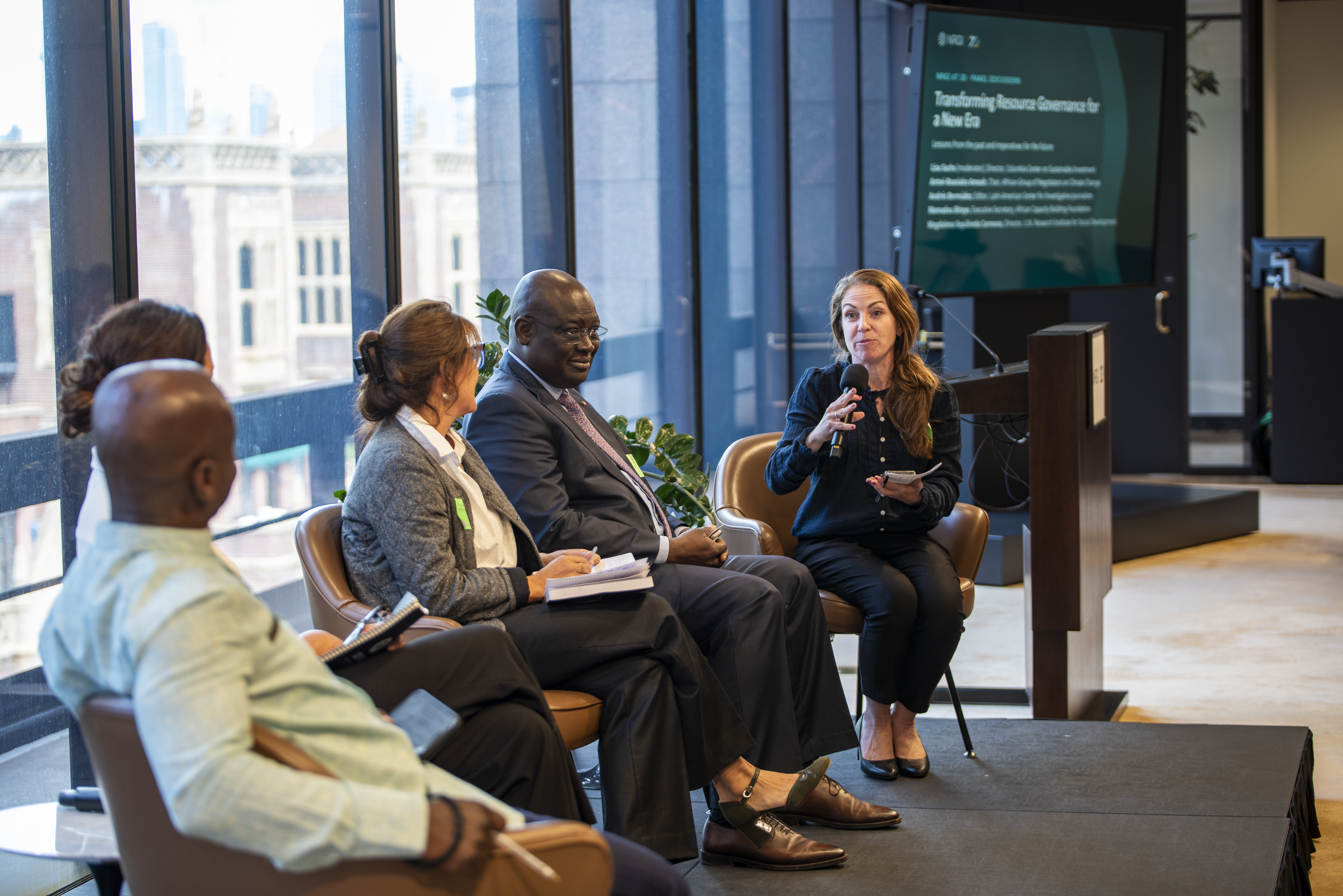
While critical minerals are the focus, the obstacles to fairer and more prosperous societies are structural and systemic – a theme that echoed throughout including in NRGI’s 20th anniversary event. Low- and middle-income countries remain underrepresented in setting new standards and paradigms, despite bearing their costs.
Encouragingly, the discussion has moved from what must change to how. Reformers shared approaches ranging from multi-stakeholder engagement and narrative storytelling to strategic litigation, the quantification of decommissioning liabilities and evidence on the financial materiality of community engagement. Each aims to ensure that community rights are respected and that polluters remediate the harm they cause. A recurring message was that affected communities need agency, not simply better consultation: access to information, the capacity to negotiate and the ability to speak for themselves with governments, companies, investors and financiers. These “unbankable” elements often determine whether supposedly bankable investments succeed.
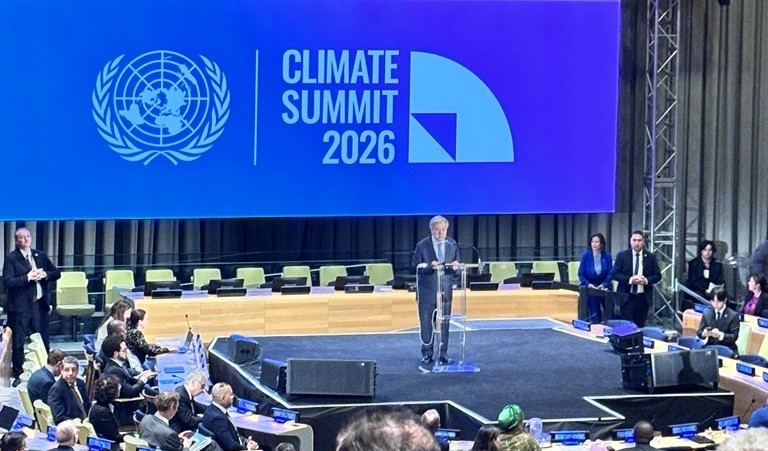
Concrete openings exist to keep making progress. At the UN Climate Summit, the Secretary-General announced a new country support mechanism for six mineral-rich developing countries to implement the recommendations of the UN Secretary-General's Panel on Critical Energy Transition Minerals. Having served on the panel, NRGI and our partners have pressed for this follow-through, including in this joint letter last July. We welcome the mechanism. Connecting with technical assistance partners outside the UN to deliver tailored, demand-led support will be critical to its success. (Learn more: See our video and press statement released during the week). The push for an International Panel on Inequality and next year’s planned SDG Summit offer further entry points to center producer countries in debates on the future economy. The ongoing review of the IFC Performance Standards is another, as these standards shape the practices of commercial banks, export-credit agencies and mining companies well beyond the IFC itself.
Artificial intelligence and the resources beneath it
Some described this as the "AI UNGA". Technology leaders addressed the Security Council, many world leaders mentioned AI in their speeches, and there were countless AI-focused side events. Yet beyond limited discussion focused on data centers, few conversations linked AI development to the minerals that build and power it. This is a gap that policymakers, companies and civil society alike must close.
A notable exception was a discussion convened by the government of the Democratic Republic of the Congo, entitled “AI and the New Geopolitics of Peace and Security”, in which NRGI participated. It followed a July Arria-formula meeting, held during the DRC's Security Council presidency, which called for a global normative framework reconciling peace, security, transparency and sustainable development. NRGI has provided technical input to that process, and this intersection is emerging as a key policy space.
The DRC's leadership is itself both noteworthy and an opportunity. It shows how low- and middle-income countries can shape emerging global norms on minerals, security and AI, rather than simply adopt rules set elsewhere.
A fragmented landscape demands trusted brokers
While emerging coalitions and new opportunities are being born of the current upheaval, fragmentation and polarization remain a challenge. Progress will depend on trusted brokers who can navigate contradictions to unite diverse groups, and on building new, action-focused coalitions.
For NRGI, we see this as a challenge and an opportunity. We will seek to leverage the trust, credibility and knowledge we have built over two decades, while holding a nuanced, independent position in a multi-polar world.
How South–South Learning Is Shaping Mineral Value Addition Strategies

As governments across the Global South seek to increase the benefits derived from their mineral resources, questions about how to move along mineral value chains, and at what cost, have become increasingly urgent. Against this backdrop, government officials from Africa, Asia and Latin America gathered in Indonesia in early December for a South-South intergovernmental dialogue on unlocking equitable mineral value addition.
The dialogue was co-organized by Indonesia’s National Economic Council and the Natural Resource Governance Institute (NRGI), with support from ViriyaENB. Officials from 10 countries—including Chile, the Democratic Republic of the Congo, Ghana, Indonesia, Mexico, Mongolia, Morocco, the Philippines, Zambia and Zimbabwe—participated alongside representatives from intergovernmental organizations, research institutions and development agencies.
Throughout the week, participants exchanged experiences, ideas and lessons on how Global South countries can use their minerals to drive sustainable development, including by moving along mineral value chains. The dialogue opened with government officials reflecting on how shifting global markets and geopolitics are reshaping opportunities and constraints for value addition, and how these dynamics are influencing national strategies. Participants also discussed the role of external partnerships and international public finance in translating strategy into practice.
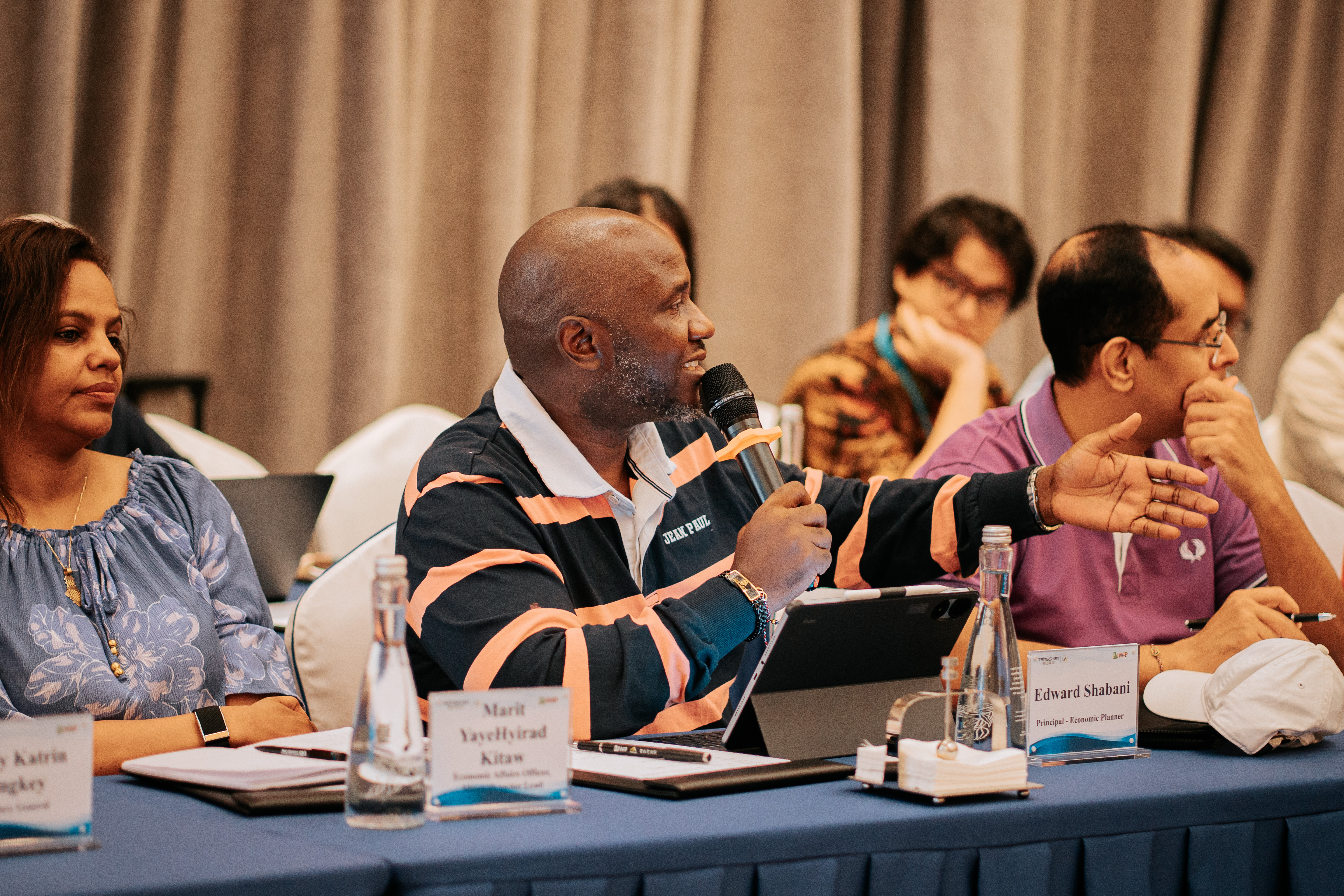
These conversations were informed by a two-day site visit to the Indonesia Weda Bay Industrial Park (IWIP) in North Maluku, which offered a first-hand look at one of the country’s most significant mineral-processing hubs and the practical complexities and trade-offs involved in industrialization.
The final day broadened the lens further. Engagements with a wider group of Indonesian policymakers, industry representatives, academics, civil society organizations and development partners highlighted both the economic potential of value chain development and the environmental, social and governance (ESG) challenges that accompany it. Officials from other countries reflected on which aspects of Indonesia’s experience might be transferable to their own contexts and what forms of cross-country learning and adaptation could most effectively inform policy development. These conversations fed into deeper exchanges on strategy and industrial policy, investment attraction and partnerships, ESG and community impacts, and the institutional and political arrangements that underpin implementation.
Amid these rich discussions, six key takeaways emerged.
1. An increasingly complex global landscape for value addition
With global demand for minerals booming and the push for diversified supply chains intensifying, a window of opportunity has emerged for establishing value chain activities in new locations. Yet mineral-rich countries in the Global South face mounting obstacles to realizing their value addition ambitions. China continues to dominate critical stages of many mineral value chains and is increasingly deploying export controls on technologies, manufacturing equipment and key materials. In response, other major economies are channeling large amounts of public finance into their own industries while—particularly in the case of the United States—seeking to narrow the policy space available to Global South countries, including by pushing back more aggressively against export bans and partnerships with geopolitical rivals.
2. Different value chains, different strategies

This complex landscape reinforces the need for value addition strategies tailored to the specific opportunities and constraints of each value chain. Discussions reflected a shared recognition that not all forms of value addition are feasible, desirable or a priority in every context. Participants highlighted how differences in global market share, infrastructure requirements, technology risk, environmental and social impacts and broader economic needs shape government approaches—including how countries distinguish between near-term, “no-regret” opportunities and longer-term, higher-risk bets.
“The event has increased my awareness of the breadth of the industry policy toolkit and how its use should reflect the idiosyncrasies of individual countries.” - Martin Latorre, University of Chile
3. Long-term visions that are ambitious but iterative
Discussions underscored the importance of anchoring value addition strategies in long-term national visions that can survive political cycles and provide confidence and predictability for investors. Participants noted that countries which have made progress have sequenced investments and policy reforms—such as value addition requirements and local content targets—over time, while recognizing uncertainty and learning as inherent features of industrial transformation. This calls for governments to adjust course as markets, technologies and domestic conditions evolve. Close and sustained engagement with the private sector emerged as a critical success factor, highlighting the role of trust, transparency and open communication between governments and investors.
“The field visit was an eye-opener, reinforcing how much strategic focus and discipline matter for advancing equitable value addition.” - Marit Kitaw, U.N. Economic Commission for Africa
4. Intra-governmental coordination is vital but often elusive
Designing and implementing effective value addition strategies requires close alignment across multiple ministries and agencies, yet many countries struggle to achieve this in practice. Participants highlighted how fragmented responsibilities, overlapping mandates and inconsistent communication often undermine coordination across mining, energy and industrial policies, as well as sufficient integration of environmental and social considerations into decision-making. Successful approaches combine clear chains of command with formal mechanisms for interagency collaboration, backed by sustained political support.
“This event will help me advocate for institutionalizing coordination among key ministries in my country to have one voice and be on the same page.” - Shorai Kavu, Ministry of Energy and Power Development, Zimbabwe
5. A multistakeholder approach and clear communication are key
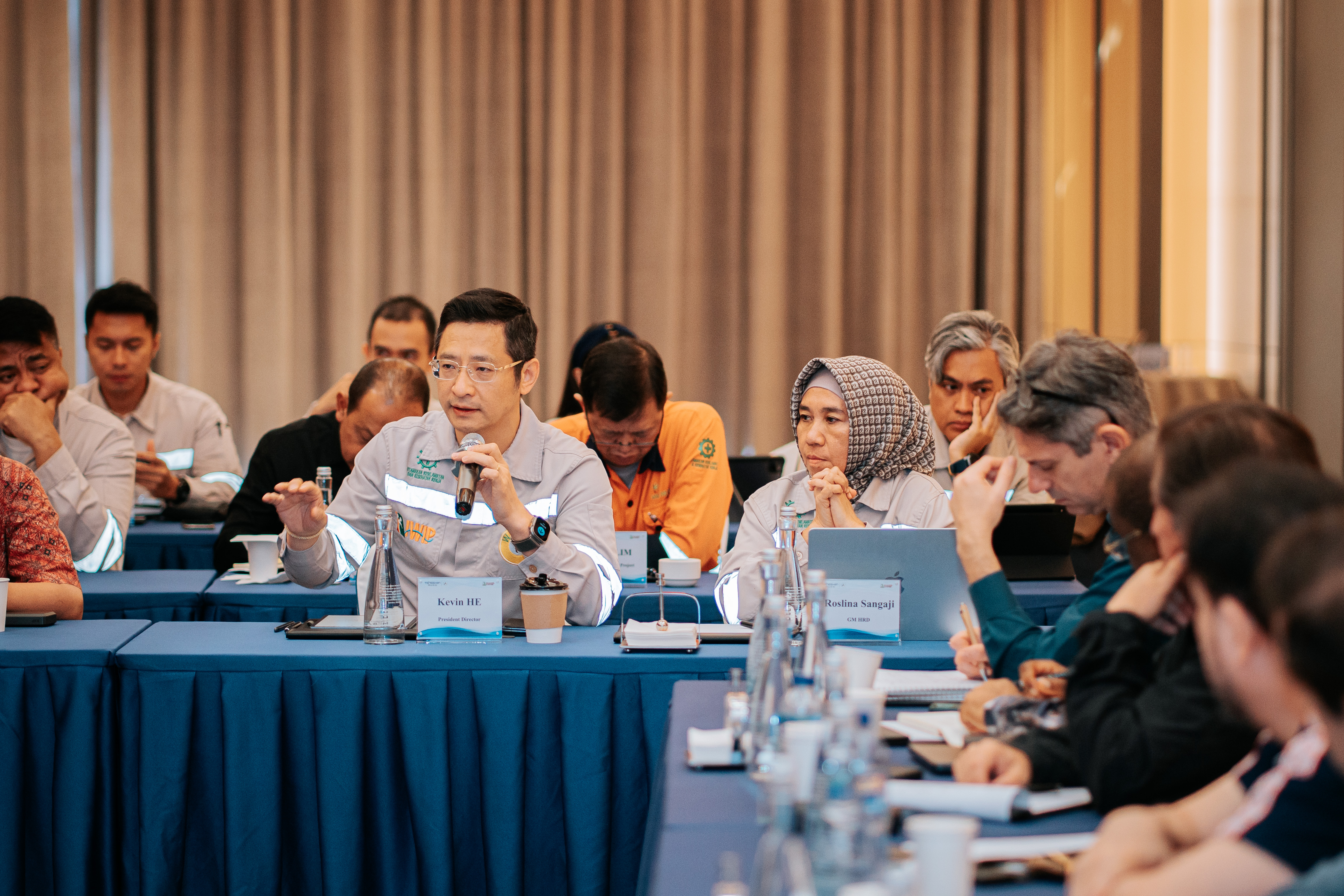
Value addition strategies involve trade-offs, take time to deliver results and, even then, may not fully meet public expectations. Participants noted that even well-designed strategies can falter if governments fail to bring citizens along, leaving policies vulnerable to pressure and reversal. Meaningful consultation and sustained engagement with a broad range of stakeholders are therefore essential. Governments need to clearly communicate objectives, timelines and expected benefits to build public trust—particularly in countries with histories of unfulfilled resource promises. Transparent, data-driven narratives presented in accessible language can help sustain political support across electoral cycles and strengthen the credibility of long-term policy commitments.
6. Strategic neutrality and the potential of South-South collaboration
In the face of intensifying geopolitical manoeuvring, many Global South countries are pursuing strategic neutrality through diversified partnerships that preserve policy autonomy rather than alignment with any single bloc. Participants discussed South–South cooperation as a key mechanism for enabling such neutrality. By coordinating rather than competing, countries can strengthen their bargaining power, reduce vulnerability to external pressures, and explore collaboration on standards, skills development, regional infrastructure and continued mutual learning. Cross-country learning was seen as particularly valuable for confronting shared challenges, reducing information asymmetries with major consumer countries and collectively exploring policy innovation.
“This event showed that South-South collaboration on critical minerals is possible—turning economic fragmentation to mutual benefits across the Global South.” - Niwa Rahmad Dwitama, Ministry of Foreign Affairs, Indonesia
Participants explored opportunities for continued dialogue and action—including a South–South Transition Minerals Learning Platform to be piloted by officials and researchers from a subset of participating countries, alongside future iterations of the broader intergovernmental dialogue. Through these mechanisms, South-South learning can support governments to make informed choices on mineral value addition.
Quotes have been lightly edited for clarity and length.
From Minerals to Development: New Connections for a New Era

As leaders gather in New York to discuss how the UN can advance the principles and recommendations of the Secretary General’s Panel on Critical Energy Transition Minerals, Lisa Sachs, of the Columbia Center on Sustainable Investment, shares why now is the time for long-term resource governance practioners to ask new questions, be honest about where we have fallen short, and join our work with other, related sectors.
For twenty years, those of us working on resource governance have been making the case that mining sits at the heart of sustainable development, and that resource-rich countries can convert their mineral wealth into broad-based development. A robust field grew to tackle the multidimensional challenges of resource governance with increasingly sophisticated tools: open fiscal models, contract databases, model laws, global multi-stakeholder initiatives, consolidated industry standards, and many trainings. In doing so, without quite noticing, those working on resource governance built a field with its own terms, boundaries, and sense of itself as complete. And yet, despite steadily better tools, the trajectory for resource-rich countries has not changed as we hoped.
Better tools, familiar challenges
Minerals are more central to the global economy than ever, and we are still asking many of the questions we asked two decades ago. Conflicts over land, fiscal promises that go unmet, environmental damage, projects stalled by mistrust; both the headlines and the framing questions at conferences are reminiscent of two decades ago. Few mining communities are meaningfully better off, and a quarter century into the era of transparency (of contracts, payments, and budget), we often cannot say how value is divided. From what we can see, wealth has not meaningfully improved the lives of the citizens of many resource-rich countries. Two years ago, the UN Secretary-General convened a multi-stakeholder panel on critical minerals, framed around not repeating the patterns of extraction and exploitation; a call to action that reflected concern from low and middle income countries that two decades of effort had not bent the curve. The panel worked admirably (and swiftly) to produce a report that consolidated twenty years of recommendations. But it did not grapple with why those efforts had fallen short.
Part of the answer is that resource-based development is genuinely hard. A single project involves multiple companies, a national government, local and regional authorities, the communities on the land, financiers, off-takers, and the home governments of the investors, each with its own interests, time horizon, and leverage. Geography compounds the challenge: value chains are spread globally: the mine in one country, processing often elsewhere, and the market in yet another country, with value and impacts unevenly distributed. And much of what determines the outcome happens behind closed doors.
Even when the terms are known, we are not agreed on what a ‘good deal’ looks like. For some, a fair outcome is one where the state captures the bulk of the value and the project advances the country’s own development strategy. For others, the measure is whether communities who bear the impacts negotiate their own terms. There is no agreed standard for decisive terms like shared-use infrastructure, dispute settlement, closure liabilities, audit rights, or the corporate structuring behind a deal's tax and legal exposure.
The benefits and the costs of mining fall unevenly by their nature: revenue accrues to the capital while the disruption lands on the community, gains arrive over decades while costs arrive at the start, one generation consents and another lives with the result. A deal can be fair to the state and unfair to the people nearest the mine; fair at signing and unfair twenty years on. While those of us in the field have at times recognized some of the inherent tensions and trade-offs, we have rarely found a framing that holds all of these elements in view at once. Part of the reason is that the field is divided along the same lines as the trade-offs: experts often specialize in one area: fiscal terms, community benefit, environmental and legal safeguards, dispute settlement, corruption.
When we do come together to talk about these intersectional components, we continue to do so within the framing of the natural resource sector as its own field, with its own technical features, institutions, standards and debates. But treating resource governance as self-contained is precisely what has kept it from working. We have become very good at governing the mineral and have left the system that gives the mineral its value to others. In reality, resource governance is a challenge inseparable from the larger fields of development, geopolitics, and international finance. Whether a mineral endowment becomes development is decided by the capital that builds power systems and ports, by the energy planning that determines where processing is viable, and by the international financial architecture that determines fiscal space and borrowing costs, and by geopolitics with its ever-powerful carrots and sticks. Resource governance is inherently part of all of this, and shaped by it at every turn. Yet the field has built its standards, its contracts, and its transparency mechanisms largely apart from the international financial institutions, the energy planners, and the fiscal, financial, and public-investment decisions that set the result.
This is a rare moment of attention for a set of issues that spent years at the margins. Minerals are in the news daily, capital and political attention have returned, and new actors who have never worked on resource governance are shaping the agenda. Many arrive as if there had never been a field at all, which risks discarding two decades of hard evidence about what works and what does not. But it is also telling that these new actors are finding the field largely the same as we found it twenty years ago.
Why now is the time to rethink
For those of us who have been working in the field for decades, there are two powerful reasons that now is the time for a rethink. First, several of the most physical constraints to resource-based development have shifted. Clean power can now be produced affordably and locally where the planning is done to support it. Markets that were assumed to be global and centralized are becoming more regional, as more regions move to build their own capacity and secure their own supply. And the recognition that integration and regional coordination are necessary has grown. And second, supply-security concerns and the return of industrial policy have opened real room for integrated, development-oriented strategies that were politically unattractive a decade ago. The barrier to integrated, development-oriented resource strategies is now mainly institutional and architectural: whether the field organizes itself to work across the systems it has always been part of.
The most valuable thing twenty years of work leaves us with is not fixed answers but a set of hard-won learnings, including, most importantly, the limits of the approaches we have tried. Those who have spent decades in this field should not cling to what we have been trying this whole time; that would be misreading both the evidence and the moment. Defending a position we have held for so long risks entrenches an old framing even as its assumptions prove flawed and the systems beneath it move.
But the depth of experience is critical: we know what was tried, what mattered, and why earlier efforts fell short. When the same questions are asked anew, the institutions and individuals who have engaged deeply in that work are best placed to reflect on how to think differently about the questions and the answers, so that we do not repeat the patterns of the past. Doing so requires a level of reflection and reckoning that may be uncomfortable to longstanding leaders in the field. And yet, knowing the terrain well enough to reframe the question – and push the conversation forward, rather than defend or replay the past, is an essential contribution two decades in this field can offer.
The task now is to foreground the interconnections, where the outcomes are actually decided. A processing facility is viable when the energy system has been planned to power it affordably. A mineral corridor pays off when the transport and the industrial capacity around it are sequenced together rather than negotiated piece by piece. Shared water infrastructure can serve the mine, the farms, and the cities downstream when it is planned at the basin level rather than built in parallel. An endowment becomes development when its financing is tied to a costed investment plan inside a national or regional strategy. A larger government take and a tangible community benefit become less of a fight over a fixed sum when the project is built into a development strategy that enlarges what there is to share. Affordable power, regional markets, and secured demand come together when they are sequenced as one. Seen as one system, the trade-offs that looked fixed start to give.
This matters to the people who fund the work as much as the people who do it. The opportunity is to back new thinking—including interdisciplinary work that does not fit neatly in any one silo. To draw on the people who carry decades of experience, not to ask them to defend what they built, but to ask what it taught. That work matters now in a way it has not before, with the questions open again and the moment ready for different answers.

Lisa Sachs is the Director of the Columbia Center on Sustainable Investment (CCSI). She is a globally recognized expert and leading voice on climate finance, sustainable investment, and natural resource governance, and a leading voice on how laws, policies, and financial architecture shape global investment flows in support of development and climate objectives. She advises governments around the world along with multilateral development banks, UN agencies, and intergovernmental organizations, and works closely with companies, investors, and civil society to translate research into practical policy and investment reforms. Lisa contributed this piece as part of NRGI's 20th anniversary thought piece series on the future of resource governance.
As the West Turns Inward, Can Africa Leverage Its Mineral Power?

In the few months since Donald Trump returned to power, a flurry of decisions has made ‘restoring America’s mineral dominance’ a key priority for the administration. These range from strongarming Ukraine into providing access to mineral (and energy) assets in exchange for continued support in its war with Russia, to designs on Greenland. Trump has also issued executive orders to increase domestic mineral production and processing, weaken due diligence in the financing of mining projects and pause anti-bribery protections to gain “strategic business advantages” in accessing minerals overseas.
Other consumer countries’ approaches have also become clearer in recent months. Changing political winds in the European Union (EU), following the 2024 European Parliament elections, have reaffirmed a focus on ramping up domestic supply amid a deregulation drive. The first batch of strategic projects for development under the Critical Raw Materials Act focuses exclusively on projects within Europe—excluding applications from other regions.
For African mineral-producing countries, this moment presents new risks—but also an opportunity to strengthen their position. International politics around minerals have long been at the intersection of economic and national interests, but the new U.S. administration is now pushing it into even more transactional territory. Through its rhetoric and actions, the U.S. government is signaling that multilateral engagement and good governance standards are no longer its priorities.
African decision-makers are already considering how to navigate this new terrain. Facing the advance of M23 rebels in its eastern provinces, the government of the Democratic Republic of the Congo (DRC) has sought to make a “deal” to leverage its minerals in exchange for security assistance from the U.S. To use the global context to their advantage, decision-makers will need a long-term vision for their economies—grounded in evidence, political acumen and strong alliances.
Analyze your leverage—and carefully weigh what you gain and give up in any deal
African bargaining power remains real, particularly as the U.S. looks to counter China’s dominance. Africa holds at least a fifth of the world’s reserves in minerals critical for the energy transition—the U.S. can’t afford to ignore threats by the likes of South Africa to withhold minerals.

As the American diplomatic apparatus kicks into gear around minerals, African governments could gain access to new financing opportunities—even as traditional aid budgets are slashed or disappear entirely. The U.S. International Development Finance Corporation (DFC)—created under Trump’s first term—may play a growing role in providing public finance to catalyze greater private investment. The DFC has backed overseas minerals projects such as a graphite mine in Mozambique, and now has authority to invest in domestic minerals—despite a mixed track record at home. The U.S. and UK are also looking to Export Credit Agencies to take a greater role in the sector, though these institutions have come under fire for harmful practices.
Such financing mechanisms could form part of a bilateral deal centered on mining. In principle, these deals could unlock access to political, financial and technical resources beyond what private investors offer—such as support for geological mapping, derisking exploration investments or infrastructure development. As the DRC’s proposal shows, some countries may seek to leverage this moment to advance broader national goals—such as improving security.
To take advantage of these opportunities, African governments should root their ambitions in long-term strategies based on national development plans. A thorough understanding of their country’s resource base is critical, along with a proactive awareness of how evolving global supply chains, markets and geopolitics affect their bargaining power. We’ve seen the art of the possible: in recent negotiations of a new agreement with De Beers, Botswana increased its share of diamonds for domestic processing from 25 percent to a possible 50 percent by the time that the agreement expires. The DRC government is leveraging its dominant market position to restrict cobalt exports to maximize benefits for the country.
Despite the global shifts, African governments can draw on years of experience in managing their minerals sector. The deals being explored today—such as those in DRC and Ukraine—have parallels in the resource-for-infrastructure arrangements some African governments negotiated with their Chinese counterparts over the past two decades, such as the DRC-China Sicomines deal. These complex negotiations need careful work to fairly value mineral assets and rigorously assess the projects being offered in return. Minerals-for-security deals demand more caution. Security assistance is even harder to value and monitor and often entails greater opacity given national security concerns. Any deal that is agreed must ensure implementation is measurable, transparent and subject to formal oversight.

Regional collaboration for collective leverage
One of the most effective ways that African governments can achieve their development goals is through increased regional collaboration. This is more important than ever in an increasingly turbulent and fragmented world. Trump’s ‘America First’ stance and aggressive tariffs are straining relations between traditional allies in the Americas, Europe and Asia. Multilateral efforts such as the Minerals Security Partnership will likely play a diminishing role in U.S. calculations. However, other partners may still have an interest in working together without U.S. leadership.
Strengthening intra-regional trade through the African Continental Free Trade Area (AfCFTA) and regional economic communities can help mitigate the effects of global geopolitical shifts. While politically and technically complex, a coordinated approach to minerals would strengthen the continent’s collective leverage, prevent a “race to the bottom” and create opportunities for regional value chains that could attract external support. The Lobito Corridor—partially funded by the U.S. under the Biden administration—risks reinforcing the pit-to-port model, but also shows what’s possible when multiple African governments align efforts and partner with external actors.
The African Union’s endorsement of the African Green Minerals Strategy in February 2025 is a significant step towards collaboration—but much work remains. More industrialized African countries must lead the charge, promoting opportunities in less developed neighbors and—alongside development partners—fund regional bodies to increase planning capacity.
Embracing strategic neutrality
Despite renewed global attention, U.S. investment in minerals in the past few years remains minimal. As of late 2023 (the latest data available), the DFC had invested only USD 270 million on mining projects. By contrast, Chinese overseas mining investment reached another high of $21.4 billion under the Belt and Road Initiative in 2024. Whether increased U.S. bluster translates into increased financing remains uncertain.
Even if U.S. support increases, there is no guarantee it will unlock private investment. Despite renewed interest by Western companies in the DRC, for example, the country has struggled to attract investment in recent years due to concerns related to tax, corruption, and other risks. To make the most of these opportunities, African governments must ensure that their policies create a conducive environment for investment.
Strategic neutrality among potential investors is also critical. Failing to do so risks leaving countries empty-handed—especially given the uncertainty of Western investment. It also risks entangling African governments in great power politics. Some governments have had success in this balancing act: Zambia has taken an “all of the above” approach, securing U.S. investment in the Lobito Corridor, Chinese rehabilitation of the Tazara railway and a partnership with the EU.
Hold the line on good governance
Good governance remains critical to enabling long-term and equitable benefits from the mining sector—yet it faces new challenges. In the U.S., Trump is dismantling anticorruption infrastructure at alarming pace. Once a global leader in enforcing restrictions on foreign bribery, the U.S. has now paused enforcement of the Foreign Corrupt Practices Act via an executive order. Amid the scale and speed of U.S. backsliding, troubling changes are also taking place elsewhere. The EU is considering proposals that would gut groundbreaking sustainability legislation, such as the Corporate Sustainability Reporting Directive and Corporate Sustainability Due Diligence Directive.
These rollbacks may embolden some mining companies to push for laxer conditions in African countries—or use corrupt means to secure them. NRGI’s research shows that companies based in the world’s wealthiest and most powerful jurisdictions are often behind corruption cases in the allocation of transition minerals projects. With these jurisdictions now competing for mineral dominance, by holding the line on good governance, African leaders can protect their people and the planet—and prevent disruptions to mining operations such as community blockades, labor strikes or tax disputes.
Embedding transparency and accountability principles into decision-making—through measures, such as contract transparency or parliamentary approval for major agreements—are essential in this more fraught environment. Ghana’s parliament has created space for essential public debate on weaknesses to be addressed as it reviews the country’s first lithium mining agreement. Countries like Niger, Republic of the Congo, Senegal and Sierra Leone are meeting good practice by disclosing contracts under the Extractive Industries Transparency Initiative (EITI); other African countries could follow their lead.
Amid global turbulence lies an opportunity for African leadership. With a clear strategy, stronger regional collaboration and a strong commitment to governance, African governments can navigate the current storms—and turn them into their advantage.
Success Factors in State-State Mineral Partnerships, Value Addition and Regional Cooperation

In November 2024, NRGI's Thomas Scurfield spoke at the annual meeting of the Intergovernmental Forum on Mining, Minerals, Metals and Sustainable Development. With moderator Oluwatoyin Ojo, he discussed how the new breed of state-state mineral partnerships intersects with lower-income countries' ambitions to add value to their commodities before export.
Oluwatoyin Ojo, Senior Legal Counsel and Head of Partnerships, ALSF:
In the blog post “Deals Without Details: Exploring State-State Mining Partnerships and Their Implications” you and your co-authors raise an interesting point about strategic or politically driven partnerships—between what you describe as buying partners and resource-rich, often low-income countries, querying the extent to which these partnerships will be truly beneficial for the producer countries. The details of these partnerships are not always publicly disclosed. What do we know about the scope of some of these partnerships? From those you have examined, are they supportive of regional initiatives or not? What needs to be done to leverage regional potentials and is there not a risk of the strongest buyers being the biggest winners?
Thomas Scurfield, Senior Africa Economic Analyst, NRGI:
On state-state partnerships, we don't know a lot about many of them. Most of them come with pronouncements of a “win-win” for the mineral-rich country and the buying partner. But despite contract disclosure being an established norm, public information on many of these partnerships is scarce.
When we wrote the piece earlier this year, out of the 35 partnerships that we were aware of, we couldn't find any useful public information about 22 of them. For some of these partnerships, that's probably because they were at an early stage of development. For others, it's possible that they're just a political signalling tool, with no real intention to go much further than an announcement or a statement—a high-level memorandum of understanding (MoU).
But for other partnerships, there are likely lots of details that have been agreed that aren't being disclosed in the public domain. So, for example, the partnerships between the European Union and various low- and middle-income mineral-rich countries. The MoU sets out an intention to develop a road map of how the partnership will be implemented. And we know that some of these road maps are still being still being developed, yet to be finalized. But there are others that that have been finalized where what's in the public domain, for example in the case of Namibia, is just a very limited summary of the implementation plan. So there does need to be a lot more disclosure of these partnerships to inform public understanding, to ensure that civil society in mineral-rich countries can provide effective oversight.
There also needs to be more public information to understand whether these partnerships might help or hinder regional coordination. But based on kind of what's in the public domain there are some partnerships that explicitly state support to regional coordination efforts. For example, there's a plan between the DRC and Zambia to start producing battery precursors. The DRC and Zambia have signed an MoU with the U.S. that explicitly supports that goal. So, if that partnership is meaningfully pursued, then that could really shift the needle on that project. There's also the Lobito Corridor project, a plan to rehabilitate and extend a railway between the DRC and Angola, possibly to Zambia and even Tanzania—another example of how these state-state partnerships can support regional collaboration.
But it's possible that some of these partnerships might, perhaps unintentionally, hinder regional coordination.
Going back to the DRC-Zambia project, that project is going to need to source nickel and manganese from other countries, most beneficially if they were sourced from nearby: so other parts of southern Africa. Tanzania, next door, should in the next few years start producing battery grade nickel, but based on a U.S. government statement, it seems that there's been an agreement signed between the U.S. and Tanzania that means that a lot of that nickel will be exported to the to the U.S. I'm not criticizing Tanzania for this; that agreement seems to make sense for Tanzania and for that project. First, it means that project is going to get Mineral Security Partnership funding. Second—around the question of whether the strongest buyers are always going to win out over nascent projects—the DRC-Zambia project is not advanced enough to offer a credible offtake commitment right now. So, it makes sense for Tanzania, but it it's a demonstration of how the race for minerals by buying partners could hinder regional collaboration.
In general, these state-state partnerships have potential to support regional collaboration efforts. The likes of the U.S., the U.K., Saudi Arabia and China can all bring a combination of financing and technical support, and the ability to align a range of private sector actors, in a way that a single private investor can't. Such actors have the potential to convert regional collaboration visions into more tangible opportunities, both by aligning private sector interests across different countries, but also by helping to address one of the fundamental challenges with regional collaboration, which is how to share the benefits across the countries that are collaborating, opening up more options for benefit sharing. So, if one country hosted a shared smelter, then perhaps another country could get more support for infrastructure. So, I think there is great potential; but the onus is not just on the buying partners to be willing to provide this support, though they definitely should. But it also requires mineral-rich countries to identifying the regional collaboration opportunities so they can come to the table with them when they start negotiating these state-state partnerships.
Ojo:
To what extent are national priorities and regional mining supply chain collaboration complementary, if at all, and how could we strike the right balance between regional collaboration and national interest?
Scurfield:
National priorities and regional collaboration can be very complementary. Take value addition. Earlier there was a discussion around the first order conditions that need to be in place for value addition to be viable in a given country. One of those is scale, so you need a lot of minerals to make a value addition facility like a smelter or a refinery viable. There will be many countries where they just don't produce enough minerals to be able to make a facility profitable on their own; but that's where regional collaboration can help by enabling the combination of feedstock from different countries. This could be done without the involvement of government, without governments collaborating.
But, going back to the challenge of supplying nascent projects and the rush by overseas buyers to lock in long-term offtake agreements, to be able to find and combine enough feedstock from multiple countries you will likely need government intervention to strategize how you do that for a nascent project, to line up the design of the project and the financing.
There are going to be policy areas and projects where national priorities and regional coordination are very much aligned. So countries really need to develop strategies which are specific to individual minerals, and specific to stages of the value chain, where they identify when they can go it alone and when they might need regional collaboration. But even in instances where there is alignment between national priorities and regional collaboration, it’s still going to be very, very challenging. I'm from the the U.K., so having gone from through Brexit from the EU, I know how difficult it can be to make the politics of regional collaboration work.
There's a whole range of economic and political dynamics that that countries are going to have to overcome. There's still going to be an inherent tension between cooperation and competition—thinking about where you would locate a shared smelter, for example. There still needs to be lots of thinking and work around how to make regional collaboration happen; at NRGI, we've just started some research on that, looking at existing and attempted regional coordination initiatives to identify lessons, to identify success and failure factors both within and outside of the mining sector. We aim to support countries to make regional collaboration happen when it makes sense for them.
Can Government Partnerships Support Responsible and Reliable Critical Mineral Supply Chains?

Governments around the world are increasingly forging partnerships focused on critical mineral supplies
As governments look to transition away from fossil fuels and accelerate the deployment of clean energy, policy makers are dedicating more attention to securing supplies of critical minerals.
Materials such as copper, lithium, nickel, cobalt and rare earth elements are essential to components in many fast-growing clean energy technologies, such as wind turbines and electric vehicles. As demand for them grows, government-to-government partnerships focused on mineral supply are becoming an increasingly popular policy tool, helping establish frameworks of cooperation between producing and consuming countries. However, many of these arrangements are described in broad language without supporting details. By making partnerships more concrete and transparent, governments could send an important signal about how they will ensure that new mining projects are developed responsibly...
Explore the full post on the IEA website.
Launch of the UN Secretary-General's Panel on Critical Energy Transition Minerals
New York, U.S. and online

Watch the launch of UN Secretary-General Antonio Guterres' ambitious High-Level Panel on Critical Energy Transition Minerals, co-chaired by Ambassador Nozipho Joyce Mxakato-Diseko of South Africa and Ditte Juul Jørgensen, Director-General for Energy of the European Commission.
NRGI president and CEO Suneeta Kaimal is a member of the panel and made an intervention on the role of civil society at the launch.
— Suneeta Kaimal at the launch of the UN Secretary-General's Panel on Critical Energy Transition Minerals
Featuring NRGI's

Suneeta Kaimal
President and Chief Executive Officer, NRGI Governing Board ex officio
Deals Without Details: Exploring State-State Mining Partnerships and Their Implications
How Gulf states are putting their money into mining
Deals Without Details: Exploring State-State Mining Partnerships and Their Implications

Governments, industry, and civil society organizations (CSOs) are gathering this week for Africa’s Mining Indaba, with big announcements already emerging. The splashiest thus far has been news of a collaboration between the U.S.-led Minerals Security Partnership, Congolese state mining company GECAMINES, and Japanese state agency JOGMEC for mineral exploration, production and processing.
This announcement is the latest in a spate of projects involving the Minerals Security Partnership. In today’s press briefing about the partnership, U.S. diplomat Jose Fernandez reiterated the importance of benefit sharing, value addition, and ESG protections, but shared minimal information on what this would look like in practice; such a dearth of detail characterizes many such deals.
Such next-generation state-state mineral partnerships have become a key tool for wealthier jurisdictions such as the U.S. and EU. Referred to as “buying partners” in this post, their aim is to secure the minerals needed for the solar panels, wind turbines and electric vehicles that will help the world transition away from fossil fuels (in some cases to supplement their own mineral production). But many questions remain around such partnerships, including on their overall purpose and value for lower- and middle-income mineral-rich countries, referred to as “supplying partners” in this post.
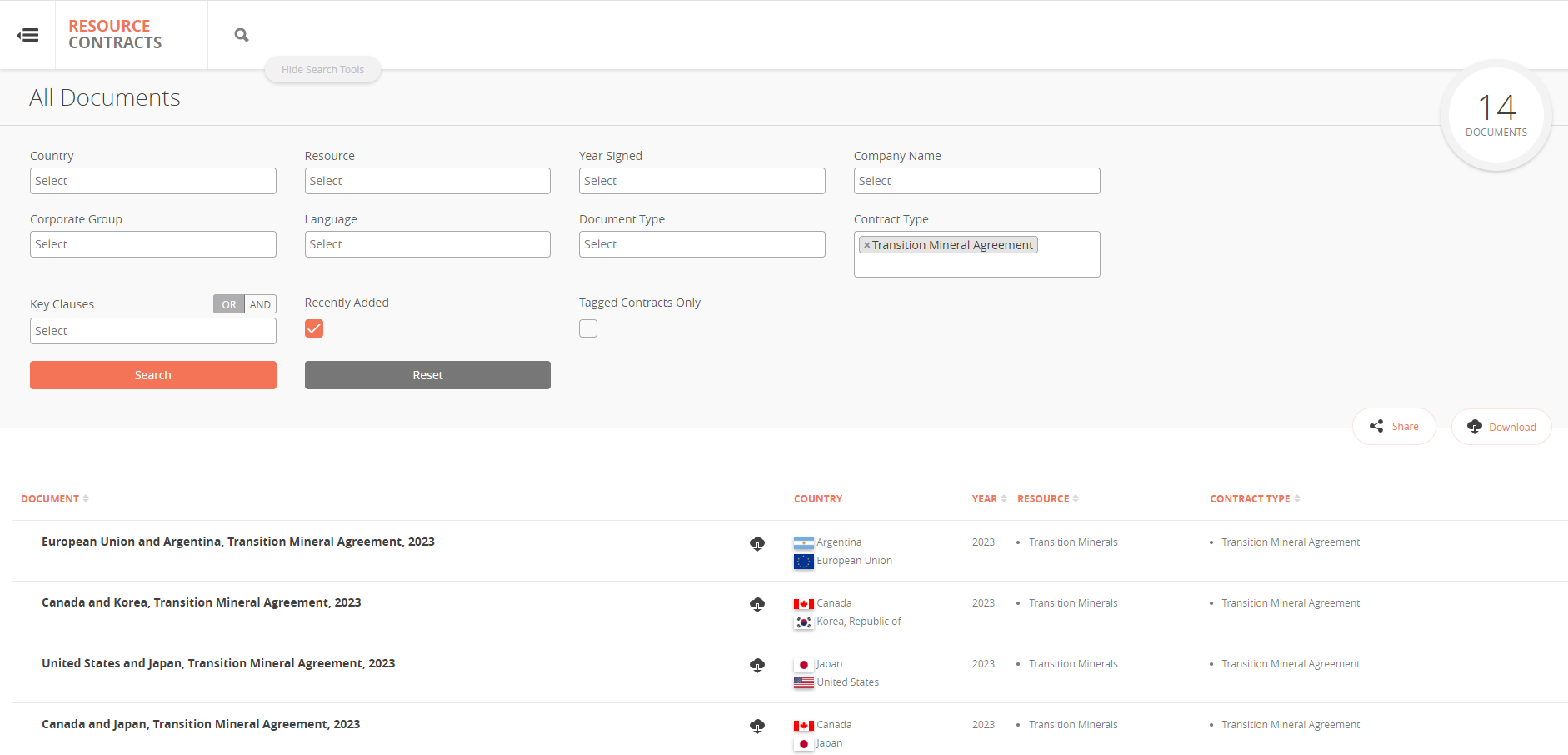
NRGI has recently updated ResourceContracts (a repository of publicly available oil, gas, and mining contracts and associated documents) with documents related to this new type of state-state mining partnership (variously labeled “strategic partnerships,” “mineral security partnerships,” “memoranda of cooperation”, and the like).
A new generation of mining partnerships
These partnerships are driven largely by the political or geostrategic needs of the buying partners. Governments in such countries are motivated by the importance of diversifying supply. The partnerships may: lay the groundwork for future cooperation between different jurisdictions, incentivize buyer-country industries to invest in a particular supplier country, and/or merely send a warning shot to international “competitors” that the buying partner has an interest in sourcing minerals from a particular country.
The implications for the supplying partner are even less clear. While buying partners emphasize the language of “partnerships” and “win-win” approaches, whether these partnerships will deliver equal benefits to both parties remains to be seen. These partnerships should be aligned with the supplying partners’ own objectives such as skills development, greater domestic value addition and economic diversification, while also encouraging international cooperation on a just energy transition.
Yet the lack of publicly available information about these partnerships means that scrutinizing them is difficult. This results in little accountability, even though contract disclosure is a well-established norm in the sector. While some memoranda of understanding have been made public, such as those signed by the European Union, these documents are scant on details despite sometimes taking months to negotiate. Others, such as those recently signed by Saudi Arabia at its January Future Minerals Forum, remain a mystery. We couldn’t find any publicly available information about 22 of the 35 partnerships of which we’re aware.
Some partnerships are backed up by a specific authority’s legislative framework, such as those in the EU—although there is still much to improve there in terms of transparency and civil society input—while others are backed by a consortium of countries. Some are agreed with one supplying partner, others with several. Some supplying partners participate in multiple concurrent partnerships, with little clarity over whether or how the relationships interact. The documents we’ve seen are not legally binding, and the relationship between these partnerships and existing trade agreements are unclear. The extent to which the agreements align with supplying partners’ mining or industrial policy frameworks is also largely unknown.
Finding agreements on ResourceContracts
Explore publicly available information partnerships between governments and private entities for critical minerals used in clean energy technologies on ResourceContracts.org under the document type "transition minerals agreements."
What public documents reveal
Across published documents relating to these partnerships, the parties use similar language to describe the potential benefits for supplying partners. Many partnership documents emphasize benefits such as technology transfer, value addition and “ESG,” and also include terms such as open markets. Overall, the agreements reveal little in terms of next steps.
The signing of these partnerships is an early step, rather than a complete solution. EU memoranda of understanding (MoUs), for example, commit to the development, within six months of the MoU being signed, of a “roadmap” that identifies more concrete measures on which the parties will act.
The EU-Ukraine roadmap—the first roadmap to be developed, available on ResourceContracts—provides more detail on areas of cooperation. The EU’s relationship with Kazakhstan could also be instructive, with a strategic partnership signed in November 2022. In recent months, the European Commission and European Bank for Reconstruction and Development announced funding for the Kazakh state mining company Tau-Ken Samruk for lithium exploration and tungsten processing projects. While the amount is fairly small, it may suggest one type of financial support that supplying partners could pursue from their buying partners.
But ultimately most partnerships will rely heavily on their ability to attract commercial investment from the buying partner, or its allies. These countries’ main lever will likely be preferential financing and development assistance to create more attractive conditions for that investment.
How governments in lower- and middle-income mineral-rich countries can leverage these new partnerships
Be clear on what you want from the partnership. Supplying partners should identify ways to leverage market interest in their transition minerals to pursue their long-term strategy for the sector. Governments should target the buying partner’s political, financial and technical capacity, in a way that may be less feasible in partnerships with individual commercial investors. This could range from partners providing technical assistance on geological data management to financing to address the energy bottlenecks standing in the way of commercial investment in value addition, to gaining access to incentives offered in the buying partner’s market, such as through the U.S. Inflation Reduction Act, to increase investor interest.
Establish how the partners interact. Countries entering mining partnerships need to be clear on how they interact. Some partnerships have the potential to complement and amplify each other, such as U.S., EU and U.K. support for the Lobito Corridor—given a further boost in the Mineral Security Partnership’s latest announcement. Others have the potential to complicate the supplying partner’s pursuit of greater benefits. While Chinese authorities and companies don’t publicize their partnerships in the same way, they are not standing still. How lower- and middle-income mineral-rich countries navigate this geopolitical competition will be critical—something which greater transparency around these partnerships can support given it allows governments to learn from other countries’ experience.
Provide support for stronger governance, human rights and environmental standards. Because parties to these agreements aim to increase activity in the sector, they may exacerbate potential harms of mining, such as corruption, human rights abuses and environmental damage. To ensure benefits for people in mining countries, governments must mitigate these risks. In this way they can also meet a key partnership criterion for jurisdictions like the EU. Supplying partners could ensure strong due diligence practices are built into the partnership, require capacity building and technical assistance to strengthen the content and implementation of environmental, social and governance protections, and urge prospective buying partner governments to do more to address wrongdoing by mining companies based in their jurisdictions. Such accountability is crucial to avoid repeating the mistakes of previous commodity booms.
Involve civil society. Countries should facilitate the input of CSOs in decision-making around partnership negotiations. CSOs can serve both as a source of expertise and an accountability mechanism, to ensure that the supplying partner gets the most out of the partnership. CSOs can help define strategic priorities; play a key role in monitoring whether activities advance the country’s economic and social development plans and meet international standards set out by bodies such as the UN and OECD; and strengthen calls for a more equitable partnership. But their participation has been lacking so far, part of a broader trend of shrinking civic space in the extractives sector. If these partnerships remain largely political tools disconnected from actual mining decisions and policymaking, CSOs might find their time more usefully spent elsewhere. Yet CSOs should also look out for a lot of talk, and more importantly money; without evidence of action these are red flags for corruption risk.
We’ll keep an eye out for new partnerships and upload to ResourceContracts those that are disclosed. For those partnerships that have already been agreed, we will upload and assess new documentation as the partnerships evolve, and work with key stakeholders to push for better practices.
For now, we are left considering a key question: when the time comes to turn talk into action, will these partnerships live up to their billing?
Are you aware of an international mining agreement not on ResourceContracts?