
#IODC18 Focuses on Gender, Regional Networks, Critical Review of Open Data Economic Impact
In late September, more than 1,500 participants and 200 speakers gathered in Buenos Aires for the International Open Data Conference. Throughout the conference, we noted positive developments and persistent challenges for a diverse and growing open data community.
The positives: increasing recognition of gender data value, strengthening regional networks and a renewed role for national statistics offices
NRGI and a number of organizations are exploring how the exploitation of natural resources impacts men and women differently. IODC featured a renewed focus on the need for better gender disaggregated data and a call for stronger inclusion across open data and civic tech communities. To this end, the conference featured the first Do-A-Thon, a one-day collaborative work sprint organized by Open Heroines, a network aiming to advance gender inclusion and diversity.
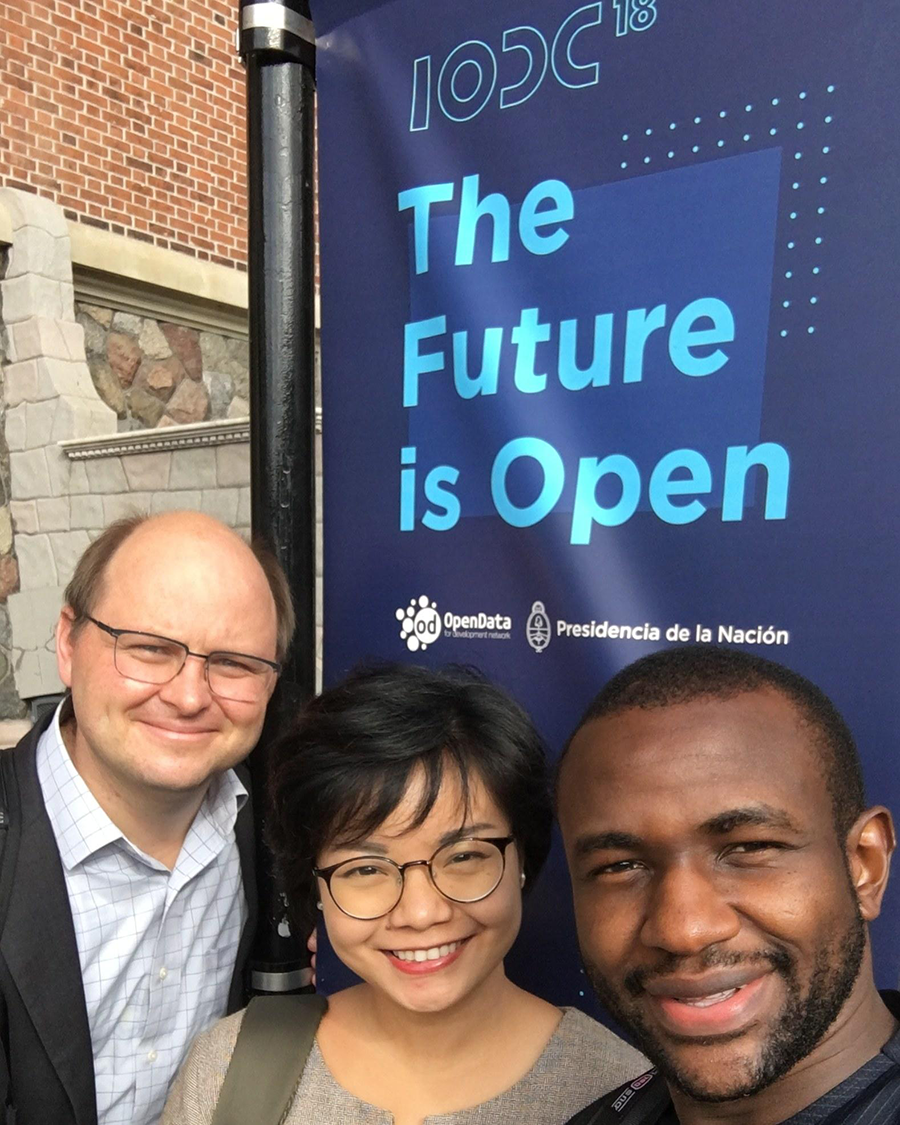 From left, NRGI’s Anders Pedersen, Aye Kyithar Swe and Zira John Quaghe at the 2018 International Open Data Conference in Buenos Aires.
Strengthening regional connections between sector-focused organizations and open data organizations working in specific regions was another theme. NRGI's Zira John Quaghe joined a side event on the Africa Data Revolution, which reviewed existing data ecosystems.
At an Asia-Pacific regional session, NRGI's Aye Kyithar Swe presented lessons learned from jade data programing in Myanmar, emphasizing the importance of limited data availability and limited data skills among civil society. She also pointed to a lack of public awareness of data privacy. While the Asia-Pacific region is seeing increased open data activity, only limited efforts are made to ensure its sustainability. In addition, there is a persistent lack of trust between governments and civil society and the civic tech community. Participants said regional collaboration can pay off by leveraging technical skills from data actors and sector-specific expertise from civil society.
National statistics offices are emerging as a key actor in country level tracking of delivery on the Sustainable Development Goals. With 167 sustainable development indicators, governments and statistics offices in many countries face the daunting task to strengthening data collection and building verification capacity. Organizations like Open Data Watch and Data for SDGs play an important role in supporting national statistics offices and advocating for increased funding for these institutions.
Assessing the progress on open data publication, use and economic impact
In recent years, warning signs have emerged on the lack of progress on publication of open data by governments, as well as the lack of use such data. A large share of government data continue to sit on servers and aren’t shared in an open format. Open data remain difficult to locate across government websites and timeliness is lacking in many countries.
When government data licenses are unclearly worded, they may be perceived as restrictive by civil society, deterring public use. Despite these challenges, we see opportunities ahead for open data in the extractives sector.
First, the Extractive Industries Transparency Initiative has continued to engage on the issue since the introduction of the open data policy in 2016 and recently affirmed that the “trend toward open data and systematic disclosures are mutually reinforcing.” EITI’s commitment to systematic disclosure brings renewed attention to data publication practices by key ministries, company registers and national statistics offices in member states. Thirdly, several countries have actively been leading the way on open data publication and data use for natural resource governance, including Ghana, the Philippines and Tunisia.
Following warning signs on the risks to open data progress, a number of studies seeking to assess the economic value of open data have been released. At IODC, the Open Data Institute presented new research showing that the economic impact of open data in Ukraine reached 0.81 percent of GDP (USD 903 million) in 2017. New IMF research shows that a higher degree of transparency of fiscal data can lower borrowing costs for governments in emerging market countries. At a global level, estimates on the potential value from open data continue to differ widely across a diverse set of applied methodologies, showing further research would be beneficial.
Several sessions addressed the tensions between governments and civil society around the role of open data for public interest reporting and evidence based policy debates. Some governments have recently taken legal steps to restrict the use of government data by the public through the introduction of criminal liability for vaguely defined “misuse” of government statistics. “Open washing” by governments can undermine genuine transparency efforts. Participants emphasized the importance of understanding the political context where government data is published and how broad reform coalitions can make open data policies resilient across government transitions.
IODC showed that members across the community are thinking creatively about how to build coalitions to support continued reforms while building the evidence as to how open data can strengthen everything from accountability reporting to service delivery to combatting fake news through data-driven journalism.
Anders Pedersen is NRGI's senior open data officer. Aye Kyithar Swe is a Myanmar senior officer. Zira John Quaghe is a Nigeria officer.
To Evolve, Oil Sector Needs Women, Youth
The issue of how to attract and retain young talent—and women especially—is becoming an increasingly serious concern for oil and gas companies; older employees are retiring but then having to return as consultants because their companies are struggling to draw in new hires. And this is not just a problem in the West, where demographics are a factor – even in regions with a high proportion of well-educated youth, like MENA, many younger people do not see the oil and gas sector as attractive.
This was a focus at last week’s Abu Dhabi International Petroleum Exhibition and Conference (ADIPEC), which more broadly explored diversity and inclusion in a famously conservative sector.
Of course, this year’s ADIPEC took place in the shadow of the recent report by the UN’s Intergovernmental Panel on Climate Change on the probability of keeping the global temperature rise under 1.5oC. That report stated that humankind could exceed the 1.5oC “guard rail” as soon as 2030, and avoiding that dangerous limit will require “rapid, far-reaching and unprecedented changes in all aspects of society.” The authors suggested that renewables should comprise 85 percent of the energy sector by 2050.
This industry then, more than most, needs to reform, and for that it needs young people with new ideas and creativity. But young people increasingly want their professional lives to be consistent with their values; they want to make a positive difference to their societies.
One key reform that oil and gas companies must make – in order to align themselves with the values of the young people they need to recruit – is to fundamentally overhaul their approach to diversity and inclusion, confronting longstanding gender imbalances and opening up the sector to women. Not only are younger people – both women and men – put off by the lingering sexism that is still too often a hallmark of oil and gas company culture, but of course women make up a significant and increasing proportion of the young talent that oil and gas companies need to attract.
A 2017 study by the World Petroleum Council and the Boston Consulting Group found that MENA was the region with the highest proportion of women pursuing qualifications in science, technology, engineering and mathematics (or STEM). Almost 40 percent of those studying STEM in MENA are women, compared to just 21 percent in the US and 24 percent in Europe.
One barrier is the industry’s poor reputation when it comes to women’s prospects for promotion. Very few women reach senior positions in the industry. These issues are well documented, but old attitudes and lethargy hold the sector back.
Younger women and men also want different things from their professional lives. I heard from participants at the conference that there is a need for more flexibility in the workplace; work-life balance should not be taboo anymore. Women and men should be able to ask for flexibility without thinking that it will affect their position in a company.
Being able to use their creativity is also important to younger employees. Status may not be as valuable as the chance to engage their talents in problem solving. As a sector grappling with a host of challenges – social and environmental, sustainability, renewables and volatility – the oil and gas industry needs this innovation.
But hydrocarbon companies must do more to enable this. Young people can find the industry’s corporate culture stultifying. One participant in a roundtable I moderated said that a young talent advising a seasoned manager on new approaches typically requires hours of communication and learning to create productive space for dialogue. There is still a resistance to new ideas.
The UAE has made recent moves toward diversification—ADNOC has had two women CEOs and increased its percentage of female employees. One lesson here was that genuine C-suite leadership is essential to affecting real change. Only when leadership understands the need to attract more women to the sector are crucial steps taken. There is still a lack of will in this regard at the top of many companies.
But there signs of progress. Norway’s Statoil made a major commitment to transformation and even changed its name to Equinor to underline its commitment to become something new. A company that cares about people’s wellbeing will be attractive to young talents.
All industries need new blood and new thinking. However, the oil and gas industry may be in a catch-22: in order to attract young people it needs to fundamentally transform and show itself as a sector that can make a positive contribution without causing harm. But the very people likely to help the industry overcome its poor reputation are the same people who generally still aren’t interested in joining. Strong senior leadership and real culture change – not just slick PR – are needed if the oil and gas companies of the 20th century are going to transform into the responsible energy sector that the 21st century needs.
Laury Haytayan is the MENA director at the Natural Resource Governance Institute.
What Challenges do Women Face in Tanzania’s Parliament? MP Discusses New Gender Balance and Changing Extractives Approaches
Women are still highly underrepresented in politics worldwide. However, over the last decades, many African countries have adopted different legal measures aimed to ensure a better gender balance in legislatures. Rwanda, for example, has the highest percentage of women in parliament in the world.
In Tanzania, women occupy 37 percent of the seats in the lower chamber of parliament. Elected to Tanzania’s parliament in 2015, Jesca Kishoa is part of a new wave of women entering politics in Africa.
At the Anglophone Africa Regional Extractive Industries Knowledge Hub Course held in September in Accra, I spoke with Kishoa about her experience and the role of political parties in natural resource governance.
Margarita Batlle: Why did you decide to start a career in politics?
Jesca Kishoa: After I finished my studies—an undergrad degree and master’s in education—I started asking myself what I could do to help people, because I have always been a person who speaks for herself. I believed that serving as a member of parliament I would be able to speak to government on behalf of my people. After a lot of thought, I decided to compete in the 2015 elections and become an MP.
Research shows women face greater obstacles than men in running for office and developing a political career. What challenges do you face in your daily work?
For African women, it is still very difficult to become a politician. There are many obstacles. If you are a women and you want to be someone, it’s all about, “give me this in exchange.” It is a type of corruption. Women face sexism, sexual harassment… much more than men. It is how politics work.
There is another problem: the schedule. As a woman, I’m responsible for my family, taking care of my children, my husband [and] everything about my home, but still I have to perform in a very demanding job.
The campaigning environment is very difficult too. When campaigning, [candidates] lack security. Most of the time we are campaigning until late hours and it’s not safe. Usually, if you are married, your husband would say, “You shouldn’t be campaigning, you should be at home with your family.”
I was campaigning while pregnant; people didn’t understand why I was doing it. They would tell me, “You shouldn’t be here, it’ll hurt the child, you should wait until the next election.” Should I accept that being pregnant is an obstacle to pursue my dream? No. I think this helped my party to take me seriously and believe I was really committed.
In my party, we have put forward a group of women that fights to make these situations more visible, for women in the party to be safe and to reach their expectations. This way, we don’t need to be involved in any type of corrupt practices to get something from the party leadership.
How can having more women in parliament stimulate future change?
Most of the women believe that politics are for men and women should stay at home, but we have seen a lot of women leaders that perform really well. Now, with the special seats reserved for women in parliament in Tanzania, there’s a huge change. Last year, we had the first woman speaker of the parliament and she performed very well and we were all very proud of her.
As a politician, why are you interested in natural resource governance?
When I was young, I would listen to our president refer to natural resources as the “national cake” and say that it was for all. When I grew up, I got interested in how this cake could be really for all and how it might be beneficial for everyone. Knowing how much natural resources contribute to our national economy, I got more interested in understanding about taxes, contracts and investors.
Now, I’m especially interested in transparency. In most of my contributions in parliament, I talk about transparency because people have the right to know about this “national cake”—how our natural resources are being used. One of the reasons behind my decision to participate in this course is that as a member of the Committee on Energy, Oil, Gas and Mining, I need to better know how the sector operates. We need more technical knowledge in parliament.
NRGI released a guide for how political parties can positively influence resource governance this year. What role do you see political parties playing in this space?
In the case of my party, Chalema, an opposition party, we have seminars and communicate with people. We tell people about their rights, we build capacity, understanding and awareness. As a party we [help people understand] how things work. We educate them so that they can speak for themselves and hold government accountable. If citizens complain, is not the same as if we as a party complain. We help things become national, widespread and have a greater effect on government. We need to challenge our government. Right now, we face problems with our democracy and people need to be able to speak out and ask for a really democratic country.
Margarita Batlle is a capacity development officer with the Natural Resource Governance Institute (NRGI).
Barnard College Professor Anja Tolonen Analyzes Gender-Specific Effects of Extractives
Anja Tolonen is an assistant professor of economics at Columbia University’s Barnard College. Tolonen’s research focuses on how natural resources affect labor markets, criminal behavior, health and social welfare, and, in particular, gender inequality. Tolonen also focuses on the economics of gender in the household and child health in developing countries.

Tolonen also served as a consultant for NRGI in 2017. She compiled a literature review focused on collecting empirical data on the gendered impact of extractive industries, and identified areas for further research. Anja also did a statistical analysis of the Resource Governance Index compared with global gender indexes to assess any correlations.
Just before International Women’s Day, I spoke with Tolonen about common misconceptions in gender and extractives, the dearth of research on policies that can help women, and takeaways from extensive fieldwork.
Katarina Kuai: Tell us about the research you’ve completed with NRGI and your work in general.
Anja Tolonen: Natural resource extraction is an important economic activity in many countries, but for a long time we did not consider the gender-specific effects the industry has. My research focuses on this question, and in particular how mining activities interact with gender. I was very excited to hear about NRGI’s interest in this question.
What are some of the most common conventions or misperceptions about gender and extractives?
It’s often heard that extractive resources don’t affect women, because the sector employs mostly men. It is exactly because it mostly employs men that it is such an interesting industry to research from a gender perspective. What happens with women’s welfare as men’s wages go up? Do they work less, work more, lose bargaining power in the household? Or do they gain more of it? My own empirical research and the review I wrote with NRGI indicates that women do gain job opportunities when an economy specializes in extractives. Most of those opportunities are found within the service sector.
What can organizations like NRGI do better to support their struggle?
Surprisingly little research focuses on evaluating policies that can help women. We should evaluate more about how gender-sensitive community engagement, creating direct employment opportunities for women, or reducing pollution can improve women’s lives. It is important for organizations active within the sector, such as NRGI, to collect gender disaggregate statistics and to engage in dialogues around gender.
In your fieldwork, you interact with many different women. What do you find interesting or inspiring about their stories?
My favorite positive story was a woman living in a mining community in Tanzania. The mining company had trained and hired women as truck drivers, and at a competitive wage rate. She had saved the extra money she earned and used it to open a store and a restaurant and was now one of the most successful entrepreneurs. I think it is important we be open-minded and see that women are potential entrepreneurs who can take opportunities that extractives bring.
In another mining community in Tanzania, I spoke to a woman who had suffered a late miscarriage coinciding with a tailings dam breakage that resulted in polluted waterways. The water was contaminated with arsenic, which can lead to miscarriages. These stories are so different, but they came from two women not living too far away from each other. We need to see all sides of the picture.
What are you working on next?
I am working on a project about the gold rush in the United States in the 19th century. I am very excited to be able to compare historic evidence to that of developing countries today.
What are knowledge gaps in this field and why has the field of economics been slow to address or fund this research?
Development economics is generally quite strong in researching gender. However, some fields within economics—that are most often considered “manly,” such as macroeconomics, or natural resource economics—have been much slower in bringing gender into the analysis. More quantitative and rigorous research is definitely needed if we want to understand the full picture. In particular, how to engage women in the political sphere around extractives, and what policies work to improve the welfare of women in or near extractive industries.
Recent research points to patriarchic and discriminatory practice and bias in your field. Is this field moving with the times or resistant? Has the growth in numbers of women economists changed what economists study or their policy recommendations?
Sexism and discrimination against women is rampant in society, and the academic field of economics is definitely not an exception. It is important to have diverse group represented within an academic field, as it may influence what questions are asked and what subpopulations are studied. This is true in economics, but has also shown to be true for example in medicine. I think economics is gaining a better understanding of this, and wants to improve. But hard work remains.
Have you seen anything recently that’s made you feel hopeful about change in this field?
At the most recent annual meeting for economists in January 2018, we organized a successful session with eight female professors. It was a strong #allfemalepanel, and I hope it is just the beginning of what we will see within economics!
Katarina Kuai is a senior capacity development officer with the Natural Resource Governance Institute (NRGI).
Around the World, NRGI Works to Strengthen Women’s Participation in Resource Governance
On this International Women’s Day, we at NRGI are drawing inspiration from women’s movements and paying attention to ways we can work toward equal participation in extractives management.
Players in the resource governance movement has been working incrementally on the subject, from Publish What You Pay’s Extracting Equality – A Guide to Oxfam America’s position paper on gender justice and extractive industries to gender commitments recently integrated into the 2018 Extractive Industries Transparency Initiative (EITI) workplan. Although NRGI has had a gender policy in place since 2015, it is the organization’s country staff who are taking the organization’s first real steps on integrating women’s consultations into project design and research and measuring extractives’ impact on women and empowering their participation.
In NRGI’s Latin America office, program associate Lorena De la Puente Burlando is leading innovative research to understand the differentiated impacts of mining and hydrocarbons on women and men, using statistical data from six countries. The project is about to enter its field study phase, in which researchers will gather qualitative data from women in the highlands of Peru.
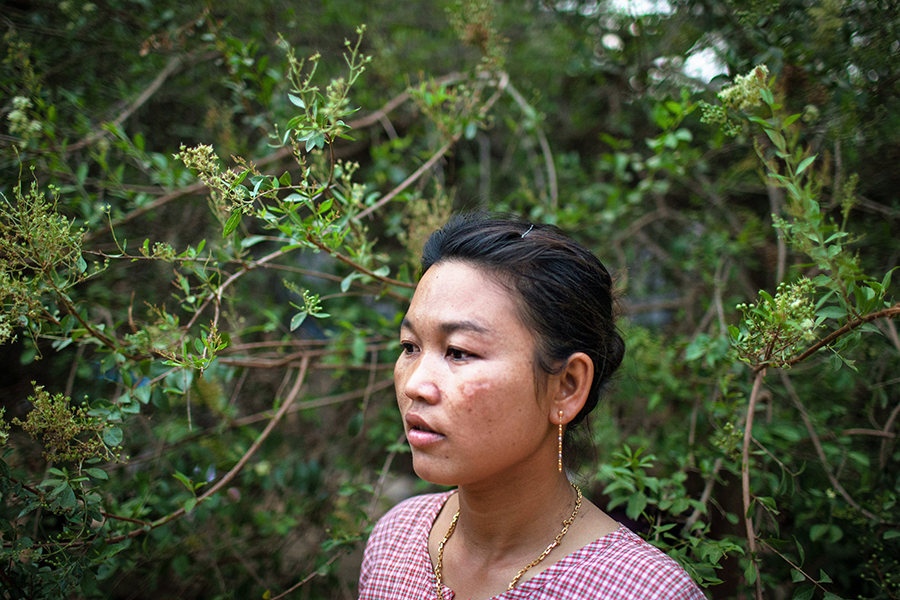 Lauren DeCicca for NRGI
In a recent visit to a town near Cusco, Peru, she found that “women’s organizations’ agendas revolve around the increase of gender violence and the negative impacts of mining on their access to water and land.”
NRGI is increasing female participation in its trainings. Ghana country program manager Nafi Chinery, a long-time activist in this space, has worked to create equal opportunities for women to benefit from NRGI training, including surpassing gender parity in the Anglophone Africa regional extractive industries knowledge hub course. In Myanmar, program associate Sebastian Sahla said the majority of participants from Myanmar in this year’s Asia-Pacific regional extractive industries knowledge hub course were women.
In the Democratic Republic of Congo, NRGI is planning research on the gendered impact of mining in Katanga and how these impacts can be better addressed in the legal reform of the mining regulation act.
Compared to other countries in the region, Tunisia has stayed relatively stable through its democratic transition and is reducing gender gaps in many areas. Nonetheless, some of the largest development gaps are found in resource-rich areas. This is the subject of a new NRGI project on local impact in the phosphate-rich Gafsa region, which has brought a gender lens into both project design and impact assessment.
“Although Tunisian women’s impact in the sector is still limited, women journalists are now covering issues related to governance,” Tunisia program officer Wiem Melki said. “Women parliamentarians are calling for transparency during hearings, women in civil society are part of EITI and women in government are working in diverse initiatives such as the Open Government Partnership, anticorruption and also the Ministry of Energy.”
Data is also a big part of NRGI’s work and a field where the lack of diversity and persistent gender gaps are well known: women and girls are less likely to get into data science or software development.
“The persistent difference in skill has implications for who accesses the data and analysis,” NRGI data scientist Hari Subhash said. “This is generally something with which the data space struggles and has considerable implications in terms of the questions we decide to ask using data and the way we present our analysis.”
NRGI’s Nigeria country program is working to counter this dynamic by increasing female participation in its Media for Oil Reform fellowship and seeking other ways to integrate gender into its media work.
At the global level, a NRGI gender thematic group supports the work of our colleagues and captures lessons learned to be shared. Members of the group are working to disseminate new research on a wide range of impacts of the extractive industries, based on literature and case studies from around the world, to help the movement to understand the mechanisms through which the industry impacts women’s welfare, opportunities and choices.
On this International Women’s Day, we are inspired by our global colleagues, who through diverse, context-specific projects are working to improve the participation of women in resource governance.
Claudia Viale is a Latin America officer with the Natural Resource Governance Institute (NRGI). Katarina Kuai is a senior program officer with NRGI's capacity development team.
New NRGI Board Member Carole Nakhle: Longevity of Extractives Industry Depends on Gender Inclusivity
Carole Nakhle, the founder and CEO of Crystol Energy, joined NRGI’s board of directors this month. She also founded Access for Women in Energy, which supports development of women in the energy industry, globally.
I spoke with Carole just before International Women’s Day to get her perspective on the growth of AccessWIE, “anemic” female participation in the extractives sector, and the roles NRGI can play in addressing gender inequality and women’s empowerment.
Katarina Kuai: How has AccessWIE grown since 2016, when you last spoke with us about the organization?
Carole Nakhle: AccessWIE has grown significantly over the last two years, not only in terms of membership but also in terms of activities and international reach, thanks to the continuous support of its leadership, its dedicated Management Committee who volunteer to support the group and, of course, active members who share our values and beliefs.
Perhaps the most satisfying achievement was helping to set up similar groups in Ghana and Tunisia. In Tunisia, the appreciation of women’s expertise—particularly in the energy industry—was remarkable and personally moving. Being involved in Abu Dhabi’s flagship event, ADIPEC’s Diversity in Energy conference, was another memorable achievement. We are also collaborating with Women in Energy Program at Columbia University in New York and we hope to strengthen our engagement with NRGI in this sphere.
How have the trade missions led by women you cited as an AccessWIE priority been going?
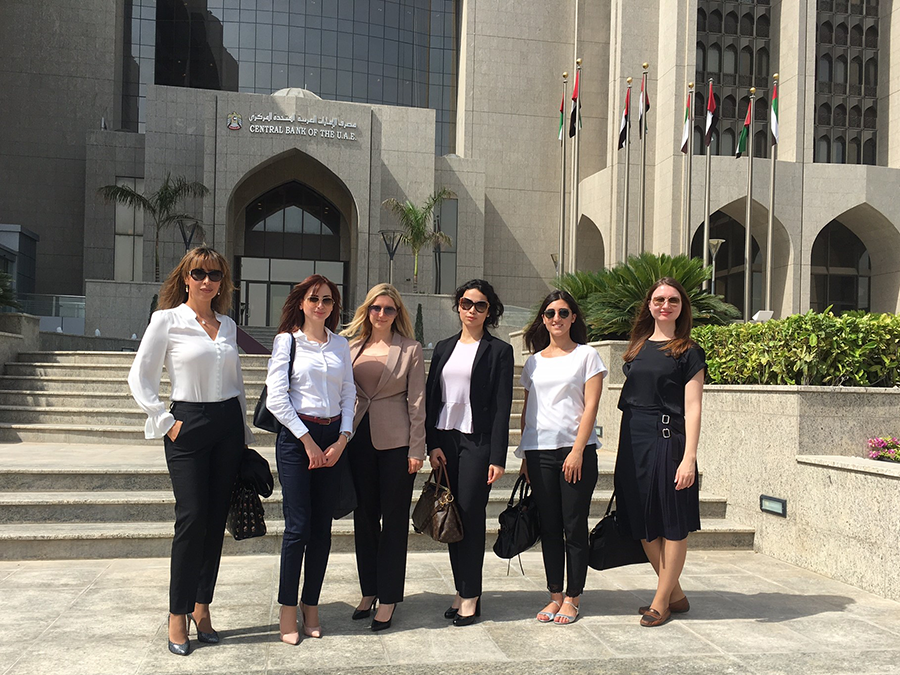
The Energy Trade Mission was our then-new experiment for 2017. A group of energy experts, a majority of them women, travelled to the UAE and had a busy schedule of meetings with officials, industry and institutes involved in the energy sector.
The mission was highly informative. We all learned a lot about the energy industry and policies in the Emirates and, equally important, about the serious dedication of the government and its organizations, particularly national oil company ADNOC, to promote the role of women in the sector. This goal pleasantly surprised all the mission’s delegates. This year, we are planning a similar mission to Lebanon.
Although I enjoyed every aspect of the mission, the sweetest memory is of all the delegates—from an English Lord to a businessperson, to a Ph.D. student each coming from different countries, sharing experiences, views, food and drinks, while heading from one meeting to the other. By the end of the four-day mission, background and gender were simply meaningless. We’re keen on repeating it every year.
We’re seeing large cultural shifts on gender around the world. How is that playing out in the extractives industry?
Despite the international enthusiasm about gender diversity, the participation of women particularly in the energy industry remains anemic, and it shrinks further in higher echelons. Again and again, I attend industry conferences dominated by male speakers and participants, and they feel so out of touch with reality. When one raises this point, the excuse that is typically given is, “We cannot find female speakers.” The answer should then be, “You haven’t looked hard enough.” First of all, there are many female experts in the industry. Yes, they’re outnumbered by men. But they are there.
Second, such an attitude does not help in attracting female talent. I recall an energy dinner discussion I attended where one businessman was talking about his board’s longstanding intention to hire a woman; he proudly said that he and his colleagues have raised this matter almost each time they met, but, as he claimed, they couldn’t find any. During that dinner, there were nine guests; six are established female energy experts.
Today, the oil and gas industry is facing many challenges, some rather existential. The longevity of the industry will depend on the supply of well-educated and experienced employees, both male and female. Any great industry, such as energy, or any society or economy trying to advance while favoring only half the workforce over the other is bound to stagnate.
How do you see the role of NRGI in addressing gender inequality and women’s empowerment?
NRGI presents itself as helping “people to realize the benefits of their countries’ endowments of oil, gas and minerals.” Addressing the issue of gender inequality in the sector has many positive spill-overs, which I can only see complementary to that mission.
NRGI could carry out comparative research on the participation of women in the extractives across various countries to provide a better understanding of barriers and practices in different regions. Isn’t it strange that in an industry more than a century old, there are few female energy ministers and few oil companies, private and state-owned alike, with a female CEO? This is a widespread global occurrence across industries, but are the causes the same? It would be interesting to find out.
Katarina Kuai is a senior capacity development officer with the Natural Resource Governance Institute (NRGI).
Uncovering the Impacts of Phosphate Mining on Tunisian Women

Phosphate mining has long served as an important component of Tunisia’s economy—phosphate rock is used domestically to produce fertilizer and is also a valuable export. But some regions that are richest in phosphate reserves are also some of the most marginalized. Citizens in these regions’ say the government doesn’t provide them with the political voice and economic opportunities they seek, and that the state-owned Gafsa Phosphate Company (CPG) uses opaque recruitment processes that does not offer locals a clear path to working for the industry’s biggest employer.
In 2008, citizens in the phosphate-producing region of Gafsa organized protests against this marginalization and suffered a government crackdown. Called the “Mining Basin uprising,” the unrest seriously disrupted phosphate production, and nearly a decade later unrest continues to sporadically erupt over many of the issues that caused the initial protests—low employment, weak regional development, inadequate mitigation of the negative environmental impact of phosphate production, and the inequitable distribution of phosphate revenues. The cost of the unrest is considerable, with phosphate production falling from 8 million tons in 2010 to 3.1 million tons in 2017. Government officials blame protestors for the decrease in CPG’s activity. However, the root problems that caused the discontent remain unaddressed in a systematic manner. Gafsa still lacks basic public services and infrastructure, and the unemployment rate remains the second highest in the country, at 28.2 percent against a national rate of 15.6 percent in 2016.
While natural resource-related discontent in Gafsa remains largely unaddressed by policy-makers and underreported by the media—leading to a lack of awareness amongst the Tunisian public and international donors—even more underreported are the disproportionate negative effects that phosphate production has on women. To begin understanding these gendered effects, the Natural Resource Governance Institute (NRGI) held a consultative meeting with female activists in Gafsa on 28 December. The key findings from the consultation revolve around three themes: employment, health, and pollution and infrastructure.
Employment
While the lack of employment opportunities is a major issue for all populations in Gafsa, it disproportionately affects women. The region’s unemployment rate amongst female university graduates is 54 percent while it is 27 percent amongst male graduates. This disparity holds when it comes to the ratio of women to men employed at CPG and affiliated institutions. Additionally, most of the women employed by the company are cleaners—this despite the region’s high percentage of female university graduates. (Forty-seven percent of all Gafsa women hold a university degree.)
Health
Phosphate production has negative health effects on Gafsa’s population as a whole, according to activists, who say that women disproportionately suffer: They experience a high rate of miscarriages, as well as neonatal problems that go untreated due to a lack of services in the area. Activist Nawwara Bedhief, president of Sanad, states that “seven percent of children in the Mining Basin region of Mdhilla are born with birth defects due to women’s exposure to uranium present in phosphate deposits.” Consultation participants also cited negative psychological effects from phosphate production. For example, water and air pollution caused by the production causes damage to women’s skin, teeth and hair (leading to decreased self-esteem and confidence).
Pollution and infrastructure
Phosphate production leads to a high level of dust and air pollution. Dusting and cleaning is the responsibility of women in Gafsa’s households, and the chore is made especially arduous by the added phosphate dust and grime; women are forced to spend time, effort and money cleaning that could be used on leisure, education and other pursuits. Cleaning is made even more difficult by water shortages, which is a direct result of phosphate production. Activist and human rights advocate Mannena Zitouni said that water is “scarce, undrinkable, and of very poor quality.”
Promoting evidence-based, local responses to gender impacts
The main takeaways from NRGI’s meeting with female stakeholders revolved around two themes for further action.
Empowering local civil society to play a more concerted and coordinated role in demanding inclusion in decision-making
Local civil society actors must consolidate their efforts so that they can present a unified set of demands for inclusion in decision-making processes related to phosphate’s negative impacts. Local civil society organizations stand to benefit from their inclusion in the NRGI-supported Tunisian Coalition for Transparency in Energy and Mines (CTTEM), or from opening a direct line of communication with its regional coordinator (either of which could help elevate their demands and recommendations to the national level).
Supporting evidence-based advocacy through the commissioning of studies on phosphate’s environmental and societal impacts in the region
Civil society actors’ effectiveness in influencing decision-making is only possible if they can rely on informed, evidence-based accounts of impacts. Though anecdotal evidence abounds, there is a serious dearth of rigorous studies that definitively link phosphate mining to the various problems that are affecting citizens in Gafsa. NRGI is helping to address this by supporting its local partner and CTTEM regional coordinator—Association Bassin Minier pour l’Investissement et le Développement (ABMID)—to undertake a study on the environmental impacts of phosphate production. The study will gather and present data on the various environmental and health effects of phosphate extraction and has the potential to spark an informed debate on the government’s and other actors’ roles in mitigating phosphate-related damage and providing compensation. Many more studies of this kind need to be commissioned.
From Governance Structures to Gender Inclusion: A Young Mozambican Lawyer Experiences an Accra Extractives Course
Each year, the Anglophone Africa Regional Extractive Industries Knowledge Hub intensive two-week September course in Accra focuses on the most pressing regional issues in resource governance. This year, I was one of 45 participants who traveled to Accra from Botswana, Cameroon, Ghana, Kenya, Malawi, my native Mozambique, Nigeria, Sierra Leone, South Africa, Uganda, Tanzania and Zimbabwe.
Topline themes from this year’s course included examining governance structures and gender inclusion in the natural resources sector. We learned about key issues like good governance, revenue management, the extractives value chain, local content, and how to effectively to leverage the benefits of extraction in African countries.
“It’s time for Africans to look at the governance structures by putting sustainable effective polices [into practice],” said Nana Awulae Annor Adjaye III, paramount chief of the Nzema traditional area in the Western Region of Ghana, during the course.
Nafi Chinery, Ghana country program manager for the Natural Resource Governance Institute (NRGI), which sponsors the course, emphasized the role of women in the extractives value chain. Chinery stressed the importance of gender inclusion and proactively seeking and making space for female participation in the extractive sector.
The course helped me gain a firmer command of issues facing my home country, Mozambique, where the government took out big loans based on expected revenues from gas production. The course’s cross-cutting topics and exercises pushed me to venture out of my professional comfort zone and opened my mind to revenue management and macroeconomic issues.
Twelve participant presentations highlighted some shared problems: a lack of transparency, corruption and poor management of natural resources. These problems aren’t specific to any one country or region, my co-participants said.
They saw countries to be competing to sell their resources, instead of cooperating to create economies of scale. Many countries also demonstrate gaps in information-sharing related to due diligence in licensing decisions, we observed.
The training included a site visit to the Ghana Gas plant in Atuabo. During the visit, we learned about the company’s high percentage of Ghanaian employees; its managers and directors are also Ghanaian. We also learned about negotiations for a contract to sell byproducts of flared gas to produce electricity.
The second training week focused on legal framework issues. Instructors helped us to understand that transparency during the negotiation process is a must, as are environmental and social protection and provisions for “local content.” Having a sense of a “national vision” for extractives were also emphasized; this includes clarifying socioeconomic goals before drafting laws. And there is no one-size-fits all approach to lawmaking, we found. Julliet Twumasi, a course facilitator on local content, referenced a scenario in which legislators in a new producing country may take two or three articles from Tanzania’s law on gas, take two articles from Sierra Leone on mining, and end up with a “Frankenstein law” that doesn’t work.
The final training day brought together the Africa Center for Energy Policy and the Ghanaian Petroleum Commission. Both organizations provided perspectives on the implementation of Ghana’s local content in the upstream sector.
Deisy Inssa Ribeiro is a legal officer at Wentworth Mozambique Petroles.
Since 2014, NRGI has supported the African Mining Legislation Atlas project, a World Bank-initiated venture now overseen by the African Legal Support Facility. The project provides a database of all Africa’s mining laws and a guide (known as the “Guiding Template”) to assist governments seeking to reform their mining laws to maximize benefits from the sector. The site is populated by legal researchers—advanced law students from across the African continent. NRGI staff have provided training on understanding mining fiscal regimes to the legal researchers and contributed to the drafting of the template, and NRGI is a member of the Project Implementing Consortium, an advisory body for the project. As part of its effort to support good governance of extractive sectors in Africa and, particularly, to provide knowledge opportunities for youth, NRGI provided two AMLA legal researchers scholarships to the Anglophone Africa Hub course in 2017, and will do so again in future years. Deisy Inssa Ribeiro, the author of this blog post, was a member of the first legal research team selected for the project.
—Nicola Woodroffe
Four Steps Toward Stronger Women’s Voices in Extractives Governance
As the Extractive Industries Transparency Initiative (EITI) board met in Bogotá on International Women’s Day this week, it is a perfect moment to reflect on how mechanisms like the initiative can be better harnessed to empower women’s voices in resource governance.
Research has shown women are more likely to be negatively impacted at the local and national levels by natural resource extraction. At NRGI, we believe that the natural resource governance field has only begun to factor in the involvement of women and consider how issues important to them can influence governance decisions in the sector.
In celebration of the achievement of women’s movements this month, NRGI is outlining how lessons from the gender and development field can be used to create better outcomes for all involved in natural resource governance.
- Improve women’s participation among all stakeholder groups in resource governance. Across the globe, NRGI has seen less female representation in civil society trainings and in leadership roles at civil society organizations it supports than men. The reasons for this are not yet clear. NRGI is studying why there is less female representation and what can be done to make representation more even. NRGI has created a special leadership program to support women in civil society to grow into these roles. It should be noted that women are not under-represented in every case. Women sit in the powerful leadership roles in global and national coalitions, like Publish What You Pay. In some countries, women are the represented equally and dynamically. We don’t know the specific impact gender balance can bring to our movement. We do know that when women are involved in public policy decisions they are more likely to address development needs and when women are involved in peacemaking, there is a greater likelihood of lasting peace. The bottom line across contexts seems to be that improving female participation improves outcomes and sustainability.
- Strengthen women’s representation in EITI. When participation from civil society on extractive issues is not balanced, it stands to reason that it is less likely to be balanced at the EITI multi-stakeholder table as well. MSI Integrity’s analysis of EITI boards in 23 countries found that the majority of multi-stakeholder boards are composed of fewer than 25 percent female representatives. Women represent approximately one third of the global EITI board. MSI Integrity’s report brought out some of costs associated with participating in a multi-stakeholder group, noting that more than a third of the countries surveyed did not compensate those attending from outside the capital. Other development studies show that when there is a cost of participation, it is harder for women to self-finance than men. Clear multi-stakeholder group guidelines addressing the actual costs of EITI participation at a national level can reduce the impact across gender lines.
- Project-level data is critical. If women face political and cultural constraints to mobility and accessing national politics, they are more likely to be able to influence change at the local level. Years of gender budgeting experience show that women can play an important role ensuring that local government spending aligns with development priorities. This only works, however, when there is access to accurate information about local revenues. In order for women to have access to information about revenues that link to the extractive projects in their area, EITI and implementing countries must publish all subnational transfers and company payments on a project-by-project basis. Information that is aggregated across an entire country does not help a woman in one town know what to expect and how it will affect her family. The EITI’s board’s decision today to implement the EITI’s project-by-project reporting requirement is very welcome in this respect.
- The format of EITI data has a big impact on who can use it. NRGI’s report on subnational transparency outlines how restrictions on women’s physical mobility—from cultural constraints or household obligations—can increase the importance of providing subnational-level information. The format through which data is shared can impact who receives the data. National multi-stakeholder groups might consider making sure they are using means of disseminating their reports that are equally received by men and women. All groups involved in resource governance transparency can do better at making sure their information is in formats accessible by women.
The above can move us toward gender equality in the governing and decision making structures around natural resource policies but of course represents only a starting point for a broader discussion. Much more needs to be done to account for the differentiated impacts of natural resource policies on men and women, and how policy design can better address this. NRGI is excited to pursue answers to how gender participation and consideration of gender in governance decisions can improve the lives of all citizens in resource-rich countries.
Rebecca Iwerks and Katarina Kuai are senior capacity development officers at the Natural Resource Governance Institute (NRGI) and members of the NRGI gender working group.
Report: Healthcare, Education, Gender Equality All Suffer During Azerbaijan Oil Boom
Resource-rich governments tend to overspend extractives revenues on large infrastructure projects and underinvest in education, healthcare and social welfare. This is a key component of the so-called resource curse paradigm, and one clearly exhibited in the case of quintessentially oil-dependent Azerbaijan, according to a December report.
Proceeds from oil exports, if managed well, can improve the quality of a country’s schools and universities or build an inclusive medical insurance system. Heathy, well-educated and high-capacity labor is necessary to ensure sustained economic development, and would clearly help countries like Azerbaijan in the longer term.
In a widely-cited paper, economist Thorvaldur Gylfason finds that states with abundant natural resources often inadvertently or deliberately neglect education spending. He argues that “nations that believe that natural [resource] capital is their most important asset may develop a false sense of security and become negligent about the accumulation of human capital.”
Governments might also be de-incentivized from investing in education and building domestic labor capacity: most high-tech technology can typically be supplied by foreign oil corporations, as can a high-skilled workforce. Oil sector jobs also tend to be male-dominated, affecting female labor force participation.
Importantly, foreign oil companies are expected to contribute to countries where they work through corporate social responsibility (CSR) projects and local content policies.
The December 2016 issue of the Caucasus Analytical Digest tested these concepts, looking at the record of human capital accumulation, gender equality and CSR in Azerbaijan during the recent oil boom. Its findings can be summarized as follows:
- The government clearly under-invested in education and healthcare.
- The quality of public education deteriorated precipitously, falling behind even the regional standard.
- The oil curse hurt women more than men, and women have missed out on the dividends of the latest oil boom.
- The contribution by oil companies, notably BP, has been limited to project-affected regions or in and around the Baku area, and most of the education investments have targeted professionals in the energy sector.
Farid Guliyev is a research associate with Eurasia Extractive Industries Knowledge Hub at Khazar University, Baku.