
Remarks by Suneeta Kaimal at the UN High-Level Meeting on Critical Energy Transition Minerals

On 14 July 2026, NRGI president and CEO Suneeta Kaimal addressed the UN High-Level Meeting on Critical Energy Transition Minerals. In her remarks, she called on governments to move from commitments to action and echoed the demands of a joint open letter signed by NRGI and more than 130 civil society organizations. These are her remarks.
Excellencies, colleagues. Two years ago, as members of the Secretary General’s Panel on Critical Energy Transition Minerals we said with one voice: justice requires change. And two years ago, we shared a road map for a new mining paradigm: one that does not simply extract value from the Global South, but actually builds it there — through industrialization, through jobs, through rights upheld.
Two years ago, we charted the path. But today, the world is off course. Human rights abuses linked to transition minerals have surged 73% in the past year. Instability and conflict persists. Over 200 mining projects have been announced in the last six months alone, and most of those are shrouded in opacity. National security is invoked to fast-track projects and bypass hard-won safeguards. And trade rules and traceability frameworks are being rewritten without developing countries and affected communities at the table.
Through an open letter, we, the Natural Resource Governance Institute and 130 other civil society organizations call for Member States to act today.
First, follow developing producer country leadership. Support the mineral policy mechanisms producer countries are proposing — such as the DRC's in the Security Council and Colombia's in the UN Environment Assembly. Launch, without delay, the Country Support Platforms of the UN Task Force, so discussion becomes coordinated action in producer countries, on their terms and with the active involvement of Indigenous People and broader civil society.
Second, move from ambition to action. Ensure that the incoming Secretary-General treats this agenda as the priority that it is for peace and security, for human rights, and for sustainable development. Establish a Special Envoy for the Equitable and Just Mineral Governance to drive forward progress. And push the multilateral development banks, including through their Critical Mineral Joint Collaboration Framework, to align investments with the Panel's Guiding Principles.
And finally, keep the energy in energy transition minerals. Reground the critical minerals agenda in its original purpose: sustainable development and just transitions, not AI and military dominance. Agree on equitable, time-bound targets for material sufficiency, efficiency, and circularity to preserve the integrity of the planet. And in 2027, leverage the African COP32 leadership and the UK G20 leadership, building on South Africa’s to jointly advance a shared agenda for energy and economic equity.
Two years ago, the task and the timeline that the Secretary-General handed to us as panel members seemed impossible. But, the UN provided a unique space. Where we could look past our competing agendas. Where all stakeholders and all rights holders had a seat at the table. Today, we in civil society stand ready to marshal and scale that sense of urgency and the spirit of cooperation. To work together to unlock a fairer, more peaceful and prosperous future for us all. Thank you.
Without Equity and Justice, Mining Leaves Women Behind

In mining regions, women face distinct costs of weak governance: higher care and household responsibilities, exclusion from jobs and decision-making, and gender-specific risks such as sexual corruption. Yet these realities remain largely absent from high-level climate and energy discussions.
This September, diplomats and policy experts gathered at climate summits in Addis Ababa and New York, setting the stage for negotiations at COP30 in November. At these events, Natural Resource Governance Institute (NRGI) and Resource Justice Network underscored a critical point: there can be no just transition without more equitable sourcing and value chains for transition minerals, and central to this is ensuring a fairer deal for women.
The hidden cost of weak governance and corruption
Our organizations have long collaborated to bring a gender focus to natural resource governance, publishing a Feminist Natural Resource Governance Agenda in 2020, and to highlight the importance of tackling corruption. Over the past year, we’ve continued to expose challenges to a fairer, more inclusive mining sector, including through events at New York Climate Week (CWNYC). Resource Justice Network convened women from the Global South to speak on the systemic social, economic and financial barriers to a just transition and on solutions to overcome them.
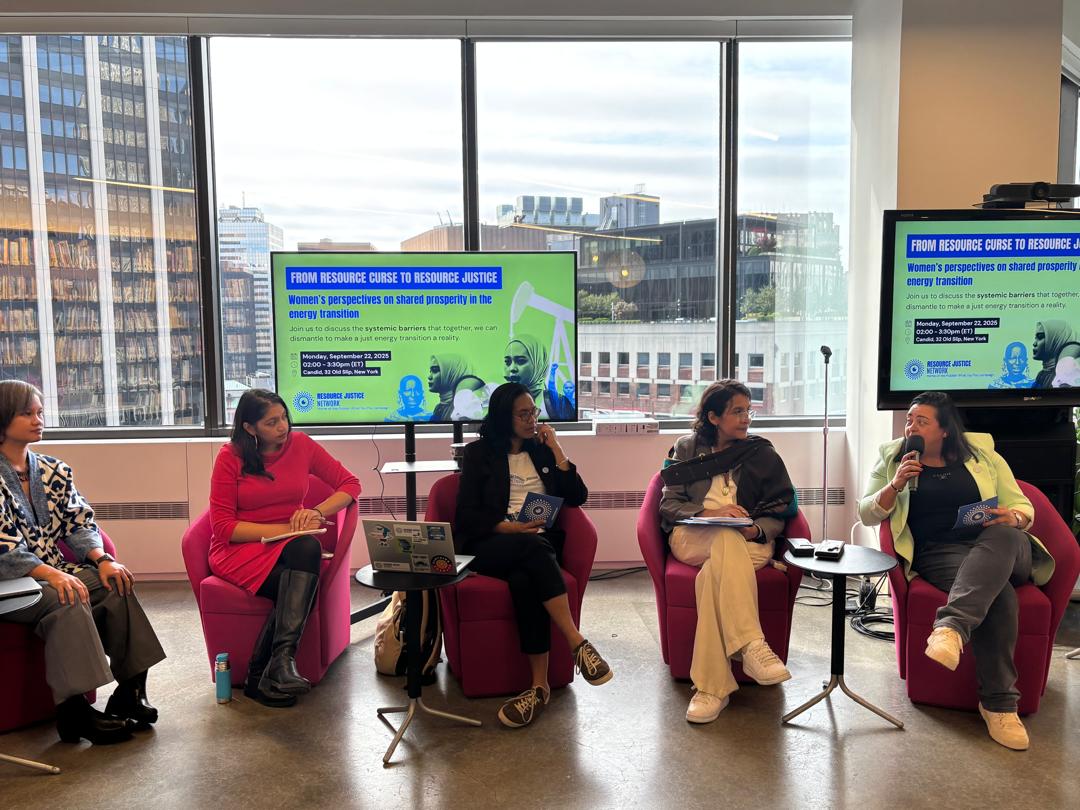
NRGI co-hosted a roundtable exploring how to better engage communities in the energy transition, where we drew on our work with the Business and Human Rights Resource Centre, SIRGE Coalition and WWF. Our joint briefing Digging Into the Problem shows how corruption in the mining sector directly undermines equity and inclusion, diverting revenues and social benefits from mining, such as jobs, education, healthcare and local development, away from those who need them most. Women, who rely more heavily on public services and social infrastructure, suffer disproportionately.
Corruption’s gendered impacts
Women face distinct corruption risks. Sexual corruption—in which access to jobs, services, permits or compensation is exchanged for sexual favors—is enabled by the male-dominated nature of the industry, weak enforcement of legal protections and fear of retaliation. While underreported in extractives, sexual corruption is real and pervasive. At the same time, discriminatory mining laws in several countries prohibit single, pregnant or unmarried women from certain mining activities, embedding exclusion in policy. Community development funds from mining often lack gender budgeting or gender-disaggregated targets, leaving women and girls underserved or entirely invisible.
The environmental and social impacts of mining compound these inequalities. Women in frontline communities, often responsible for water collection, food production and caregiving, must travel further, work harder and sacrifice income and time when natural resources and the environment are degraded by pollution and deforestation. At the same time, women also shoulder increased care responsibilities when relatives fall ill or leave the area for new opportunities, further limiting their economic and social participation.
Corruption also drives land grabbing and erodes land rights. Where tenure systems are unclear or informal, companies and state actors can exploit legal gray areas to displace entire communities, often without fair consultation or compensation. Women, less likely to hold formal land titles, are especially vulnerable, reinforcing both economic and political marginalization.
Yet, despite bearing disproportionate impacts, women are consistently excluded from decision-making spaces around mining activities. Local governance bodies, permit review panels and project consultations often fail to engage women meaningfully or at all, leading to unjust outcomes and undermining of environmental governance.
How mining deepens women’s burdens
At Resource Justice Network’s CWNYC event, we heard directly how these issues are impacting women in mining-affected regions. A panelist stressed that the “masculinization” of mining sites often fuels violence and abuse against women, including sexual exploitation, harassment, disappearances and killings. For Indigenous Peoples’ communities in mining zones, jobs are presented as benefits, but the creation of “men-camps” often breaks family structures and spreads violence. Only by fully realizing Indigenous Peoples’ right to Free, Prior and Informed consent can such negative outcomes be avoided.
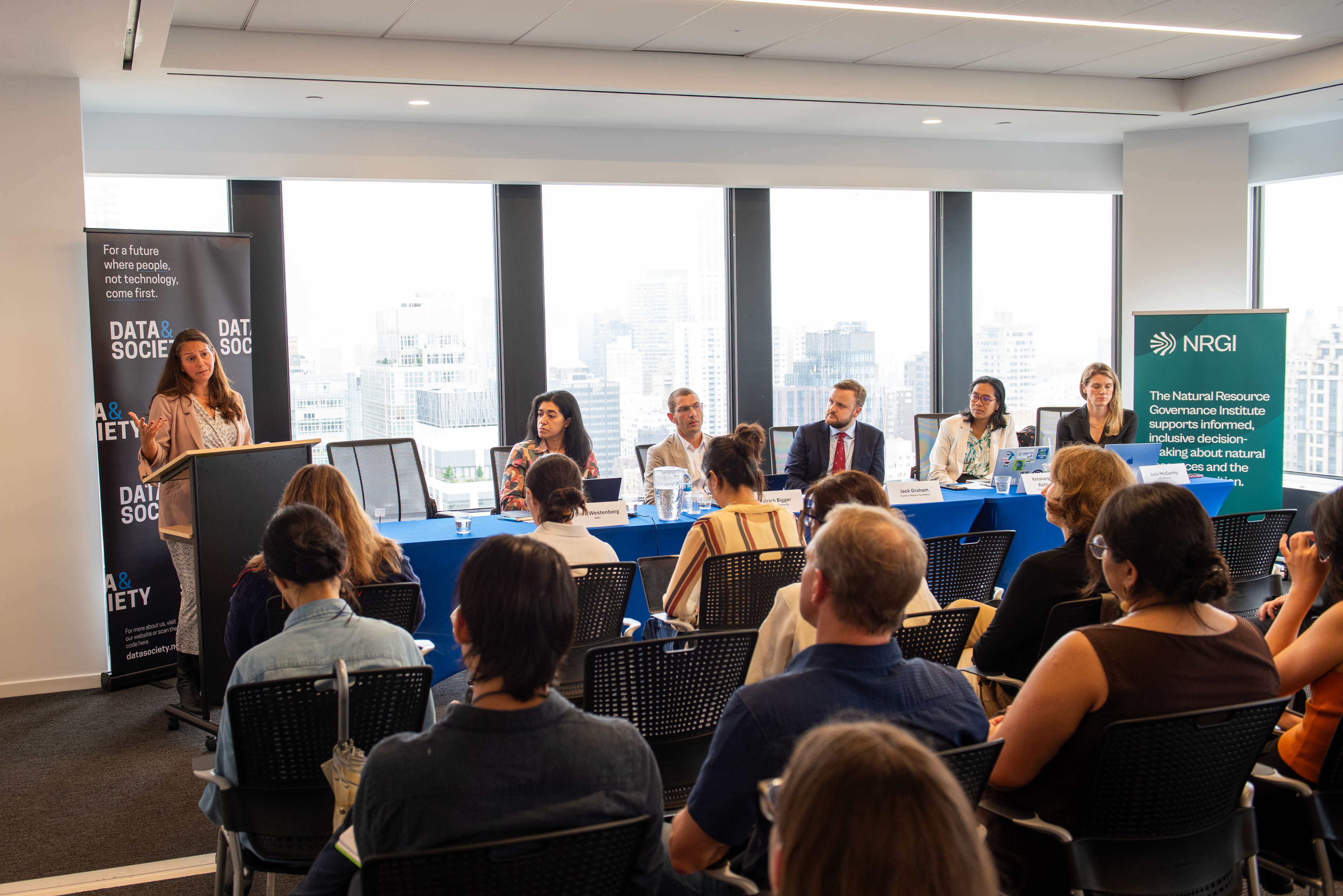
These interventions contrasted starkly with many CWNYC events focused on technological solutions to climate problems. NRGI and Resource Justice Network participated in a panel discussion about the impacts of AI on mining and gas production in low- and middle-income countries, which highlighted the importance of bringing equity considerations, including gender, into AI policy dialogues. But, as we noted, technology alone cannot solve systemic exclusion, and may even worsen it if underlying power dynamics are ignored. Recognizing these risks is not a barrier to progress, but key to unlocking it.
The path forward: a gender-inclusive mining sector
Corruption and gender inequality are not side effects of the transition mineral boom, they are structural barriers to climate justice. The choice is clear: repeat past mistakes, or build a model of mineral governance that is inclusive, transparent and just.
Governments, companies and international actors must ensure that women are not an afterthought, but equal partners in shaping the decisions that will define this transition. Principles 3 and 4 of the UN Secretary-General’s Panel on Critical Energy Transition Minerals set out what is needed: women’s groups must be engaged before, during and after mining operations, and anticorruption safeguards must address gender-specific vulnerabilities.
Only with gender-responsive governance and by dismantling entrenched inequalities can the promise of the energy transition be shared equitably. To advance these goals:
- Sexual corruption must be recognized as a crime; legal instruments at all levels must be updated to reflect this, and courts and tribunals at the national, regional and global level must enforce them efficiently to tackle impunity;
- Governments should enshrine gender and anti-corruption safeguards in law and ensure that mining revenues are directed towards public services.
- Companies should ensure that their anticorruption policies and any community development agreements acknowledge the gendered impacts of corruption and development decisions in the mining sector and seek to address these, for example through enforcing zero tolerance policies for sexual corruption and ensuring adequate funding for gender programs.
- States parties to the UNFCCC should make equity central to COP30 commitments and finance incentives that strengthen women’s voices in climate change negotiations. By including the first-ever mention of minerals in COP text, delegates can build on the work of the UN Secretary General’s Panel and send a strong signal that a fairer and more equitable mining sector is essential to a just transition.
Value Beyond the Mine: Enabling Equitable Opportunities in Mexico

Image: Mexican Female Miner by Solidarity Center under Creative Commons Attribution (CC BY) 2.0 Generic licence.
As the world accelerates the shift to clean energy, the demand for transition minerals is reshaping how resource-rich countries like Mexico approach mining. The UN Secretary-General’s Panel on Transition Minerals (UN Panel) has identified value addition as its first actionable recommendation and has called for gender equity to be embedded across the entire mineral value chain.
This isn’t just about maximizing economic returns—it’s about ensuring fair and inclusive opportunities and benefit-sharing. Principles 3 and 4 of the UN Panel’s report stress the importance of tackling socio-economic barriers by involving women’s groups in decision-making before, during and after mining operations. Yet, despite their proximity to mining activities, women are often excluded from formal mining benefits and are typically confined to lower-paid, informal or peripheral roles.
In countries with both strong mining activities and industrial capacity, like Mexico, Equitable Value Addition (EVA) offers a promising pathway to move beyond extractive dependency and generate shared prosperity. However, this opportunity is not guaranteed, and risks have to be carefully weighed. Moreover, unless EVA strategies prioritize gender equity, they risk reinforcing the same inequalities that persist today.
From extraction to equity
Mexico is a top global producer of 17 key metals and minerals, including copper, silver, graphite and manganese—vital inputs for the electronics, renewable energy and automotive industries. It also holds significant lithium resources, positioning the country as a potential leader in global mineral value chains. Mining contributes 2.7 percent to national GDP and about 9 percent to industrial GDP, employing around 400,000 people directly and supporting over 2 million jobs indirectly.
Additionally, Mexico ranks fifth in vehicle production and third in exports. The automotive industry generates over $100 billion annually—mostly through trade with the U.S.—and contributes around 4.7 percent to the national GDP and over 20 percent to the manufacturing GDP. This sector also supports more than one million direct jobs and more than 3.5 million indirect jobs.
These two sectors—mining and automative manufacturing—are central to Mexico’s economic future. Yet both are marked by deep gender disparities. Women make up only 17 percent of the mining workforce and just 12 percent occupy leadership positions. In the automotive industry, women represent 37 percent of total employees, but only 13 percent of its manufacturing workforce.

Beyond underrepresentation, women also face real safety threats. Nationwide, over 70 percent of women in Mexico report having experienced some form of violence. In public transport, the problem is especially acute: in industrial zones, for instance, 60 percent of women report abuse during their commutes. In addition, 28 percent of women have faced violence at work. Alarmingly, up to 94 percent of women do not file a report or request support.
EVA as a dual-purpose strategy
There is growing recognition that the energy transition must not deepen existing inequalities. NRGI is contributing to this conversation by highlighting the dual opportunity presented by EVA. Economically, it supports countries like Mexico in moving up the value chain—from raw material exports to high-value goods. Socially, it opens pathways to gender equity by promoting access to formal, well-paid and secure jobs for women across the mineral and manufacturing sectors. We have also promoted this proposal through the T20, calling on the G20 to establish a global framework for value addition and fair benefit-sharing.
A just transition demands gender equality and social inclusion at every stage—from minerals extraction to value addition. To succeed, the transition must be driven by governance that prioritizes these objectives, including gender-responsive due diligence along supply chains and local policies that link green technologies to tangible benefits for women.

Connecting agendas: The example of Hermosillo
The transition to electric vehicles (EVs) is transforming the auto industry, but not all jobs will carry over. Only one-third of in EV-related job categories align with skill sets from internal combustion engine roles, making reskilling essential. Yet only 30 percent of STEM professionals in Mexico are women, limiting their access to future opportunities.
A gender-inclusive EVA strategy must therefore include:
- Reskilling programs targeted at women
- Incentives for female entrepreneurship in mineral processing and tech sectors
- Employment quotas or targets for women across the value chain
In Hermosillo, political will is driving meaningful change. The local government has introduced a development plan with gender-focused initiatives: electric transport (buses and taxis) driven by women for women, improved public lighting in high-risk areas, solar panel installation in female-headed households, and the creation of a cooperative focused on empowering women in the renewable energy sector. This is only one example of what the linkages of how gender-responsive EVAs can connect green technology with social impact in practice.
Why gender impact assessment matter
For women in mining communities to truly benefit from shared infrastructure, training and local value chains, strong gender-sensitive assessments that identify barriers and guide practical solutions are essential. These assessments should be mandated and monitored by governments, implemented by mining companies, and enriched through the active participation of civil society.
Across Latin America, some countries are already making strides. For example, in Argentina’s Catamarca province—also home to key transition minerals like lithium—the government has integrated a gender indicator into environmental impact declarations since 2022. This requires mining companies to assess gender-specific impacts throughout all stages of mining projects, from exploration to closure. Driven by local community advocacy and supported by the Intergovernmental Forum on Mining (IGF), this policy aims to foster safer, more inclusive workplaces.
This kind of targeted, governance-led approach offers a useful model for Mexico. As the country expands investments into transition minerals, Mexico has the opportunity to apply similar tools grounded in local realities to ensure mining delivers for both the energy transition and gender equity.

What needs to happen
For EVA to be both economically transformative and socially just, creating an enabling environment is crucial. In Mexico context, policymakers at the federal and state levels should champion reforms that remove legal barriers and guarantee women’s rights and participation in all segments of the mineral value chain. This includes:
- Equitable licensing and market access
- Targeted financial support
- Affordable and adequate childcare, social services and public infrastructure
- Technical training for women in STEM fields
At the same time, industry actors, including mining companies, automakers, and suppliers, must adopt gender-responsive policies—especially in hiring, workplace safety and procurement. Civil society organizations, too, play a key role in monitoring implementation, advocating for accountability and amplifying women’s voices in decision-making.
Cross-sector collaboration is essential. Government agencies, CAMIMEX, WIM-Mexico, international organizations and trade associations should work together to develop inclusive and gender-equitable opportunities along the value chain. Public data disclosure and Environmental Impact Assessments (EIAs) are vital for tracking progress.
Inclusive public-private partnerships and regular multi-stakeholder dialogue can help subnational governments and communities capture value locally, and mitigate against potential challenges, while preparing for future opportunities in the global energy transition.
A choice to lead
Mexico is well positioned to lead a just energy transition that values both its natural resources and its people. The current administration’s Plan México aims to place the country among the world’s top 10 economies by focusing on green industrialization, including development of the EV value chain and renewable energy.
But to turn this vision into lasting socio-economic benefits, gender equity must be a core element of the EVA approach, not an afterthought. The real question is not whether EVA can drive gender equity, but whether those with power, namely policymakers, business leaders, civil society and local stakeholders, will choose to make it do so.
Breaking Ground: Critical minerals, critical opportunities for women’s participation
GA Building CR-12, New York

The side event of the 69th Commission on the Status of Women (CSW69) allowed the discussion on women’s roles and opportunities related to the extraction, production, and beneficiation of critical minerals for the energy transition and related sectors, including strategies to ensure their equal participation at every step—from artisanal and small-scale mining to higher-value-added processes.
The event organised by the Intergovernmental Forum on Mining, Minerals, Metals and Sustainable Development (IGF) and the United Nations Conference on Trade and Development (UNCTAD), featured industry experts such as Fernanda Ballesteros, NRGI's Country Manager for Mexico.
This event was designed to foster dialogue on strategies needed to ensure that women can benefit from the trade and employment opportunities in the expanding mineral sector, showcase policies to facilitate women’s equitable participation in the low-carbon energy transition, and discuss public and private policies to enhance finance, technology, and markets for women in the mineral value chain.

Fernanda Ballesteros
Mexico Country Manager
COP29 Finance Deal Maintains Fragile Promise for Resource-Rich Countries

New climate finance goal no upgrade but preserves options for funded just energy transitions for oil and gas producers in Global South
BAKU, Azerbaijan — The COP29 UN climate conference result maintains the weak promise of international financial support for the transition away from fossil fuels in low-and middle-income oil and gas producers, according to experts at the Natural Resource Governance Institute (NRGI).
Low- and middle-income countries are most affected by climate change, and least responsible for causing it. They also face the greatest challenges when transitioning away from fossil fuel dependence. When countries came together to adopt the Paris Agreement in 2015, they also decided to set a new collective, quantified goal (NCQG) for climate finance before 2025. The main purpose of COP29 has been to secure an upgraded commitment by rich countries to help countries in the global South to recover from and adapt to climate change impacts and boost their own just energy transitions.
“The COP29 outcome leaves much to be desired and there is a very hard road ahead, but it maintains a glimmer of a pathway for low- and middle-income countries to join the global transition away from fossil fuels with financial support,” said Suneeta Kaimal, president and CEO of NRGI. “Some oil-producing countries, such as Mexico, Colombia, Indonesia and Brazil, announced meaningful new energy transition commitments. However, their path and that of other resource-rich countries remains extremely tenuous until higher-income countries deliver their fair share of funds to the Global South in grants, not loans. It’s in everyone’s interest – including their own – for the G7 and other wealthy countries to promote equity and justice and quickly fund a just energy transition.”
Beyond the headline figure USD 300 billion per year reflected in the new finance goal agreed in Baku, the agreement does little to advance the quality of finance that will be counted toward fulfilment of the goal.
“Non-debt instruments are critical for energy transition finance in African countries,” said Denis Gyeyir, NRGI Africa senior program officer. “Most African countries suffer a crushing debt service burden that constrains fiscal space. The lack of emphasis on grant-based financing in the COP29 finance decision is outrageous, and a just and equitable global transition requires that the G7 and other wealthy countries remedy this as they meet their commitments.”
In the context of the Paris Agreement, countries have set themselves a 10 February 2025 deadline for submitting updated national climate pledges (nationally determined contributions, or NDCs) to global climate action.
“Mexico has re-entered the climate action arena with a new pledge: the goal of achieving net zero emissions by 2050 and explaining how it will get there in its NDC next year,” said Fernanda Ballesteros, NRGI Mexico country manager. “However, the new government's climate balance sheet will remain insufficient if Mexico’s state oil company Pemex, one of the world’s largest methane polluters, is not a central part of Mexico’s climate commitments, specifically of its NDC.”
For more information:
Gabriela Flores, +44 7931 924 934, gflores@resourcegovernance.org
Lee Bailey, +44 7447 560 488, lbailey@resourcegovernance.org
UN unveils international guidance for mining critical minerals
Just Transitions in Resource- and Energy-Producing Countries

The global shift away from fossil fuels toward cleaner energy presents significant potential for resource-rich countries. But it also poses challenges, compounded by gender inequality and a legacy of poor environmental and social practices linked to the extraction of oil, gas, coal and minerals.
To ensure benefits for everyone—including communities, women and Indigenous Peoples—leaders working on a just energy transition should adhere to some fundamental principles.
Cross-Country Reflections on Coal and Just Transitions in Colombia, South Africa and Indonesia
The experts discussed on the current policy landscape for just transitions from coal in the context of Colombia, South Africa and Indonesia. One expert representing each country highlighted the unique barriers each country faces in phasing out coal production and reflect on how civil society can support just energy transitions. This panel conversation was followed by remarks by discussant Kerstin Mohr and an open Q&A.
Panel discussion:
- Juliana Peña Niño (National Resource Governance Institute), Colombia
- Ilham Rizqian Fahreza Surya (Institution for Essential Services Reform), Indonesia
- Muhammed Patel (Trade and Industrial Policy Strategies), South Africa
Africa’s Energy Future: Navigating the Path to Sustainability at the Africa Climate Summit

With Africa already grappling with the devastating impacts of global warming on its people, ecosystems and economies, the 2023 Africa Climate Summit could set the stage for a brighter and greener future for Africa. Now is the moment for the region’s leaders to address the critical intersection of environmental preservation and economic growth, and the need for a just energy transition in Africa.
Summit host President William Ruto of Kenya has called the meeting an opportunity to “define and refine [Africa’s] fresh and distinctive position” on climate action, for which renewed multilateral governance is needed. He has also called for equitable funding to address the climate emergency, and is marshalling support for a Nairobi Declaration on Green Growth and Climate Finance.
Africa boasts a significant share of the world’s natural resource reserves, with 30 percent of mineral reserves, eight percent of gas reserves and 12 percent of oil reserves. It holds substantial reserves of gold, chromium, platinum, diamonds, and also transition minerals like cobalt and copper. The continent’s heavy dependence on the production of fossil fuels makes it vulnerable to economic shocks when demand for these fuels drastically decline. Nigeria’s government budget, for instance, relied on oil exports for 31 percent of its revenue generation in 2022, underlining the need for a diversified economic strategy and energy mix. Similarly, oil and gas contributed 12.5 percent of Ghana’s total revenue for the 2022 fiscal year.
Nonetheless, African nations are making earnest strides toward a fossil fuel phase-out, as Nigeria’s energy transition plan and Ghana’s energy transition framework demonstrate. Nigeria’s energy transition demands an estimated investment of USD 1.9 trillion, while Ghana’s framework is projected to require around USD 561.8 billion for full realization. The announcement of a EUR 2.5 billion just energy transition partnership (JETP) for Senegal signals a commitment by Senegal’s government and its international partners to advance toward resilient, universal energy access and low-carbon systems.
In terms of mining, Africa’s mineral wealth is crucial for the global shift toward renewable energy systems. The continent holds significant reserves of minerals critical to the energy transition, including 19 percent of the minerals needed for battery-powered electric vehicles.
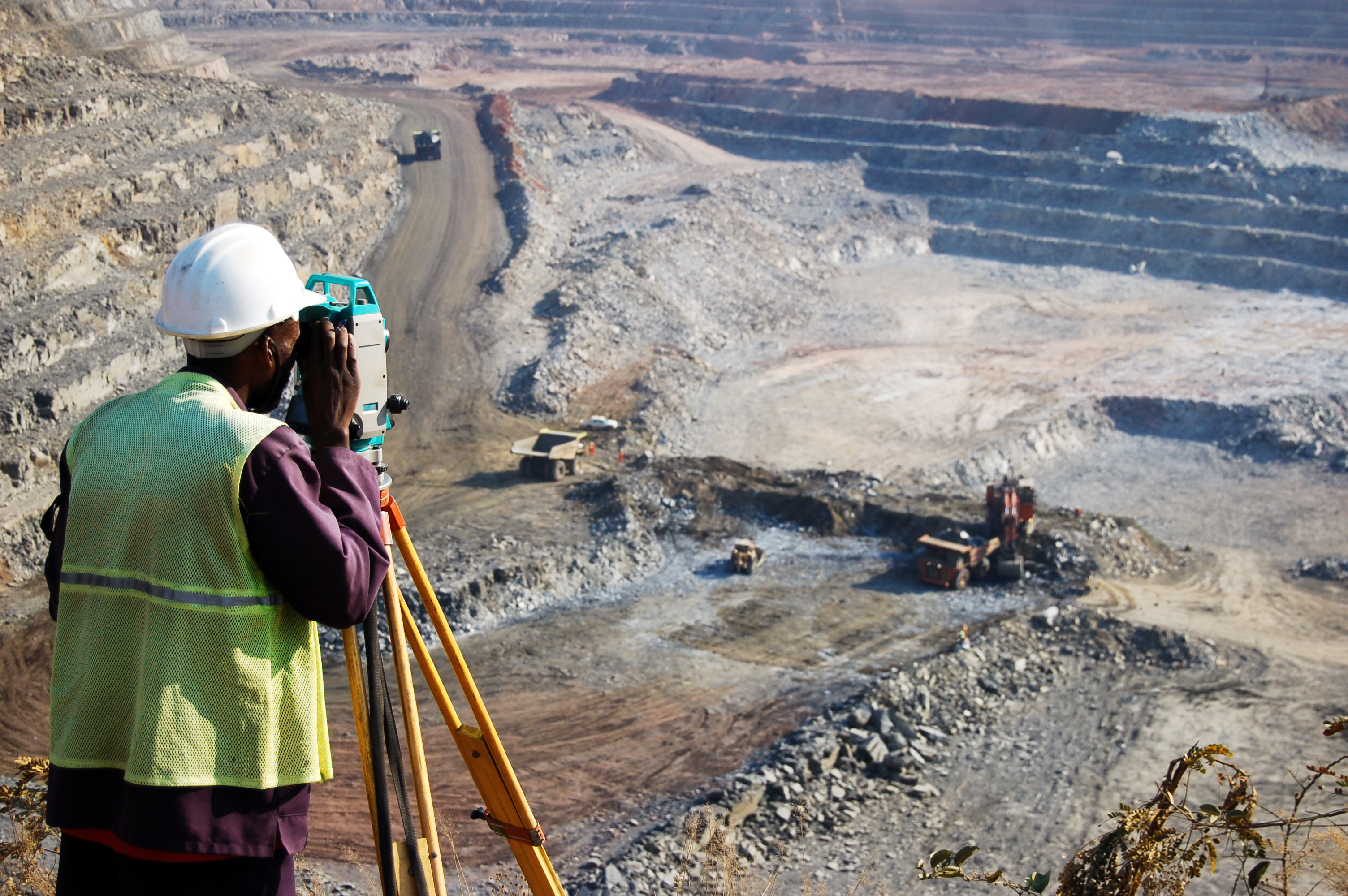
The amount of financing needed for Africa’s energy transition and climate adaptation—including sustainably developing transition minerals, building reliable energy systems and developing viable alternatives to fiscal systems dependent on fossil fuel exports—is staggering, and current resources are vastly insufficient. The continent will require huge financial and technological investments to exploit transition mineral deposits meaningfully and profitably.
The financial support promised by wealthier nations to aid in this transition has fallen short. These countries have not fulfilled their 2009 promise to provide $100 billion annually to aid developing countries in climate response, and their emissions reduction efforts remain inadequate to prevent warming beyond critical thresholds. Meanwhile the COP27 climate conference yielded new commitments, including a fund for loss and damage, a commitment to the 1.5-degree target and increased financial support for developing countries.
In June, French President Emmanuel Macron launched the New Global Financing Pact, recognizing the urgency to overhaul multilateral institutions, and emphasized the need for enhanced financial support for developing countries to confront challenges like climate change and future pandemics.
Also in June, at the Bonn Climate Change Conference, Emirati minister state oil chief and COP28 president-designate Sultan Al Jaber underscored the role of renewable energy and support to developing countries in phasing out fossil fuels and noted that the transition should not only meet the 1.5°C target but also be just and inclusive, accommodating all nations and regions. This phase-out of fossil fuels is inevitable, its pace determined by the swiftness of the transition to zero-carbon alternatives that prioritize energy security, accessibility and affordability.
Africa’s abundant resources hold the key to global decarbonization, making the upcoming summit a pivotal moment for leaders to drive actionable change before COP28.
At NRGI, we work with African government officials, civil society actors and communities, and they increasingly express an urgent need for policies and strategies that reduce fossil fuel dependence, mitigate economic shocks and foster prosperity.
In advance of the Africa Climate Summit, we offer five potentially transformative policy recommendations developed from our work across the continent:
1. Improve mining governance
Africa will not attract transition mineral investments at scale or ensure shared benefits without a concerted focus on good governance. As they plan future mineral developments, government officials should work to minimize harms to communities and the environment. The international community should enhance international standards on company responsibility and provide financial support to bolster government oversight capacity.
2. Foster regional collaboration
Economic cooperation and coordination across countries have been a longstanding goal of many African governments, which have taken important steps forward in recent years. Enhanced regional collaboration can help to unlock potential for African countries to move up transition mineral value and supply chains: generating additional revenues and jobs, enhancing energy security and access, and in some cases, supporting the restructuring of economies that are highly dependent on exports of fossil fuels. African governments should redouble investments in cross-border planning, both bilateral and multilateral, and implement existing strategies and policies such as the Africa Mining Vision and ECOWAS Model Mining and Minerals Development Act. The African Union with the Green Minerals Partners should also fast-track the development of the Africa green mineral strategy.
3. Promote equitable, people-centered dialogue on energy transitions
In both petroleum- and mineral-rich communities, energy transition has the potential to help unlock new pathways to sustainable development to benefit citizens. But this is far from guaranteed, and many people fear that the transition will exacerbate inequality and deprive the vulnerable of opportunities. African governments must establish mechanisms that ensure that civil society organizations and local communities have a say in how decisions are made and implemented, and how their interests should be protected. This can include establishing mechanisms for participation, consultation and consent. Bilateral donors and partners, international development banks, and international NGOs should support non-governmental efforts to ensure that the most vulnerable are not left behind.
4. Combat corruption
To attract responsible mining investment and foster sustainable growth, governments in producing countries should strengthen anticorruption laws and institutions and implement best practice transparency standards. All governments must do more to enforce anticorruption measures, prosecute corrupt officials and companies, and compensate potential victims of corruption. Recent setbacks in the fight for accountability are especially concerning as the boom in demand for transition minerals heightens corruption risks. Multistakeholder initiatives can play an important role in shaping the actions of countries and companies across the supply chain but require stronger anticorruption provisions and robust implementation.
5. Enable access to finance and innovative funding mechanisms
All of these recommendations require financing to become a reality. The Bretton Woods institutions and the wealthiest (and highest-emitting) countries, through international climate finance and innovative funding mechanisms, can support the deployment of clean energy projects at scale, propelling the transition. African leaders should work collaboratively to attract investments, align financial incentives, and de-risk projects to accelerate the transition.
The summit marks an opportunity to forge a new path for Africa, where leaders develop, agree and commit to concrete agendas and actions for Africa’s sustainable energy journey and shape a future that is cleaner, safer and more prosperous. Achieving this requires bold action, unwavering commitment, and collaborative efforts from all stakeholders.
How to score a triple win
Africa's endowments of minerals needed for the energy transition are critical to humanity's future and the continent's prosperity.
Can African Oil and Gas Benefit From Europe’s Energy Crisis?

This commentary originally appeared in African Arguments on 29 March 2022 under the title "Will Africa Really Be ‘Europe’s Next Gas Station'’’?
These shifts, combined with Western oil and gas companies dumping their Russian interests, present an opportunity to other petroleum producing countries, albeit one tempered by actions to address the climate crisis. This has led governments and commentators to discuss African producers as potential beneficiaries of Europe’s supply gap, with talk of a “seismic shift” to Africa and of the continent as “Europe’s next gas station”.
Such headlines gloss over the complex reality. It is true that several established producers – such as Algeria, Angola, and Nigeria – are already reaping higher revenues from soaring oil and gas prices. Countries with projects due to start within the next year or so, such as Mauritania and Senegal, will likely also benefit from higher prices. However, most current producers have limited spare capacity to quickly ramp up supply and need to attract more investment before they can.
Investment decisions on key liquefied natural gas (LNG) projects in prospective producers, such as in Mozambique and Tanzania, are not likely until at least 2024 given security challenges in the former, and ongoing negotiations and outstanding project design processes in the latter. This means significant production is unlikely before 2030. Most of Mauritania and Senegal’s oil and gas reserves won’t be developed until later project phases. And any supply from prospects currently under exploration is likely even further off. It has historically taken sub-Saharan countries around 12 years to move from discovery to production – often longer than initially predicted by governments and companies.
While some African projects may come online more quickly, investors will make decisions based on an uncertain long-term outlook. The current spike in prices is a potent reminder of the fundamental unpredictability of oil and gas markets. Seven years on from the price spike in 1979, rates had fallen more than two-thirds from the peak of the crisis.
Three factors make the current outlook particularly uncertain. First is Russia’s role in the oil and gas market. Its supply to Europe will be affected by how its negotiations with Ukraine unfold, as highlighted by how prices have fluctuated in line with perceptions of how the talks are progressing. Russian supply earmarked for Europe could be diverted to Asian markets in the long term. This would reduce Asian demand for gas from elsewhere and offset the benefit of increased European demand for oil and gas from these producers.
The second factor is how much market share other non-African producers capture. Europe is not only looking to Africa to fill the gap. US LNG exports to Europe are surging, multiple additional large US LNG projects are ready for development, and European leaders are striking long-term deals in the Middle East. Many of these producers have more spare capacity and projects that can be greenlit more quickly than African producers.
Third, prospective suppliers must consider potential “demand destruction” and the pace of the energy transition. A lesson from the 1970s is that high prices and market turmoil often lead to a permanent reduction in demand through improvements in energy efficiency and development of alternative technologies. The current crisis could lead to even greater demand destruction given it appears to have reinforced Europe’s conviction to accelerate its energy transition away from fossil fuels. Beyond its goal to secure non-Russian supplies in the short-to-medium term, the EU also aims to leave fossil fuels behind for good.
What African and European officials can do?
Leaders in both Europe and Africa can take steps to make this moment more of an opportunity for Africa.
The EU could begin by clarifying its energy transition strategy for the benefit of African producer countries and potential private investors. Thus far, its pathway has been a minefield of mixed messages. For example, its plans announced in February 2022 to label some kinds of gas-fired power as “green” was seen by some producer countries as a signal to move ahead with gas projects. However, some European leaders seem to increasingly view renewables as not only necessary to tackle the climate crisis but also to improve energy security.
As Europe seeks to expand its use of clean energy, it should ensure that African producers of the critical mineral inputs to green tech receive good and fair deals.
To ensure a globally equitable transition, Europe should consider meeting any longer-term demand first with petroleum from African countries, given their pressing development needs. Europe could also champion the inclusion of incentives for good governance in the sequencing of the global phase out of fossil fuel production. In so doing, it should balance addressing European energy security with reducing African energy poverty as part of a broader strategy that also supports African countries’ own transitions to clean energy. Finally, as Europe seeks to expand its use of clean energy, it should ensure that African producers of the critical mineral inputs to green tech receive good and fair deals.
Irrespective of how Europe proceeds, officials in existing and prospective oil and gas producing Africa countries should soberly evaluate the longer-term uncertainties. While prices are soaring now, this unpredictability includes the possibility of fewer supply opportunities and lower prices over time.
Governments should ensure that strong revenue management frameworks are in place, including by directing any windfall revenue toward sustainable development and economic diversification. Diversifying economies remains crucial. Governments should also rigorously analyse their prospects across different scenarios, factoring in project timelines and potential market evolutions. They must remain cautious and avoid using public capital to make risky bets on oil and gas.
While some African producers may benefit from Europe’s scramble for non-Russian oil and gas, the reality is unlikely to match the hype.