
Grassroots Engagement in Tunisia’s Gafsa Region Leads to Increased Phosphate Production

The challenge
Phosphate is a critical mineral used primarily in fertilizers, with a growing role in green battery chemistry needed for the energy transition. The chemical has historically been a significant source of state revenues in Tunisia, making up 3.3 percent of GDP and 9 percent of national exports in 2010. Despite its wealth in phosphate, the basin where phosphate is mined in the southwestern Tunisian governorate of Gafsa, has not benefitted from the sector. Gafsa, home to more than 300,000 people, has one of the highest poverty and unemployment rates in Tunisia due in part to weak regional development plans for the area. Gafsa is ranked 22nd among the country’s 24 governorates in terms of regional development indicators in 2021. In addition, residents in Gafsa suffer the negative environmental impacts of phosphate production. These environmental impacts, coupled with the phosphate industry’s depletion of water resources, have also affected the region’s once-vibrant agricultural industry.
Citizens in the region are disgruntled. Unemployed residents organize sit-ins at Gafsa mining sites, precipitating a sharp decrease in phosphate production: from 8 million tons in 2010 to 2.8 million tons in 2020. As a result, Tunisia, previously a leading exporter globally, had to import phosphate in 2020 to meet its internal demands and external commitments. This is especially problematic as the economy in Gafsa is not diversified and relies solely on the phosphate industry as the main employer. If unaddressed, this situation signals the inevitable bankruptcy of the state-owned Gafsa Phosphate Company (CPG), one of the most important industrial pillars of the Tunisian economy and provider of basic services and employment in the mining basin.
In Gafsa, and Tunisia broadly, citizens place little trust in the state.
In Gafsa, and Tunisia broadly, citizens place little trust in the state. A series of broken promises by successive governments and a strictly top-down approach to addressing the mining basin’s “resource curse” has exacerbated the issue. If authorities continue to sideline local communities’ needs and aspirations they are unlikely to garner grassroots support or buy-in.
In a welcome move towards a more inclusive approach in November 2019 Tunisia’s President Kais Saied met a delegation of civil society organizations (CSOs) from Gafsa to discuss potential resolutions to the blockage in the mining basin, and to give CSOs a bigger role in bridging the gap between the government and protestors. While this meeting signalled a positive government step toward civil society inclusion in dialogue and negotiation, CSOs were not equipped with the capacity or evidence to advance viable policy proposals. The meeting didn’t produce a clear, thorough and inclusive roadmap to guide different actors to resolve the conflict between protestors and CPG. Notably, these consultations excluded mining basin youth, who have been leading protests and sit-ins halting production, and did not offer youth an opportunity to explain their stance, aspirations or proposals. Their continued marginalization has cemented their lack of trust in the government.
The success of another recent grassroots initiative suggests that a constructive and inclusive dialogue mediated by civil society can in fact resolve phosphate production blockages. In the Gafsa sub-region of Rdaief a number of civil society activists launched an initiative to mediate between officials and protestors. The subsequent negotiations resulted in a truce which ended a three-year sit-in and allowed the temporary resumption of phosphate transportation out of Gafsa.
NRGI’s role
Citizens place the most trust in CSOs and influential activists to mediate between protestors and the government. However, in 2020 efforts such as the Rdaief initiative remained ad hoc and civil society actors were largely unorganized and ill-equipped to translate grassroots demands into policy proposals and subsequently rally local communities around legitimate government solutions.
Therefore, NRGI sought to empower grassroots civil society actors in the mining basin to play an informed role in inclusive and consultative phosphate governance reforms. NRGI designed and implemented “Gafsa’s Vision 2050,” with funding from the International Research and Exchanges Board (IREX) as part of its U.S. Department of State Bureau of Democracy, Human Rights and Labor-funded initiative. The project aimed to establish a broad civil society network in the mining basin and equip members with the expertise, knowledge, skills and financial resources they needed to play a more active role in advancing an inclusive and sustainable development roadmap for Gafsa.
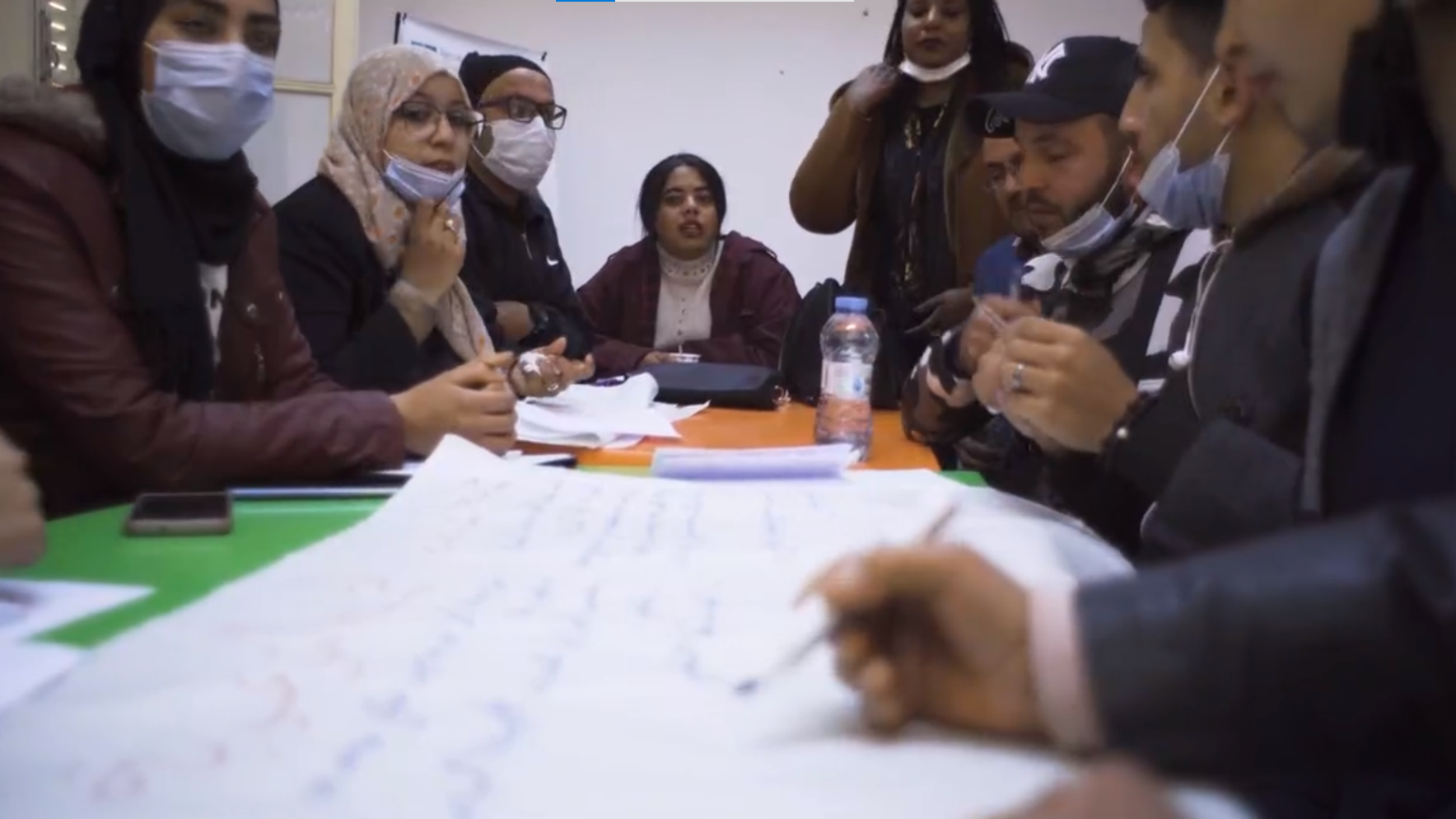
NRGI established a local experts committee, gathering five high-level Gafsan experts, including a former minister of energy and mines, to prepare a roadmap in consultation with CSOs. In addition to their deep and personal knowledge of the Gafsa region, committee members came from diverse backgrounds and fields of expertise; the committee also included a water and energy engineer, environmental and decentralization experts, an economist and a local government official. This enabled rich and multi-layered discussions throughout the roadmap drafting process. The roadmap assessed the social and economic situation in Gafsa with a specific focus on the mining sector and advanced recommendations for potential solutions to improve the socio-economic situation of communities in Gafsa.
Experts played a key role in coalescing civil society actors around their shared objective of advancing a holistic vision for sustainable development in their region.
The expert committee, which quickly garnered the trust of civil society partners due to their credentials and shared Gafsan origins, played a fundamental role in supporting NRGI’s civil society consultation, capacity development and networking efforts. For instance, the experts led coaching and consultation sessions, along with NRGI staff, to present civil society actors with various roadmap iterations, generating enthusiasm around it and soliciting CSO input and feedback. Despite the pandemic-related social distancing measures still in place in Tunisia in September 2021, these online sessions generated a high level of civil society interest, with an average of 20 participants in each online session.
In addition, the experts played a key role in coalescing civil society actors around their shared objective of advancing a holistic vision for sustainable development in their region, including through launching and advertising a Facebook group for the project and initiating and moderating discussions on this platform.
In tandem, NRGI provided project design and proposal writing training to civil society actors to enable them to successfully develop synergized projects, putting their newly acquired knowledge into practice and leveraging the roadmap findings to advocate for evidence-based policy proposals.
Participants were able to apply these project design and proposal writing skills through submitting proposals for grants from NRGI. Five proposals received NRGI funding, and the recipient CSOs implemented synchronized awareness-building and advocacy projects across Gafsa. The subgrants provided an opportunity for these CSO actors to hone their project design and management skills, while reaching a variety of governmental and non-governmental stakeholders and cementing their role as legitimate and knowledgeable mediators between government authorities and citizens.
“We have always been labeled as ‘protestors.’ This is not our identity. We are young people with hopes and dreams, and we just want to find employment.” - Lazher Ben Lamine
Impact
Through Vision Gafsa 2050, NRGI established and developed the capacity of a core network of CSO actors who remain highly engaged in the advancement of joint action for sustainable and equitable development in Gafsa. NRGI created a sustainable platform where these actors continue to coalesce and attract a large following around natural resources and sustainable development issues in Gafsa: The Vision Gafsa 2050 Facebook group launched as part of this project continues to be a vibrant venue for Gafsa-based CSO networking and discussions. Currently, the group boasts over 600 members and has resulted in the establishment of a network of 31 civil society organizations (so far). Joined by a common cause and commitment to advance an alternative, more sustainable, development model for their region, the CSO members engage in and collaborate through the initiative, which NRGI continues to support through its Tunisia programming. NRGI is expanding its existing nationwide CSO coalition (Coalition Tunisienne de Transparence dans L’energie et Les Mines, or CTTEM), which has opened membership to its Gafsa CSO partners.
This project signaled NRGI’s ability to expand its civil society reach to include the most critical yet most marginalized voices from Gafsa. Key figures leading protests and sit-ins in the mining basin were among those who benefited from capacity development and funding through the project. These youth, whom decision makers and citizens alike had labeled spoilers, irrational, or selfish, have found their first-ever opportunity to sit at the same table as decision makers and authorities and to air their grievances.
Lazher Ben Lamine, sit-in leader and subgrant recipient, at a project closing conference attended by over 60 civil society actors, union leaders and local government officials: “We have always been labeled as ‘protestors.’ This is not our identity. We are young people with hopes and dreams, and we just want to find employment.”
This powerful statement highlighted the shift in debates and perspectives prompted by Gafsa’s Vision 2050. The deadlock which preceded the project slowly gave way to mutual respect and understanding between stakeholders, with youth demands, now better captured and articulated by civil society, now forming the basis for a realistic and sustainable reform roadmap around which all stakeholders can rally.
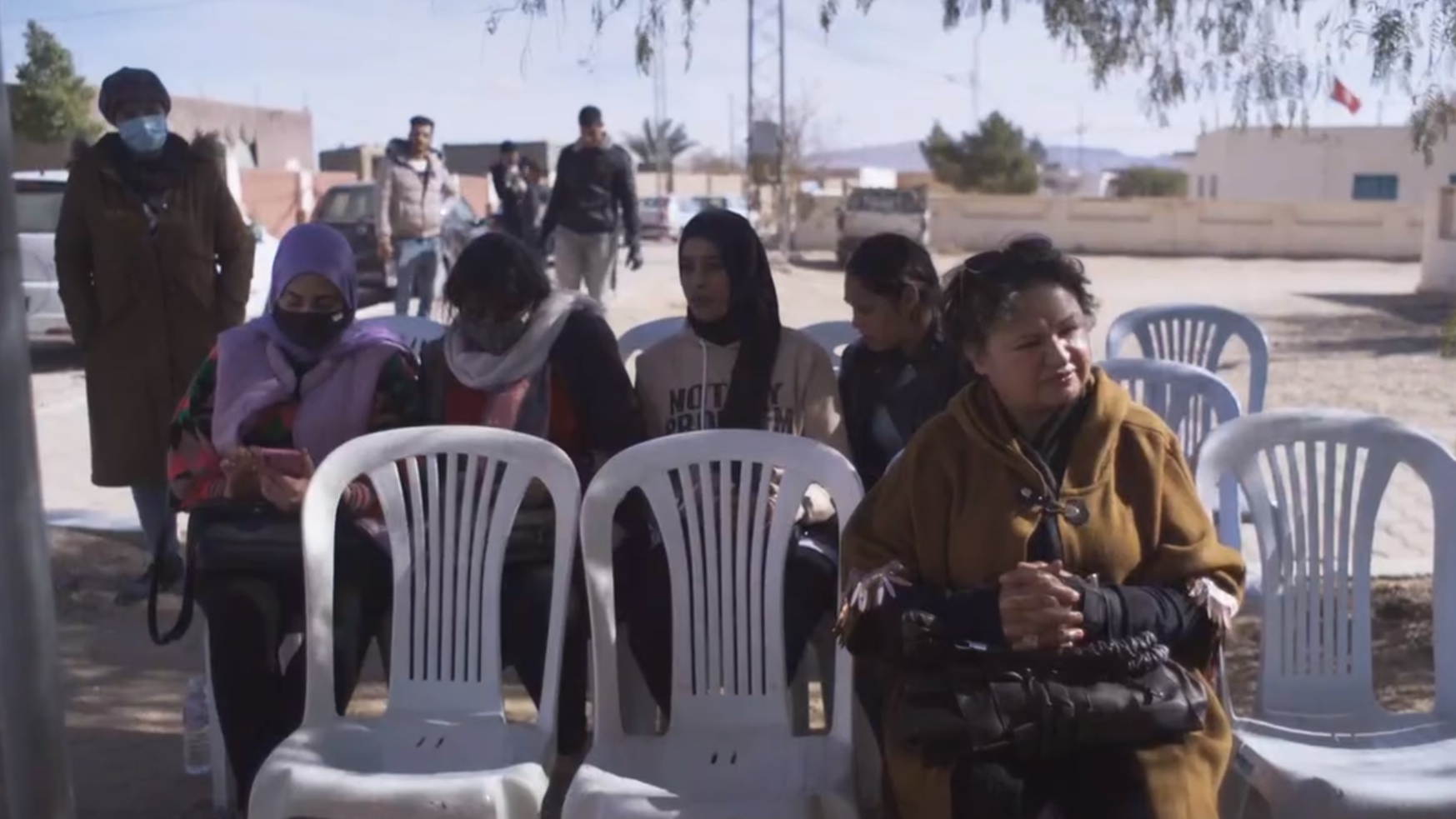
Protestors’ attitudes changed during the life cycle of the project. The result is that, even as protests continue sporadically in Gafsa, they are marked by less violence and disruption of production due to increased levels of constructive dialogue and openness on all sides. In turn, the improved social context and alleviation of social tensions in the mining basin led to the increased pace of phosphate production. For the first time in a decade, production reached 3.7 million tons by the end of 2022, and the government plans to produce 5.6 million tons in 2023, 8 million tons in 2024, and 12 million tons in 2025.
The success of the project encouraged other international NGOs to build on the work that has been done. For instance, the Belgian NGO Lawyers Without Borders organized a follow-up event in Gafsa in partnership with NRGI to discuss with the government concrete steps to implement the roadmap. This is especially important given the government’s efforts to prepare the next three-year social and economic development plan.
Prospects for Mexico’s Lithium Sector After Reforms to the Mining Law

- The Mining Law reform establishes that lithium exploration, mining and use are activities for which the state is responsible, without the option to grant concessions, based on the argument that they are activities in the public interest.
- The Mining Law reform leads to the existence of a dual legal system for lithium. On the one hand, the concessions already granted are regulated and monitored by the Ministry of the Economy. On the other hand, exploration and mining that takes place after the reform will be carried out by the state through a state-owned company.
- The objectives and responsibilities of the state within this dual system are unclear. For the mining and processing of lithium to be an opportunity that translates into benefits for Mexican people, clear, consistent and credible policies are needed.
- There are challenges in terms of governance, both for the special system created and the general concessions system. At NRGI, we have identified three aspects of governance we believe require analysis: (1) failures in governance of the general system; (2) governance of state-owned companies; and (3) supply chains and value generation.
The urgency of promoting the energy transition and shifting towards decarbonization has led to the need to increase production and processing of certain minerals, such as lithium. Use of this mineral in battery manufacturing will help us migrate towards electromobility and greater use of renewable energies, which is causing an increase in both demand and the price of lithium. According to a World Bank report, by 2050, lithium production is forecast to increase by 488% compared to 2018.
This situation could be an opportunity for lithium-producing nations to earn revenue and accelerate their own domestic energy transitions. However, a repetition of the old problems Mexico and other natural resource-producing countries in the region have suffered must be avoided, where intense levels of extraction – with significant socio-environmental impacts and few benefits for local and national populations – have led to high levels of conflict. As such, the opportunities that minerals bring to the energy transition should be targeted towards greater value generation for these countries and reduced social and environmental impacts.
In Mexico, discussions on critical minerals – and lithium, in particular – are at an early stage compared to the progress made by other countries in the region. Given the recent discovery of significant lithium deposits in Sonora, the Mexican Government has reformed the country’s Mining Law in order to give this particular mineral strategic significance and create a special system in which the state has greater control than it would otherwise have over other minerals. However, the Government is facing a series of political, technical, environmental and social challenges that must be addressed, given they could create obstacles to Mexico making good use of this resource. Improvements in lithium governance could help eliminate or mitigate these challenges and lead to greater benefits of its usage.
This report seeks to identify some of the most urgent aspects for discussion and resolution from the perspective of natural resource governance. To do so, we will first briefly outline recent changes to Mexico’s Mining Law, as well as their implications and, then, the key aspects of lithium governance that we at NRGI believe must be analyzed in order to maximize the benefits of productive activities related to this mineral in the national interest.
Civil Society Actors Play Key Role in Colombia EITI Entrance
The challenge
For years, the Colombian government expressed little interest in engaging in international transparency mechanisms for its extractives sectors. It failed to understand how revenue transparency might help strengthen these sectors’ productivity and equity, and instead relied on its own national systems to ensure transparency around extractives revenue. Colombian civil society, likewise, did not appreciate how their work could be bolstered via international mechanisms focused mainly on economic issues and not other areas of governance. Civil society’s interest changed when the Extractive Industries Transparency Initiative (EITI) expanded its purview to include information throughout the decision chain. Nevertheless, these organizations needed guidance on how to proactively engage with EITI and how to procure grants to support their participation in the initiative.
NRGI's role
Colombian civil society began its EITI engagement through regional meetings and training sessions organized by the Natural Resource Governance Institute (NRGI) and the World Bank. Through comprehensive, multi-stakeholder discussions and trainings, Colombian civil society developed an understanding of EITI’s core resource governance concerns and how these concerns overlap with their own extractives work. NRGI connected Colombian civil society actors with global partners that also participated in EITI, fostering exchanges that helped all sides expand their knowledge base.
NRGI’s counsel on the EITI process was extensive. Its experts had frequent and detailed conversations about technical issues, process and strategy with the Fundacion Foro Nacional por Colombia (FFNC), Transparencia Internacional Colombia, Universidad Externado and other actors. NRGI’s efforts in Colombia were further strengthened by the support of the Grupo Propuesta Ciudadana, an organization that leads Peru’s EITI process, and others, such as Bantay Kita of the Philippines.
FFNC used an NRGI grant to launch an information-gathering exercise that homed in on an essential question: What are the biggest priorities for communities living closest to extraction sites? After extensive interviews with organizations that work in and around mining and oil-producing areas, FFNC and others created the Mesa de la Sociedad Civil para la Transparencia en las Industrias Extractivas, a platform that aims to promote broad transparency in the extractive sector and civil society participation in the EITI multi-stakeholder group. The platform ensures that civil society is more comprehensively represented in the EITI process, and it is also used as a training tool for other issues related to extractive industries.
One of Mesa’s focuses is the disclosure of social and environmental payments. One way that the platform increased transparency was by issuing a study that showed how environmental payments were rendered opaque by convoluted government processes. The study found that the regulation (and consequently the payments made by companies) linked to social and environmental issues was complex and the information diffused among the different areas; therefore, the low transparency of social and environmental payments was not a problem attributable only to companies. Although the disclosure of social and environmental payments has not yet been resolved in Colombia’s EITI reports, the research has helped clarify the problem that needs to be addressed.
Impact
The NRGI-backed discussions and trainings bore fruit: when the Colombian government signaled its willingness to meaningfully engage in the EITI process in 2013, civil society was able to quickly organize and actively shape an approach to the initiative that suited their advocacy goals. Colombian civil society targeted the inclusion of environmental issues in the country’s EITI report and wide dissemination of the report to regional and national stakeholders.
NRGI has helped to foster civil society and government interest in Colombia’s extractive challenges. It has laid the groundwork for civil society’s entrance into and constructive engagement with multilateral initiatives. NRGI’s guidance has also helped civil society actors to recognize and come to terms with the challenges it faces as part of EITI—these actors are learning how to manage expectations, as well as how to balance their demands with those of other EITI participants.
Net Zero is Impossible Without Africa’s Transition Minerals

This month, cinemagoers will flock to see Black Panther: Wakanda Forever, seeking thrills from superheroes in the fictional African country which is rich in a world-saving metal vibranium. Meanwhile, in the real Africa, world leaders have flocked to the COP27 climate conference in Egypt, aiming for progress on agreed emissions reductions.
While the top brass at COP are surely too busy to catch a movie, the return of the Black Panther should remind them that African mining is highly relevant to their goals: buried in the soil of the host continent are the metals critical to moving away from humanity’s reliance on fossil fuels.
The main task of world leaders and climate negotiators in Egypt is to secure the path to emissions reductions. Yet they’re paying scant attention to the metals needed to move away from high-emitting fossil fuels...