
Electricity at the Heart of a Just Energy Transition
A Shared Regional Vision for the Future of Energy in the Middle East and North Africa

Developed by civil society partners from five countries, this roadmap sets out five shared priorities for fairer, more transparent and resilient electricity systems in the Middle East and North Africa.
Electricity is central to a just energy transition in the Middle East and North Africa. Reliable, affordable electricity supports livelihoods, essential services and economic development. How the sector is governed will shape countries’ ability to expand renewable energy, strengthen energy security and deliver benefits for communities.
This regional civil society roadmap sets out a shared agenda for electricity sector reform, identifying five priorities:
- Reforming subsidy and pricing policies to strengthen investment in electricity.
- Strengthening transparency, accountability and access to information.
- Improving governance and institutional coordination.
- Strengthening the role of civil society and the media.
- Expanding regional cooperation and electricity interconnection.
For each priority, the roadmap outlines common challenges, calls for reform and commitments by participants. It invites governments, regulators, electricity utilities, regional institutions, international partners, civil society and the media to turn these priorities into concrete policies, initiatives and partnerships.
About this roadmap
During 2025 and 2026, the Natural Resource Governance Institute (NRGI) convened stakeholders from Morocco, Tunisia, Egypt, Lebanon and Iraq to identify shared priorities for a just energy transition in the Middle East and North Africa. Four representatives from each country participated, drawn from government, civil society and the media.
Participants compared national priorities and identified electricity governance as a shared concern and a regional priority for collective advocacy and action. Civil society partners then reconvened to develop this regional roadmap. It reflects their collective priorities, informed by technical expertise and national perspectives contributed by government representatives, experts and media participants throughout the process.
The roadmap is a resource for civil society, policymakers and others working to build fairer, more resilient electricity systems across the region.
NRGI’s role was to convene and facilitate the process. The priorities, calls to action and commitments in this roadmap are the shared views of the relevant participants and do not necessarily represent the positions of NRGI.
Amid global challenges and the need for strong governance: JETP as a potential driver of Senegal’s energy transition

Key messages
- In an uncertain global context and facing urgent challenges in electricity access, the deployment of the Just Energy Transition Partnership (JETP) offers Senegal a unique opportunity to build a clear and coherent public policy for its energy transition.
- To meet these challenges and succeed in its energy transition, Senegal must establish a robust, inclusive, and cross-sector governance framework to guide the JETP’s deployment.
- This governance effort should be supported by effective public communication that reaches the most affected communities, providing the initiative with visibility and legitimacy.
- Repositioned strategic coordination, backed by strengthened interministerial leadership and an expanded, sustained steering committee (COPIL), is essential for an effective and inclusive energy transition.
With more than 4 million Senegalese still lacking electricity, Senegal now needs to secure transition financing, alongside the revenues it earns from hydrocarbon exploitation, so that it can convert its energy potential into an engine for inclusive development and social justice. The Just Energy Transition Partnership (JETP) is key to this. Signed in June 2023 for an initial period of 3–5 years, it is part of a partnership intended to increase access to electricity and clean up the energy mix by increasing the share of renewable energy to 40% by 2030, with a view to large-scale renewables deployment over the long term.
The Senegalese government is committed to the JETP and actively working to develop its investment plan, in spite of unfavourable global dynamics, notably including the withdrawal of the United States from the Paris Agreement and from JETPs entered into with Indonesia, South Africa and Vietnam. In this context, greater vigilance is needed around a crucial but often overlooked factor: governance.
Good governance requires that decision-making and implementation processes are based on key principles such as participation, consensus, transparency, accountability, responsiveness, effectiveness, efficiency, equity, inclusion and human rights.
Experience from extractive projects in Senegal and West Africa shows that a lack of transparency and participation can undermine the social legitimacy of public policies in a lasting way. Ignoring these governance principles when implementing the JETP risks repeating past mistakes: public opposition, poor resource allocation and capture of benefits by corrupt elites, resulting in profoundly unjust results for affected communities and workers. To live up to its ambitions and the local context, the JETP must be supported by strong, inclusive, and transparent governance structures that can ensure a fair and lasting impact.
This briefing sets out three priorities for Senegal to ensure that the JETP is truly just, effective and legitimate.
Framework for Countries Evaluating Gas-to-Power Pathways - Goal 3: Achieving Universal Access to Electricity

Key messages
- New gas power plants could provide electricity to a subset of people living without power in a relatively small group of countries. But some gas proponents are overselling it as a fuel for achieving universal electricity access.
- Progress toward universal access increasingly depends on further electrification in Africa, where gas power has limited growth potential. Solar and wind power come with their own challenges, but countries should consider renewables as primary solutions for reaching unserved households and businesses.
- Electricity from large on-grid solar and wind farms or off-grid systems like mini-grids and rooftop solar can be expensive for new, lower-income electricity consumers. Yet renewables have potentially growing advantages over gas power when it comes to affordability and reliability.
- The true cost of gas power or renewables is not just financial. Decision-makers should consider the broader social and environmental impacts of building and running new power infrastructure—and the potential benefits for people.
- Before supporting new gas power or renewables, officials and investors should consider everyone’s needs, especially the unserved. Responding to these needs fosters social acceptance, supports new technologies, and creates conditions for their growth.
- Countries with electrification challenges need more support from international financial institutions. Current funding is insufficient; these actors must both help to attract private investors and finance essential infrastructure that private funders will not—like batteries and electrical grids.
Overview of this module
This third part of NRGI’s Framework for Countries Evaluating Gas-to-Power Pathways examines the claim that investing more in gas power will allow countries to achieve universal electricity access.
Specifically, we:
- Argue that achieving universal access is a key part of a just transition away from fossil fuels.
- Survey gas power’s contributions to electricity access, especially in Africa.
- Offer considerations and questions for assessing when countries should use gas or renewables such as solar or wind to provide power to people living without electricity.
The Framework for Countries Evaluating Gas-to-Power Pathways is a multi-part resource to help non-experts determine whether burning gas for electricity will further their countries’ socioeconomic and energy sector goals, both in isolation and compared to renewables.
The intended audience is government officials, NGO staff and activists, researchers and journalists in lower- and middle-income countries with gas reserves. The framework presents the latest thinking about commonly made claims in a balanced way, to aid readers in their own analysis, decision-making and advocacy.
Can Gas Bring Electricity to More Africans? Look to the Evidence, Not Partisan Politics

The 2020s are meant to be the decade when Africa achieves universal electricity access. This is according to UN Sustainable Development Goal 7 and the energy plans of many countries. Yet halfway through, divisive political agendas are threatening progress, not least as they influence how public funds are spent.
The Trump government, with its deep hostility to renewables and foreign aid, has already dismantled U.S. programs and institutions that brought electricity to African households and businesses. Funding for the African Development Bank and Just Energy Transition Partnerships, both of which bankrolled clean electrification projects on the continent, has also been eliminated. The EU meanwhile remains broadly supportive of Africa’s energy ambitions, yet member countries are slashing their aid budgets in response to fractious domestic disputes over defense and energy security.
These setbacks come as efforts to reach the roughly 600 million Africans living without electricity are already underfunded. Estimated price tags have run as high as 53 billion a year, yet actual investment is rarely a tenth of that.
Electricity access has become a polarizing topic within Africa itself, not least because of arguments over the proper role of fossil fuels, gas especially. For years, a vocal contingent—led by politicians, think tanks and private foundations—has claimed that if African countries stop extracting and burning gas, millions of people will go without electricity service.
Desires to harness Africa’s gas for energy are understandable. Many countries have huge unmet needs, gas reserves remain mostly untapped, and leaders are angry about wealthy nations’ hypocrisy and double standards around the energy transition.
Yet gas’s ability to deliver electricity to more Africans should not be taken on faith. The third module of NRGI’s Gas-to-Power Framework—out now—interrogates the claim that investing more in gas power will allow countries to achieve universal electricity access. It offers considerations and questions for assessing when countries should use gas or other options like solar or wind to reach people living without electricity. The framework lays out the latest thinking in a balanced way, to support readers in their own analysis, decision-making and advocacy.
The data tells a more nuanced story than most political rhetoric around gas. It shows that gas is currently the top fuel for power generation in Africa and has contributed meaningfully to electricity access. Several gas producing countries—Mozambique, Cote d’Ivoire and Tanzania, for instance—each delivered power to millions of people over the last two decades. African fossil fuel producers also tend to have higher electricity access rates than non-producers.
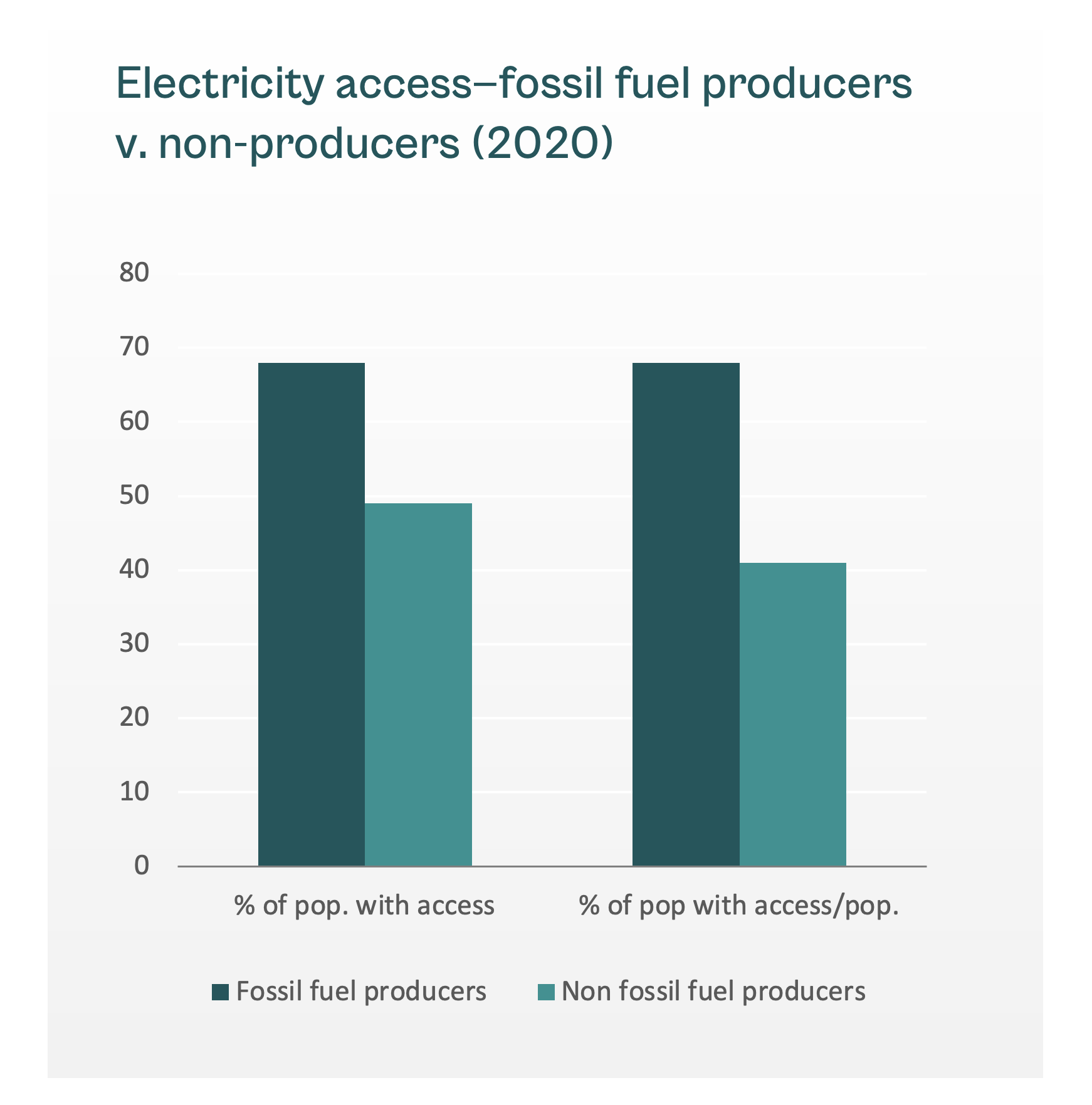
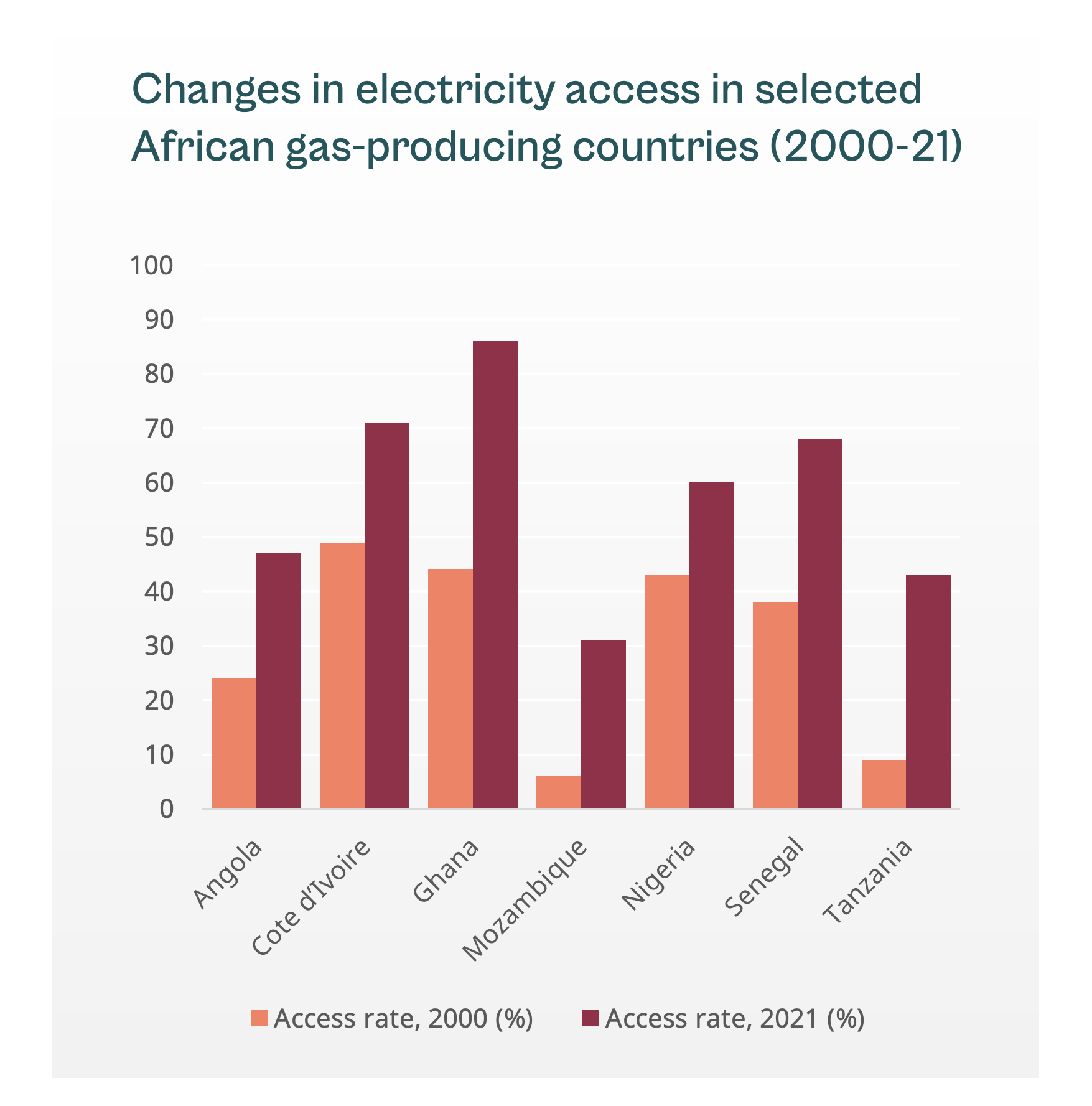
In at least some of these same countries, access rates rose along with the use of gas for power, suggesting that significant numbers of new users owe their service to gas.
Looking ahead, gas power will deliver electricity to at least some new African customers. Producers like Ghana, Senegal and Nigeria will connect more households and businesses to gas power for technical or commercial reasons, or because gas already dominates their energy mixes.
Ultimately, however, the data shows that gas has limited potential to address Africa’s unmet electricity needs. Almost none of the countries where access improved the most over the 2010s relied on gas power plants. And for nearly all the 20 countries with the largest remaining unserved populations, gas power is simply not a viable option, whether due to lack of production, infrastructure or investment.
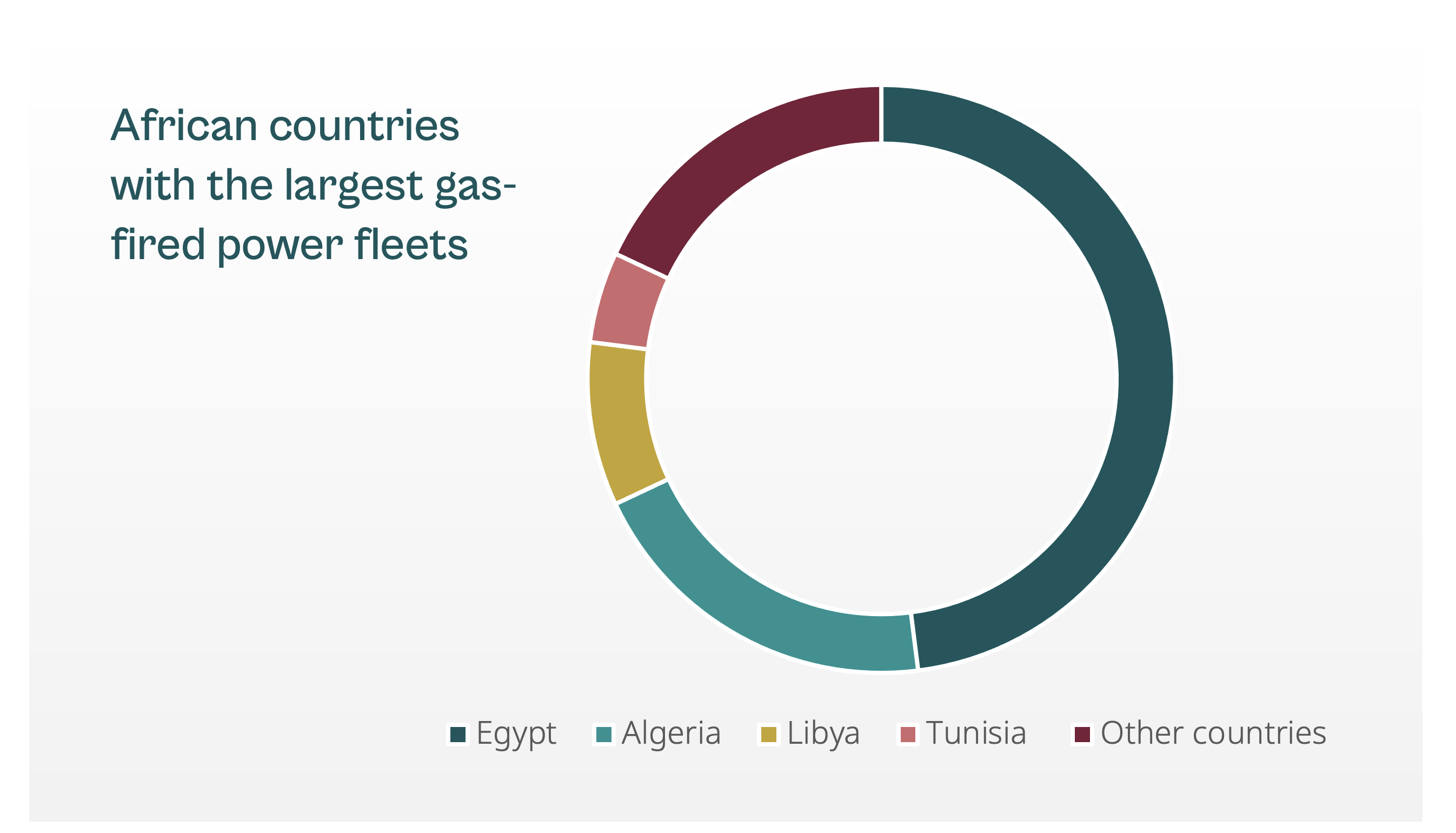
Instead, the use of gas for electricity will remain heavily concentrated in four North African countries which already have universal access.
And worldwide, gas will mainly serve the needs and aspirations of the wealthy. Between 2013 and 2022, ten mostly high-income countries added 325 gigawatts of gas power to their grids. The whole of Sub-Saharan Africa added just seven. The U.S. alone is planning to build three dozen new gas power plants, By contrast, Sub-Saharan Africa secured funding for just two in recent years.
Given these limitations, African countries with access challenges should fully consider alternatives. As technologies for improving electricity access, solar and wind have some clear advantages, which our new module surveys. For years, solar power in Africa has been growing several times faster than gas (left graphic) in a much higher number of countries (right graphic).
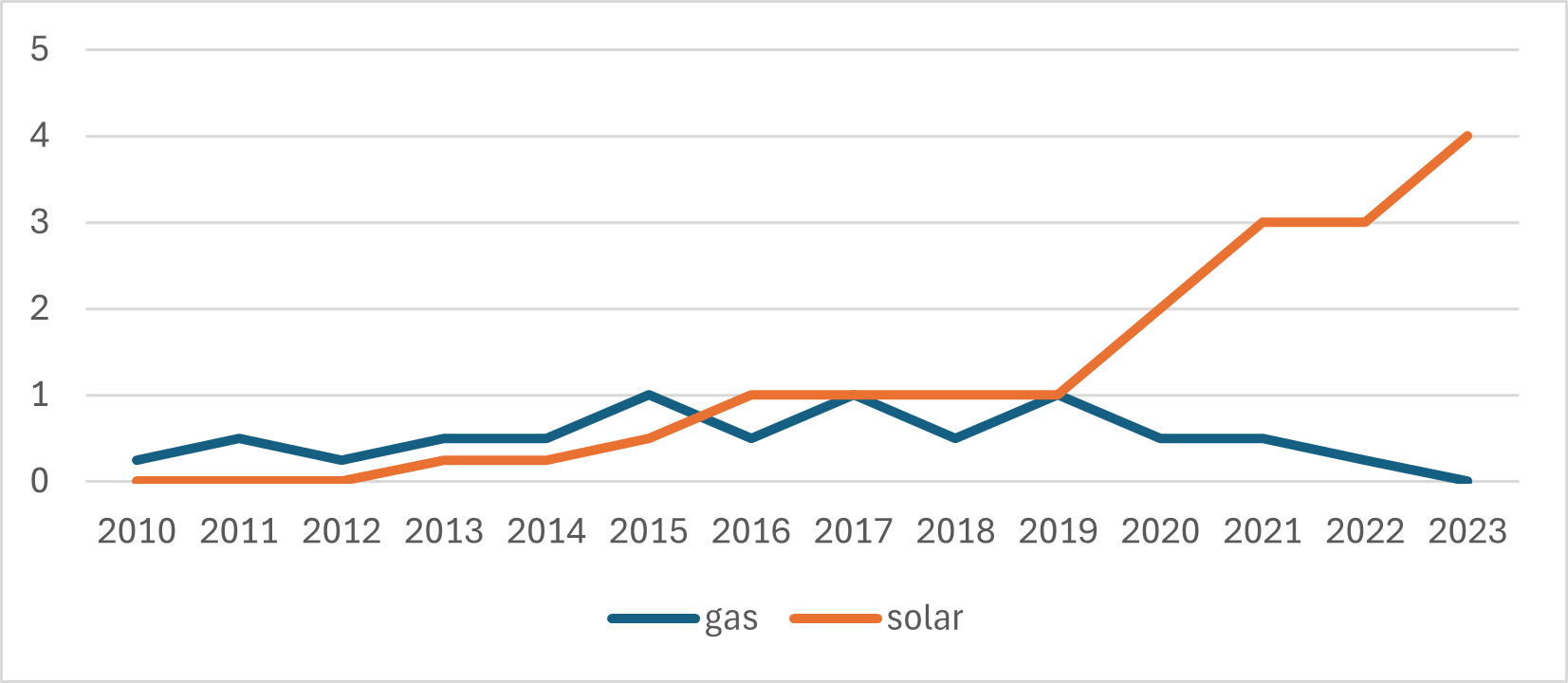
Source: Author calculations based on Bloomberg, GEM and IEA data
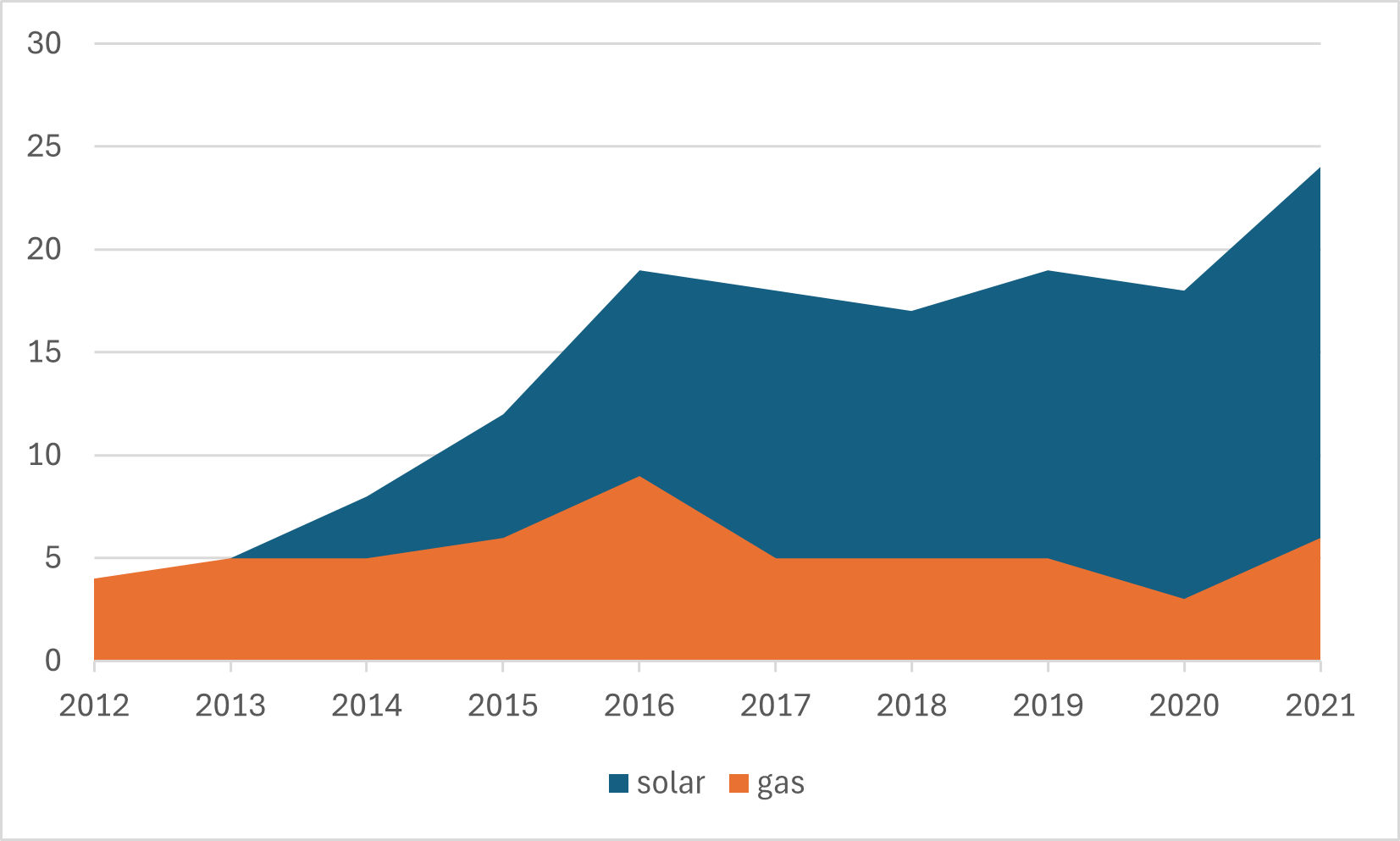
Source: Author calculations based on Bloomberg and GEM data
By 2030, the average costs of solar PV and wind power are predicted to fall below that of electricity made from gas in many countries. At the same time, the rapid scale-up of renewables on the continent remains challenging, and for low-income customers especially. A lack of quality components, economies of scale and affordable financing options are among the main barriers to growth.
Today, many of the arguments touting gas or renewables for universal access are based on sweeping, emotive claims that reflect the biases and personal interests of the speaker. These include powerful state-owned enterprises and fossil fuel giants like Eni, Total or BP, who mainly want to profit by exporting Africa’s gas to wealthy countries. But the real work of electrification isn’t ideological. It is painstaking and technical.
To keep expanding the well-known benefits of electricity access, policymakers and development partners need to zoom into the details. Real-world choices between on- and off-grid solutions, or between gas or renewable fuels, are highly context specific, requiring careful consultation, analysis, modeling and policy support. In particular, decision-makers must address thorny issues of affordability and reliability, since lower-income customers may be unable or unwilling to pay for expensive, patchy service.
Electricity access work also requires stable financial support over years. It isn’t something funders can dip in and out of as the political winds shift. Now that the U.S. and Europe are retreating, foundations, development banks and other partners need to step into the gaps. Because even in this challenging time, good things are happening. During the 2010s, the number of people living without electricity dropped by almost halfand individual countries are still making progress. New funding initiatives are also springing up—the AfDB- and World Bank-led Mission 300, for example.
Vulnerable African households, businesses, schools and health centers should not be used as pawns in overheated, zero-sum fights about the future of fossil fuels. The stories told about Africa’s electricity systems must reflect people’s lived realities, in all their complexity, struggle, and aspiration. Our new gas framework module describes the kind of hard work that is needed to achieve that.
Senegal’s JETP: Lessons, Challenges, Opportunities and the Role of Civil Society

The energy transition is a crucial global issue in the fight against climate change. To support countries in their decarbonization while considering social and economic impacts, Just Energy Transition Partnerships (JETPs) play a key role in facilitating this process.
At COP29, Senegal confirmed its commitment to a JETP estimated at €2.5 billion, currently in the development phase. Its success relies on inclusive and transparent governance, where the active participation of civil society organizations (CSOs) and local communities is essential.
In collaboration with Oxfam, the Heinrich Böll Stiftung Foundation, Natural Justice, the African Climate Foundation, and the Global Strategic Communications Council, NRGI contributed to the creation of PACTEJ, a platform to strengthening the capacities of CSOs and communities for their involvement in the JETP. In September 2024, NRGI organized a webinar with over 80 participants from various countries, led by experts such as Abraham Octam Halim, Jacob Blessing Motsh Manale, Fatima Diallo and Awa Ndione Sène. This event facilitated the exchange of international experiences, particularly from South Africa and Indonesia, and drew valuable lessons for Senegal.
These lessons demonstrate that the involvement of CSOs is crucial for protecting community rights, monitoring resource management, and ensuring accountability from decision-makers. In this blog post we highlight the evolution of JETPs on a global scale and aims to enrich public debate in Senegal, drawing inspiration from successes and challenges faced elsewhere.
The evolution of the JETP and its importance
The evolution of Senegal’s JETP in the global context
JETPs are being implemented in four countries: South Africa, Indonesia, Vietnam and Senegal, with a total committed funding of approximately $46.5 billion. Each country tailors this mechanism to its energy and socio-economic priorities for a just energy transition.
In South Africa, where coal dominates 84.63 percent of electricity production, the JETP aims for a gradual coal phase-out. In Indonesia, with 61.55 percent coal and 17 percent gas in the energy mix, the goal is to increase the share of renewable energy while supporting affected communities. In Senegal, the focus is on the rapid development of renewable energy to avoid over-reliance on natural gas.
For Senegal, a future gas producer, the JETP represents a crucial opportunity to prevent a “gas lock-in” that could lead to high energy costs, increased dependence and less sustainable energy. Prioritizing renewable energy is essential to ensure a responsible transition, supporting both communities and a sustainable economic transformation.
The importance of the JETP for Senegal
The JETP offers Senegal the opportunity to achieve 40 percent renewable energy in its energy mix by 2030. This partnership, signed on 2 June 2023, with G7 partners (Canada, the EU, France, Germany and the U.K.), mobilizes €2.5 billion over 3 to 5 years.
A structured governance body has been established, including a steering committee (COPIL) led by the Ministry of Energy, a coordination unit (UC), and working groups on governance, equity, finance and technology. Key developments include public consultations, the creation of an investment plan with the Tony Blair Institute, and strategic deliverables on the energy transition.
However, challenges remain: the validation of deliverables, the integration of projects into the plan, strengthening the capacity of the coordination unit (UC), and finalizing the investment plan. Regional workshops are planned to raise awareness among communities.
PACTEJ could identify key priorities such as access to affordable energy for vulnerable populations, promoting transparency in project selection, assessing the relevance of selection criteria, and protecting the rights of workers and affected communities.
CSOs, through the PACTEJ platform, play a critical role in ensuring a just transition by promoting transparency, inclusion, and the protection of the rights of workers and communities. However, G7 partners have warned against unrealistic expectations, emphasizing that the JETP will not resolve all of Senegal’s energy challenges.
Lessons from the South African and Indonesian experiences
South Africa, a pioneer of the JETP with a $8.5 billion partnership signed in 2021 with quite an ambitious investment plan, illustrates the challenges of a just transition. The funding, mostly in the form of loans, remains insufficient compared to the estimated $95 billion needed. The hasty closure of power plants has led to significant social and economic impacts, exacerbated by tensions with trade unions and limited stakeholder consultation.
Indonesia, with a $20 billion JETP signed in 2022, offers a more inclusive approach. With a clear investment plan, it has established transparent governance platform, organized over 200 consultations with stakeholders, engaged more than 100 CSOs, and mobilized both public and private funds for renewable energy projects. However, bureaucratic obstacles are slowing down project implementation.
These experiences highlight the importance of participatory and equitable management for a successful transition. The involvement of local communities, illustrated by the slogan “nothing about us without us,” is central. Initiatives like “Fair Finance” in South Africa offer valuable lessons for Senegal and the PACTEJ platform. However, the representative of the G7 partners group warned against unrealistic expectations of the JETP, emphasizing that it will not solve all the challenges Senegal faes on its own.
The role of Senegalese CSOs in the JETP process
As part of the JETP, Senegalese CSOs, grouped within the PACTEJ platform, along with trade unions and community organizations, play a key role in raising awareness among communities and fostering inclusive dialogue with the government.
However, they regret their late involvement, which has been limited to the post-negotiation phase, and highlight major challenges: access to information, the involvement of local authorities, private sector support, and community awareness.
The funding model, which includes only 6.6 percent in grants and primarily consists of loans, raises concerns about increasing public debt. CSOs are calling for transparent management of funds to prevent corruption and ensure direct benefits for vulnerable populations.
| Countries | South Africa | Indonesia | Senegal |
| Composition of financing | 4% in the form of grants 63% in the form of concessional loans 33% in the form of commercial loans and guarantees | Not yet published | 6.6% in the form of grants 69.2% in the form of concessional loans 1.8% in the form of market-rate loans, 12%, and the rest in the form of standard loans or grants |
Source: Navigating Just Energy Transition Together – Shared learnings from South Africa, Indonesia, and Vietnam, June 2023
CSOs, through PACTEJ, are now actively participating in the COPIL and the “Justice and Equity” group of the JETP. They call for a genuine consideration of their contributions in decision-making and for projects that compensate for the impacts of fossil fuels, while promoting local content.
For the success of the JETP in Senegal, an inclusive approach is essential. This requires fully involving communities, local authorities, CSOs, women and youth, ensuring transparency, strengthening local capacities, integrating gender issues, and simplifying administrative procedures. Such an approach would ensure a truly fair and inclusive energy transition.
Insights and Lessons from Global JETP Experiences

As Senegal embarks on its journey toward a sustainable energy future through the historic Just Energy Transition Partnership (JETP), civil society has a critical role to play in shaping this transformation. With €2.5 billion committed by global partners, this initiative is set to significantly expand the role of renewable energy in Senegal, reducing dependence on fossil fuels and ensuring a just transition for all.
But how can civil society organizations (CSOs) effectively engage in this process and influence the decision-making?
What was covered
- CSO experiences from Vietnam, South Africa, and Indonesia: Lessons learned, challenges faced, and opportunities seized in their JETP journeys.
- Government perspectives from these countries on engaging with civil society in the design and implementation of energy transition plans.
- Actionable insights for Senegalese CSOs on how to ensure transparency, citizen rights, and accountability in the JETP process, and how to align it with Senegal's renewable energy goals.
Key speakers
- Birgit Strube: Head of the Climate Partnership Division, BMZ (German Federal Ministry for Economic Cooperation and Development)
- Awa Ndione Sène: Coordination and Monitoring Unit for the JETP (UCS-JETP) - Ministry of Energy, Petroleum, and Mines
- Blessing Manale: Executive head, consensus building and outreach at the Presidential Climate Commission (PCC) - South Africa
- Abraham Octama Halim: Power System Analyst at Institute for Essential Services Reform (IESR) - Indonesia
- Fatima Diallo: Executive director at CRADESC and Lead of the Civil Society Actors Platform for a Just Energy Transition in Senegal (PACTEJ) - Senegal
Moderator: Nafi Chinery - NRGI Africa Director
Organizing and Facilitating: Aida Diop - Senegal Senior program officer; Ousmane Touré - Communications officer
Framework for Countries Evaluating Gas-to-Power Pathways - Goal 2: Achieving Energy Security

Key messages
- Some lower- and middle-income countries will need gas to achieve energy security, at least in the near term. But too much dependence on gas for energy can destabilize a country’s economy, energy systems and, ultimately, the lives of its people.
- Energy security requires government officials to correctly predict energy demand. For gas, this is an especially difficult task. Getting it wrong can have high costs, from electricity shortages to wasted public revenues.
- Countries should be realistic about whether they can produce enough gas to fuel power plants for decades to come. Lenders and private energy companies are investing less in new gas extraction. Some countries are also running out of cheap gas, and a switch to extracting higher-cost reserves could force them to increase fossil fuel subsidies or leave consumers to pay more for electricity.
- Governments should, as much as possible, not support deals to import gas. Relying on foreign gas ties a country’s energy system to forces and events outside its control. In the worst cases, this can send shockwaves through economies and upend people’s daily lives.
- Policymakers and electricity users in gas-producing countries need to fully consider solar and wind as alternatives to gas power, and right-size gas plans accordingly. Both solar and wind have their own challenges, but compared to gas, they can offer lower risks and growing advantages for achieving energy security.
This second part of NRGI’s gas-to-power framework interrogates the claim that producing and burning more gas will allow a country to achieve energy security.
It spotlights two big decisions:
Whether governments and energy companies should try to extract more of a country’s own gas for domestic use, and if so, how much.
Whether governments and energy companies should build more infrastructure to transport, burn or otherwise consume gas, and if so, how much.
Use of gas for electricity generation is the focus, though much of the content also applies to other domestic uses (e.g., industry, heating, cooking).
The module provides background on domestic gas use in lower- and middle-income gasproducing countries, then explores two key challenges that any country wanting to use gas for energy security will have to face: 1) estimating demand for gas, and 2) supplying the gas. For each challenge, it poses some critical questions that stakeholders should ask decision-makers.
Who actually makes these decisions varies by country, and can include heads of state, cabinet and ministerial officials, energy sector regulators, officials at state-owned utilities or other energy companies, parliamentarians, and a range private sector actors.
The module presents some case study-based scenarios of what can go wrong when a country mishandles these two key challenges (without suggesting that relying on gas for energy security will always have negative impacts). It also briefly compares solar and wind power’s potential role in energy security with gas.
Framework for Countries Evaluating Gas-to-Power Pathways - Goal 1: Navigating the Energy Transition and Climate Crisis

- Gas will play and important role in the energy transitions of some developing countries. Producing and burning more of it could help backstop renewables and replace dirtier fuels. It could also shield countries from some of the worst effects of the global energy transition— for example, volatile prices for imported fuels.
- Over the longer term, however, investing big in gas-to-power projects could leave countries with domestic energy mixes that cost more, hold back development, and undermine global climate goals.
- Stakeholders should weigh the trade-offs carefully—especially since the future is hard to predict and politics often discounts the future. In particular, they should ask if other, less risky investments and pathways could achieve the same goals.
This document, the first module in a series of five, provides stakeholders with information and options for interrogating three common claims about the role of gas in domestic energy transitions:
Common claim 1.1
“Gas will be a ‘transition fuel,’ a short-term ‘bridge’ to renewable electricity.”
Common claim 1.2
“More gas-fired power is needed to manage the variability of renewables.”
Common claim 1.3
“Gas is a green fuel. Using more of it for electricity will help reduce our country’s carbon footprint and fight climate change.”
How the Nigerian Government Can Right Size Its Gas Ambitions for Economic Development

Meeting Nigeria’s domestic energy needs remains one of the most significant barriers to sustainable development and economic growth in the country. Only half of Nigeria’s 200 million citizens currently have access to energy, and with the population set to double by 2050, universal access is a huge challenge.
The government proposes to ramp up gas production, utilization and export, with the aims of supporting industrialization, boosting domestic energy supply (for power, cooking and transport), and increasing government revenues. By doing so, the government expects to enhance economic activity, thus improving the lives of the half of the population living in extreme poverty.
The status of gas amid energy transition
Whether ramping up gas utilization is feasible, or indeed the appropriate approach to achieving Nigeria’s energy supply and economic ambitions, is uncertain. What is certain is that global pressure to transition away to cleaner energies and defund fossil fuel projects complicates the process of realizing that goal and could lead to wasted investments that jeopardize the economic and energy security of Nigerians in the future.
As the top oil producer with the largest gas reserves in Africa, set at around 200 tcf of proven reserves, Nigeria should be able to easily meet its domestic energy needs. But weak legal and regulatory frameworks, big infrastructure gaps, a non-cost-reflective pricing regime and host community conflicts have made the domestic gas sector uncompetitive and unattractive to investors. This, in turn, has left gas reserves underexploited, especially more expensive non-associated gas which represents half of Nigeria’s reserves.
Implementation of reforms by successive governments through the 2008 Gas Master Plan (GMP), the 2017 National Gas Policy (NGP) and other instruments have proven slow. With the passage of the Petroleum Industry Act (PIA) 2021, the legal, fiscal and regulatory framework of the gas sector has been strengthened with the creation of dedicated regulators, a dedicated minister, provision of third party access to infrastructure, and other improvements. But many gaps remain.
Thus the Decade of Gas Policy, launched in 2021 to address the limitations to achieving domestic gas-based industrialization and economic prosperity, and reduce energy poverty, faces greater challenges. The ambitious plan, not yet in the public domain, is intended to implement all previous ambitions in the GMP and NGP, including construction of the Nigeria-Morocco gas export pipeline, expansion of the Nigerian Liquified Natural Gas (NLNG) facility, and revival of the Nigerian Gas Flare Commercialisation Programme (NGFCP).
The government also intended the policy to settle debts to gas producers and initiate discussions on 10 key gas projects, aimed at unlocking greater volumes of gas both for domestic use and export. Nigeria seeks to unlock 3.1 bcf/d of gas to attract $14 billion in foreign direct investment, create over 2 million jobs and add $12 billion to the federal government’s revenue. However, three years on, authorities have publicized neither the policy itself nor progress updates, despite calls for clarification from several civil society actors, including the African Initiative for Transparency Accountability and Leadership, Civil Society Legislative Advocacy Centre, Centre for Journalism Innovation and Development, Stakeholder Democracy Network, Paradigm Leadership Support Initiative, Extractive360 and Nextier.
A challenging calculus
Despite the passage of the PIA, the push for gas expansion may have come decades too late. Fossil fuel projects are being defunded. The European Union will slap gas cargoes it deems to be of high methane and carbon intensity with punitive levies aimed at making them less competitive with cleaner fuels.
Consequently, African ambitions to bridge the still pervasive infrastructure deficit and expand investments to ramp up supply are more challenged than ever before. Countries on the continent only received 5 percent of global funding for gas power projects in 2022 compared to 12 percent in 2015. International public money for gas production in lower-income countries is less than $4 billion a year on average, with most going to Mozambique. With a gas infrastructure investment deficit of $20 billion per year, the Federal Ministry of Petroleum Resources and Power may need to prioritize alternative energy sources, in the midst of the government balancing its ambitions to transition its energy raising $10 billion annually.
Further, Nigeria’s government has not aligned its gas ambitions with broader energy transition plans, even as it bases its transition on leveraging gas as a “transition fuel.” New investments in gas fields as envisioned in section 9 of the PIA runs counter to the evolving global shift away from fossil fuels. New investments require long lead times before projects come online (and returns are realized), at which point there will likely be an oversupply of products and no demand. If countries’ commitments to combat climate change hold, Nigeria may be unable to export gas at the level it has come to rely on. That could potentially lead to stranded assets, including the pipeline investments to Europe, and infrastructure lock-in if renewable demand increases. Similarly, as gas production and use expand, the release of methane from flaring and venting gas, and from fugitive emissions, will likely increase. Those increased emissions will limit Nigeria’s ability to fulfil global methane emission reduction commitments, and also impact the health and environmental safety of nearby communities.
How the Nigerian government can move forward
To manage the decade of gas to enable Nigeria to meet its domestic energy needs and foster economic growth while accounting for global energy transition, the Nigerian government should:
- Manage its gas ambitions. Regurgitating all previous gas plans’ ambitions within the context of global commitments to defund fossil fuel investments is unrealistic. The government should instead acknowledge the reality of the energy transition; review its previous gas plans; access the available funds for projects; and adjust and articulate a shared agenda for financing a holistic domestic energy system with gas and renewables accounted for.
- Publicly disclose comprehensive details of gas plans. Unlike the GMP and NGP, the Decade of Gas Policy was neither approved by the Federal Executive Council nor published. The Federal Ministry of Petroleum Resources (Gas) and the Decade of Gas Secretariat must disclose details on the planned projects, realistic financial projections, and periodic progress updates so that Nigerians and investors can track progress and implementation and hold the government accountable.
- Align with national, subnational and energy transition plans. The Federal Ministry of Petroleum Resources (Gas) should work with the National Council on Climate Change and the Energy Transition Office to align gas plans with the energy transition plans to ensure sustainability. The Federal and State Ministries of Budget and National Planning should ensure that the gas plans do not contradict national and subnational development plans, and align to help achieve goals such as reducing household wood fuel use and increasing electrification.
- Manage the risks associated with expanding gas use. The Federal Ministry of Petroleum Resources (Gas) and the Federal Ministry of Environment should properly assess the risks involved with gas expansion, and create a strategy to minimize the impacts, maximize the benefits, phase out oil and gas assets, and plan for a post-oil and gas future.
- Demonstrate sustainability. The Nigerian Upstream Petroleum Regulatory Commission (NUPRC) and the Nigerian Midstream Downstream Petroleum Regulatory Authority (NMDPRA) should clarify how they intend to fund gas expansion, resolve legacy power sector debt, utilize flared gas through the NGFCP, and attract international oil company investments for more gas generation and infrastructure development. Most importantly, authorities should clarify how these investments will comply with Nigeria’s global commitments to reduce methane emissions.
- Require all gas projects to include community development agreements (CDAs). Gas projects should include community development initiatives such as health care services, educational programs which can directly benefit marginalized groups such as women and youth, and enhance quality of life in affected communities. The involvement of communities in project decisions would determine CDAs’ level of impact.
- Close the inequality gap. The Federal Ministry of Petroleum Resources; Gas and the Decade of Gas Secretariat should manage the Decade of Gas initiatives in a way that supports the economic independence of women and youth, especially, and specifically improve women’s decision-making power in use and distribution of gas, thereby contributing to gender equality and social inclusion.
- Include civil society. Authorities should deliberately engage civil society and the media to ensure they translate the government’s decisions to the Nigerian people. Media can guide the government to stay on course through consistent investigations, reviewing and agenda setting.
If Nigerian authorities can develop gas expansion plans sensitive to the increasing constraints (financial, infrastructural, human resource-related) imposed by the energy transition, they could better balance the need to meet domestic energy demand and achieve a sustainable energy future.
The authors wish to thank members of the civil society coalition on gas—Louis Ogbeifun (AfriTAL), Alexander Sewell (Stakeholder Democracy Network), Charles Majomi (NEXTIER) and Juliet Alohan Ukanwosu (Extractive360)—for their contributions to this post.
Uganda’s Energy Transition Plans Cannot Ignore Women

In 2006 the Ugandan government announced discovery of oil beneath and around Lake Albert, a geological region known as the Albertine Graben. The area’s women hoped that they might be among the local beneficiaries of the boom after the government and oil companies committed to offering them employment opportunities.
Oil production is due to start within the next two years, but so far pre-production activity has brought little economic development to women in the Albertine Graben. Among those yet to see benefits from the area’s intensifying industry are women in Buliisa district, located on the shores of lake Albert.
Impacts on women’s daily lives
As in many extractive projects, the few jobs created have confined women to informal labor, in this case cleaning and road traffic signaling around construction sites.
In an unfortunately common paradox, the fossil fuel project has not even increased energy access for women. The Natural Resource Governance Institute (NRGI) and Buliisa Initiative for Rural Development Organization (BIRUDO) recently interviewed more than 70 community stakeholders in the district to ascertain the challenges to gender equity in Uganda’s energy transition. Their findings reveal that, after oil was discovered, the government took over for oil production much of the land that previously served as a source of firewood. This deprived rural women of fuel for cooking, which the authorities didn’t replace.
While the government compensated affected households, such schemes often favor male recipients. Paolyel Onencan, a gender equity campaigner and co-founder of BIRUDO, noted that “although it was a requirement for government compensation to be paid to a joint account, there was no follow-up to ensure that women received the money when it was finally withdrawn.”
Uganda has made significant progress on addressing gender issues in the oil, gas and mining sectors over the last ten years, for example through enhancement of gender and equity planning and budgeting in the energy and mineral development sector. However, as Uganda defines energy transition plans, the government must further consider the specific needs of women.
Funding green ambitions with black gold
On 5 December 2023, Uganda’s energy minister launched the country’s energy transition plan at the COP28 climate conference. The launch signaled Uganda’s commitment to achieving carbon neutrality by 2050 and ensuring universal access to electricity by 2040.
Yet, as a prospective oil producer, Uganda has framed the transition as one where oil and gas sector revenues will help finance the move toward green energy. With 80 percent of Uganda’s electricity currently coming from hydropower, the government is now committing to use the revenues generated by the oil and gas sector to support wind, solar and sustainable biomass projects to power isolated off-grid communities.
“We are fully focused on ensuring our energy security, so the oil and gas sector, which we are developing in a sustainable way environmentally, will support us in our energy transition plan by providing the required financing,” said Irene Bateebe, permanent secretary of the Ministry of Energy and Mineral Development.
The government has also committed to equity. According to Ali Ssekatawa, director of legal and corporate affairs at the Petroleum Authority of Uganda, the country’s oil and gas projects will not only create economic prosperity but also showcase the country’s commitment to long-term sustainability by putting people and the planet at the forefront.
Ensuring a just transition in Uganda
Last October, NRGI gathered key stakeholders to discuss requirements for a just, people-centered energy transition in Uganda.
This initial engagement, focused specially on gender and just transition, revealed that while Uganda’s energy transition planning contains general assumptions about gender equity, the government has yet to undertake research to highlight the actual challenges for women living in communities where extractives projects are taking place. What the eventual phase-down of oil and gas projects could mean for them remains unknown.
Nor is much known about how clean energy projects could potentially cause harm to women—or serve as a source of empowerment for them. If the government is to design targeted programs that accelerate a just, inclusive and sustainable energy transition in Uganda, officials must first identify and understand gender equity challenges and opportunities.
Based on our convenings and recent research, we recommend:
- Establishing a formal space for inclusive discussion on just transition. The government could establish a working group with representation from civil society and the private sector with the directive to mainstream gender equity in the energy transition. Its work could initially target the national equity guidelines for natural resource management (currently under development by the Ministry of Gender, Labor and Social Development), as well as the National Energy Transition Plan led by the Ministry of Energy and Minerals Development.
- Fostering the participation of women and women organizations in discussions and decisions about energy transition plans and policies. For this, the government must build additional capacities at the national and subnational levels so that officials can better engage in energy transition and gender issues. Such engagement could include encouraging rural women in Uganda to adopt cleaner cooking technologies through support to current initiatives like liquified petroleum gas (LPG) for cooking, spearheaded by the Ministry of Energy and Mineral Development.
- Formulating subnational energy transition plans in oil-rich parts of the country. Such plans, developed with government, would include programs to compensate or support women in informal jobs.
With these recommendations in mind, Ugandan officials can chart an energy future that benefits all members of affected communities.