
How National Oil Companies Can Play a Role in Renewable Energy and Diversification

The idea of NOCs investing in clean energy is attractive to both these companies and the governments that oversee them. For NOCs, reallocating part of their portfolio to renewable energy investments could be an opportunity to innovate and diversify their business at time when traditional oil and gas investments are increasingly risky. For the governments of oil-producing countries, the skills, influence and capital of NOCs could serve to promote the fledgling renewable energy sector and provide citizens with cleaner and more reliable energy.
Yet NOCs’ investments in renewables may not pay off everywhere. Many skills and practices developed in the oil and gas sector cannot be easily adapted to renewables. With some notable exceptions, many NOCs have historically struggled to invest in projects that deviate from the core profitability model that characterizes extraction.
In some countries NOCs are the institutions with the greatest capacity to deliver project. But can they become part of the solution to climate change? In a severe scenario, coordination challenges or conflicts of interest could mean that NOCs simultaneously fail to generate strong economic returns and stall broader national progress to develop clean energy markets.
Given these factors, when does it make sense for NOCs to shift toward renewable energy? What policy and governance mechanisms should officials put in place to ensure such a transition is a success? On 27 May, NRGI and IISD co-hosted the second in a series of webinars to explore these questions.
Angela Picciariello of ODI led the discussion and focused on the links between nationally defined sustainability goals and the strategic choices facing NOCs and governments.
Joe Amoako-Tuffour of the Economic Management Team of the Office of the Vice President of Ghana discussed how ideas on the future of the Ghana National Petroleum Corporation (GNPC) fit in with a broader set of policy challenges around building a thriving industry, generating reliable energy and maximizing the use of petroleum revenues in a new producer economy.
Devapriyo Das of the Danish company Ørsted (majority owned by the Danish government) shared lessons learned from the company’s transition away from fossil fuels to becoming a global leader in renewable energy.
Aaron Sayne of NRGI also contributed by posing a series of guiding questions for NOCs and governments to help structure these strategic decisions.
NOCs’ activities within the renewable energy market are still in the early stages, but several key themes have emerged that point to further areas of inquiry, within and across countries.
Intra-government coordination is crucial, and decisions about the evolution of an NOC’s mandate need to be linked to a coherent cross-government strategy. In Ghana, Amoako-Tuffour emphasized that decisions about what role GNPC can play in renewable energy generation or distribution do not depend on GNPC alone. There is a whole range of actors responsible for investment, regulation and revenue in the energy sector. Without careful coordination and strategic decision-making, actions by an NOC alone could fail or disrupt energy policy coherence. Picciariello posited that a clear definition of how the NOC fits into the energy space is critical.
There are different types of NOCs, and not all face the same challenges and opportunities. Sayne pointed out that a key question NOCs and government officials should ask when considering a shift toward renewables is, “What would this NOC bring to the table?” Some NOCs are cash-rich and may be able to drive investment in the sector. Others are small and nimble but could bring their management skills to an emerging industry. Some other NOCs, however, are so deeply entrenched in a status quo approach to oil and gas investment and in oil and gas's dominance of the economy that they may struggle to engage effectively with a new business model. As Amoako-Tuffour noted, the basic notion that an NOC might be interested in renewable energy investment does not necessarily mean that such a move is in the country’s best interest.
There are different types of renewables business models. Just as not all NOCs are the same, there are different ways of defining what it means for a company to “invest in renewables,” and these distinctions are important for national decision-making. One component of this is the type of renewable energy. Ørsted’s transformation has been driven by success in offshore wind, which involves technically-sophisticated projects with heavy upfront costs that require similar capabilities to offshore oil investments. Other types of renewable energy, such as solar farms, may have less obvious links to the core competencies of many NOCs. NOCs must also consider what form of investment makes most sense. Options range from passive minority participation in renewables projects to active partnerships with utilities or other partners to full transition into an integrated energy company.
Governance can either help draw investment, or drive it away. Das shared that Ørsted has been able to serve as a stable and reliable home for a growing number of investors interested in clean energy. He said, the company’s corporate governance instilled confidence that led to growth. In contrast, Sayne pointed out that other NOCs can arouse suspicion among investors, especially when the company’s activities are opaque or subject to heavy political interference in decision-making. If a company has a dominant role without appropriate corporate governance reforms, it could discourage investment in a country’s renewable sector.
Our discussion series aims to increase learning between experts in the extractives governance and climate change fields, who have too often worked in silos. NRGI and IISD will organize the third and final session in the webinar series in the coming weeks. Watch this space for more details.
Quitting the Race to the Bottom in Extractive Industries

NRGI’s Latin America director Juan Luis Dammert spoke on 25 May at the United Nations Global Roundtable on Extractive Industries as an Engine for Sustainable Development, hosted by UN Secretary-General António Guterres. Dammert spoke on the subject "How should developing countries, including of Latin America and the Caribbean, approach industrial, fiscal and regulatory policies to avoid the race to bottom in attracting investments and ensure that the extractives sector contributes to their sustainable development?" These are his remarks:
It is an honor to be here and be able to share some reflections on the challenges of the extractive sector from a civil society perspective.
In my view, the crucial question is: how are resource-rich countries going to ride the wave of economic recovery after the crisis generated by the coronavirus pandemic?
Extraction is certainly going to play a central role. We now see enormous efforts from countries to attract investments, to increase production and to get as much profit as they can from their natural resources.
One of the risks of this strategy is to promote extraction while reducing social, environmental and governance standards and giving fiscal incentives that do not benefit citizens.
Because of the urgency for an economic recovery, the risk of a “race to the bottom” in attracting investments is higher.
In Latin America, for example, we see an ongoing narrative, mostly coming from some players from the private sector, that equates environmental and social standards with “obstacles” to development.
In this context, what can countries do to avoid the race to bottom in attracting investments and ensure that the extractives sector contributes to their sustainable development?
The extractive sector has a great potential to contribute to sustainable development.
Countries should try to use the current crisis as an opportunity to increase the benefits they receive from extraction, and racing to the bottom is not the path for increased benefits.
A basic recommendation is that countries do not engage in lowering of fiscal conditions and environmental, social and governance standards, including transparency, to attract investments.
When it comes to taxation, countries must find the balance between getting as much rent as possible while not driving away investments with high taxes.
Countries should also develop policies around economic linkages. Countries should not aim to engage in activities in which they are in no position to compete, but at the same time, they should not leave everything for the market to decide.
Without planning or policies, resource-rich countries will only be suppliers of raw materials and will not add any value to the resources they have. Policies promoting backward and forward linkages are very important.
Finally, the current crisis is an opportunity to think differently about resource extraction. This means that countries should avoid inertia and past shortcomings in resource governance, and should also avoid dependency on resource extraction. Extraction must take place with respect to the energy transition and the climate agenda.
In sum, countries should try to find a balance in fiscal policy, strengthen institutions to uphold environmental and social standards, and develop policies to promote economic linkages with extraction. In this way extraction can contribute to sustainable development.
National Oil Companies and Climate Change: Economic Challenges and Potential Responses

The event produced three key lessons:
- Political will is crucial; governments must drive the energy transition. This is valid for both producer country governments, which should direct their NOCs in line with national strategic and political priorities, and wealthy consumer country governments, which must provide climate finance to enable developing and emerging producer countries to overcome the serious challenges of transition.
- Tunnel vision is deadly. NOCs can’t continue on the costly assumption the oil market won’t change. Climate advocates must increasingly consider the developmental challenges of producer countries and the needs, and potential roles, of NOCs.
- Economic diversification is key. Oil- and gas-producing countries have struggled with diversification for decades. Solving this is even more urgent now as producer countries must start actively investing in the long-term future. New producers should avoid making investments from the beginning that lock the country into a high-carbon pathway.
No more business as usual
Making incremental reductions in emissions compared to a business-as-usual baseline is no longer enough to mitigate the effects of climate change. This is because of the rapid and fundamental transformation in the way we produce and consume energy. This change creates a challenge for companies whose core business is extraction of oil and gas, and especially for governments heavily dependent on revenues from NOCs.
These companies and governments should consider any new oil and gas investments in light of the significant uncertainty about future demand for their products and the economic returns they will generate, as well as their impact on climate change targets. Meanwhile, the status quo approach in many countries—whereby NOCs reinvest most of their oil revenues straight back into the sector—poses a growing risk to efforts to move away from fossil fuels.
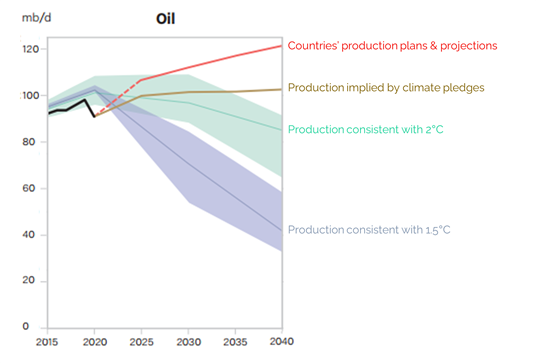
Global oil production would have to decline by 4 percent every year from 2020 to 2030 to be consistent with a 1.5°C pathway, according to the Production Gap Report. Yet current government plans and projections indicate an average 2 percent annual increase. This raises the question: what is the role for NOCs in a world of climate change adaptation and declining oil?
Experts weigh in
Executives from two NOCs, Colombia’s Ecopetrol and Uganda’s UNOC, joined our online event to share their approaches to energy transition. Valérie Marcel of Chatham House, one of the world’s leading experts on NOCs, also contributed.
Juan Manuel Rojas shared Ecopetrol’s climate change strategy, based on four pillars. While still focused on oil and gas, Ecopetrol aims to diversify its business into other sources of energy. The company bid for 51 percent of ISA, the state electricity grid operator. While many NOCs aim to reduce their direct operational emissions—so-called scopes 1 and 2—Ecopetrol’s energy transition strategy also targets scope 3, the indirect emissions that occur in its products’ value chain. The company aims to reduce emissions across scopes 1, 2 and 3 by 50 percent by 2050.
Asked to what extent these changes are driven by investors (88.5 percent of the company is state-owned and the rest is held by private investors), Juan Manuel observed that often those investors are sceptical of the importance of energy transition. From a financial perspective, many investors prefer their holdings to focus on one business area: if they want more electricity or more renewables, they would make those choices themselves. This creates a key tension in NOCs’ diversification efforts.
Peter Muliisa of UNOC shared Uganda’s challenges as new petroleum producer and a country with pressing socio-economic development needs. Like other countries in Africa, Uganda is highly vulnerable to climate change, and many officials and citizens see oil revenue as a means to help the country cope. However, with the global energy transition underway, UNOC has expressed a desire to develop a clear strategy on what the company needs to do to avoid exacerbating the effects of climate change on Uganda. Peter shared that, as a first step, early discussions are under way on how to restructure UNOC as an energy company rather than an oil company, ensuring Ugandans increasingly gain access to clean energy.
However, the government’s green light for construction of the East Africa Crude Oil Pipeline, which will carry Uganda’s oil to the Tanzanian coast, raises the question of potentially stranded assets. Peter explained that Ugandan officials hope to export oil through the pipeline before energy demand significantly shifts to renewables, but that the energy transition may affect longer-term production in the country.
Valérie Marcel, drawing also on the experience of these two companies, observed that NOCs have two purposes: to deliver revenues to governments and to meet energy demand in their countries (including often non-commercially). While clean energy is generally profitable, it does not create economic rents in the way oil does, which raises challenges for the countries’ economic strategies and government revenues. The second part of NOCs’ mandate could point to a role for NOCs in supplying renewable energy domestically. However, while NOCs can focus on reducing their costs or operational emissions, transitioning to renewable energy requires clear direction from their governments and consistent development strategies and climate policies, especially given the political consequences of lost economic rents.
Finally, Valérie underlined that the transition will affect different types of NOCs variously: high-cost versus low-cost, exporting versus importing, gas-focused versus oil-focused. Will it be easier for NOCs in new producing countries to transition than for established producers? In some ways yes, she said, as they are not yet locked into an oil development pathway. However, these producers often lack the financial resources needed for such a transition.
Our discussion series aims to increase learning between experts in the extractives governance and climate change fields, who have too often worked in silos. The following event, on 27 May, explored whether NOCs should get directly involved in renewable energy investment and economic diversification.
For the audio recording, please listen on SoundCloud.
Raw or Refined: Does Commodity Processing Help Resource-Dependent Countries to Diversify?

Developing countries dependent on the extraction of oil, gas, and minerals for government revenues, foreign exchange and economic activity face a critical development challenge. They suffer more from the economic volatility that comes with commodity price fluctuations and are also under pressure to diversify their economies before reserves run out.
Last year’s crash in oil prices due to the coronavirus pandemic and the accelerating transition away from fossil fuels both highlight the importance and urgency of this issue. For example, Nigeria experienced severe shortages of foreign exchange as oil prices crashed in 2020, making it challenging for many businesses to continue operations. Recent NRGI research shows that oil-dependent countries like Nigeria could suffer a larger, longer hit if the world meets the climate targets of the Paris agreement, with $400 billion of planned investments by national oil companies failing to break even.
For these and other reasons, supporting countries to reduce resource dependency and manage its consequences is a key part of NRGI’s overall strategy and 2021 agenda.
How do forward linkages affect resource dependency?
First, here is a quick primer on some of the key concepts around linkages and resource dependency.
- Resource dependency is a situation in which a country’s key economic indicators (such as GDP, government revenues, or foreign exchange earnings) rely on the production or export of natural resources.
- Volatility is the tendency for key economic variables to change rapidly – for example, the oil price has been extremely volatile since the start of the coronavirus pandemic.
- Linkages are relationships between different sectors of the economy, where operations in one sector help to grow another.
- For extractive industries, one “forward linkage” involves the downstream processing of a commodity to make it either more valuable as an export or more useful to the domestic economy, e.g., refining oil or extracting metals from raw ore.
Forward linkages can impact a country’s level of resource dependence. In several NRGI priority countries, governments and citizens see such forward linkages as a pathway to a more diversified and less resource-dependent economy.
Forward linkages in oil, gas and mining can lead a country toward economic diversification through:
- knowledge spillovers to other sectors (i.e., when knowledge acquired in one sector of the economy “spills over” to other sectors, raising their productivity)
- potential increases in private investment in infrastructure and other, non-extractive sectors
- provision of cheap inputs (i.e., commodities or resulting products like fuel) that make other sectors more competitive
- government revenues that authorities can reinvest in the development of other industries
But some analysts worry that doubling down on extractives may instead worsen dependency, leading to an even greater share of a country’s economic activity being tied to the sector.
Governments in resource-rich countries are increasingly seeking to establish or expand forward linkages to their extractive sectors. For example, a state company in Ghana is aiming to harness bauxite reserves and grow an integrated aluminum industry. Bolivia’s government is trying to use domestic gas supplies to produce petrochemicals. Mongolia and Uganda are both planning oil refineries, while Mexico’s government seeks to expand its refining capacity.
With many countries aiming to both reduce resource dependency and promote forward linkages, it is important to understand how these interact with one another in practice. As a starting point, NRGI commissioned a review of the existing literature in extractive forward linkages’ impacts on resource dependence.
This review found no consensus on whether forward linkages help to reduce or increase resource dependence. Rather, it revealed two general scenarios: in some cases linkages reduced extractive dependency, and in others where they appeared to have increased it.
Malaysia and Nigeria have both developed forward linkages from the petroleum sector (e.g., refining, petrochemicals), but have achieved very different results. In Malaysia, linkages have helped the country diversify, supporting the automotive, electronics and synthetic rubber industries in addition to a highly competitive plastics industry. By contrast, Nigeria’s oil refineries, which have operated at reduced capacity for decades, have struggled to satisfy domestic demand, 70-80 percent of which is met through imports. Moreover, Nigeria’s refineries also make heavy losses, which eat up public funds that the government could use to develop other sectors of the economy. Nigeria’s dependence on oil for export earnings worsened between 1965 (when its first refinery was built and oil accounted for 32 percent of exports) and 2018 (by which time oil had risen to 94 percent of exports).
So while forward linkages can provide a springboard to diversification (and thus reduce resource dependency), they can also at times worsen dependency. By drawing even more, often scarce, resources—such as skilled workers, power, private capital and public funds—into the sector, they can hinder rather than help the growth of other sectors, meaning that the country relies even more on extractives.
Another risk: domestic consumption of oil and natural gas for power locks a country into using fossil fuels even when switching to renewable sources would be environmentally and/or economically advantageous; this risk will become even more acute as the energy transition gathers speed and the cost of renewables falls further relative to fossil fuels.
Downstream viability and use of domestic inputs are critical for diversification
The impact of forward linkages on dependency is therefore highly context specific. Achieving a positive outcome depends on the presence of three factors:
Viability of downstream processing activities
Inefficient downstream activities—like Nigeria’s refineries—are less likely to help countries diversify. They often fail to deliver low-cost inputs to the wider economy. In addition, where downstream activities are inefficient, governments often use fiscal incentives to encourage in-country processing to take place anyway, which impacts public finances and can reduce countries’ ability to support diversification in other sectors. (N.B., government sometimes offer fiscal incentives even when such activities are efficient). Similarly, if extractives companies are forced to process commodities in-country even though processing is uncompetitive, this will reduce their profits and, consequently, the government’s tax revenues from the sector.
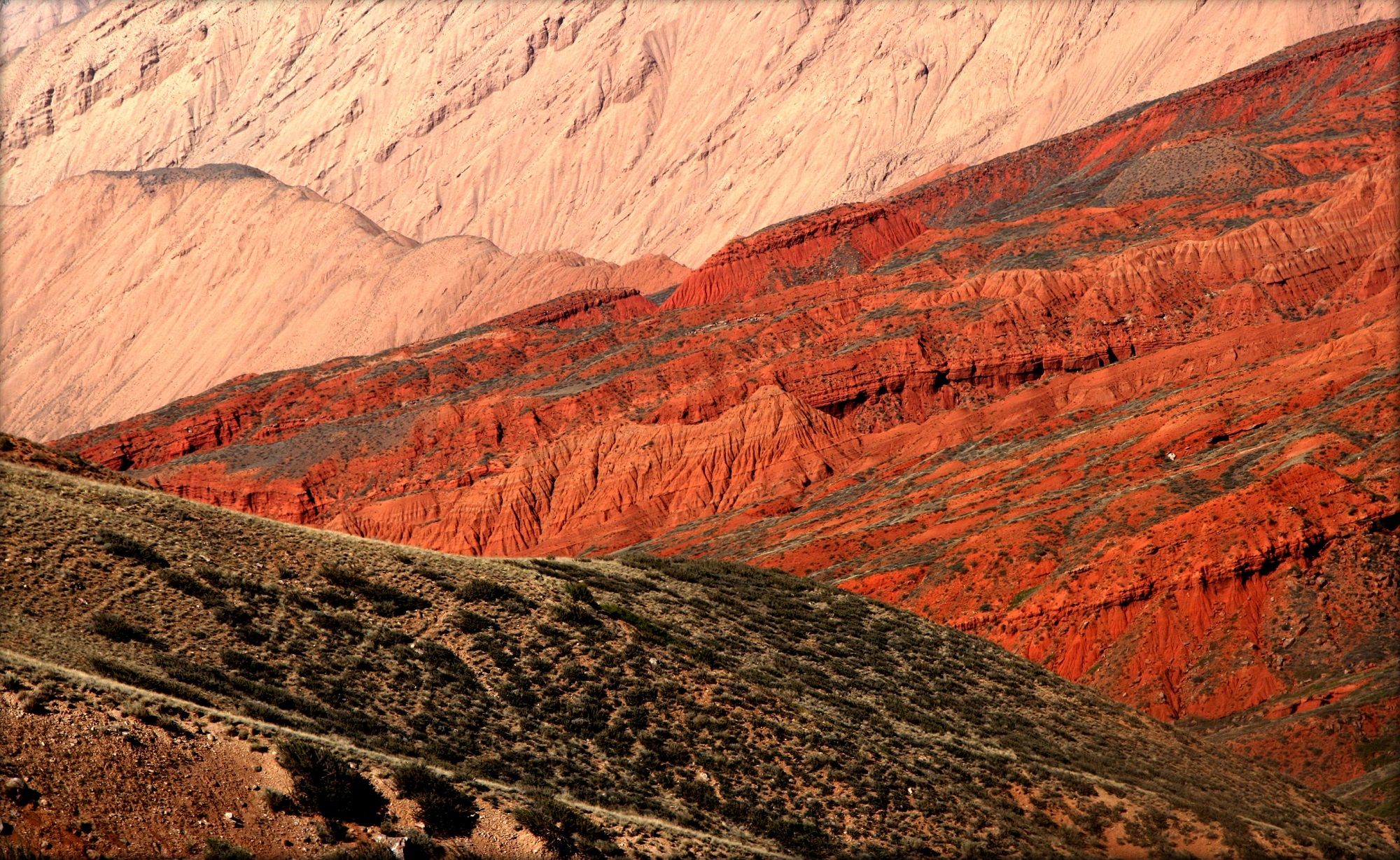
There are several key factors that contribute to efficiency in downstream processing, though these can differ significantly between commodities. For example, large annual production of the relevant upstream resource allows downstream activities to benefit from economies of scale, as in Saudi Arabia. Sizeable oil reserves and level of daily production have allowed Saudi Arabia to be a competitive refiner. By contrast, NRGI’s analysis of proposed gold smelting in the Kyrgyz Republic indicated that production there is too small for the proposed smelter to be commercially viable. Policies also critically matter; these include efforts to upgrade infrastructure, co-ordinate investments, set productivity targets and develop skills among workers.
Countries with large shares of a resource’s global production are also more able to incentivize (or even force) investors to establish downstream facilities domestically as there may be few alternatives for acquiring the refined resource. When Indonesia banned the export of raw nickel, processing activities in Indonesia grew substantially; now the country may be able to capture more value down the electric vehicle battery supply chain. Part of its success with nickel processing is because China, the main importer of nickel, found it hard to switch to other nickel exporters as Chinese smelters has been customized to Indonesia’s high-grade nickel ore. In order to maintain supply, investors constructed nine smelters in Indonesia by mid-2017. However, when Indonesia pursued a similar policy in its bauxite sector, this was unsuccessful, as the country had much lower market share and bauxite importers (and investors) were able to easily source bauxite from other suppliers.
Further, where downstream industries are competitive, they may be able to survive even when the country’s own reserves run out (using imported raw commodities), which can cushion the blow of reserve depletion. For example, time will tell whether Botswana’s diamond cutting and polishing sector will remain competitive once its reserves run out.
Extent to which forward linkages use inputs from other sectors
Downstream activities can increase demand for inputs from other sectors, which in turn helps those sectors grow. But not all forward linkages bring this benefit—some rely on imported inputs and have little impact on the rest of the economy. The type of forward linkage a country pursues therefore has critical implications for its diversification prospects. Policy can be decisive here as well. A plan to use forward linkages to diversify requires a government to develop a broader industrial strategy that considers, for example, the optimal sequencing of the processing activity and the sectors to which it will link. Malaysia has successfully accomplished this with its oil sector.
Depth of downstream processing
Different types of forward linkages also have different effects on price volatility; this is one of the most problematic impacts of resource dependency. Many processed extractive products have more stable prices than the raw commodities from which they are derived, which helps to reduce volatility. This works best where forward linkages are deeper – the more value that is added in downstream activities, the less volatile prices for the resulting products tend to be (and the less volatility this introduces to the economy).
If conditions and policies are right, forward linkages can help countries to diversify or to alleviate the effects of resource dependence. If they are not, countries can become even more dependent on oil, gas or minerals. This relationship is specific to the commodity, the linkage and the national and regional contexts and politics. For these reasons we at NRGI will support assessments of the plans of governments in our focus countries, and build and share expertise in this critical area of resource governance.
This post is based on a literature review by Amir Lebdioui and Pavel Bilek.
It’s Time to Talk: Sonatrach and the Energy Transition in Algeria

العربية »
This post is part of the "Resource Governance and the Energy Transition" series.
Last week Algerian football supporters attacked the headquarters of Algeria’s national oil company, Sonatrach. They were angry at the company, accusing it of not paying the salaries at Mouloudia d'Alger, the football club it owns. The attackers blamed this state of affairs for the average results of the club in the Algerian league.
If Algerians can be so angered by poor football performance, imagine their wrath when Sonatrach’s revenues decrease because of the global changes affecting the oil and gas sector. Such a downturn could mean that the company will be unable to continue to play a pivotal role in the economy of Algeria. We are entering an era of energy transition where resource-dependent countries, their state-owned companies and their populations need to prepare, get fit and build a strategy that will help them win the competition.
The coronavirus pandemic accelerated many trends that were already underway, including the energy transition away from fossil fuels toward renewables. The faster this transition, the more it threatens national oil companies and governments reliant on oil revenues—unless they prepare well.
Governments of Middle Eastern and North African (MENA) countries that rely on oil and gas for revenues cannot ignore the global march toward clean energy; they must react and secure a stable future for their citizens. To that end, we at NRGI have produced a new briefing, “National Oil Companies and Energy Transition in the Middle East and North Africa” (a companion piece to the report Risky Bet: National Oil Companies in the Energy Transition). Algeria’s Sonatrach is one of three MENA NOCs that we examine, along with Qatar Petroleum and Saudi Aramco. And it appears to be most vulnerable to the accelerating energy transition.
Algeria, the largest oil and gas producer in North Africa, is heavily dependent on hydrocarbons for exports and government revenues, with oil and gas accounting for 60 percent of government revenues. Sonatrach controls over 75 percent of the country’s hydrocarbon production; it is the cornerstone of the economy, which makes it crucial that Sonatrach management and government officials heed global shifts.
A new corporate strategy?
National oil companies with dwindling proven reserves and a heavy share of high-cost geological assets among their potential future portfolios face serious possibilities of “stranded investments,” and could struggle to maintain expected production volumes, revenues and transfers to state treasuries. NRGI analysis shows that national oil companies in the MENA region could invest more than $66 billion in oil and gas projects that would not break even if the world keeps to its climate commitments. Sonatrach’s portfolio is the most vulnerable in this regard, with $12 billion in project spending (more than 25 percent of the company’s budgeted capital expenditure) slated for projects with a break-even price between $40 and $70.
Alongside the prospect of investing in high-cost projects, Sonatrach must continue to supply the ever-growing domestic demand for natural gas, which is sold to citizens at subsidized prices, thereby reducing the share available for revenue-generating exports. These challenges reverberate through the company’s portfolio, limiting access to finance and partnerships that would aid its diversification.
Sonatrach’s current approach to mitigate this uncertainty largely revolves around a shift to liquefied natural gas (LNG). This includes investing in existing and new LNG projects to diversify its gas export portfolio. The success of this approach hinges on the availability of domestic reserves and technology to unlock gas at a competitive cost—and on whether the demand for gas holds up or yields to increasingly cheaper renewable energy. In addition, Sonatrach must demonstrate commercial abilities to become an LNG trader (not just a supplier), expand internationally to secure a flexible and diverse portfolio, and harness financial resources to take positions in the gas value chain. However, we know that Sonatrach had to halve its spending in 2020 due to the collapse in the oil price, at the time limiting its capacity to expand into growth markets such as chemicals and plastics.
State of the government-Sonatrach relationship
Alongside the Algerian government, Sonatrach, like many national oil companies, shoulders significant financial responsibility for the wellbeing of citizens. Reduction in oil and gas revenues increases this pressure. So beyond the company’s business and investment strategies, the government of Algeria must reexamine the fiscal relationship between Sonatrach and the state, as long-held expectations about available fiscal transfers (of taxes, dividends and other payments by the company to the government) may be unmet. The International Monetary Fund (IMF) estimates Algeria’s fiscal break-even price—the oil price necessary in order to meet expected spending while balancing the national budget—at $92 per barrel. That figure increases monthly, and more so amid the pandemic. Based on the new budget, Sonatrach seems likely to set the price of oil at $135 for the barrel to break even fiscally—a price which is unlikely to materialize anytime soon (or possibly ever). This contrasts with many oil companies and analysts assuming the oil price for the next few decades will average $60 a barrel. Even as the pandemic abates, low oil prices are likely to prevail and price spikes will be the exception. Therefore, the government end its dependency on Sonatrach and seek new sources of cash.

Let’s talk energy transition
Sonatrach lacks funds and low-cost reserves and therefore will be less resilient to declining prices than the regional giants Saudi Aramco or Qatar Petroleum. It is therefore imperative for Sonatrach to conduct rigorous risk analysis around capital allocation decisions. Ultimately, both the government and Sonatrach must re-examine the company’s conventional assumptions about public expenditures, and the government must clearly define and explain to citizens the institution’s role in the country’s energy transition.
As profit margins shrink across the industry there is less margin for error, and so efficiency and integrity are more important than ever. Sonatrach should redouble its investments in transparency and corporate governance reform.
Already, Sonatrach has recently taken steps to improve its governance and transparency. In the 2017 edition of the Resource Governance Index (RGI), which assessed performance using 2015-2016 data, Sonatrach scored 47 out of 100 possible points, ranking 31st out of 52 assessed state-owned enterprises, a performance considered “weak” by the RGI. In a 2020 interim RGI assessment, Sonatrach scored 65 points out of a possible 100, which indicates an increase of 18 points and a transition from the weak to satisfactory performance band. That is a positive evolution that should continue.
Finally, the Algerian government and Sonatrach should create an inclusive space for the public to engage with government officials and company staff on the impact of energy transition on the country’s oil and gas sector. Together all stakeholders should debate solutions to the challenge presented by the shift to clean energy—citizen-oriented solutions.
The 2021 Resource Governance Index Research Process is Underway
At the Natural Resource Governance Institute (NRGI), we are committed to helping to improve the lives of people who live in resource-rich countries. As part of this mission, we produce the Resource Governance Index, a measure of the governance of oil, gas and mining sectors in resource-producing countries. The Resource Governance Index covers many issues, from the allocation of extraction rights through to the management of the revenue generated by oil, gas and mining sectors. It is a freely available public data product that serves as a global benchmark, country and sector diagnostic tool, and a roadmap for policy and practice reforms at the global, regional and country levels. The 2017 Resource Governance Index results showed that the effective governance of oil, gas and mining sectors is not an insurmountable challenge but that many countries still struggle to adequately govern their natural resource wealth.
The 2021 Resource Governance Index project is now underway, and will build on the structures and successes of previous iterations. As we face global economic, political and social uncertainty as a result of the coronavirus pandemic, evidence-based decision-making will be even more important, and particularly so in resource-dependent countries. The 2021 Resource Governance Index will be an authoritative tool to help decision-makers, and those who hold them accountable, to ensure that extractive industries are responsibly managed as countries navigate the challenges ahead. The 2021 iteration of the index will assess governance practices in the period from 2019 to 2020. For the first time, the results from the 2021 edition will be directly comparable with scores from the previous index (published in 2017 with an assessment period from 2015 to 2016). This will allow for analysis of a country’s performance over time to show improvements or deteriorations in resource governance, in addition to analysis of a country’s performance against its peers. We will launch the results of the index during 2021.
We will include 25 countries in the 2021 Resource Governance Index, with geographical spread across Asia-Pacific, Eurasia, Latin America, the Middle East and North Africa and sub-Saharan Africa. We included countries based on their resource dependency and NRGI’s regional and country programmatic work. In each country, we will assess the oil and gas or mining sectors and in nine instances we will measure both sectors.
Note: Country coverage of the 2021 Resource Governance Index was revised on 1 October 2020 and the index will now include 18 countries, seven fewer than the 25 countries originally planned. Countries now excluded are: Afghanistan, Ethiopia, Liberia, Mozambique, Sierra Leone, Yemen and Zambia. Research is ongoing in the final set of selected countries, all of which associate directly to NRGI country or regional programs. We look forward to greater country coverage in future editions of the Resource Governance Index.
2021 RGI Country Coverage
Infogram
NRGI is now recruiting consultant researchers and peer reviewers to collect data for the 2021 Resource Governance Index. Our recruitment and research will take place during 2020 and early 2021. If you are interested in opportunities to work on the Resource Governance Index for a specific country please refer to the NRGI careers and opportunities page and look out for in-country calls for consultants.
For more information email index@resourcegovernance.org.
Liz McGrath is the research, data and learning director at the Natural Resource Governance Institute (NRGI). Anna Fleming is an NRGI research and data officer.
Iraq and Algeria Navigate Political Transition, Deflated Oil Demand and Decreased Revenues
The world’s current struggle against the coronavirus pandemic is not only the story of a virus that crippled the global economy and tested health systems throughout the world; it has also offered a glimpse into the future of energy. Since the Organization of Petroleum Exporting Countries (OPEC) was established in 1960, oil producers have been able to control the global oil supply and ensure high revenues for governments. The sharp drop in oil demand caused by the pandemic has brought forward the uncertainty around oil consumption levels. Oil demand will certainly recover but as countries will continue to reduce their reliance on fossil fuels its future is uncertain. Today, many producers in the Middle East and North Africa (MENA) have the opportunity to use the dramatic events of the coronavirus to rethink their economies and even reshape their social contracts.
The oil-dependent countries in the MENA region are now facing a quadruple shock. First, they are addressing the health epidemic—Iran alone accounts for 31 percent of the cases in MENA followed by Saudi Arabia, and countries like Iraq and Libya have exhausted already weak and overcrowded health structures. Second, they are suffering a large contraction in general economic activities, due to the pandemic’s resultant lockdowns. Third, they are facing a significant drop in oil revenues, due to a global oil price crash. Fourth, they will likely continue to face oil revenue contraction in the future, due to OPEC members’ recent agreement to cut oil production until April 2022.
Algeria and Iraq are two among the countries in the region that have been severely impacted by these shocks. The International Monetary Foundation (IMF) projects that Algeria’s economy will contract by 5.2 percent and Iraq’s by 4.2 percent. Both face risk of further decline due to the uncertainty of the global pandemic and its resultant economic impacts. These countries are also experiencing mounting social pressures with young people primarily demanding jobs and better access to public services.
Real growth (as a percentage, 2019 to 2020)
 Click to enlarge
Source: IMF, REO, 15 April 2020
Iraq, which has the world’s fifth-largest proven oil reserves, has been struggling with corruption and decades of terrorism and foreign military intervention. Iraq, too, experienced civil unrest over the past year, with protestors calling for an end to the sectarian political system that has governed the country since the U.S.-led invasion.
Both Algeria and Iraq were already in places of great transition and turmoil when confronted by the coronavirus pandemic. They are similar in their reliance on oil and gas revenues, as well as the discontentedness of their populations and their lack of crisis preparedness at the onset of the pandemic.
How are the governments of Algeria and Iraq facing the challenges the coronavirus pandemic poses? While both countries have taken some measures in response to the oil price drop and the spread of the coronavirus, questions remain. What will these measures achieve? And, will they be sufficient to avoid a resurgence of social discontent once the pandemic has eased?
Fiscal breakeven oil price (USD per barrel)
 Click to enlarge
Source: IMF, REO, 15 April 2020
Algeria
At $157 per barrel, Algeria, has the second-highest fiscal oil breakeven price (minimum price per barrel that the country needs to reach in order to meet its expected spending needs while balancing its budget) in the region. The $157 breakeven price is more than four times current oil prices.While most countries have been spending more during the coronavirus pandemic to protect their already sluggish economies, Algeria was forced to cut its spending because it had no savings left in its oil stabilization fund (its sovereign wealth fund). As oil prices fell, Algeria’s government announced cuts in operational spending; it mainly cut spending on goods and services while leaving wages, pensions, health- and education-related spending untouched. However, these measures will generate minimal savings because wages and social transfers comprise the majority of the budget. The government has also announced that it will postpone all investment projects that are in the pipeline. The government codified its spending cuts in reducing total expenditures by 6 percent, with current expenditures down by 3 percent and capital expenditures by 11 percent.

However, not all legislative changes have produced budget cuts. The government has also introduced spending to mitigate the impact of the coronavirus pandemic. It has made an allocation of AD 70 billion ($0.5 billion or 1 percent of total expenditures) for health-related spending and to compensate for individuals and businesses directly affected by the crisis. This legislation also postpones tax payments for small- and medium-sized enterprises (SMEs) and cuts income and corporate taxes in half for individuals and businesses residing in the southern hydrocarbon-rich region. It further includes other business incentive measures targeting access to finance for start-ups. The Bank of Algeria has provided liquidity by lowering its reserve requirement and has reduced its main policy rate. Further, it has eased financial regulation and has extended loan repayment periods.
Algeria’s lack of savings and its accelerated draw-down on international reserves have prompted the government to take additional measures to preserve the foreign currency drain. Sonatrach, Algeria’s national oil company (NOC), will halve its operational and capital expenditures and shrink its import bill.
The Algerian government budgeted for oil to bring a third of 2020 revenues but now, they only expect half to materialize due to low oil prices. Non-oil revenue loss will further compound this budget shortfall. At its current level, spending will consume more than 90 percent of the revenue, which leaves virtually no resources for a recovery stimulus measure. Unfortunately, Algeria would have difficulty cutting its current spending because it mostly includes its public wage bill, pensions and social transfers.
Iraq
At $60 per barrel, Iraq’s fiscal breakeven price is nearly double the current global oil price. Like Algeria, Iraq has no immediate fiscal room to respond to the crisis and will ultimately have to cut spending at a time when most countries are spending more to counteract the coronavirus pandemic’s economic impacts.Prior to 7 May 2020, Iraq operated under a caretaker government, which rendered it far less prepared than Algeria to take policy action to face the current health and economic crisis. In the absence of available additional budget financing, the Central Bank of Iraq (CBI) established a donation fund to support the Ministry of Health in its efforts to fight the pandemic. Initial grants from the CBI and the Trade Bank of Iraq amounted to $25 million.
The government announced that they will cut spending for non-essentials, specifically reducing capital spending and recurrent spending on supplies and services other than health-related. They also introduced a cash transfer scheme targeting 10 million private sector workers that have lost their salaries during the lockdown. The country’s significant informal employment sector might impede its implementation, which could prove insufficient as compared to the social safety net provided through the public wage bill. The cash transfer will cost IQD 600 billion ($ 0.5 billion) for two months, which represents a mere 0.3 percent of the bloated public wage bill.

To lessen the financial impact of the coronavirus pandemic on businesses and individuals, the CBI announced a moratorium on interest and principal payments on its direct SME lending portfolio and asked banks to extend maturities of loans for clients impacted by the lockdown. However, with loans to SMEs representing only 1 percent of gross domestic product (GDP), SMEs remain largely unbanked and are therefore unlikely to benefit from these measures.
With low oil prices at $25 per barrel, Iraq’s budget revenues will shrink by 40 percent and could go lower if the country cuts production. At this level of revenue, Iraq can only cover 62 percent of its operational budget. It will likely be able to cover wages and pensions but will have to either make spending cuts or take on significant debt to pay for goods and services, maintenance and investment expenditures. These potential cuts would further deteriorate already poor infrastructure and inefficient public services. It will likely also halt or cause delays in resuming budget transfers to the Kurdistan autonomous region, which have previously been subject to dispute.
The coronavirus crisis and the decline in oil price have made already existing social and economic problems more acute. Both Algeria and Iraq are currently suffering the consequences of a previous lack of fiscal responsibility from an earlier time when they did not amass sufficient savings during periods of high oil prices and instead spent revenues mostly on recurrent expenditures rather than domestic investment. High youth unemployment—caused by fewer public sector jobs as the main provider for employment, including inefficiencies and over-staffing in state-owned enterprises, and the inability of the private sector to create decent job opportunities—is likely to worsen.
Policy recommendations
As Iraq and Algeria plan their paths to recovery, their new governments should commit to addressing joblessness and other root causes of their populations’ discontent. While many of the current short-term policy efforts are targeted at scaling up health spending and social safety nets, both governments should use this period of transition and rebuilding to put forward long-overdue policy reforms. To that end, Algeria and Iraq should consider a mix of front-loaded and medium-term policy measures.1. Reprioritize expenditure and rationalize the payroll bill. The coronavirus pandemic has shed light on the need for efficient and reliable health systems. Iraq and Algeria suffer from understaffing in the health sector, despite having a substantial public sector wage bill (46 percent and 34 percent of their budgets, respectively). They should prioritize scaling up their health- and social-protection spending by reallocating current expenditures, while also reducing the burden of the payroll bill on public finance. They should revise and reduce compensation schemes and allowances across the whole public sector that are neither linked to performance nor provide a social safety net.
2. Create a fiscal buffer. Iraq and Algeria should implement a fiscal rule that provides a buffer during periods of oil-price decline and limits wasteful and unsustainable spending, including the costly and inefficient subsidies that typically arise during good economic times. A buffer would reduce the need for abrupt expenditure cuts during downturns, thus avoiding disruption to public services and making budgets more predictable over the medium term.
3. Enhance non-oil revenues to diversify away from oil. At 3.5 percent of GDP, Iraq’s non-oil revenues are some of the region’s lowest, representing only 10 percent of its expenditure bill. Recent budgets tried to ameliorate this by introducing new taxes, but they had little impact because of a narrow tax base and weak administration. Enlarging the tax base, improving tax-policy design features and strengthening tax administration could yield substantial revenues. At 14 percent of GDP, tax revenues in Algeria are higher than other oil-exporting countries in the region but lower than Tunisia and Morocco. It could potentially generate more revenue by strengthening tax administration and widening the tax base, through for example, the revision of costly tax exemptions.
4. Reduce energy subsidies. Energy subsidies estimated in 2019 at around 7.9 percent of GDP in Algeria and 3.3 percent of GDP in Iraq carry large fiscal costs. Interestingly, the low oil price environment and the economic activity slowdown are likely to generate savings for both countries due to lower energy subsidy levels. In that respect, Iraq and Algeria may see an opportunity to lock in these savings and plan for a smooth phase-out of energy subsidies over the longer term.
5. Raise external borrowing to finance domestic investment. As spending pressures increase and oil prices remain low, Iraq and Algeria could rapidly deplete their foreign-currency reserve buffers. In that case, they should consider requesting concessional loans for investment and economic recovery programs from regional development banks as well as multilateral institutions, such as the IMF and the World Bank, and additionally seek financing opportunities through capital markets. Algeria may have already reached the point at which it should consider borrowing: with external debt of less than 2 percent of its GDP, external borrowing could finance a pick-up in growth. With debt at 32 percent of GDP, Iraq has higher exposure to external debt than does Algeria, but is still well below other countries in the MENA region. Iraq relies heavily on domestic borrowing, which means there is less left to private-sector financing. Borrowing externally could help rebalance that.
Total external debt as percent of GDP
 Click to enlarge
Source: IMF - MCD REO statistics - data updated 15 April 2020
6. Enhance transparency and fight corruption. Amid the crisis, corruption, which is already deeply rooted in Iraq and Algeria, may worsen. Increased government spending on health may lead to inflated procurement. In the absence of a social targeting system that can be transparently managed by the public administration, the scaling up of social safety-net spending will be directed to politically affiliated individuals, rather than the most in need. In addition, shortage in foreign currencies and basic goods may lead to the resurgence of black markets. To that end, Algeria and Iraq should prioritize reforms to improve public financial management and governance. As the countries try to recover, their governments should communicate transparently about their policy strategies and follow-up regularly to address any shortcomings.
Nadine Aboukhaled is a senior economist/lead at Inventis. The views expressed in this piece are solely her own and do not reflect the views and the official position or policy of Inventis or NRGI.
Oil-Exporting Emerging Economies Should Seek Just Energy Transition for Sector Workers
Key messages:
- The livelihoods of the world’s millions of oil workers and their communities is a critical dimension of the much-needed low-carbon transition.
- Implementing a just energy transition for workers will not be easy, but it is imperative for governments in oil-exporting emerging economies to begin planning now.
- Key strategies to pursue include long-term just transition planning, investing in retraining for workers, matching workers to opportunities and promoting local diversification in oil-dependent regions.
Since worldwide coronavirus-related lockdowns began in early February this year, the global demand for oil has evaporated. This huge drop in demand coupled with an already over-inflated supply has depressed oil prices to historic lows. There has been justifiable attention on how to use this moment to help bolster low-carbon transitions. However, it is also important to address the negative impacts of this much-needed low-carbon transition on the livelihoods of the world’s millions of oil workers and their communities. The current oil crash shows why.
In particular, oil-exporting emerging economies such as Mexico, Kuwait, Nigeria, Saudi Arabia and the United Arab Emirates have all been severely impacted, facing revenue losses and record layoffs due to production cuts. Signs of trouble are emerging from the Middle East to the Americas. For example, Qatar Petroleum’s chief executive Saad al-Kaabi announced job cuts in an internal memo to employees. In the last few months, regional news reports have highlighted poignant stories of oil-industry workers losing jobs, facing salary cuts or experiencing delays in payment of wages. “In Mexico, many oil workers, especially those who work for Pemex contractors, are having a really difficult time,” said Gómez Lara.
The International Energy Agency captured the human impact of this plunge in its recent “Oil Market Report”: “…low prices impact the livelihood of millions of people employed along the oil industry’s extensive value chain, and they damage the economies of weaker producing countries where social stability is already fragile.” A recent Rystad Energy impact analysis forecast that job losses will intensify in 2020, resulting in the loss of nearly 1 million jobs in the worldwide oilfield service industry alone. Most of these losses are slated to be in the exploration and production segment, which forms the bulk of oil industry jobs in oil-exporting emerging economies. This could have grave repercussions for workers and their families due to the lack of social security measures, such as unemployment insurance, in these countries. Social breakdown may well follow.
Whether oil prices rebound in the long-term is an open question. However, it is clear that the livelihoods of millions of workers in the oil industry and associated sectors are likely to remain vulnerable, especially in light of ever-increasing pressure on governments to facilitate low-carbon transitions. Moreover, evidence from previous fossil-fuel industry declines suggests that workers’ legitimate concerns could be co-opted by elites with vested financial interests in the status quo, as a way to block energy transitions.
Current oil-sector employment in emerging economies
In many oil-exporting emerging economies, the scale of oil-industry and related employment is enormous and is typically regionally concentrated. For example, in Mexico, Pemex employs 130,000 people directly, from which flows indirect employment for a further 500,000 people. This means that nearly 2 million people in Mexico – the 630,000 workers, each with three or four family members — are tied to the oil industry.
Moreover, in such oil-dependent countries, large numbers of oil-related jobs are concentrated regionally in “oil towns” that were built around the local oil industries. In such towns, nearly every person relies on the oil industry directly or indirectly by running shops and local businesses that rely on oil workers’ spending. Beyond Mexico, such oil towns exist in all oil-exporting emerging economies—places like Basra (Iraq), and Ouargla (Algeria). In such towns, the loss of high-paying oil-sector jobs typically has enormous knock-on effects for wide swathes of the economy.
Just transitions in emerging economies
In the global north, experts have been vocal about the need for governments to implement “just transition” plans for oil workers. However, this has gone largely undiscussed in emerging economies. Given the significant oil industry employment in oil-exporting emerging economies and their associated vulnerability going forward, policymakers in such countries should start considering what is needed for just transitions.
Planning and implementing just transitions will not be easy, even in rich countries. A lack of alternative employment opportunities, challenges in the provision of appropriate retraining, and other socioeconomic obstacles have together kept opportunity sparse. Therefore, it is imperative that governments in emerging economies start planning for a just transition now.
Recognizing vulnerability of oil communities
Leaders in oil-exporting emerging economies should view the current pandemic-affected situation as an indication of what a low-carbon world could look like. Officials could create transition taskforces with a mandate for long-term planning, which jurisdictions such as Scotland have already done. Planners should start by first identifying cities and villages that are particularly vulnerable to energy transitions and future oil-sector contractions. Once these vulnerable areas are identified, the next step would be for national and subnational governments to engage extensively with workers, unions, local governments and other relevant stakeholders to develop plans to diversify the local economy and create new jobs.
Diversifying economies and creating new jobs
Governments and researchers in some countries have in recent years developed approaches to support job transition for coal workers, some of which could be replicated for oil-industry workers. National and subnational governments could promote new industries for creating local employment opportunities in sectors ranging from clean energy to tourism and manufacturing. Colleagues and I recently found that it is technically feasible to create local solar jobs for some out-of-work coal miners in many coal mining areas in China, India, the US and Australia. These kinds of studies could be replicated for oil-industry workers in other vulnerable regions.
Starting now, national and subnational governments could also make critical long-term investments in education by creating new universities in oil-dependent regions. The creation of 22 new universities helped hard coal-mining dependent regions in Germany diversify to a knowledge-based economy. Another important aspect of just transition is that workers transitioning to new jobs might require retraining to acquire new or additional skills. Governments’ retraining efforts should align with the job requirements of emerging regional employment opportunities.
One mechanism to tackle these imperatives could be the creation of worker transition centers in towns and villages vulnerable to decarbonization. Last year in Canada, the federal government’s Task Force on Just Transition for Coal Workers and Communities recommended the creation of such centers, as in past industrial declines they played an important role in sharing information and helping workers to find new jobs. These centers could leverage the reach and influence of national oil companies and other actors, to engage with and support workers and other stakeholders throughout the transition process, including by providing training and matching them with opportunities.
Of course, not all localities can attract new industries and some workers may be more mobile than others. A just transition taskforce should consider these realities when planning.
Implementing a just transition for oil workers has many challenges, with which authorities in emerging economies have not yet begun to grapple. However, the current drop in oil foretells the vulnerable future that millions of oil workers will likely face. Sooner rather than later, governments of emerging economies must support just energy transition for workers and their communities.
Sandeep Pai is the author of Total Transition: The Human Side of the Renewable Energy Revolution. He is a doctoral candidate in the Institute for Resources, Environment and Sustainability at the University of British Columbia.
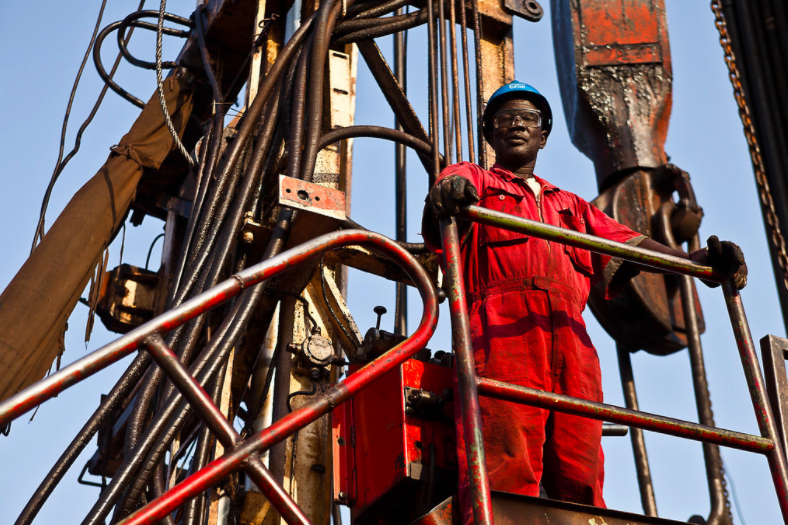
Image credit: "Sudanese Oil Workers" by Enough Project is licensed under CC BY-NC-ND 2.0
Clean Energy and Fossil Fuels in the Middle East: A Virtuous Cycle?

This post is part of the "Resource Governance and the Energy Transition" series.
Key messages:
- An energy transition in the Middle East requires financing. Governments heavily rely on selling hydrocarbons for this money.
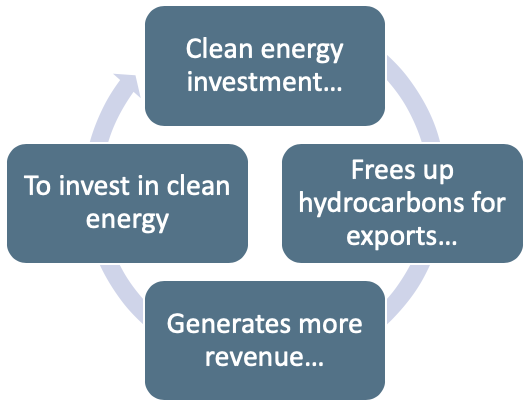
- Governments can create a virtuous circle: invest in clean energy, to free up hydrocarbons for export, which can finance more clean energy.
- As hydrocarbon prices decline, the low-cost producers of the Middle East have an advantage and should be the last to leave the market. The world will demand proportionally more of the region’s oil and gas.
- However, the Achilles heel of the Middle East remains its undiversified economy, and the need for high prices to sustain governments’ spending.
- Diversification will ensure that Middle Eastern oil producers can sustain exports at lower prices, with less economic pain.
The coronavirus pandemic has overshadowed several issues that pre-crisis were top priorities for many governments and organizations around the world. One such agenda item is the energy transition, which refers to the transformation of our energy system from one that heavily relies on carbon-dioxide-emitting fossil fuels – coal, gas and oil – to one which is dominated by green and clean sources of energy. Although no one knows how long and how deep the current crisis is going to be, or what the shape of recovery will be, it is only a matter of time before the push for the energy transition will regain its pre-crisis fervor.
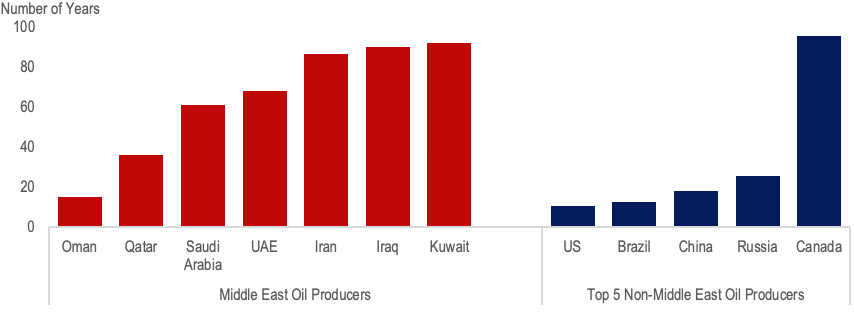
The world’s determination to fight climate change and green the energy mix is a concern for any oil and gas producer, and the more so for the large Middle Eastern oil exporters which sit on massive proven hydrocarbon reserves, expected to easily last another 60 years. (See figure below.) The risk of such assets becoming stranded and losing value is high, with dire consequences for these poorly diversified economies. This prospect is probably the most apparent and often discussed impact of the energy transition on Middle Eastern oil producers.
In reality, however, the picture is more complicated. The limited diversification of Middle Eastern oil exporters with regard to both their primary energy mix and their economies will conspire to increase – not decrease – cheap oil and gas exports from the region as the energy transition gets underway.
Reserves to production ratios
 Click to enlarge
Source: BP. Statistical Review of World Energy, 2019
The domestic energy transition: Increasing oil and gas exports from the Middle East
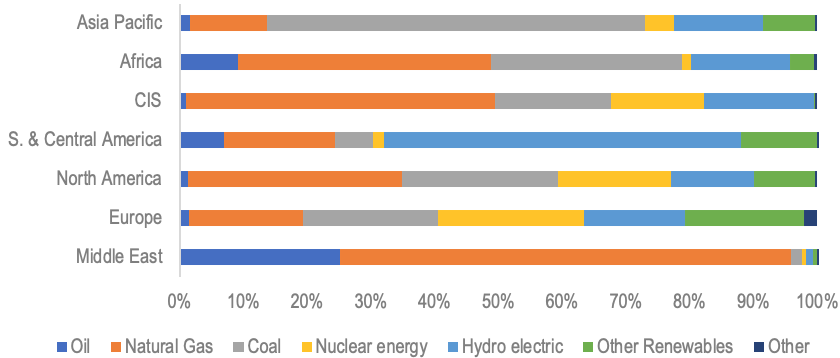
The Middle East is truly a unique region with respect to its limited energy diversification, regardless of whether countries are net importers or exporters of oil and gas. The dominance of these two hydrocarbons in the region’s primary energy and electricity mix is remarkable. In countries like Kuwait and Saudi Arabia their contribution is nearly 100 percent. Outside the region, the mix is much more colourful as countries meet their energy needs from a greater variety of sources of energy, from fossil fuels to renewable and nuclear energy. Overall, the Middle East is the least diversified in the world with respect to the primary energy mix:
Electricity generation by fuel, 2018
 Click to enlarge
Source: BP. Statistical Review of World Energy, 2019
The region’s oil and gas exporters have set ambitious targets to diversify their energy and electricity mix. The United Arab Emirates (UAE), for instance, aims to obtain half of its primary energy from clean sources by 2050, from less than 2 percent in 2018. This should be a welcome move, from an environmental perspective, especially since the region encompasses some of the biggest carbon emitters (on a per capita basis) in the world. Also, economically speaking, greater use of green energy would free more oil and gas for exports.
The transition of a petroleum-based to a green economy, however, differs from elsewhere. Everywhere, the energy transition does not come cheap. Despite impressive falls in the operating costs of solar and wind power technologies, green energy still requires government support, oftentimes including financial support. For renewable energy, one has to count investment and the full system costs in power generation, not just the generation costs when the sun is shining and the wind is blowing, to take into account the problems of intermittency and lack of storage. For nuclear, the investment costs are substantial, thus making financing on purely commercial terms difficult to obtain and often requiring heavy government support.
In the Middle East, the public sector dominates the economy, especially as far as energy infrastructure is concerned, and the participation of the private sector remains modest. In addition, in many countries, governments have hardly any source of revenues independent from oil and gas. In Iraq, for instance, that dependence exceeds 90 percent. As long as government revenues in the region are dominated by hydrocarbons, hydrocarbon revenues will have to finance the new, clean energy infrastructure.
Once oil and gas have been replaced domestically with cleaner sources for power generation, a virtuous cycle will result: the more clean energy replaces oil and gas in producing countries, the more oil and gas will be available for them to export, and in this way to finance their own domestic energy transition. This reward can be substantial: Saudi Arabia, for example, on a hot day burns more than one million barrels of oil to produce power for cooling. The Middle East in this respect stands out from any other region around the world: here, clean energy substitutes fuels which can actually be sold at a profit. On the one hand, this ultimately provides an incentive to engage in the energy transition. On the other hand, this incentive is inextricably linked to exporting more oil and gas. Progressing the energy transition in the Middle East thus means incentivizing more oil and gas exports to the rest of the world.
A virtuous cycle
The global energy transition: Increasing oil and gas exports from the Middle East
When analysts discuss stranded assets, they typically take a long-term view of the post-oil and -gas age. However, there will be a considerable period when these energy sources will remain in demand throughout the energy transition, which may span decades. The market for oil and gas during this period will shrink and prices will decline accordingly. The low-cost producers, such as those in the Middle East, will clearly have an advantage and should be the last to leave the market. High-cost producers will be squeezed out first, as they find it hard to sustain production as oil prices decline.
In this respect, the more successful the global energy transition is, the more reliant the world’s economies will be on the Middle East, with significant implications for energy security and geopolitics. Here too, the energy transition will lead to more – not less – oil and gas exports from the Middle East.
No wonder the region’s national oil companies have been pursuing aggressive strategies to expand their production capacity throughout the oil and gas supply chain. In 2018, for instance, Saudi Aramco announced it would invest USD 500 billion over the next 10 years and the UAE’s national champion, ADNOC, announced an investment of $130 billion by 2023, both in oil and gas capacity expansion.
However, to capitalize on such a strategic position, economic diversification is fundamental. As it stands, despite cheap extraction costs for oil and gas, the cost of maintaining inefficient large economies is overwhelming. The Achilles heel of the Middle Eastern oil producers remains their lack of economic diversification and their need for higher prices to sustain their spending. One illustration of the scale of the challenge is the high fiscal breakeven oil prices that these countries require to balance their budget and which has constantly been above market prices in recent years, resulting in substantial budget deficits. Such a structural weakness easily spoils the region’s competitive advantage of being the low-cost producer.
Fiscal breakeven oil prices among Middle East and North Africa oil exporters (USD per barrel)
| 2017 | 2018 | 2019 | 2020* | 2021* | |
|---|---|---|---|---|---|
| Algeria | 91 | 101 | 105 | 157 | 109 |
| Bahrain | 113 | 118 | 106 | 96 | 84 |
| Iran, I.R. of | 65 | 68 | 244 | 389 | 320 |
| Kuwait | 46 | 54 | 53 | 61 | 60 |
| Libya | 103 | 69 | 49 | 58 | 70 |
| Oman | 97 | 97 | 93 | 87 | 80 |
| Qatar | 51 | 48 | 45 | 40 | 37 |
| Saudi Arabia | 84 | 89 | 83 | 76 | 66 |
| UAE | 62 | 64 | 67 | 69 | 61 |
* denotes projections by the IMF
Source: IMF. Regional Economic Outlook: Middle East and Central Asia (2019)
If Middle East oil and gas exporters diligently and successfully pursue economic diversification, they will be able to sustain exports at lower prices, with little economic pain.
What follows next, once the global energy transition progresses significantly, largely depends on whether the region’s oil and gas producers have wisely reinvested their hydrocarbon revenues, so that future income from financial investments will exceed that from hydrocarbon exports. If they do pursue that path, the wealth created from oil and gas will stay with those countries long after these resources’ importance to the economy has faded.
Africa’s New Oil and Gas Producers Must Prepare for More Disappointment in the Post-Coronavirus Era
This article was first published under a different headline by The Africa Report. Update: The World Bank working paper from which this analysis was drawn has since been published.
The crash in oil and gas prices, triggered by the coronavirus pandemic and the slump in economic activity, has dealt a blow to the plans and public finances of major oil- and gas-producing countries. But a group of countries in sub-Saharan Africa once designated as “prospective producers” are facing a different challenge.
For new producers in the pandemic era, some licensing rounds are likely to be cancelled, and production is being pushed back once more. Debt is becoming an even greater issue. Yet some investors—like Total in Uganda—still show signs of interest.
To clarify this mixed picture, we have reviewed our analysis of the experience of the 12 sub-Saharan African countries that made their first major discoveries during the period from 2001 to 2014.
Despite significant excitement from governments, companies and a range of international organisations, each country reality has fallen short of expectations. Many hoped that these oil and gas discoveries would propel development.
However, the sector has yet to deliver any benefits for many of these countries and has delivered less than the expected benefits for others. We studied the series of disappointments these countries faced, the timeline for getting to first oil or gas and revenues.
The sector has always been inherently unpredictable, but these disappointments highlight the dangers of the “presource curse”—the economic risks a country faces from discoveries before the first drop of oil or molecule of gas is produced. The current coronavirus-related market turmoil is likely to further accentuate this trend. Here we discuss some of the key findings of our analysis and place them in the current context.
Disappointing discoveries, delays and dollar amounts
In four of the countries we reviewed—Guinea Bissau, Liberia, São Tomé and Principe and Sierra Leone—companies ultimately deemed their discoveries commercially unviable.
These countries continue to organise licensing rounds in an attempt to rekindle interest in acreage that had failed to deliver on its early promise. But with the global crash in oil prices and associated reductions in exploration investment, it is likely that several governments, including Liberia’s, will cancel their licensing rounds this year.
Among the eight countries with potentially commercial discoveries, most are yet to reach production. As of January 2020, timelines were an average of 73 percent longer than initially forecast.
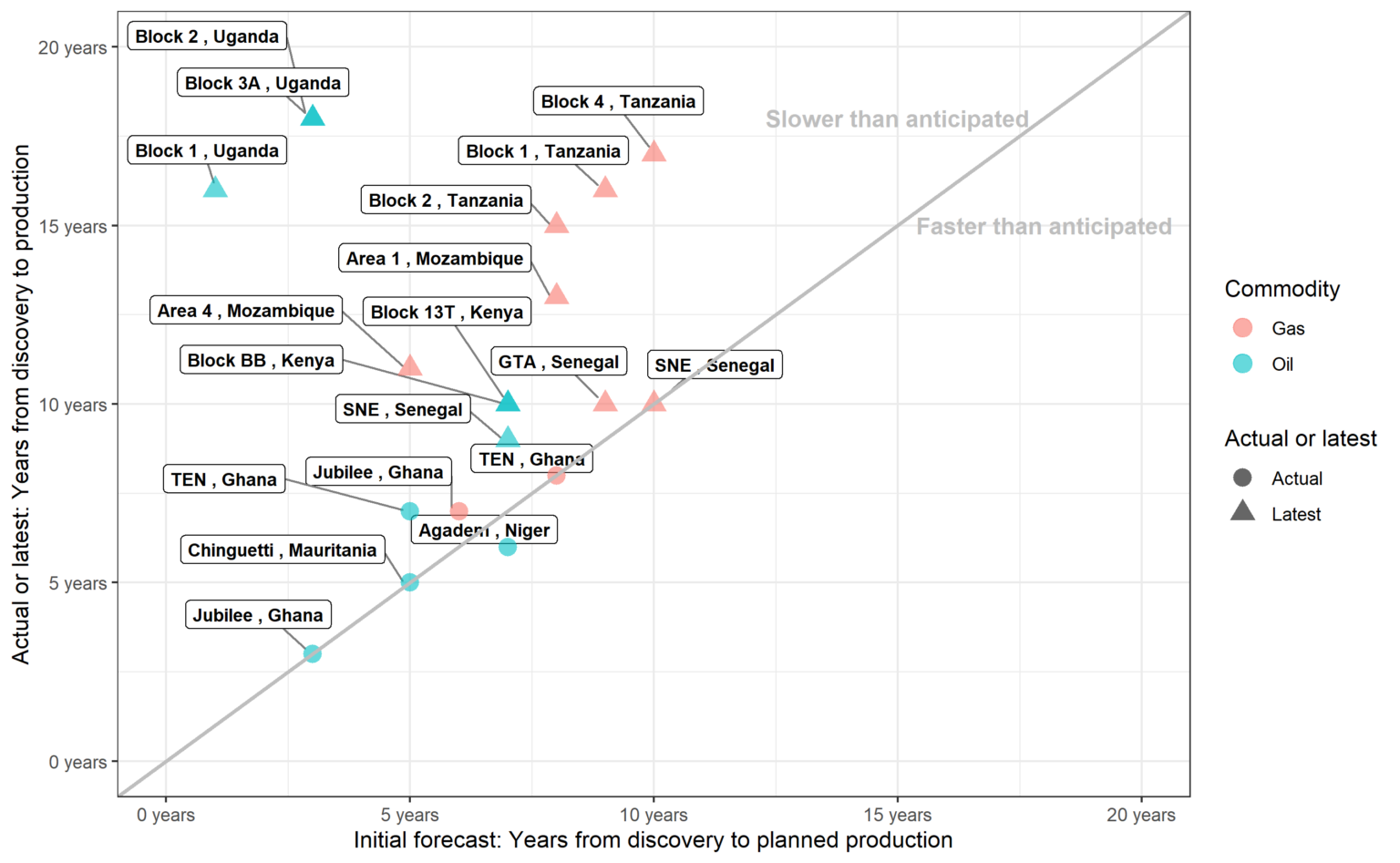
Initial forecast versus actual or latest timeline from discovery to production (as of January 2020)
Uganda, for example, was initially predicted to start oil production in 2009. However, early and excessive optimism on the timeline was compounded by protracted negotiations on taxes, how much oil should go to a domestic refinery and the route for an export pipeline.
Total’s recent purchase of Tullow’s stake in the Lake Albert project suggests continued investor confidence in its viability.
But the current turmoil is likely to further delay a final investment decision (FID) and first oil; the project’s relatively high break-even price could endanger it if prices don’t significantly rebound.
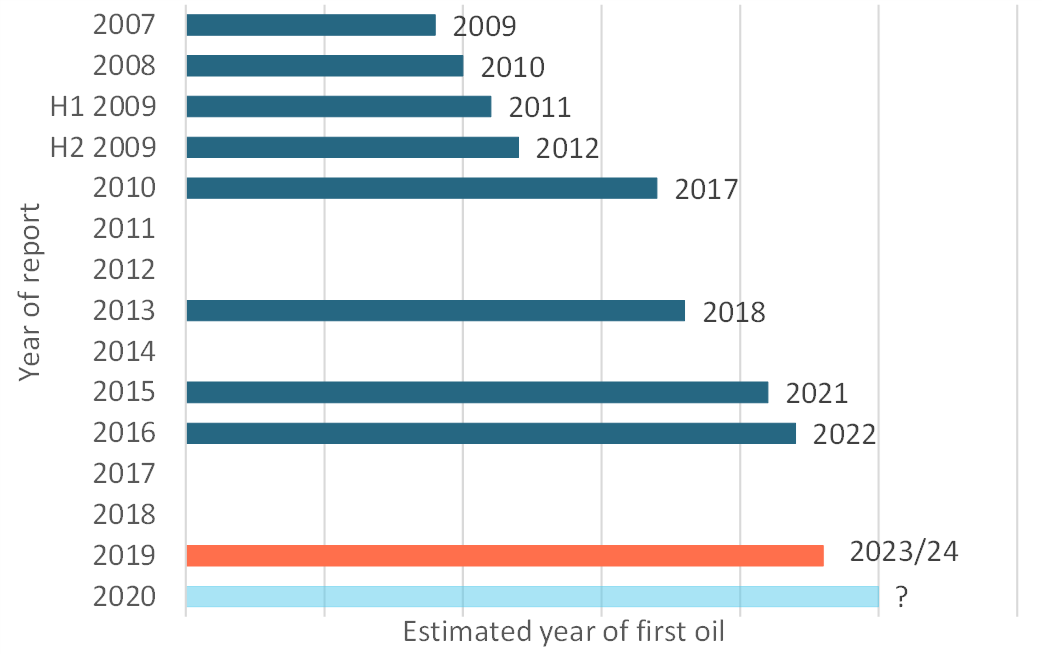
Changing first oil estimates for Uganda in International Monetary Fund reports
In April, Kosmos announced a one year delay in production at the Senegalese-Mauritanian Greater Tortue Ahmeyim liquefied natural gas project, while financing doubts have arisen for Senegal’s first oil project. More announcements of project delays are expected.
For the three countries that have managed to reach production—Ghana, Niger and Mauritania—government revenues have fallen significantly short of forecasts. In the years for which we have comparable data, Mauritania collected around 90 percent less than initially projected in 2015 and Niger collected close to 60 percent less in 2018, primarily because of production shortfalls. As the following chart shows, Ghana’s revenues were less than half of World Bank projections between 2011 and 2018 as a result of lower production, higher costs and weak tax ring-fencing.
Over the past few years, Ghana has managed to develop new fields, doubling its production since 2016. However, with this year’s sharp decline in oil prices, the government has slashed its oil revenue forecast from $1.6bn to $0.6 bn: revenue is no higher than in the early years despite the larger volumes.
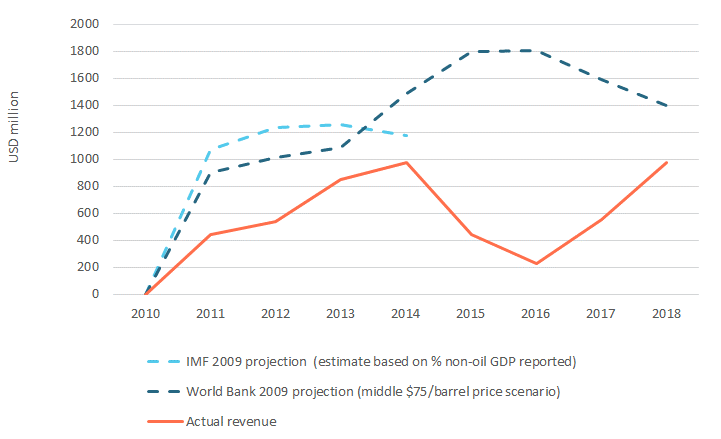
Overly optimistic expectations have prompted policies that—with the benefit of hindsight—did not appear realistic even before the price crash.
For example, expectations of imminent, large oil revenues may have driven the rapid increase in Ghana, Uganda and Mozambique’s debt. Some countries established sovereign wealth funds predicated on expectations of large revenues and fears of subsequent Dutch disease.
Ghana and Mauritania are among those countries that are saving oil revenues at low interest rates while borrowing on international markets at high interest rates, while Kenya and Mozambique have plans to establish sovereign wealth funds. Several governments have also invested scarce financial and human resources in managing and participating in the petroleum sector on a scale that appears disproportionate to the benefits generated so far.
Lessons for low prices and the energy transition
Reversing these disappointments will be hard in the current context. Total’s recent expansion of its Uganda stake as well as its work to advance the development of Mozambique’s Area 1 liquefied natural gas project suggests there is still some investor appetite for oil and gas in frontier areas despite the price crash.However, this period provides a window into a future in which the world moves away from fossil fuels. The road to oil and gas riches is rapidly narrowing for some new producers. Governments, development partners such as the International Monetary Fund and World Bank, and other organizations must radically rethink their approaches to the sector.
- Carefully forecast sector prospects. Forecasts have been consistently over-optimistic. Government officials, development partners and other public policy professionals should conduct scenario analysis on the prospect of future discoveries, timelines and government revenues. They should account for exploration success rates in their assessments of discovery prospects. They should calibrate their timeline projections against similar projects and regional benchmarks rather than relying on company projections. Their revenue projections should account for risks such as lower production levels and permanently low prices.
- Reset public expectations. Despite government attempts in some countries to temper public expectations, citizen surveys, local civil society publications and media articles signal hopes of large and imminent benefits from the sector. With the current crisis, citizens will be aware of the turmoil facing the sector, which provides a critical opportunity for governments to reset previous expectations. Development partners should support such efforts, including by working with civil society organizations and media.
- Avoid a “race to the bottom”. Countries should not relax regulatory terms to drum up interest in licensing rounds or encourage final investment decisions without rigorous modelling of their impact on investment prospects and long-term benefits for the country. Some officials may feel the need to offer drastic concessions to influence investment decisions; the benefits that projects generate for the country may then be insufficient to compensate for the environmental and social harms that they entail.
- Envisage a non-oil national development pathway. It is increasingly possible that some countries will never reach the production stage, while countries already producing may fail to expand the sector and generate transformative benefits. Governments should define what their national development strategy would be in this scenario, and consider the policy implications of a non-oil future. A first step should be to reconsider sinking more public money into the sector and to stop making borrowing and spending decisions that rely on future oil and gas revenues.
David Mihalyi is senior economic analyst at the Natural Resource Governance Institute (NRGI). Thomas Scurfield is Africa economic analyst at NRGI.