
Leveraging Transparency to De-risk Mining Investment and Mobilize Revenue in Africa (Mining Indaba)
Radisson Red Hotel, Cape Town

Global demand for critical minerals is accelerating rapidly, driven, among other factors, by the energy transition and digitalization. Despite Africa’s significant mineral endowment, foreign direct investment (FDI) into mining projects, processing capacity, and enabling infrastructure continues to fall short of what is needed to meet projected demand and contribute to sustainable development in producing countries.
This investment gap is driven by a combination of governance risks, policy and political uncertainty, infrastructure deficits, and fiscal instability, among other factors. As a result, the 2025 World Investment Report by UNCTAD shows that mining-related foreign direct investment remains highly volatile and increasingly concentrated in a small number of jurisdictions. African nations face significant challenges in attracting FDI, as many are perceived as less attractive destinations for investment. Large-scale capital commitments are being delayed or redirected in response to regulatory uncertainty and geopolitical risk.
In this context, transparency is an indispensable building block. Existing instruments such as the EITI have the potential to address key constraints, strengthen governance, and lay the foundations for the investment required across mining, processing, and enabling infrastructure.
At the same time, mineral-rich African countries face growing local expectations to mobilize domestic revenues from a mineral boom. Rising public debt levels, fiscal pressures, and development financing needs have increased citizens’ demand for mining investment to translate into predictable, sustainable domestic resource mobilization (DRM). From increased equity participation through state-owned enterprises and special purpose vehicles to more proactive tax compliance efforts, governments are adopting innovative and assertive approaches to increase fiscal returns.
This high-level session, co-hosted by Deutsche Gesellschaft für Internationale Zusammenarbeit (GIZ), the Extractive Industries Transparency Initiative (EITI), and the African Development Bank (AfDB), will examine how transparency, as part of broader good governance, can serve as a strategic enabler of sustainable investment and robust revenue mobilization.
Featuring NRGI's
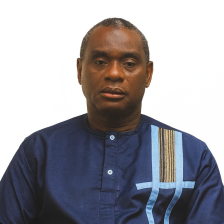
Ibrahima Aidara
Deputy Africa Director
Can climate action beat geopolitical headwinds in 2026?
Online

What can we expect in 2026 as countries enter the second half of this critical decade for climate action?
Speakers
Tulio Andrade - COP30 Chief Strategy and Alignment Officer
Tulio Andrade is the COP30 Strategy and Alignment Officer. Career diplomat since 2009, with postings in London and Tokyo. Served as Head for Climate Negotiation at Brazil's Foreign Ministry from 2023 to 2025, including at the 2023 Dubai Climate Summit (COP28), COP29, and the 2024 G20 Task-Force on a Global Mobilization against Climate Change (TF-CLIMA).
Jennifer Morgan - Senior fellow, Center for International Environment and Resource Policy and Climate Policy Lab, Tufts University.
Jennifer Morgan is currently a senior fellow at the Center for International Environment and Resource Policy and Climate Policy Lab at Tufts University. As State Secretary and Special Envoy for the Federal Foreign Office of Germany, she led the development and implementation of the groundbreaking Climate Foreign Policy strategy, which was approved by the Cabinet. Besides leading Germany’s delegation to the UNFCCC negotiations, she focused her time on building partnerships with developing countries and pursuing an all-of-society public diplomacy approach. She is a leading voice in the conversation on how foreign policy must evolve to address the urgent climate challenges of our time.
Erica Westenberg - Governance Programs Director, Natural Resource Governance Institute (NRGI)
Erica Westenberg is the Director of Governance Programs at the Natural Resource Governance Institute (NRGI). She is a lawyer and provides policy advice on transparency and good governance in resource-rich countries worldwide. Prior to joining NRGI, she was in the energy and infrastructure group at Skadden Arps, where she advised clients on energy, natural resource, and infrastructure projects and public-private partnerships in Asia, Latin America, the Middle East and the United States.
Alex Rafalowicz – Executive Director at the Fossil Fuel Non-Proliferation Treaty Initiative
Alex Rafalowicz has worked as a policy analyst, campaigner, organiser and strategist for climate justice for 15 years including with the Global Campaign to Demand Climate Justice, the Climate Action Network, and 350.Org. He has worked on digital and electoral campaigns across the Americas, Europe, and Australia. He has a first class honours degree in law from the Australian National University and Masters in Economics from the Indira Gandhi Institute for Development Research. He lives in Bogotá, Colombia with his family.
Amazon-Africa Nexus: Scaling Critical Minerals for Inclusive Green Transitions (COP30)
ARAYARA, Amazon Climate Hub

The new geopolitical landscape, driven by U.S.-China decoupling and by strategic policies such as the EU's Critical Raw Materials Act and the G7 Minerals Security Partnership, has intensified the global race for critical minerals. This shift risks cementing a 'Green Colonialism,' where the Global North secures supply chain diversification while the resource-rich Global South remains locked into the low-value 'port-to-pit' model. However, the combined mineral wealth of the Amazon and Africa, which holds a commanding position in reserves such as lithium (Latin America, 60 percent of global reserves) and cobalt (DRC, 76 percent of global supply), presents a unique opportunity to break this cycle.
This session will convene experts whose voices are important to elevate critical mineral governance as a central pillar of climate justice and green industrialization within the Just Transition Work Programme at COP30. The conversation will define what "green value chains" actually mean in practice, establishing concrete benchmarks including environmental standards, social justice criteria, and governance requirements.
Featuring NRGI's

Pedro Zapata
Chile Program Officer
Critical Minerals in Africa: Dismantling Neoliberal Extractivism for Sustainable Development

There is a new rush in Africa, creating a massive, urgent demand for critical minerals. These are minerals required in vast quantities to enable the global transition away from fossil fuels in favor of renewable energy systems. The rush has significant implications for sub-Saharan Africa, which is home to approximately 30 percent of the world’s known supply of critical minerals.
Currently, the model governing critical mineral extraction in Africa is deeply neoliberal and fundamentally unjust. This model prioritizes global corporate interests over local well-being. This flawed model has damaging consequences: significant revenue is lost due to tax breaks and subsidies granted to multinational corporations. It fuels severe social crises, leading to human rights violations, including child labor, poor working conditions, slave wages, and land dispossession of local communities. This export-only focus also leads to massive environmental degradation and the creation of economies dangerously dependent on raw resource exports and volatile global commodity prices.
This webinar, hosted by Greenpeace Africa, will explore practical ways to dismantle this neoliberal form of extractivism and redefine the future of African resource wealth. It will explore solutions and strategies, including centring communities, redirecting fossil fuel subsidies to invest in local renewable energy infrastructure, developing value chains, and advancing financial sovereignty.
Speakers
- Nafi Quarshie, Africa Director, NRGI
- Karabo Chadzingwa, Research Lead, African Peer Review Mechanism (APRM)
- Novita Indri, Research Campaigner, Trend Asia
- Adrain Joseph, Research Fellow, South African Institute of International Affairs (SAIIA)
- Kudakwashe Majonjo, Just Transition Advisor, Power Shift Africa
- Claudious Chikhozo, Senior Research Advisor, Greenpeace Africa
Africa Must Lead Transition Minerals Conversation at COP30
Dispatches from Climate Week 2 and Africa Climate Summit (ACS2)
From Addis to Belém: Delivering Justice and Powering Africa's Transition Ambition

The Declaration by African heads of state and governments at the second Climate Summit (ACS2) in Addis Ababa last week was both a strong demonstration of leadership and a striking omission just two months before COP30 in Belém, Brazil. By prioritizing access to energy, green industrialization, and mineral governance, they have redrawn the map of Africa's climate ambition around a vision of economic prosperity and equity.
However, while the Declaration emphasized "phasing in" jobs, access to energy, and development, it stopped short of referencing "phasing out" fossil fuels, a call at the center of global climate action since COP28 in Dubai.
What Addis got right
The Addis Declaration reflects three big shifts that deserve attention:
- Justice first: Leaders sent a loud and clear signal that Africa's transition must be fair and just. The Declaration referenced justice and equity 61 times, ten times more than the Nairobi Declaration, making equity the defining frame of Africa's climate ambition.
- Finance front and center: African governments placed finance at the heart of their climate agenda. They welcomed the Baku-Belem roadmap to $1.3 trillion, but flagged the continent's financing gap, with a staggering $3 trillion requirement by 2030, compared with just $30 billion mobilized between 2021 and 2022. They called for more grants, less debt, faster disbursements, reform of the international financial system to reduce the cost of capital, improved access to finance, and prioritization of adaptation and loss and damage.
- Minerals elevated: For the first time, African leaders carved out a dedicated section on transition minerals, absent entirely from the Nairobi Declaration. They tasked the African Union Commission to explore the creation of a coalition of African critical mineral-producing countries to cooperate strategically on local processing, aligning with the Africa Green Minerals Strategy. Outside of the European Union, no other region has given so much high-level attention and consideration to global and regional climate action priorities.
Three priorities on the road to Belem
Between now and COP30, several boxes remain for African leaders and international partners to tick to ensure that Belém can deliver the results on the ambitious vision from Addis. Key priorities include:
1. Break COP's silence on transition minerals
Demand for transition minerals is surging, with risks of deepening social, environmental, health and human rights harms. However, with strong governance, minerals can drive value addition and diversification for developing countries. The African Group of Negotiators (AGN), Africa's voice in the international climate negotiations, will be key to this effort. They must ensure that COP30 breaks its mineral silence by:
- Acknowledging the role and relevance of transition minerals in implementing the Paris Agreement's Global Stocktake, the review of collective progress and gaps in meeting global climate goals.
- Endorsing the principles and recommendations of the UN Secretary-General's Panel on Transition Minerals, calling for inclusive multilateral action that centers the voice of low- and middle-income producing countries
- Supporting the creation of a Global Just Transition Mechanism to help drive implementation and focus funding on just transition priorities, including integrating fair trade in minerals into planning and implementation
- Ensuring overall coherence between the UN climate process and other UN forums on global minerals governance.
Beyond these, the AGN should also bring forward proposals at the Response Measures Forum, so that COP30 outcomes recognize mineral governance as a key component of response measures that deliver tangible benefits to resource-rich countries. They should further develop operational proposals, including clear roadmaps, milestones, and monitoring plans, to support the Declaration's call for a coalition of African transition mineral-producing countries. This will help harmonize rules, accelerate local value addition and ensure social and environmental safeguards.
2. Champion innovative transition finance
The Declaration rightly highlights the urgent need for "innovative climate finance mechanisms" but avoids endorsing any specific solutions. For a decade, Africa has leaned on the "billions to trillions" narratives, the idea that small amounts of public and concessional finance could derisk markets and unlock massive flows of private capital. In practice, every dollar of public money has mobilized just 30 cents of private capital, often at high interest rates and under strict conditionalities. This ineffective experiment demands a pivot toward predictable public finance and large-scale grant instruments, not illusory multipliers.
An alternative is already emerging. At the recent 4th UN Conference on Financing for Development in Seville in July 2025, Benin, Kenya, Sierra Leone and Somalia formed part of a coalition of countries backing a levy on premium air travel to generate new, additional, and predictable flows of public finance that they could channel to Africa's just energy transition priorities. If implemented globally, this measure could raise over $80 billion per year in grant-based finance – more than three times the $25 billion per year that the IEA considers necessary for universal access to energy in Africa.
African leaders have also called on developed countries to honor their financial commitments under the Paris Agreement and reform the international financial architecture. Complementary tools such as debt-for-climate swaps, regional carbon price floors, and concessional lending at fair rates should be part of the mix. The principle is clear that Africa cannot finance its just transition by sinking deeper into debt.
The Global Solidarity Levies Task Force has developed the premium air travel level alongside other innovative financing sources in recent years. African leaders should use COP30 as the launchpad to secure multilateral endorsement of these measures and link them to the New Collective Quantified Goal (NCQG).
3. Develop a clear position on fossil fuels before COP30
By avoiding any reference to the fossil fuel phase-out, the Addis declaration sought to protect Africa's energy sovereignty, unify its internal positions and strengthen the continent's negotiating posture, given that several countries are still betting heavily on oil and gas resources.
However, silence on fossil fuels will not shield Africa from the reality that the global train has already left the station as the energy transition is well underway. African oil producers face a growing set of transition risks that they must acknowledge, assess, and act on to avoid significant losses of revenues, jobs, and energy security.
African leaders can best protect their citizens by seizing the initiative and shaping the global framework for a just, orderly, and equitable transition away from fossil fuels, ensuring that it supercharges rather than undermines their economic and human development trajectories.
Between now and Belém, African leaders must build on the spirit of the Addis Declaration and craft their fossil fuel transition frameworks that integrate existing strategies for inclusive, green industrialization, economic diversification, social protection, and vocational training and re-skilling into a finance package for COP30. Such a position should build on the Declaration's emphasis on equity and justice by reconciling the "phase in" of development with the "phase out" of fossil fuels and making relevant, nationally-determined contributions conditional on international support.
Unity is Africa's power
The second Africa Climate Summit set out an ambitious vision that asserts African leadership. In Belém, that vision must move from words to action. For Africa's agenda to shape COP30 outcomes, African leaders must speak with one voice and act on the three priorities that Addis placed on the table.
Unity across Anglophone, Francophone and Lusophone Africa will give the continent the leverage it needs to turn its ambitions into global impact. Addis laid a strong foundation. The victory will come when Africa carries this vision to the global stage and secures concrete action.
Preventing Corruption in Africa’s Transition Mineral Supply Chains

Key Messages:
- The current increasing attention to Africa’s mineral resources could attract much needed investment to the continent or power broader development goals, but many citizens view the prospect of a new mining boom with suspicion. The sector has become synonymous with harmful and costly corruption, often perpetrated by wealthy elites and foreign companies who are able to avoid its worst impacts.
- At the same time, anticorruption actors should be alert to new or shifting dynamics, such as the greater emphasis on value addition, or challenges around access to financing. They should also devote more attention to issues that have long been overlooked, such as the intersection between corruption and other types of harm in the mining sector.
- Failure to properly address corruption and its causes and consequences will only lead to more harm and instability, both for African countries and across the mineral supply chains needed to power the green transition.
- Tackling these issues effectively requires a deep understanding of the specific nature of corruption in each country, yet the drivers of corruption often have global roots. Long-lasting solutions to corruption must therefore be a shared responsibility between African leaders, decision-makers in major market jurisdictions, multilateral actors such as the African Union and the African Development Bank, companies across the supply chain, investors and the donor community.
- Addressing this corruption is therefore crucial, to avoid the injustices of the past. Many of the risks are well known, surrounding political access and civic space, licensing and contracting processes for mining projects, the role of state-owned enterprises (SOEs), and processes for collecting revenues from the sector. This means that there are important lessons to learn from the efforts of reformers across the continent and beyond to tackle these harms.
The global energy transition is driving unprecedented demand for Africa’s vast mineral wealth. From cobalt and manganese to lithium and copper, the continent holds some of the world’s most critical reserves needed to power clean energy technologies. Yet Africa’s mining history tells a troubling story: while its resources have fueled development elsewhere, too often African countries and communities have been left with little more than environmental damage, economic inequality, and social unrest.
As competition for Africa’s minerals intensifies, there is a serious risk that corruption will once again take root, deepening injustice and undermining the promise of a just transition. Past booms have shown how fast-paced dealmaking and weak oversight can open the door to graft, while local populations face forced relocations, land loss, health crises, and worsening environmental degradation. Without stronger governance, today’s green energy revolution could create a new form of green colonialism, where Africa’s resources are exported to decarbonize wealthier economies, but the benefits never reach those who need them most.
This briefing draws on NRGI’s experience across resource-rich African countries to examine the key corruption challenges in the mining sector - from licensing and contracting to state-owned enterprises and revenue collection. It highlights urgent risks and opportunities for reform, offering practical steps for governments, civil society, and international partners to ensure that Africa’s minerals power not only the world’s energy transition, but also a fairer, more sustainable future for the continent itself.
Support grows for COP30 ‘just transition’ talks to address critical minerals