
Pemex and Mexico’s NDC 3.0: Seizing the Moment for Climate Leadership

A decade after the Paris Agreement, world leaders are convening in New York at the invitation of the UN Secretary-General to announce new targets and measures to address the climate crisis. Mexico took part in this summit, focused on Nationally Determined Contributions (NDCs), the Paris Agreement’s main instrument for reducing emissions and steering the energy transition.
President Claudia Sheinbaum has pledged that Mexico will reach net-zero emissions by 2050. To achieve this, the country’s updated NDC must go beyond technical greenhouse gas (GHG) reduction targets. It should provide a clear roadmap that links climate action to real improvements in people’s lives, including more stable jobs, stronger communities, and a future-ready economy.
In this context, Pemex must play a central role. The energy sector accounts for 64% of the country’s GHG emissions, and Pemex is responsible for 95% of hydrocarbon production and the bulk of associated infrastructure. In Mexico, to talk about hydrocarbons is essentially to talk about Pemex.
Why Pemex?
International experience shows that state-owned oil companies are still unprepared for the challenges of the energy transition, including declining oil demand. Governments have a decisive role to play. By setting clear policy signals and creating financing mechanisms, they can help these companies shift toward new business models.
The Mexican state holds a particularly strong influence over Pemex, given the company’s heavy reliance on government support. In 2025 and 2026 alone, Pemex faces debt maturities of US$24 billion, while the proposed 2026 budget allocates MXN 263.5 billion for debt servicing. That figure is double the 2025 allocation, equivalent to half of the resources earmarked for senior citizens’ pensions and six times the proposed environmental budget.
A stronger, more decisive commitment from Pemex would send a powerful signal that Mexico is willing to align its state-owned company with its decarbonization and just transition goals. Such a step would not only reinforce national climate ambition but also build confidence among the international community, the financial sector and the public.
Integrating Pemex into Mexico’s NDC 3.0: three priorities
1. Reduce methane emissions
Methane is 25 to 80 times more potent than CO₂ and poses serious health risks to communities living near oil facilities. Between 2012 and 2021, Pemex’s largest emission increases came from this gas.
Between 2021 and 2024, Pemex’s methane emissions fell by 29 percent. The company launched its first sustainability plan and voiced its commitment to the World Bank’s Zero Routine Flaring by 2030 initiative. However, Pemex’s methane output remains higher than a decade ago and above that of its international peers. Cutting these emissions is both urgent and strategic, as proven technological solutions exist and, in many cases, are cost-effective. The updated NDC offers the right framework for Pemex to adopt absolute, phased reduction targets, improve measurement and transparency, and join the Oil & Gas Methane Partnership (OGMP 2.0). Doing so would position Mexico as a global leader in methane mitigation.
2. Manage transition risks
Pemex ranks 11th among 58 state-owned oil companies most exposed to transition risks, according to a recent NRGI analysis. Up to US$10 billion in assets could become uneconomic under the International Energy Agency’s Announced Pledges Scenario, posing major risks for public revenues, jobs, and communities tied to the oil industry.
Mexico's updated NDC should respond by promoting transparent risk assessments, redirecting investments toward lower-carbon, higher-return projects, encouraging business diversification, and fostering joint ventures with the Federal Electricity Commission (CFE). It should also establish stronger corporate governance mechanisms under the Ministry of Energy’s (SENER) oversight to ensure planning is consistent with sustainability goals.
3. Just transition plans for oil-producing regions
States such as Campeche and Tabasco, heavily dependent on oil revenues, are already experiencing the impacts of declining production. To ensure no one is left behind, Mexico’s NDC should include just transition plans and the responsible decommissioning of infrastructure. This roadmap should prioritize economic diversification, workforce retraining, tailored educational programs, and greater transparency on environmental and health impacts.
These measures are in line with the outcomes of Mexico’s Local Conference of Youth proposals (2025 LCOY) and the Ministry of the Environment and Natural Resources’ (SEMARNAT) agenda for NDC 3.0, can foster a transition that delivers tangible benefits to the communities most dependent on oil.
Pemex at the center of Mexico’s climate action
The NDC gives Mexico a critical chance to raise its climate ambition, demonstrate international leadership, and put Pemex on a sustainable path. Explicitly including the company would send a clear signal of commitment to a just and orderly transition, in step with the global call to move beyond fossil fuels.
For decades, Pemex has been at the center of Mexico’s energy policy. It must now be at the heart of its climate response. This is the moment to show that commitment and accelerate progress toward net-zero emissions by 2050, building a more equitable, transparent future that delivers for all Mexicans.
AI and the Future of Minerals and Gas: Frameworks for Climate Justice and Collaboration (Climate Week NYC)
New York City, U.S.

At Climate Week NYC 2025, the Natural Resource Governance Institute (NRGI) and Data & Society co-hosted a panel exploring how artificial intelligence (AI) technologies may reinforce legacies of unjust natural resource exploitation, particularly around economic equity and socio-environmental harms.
Panelists also explored opportunities for AI to support more equitable development, and identify the forms of national, regional and international collaboration needed at the intersection of AI and resource governance.
Amid global challenges and the need for strong governance: JETP as a potential driver of Senegal’s energy transition

Key messages
- In an uncertain global context and facing urgent challenges in electricity access, the deployment of the Just Energy Transition Partnership (JETP) offers Senegal a unique opportunity to build a clear and coherent public policy for its energy transition.
- To meet these challenges and succeed in its energy transition, Senegal must establish a robust, inclusive, and cross-sector governance framework to guide the JETP’s deployment.
- This governance effort should be supported by effective public communication that reaches the most affected communities, providing the initiative with visibility and legitimacy.
- Repositioned strategic coordination, backed by strengthened interministerial leadership and an expanded, sustained steering committee (COPIL), is essential for an effective and inclusive energy transition.
With more than 4 million Senegalese still lacking electricity, Senegal now needs to secure transition financing, alongside the revenues it earns from hydrocarbon exploitation, so that it can convert its energy potential into an engine for inclusive development and social justice. The Just Energy Transition Partnership (JETP) is key to this. Signed in June 2023 for an initial period of 3–5 years, it is part of a partnership intended to increase access to electricity and clean up the energy mix by increasing the share of renewable energy to 40% by 2030, with a view to large-scale renewables deployment over the long term.
The Senegalese government is committed to the JETP and actively working to develop its investment plan, in spite of unfavourable global dynamics, notably including the withdrawal of the United States from the Paris Agreement and from JETPs entered into with Indonesia, South Africa and Vietnam. In this context, greater vigilance is needed around a crucial but often overlooked factor: governance.
Good governance requires that decision-making and implementation processes are based on key principles such as participation, consensus, transparency, accountability, responsiveness, effectiveness, efficiency, equity, inclusion and human rights.
Experience from extractive projects in Senegal and West Africa shows that a lack of transparency and participation can undermine the social legitimacy of public policies in a lasting way. Ignoring these governance principles when implementing the JETP risks repeating past mistakes: public opposition, poor resource allocation and capture of benefits by corrupt elites, resulting in profoundly unjust results for affected communities and workers. To live up to its ambitions and the local context, the JETP must be supported by strong, inclusive, and transparent governance structures that can ensure a fair and lasting impact.
This briefing sets out three priorities for Senegal to ensure that the JETP is truly just, effective and legitimate.
Framework for Countries Evaluating Gas-to-Power Pathways - Goal 3: Achieving Universal Access to Electricity

Key messages
- New gas power plants could provide electricity to a subset of people living without power in a relatively small group of countries. But some gas proponents are overselling it as a fuel for achieving universal electricity access.
- Progress toward universal access increasingly depends on further electrification in Africa, where gas power has limited growth potential. Solar and wind power come with their own challenges, but countries should consider renewables as primary solutions for reaching unserved households and businesses.
- Electricity from large on-grid solar and wind farms or off-grid systems like mini-grids and rooftop solar can be expensive for new, lower-income electricity consumers. Yet renewables have potentially growing advantages over gas power when it comes to affordability and reliability.
- The true cost of gas power or renewables is not just financial. Decision-makers should consider the broader social and environmental impacts of building and running new power infrastructure—and the potential benefits for people.
- Before supporting new gas power or renewables, officials and investors should consider everyone’s needs, especially the unserved. Responding to these needs fosters social acceptance, supports new technologies, and creates conditions for their growth.
- Countries with electrification challenges need more support from international financial institutions. Current funding is insufficient; these actors must both help to attract private investors and finance essential infrastructure that private funders will not—like batteries and electrical grids.
Overview of this module
This third part of NRGI’s Framework for Countries Evaluating Gas-to-Power Pathways examines the claim that investing more in gas power will allow countries to achieve universal electricity access.
Specifically, we:
- Argue that achieving universal access is a key part of a just transition away from fossil fuels.
- Survey gas power’s contributions to electricity access, especially in Africa.
- Offer considerations and questions for assessing when countries should use gas or renewables such as solar or wind to provide power to people living without electricity.
The Framework for Countries Evaluating Gas-to-Power Pathways is a multi-part resource to help non-experts determine whether burning gas for electricity will further their countries’ socioeconomic and energy sector goals, both in isolation and compared to renewables.
The intended audience is government officials, NGO staff and activists, researchers and journalists in lower- and middle-income countries with gas reserves. The framework presents the latest thinking about commonly made claims in a balanced way, to aid readers in their own analysis, decision-making and advocacy.
Can Gas Bring Electricity to More Africans? Look to the Evidence, Not Partisan Politics

The 2020s are meant to be the decade when Africa achieves universal electricity access. This is according to UN Sustainable Development Goal 7 and the energy plans of many countries. Yet halfway through, divisive political agendas are threatening progress, not least as they influence how public funds are spent.
The Trump government, with its deep hostility to renewables and foreign aid, has already dismantled U.S. programs and institutions that brought electricity to African households and businesses. Funding for the African Development Bank and Just Energy Transition Partnerships, both of which bankrolled clean electrification projects on the continent, has also been eliminated. The EU meanwhile remains broadly supportive of Africa’s energy ambitions, yet member countries are slashing their aid budgets in response to fractious domestic disputes over defense and energy security.
These setbacks come as efforts to reach the roughly 600 million Africans living without electricity are already underfunded. Estimated price tags have run as high as 53 billion a year, yet actual investment is rarely a tenth of that.
Electricity access has become a polarizing topic within Africa itself, not least because of arguments over the proper role of fossil fuels, gas especially. For years, a vocal contingent—led by politicians, think tanks and private foundations—has claimed that if African countries stop extracting and burning gas, millions of people will go without electricity service.
Desires to harness Africa’s gas for energy are understandable. Many countries have huge unmet needs, gas reserves remain mostly untapped, and leaders are angry about wealthy nations’ hypocrisy and double standards around the energy transition.
Yet gas’s ability to deliver electricity to more Africans should not be taken on faith. The third module of NRGI’s Gas-to-Power Framework—out now—interrogates the claim that investing more in gas power will allow countries to achieve universal electricity access. It offers considerations and questions for assessing when countries should use gas or other options like solar or wind to reach people living without electricity. The framework lays out the latest thinking in a balanced way, to support readers in their own analysis, decision-making and advocacy.
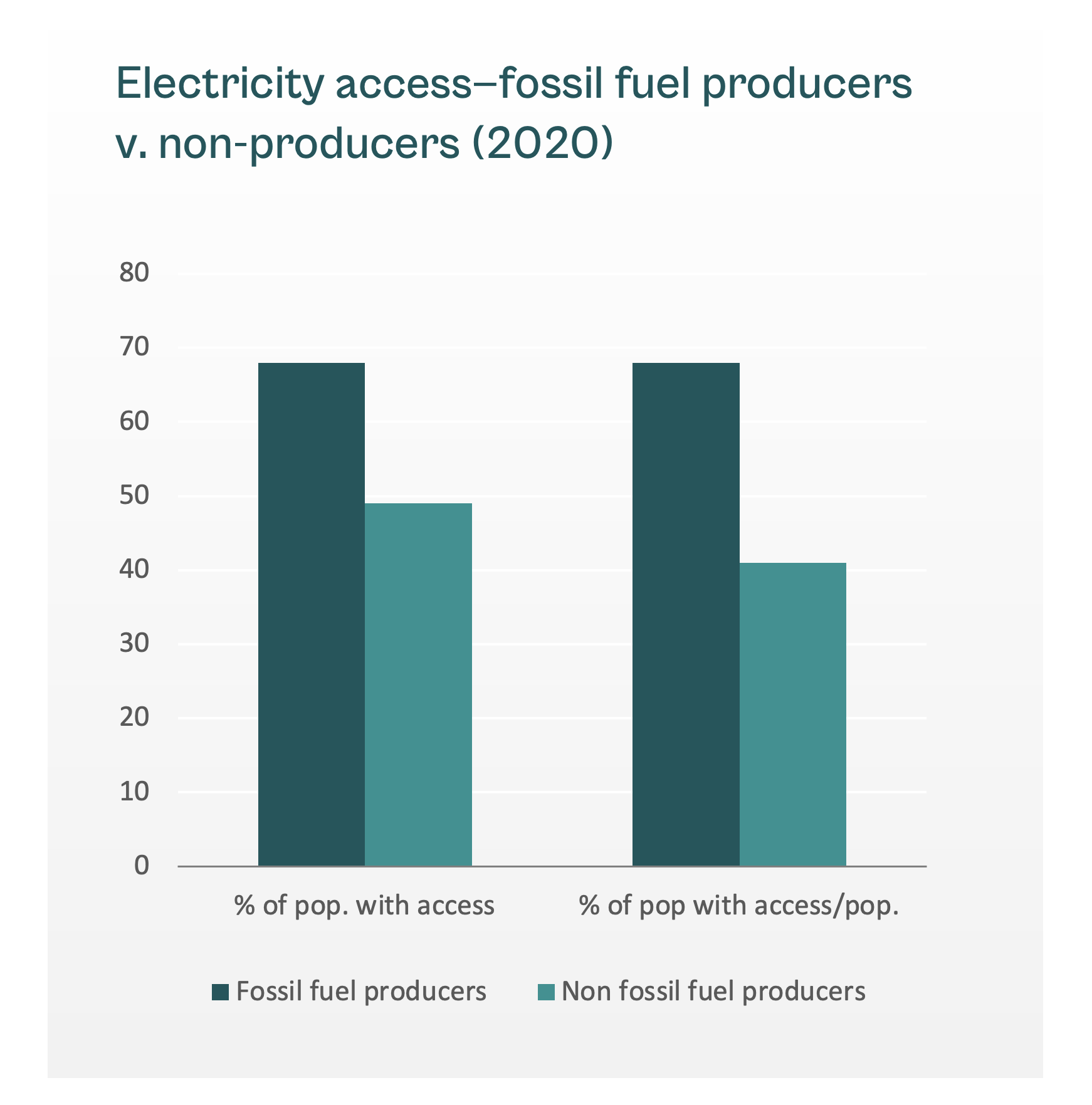
The data tells a more nuanced story than most political rhetoric around gas. It shows that gas is currently the top fuel for power generation in Africa and has contributed meaningfully to electricity access. Several gas producing countries—Mozambique, Cote d’Ivoire and Tanzania, for instance—each delivered power to millions of people over the last two decades. African fossil fuel producers also tend to have higher electricity access rates than non-producers.
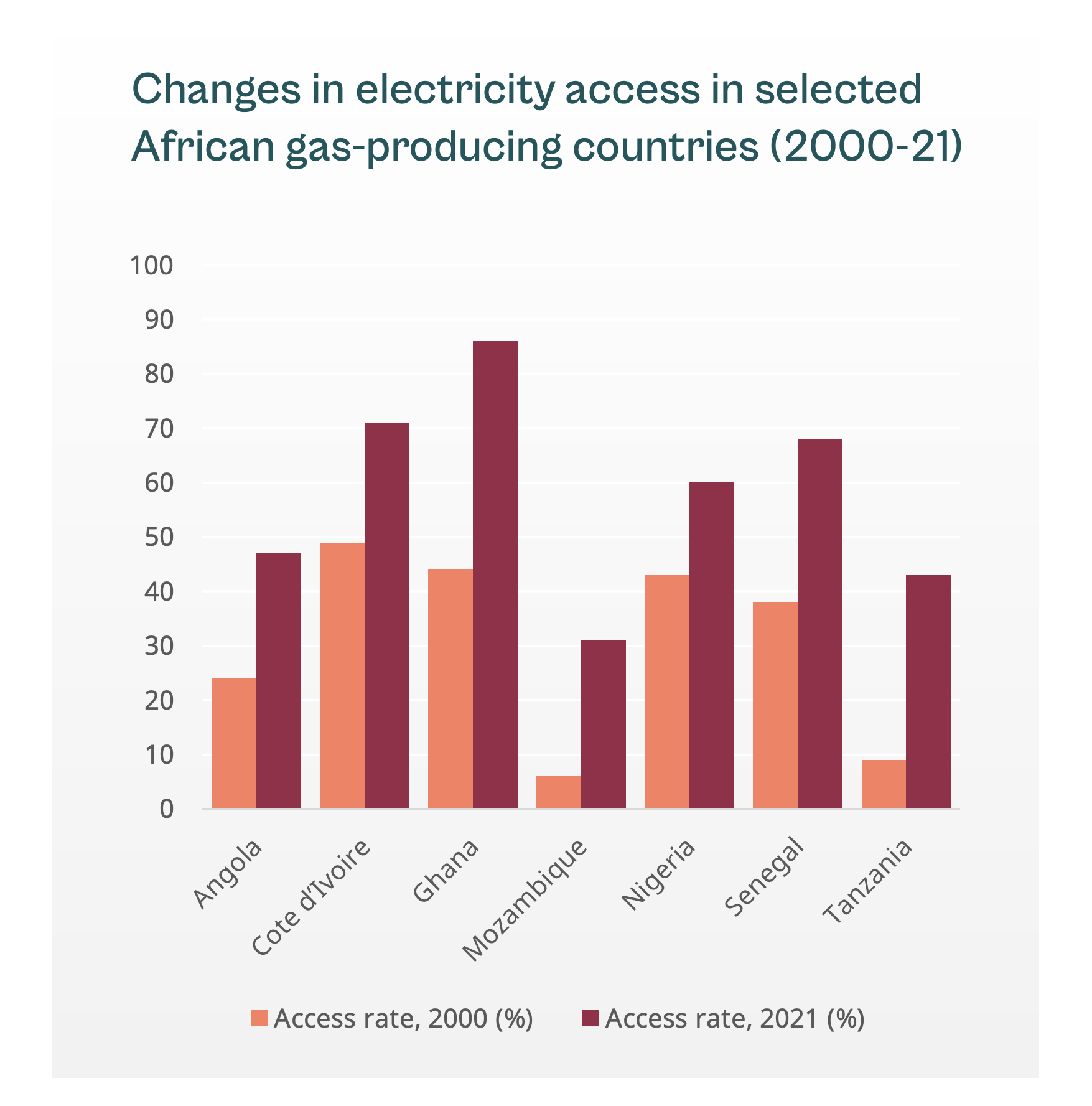
In at least some of these same countries, access rates rose along with the use of gas for power, suggesting that significant numbers of new users owe their service to gas.
Looking ahead, gas power will deliver electricity to at least some new African customers. Producers like Ghana, Senegal and Nigeria will connect more households and businesses to gas power for technical or commercial reasons, or because gas already dominates their energy mixes.
Ultimately, however, the data shows that gas has limited potential to address Africa’s unmet electricity needs. Almost none of the countries where access improved the most over the 2010s relied on gas power plants. And for nearly all the 20 countries with the largest remaining unserved populations, gas power is simply not a viable option, whether due to lack of production, infrastructure or investment.
Instead, the use of gas for electricity will remain heavily concentrated in four North African countries which already have universal access.
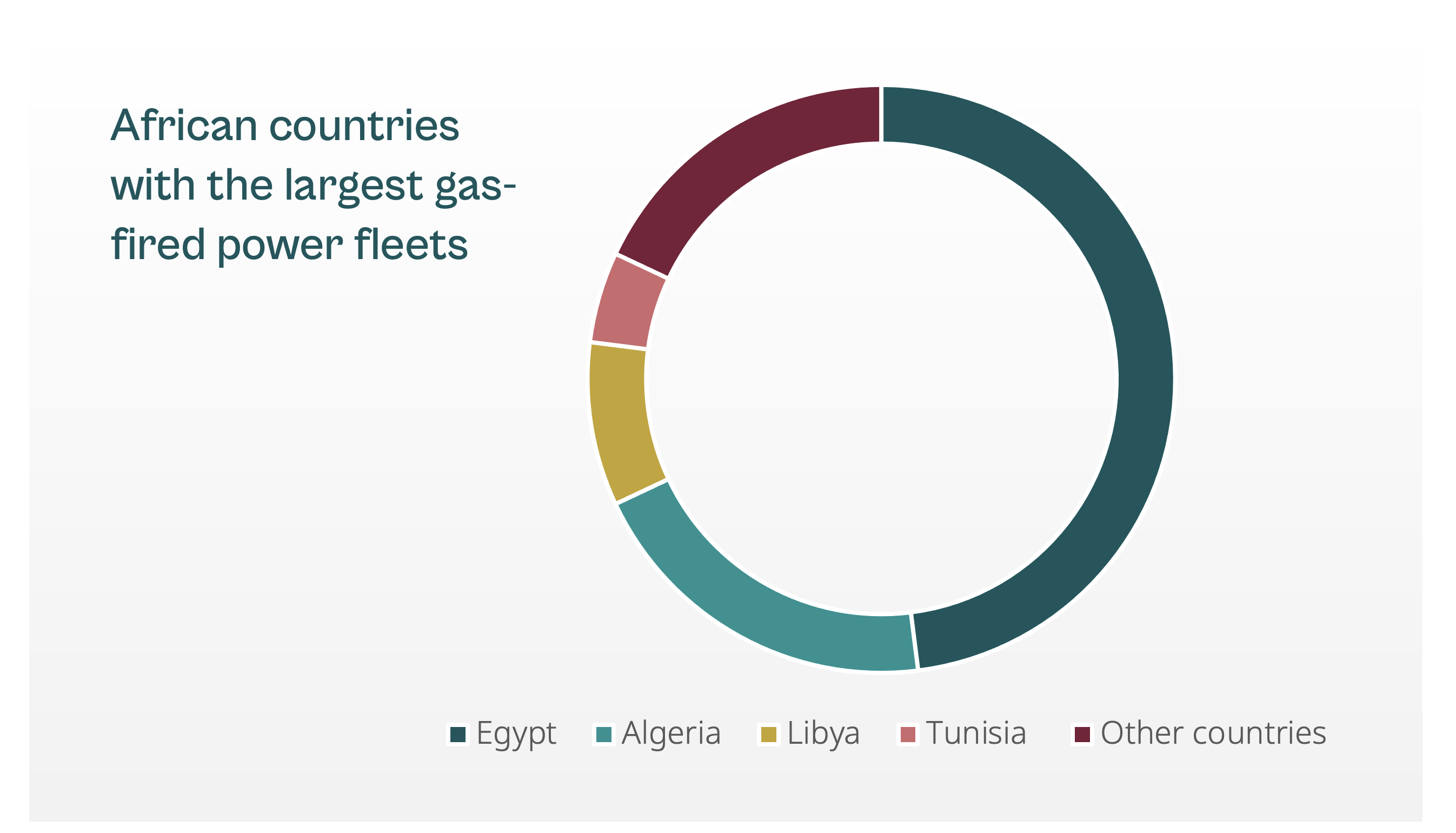
And worldwide, gas will mainly serve the needs and aspirations of the wealthy. Between 2013 and 2022, ten mostly high-income countries added 325 gigawatts of gas power to their grids. The whole of Sub-Saharan Africa added just seven. The U.S. alone is planning to build three dozen new gas power plants, By contrast, Sub-Saharan Africa secured funding for just two in recent years.
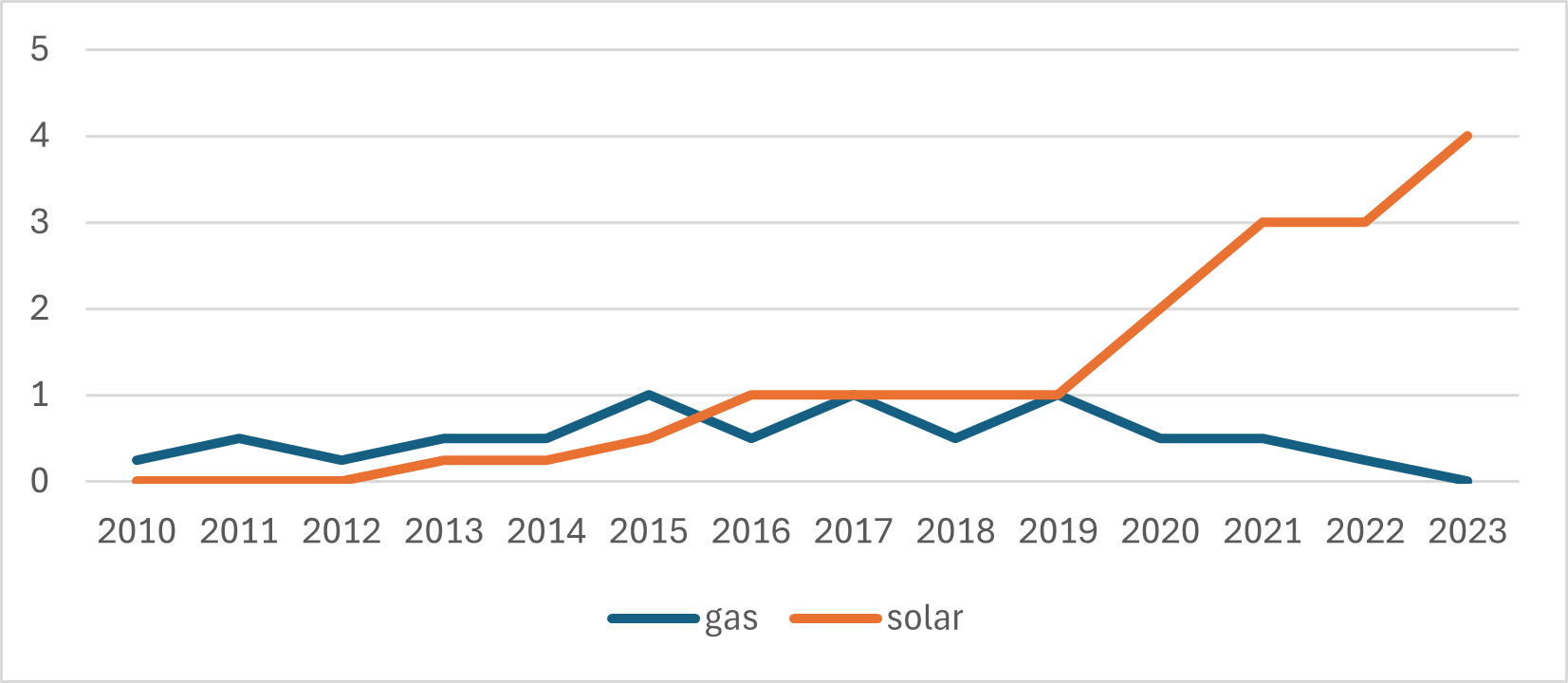
Given these limitations, African countries with access challenges should fully consider alternatives. As technologies for improving electricity access, solar and wind have some clear advantages, which our new module surveys. For years, solar power in Africa has been growing several times faster than gas (left graphic) in a much higher number of countries (right graphic).
Source: Author calculations based on Bloomberg, GEM and IEA data
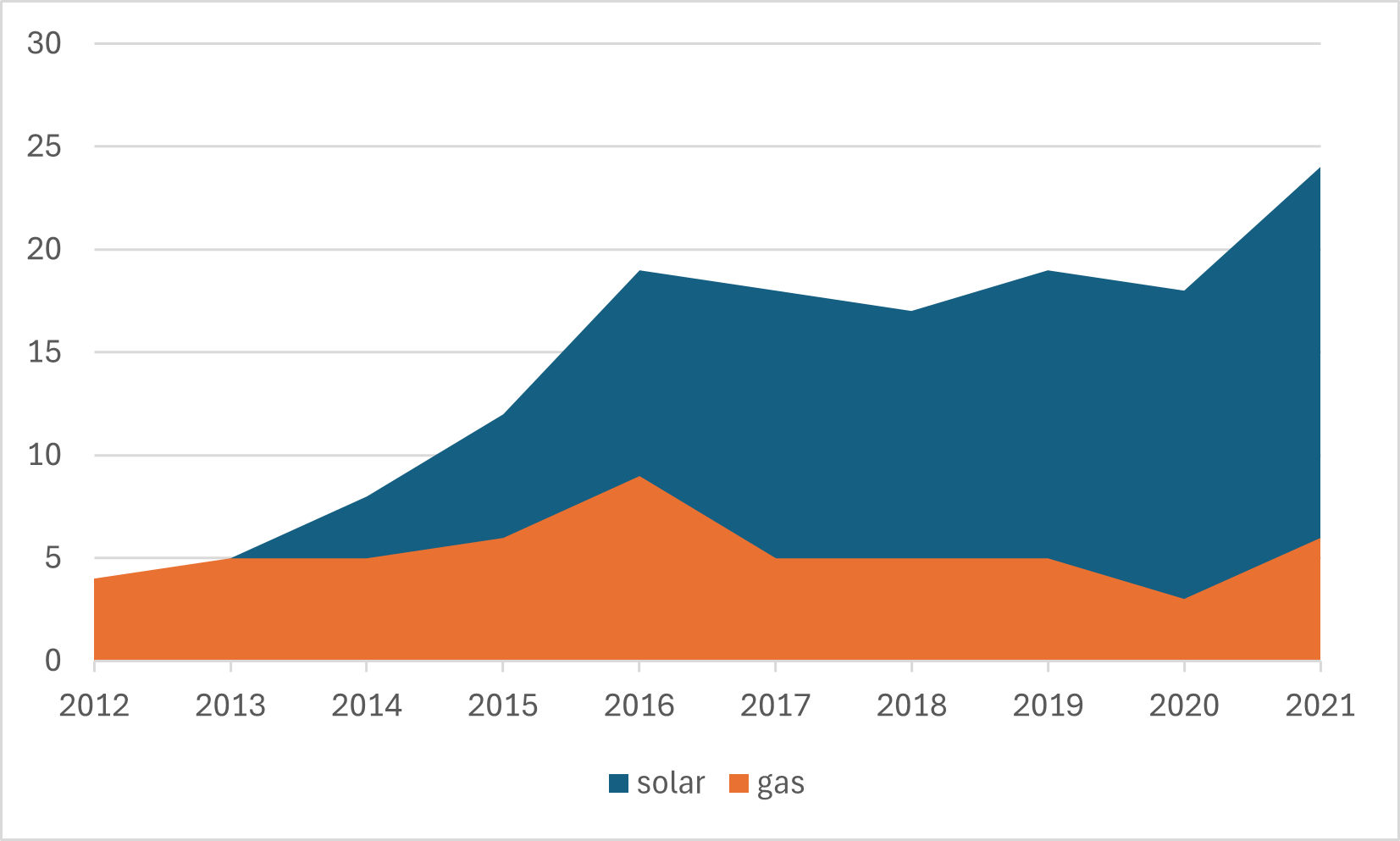
Source: Author calculations based on Bloomberg and GEM data
By 2030, the average costs of solar PV and wind power are predicted to fall below that of electricity made from gas in many countries. At the same time, the rapid scale-up of renewables on the continent remains challenging, and for low-income customers especially. A lack of quality components, economies of scale and affordable financing options are among the main barriers to growth.
Today, many of the arguments touting gas or renewables for universal access are based on sweeping, emotive claims that reflect the biases and personal interests of the speaker. These include powerful state-owned enterprises and fossil fuel giants like Eni, Total or BP, who mainly want to profit by exporting Africa’s gas to wealthy countries. But the real work of electrification isn’t ideological. It is painstaking and technical.
To keep expanding the well-known benefits of electricity access, policymakers and development partners need to zoom into the details. Real-world choices between on- and off-grid solutions, or between gas or renewable fuels, are highly context specific, requiring careful consultation, analysis, modeling and policy support. In particular, decision-makers must address thorny issues of affordability and reliability, since lower-income customers may be unable or unwilling to pay for expensive, patchy service.
Electricity access work also requires stable financial support over years. It isn’t something funders can dip in and out of as the political winds shift. Now that the U.S. and Europe are retreating, foundations, development banks and other partners need to step into the gaps. Because even in this challenging time, good things are happening. During the 2010s, the number of people living without electricity dropped by almost halfand individual countries are still making progress. New funding initiatives are also springing up—the AfDB- and World Bank-led Mission 300, for example.
Vulnerable African households, businesses, schools and health centers should not be used as pawns in overheated, zero-sum fights about the future of fossil fuels. The stories told about Africa’s electricity systems must reflect people’s lived realities, in all their complexity, struggle, and aspiration. Our new gas framework module describes the kind of hard work that is needed to achieve that.
Europe’s Dash for Gas in Africa Puts Private Profits Before African Countries’ Interests (Press Briefing)
Baku, Azerbaijan

Europe’s demand for gas is contributing to a wave of liquefied natural gas (LNG) projects in Mozambique, Nigeria, and Senegal. This favors the interests of European oil and gas companies over those of African countries, research shows. Experts will set out the risks of banking on LNG for development and call on European leaders to support a more sustainable model.
Speakers:
- Denis Gyeyir, NRGI
- Richard Folland, Carbon Tracker
- Vance Culbert, IISD
- Dean Bhebhe, Power Shift Africa
Featuring NRGI's

Senegal Expects First LNG Shipment at Beginning of Next Year
Senegal’s renewable energy plan lacks clarity: NRGI
Tax Avoidance, Tax Evasion and Trade Misinvoicing: Risks to Senegal’s Mining Sector

Key messages
- Tax evasion, trade misinvoicing and multinational companies’ efforts to avoid tax are important risks in the extractive sector, especially in developing countries, including Senegal.
- Senegal’s extractive governance arrangements are strong in many areas, including in preventing multinational tax avoidance.
- However, there is cause for concern in two areas: misinvoicing of international trade (imports and exports), and cost inflation by subcontractors in the extractive industries. Quantitative estimates of trade misinvoicing suggest the former is a significant problem for Senegal (including for its mining sector), which could lead to the loss of 1–3 percent of the country’s tax revenues.
- Authorities in Senegal should address such risks, especially before the country begins large-scale oil and gas production. Unless they do so, revenues from the country’s hydrocarbon resources will be at risk.
- Measures that Senegal can take include strengthening the tax authorities—especially customs and auditing accounts of extractive industry suppliers.
Senegal’s extractive industries could provide 8–9 percent of state revenues until 2030. But efforts by companies or individuals to dodge their tax responsibilities could reduce the contribution the sector makes. Evidence suggests, for example, that multinational corporations shift around 35 percent of their profits to tax havens. This problem affects the extractive industries and is particularly acute in developing countries such as Senegal.
Flows of funds linked to corruption, illegal mining, money laundering and avoiding regulations can also undermine resource-rich countries’ ability to benefit from their extractive industries. Senegal appears to be significantly affected by these problems. Various estimates have suggested that the country could be losing 1-12 percent of its tax revenues each year, due to various types of the illicit financial flows mentioned above, with a significant share linked to the mining sector. The wide range of estimates underscores the need for better data.
This report includes estimates of Senegal’s tax revenue losses due to trade misinvoicing (false customs declarations): losses of USD57 million to $153 million (1–3 percent of tax revenues) depending on the method used, with a substantial share linked to the mining sector. If reclaimed, these amounts could be large enough to double the size of Senegal’s cash transfer support program for households.
How do such losses occur? Though Senegal’s tax system is strong in many ways and officials have high capacity for overseeing the taxes of mining companies, there are still weaknesses. For instance, Senegal could strengthen coordination and information sharing between the tax department and the Ministry of Mines. The country may also need to acquire more capacity to audit oil and gas companies for tax purposes, including through hiring geologists. In addition, Senegal may be losing tax revenues due to trade misinvoicing.
Gold exports to the United Arab Emirates appear to be particularly affected, although by themselves they would account for a minority of the tax revenue losses that Senegal experiences. According to the country’s national statistical agency, another major source of tax losses in the extractive industries is the under-declaration of the value of minerals, where these are processed in Senegal by the mining company (or a part of the same group). A further potential area of vulnerability is subcontractors in the extractive industries. When subcontractors based abroad supply extractive companies in Senegal from the same multinational group, the subcontractors can be used to inflate costs. Such subcontractors capture a substantial share of gross revenues from the extractive sector and can benefit from tax treaties that allow them to avoid taxes.
The Senegalese authorities should also remain vigilant to the risks of tax treaty abuse, given that several multinational companies operating in the extractive industries benefit from tax treaties that Senegal has signed with other countries (either directly, or indirectly via bilateral investment treaties). This report identifies a number of policies to address these problems. For example, it recommends that Senegal’s government and parliamentarians strengthen the country’s tax authority (Direction Générale des Impôts et des Domaines) with more personnel, and remain vigilant to the risks posed by tax treaties and bilateral investment treaties. To the Direction Générale des Impôts et des Domaines, the report recommends that officials improve co-ordination between the tax authority and the Ministry of Mines, and information sharing with customs authorities of Senegal’s trading partners, to help prevent trade misinvoicing.