
Senegal: Governing Natural Resources at a Pivotal Moment

As Senegal enters a new era as an oil and gas producer, the third National Forum on Extractive Sector Governance offers an opportunity to reflect on the governance choices that will shape how the country's natural resources contribute to long-term development.
On 30 June and 1 July, Senegal's Ministry of Energy and Petroleum, EITI Senegal and NRGI will bring together government, parliament, civil society, affected communities, the private sector and international partners in Dakar for the third National Forum on Extractive Sector Governance. The forum comes at a defining moment in the country's development: Senegal is now an oil and gas producer. At the same time, the country faces the challenge of developing its oil and gas resources while advancing its energy transition and long-term development goals.
Stakeholders from across the sector will meet to discuss the priorities that should shape this next phase. The governance choices made today will determine whether Senegal's natural resources translate into quality public services, stronger fiscal resilience and a just energy transition that supports sustainable and inclusive development. Through its Senegal Vision 2050 agenda, the country aims to turn extractive revenues into sustainable public investment, reduce its vulnerability to commodity price cycles and build accountable institutions that endure beyond political transitions. The forum provides an opportunity to advance that conversation.
Senegal has been producing oil since June 2024 and liquefied natural gas since February 2025. The country's legal framework is now in place, including a hydrocarbons revenue management law, parliamentary oversight mechanisms and stronger transparency requirements. But the context in which those rules must now operate has changed significantly. Public debt, revised to 132 percent of GDP by the Court of Auditors, has reduced the country's fiscal room for maneuver. PETROSEN has taken on a larger operational role in developing the country's gas projects, while the government has launched a process to review oil, gas and mining contracts. At the same time, Senegal must balance the development of its gas resources with expanding renewable energy and meeting its climate commitments.
At a time of fiscal pressure and high public expectations, what distinguishes a new producer is not just the size of its resource base. It is the strength of its governance institutions and their ability to ensure transparent, effective and equitable management of natural resources over the long term. Those are precisely the questions that stakeholders will address in Dakar.
NRGI has worked in resource-rich countries for more than 20 years, including five years of engagement in Senegal. Together with public institutions, EITI Senegal, civil society, affected communities and other partners, NRGI has contributed to several of the reforms and debates that have shaped this period, from strengthening the legal framework for extractive revenues to supporting the establishment of the government's grievance mechanism in the hydrocarbons sector, as well as advancing public debate on methane emissions, supporting affected communities and contributing to the creation of the Platform of Civil Society Actors for a Just Energy Transition (PACTEJ). A more detailed review of these five years of work will be published soon.
An agenda for the next phase
The National Forum is not an endpoint. It is a starting point for the next phase of Senegal’s resource governance, offering a chance not only to take stock of progress and identify remaining gaps, but to set clear priorities and build momentum for the work ahead. Discussions will focus on revenue management, contract transparency, PETROSEN's role, the trade-offs between hydrocarbon development and the energy transition, critical minerals and the participation of communities and local authorities. These are complex questions that will require difficult choices and sustained collaboration across government, civil society, industry and communities.
The discussions in Dakar matter beyond Senegal. Since 2021, the country has shown that a well-designed governance framework can be brought to life through sustained dialogue, capacity development and evidence-based approaches, resulting in tangible gains in transparency and accountability. The next phase will test whether those rules can be put into practice as Senegal seeks to develop its natural resources, protect its communities and build a more sustainable, resilient and inclusive energy future. Ultimately, the country's future will be defined not only by production, but by whether Senegal can turn its natural resources into lasting benefits for its people. The National Forum is an opportunity to help shape that next chapter.
The authors thank Amir Shafaie and Papa Daouda Diene for their contributions.
Senegal National Forum on Extractive Sector Governance
On June 30 and July 1, key extractive sector stakeholders will gather in Dakar to discuss the challenges and priorities shaping natural resource governance in Senegal.
Envisioning Colombia’s Energy Transition: The Power of Narratives to Foster Equity and Justice

This page features NRGI’s contribution to the IDS Bulletin’s special issue on Just Energy Transitions, which brings together research and perspectives on how communities, governments and civil society can shape fairer pathways away from fossil fuels. In this edition, NRGI colleagues authored a chapter examining the role of public narratives in Colombia’s energy transition.
Colombia’s energy transition debate is marked by strong polarization and dominated by powerful political and economic interests. As the government’s proposal to phase out fossil fuels has gained international attention, many domestic narratives continue to marginalize the perspectives of civil society organisations and communities in fossil-fuel-producing regions.
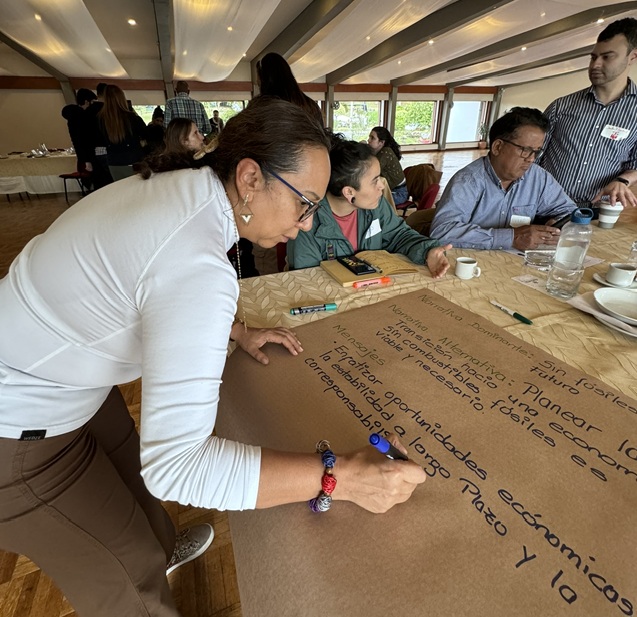
In response, NRGI and partners convened a diverse group of social actors to co-create a metanarrative and a set of alternative narratives rooted in justice, equity and inclusion. This chapter explores how these shared narratives can counterbalance exclusionary discourses, strengthen community voices and support a more just and inclusive transition pathway for the country.
The Power of Narratives in Colombia's Energy Transition
Power to the People: Perspectives on Nigeria’s Energy Transition Plan

Nigeria’s economy is the largest in Sub-Saharan Africa, with vast natural resources including oil and the continent’s largest gas reserves. However, according to the International Energy Agency, over 140 million Nigerians—70 percent of the country’s population—lack access to energy. In response, the government of Nigeria aims to achieve universal energy access by 2030 and is implementing several policies and initiatives to increase access to clean and affordable energy for its citizens. But how can the government achieve this ambitious goal?
“Empowering communities with reliable and affordable energy is not just a necessity; it is a catalyst for socio-economic progress. It fuels education, healthcare, and economic activities, paving the way for sustainable development” says Enebi Opaluwa, a senior research and policy analyst at BudgIT Nigeria, and a participant in the 2023 edition of the advanced course “Natural Resource Governance and Energy Transition: Policies and Practice”, co-organized by NRGI and the NADEL Center for Development and Cooperation at ETH Zurich. (The 2024 edition starts next week.)
After the course took place, we spoke with Nigerian participants, most of whom chose to focus on maximizing community benefits and managing diversification during the course. By enrolling in this path, participants learned about policies to enhance citizen engagement and mitigate socioeconomic impacts and conflicts related to extraction. They also studied tools for managing revenue distribution at the national and subnational levels, and the implementation of local content policies and national and local development plans.
A financing gap and changing regulations
“In Nigeria, many of the current policies and efforts to increase energy access are directed toward ensuring increased access to electricity for clean cooking, clean sources of energy, and energy transport, but there are gaps and barriers that prevent these policies from achieving their goal, including affordability, cultural factors and financing,” says Opaluwa.
“Financing is a key issue,” agreed Agwu Ojowu, a senior consultant for Africa Practice. He points out that the Nigerian government faces financial constraints in investing in the necessary energy and infrastructure system for delivering energy from new sources to citizens. The challenge is exacerbated in highly regulated markets, where existing providers discourage private investment needed for cleaner energy sources. Excessive regulation and market capture dynamics make it difficult for new players to enter these markets, posing obstacles to the introduction of more sustainable energy solutions
In response to this challenge, the Nigerian government passed a constitutional reform bill that allows individual states within the country to supply electricity, breaking the monopoly of the federal government over power provision. State governments can now independently explore the electricity generation business and transmit and distribute electricity in areas covered by the national grid and in remote areas. “This dually regulated system is less convoluted and allows the government to,” says Ojowu. This new process and innovation must be managed appropriately, with strong frameworks to build the capacity of states to manage this new development, the participants agreed.
In alignment with the participant’s perspective on the recent bill empowering individual states to supply electricity, the potential for state governments to distribute electricity across the national grid and in remote areas is a notable opportunity. However, Chichi Nwosu, a principal consultant at CRowland, a Nigerian development consultancy, underscores a significant challenge. She points out that the lack of employment opportunities stands as a major barrier, hindering local communities from reaping the benefits of this opportunity. This obstacle is rooted in socioeconomic implications and the unaffordability of social security for these communities. Addressing this employment gap becomes crucial for ensuring that the positive outcomes of the new bill are more inclusive and impactful for local populations.
“Emphasizing community engagement from the outset is paramount for fostering investments and ensuring that policies resonate with and benefit the local population.” - Agwu Ojowu
“Having well-crafted policies and legislation is crucial, and effective implementation is essential. However, without active involvement from local communities during the development stage, the successful implementation and dissemination of these policies become challenging,” explains Ojowu. “Emphasizing community engagement from the outset is paramount for fostering investments and ensuring that policies resonate with and benefit the local population.” Many communities exhibit “cash upfront rent-seeking behavior” whereby they agree to receiving cash handouts at the start of projects taking place locally. He argues that this has prevented local communities from benefiting from extractive projects and playing an active role in the sustainable development of their local economy because it precludes more significant investments in infrastructure, health services that would likely be more beneficial to communities in the long run.
Communities need education on the energy transition
“There is a need to raise awareness and sensitize local communities on the energy transition,” says Kolawole Kolade, a program officer on climate change adaptation and energy accountability at the Paradigm Leadership Support Initiative. Kolade explains that it is essential for government officials and civil society organizations to involve local communities in the decision-making and policy-making processes, so that citizens can actively understand the impact the transition has on the socio-economic development of their communities.
Community and stakeholder awareness is particularly important in the context of Nigeria’s new Energy Transition Plan, explains Nwosu. The plan was developed with the ambitious goal to achieve net-zero emissions in terms of Nigeria’s energy consumption. “This is a bold plan,” says Ojowu. “There is a need to build a climate change awareness culture in Nigeria.” He believes that authorities should include climate change awareness in curricula across all levels of education. He says that citizens across the entire country should be aware of what the climate change adaptation and mitigation measures the government can take—and that they, the citizens, must ensure that these goals are met. Enebi adds that the government should propose and implement education courses and other initiatives (including public hearings and media campaigns) to educate the population on the energy transition and its impacts, both at the national and local level.
Giving communities a role and a voice
“Currently, there is a gap between central and national governments, particularly when it comes to the energy transition agenda,” adds Enebi. He says that the energy transition plan focuses on attracting investments, but it lacks specificity about the federal government’s responsibilities going forward, as well as ways in which local communities can participate in to ensure the plan moves in the right direction.
“Even at the subnational level, relevant actors do not thoroughly understand what their role is in the context of the energy transition and climate change.” - Kolawole Kolade
Enebi suggests that civil society organizations advocate for clearer milestones and ways to measure the plan’s progress. One way government authorities could achieve this could be by incorporating citizen participation in budgetary processes, whereby the government provides citizens with easily digested information around budgeting during the approval and audit stages, so that they can participate and play an active role at the approval stage during public hearings. “This process should be applied to the energy transition plan,” says Enebi.
“Even at the subnational level, relevant actors do not thoroughly understand what their role is in the context of the energy transition and climate change,” says Kolawole. “There is a need at the federal level to create a framework for subnational governments to look into their responsibilities and have a tool to track their progress.” Civil society organizations should drive engagement and bridge the gap between the government and local communities on knowledge gaps around the energy transition plan, he adds.
Environmental concerns
“Environmental injustice should also be an important pillar of the energy transition plan,” says Enebi. “The energy transition will happen, but at the cost of the environment.” The plan should focus on ensuring that this conversation is at the forefront of discussions among Nigeria’s key decision-makers, politicians and local communities. This is particularly important as international oil companies increasingly divest assets to national oil companies leaving extant environmental pollution unremediated, Enebi adds.
Ojowu suggests that while engaging with local communities, the government should prioritize environmental regulation that is inclusive and consultative, fostering economic activities and alternative livelihoods beyond the oil sector. This is key in ensuring that local communities rely to a greater extent on other sectors, such as fishing and other sources of livelihood, so that there is a sustainable future that does not depend on oil or encourage oil pollution.
A unique learning opportunity
Regarding the advanced course itself as a platform to reflect on Nigeria’s challenges and opportunities in the context of the energy transition, participants particularly valued engagement with other participants from all over the world. “The peer-to-peer learning has allowed me to understand the similar challenges that other countries are currently facing,” said Enebi. “This has been very helpful in identifying potential opportunities and solutions.”
Ojuwu particularly enjoyed learning more about the tax and budget aspects of natural resource governance. The technical knowledge provided during the path on local communities allowed Kolade to further explore Nigeria’s gaps when it comes to community engagement tools, and this is something he is excited to continue working on. And Nwosu highlighted the importance of meeting participants who are active in same space, and how this enables them to share knowledge and collectively drive change with the aim of pushing for a just and inclusive energy transition.
The advanced course empowers participants to improve natural resource governance, especially around the energy transition.
The DRC-Zambia Battery Plant: Key Considerations for Governments in 2024

- The partnership between the Democratic Republic of the Congo and Zambia to develop battery precursors is central to Africa’s ambitions to add more value to its minerals. However, public information about the project is limited.
- Based on available information, the location of the precursor plant remains a source of disagreement. Regional bodies have a key role in developing mechanisms to ensure an equitable share of benefits irrespective of which country hosts the plant.
- The Congolese and Zambian governments should consider the challenges in attempting to source the required minerals from the two countries alone, and explore wider regional coordination to meet the need for nickel and manganese.
- The role of other global actors, such as the U.S., EU and China, remains unclear, but how the DRC and Zambia navigate the geopolitical complexities will be critical for the project’s success.
- Greater transparency and stakeholder consultation will help the governments make the difficult decisions necessary for the project to go ahead and increase the likelihood of it benefiting the Congolese and Zambian peoples.
African countries are gearing up to play a pivotal role in the production of clean energy technologies for the global energy transition, and not just as suppliers of raw minerals. They seek to maximize their role in regional and global value chains by adding value to the resources extracted from their soil.
One key initiative is the partnership between the Democratic Republic of the Congo (DRC) and Zambia to produce nickel, manganese and cobalt (NMC) battery precursors. A precursor is an intermediate input to a complete battery, which the two countries aim to ultimately also produce. However, without a large regional market for the electric vehicles that use these batteries, production of complete batteries will be challenging. For now, the focus is on producing and exporting precursors that foreign battery manufacturers will use.
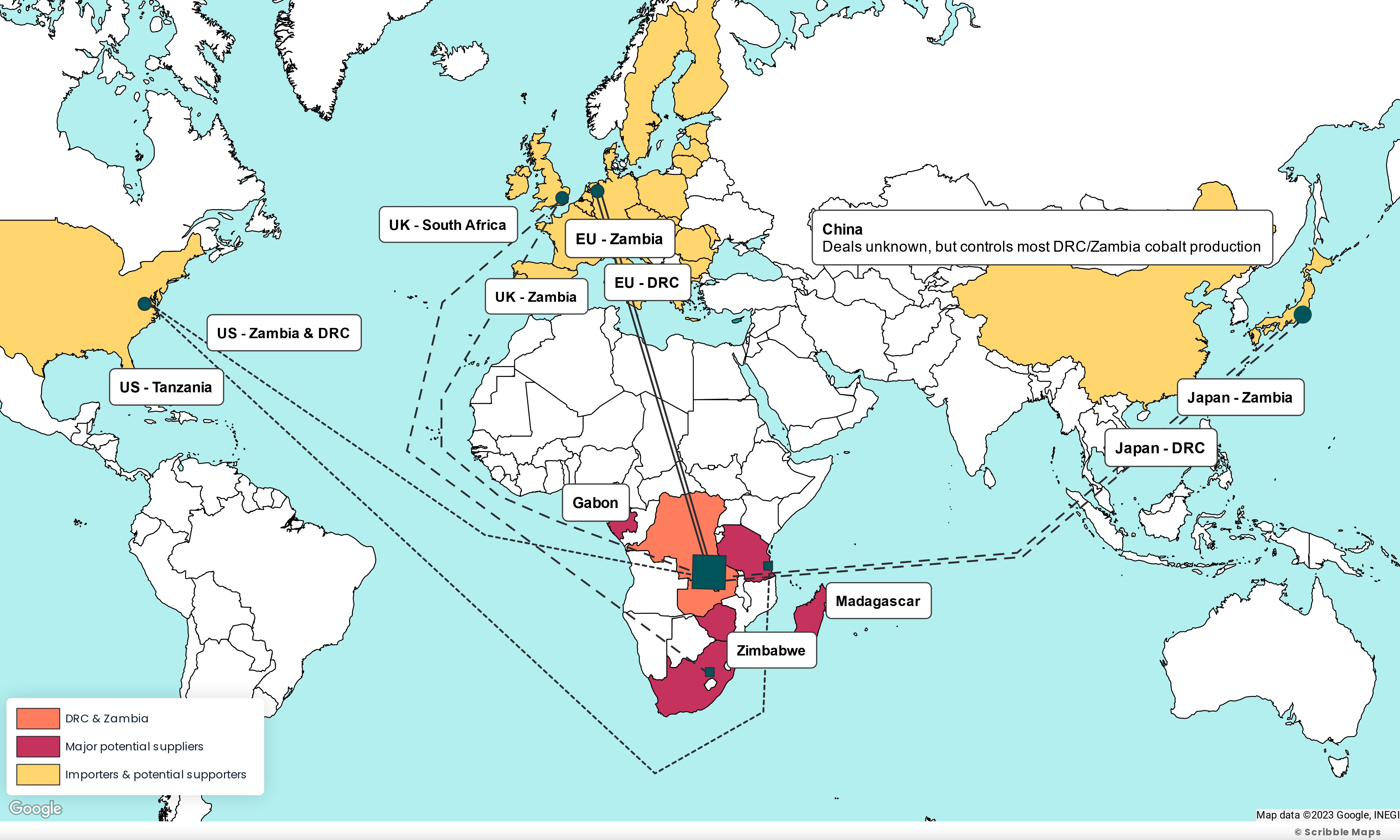
Planning for the precursor plant got properly underway in 2023, though details have been scarce. The status of a long-awaited pre-feasibility study is uncertain. There are conflicting statements about whether it has been completed and if it will be made public. The two countries have not disclosed their cooperation agreement or subsequent framework agreement. Various memoranda of understanding (MOUs) between these two countries and the United States and European Union are in the public domain, but further details remain behind closed doors, at least until roadmaps (action plans referenced in the EU MOUs) are developed next year. Little is known about other agreements that could impact the mineral sector and therefore the project—such as those between the DRC and Japan; Zambia and Japan; and Zambia and the United Kingdom. China’s dominance of cobalt production in the DRC and Zambia, including through state-owned companies, means it could have a significant influence on the precursor plant, but its role is uncertain.
Congolese and Zambian civil society actors are concerned about the lack of information and limited stakeholder consultation. In November 2023 they established the Pamoja Critical Minerals Forum to monitor and engage the governments on these plans and ensure that the plans reflect community voices.
Based on available information, we see four issues around the precursor initiative that the two governments should consider in 2024:
- Precursor plant location
- Mineral sourcing
- Role of international deals
- Transparency and multistakeholder engagement
Precursor plant location
Stakeholders suggest that this remains a point of disagreement between the DRC and Zambia. The governments initially agreed to construct the precursor plant in a cross-border special economic zone, but it seems that this shared site may be ultimately deemed unviable. The plant will therefore likely sit in one country or the other, and both countries aim to be the host. They have provisionally respectively earmarked the special economic zones of Kinsevere in DRC and Sub-Sahara Gemstone Exchange Industrial Park in Zambia.
Starting the project will be challenging regardless of its location. The independent prefeasibility study will likely recommend a location for the plant to maximize its economic viability and minimize environmental and social harms. To bolster the project’s prospects, the governments should accept the study’s recommendation in the absence of any major concerns. While it will not be easy for either country to agree to having the plant in the other, they can explore mechanisms to ensure an equitable share of benefits with the help of the regional bodies already active in the project such as the African Union’s African Minerals Development Centre, the African Development Bank, the UN Economic Commission for Africa and Afreximbank. For example, the country that does not host the plant could get a share of government revenues that the plant generates and have certain opportunities reserved for its workers, goods and services. This is a critical test for regional coordination: the proof of concept that the African Green Minerals Strategy calls for to catalyze other and wider coordination efforts.
Mineral sourcing
Stakeholders suggest that the governments aim to source all the required nickel, manganese and cobalt only from the two countries. The capacity of the plant and specific precursor design (including the ratio of nickel, manganese and cobalt) that the governments target will partly determine the feasibility of this approach. These parameters will be clearer after completion of the prefeasibility study. The plant that was initially envisaged would be large by global standards, producing around 100,000 tonnes (t) of NMC (622) precursors (one of the most common types currently demanded) a year. This would require around 48,000 t of nickel, 15,000 t of manganese and 16,000 t of cobalt that has been refined into sulfate.
The DRC and Zambia will find it challenging to source a sufficient amount of ores of the three metals and refine them into sulfates without involving other countries in the region. Neither the DRC nor Zambia currently refines any cobalt production into sulfate, but prospects are promising. Plans for a cobalt sulfate plant are advancing in Zambia, and World Bank analysis suggests a plant could also be viable in the DRC.
Production of nickel and manganese sulfate is less certain, however. Zambia produced around 4,000 t of nickel in 2022. First Quantum’s large nickel mine, Enterprise, started production in Zambia this year, which will add a massive 30,000 t a year on average. Nevertheless, this volume may still be insufficient for Zambia to meet the precursor plant’s needs on its own even if refining facilities were constructed and all production was supplied to the plant. Nickel exploration in the DRC is underway. Given only 19 percent of the country has been properly explored, this exploration may yield discoveries. However, with nickel mines taking an average 17.5 years from discovery to production, supplying the precursor plant is a far-off prospect.
Time is also a factor for manganese. Manganese is mined in the DRC and Zambia, currently by artisanal and small-scale operators. Formalizing these operations, including to reassure potential buyers of the precursors that the supply chain meets high ESG standards, and going on to build refining capabilities will be challenging.
The two countries could potentially meet these challenges over time, but there is no time to waste. The rapid evolution of battery technologies and global scramble for minerals mean that the longer this project takes to come to fruition, the harder it will be to attract investors and secure minerals for the precursor plant from the DRC, Zambia or elsewhere that haven’t already been tied up in long-term offtake agreements. The two governments should therefore utilize the African Continental Free Trade Agreement and start engaging other African countries on potential supply. Gabon and Madagascar have been cited as potential suppliers of battery grade manganese and nickel, respectively. Other countries, such as Tanzania, Zimbabwe and South Africa, are also possibilities. However some of these countries, such as South Africa, may actually harbor their own battery ambitions: further highlighting the importance of regional coordination to determine an approach from which all countries benefit.
Role of international deals
There is little information in the public domain on the specific support that the U.S. and EU intend to provide to the DRC and Zambia’s precursor ambitions. G7 support for the Lobito Corridor railway appears to have the most momentum currently. This project could increase investment prospects for value addition in DRC and Zambia by improving the route to market, but the railway could also be used to export unprocessed minerals. The implications for the precursor plant are therefore currently unclear.
It remains to be seen whether U.S. and EU will “put their money where their mouth is” in terms of specific support to the plant, and what the DRC and Zambia commit to in exchange. While the precursor plant could become a focal project of the U.S.-led Mineral Security Partnership or an EU strategic project under the bloc’s Critical Raw Materials Act, none of the parties have given such an indication.
Private investment and financing for the project will also depend on whether the U.S. enables buyers of mineral products processed in the DRC or Zambia to benefit from incentives offered by U.S. legislation. Only minerals processed in the U.S. or a country with which it has a free trade agreement qualify for the Inflation Reduction Act’s electric vehicle tax credits, for example. As the Carnegie Endowment’s Zainab Usman has highlighted, adjustments to the African Growth and Opportunity Act or other legislative instruments are needed for the DRC and Zambia (and other African countries) to qualify. Eligibility for U.S. incentives would increase the likely demand for DRC-Zambian precursors, and as a result, the attractiveness of the project to investors.
In the meantime, Chinese authorities and companies are not standing still amid all the talk and action from G7 countries. How the DRC and Zambia leverage this geopolitical competition while navigating the resulting complexities will be critical. It remains to be seen how these various actors will manage Chinese dominance of cobalt production when establishing supply for the precursor plant. Morocco’s experience may generate lessons as it seeks to utilize Chinese investment in battery manufacturing and its U.S. free trade agreement to export batteries to the U.S. and Europe.
Agreements between the likes of the U.S. and EU and other African mining countries could also impact the prospects of the precursor plant. For example, the U.S. is supporting the construction of nickel refining facilities in Tanzania but the deal stipulates that the battery-grade nickel will be exported to the U.S. Gabon, currently an exporter of manganese ore, could need similar support to start refining. While Gabon would benefit from the commencement of refined nickel exports irrespective of their destination, a deal that prevents exports to other parts of Africa could inadvertently stymie regional integration and the more transformative impacts that it would bring. Significant coordination is therefore required between both African governments and other governments.
International deals that could affect the DRC-Zambia precursor plans
Transparency and multistakeholder engagement
The Pamoja joint statement calls for greater transparency around plans and deals related to the precursor project and transition minerals more generally. Initially, this applies to disclosure of the prefeasibility study once completed and any inter-state deals not yet in the public domain. Going forward, the Congolese and Zambian governments should disclose subsequent agreements such as the EU roadmaps as well as any between the governments and investors in mining and value addition projects. The governments should also increase consultation with other stakeholders, including civil society actors.
The stakes are high for the DRC and Zambia with these projects. More transparency will help catch mistakes and ensure that the projects generate the intended benefits for the Congolese and Zambian peoples. Greater public awareness of the various opportunities and trade-offs should provide the governments with space to make difficult decisions—for example, the location of the precursor plant and sourcing of minerals. Building more public consensus and trust will also support the credibility of long-term planning and stability of the regulatory framework, and therefore increase the ability of the DRC and Zambia to attract investment.
People in the DRC and Zambia could benefit greatly from precursor production in their countries, particularly if the associated energy and transport infrastructure is leveraged for wider use. However, government efforts in other policy areas will be at least as important. For example, as Zambia aims to significantly increase copper production, the government should ensure it manages the upstream effectively. Other value addition opportunities, such as scaling up copper manufacturing in DRC, also hold at least as much, if not more, promise. Given that the complexities of the precursor project risk absorbing large amounts of the governments’ time, money and political capital, officials must weigh the opportunity costs carefully.
Narratives for a Just Energy Transition in Colombia

In 2023, NRGI worked with other national and territorial civil society organizations in Colombia to document Colombian attitudes toward the energy transition. This video series summarizes the sentiments of civil society participants in this process of building a collective framework that demonstrates that a just transition--beyond fossil fuels--is necessary, desirable, and possible.
How Anticorruption Actors Can Use the EITI Standard

In June 2023, the Extractive Industries Transparency Initiative (EITI) adopted the 2023 EITI Standard, which introduced significant new requirements that are either mandatory, expected or encouraged for implementing countries and companies, compared to the 2019 Standard
In particular, the Standard now includes several obligations aimed at bringing more information into the public domain to advance gender equality, a just energy transition and anticorruption efforts.
In 2021, building on an EITI-commissioned paper on the role of the EITI in fighting corruption, NRGI published two reports which showed how anticorruption actors could use EITI disclosures and spaces to advance their work, and recommended ways to strengthen the role and potential of the EITI for anticorruption purposes.
In this new guide, NRGI updates its guidance for anticorruption actors—such as civil society, journalists, EITI Multi-Stakeholder Groups (MSGs) and government enforcement agencies—by outlining how the innovations of the 2023 Standard may help advance their efforts.
Diagnosing Corruption in the Bauxite Sector in Guinea: Three Conditions for a More Transparent Future

Bauxite, a crucial strategic ore in aluminum production, plays a central role in the manufacturing of the technologies needed for the energy transition. According to the International Aluminium Institute (IAI), global aluminum demand is expected to increase by nearly 40 percent by 2030. In 2022, Guinea positioned itself as the second-largest global bauxite producer, behind Australia, and the leading bauxite exporter worldwide, with an annual production of nearly 103 million tons. However, the revenues generated by Guinea’s mining sector do not align with this potential.
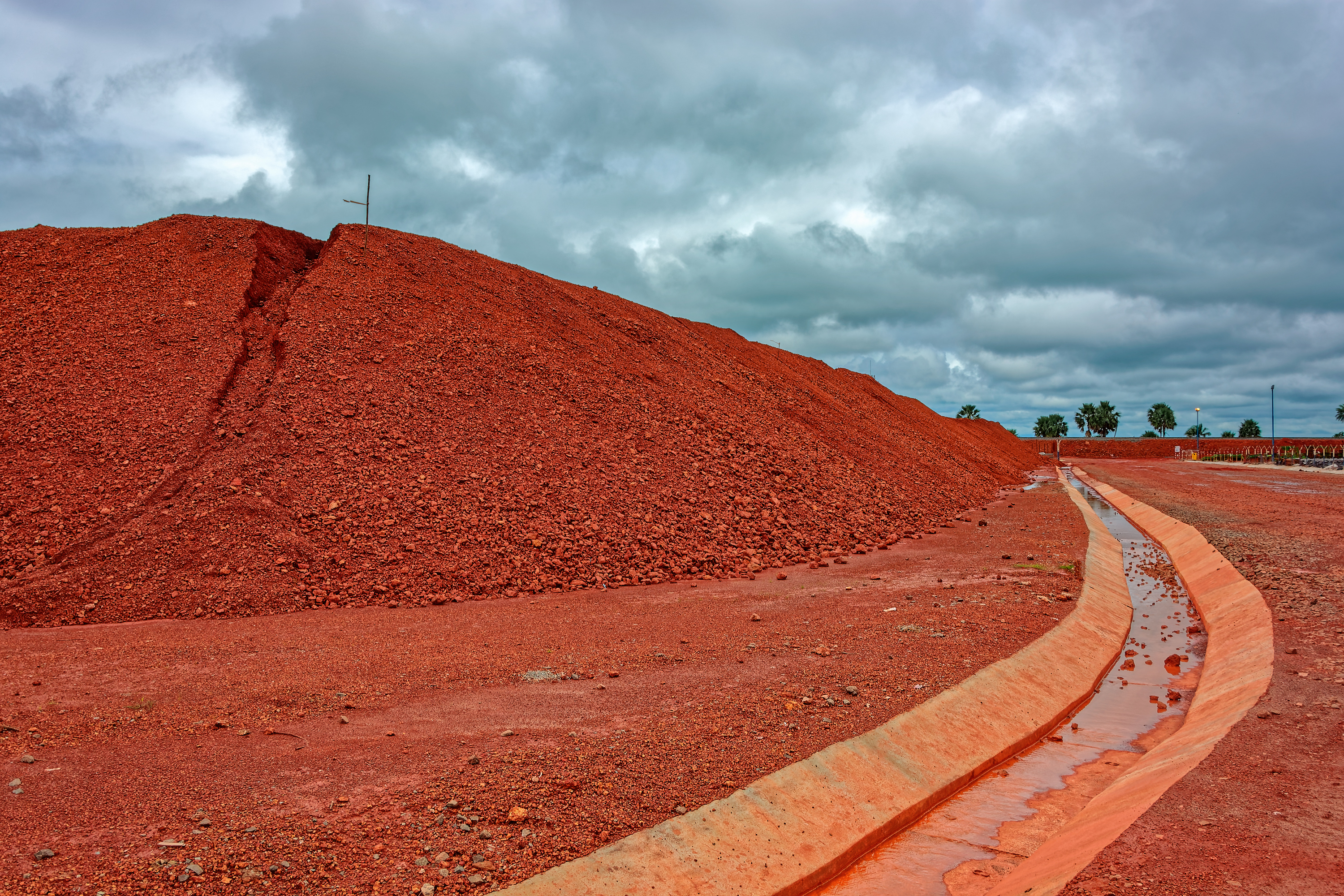
Various stakeholders in Guinea, from civil society to policymakers, have consistently highlighted the paradox of the mining sector—rich in underground resources but economically poor. There is dissatisfaction with the revenues generated by Guinea's extractive sector. In 2020, the mining sector's contribution to the national budget was estimated at just over $500 million, a figure deemed "insulting" by Guinea's current Prime Minister of the military junta.
The governance of Guinea's mining sector faces numerous challenges, with corruption permeating the entire mining value chain. The complexity and opacity surrounding the sector make combating corruption and improving transparency particularly challenging. To address this, the Natural Resource Governance Institute (NRGI) has developed a research and action tool. This tool is designed to help civil society groups, government agencies, international organizations, private businesses, and investors identify the most concerning forms of corruption, diagnose their causes, and develop an action plan to prevent these practices in the future. Originally implemented in Mongolia in 2021, the tool has since been deployed in several countries, including Colombia, the Philippines, and Guinea, where its implementation supports and strengthens the capacities of Guinean civil society organizations (CSOs).
The findings of this corruption diagnostic report in Guinea's mining sector, led by Guinean CSOs, not only highlight concerning corruption risks, but also proposes an action plan to address these issues. This diagnostic represents a significant step forward in addressing corruption risks in Guinea's bauxite sector; however, effective implementation will be crucial. Given this, achieving positive long-term changes will require continuous effort. From our perspective, three conditions are needed to ensure the viability of the process in Guinea.
1. Strengthening civil society’s efforts to implement the action plan
One unique feature of the diagnostic tool is fostering concerted actions among different stakeholders. However, resistance to change inevitably poses a significant challenge, undermining the effective implementation of the action plan. Because of this, the fight against corruption in Guinea requires a long-term perspective, with significant commitment and constant perseverance from all stakeholders. In this context, CSOs are urged to assume an even more decisive role by increasing their monitoring of the sector's governance.
The success of the action plan hinges on continuous monitoring, with regular updates to assess progress against identified indicators. The National Agency for the Fight Against Corruption (ANLC) and the executive secretariat of the EITI were consulted and involved at all key stages of the project, leveraging their status and influence to act as catalysts for executing actions, monitoring and evaluating progress, and identifying necessary adjustments. The ANLC should raise awareness among both public and private actors tempted by identified corrupt practices while implementing the actions defined in the action plan. This approach aligns with its primary mission to end corruption through education, prevention, and awareness in both the public and private sectors, while also ensuring that rigorous law enforcement creates a deterrent effect. Additionally, the executive secretariat, as the main driver of the EITI-Guinea multi-stakeholder group, should ensure active engagement by this group in the concrete implementation of actions outlined in the plan.
2. Promoting government agency transparency through collaborative efforts involving the media and CSOs
Once again, the success of the diagnostic action plan hinges primarily on the active engagement of stakeholders, aligning with the multi-stakeholder approach of the tool. Active engagement by all relevant actors is crucial, ensuring open communication and gathering their feedback at each stage. In the specific context of Guinea, government agencies are the key stakeholders due to their specific responsibilities in the sector. However, achieving full engagement from them is challenging, particularly on such a sensitive issue as corruption. In navigating this context, a key starting point is ensuring active engagement, grounded in the principle that improving governance stems from citizens' follow-up actions, who must fairly assume their responsibilities. To achieve this, it’s essential to increase awareness, especially through the media who play a crucial role in promoting transparent accountability, facilitating public access to information, and contributing to reducing the administrative burden that generally characterizes public administration.
3. Systematically empowering civil society actors
A significant advantage of implementing this project in Guinea is that it occurs at a time when Guinean CSOs are well-coordinated to ensure they can make the most of the EITI process, leading to the creation of a civil society representatives' group within the EITI-Guinea multi-stakeholder group.
Since 2021, NRGI has supported these CSOs in adopting their code of conduct and in the renewal of civil society coordination within the EITI decision-making body in Guinea. This sustained commitment has led NRGI to provide ongoing technical support until the new structure is fully operationalized. This structure has played a decisive role, leading the diagnostic efforts in Guinea. The engagement of an external consultant in this project has also facilitated skills transfer, which can now be used for future initiatives. To gradually assume this responsibility, civil society members need continuous support to maintain momentum and enthusiasm for the process. NRGI, in line with its goals, has made a significant contribution and remains committed to continued technical support. However, it is now essential to seek the support of additional technical and financial partners, with a history of supporting Guinean civil society, such as OSIWA, GIZ, Transparency International, the Hewlett Foundation, and USAID. They have a crucial role to play in supporting this initiative, which will improve transparency, good governance, and the fight against corruption in the Guinean extractive sector, aligning with a post-political transition perspective.
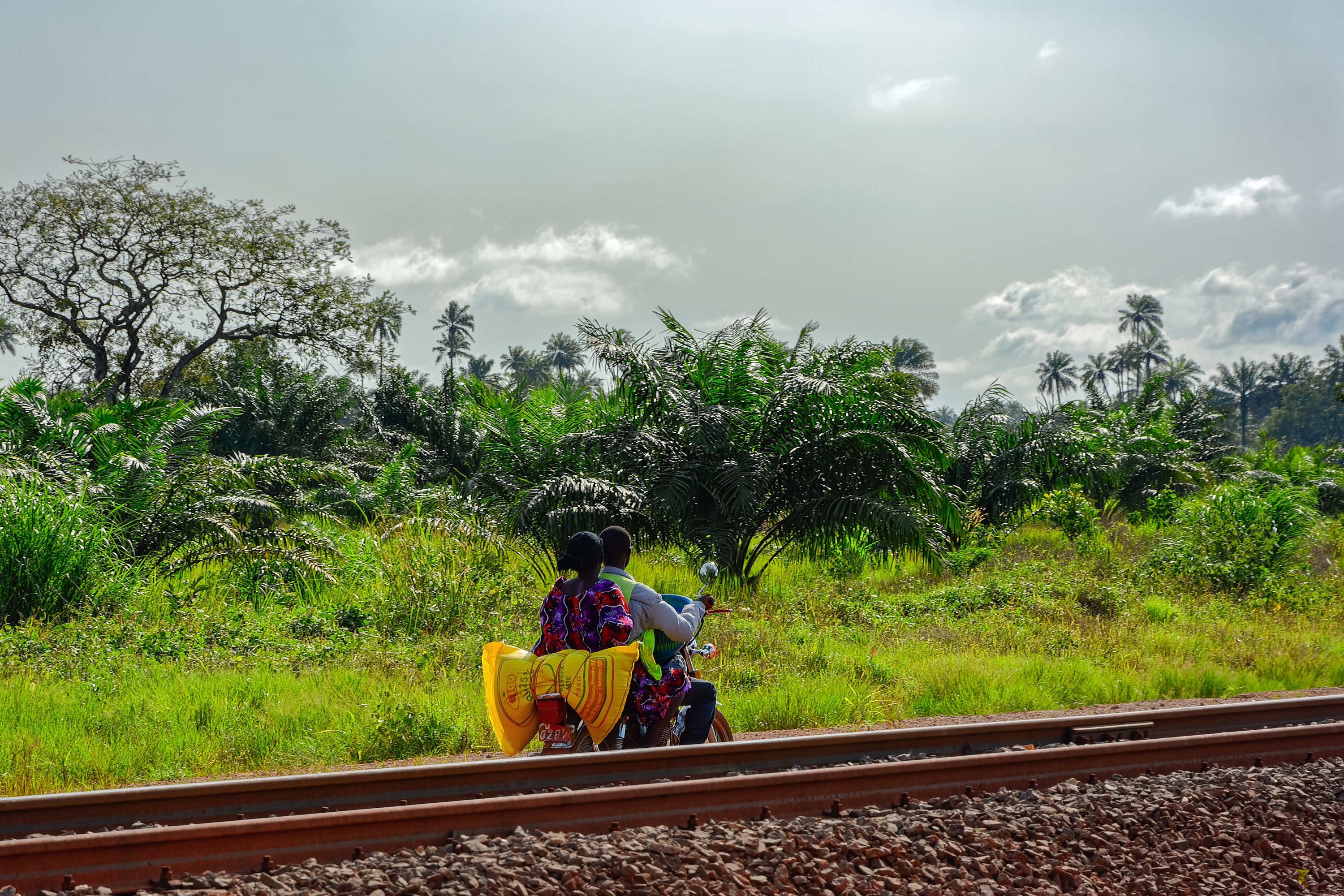
The corruption diagnostic effort in Guinea's bauxite sector is not limited to detecting current challenges, but also paves the way for a more promising future for Guinea’s mining industry. By acknowledging and addressing corruption issues, Guinea can unlock the full potential of its mineral resources, promoting economic growth and a shift toward more transparent and responsible governance. By continuing on this path and maintaining the commitment of all stakeholders, Guinea has the opportunity to not only bolster its position as a global leader in the bauxite industry, but also foster an environment conducive to a prosperous future for the sector. This in turn will contribute to the country's sustainable development.
NRGI has developed an innovative tool to diagnose and combat corruption in the extractive sector.
Equity and Good Governance Are Essential for the Energy Transition

As governments around the world scramble to boost oil and gas production and/or secure alternative supplies after Russia’s invasion of Ukraine, the resulting energy crisis feels like more than just a bump in the road for the global energy transition. Still more confusing is what our colleagues aptly describe as the “minefield of potentially mixed and misread messages” about the energy transition intentions of wealthier nations, few of which are close to achieving compliance with the Paris climate goals. The EU has proposed to label gas-fired power generation as “green” but then Germany doubled down on ambitious 100 percent renewable energy power plans, calling renewables “the energy of freedom.” The Biden administration stressed the need to reduce dependence “on oil in general” and then called on U.S. oil and gas producers to ramp up supply as quickly as possible, scarcely a week later.

In this confusing atmosphere the Tyndall report, “Phaseout Pathways for Fossil Fuel Production Within Paris-compliant Carbon Budgets,” is a welcome and essential map. Its most significant contribution is to apportion responsibility for winding down production based on equity considerations — an approach we at the Natural Resource Governance Institute (NRGI) strongly support. Wealthier countries should cut fossil fuel production first and fastest because they depend less on oil and gas revenues and have greater capacity to finance the energy transition. The report divides producers into five groups, the wealthiest of which would need to entirely phase out production by 2031 (a 98 percent drop from today’s levels!), for a better than even chance of avoiding warming above 1.5°C. Critically, and even more relevant to delivering a just transition, the report also concludes that “[a]n equitable transition will require wealthy high-emitting nations [to] make substantial and ongoing financial transfers to poorer nations to facilitate their low-carbon development...”
If the world is to have any chance to avoid climate catastrophe, there’s not enough carbon space for lower-income countries to develop their vast reserves of fossil fuels—even if the wealthiest countries cut their fossil fuel production to zero today.
This last point is the report’s punchline. Although the call for financial transfers is nothing new, the report further justifies their critical importance to a just energy transition by putting yet another inequity in sharp relief: the global carbon budget—the space left in the atmosphere for additional carbon pollution—is now too small to allow for any countries to use or produce fossil fuels on any scale approximating that has historically fueled development in rich countries. In other words, if the world is to have any chance to avoid climate catastrophe, there’s not enough carbon space for lower-income countries to develop their vast reserves of fossil fuels—even if the wealthiest countries cut their fossil fuel production to zero today. Of course, the reason humanity is in this mess is almost entirely the decades of stalling and insufficient climate action on the part of the world’s wealthiest countries, which are overwhelmingly responsible for the historical emissions now driving dangerous climate impacts. It is only fair that in addition to cutting their own production first and fastest the wealthiest producers finance the energy transition of lower-income producers.
Climate finance should include debt relief and support to improved governance of transition planning. The Civil Society Equity Review referenced by the report, and endorsed by hundreds of civil society organizations from across the world, holds valuable recommendations for supporting a fair shares phase out. Through our programming, NRGI will support lower-income oil and gas producers to hold rich countries to account for their climate finance commitments and obligations, the fulfillment of which is fundamental to just energy transition.
The report also clearly sets out the speed, scale and sequencing of the production cuts required of all countries, differentiated by respective capacities for each of the five groups, for a 50-50 chance of limiting warming to 1.5°C—a previously missing link in the field. This gives all countries a framework for plotting their energy transitions, mapping the (fast shrinking) space in which they can safely and fairly maneuver. Critically, the pathways presented are intended to help explore the consequences of national policies and decisions, not “…to prescribe precise budgets or pathways for specific nations.”
If the transition is to be equitable, no one should expect lower-income producers to begin cutting production until and unless they (a) receive support needed for development pathways that replace fossil fuels revenues, and (b) see a rapid oil and gas phase out in the wealthy countries responsible for most of global production. Through NRGI’s work supporting resource-rich developing countries as they navigate the transition, we see the vital importance of building sustainable development pathways independent of fossil fuel extraction. The wealthiest countries most responsible for global climate change still fall appallingly short of their own international climate finance commitments, let alone their additional obligations to support lower-income countries dependent on oil and gas revenues.
Country-level governance
Governance is central to a just transition. Careful management and coordination of efforts to wind down oil and gas production is essential to ensure fairness across countries, minimize negative economic and political impacts, and safeguard the lives and livelihoods of the most vulnerable.
Governments in some low-income producer countries have already embarked on important energy transition planning efforts. For example, Nigeria’s Inter-Ministerial Committee on Climate Change is now considering a national energy transition plan, and Ghana has recently launched a national Energy Transition Steering Committee. To address the scale of the challenge they must simultaneously consider and integrate three dimensions of a just energy transition:
- Increased energy generation and access, including rapid transition to renewable energy systems.
- Economic diversification to sectors that don’t rely on a fossil fuel-based energy system.
- Support for people affected by the wind-down of fossil fuel production.
As governments make difficult decisions about the future of their countries’ extractive sectors and pathways to sustainable development, they should also build citizens’ understanding of the options and support for these decisions. Too often officials restrict access to relevant information and analysis and take decisions behind closed doors. NRGI supports greater citizen participation and transparency, and therefore facilitates informed, open dialogue to promote more sustainable decisions about the future of oil and gas production. Additional elements of a well-governed energy transition include:
- Public processes and accountability to develop a shared, pro-citizen, vision beyond oil, one free of control by narrow interests that benefit directly from fossil fuel production.
- Rigorous analysis, based on verifiable information, about the risks of continued dependence, and the likely impact of various transition scenarios on the viability of the country’s economic model, development strategy and priorities, and related policy questions.
- Strong coordination across public agencies to align public financial management, energy and climate strategies.
International governance
Internationally, the most urgent challenge relates to governance of finance for each of the three dimensions of a just energy transition outlined above. First, rich countries and multilateral donors must provide greater support for improved governance of energy transition planning in lower-income producer countries. At a minimum, donors and investors should support countries with the strongest record and commitments to good governance of fossil fuel extraction, and steer clear of producers with corrupt and repressive governments. And international oil companies should skirt partnerships with national oil companies when it’s likely the collaboration will propagate corruption or kleptocracy. It shouldn’t take a war for investors and international oil companies to do what’s right.
Second, players in the multilateral concessional finance system must streamline and rationalize the current patchwork quilt of partial, overlapping sources of finance available to support different dimensions of the energy transition in lower-income countries. A recent evaluation of rich countries’ (dismal) record in mobilizing resources toward their $100 billion climate finance commitment reveals a litany of accounting problems requiring attention.
Annual spending on clean energy in emerging and developing countries must increase seven-fold by 2030.
Many energy transition-related needs in lower-income oil-producing countries don’t actually qualify for “climate finance” because emissions reductions associated with reduced production of oil are counted in importing countries. This points to the third finance governance challenge, which extends well beyond the energy transition: across the board, available public and private finance is grossly insufficient to meet environmental and developmental needs. Annual spending on clean energy in emerging and developing countries must increase seven-fold by 2030, according to the International Energy Agency. This is a glaring gap that rich countries must quickly help to bridge to enable a timely fossil fuel phaseout by lower-income producers and for global sustainable development generally.
Shifting winds make these tough times to contemplate a fossil fuel phaseout, but energy transition planning remains the only route forward. The Tyndall report is therefore a valuable and timely contribution to the field. Good governance is critical to promoting sustainable, inclusive development, and it must be front and center of fossil fuel phaseout efforts.
Learn more about NRGI's work to advance a just energy transition.