
Suneeta Kaimal: The IEA Critical Minerals Summit Must Plot Path to Fairer Mining

IMF Strengthens Global Resource Governance Norms With Its Fiscal Transparency Code
The International Monetary Fund (IMF) has overhauled one of its main tools for promoting voluntary transparency among its members to include a new pillar covering natural resource revenue transparency. NRGI worked with the IMF to make the overall Fiscal Transparency Code and its new pillar more robust. NRGI provided three substantial written submissions, participated in a civil society forum to discuss recommendations, and engaged IMF officials directly. While there remains some room for improvement in the code, its final text, published in 2019, reflects many of NRGI’s recommendations. It:
- stresses the importance of open contracting procedures for license allocation.
- calls for the identification of beneficial owners of companies holding licenses.
- describes reporting on payments to governments at the project level “an established international norm.”
- recognizes the importance of transparency in commodity trading and recognizes that disclosing payments by traders is well within reach of countries and companies.
- calls for publication of environmental and social impact assessments (ESIAs) and accompanying management plans and reports.
- reinforces existing standards and requirements around state-owned natural resource companies from other key actors like EITI and the OECD.
The new code is a win for transparency, and will serve as an important tool for the IMF to help countries spot weaknesses in their resource revenue management.
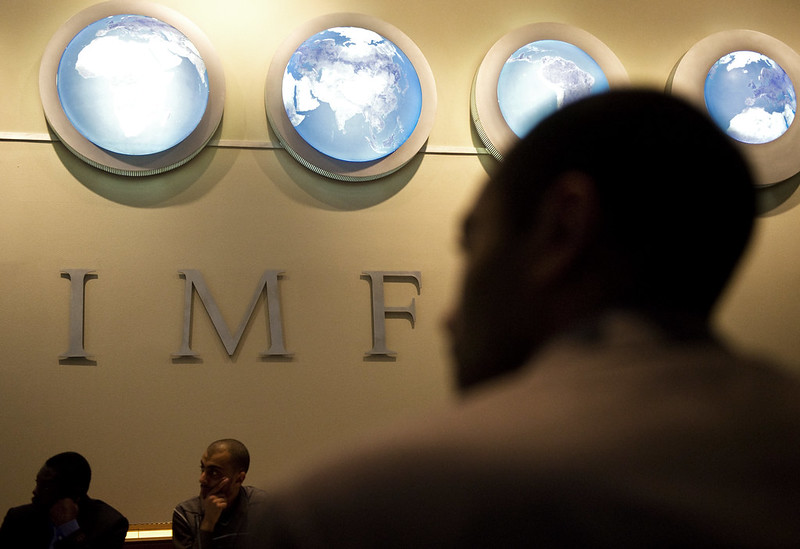
Photo credit: "imf_cso_youth_04" (CC BY-NC-ND 2.0) by International Monetary Fund
Making Legislative Inroads in Ghana Beneficial Ownership Disclosure
The challenge
Over the past five years, Ghana’s government has intensified its efforts to safeguard against illicit financial flows, money laundering, corruption, financing of terrorism and organized crime. It has been supported by civil society groups and driven by international commitments. Ghana has made progress largely under the direction and support of intergovernmental organizations.
Ghana had failed to meet key performance targets set by the Inter-Governmental Action Group against Money Laundering in West Africa (GIABA), a specialized institution of the Economic Community of West African States. One such missed benchmark was the 2012 GIABA deadline for the establishment of a regime for the disclosure of the identities of the “beneficial owners” of companies in the subregion.
Until August 2016, none of the country’s laws provided for disclosure of beneficial ownership, making it easier for companies to obscure or hide their true owners. Following the leak of the Panama Papers, the push for beneficial ownership disclosure gained momentum in Ghana partly owing to concerns exacerbated around the lack of transparency in petroleum agreements and rumors about the role of politicians in illegal mining. But methodical, painstaking advocacy was needed to ensure action.
NRGI's role
NRGI organized the first beneficial ownership workshop for the Ghana Extractive Industries Transparency Initiative (GHEITI) multi-stakeholder group members in June 2015. This event galvanized GHEITI’s beneficial ownership disclosure efforts and spurred interest in legislative reforms. The EITI global conference in Lima in February 2016 gave a further push. Following the conference, a second workshop in Ghana drew the participation of high-level company, government and civil society figures.
Timing was propitious: the second workshop took place just weeks before the May 2016 London Anti-Corruption Summit. Civil society actors pressed the government for strong and concrete commitments on beneficial ownership disclosure. These actors agreed on the commitments they wanted to extract from the government in meetings organized by NRGI. Following this concerted advocacy, the government invited civil society organizations’ input on an official communiqué read by then-President John Mahama at the summit.
To keep the momentum going and ensure real action, NRGI and GHEITI organized a high-level multi-stakeholder forum in June 2016. In attendance were the majority and minority leaders of parliament, the registrar-general, NRGI president and CEO Daniel Kaufmann and civil society experts. Civil society organizations including the Africa Centre for Energy Policy, PWYP Ghana, the Integrated Social Development Centre and the Financial Intelligence Centre reconvened after the forum to continue monitoring the government’s commitment. NRGI also engaged with the government to ensure civil society representation on the legislative reform committee.
Impact
Ghana’s beneficial ownership reforms have made swift progress thanks to a locally driven approach with NRGI financial and technical support.
As a result of consultations, a consensus emerged that the scope of beneficial ownership disclosure should be expanded beyond extractives and apply to all companies registered in Ghana. At the time, the Companies Act was under review and consideration by parliament, providing a good opportunity to make improvements to the bill via amendment—versus waiting years for an entirely new bill to be passed. Parliament amended the act in August 2016, paving the way for implementation of a beneficial ownership disclosure regime in Ghana. The law now mandates that the registrar-general maintain a beneficial ownership register. (This register is yet to be developed. Ghana’s Registrar General Department has indicated this may begin in 2018.) NRGI inputs improved the original draft of the provision and widened the scope and de nition of beneficial ownership to include politically exposed persons.
The legislation doesn’t just impact extractives. By providing for ownership disclosure for all registered companies, areas such as public procurement and contract allocation experienced an increase in transparency. In February 2016, Ghana’s president-elect, Nana Akufo-Addo, forcefully declared his support for beneficial ownership disclosure.
“It was necessary for lifting the veil from public officials who hide behind cronies to amass wealth through shady public procurements,” Akufo-Addo told Ghana’s Public Agenda newspaper. It was a signal he could continue to support transparency progress.
Looking ahead, Ghana must develop an implementation framework with clear timelines to ensure that reforms stay on course. Local partners supported by NRGI continue their important work in this regard.
Leading Companies Issue Commitments on Beneficial Ownership: Will It Help Prevent Corruption?

This week six large extractive companies have committed to several actions to advance the cause of beneficial ownership transparency. Their joint statement is a welcome endorsement of this important anticorruption measure. Whether the commitments help tackle the tough realities of oil, gas and mining sector corruption will depend on how and by whom they are implemented.
Beneficial ownership transparency enjoys significant momentum, which this new statement and the accompanying programs help to propel. Beneficial ownership refers to the actual people who, directly or indirectly, ultimately own or control a company. One hundred and ten countries have adopted laws that require beneficial ownership reporting of one kind of another, including the Unites States’ passage of the Corporate Transparency Act earlier this year. Many of these efforts (though not in the U.S., notably) will result in publicly available registers of who ultimately controls and benefits from companies, as exist already in the U.K. and elsewhere. In the extractive sector, the Extractive Industries Transparency Initiative (EITI) requires its member countries to publish the identities of the beneficial owners of companies that apply for or hold oil, gas or mining licenses, and countries have made commendable progress in meeting this standard.
Many private sector actors have supported this evolution. Way back in 2012, as the EITI was revising its rules, I remember that it was a mining sector representative who first put the idea of beneficial ownership reporting on the table. At a recent EITI event a BHP executive reminded us of why businesses support beneficial ownership: beneficial ownership transparency makes it harder for problematic actors (firms owned by politicians, for example) to gain unfair access to business opportunities; it makes their due diligence cheaper and easier; and it signals a commitment to openness and integrity to all sector players. Privately, representatives of large companies share stories of government officials pushing them to work with local companies with unknown or problematic owners; beneficial ownership transparency helps diffuse these situations without companies having to pick a fight with their government counterparts.
Making commitments meaningful
In the statement the companies make three commitments:
- Support beneficial ownership transparency in public forums and when engaging with other companies
- Disclose their own ownership information, and where feasible, that of their joint venture partners
- Identify and use beneficial ownership data in their due diligence processes
1. Widen the pool of company supporters
AngloAmerican, BHP, Glencore, Newmont, Repsol and Rio Tinto deserve credit for publishing this statement, as do the EITI, Open Ownership and the B Team for facilitating the process. It contains meaningful commitments for advancing beneficial ownership transparency, and for using ownership information to prevent corruption. Of course, it could have gone further, but it’s a notable step forward.
The commitments are imminently feasible, with many reflecting existing corporate practices and the existing expectations for EITI supporting companies. Beneficial ownership transparency also advances the interests of most ethical companies. For these reasons, it is disappointing that only 6 of the EITI’s 68 supporting companies signed on. The European supermajors BP, Eni, Shell and Total, as well as transparency leaders Equinor and Kosmos are particularly notable absentees. Given recent corruption scandals, other commodity traders should follow Glencore and sign on too. Their absence and others begs the question: what part of this modest statement do these companies oppose, and why?
Recruiting more signatories will help add meaning to the EITI’s “supporting company” moniker and bring about the collective action dynamics that EITI and its partners are trying to create.
2. Shine light on the highest-risk beneficial owners
As described in U.S. court documents, when employees of the large commodity trader Vitol bribed officials in Brazil, Ecuador and Mexico, they routed the bribes through shell companies that they had hired as service providers. Former employees of Gunvor and Glencore recently pled guilty to helping execute similar schemes in Ecuador and Nigeria, respectively. In other scenarios, large foreign companies partnered with smaller companies in production joint ventures, allocated supply contracts to smaller companies, or bought oil from small intermediaries. Investigations then revealed the owners of the smaller companies included politicians, their proxies or other inappropriate parties.
In such cases, visibility into the ownership of the smaller company—the minority partner, the service provider, the supplier, or the trading intermediary—is what would really help to prevent (or support the investigation of) corruption. Therefore, the practice of beneficial ownership disclosure must extend to these players, not just large multinationals.
To be clear, ownership information about publicly traded multinational companies—especially full information about their subsidiaries and corporate structure—is important for integrity reasons as well as to inform discussions about tax justice, i.e., whether a company is using its structure to lower its tax liabilities in its home or host countries. But when it comes to corruption, it’s smaller anonymous companies that do much of the dirty work.
A few of the new commitments, if executed well, could help prompt this wider pool of extractive sector players to be more transparent about their owners. The companies indicate that they will “encourage other companies, including joint venture partners, contractors and suppliers, to publicly disclose their beneficial owners.” Robust implementation of this measure should produce visible results. The companies could, for instance, begin by encouraging their suppliers in certain high-risk countries to publicly disclose their ownership information, and then gather this information in one place so that it is accessible (and therefore useful).
Another commitment presents an additional starting point. In one of the statement’s strongest parts, the companies indicate that, along with publishing their own ownership information, they will, “where feasible, for any partially owned entities, also publicly disclose the other legal owners of the entities. Where not feasible, disclose the reasons why.” As longstanding, high value partnerships, joint ventures are indeed a sensible place for companies to begin pushing their counterparties to disclose ownership information. Glencore and Rio Tinto, two of the statement’s signatories, have already illustrated the feasibility and value of this effort by publishing ownership information for their JV partners. Other companies could quickly follow suit.
Our research and consultations suggest a third starting point, which does not appear in the statement. Many extractive sector corruption cases feature agents and intermediaries, especially the business development agents that companies use when seeking new contracts or licenses. We generally recommend that companies stop using business development agents, especially when seeking deals from governments and state-owned companies. If companies continue to use agents, publishing their names and beneficial owners is a straightforward way to inject some integrity into relationships that have repeatedly proven vulnerable to corruption.
3. Use beneficial ownership information to avoid enabling corruption
Several commitments pertain to how companies will use beneficial ownership data in their due diligence processes. This is great, as it’s only by actively using this information that corruption will reduce.
Big companies from countries with active anti-bribery regimes, including most EITI supporting companies, already use ownership information when conducting due diligence on third parties. The more crucial question is: what standards does the company apply when reviewing this ownership information and deciding how to act? Some past corruption cases indicate that companies were fully aware of the ethical or corruption risks posed by an entity’s owners, but worked with them anyway. In 2008, U.S. hedge fund Och-Ziff commissioned due diligence on companies owned by mining investor Dan Gertler – a highly controversial figure who is now subject to US anticorruption sanctions. The due diligence reported he was: “a political [sic] exposed person….happy to use his political influence against those with whom he is in dispute;” named on compliance watch lists and UN reports; and that he “keeps what can only be described as unsavory business associates.” Och-Ziff went ahead with the deal, but eventually faced US bribery charges regarding its business with Gertler and paid a USD 213 million criminal fine. Shell knowingly negotiated with a former oil minister to acquire an oil block that the official had previously awarded to his own company. Isabel dos Santos, daughter of the former president of Angola, enjoyed dozens of high-profile business partners despite the suspicious origins of some of her wealth.
One of the statement’s commitments points to a way forward: companies could set some basic ground rules about who is, and isn’t, acceptable to work with. Such ex ante restrictions help because they reduce the number of discretionary decisions that company personnel make around specific deals, decisions often made in moments when pressure to get the deal done runs high. In their statement, the signatories say they will “publicly commit to avoid partnering or contracting with companies assessed as high corruption risk that decline to identify their beneficial owners unless appropriate mitigation measures are implemented to reduce corruption risk.” This is a useful step toward projecting beneficial ownership reporting across the sector, though the qualifier about mitigation measures creates an unnecessary gray area. Companies could adopt and disclose additional ex ante standards; these might include prohibitions against working with entities whose beneficial owners include officials with influence over the business in question, or with individuals credibly shown to have engaged in corruption where evidence of remediation is not found.
In the anticorruption guidance that NRGI will publish later this year, we will also recommend that companies apply a harm-based screening to the beneficial ownership information they collect. In other words, companies should ask: will partnering with this entity or individual harm citizens of the country where we are working? Could it make corruption worse? These differ from the questions a company would ask about its own legal risks.
My NRGI colleagues and I are pleased to be in dialogue with a number of EITI supporting companies about how to enhance their anticorruption controls, including around beneficial ownership transparency and the use of that information, so as to prevent well-established patterns of corruption from repeating and causing still further harm. The statement issued this week by the six companies marks a step forward in this effort, and its broad and robust implementation could mark further progress still.
Alexandra Gillies is an advisor at NRGI and leads the organization’s anticorruption programs. She is the author of Crude Intentions: How Oil Corruption Contaminates the World.
Three Ways the U.S. Can Help to Prevent Next-Generation Oil and Mining Corruption

By a wide margin, U.S. authorities have pursued more corruption cases in oil and mining than any other sector. In the last five years, U.S. authorities nabbed the bosses of a company called Unaoil that bribed officials in nine different countries, including Angola, Iraq and Syria. They seized a giant yacht allegedly purchased with proceeds from Nigerian oil trading schemes, and a swank Miami condo that a top Congolese official allegedly bought using embezzled oil funds. U.S. investigations revealed how an American hedge fund paid off officials to access the Congolese diamond industry; how state oil company bosses in Brazil, Ecuador and Venezuela took home bribes; how an Abu Dhabi oil fund helped run one of the largest-ever corruption schemes; and how oil and mining deals within the U.S. turned dirty as well.
As the Biden administration ramps up its anticorruption efforts, officials should pursue policies that heed lessons from these past investigations and that reflect the world’s fast-changing energy and mineral markets.
This week the administration gave clear signs of its commitment to anticorruption. The White House released a memorandum “establishing the fight against corruption as a core U.S. national security interest” and kicking off the process to develop an ambitious cross-agency anticorruption strategy. The Treasury Department recently issued the largest-ever use of the Magnitsky sanctions for anticorruption purposes. These events coincided with the UN General Assembly’s special session on anticorruption, where U.S. officials emphasized their intention to prioritize fighting graft. Meanwhile, on Capitol Hill, a bipartisan counter-kleptocracy caucus will launch this month as well.
In the coming weeks and months, the U.S. anticorruption agenda will take further shape, as the various agencies stand up new programs, key champions such as USAID administrator Samantha Power get up to speed, and the Summit for Democracy approaches, where fighting corruption and kleptocracy will be a main theme.
To stop corruption from ravaging the world’s oil and mineral industries and hindering the green energy transition, several U.S. agencies, including USAID, the State Department, the Treasury Department and the various climate-focused units, should prioritize the following actions. These ideas emerge from a study of over one hundred oil and mining corruption cases, and from the Natural Resource Governance Institute’s work in many resource-rich countries and international forums, and they complement leading recommendations from other NGOs and experts.
1. Prevent corruption in critical mineral supply chains
The International Energy Agency estimates that meeting Paris climate goals will require a quadrupling of the minerals used by clean energy technologies by 2040. For the countries that produce cobalt, lithium, copper and other critical minerals, especially those with weak institutions, this spike in demand could trigger surges in corruption like those associated with past oil booms, which contributed to authoritarianism and economic decline. For mineral-consuming countries like the U.S., corruption could threaten their energy transition plans by interrupting the steady supply of these commodities.
While much was made of the U.S. re-blacklisting mining magnate Dan Gertler over alleged corruption in the DRC, where Gertler’s companies control royalty streams from three of the world’s biggest cobalt projects, governance and corruption are barely on the agenda when it comes to the hot topic of clean technology supply chains. The U.S. could both help safeguard supplies and protect the interests of producer country citizens by correcting this trend. Specifically, U.S. technical assistance to producer countries, including through the State Department’s Energy Resource Governance Initiative (ERGI), should prioritize transparency, accountability and anticorruption, and should include support for civil society groups and other oversight actors. U.S. leadership could also push anticorruption onto the agendas of various international mineral supply chain initiatives and standards. Unless global standards include robust measures around transparency, beneficial ownership reporting, payment verification, anti-money laundering, conflict of interest procedures and other practices, the critical mineral boom could trigger an ugly “race to the bottom,” with consumer countries scrambling to secure supplies, a few well-connected parties getting rich off the rents, and producer-country citizens left facing the results.
2. Tackle oil sector corruption and kleptocracy as part of U.S. climate policy
In addition to anticorruption, the Biden administration has prioritized climate action, and the two agendas must intersect given the oil and gas industry’s predilection towards state capture and kleptocracy.In the Trump administration, the head of the Environmental Protection Agency and the Interior Department were former fossil fuel lobbyists. These appointments were among many recent reminders of how oil and gas producers, thanks to decades of lobbying, campaign donations and revolving-door staffing, exert undue influence over U.S. policy and climate debates. Much of this behavior falls in the categories of legal corruption or state capture, through which narrow vested interests influence public policy to suit their needs. Other oil-producing countries face a similar challenge: corruption and political agendas can cause leaders to greenlight fossil fuel projects, lavish the industry with subsidies and neglect greener energy sources, even when these steps run counter to climate goals and country’s own economic and environmental interests.
To guard against corruption, capture and political stalemates around decarbonization, the U.S. should encourage fossil fuel producing countries to accelerate transparency and oversight. First, citizens need basic information about the government’s fossil fuel activities and adaptation plans, including project-level data on reserves, production, breakeven price assumptions, carbon emissions and government spending. Second, transparency must increase wherever industry and government interact; this applies to lobbying, campaign donations, asset-development contracts, subsidy payments, as well as national oil company affairs.
The U.S. could advance this cause at the Summit for Democracy, via its participation in the Extractive Industries Transparency Initiative, the Open Government Partnership, and in the newly announced Net-Zero Producers Forum, which also includes Canada, Norway, Qatar and Saudi Arabia. This effort would be an important public sector counterpart to U.S. action to advance capital market climate risk disclosures.
Much more than transparency will be needed when it comes to oil-rich kleptocracies and their impact on global climate responses. Half of the world’s oil is produced by 13 authoritarian countries, including several run by kleptocratic regimes. Tackling kleptocracy is notoriously difficult, and U.S. officials should look closely at how Western enablers help kleptocrats to profit and thrive. Some players in the oil sector are complicit, as many Western investors, companies and service providers have supported suspicious deals involving the governments and national oil companies of Russia, Venezuela, Equatorial Guinea and other kleptocracies. Since these oil industries contribute to both global warming and kleptocracy, the role of these enablers is worth a careful look as part of the US’s wider approach to fighting kleptocracy.
3. Shower anticorruption attention on obvious areas of risk
In recent years, thanks to the Panama Papers and other revelations, international anticorruption efforts are devoting greater attention to how dirty money flows offshore, and the damage it then causes. As the U.S. responds to this vital agenda, such as by implementing the Corporate Transparency Act and, hopefully, expanding the U.S. Treasury’s Geographic Targeting Orders, officials should not overlook how the money escapes in the first place. Even a quick skim of the Justice Department’s asset seizure actions makes clear: a lot of dirty money comes from the oil or mineral sectors of resource-rich countries. And it often escapes from a few high-risk areas:
-
State-owned enterprises. National oil and mining companies feature in many corruption schemes, with Brazil’s Car Wash as the most prominent recent example. State-owned enterprises control large amounts of money and are themselves easily controlled by political elites—a recipe for corruption in contexts ranging from Russia to South Sudan, Iraq to Venezuela.
-
Commodity trading. The Justice Department has pursued big commodity trading cases, so U.S. authorities know how dirty, opaque and damaging this side of the industry can be. And yet, there has been no cross-agency response. As leading energy journalists Javier Blas and Jack Farchy recently argued, “It’s high time that politicians in the United States and elsewhere started paying attention” to the fact that traders are “scarcely regulated.”
-
The participation of political elites in the industry. Among the Kremlin allies facing U.S. sanctions are oligarchs who profited hugely off juicy contracts from Gazprom, the Russian national gas company. Political elites often hold interests in oil and mining companies and get rich off the proceeds—usually via inflated contracts or other lopsided deals. Beneficial ownership reporting is a necessary but insufficient response to this challenge. The Luanda Leaks revealed how U.S. entities supported the business ventures of Isabel dos Santos, despite knowing that her father was Angola’s president and other warning signs around the deals. Since oil and mining industries are widely politicized, the sector is a strategic area where the US could work to develop stronger standards regarding who constitutes an appropriate business partner.
As part of an evidence-based approach, the U.S. should learn from past cases and ramp up anticorruption interventions in these known areas of risk. In each one, stronger global standards, attention from regulators and law enforcement, attention from international financial institutions, technical assistance, support for civil society and other actions could make a huge difference. If the U.S. and its allies ignore these proven areas of corruption risk, they leave doors open for more dirty money to escape.
The above ideas resonate with many elements of last week’s White House anticorruption memo. As U.S. officials take this directive and turn it into policy, they can prevent another generation of oil and mining corruption and avert negative impacts on the lives of millions. The Summit for Democracy is one venue where the U.S. could lead on this work and acquire allies; COP 26 and the Open Government Partnership Summit are others.
As resource-producing countries face unprecedented change, corruption could derail their efforts to build more resilient economies, while also threatening U.S. climate, security and economic interests. Thanks to U.S. law enforcement action, we know a great deal about the dismal corruption record of the natural resource sector. These cases point to practical strategies the U.S. can now adopt to avoid a repeat of history.