
Envisioning Colombia’s Energy Transition: The Power of Narratives to Foster Equity and Justice

This page features NRGI’s contribution to the IDS Bulletin’s special issue on Just Energy Transitions, which brings together research and perspectives on how communities, governments and civil society can shape fairer pathways away from fossil fuels. In this edition, NRGI colleagues authored a chapter examining the role of public narratives in Colombia’s energy transition.
Colombia’s energy transition debate is marked by strong polarization and dominated by powerful political and economic interests. As the government’s proposal to phase out fossil fuels has gained international attention, many domestic narratives continue to marginalize the perspectives of civil society organisations and communities in fossil-fuel-producing regions.
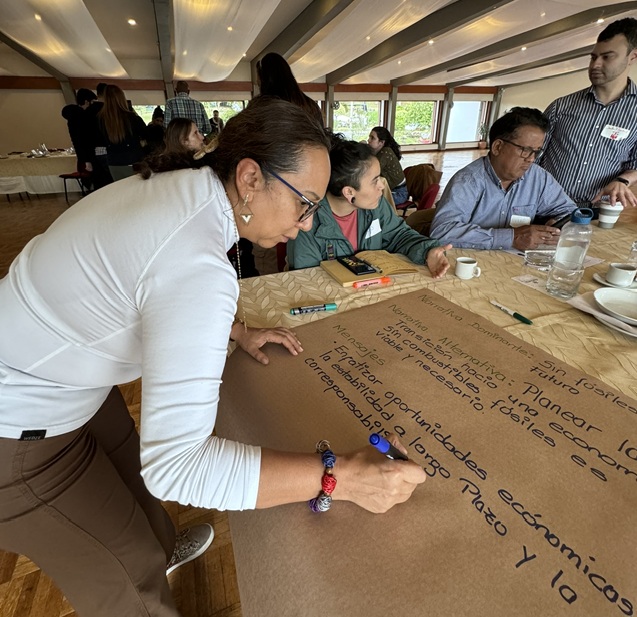
In response, NRGI and partners convened a diverse group of social actors to co-create a metanarrative and a set of alternative narratives rooted in justice, equity and inclusion. This chapter explores how these shared narratives can counterbalance exclusionary discourses, strengthen community voices and support a more just and inclusive transition pathway for the country.
The Power of Narratives in Colombia's Energy Transition
Value Beyond the Mine: Enabling Equitable Opportunities in Mexico

Image: Mexican Female Miner by Solidarity Center under Creative Commons Attribution (CC BY) 2.0 Generic licence.
As the world accelerates the shift to clean energy, the demand for transition minerals is reshaping how resource-rich countries like Mexico approach mining. The UN Secretary-General’s Panel on Transition Minerals (UN Panel) has identified value addition as its first actionable recommendation and has called for gender equity to be embedded across the entire mineral value chain.
This isn’t just about maximizing economic returns—it’s about ensuring fair and inclusive opportunities and benefit-sharing. Principles 3 and 4 of the UN Panel’s report stress the importance of tackling socio-economic barriers by involving women’s groups in decision-making before, during and after mining operations. Yet, despite their proximity to mining activities, women are often excluded from formal mining benefits and are typically confined to lower-paid, informal or peripheral roles.
In countries with both strong mining activities and industrial capacity, like Mexico, Equitable Value Addition (EVA) offers a promising pathway to move beyond extractive dependency and generate shared prosperity. However, this opportunity is not guaranteed, and risks have to be carefully weighed. Moreover, unless EVA strategies prioritize gender equity, they risk reinforcing the same inequalities that persist today.
From extraction to equity
Mexico is a top global producer of 17 key metals and minerals, including copper, silver, graphite and manganese—vital inputs for the electronics, renewable energy and automotive industries. It also holds significant lithium resources, positioning the country as a potential leader in global mineral value chains. Mining contributes 2.7 percent to national GDP and about 9 percent to industrial GDP, employing around 400,000 people directly and supporting over 2 million jobs indirectly.
Additionally, Mexico ranks fifth in vehicle production and third in exports. The automotive industry generates over $100 billion annually—mostly through trade with the U.S.—and contributes around 4.7 percent to the national GDP and over 20 percent to the manufacturing GDP. This sector also supports more than one million direct jobs and more than 3.5 million indirect jobs.
These two sectors—mining and automative manufacturing—are central to Mexico’s economic future. Yet both are marked by deep gender disparities. Women make up only 17 percent of the mining workforce and just 12 percent occupy leadership positions. In the automotive industry, women represent 37 percent of total employees, but only 13 percent of its manufacturing workforce.

Beyond underrepresentation, women also face real safety threats. Nationwide, over 70 percent of women in Mexico report having experienced some form of violence. In public transport, the problem is especially acute: in industrial zones, for instance, 60 percent of women report abuse during their commutes. In addition, 28 percent of women have faced violence at work. Alarmingly, up to 94 percent of women do not file a report or request support.
EVA as a dual-purpose strategy
There is growing recognition that the energy transition must not deepen existing inequalities. NRGI is contributing to this conversation by highlighting the dual opportunity presented by EVA. Economically, it supports countries like Mexico in moving up the value chain—from raw material exports to high-value goods. Socially, it opens pathways to gender equity by promoting access to formal, well-paid and secure jobs for women across the mineral and manufacturing sectors. We have also promoted this proposal through the T20, calling on the G20 to establish a global framework for value addition and fair benefit-sharing.
A just transition demands gender equality and social inclusion at every stage—from minerals extraction to value addition. To succeed, the transition must be driven by governance that prioritizes these objectives, including gender-responsive due diligence along supply chains and local policies that link green technologies to tangible benefits for women.

Connecting agendas: The example of Hermosillo
The transition to electric vehicles (EVs) is transforming the auto industry, but not all jobs will carry over. Only one-third of in EV-related job categories align with skill sets from internal combustion engine roles, making reskilling essential. Yet only 30 percent of STEM professionals in Mexico are women, limiting their access to future opportunities.
A gender-inclusive EVA strategy must therefore include:
- Reskilling programs targeted at women
- Incentives for female entrepreneurship in mineral processing and tech sectors
- Employment quotas or targets for women across the value chain
In Hermosillo, political will is driving meaningful change. The local government has introduced a development plan with gender-focused initiatives: electric transport (buses and taxis) driven by women for women, improved public lighting in high-risk areas, solar panel installation in female-headed households, and the creation of a cooperative focused on empowering women in the renewable energy sector. This is only one example of what the linkages of how gender-responsive EVAs can connect green technology with social impact in practice.
Why gender impact assessment matter
For women in mining communities to truly benefit from shared infrastructure, training and local value chains, strong gender-sensitive assessments that identify barriers and guide practical solutions are essential. These assessments should be mandated and monitored by governments, implemented by mining companies, and enriched through the active participation of civil society.
Across Latin America, some countries are already making strides. For example, in Argentina’s Catamarca province—also home to key transition minerals like lithium—the government has integrated a gender indicator into environmental impact declarations since 2022. This requires mining companies to assess gender-specific impacts throughout all stages of mining projects, from exploration to closure. Driven by local community advocacy and supported by the Intergovernmental Forum on Mining (IGF), this policy aims to foster safer, more inclusive workplaces.
This kind of targeted, governance-led approach offers a useful model for Mexico. As the country expands investments into transition minerals, Mexico has the opportunity to apply similar tools grounded in local realities to ensure mining delivers for both the energy transition and gender equity.

What needs to happen
For EVA to be both economically transformative and socially just, creating an enabling environment is crucial. In Mexico context, policymakers at the federal and state levels should champion reforms that remove legal barriers and guarantee women’s rights and participation in all segments of the mineral value chain. This includes:
- Equitable licensing and market access
- Targeted financial support
- Affordable and adequate childcare, social services and public infrastructure
- Technical training for women in STEM fields
At the same time, industry actors, including mining companies, automakers, and suppliers, must adopt gender-responsive policies—especially in hiring, workplace safety and procurement. Civil society organizations, too, play a key role in monitoring implementation, advocating for accountability and amplifying women’s voices in decision-making.
Cross-sector collaboration is essential. Government agencies, CAMIMEX, WIM-Mexico, international organizations and trade associations should work together to develop inclusive and gender-equitable opportunities along the value chain. Public data disclosure and Environmental Impact Assessments (EIAs) are vital for tracking progress.
Inclusive public-private partnerships and regular multi-stakeholder dialogue can help subnational governments and communities capture value locally, and mitigate against potential challenges, while preparing for future opportunities in the global energy transition.
A choice to lead
Mexico is well positioned to lead a just energy transition that values both its natural resources and its people. The current administration’s Plan México aims to place the country among the world’s top 10 economies by focusing on green industrialization, including development of the EV value chain and renewable energy.
But to turn this vision into lasting socio-economic benefits, gender equity must be a core element of the EVA approach, not an afterthought. The real question is not whether EVA can drive gender equity, but whether those with power, namely policymakers, business leaders, civil society and local stakeholders, will choose to make it do so.
The Journey Continues: Progress and Learning on Diversity, Equity and Inclusion at NRGI

Guided by the expertise of Under the Rainbow, an international social change consultancy based in South Africa, in 2022 we completed a demographic survey, one-on-one interviews with staff, focus group discussions, and a review of internal policies and practices. These analyses were used by NRGI’s DEI Action Group, a volunteer group of staff from across the organization, to create a DEI action plan and share our DEI ambitions. We recognize that many other organizations are on similar journeys, and a year later, we’re sharing our achievements and challenges in the spirit of accountability and learning.
Goal 1. NRGI staff use shared language and enact a common understanding of DEI ambitions.
Objectives
- Create spaces for safe, courageous DEI-related learning in an inclusive manner
- Ensure shared values reflect DEI ambitions and are enacted through our policies, practices and ways of working
Progress
The creation and leadership of the internal DEI Action Group, comprised of 14 staff from across geographies, functions and levels, has ensured ownership and accountability for NRGI’s DEI work. The group has modeled safe space to explore challenging DEI topics and established a cohort who have increasing knowledge and shared ambition to advance this work. To expand this learning to all staff, Under the Rainbow conducted 13 learning sessions on DEI topics such as power and privilege, unconscious bias, decolonization and intersectionality. These sessions provided a way for staff to come together with vulnerability, forge connections and build a sense of belonging. As a result of a session on how to integrate DEI into NRGI’s values, we agreed to focus on “collaboration” and “rigor” in 2023. We saw collaboration as a meaningful way to celebrate diversity and embrace inclusivity. We recognized that existing understandings of ‘rigor’ privileged some forms of knowledge; we now seek to (re)define rigor in more equitable and inclusive ways.
Lessons
With limited time, we have struggled with the balance of focus on learning (building our knowledge) or doing (implementing and tracking the action plan). An end-of-year survey of the learning sessions revealed that both the action group and broader staff are keen to invest in learning with focus on specific issues such as allyship, unconscious bias, and power and privilege. Staff also called for closer links between our programming and the learning topics. For example, as we expand our work on gender and the energy transition, we have an opportunity to conduct learning sessions to build understanding of gender as a construct. Finally, staff noted that the learning sessions were most valuable when they were interactive and dialogue-based, and linked to action, not just theory.
Though the DEI Action Group has been a locus of energy and action, we see a challenge to replicate and expand that dynamic across the organization. We shared guidance to help teams to review and adopt their own DEI plans; the communications and fundraising teams have been the only teams to do so. The DEI learning sessions have been largely voluntary to date. To ensure we are reaching all staff, we are increasingly mainstreaming DEI approaches in our policies and practices, from recruiting to external communications to all-staff meetings. Ensuring collective ownership of DEI and integrating DEI into NRGI’s strategic priorities remain a challenge.
Goal 2. NRGI’s culture is inclusive, its practices leverage and augment diversity, and current power imbalances are addressed.
Objectives
- Increase multilingualism and inclusion through internal communications channels, meeting practices and valuing different expertise and experience
- Ensure NRGI’s external communications are multilingual, reflecting and showcasing a diversity of global perspectives and voices
- Enable voices and knowledge originating in NRGI’s program countries to play a more prominent role in shaping NRGI’s strategy, priorities and contributions to global debates
- Support more equitable, constructive collaboration around research and analysis, tapping more diverse sources of expertise
Progress
We have made significant progress to advance multilingualism at NRGI. As a simple but fundamental shift, all-staff meetings are conducted with simultaneous translation in French and Spanish. This enables staff to speak and listen in the language of their choice—either building proficiency, or to increase understanding. Though expensive, staff have indicated translation promotes understanding and engagement. Internal guidance materials are increasingly translated into both Spanish and French. We also maintain a roster of communications-related service providers, including designers, translators and editors in non-English languages. Additionally, NRGI’s external publications are more frequently translated, and video communications increasingly feature colleagues and external partners speaking in different languages and sharing their expertise.
The leadership of our internal energy transition working groups reflects experts from across all staff geographies, as a forum to highlight expertise from across the organization. We are also developing a new protocol for peer review that makes the process more inclusive and ensures our written work benefits from the full diversity of knowledge, perspectives and communication styles among our staff and networks.
Lessons
Discussions with our governing board members and staff have highlighted the need to clarify that our ambitions to redefine rigor do not mean lowering our standards or sacrificing quality. Rather, diversity and inclusion are a means to enable rigor; to define what expertise is valued and whose is sought and showcased. Moving from intention to action on how we decolonize our work, and understanding where and how privilege and power manifest remains a challenge. We seek to build awareness, acknowledge when we are falling short, and develop the tools and practices to work differently.
Goal 3. NRGI’s staff, boards and advisory council reflect its values and ambitions concerning DEI.
Objectives
- Advance DEI goals and reduce unconscious bias through NRGI recruitment and retention practices
- Increase diversity and inclusivity in NRGI boards and advisory council
Progress
We have significantly diversified our board and advisory council. To ensure this was done with thoughtfulness and consistency, the board’s nominations and governance committee developed a matrix to identify priority profiles and strategic needs against which it could track recruitment. Gilbert Houngbo took up the role of chair in March 2022, and over the course of the year NRGI welcomed Magdalena Sepulveda Carmona, Zainab Usman and Jordan Diamond to the board. We have also appointed three new members to our advisory council: Amir Lebdioui, Manish Bapna and Valerie Marcel.
We began to develop guidance for tackling unconscious bias in our recruitment and launched a new diversity statement to signal our intention to more actively consider diversity and inclusion in our hiring practices: “NRGI welcomes you, just as your are. We invite people of all identities, including those from marginalized groups, to come together in support of our mission. We strive for an NRGI where staff can be themselves at work, feel that they belong, and are equipped to succeed. Achieving meaningful diversity, equity and inclusion—together—is among our highest priorities.”
Lessons
Most colleagues agreed we should articulate our DEI ambitions through a diversity statement. Yet it was difficult to navigate how to communicate solidarity to staff and partners while also navigating compliance and risk in different contexts. We also struggled to ensure we were understanding the full range of concerns. The DEI Action Group devised the statement after months of consultation with various staff and legal counsel in several countries where we work. We also examined the diversity statements of more than a dozen other NGOs and think tanks and spoke with staff at three of them to learn more about how they arrived at their statements.
One key decision concerned whether to list various specific groups, identities and bases for difference (e.g., race, sexual orientation, religion). We elected not to include such a list to future-proof the statement (as new identities arise over time) and make the statement more human and less legalistic. We aimed for something succinct that was inviting and warm, and uncompromising in conveying our commitment to improve. We also agreed that for each new recruitment, we would identify any specific attributes that would help to diversify that team or role.
Looking ahead
We recognize that NRGI can’t change deep-rooted societal inequities on its own. However, as actors in the resource governance field, we believe we have a responsibility to “walk the talk” internally and externally. We have ambitions to integrate DEI more into the substance of our programming, including on just energy transition, mitigating gender-differentiated impacts and expanding our stakeholder engagement to include marginalized groups. We also aspire to expand this discussion beyond NRGI to inform the understanding and actions of our partners and the broader field.
We are proud of the progress that we have made to advance diversity, equity and inclusion at NRGI over the past year. We recognize how challenging these issues are and that we must approach them with patience and thoughtfulness. In 2023, with continued support from Under the Rainbow, we plan a concerted review of our DEI efforts, building on these reflections. We seek to understand our collective vision for DEI success, where we are making progress, where we are falling short and why. As part of a broader strategy stock-take, that review will ensure that DEI underpins and informs our programmatic, operational, and organizational ambitions. We appreciate that we are not alone in this journey; we welcome the opportunity to share and exchange with other organizations.
NRGI’s Diversity, Equity and Inclusion Action Group includes: Sarah Backstrand (chair), Fernando Patzy, (vice-chair), Lee Bailey, Ana Carolina Gonzalez Espinosa, Martin James, Suneeta Kaimal, Alexandra Malmqvist, Zoljargal Naranbaatar, Lucain Nyassi Tchakounte, Sophia Rwegellera, Aaron Sayne, Helen Suwannawongse and Aye Kyithar Swe.
We are grateful to the William and Flora Hewlett Foundation who has supported NRGI’s increased work on diversity, equity and inclusion. We have allocated unrestricted funding mindful of the importance of this work; however, our ambitions exceed our current resources, and we continue to seek further funding.
The Future is Now: NRGI’s 2023 Priorities

Our work at the Natural Resource Governance Institute contributes to fair, prosperous and sustainable societies by advancing citizen and government efforts in resource-rich countries to:
- Drive systemic change to avoid harms from mining and equitably benefit from the responsible scale up of transition minerals necessary to avert global climate catastrophe.
- Build inclusive economies that end dependence on fossil fuels and advance a just energy transition for citizens.
- Manage revenues from natural resources accountably in response to citizen priorities.
Through dramatic upheavals—from global pandemic, through historic market volatility, to the kleptocracy that enables Russian aggression, and the explosion in demand for transition minerals—we have helped our partners navigate uncertainty with timely, relevant and rigorous support.
In 2023, we will draw lessons from our work since the launch of our strategy in 2020, including a review our progress on diversity, equity and inclusion. We will deepen our support to the energy transition, and adopt more impact-oriented, politically astute approaches. And reflecting our evolved priorities and identity, we will launch a new website and updated branding.
Having undertaken major strategic and organizational transformations, NRGI’s future is now.
Ensuring transition mineral good governance
In 2023, mindful of the historic opportunities for people to benefit from the rising demand in minerals critical to green technologies, and the potential for corruption and harm that often accompanies such booms, we are ramping up our programming on transition mineral governance. We are launching new work in Chile, focused on enhancing good governance and inclusive management of lithium. We are deepening our engagement in the Democratic Republic of the Congo to build an inclusive vision for the management of cobalt in the public interest and more accountable relationships between governments, companies and communities. We are supporting effective policies on taxation, licensing and value addition, and will engage civil society and policy makers at regional forums like the African Mining Indaba and Alternative Mining Indaba and across several regional institutions in Africa and Latin America. And we will work with partners to implement strategies to prevent supply chain corruption.
Supporting just and sustainable societies
In view of elections both recent (Colombia) and upcoming (Nigeria), we will ensure that our policy analysis informs public debate on how to reduce dependence on fossil fuels in producing countries. The strategies and governance of national oil companies will be a major focus, including in Ghana and Mexico. As countries like Nigeria and Senegal assess the role of gas in their ambitions to improve populations’ energy access we will help citizens and policy makers understand the pros and cons of these gas-to-power approaches, including how they relate to the development of renewable energy. We will invest heavily in building people-centered energy transition dialogues in Colombia, DRC, Ghana, Nigeria and Tunisia, convening inclusive conversations to help partners envision a low-carbon future that meets the needs of all citizens.
Internationally, we will build on last year’s partnerships and advocacy to amplify the voice and influence of low- and middle-income resource-producing countries in debates about transition finance and the pace and shape of the decline in production and use of fossil fuels. With an eye on the COP28 climate conference in the United Arab Emirates, we will work with civil society actors and policy makers across the Middle East and North Africa to understand specific regional challenges and advocate for international support to advance the energy transition.
We will further research just energy transition partnerships and support international dialogue around how they might accelerate transition in gas-producing countries. NRGI and its partners will also further advocate for stronger international governance standards to foster accountability in the energy transition, including via the much-needed evolution of the global Extractive Industries Transparency Initiative standard.
Building on lessons from 2022, as a globally connected, locally rooted organization, we will continue to prompt inclusive, evidence-based debate and decision making in resource-rich countries and amplify those priorities on the global stage. In 2023, working in partnership with reformers around the world, we aim to ensure that the future we seek begins now.
Top photo by Estivillml/Envato
From the Inside Out: Stepping up on Diversity, Equity and Inclusion

Français »
Español »
At NRGI, we envision a world where natural resources enable fair, prosperous and sustainable societies – rather than undermine them. We seek to address long-standing inequities and power imbalances through informed, inclusive decision-making about the resource and energy sectors.
Recognizing that the extractive industries are inextricably linked with the colonial past and resulting inequities which persist at a global scale, we believe that adopting a diversity, equity and inclusion (DEI) lens is fundamental to our work. As actors in the resource governance field, it is our responsibility to “walk the talk” internally and help make the extractive industries more just.
To understand our role and to plan our actions, NRGI has been looking inward for the past year to understand whether we are doing enough and whether our approach is right.
A year of learning and progress
Lasting change can’t happen without an understanding of the tensions that underlie inequities. Under the leadership of NRGI’s board and senior management, NRGI staff from around the world established a DEI action group, guided by the expertise of Under the Rainbow, an international social change consultancy based in South Africa. Through monthly learning sessions, members of the action group deepened our understanding of some of the key issues that contribute to perpetuating inequity across society and in workplaces. These included sessions on power and privilege, unconscious bias, decolonization and intersectionality, and conversations about how to avoid discrimination, racism and gender bias, among others, in our daily work.
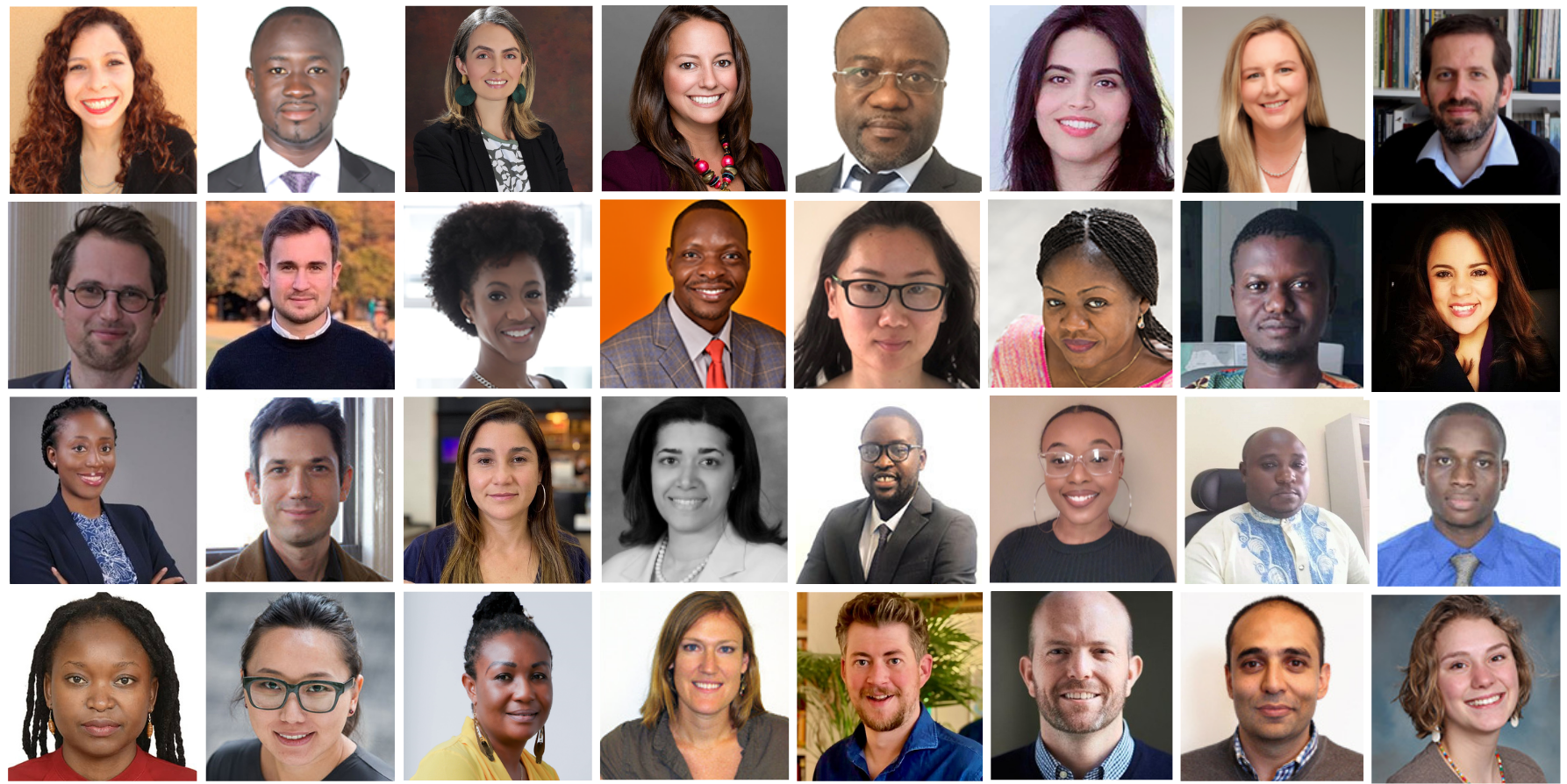
Under the Rainbow’s analysis surfaced NRGI’s DEI-related strengths and areas for improvement. In terms of NRGI staff, Under the Rainbow found an equitable gender balance and diversity in our ancestral origins, with a majority of staff reporting backgrounds in the Global South. This overall composition is however not reflected in NRGI’s senior management, which is dominated by the Global North. Additionally, the analysis found that there is some homogeneity in our class backgrounds and education. And very few staff identify as disabled, or as members of sexual or gender minorities. Another challenging area is that of the composition of NRGI’s advisory council and governing boards, which are majority male and Northern, with limited ethnocultural diversity.
The analysis also found that there is an imbalance in Global North-Global South dynamics when it comes to structure, culture, decision-making and knowledge production. As an organization known for our knowledge production, it is notable that standards of rigor are seen as being set by staff in the Global North. While credibility and rigor are key to our reputation and impact, the question of who produces knowledge and what knowledge is cited is at the heart of this issue.
Exacerbating this North-South dynamic is the predominance of English as a working language at NRGI. While a common language is needed, concern about language ability can lead to some staff not speaking up, or to share their perspective and expertise, and can contribute to a sense of lack of trust and safety.
Our action group drew upon these conversations, consultations and analyses to create an action plan which will set the course for NRGI’s work on DEI, articulating our ambitions and what our expected outcomes are.
Our commitments to advancing diversity, equity and inclusion
With our DEI action plan we aim to respond to these findings, by both leveraging our strengths and confronting the challenges surfaced. The plan will contribute to achieving the following goals:
Goal 1. NRGI staff use shared language and enact a common understanding of DEI ambitions.
Objectives:
- Create spaces for safe, courageous DEI-related learning in an inclusive manner
- Shared values reflect DEI ambitions and are enacted through our policies, practices and ways of working
Goal 2. NRGI’s culture is inclusive, its practices leverage and augment diversity, and current power imbalances are addressed.
Objectives:
- Increase multilingualism and inclusion through internal communications channels, meeting practices and valuing different expertise and experience
- NRGI’s external communications are multilingual, reflecting and showcasing a diversity of global perspectives and voices
- Voices and knowledge originating in NRGI’s program countries play a more prominent role in shaping NRGI’s strategy, priorities and contributions to global debates
- NRGI’s collaboration around research and analysis is equitable, constructive and taps more diverse sources of expertise
Goal 3. NRGI’s staff, boards and advisory council reflect its values and ambitions concerning DEI.
Objectives:
- NRGI recruitment and retention practices advance DEI goals and reduce unconscious bias
- NRGI boards and advisory council are more diverse and inclusive
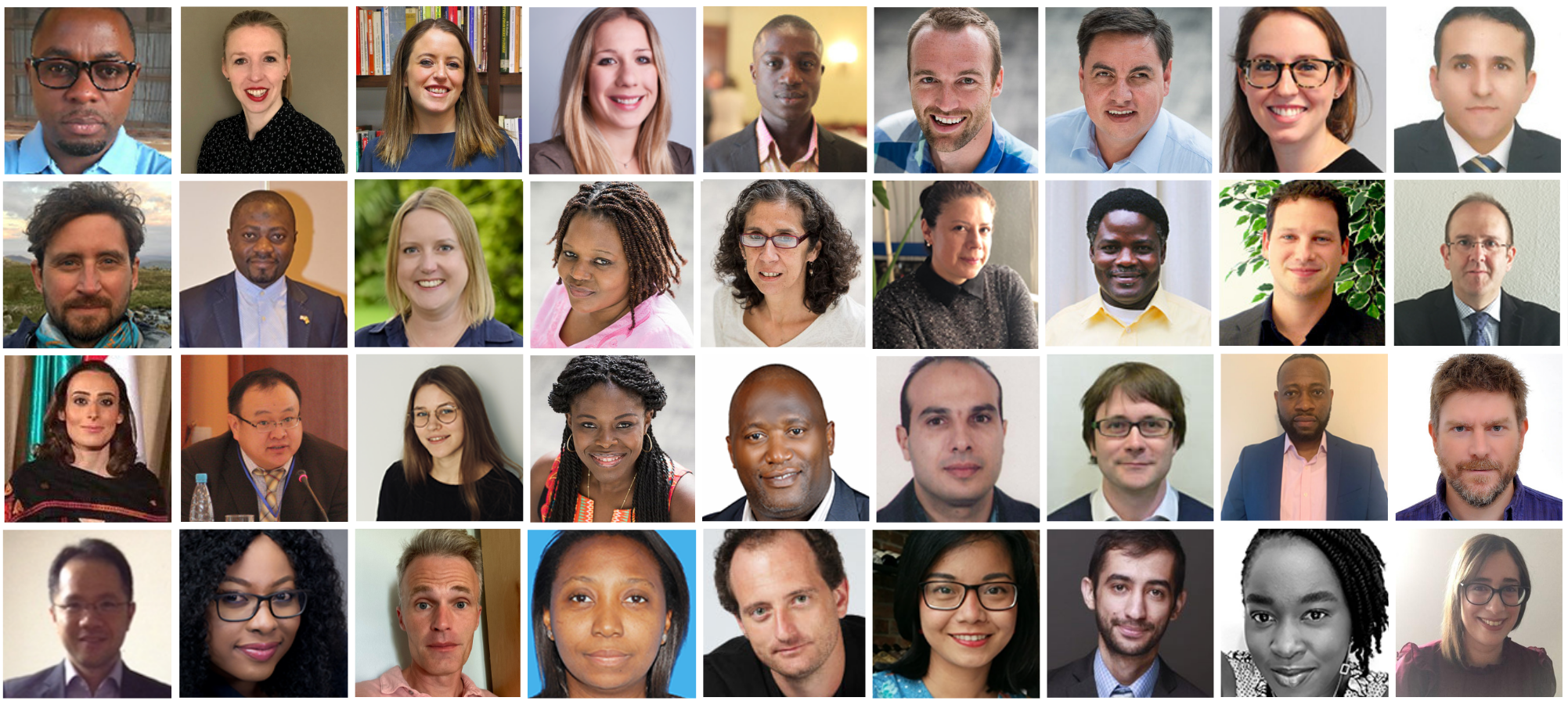
Mindful of the many external forces we face, NRGI’s 2022 DEI action plan identifies what concrete steps we can take to effectively improve the state of DEI in our own organization and to help shape the resource governance field more broadly.
Broader ambitions
NRGI on its own can’t change deep-rooted societal inequities. But we have a part to play in redressing past injustices and preventing future ones. Our action plan includes some initial steps that NRGI will take to contribute to greater equity in our field. For example: platforming more diverse voices in our content and creating working groups to ensure that our strategy and programming is more inclusive. We will also strive to integrate this work into the substance of our programming, including on a just energy transition, mitigating gender-differentiated impacts and expanding our stakeholder engagement to include marginalized groups.
Staying accountable to our commitments
NRGI is committed to learning and to ensuring that our plan isn’t a box-ticking exercise. Being transparent is part of staying accountable to ourselves, our partners and donors. As we implement our action plan, we will continue to listen to colleagues and partners, reviewing and adapting our DEI work regularly, and updating the plan annually. We will review progress on the implementation of the action plan monthly and we will share updates of our progress on our website. We recognize that success is a continuous journey to delivering lasting change, and we’re excited to have begun.
NRGI’s increased work on diversity, equity and inclusion has been made possible with generous financial support from the William and Flora Hewlett Foundation.
Celebrating Inspirational People Advancing Gender Equality in Extractives

NRGI is committed to the fight for gender equality, as highlighted in our 2020-2025 strategy. In 2021, the organization concluded work in partnership with the World Resources Institute on gender and extractives and is now exploring how to address gender imbalances in the natural resource sector, in line with our commitment to diversity, equity and inclusion.
And so we continue to deepen our understanding of the intersection of gender and resource governance. For this International Women’s Day, we asked inspiring colleagues, partners and training alumni about their own experiences, their perspectives on what’s needed to advance gender equality in extractives, what’s already working, and what excites them about the future.
Our gracious respondents were:
- Solange Bella Alima, FODER, Cameroon
- Alba Quintana Áchito, Akubadaura, Colombia
- Abiodun Baiyewu, Global Rights Nigeria
- Racheal Chagonja, HakiRasilimali, Publish What You Pay (PWYP) Tanzania
- Nafi Chinery, NRGI
- Mando Chiundaponde, Oxfam in Southern Africa
- Aida Diop, Women in Mining Senegal
- Elizabeth Echavarria, Solidaridad Network
- Ousseini Fati Halidou, Association des Femmes du Secteur des Industries Extractives du Niger
- Patrick Heller, NRGI
- Nazik Imanbekova, PWYP Kyrgyzstan
- Hanen Keskes, NRGI
- Carole Nakhle, Crystol Energy
- Winfred Ngabiirwe, Global Rights Alert, Uganda
- Beatriz Olivera, Grupo Regional de Género y Extractivas
- Alicia Ojeda, FUNDAR, México
- Yessica Prieto, Nacional de Proyectos e Investigaciones de Crudo Transparente, Colombia
- Sarita Ruiz Morato, NRGI
- Demba Seydi, PWYP
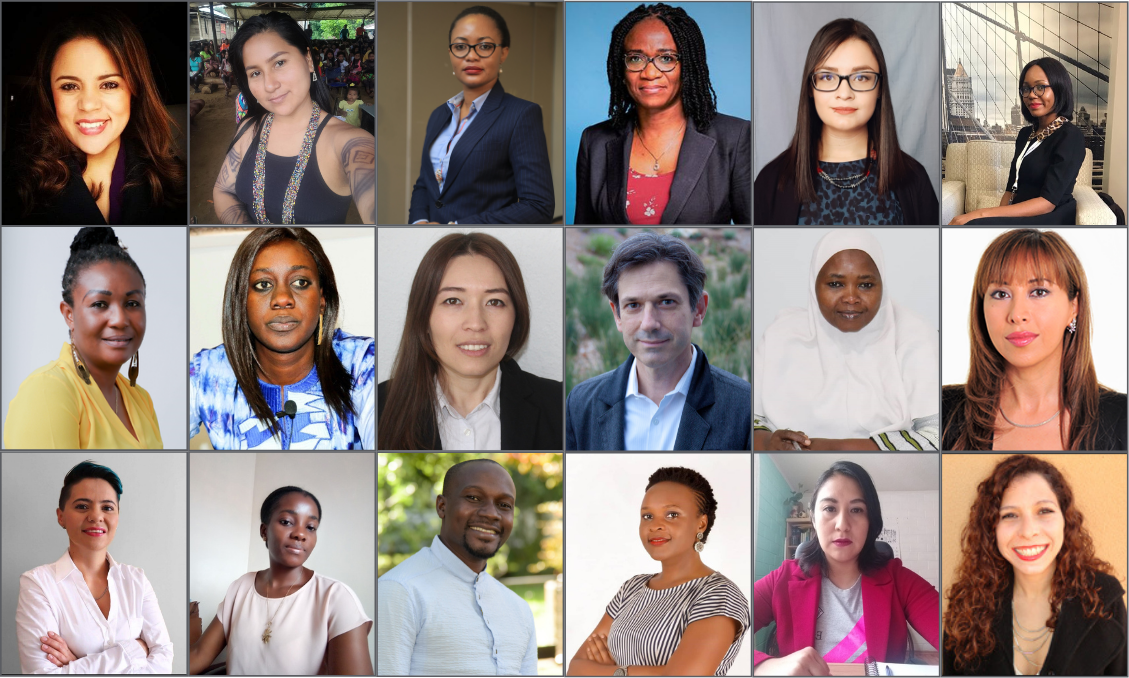
First row: Ruiz Morato, Quintana Áchito, Chagonja, Baiyewu, Echavarria, Chiundaponde
Second row: Chinery, Diop, Ndiaye, Imanbekova, Heller, Fati Halidou, Nakhle
Third row: Prieto, Bella Alima, Seydi, Ngabiirwe, Olivera, Keskes.
What is it like to work as a woman in the extractives sector, either more broadly or in leadership roles? What has been something that you’ve seen or experienced that has played a role in advancing more women in leadership roles?
Chinery: “When l find myself one of the few women in critical decision spaces, l realize my responsibility to represent all women. […] l am inspired by the quality of women’s leadership in the sectors and l am hopeful that this would influence decisions and actions to get many others into the sector and in leadership.”
Chagonja: “Working as a woman in the extractive sector is about amplifying the voices of communities that have not been given the opportunities to speak out and to engage with decision-makers, so that they can influence change. I feel a responsibility to speak out, so that the government takes action.”
Fati Halidou: “You have to value your ability and have confidence in yourself. I set clear rules and principles for myself to achieve my goals. In leadership roles, when women are in key positions, they excel and are as competent as they are honest. Being a woman in the extractive sector is not more difficult than elsewhere, you just have to take the plunge, assert yourself and seize the many opportunities offered.”
Nakhle: “In almost every industry, energy especially, brawn has been replaced by brain. That means what matters is whether someone is sharp, skilled and clear thinking enough, or narrow, incompetent, and intellectually weak, not whether they are a man or woman!”
How is your organization breaking biases to advance gender equality? How have you challenged and faced bias?
Ruiz: “NRGI is a very diverse organization committed to advancing the agenda around gender. I am challenging the narratives around exclusion and the actions that purposefully reduce the power of women. I am committed to supporting efforts that bring gender inclusion, equity, and diversity to develop our personal and work perspectives.”
Ngabiirwe: “We have simple but powerful rituals whether at the office or in communities that reinforce messages (and actions) on equality. These rituals/practices show full support and belief in the abilities of both women and men. We also have a gender and inclusiveness test that each activity implementation must meet.”
Ojeda: “At Fundar, we seek to transform the social norms that perpetuate inequalities, for example through hegemonic narratives that minimize women’s role in their land and for their defense. We recognize that progress can be made through the fight for the environment and the defense of land, recognizing that there are particular types of violence experienced by women who lead these struggles.”
Diop: “Women In Mining Senegal was founded, among other reasons, because of our members' personal experience of the difficult conditions and gender inequalities. This is what drives our efforts to improve women’s working conditions in the extractive sector. WIM Senegal is working on breaking down social beliefs, especially regarding the employment of women in the sector. In this context, we develop programs that promote role models to show that women can succeed in this sector and inspire the next generation.”
Baiyewu: “At Global Rights, we are changing the dynamics in the room. We are bringing more women to leadership tables in extractives dialogues and amplifying their voices until it is normal for them to lead and be heard.”
Seydi: “PWYP members’ commitment and determination to foster feminist natural resource governance have overcome some culturally based barriers to gender equality in the extractive sector.”
Imanbekova: “Through our work to remove the government's decree on prohibited professions for women in several industries, including mining, we encountered many stigmas: traditional, health-related, capacity-related, and economic-related. For instance, the majority of people in Kyrgyzstan, particularly women, think that some professions in the mining sector are simply not for women because women are future mothers and they have to look after themselves. Through our information campaign (articles in newspapers, video clips, TV shows, and online games), we worked hard to counter that stigma.”
Chagonja: “Previously most of the data generated in the extractive sector was about gender-based violence. But we forgot to extend the dialogue to what women are losing out on from extractives. At PWYP Tanzania, our approach was to expand our research to create a platform to further advance advocacy around women and extractives.”
Bella Alima: “FODER systematically incorporates gender mainstreaming into our approaches and strategies for action. Working as a woman in the extractive sector is about promoting equality power dynamics between women and men, ensuring that the specificities related to gender are taken into account in the management of natural resources, and encouraging representation of minority women in all local and national spaces that matter.”
Quintana Áchito: “We are working to strengthen leadership schools and access to justice for indigenous women to achieve equality and justice.”
How can more progress be made in advancing gender equality? What excites you when you look to the future?
Keskes: “Gender sensitivity is not just a section to fill out in a funding proposal. We have a responsibility to shift development practices by centering the voices and aspirations of women and vulnerable communities.”
Diop: “Today, it is essential for women working in this sector, directly or indirectly, to benefit from the gains made in terms of legislation so that they can promote them among stakeholders and decision-makers. Consequently, they can develop tools for advocacy, evaluation of public policies and accountability, such as the Senegal WIM Index, with innovative approaches and inclusive strategies for mobilizing stakeholders.”
Heller: “I am constantly inspired by the amazing women leaders at NRGI and across the extractive industries sustainability movement, we are building a strong approach to building a brighter future.”
Olivera: “I am excited to see that demands for women's rights are gaining momentum across Latin America; in particular, the voices of indigenous and rural women are gaining strength.”
Chiundaponde: “For me, this means taking deliberate action to inform, share knowledge, consult and learn from women, allowing them meaningful participation in decision-making and dialogue. This is what it takes to make the sector truly inclusive.”
Quintana Áchito: “I imagine a future in which women will be major authorities in territories, spokespersons for political and organizational projects, and also in the family environment. “
Fati Halidou: “The extractive sector is a sector of the future in which Nigerien women must take an interest by overcoming the prejudices that have long kept them out of this sector.”
Echavarria: “In my line of work, I have had the chance to meet powerful women miners who produce important proportions of key minerals. We should continue promoting their participation in inclusive markets so they can lead the way toward responsible production and widespread wellbeing.”
Prieto: “I am excited to know that the industry is opening up to social debates, questioning its hegemonic positions on gender equity and leadership roles headed by diverse people.”
Ruiz: “One of the most important exercises that we are doing as a global team is to create a shared understanding of gender that includes cultural perspectives. In this space, I feel fortunate to be a woman, to recognize the power that we have, and the courage of other women fighting for us and our future.”
The views shared are those of the respondents and do not necessarily reflect those of NRGI.
The Resource Remix: Suneeta Kaimal and Joseph Asunka Discuss Democracy and Natural Resources in Africa in New Podcast

In this debut episode, available on Apple Podcasts, Google Podcasts and Spotify, NRGI president and CEO Suneeta Kaimal is joined by Afrobarometer CEO Joseph Asunka. Afrobarometer conducts public attitude surveys on democracy, governance, the economy and society in more than 30 African countries.
NRGI · The Resource Remix - Episode 1 - Democracy and Natural Resources in Africa
During their conversation, Kaimal and Asunka explore the importance of citizens’ voices in key decision-making processes, what the energy transitions means for Africa, and the challenges corruption continues to pose to governance and sustainable development.
Asunka shares how Afrobarometer documents the different ways that ordinary people engage with their governments and leaders. Survey findings have shown that those surveyed see corruption as a persistent and major problem, which has increased over time, and worsened due to the ongoing pandemic and restrictions brought to contain the virus.
They discuss the importance of going beyond having strong governance and transparency policies and frameworks, noting a lack of implementation across the continent, as underlined by NRGI’s 2021 Resource Governance Index. Both agree that, without available information, civil society organizations and citizens are unable to monitor how resources and revenues are managed, especially in the context of narrowing civic space and the increasing pace of the energy transition. They also discuss recent political transitions in Sudan and Guinea.
Both note that addressing these key issues requires strong partnerships and collaboration, continued transparency and more work towards accountability, leveraging on recent advances in areas such as contract transparency and beneficial ownership.
Transcript
Suneeta Kaimal, NRGI: Thank you all so much for joining the first episode of The Resource Remix, the new podcast from the Natural Resource Governance Institute. We bring listeners dynamic perspectives on the cutting-edge issues affecting countries rich in commodities, from cobalt to natural gas to lithium. The need to transition to a post-oil future and the pandemic present these countries with a range of unique challenges and opportunities.
Please join us for future episodes in this series as we talk with some of the most innovative thinkers and practitioners seeking to shine a light on ways forward in this most critical and fascinating time.
I am Suneeta Kaimal. I have been with NRGI for more than a decade and now have the honor of serving as its president and CEO. I may be a veteran of NRGI, but this is the first time I am hosting a podcast, so please go easy on me.
Our guest today is Joe Asunka whom I have had the pleasure of knowing now for eight years. We met when Joe was part of the Global Development and Population program at the Hewlett Foundation, which is one of NRGI’s founding funders. He recently returned to his native Ghana, where he is now CEO of Afrobarometer. Joe welcome, and thank you so much for joining me in this first episode.
Joe Asunka, Afrobarometer: Thank you Suneeta, and really, thank you for having me on your first episode, I am really grateful and honored.
SK: It’s a pleasure to have you. So let’s just start with a question for the listeners who may not be that familiar with your organization. Can you tell us a little bit about Afrobarometer, and what its mission is?
JA: Thanks for the question and thanks to your listeners for the opportunity to share with you what Afrobarometer is and what we do. Afrobarometer is an African network of research organizations that conducts public opinion and public attitudes surveys across the continent.
And, as the name implies, at Afrobarometer we’re trying to measure something, measuring people’s attitudes opinions about issues of governance, the economy, quality of life and civic engagement, among other things.
We are currently working in about 30 plus countries. And for each round of the survey, we started in 1999. So we’ve been two decades into it now, and we have done eight rounds of the survey. Each survey takes about two years to complete.
We just completed the eighth round in 34 countries, and we have just started to launch the ninth round of the surveys. It is in the ninth round that we want to be able to get up to 40 countries and hope that coverage would give us more leverage in terms of engaging more with African leaders, especially at the regional level, in bringing people’s voices to inform policymaking.
The core mission for the Afrobarometer is that we believe that people’s voices matter when it comes to policymaking, because decisions about policy and development are all about the people, and we think we need to put people at the center of all those decisions to ensure that their priorities, their preferences, and what they experience daily in their lives, is reflected in what leaders do in policies.
SK: Thanks, I couldn’t agree more. I think in many ways, coming off of the spike of the pandemic and dealing with so many economic, political and social upheavals around the continent and around the world, being able to hear that voice of the people is more important now than ever before.
I’m curious, given how many surveys you conduct, if you could talk a little bit about what you think one of the most interesting survey findings is of late, and why.
JA: One that I would highlight is the growing demand for a deeper form of democratic governance. And I say so because when we asked respondents, and I mean the last decade, to choose between two options in terms of governance, whether they want an effective government that may not be accountable or an accountable government even if it is not that effective, most of our respondents go for the latter. They want an accountable government even if that government is not very effective. And this is surprising because, generally, people would think that in Africa everybody cares about the economy, their lives, livelihoods, not governance.
But what we’ve seen starting from a decade ago, when we had only about 50 percent of the population saying they prefer an accountable government to an effective one that is not accountable, that has grown over time. And now it’s almost 70 percent of the population wanting accountable governance. And I think that debunked a lot of myths about Africa and what Africans want because what we have documented is that they want a deeper and meaningful form of governance than just delivering economic benefits.
SK: Thanks so much, Joe, so interesting, and obviously we know from many resource-rich developing countries that corruption is actually one of the major obstacles, not only to that accountable governance but also, of course, ultimately, to sustainable development.
I’m curious if you can talk a little bit about some of the recent Afrobarometer surveys, in which we know Africans have shared that corruption problems are actually getting worse and that in many instances governments simply aren’t doing enough to address them. Could you describe for us, what key trends in citizen perception we’re seeing around corruption, and how should that inform the strategies, the interventions, the work that organizations like the Natural Resource Governance Institute, but also our partners across Africa, should be focused on?
JA: Measuring corruption has always focused on the elite level expert opinion in terms of what the practices are like in each country. But from our surveys, we get to experience and hear the ordinary, the day-to-day lives of people, and how they experience different types of corruption. And our documentation has shown there are steady views about the levels of corruption, especially in the recent, maybe in the past five years, and after covid had hit.
That perception and view that corruption is the major problem, has actually increased over time. And so, in many ways, many things influence this.
First, starting with national elections. There are lots of people who get this, that elections and the way they are run are not clean enough and that there’s a lot of dirty money that goes into politics. Both are making politics very expensive, which then means that people who get into government find ways to recoup some of their expenses in order to pay off their debt.
And then, of course, they start amassing some of that wealth towards the next election. What happens, because of the increasing cost of elections, people get this feeling that corruption is likely to become rampant because politicians will have to pay their debts once they are in office. So that’s one trigger that we see consistently, people reporting higher levels of corruption among certain public offices.
The second piece is when it comes to issues of procurement. There are lots of scandals on procurement that easily leak into the public domain, and as long as people hear about how procurement processes have been used to siphon public resources for private gain, that just fuels our perception. We’ve seen lots of those stories being the basis for what people think is happening in their communities, within their countries. And you cannot begrudge them because if these scandals continue to be the case, of course, it gives us a signal that this is what is happening, that there are some levels of corruption in the public sector.
The final thing I want to note here is, usually, certain expenditures that governments embark on are not well explained to the public. And once people hear about those extravagant expenses so, for example, if the country wants to buy a presidential jet to the tune of 100 million dollars and there’s no explanation to the public as to why and what is the rationale for it, that can provoke that view that public officials just want to use public monies for benefits that are not necessarily in the interest of the public. That fuels those views that corruption is rampant on the continent. And as I said, in the past 10 years, we have seen it take up and up and up, and people feeling that corruption is rampant in their countries.
SK: Thanks so much, Joe. I want to pick up on a couple of points that you made. First of all, around the gap between having these great policies on the books and great frameworks, but then not actually seeing that implemented in practice and, as you are aware, in the 2017 Resource Governance Index, we found this trend, looking in countries around the world of a growing gap between great policies on paper and poorer practices, and we actually in our new 2021 Resource Governance Index are seeing the persistence of that trend, and so I think this is an issue that collectively we really need to address.
I think, by contrast, we are seeing good progress on contract transparency, increasingly on transparency of suppliers as well, which speaks to hopefully a positive trend or a tipping point around that. But, as you said, one of the most important things is making sure that there is that active civil society that can participate when information is becoming available and to push that public debate, that public dialogue and its civil society, its citizens, the media as well. And we know that one of the challenges to democratic accountability is the closing of civic space and media coming under increased pressure in many countries around the world, but also many countries in Africa. And so I am wondering if you could talk a little bit about any insights you’re getting from your surveys on citizen engagement and the ability to actually hold governments to account.
JA: So it comes back to leadership responsiveness, to citizen engagement, and I think the closing of civic space, which seemed to have been on the rise, even in the pre-pandemic period. At the same time, we’ve gotten to a point, where the pandemic may have created even more problems for us because what we had tried to salvage initially may have been undermined by the onset of covid-19, which just creates more opportunities for governments to shut down dissenting views and the like.
And what we are generally trying to do is document the different ways that ordinary people engage with their leaders, both at a local level, nationally and globally.
And over time, some of the areas we document are people’s participation in community meetings, getting together with other people to reset particular issue that is of concern to them, contacting their leaders, whether it is local or national leaders. And then, the act of engaging with leaders in ways that can bring an outcome of interest to them. And what we have when it comes to contacting leaders, local leaders tend to be the most contacted. Whether it is the religious leaders or traditional leaders at the community level, they are the ones that people mostly go to. When it comes to elected leaders, the contact is a little less, and perhaps for a good reason that elected leaders are not always in the communities, and so they don’t get to contact them.
Nonetheless, elected leaders, as opposed to being responsive and listening to the constituents in some way… what we have learned from our surveys is that the citizens do not think that the elected leaders actually make time to listen to them. And this is a concern we documented all over and over again, that elected leaders, except during elections, never make time to listen to ordinary people. So when it comes to whether or not people feel like they can make a difference, when they actively engage in a process, it’s only a few people who think so, not more than 30 percent of our respondents. But we realized that people who feel like their engagement can make a difference are the ones who actively do the engagement, so it’s like self-efficacy. They believe, “that my actions will lead to a good outcome or an outcome that I am looking for,” or at least influence the outcome in some way. It’s a big driver of whether or not people actually engage, whether with their elected leaders in town hall conversations, or even local leaders.
What I am trying to figure out, especially in thinking about how to reactivate civic engagement, one of the benefits we’ve seen in the covid period is that everybody has realized that governments with lockdowns and media censorship, in the name of the covid-19, has reawakened people because in the last survey we did, between 2019 and June 2021, what we documented was that, even though Africans were committed and willing to accept lockdowns and comply with them because of their health reasons, a large majority is now concerned and think that the governments may use it to increase their power.
That is a big fear on the part of people that civic space is likely to get worse after the pandemic, because some of the measures that were put in place as temporary may be beneficial to setting actors in power, and they may not be willing to let go of those actions, interventions that they put in place. And this is a fear that a lot of people that we’ve spoken to have expressed. But we also see a positive value out of this. Because people are aware of the risk that the covid-19 might pose to civic space, it is possible that people are more willing now to wake up and fight against the tendency to close civic space.
For civil society organizations working in this space, I think, mobilizing people, especially when it comes to social movements against civic space closure, might be much easier now given the awareness of people and the fear that they expressed to us that they think that governments might use this to increase their power.
SK: And I am curious: we’ve seen so much political upheaval frankly around the world in the pandemic, but also within Africa, political and social changes over the past few years, even just recently tremendous upheaval in Guinea, there have been crackdowns on media in Nigeria, there’s been governments overturned in Tunisia, new leadership in Tanzania and Zambia, and elections that are also accompanied by internet shutdowns in Uganda and the Congo. What you said earlier about the elections and corruption is so interesting and it brought to mind Indonesia, where there’s a very similar problem where you pay for votes, and so it breeds this kind of clientelism that is incredibly undermining to democratic accountability.
I am curious: as you reflect on these trends, political upheaval across the continent, do you see common threads that unite these political moments? And as you look into your crystal ball for the future, do you see trends or opportunities to shift politics across the region?
JA: I think, in many ways, many of the shifts that we have experienced in the recent past, I like to call them, the highs and the lows on the continent in terms of the changes. Of course, these are very different types of changes across the continent and there may not be a common thread across all of them, but they are setting on the line issues that one can identify. When we talk about the highs in terms of what really happened then it sounds very positive, talking about Malawi and the Supreme Court intervention in that fraudulent election that ended up having the opposition come into power. It was a really positive sign for everybody. And now the government coming into power under those conditions does give people the motivation, the signal that positive things can happen when institutions work the way they are supposed to. The same thing happened in Zambia with credible elections that delivered the victory to the opposition, which, by and large, young people played a big role in that process. One would say: given that Africa is a very youthful population, the younger generation really needs to do something, they can change the way politics is done on the continent. Those two are positive signals. And of course, power alternation is possible even in places where we have not seen power alternation in a long while.
When you look at some of the changes, even though they are not common thread, we know that they are positive changes that are worth emulating and continuing to build on, so that if the Supreme Court in Malawi is stable to do this, that means the institution of the judiciary can work well if we mean to actually strengthen them to do their work well. The same thing in Zambia, we know that the younger generation can make a difference when they mobilize and want to have effective change.
SK: Thanks Joe, and I think what is interesting and what you are saying is that there are these different trends or moments that are challenges from a political perspective, but also opening spaces and opportunities. And one of the things that we have seen in terms of the possible manifestations and social unrest is that, in the context of the pandemic and also in the context of the energy transition, natural resources, which already had significant expectations around them for benefiting the public good, are now seeing even less benefit. So there is this significant risk that this will drive greater social unrest. And the energy transition is something that is on a lot of people’s minds, while also their concerns that say, we have to focus on the here and now, we need to focus on meeting the needs of our citizens and our populations. And in some African countries, the energy transition is seen as this kind of agenda that is imposed from afar.
So I am curious, Joe, if you can talk a little bit about the perspective that you are hearing from citizens, also from governments, on the energy transition, and how to consider the prioritization amongst the many challenges that people are facing on the African continent.
JA: So for the energy transition, even though we haven’t asked specific questions to our respondents in terms of what their perspectives are, it suffices to say two things. One, the reality is going to hit everybody. How far or how long it is going to take to hit everybody is what the concern should be for several natural resource-rich countries.
I think the challenge is the short-term nature of the way governance, governing actually works on the continent, and if for countries like Ghana elections are held regularly, then that long-term thinking, what will fossil fuels become in the next 10, 20 or 30 years. It feels too distant a future for politicians who are in power now, or who will come to power in the next four years. To stop and then think about what that means, they are just probably not on the radar. They may think about it, but to take it into account in terms of strategizing for what happens in the next 50 years to ensure that countries are still on track and can continue to finance their development is probably not the case.
And this is where I see the work of NRGI and other actors in this space to be so crucial because we don’t see the danger that is looming, that if fossil fuels become less profitable, and that is going to be the case because over time commodity prices keep fluctuating and governments feel it. They know that when prices drop this is what happens to their budgets.
But then, if the prices were to drop even much lower than what they are now, and they remain consistently so for the next 10 years, how are you going to survive? And I think this is where I just hope that institutions like yourselves with the expertise do this kind of modeling and the scenarios that may emerge, as the value of resources, and especially as fossil fuels begin to decline because they are going to decline regardless. It’s not somebody’s choice. But that climate change agenda for sure, and other issues that we want to address to ensure that the climate, or at least our world remains habitable for us for years to come. The change is necessarily going to come. What does a scenario look like for different countries? I think that would be a super useful way of really awakening governments, even if they are thinking short-term, to know that even in that short-term it can have disastrous consequences if you continue to rely on them.
I don’t think that governments are not aware of this. Surely, they have experts in there, who know and are aware of this. It comes down then to how to activate them to be more conscious about taking practical steps towards planning for the transition. And I know that your institution and others have been thinking about this transition and how do you then bring that into governments and make sure that the scenarios play out in their heads and their faces in a way that enables them to take concrete steps and actions to address them.
SK: Absolutely, thanks Joe, and I think this is, as you said, why we are feeling this urgency around resource governance because, on the one hand, we know that there will be a decline in fossil fuels, how slow, how fast, those are the questions, who goes first, and making sure that that’s fair and equitable, is such an important conversation.
But on the other hand, there is this tremendous opportunity as well with the minerals that are critical to the energy transition. Making sure that countries balance both how to seize the opportunities around critical minerals and how to manage the risks around the fossil fuel decline just puts natural resource governance really at the center of the conversation and even more critical than before.
One question that I wanted to pick up on from some of your former work, Joe, is that there have been many organizations within the development space, within the transparency, participation and accountability space, really critical to that model of democratic, accountable governance that you spoke of, but haven’t necessarily seen an end to systemic racism, to exclusion, to injustice, to inequality. I think many of us in the development field, in the transparency, participation, accountability fields, are querying what we need to do differently to be able to really shift power, to be able to shift agendas.
So I am curious: what advice you would give for global organizations like NRGI who are seeking to advance this agenda of decolonizing development and how should we be doing our work differently to be effective, but also to be really addressing this persistence of inequity and exclusion.
JA: Let me start by saying that I have always firmly believed in partnerships. I think the issues we all work on, whether it is governance, people’s livelihood, or the economy and the health of the economy, they are all interconnected. We live in such an interconnected world that any issue, any action we take, or the intervention we implement, has implications at all levels of government. This is where the partnerships and interconnectedness come in because when you talk of shifting power, my view of it is more about creating partnerships that are of equal footing and taking advantage of each person, each partners’ comparative advantage. I think that’s one level of it, so thinking about power-shifting, and not just saying, “I have power, and this is yours, I give it to you, take it and that’s your power now,” that is not the case. Global institutions like yours and local institutions that operate on the African continent like ours - we have different strengths. The strengths that institutions like yours bring into the frame may not necessarily exist in some of the local partners on the continent who know the context we work on. This is where I see the complementarities coming in, in thinking about ways that we can advance our collective agendas, global agendas, such as illicit financial flows, and trying to stop the leakage of public resources into different locations. That is a global effort that requires everybody’s hands on deck.
If it comes to local issues like, whether it is budget or procurement issues, that combination of expertise from external sources and local expertise, working together and taking advantage of each other’s comparative advantage to advance their agenda, is super critical. So I would say shifting power in that sense, that is it is not somebody giving power to one but that the partnerships are on equal footing.
The second component is about openness and transparency about the partnership and the relationships that exist, and always it comes down to resources. The budgets that we’re going to use to run a particular program, how open are we about the whole envelope, and what goes into one. And I think anytime you have a partnership, where there is no common understanding of the resource envelope, then the power dynamics begin to play in. How do you take away that power dynamic and make sure that there’s visibility in the resource envelope that allows you to then work with each other in a way that is clearly on equal footing and everybody understands what it is, what is the amount, what is the resource, what envelope we’re working on, what are we hoping to achieve, and with what we have, are we able to deliver on the outcome that we hope for? I think if we do those two things well, I see that to be a clear basis for shifting power, that our operations are transparent, we are talking about our resource envelope with everybody, and that we operate on an equal footing and we just take advantage of each part, our comparative advantage. And once that is done, I don’t think there’s any further way to shift the paradigm in partnering in that way.
SK: Thanks Joe, I have to say, as you know, NRGI does work in partnership on many different levels, but I think it’s so important to do that listening, that learning, that acting in the spirit of that partnership, and I think that’s something we can all do better.
I wanted to just ask a couple of last questions. Obviously, the world has been in so much upheaval and all of us are trying to figure out what the right path and course are for our organizations in this moment. And so, Joe, as you have just recently taken up the helm at Afrobarometer, I am curious, what is it that keeps you up at night, what are you really worried about, not with the organization, but as you think about the world at large, and what are you excited about? What are you seeing on the horizon, that maybe gives you that spark of hope to persevere?
JA: Overall, I think my biggest concern in terms of general development on the continent is the sense of general frustration that we have documented from our findings, that the extent to which people want democratic and accountable governance, endless supply of it, the gap is just too big and it’s beginning to widen, that people are looking for this real form of democracy that will deliver accountability, deliver responsiveness to settlers. And yet on the supply side, people are completely not satisfied with the way democracy works.
And we have seen that just tick down from 1999 to date. It has just been a downward trajectory. And unfortunately, in the last round, it just went even further down in terms of people’s satisfaction with democracy. So there’s this anxiety in me that if people are increasingly being frustrated, and several of our respondents also tell they feel that their countries are going in the wrong direction. So you have, especially in Africa, a very youthful population that is getting increasingly frustrated with the way democracy works and they feel that their countries are not really heading in the right direction.
We are just sitting on a time bomb, and something might just explode. I think that’s a big risk, and that is something in terms of development that I am really concerned about. How do we bridge the gap between the demand and the supply of democratic governance?
But then it takes me to what keeps me excited. I know that the work that we do in this space does have an impact because anytime we go to speak to people, whether they are in a very remote location or a gated community, we get the same sense, people really get to engage and talk about their frustrations and their feelings. It used to be the case that people would say, doing public opinion in Africa may not work because people are busy with their lives and they may not have time to talk, but I can assure your listeners that whenever you sit down with somebody to talk about these issues, this is when you see people open up and speak. There’s always a sense that people may not tell you the right thing, but that we have found to be very false, even if people think you are from the government because often in our surveys, we end the survey by asking, “who do you think sent us?”. Sometimes people will say, “We think it’s the government that sent you.” Partly because of the types of questions we ask, even though we tell people upfront that we are from civil society, it is even at that point that people are ready to vent their frustrations. They are ready to engage, and they try to give their reasons why they say what they say in response to your questions.
I get excited by the fact that we’re able to gather all this evidence and put it together and then bring it to the staff of policymakers present it to them in ways that they can incorporate in their work.
We believe that because we make the data available publicly, we know that lots of institutions use this data in ways that are beneficial for policymaking, even if they don’t acknowledge the data in any way, and that is not the purpose for gathering the data. We want the data to be used to influence policy. So I get excited about the fact that I am working in an institution that is able to deliver on that front.
SK: Thank you so much, Joe, and thank you for taking the time today to join me for this first episode of NRGI’s new podcast. I think one of the big takeaways is the importance of continuing the conversation at all levels. And I just want to thank you for sharing your perspective, your experience, your expertise, and also for the good work of the Afrobarometer.
JA: Thank you so much. And thank you to you and the NRGI team, I have appreciated your work all along and I really value what you do. I know you have a big role to play going forward, especially with the energy transition and climate change. These are critical issues that take several actors to address. And I am glad that you are here. I look forward to engaging with you further.
NRGI's podcast The Resource Remix explores new futures for commodity-exporting countries in the energy transition.