
NRGI Submission to the Sixth Just Transition Work Programme Dialogue: Minerals and Equitable Value Chains
NRGI submitted its views to the UNFCCC ahead of the Sixth Dialogue of the United Arab Emirates Just Transition Work Programme (JTWP), held in Baku, Azerbaijan, on 10–11 September 2026. The dialogue focused on just transition pathways for the industry sector, including technology, innovation and equitable value chains.
Drawing on our work in resource-rich low- and middle-income countries, the submission examines how mineral-producing countries can translate growing demand for transition minerals into lasting development benefits. It explores opportunities to retain more value through mineral processing and related industries, while addressing economic risks and environmental and social harms.
NRGI identifies priorities for national action and international cooperation:
- Ground mineral value addition strategies in national development goals, economic feasibility, market analysis and rigorous assessment of costs and benefits.
- Involve citizens in decision-making, protect community rights and tackle corruption.
- Provide technical and financial support to strengthen national strategies, institutions and regulatory capacity.
- Ensure mineral-producing countries help shape international rules and partnerships affecting their development prospects.
The submission also considers how the JTWP and the Just Transition Mechanism can support these efforts through finance, technology transfer and institutional capacity building.
Beyond Extraction: Why COP32 Must Redefine Africa's Role in the Global Energy Transition

As the world prepares for COP31 in Turkey, Nana Dr. Antwi-Boasiako Amoah, Chair of the African Group of Negotiators on Climate Change, looks ahead to COP32 in Ethiopia in 2027. He argues that COP32 offers Africa an opportunity to redefine its role in the global energy transition, using its critical minerals to build stronger economies, deepen regional cooperation and secure a fairer share of the value they create.
In 2027, COP will return to Sub-Saharan Africa for the first time in 15 years. When historians reflect on this moment, Africa should be remembered not just as the host of another climate conference, but as the continent that helped redefine action at the intersection of climate and development transformation.
If this lofty ambition is to be realized, it will depend on how the continent comes together to leverage and govern its critical transition minerals. Around the world, governments and other non-state actors, especially the private sector, are investing trillions of dollars in clean energy technologies and infrastructure. Demand for the minerals needed for clean energy technologies is expected to continue rising sharply over the coming decades.
Africa is well placed to benefit from this new minerals boom, as it is rich in many critical mineral reserves. To name just a few examples: the Democratic Republic of the Congo remains central to global cobalt production; Zambia and the DRC anchor one of the world's richest copper belts; Guinea is indispensable to global bauxite supply; and South Africa continues to play a leading role in platinum group metals.
It is clear that the success of the global energy transition will depend significantly on Africa and her resources. Yet, there remains a real risk that Africa could be left looted unless the transition is deliberately designed to create value for the continent. This paradox defines our era.
Twenty years ago, the global resource governance movement transformed the conversation from one centered on extraction of resources to one focused on inclusive development through transparency, accountability and citizen participation. Organizations such as the Natural Resource Governance Institute (NRGI), together with governments, civil society and international partners, helped place accountability, transparency and better governance at the heart of resource management.
Today's challenge is different. Africa must not only govern its minerals better. It must negotiate its future better.
For more than three decades, the African Group of Negotiators (AGN) has helped shape international climate negotiations by advancing African priorities on adaptation, climate finance and Loss and Damage. COP32 now offers the opportunity to extend that leadership to one of the defining issues of this century: the governance and diplomacy of critical minerals.
Across the world, major economies are redesigning industrial strategies around secure mineral supply chains. The European Union's Critical Raw Materials Act, the United States-led Forum on Resource Geostrategic Engagement, China's International Economic and Trade Cooperation Initiative on Green Mining and Minerals and similar initiatives elsewhere reflect a profound geopolitical shift. Minerals are no longer simply commodities; they have become strategic assets.
Africa's greatest strategic asset is therefore not simply its mineral endowment. It is its collective bargaining power.
For too long, success has been measured by how many tons of minerals leave African ports. That is the wrong measure. Success should be judged by whether mineral wealth creates decent jobs, reliable energy systems, stronger public institutions, competitive industries, technological capability and lasting prosperity for African citizens.
This requires a new generation of mineral diplomacy. Not diplomacy centered solely on concession agreements, but diplomacy that connects climate ambition with industrial policy, infrastructure investment, technology transfer, regional integration and economic resilience.
But better deals alone will not deliver transformation. Without transparent institutions, accountable governance and public trust, even the most ambitious mineral partnerships will fail to deliver on their promise.
History has shown that mineral booms can fuel corruption, environmental degradation, elite capture and community conflict when governance is weak. Conversely, countries with transparent licensing systems, contract disclosure, beneficial ownership transparency, sound fiscal management, environmental accountability and meaningful citizen participation are better positioned to attract responsible investment. This enables them to convert mineral wealth into long-term development.
Governance is the defining key in this regard. Strong governance strengthens investor confidence while ensuring that mineral wealth contributes to sustainable and inclusive development. So, good governance is not an obstacle to investment. It is one of its greatest competitive advantages. The challenge before Africa is not to choose between negotiating better partnerships and strengthening governance, but to recognize that the two are inseparable.
The meetings of the parties under the UNFCCC, usually referred to as COP, have often been criticized for being heavy on talk and light on implementation. We are determined that COP32 should be different. It presents an opportunity for Africa to champion an African Minerals and Just Transition Compact—a practical framework that aligns climate ambition with development ambition and builds on existing African Union frameworks, including Africa’s Green Minerals Strategy, to strengthen coherence and collective action. The Compact would establish a new partnership between producer and consumer countries rooted in good governance and based on shared prosperity rather than simple resource extraction.
We believe such a Compact should rest on four principles.
First, mineral partnerships should promote long-term economic transformation built on a clear, measurable ambition: by 2040, African countries should collectively double the share of value retained from their transition mineral resources. Estimates from the African Development Bank (AfDB) suggest that less than 20 percent of the total value of many mineral value chains is currently retained on the continent. Today, most African countries capture only a small fraction of the total value generated along mineral supply chains, often limited to royalties, taxes and low-value extraction activities, while the bulk of value accrues through processing, manufacturing and downstream industries located elsewhere. Doubling this share would thus require a more equitable capture of tax and fiscal revenues from mining, alongside harnessing increased value from processing and manufacturing. This in turn would depend on skills development, technology transfer, energy and infrastructure development and regional economic integration.
Second, Africa should focus on regional value chains instead of isolated national projects. By leveraging the African Continental Free Trade Area (AfCFTA), coordinated policies and strategic infrastructure, countries can collectively maximize the benefits of mineral development.
Third, climate and development finance must support mineral-producing economies in building productive capacity, not only in expanding extraction. Multilateral development banks (MDBs), climate funds and development partners should establish a dedicated facility, anchored in the MDB Joint Coordination Framework on Critical Minerals, with an initial capitalization of US$25 billion to provide concessional finance for geological data, renewable energy, transport corridors, industrial parks, research and innovation, governance reforms and workforce development. This figure reflects indicative estimates of the scale of investment required across priority areas, drawing on analyses by institutions such as the AfDB, IEA and World Bank on the infrastructure, industrial and governance investments needed to support mineral-based development.
Fourth, transparency, accountable institutions, contract disclosure, beneficial ownership, environmental stewardship and meaningful community participation must become defining features of responsible mineral partnerships.
To put this Compact into action, we will need to enter a new era of cooperation between producer and consumer countries. We believe there is momentum in this direction, and 2027 can be a turning point: leveraging the opportunities presented by African leadership of COP32 and UK leadership of the G20 to co-develop this new framework grounded in mutual accountability, local value creation and long-term economic transformation.
Remember, Africa does not seek to slow the global energy transition. On the contrary, our countries have contributed the least to climate change while experiencing some of its most severe impacts. Africa has every interest in seeing the transition succeed. But success cannot be measured only by the speed of global decarbonization. It must also be measured by whether the transition creates opportunity where the critical minerals originate. A fair and just transition is what Africa demands, and this Compact will help to deliver it.

Nana Dr. Antwi-Boasiako Amoah chairs the African Group of Negotiators (AGN) on Climate Change for 2026–2027, representing Africa's 54 countries in UN climate negotiations. He is Director of Adaptation, Climate Resilience and Risk Management at Ghana's Environmental Protection Authority and previously served as Lead Negotiator on National Adaptation Plans for the G77 and China. He also lectures part-time at the University of Ghana's Centre for Climate Change and Sustainability Studies. He contributed this piece as part of NRGI's 20th anniversary thought piece series on the future of resource governance.
The Connective Fabric of Natural Resource Governance: Reflections from UNGA and Climate Week

Last week, a delegation from NRGI attended the UN General Assembly and Climate Week NYC. Below are our reflections from across more than 20 sessions, side events, our 20th anniversary convening and meetings, with partners from government, civil society, Indigenous Peoples, multilaterals, philanthropy and industry.
Natural resources rarely dominate the headlines at the UN General Assembly, yet they underpin almost every item on its agenda. Whether conversations centered on climate, economic development, trade or geopolitics, the governance of oil, gas and minerals ran through many of them.
That role, however, too often remains implicit. Elevating resource governance as a priority is essential if global efforts on climate, development and security are to deliver equitable outcomes for producer countries and their citizens, and a healthy, sustainable future for all of us.
Security and trade have reframed the journey, but not the destination
Energy security has displaced energy transition as the dominant lens for energy policy, with decisions increasingly driven by geopolitics and cost of living rather than decarbonization. While the end goal of sustainable energy and economic futures remains, this marks a structural shift in the narratives that shape policy and in how influence is exercised.
In the minerals sector, a trade lens now dominates, even during a “Climate Week”. Green industrialization was a central theme, welcomed by some and viewed with skepticism by others. At a UN-hosted Solutions Dialogue on the subject, producer countries, particularly those from Africa, stressed that high costs of capital and limited fiscal space must not constrain their economic and trade ambitions. African participants were clear that the gap is now implementation, not strategy: frameworks such as the African Mining Vision and the Africa Green Minerals Strategy already exist. Because no single country holds every mineral, energy source, skill and market, enabling countries to achieve more value requires regional integration. The African Continental Free Trade Area (AfCFTA) serving as an industrial platform rather than only a trade agreement. Success, many argued, should be measured by the jobs, skills and productive capabilities retained on the continent, not by processing capacity alone. In our remarks, NRGI emphasized the need for additional financing and technical support so that producer countries can design, implement and monitor value addition and diversification strategies that truly meet the needs of their people, and enforce high human rights, environmental and governance standards.
Green industrialization could serve as a bridge that brings mineral trade and climate policy closer together. We are looking forward to further progress at COP31 in November, as green industrialization is a key priority on the Action Agenda launched by Türkiye last week. Looking to next year, NRGI is also supporting a shared agenda on equitable mineral partnerships across the COP32 and UK-led G20 processes, where African countries have an opportunity to connect their climate positions with their leverage as producers of critical minerals.
"Critical for who?": equity and the governance gap
With “critical minerals” being used so often, the question "critical for who?" recurred throughout. Across discussions, there was a unifying call for a new and more equitable economic and political paradigm, but how this plays out in practice remains highly uncertain. There were multiple calls (including from NRGI) for critical minerals to underpin just, country-led transitions that serve producer countries' development aspirations, respect the free, prior and informed consent of Indigenous Peoples and frontline communities, and remedy legacy environmental harms. Several sessions went further, asking not just how much revenue extraction generates but whether it preserves national wealth across generations. Without this, producer countries risk exchanging finite mineral wealth for limited revenues while leaving depleted assets and environmental damage to future generations.
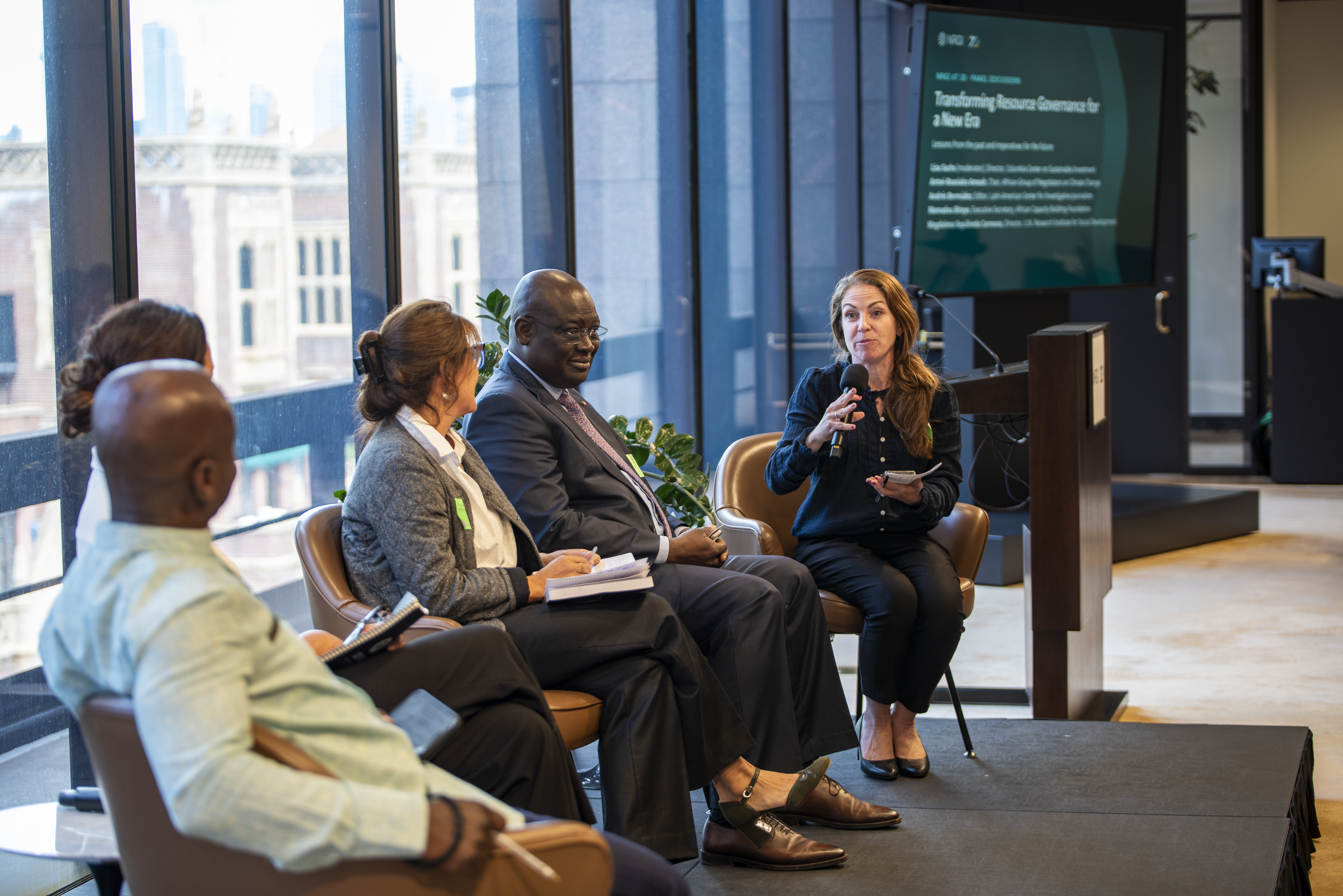
While critical minerals are the focus, the obstacles to fairer and more prosperous societies are structural and systemic – a theme that echoed throughout including in NRGI’s 20th anniversary event. Low- and middle-income countries remain underrepresented in setting new standards and paradigms, despite bearing their costs.
Encouragingly, the discussion has moved from what must change to how. Reformers shared approaches ranging from multi-stakeholder engagement and narrative storytelling to strategic litigation, the quantification of decommissioning liabilities and evidence on the financial materiality of community engagement. Each aims to ensure that community rights are respected and that polluters remediate the harm they cause. A recurring message was that affected communities need agency, not simply better consultation: access to information, the capacity to negotiate and the ability to speak for themselves with governments, companies, investors and financiers. These “unbankable” elements often determine whether supposedly bankable investments succeed.
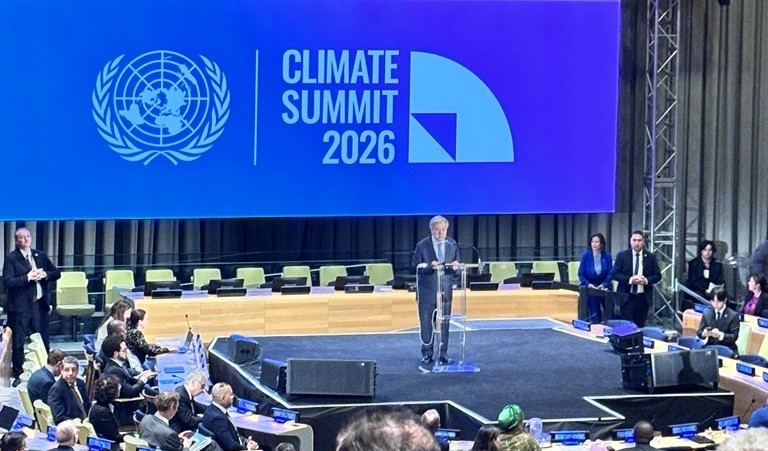
Concrete openings exist to keep making progress. At the UN Climate Summit, the Secretary-General announced a new country support mechanism for six mineral-rich developing countries to implement the recommendations of the UN Secretary-General's Panel on Critical Energy Transition Minerals. Having served on the panel, NRGI and our partners have pressed for this follow-through, including in this joint letter last July. We welcome the mechanism. Connecting with technical assistance partners outside the UN to deliver tailored, demand-led support will be critical to its success. (Learn more: See our video and press statement released during the week). The push for an International Panel on Inequality and next year’s planned SDG Summit offer further entry points to center producer countries in debates on the future economy. The ongoing review of the IFC Performance Standards is another, as these standards shape the practices of commercial banks, export-credit agencies and mining companies well beyond the IFC itself.
Artificial intelligence and the resources beneath it
Some described this as the "AI UNGA". Technology leaders addressed the Security Council, many world leaders mentioned AI in their speeches, and there were countless AI-focused side events. Yet beyond limited discussion focused on data centers, few conversations linked AI development to the minerals that build and power it. This is a gap that policymakers, companies and civil society alike must close.
A notable exception was a discussion convened by the government of the Democratic Republic of the Congo, entitled “AI and the New Geopolitics of Peace and Security”, in which NRGI participated. It followed a July Arria-formula meeting, held during the DRC's Security Council presidency, which called for a global normative framework reconciling peace, security, transparency and sustainable development. NRGI has provided technical input to that process, and this intersection is emerging as a key policy space.
The DRC's leadership is itself both noteworthy and an opportunity. It shows how low- and middle-income countries can shape emerging global norms on minerals, security and AI, rather than simply adopt rules set elsewhere.
A fragmented landscape demands trusted brokers
While emerging coalitions and new opportunities are being born of the current upheaval, fragmentation and polarization remain a challenge. Progress will depend on trusted brokers who can navigate contradictions to unite diverse groups, and on building new, action-focused coalitions.
For NRGI, we see this as a challenge and an opportunity. We will seek to leverage the trust, credibility and knowledge we have built over two decades, while holding a nuanced, independent position in a multi-polar world.
From Deployment to Industrialization: Green Technology Innovation, Youth Employment and Industrial Competitiveness in Africa (Future of Energy Conference)
Labadi Beach Hotel, Accra

Africa’s transition to a greener economy presents an opportunity not only to expand access to clean technologies, but also to create jobs, build competitive industries and strengthen local technological capabilities.
Across emerging green sectors, young Africans are already playing a central role. Youth account for an estimated 81 percent of Kenya’s e-mobility workforce and 82 percent of Nigeria’s solar mini-grid workforce. Yet much of the technology and financing underpinning these sectors continues to come from outside the continent. Up to 85 percent of components used in Nigeria’s solar mini-grid sector are imported, while Kenya’s e-mobility sector has attracted approximately USD 50 million in financing against estimated needs of up to USD 8.9 billion.
These gaps raise an important question: How can African countries move from deploying green technologies to building the industries, skills and innovation ecosystems needed to produce, adapt and scale them locally?
On the sidelines of the Future of Energy Conference 2026, the Africa Policy Research Institute (APRI), the Natural Resource Governance Institute (NRGI) and the Africa Centre for Energy Policy (ACEP) will convene policymakers, financiers, researchers and industry leaders for a discussion on strengthening Africa’s green technology and innovation ecosystems.
Speakers
- Serwah Prempeh, Senior Fellow and Head of Just Green Technology Transition Programme, Africa Policy Research Institute
- Chibuikem Agbaegbu, Senior Climate and Energy Fellow
- Patrick Stephenson, Ghana Country Manager, NRGI
- Anaporka Adazabra, Co-Founder, Farmio
- Rasheeda Seghosime, Senior Project Leader, Open Capital
Powering Africa’s Mineral Value Addition: Energy Systems, Regional Infrastructure and the Viability of Refining (Future of Energy Conference)
Labadi Beach Hotel, Accra

Africa’s ambition to move beyond exporting raw minerals will depend on more than the minerals themselves. Competitive processing and manufacturing require affordable and reliable energy, effective infrastructure and stronger regional coordination.
At the Future of Energy Conference 2026, NRGI, in partnership with the Africa Centre for Energy Policy (ACEP), will convene a side event examining what it will take to make mineral value addition commercially viable, fiscally responsible and aligned with Africa’s energy transition and development priorities. The session will bring together policymakers, energy regulators, development finance institutions, industry, regional bodies, civil society and researchers.
The discussion will also consider the potential for mineral value addition projects to anchor energy and infrastructure investments that benefit other industries and households, and the role of regional power markets, gas networks, trade arrangements and infrastructure corridors in creating the scale needed for competitive mineral processing.
Speakers
- Amir Shafaie, Legal and Economic Programme Director, NRGI
- Theophilus Acheampong, Technical Advisor, Ministry of Finance
- Rushaiya Ibrahim Tanko Esq., Global Policy Director, Energy Growth Hub
- Wisdom Puplampu, Minerals Economist, Minerals Commission
Filling the Missing Middle: Ghana’s Alumina Refining Prospects

Key messages
Ghana rightly sees significant potential benefits in finally realizing its long-standing integrated aluminum industry ambition. Alumina refining could fill the critical “missing middle” between Ghana’s existing bauxite mining and aluminum smelting, which could have significant positive economic and industrial impacts for the country.
Rising global demand for aluminum—as well as geopolitical efforts to diversify supply chains and growing overseas investment by Chinese, Western and Gulf actors—may create new opportunities for Ghana to attract refinery investment.
Natural Resource Governance Institute (NRGI) modeling suggests that a Ghanaian alumina refinery can only be commercially viable with substantial government intervention, primarily due to high bauxite feedstock, energy, caustic soda and financing costs, alongside the need for new gas, power and rail infrastructure.
The government has several potential policy levers to improve viability, including facilitating an integrated mine-refinery project, targeted support to reduce capital and/or operating costs, carefully designed tax incentives and proactive regional cooperation. Unlocking domestic and regional capital as well as concessional finance could also materially improve viability and reduce the fiscal cost of policy support.
These interventions differ in their effectiveness and costs. Without concessional financing, NRGI estimates that even the most promising policy support could cost the government approximately USD71–74 million annually over the 20-plus year project life, excluding infrastructure costs. Securing blended finance could reduce this annual amount by around $22 million.
Decisions on whether and how to pursue policy support for a refinery should therefore be grounded in rigorous, transparent cost-benefit analysis that fully weighs trade-offs between approaches and alternative development priorities. This should be considered alongside environmental and social risks.
Ghana has long sought to build an integrated aluminum industry. Ghana produces bauxite and operates the Volta Aluminium Company (VALCO) smelter but lacks alumina refining capacity to connect them. Refining therefore represents the industry’s “missing middle.”
A refinery could generate government revenue, jobs and foreign exchange while supplying VALCO—and future Ghanaian smelters—with a more secure alumina supply. Its energy and transport requirements could also anchor infrastructure benefiting other industries and communities. Whether these benefits materialize depends on commercial viability and Ghana securing an appropriate share of returns.
Global market changes may improve Ghana’s prospects of attracting an investor. Demand is expected to grow as renewable energy systems, electricity networks, electric vehicles and other low-carbon infrastructure expand. Western governments and companies are seeking to diversify supply chains away from China and Russia, while Chinese and Gulf-based companies are investing in overseas production.
These shifts could increase interest in Ghana but do not resolve the project’s underlying commercial constraints. Energy, chemical inputs, infrastructure, financing and market access generally matter more to refinery economics than proximity to bauxite alone.
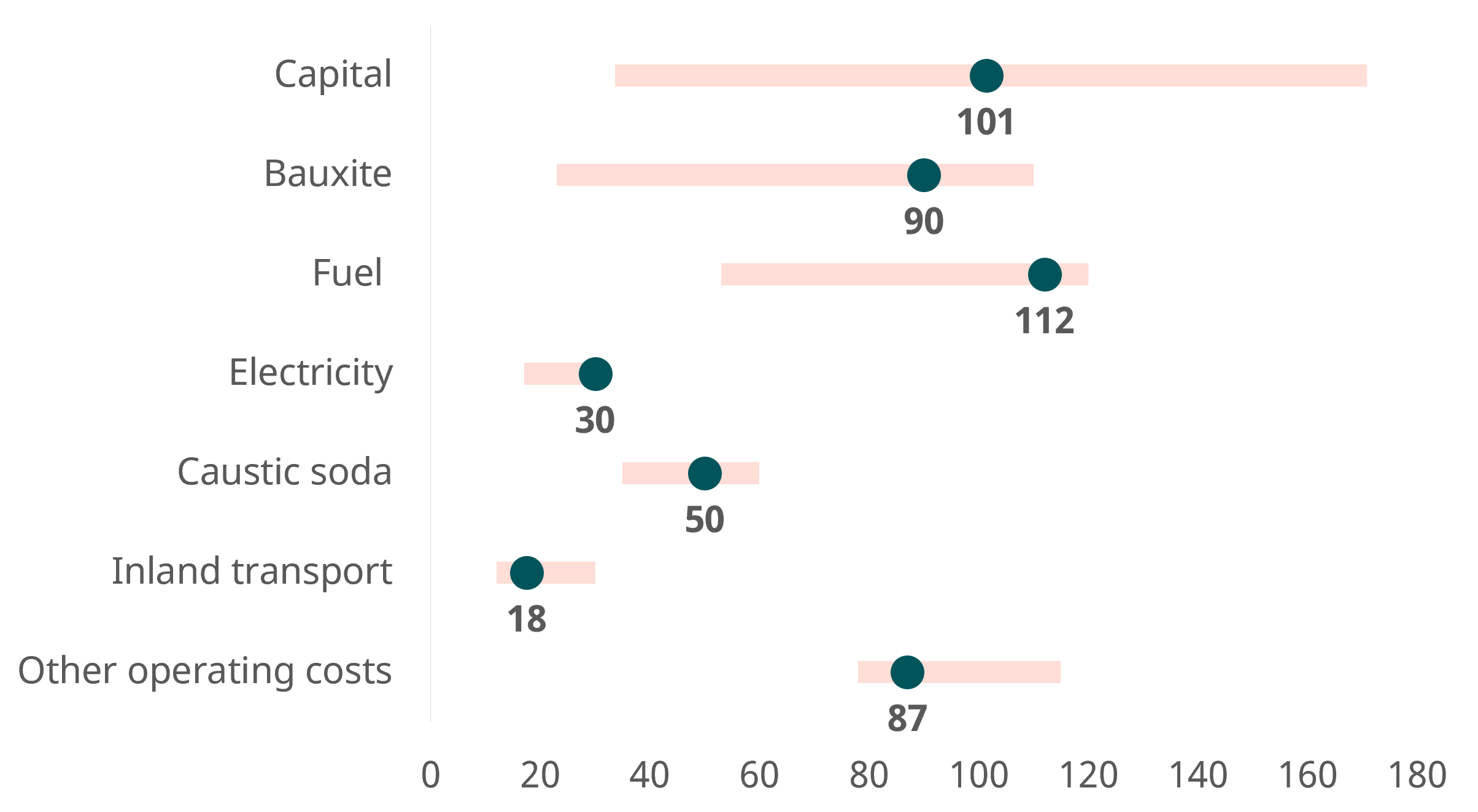
NRGI assessed a refinery producing 1 million metric tons of metallurgical-grade alumina per year. Our modeling suggests it would struggle to achieve profitability under prevailing market conditions, as projected operating and financing costs exceed expected revenue levels. Although future price increases could enhance project economics, cost efficiencies are likely necessary to support long-term commercial viability.
Estimated costs of alumina refineries globally and assumed costs of a Ghanaian refinery (2026 USD per metric ton of alumina produced)
The refinery would also need major new gas, power and rail infrastructure. Its gas requirement for heat generation may roughly equal Ghana’s current non-power industrial gas consumption—a significant challenge given the existing gas supply deficit.
Viability would require several forms of government support. NRGI modeled three illustrative packages that bring the refinery to break-even. If the government can secure an investor willing to mine and refine, the lowest-cost package in discounted terms combines a fully integrated mine–refinery structure with targeted energy cost reductions and cost-based tax incentives. A second relies on deeper operating cost reductions, while a third provides a large upfront capital subsidy.
Estimated unit costs of a Ghanaian refinery in base case vs. with illustrative policy packages (2026 USD per metric ton of alumina produced)
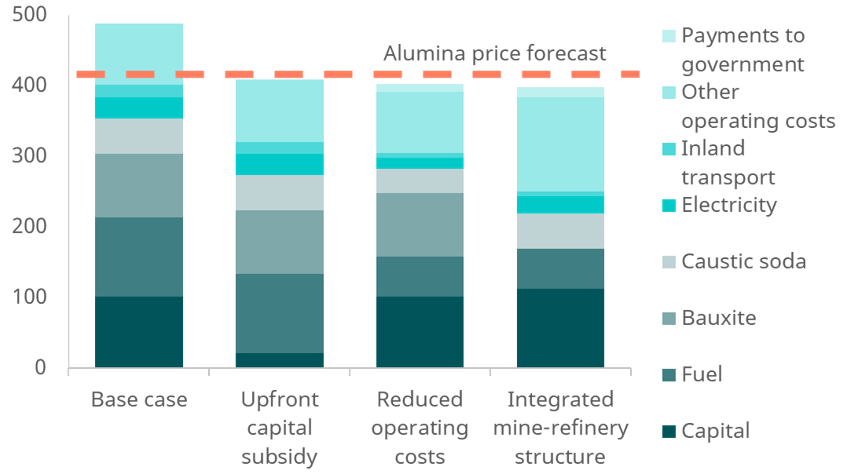
None of these approaches avoids difficult trade-offs. Integration could reduce the support required but lower government revenue from bauxite mining and increase transfer-pricing risks. Operating cost support would avoid a large upfront subsidy but create a long-term fiscal burden and potentially weaken incentives for private infrastructure investment. An upfront subsidy would limit ongoing support but require a major public commitment over a short period.
Without concessional finance, the two lowest cost packages would require government support averaging approximately USD 71–74 million per year. This is equivalent to around 40 percent of Ghana’s primary education budget and approximately three-quarters of its allocation to agriculture. These figures exclude the public cost of new gas, power and rail infrastructure.
Concessional and blended finance could reduce this burden. Development finance institutions, export credit agencies, sovereign investors or other strategic financiers could lower financing costs and required public support. For example, NRGI’s modeling suggests that blended finance could reduce annual gas cost support under the integrated package by approximately USD 22 million.
Regional cooperation could improve access to bauxite feedstock, Nigerian gas, inputs such as caustic soda and regional markets for aluminum products. However, planned refining capacity in Guinea or Nigeria could reduce investor interest if strategic investors can diversify supply elsewhere.
The government must weigh the potential benefits against these fiscal and opportunity costs. Supporting a refinery could divert resources from education, agriculture, infrastructure or other industrial priorities, as well as alternative strategies for maximizing benefits from Ghana’s minerals, including strengthening local suppliers, upgrading VALCO or pursuing other value-addition opportunities.
Environmental and social risks must also form part of this assessment. Alumina refining produces large volumes of bauxite residue, hazardous wastewater and air emissions. A refinery of this size could consume as much water annually as around 100,000 Ghanaians. Strong regulation, rigorous impact assessment, meaningful community involvement, and robust transparency and accountability mechanisms would be essential. Even with these safeguards, some impacts may remain unavoidable.
Revising Ghana’s Integrated Aluminum Industry Master Plan provides an opportunity to reassess feasibility, sequencing and trade-offs. The government should publish feasibility studies, environmental and social impact assessments, cost-benefit analyses and details of proposed policy support, and involve citizens throughout the process.
If the government proceeds with substantial support for an alumina refinery, it should do so only on the basis of a clear and transparent assessment demonstrating that the project can deliver tangible and broadly shared benefits for Ghanaians.
Just Transition or Just Hesitation? Why Africa Must Stop Negotiating with Fear

As the global energy transition accelerates, Benjamin Boakye, Executive Director of the Africa Center for Energy Policy (ACEP), argues that Africa must stop negotiating from a place of fear, and instead focus on proactively building the capacity to compete, adapt and prosper.
The global energy transition has become one of the defining policy debates of our generation. Across Africa, it has generated both optimism and anxiety. For oil producing countries, the concern is understandable. Most long-term energy outlooks project that global demand for fossil fuels will gradually decline over the coming decades, creating fiscal risks for economies that remain heavily dependent on petroleum revenues. For countries endowed with critical minerals, the transition presents a different prospect: unprecedented opportunities to participate in the value chains that will power a low carbon economy.
Both realities deserve serious attention. Yet the greatest risk facing Africa is neither the projected decline in fossil fuel demand nor the volatility of mineral markets. It is the continent’s growing tendency to define its future through narratives developed out of frustration and fear to respond to global power imbalances instead of pursuing practical strategies rooted in African realities, ambitions and capabilities.
Much of Africa’s transition conversation has become an exercise in interpreting what Europe, North America and other advanced economies think Africa’s role should be in a decarbonizing world. Policymakers devote considerable effort to responding to external debates about climate justice, fossil fuel phase out pathways and financing obligations. While these discussions matter, they increasingly distract governments from the more urgent task of positioning their economies to benefit from one of the greatest industrial transformations in modern history happening with a complex interplay of innovation, geopolitics, energy security and a race to economic heights imminent in the foreseeable future.
The result is a discourse dominated by vulnerability.
Africa is vulnerable because it contributes only a small share of global greenhouse gas emissions yet bears a disproportionate burden of climate impacts. Many of its economies also remain dependent on commodity exports, constrained by limited access to capital and technology, and characterized by relatively weak industrial capacity. The challenge is not that these concerns are misplaced. They are real and deserve serious attention. The challenge is that they have come to dominate the conversation. Too much of Africa’s transition discourse now revolves around managing vulnerability rather than building capability, responding to global climate conversations with narratives of weakness rather than defining an African strategy for competing in a changing global economy. The question is not whether Africa is vulnerable, but whether it chooses to organize its response around vulnerability or around capability.
Complaints may be justified. They are not a development strategy.
A just transition for Africa should therefore not be defined primarily by compensation for losses or fairness in international negotiations. Those debates have their place, but they should not become the organising principle of Africa’s response. A just transition should instead be judged by whether African countries build the institutions, skills and industries needed to create value from the changing global economy. This will help to properly align every support beyond the continent to deliver targeted outcomes.
For oil producing countries in Africa, this requires technical honesty. Governments should recognize that while global oil demand has not yet entered sustained decline, many long-term energy outlooks, including those of the International Energy Agency, project that fossil fuel demand will gradually weaken over time, although the pace and timing remain uncertain. This creates genuine fiscal risks for countries whose public finances depend heavily on petroleum revenues.
The response, however, is neither panic nor the premature abandonment of petroleum resources. Africa must approach its resource development decisions with a deep appreciation of the uncertainty and emerging economic realities shaping competing energy forms. Equally, governments cannot continue planning as though the future will resemble the past. The real challenge is using today’s petroleum revenues to finance tomorrow’s diversified economy.
Countries such as Ghana, Nigeria and Angola should therefore focus on strengthening fiscal management, investing in human capital, improving public institutions and accelerating economic diversification. The question is not whether demand will eventually decline, but whether these countries will use the remaining window of opportunity wisely.
Mineral rich countries across the continent face a different, but equally demanding, challenge. The growing demand for lithium, cobalt, graphite, manganese and rare earth elements presents Africa with a rare opportunity to capture greater value from the global energy transition. Yet mineral wealth has never guaranteed prosperity. For decades, African economies have exported raw materials while importing technology, manufactured goods and jobs. Without deliberate, analytically grounded policies that identify commercially viable opportunities for value addition and industrialisation, the transition minerals boom could simply reproduce the extractive model under a different name. The measure of success will not be how much Africa extracts, but how much value it creates.
Africa’s opportunity extends well beyond mining. The continent’s abundant renewable energy resources, young workforce and expanding technological capabilities provide a strong foundation for industrialization, manufacturing and innovation. With strategic investments and coherent industrial policies, these assets can generate far greater economic value than exporting raw minerals alone.
This requires preparation rather than optimism.
Preparation begins with technical honesty. Governments must resist the temptation to build policy around fashionable narratives or political slogans. Not every country will become a battery manufacturing hub. Not every mineral deposit justifies domestic processing. Effective policy demands realistic assessments of comparative advantage, market conditions and institutional capability.
Strategic partnerships are equally essential. Too often, international engagement is framed as a choice between sovereignty and dependence. This is a false dichotomy. Virtually every successful industrial transformation, from East Asia to more recent experiences in Southeast Asia, has relied on strategic partnerships that mobilized capital, transferred technology, developed skills and expanded access to global markets. Africa should therefore pursue partnerships that strengthen domestic capabilities while remaining firmly aligned with its own development priorities.
Urgency is equally important.
The transition is already underway. Investment decisions are being made, supply chains are being reconfigured and new technologies are being deployed at scale. Every year spent dwelling on whether the transition is fair is another year in which others strengthen their competitive advantage while Africa delays positioning itself to benefit.
The greatest danger, therefore, is not the transition itself. It is hesitation.
The future of resource governance should not be framed around what the world owes Africa. It should be framed around what Africa owes itself: disciplined planning, technical honesty, capable institutions, strategic partnerships and sustained investment in its people.
A just transition is not achieved by dwelling on vulnerability or waiting for perfect global fairness. It is achieved by building the capacity to compete, adapt and prosper. The choice before Africa is therefore miles beyond fairness. It is whether the continent will spend the next decade negotiating from a position of fear or preparing from a position of confidence and optimizing its space and people.
The window of opportunity remains open, but it will not remain open indefinitely.
Benjamin Boakye is the Executive Director of the Africa Center for Energy Policy (ACEP), a leading African think tank on energy and extractive sector governance. He has over 15 years of experience advising governments, development partners and civil society on energy governance, the energy transition and natural resource management. His work focuses on advancing policies that strengthen economic transformation and sustainable development across Africa. He contributed this piece as part of NRGI's 20th anniversary thought piece series on the future of resource governance.
How South–South Learning Is Shaping Mineral Value Addition Strategies

As governments across the Global South seek to increase the benefits derived from their mineral resources, questions about how to move along mineral value chains, and at what cost, have become increasingly urgent. Against this backdrop, government officials from Africa, Asia and Latin America gathered in Indonesia in early December for a South-South intergovernmental dialogue on unlocking equitable mineral value addition.
The dialogue was co-organized by Indonesia’s National Economic Council and the Natural Resource Governance Institute (NRGI), with support from ViriyaENB. Officials from 10 countries—including Chile, the Democratic Republic of the Congo, Ghana, Indonesia, Mexico, Mongolia, Morocco, the Philippines, Zambia and Zimbabwe—participated alongside representatives from intergovernmental organizations, research institutions and development agencies.
Throughout the week, participants exchanged experiences, ideas and lessons on how Global South countries can use their minerals to drive sustainable development, including by moving along mineral value chains. The dialogue opened with government officials reflecting on how shifting global markets and geopolitics are reshaping opportunities and constraints for value addition, and how these dynamics are influencing national strategies. Participants also discussed the role of external partnerships and international public finance in translating strategy into practice.
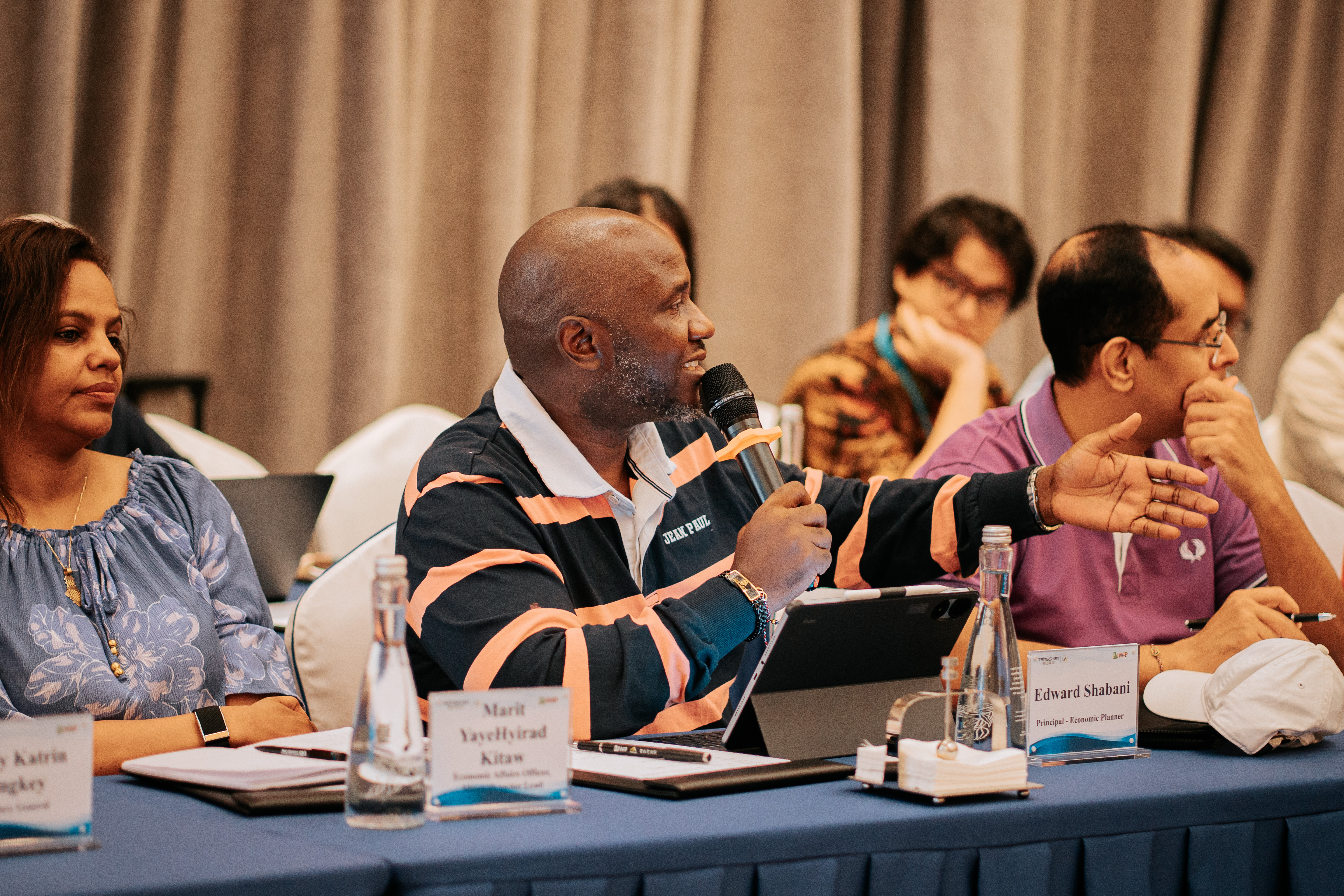
These conversations were informed by a two-day site visit to the Indonesia Weda Bay Industrial Park (IWIP) in North Maluku, which offered a first-hand look at one of the country’s most significant mineral-processing hubs and the practical complexities and trade-offs involved in industrialization.
The final day broadened the lens further. Engagements with a wider group of Indonesian policymakers, industry representatives, academics, civil society organizations and development partners highlighted both the economic potential of value chain development and the environmental, social and governance (ESG) challenges that accompany it. Officials from other countries reflected on which aspects of Indonesia’s experience might be transferable to their own contexts and what forms of cross-country learning and adaptation could most effectively inform policy development. These conversations fed into deeper exchanges on strategy and industrial policy, investment attraction and partnerships, ESG and community impacts, and the institutional and political arrangements that underpin implementation.
Amid these rich discussions, six key takeaways emerged.
1. An increasingly complex global landscape for value addition
With global demand for minerals booming and the push for diversified supply chains intensifying, a window of opportunity has emerged for establishing value chain activities in new locations. Yet mineral-rich countries in the Global South face mounting obstacles to realizing their value addition ambitions. China continues to dominate critical stages of many mineral value chains and is increasingly deploying export controls on technologies, manufacturing equipment and key materials. In response, other major economies are channeling large amounts of public finance into their own industries while—particularly in the case of the United States—seeking to narrow the policy space available to Global South countries, including by pushing back more aggressively against export bans and partnerships with geopolitical rivals.
2. Different value chains, different strategies

This complex landscape reinforces the need for value addition strategies tailored to the specific opportunities and constraints of each value chain. Discussions reflected a shared recognition that not all forms of value addition are feasible, desirable or a priority in every context. Participants highlighted how differences in global market share, infrastructure requirements, technology risk, environmental and social impacts and broader economic needs shape government approaches—including how countries distinguish between near-term, “no-regret” opportunities and longer-term, higher-risk bets.
“The event has increased my awareness of the breadth of the industry policy toolkit and how its use should reflect the idiosyncrasies of individual countries.” - Martin Latorre, University of Chile
3. Long-term visions that are ambitious but iterative
Discussions underscored the importance of anchoring value addition strategies in long-term national visions that can survive political cycles and provide confidence and predictability for investors. Participants noted that countries which have made progress have sequenced investments and policy reforms—such as value addition requirements and local content targets—over time, while recognizing uncertainty and learning as inherent features of industrial transformation. This calls for governments to adjust course as markets, technologies and domestic conditions evolve. Close and sustained engagement with the private sector emerged as a critical success factor, highlighting the role of trust, transparency and open communication between governments and investors.
“The field visit was an eye-opener, reinforcing how much strategic focus and discipline matter for advancing equitable value addition.” - Marit Kitaw, U.N. Economic Commission for Africa
4. Intra-governmental coordination is vital but often elusive
Designing and implementing effective value addition strategies requires close alignment across multiple ministries and agencies, yet many countries struggle to achieve this in practice. Participants highlighted how fragmented responsibilities, overlapping mandates and inconsistent communication often undermine coordination across mining, energy and industrial policies, as well as sufficient integration of environmental and social considerations into decision-making. Successful approaches combine clear chains of command with formal mechanisms for interagency collaboration, backed by sustained political support.
“This event will help me advocate for institutionalizing coordination among key ministries in my country to have one voice and be on the same page.” - Shorai Kavu, Ministry of Energy and Power Development, Zimbabwe
5. A multistakeholder approach and clear communication are key
Value addition strategies involve trade-offs, take time to deliver results and, even then, may not fully meet public expectations. Participants noted that even well-designed strategies can falter if governments fail to bring citizens along, leaving policies vulnerable to pressure and reversal. Meaningful consultation and sustained engagement with a broad range of stakeholders are therefore essential. Governments need to clearly communicate objectives, timelines and expected benefits to build public trust—particularly in countries with histories of unfulfilled resource promises. Transparent, data-driven narratives presented in accessible language can help sustain political support across electoral cycles and strengthen the credibility of long-term policy commitments.
6. Strategic neutrality and the potential of South-South collaboration
In the face of intensifying geopolitical manoeuvring, many Global South countries are pursuing strategic neutrality through diversified partnerships that preserve policy autonomy rather than alignment with any single bloc. Participants discussed South–South cooperation as a key mechanism for enabling such neutrality. By coordinating rather than competing, countries can strengthen their bargaining power, reduce vulnerability to external pressures, and explore collaboration on standards, skills development, regional infrastructure and continued mutual learning. Cross-country learning was seen as particularly valuable for confronting shared challenges, reducing information asymmetries with major consumer countries and collectively exploring policy innovation.
“This event showed that South-South collaboration on critical minerals is possible—turning economic fragmentation to mutual benefits across the Global South.” - Niwa Rahmad Dwitama, Ministry of Foreign Affairs, Indonesia
Participants explored opportunities for continued dialogue and action—including a South–South Transition Minerals Learning Platform to be piloted by officials and researchers from a subset of participating countries, alongside future iterations of the broader intergovernmental dialogue. Through these mechanisms, South-South learning can support governments to make informed choices on mineral value addition.
Quotes have been lightly edited for clarity and length.
Corruption in Mineral Value Addition: Why It Matters

Many mineral-producing countries are pursuing value addition to capture more economic benefits from mining and strengthen their position in global supply chains. This briefing examines how corruption can undermine those ambitions—making value-addition efforts less fair, less reliable and more costly—and outlines practical steps to manage the risks.
Key messages
Value addition can make mineral supply chains fairer and more reliable—if decisions are made with integrity.
Corruption in mineral value addition is occurring across a wide range of countries, minerals and technologies, yet anticorruption is missing from many current initiatives. In some contexts, it is being actively weakened.
Politicians and companies in many countries are promoting value-addition projects that are unlikely to happen or to be economically viable. These claims deserve scrutiny.
Corruption in value addition undermines fairness by funneling wealth and opportunities to a privileged few, while harming vulnerable communities.
Corruption can also make mineral supply chains less reliable, delaying projects, discouraging investment and cutting output.
Governments, companies, investors and international initiatives can take concrete steps to mitigate corruption risks in mineral value addition.
This briefing explores how corruption can undermine efforts to promote mineral value addition, a growing priority for mineral-producing countries amid the energy transition and shifting geopolitical dynamics. Using real-world examples across regions, minerals and processing stages, it examines how corruption distorts policy choices, project selection and implementation, with consequences for fairness, public revenues, investment and supply-chain reliability. The briefing concludes with practical recommendations for governments, companies, investors and multilateral organizations.
Regionalizing African Mineral Value Chains: Requirements for Success (Mining Indaba)
Okavango Delta Stage (CTICC2 - Level 1), Cape Town International Convention Centre

Regional cooperation can enable African countries to harness opportunities and manage the challenges that will be explored throughout this year’s Investing in African Mining Indaba—particularly those related to mineral value addition.
However, experience shows that translating regional ambitions into effective cooperation is difficult. This interactive workshop, hosted by the Natural Resource Governance Institute, will present key research findings on how to navigate these challenges, alongside analysis identifying concrete value-chain prospects and opportunities for regional cooperation. It will then bring together policymakers, industry representatives, research institutes, civil society and development partners in roundtable discussions focused on practical next steps to strengthen regional cooperation for mineral value addition.
Speakers
- Suneeta Kaimal, President and CEO, NRGI
- Marit Kitaw, Economics Affairs Officer, United Nations Economic Commission for Africa
- Jerry Ahadjie, Chief Minerals Officer, African Development Bank
- Karla Cervantes Barron, Consultant & Visiting Researcher, Independent & Imperial College London
- Thomas Scurfield, Senior Economic Analyst , Natural Resource Governance Institute
- Vivien Foster, Principal Research Fellow and Climate Compatible Growth Lead , Imperial College London
Featuring NRGI's

Suneeta Kaimal
President and Chief Executive Officer, NRGI Governing Board ex officio

Thomas Scurfield
Senior Economic Analyst