
From Minerals to Development: New Connections for a New Era

As leaders gather in New York to discuss how the UN can advance the principles and recommendations of the Secretary General’s Panel on Critical Energy Transition Minerals, Lisa Sachs, of the Columbia Center on Sustainable Investment, shares why now is the time for long-term resource governance practioners to ask new questions, be honest about where we have fallen short, and join our work with other, related sectors.
For twenty years, those of us working on resource governance have been making the case that mining sits at the heart of sustainable development, and that resource-rich countries can convert their mineral wealth into broad-based development. A robust field grew to tackle the multidimensional challenges of resource governance with increasingly sophisticated tools: open fiscal models, contract databases, model laws, global multi-stakeholder initiatives, consolidated industry standards, and many trainings. In doing so, without quite noticing, those working on resource governance built a field with its own terms, boundaries, and sense of itself as complete. And yet, despite steadily better tools, the trajectory for resource-rich countries has not changed as we hoped.
Better tools, familiar challenges
Minerals are more central to the global economy than ever, and we are still asking many of the questions we asked two decades ago. Conflicts over land, fiscal promises that go unmet, environmental damage, projects stalled by mistrust; both the headlines and the framing questions at conferences are reminiscent of two decades ago. Few mining communities are meaningfully better off, and a quarter century into the era of transparency (of contracts, payments, and budget), we often cannot say how value is divided. From what we can see, wealth has not meaningfully improved the lives of the citizens of many resource-rich countries. Two years ago, the UN Secretary-General convened a multi-stakeholder panel on critical minerals, framed around not repeating the patterns of extraction and exploitation; a call to action that reflected concern from low and middle income countries that two decades of effort had not bent the curve. The panel worked admirably (and swiftly) to produce a report that consolidated twenty years of recommendations. But it did not grapple with why those efforts had fallen short.
Part of the answer is that resource-based development is genuinely hard. A single project involves multiple companies, a national government, local and regional authorities, the communities on the land, financiers, off-takers, and the home governments of the investors, each with its own interests, time horizon, and leverage. Geography compounds the challenge: value chains are spread globally: the mine in one country, processing often elsewhere, and the market in yet another country, with value and impacts unevenly distributed. And much of what determines the outcome happens behind closed doors.
Even when the terms are known, we are not agreed on what a ‘good deal’ looks like. For some, a fair outcome is one where the state captures the bulk of the value and the project advances the country’s own development strategy. For others, the measure is whether communities who bear the impacts negotiate their own terms. There is no agreed standard for decisive terms like shared-use infrastructure, dispute settlement, closure liabilities, audit rights, or the corporate structuring behind a deal's tax and legal exposure.
The benefits and the costs of mining fall unevenly by their nature: revenue accrues to the capital while the disruption lands on the community, gains arrive over decades while costs arrive at the start, one generation consents and another lives with the result. A deal can be fair to the state and unfair to the people nearest the mine; fair at signing and unfair twenty years on. While those of us in the field have at times recognized some of the inherent tensions and trade-offs, we have rarely found a framing that holds all of these elements in view at once. Part of the reason is that the field is divided along the same lines as the trade-offs: experts often specialize in one area: fiscal terms, community benefit, environmental and legal safeguards, dispute settlement, corruption.
When we do come together to talk about these intersectional components, we continue to do so within the framing of the natural resource sector as its own field, with its own technical features, institutions, standards and debates. But treating resource governance as self-contained is precisely what has kept it from working. We have become very good at governing the mineral and have left the system that gives the mineral its value to others. In reality, resource governance is a challenge inseparable from the larger fields of development, geopolitics, and international finance. Whether a mineral endowment becomes development is decided by the capital that builds power systems and ports, by the energy planning that determines where processing is viable, and by the international financial architecture that determines fiscal space and borrowing costs, and by geopolitics with its ever-powerful carrots and sticks. Resource governance is inherently part of all of this, and shaped by it at every turn. Yet the field has built its standards, its contracts, and its transparency mechanisms largely apart from the international financial institutions, the energy planners, and the fiscal, financial, and public-investment decisions that set the result.
This is a rare moment of attention for a set of issues that spent years at the margins. Minerals are in the news daily, capital and political attention have returned, and new actors who have never worked on resource governance are shaping the agenda. Many arrive as if there had never been a field at all, which risks discarding two decades of hard evidence about what works and what does not. But it is also telling that these new actors are finding the field largely the same as we found it twenty years ago.
Why now is the time to rethink
For those of us who have been working in the field for decades, there are two powerful reasons that now is the time for a rethink. First, several of the most physical constraints to resource-based development have shifted. Clean power can now be produced affordably and locally where the planning is done to support it. Markets that were assumed to be global and centralized are becoming more regional, as more regions move to build their own capacity and secure their own supply. And the recognition that integration and regional coordination are necessary has grown. And second, supply-security concerns and the return of industrial policy have opened real room for integrated, development-oriented strategies that were politically unattractive a decade ago. The barrier to integrated, development-oriented resource strategies is now mainly institutional and architectural: whether the field organizes itself to work across the systems it has always been part of.
The most valuable thing twenty years of work leaves us with is not fixed answers but a set of hard-won learnings, including, most importantly, the limits of the approaches we have tried. Those who have spent decades in this field should not cling to what we have been trying this whole time; that would be misreading both the evidence and the moment. Defending a position we have held for so long risks entrenches an old framing even as its assumptions prove flawed and the systems beneath it move.
But the depth of experience is critical: we know what was tried, what mattered, and why earlier efforts fell short. When the same questions are asked anew, the institutions and individuals who have engaged deeply in that work are best placed to reflect on how to think differently about the questions and the answers, so that we do not repeat the patterns of the past. Doing so requires a level of reflection and reckoning that may be uncomfortable to longstanding leaders in the field. And yet, knowing the terrain well enough to reframe the question – and push the conversation forward, rather than defend or replay the past, is an essential contribution two decades in this field can offer.
The task now is to foreground the interconnections, where the outcomes are actually decided. A processing facility is viable when the energy system has been planned to power it affordably. A mineral corridor pays off when the transport and the industrial capacity around it are sequenced together rather than negotiated piece by piece. Shared water infrastructure can serve the mine, the farms, and the cities downstream when it is planned at the basin level rather than built in parallel. An endowment becomes development when its financing is tied to a costed investment plan inside a national or regional strategy. A larger government take and a tangible community benefit become less of a fight over a fixed sum when the project is built into a development strategy that enlarges what there is to share. Affordable power, regional markets, and secured demand come together when they are sequenced as one. Seen as one system, the trade-offs that looked fixed start to give.
This matters to the people who fund the work as much as the people who do it. The opportunity is to back new thinking—including interdisciplinary work that does not fit neatly in any one silo. To draw on the people who carry decades of experience, not to ask them to defend what they built, but to ask what it taught. That work matters now in a way it has not before, with the questions open again and the moment ready for different answers.

Lisa Sachs is the Director of the Columbia Center on Sustainable Investment (CCSI). She is a globally recognized expert and leading voice on climate finance, sustainable investment, and natural resource governance, and a leading voice on how laws, policies, and financial architecture shape global investment flows in support of development and climate objectives. She advises governments around the world along with multilateral development banks, UN agencies, and intergovernmental organizations, and works closely with companies, investors, and civil society to translate research into practical policy and investment reforms. Lisa contributed this piece as part of NRGI's 20th anniversary thought piece series on the future of resource governance.
Beyond Oil and Gas: Regional Perspectives on a Transition Under Pressure

As more than 50 countries gather in Santa Marta for the first conference dedicated to transitioning away from fossil fuels, NRGI's regional directors share how governments are navigating competing pressures, and what this means for economies and communities
The energy transition is happening. It is also, depending on your perspective, too slow, too fast, too expensive, or something else entirely. As the governments of Colombia and The Netherlands convene the first-ever conference dedicated to transitioning away from fossil fuels in Santa Marta, that ambition is running up against a charged reality: oil price spike, land grabs, geopolitical jockeying for resources and mounting debt in many producer countries.
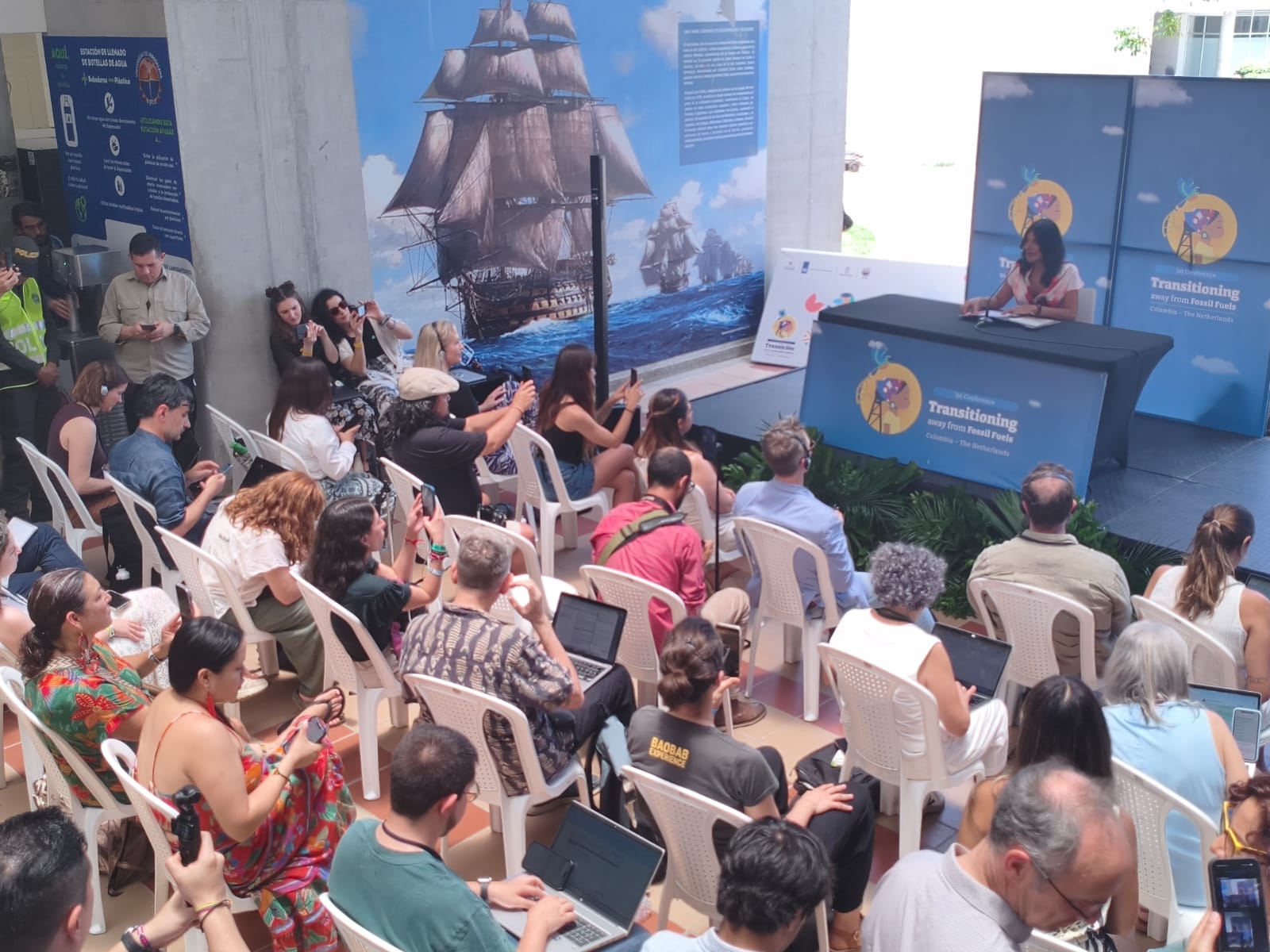
NRGI’s work is grounded in the recognition that how the transition unfolds—and how quickly—will determine whether it contributes to fair, inclusive and more prosperous societies, while acknowledging that communities that have contributed least to the climate crisis too often stand to lose the most. There is not one transition. There are transitions—shaped by very different starting points, economic realities and development priorities. Those gathering in Santa Marta must consider these diverse perspectives, including from communities, countries and regions that are not always fully represented in these debates.
Three of our regional directors reflect on how the transition is unfolding in practice, drawing on two decades of work on resource governance.
How are governments approaching the transition in the current context?
Santa Marta's organizers argue that current conflicts reinforce rather than sideline the case for transition. For governments navigating oil price uncertainty, rising energy demand and immediate security pressures, however, the picture is more complicated.
Africa—Nafi Quarshie, Africa Director

Latin America—Ana Carolina González Espinosa, Latin America Director and Senior Director for Programs
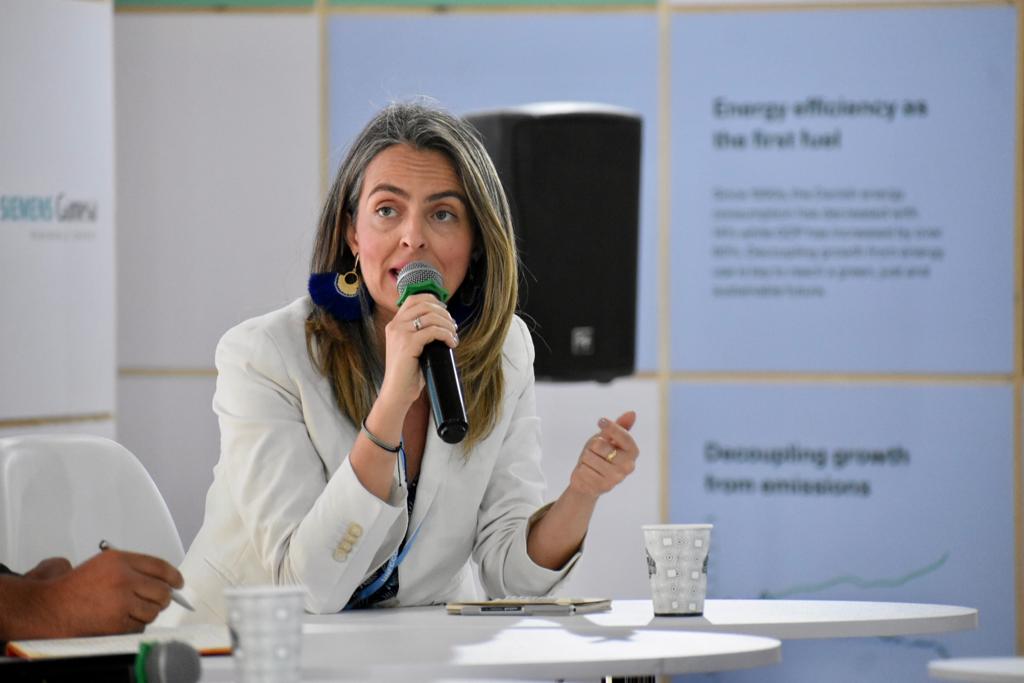
MENA—Laury Haytayan, MENA Director
Senegal’s JETP: Lessons, Challenges, Opportunities and the Role of Civil Society

The energy transition is a crucial global issue in the fight against climate change. To support countries in their decarbonization while considering social and economic impacts, Just Energy Transition Partnerships (JETPs) play a key role in facilitating this process.
At COP29, Senegal confirmed its commitment to a JETP estimated at €2.5 billion, currently in the development phase. Its success relies on inclusive and transparent governance, where the active participation of civil society organizations (CSOs) and local communities is essential.
In collaboration with Oxfam, the Heinrich Böll Stiftung Foundation, Natural Justice, the African Climate Foundation, and the Global Strategic Communications Council, NRGI contributed to the creation of PACTEJ, a platform to strengthening the capacities of CSOs and communities for their involvement in the JETP. In September 2024, NRGI organized a webinar with over 80 participants from various countries, led by experts such as Abraham Octam Halim, Jacob Blessing Motsh Manale, Fatima Diallo and Awa Ndione Sène. This event facilitated the exchange of international experiences, particularly from South Africa and Indonesia, and drew valuable lessons for Senegal.
These lessons demonstrate that the involvement of CSOs is crucial for protecting community rights, monitoring resource management, and ensuring accountability from decision-makers. In this blog post we highlight the evolution of JETPs on a global scale and aims to enrich public debate in Senegal, drawing inspiration from successes and challenges faced elsewhere.
The evolution of the JETP and its importance
The evolution of Senegal’s JETP in the global context
JETPs are being implemented in four countries: South Africa, Indonesia, Vietnam and Senegal, with a total committed funding of approximately $46.5 billion. Each country tailors this mechanism to its energy and socio-economic priorities for a just energy transition.
In South Africa, where coal dominates 84.63 percent of electricity production, the JETP aims for a gradual coal phase-out. In Indonesia, with 61.55 percent coal and 17 percent gas in the energy mix, the goal is to increase the share of renewable energy while supporting affected communities. In Senegal, the focus is on the rapid development of renewable energy to avoid over-reliance on natural gas.
For Senegal, a future gas producer, the JETP represents a crucial opportunity to prevent a “gas lock-in” that could lead to high energy costs, increased dependence and less sustainable energy. Prioritizing renewable energy is essential to ensure a responsible transition, supporting both communities and a sustainable economic transformation.
The importance of the JETP for Senegal
The JETP offers Senegal the opportunity to achieve 40 percent renewable energy in its energy mix by 2030. This partnership, signed on 2 June 2023, with G7 partners (Canada, the EU, France, Germany and the U.K.), mobilizes €2.5 billion over 3 to 5 years.
A structured governance body has been established, including a steering committee (COPIL) led by the Ministry of Energy, a coordination unit (UC), and working groups on governance, equity, finance and technology. Key developments include public consultations, the creation of an investment plan with the Tony Blair Institute, and strategic deliverables on the energy transition.
However, challenges remain: the validation of deliverables, the integration of projects into the plan, strengthening the capacity of the coordination unit (UC), and finalizing the investment plan. Regional workshops are planned to raise awareness among communities.
PACTEJ could identify key priorities such as access to affordable energy for vulnerable populations, promoting transparency in project selection, assessing the relevance of selection criteria, and protecting the rights of workers and affected communities.
CSOs, through the PACTEJ platform, play a critical role in ensuring a just transition by promoting transparency, inclusion, and the protection of the rights of workers and communities. However, G7 partners have warned against unrealistic expectations, emphasizing that the JETP will not resolve all of Senegal’s energy challenges.
Lessons from the South African and Indonesian experiences
South Africa, a pioneer of the JETP with a $8.5 billion partnership signed in 2021 with quite an ambitious investment plan, illustrates the challenges of a just transition. The funding, mostly in the form of loans, remains insufficient compared to the estimated $95 billion needed. The hasty closure of power plants has led to significant social and economic impacts, exacerbated by tensions with trade unions and limited stakeholder consultation.
Indonesia, with a $20 billion JETP signed in 2022, offers a more inclusive approach. With a clear investment plan, it has established transparent governance platform, organized over 200 consultations with stakeholders, engaged more than 100 CSOs, and mobilized both public and private funds for renewable energy projects. However, bureaucratic obstacles are slowing down project implementation.
These experiences highlight the importance of participatory and equitable management for a successful transition. The involvement of local communities, illustrated by the slogan “nothing about us without us,” is central. Initiatives like “Fair Finance” in South Africa offer valuable lessons for Senegal and the PACTEJ platform. However, the representative of the G7 partners group warned against unrealistic expectations of the JETP, emphasizing that it will not solve all the challenges Senegal faes on its own.
The role of Senegalese CSOs in the JETP process
As part of the JETP, Senegalese CSOs, grouped within the PACTEJ platform, along with trade unions and community organizations, play a key role in raising awareness among communities and fostering inclusive dialogue with the government.
However, they regret their late involvement, which has been limited to the post-negotiation phase, and highlight major challenges: access to information, the involvement of local authorities, private sector support, and community awareness.
The funding model, which includes only 6.6 percent in grants and primarily consists of loans, raises concerns about increasing public debt. CSOs are calling for transparent management of funds to prevent corruption and ensure direct benefits for vulnerable populations.
| Countries | South Africa | Indonesia | Senegal |
| Composition of financing | 4% in the form of grants 63% in the form of concessional loans 33% in the form of commercial loans and guarantees | Not yet published | 6.6% in the form of grants 69.2% in the form of concessional loans 1.8% in the form of market-rate loans, 12%, and the rest in the form of standard loans or grants |
Source: Navigating Just Energy Transition Together – Shared learnings from South Africa, Indonesia, and Vietnam, June 2023
CSOs, through PACTEJ, are now actively participating in the COPIL and the “Justice and Equity” group of the JETP. They call for a genuine consideration of their contributions in decision-making and for projects that compensate for the impacts of fossil fuels, while promoting local content.
For the success of the JETP in Senegal, an inclusive approach is essential. This requires fully involving communities, local authorities, CSOs, women and youth, ensuring transparency, strengthening local capacities, integrating gender issues, and simplifying administrative procedures. Such an approach would ensure a truly fair and inclusive energy transition.
Power to the People: Perspectives on Nigeria’s Energy Transition Plan

Nigeria’s economy is the largest in Sub-Saharan Africa, with vast natural resources including oil and the continent’s largest gas reserves. However, according to the International Energy Agency, over 140 million Nigerians—70 percent of the country’s population—lack access to energy. In response, the government of Nigeria aims to achieve universal energy access by 2030 and is implementing several policies and initiatives to increase access to clean and affordable energy for its citizens. But how can the government achieve this ambitious goal?
“Empowering communities with reliable and affordable energy is not just a necessity; it is a catalyst for socio-economic progress. It fuels education, healthcare, and economic activities, paving the way for sustainable development” says Enebi Opaluwa, a senior research and policy analyst at BudgIT Nigeria, and a participant in the 2023 edition of the advanced course “Natural Resource Governance and Energy Transition: Policies and Practice”, co-organized by NRGI and the NADEL Center for Development and Cooperation at ETH Zurich. (The 2024 edition starts next week.)
After the course took place, we spoke with Nigerian participants, most of whom chose to focus on maximizing community benefits and managing diversification during the course. By enrolling in this path, participants learned about policies to enhance citizen engagement and mitigate socioeconomic impacts and conflicts related to extraction. They also studied tools for managing revenue distribution at the national and subnational levels, and the implementation of local content policies and national and local development plans.
A financing gap and changing regulations
“In Nigeria, many of the current policies and efforts to increase energy access are directed toward ensuring increased access to electricity for clean cooking, clean sources of energy, and energy transport, but there are gaps and barriers that prevent these policies from achieving their goal, including affordability, cultural factors and financing,” says Opaluwa.
“Financing is a key issue,” agreed Agwu Ojowu, a senior consultant for Africa Practice. He points out that the Nigerian government faces financial constraints in investing in the necessary energy and infrastructure system for delivering energy from new sources to citizens. The challenge is exacerbated in highly regulated markets, where existing providers discourage private investment needed for cleaner energy sources. Excessive regulation and market capture dynamics make it difficult for new players to enter these markets, posing obstacles to the introduction of more sustainable energy solutions
In response to this challenge, the Nigerian government passed a constitutional reform bill that allows individual states within the country to supply electricity, breaking the monopoly of the federal government over power provision. State governments can now independently explore the electricity generation business and transmit and distribute electricity in areas covered by the national grid and in remote areas. “This dually regulated system is less convoluted and allows the government to,” says Ojowu. This new process and innovation must be managed appropriately, with strong frameworks to build the capacity of states to manage this new development, the participants agreed.
In alignment with the participant’s perspective on the recent bill empowering individual states to supply electricity, the potential for state governments to distribute electricity across the national grid and in remote areas is a notable opportunity. However, Chichi Nwosu, a principal consultant at CRowland, a Nigerian development consultancy, underscores a significant challenge. She points out that the lack of employment opportunities stands as a major barrier, hindering local communities from reaping the benefits of this opportunity. This obstacle is rooted in socioeconomic implications and the unaffordability of social security for these communities. Addressing this employment gap becomes crucial for ensuring that the positive outcomes of the new bill are more inclusive and impactful for local populations.
“Emphasizing community engagement from the outset is paramount for fostering investments and ensuring that policies resonate with and benefit the local population.” - Agwu Ojowu
“Having well-crafted policies and legislation is crucial, and effective implementation is essential. However, without active involvement from local communities during the development stage, the successful implementation and dissemination of these policies become challenging,” explains Ojowu. “Emphasizing community engagement from the outset is paramount for fostering investments and ensuring that policies resonate with and benefit the local population.” Many communities exhibit “cash upfront rent-seeking behavior” whereby they agree to receiving cash handouts at the start of projects taking place locally. He argues that this has prevented local communities from benefiting from extractive projects and playing an active role in the sustainable development of their local economy because it precludes more significant investments in infrastructure, health services that would likely be more beneficial to communities in the long run.
Communities need education on the energy transition
“There is a need to raise awareness and sensitize local communities on the energy transition,” says Kolawole Kolade, a program officer on climate change adaptation and energy accountability at the Paradigm Leadership Support Initiative. Kolade explains that it is essential for government officials and civil society organizations to involve local communities in the decision-making and policy-making processes, so that citizens can actively understand the impact the transition has on the socio-economic development of their communities.
Community and stakeholder awareness is particularly important in the context of Nigeria’s new Energy Transition Plan, explains Nwosu. The plan was developed with the ambitious goal to achieve net-zero emissions in terms of Nigeria’s energy consumption. “This is a bold plan,” says Ojowu. “There is a need to build a climate change awareness culture in Nigeria.” He believes that authorities should include climate change awareness in curricula across all levels of education. He says that citizens across the entire country should be aware of what the climate change adaptation and mitigation measures the government can take—and that they, the citizens, must ensure that these goals are met. Enebi adds that the government should propose and implement education courses and other initiatives (including public hearings and media campaigns) to educate the population on the energy transition and its impacts, both at the national and local level.
Giving communities a role and a voice
“Currently, there is a gap between central and national governments, particularly when it comes to the energy transition agenda,” adds Enebi. He says that the energy transition plan focuses on attracting investments, but it lacks specificity about the federal government’s responsibilities going forward, as well as ways in which local communities can participate in to ensure the plan moves in the right direction.
“Even at the subnational level, relevant actors do not thoroughly understand what their role is in the context of the energy transition and climate change.” - Kolawole Kolade
Enebi suggests that civil society organizations advocate for clearer milestones and ways to measure the plan’s progress. One way government authorities could achieve this could be by incorporating citizen participation in budgetary processes, whereby the government provides citizens with easily digested information around budgeting during the approval and audit stages, so that they can participate and play an active role at the approval stage during public hearings. “This process should be applied to the energy transition plan,” says Enebi.
“Even at the subnational level, relevant actors do not thoroughly understand what their role is in the context of the energy transition and climate change,” says Kolawole. “There is a need at the federal level to create a framework for subnational governments to look into their responsibilities and have a tool to track their progress.” Civil society organizations should drive engagement and bridge the gap between the government and local communities on knowledge gaps around the energy transition plan, he adds.
Environmental concerns
“Environmental injustice should also be an important pillar of the energy transition plan,” says Enebi. “The energy transition will happen, but at the cost of the environment.” The plan should focus on ensuring that this conversation is at the forefront of discussions among Nigeria’s key decision-makers, politicians and local communities. This is particularly important as international oil companies increasingly divest assets to national oil companies leaving extant environmental pollution unremediated, Enebi adds.
Ojowu suggests that while engaging with local communities, the government should prioritize environmental regulation that is inclusive and consultative, fostering economic activities and alternative livelihoods beyond the oil sector. This is key in ensuring that local communities rely to a greater extent on other sectors, such as fishing and other sources of livelihood, so that there is a sustainable future that does not depend on oil or encourage oil pollution.
A unique learning opportunity
Regarding the advanced course itself as a platform to reflect on Nigeria’s challenges and opportunities in the context of the energy transition, participants particularly valued engagement with other participants from all over the world. “The peer-to-peer learning has allowed me to understand the similar challenges that other countries are currently facing,” said Enebi. “This has been very helpful in identifying potential opportunities and solutions.”
Ojuwu particularly enjoyed learning more about the tax and budget aspects of natural resource governance. The technical knowledge provided during the path on local communities allowed Kolade to further explore Nigeria’s gaps when it comes to community engagement tools, and this is something he is excited to continue working on. And Nwosu highlighted the importance of meeting participants who are active in same space, and how this enables them to share knowledge and collectively drive change with the aim of pushing for a just and inclusive energy transition.
The advanced course empowers participants to improve natural resource governance, especially around the energy transition.