
Managing Senegal’s Oil and Gas Revenues

Key messages
- The oil and gas sector it is not expected to transform Senegal’s economy or public finances. Fields that have received a final investment decision are are unlikely to generate revenues over 3 percent of GDP.
- Senegal already possesses some of the institutions needed to promote good revenue management of oil and gas revenues, including: (1) a relatively transparent and comprehensive annual budgeting process; (2) robust compliance with Extractive Industries Transparency Initiative (EITI) standards; (3) a relatively free and vibrant media.
- Given Senegal’s acute domestic investment needs, the government’s new sovereign wealth fund proposal may be ill-timed. Such funds are not the best vehicle for investing natural resource wealth domestically. Instead, the government should consider investing these funds through the budget. It could also be advisable to employ an expenditure rule limiting government spending, or a non-resource current balance rule preventing governments from squandering resource revenues by running a deficit in other areas, combined with a capital expenditure growth rule to mandate investment.
- The national oil company, PETROSEN’s debt accumulation and revenue retention pose significant risks for public finances over the coming years. The government should consider strengthening oversight of PETROSEN, for instance by appointing independent board members, publishing independent audits and clarifying the company’s dividend policy.
- Some fishing communities in Senegal are concerned about the impact of oil and gas projects on their livelihoods. If these negative impacts are confirmed, the authors of this report recommend that the government consider compensation through environmental and social management plans, as opposed to allocating a fixed share of resource revenues to sub-national governments.
Sovereign Wealth Funds: New Challenges for the Caspian Countries
Over the past decade, the boom in commodity prices and the growth of foreign exchange reserves have made Sovereign Wealth Funds (SWF) major forces in the global economy, with the largest funds managing well over $4 trillion in assets.
Their influence has had far-reaching consequences for both host and sponsoring countries. SWFs can finance development projects and shield economies from volatility. But they can also hamper the effectiveness of macroeconomic policies and create opportunities for corruption.
This report from Azerbaijan's Public Finance Monitoring Center, Khazar University and RWI presents a critical analysis of resource-based SWFs in three Caspian countries: Azerbaijan, Kazakhstan and Russia. While SWFs enabled them to weather the global financial crisis, the funds’ investment choices have failed to promote long-term development at home, highlighting the need for transparency and accountability as well as new methods to assess SWF performance.
Natural Resource Funds: Fund Profiles and Policy Briefs
NATURAL RESOURCE FUND PROFILES
- Abu Dhabi (United Arab Emirates)
- Alabama (United States)
- Alaska (United States)
- Alberta (Canada)
- Azerbaijan
- Botswana
- Chile
- Ghana
- Iran
- Kazakhstan
- Kuwait
- North Dakota (United States)
- Norway
- Russia
- Texas (United States)
- Timor-Leste
- Trinidad and Tobago
- Wyoming (United States)
NATURAL RESOURCE FUND POLICY BRIEFS
- Natural Resource Fund Governance:
The Essentials - Institutional Structure of Natural Resource Funds
- Fiscal Rules for Natural Resource Funds: How to Develop and Operationalize an Appropriate Rule
- Rules-Based Investment for Natural Resource Funds
- Natural Resource Fund Transparency
- Independent Oversight of Natural Resource Funds
A Dozen Perspectives on Resource Governance: Voices From the NRGI-Blavatnik School Executive Course

The course brought together public and private sector leaders from 21 countries to delve into a range of complex issues in resource governance. Some of the participants sat down with NRGI communications team members to share unique perspectives on the challenges and opportunities in resource governance in their respective countries:
Marcelo Alvarez on Challenges Facing the Mining Industry in Latin America
Alaka Lugonzo on Regulatory and Policy Gaps in Kenya's Extractives Sector
Alaka Lugonzo on Fostering Dialogue Between Investors, Communities and Government in Kenya
Andrew Mercer on Planning for the Energy Transition in Ghana
Timothy Musa Kabba on Legal Reforms in Sierra Leone's Mining Sector
Timothy Musa Kabba on Building Infrastructure & Including Communities in Post-Conflict Sierra Leone
Carole Nakhle on the Role of Oil and Gas in the Energy Transition
Hamida Nuhu on Challenges Facing the Oil, Gas and Mining Sectors in Ghana
Jemima Nunoo on the Future of Ghana's Oil Amid the Energy Transition
Mohamed Hassadi on Three Key Concepts in Resource Governance
Batnairamdal Otgonshar on License Allocation in Mongolia's Mining Sector
Batnairamdal Otgonshar on Designing Sovereign Wealth Funds for Mongolia's Mining Sector
Khadija Sulaiman Bello on Nigeria's Gas-to-Power Projects
Zouheir Touiti on Building Trust Between Investors, the State and Communities in Tunisia
Interested in the NRGI and Blavatnik School of Government executive resource governance course?
Five Steps Authorities in Ghana Can Take to Prepare for Energy Transition and Better Govern Oil, Gas and Mining

Ghana’s citizens and leaders have long hoped that their country’s natural resources will lead to prosperity. Yet the gold and oil beneath their feet and territorial waters have not wholly transformed the fortunes of everyday Ghanaians. But new research published yesterday shows that Ghana is learning from its past mistakes and improving the country’s extractive sector governance. Progress is gradual, however, and there remain significant gaps that require remedial action.
The 2021 Resource Governance Index (RGI) shows that oil sector governance in Ghana has moved into the “good” performance band. Governance of mining remains one level below, at “satisfactory.” Both ratings resulted from score increases of more than 10 points since the last assessment (in the 2017 edition of the index).
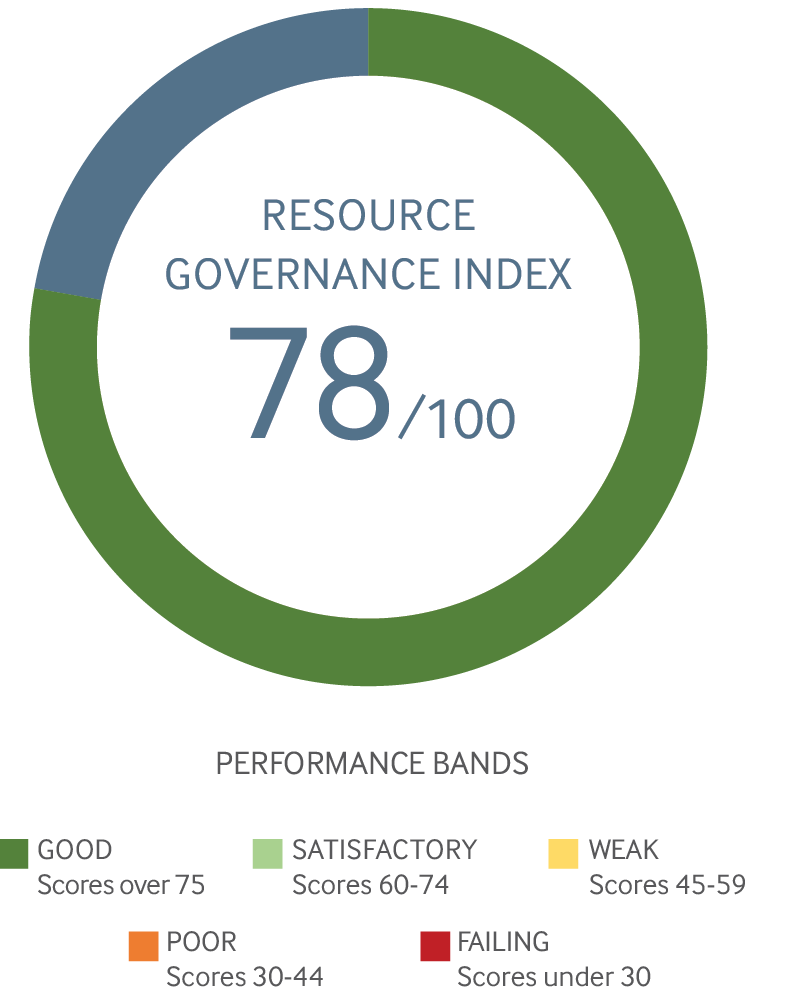
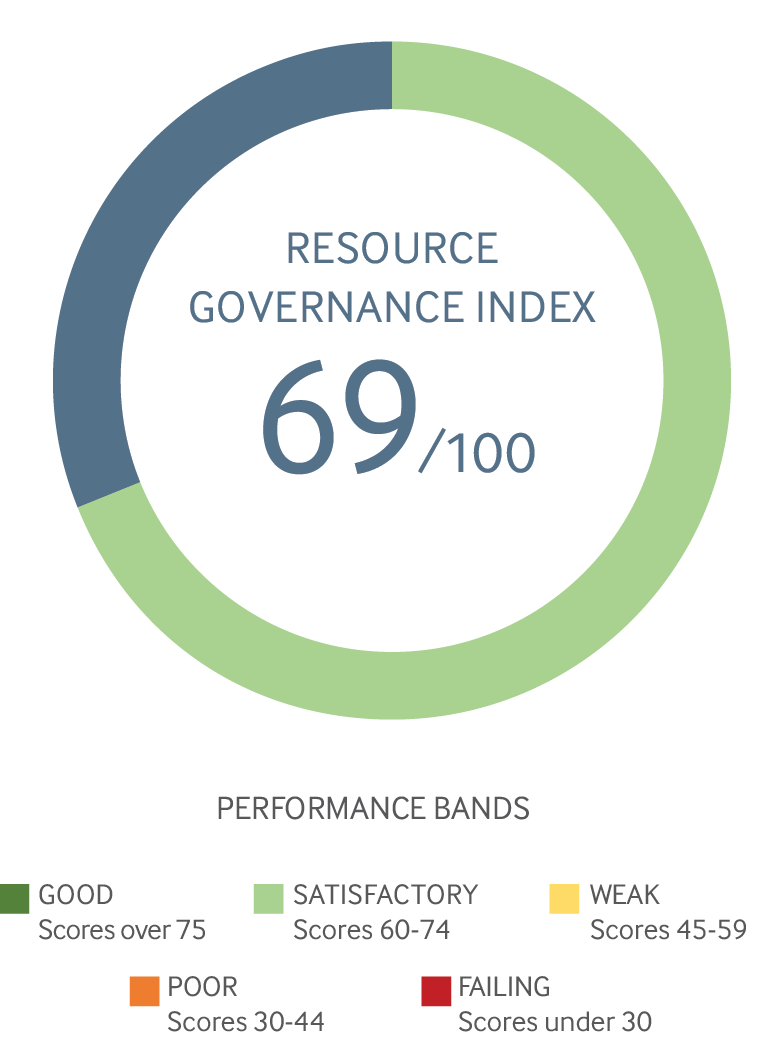
Despite these improvements significant gaps remain. So what can Ghanaian authorities and citizens do? What steps might be required to enhance extractive resource governance in Ghana? Below are some recommendations based both on the new RGI results and a recent national dialogue on extractive governance.
1. Take steps to design a long-term national development plan, to guide extractive resource governance among other sectors of the economy. This has the potential to deepen the contribution of the extractive sector to sustainable economic transformation in Ghana. Ghana lacks a clear strategic vision to drive the country’s overall development and guide government policy on extractive resource development as envisioned in the 1992 constitution. There is a clear mandate, under Article 87, for the National Development Planning Commission (NDPC), among other functions, to advise the president on development planning policy and strategy, and to study and make strategic analyses of macro-economic and structural reform options, including options for extractive sector governance. The importance of long-term national development planning to extractive governance is expressed in Section 21(2)(d) of the Petroleum Revenue Management Act (PRMA). This section makes it clear that any use of the Annual Budget Funding Amount (ABFA) should be guided by a medium-term expenditure framework, which must align with a long-term national development plan approved by parliament.
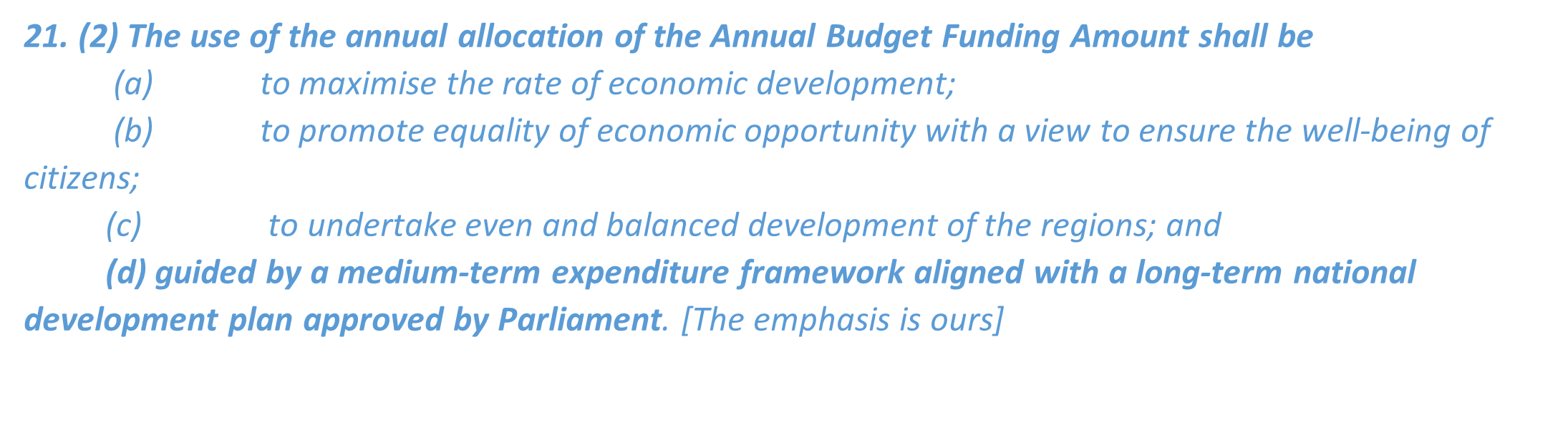
The aim of this PRMA requirement is to ensure that petroleum revenues contribute to broad and impactful economic development across the country. One of the NDPC’s key roles, therefore, as defined in both the 1992 constitution and the PRMA, is to develop a national development plan to guide the expenditure not only of petroleum revenues but of extractive revenues generally. The Public Interest and Accountability Committee (PIAC) has consistently underlined this, in terms of petroleum revenues, in its reports, including in the latest one. The current practice, which relies on medium-term strategic plans based on the manifestos of political party, limits the potential use of extractive revenues for inclusive growth and sustainable development.
2. Enact a minerals revenue management law akin to the PRMA to streamline the collection, allocation, use and management of all mineral revenues, including at the subnational level. Such a law should establish a sovereign wealth fund for mineral revenue and empower a public oversight body to monitor government accountability to the provisions of the law.
The RGI has never assessed sovereign wealth management in Ghana’s mining sector simply because there is no appreciable framework or fund to assess. Although the Minerals Development Fund (MDF) Act of 2016 and the amended Minerals Income Investment Fund (MIIF) Act of 2018 are modest attempts at managing mineral revenues, they, unlike the PRMA in the oil sector, did not create a mining sector sovereign wealth fund with clearly defined rules governing its management.
Additionally, there are accountability deficits inherent in these laws. Given that minerals are exhaustible resources and considering the positive impact mineral revenues could make if governed by an appropriate legal framework, the lack of a mining revenue management law akin to Ghana’s PRMA is a pressing resource governance issue.
3. Ensure that all resource-backed loan models set clear investment rules, transparent provisions, and accountable arrangements that are enforced by a legislative act, as this could improve parliamentary and public oversight on resource-backed loan for optimal benefits to citizens. Additionally, government should also make terms of resource-backed loans publicly available to promote more transparency, particularly on interest rates, fees, repayment schedules, restricting terms, and parties to the agreements.
4. Conduct energy transition risk assessments for GNPC and the broader extractive sector. Because the government lacks a blueprint for the ongoing energy transition away from fossil fuels, it’s hard to say how GNPC will fit into a future where oil becomes less sought-after. The government should develop a national blueprint on energy transition and take steps to assess the transition’s systematic financial risk on GNPC and use that as a basis to remodel GNPC’s strategic direction, human and financial capacity, and investment decisions. This assessment must take into consideration the advantages and disadvantages of entering new lines of businesses to diversify GNPC’s portfolio.
Crude oil price volatilities since 2013 coupled with the impact of the recent price fluctuations amid the COVID-19 pandemic and the consequential risks on broader extractive sector governance including GNPC related risks appear to have amplified energy transition concerns in Ghana.
Despite being highlighted in the 2017 RGI, GNPC’s expenditure on non-commercial activities remain a concern. PIAC in its 2020 annual report notes that GNPC spent a total amount of US$31,477,699.31 constituting 71.81 percent of the corporation’s administrative and other technical operations expenditure (Level B) receipts on sustainability & stakeholder relations and GNPC Foundation. GNPC has consistently categorized these expenditures as corporate social investments (CSI).
PIAC further notes that GNPC’s expenditure on CSI increased from GH₵41.49 million in 2018 to GH₵49.98 million in 2019, with the corporation’s guarantees (payment guarantees against default by the receiving state-owned enterprises (SOE)) for other SOEs cumulatively amounting to US$645,511,405.40 as of the end of 2019. In addition, as of the end of 2020, the corporation’s cumulative guarantees for other SOEs increased to US$694,824,551. Ultimately, expenditure pattern on CSI and SOE guarantees have consequences on the corporation’s progress toward achieving its core mandate as a commercial strategic vehicle for state participation in upstream exploration and production activities.
5. Revamp the operations of Prestea Sankofa Gold Limited and adopt best practice approaches in SOE governance going forward. An important issue that needs to be highlighted is the concerning state of the country’s mining sector SOE, Prestea Sankofa Gold Limited. The company’s operations have been suspended since 2016, affecting its 2017 RGI performance (41 out of 100 points) and meaning that it couldn’t be assessed as part of the 2021 RGI’s SOE subcomponent. On the other hand, its oil and gas sector peer and parent company, GNPC, achieved a good score in the 2017 RGI (75 out of 100 points) and improved its performance in the 2021 RGI, a reflection of sustained improvements in extractive SOE best practices. Given the significant role Pretsea Sankofa is expected to play in the gold mining sector, similar to GNPC’s in the oil and gas sector, the inability to assess the SOE subcomponent for Ghana’s mining sector in the 2021 RGI due to the stated lack of activities is disheartening. The government should therefore revive Prestea Sankofa’s operations, ensuring improved SOE governance inspired by GNPC, if not of higher standard.
Nasir Alfa Mohammed is an Accra-based policy advocacy officer with the Natural Resource Governance Institute (NRGI).
What Ghana’s 2021 Budget Reveals About Its Oil Fund Management

Ghana’s 2021 budget, titled Economic Revitalization through Completion, Consolidation and Continuity, was widely anticipated. Ghanaians hoped that the budget would include steps to address both the immense challenges brought on by the coronavirus pandemic and low revenues resulting from a downturn in crude oil prices. Revenue shortfall amounted to GH₵13.6 billion while expenditures rose by an estimated GH₵11.7 billion in 2020; this has led to more uncertainty about the future of Ghana’s recovery plans.
In addition, as in many other African economies, debt also threatens the projected economic recovery in Ghana, something the government has acknowledged in the 2021 budget.
Commodities are expected to play an important role in addressing Ghana’s debt challenges. Petroleum exports will likely decline in the medium term , from a peak of 71 million barrels in 2019 to about 59 million barrels in 2024, and so will revenues. Though crude oil prices have recovered from the depths of the second quarter of 2020, there is no guarantee that these will be sustained, thus limiting the role of petroleum revenues in addressing Ghana’s debt burden. Nonetheless, petroleum is still an important source of revenue and a likely part of the solution to Ghana’s public financial challenges.
Unresolved governance issues
Despite the 2021 budget’s attempt to address concerns around petroleum revenue spending in Ghana, it fails to address key governance questions around what will happen to unspent revenue and what constitutes public investment, among other issues.
Allocation for public investment
Public investment is generally understood to be spending on assets or infrastructure with long lifespans. But the lack of a clear explanation of Ghana’s public investment expenditures has over time led to various approaches by the Ministry of Finance on where to allocate the funds, leading to disagreements among different stakeholders. For example, between 2011 and 2016, 70 percent of oil revenue designated for budget support (the Annual Budget Funding Amount, or ABFA) was allocated to capital spending, which includes roads, agriculture, education and health infrastructure, against 30 percent allocated to recurrent expenditure, which typically covers payments for services and supplies. The Petroleum Revenue Management Act (PRMA) Section 21(4) states: "For any financial year, a minimum of seventy percent of the Annual Budget Funding Amount shall be used for public investment expenditures consistent with the long-term national development plan or with subsection (3)."
In 2017, the government prioritized spending of oil revenues on “physical infrastructure and service delivery in education,” in line with the PRMA. Civil society organizations raised concerns about whether this spending was consistent with the Ministry of Finance’s previous interpretation, which had restricted public investment expenditure to capital spending Between 2017 and 2019, recurrent expenditure on the Free Senior High School Program, which included the payment of fees and supplies, represented an average of 52 percent of ABFA. The Public Interest and Accountability Committee (PIAC) called on the government on numerous occasions to adhere to the Ministry of Finance’s previous interpretation of the PRMA but the government argued that investment in education qualifies as public investment expenditure and that is not entirely synonymous with capital expenditure, with an explanation included in the 2021 budget.
This changing interpretation of “public investment expenditure” has led to recurrent expenditures for which volatile petroleum revenues are ill-suited. Previous NRGI research has emphasized the challenges with spending volatile resource revenues on recurrent expenditure. There is broad consensus that public investment in key sectors can enhance growth. Ghana’s government should clarify the definition of public investment expenditure to refer to only non-recurrent expenditure in the PRMA Regulations (L.I. 2381) or in a PRMA amendment. This would also encourage consistent implementation of the rule by future ministers of finance.
Unspent petroleum revenues at the end of the year
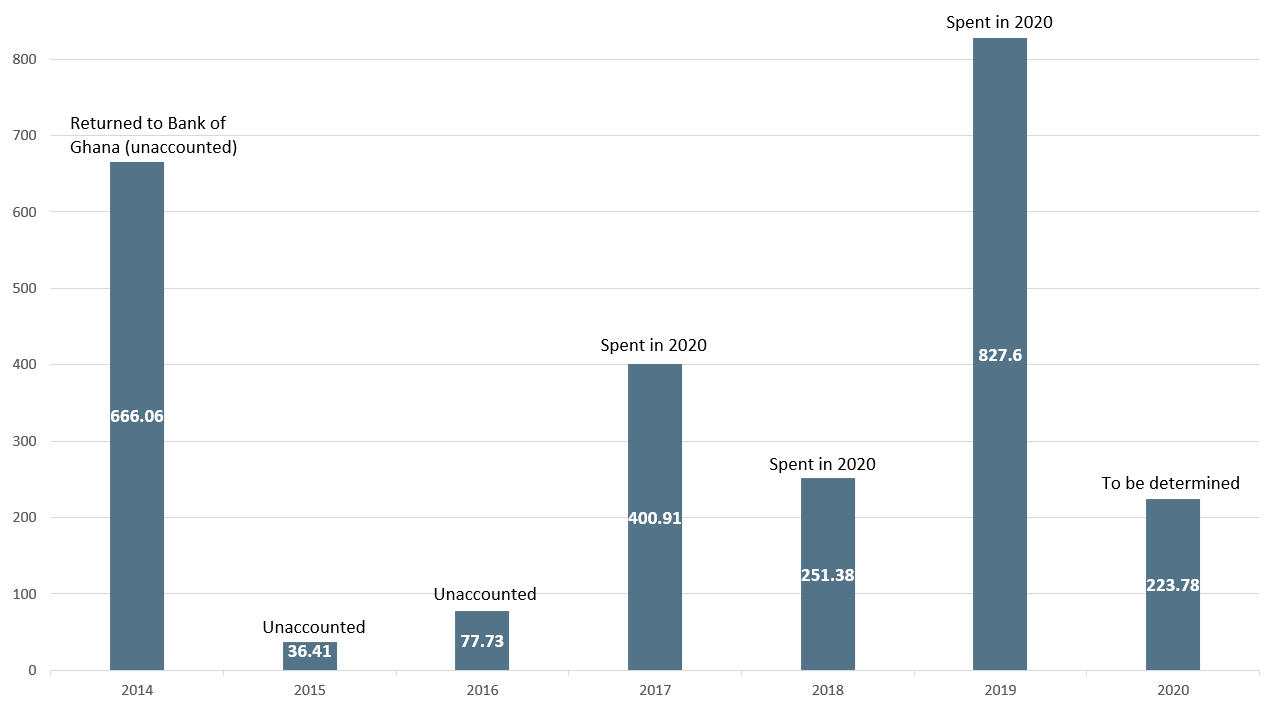
The use of unspent petroleum revenues at the end of the budget year is another unsolved issue. Successive governments have managed unspent ABFA differently since this first came up in 2014. That year a total of USD 222.93 million (GH₵666.06 million) of ABFA was unspent. The amount, according to the Ministry of Finance, was returned to the Bank of Ghana at the end of that year as the bank assessed the government’s financial position. However, in 2015, the Ministry of Finance did not disclose of how it applied a balance of GH₵36.41 million. The following year’s Ministry of Finance reconciliation report made no mention of the unused balance, as it should have. Similarly, the Ministry did not account for the unused balance of GH₵77.73 million at the end of 2016 in its report to the parliament.
Treatment of Unused ABFA, (2014-2020) (GH₵ millions)
Click to enlarge
Source: Ghana Ministry of Finance (Reconciliation Reports, 2014-2016; 2021 Budget Statement)
In 2020, the Ministry of Finance brought forward and spent unused ABFA from 2017-2019 (amounting to GH₵1.48 billion; see figure above) alongside allocations for 2020. Since 2018, the PIAC and other civil society actors have called upon Ghana’s government to provide details of the unspent revenues; these calls only elicited a public response in the heat of the campaign leading up to the December 2020 elections. According to the ministry, the combined 2017 and 2018 amount of GH₵652.29 million was transferred to the Road Fund while 2019’s GH₵827.60 million was used to meet the 2020 ABFA shortfall due to the pandemic. It is unclear which provisions, if any, in the PRMA support the transfer of unspent ABFA into the Road Fund or to meet ABFA shortfalls in subsequent years. Also unclear is which year’s appropriation (budget)—which provides the legal authorization to spend based on agreed activities—covered the spending of these unused revenues.
Additional challenges to the financial management of Ghana’s public sector include delays in the contracting process for projects, disbursement of funds and contract execution. Issues related to unspent ABFA will continue unless these challenges are resolved. Dialogue and consensus building among stakeholders on how to treat unspent funds in the future would avoid various conflicting interpretations arising between provisions in the Public Financial Management Act and the PRMA.
While the PRMA does not prescribe how unused ABFA at the end of the year should be treated, Section 21(1) provides that it must be part of the national budget and subject to same budgetary processes, bringing the ABFA under the public financial management rules in terms of management and accounting. And Section 26 of the Public Financial Management Act states clearly that such appropriations lapse by the end of the first month of the following year, meaning that the government needs a new appropriation from the parliament to use these funds.
Section 26 of the Public Financial Management Act, 2016
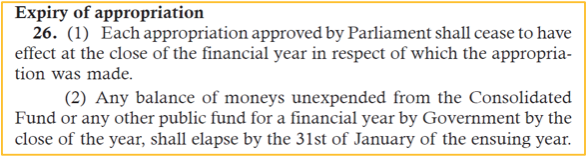
Inability to spend within the appropriation period, for whatever reason, creates public financial management complications in terms of unspent balances, re-budgeting and project execution. With petroleum funds, unspent funds make tracking and accounting for revenues within the framework of the PRMA provisions difficult.
Ghana’s government must urgently tackle the underlying issues of public financial management and delays in projects on which the money is spent. In addition, stakeholders (the Ministry of Finance and ministries that receive ABFA; oversight bodies like PIAC and Ghana EITI; and civil society actors) must engage in order to answer the following questions and possibly factor them into future amendments of the PRMA:
- What should happen to unused ABFA and where should these unused funds be saved?
- Should new appropriation in accordance with the Public Financial Management Act allow for a change in projects and programs earmarked in a previous appropriation?
- Does government ringfence ABFA funds, and if not, should they?
Discretionary capping of the Ghana Stabilization Fund
The Petroleum Revenue Management Regulations (L.I. 2381), passed in 2019, sought to address the situation where the minister of finance sets a discretionary cap on the Ghana Stabilization Fund by defining a formula for setting the cap. Regulation 8(1) states “In pursuance of Section 23 of the Act, the Minister shall, in recommending the maximum amount of accumulated resources in the Ghana Stabilisation Fund, ensure that the amount is not less than the average Annual Budget Funding Amount over a three year period.” While this provides guidance for setting a maximum balance on the fund, no minimum amount is specified; this could leave little money in the fund for its stated purpose of addressing revenue volatilities or debt. Though the 2021 budget did not propose a cap, the implementation of L.I. 2381 will mean that the Ghana Stabilization Fund would likely not grow beyond USD 400 million in the medium term (based on petroleum revenue projections in the 2021 budget). While a lower ceiling on the Ghana Stabilization Fund would make funds available for real-time debt servicing, it reduces the opportunity for government to rely on the fund to address shocks to the economy, fund future budgets and service future debt.
Ways forward
Resource revenues and good public financial management have the potential to help address Ghana’s financing and borrowing needs, and its economic recovery plans. To ensure this potential is realized:
- The government should adhere to the generally accepted interpretation of public investment as referring to non-recurrent spending, and clarify this in the Petroleum Revenue Management Regulations (L.I. 2381) to avoid using volatile revenue streams for recurrent expenditures.
- The Ministry of Finance should initiate consultations on an amendment of the PRM regulations that would provide clarity on how government should manage unspent revenues.
- The government should undertake a review of the capping mechanism of the stabilization fund.
Denis Gyeyir is an Accra-based Africa program officer with the Natural Resource Governance Institute (NRGI).
How Mozambique Could Strengthen its Proposed Sovereign Wealth Fund

The Mozambique government expects the country’s large gas reserves to generate revenues of around USD 96 billion over 25 years (based on a 2019 estimate). With offshore production due to start in 2022, the country is at a critical moment.
In October 2020, Mozambique’s central bank published a proposal for establishing a new sovereign wealth fund. The decisions made now about the structure and rules of the fund will have major ramifications on the country’s economic future and the wellbeing of its citizens.
Under the plan, 50 percent of annual oil, gas and mining revenues would be deposited in the fund until its twentieth year, and 80 percent thereafter. The fund would then, in theory, use these deposits to meet two objectives: accumulation of savings to balance the needs of present and future generations, and fiscal stabilization.
The proposal incorporates many of the key elements of effective, accountable and transparent sovereign wealth fund frameworks. Among the strongest of these are clear fund objectives, clear deposit rules, the channeling of domestic spending through the state budget and a comprehensive governance structure accompanied by a robust auditing framework.
Nevertheless, as officials work to finalize the sovereign wealth fund framework, they might consider improving it in several important areas:
1. Manage public expectations given gas revenue uncertainty
Government revenues could come in lower and later than expected. The government took the important step of publishing downside scenarios in 2018, but these have not grabbed headlines in the same manner as optimistic projections. The government could publish updated scenarios regularly and refer to the downside scenarios in its public statements about the fund. Using several means of communication, especially social media, would also help manage public and political expectations.
Mozambique’s hopes rest on Total’s Area 1 and Exxon and Eni’s Area 4 liquefied natural gas (LNG) projects. Area 1’s first phase and Area 4’s Coral floating project are under development, but the larger Area 4 onshore project is yet to reach a final investment decision. With Rystad Energy estimating a breakeven LNG price of nearly USD 7 per million British thermal units (mmBtu), it is not guaranteed that the Area 4 onshore project will be developed at all. The Asian benchmark price has averaged around USD 9 per mmBtu over the past five years. But if the world acts to limit global warming to less than 2˚C by 2050, Wood Mackenzie suggests that the Asian price could be lower, possibly less than USD 5 per mmBtu by 2040. Under this scenario, Area 4’s onshore project is likely unviable. These low prices would also reduce government revenues from the other projects. As previous government projections and the experience of some of sub-Saharan Africa’s other new producers highlight, another risk is cost overruns, which would further lower government revenues.
2. Beware saving for future generations when borrowing at high interest rates
The government could revise the proposed deposit and withdrawal rules to reflect that saving revenues may sometimes hinder rather than help achieve intergenerational equity. While a reasonable rate of return for most sovereign wealth funds is around 4 percent, Mozambique is borrowing at high interest rates, such as 9 percent on a Eurobond. A simple illustration highlights the implication: If a person has $100 in debt and is paying 9 percent interest on this debt, but is earning 4 percent interest on their savings in the bank, then for every $100 saved rather than used to pay down debt, the person loses $5.
Intergenerational equity is not just about money though; the government can help future generations by investing in healthcare, education and productive infrastructure today. In Mozambique, the benefits from domestic spending are greater than the likely return on fund savings, and likely to remain so until poverty is drastically reduced. While the government should consider “absorptive capacity” constraints to effective public investments, we recommend it prioritizes good public investments.
The proposed deposit and withdrawal rules together act as a revenue-based fiscal rule based on arbitrary saving-spending thresholds. The government should consider only making fund deposits if debt servicing costs become manageable or once extractives revenues reach a certain threshold, like solutions implemented in Mexico and Tanzania. Alternatively, the state could adopt a general fiscal expenditure rule or structural balanced budget rule.
3. Ensure all government spending is smoothed rather than just focused on gas revenue volatility
We recommend a different approach to managing volatility. The proposed deposit and withdrawal rules are “pro-cyclical” in that they allow for more spending when extractives revenues are high and require spending cuts when revenues are low. The stabilization component of the fund—which can channel up to 4 percent of the previous year’s gas revenue to the state budget when actual revenues fall short of projected revenues—may not fully mitigate this effect.
To even out year-to-year spending, we recommend an expenditure smoothing rule that allows for additional spending on infrastructure and human capital development projects (provided these generate an adequate social rate of return). For instance, in Peru, rules only permit real current expenditure to increase by 4 percent a year. Though if the congress declares an emergency, an exception can be made: like the escape clause suggested in Mozambique’s proposal, which we support.
4. Clarify ENH dividend policy and cost controls
The proposal suggests that all taxes, royalties and other fees paid by the national oil company, Empresa Nacional de Hidrocarbonetos (ENH), would be deposited into the fund, as would its dividends. International experience indicates that national oil companies tend to increase expenses as production increases, reducing the revenues available for dividend payments and therefore to the national treasury. While the dividend policy for CMH, a partially privatized subsidiary of ENH, was recently clarified, we recommend clarifying the dividend policy for ENH as a whole. We also recommend strong cost control measures at ENH and its subsidiaries, such as limits on their mandates, more comprehensive and regular cost audits, greater transparency and publication of independent external audits.
5. Enhance investment rules
While sovereign wealth fund investment guidelines generally contain detailed asset management policies—such as target asset allocation, benchmarks, lists of eligible and prohibited asset classes and diversification requirements—the government might consider a stronger approach by legislating these measures, as in Ghana, Uganda and Timor-Leste.
6. Enhance transparency and external accountability
The proposal requires public disclosure of quarterly and annual reports, but what information these must contain requires further clarification. For instance, the reports could include fund balances, returns by asset class or by asset, and external managers and their fees. The government could also publish online independent external audits and Administrative Court reports.
Finally, the government could consider tasking an independent, multi-stakeholder body oversight of the management of extractives revenues, potentially reporting to the parliament and the public. Such bodies, instituted by countries including Ghana and Timor-Leste, have improved fund management and strengthened public trust in the management of natural resources.
How Have Governments of Resource-Rich Countries Used Their Sovereign Wealth Funds During the Crisis?

Governments dependent on revenues from commodities like oil, gas, copper, bauxite, zinc and cobalt are suffering serious budget crises. While many have sought support from the international financial institutions, made drastic spending cuts, or borrowed heavily—sometimes at high interest rates—a few are blessed with large sovereign wealth funds (SWFs) or entered the crisis with low debt levels.
This “fiscal space” means that these governments are able to borrow quickly and cheaply or have money in the bank. They can increase spending during the crisis, respond to emergencies and lower taxes when necessary. They are also less dependent on bilateral donors, international financial institutions and private creditors, whether foreign or domestic. In short, these governments have the freedom to help their people when it matters most, without being beholden to others’ interests.
Among resource-dependent countries, Azerbaijan, Botswana, Chile, Colombia, Peru, Kazakhstan, Kuwait, Myanmar, Namibia, Norway, Qatar, Russia, Saudi Arabia, Tanzania, Timor-Leste, Trinidad and Tobago, and the United Arab Emirates are among those that entered the crisis with enough fiscal space to cushion the impact of the coronavirus pandemic. The American resource-dependent states of New Mexico, North Dakota and Wyoming were also well prepared. Debt levels are relatively low in each. Most have relatively large and liquid SWFs.
Having sufficient fiscal space directly impacts on people’s lives. Botswana, for instance, has used its fiscal space to subsidize salaries at affected firms, build fuel and grain reserves, purchase medical equipment, and increase loans to tax-compliant businesses. Timor-Leste is providing USD 300 in cash to more than 214,000 households, subsidizing wages for formal sector workers, purchasing emergency rice, paying overseas student stipends and deferring utility bills.
Four remarkable sovereign wealth fund trends
One might expect these measures to be financed by SWF savings, causing a large drawdown in SWF assets under management. Yet out of the approximately USD 3.7 trillion in assets held in primarily resource-financed sovereign wealth funds (“natural resource funds”), governments have only announced withdrawals of about USD 100 billion more than they had expected last year, with withdrawals led by Russia, Mexico, Norway and Peru. (See table below.) Some of the world’s largest natural resource funds, such as the Abu Dhabi Investment Authority, Brunei Investment Agency and Investment Corporation of Dubai, do not publish withdrawal data. But the USD 100 billion in withdrawals represents a mere 3 percent of assets under management belonging to those funds that do disclose. The percentage is likely to grow as governments make more announcements or the crisis persists.
Part of the reason for the dearth of withdrawals is that, for some governments, especially those with the largest SWFs, it makes more sense to borrow than to draw down their SWF savings. Interest rates on sovereign debt are at an all-time low, sometimes near zero for countries with good credit ratings, while expected returns on SWFs with long-term investment horizons are usually between 4 to 6 percent in real terms. Investors are betting that these countries will emerge from the crisis at a competitive advantage. Therefore, a government can make money by borrowing cheaply and investing that money for the future.
For example, Qatar has chosen to borrow USD 7.6 billion to finance its budget deficit despite holding about USD 300 billion in assets in its sovereign wealth fund. Kuwait has not tapped its USD 530 billion Future Generations Fund due to legal restrictions, and has covered its budget shortfall through normal revenue collection and other precautionary savings; it may have to consider modifying its fiscal rules next year once it depletes its General Reserve Fund.
Countries with poor credit ratings do not have this option. Sovereign spreads have actually increased for countries with weak credit ratings, indicating that investors suspect hard times ahead and sovereign defaults among many highly indebted nations.
In fact, credit is more expensive for the likes of Ghana, Mongolia, and Nigeria than before the crisis, even though each has at least one SWF. This shows that having a SWF does not itself improve investor confidence that a government will be able to repay its debts. Sovereign debt investors look at future fiscal needs and revenue generation potential, then compare them to the government’s assets (including SWF savings) and liabilities (including debt) to determine the probability of default. This is what determines interest rates on sovereign debt. The market treats SWF savings as just one government asset among many and, in countries with small funds relative to the size of the economy, not necessarily an important one.
Table. Significant withdrawals from sovereign wealth funds due to commodity price crash and the coronavirus crisis
| Country and SWF(s) | Action | Assets under management (latest figure) | SWF assets as a percentage of 2019 GDP |
| Angola - FSDEA | The President authorized the Minister of Finance to withdraw up to USD 1.5 billion to cover the deficit due to the oil price crash | USD 3.7 billion | 4% |
| Azerbaijan – SOFAZ | Government withdrew USD 2.7 billion more than expected in the first quarter of 2020 | USD 41.3 billion | 86% |
| Botswana – Pula Fund | Government has withdrawn approximately USD 300 million from the Pula Fund (Government Account) and Liquidity Portfolio since the crisis began | USD 1.3 billion | 7% |
| Colombia – Oil Savings and Stabilization Fund (FAE) | Government aims to withdraw approximately USD 3.2 billion from FAE | USD 3.9 billion | 1% |
| Chile – ESSF and PRF | Government withdrew USD 2 billion from its Economic and Social Stabilization Fund (ESSF) in April, but has not touched its Pension Reserve Fund (PRF) | ESSF – USD 10.5 billion PRF – USD 10.4 billion |
4% |
| Ghana – GSF | Government has withdrawn USD 200 million from the Ghana Stabilization Fund (GSF), one of the Ghana Petroleum Funds; the Ghana Heritage Fund (GHF) has not been touched | GSF – USD 334 million GHF – USD 539 million |
1.5% |
| Iran – National Development Fund | Government may withdraw up to USD 1.1 billion to cover the budget shortfall | Unknown | - |
| Kazakhstan – National Fund | Government liquidated USD 1.1 billion in assets | USD 60 billion | 33% |
| Mexico – Oil Revenues Stabilization Fund (FEIP) | Government may withdraw up to USD 5.4 billion to cover the deficit | USD 8.1 billion | 0.6% |
| Nigeria – NSIA and ECA | Government to withdraw USD 150 million from the Stabilization Fund of the Nigeria Sovereign Investment Authority (NSIA); this is in addition to the approximately USD 250 million withdrawn from the Excess Crude Account (ECA) this year | NSIA – USD 1.75 billion ECA – USD 72 million |
0.5% |
| Norway – Government Pension Fund Global | Government plans to withdraw USD 37 billion from its SWF this year, in line with the government’s structural balanced budget rule | USD 1 trillion | 248% |
| Peru – Fiscal Stabilization Fund | Government is likely to empty its USD 5.4 billion fund in addition to borrowing more than USD 13 billion | USD 5.4 billion | 2% |
| Russia – National Welfare Fund | Federal government could draw down on as much as one third of its fund this year alone | USD 130 billion | 7.5% |
| Timor-Leste – Petroleum Fund | Government withdrew an extra USD 250 million for 2020 | USD 18.1 billion | 1065% |
| Trinidad and Tobago – Heritage and Stabilization Fund | Government plans to withdraw up to USD 1.5 billion from the fund this year | USD 6.3 billion | 26% |
A second trend is that those governments that have made unexpectedly large withdrawals from their SWFs have not liquidated many SWFs assets, such as stocks or real estate. That is because they had adequate cash reserves before March 2020. Norway, for instance, has not had to liquidate assets to pay for the government’s USD 37 billion SWF withdrawal. Sovereign wealth funds generate cash from natural resource sales and maturing bonds. This cash is needed to pay for capital calls and expenses. However, since the end of 2019 they have held excess cash because stocks were viewed as overvalued, meaning a market downturn was expected. The funds with adequate cash reserves were each following strict asset allocation and portfolio rebalancing rules that forced them to hold excess cash. SWFs have been well served by implementing clear investment guidelines prior to the crisis.
A third surprise is that some governments that have fiscal savings or fiscal space are not using them. Part of the reason is that fiscal rules in some jurisdictions are unable to adjust to boom-bust cycles. For instance, while the Canadian province of Alberta and many U.S. states such as Alaska, New Mexico and North Dakota have large resource-financed SWFs, most have strict rules preventing the government from accessing the principal, even in case of emergency. At the national level, Ghana and Nigeria could empty their SWFs by modifying legislation or using escape clauses to maintain spending and/or curb debt accumulation, as Peru is doing. Instead, some governments are borrowing or making drastic spending cuts, including to key areas such as healthcare and education. Others, like Myanmar and Tanzania, have thus far muted their fiscal responses to the crisis, despite ample fiscal space and no legal constraints on spending. The reasons are unclear, though they may be linked to domestic politics or bureaucratic culture.
Finally, some interesting trends in asset management have emerged. Some SWFs have scooped up big-name stocks cheaply. For instance, since the crisis began, Saudi Arabia’s USD 325 billion Public Investment Fund (PIF) purchased more than USD 9 billion in shares of companies including Carnival Cruise Line, Live Nation, Boeing, Bank of America, Citigroup, Disney and Facebook. The Qatar Investment Authority (QIA) and the plethora of UAE funds have also been proactive, for instance in renewable energy, vaccine makers and online learning.
Another asset management trend is growing divestment from fossil fuels. Norway’s SWF recently made news when it divested from USD 13 billion in fossil fuel investments. Six of the largest SWFs have committed to a degree of investor activism, considering the energy transition in their asset allocations and encouraging companies to address climate change risks. This is part of a broader trend. Institutional investors with assets under management of USD 14 trillion, such as university endowments, pension funds, religious organizations, foundations and even the governments of Ireland and New York City have also made commitments to divest from fossil fuels.
Some SWFs continue to bet on fossil fuels—for instance, PIF now holds major stakes in BP, Shell, Total, Suncor and Equinor; the QIA is financing new oil and gas exploration in Brazil, Côte d’Ivoire and Namibia; and Timor-Leste invested USD 650 million in its own Greater Sunrise field—however, it is likely that the trend will continue toward divestment. After all, the energy sector has been the worst-performing sector on the stock market over the last decade.
Policy implications
Fiscal prudence has served many countries well. Having fiscal space has meant less pressure to cut healthcare, education or infrastructure, take on unsustainable debt, raise taxes during a pandemic or accept financing conditions from foreign powers. The cases of Botswana, Chile, Peru, Kazakhstan, Namibia, Tanzania, Timor-Leste and Trinidad and Tobago show that even low- to middle-income countries can adopt this strategy. They are likely to emerge from the crisis with relatively stronger economies and in better shape than most resource-rich countries.
Fiscal space serves as insurance against future crises from any number of potential sources, whether natural disaster, financial crisis or pandemic. It also improves the quality of public investment and prevents over-borrowing by granting governments the room to smooth their spending during the economic booms and busts that are typical in resource-dependent countries. To develop their economies, governments should invest in infrastructure and social services up to their absorptive capacity limits, but must also maintain enough fiscal space to respond to the unexpected.
Countries in serious fiscal crises provide cautionary tales. Algeria, Nigeria and Venezuela each had a large SWF that officials emptied during the good years. Angola, Ecuador, Gabon, Mozambique, the Republic of Congo, Suriname and Zambia each borrowed heavily in the good years. These countries, and others, are now facing tough decisions as the pandemic and its economic fallout spread.
At the same time, there is significant room for improving the performance of SWFs. As the subnational cases show, fiscal rules must be well designed to be effective tools for fiscal stabilization. Many are either pro-cyclical or not fit-for-purpose. The result is that many SWFs fail at their macroeconomic raison d’être. While structural balanced budget rules have worked well in Chile and Norway, expenditure rules may be more appropriate for low- to middle-income countries since they are simpler to implement and have higher rates of compliance.
Investment guidelines have served SWFs well during the crisis. Fund managers may wish to strengthen rules around asset allocation, prohibited asset classes, rebalancing and risk management following the crisis. They may also wish to consider the benefits of divestment from fossil fuels. This would not just help fight climate change but also diversify their economies away from natural resource dependence, an imperative for many resource-rich countries as they face the energy transition, and is likely to lead to higher real long-run returns.
Finally, having a large SWF also does not necessarily make resource-dependent governments responsible managers of public money. In fact, around 50 percent of SWFs are so opaque that they could be deemed slush funds. Just 18 out of approximately 50 governments with traditional SWFs publish annual returns information. In other words, we do not actually know how most are performing. Despite improvements over the past decade, SWF managers should aim higher when it comes to funds’ transparency and disclosure practices.
Coronavirus, the Oil Crash and Economies: How Can Governments of Oil-Dependent Countries Respond?

Français »
The battle against the coronavirus is above all a public health crisis. Needless to say, the response to the crisis is having enormous economic repercussions. Some countries have imposed sweeping shutdown and isolation measures to contain the spread. As a result, businesses are closing and unemployment is soaring.
Countries that are net exporters of oil and gas will perhaps experience the biggest shock. As of early April, Brent crude was trading at USD 25 per barrel and forecast to decline, a result of plummeting demand, a growth in supply and a lack of storage capacity. This represents the biggest single negative oil price shock in modern history.
Central banks have been the first public authorities to respond to the crisis in many oil-dependent countries. For example:
- The Emirati and Saudi Arabian central banks announced support for small and medium-sized enterprises (SMEs) totaling USD 40 billion.
- The Bank of Canada announced about USD 30 billion in lines of credit.
- Oman’s government announced USD 20 billion in support for its banks.
- The Central Bank of Nigeria created a USD 136 million targeted credit facility.
- The Central Bank of Iran ordered commercial banks to extend low interest loans to ten types of businesses most affected by the coronavirus outbreak, including restaurants, textile companies and dried nut shops.
But central banks can only provide liquidity; they cannot prevent insolvencies. In response, several oil-dependent governments have promised to enact fiscal stimulus packages. In addition to a discount on electricity bills and free internet, Malaysia has focused on cash transfers, including a one-off USD 144 for tourist guides, a monthly USD 150 for medical personnel, and money for specific groups such as low-income households, civil servants and students. Iran is providing cash payments to the poorest households, while Kazakhstan is providing free groceries to the disabled and unemployed. Canada’s oil-rich province of Alberta is allowing people to defer electricity and gas payments. Russia reduced social insurance contributions for SMEs, increased unemployment benefits and sick leave, and increased monthly child support payments by USD 63 per child under 3 years of age. Qatar announced a USD 20.6 billion package, including food and medical goods customs exemptions and utilities bill exemptions for SMEs. Governments are set to announce more support measures soon.
What will these measures achieve? Will stimulus boost economic production, keeping people in jobs, especially where social safety nets are weak? And how will the impact differ in oil-dependent states versus more diversified economies?
First, national experiences will depend on whether governments have prepared for a crisis. Kazakhstan, Kuwait, Malaysia, Norway, UAE, Russia, Saudi Arabia and Trinidad and Tobago have enough fiscal space to maintain public spending well into 2021 despite a collapse in government revenue, as suggested by CDS spreads on their sovereign debt, an indicator of default probability, as well as net debt figures. Each has significant savings in sovereign wealth funds or relatively low public debt levels. Moreover, with the exception of Malaysia and Trinidad and Tobago, each produces oil relatively cheaply, meaning their oil sectors are likely to generate significant revenue for their governments once the worst of the crisis is over.
Other governments of oil-producing countries had weaker public sector balance sheets heading into the crisis. Ecuador may default on its debt within the month. Nigeria’s sovereign debt rating was downgraded. Venezuela ran out of fiscal space to provide stimulus years ago. And Iraq does not have the administrative capacity to address either the economic crisis or health emergency. None of these countries is likely to be able to effectively mitigate the impact of the crash through more borrowing or drawing down on savings; the same is true for many other low-income oil producers.
Second, for many oil-dependent countries, the sharp drop in oil prices may lead to a disproportionately large fall in oil revenue. If prices remain low, some companies operating in countries where it’s relatively expensive to produce oil (such as Angola, Brazil, Canada, Malaysia, Trinidad and Tobago, the United States and Venezuela), could go bankrupt, leading to sustained lower output. In some places, oil production may never again reach pre-crisis levels due to technological “shut-ins.” Officials in many high-cost producer countries should expect a long-term decline in GDP rather than a temporary shock and therefore should not expect to “spend their way” out of the slump.
Third, governments of oil-dependent countries aiming to stimulate their economies through fiscal transfers to businesses face limited choices of where to allocate money. Many countries have only small and nascent productive sectors outside the oil industry. Economies in places like Algeria, Angola, Azerbaijan, Libya, Saudi Arabia, Timor-Leste and Trinidad and Tobago are not diversified, meaning there are fewer businesses that, with financial support, could quickly generate jobs and keep the economy churning. Even where there are businesses to support, governments cannot support many of them, since increased economic activity in some industries and much of the service sector risks spreading the virus. Officials in oil-dependent countries may therefore need to direct stimulus packages toward vulnerable groups, such as the poor or jobless, rather than businesses.
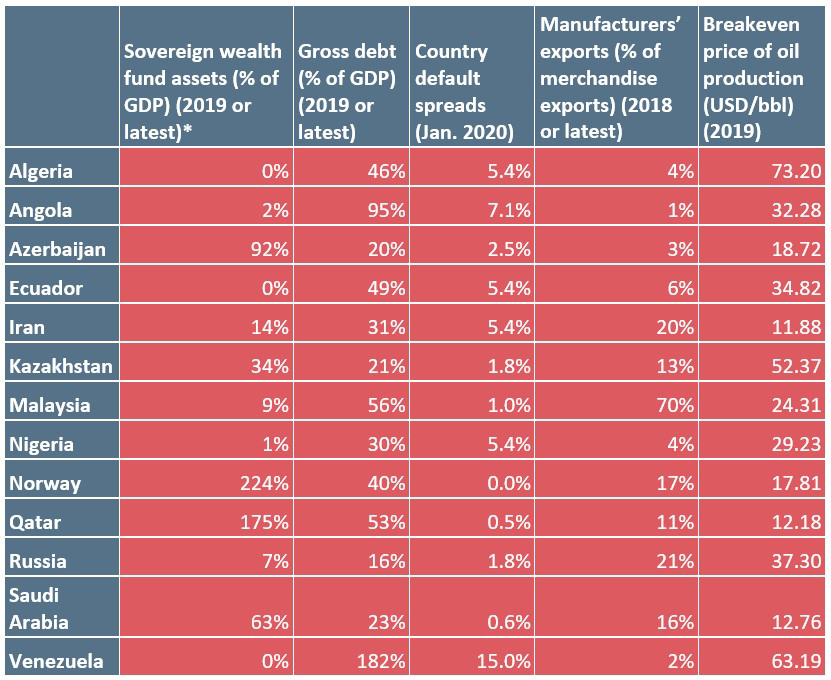
*Sovereign wealth fund asset values and GDP have declined since the crisis began
Sources: SWF annual reports or equivalent, IMF WEO, Damodaran (2020), WB WDI and Rystad Ucube.
Each country faces its own challenges, as illustrated in the table; no single policy would be applicable in every context. That said, officials in net hydrocarbon exporting countries could consider several general principles as they formulate their policy responses to the crisis:
1. Consider the role of sovereign wealth funds and borrowing
As mentioned, some governments entered the crisis with significant fiscal space, thanks to large sovereign wealth fund savings or low debt levels. Fiscal responsibility during boom years is designed to provide the space to draw down on savings or borrow during periods of crisis, such as now. Short- to medium-term borrowing may make sense now, with historically low interest rates available for those countries with access to credit. Governments may be wise to rely on models to determine how much fiscal space to use.
On the other hand, several oil-dependent countries have entered the crisis following a borrowing binge. Angola, Cameroon, Chad, Colombia, Republic of Congo, Ecuador, Equatorial Guinea, Gabon and Mexico were among those who had approached the International Monetary Fund before the crisis for program financing or a line of credit, meaning they already had difficulties financing themselves at higher oil prices. In recent weeks, Ecuador, Iran and Nigeria were among the 85 countries that approached the IMF for emergency assistance. Countries without fiscal space will at the minimum need to negotiate a moratorium on servicing external public debt, including repayments of oil-backed loans to oil traders and Chinese policy banks, and seek emergency support from multilateral and bilateral donors.
2. Resist the temptation to provide stimulus to the oil industry, whether through subsidies or tax cuts
There is a great deal of uncertainty around medium-term oil prices; some analysts suggest that they will not rebound for some time, while others say that the industry will contract quickly, leading to supply challenges and a swift price rebound next year. At the same time, public and private oil companies in several countries have been requesting large bailouts or tax relief. Government officials must consider the risks of “throwing good money after bad,” especially given the enduring climate challenge and the need to shift to renewable energies. Governments ought to resist hasty demands and properly evaluate (and model) the viability of projects at lower prices. If an oil company is facing insolvency, alternatives to a bailout can include seeking new investors or returning licenses to the state.
3. Devalue currencies slowly (in some countries)
Lower oil prices means far less foreign currency entering government coffers. This is already putting pressure on currencies. The implication is that countries like Ecuador, Iraq, Saudi Arabia and Timor-Leste and the CEMAC monetary union (including Chad, Gabon and Republic of Congo), which have dollarized or pegged their currencies to the U.S. dollar or the euro, will need to draw down on their foreign reserves or sovereign wealth fund savings or borrow foreign currency to maintain their pegs. Some countries, especially in the Persian Gulf, have the foreign savings to withstand years of low oil prices. But officials in others may need to choose whether to maintain their pegs, essentially subsidizing imports using their national savings, or devalue their currencies, leading to higher prices for imported goods, especially basic goods such as food, processed fuel and medication. As some countries run low on foreign currency, they may have to either seek assistance from bilateral or multilateral donors or devalue. In general, it is better to slowly depreciate rather than suddenly devalue under duress, generating another detrimental shock for consumers and many businesses.
4. Reinvigorate economic development and diversification plans
Authorities in oil-rich countries may want to use this “pause” to plan for the future, especially those that are historically poor at long-term investments in infrastructure and education. Governments could use this opportunity to improve their medium-term development plans, focusing on energy transitions and supporting economic diversification. One small example is Trinidad and Tobago’s plan for a USD 7.5 million grant facility for Tobago hoteliers to upgrade their hotel rooms. If unemployment stays high into 2021, as is likely in many countries, governments could use the excess labor to (re)build critical infrastructure, such as high-speed internet, water and sanitation and public transport, to improve competitiveness and quality of life over the long run.
Six Reasons Why Sovereign Wealth Funds Should Not Invest or Spend at Home

Developing, capital-scarce countries need domestic investment. Governments in countries such as Angola, Mongolia, and Timor-Leste must invest in education, health and infrastructure like roads, ports, electricity, water and sanitation systems if they hope to achieve middle- or high-income status in a sustainable and balanced way. What’s more, oil-, gas- and mineral-rich countries have access to large (yet finite) sources of income that can be used to boost domestic investment and help overcome the poverty trap. On this nearly everyone can agree.
In response to this need for domestic investment, some commentators have recently suggested that there might be opportunities for these countries’ sovereign wealth funds (SWFs) to directly invest at home. Nearly every country with significant oil, gas or mineral exports operates a SWF. Already, governments in Angola, Azerbaijan, Iran, Nigeria and Russia, for example, use their SWFs to channel money to special domestic projects.
A SWF is a type of extra-budgetary fund that operates outside the annual government budget process. SWFs have traditionally been created to achieve a macroeconomic goal (e.g., fiscal stability; save for future generations; help mitigate the Dutch disease). All invest at least partly in foreign assets. (This definition draws on a number of sources, namely the International Forum of Sovereign Wealth Funds, Truman (2010) and Castelli and Scacciavillani (2012)).
While the idea of using a SWF to invest domestically may resonate with government officials and politicians in low-income, resource-rich countries—particularly at this time of low commodity prices and surging fiscal deficits among oil and mineral exporters—there are strong arguments against using SWFs for this purpose. A fund with multiple objectives—say promoting domestic economic development and generating financial returns on savings for the benefit of future generations—can undermine public financial management systems, and lead to poor investment decisions, patronage and even corruption.
Governments can establish safeguards to limit SWF mismanagement and corruption, namely conflict-of-interest standards combined with legislative approval and strong fund transparency and oversight. However the challenges associated with creating a parallel budget or multiple mandates may not be so easy to overcome. A single SWF may not be well-placed to be a checking account, a savings account, an education or health financing vehicle, and a development bank all at once.
In countries where funds have helped to improve macroeconomic management, fiscal rules have determined how much resource revenue is saved and spent. All spending is then channeled through national or subnational budget processes, or through state-owned entities like development banks that act at arms’ length from the government. In most of these successful cases, savings are placed in a SWF and invested abroad with purely financial returns in mind.
I am not suggesting that natural resource revenues shouldn’t be used for domestic spending. Just the opposite; there are no better reasons for extracting resources from the ground. But SWFs, as savings mechanisms for macroeconomic management, should not be the vehicles of such direct spending. If there is under-investment in the domestic economy, a far better way to remedy the situation is to enact fiscal rules that allocate resource revenues more appropriately between the budget and a SWF.
Here are six reasons why it is generally inadvisable to use a SWF for domestic spending or investment:
-
Home spending or investment through SWFs can undermine macroeconomic objectives. The very reason governments usually create these funds is to address the macroeconomic challenges associated with natural resource revenue inflows. In Norway and Timor-Leste, for example, funds work in tandem with fiscal rules that require governments to save a portion of their resource revenues to help mitigate Dutch disease. If governments transfer money to a fund, then transfer money back into the economy through domestic spending, the fund’s macroeconomic objective of sterilizing capital inflows could be undermined.
-
Home spending or investment through SWFs can undermine public financial management systems. In many countries the budget process—including project appraisal, public procurement, and project monitoring—does not adequately deliver needed social programs and physical infrastructure. Governments sometimes respond by creating new institutions to bypass budget systems that do not work, such as a SWF that invests at home as well as abroad. This can lead to the establishment of uncoordinated parallel budgets—each with its own appraisal, procurement and monitoring system. While budget processes may well be flawed in many countries, the best approach is usually not to create new institutions with unintended consequences, but rather to repair what is broken.
-
Home spending or investment through SWFs can undermine public accountability. Bypassing normal budgetary systems can also undermine legislative oversight and democracy. Budget allocations are usually examined and approved by legislatures. This is rarely the case for specific SWF investments. In Azerbaijan and Iran, for instance, governments have used SWFs to finance politically motivated projects without submission to parliamentary scrutiny. Given the private interests that politicians and SWF investment managers often have in their own countries, lack of accountability can lead to politically motivated investments or investments for personal gain. The risk is even higher in countries where most SWF activities are not publicly disclosed, which is the case is more than 50 percent of the funds NRGI has examined in recent research.
-
Financial and development mandates require different expertise. Financial managers specializing in maximizing financial returns are usually not trained in identifying or managing infrastructure projects. A single institution may not be well placed to achieve both financial returns and domestic development, unless there are strict firewalls between the two portfolios.
-
Multiple mandates can lead to inconsistent and confused decision-making. A fund with multiple objectives—say promoting domestic economic development and generating returns on savings for the benefit of future generations—can become difficult for officials to manage, and can lead to poor investment decisions. What percentage of the fund should be allocated to what objective? Can the ratio change, and if so, with whose approval? If one portfolio grows faster than another, is there a need for rebalancing? Is fund liquidity or investing in local businesses for the long-term more important? In theory, strict guidelines can help address these challenges, but in practice, where funds are allowed to make home investments, such guidelines are rarely drafted or enforced, allowing fund managers excessive discretion to make politically- or privately-motivated investments.
-
There is no opportunity cost to banning home spending or investment through SWFs in most developing countries. If we construe SWFs as government savings mechanisms (rather than extra-budgetary spending funds), they should be managed in much the same way a family or institutional trust fund is managed—meaning maximizing returns for future use given a particular risk appetite. SWF managers generally set an investment target (e.g., 4-6 percent annually), which is an implicit declaration of risk appetite. In order to achieve this objective, fund managers will choose financial instruments that are likely to generate the target financial return while minimizing the risk of loss. In most developing countries, the chance is quite low that any single domestic asset can satisfy the fund managers’ criteria for maximizing return and minimizing risk (this would not necessarily be the case in China, Europe or the United States, for instance, due to the size of their economies or the sophistication of their financial markets). Therefore, in developing countries, the opportunity cost of prohibiting domestic investment in order to maximize financial returns is near zero.
Evidence on SWF home spending and investments highlights risks
Evidence on SWF treatment of home spending and investment already exists. Countries and subnational jurisdictions whose funds cannot invest domestically include Abu Dhabi (ADIA), Botswana, Chile, Ghana, Kazakhstan, Norway and Timor-Leste. While each may be faced with its own challenges, these funds generally achieve their objectives.
On the other hand there are countries where funds can invest or spend at home: Angola, Azerbaijan, Equatorial Guinea, Iran, Kuwait, Libya, Nigeria and Russia. Many of these funds have become conduits for corruption, patronage and financial mismanagement. The Libya Investment Authority invested with close personal friends of fund managers. Russia’s National Welfare Fund, an oil-financed pension fund, has been depleted to the tune of $20 billion since 2011. These stories illustrate the dangers of establishing an unaccountable extra-budgetary fund. The Natural Resource Governance Institute (NRGI) and the Columbia Center on Sustainable Investment’s (CCSI) recent research on SWFs in resource-rich regions found that half of these funds were too opaque to study. Of those that we were able to examine, we found that very few achieved their stated objectives.
Recommendations for governments of natural resource-rich countries
When a country discovers oil, gas or minerals, government officials should consider three separate questions:
-
How much resource revenue should we spend and how much should we save?
-
Where should we invest our savings to maximize financial returns given our risk appetite?
-
What mechanisms should we use to spend our resource revenues most efficiently?
With regard to the first question, the literature on the “savings vs. spending” question is extensive. While different theories propose a range of solutions, the Natural Resource Governance Institute’s (NRGI) approach, codified in the Natural Resource Charter, has generally been to encourage governments to use natural resource wealth to invest in education, health and infrastructure. That said, NRGI also encourages governments to enact fiscal rules that help them to manage volatile revenues and—if the oil, gas or mineral windfall revenues are large enough to be destabilizing—to “park” a portion of these revenues until they can be used more efficiently.
“Parking” can mean paying down public debt, or saving revenues in a SWF. Chile, Norway, Saudi Arabia and the American states of North Dakota and Wyoming have all effectively used SWFs to help stabilize their budgets, overcome Dutch disease by sterilizing capital inflows, and/or create an endowment for future generations. In most of these cases, funds have been financed by a budget surplus generated by a fiscal rule.
With regard to the second question, a SWF’s investment strategy must match its objectives. For instance, a fund that is designed to stabilize the budget by providing financing in case of a drop in oil prices (as is the case in Chile, Ghana, and Trinidad & Tobago today) would need to invest in more liquid assets than a long-term savings fund. A government’s risk appetite is equally important in deciding on an investment strategy. NRGI and CCSI have developed a set guidelines on investment rules for policymakers.
With regard to the third question on spending mechanisms, in certain circumstances, officials may wish to create special budgetary units to ensure that chronically underfunded expenditure items are fully financed. Some examples are the US state of Alabama’s Forever Wild Land Trust Fund, which earmarks resource revenues for roads and environmental protection; Liberia’s aid-funded Health Sector Pooled Fund; and Timor-Leste’s multi-year Infrastructure and Human Capacity Development Fund. These are all essentially accounts, rather than institutions with their own organizational structures, staff, and buildings. They should not be confused with SWFs. What is important for good governance in these cases is that all spending be approved by the legislature and be subject to the same or stronger project appraisal, procurement and monitoring systems as other government spending. In the case of Ghana, for example, 70 percent of resource revenues spent out of its SWF is earmarked for domestic investment. However the government channels this money back through the budget rather than spending or investing it outside the budget process.
Governments may also wish to establish development banks or state-owned holding companies to invest in commercially viable domestic investments that have trouble attracting capital. Examples include Brazil’s BNDES, the Qatar Development Bank, France’s Agence des Participations de l'État (APE), and Kazakhstan’s Samruk Kazyna (which is a holding company despite calling itself a SWF). As with any state-owned company, investment decisions ought to be free from political interference, be it through independent boards or other oversight mechanisms, and have clear administrative or developmental mandates.
In short, different vehicles may be required to achieve domestic investment goals and manage the macroeconomic challenges associated with large and volatile fiscal revenue inflows. One tool cannot fix every problem.
Andrew Bauer is a senior economic analyst at the Natural Resource Governance Institute (NRGI).