
Making Legislative Inroads in Ghana Beneficial Ownership Disclosure
The challenge
Over the past five years, Ghana’s government has intensified its efforts to safeguard against illicit financial flows, money laundering, corruption, financing of terrorism and organized crime. It has been supported by civil society groups and driven by international commitments. Ghana has made progress largely under the direction and support of intergovernmental organizations.
Ghana had failed to meet key performance targets set by the Inter-Governmental Action Group against Money Laundering in West Africa (GIABA), a specialized institution of the Economic Community of West African States. One such missed benchmark was the 2012 GIABA deadline for the establishment of a regime for the disclosure of the identities of the “beneficial owners” of companies in the subregion.
Until August 2016, none of the country’s laws provided for disclosure of beneficial ownership, making it easier for companies to obscure or hide their true owners. Following the leak of the Panama Papers, the push for beneficial ownership disclosure gained momentum in Ghana partly owing to concerns exacerbated around the lack of transparency in petroleum agreements and rumors about the role of politicians in illegal mining. But methodical, painstaking advocacy was needed to ensure action.
NRGI's role
NRGI organized the first beneficial ownership workshop for the Ghana Extractive Industries Transparency Initiative (GHEITI) multi-stakeholder group members in June 2015. This event galvanized GHEITI’s beneficial ownership disclosure efforts and spurred interest in legislative reforms. The EITI global conference in Lima in February 2016 gave a further push. Following the conference, a second workshop in Ghana drew the participation of high-level company, government and civil society figures.
Timing was propitious: the second workshop took place just weeks before the May 2016 London Anti-Corruption Summit. Civil society actors pressed the government for strong and concrete commitments on beneficial ownership disclosure. These actors agreed on the commitments they wanted to extract from the government in meetings organized by NRGI. Following this concerted advocacy, the government invited civil society organizations’ input on an official communiqué read by then-President John Mahama at the summit.
To keep the momentum going and ensure real action, NRGI and GHEITI organized a high-level multi-stakeholder forum in June 2016. In attendance were the majority and minority leaders of parliament, the registrar-general, NRGI president and CEO Daniel Kaufmann and civil society experts. Civil society organizations including the Africa Centre for Energy Policy, PWYP Ghana, the Integrated Social Development Centre and the Financial Intelligence Centre reconvened after the forum to continue monitoring the government’s commitment. NRGI also engaged with the government to ensure civil society representation on the legislative reform committee.
Impact
Ghana’s beneficial ownership reforms have made swift progress thanks to a locally driven approach with NRGI financial and technical support.
As a result of consultations, a consensus emerged that the scope of beneficial ownership disclosure should be expanded beyond extractives and apply to all companies registered in Ghana. At the time, the Companies Act was under review and consideration by parliament, providing a good opportunity to make improvements to the bill via amendment—versus waiting years for an entirely new bill to be passed. Parliament amended the act in August 2016, paving the way for implementation of a beneficial ownership disclosure regime in Ghana. The law now mandates that the registrar-general maintain a beneficial ownership register. (This register is yet to be developed. Ghana’s Registrar General Department has indicated this may begin in 2018.) NRGI inputs improved the original draft of the provision and widened the scope and de nition of beneficial ownership to include politically exposed persons.
The legislation doesn’t just impact extractives. By providing for ownership disclosure for all registered companies, areas such as public procurement and contract allocation experienced an increase in transparency. In February 2016, Ghana’s president-elect, Nana Akufo-Addo, forcefully declared his support for beneficial ownership disclosure.
“It was necessary for lifting the veil from public officials who hide behind cronies to amass wealth through shady public procurements,” Akufo-Addo told Ghana’s Public Agenda newspaper. It was a signal he could continue to support transparency progress.
Looking ahead, Ghana must develop an implementation framework with clear timelines to ensure that reforms stay on course. Local partners supported by NRGI continue their important work in this regard.
Ghana’s Transition Minerals: No Time to Lose

The government of Ghana launched its energy transition framework in November 2022 at the COP27 climate conference in Egypt. The plan is to guide the country’s transition plans and map its resource needs for the coming 50 years. With global demand for oil anticipated to fall, Ghana’s oil revenues will soon begin to decline. That will have a direct impact on the government’s domestic revenues and subsequently on spending on critical areas such as healthcare, education and social protection. The oil sector contributes approximately 16 percent annually to Ghana’s domestic revenue and 4 percent to its GDP and absorbs a further 30,000 of the country’s labor force through direct, indirect and induced employment opportunities. But Ghana’s future is not in oil.
An aging fiscal regime
Graphite and lithium (recently discovered in large quantities in Ghana) are critical for the energy transition beyond fossil fuels, as these minerals are crucial inputs to green technologies. Ghana’s energy transition framework identifies graphite and lithium as future opportunities for state revenue.
But while Ghana’s fiscal regime includes revenue management laws specific to the waning oil sector, it has no such revenue management provisions for mining. Ghana’s petroleum revenue management laws require the government to report both revenue and expenditure and compel it to allocate a significant portion of oil revenues to specific programs and sectors.
To maximize revenue and broader benefits during the transition years, Ghana needs a new fiscal regime that specifically governs its transition minerals. A business-as-usual approach will hurt the country’s domestic revenue and slows plans for its own transition.
Regulations specific to transition minerals will offer a context-specific framework to guide and govern the sector as well as respond to ongoing global regulatory reforms on transition minerals.
Ghana can learn from other countries’ examples. In 2020, Canada and the United States finalized a Joint Action Plan on Critical Minerals Collaboration. The Canadian government subsequently published a list of 31 minerals identified as “critical.” In 2022, it released a policy statement on how the Investment in Canada Act will apply to investments in Canadian entities and assets in transition minerals sectors. Among others, acquisition of control in companies in this sector will now require ministerial-level approval
The U.S. passed the Energy Act 2020 to introduce reforms and increase investments in technologies to help the country’s energy transition. There are specific provisions for a national strategy on critical minerals production and the country’s independence in the production of such minerals.
In response to the 2022 Versailles Declaration, European Union President Ursula von der Leyen announced the Critical Raw Materials Act in March 2023 to address the EU’s dependency on imported critical raw materials by diversifying and securing a domestic and sustainable supply of critical raw materials. (Though the draft CRMA does not adequately protect against corruption.)
These exact objectives of these regulatory reforms may differ slightly from what Ghana may need. However, they all aim at maximizing states’ interests in these “critical minerals” in the context of the energy transition. Ghana can thus take a cue and act proactively.
Fiscal frameworks designed for Ghana’s transition
These examples indicate that the world is moving at a very fast pace on transition minerals access and control. Can Ghana afford to revert to its old mineral fiscal regimes in this highly competitive environment for transition minerals? To do so may lead to substantial revenue losses and would reduce the country’s status in the transition race to that of a mere producer of raw materials. (The existing regime has several provisions such as development agreements and exemptions that are not tailored to the transition minerals.) The current fiscal regime for mining provides several stability clauses, development agreements and other tax exemptions that erode the country’s domestic revenue. Ghana’s mining sector is prone to illicit outflows, and loses an estimated USD 2 billion annually through smuggling. The government can address these loopholes with targeted sets of regulations.
Ghana needs a transition minerals law to govern the contracting, extraction, processing, export and usage of revenues. The country will benefit from specific regulations to ensure that our transition minerals are refined domestically, and not exported in their raw states as has happened for over a century with Ghanaian gold, bauxite and other minerals. Adding value to these minerals will enhance Ghana’s export revenues to compensate for the expected decline in proceeds from the export of fossil fuels.
The regulation should also guarantee access to secure, affordable and sustainable transitional mineral supplies for the country’s own nuclear and other energy generation operations dependent on green technologies. Most importantly, the government must enforce the law when passed so that it does not suffer the fate of so many other laws that remain toothlessly unimplemented.
And the law should include specific provisions for investment in the sector, including foreign ownership and controls.
Without a new set of regulations that are fit for purpose, Ghana will soon find itself playing catch-up to the rest of the world amid the energy transition. Even with revenue from fossil fuels, Ghana continues to struggle with high unemployment, weak domestic revenue, negative trade balances and persistent balance of payment problems. Weakness in its governance of increasingly crucial transition minerals will only exacerbate these problems.
To conclude, having a new framework specifically for transition minerals will ensure fit-for-purpose governance structures that promote responsible access, increase investment and ensure Ghana’s share of the revenue needed for its own energy transition. To achieve a triple win for Ghana’s minerals, the approach must be different this time.
Governance of transition minerals is critical
Chile’s National Lithium Strategy: Key Governance Questions

The announcement of the launch of Chile’s lithium strategy raised several key questions about the future of lithium mining. What will the development of public-private partnerships look like? How will fiscal and transparency rules be applied? And how will citizen participation be ensured?
On Thursday, 20 April 2023, Chile’s president Gabriel Boric launched Chile’s "National Lithium Strategy," or #LitioporChile, during a live national broadcast. The following day, president Boric elaborated on the strategy during another speech at the Huanchaca Ruins Monument in Antofagasta.
Despite this long-awaited announcement, no documentation with a detailed assessment or goals was shared, with just general outlines of the strategy communicated. The government has only responded to concerns and gone deeper into the proposal through media interviews with authority representatives.
Key points shared during the announcement of the new strategy included plans to establish a new national lithium company, with a draft law to be approved by congress, a new institute for lithium and new technologies, the promotion of state participation in the operations of Salar de Atacama through association agreements with companies with current exploitation contracts, the expansion of exploration and operations to new salt flats, a fiscal rule to limit the expenditure of lithium revenues and the creation of a network to protect salt flats. The government is yet to confirm dates and details for the convening of a participatory process and dialogue with key stakeholders.
As it sets out its national lithium strategy, the government of Chile must address four key questions on the future of the process.
Toward public-private partnerships rather than nationalization
After President Boric's announcement, international media reported that Chile would nationalize its large lithium industry, following in the footsteps of other countries in the region, including Bolivia and Mexico. The government responded during a Bloomberg interview with the Minister of Mining, Marcela Hernando, in which she explained that there are no plans to nationalize. In addition, Kent Masters, CEO of Albemarle, one of Chile’s two lithium producers, shared that “they [international media] are saying that it’s nationalizing lithium, which is not the case.”
While President Boric's speech referred to the “Chileanization” of copper in the 1970s—a progressive nationalization of the country’s copper production—there are no concrete mentions of nationalization in the new lithium strategy. As a strategic natural resource in Chile, lithium is not subject to concessions by law. The two operations currently authorized to extract lithium in Chile, Sociedad Química y Minera (SQM) and Albemarle, are private and operate through leasing contracts. Both companies were cautious following the president’s announcement. But clarifications from the authorities that they would respect existing contracts and that talks would start closer to their completion (2030 for SQM and 2043 for Albemarle, long after the current government's term) indicate that Chile’s lithium strategy is unlikely to lead to a nationalization of the lithium industry. SQM even announced a USD 3.4 billion investment plan for 2025.
Besides, creating a new state-owned lithium company would require congressional approval. The government has previously faced difficulties in passing key projects, such as the tax reform, which was ultimately rejected, and with the part on royalty substantially amended to ensure it would pass through congress.
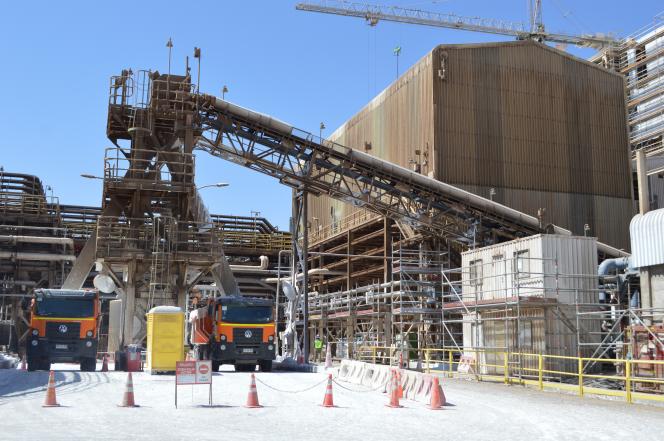
An interpretation of President Boric's statement is that the state intends to ensure active state participation in the lithium industry through existing state companies Codelco and Enami in the form of public-private partnerships. This is already the case for the country’s copper sector, where both companies participate on a minority basis with private companies in operations such as El Abra (49 percent of Codelco), Quebrada Blanca (10 percent of Enami) and Los Bronces (29.5 percent of a joint venture between Codelco and Mitsui). However, a majority stake by state-owned companies would be unparalleled, but, according to the minister of finance, such large stake would not apply to all projects, only to those of “strategic significance.” Clarifying what is meant by that definition will help understand how the government’s lithium strategy intends to approach public-private partnerships.
Fiscal rules and transparency
A noteworthy part of the announcement on Chile’s lithium strategy was the proposal to introduce a fiscal rule with a cap on lithium revenue expenditures, generating savings for social and technological investments. The president referred to a note from the autonomous fiscal council—an independent advisory group of the ministry of finance—published in February this year recommending this approach. The fiscal rule for lithium should form part of a sovereign savings and stabilization fund that can help face the volatility of revenues and provide sustainable financing towards its stated purposes, including social and technology investments.
The note also highlighted the need for increased availability of official information and improved fiscal transparency standards around lithium revenues.
With this in mind, the explicit reference to Chile's adhesion to the EITI (Extractive Industries Transparency Initiative), stating that “the process will begin to incorporate Chile to the EITI, to ensure greater transparency and probity in all extractive industries including lithium mining, meeting the highest international standards” is encouraging.
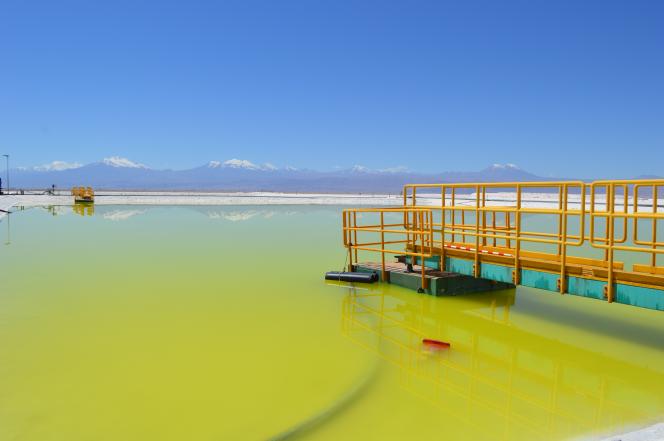
In this context, an important objective of the policy agenda should be on turning this intention into reality, tackle issues around opacity and lack of access to information in the sector, including lack of transparency around the negotiation and awarding of contracts, especially considering planned expansions to new salt flats. This would be in line with the recommendations of the Expert Group for the Prevention of Corruption in Energy Transition Mineral Supply Chains, led by NRGI in coordination with EITI and OECD.
The functioning of the participatory process, the invitees, and the real possibilities of influencing the definition of the future policy will be crucial elements to ensure good governance of the strategic reform process.
Research institutes
The direction of the current strategy is to aim for a sector with higher value addition. To this end, the government is proposing creating an institute of lithium and new technologies, which will be based in Antofagasta.
One of the provisions of the updated lithium contracts is that mining companies would finance technology institutes in Chile focused on research in energy, low-emission mining and the battery industry, with contributions of between $10 million and $18 million.
On the other hand, there are already specialized institutes part of existing national institutions, as is the case of the Advanced Lithium Research Center of the Universidad de Antofagasta.
Given this context, continuing and deepening funding of research, development and innovation programs already in place, to which different institutions can apply, seems preferable to creating a new institution from scratch.
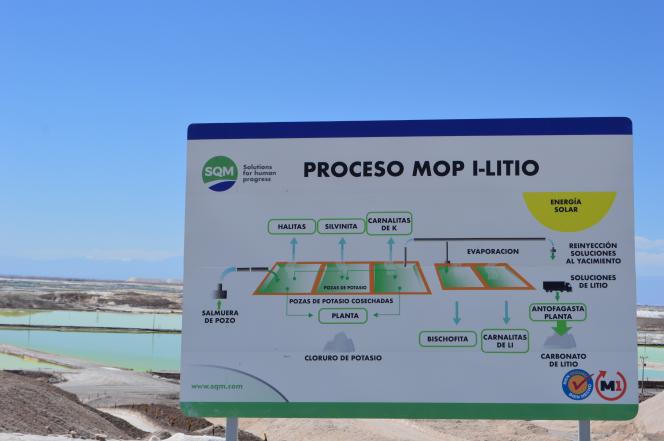
The announcements made in April are just the start of a long and complex process, which will require several different steps and approaches. The success of this strategy requires full participation and dialogue with various stakeholders. The national lithium strategy announcements provide broad guidelines, giving a general idea of the political direction the government wants to follow for lithium. However, the government still needs to define many key aspects to address several of the open questions around the lithium strategy. The government must take the steps needed to promote a process that is seen as legitimate by the different actors involved in the lithium sector.