
Gender Equity and Resource Governance: Bridging Lived Realities to Global Climate Action
Webinar

As the energy transition accelerates, the impacts of transition minerals extraction and fossil fuel phase-down are unevenly distributed, often disproportionately affecting women and marginalised communities in resource-rich countries. These women’s lived realities must be centred in global climate and energy transition negotiations and processes.
Diving into examples from resource producer countries including Madagascar, Zambia and Colombia, and gathering civil society, governance institutions, and the private sector, this session during London Climate Action Week will help us understand the current progress and gaps in gender-responsive resource governance, and the upcoming global advocacy opportunities where we can collectively push for a gender-just energy transition.
Speakers:
- Joëlle Ravelomanantsoa, Executive Secretary, Resource Justice Network Madagascar
- Edah Chimya, Executive Director, Zambia Alliance of Women / Publish What You Pay Zambia
- Juliana Peña Niño, Colombia Country Manager, Natural Resource Governance Institute
- Jacqueline Taquiri, Senior Policy Advisor, Tax and Extractives, IGF
- Zoe Brent, Researcher, United Nations Research Institute for Social Development
This webinar is co-organised by the Natural Resource Governance Institute (NRGI), Resource Justice Network and the IGF.
NRGI at London Climate Action Week
Explore our events, delegation and resources for London Climate Action Week.
How Can EITI’s Gender Agenda Drive Real Impact in Extractive Governance?

Who shapes decisions about natural resources and who benefits from them is one of the defining governance questions of a just energy transition. Yet the people most affected by mining and energy projects, particularly women, remain underrepresented in many of the institutions that govern them.
One place where these dynamics increasingly play out is the Extractive Industries Transparency Initiative (EITI), a global initiative that brings together governments, companies and civil society to improve transparency and accountability in the extractive sector. In recent years, gender considerations have become a growing part of its work, including through provisions in the 2019 and 2023 EITI Standards.
These changes have led to progress, including more gender‑disaggregated employment data and greater participation of women in multi‑stakeholder groups (MSGs). But representation alone does not translate into influence. As gender provisions become embedded in EITI, the question for civil society is shifting: how can these provisions be used more strategically to shape decisions, financing and accountability in the sector?

Evolution of the gender requirements in the EITI Standards
What the evidence shows
The EITI International Secretariat’s latest assessment of countries’ progress in meeting the gender-related requirements of the 2023 EITI Standard indicates continued improvements in gender representation.
Women now account for about 30 percent of MSG participants, up from about 20 percent in 2020. Progress remains uneven across regions and constituencies. In Latin America and the Caribbean, however, women make up nearly half of MSG members across constituencies. Globally, civil society groups tend to have the most balanced representation, while companies and government representatives still lag behind.
Progress on disclosures also varies. Countries increasingly report gender-disaggregated employment data and include gender objectives in EITI work plans. But transparency remains limited in areas that shape outcomes more directly, such as:
- Consultations with women and community consent during licensing processes
- How disclosure of extractive revenues and social expenditures benefit women and communities
- Publication of gender impact assessments
Through engagement with stakeholders across different countries, NRGI, RJN and EITI have identified several recurring barriers:
- Women remain under‑represented in governance and consultation processes
- Financing and revenue management rarely consider gender priorities
- Gendered impacts of governance risks, including gender-based violence, are often overlooked
- Significant systematic gaps persist in collection and use of gender‑disaggregated data, particularly on informal work and local economic participation
Extractive sector decisions shape jobs, revenues and local development outcomes. Without meaningful participation and accountability, inequalities risk persisting. As the energy transition accelerates demand for minerals, governance frameworks such as EITI can help by strengthening gender‑disaggregated data, helping improve compensation practices, informing policy reform and strengthen community engagement.
What country experiences show
In a recent webinar*, members of the Resource Justice Network shared their experiences implementing EITI’s gender requirements.
In Mexico, Beatriz Olivera, executive director of Engenera, emphasized linking representation with influence. While women participate in the MSG and a gender working group exists, policy discussions often overlook women in affected territories and their ability to participate meaningfully. However, Mexico also offers a strong example, disclosing gender‑disaggregated employment data and reaching 60 percent female representation in its MSG.
Zambia shows how institutional arrangements can shift representation. Nsama Chikwanka, National coordinator of Publish What You Pay/Resource Justice Network Zambia, described how their work incorporated gender considerations into constituency rules, supported leadership training, and strengthened subnational structures. Today, women hold five of the six civil society seats on the MSG.
In the Philippines, Beverly Besmanos, the national coordinator of Bantay Kita/Resource Justice Network, highlighted how national policy frameworks can reinforce EITI progress. Gender‑responsive budgeting rules and community planning requirements have helped bring gender considerations into mining governance. However, she also emphasized the need for local platforms that enable communities and women to access and use EITI disclosures.
Senegal also shows the value of civil‑society‑generated data. Women in Mining Senegal developed an index tracking women’s participation across both large‑scale and artisanal and small‑scale mining (ASM). Their training programs have supported women’s engagement in negotiation and oversight processes.
Together, these experiences highlight that progress depends not only on representation but also on institutional support, capacity and access to information.
Where EITI can go further
EITI has created important openings for more inclusive governance. The challenge now is to use them strategically. Three areas stand out:
- Enhance representation and inclusion
- Ensure women can fully and safely participate in EITI MSGs, including women from affected territories, worker organizations and grassroots groups. Practical support such as travel, childcare and safeguarding can help remove barriers.
- Update constituency rules and election processes to require gender balance and leadership rotation, and provide adequate onboarding and orientation for new women leaders.
- Track the gender composition of members and alternates, document obstacles to participation and include corrective actions in MSG work plans.
- Improve the collection and use of gender-disaggregated data
- Use EITI validation cycles to set country-specific gender targets that turn disclosures into reform priorities.
- Document and publish gender impact assessments (GIAs), gender‑responsive licensing consultations and monitoring plans for large projects.
- Data on employment, consultation processes, socioenvironmental challenges and socioeconomic barriers can complement public-private reporting and strengthen public debate.
- Strengthen gender‑responsive financing and revenue management
- Reporting can show how social expenditure and resource revenues reach communities and women.
- Extractive revenues can support services and infrastructure to address women’s needs.
- Revenue‑sharing mechanisms and public spending policies should better reflect women’s needs.
By focusing on these areas, EITI and its MSGs can serve as a practical mechanism for advancing gender equity in the extractive sector and the energy transition.
Civil society engagement with EITI’s gender agenda remains important. But the focus now needs to move beyond representation alone. Progress will depend on sustained commitment and coordinated action from governments, companies and civil society organizations. Strengthening gender‑responsive financing, data and participation within EITI can help ensure that transparency leads to more equitable outcomes.
*A webinar co‑organized by Resource Justice Network, Natural Resource Governance Institute, and Transparency International - Accountable Mining Programme, as part of a broader campaign to advance gender equity under the World Bank – EGPS, in line with the EITI 2023 Standard.
Without Equity and Justice, Mining Leaves Women Behind

In mining regions, women face distinct costs of weak governance: higher care and household responsibilities, exclusion from jobs and decision-making, and gender-specific risks such as sexual corruption. Yet these realities remain largely absent from high-level climate and energy discussions.
This September, diplomats and policy experts gathered at climate summits in Addis Ababa and New York, setting the stage for negotiations at COP30 in November. At these events, Natural Resource Governance Institute (NRGI) and Resource Justice Network underscored a critical point: there can be no just transition without more equitable sourcing and value chains for transition minerals, and central to this is ensuring a fairer deal for women.
The hidden cost of weak governance and corruption
Our organizations have long collaborated to bring a gender focus to natural resource governance, publishing a Feminist Natural Resource Governance Agenda in 2020, and to highlight the importance of tackling corruption. Over the past year, we’ve continued to expose challenges to a fairer, more inclusive mining sector, including through events at New York Climate Week (CWNYC). Resource Justice Network convened women from the Global South to speak on the systemic social, economic and financial barriers to a just transition and on solutions to overcome them.
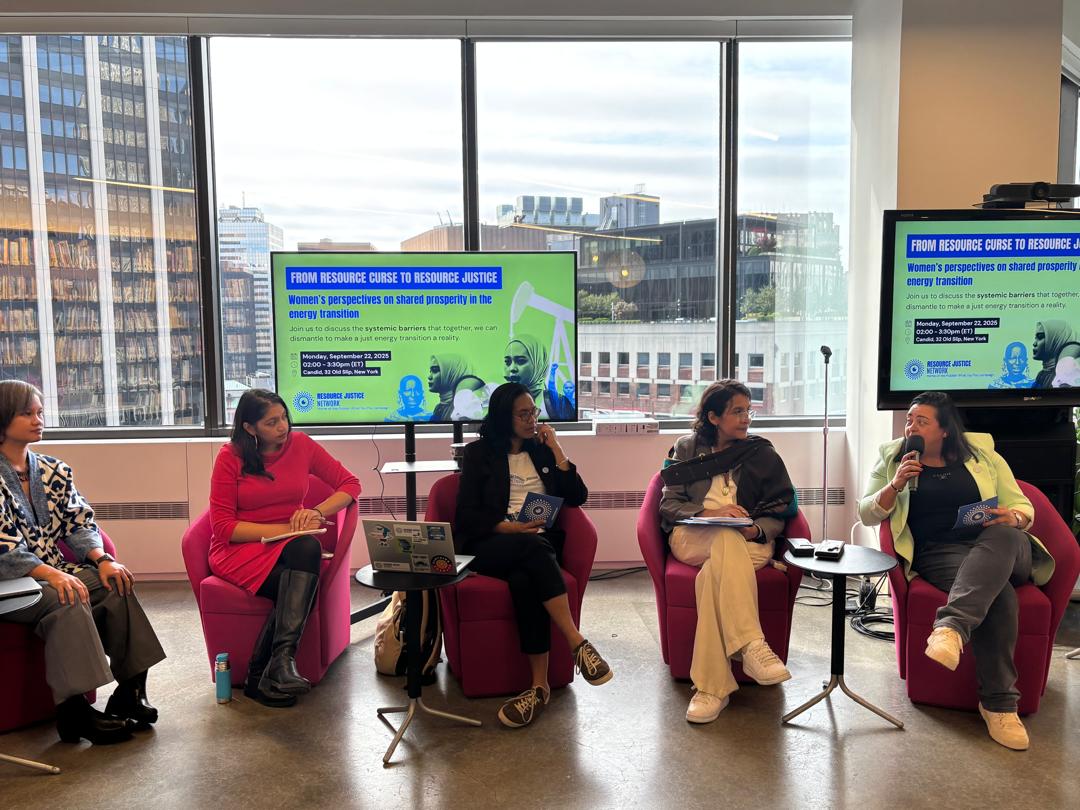
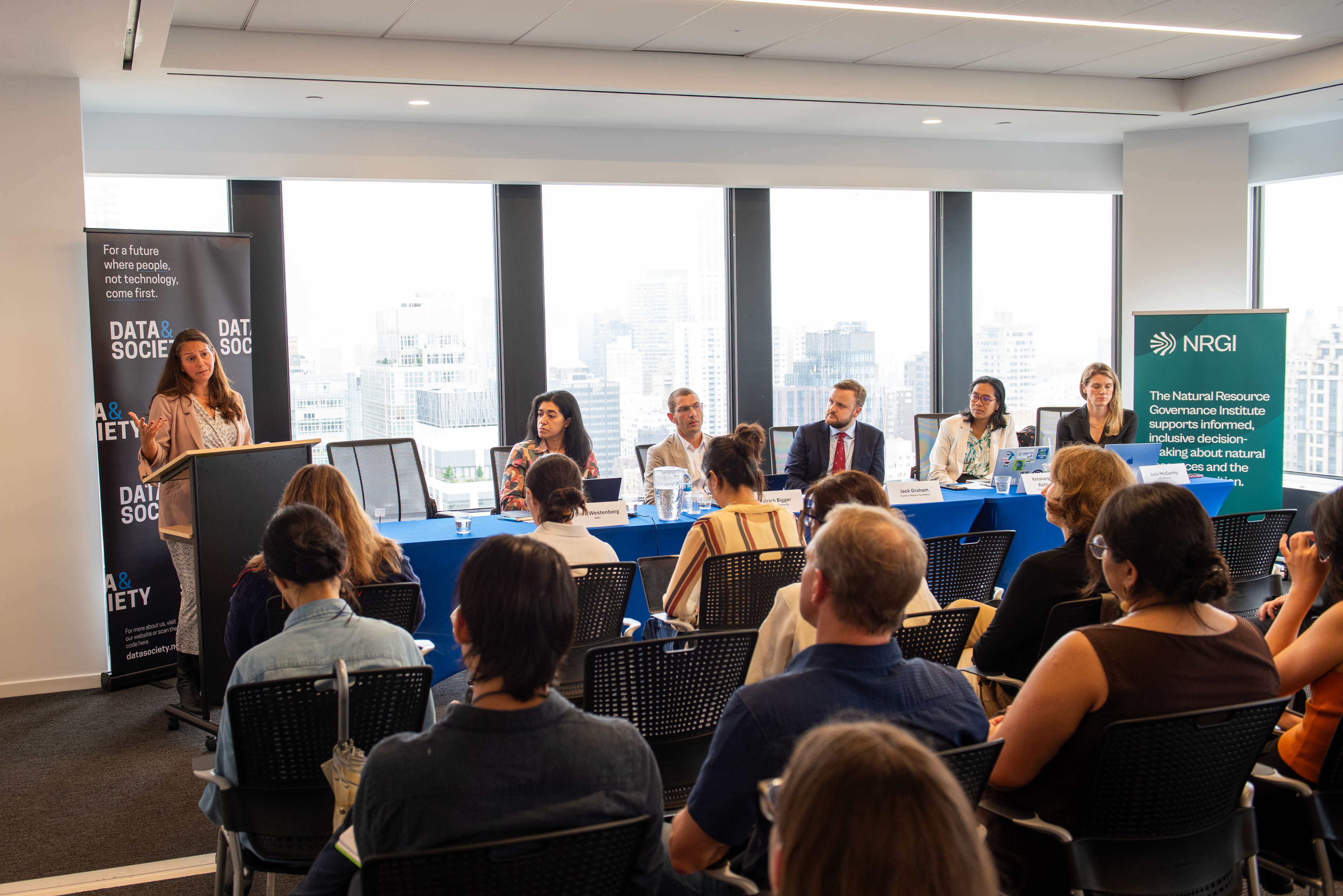
NRGI co-hosted a roundtable exploring how to better engage communities in the energy transition, where we drew on our work with the Business and Human Rights Resource Centre, SIRGE Coalition and WWF. Our joint briefing Digging Into the Problem shows how corruption in the mining sector directly undermines equity and inclusion, diverting revenues and social benefits from mining, such as jobs, education, healthcare and local development, away from those who need them most. Women, who rely more heavily on public services and social infrastructure, suffer disproportionately.
Corruption’s gendered impacts
Women face distinct corruption risks. Sexual corruption—in which access to jobs, services, permits or compensation is exchanged for sexual favors—is enabled by the male-dominated nature of the industry, weak enforcement of legal protections and fear of retaliation. While underreported in extractives, sexual corruption is real and pervasive. At the same time, discriminatory mining laws in several countries prohibit single, pregnant or unmarried women from certain mining activities, embedding exclusion in policy. Community development funds from mining often lack gender budgeting or gender-disaggregated targets, leaving women and girls underserved or entirely invisible.
The environmental and social impacts of mining compound these inequalities. Women in frontline communities, often responsible for water collection, food production and caregiving, must travel further, work harder and sacrifice income and time when natural resources and the environment are degraded by pollution and deforestation. At the same time, women also shoulder increased care responsibilities when relatives fall ill or leave the area for new opportunities, further limiting their economic and social participation.
Corruption also drives land grabbing and erodes land rights. Where tenure systems are unclear or informal, companies and state actors can exploit legal gray areas to displace entire communities, often without fair consultation or compensation. Women, less likely to hold formal land titles, are especially vulnerable, reinforcing both economic and political marginalization.
Yet, despite bearing disproportionate impacts, women are consistently excluded from decision-making spaces around mining activities. Local governance bodies, permit review panels and project consultations often fail to engage women meaningfully or at all, leading to unjust outcomes and undermining of environmental governance.
How mining deepens women’s burdens
At Resource Justice Network’s CWNYC event, we heard directly how these issues are impacting women in mining-affected regions. A panelist stressed that the “masculinization” of mining sites often fuels violence and abuse against women, including sexual exploitation, harassment, disappearances and killings. For Indigenous Peoples’ communities in mining zones, jobs are presented as benefits, but the creation of “men-camps” often breaks family structures and spreads violence. Only by fully realizing Indigenous Peoples’ right to Free, Prior and Informed consent can such negative outcomes be avoided.
These interventions contrasted starkly with many CWNYC events focused on technological solutions to climate problems. NRGI and Resource Justice Network participated in a panel discussion about the impacts of AI on mining and gas production in low- and middle-income countries, which highlighted the importance of bringing equity considerations, including gender, into AI policy dialogues. But, as we noted, technology alone cannot solve systemic exclusion, and may even worsen it if underlying power dynamics are ignored. Recognizing these risks is not a barrier to progress, but key to unlocking it.
The path forward: a gender-inclusive mining sector
Corruption and gender inequality are not side effects of the transition mineral boom, they are structural barriers to climate justice. The choice is clear: repeat past mistakes, or build a model of mineral governance that is inclusive, transparent and just.
Governments, companies and international actors must ensure that women are not an afterthought, but equal partners in shaping the decisions that will define this transition. Principles 3 and 4 of the UN Secretary-General’s Panel on Critical Energy Transition Minerals set out what is needed: women’s groups must be engaged before, during and after mining operations, and anticorruption safeguards must address gender-specific vulnerabilities.
Only with gender-responsive governance and by dismantling entrenched inequalities can the promise of the energy transition be shared equitably. To advance these goals:
- Sexual corruption must be recognized as a crime; legal instruments at all levels must be updated to reflect this, and courts and tribunals at the national, regional and global level must enforce them efficiently to tackle impunity;
- Governments should enshrine gender and anti-corruption safeguards in law and ensure that mining revenues are directed towards public services.
- Companies should ensure that their anticorruption policies and any community development agreements acknowledge the gendered impacts of corruption and development decisions in the mining sector and seek to address these, for example through enforcing zero tolerance policies for sexual corruption and ensuring adequate funding for gender programs.
- States parties to the UNFCCC should make equity central to COP30 commitments and finance incentives that strengthen women’s voices in climate change negotiations. By including the first-ever mention of minerals in COP text, delegates can build on the work of the UN Secretary General’s Panel and send a strong signal that a fairer and more equitable mining sector is essential to a just transition.
Value Beyond the Mine: Enabling Equitable Opportunities in Mexico

Image: Mexican Female Miner by Solidarity Center under Creative Commons Attribution (CC BY) 2.0 Generic licence.
As the world accelerates the shift to clean energy, the demand for transition minerals is reshaping how resource-rich countries like Mexico approach mining. The UN Secretary-General’s Panel on Transition Minerals (UN Panel) has identified value addition as its first actionable recommendation and has called for gender equity to be embedded across the entire mineral value chain.
This isn’t just about maximizing economic returns—it’s about ensuring fair and inclusive opportunities and benefit-sharing. Principles 3 and 4 of the UN Panel’s report stress the importance of tackling socio-economic barriers by involving women’s groups in decision-making before, during and after mining operations. Yet, despite their proximity to mining activities, women are often excluded from formal mining benefits and are typically confined to lower-paid, informal or peripheral roles.
In countries with both strong mining activities and industrial capacity, like Mexico, Equitable Value Addition (EVA) offers a promising pathway to move beyond extractive dependency and generate shared prosperity. However, this opportunity is not guaranteed, and risks have to be carefully weighed. Moreover, unless EVA strategies prioritize gender equity, they risk reinforcing the same inequalities that persist today.
From extraction to equity
Mexico is a top global producer of 17 key metals and minerals, including copper, silver, graphite and manganese—vital inputs for the electronics, renewable energy and automotive industries. It also holds significant lithium resources, positioning the country as a potential leader in global mineral value chains. Mining contributes 2.7 percent to national GDP and about 9 percent to industrial GDP, employing around 400,000 people directly and supporting over 2 million jobs indirectly.
Additionally, Mexico ranks fifth in vehicle production and third in exports. The automotive industry generates over $100 billion annually—mostly through trade with the U.S.—and contributes around 4.7 percent to the national GDP and over 20 percent to the manufacturing GDP. This sector also supports more than one million direct jobs and more than 3.5 million indirect jobs.
These two sectors—mining and automative manufacturing—are central to Mexico’s economic future. Yet both are marked by deep gender disparities. Women make up only 17 percent of the mining workforce and just 12 percent occupy leadership positions. In the automotive industry, women represent 37 percent of total employees, but only 13 percent of its manufacturing workforce.

Beyond underrepresentation, women also face real safety threats. Nationwide, over 70 percent of women in Mexico report having experienced some form of violence. In public transport, the problem is especially acute: in industrial zones, for instance, 60 percent of women report abuse during their commutes. In addition, 28 percent of women have faced violence at work. Alarmingly, up to 94 percent of women do not file a report or request support.
EVA as a dual-purpose strategy
There is growing recognition that the energy transition must not deepen existing inequalities. NRGI is contributing to this conversation by highlighting the dual opportunity presented by EVA. Economically, it supports countries like Mexico in moving up the value chain—from raw material exports to high-value goods. Socially, it opens pathways to gender equity by promoting access to formal, well-paid and secure jobs for women across the mineral and manufacturing sectors. We have also promoted this proposal through the T20, calling on the G20 to establish a global framework for value addition and fair benefit-sharing.
A just transition demands gender equality and social inclusion at every stage—from minerals extraction to value addition. To succeed, the transition must be driven by governance that prioritizes these objectives, including gender-responsive due diligence along supply chains and local policies that link green technologies to tangible benefits for women.

Connecting agendas: The example of Hermosillo
The transition to electric vehicles (EVs) is transforming the auto industry, but not all jobs will carry over. Only one-third of in EV-related job categories align with skill sets from internal combustion engine roles, making reskilling essential. Yet only 30 percent of STEM professionals in Mexico are women, limiting their access to future opportunities.
A gender-inclusive EVA strategy must therefore include:
- Reskilling programs targeted at women
- Incentives for female entrepreneurship in mineral processing and tech sectors
- Employment quotas or targets for women across the value chain
In Hermosillo, political will is driving meaningful change. The local government has introduced a development plan with gender-focused initiatives: electric transport (buses and taxis) driven by women for women, improved public lighting in high-risk areas, solar panel installation in female-headed households, and the creation of a cooperative focused on empowering women in the renewable energy sector. This is only one example of what the linkages of how gender-responsive EVAs can connect green technology with social impact in practice.
Why gender impact assessment matter
For women in mining communities to truly benefit from shared infrastructure, training and local value chains, strong gender-sensitive assessments that identify barriers and guide practical solutions are essential. These assessments should be mandated and monitored by governments, implemented by mining companies, and enriched through the active participation of civil society.
Across Latin America, some countries are already making strides. For example, in Argentina’s Catamarca province—also home to key transition minerals like lithium—the government has integrated a gender indicator into environmental impact declarations since 2022. This requires mining companies to assess gender-specific impacts throughout all stages of mining projects, from exploration to closure. Driven by local community advocacy and supported by the Intergovernmental Forum on Mining (IGF), this policy aims to foster safer, more inclusive workplaces.
This kind of targeted, governance-led approach offers a useful model for Mexico. As the country expands investments into transition minerals, Mexico has the opportunity to apply similar tools grounded in local realities to ensure mining delivers for both the energy transition and gender equity.

What needs to happen
For EVA to be both economically transformative and socially just, creating an enabling environment is crucial. In Mexico context, policymakers at the federal and state levels should champion reforms that remove legal barriers and guarantee women’s rights and participation in all segments of the mineral value chain. This includes:
- Equitable licensing and market access
- Targeted financial support
- Affordable and adequate childcare, social services and public infrastructure
- Technical training for women in STEM fields
At the same time, industry actors, including mining companies, automakers, and suppliers, must adopt gender-responsive policies—especially in hiring, workplace safety and procurement. Civil society organizations, too, play a key role in monitoring implementation, advocating for accountability and amplifying women’s voices in decision-making.
Cross-sector collaboration is essential. Government agencies, CAMIMEX, WIM-Mexico, international organizations and trade associations should work together to develop inclusive and gender-equitable opportunities along the value chain. Public data disclosure and Environmental Impact Assessments (EIAs) are vital for tracking progress.
Inclusive public-private partnerships and regular multi-stakeholder dialogue can help subnational governments and communities capture value locally, and mitigate against potential challenges, while preparing for future opportunities in the global energy transition.
A choice to lead
Mexico is well positioned to lead a just energy transition that values both its natural resources and its people. The current administration’s Plan México aims to place the country among the world’s top 10 economies by focusing on green industrialization, including development of the EV value chain and renewable energy.
But to turn this vision into lasting socio-economic benefits, gender equity must be a core element of the EVA approach, not an afterthought. The real question is not whether EVA can drive gender equity, but whether those with power, namely policymakers, business leaders, civil society and local stakeholders, will choose to make it do so.
Fostering Gender-Just Energy Transitions in Mineral- and Fossil Fuel-Producing Countries

Questions explored in this primer
- Why does gender matter for resource governance?
- What are the main challenges and opportunities for gender equality in the energy transition?
- How can stakeholders best promote a gender-just transition?
As the world turns toward a sustainable energy future, humanity stands at a crossroads: will the energy transition bridge existing divides—such as income inequality, gender disparities, and economic imbalances between nations—or will it deepen the disparities that already separate us? Addressing gender equality is a crucial piece of the puzzle. Ensuring that women, men, and people with diverse identities can shape and benefit from this shift is essential to achieving a truly just and inclusive transition.
In 2020, the Natural Resource Governance Institute (NRGI) and partner organizations proposed a Feminist Natural Resource Governance Agenda for a Just Transition. In 2021, in partnership with the World Resources Institute (WRI), we produced an initial primer about the importance of gender-transformative policy reforms. The current primer builds on the first, diving deeper into why gender matters to natural resource governance in the context of the energy transition. It highlights the often-overlooked ways in which gender dynamics could influence—and be influenced by—how the transition is managed. From gender mainstreaming to equity and equality, we explore the concepts that can turn the energy transition from a risk to gender equality into an opportunity for all.
Energy policies have long been blind to gender, often neglecting the distinct needs, challenges, and contributions of different groups. But a different narrative is needed—one in which gender is not an afterthought, but a driving force for fair and effective energy governance. By embedding gender perspectives into every policy at every stage, the global community can transform the energy transition into a powerful engine for social justice and economic empowerment.
Gender equality in the context of the extractive sectors and natural resource-rich countries refers to the equal rights, responsibilities, and opportunities of women, men, and youth within these industries and regions, irrespective of their gender. Promoting gender equality in extractive contexts should ensure that all individuals can equally benefit from and contribute to the development and management of natural resources. However, in this document, we focus our analysis on the role that women—particularly within vulnerable communities—can play in ensuring a just transition.
This primer offers an overview of the challenges that stakeholders must overcome to make this vision a reality. It also proposes general recommendations for a gender-just transition. Whether you are a policymaker, a practitioner, a member of an affected community, or simply someone committed to a better future, we invite you to join us in ensuring that the energy transition does not leave anyone behind.
Framework for People-Powered Energy Transitions

Key messages
- Transition could leave low- and middle-income countries behind unless it is just. Countries reliant on fossil fuel production or mineral extraction are especially vulnerable.
- There is no one-size-fits all approach to addressing equity in fossil fuel- and mineral-producing countries. Just transitions are built on clearly defined principles, policies, processes and practices that respond to citizens’ needs and address the most vulnerable communities.
- Just transition policies and programs: protect rights; strengthen governance and accountability; deliver development and wellbeing for all; and address international power asymmetries.
- People-powered energy transitions can create a win-win scenario for the Global North and the Global South, leading to transformative agreements that promote justice and well-being.
- To ensure energy transitions are just, development partners should: provide adequate funding; ensure that accountability and monitoring mechanisms are in place; and encourage learning, exchange and adaptation cross-regionally and globally.
The global energy transition has far-reaching repercussions: countries whose economies rely on fossil fuel extraction face the prospect of lower demand, and countries producing minerals needed for clean technologies risk the negative impacts of an unregulated mining boom. This piece draws on transition experiences in Colombia, Democratic Republic of the Congo, Ghana, Nigeria, Peru, Senegal and Uganda. It makes the case that only a people-powered and equitable transition can achieve the scale of transformation necessary for a green future. It proposes an operational framework for just transitions that respect universal human rights, address socio-environmental impacts, ensure affected communities and citizens can meaningfully participate in decisions, and put in place strong and accountable governance systems. It shares lessons on context-specific policies for ensuring a fair distribution of both the costs and benefits of planet-saving climate action.
Building a Gender-Just Energy Transition in the Middle East, North Africa and Beyond

The global conversation on climate, energy and gender is more crucial than ever. While the transition toward green and decarbonized economies holds significant promise, it also poses inherent risks of stranding and disproportionately impacting vulnerable groups. Women, already burdened by existing inequalities in employment opportunities, social protection, wages, working conditions and decision-making roles, face exacerbated challenges during this transition. Adopting an equitable and inclusive recovery plan that shield women from these disparities is therefore crucial.
As governments prioritize more sustainable models in response to climate change, the concept of a just transition is gaining prominence. However, the gender-specific complications of the transition are not yet thoroughly understood or acknowledged. This post explores how an inclusive approach to sustainability can benefit all members of society, particularly women and marginalized communities, with a specific emphasis on the context of the Middle East and North Africa (MENA) region, and specifically Lebanon.
A just transition, at its core, is more than the development of green economies; it refers to the indiscriminatory inclusion of all communities, workers and social groups in the process of change. As the world moves from carbon-based to green industries, the future we envision must be grounded in current realities, especially those of marginalized and underprivileged groups. Governments, organizations and industry leaders must not only avoid leaving anyone behind but also actively ensure the full participation of all societal groups to achieve long-term positive change.
This road to a sustainable future is not easy or rosy. Women are often among the most vulnerable to the adversities of change. Women in the labor force continue to suffer from wage disparities, unpaid care work, limited access to resources, gender biases in various sectors, under-representation in decision-making positions, and barriers to entrepreneurship, among many other challenges. In the renewable energy sector specifically, disparities are even much more pronounced. For instance, despite evidence that, globally, 62 women for every 100 men possess skills and expertise related to environmental sustainability and renewable energy—known as “green talent”—women remain significantly underrepresented in the energy workforce, occupying only 32 percent of roles in the renewable energy sector. Additionally, only 11 percent of women are founders of companies within the energy sector.
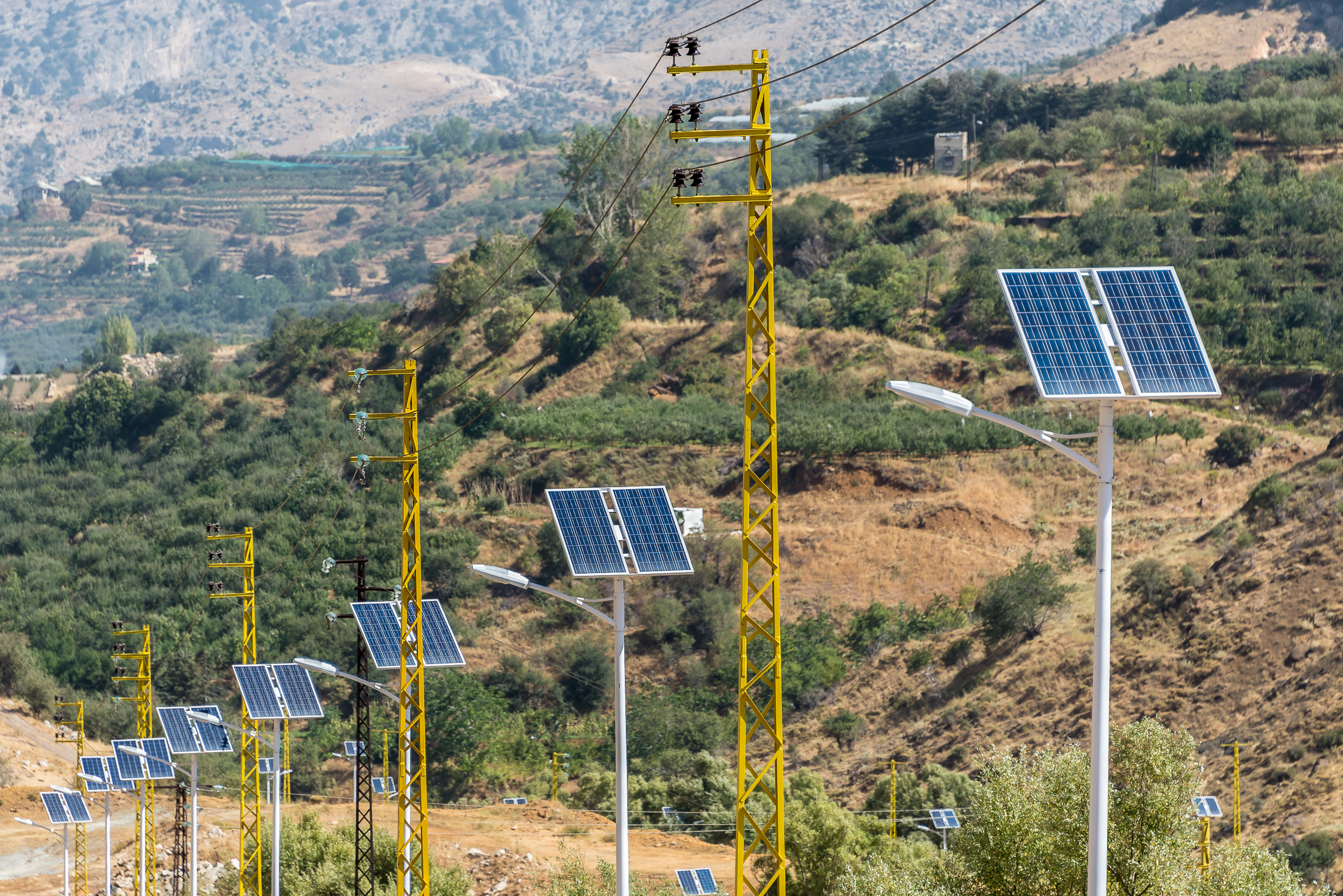
In the MENA region, women remain severely underrepresented in most areas key to the green transition. For instance, their labor participation in the renewable energy sector ranges only between 7 and 9 percent, much lower than the already low global average of 32 percent. Moreover, among the 400,000 jobs estimated to be generated as part of the green transition in the Arab region specifically, only 10 percent are projected to target women. These stark numbers underscore that women are not equally included in the overall transition process, hindering their effective participation in sustainable development programs and thus greatly limit their future opportunities in the field of renewable energy.
At the Arab Institute for Women (AiW) at the Lebanese American University (LAU), our work is built on a large number of themes that focus on women’s issues, explored through both research and outreach endeavors. Given the interdisciplinary and diverse nature of our activities, the concept of a “just transition” naturally fits within our area of focus, as it aligns closely with our long-term vision for inclusive, equitable and sustainable development. We are therefore looking forward to initiating new conversations among experts and scholars on gender, energy, and climate change. We also aim to encourage coalition-building and introduce new initiatives to raise awareness about environmental sustainability and gender equality in Lebanon and the wider region.
Our commitment is reflected by recent practical initiatives, such as panel discussions and events to foster dialogue and partnerships among different organizations and individuals working at the intersection of gender equality and climate change. During the 16 Days of Activism Against Gender-Based Violence, we hosted a session entitled “Environmental Equality in the Arab Region,” and an arts competition in partnership with the United Nations Economic and Social Commission for Western Asia (ESCWA). We also organized a webinar on gender and the environment, a symposium with the Armenian General Benevolent Union on International Women’s Day on “Strengthening Intergenerational Dialogue and Partnership on Gender Equality & Climate Change,” and collaborated with the non-governmental organization (NGO) Ahla Fawda, as part of the “TEDx Sprints: Artists for Climate” initiative, to showcase Lebanese artists in a global collection of digital illustrations addressing climate issues.
Now more than ever, we at AiW are committed to facilitating an equitable restructuring of our social and economic realities. This involves ensuring the inclusion of all individuals in the process of sustainable development. Working closely with organizations like the Natural Resource Governance Institute (NRGI) is one of the many ways through which we aim to effect lasting change, despite the numerous challenges faced.
Only by acknowledging the challenges which women face can governmental and nongovernmental entities develop targeted action plans that unlock new opportunities for more equitable participation. Instead of echoing women’s concerns behind closed doors, we, researchers and activists, must form national and transnational pressure groups to engage with relevant authorities and ensure that our voices are heard and concerns addressed. For the transition to be truly gender-just, we propose the following key recommendations:
- Inclusive decision-making. Governments should ensure that women have a seat at the decision-making table and have the required opportunities to participate fully and actively within their communities, especially in the Global South.
- Redistributive justice. In order to avoid the injustice trap, governments and international organizations should implement a redistributive justice process that allocates resources and opportunities equitably across community members, while prioritizing programs that benefit women specifically.
- Education and employment opportunities. Educational institutions, in collaboration with government and private sector stakeholders, should actively encourage women to major in science, technology, engineering and mathematics (STEM) fields and pursue careers in STEM to ensure career opportunities given that traditional professions may be negatively affected or even completely eliminated as part of the transition. By creating more opportunities and support systems for women in these fields, we can harness their talents and contributions to tackle the challenges of the future.
- Removing structural barriers. Governments and relevant stakeholders in the renewable energy sector should take proactive measures to dismantle structural impediments and address stereotypical gender norms to guarantee women’s meaningful engagement as agents of change in renewable energy sectors.
- Cross-sector collaboration. Stakeholders across sectors, including government agencies, academia and NGOs, should collaborate on research and data collection purposes to overcome the dearth of data in our local context.
These recommendations, among others, serve as a roadmap for facilitating and actualizing the just transition process toward a sustainable, green and gender-equal future for all.
Women's Roles in Decisionmaking About Mining and the Energy Transition

NRGI's Nafi Chinery spoke with Zed 101.9 FM in Ghana about changing roles for women in the country's extractive sector—and in mining in particular—amid the energy transition.
She said:
"We need to shift our attitude toward women‘s participation and representation in mining and extractives. Whenever we talk about representation, participation, voice, recognition and benefits, we must go beyond the traditional roles often associated with women and acknowledge women experts, who can influence policies and decisions. We need women in boardrooms and that requires a better analysis of the barriers preventing women from attaining those positions and addressing them. There must be a clear policy and strategy around how to increase women’s participation and benefits in the green mineral sector so that we can monitor and hold the government and investors accountable."
A Guide to Gender and Mining
Just Transitions in Resource- and Energy-Producing Countries

The global shift away from fossil fuels toward cleaner energy presents significant potential for resource-rich countries. But it also poses challenges, compounded by gender inequality and a legacy of poor environmental and social practices linked to the extraction of oil, gas, coal and minerals.
To ensure benefits for everyone—including communities, women and Indigenous Peoples—leaders working on a just energy transition should adhere to some fundamental principles.