
The Role of NNPC in Nigeria’s Energy Transition (COP31)
Nigeria Pavilion, COP31, Antalya, Türkiye
The Nigerian National Petroleum Company Limited (NNPC) has a central role in Nigeria’s energy sector and economic future. As global energy markets change, the company faces important choices about its investments, commercial priorities and contribution to Nigeria’s energy transition.
Building on discussions held in Abuja in October, this COP31 session will examine how NNPC can respond to a changing global energy system while supporting Nigeria’s wider energy and development goals. It will consider opportunities for diversification, the role of national oil companies in the transition and the governance and investment decisions needed to support economically viable pathways.
NRGI Nigeria Country Manager Tengi George-Ikoli will participate in the discussion, bringing perspectives from NRGI’s research and engagement on national oil company transformation and Nigeria’s energy transition.
Featuring NRGI's

Tengi George-Ikoli
Nigeria Country Manager
Just Transition or Just Hesitation? Why Africa Must Stop Negotiating with Fear

As the global energy transition accelerates, Benjamin Boakye, Executive Director of the Africa Center for Energy Policy (ACEP), argues that Africa must stop negotiating from a place of fear, and instead focus on proactively building the capacity to compete, adapt and prosper.
The global energy transition has become one of the defining policy debates of our generation. Across Africa, it has generated both optimism and anxiety. For oil producing countries, the concern is understandable. Most long-term energy outlooks project that global demand for fossil fuels will gradually decline over the coming decades, creating fiscal risks for economies that remain heavily dependent on petroleum revenues. For countries endowed with critical minerals, the transition presents a different prospect: unprecedented opportunities to participate in the value chains that will power a low carbon economy.
Both realities deserve serious attention. Yet the greatest risk facing Africa is neither the projected decline in fossil fuel demand nor the volatility of mineral markets. It is the continent’s growing tendency to define its future through narratives developed out of frustration and fear to respond to global power imbalances instead of pursuing practical strategies rooted in African realities, ambitions and capabilities.
Much of Africa’s transition conversation has become an exercise in interpreting what Europe, North America and other advanced economies think Africa’s role should be in a decarbonizing world. Policymakers devote considerable effort to responding to external debates about climate justice, fossil fuel phase out pathways and financing obligations. While these discussions matter, they increasingly distract governments from the more urgent task of positioning their economies to benefit from one of the greatest industrial transformations in modern history happening with a complex interplay of innovation, geopolitics, energy security and a race to economic heights imminent in the foreseeable future.
The result is a discourse dominated by vulnerability.
Africa is vulnerable because it contributes only a small share of global greenhouse gas emissions yet bears a disproportionate burden of climate impacts. Many of its economies also remain dependent on commodity exports, constrained by limited access to capital and technology, and characterized by relatively weak industrial capacity. The challenge is not that these concerns are misplaced. They are real and deserve serious attention. The challenge is that they have come to dominate the conversation. Too much of Africa’s transition discourse now revolves around managing vulnerability rather than building capability, responding to global climate conversations with narratives of weakness rather than defining an African strategy for competing in a changing global economy. The question is not whether Africa is vulnerable, but whether it chooses to organize its response around vulnerability or around capability.
Complaints may be justified. They are not a development strategy.
A just transition for Africa should therefore not be defined primarily by compensation for losses or fairness in international negotiations. Those debates have their place, but they should not become the organising principle of Africa’s response. A just transition should instead be judged by whether African countries build the institutions, skills and industries needed to create value from the changing global economy. This will help to properly align every support beyond the continent to deliver targeted outcomes.
For oil producing countries in Africa, this requires technical honesty. Governments should recognize that while global oil demand has not yet entered sustained decline, many long-term energy outlooks, including those of the International Energy Agency, project that fossil fuel demand will gradually weaken over time, although the pace and timing remain uncertain. This creates genuine fiscal risks for countries whose public finances depend heavily on petroleum revenues.
The response, however, is neither panic nor the premature abandonment of petroleum resources. Africa must approach its resource development decisions with a deep appreciation of the uncertainty and emerging economic realities shaping competing energy forms. Equally, governments cannot continue planning as though the future will resemble the past. The real challenge is using today’s petroleum revenues to finance tomorrow’s diversified economy.
Countries such as Ghana, Nigeria and Angola should therefore focus on strengthening fiscal management, investing in human capital, improving public institutions and accelerating economic diversification. The question is not whether demand will eventually decline, but whether these countries will use the remaining window of opportunity wisely.
Mineral rich countries across the continent face a different, but equally demanding, challenge. The growing demand for lithium, cobalt, graphite, manganese and rare earth elements presents Africa with a rare opportunity to capture greater value from the global energy transition. Yet mineral wealth has never guaranteed prosperity. For decades, African economies have exported raw materials while importing technology, manufactured goods and jobs. Without deliberate, analytically grounded policies that identify commercially viable opportunities for value addition and industrialisation, the transition minerals boom could simply reproduce the extractive model under a different name. The measure of success will not be how much Africa extracts, but how much value it creates.
Africa’s opportunity extends well beyond mining. The continent’s abundant renewable energy resources, young workforce and expanding technological capabilities provide a strong foundation for industrialization, manufacturing and innovation. With strategic investments and coherent industrial policies, these assets can generate far greater economic value than exporting raw minerals alone.
This requires preparation rather than optimism.
Preparation begins with technical honesty. Governments must resist the temptation to build policy around fashionable narratives or political slogans. Not every country will become a battery manufacturing hub. Not every mineral deposit justifies domestic processing. Effective policy demands realistic assessments of comparative advantage, market conditions and institutional capability.
Strategic partnerships are equally essential. Too often, international engagement is framed as a choice between sovereignty and dependence. This is a false dichotomy. Virtually every successful industrial transformation, from East Asia to more recent experiences in Southeast Asia, has relied on strategic partnerships that mobilized capital, transferred technology, developed skills and expanded access to global markets. Africa should therefore pursue partnerships that strengthen domestic capabilities while remaining firmly aligned with its own development priorities.
Urgency is equally important.
The transition is already underway. Investment decisions are being made, supply chains are being reconfigured and new technologies are being deployed at scale. Every year spent dwelling on whether the transition is fair is another year in which others strengthen their competitive advantage while Africa delays positioning itself to benefit.
The greatest danger, therefore, is not the transition itself. It is hesitation.
The future of resource governance should not be framed around what the world owes Africa. It should be framed around what Africa owes itself: disciplined planning, technical honesty, capable institutions, strategic partnerships and sustained investment in its people.
A just transition is not achieved by dwelling on vulnerability or waiting for perfect global fairness. It is achieved by building the capacity to compete, adapt and prosper. The choice before Africa is therefore miles beyond fairness. It is whether the continent will spend the next decade negotiating from a position of fear or preparing from a position of confidence and optimizing its space and people.
The window of opportunity remains open, but it will not remain open indefinitely.

Benjamin Boakye is the Executive Director of the Africa Center for Energy Policy (ACEP), a leading African think tank on energy and extractive sector governance. He has over 15 years of experience advising governments, development partners and civil society on energy governance, the energy transition and natural resource management. His work focuses on advancing policies that strengthen economic transformation and sustainable development across Africa. He contributed this piece as part of NRGI's 20th anniversary thought piece series on the future of resource governance.
Life Beyond Oil: Saudi Arabia’s Mining Ambitions

From last year’s COP28 climate conference emerged the “UAE Consensus.” It was a watershed moment, with the UNFCCC in its global stocktake calling on governments to transition away from fossil fuels in “a just, orderly and equitable manner” and accelerate deployment of more sustainable energy sources.
This consensus significantly impacts the future of Saudi Arabia’s economic and energy landscape. It’s the latest driver of the country’s expansion of its interest in mining, both domestically and in many lower-income countries.
Oil’s diminishing prospects
At COP28 the Saudi delegation, together with other Arab oil-producing nations, opposed any proposals mandating the end of fossil fuel production. In a bold stance, energy minister Abdulaziz bin Salman Al Saud openly opposed phase-out or phase-down provisions in the final agreement, likening the fossil fuel related provision to an “à la carte menu”. He later expressed satisfaction with the UAE Consensus, emphasizing that it allows countries to tailor their energy transitions based on their capacities and interests.

Saudi Arabia faces a complex challenge: it remains heavily reliant on oil revenues not only to fund government salaries and infrastructure but to drive the non-oil sectors envisioned under Vision 2030. While Saudi leadership acknowledges the inevitability of the global energy transition and the economic implications, theirs is a cautious approach to avoid a rapid shift. The focus remains on maintaining Saudi citizens’ standard of living while balancing economic growth with the evolving global energy landscape.
In response, state oil company Aramco has taken steps that signal its recognition of the transition. It joined the Oil and Gas Decarbonization Charter at COP28, committing to net-zero operations by 2050, ending routine flaring by 2030, and reducing upstream methane emissions, specifically within Scope 1 and 2. This reflects Aramco’s focus on the most direct and controllable sources of its carbon footprint. Aramco also aligned with the government’s decision to halt expanding oil production to 13 million barrels per day, as part of its shift from a hydrocarbon producer to a broader energy company.
While these measures aim to ensure Aramco’s resilience during the transition, Saudi leadership is also exploring new opportunities in economic diversification, particularly in transition minerals, making a significant shift as the kingdom prepares for a post-oil future.

Saudi Arabia’s domestic mining sector
Beyond oil, Saudi Arabia is expanding exploration and exploitation of its vast domestic mineral reserves through substantial investments in the mining. The kingdom is driven by the growing demand for transition minerals such as lithium, cobalt and nickel, which are required for the transition from fossil fuels based economies to decarbonized economies.
The strategic prioritization of mining is closely linked with Vision 2030’s aim to maximize the benefit of the kingdom’s abundant natural resources beyond its conventional hydrocarbon reserves. Saudi Arabia is tactically re-oriented to exploit increasingly demanded resources that are pivotal in the worldwide transition to renewable energy sources by emphasizing essential transition minerals. This signifies not only a strategic response to the evolving dynamics of the global energy sector, but also a calculated attempt to preserve the kingdom’s preeminent position on the international energy arena.
As per official statements, the estimated value of unexploited mineral resources in Saudi Arabia has increased from $1.3 trillion to $2.5 trillion, driven by the discovery of rare earth elements and higher quantities of phosphate, gold, zinc and copper.
As part of its goal to pursue economic diversification and reduce reliance on oil production, Saudi Arabia aims to increase the mining industry’s GDP contribution from $17 billion to $75 billion by 2035. The Ministry of Industry and Mineral Resources, headed by Bandar Al-Khorayef, holds a pivotal position in directing the country’s mining endeavors. The Saudi Arabian Mining Company (Ma’aden), a prominent state-owned enterprise, plays a crucial role in the execution of the kingdom’s mining strategies, the development of partnerships to exploit mineral resources, and the operation of significant projects.
The Jabal Sayid copper project, a collaborative effort between Ma’aden and Barrick Gold, and the Al-Jalamid phosphate mine are among the significant domestic initiatives currently in progress. Saudi Arabia is also making substantial is investments in exploration and geological surveys utilizing cutting-edge technologies and international expertise to discover new mineral deposits. In alignment with the new Mining Investment Law, the ministry recently announced the auction of six mining licenses, covering deposits of lead, zinc, copper and iron. To further bolster the sector, the kingdom has introduced a $182 million exploration incentive program and granted 33 additional mining licenses.
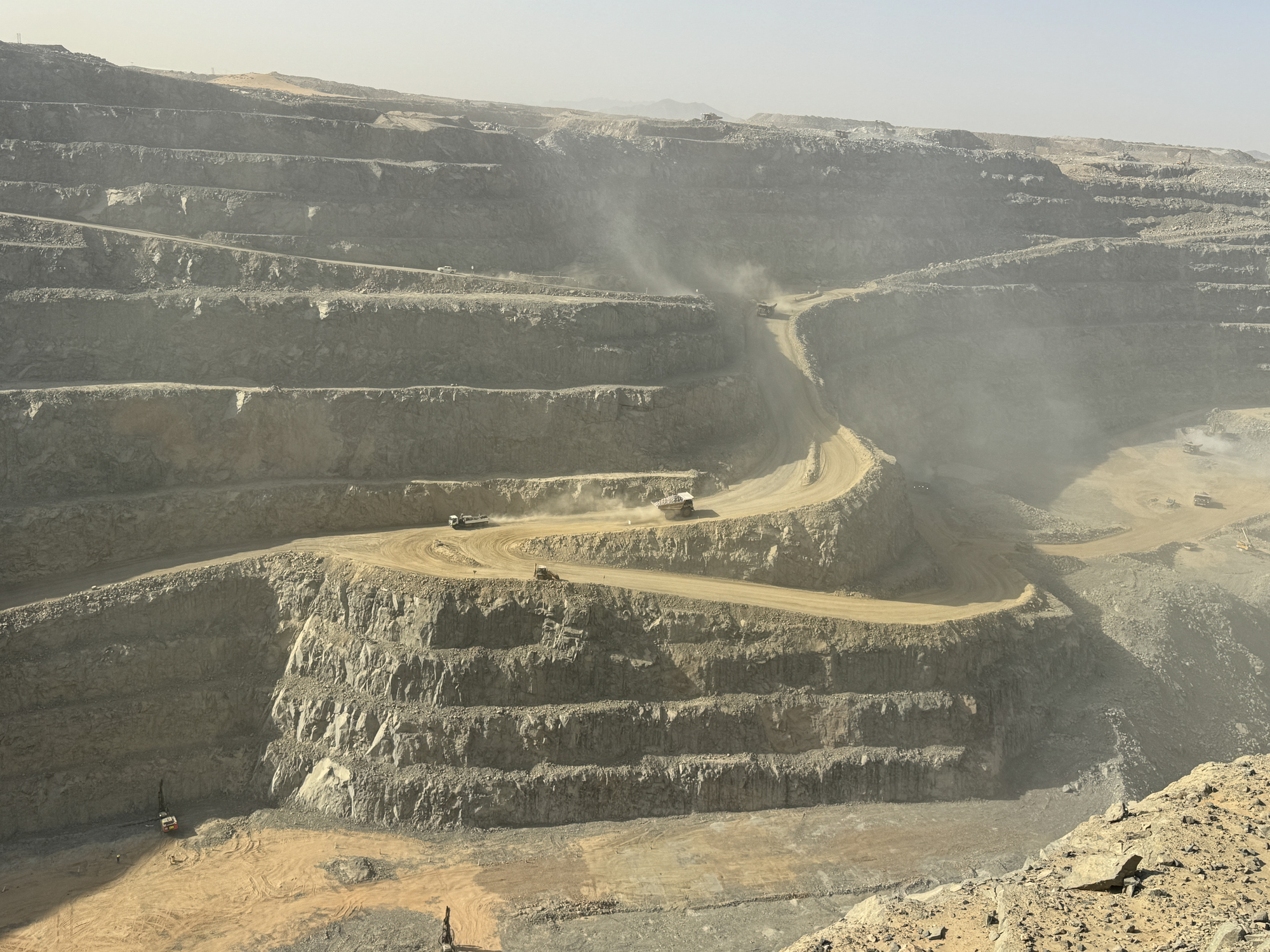
On the global stage, Saudi Arabia is driving industry conversations through international initiatives such as the Future Minerals Forum and active participation in Africa’s Mining Indaba, underscoring its commitment to becoming a key player in the global mining industry.
Building international alliances for transition minerals mining
Saudi Arabia plans to become a world leader in sustainable mining by making strategic use of its own significant reserves of transition minerals. Al-Khorayef has said that “the investments will continue to position the kingdom as a mining production and logistics hub for a region that stretches from Africa to Asia, while also supporting the transformation of our mining sector so it can achieve its potential.”
The kingdom’s comprehensive growth strategy for the mining sector involves significant investments, collaborations, and policy reforms. Recent memoranda of understanding (MoUs) signed with countries like the Democratic Republic of the Congo, Egypt, Morocco and Russia underline Saudi Arabia’s intent to enhance its mining capabilities and infrastructure, thereby influencing the global energy transition. And Turkey and Saudi Arabia have entered into a MoU to collaborate on transition minerals, focusing on knowledge exchange and research related to minerals essential for solar panels and electric vehicles.
Furthermore, Saudi Arabia’s global involvement includes not just formal agreements but also direct investments in prominent mining companies. Most recently, the kingdom secured a 10 percent stake in Brazilian mining company Vale Base Metals, demonstrating its approach to investing in the worldwide mining industry by acquiring equity.
With this strategic pivot Saudia Arabian authorities not only aim to diversify the country’s economy but also to secure its role in the new geopolitical alignments around transition minerals. As the global energy landscape shifts toward sustainable sources, the kingdom’s leaders are keenly aware of the necessity to adapt without losing longstanding influence in the energy market.
Challenges and opportunities in Saudi Arabia’s mining ambitions
With its ambitious mining objectives Saudi Arabia faces both domestic and international constraints that officials must solve to maximize industry potential.
Domestically, the country still requires specialized infrastructure tailored to support large-scale mining operations, particularly in remote desert regions. Additionally, the kingdom must invest in education and training programs to develop a workforce skilled in advanced mining techniques and technologies.
Water scarcity in the desert areas poses a significant challenge, as limited water resources complicate mining operations and increase costs. To address these issues, Saudi Arabia needs to explore innovative water management solutions such as desalination and water recycling, specifically designed for mining activities. Furthermore, given the potential environmental impact of mining—such as land degradation, water contamination, and biodiversity loss, the country should implement and enforce rigorous environmental standards to ensure sustainable and responsible mining practices.
The mining industry in Saudi Arabia offers a large array of opportunities. There is great potential for economic expansion in the kingdom because of its substantial transition mineral reserves, which include unexplored amounts of phosphate, copper and rare earth elements. Because of its advantageous position, Saudi Arabia is able to access to important markets in Europe, Asia, and Africa, which serves as a competitive advantage. The government’s dedication to establishing a favorable investment climate, via the implementation of transparent regulations and incentives, is attracting investors from other countries and supporting growth inside the country. However, it is imperative that Saudi Arabia places a high priority on openness in international contracts in order to foster confidence, further benefit producer countries and entice global investment.
Internationally, Saudi Arabia faces challenges linked to geopolitical dynamics and competition in the mining industry, requiring strategic diplomacy to secure lasting partnerships in a shifting global economy. As Saudi investments, particularly in Africa and other lower- and middle-income countries, expand, the kingdom must ensure these ventures are mutually beneficial. This means developing long-term relationships that provide tangible benefits to host governments and communities, such as fair revenue-sharing, infrastructure investment, and skills transfer. By committing to transparent and equitable partnerships, Saudi Arabia can strengthen its role as a responsible global actor, ensuring its investments align with its mining objectives while also promoting sustainable growth in host countries.
How can producing countries navigate Gulf mining investments?
Explore insights from NRGI experts on the impact of Saudi and UAE investments.
War in Ukraine: Strategic Challenges for Extractive Governance in Latin America

Key messages
- In the context of the war in Ukraine, the overall economic outlook for Latin America is poor. However, countries rich in natural resources will receive extraordinary income due to increased commodity prices.
- High prices have led to decisions that could increase dependence on fossil fuels in the long term, including announcements of increases in production, new investments, and domestic fuel subsidies.
- This situation could slow down domestic energy transition agendas, but the problems created by fossil fuel dependence could also be an opportunity to encourage investment in renewable energy.
- Governments should use extraordinary profits made during this period to finance the energy transition and productive diversification.
- Neither this nor any other situation justifies lowering governance standards in the extractive sector.
Introduction
This briefing analyzes the impact of the war in Ukraine on strategic prospects and governance challenges in the extractive sector in Latin America, focusing on the situation in Colombia, Mexico and Peru. The analysis leads us to question the enthusiasm that some actors in the region have shown regarding the potential profits from natural resource exports. These profits will be realized in a scenario characterized by lower growth prospects, more expensive credit, lower rates of foreign direct investment and higher inflation and fiscal pressure to subsidize fuel and food.
In this context, we discuss three strategic challenges for natural resource governance: the increased commitment to fossil fuels and the slowing prospects for the energy transition; the need to strategically plan for the use of the extraordinary income that natural resource exporters receive due to high price cycles; and the importance of strengthening governance systems to prevent weakening standards for regulating resource extraction.
In addition to the humanitarian, economic and geopolitical impacts of the war, there are also potential environmental impacts, mainly related to climate change, as the war is changing the prospects for fossil fuel consumption.
Even before Russia’s invasion of Ukraine, the global economy was already facing the consequences of the health crisis caused by the coronavirus pandemic and bottlenecks in global supply chains. The war has further complicated international trade, exacerbating inflationary trends and the rise in commodity prices, particularly energy and food prices. Russia and Ukraine are major exporters of natural resources, including oil, gas, iron ore, nickel, aluminium, coal, grains, and fertilizers. According to the Secretary-General of the United Nations, Antonio Guterres, the war in Ukraine could trigger a “hurricane of hunger” and bring the global food system to collapse. The disruption of the supply chain will bring higher inflation and affect the recovery of the global economy. In addition to the humanitarian, economic and geopolitical impacts of the war, there are also potential environmental impacts, mainly related to climate change, as the war is changing the prospects for fossil fuel consumption and could further complicate the global energy transition.
Institutions such as Goldman Sachs and the International Monetary Fund (IMF) have indicated that the war in Ukraine will impact Latin America's economic performance: growth rates will be lower and interest and inflation rates will be increasingly higher across the region. The next few years will most likely bring financial instability and a decline in private investment. Despite potentially high revenues from higher commodity prices, higher energy and food costs could significantly weaken the prospects for these countries. Furthermore, the impact within countries will not be uniform. While some sectors, such as resource exporters, will benefit, others will be harmed, including possibly producers of food intended for local markets.
Extraordinary profits in an adverse economic context
The credit rating agency Fitch Ratings has revised forecasts for mineral and fossil fuel prices due to the situation in Ukraine. These generally show a short-term increase in prices, but a recovery of the original trends in the medium to long term. In the case of mining, prices of major metals and minerals will generally be higher than expected in 2022 and 2023. However, the projections remain unchanged for 2024 and the long term. In the case of copper, however, the long-term price forecast has been revised upward, as this metal plays an important role in global decarbonization strategies. The price forecast for thermal coal has increased through to 2025, but maintains its long-term downward trend, specifically because of the prospect of declining coal consumption due to associated high greenhouse gas emissions. For oil and gas, the same rating agency projects high prices between 2022 and 2024; thereafter the downward trend will be maintained.
In Latin America, the incomes of countries rich in natural resources will be boosted by the increased prices of the commodities they export. The dynamics vary depending on the type of resource. Thus, for example, copper producers like Chile and Peru will benefit from the long-term prospects for this mineral, even though production costs are also higher against a backdrop of inflation and high energy prices. In the case of Colombia, the main mining export is coal, the price of which is forecast to rise in the short term but fall in the medium to long term. This country will also benefit from high nickel prices. As for mining in Brazil, it is important to note that the country is a major exporter of iron ore, which is also experiencing an upward cycle.
Oil exporters are also expected to see an increase in revenues due to higher prices. These include countries like Brazil, Mexico, Colombia, Ecuador and Venezuela, in addition to Guyana’s significant export prospects. Despite the structural difficulties they face, state-owned oil enterprises in the region have got a new boost to their operations in the context of high prices.
In Mexico, according to the Brattle Group, additional income from crude oil exports at $100 per barrel amount to about $284 million per week. Most of this revenue is going to Pemex, which, as the most indebted oil company in the world, is forced to use this extraordinary income to improve its financial situation and reduce its debt.
In Peru, the state-owned company Petroperú is in the midst of an internal crisis that has led risk rating agencies such as Fitch and S&P Global Ratings to reduce its credit rating and elsewhere to talk of a potential bankruptcy of the company. Recently, however, there has been a change of leadership in the company and the Talara oil refinery has come into operation, which could give Petroperú new momentum. In the case of Colombia, Ecopetrol earned record profits in 2021. Projections for 2022 suggest that public and private investment in hydrocarbons will increase as production declines due to the lack of new discoveries of significant reserves, which in turn will lead to increased offshore exploration.
High fossil fuel prices also pose a challenge to domestic demand for fuels. The price increase mainly affects countries that are net importers of oil and fuels, like Peru, but also producer countries that tend to subsidize domestic consumption or grant tax exemptions, such as Mexico and Colombia.
In the case of Mexico, the government has granted tax incentives to petrol refiners and importers, which they can credit against other taxes for each liter sold. According to several Mexican analysts, tax exemptions and subsidies have historically exceeded estimated additional oil revenues when prices have been high. As Mexico is a net importer of fuel, one of the largest investments by the government of president Andrés Manuel López Obrador (AMLO) is the Dos Bocas refinery. The purpose of this refinery is to strengthen Mexico's energy security by allowing the country to refine oil domestically and avoid dependence on fuel imports.
As has become clear worldwide, domestic fuel prices are a very sensitive political issue. In Mexico, measures seek to protect the purchasing power of Mexican households in the political context of a presidential impeachment and elections in six states. In Colombia, a liberalization of petrol prices could have unforeseen social consequences given the recent social unrest and electoral situation in the country. In Peru, a truckers’ strike related to high fuel prices put the government of Pedro Castillo in a particularly precarious situation in early April this year. As a result, the Peruvian government decided to include several fuels, such as 90-octane petrol, diesel and bulk liquefied petroleum gas— in the Petroleum Derived Fuel Price Stabilisation Fund, in addition to exempting several basic foodstuffs from general sales tax.
New enthusiasm for increasing extraction
Against the backdrop of a bleak economic outlook, extracting natural resources once again seems to be the best option for countries that have historically been committed to this activity. This is a global phenomenon. In Africa, the war in Ukraine and the blockade of Russian gas have generated expectations that the continent could supply Europe with gas, although it is unrealistic to think that this will be feasible in the short term. Similar enthusiasm has built up in Latin America, either because of opportunities to profit from high prices or because of the resurgence of the energy security agenda, with announcements of new oil investments in countries such as Argentina and Ecuador.
In Colombia, the prospects for oil and coal, the country's two main exports, have been greeted with enthusiasm. As a result of the oil price increase caused by the war in Ukraine, the oil producers’ association is expecting the industry to be more dynamic, with greater investments in exploration and in the development of unconventional sources, such as fracking, and offshore investments, both of which have sparked resistance from various actors in Colombia. Furthermore, according to statements by President Iván Duque after a visit to the United States, Colombia intends to increase its production from approximately 800,000 to 1 million barrels of oil per day. Oil is Colombia's largest export and its contribution to the royalty system accounts for about one third of the total, therefore any increase in the international price has a profound impact on the country's political economy.
The sharp increase in the price of coal has also revived enthusiasm for the industry in Colombia and complicated discussions about the transition to coal in producing regions, which intensified when Prodeco announced the closure of its operations in Cesar. The change in the prospects for coal is directly related to the war in Ukraine, as some analysts say the blockade on Russian coal has reopened the doors for Colombian coal in the European Union. Coal could also replace part of Europe's gas consumption from Russia. This is a relatively quick and straightforward alternative, as countries like Germany have not completely cut back on their coal consumption and have even reopened coal plants as a result of the war. The new situation reverses the downward trend in coal, at least in the short term, giving a renewed impetus for Colombia’s coal industry.

In Mexico, the war has favored the mining companies already in operation, due to the strong performance of silver, copper and goal, among others. In the case of oil, the price increase is helping Pemex manage its debt, which does not necessarily mean an increase in production, but possibly a review of the decision to reduce exports. In December 2021, Pemex’s director stated that the company would reduce its exports in 2022 and stop exporting crude oil by 2023, given that the administration's objective is to achieve energy sovereignty. However, this promise is now being reconsidered due to the rise in oil prices and the additional income that will allow it to subsidize domestic fuel consumption. The energy and finance ministries are currently conducting a detailed analysis to determine if this will change.
In Peru, public debate in recent months has focused on inflation worries, particularly regarding energy and food prices. Peru exports various mining products, some of which are rising in price, including copper, silver, zinc, tin and iron. However, rising oil prices will hit the sector’s cost structure. In addition, there are the recurring social conflicts in various mines around the country, as for example in the southern mining corridor. The high level of conflict, combined with low business confidence in the Pedro Castillo government and institutional deterioration in the energy and mining sectors, have led to a slowdown in mining investment in the country. In view of this, according to Fitch Ratings, in a note picked up by Diario Gestión, the boards of foreign mining companies have not approved any new projects in Peru.
On the other hand, testing of the new Talara refinery began on 12 April this year and officials expect it to be fully operational by the end of 2022. As a precaution, the Peruvian government has not promised any price cuts as a result of the new refinery, although it is offering more competitive prices to the wholesale market and cleaner fuels to the local market.
In the context of the war in Ukraine and related energy security challenges, the Peruvian government has stated its intention to increase oil production through state-owned Petroperú, mainly in the country’s Amazon region. Petroperú plans to participate in oil extraction at Lot 192, the largest in the country, but also the one that has suffered the greatest number of spills. This situation has led to a long history of conflicts with indigenous peoples in the Amazon department of Loreto and along the northern Peruvian pipeline that transports extracted oil to the Talara refinery on the country's northern coast. Furthermore, the state oil company plans to become a partner in a series of lots which, in principle, would be returned to Petroperú in the coming years when their contracts expire. However, this is generating resistance and conflicts with the private sector, which are also being voiced in the country’s parliament. Added to this new push for oil is the government’s political decision to spread the use of Camisea gas across the country, which would also involve increasing natural gas reserves, in this case from the Amazon region of Cusco.
Strategic challenges for the governance of natural resources
The disruption caused by the war is influencing pre-existing political dynamics and governance challenges in each country. At the regional level, the problems that Latin America already faces in terms of natural resource governance, such as the reprimarization of exports, problems with corporate management in state-owned oil companies, little progress in domestic energy transition and high levels of conflict related to extractive activities, are exacerbated by high prices and the resulting pressure to deepen the extractive agenda.
There is evidence that high prices encourage national oil companies to make risky bets in terms of new investments that may not be viable in the future of the global energy transition.
Although the scenarios of the countries analyzed vary, they all have in common an increased commitment to fossil fuels. This is true for Colombia, Mexico, Peru and many other countries in the region and the world. It is important to note, however, that these short-term price prospects do not determine the companies' long-term strategies. There is evidence that high prices encourage national oil companies to make risky bets in terms of new investments that may not be viable in the future of the global energy transition. The enthusiasm for fossil fuels comes at a time when scientists and activists are calling more strongly for the need to drastically reduce greenhouse gas emissions.
The message is clear: unless immediate and radical action is taken, we will not hit the target of reducing global warming to 1.5°C. And while fossil fuel consumption will not stop overnight, global criteria to allow developing countries to have priority in extraction must be discussed, but without encouraging new exploration projects. The Secretary-General of the United Nations, Antonio Guterres has pointed out that the obsession with obtaining oil in the short term may increase dependence in the long term and could also lead to failure to meet climate goals. Regarding the support given to coal consumption by G20 countries in the context of the war, Guterres has said that “Their support for coal not only could cost the world its climate goals. It’s a stupid investment”.
In the long term, we can expect a decrease in fossil fuel consumption and an increase in the renewable energy market.
The renewed push for fossil fuels is linked to price increases, which, as we have seen, are a short-term factor, and to concerns about energy security. Governments need to consider the medium- and long-term prospects when making decisions. In the long term, we can expect a decrease in fossil fuel consumption and an increase in the renewable energy market. This is due to climate considerations, but also issues of oil price volatility, bottlenecks in the fossil fuel supply chain and the association of oil with authoritarian and kleptocratic regimes.
Energy prices have also risen. Again, this is a short-term dynamic, as renewable energy are already a cheaper economic option than fossil fuels, and the long-term trend is that the transition to renewables will result in government savings. In the case of Latin America, progress on renewables varies between countries, but it is clear that active policies and the development of clear regulatory frameworks are required to promote these energy sources. The transition to renewables also presents opportunities for investment in new technologies. The deepening of the fossil fuel consumption agenda is slowing down the progress of renewable energy in the region.
In this context, how to take advantage of the extraordinary resources that high prices for non-renewable resources bring is an important topic for public discussion. As we have seen, economic prospects are generally poor and many of these resources go towards stabilizing fuel prices domestically. Insisting on investments that increase dependence on fossil fuels, as is the case in Mexico, Colombia and Peru, under different formulas and conditions, is not a sustainable strategy in the medium and long term. Instead, windfall profits should be used to finance energy transition strategies and productive diversification.
Finally, given the high prices, pressures are increasing to expand the extractive frontier. Examples include pressure to develop mining projects in indigenous territories in Brazil, offshore oil projects and fracking in Colombia and the agenda to increase gas reserves in the Peruvian Amazon. From the perspective of extractive promoters, it is always a good time to make things easier for the functioning of the sector: when prices are low there is a need to avoid losses; when prices are high, there is a need to ensure profits. No situation justifies lowering environmental, social and governance standards for the extractive sector.
The authors are grateful for comments from Antonio Hill and Andrea Furnaro (NRGI) on an earlier version of this document. Likewise, the members of the Platform for a Sustainable Reactivation in Peru and Colombia and Sergio Guzmán from Colombia Risk Analysis, who took part in the discussion following a presentation on this topic in Bogotá in March 2022.
Reaching Wider Populations with Global Online Courses
The Challenge
Despite the critical relevance of natural resources to millions of peoples’ lives, most citizens of resource-rich countries have limited knowledge about how resources are governed. To address this knowledge gap, the Natural Resource Governance Institute (NRGI) developed two online training tools aimed at generating critical awareness and building technical knowledge about core resource governance issues. The first tool is a massive open online course (MOOC), “Natural Resources for Sustainable Development: The Fundamentals of Oil, Gas and Mining Governance.” The second is an online simulation called “Petronia,” named for an imaginary oil-rich country.
NRGI’s role
NRGI’s MOOC is a 12-week online course (produced in partnership with the Columbia Center on Sustainable Investment, the Sustainable Development Goals Academy and the World Bank) that provides a structured curriculum for those interested in learning about natural resource governance. Modules cover a wide range of topics, including legal and regulatory frameworks as well as environmental and social impacts. Participants audit university-quality lectures; engage in comparative analyses of their country contexts on a discussion board; pose questions then answered by faculty; and receive accreditation upon satisfactory course completion.

Aimed at a broader audience, Petronia is a simulated learning experience that allows online learners to explore the policy challenges of a fictional developing country that has just begun oil production. The learner joins a team of experts deployed to Petronia to advise policy-makers on a series of complex resource governance scenarios (based on models and case studies developed by NRGI experts). Learners explore various topics, including contract transparency and risk tolerance. Petronia’s animated graphics, presentation of technical content via brief conversational formats and interactive challenges are all designed to appeal to younger audiences who possess limited background knowledge of resource governance.
Impact
Within just four months of Petronia’s launch in June 2018, more than 5,000 learners have logged on, of whom nearly 400 have moved beyond the first mission. By mid-2018, more than 16,000 learners had enrolled in the MOOC.
These tools are reaching a wide range of learners. By providing them online at no cost, NRGI is increasing educational opportunities for learners who would be unable to attend formal in-person training. Women constitute approximately 40 percent of MOOC participants. Around 30 percent of MOOC participants originate from private sector entities (including extractive sector corporations). Online learning has been particularly successful in introducing younger people to natural resource governance issues—a majority of Petronia survey respondents fall within the 25-34 age range.
NRGI’s online offerings have allowed NRGI to reach individuals in over 140 countries/territories, including many places where NRGI doesn’t otherwise operate. A geoscientist from Somalia’s Ministry of Petroleum and Mineral Resources who completed the Petronia simulation remarked that “the discussed issues and options on natural resource governance has been very crucial and gave me a solid understanding of this sector.”
The principles of good governance that underpin the content of both the MOOC and Petronia are informing the work of other development organizations. For example, an independent expert assisting the United Nations Development Programme (UNDP) used course materials to inform the development of a UNDP capacity building program on sustainable development in Central Asia.
The courses have also helped to raise awareness of diagnostic and analytical tools and catalyze action. After completing the MOOC, a member from Union Minière du Gabon, a private sector alliance of around 20 companies in Gabon, learned about the Resource Governance Index (RGI), an NRGI tool that measures the quality of resource governance in 81 countries. He reached out to NRGI to discuss the role of the private sector in fostering transparency and accountability in Gabon.
Both the MOOC and Petronia have become key tools for building a broader and more foundational understanding of issues that are critical to good natural resource governance. Diverse participants are gaining knowledge that can help them make a difference in their professional roles, or simply as informed citizens. NRGI will continue to explore how to maximize these tools’ impact as it refines both the MOOC and Petronia.
Political Parties and Natural Resource Governance: A Practical Guide for Developing Resource Policy Positions
Монгол » | Español » | မြန်မာ »
Resource wealth brings a unique set of challenges often known as the “resource curse”—challenges political parties with informed and comprehensive policy positions are well positioned to help address.
Political parties have an important role to play in ensuring that these resources are managed transparently, accountably and in the long-term best interest of their countries.
According to research by the International Institute for Democracy and Electoral Assistance (International IDEA) and the Natural Resource Governance Institute, where there is free and equal access to political power, there are stronger laws, institutions and practices in place to help realize the full value of resource extraction and to manage resulting revenues.
The purposes of this guide are to examine the role that parties have and can play in resource governance, and to assist political parties looking to develop strong policy positions across a wide range of political and technical topics. The report builds on the lessons from a 2015-2016 project in Ghana on the development of resource policy positions for political parties, and is informed by six country case studies as well as a broad body of good practice in party engagement and resource governance.
Localizing Tanzania’s Gas Sector: Determining Optimal Policies for an Emerging Producer
This brief is one of a series analyzing the Tanzanian government’s approach to managing the country’s offshore natural gas sector. Other briefs in the series include “Negotiating Tanzania’s Gas Future” and “Uncertain Potential: Managing Tanzania’s Gas Revenues.”
Tanzania’s gas sector is at a crucial juncture. A game-changing liquefied natural gas project is not yet guaranteed to happen. It remains unclear how much Tanzanians will actually benefit from the country’s natural gas reserves.
Whether the sector’s potential is realized will depend in large part on Tanzania’s ability to design good policies and implement them effectively. One component of that policy framework is a local content strategy the government is in the process of developing. The Petroleum (Local Content) Regulations 2017 were published in early May and will come into full effect in early November. We analyze Tanzania’s evolving local content strategy in this brief.
We note that:
- It is uncertain whether Tanzania has gas reserves that justify investing in the development of highly technical skills or the production of specialized goods and services of use only to gas operations.
- The legally binding definition of a “local company” allows an 85 percent foreign-controlled joint venture to qualify as a local company.
- A baseline study of local capacity has yet to take place—there is a risk of setting unrealistic requirements that could lower government revenues, deter investment and encourage non-compliance.
- It is not clear how the different government institutions involved in developing and implementing the strategy will coordinate and delineate roles and responsibilities.
- The policy and legal framework has few explicit transparency provisions and it is unclear what information is publically available.
We recommend that the government:
- Reviews the regulations to ensure they are based on two key elements: impact and feasibility.
- Aligns the local content strategy with the broader national development agenda.
- Strengthens definitions of “local” companies, goods and services.
- Prioritizes the collection of baseline information on local capacity and uses this information to inform the revisiting of mandatory targets.
- Further develops mechanisms for interagency coordination.
- Improves provisions for making information available to the public.
Ghana Petroleum Revenue Management Act: Back to Basics
Ghana’s Petroleum Revenue Management Act (PRMA) has arguably improved the transparency of petroleum revenue allocation. This is borne out by Public Interest and Accountability Committee (PIAC), Ministry of Finance, Ghana National Petroleum Corporation and Bank of Ghana publications regarding how much petroleum revenues are collected and where they go.
However, there are concerns the act has not adequately addressed issues relating to revenue volatility and expenditure smoothing, or contributed to overall fiscal sustainability. Petroleum revenue management in Ghana, guided by the legislation, faces critical challenges. Many complexities in executing and interpreting the PRMA have also caused digressions from the spirit of the act. Therefore, there is an urgent need to go back to the basics to align with the core principles of the PRMA and to identify and consider potential reforms.
This brief highlights some of the implementation challenges of PRMA provisions. It makes recommendations to improve petroleum revenue management in Ghana in the future. This discussion is particularly important for Ghanaians now: the implementation of new social programs like free senior high school (“Free SHS”) will rely in part on petroleum revenues and require a sustainable financing plan.
Subnational Governance of Extractives: Fostering National Prosperity by Addressing Local Challenges
Since 2008, NRGI has conducted research and implemented interventions to better understand and respond to local impacts of the exploitation of oil, gas and minerals. These efforts have been aimed at distilling practical governance solutions to maximize the benefits from the use of non-renewable natural resources while mitigating the negative impacts for the people living closest to extraction sites. NRGI’s interventions engaged local actors—such as local governments and councils, civil society organizations and media—and national policy makers. Learning from these projects, as well as subsequent projects and research undertaken by others, NRGI produced seven policy papers that touch on a range subnational extractive governance issues, from whether there is a subnational “resource curse” to optimizing natural resource revenue sharing regimes. (See below for a list and links to all the papers.)
This paper summarizes what NRGI has learned from eight years of work and should serve as a high-level summary for national and local policy makers seeking to make the most of natural resources. Foundationally, the paper argues that a national perspective on natural resource management is necessary, but not sufficient to ensure long-term sustainable development for all in a resource-rich country. Using the framework of the Natural Resource Charter, the paper then offers a subnational perspective on the natural resource decision chain. For each element of the decision chain, the paper articulates whether and how governance challenges differ on the subnational level from the national level. It then provides policy recommendations for national and subnational governments to address the specific challenges that emerge at the subnational level of governance. Finally, it offers observations on areas where additional research is necessary to advance the impact of engagement at the subnational level.
This synthesis paper was informed by the following series:
- Is There Evidence for a Subnational Resource Curse?
- It Takes a Village: Routes to Local-Level Extractives Transparency
- Assessing Mineral Licensing in a Decentralized Context: The Case of Indonesia
- Local Content Initiatives: Enhancing the Subnational Benefits of the Oil, Gas and Mining Sectors
- Natural Resource Revenue Sharing
- Subnational Oil, Gas and Mineral Revenue Management
- Direct Social Expenditures: A Monitoring Guide for Civil Society Organizations
Mine Power: Partnering to Upgrade Energy Infrastructure in the DRC
This is one in a series of case studies that illustrates the principles of the Natural Resource Charter.
Power is needed to get to the Democratic Republic of Congo’s valuable mineral assets. Yet the country’s lack of energy infrastructure has been a key bottleneck for this energy-intensive industry. A partnership between the public utility and mining companies has the potential to greatly improve energy infrastructure and demonstrate the viability of private sector involvement. However, multiple challenges stand in the way.