
Beyond Oil and Gas: Regional Perspectives on a Transition Under Pressure

As more than 50 countries gather in Santa Marta for the first conference dedicated to transitioning away from fossil fuels, NRGI's regional directors share how governments are navigating competing pressures, and what this means for economies and communities
The energy transition is happening. It is also, depending on your perspective, too slow, too fast, too expensive, or something else entirely. As the governments of Colombia and The Netherlands convene the first-ever conference dedicated to transitioning away from fossil fuels in Santa Marta, that ambition is running up against a charged reality: oil price spike, land grabs, geopolitical jockeying for resources and mounting debt in many producer countries.
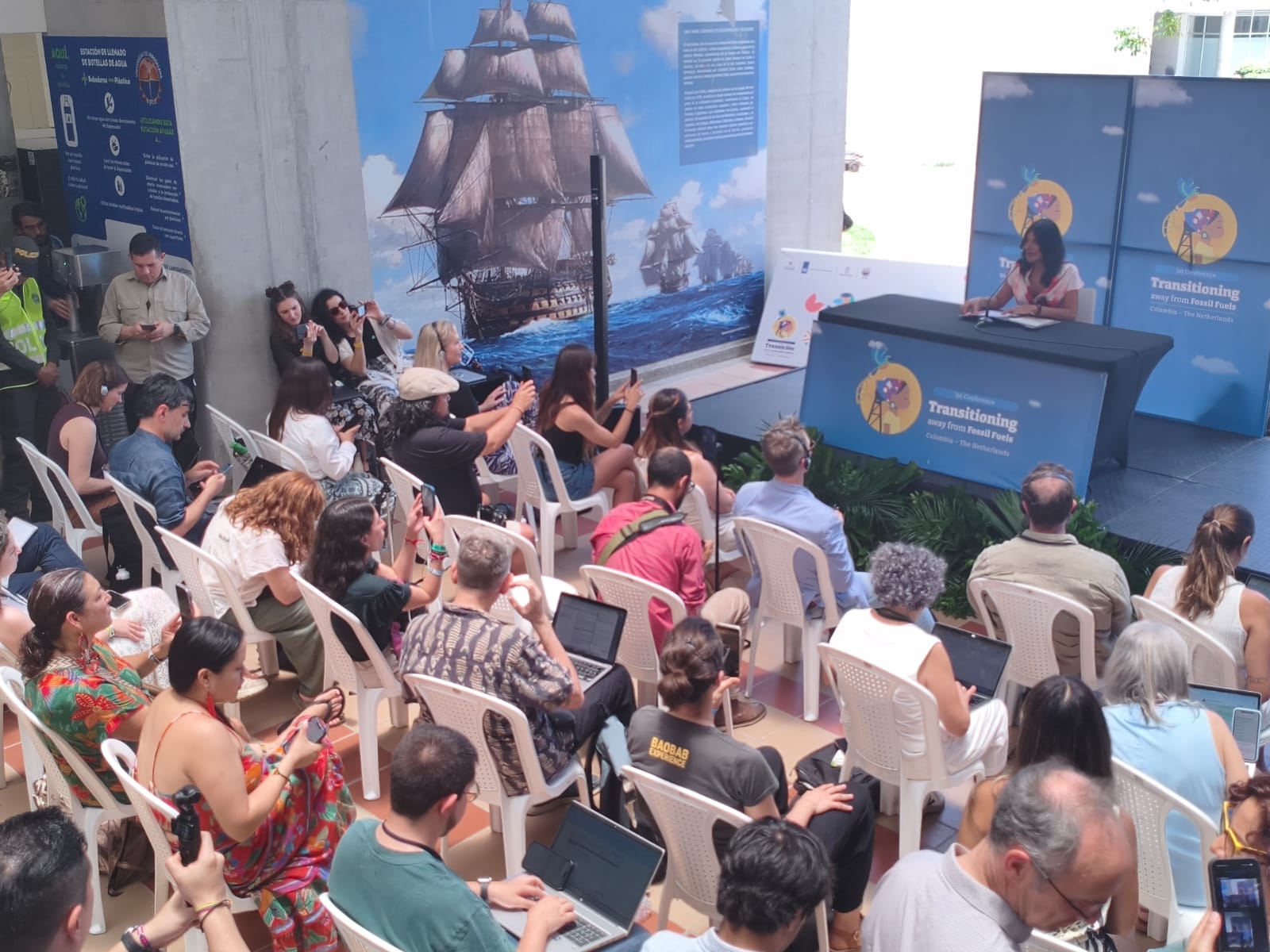
NRGI’s work is grounded in the recognition that how the transition unfolds—and how quickly—will determine whether it contributes to fair, inclusive and more prosperous societies, while acknowledging that communities that have contributed least to the climate crisis too often stand to lose the most. There is not one transition. There are transitions—shaped by very different starting points, economic realities and development priorities. Those gathering in Santa Marta must consider these diverse perspectives, including from communities, countries and regions that are not always fully represented in these debates.
Three of our regional directors reflect on how the transition is unfolding in practice, drawing on two decades of work on resource governance.
How are governments approaching the transition in the current context?
Santa Marta's organizers argue that current conflicts reinforce rather than sideline the case for transition. For governments navigating oil price uncertainty, rising energy demand and immediate security pressures, however, the picture is more complicated.
Africa—Nafi Quarshie, Africa Director
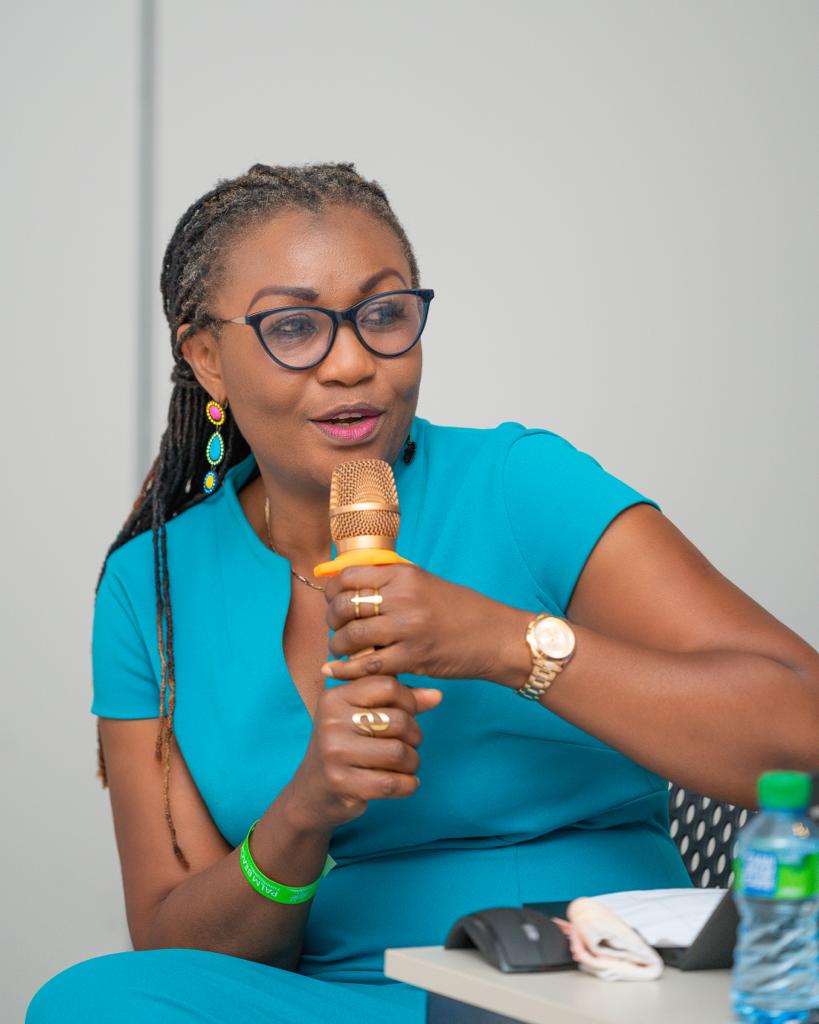
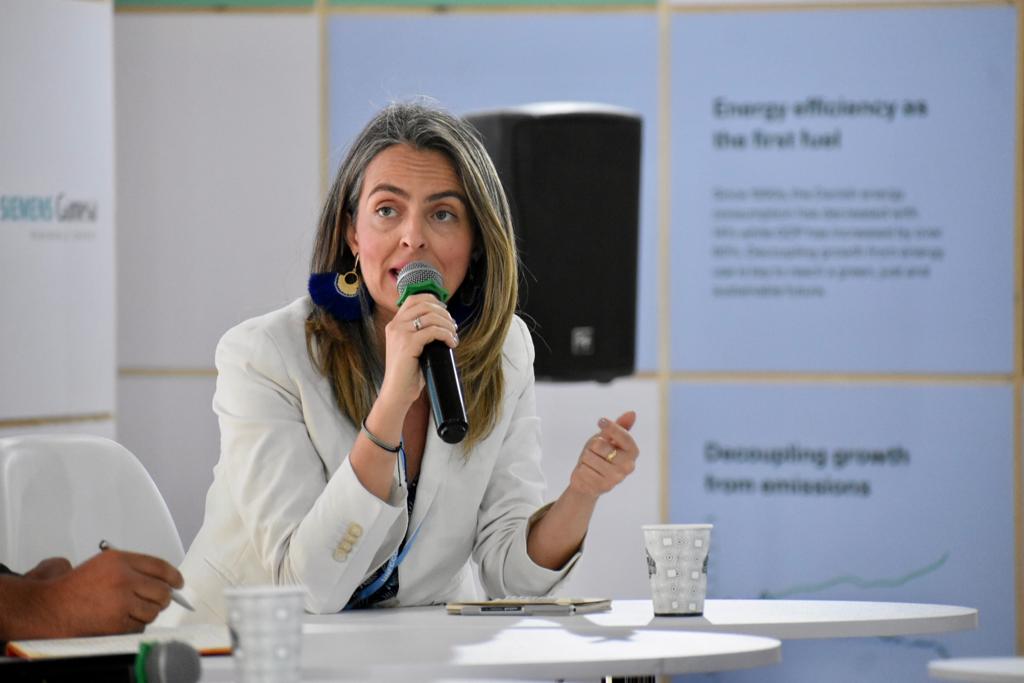
Latin America—Ana Carolina González Espinosa, Latin America Director and Senior Director for Programs
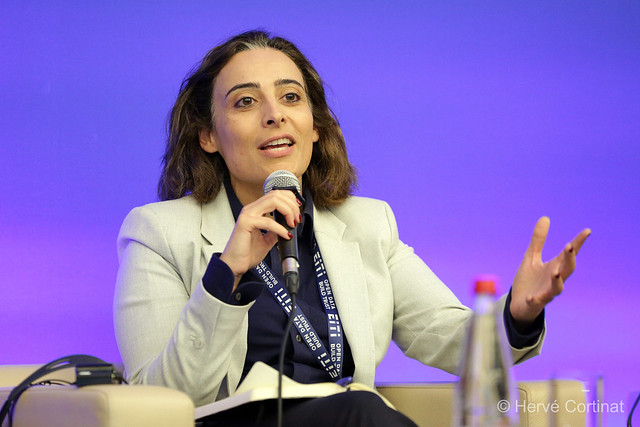
MENA—Laury Haytayan, MENA Director
Podcasting for the People in Congo

In Swahili, tetea means defend and mazingira means environment. It’s a fitting title for the podcast that Daniel Makasi launched in Goma, a city in the eastern Democratic Republic of the Congo, in September 2022.
In its relatively short lifespan, the Tetea Mazingira podcast has featured women who work in the extractive sector (a group disproportionately impacted by mining); highlighted the harsh reality facing children living near mines; and shown how logging companies operating without proper consent have ignored the rights of Indigenous Pygmy communities. In short, it has provided in-depth, expert analysis of the DRC’s mining, forestry and hydrocarbon industries, and broadcast testimony from those directly affected by extraction.
A platform for amplifying peoples’ voices and exposing the harm they face from the extractive industries was sorely needed.
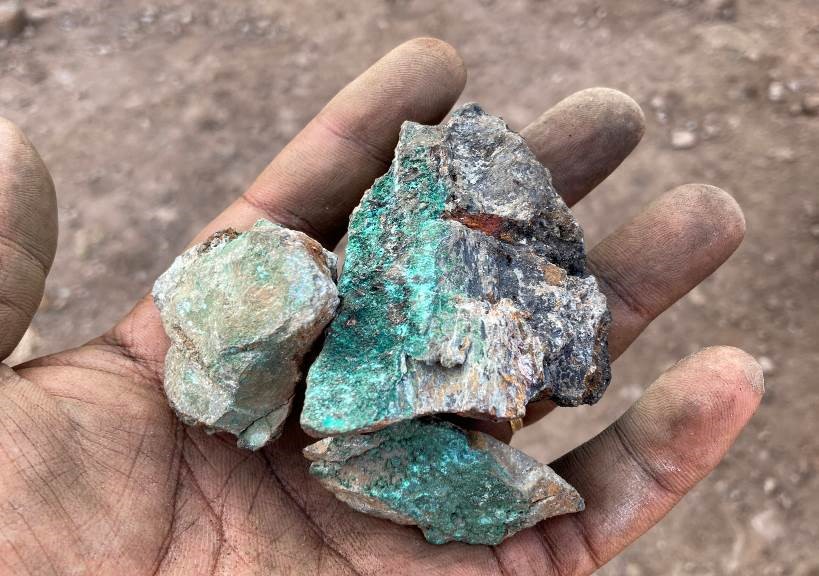
As in many resource-rich countries, foreign and domestic actors in the DRC have denied the majority of the population the social and economic benefits of the nation’s abundant natural wealth. And the public service that Tetea Mazingira offers will remain critical, given that the DRC holds vast quantities of the minerals needed for a clean energy transition.
“We have a great duty to communicate about the sustainable management of our resources,” says Makasi. “At the moment, it’s about the energy transition. Who exploits where, why and who wins what. In the DRC we have the strategic minerals to help the world make this energy transition, but what will the Congolese people gain while their minerals are being exploited? This transition has to be fair, equitable and inclusive.”
Resilience
Makasi was born and still lives in Goma, the capital of North Kivu province. The city is home to around two million people.
“We live with many threats,” says Makasi. “We are still learning to be resilient despite all the difficulties we face–security challenges, but also the presence here of toxic gas [which is released because of volcanic activity and which kills many people every year].”
Fifteen miles from Goma is also Mount Nyiragongo, one of the world’s most active volcanoes that spews the planet’s fastest flowing lava. In May 2021, the volcano erupted, forcing 400,000 people from their homes and leaving at least 32 dead.

These are just some of the many social and environmental challenges faced by the people of North Kivu province: from foreign mining companies that encroach on community land without consultation or contribution to local development programs, to a population forced to use firewood because they lack electricity (thereby contributing to the deforestation ravaging the DRC’s tropical forests)—all against the backdrop of dire threats to their security from armed conflict.
Makasi’s desire to play his part in overcoming these problems set him on his current path.
He initially studied accounting, but changed direction because of his passion for the environment, and subsequently gained a degree in environment and sustainable development. Makasi started working in radio in 2015, before he’d even finished his degree–and was soon focusing on environmental stories.
“As an environmentalist, part of my motivation is to give a voice to people who are affected by environmental problems, and also approach experts to share their experience with us, to share the results of their research.”
“As an environmentalist, part of my motivation is to give a voice to people who are affected by environmental problems, and also approach experts to share their experience with us, to share the results of their research,” he says.
In 2019, Makasi received a grant from the Natural Resource Governance Institute (NRGI) to attend a summer school course on the governance of extractive industries at Bisson Catholic University of Central Africa campus in Cameroon, where he learned to interpret mining revenues data published via the Extractive Industries Transparency Initiative. He says that NRGI resources are “among my key tools when designing and producing my podcasts. I regularly consult NRGI news and blog posts to feed my inspiration.”
Global reach
Makasi’s switch from radio broadcasting to podcasting follows a global trend–there are an estimated three million podcasts across the world–and came after he undertook research which showed podcasting could greatly expand his audience. Podcasts are downloadable anywhere in the world, and have a reach far beyond the limits of the FM radio frequency on which he previously relied. “Now my shows can be heard far away from Goma, far away from the DRC,” he says.
In fact, people listen to Tetea Mazingira in more than 50 countries; these include other Francophone African nations such as Burkina Faso, Cameroon, Chad, Madagascar, Niger, Republic of Congo and Senegal.
“With the tools that are in place, it’s easy to map where the podcasts are being listened to and how many downloads they have, unlike the radio, where we don’t know who’s listening. We’ve even recently started to broadcast via YouTube’s new tool, YouTube Podcast,” says Makasi.
“We’ve interviewed people who defend the rights of minorities and discussed the regulation that’s meant to make their voices heard. We’ve also covered the problems surrounding the exploitation of methane gas in our region’s lakes, and the stories of the fishermen enduring the pollution because of it. When we cover these issues, we also have to approach the communities that are at risk, and not ignore that it’s also a business opportunity for people who can be employed in companies to exploit methane gas,” he adds.
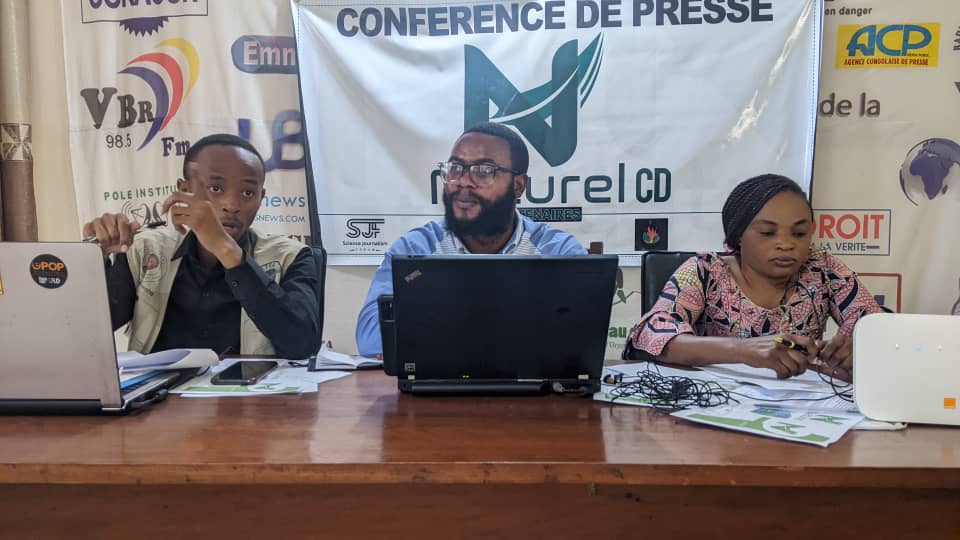
Makasi also draws inspiration from interacting with listeners, who share their questions and ideas for programs, helping shape the podcast’s direction, making it truly inclusive and reflecting their concerns.
Podcasts can also be broadcast on the radio, which remains an important channel in the DRC. Five radio stations in North Kivu province now include Tetea Mazingira in their schedules. Among them is the Tayna Community Radio, which broadcasts Tetea Mazingira twice a week on the FM band, and has a listenership of about two million listeners, according to January 2021 estimates by Radio Tayna's management.
Some local authorities, Agence Congolaise de la Presse ACP/Nord-Kivu (a national news agency in the Democratic Republic of Congo), and a network of reporters who write on biodiversity, are interested in producing other podcast episodes on natural resource governance, climate change and natural disaster issues in North Kivu province and DRC. With such collaborations Tetea Mazingira’s reach could continue to grow.
“We want to make the voices of our communities and experts heard through our podcasts so that those who are far from the DRC know the challenges we face,” says Makasi.
Tetea Mazingira will continue to raise awareness of the challenges posed by natural resource extraction in the DRC–and equip the public with the vital information needed to tackle them.
One Year on From the Russian Invasion: Impacts for the Middle East and North Africa

Transcript:
The Middle East and North Africa region has been impacted by the Russian invasion of Ukraine—especially the region’s energy sector. Here I will highlight three important elements.One is the renewed interest of many European countries in the oil and gas sector of the region, mainly Italy. Italy has been very open about its renewed interest in North Africa—Algeria and Libya. And we’ve seen ENI sign deals with Sonatrach in Algeria and the Libyan National Oil Corporation, and to develop new gas fields and existing fields as part of Italy’s energy diversification plan. We also saw high-level EU leadership going into Cairo in June 2022 to sign a memorandum of understanding with Israel and Egypt to allow these two countries to export gas to the European Union. Also, we have seen easing between Germany and Qatar about contracts—new contracts of for export of LNG to the European continent; before the invasion that was not an easy discussion between the countries, and even between the EU and LNG providers like Qatar.
The second trend has been an acceleration when it comes to clean energy and renewables. We’ve seen, again, the European Union signing deals with countries of the region, mainly a partnership with Morocco, to support clean energy in Morocco that will also serve some of the EU’s needs for clean energy. At the same time, we’ve seen pledges from the Gulf countries like Saudi Arabia and UAE to push for more investment in clean energy. Again, that could serve European needs as well as other parts of the world. There was also a big announcement about the need to further accelerate the energy transition. The region is taking action; Saudi Arabia has created a critical mineral fund to invest inside and outside the region in new minerals that are critical for the energy transition.
The third point is energy security. This was an opportunity for some countries in the region, mainly Saudi Arabia and the UAE and other producing countries, to remind us that it’s a fragile world that still needs oil and gas to move into what is being called now “orderly transition.” And we have seen Saudi Arabia and the UAE be very open about the issue of not breaking the oil sector by pushing to stop investing in oil and gas. That was very loud in the region as well. And the UAE is carrying that message into COP28 which it will host in November 2023. And lastly on energy security: the Ukraine crisis did help to seal a deal between two enemy countries, Lebanon and Israel, on their maritime border. There were many different reasons that that deal happened, but one element was that the world needed more gas, and if that deal would help with providing more gas, they thought, “Let's do it.”
These are the main messages we have seen, and these are the main highlights from the region after almost one year of the war between Russia and Ukraine.
The Political Economy of Black Panther: Who Benefits from Wakanda’s Mineral Resources?

This post is the first of two relating to the film Black Panther; the second is here. The post contains spoilers about the film.
The remarkable success of Black Panther and its resonant storyline has already attracted wide commentary.
Writers in the Guardian and many other media outlets have praised the beautiful picture it paints of a vanguard, economically successful African country spared the horrors of colonization and the injustices of the post-colonial world order (although for some Ghanaian moviegoers, the African accents were not quite realistic). And the policy community has embraced it too: researchers from the Brookings Institution wrote about the film’s lessons for good resource management and increased trade openness in Africa.
But there is also a more uncomfortable quality to Black Panther. Russell Rickford, in the blog Africa is a Country, calls out the film’s political conservatism, the isolationism of the Wakandan elite living comfortably in their resource-rich bubble and the triumph of monarchy over revolution. In Wakanda, after all, political power belongs to the king, T’Challa, appointed for life based on a royal lineage and his fighting skills, with the support of a small oligarchy.
The country’s precious natural resources—the metal vibranium as well as a heart-shaped herb that gives the king supernatural powers—are managed by the royal family, the army and a small clergy. The rest of Wakanda’s population seems to live off the redistribution of the country’s resources.
The institutions and political regime of Wakanda may actually be the result of the domination by vibranium of the country’s economy, and reflect another aspect of the resource curse. One political scientist has analyzed the political economy of Wakanda in that light in a research paper.
In the real world, countries dependent on oil and gas tend to have more authoritarian regimes and fewer civil liberties. On the African continent, elites in Algeria, Angola and Nigeria have organized their countries’ institutions in order to capture the rents from hydrocarbon resources and selectively redistribute the proceeds to maintain power and privileges.
From this perspective, it is easier to understand how some Wakandans so readily accept a complete reversal of their country’s foreign policy by Erik Killmonger, T’Challa’s cousin, when he suddenly comes to power from his exile as a child in Oakland, California. The lack of citizen participation in Wakanda politics explains the weakness of its institutions and the very few obstacles faced by Killmonger when he decides to start a global war.
The work of Paul Collier in particular suggests that resource-dependent countries can be prone to violent conflicts, in part because there is fiercer competition for access to the resources, controlled narrowly by whoever sits on top of the pyramid. In this context, it is unsurprising Killmonger seeks to overthrow a ruling king.
Michael B. Jordan’s subtle rendition of Killmonger makes him more complex than your typical Marvel villain. He has strong political arguments in his favor: he disputes how Wakanda has defined the ownership of its vibranium resources.
While we aren’t privy to the Wakandan constitution (if there is one), the movie leads us to believe that vibranium is controlled by T’Challa on behalf of the Wakandan population, a typical system adopted by resource-rich nations around the world. Killmonger argues that vibranium belongs to all people of African descent, and should therefore be used to fight oppression faced by black people everywhere. This perspective is emphasized in Black Panther’s soundtrack, when Kendrick Lamar denounces “Mass destruction and mass corruption/The souls of sufferin’ men.”
Disputes over resource ownership are indeed a recurring theme in civil wars, such as the Biafra war in Nigeria, and fuel militias and separatist movements from Myanmar and Iraq to the Democratic Republic of Congo. Many resource-rich countries have defined revenue-sharing schemes for their natural resources in order to ensure a sense of fairness among the population and avoid conflicts.
The movie ends without a proper redefinition of vibranium ownership. It is still very much under the control of T’Challa, but with emerging programs of “outreach” to share the benefits of vibranium beyond Wakanda. Will T’Challa’s outreach be limited to a token educational program in Killmonger’s hometown and resemble the Heydar Aliyev Foundation in Azerbaijan, run by the country’s first lady, serving to polish the image of the ruling family while it appropriates the country’s oil resources and jails its political opponents? Or will Wakanda find a way to genuinely challenge power imbalances that continue to disadvantage black communities and black nations in today’s global system?
If Wakanda’s royal family truly wants to make the world a better place, and take after the relative successes of Norway and Chile in transforming their abundant oil and copper resources into increased welfare and citizen participation, I would recommend the latter approach. Kendrick Lamar does too, when he challenges T’Challa in the soundtrack: “What do you stand for? Are you a activist? What are your city plans for? / Are you a king or you jokin’? Are you a king or you posin’?”
NRGI Statement on Russian Invasion of Ukraine
NRGI stands in solidarity with our Ukrainian partners and the citizens of Ukraine in the face of the ongoing invasion by Russian forces. The assault is especially appalling given the progress that Ukraine and its people have made toward democracy and transparency.
NRGI works with partners around the world so that citizens benefit from—and are not harmed by—natural resource extraction. It has been our privilege in recent years to collaborate with and learn from passionate advocates of transparency, integrity and accountability in Ukraine, and it is devastating to see their advances attacked and undermined. NRGI rejects all forms of violence, which undermine basic human rights and run counter to the values underpinning our vision and mission.
The crisis in Ukraine exposes once more the staggering challenges of global resource governance. Oil and gas play a central role in the unfolding war. Ukraine is in the middle of a geopolitical race to control access to extractive resources and energy. Vladimir Putin’s regime and many of its senior members depend on returns from Russia’s massive oil and gas industry—wealth acquired in part through partnerships with Western companies—and the Kremlin is using resource wealth to finance its military campaign. Europe’s dependence on Russian oil and gas has limited its options for forcefully responding to Russian aggression. The unfolding war underlines the grave costs of the world’s continued dependence on fossil fuels, and may jeopardize global efforts to accelerate the transition to cleaner energy.
We join our voice with those of our partners and colleagues around the world in condemning this war and calling for concrete action to safeguard the progress made by Ukraine in the areas of democratic consolidation and transparency.