
New Challenges, Enduring Lessons: The Future of NOCs in Sub-Saharan Africa


Nicolas Lippolis is Founder and Executive Director of the Centre for Energy, Finance and Development (CEFD) and contributed this piece as part of NRGI's 20th anniversary thought piece series on the future of resource governance.
The accelerating global energy transition has placed national oil companies (NOCs) under growing scrutiny. NRGI, among other civil society organizations, has extensively documented NOCs’ exposure to transition risks, including potentially stranded assets, long-term demand contraction, and tightening access to external finance. At the same time, it is increasingly acknowledged that NOCs can also play a constructive role in the energy transition by leveraging their capabilities to support decarbonization and broader economic transformation.
To unlock their potential to deliver both economic transformation and just energy transitions, African NOCs require tailored, nuanced analysis. Unlike in many other regions, NOCs in Sub-Saharan Africa function primarily as sector regulators rather than integrated operators. Their historical mandate has been to maximize state revenues and ensure domestic energy supply, including through the development of mid- and downstream sectors—but not necessarily to lead technological innovation efforts. This difference is essential for understanding how these companies have responded to the sector’s transformations and what paths lie open before them.
Today, African NOCs find themselves at the intersection of several powerful trends. Governments across the continent continue to face urgent development priorities, including expanding energy access, supporting industrialization, and generating fiscal revenues. These pressures help explain why many governments continue to view hydrocarbons as part of their development pathway, even as the global energy transition accelerates and questions are raised regarding the long-term viability of hydrocarbon-based development strategies.
At the same time, many international oil companies (IOCs) have been retreating from African upstream assets due to declining basin attractiveness, portfolio reassessments, and, in some cases, challenging operating environments. This changing landscape makes the strategic choices facing African NOCs more consequential than ever.
Financing choices in reaction to a changing global energy landscape
Recent IOC divestments from mature hydrocarbon assets in Sub-Saharan Africa have produced two broadly distinct classes of response, depending on the size and institutional maturity of producer countries.
In smaller producers, NOCs have been mobilized to take over oil blocks vacated by IOCs. The risks here are considerable and, in some cases, already materializing. A notable case is that of the Gabon Oil Company’s (GOC) US$1 billion acquisition of six oil blocks from Assala Energy. The deal was financed through an oil-backed loan from commodity trader Gunvor that granted the trader unusual latitude over pricing and cost calculations, and has added further financial stress to a state already allocating over half its expenditures to debt service.
In a smaller but structurally similar arrangement, in the Republic of Congo, the SNPC (National Petroleum Company of Congo) has reportedly contracted a US$200–300 million loan from Geneva-based trader Mercuria to acquire Eni’s rights over the M’Boundi oil field. The transaction has attracted criticism—observers argue that SNPC is assuming control of a mature and potentially declining asset despite lacking the technical and financial capabilities needed, meaning the acquisition could prove more burdensome than profitable.
An even more brazen transaction was avoided in Ghana in July 2021, when a coalition of civil society organizations successfully opposed the Ghana National Petroleum Corporation’s proposed US$1.65 billion acquisition of Aker Energy’s offshore assets after uncovering a Bank of America appraisal valuing the oil field at just US$300 million. The asset was eventually reverted to Ghana at no cost, further underscoring the potential harm of the proposed deal.
Senegal, a new producer, has so far not replicated this approach, despite some signs of increased NOC ambition. Following the exit of BP and Kosmos Energy from the Yakaar-Teranga gas field, Petrosen has expressed interest in taking over the project. However, the financial commitments and technical requirements involved appear to exceed the Senegalese state’s current capabilities, particularly considering its worsening sovereign debt crisis. Its delicate financial situation has, however, not held it back from announcing ambitions to engage in onshore exploration or to build a new refinery. Supporters of a greater role for Petrosen argue that increased national participation could help secure domestic gas supplies, support gas-to-power ambitions, and capture a larger share of future project revenues.
Responses in mature oil economies: Nigeria and Angola
Responses differ in Sub-Saharan Africa’s two largest producers, which possess the region’s most mature oil sectors. While some companies are pursuing corporatization and commercial restructuring, others remain primarily regulatory entities with limited operational responsibilities and very different reform priorities.
In response to declining production and subdued IOC investment, the Angolan and Nigerian governments introduced legislative reforms—in 2019 and 2021, respectively—that established more arm’s-length relationships between NOCs and oil sector policymaking. This was a deliberate effort to reduce the conflation of regulatory and commercial functions that had historically characterized both Sonangol and NNPC (formerly “Nigerian National Petroleum Corporation”). Besides improving the credibility of oil sector reforms, the “corporatization” of the two NOCs is intended as a first step toward eventual access to domestic stock markets and international private capital.
The results have been uneven. In Nigeria, the NNPC was restructured into a limited liability company (“Nigerian National Petroleum Company Limited”) in 2022, though it remains entirely government-owned, with no set date for the proposed stock market listing. NNPC’s corporatization has nonetheless been accompanied by improvements in corporate disclosures and the creation of a new Sustainability Department, which, together with a strengthened NNPC New Energy Limited (NNEL) subsidiary, is leading efforts to respond to the decarbonization of the global economy.
In Nigeria, natural gas sits at the center of energy transition policy. Accordingly, NNPC has recently published a Gas Master Plan intended to support the government’s Decade of Gas agenda through gas commercialization, infrastructure development, power generation, gas-based industrialization, liquefied petroleum gas (LPG) expansion, and the elimination of routine gas flaring. However, upstream hydrocarbon production has been disappointing, leading to a wholesale change in the company’s leadership and board in 2025.
The corporatization of Angola’s Sonangol, largely considered the region’s most competent NOC, has also faced some hiccups. Sonangol’s role in Angola’s oil economy was significantly downsized following the creation of a new regulatory agency in 2019 and the divestment of most of its assets in non-core areas of activity, allowing the company to focus on obtaining better value from core commercial operations. Yet while Sonangol’s profitability has improved, the promised domestic listing of 30 percent of its shares has been repeatedly postponed, with the latest date set for 2027. The listing process has been complicated by the challenges of advancing corporate governance reforms, rationalizing an oversized workforce, and reconciling commercial objectives with Sonangol’s continued involvement in strategic public investment projects such as refineries and oil storage terminals. Together, these activities underscore the company’s enduring role as a central instrument of state policy (Heller, 2011).
Sonangol’s strategic role is also reflected in its growing involvement in the new “green economy.” The company has built two solar power plants, in partnership with Azule Energy (a BP–Eni joint venture) and TotalEnergies, respectively. It has also acquired licenses to explore for critical minerals, reflecting Angola’s growing ambitions for the sector. These initiatives reflect a broader trend among some African NOCs to explore opportunities beyond traditional oil and gas activities, although the commercial viability and strategic coherence of such diversification efforts remain uncertain.
The Way Forward for African NOCs
Variations in the recent trajectories of African NOCs suggest that the way forward is not uniform, but is best conceived as a gradient that tracks the institutional development of each company. Any assessment of African NOCs should recognize that the continent faces a dual challenge: managing transition-related risks and opportunities while simultaneously addressing persistent energy poverty and infrastructure deficits. Effective reform strategies will therefore need to balance long-term climate considerations with near-term development and energy security objectives.
As shown by questionable investments in Gabon, Ghana, and Congo, the classic transparency agenda promoted by NRGI remains essential for less institutionally consolidated NOCs, where companies must increase the transparency of their oil sales, improve oversight of their activities, and strengthen corporate governance.
Tackling the NOC-commodity trader nexus could also go a long way toward preventing some of the most harmful transactions. Reform programs could address areas such as procurement, contract management, and revenue administration. In particular, it is important to strengthen regulatory and legal frameworks related to the selection of buyers, terms of sale negotiations, and contract awards for the sale of host states’ equity oil and the oil allocated to them in production sharing agreements. Rather than aspiring to wide-ranging governance reform, such targeted interventions would directly tackle sources of fiscal and illicit financial flow risk.
The challenges look quite different in the larger oil economies such as Angola and Nigeria, where IOC divestments have been relatively limited in the former or mostly taken over by domestic private operators in the latter. For both Sonangol and NNPC, the main challenge is to deliver on the mandates set by oil sector reforms and advance in their corporatization. This will entail introducing rigorous reporting standards, enhancing transparency and disclosure requirements, strengthening corporate governance mechanisms, and securing greater operational autonomy from political authorities, while reducing the influence of patronage structures that have historically shaped both companies. Here, African NOCs can draw valuable lessons from other NOCs that have undergone partial stock market listings, including Brazil’s Petrobras, Colombia’s Ecopetrol, and Norway’s Equinor.
At the same time, Sonangol and NNPC face the unique challenge of advancing their corporatization while still playing limited roles as operators and, in the case of Angola, facing projected declines in oil and gas production. Moreover, they are reforming at a time of heightened awareness of the risks posed by climate change and the global energy transition, which threaten their core business while also creating new opportunities for diversification.
In conclusion, there is no “one-size-fits-all” path to harness the full potential of African NOCs. Further nuanced research is essential, and could deepen comparative analysis across African producers, identifying lessons from both successful and unsuccessful reform experiences and examining how different institutional models affect transparency, financial performance, and resilience to energy transition risks.
Beyond research, the continued engagement between policymakers and civil society groups at national, regional, and global levels will be critical for progress. With its 20-year track record of combining robust analysis with trusted engagement, NRGI will no doubt remain an important source of comparative knowledge and a model for other civil society organizations seeking to promote the management of natural resources in the service of shared and sustainable prosperity.
Lost Wealth in Senegal's Mining Sector

NRGI senior economic analyst William Davis appeared on West Africa Democracy Radio (WADR) to discuss and explore key findings from the NRGI report Tax Avoidance, Tax Evasion and Trade Misinvoicing: Risks to Senegal’s Mining Sector. Among his remarks, he said:
Tax avoidance is legal strategies that companies use to reduce their tax bill. Tax evasion is when taxpayers hide incomes from tax authorities or lie about their taxable income, which is illegal. Trade misinvoicing can be a type of tax avoidance or tax evasion or motivated by other illicit motives such as money laundering or hiding illicit wealth overseas. Trade misinvoicing is distorting what is declared to customs about the value of goods or services that are being traded internationally.
Published under USAID/TRACES program, this report highlights critical risks in Senegal’s extractive sector, emphasizing the need for transparency and accountability to safeguard national revenues. Tune in to learn more about the report’s impact and recommendations for Senegal’s economic resilience.
Tune in
Listen to the full interview at the West Africa Democracy Radio (WADR) and explore how stronger fiscal oversight could ensure that Senegal’s natural resources contribute meaningfully to national development.
Big Spenders: Swiss Trading Companies, African Oil and the Risks of Opacity
The sale of crude oil by governments and their national oil companies (NOCs) is one of the least scrutinized aspects of oil sector governance. This report is the first detailed examination of those sales, and focuses on the top ten oil exporting countries in sub-Saharan Africa. From 2011 to 2013, the governments of these countries sold over 2.3 billion barrels of oil. These sales, worth more than $250 billion, equal a staggering 56 percent of their combined government revenues.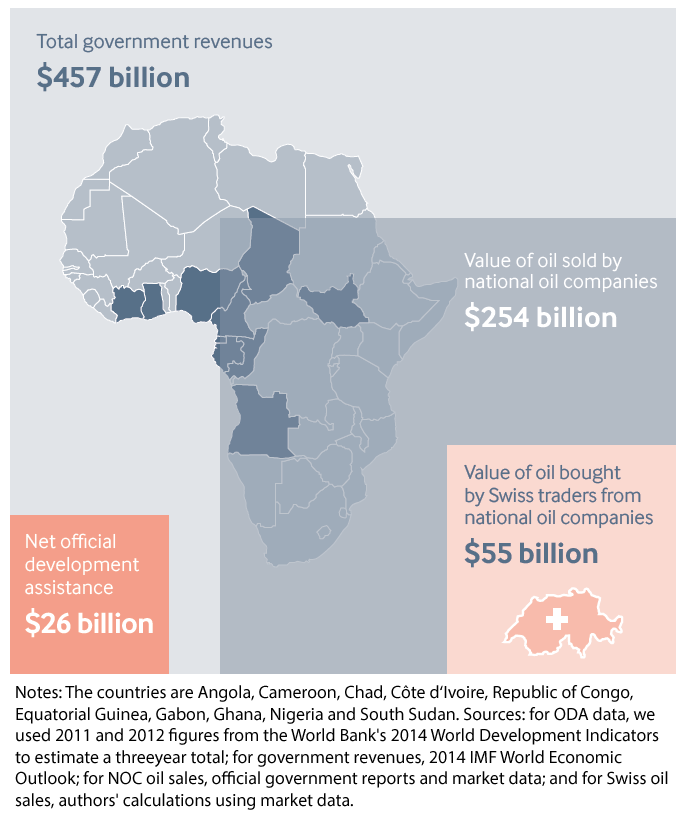
Boom or Bust: Will Mineral-Rich Countries Benefit from the Energy Transition?

The energy transition is driving demand for minerals needed for low-carbon technologies, such as solar panels, wind turbines and electric vehicles. This demand could grow by up to 900 percent for some minerals over the next two decades, yet technological innovations also make these projections uncertain. According a new report from the Extractive Industries Transparency Initiative (EITI), produced by the University of Queensland, EITI implementing countries will likely play a substantial role in satisfying growing demand.
Government officials in many mineral-rich countries are excited about the mining sector’s economic promise. They are hoping for new investments that will bring in revenues, jobs and opportunities for local businesses.
But the prospects for converting natural resource wealth into sustainable development outcomes hinge on good governance (addressed in this new report from the Natural Resource Governance Institute [NRGI]). History points to the corruption and public finance risks that a mining boom can bring, including bribery in licensing, inadequate environmental and social assessments and lost revenues due to weak tax collection. In some cases, the mere anticipation of an uptick in investment could destabilize economies in mineral-rich countries.
Corruption in licensing and procurement
The business opportunities associated with a mining boom could be vulnerable to corruption. One key risk relates to the award of mining licenses. In many countries, authorities rush to approve new mines, with governments seeking to speed licensing processes. Peru, for example, has streamlined community consultations, and Brazil has introduced a policy to expedite approvals for mines of strategic importance. As flurries of applications stretch the capacities of government departments, companies may be increasingly tempted to offer bribes to speed up approvals, especially in a highly speculative context characterized by geopolitical competition between economic superpowers to secure transition mineral supply.
Officials may also feel pressure to cut corners and bypass due diligence checks, increasing the risk of politically connected (or/and unqualified) companies acquiring mining rights, or of weak or manipulated socio-environmental assessments. This can be particularly problematic since some transition minerals are located in unmined, environmentally fragile areas, in countries that are sensitive to environmental and social impacts. For example, mining projects in the “lithium triangle”—which comprises Argentina, Chile and Bolivia—could further strain the region’s limited water resources.
Similarly, the procurement of goods and services by mining companies can be vulnerable to corruption. Research by the OECD has found this to be a key risk area in the mining sector.
Transparency and multi-stakeholder dialogue can help to mitigate these risks. Governments should clearly justify any “fast-tracked” awards processes and commit sufficient time and resources to due diligence checks. Mining companies can support anti-corruption efforts through commitments to strong business integrity practices and due diligence processes across their business units. The EITI’s expectations for supporting companies, to which many of the world’s largest mining companies are committed, provides a starting point.
Uncertainty around public finances
Even if a country has abundant mineral reserves, weak governance and a lack of transparency can foil potential investment. For example, countries may struggle to attract high-quality, responsible mining companies in the absence of robust, publicly available geological data. Yet only four EITI implementing countries—Colombia, Indonesia, Kazakhstan and Mongolia—have adopted the CRIRSCO good practice guidance for public reporting of exploration results, mineral resources and mineral reserves.
Even if the sector grows, producing countries and investors will not be in a position to take fully informed decisions because of the uncertainty around economic prospects. Price volatility may lead to unpredictable revenue flows and macroeconomic planning challenges. Governments may collect less revenue than officials anticipate as a result of opaque tax structuring by companies operating across transition mineral value chains. In 2018, Chile had to create a committee to supervise lithium contracts after allegations of transfer pricing abuse.
Governments of resource-rich countries should promote transparency and accountability of the sector to mitigate these risks and realize their mining potential. They should publish more detailed information on the reserves and economic potential of transition minerals; strengthen oversight of companies’ revenue flows and financial relationships; and promote policies that support long-term economic planning and transparent decision-making.
Opacity in commodity trading and state participation
As resource-rich countries seek to take advantage of global competition for transition minerals, some are expanding the role of state-owned enterprises (SOEs) in the mining sector. For example, in the Democratic Republic of the Congo, the state recently established the Entreprise Générale du Cobalt (EGC) to manage all artisanally mined cobalt. In Indonesia, SOEs manage trade of tin, nickel, bauxite and other minerals.
Lack of transparency of revenue flows between governments and SOEs is a known risk, especially where SOEs are involved in the sale of the state’s share of production. While the oil and gas sector has been particularly vulnerable to corruption in commodity trading, the mining sector could face similar risks as governments increasingly involve SOEs to seize opportunities coming from growing demand for transition minerals.
For countries that foresee a strong role for SOEs, it is important that authorities identify associated governance and corruption risks and institute measures for mitigation, both for partners of SOEs and the SOEs themselves. Like companies in the private sector, there is no reason why SOEs cannot commit to high integrity standards across their business units and establish processes for risk assessments and due diligence checks, including when dealing with commodity traders.
Based on past experiences, only a well-managed mining sector will contribute to sustainable development in mineral-rich countries. Without high governance safeguards and real anti-corruption efforts, countries will lose out on potential revenues, deter investment, miss the opportunity to diversify their economies and increase risks of negative socio-environmental impacts. The result will be a mining boom that fails to deliver on its economic promises and an energy transition that may not advance global decarbonization at the speed needed – or advance it at the expense of the citizens of mineral-rich countries.
This post appears also on the EITI website.
U.K. Slaps Glencore With Major Bribery Fine. Will It Clean Up Its Act?

Today Glencore Energy (UK) Ltd was sentenced to pay GBP 281 million, the largest ever penalty handed down to a company in a U.K. court, after pleading guilty in June this year to all seven charges of bribery brought against the company. The charges brought by the British government’s Serious Fraud Office (SFO) relate to Glencore’s oil operations in Cameroon, Côte d’Ivoire, Equatorial Guinea, Nigeria and South Sudan from 2011 to 2016, with over USD 28 million paid via employees and agents to secure preferential access to oil, including increased cargoes, valuable grades of oil, and preferable dates of delivery.
Investigations into these bribes have been equally international in scope; the SFO worked in parallel with the U.S. and collaboratively with Dutch and Swiss prosecutors on this case. The European cases are still ongoing and sentencing is due on 21 November in the broader U.S. case, the scope of which also includes bribery in Brazil, Democratic Republic of the Congo and Venezuela. Glencore PLC has already stated that it expects to pay up to USD 1.5 billion to settle bribery and market manipulations cases this year, including a separate case in Brazil in connection with the Lava Jato probe.
The question now is: what happens next? With a win under their belt, will this case lead to more ambition from U.K. authorities in their fight against extractive sector corruption? As one of the world’s major trading markets and with many companies across the extractive supply chain listed in London, the U.K. could play a crucial role in holding corrupt actors to account. With extractives corruption undercutting efforts to deliver a just energy transition, getting to grips with this problem would also support the U.K.’s wider climate policy agenda. And, with the costs of corruption cases soaring, will Glencore buckle under the pressure of its swashbuckling reputation and implement the seismic change needed to become a responsible industry player?
The Glencore conviction is a welcome win for the SFO, particularly after recent struggles in cases with Unaoil and ENRC. This case could kickstart a concerted effort from the U.K. to tackle extractives sector corruption more effectively, including using expertise that the SFO has developed from this case to tackle other allegations of commodity trading corruption. The U.K. has already made welcome progress on tackling illicit financial flows, many of which originate in the extractives sector, with two bills passing through Parliament this year that will help address money launderers’ abuse of U.K. property and companies. Yet a spate of integrity scandals has also shown the scope for private interests to unduly influence policy decisions, and highlight the ways in which members of the U.K.’s political class have aided kleptocratic elites enriched by their countries’ resources.
Three reforms needed in the U.K.
The Glencore conviction highlights three key areas where the U.K. government could drive change, beyond tightening up its general anticorruption defences. With the U.K. recently pledging to address corruption in its critical minerals strategy, implementing the following reforms would go some way to transforming this commitment into something more tangible:
First, authorities in the U.K. and Switzerland—the world’s foremost commodity trading hubs—should jointly push for a global and binding standard to ensure that companies disclose trading payments to all governments and state-owned enterprises (SOEs). A 2019 Extractive Industries Transparency Initiative (EITI) requirement was an important first step in recognition of the need for more transparency from countries, businesses and civil society actors alike. With Switzerland expressing interest in these changes, the ball is now in the U.K.’s court to push the agenda forward.
Second, the U.K. should hold to account both individuals and corporations who engage in corrupt behavior; the SFO show now prosecute the 11 individuals still under investigation in this case. Even large fines may be insufficient to deter wrongdoing if big companies can price them in as the “cost of doing business” and so executive accountability is essential. Where other allegations of extractive sector corruption exist, the U.K. should use all the tools at its disposal to ensure consequences for wrongdoing, including Unexplained Wealth Orders, Account Freezing Orders and targeted anticorruption sanctions.
Last, reforms and resourcing to better support the SFO will be essential if the organization is to effectively and assertively fight corruption. As the first-ever U.K. corporate conviction for Section 1 offenses under the Bribery Act, this landmark case should also spur the SFO into pursuing more ambitious investigations and prosecutions. This should include investigating the full picture of corruption allegations against companies like Glencore, and better identifying and compensating victims, who have been notably absent from this case.
Glencore's acts of contrition (or lack thereof?)
Understanding whether or where progress is being made within Glencore itself is unfortunately more complicated. There has been a changing of the guard, with many key figures retiring in recent years, including at the very top. Long-term leader Ivan Glasenberg stepped aside for Gary Nagle in 2021, who has stated that “we want to complete these investigations, put a line under that and move forward.”
Drawing a line under these investigations may, however, be more easily said than done. In recent weeks, an investor group has launched a lawsuit against the company, apparently related to losses linked to its recent bribery cases. The company also faces yet another investigation, with Zambia’s Anti-Corruption Commission launching a probe into an alleged payment to a political party. If Glencore is serious about moving forward, it must demonstrate a genuine shift in its culture and practices.
While Glencore’s efforts to enhance its ethics and compliance procedures and review some of its operations are welcome, these changes alone are insufficient. Earlier this year, we joined our partners—Global Witness, Oxfam America, Public Eye, Resource Matters and RAID—to outline how the company could atone its wrongdoing and avoid future violations.
We recommend that Glencore review engagements with Russian SOEs, adopt and publish measures to reduce corruption risks in business with SOEs, and make transparent its transactions with SOEs in all countries. Glencore should also cease all relations with Dan Gertler, who the U.S. sanctioned in 2017 for high-level corruption yet still receives substantial royalties from deals in the DRC. Although Gertler denies any wrongdoing, the DRC is estimated to have lost a staggering USD 3.71 billion (at least) from the deals he was involved in, alongside Glencore and ENRC.
This is the crux of our concern; Glencore is yet to show a real willingness to engage seriously with efforts to compensate victims in countries where its corruption took place. Carefully worded corporate statements can state the facts of wrongdoing, but they fail to meaningfully grapple with its consequences.
Top photo by Photo by Marlon Trottmann for Shutterstock
Glencore must take action
NRGI and partners' recommendations for the commodity trader
Three Ways the U.S. Can Help to Prevent Next-Generation Oil and Mining Corruption

By a wide margin, U.S. authorities have pursued more corruption cases in oil and mining than any other sector. In the last five years, U.S. authorities nabbed the bosses of a company called Unaoil that bribed officials in nine different countries, including Angola, Iraq and Syria. They seized a giant yacht allegedly purchased with proceeds from Nigerian oil trading schemes, and a swank Miami condo that a top Congolese official allegedly bought using embezzled oil funds. U.S. investigations revealed how an American hedge fund paid off officials to access the Congolese diamond industry; how state oil company bosses in Brazil, Ecuador and Venezuela took home bribes; how an Abu Dhabi oil fund helped run one of the largest-ever corruption schemes; and how oil and mining deals within the U.S. turned dirty as well.
As the Biden administration ramps up its anticorruption efforts, officials should pursue policies that heed lessons from these past investigations and that reflect the world’s fast-changing energy and mineral markets.
This week the administration gave clear signs of its commitment to anticorruption. The White House released a memorandum “establishing the fight against corruption as a core U.S. national security interest” and kicking off the process to develop an ambitious cross-agency anticorruption strategy. The Treasury Department recently issued the largest-ever use of the Magnitsky sanctions for anticorruption purposes. These events coincided with the UN General Assembly’s special session on anticorruption, where U.S. officials emphasized their intention to prioritize fighting graft. Meanwhile, on Capitol Hill, a bipartisan counter-kleptocracy caucus will launch this month as well.
In the coming weeks and months, the U.S. anticorruption agenda will take further shape, as the various agencies stand up new programs, key champions such as USAID administrator Samantha Power get up to speed, and the Summit for Democracy approaches, where fighting corruption and kleptocracy will be a main theme.
To stop corruption from ravaging the world’s oil and mineral industries and hindering the green energy transition, several U.S. agencies, including USAID, the State Department, the Treasury Department and the various climate-focused units, should prioritize the following actions. These ideas emerge from a study of over one hundred oil and mining corruption cases, and from the Natural Resource Governance Institute’s work in many resource-rich countries and international forums, and they complement leading recommendations from other NGOs and experts.
1. Prevent corruption in critical mineral supply chains
The International Energy Agency estimates that meeting Paris climate goals will require a quadrupling of the minerals used by clean energy technologies by 2040. For the countries that produce cobalt, lithium, copper and other critical minerals, especially those with weak institutions, this spike in demand could trigger surges in corruption like those associated with past oil booms, which contributed to authoritarianism and economic decline. For mineral-consuming countries like the U.S., corruption could threaten their energy transition plans by interrupting the steady supply of these commodities.
While much was made of the U.S. re-blacklisting mining magnate Dan Gertler over alleged corruption in the DRC, where Gertler’s companies control royalty streams from three of the world’s biggest cobalt projects, governance and corruption are barely on the agenda when it comes to the hot topic of clean technology supply chains. The U.S. could both help safeguard supplies and protect the interests of producer country citizens by correcting this trend. Specifically, U.S. technical assistance to producer countries, including through the State Department’s Energy Resource Governance Initiative (ERGI), should prioritize transparency, accountability and anticorruption, and should include support for civil society groups and other oversight actors. U.S. leadership could also push anticorruption onto the agendas of various international mineral supply chain initiatives and standards. Unless global standards include robust measures around transparency, beneficial ownership reporting, payment verification, anti-money laundering, conflict of interest procedures and other practices, the critical mineral boom could trigger an ugly “race to the bottom,” with consumer countries scrambling to secure supplies, a few well-connected parties getting rich off the rents, and producer-country citizens left facing the results.
2. Tackle oil sector corruption and kleptocracy as part of U.S. climate policy
In addition to anticorruption, the Biden administration has prioritized climate action, and the two agendas must intersect given the oil and gas industry’s predilection towards state capture and kleptocracy.In the Trump administration, the head of the Environmental Protection Agency and the Interior Department were former fossil fuel lobbyists. These appointments were among many recent reminders of how oil and gas producers, thanks to decades of lobbying, campaign donations and revolving-door staffing, exert undue influence over U.S. policy and climate debates. Much of this behavior falls in the categories of legal corruption or state capture, through which narrow vested interests influence public policy to suit their needs. Other oil-producing countries face a similar challenge: corruption and political agendas can cause leaders to greenlight fossil fuel projects, lavish the industry with subsidies and neglect greener energy sources, even when these steps run counter to climate goals and country’s own economic and environmental interests.
To guard against corruption, capture and political stalemates around decarbonization, the U.S. should encourage fossil fuel producing countries to accelerate transparency and oversight. First, citizens need basic information about the government’s fossil fuel activities and adaptation plans, including project-level data on reserves, production, breakeven price assumptions, carbon emissions and government spending. Second, transparency must increase wherever industry and government interact; this applies to lobbying, campaign donations, asset-development contracts, subsidy payments, as well as national oil company affairs.
The U.S. could advance this cause at the Summit for Democracy, via its participation in the Extractive Industries Transparency Initiative, the Open Government Partnership, and in the newly announced Net-Zero Producers Forum, which also includes Canada, Norway, Qatar and Saudi Arabia. This effort would be an important public sector counterpart to U.S. action to advance capital market climate risk disclosures.
Much more than transparency will be needed when it comes to oil-rich kleptocracies and their impact on global climate responses. Half of the world’s oil is produced by 13 authoritarian countries, including several run by kleptocratic regimes. Tackling kleptocracy is notoriously difficult, and U.S. officials should look closely at how Western enablers help kleptocrats to profit and thrive. Some players in the oil sector are complicit, as many Western investors, companies and service providers have supported suspicious deals involving the governments and national oil companies of Russia, Venezuela, Equatorial Guinea and other kleptocracies. Since these oil industries contribute to both global warming and kleptocracy, the role of these enablers is worth a careful look as part of the US’s wider approach to fighting kleptocracy.
3. Shower anticorruption attention on obvious areas of risk
In recent years, thanks to the Panama Papers and other revelations, international anticorruption efforts are devoting greater attention to how dirty money flows offshore, and the damage it then causes. As the U.S. responds to this vital agenda, such as by implementing the Corporate Transparency Act and, hopefully, expanding the U.S. Treasury’s Geographic Targeting Orders, officials should not overlook how the money escapes in the first place. Even a quick skim of the Justice Department’s asset seizure actions makes clear: a lot of dirty money comes from the oil or mineral sectors of resource-rich countries. And it often escapes from a few high-risk areas:
-
State-owned enterprises. National oil and mining companies feature in many corruption schemes, with Brazil’s Car Wash as the most prominent recent example. State-owned enterprises control large amounts of money and are themselves easily controlled by political elites—a recipe for corruption in contexts ranging from Russia to South Sudan, Iraq to Venezuela.
-
Commodity trading. The Justice Department has pursued big commodity trading cases, so U.S. authorities know how dirty, opaque and damaging this side of the industry can be. And yet, there has been no cross-agency response. As leading energy journalists Javier Blas and Jack Farchy recently argued, “It’s high time that politicians in the United States and elsewhere started paying attention” to the fact that traders are “scarcely regulated.”
-
The participation of political elites in the industry. Among the Kremlin allies facing U.S. sanctions are oligarchs who profited hugely off juicy contracts from Gazprom, the Russian national gas company. Political elites often hold interests in oil and mining companies and get rich off the proceeds—usually via inflated contracts or other lopsided deals. Beneficial ownership reporting is a necessary but insufficient response to this challenge. The Luanda Leaks revealed how U.S. entities supported the business ventures of Isabel dos Santos, despite knowing that her father was Angola’s president and other warning signs around the deals. Since oil and mining industries are widely politicized, the sector is a strategic area where the US could work to develop stronger standards regarding who constitutes an appropriate business partner.
As part of an evidence-based approach, the U.S. should learn from past cases and ramp up anticorruption interventions in these known areas of risk. In each one, stronger global standards, attention from regulators and law enforcement, attention from international financial institutions, technical assistance, support for civil society and other actions could make a huge difference. If the U.S. and its allies ignore these proven areas of corruption risk, they leave doors open for more dirty money to escape.
The above ideas resonate with many elements of last week’s White House anticorruption memo. As U.S. officials take this directive and turn it into policy, they can prevent another generation of oil and mining corruption and avert negative impacts on the lives of millions. The Summit for Democracy is one venue where the U.S. could lead on this work and acquire allies; COP 26 and the Open Government Partnership Summit are others.
As resource-producing countries face unprecedented change, corruption could derail their efforts to build more resilient economies, while also threatening U.S. climate, security and economic interests. Thanks to U.S. law enforcement action, we know a great deal about the dismal corruption record of the natural resource sector. These cases point to practical strategies the U.S. can now adopt to avoid a repeat of history.